First things first – a trip at 10:00 to Clinica Belice for my two days before PCR test. Take 2 on that too as they needed to see my passport which was in the hotel – I’m really rubbish at this travelling lark. They were very efficient and friendly and I’m promised results tomorrow evening, [received Negativo at time of writing so if they have crew I might get home!].
Then later than usual to retrieve the car and set off. Well at least I know the way to Valldemossa and with the cloud much higher over the mountains I can appreciate the gorge that leads through the Sierra Tramuntana up to the town.

I know where to park so am soon in the Chopin/Sand cells inside the monastery. It is fascinating and reading George Sand’s disgust for the locals probably explains why they didn’t have a good time here. Her Un hiver en Majorque has some joyous descriptions of the landscape among the groaning about conditions and the impounding of a Pleyel piano for weeks by evil Spanish customs. When you read the copy you realise that they were only here for eight weeks and you wonder why all the fuss? She wrote about it and he composed some of his most famous works. Guess that worth some fuss – 24 Preludes Op28 are very highly regarded by Chopinistas.


What is fascinating is to see the wall displays of facsimiles of his manuscripts with furious revisions. He hit the paper hard as well as the keys. And it is good to see his bust keeping a watchful eye on the piano they’d paid Pleyel 1200 francs for and from which he’d had so little use thanks to customs difficulties


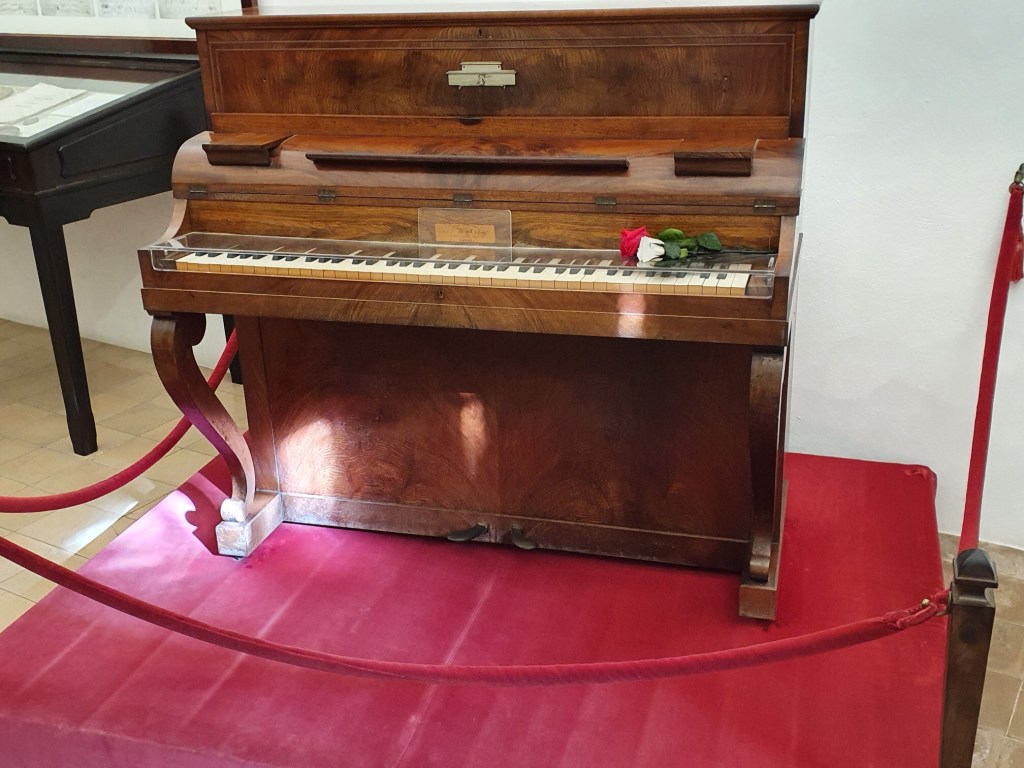
To talk of them living in a monastery cell sounds like real deprivation and there were three adults (FC, GS and maid) and two children living there but they did have a garden of their own which Mme really enjoyed with its stunning views.


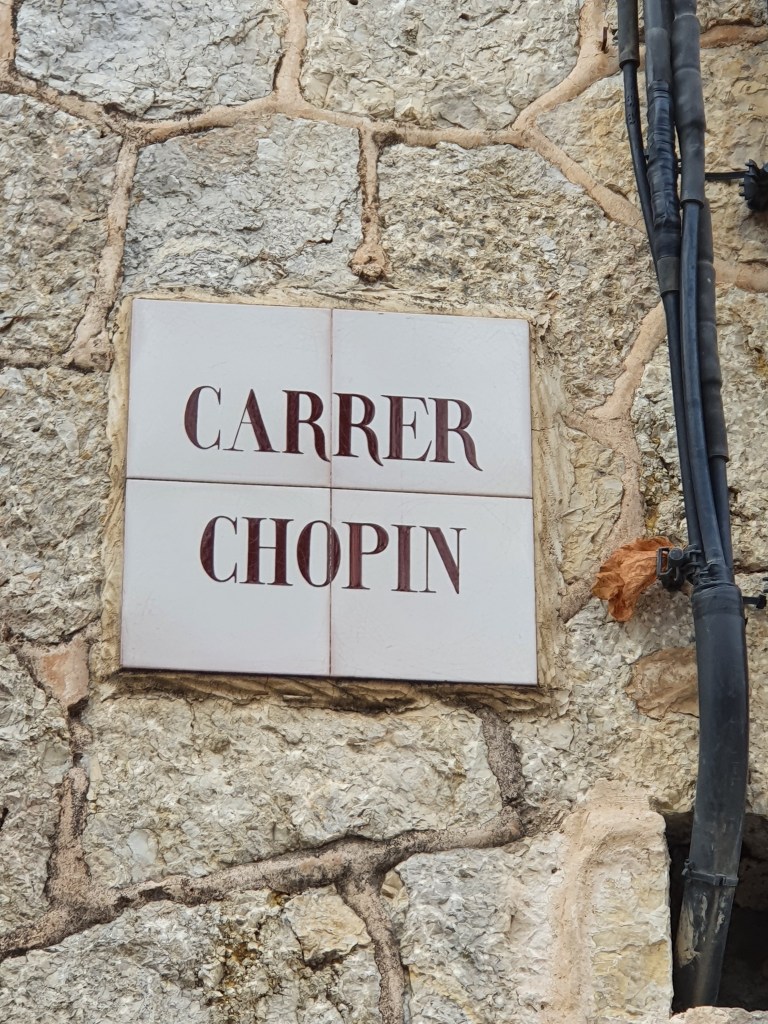
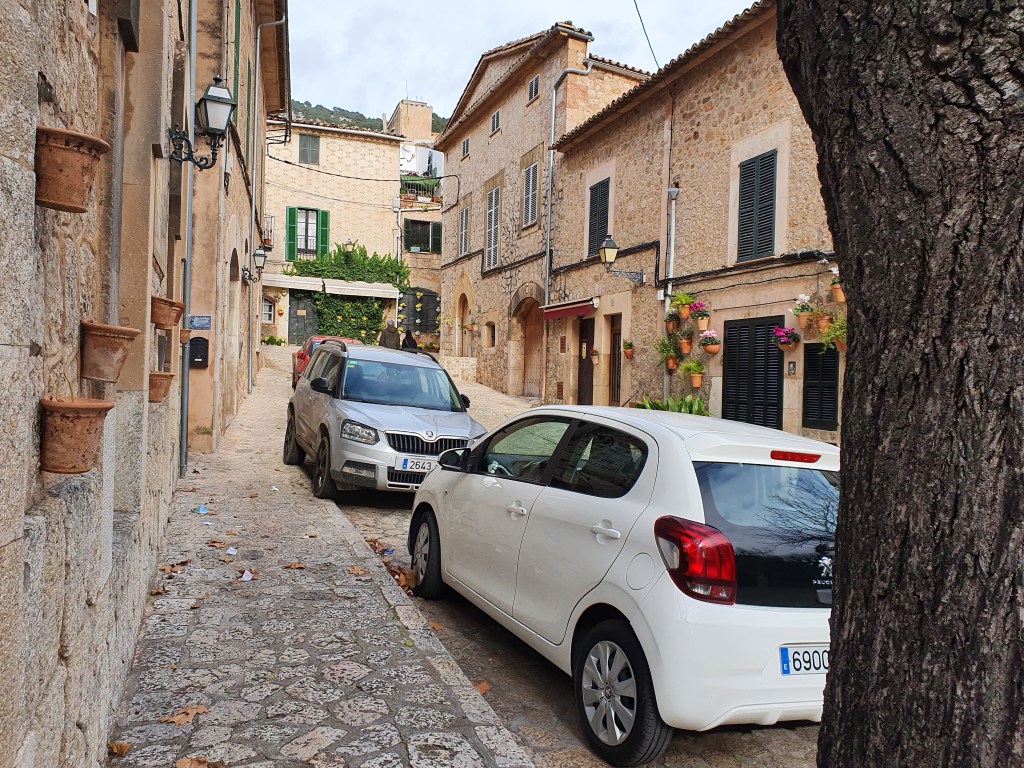
There’s not a huge amount to see and an hour and a bit sufficed. Valldemossa itself is too touristy for my taste, highly groomed streets, some interesting art but a whole lot of craftish tat. So i have a peremptory stroll, stopping of course to snap Chopin Street and WhatsApp it to my friend Jadwiga who is Polish and a Chopin groupie!
As I left the town I was struck by the large number of plane tree avenues leading to and from Mallorcan towns – there are some on the mainland but it feels rather French midi to me. I love them. Good now, but must be great in summer.

Having not eaten until four yesterday I thought ‘wouldn’t it be good if there’s a restaurant between here and Deia.’ There was and it is clearly very popular because while there were only a few diners when I arrived just before two, by the time I left it was full. I had some great sepia in a spicy pica-pica sauce and habanitas con baicon – an old favourite but here the very small broad beans had leeks, onions and peppers as well as bacon. Very tasty and timely – I thought.


The short drive to Robert Graves’ house was familiar too and I much prefer the town to Valldemossa – sorry if that makes me a tasteless Brit. There was a convenient parking spot right opposite the house so I crossed the road full of hope.

Once again the lack of a planning companion struck – they close at 13:00 so I should have come here first. Doh! However the gate was not locked and I crept in to have a look at the garden at least. I was caught by the very friendly and fluent English speaking gardener who said he would have shown me round the house but had to leave at three-thirty. We chatted about the problems of gardening – it rained for the whole of November and everything is behind – but he’s doing his best, upon which I complemented him, explained I couldn’t come back again this trip but be sure not to miss it next time. He allowed me to take some photos and rewarded me with a couple of incredibly juicy tangerines.


With little encouragement, I decided to carry on round the Ma10 to Soller and then head inland and back to Palma through the middle. With today’s better weather in the mountains their scale, variety and colours were amazing – just not enough safe stopping places for photography but I managed a few.

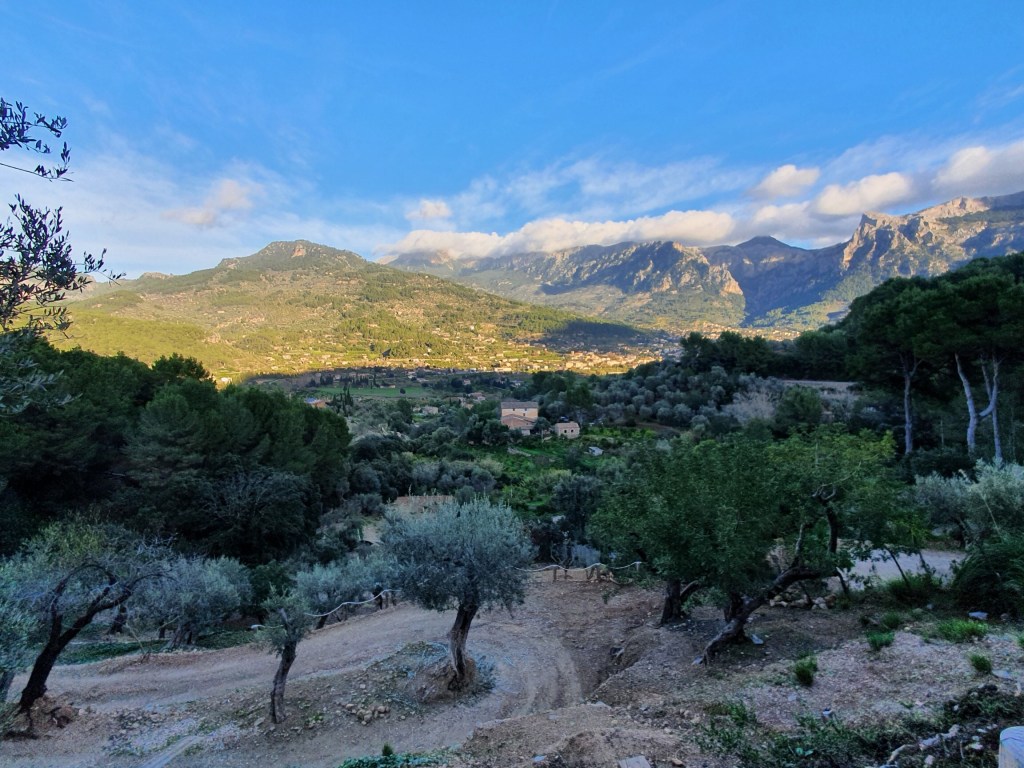
I passed through some interesting towns that would repay a visit: the Botanic Gardens at Alfaibia are closed until March, but look fun; Bunyola had some interesting buildings; and as I came to the end of the Ma2040 I found myself at the Mallorca Fashion Outlet – no point me stopping there! This is on the outskirts of the town of Inca which is linked to Palma by a near-motorway standard Ma13 so I headed on home or back to the hotel at least.






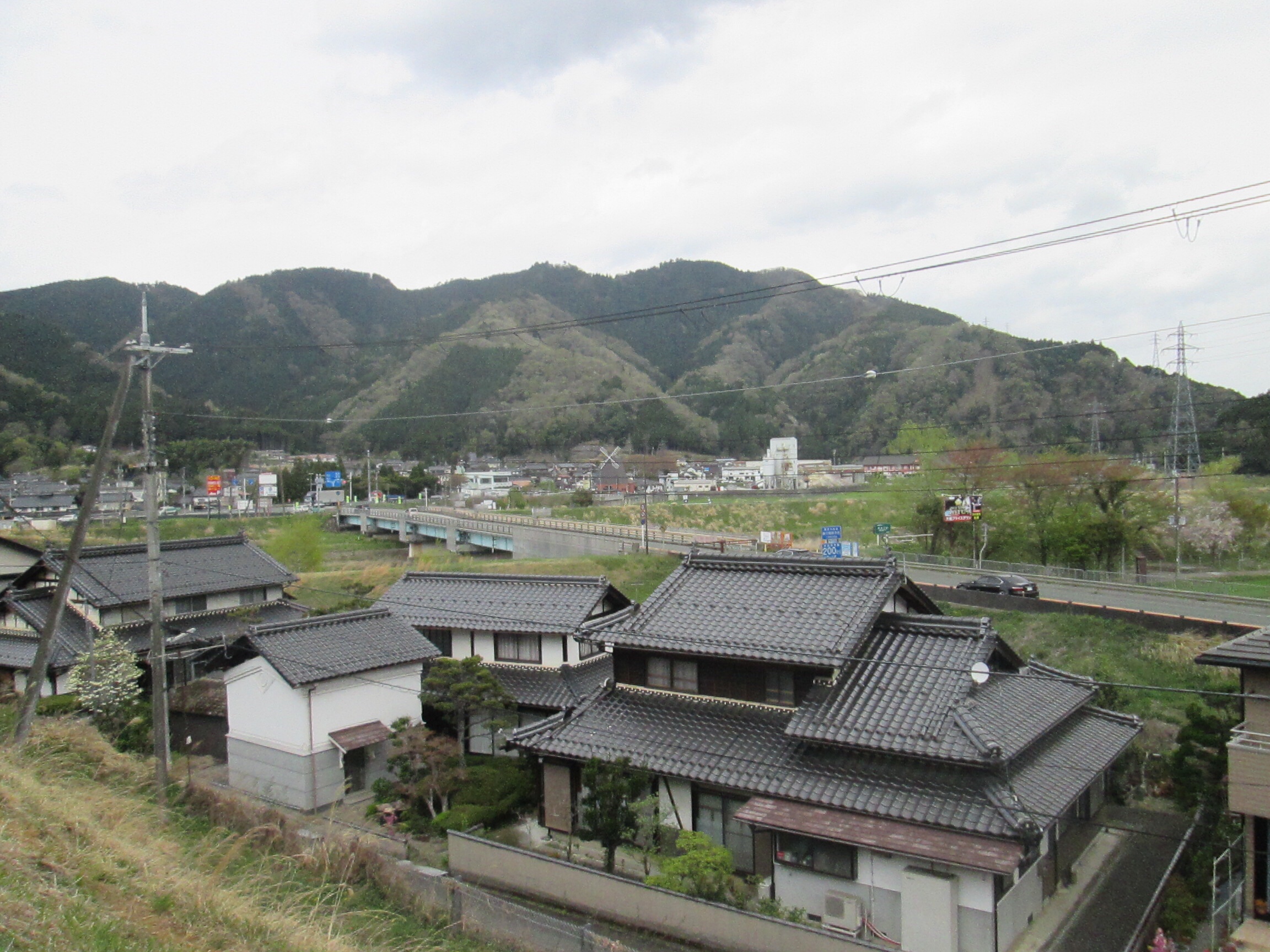 As we wound gradually upwards I was struck by a windmill in the middle of Makigawa and later had a stop to snap a typical settlement in one of the flat bits. Japan is 73 percent mountains with the population crammed into a quarter of the land area. At this time of year, April, the nascent leaves on the deciduous trees give the mountains a very fluffy look. I’m told they look great in the autumn too when the acer go through their colour changes. The little bluebottle buzzed its way nicely up through the Fukushiyama Pass at 323 metres above sea level and onto the Kannabe Plateau. On the way I had passed several stopping points for adding chains or changing to snow tyres but my favourite was one that had the tyre sign but also “Nap Parking”. The Japanese are the world leaders in napping in my experience – on the subway all the time, on buses, planes, on park benches so given the distances you can drive it’s probably a good idea to stop for forty winks. I didn’t nap but did have a coffee break. Route 9 goes all the way to Tottori but gets sucked into a toll-free expressway so I had to ignore the very polite “turn around when possible” and follow my nose. It led me to a parking lot called Tottori Sand Dune Parking. These are Japan’s only dunes and they are constantly shifting, mostly on today’s evidence inland across the roads.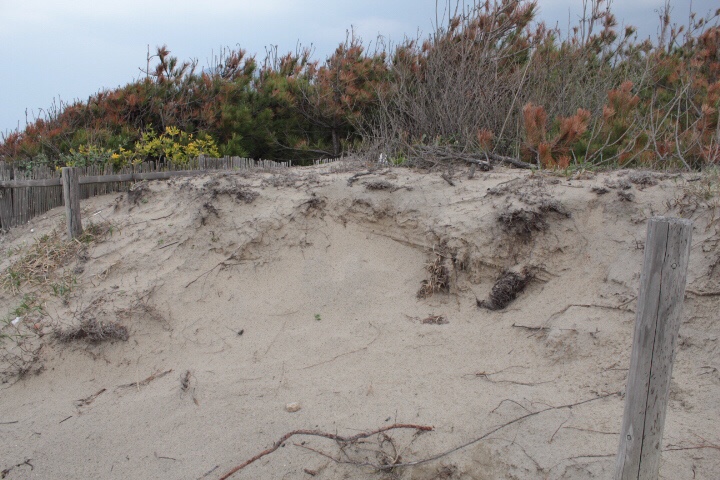
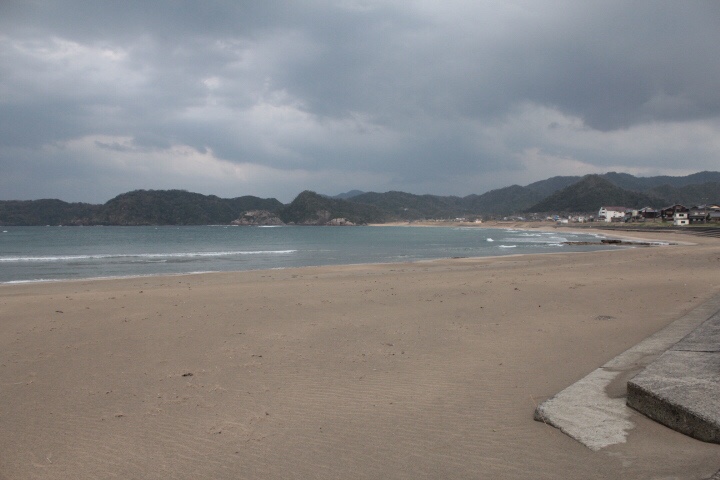
 The whole coast along this stretch has been designated the San-in National Park and was awarded UNESCO Geopark status in 2010. I explored an immediate stretch of, frankly not that impressive dunes when you’ve seen Braughton Burrows and the Coto Donana. However I spied a village and set off to explore. It was Iwami and behind a fisherman mending his boat was a shrine – no chance of getting a stamp here but the steps beckoned up towards the unpretentious Ajiro shrine.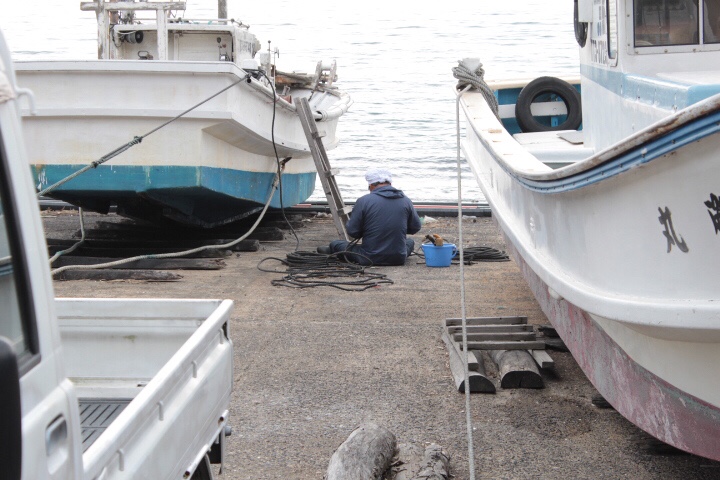

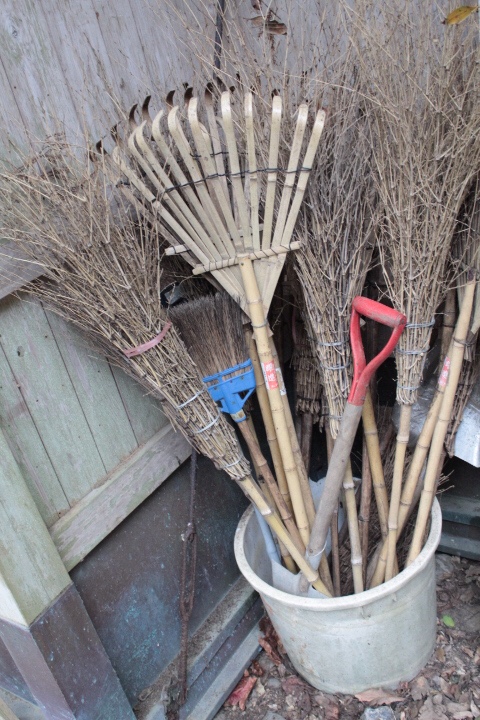


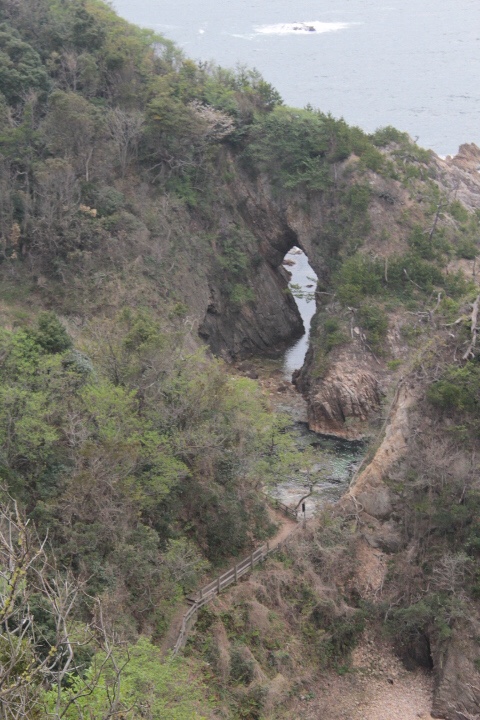


 It’s what travel’s for.
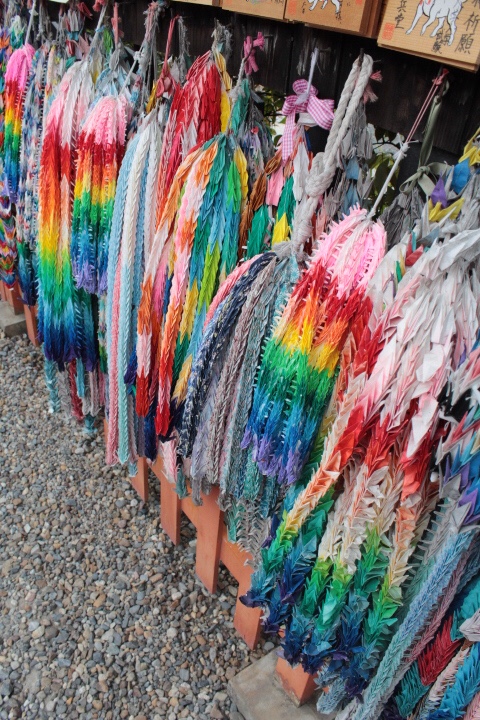
 We did our purification in accordance with the helpful sign: rinse right hand, rinse left hand, take a sip of water from right hand, hold dipper up to let water run off and replace. Slick by now these fast-learning children. So too are the colourful strings of crane origami figures strung into long skeins.

 We walk up through several layers of torii until we think if we don’t head off back down this is all we’ll do today. Chris bought a fine yukata from one of the stalls and repeated attempts on messaging devices failed to get us all to meet up but then Helen, Martin and Alex bumped into us as we were sampling our first taco yaki stall. Octopus balls had been consumed in Trafalgar Square last year at the Matsuri, but piping hot in the street in south Kyoto was a different matter. We all took the train back to Gion-Shinjō in order to walk along Shinjō dori the street of department and high end stores On the way we passed a cat and owl cafe another of the children’s tick lists so we all spent half an hour stroking owls except for those with labels “I’m taking a break”.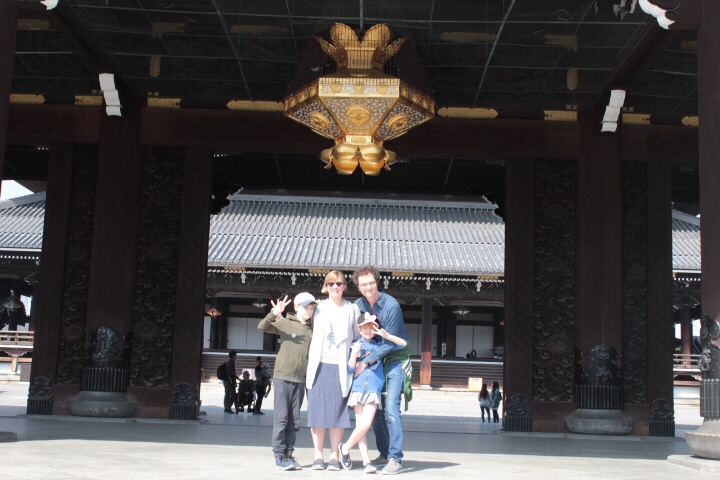
 Monday had been a bit grey but Tuesday gave us full sun. It was already warm as we walked to the Higashi Hongo shrine we’d seen on Sunday. Compared with many it was very quiet and quite amazing in scale having rooms with over 200 tatami mats (geeks feel free to estimate square metrage – the mat is a standard of measurement at 1.91 x 0.955 m in Kyoto although I learned to my surprise that mats are slightly different in other regions). There were several stamps to collect for our hons and quite a trek to find them all. This is a massive monastery with private monks’ quarters all round it and incredibly impressive public areas. It was great to visit it early although there was a feeling that despite its proximity to Kyoto Station it is not on the big tourist tick lists – it certainly won’t be in the top ten, and given the choice maybe not even the top fifty. It had in a museum and auditorium are a great model showing shrine construction and some ceremonial leaves that are carried in processions.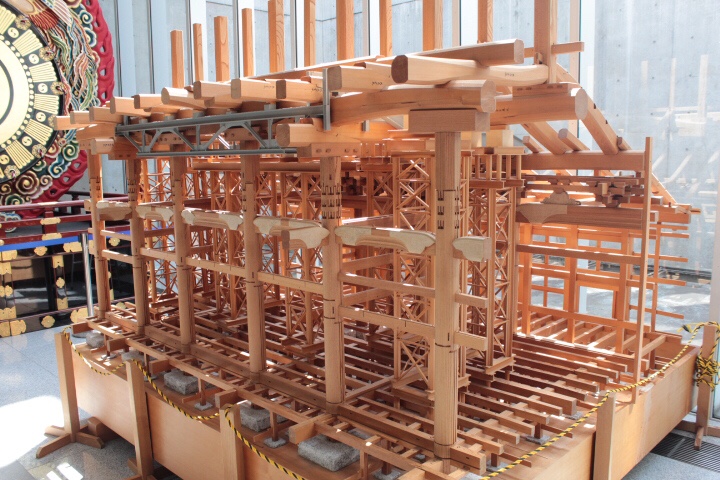
 After a leisurely and fascinating visit we walked to the subway en route for the kids’ first Japanese castle.
 The entrance was a short walk away and the heat of the sun was increasing – 22 degrees were indicated on a signpost display. There was little in the way of a queue and we went through a brightly coloured main gate into the palace proper. It came as no surprise to that our friend from Nikko Shogun Tokugawa Ieyasu had played a major part in its establishment. What was more surprising was that his descendant Togawa Zzzzzzz should have summoned all the shoguns here to persuade them to give up their power and restore it to the Emperor. The voluntary yielding of power? Now that is a departure from normal power politics. The journey round the palace was interesting as it took place along the so-called nightingale passage. This is a floor that squeaks melodically due to the method by which the huge floorboards were fixed with nails and brackets that allowed noise-emitting movement. Rather hoarse nightingales methinks. At first the rooms were impressive and highly decorated designed to shock and awe visitors but these gradually gave way to more modest private rooms where no one but the shogun went.
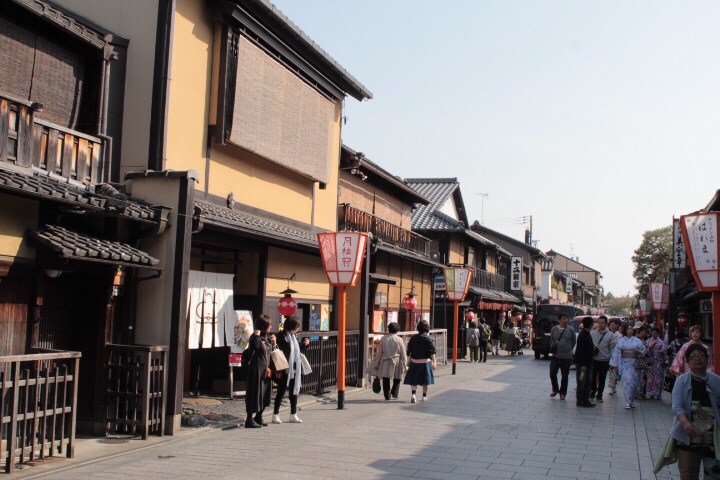
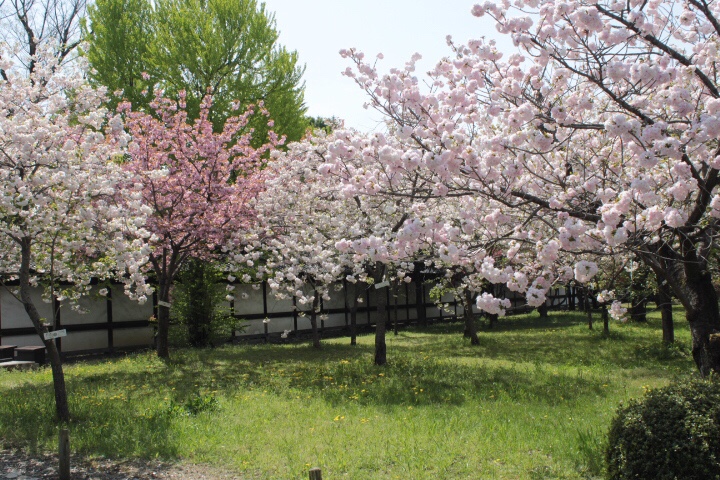 We then sauntered through the garden where we again wondered if the rich and powerful had a special long flowering species of cherry tree as the castle hanami was still resplendent. We got lucky with lunch in a restaurant right by the castle. It was not busy today but to reach the loo you passed through a room with enough tables to cater for the coach parties that will arrive in greater numbers come summer.and then took the subway to Gion which we’d really only seen a glimpse of and which is the famous old geisha quarter. It’s filled with narrow streets of wooden houses and gives a real impression of how Kyoto used to be. Today the only geisha visible were tourists who had rented kimonos from the many outlets available. As we came to the stream I mentioned that last time we were here I’d photographed a heron. A look the other side of the bridge and there it was – could well have been the same one, just like me a bit older and greyer.
 Across the bridge we found fish-shaped doriaki another tick list item and ice creams and then sadly itàtime to return to the hotel and for the family to head for the shinkansen back to Haneda Airport to a hotel before their early flight back on Wednesday. I had a room change as I was renting a car in the morning. It had a great view to Kyoto Station with next morning abseiling window cleaners.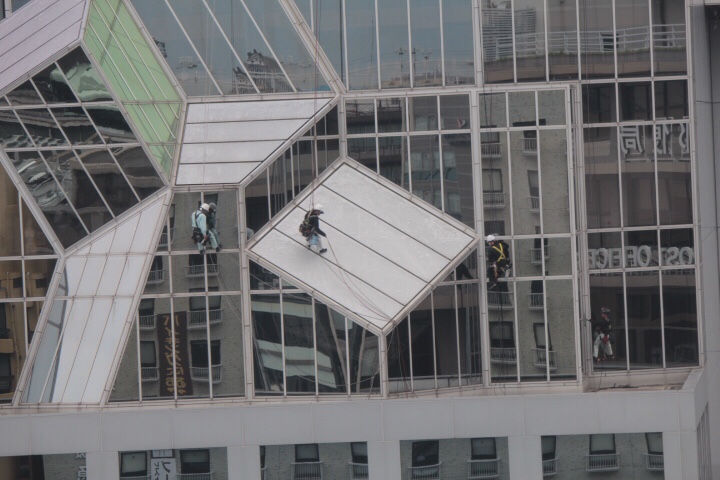

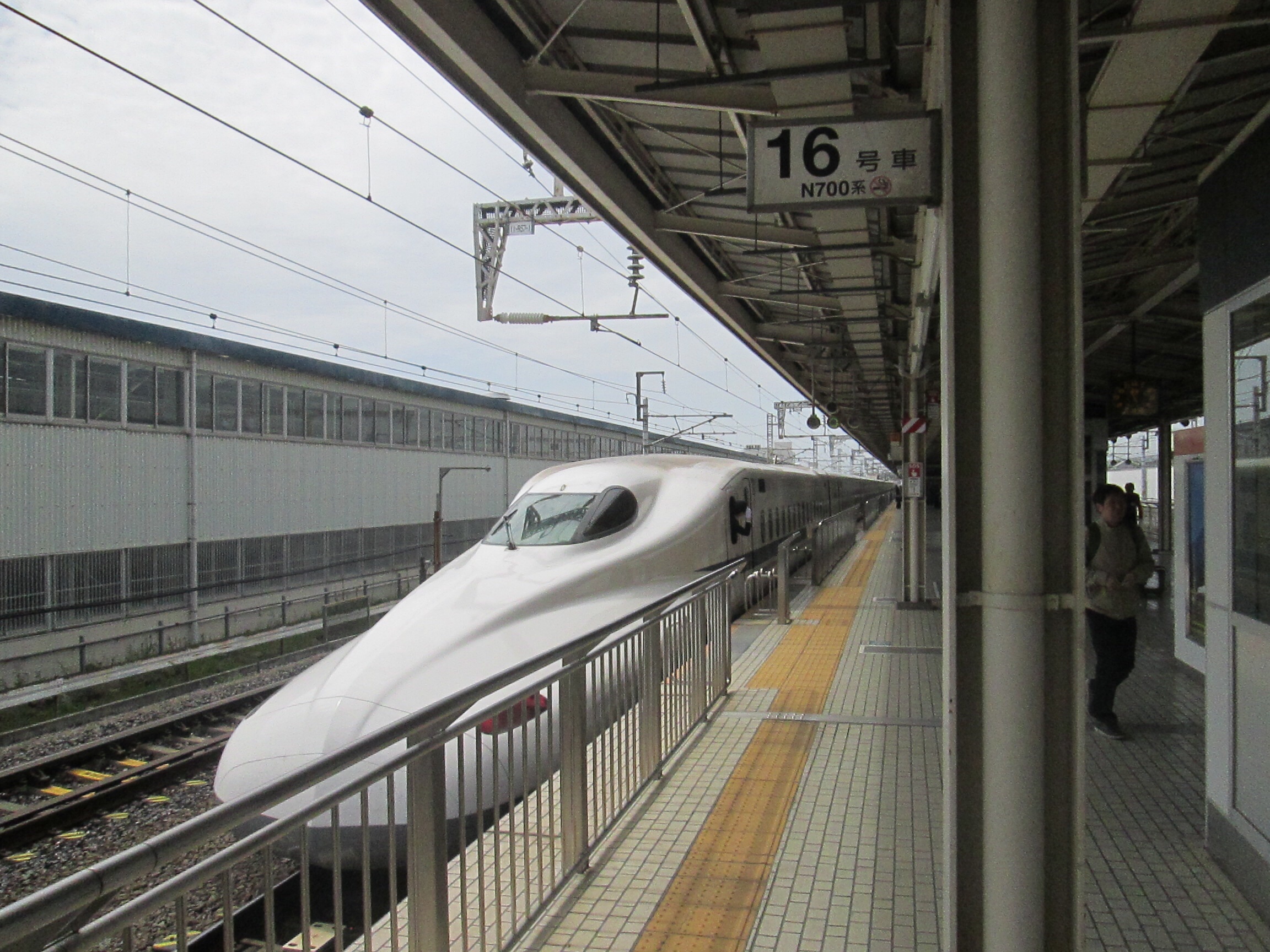
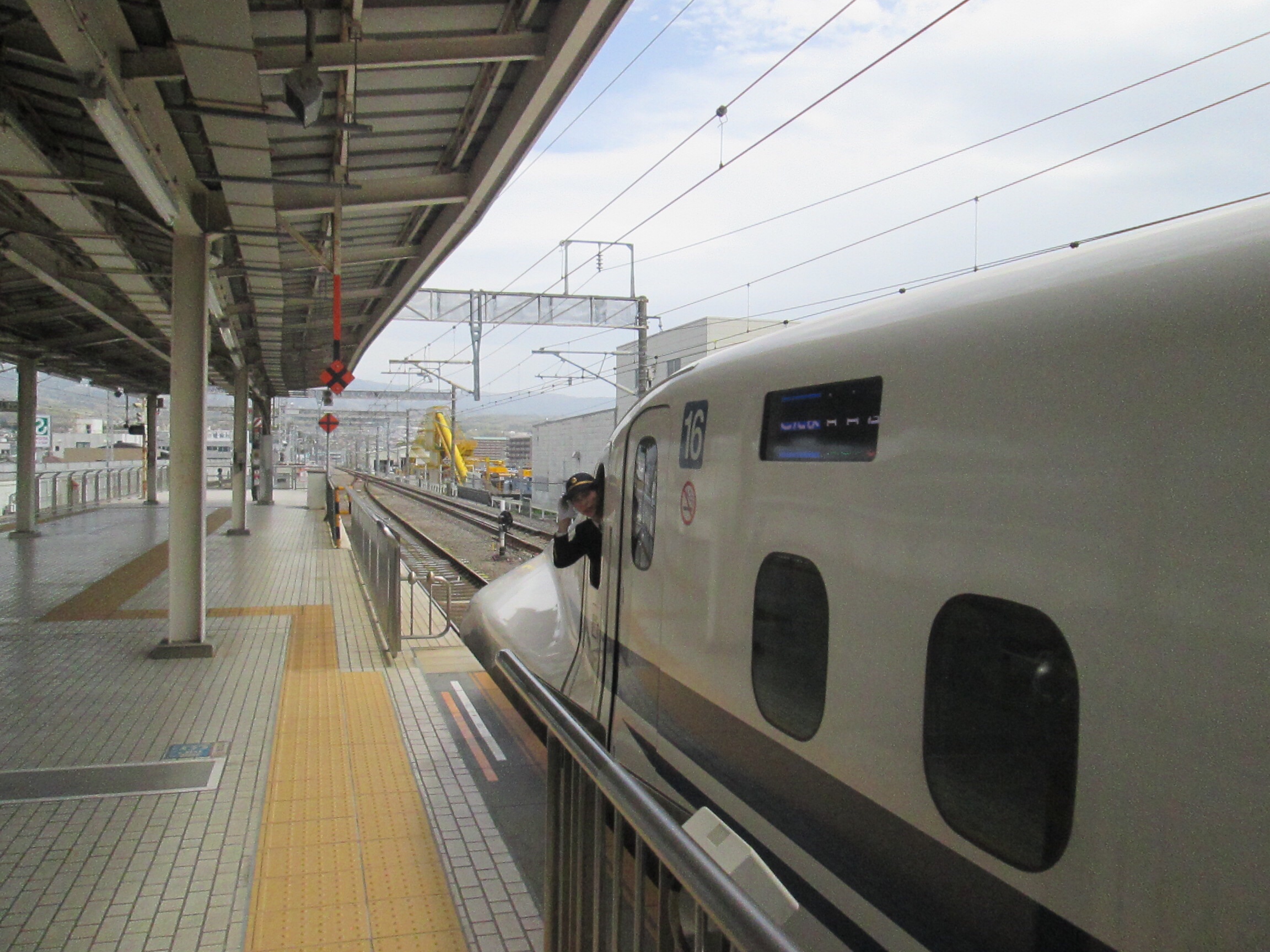 I’d promised the grandkids a bit of magic on the train and they were amazed when their forward facing seat was pivoted so that they could face their parents as a four.
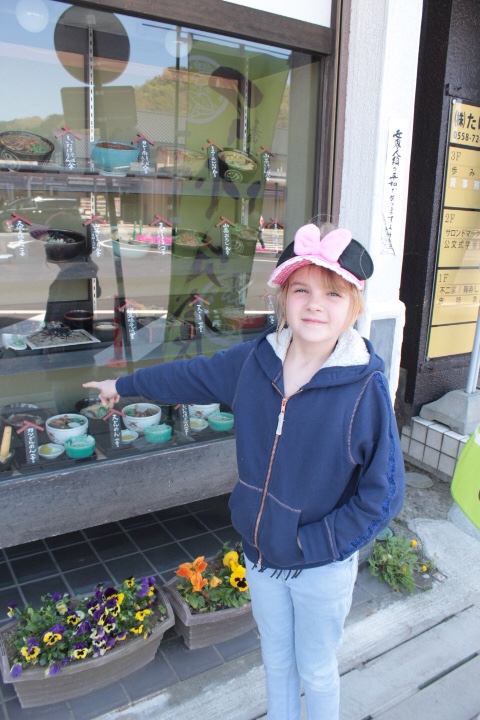
  We whizzed off at high speed and through suburbs, tunnels and occasional stretches of countryside and were in Mishima within the hour. It’s over a hundred kilometres and given four station stops speeds must have been up around 180 km/h at times. At Mishima we changed to a local train to Shuzenji which is half way down the Izu peninsula. This was a fun ride with speeds which allowed you to look into peoples’ back gardens, see folk working in the rice fields and admire rural building styles. It also gave me time to contemplate that I had a vivid picture of my phone in the net on the back of the seat in front of me on the Shinkansen – probably in Nagoya by now. I did this five years ago when leaving Tokyo for Hong Kong and somehow it was produced for me to collect in Hong Kong at the airport. At Shuzenji we had to take a bus and sadly because of a change in our departure from Tokyo we had nearly two hours to kill in Shuzenji. Time for lunch. With all our luggage we didn’t want to stray far and despite worries about my granddaughter’s likelihood of finding something she could eat we entered a restaurant with a Japanese only menu, some helpful plastic plates in the window and a proprietress whose English consisted only of numbers, we enjoyed a great traditional Japanese meal.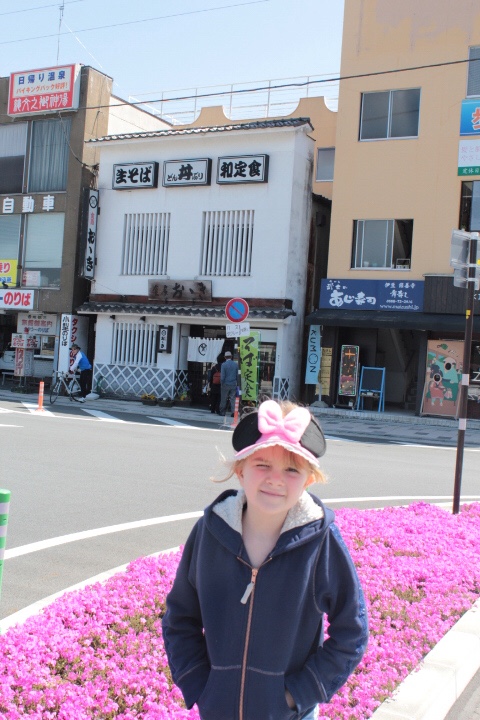
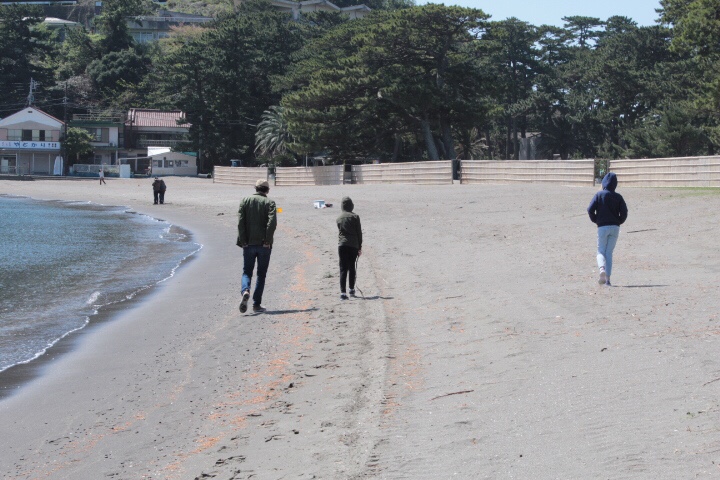
 Having warned the children that all onsen (hot spring) bathing in Japan was always in the nude after having a really good scrub in the shower to keep the spring water clean, we booked the private onsen. It was a bit small for five and very exposed to a howling gale so I left them all to it and went to pursue the return of my phone. I found the number for Japan Rail lost and found and called it but no one spoke English so the helpful staff spoke to them in Japanese with the train, coach and seat details I’d written down for them with a description of the phone: Samsung, black wallet with business cards. In the conversation I heard the word meishi which I knew from previous trips meant business cards. Great relief – they had my phone and agreed to send it to our next hotel in Kyoto on Monday. It cost 907yen – about a fiver – but that’s so much better than an insurance claim and replacement. We all met up in the lounge with the family having enjoyed their onsen experience so much that we all decided to go to the public one next morning before breakfast. We’d spotted a sign to “Beach Walk” and decided to give it a try. At the foot of a set of rather uneven steps we found ourselves in a car park and as we rounded the corner this view confronted us.
 What a stroke of luck! Many people visit Japan and never see the sacred mountain because of cloud. WE got her in resplendent beauty with a defining strip of cloud as well. We walked back along the beach in the almost completely circular bay but then emerged to confront a gale so strong it made everybody work hard and literally took my breath away. I always carry an inhaler for my asthma but it’s a comfort blanket from the old days but before making it, in stages, back up the steps I had to have a puff.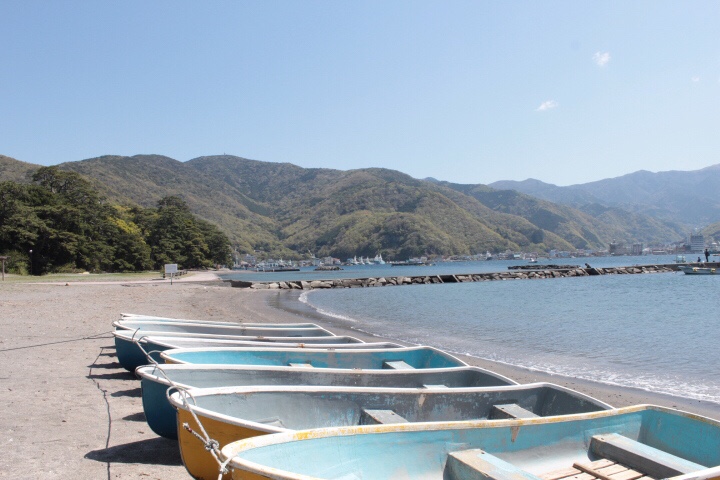

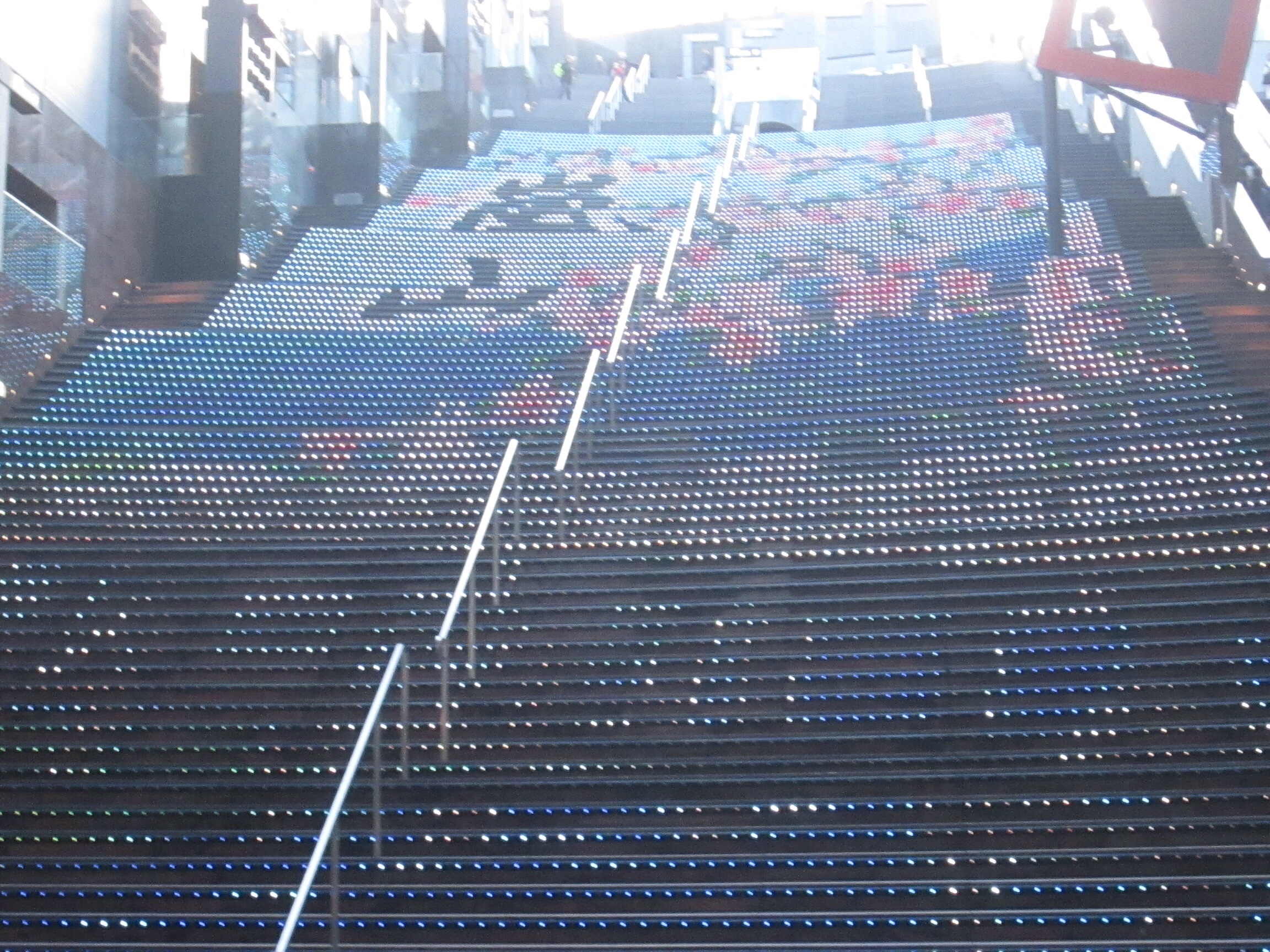 Underneath the station as with most is a retail and culinary plethora of opportunities. We went for an interesting Japanese take on Italian and on leaving I suggested that if we took the adjacent exit we might be quite close to the hotel. To everyone’s amazement we were right by the lobby steps. I confess it was just good guesswork as these subterranean passages are totally disorientating. A plan was hatched for the next day which involved meeting up with the sister of one of Chris’s mates who happened to be in Kyoto as part of a world tour.
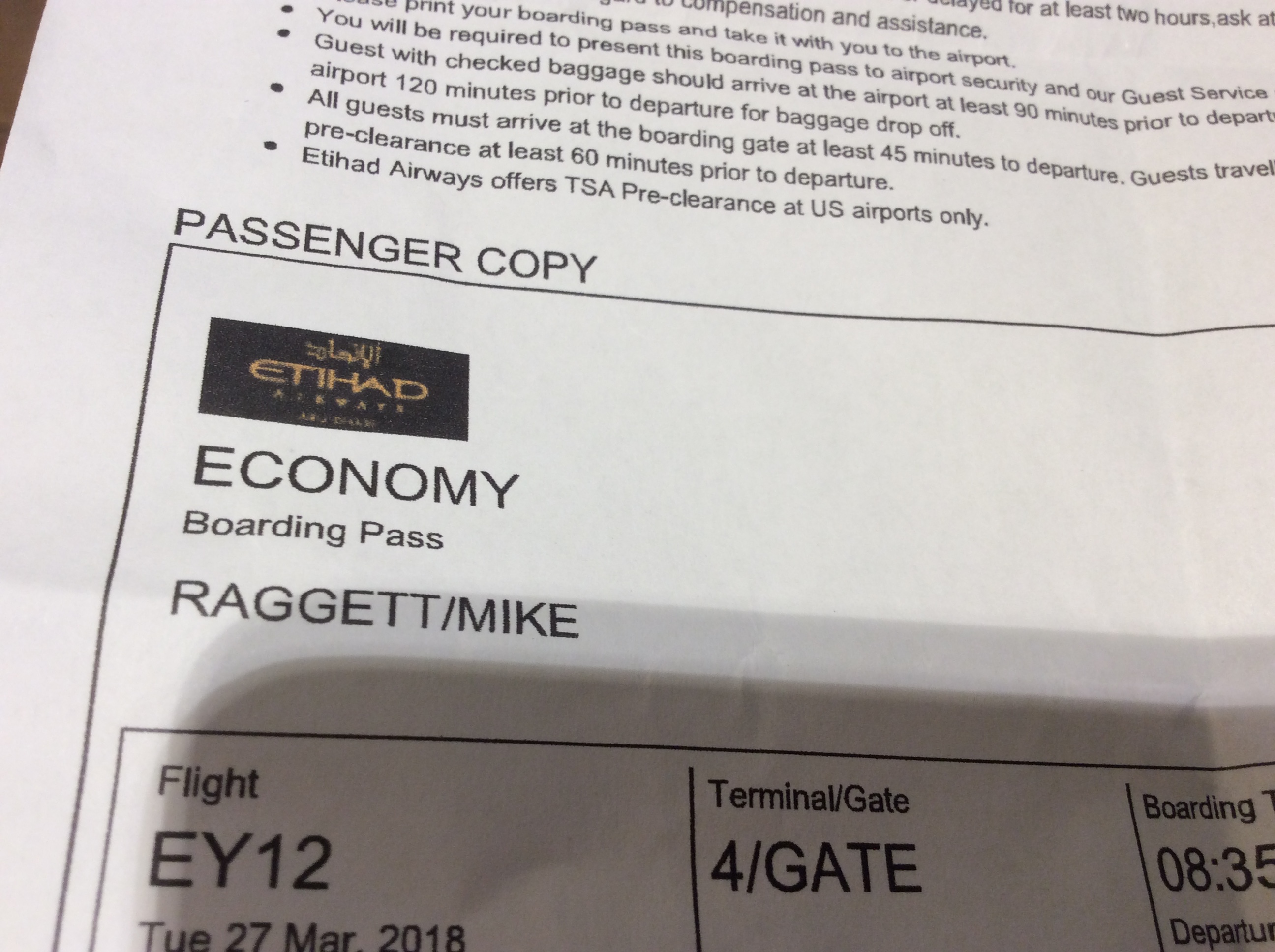 My name is entered in the Etihad system as RAGGETT/MIKE but my name on my passport says RAGGETT/MICHAEL and for security reasons they have to match. Don’t know how it happened but they won’t check me in. I am presented with a call centre number which I dial, run through the options and am told my call is ending now. So I dial again and press different options and eventually speak to Marije who is in Belgrade and tells me I need to photograph my passport (thank God I have a phone with that capability – trying to grab it in a Photo-Me booth boggles the mind) and reply to an email she’ll send me. No email arrives. I try Heathrow WiFi. I switch that off and try 4G. Still no email. So I go through all the button pushing again and eventually and miraculously, reconnect with Marije. She gives me her email address and I despatch my passport’s photo – not a work of art taken while balancing it on a suitcase and using the camera on a new phone for the first time. By now the best part of an hour has passed and there are only two staff left at the check in desks who urge me to hurry. I explain that while I may appear to be on the phone, I’m actually hearing Balkan ‘hold’ music and can’t tell it to hurry. Marije’s voice returns after an age to tell me that it’s fixed in the system and will cost me $149.90 (how?). So I now have to dig out a credit card, read her the details three times – for security – and then go to the desk where a frustrated agent had really wanted to close five minutes ago. She puts a Tokyo label on my case after I ask her to remove the one for Abu Dhabi and then a suited gentleman colleague escorts me straight to the gate. My original refusenik check in agent says, “Oh you made the flight!” With a rather surprised tone. I am on the flight by the skin of my teeth but have to go to the transfer desk at Abu Dhabi to get a boarding card for the flight on to Tokyo.

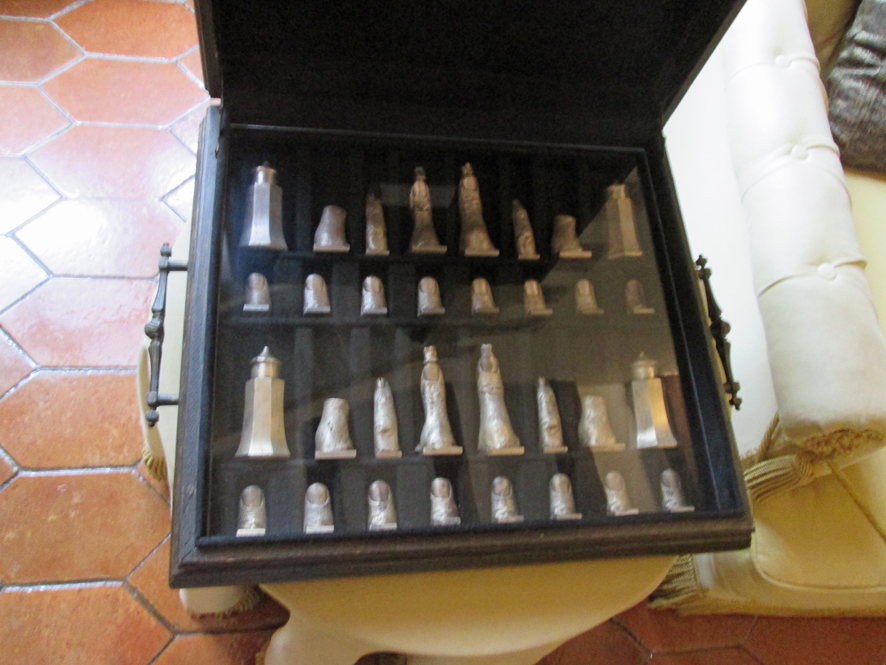 I also loved the chess set in the form of fingers which was Dali’s homage to Marcel Duchamp. In the attic is a great display of Gala’s sumptuous frock collection – it’s the era of frocks, OK.
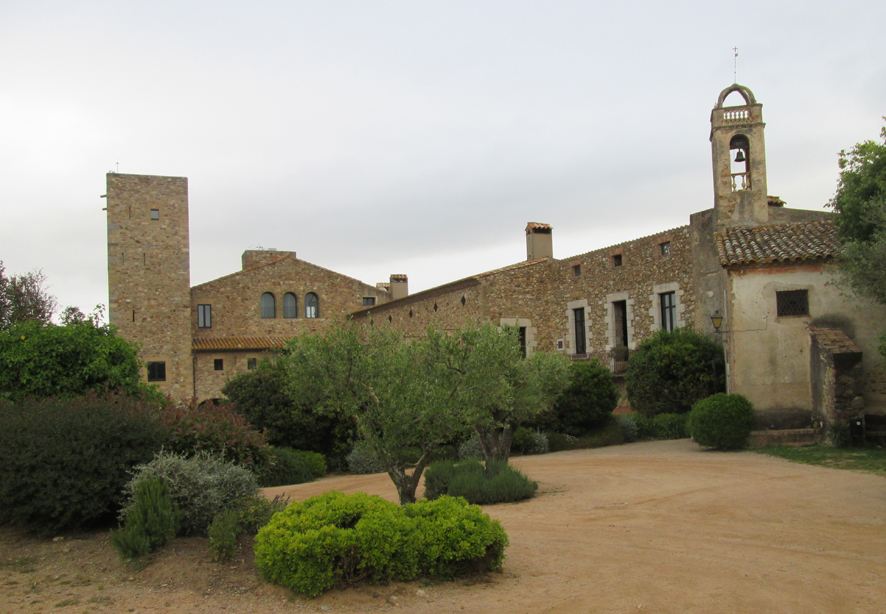

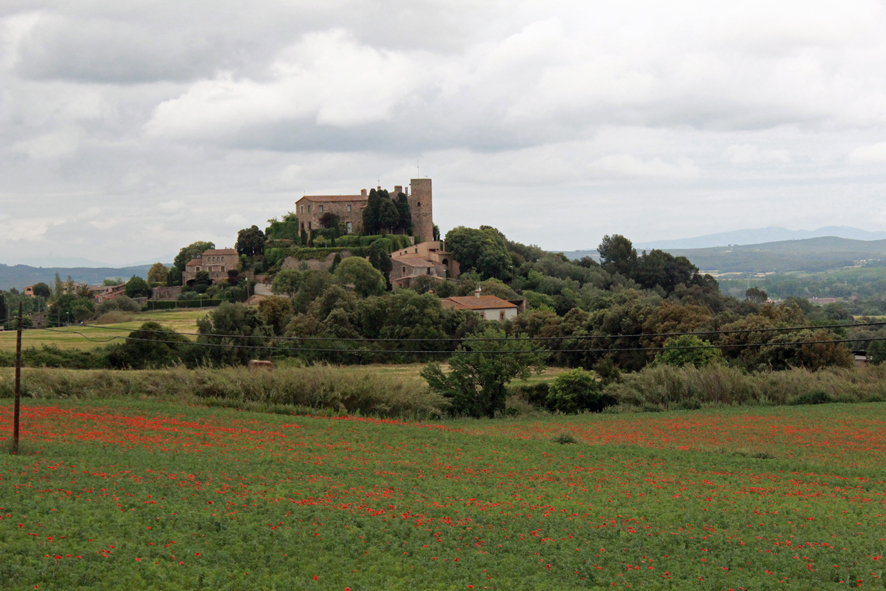


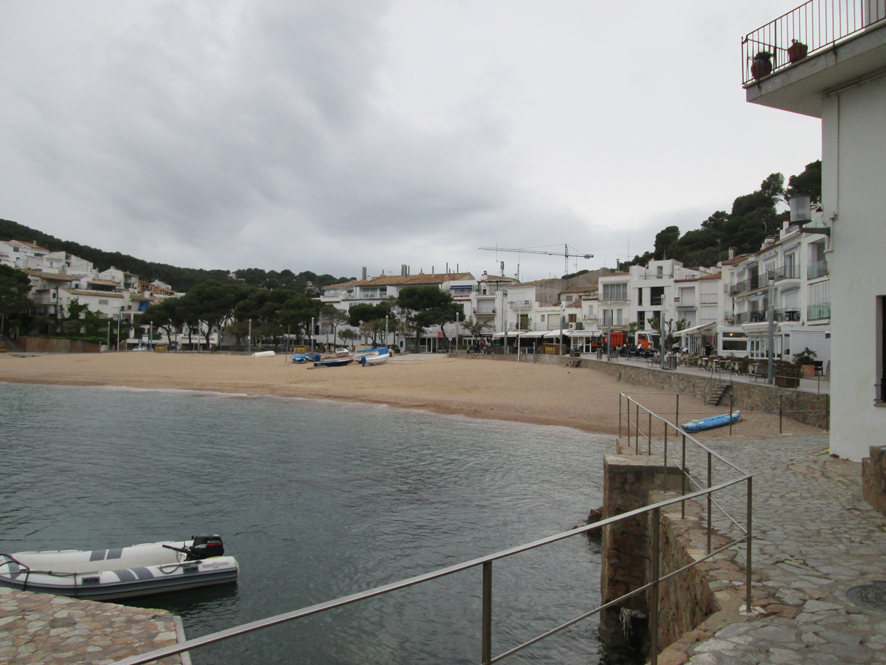
 It is a romantic and beautiful cove (below right) but just as I was about to settle for a beer on the front the rain started. It was nearly time for lunch so I went up to another favourite spot the Faro de San Sebastian. As the drizzle grew stronger we needed the lighthouse to be pointing inland. Now that place had changed – a local bar/restaurant has become a posh hotel with lots of weddings and corporate meetings it seems. Well it’s a great location on a good day and at least comfortable for a snack out of the rain.