Last days can often be difficult on holiday, not least this one with a flight booked to depart at 10 pm. I took breakfast in the hotel for a change, packed and left my luggage at the hotel and set off for another stroll around this city I have come to like. There are some fine buildings, I love the chairs randomly glued to the pavements so you can take a break whenever you feel the need. There are some excellent examples of turn of the century (19-20) archictecture dotted around the streets.
My route takes me past the book cabins I’d seen before and this time they were open. Paperbacks ranged from 5 to 12 euros with some deals three for 12 euros. There were a few English and German titles among them as well and all the kiosks seemed to be doing steady business. Good to see lots of children’s books, history and philosophy as well as fiction from popular Spanish authors like Perez-Reverte, Carlos Zafron. Javier Marias and Almudena Grandes and of course translations of John Grisham and Dan Brown. I didn’t see any Harry Potter.
Also attracting a lot of attention was the four sided display of belenes in front of the Town Hall with scenes of the birth, shepherds and three kings – Los Reyes – who are of course all-important in Spain with the 6th January almost bigger than Christmas.
Down by the marina a lone saxophonist busker was trying hard but basically was practising his scales in public with scores on a phone attached to his alto.
Wandering back up through the avenues what should I come across but another museum, The Palacio Principal, with displays of – you guessed it- belenes but also an exhibition by Francisco Rubio which involved an interesting mix of abstract and figurative work, sometimes in combination.
Look at those angels!Storks to bring the baby?Panoramic belenRubio in Pollock mode‘La menina’ and I could feel VelasquezSailing in the fogThe Palace – built in 1928Stonework detailPavement with fun fish slabs
I’m not fan of photographing meals but my lamb cutlets for my last lunch were worthy and very tasty as well – but no hot padron peppers! Then back to the hotel to collect cases and the C6 bus to the airport. It’s every 15 minutes and whisks us via the train station and then through the newish suburbs, past a huge desalination plant and along the beach at Playa de Agua Amarga before turning west to the airport.
In the hotel there was an exhortation to be very sparing of water – keep your towels, take shorter showers as there has always been an acute shortage of water in the area. One woman I was chatting to before the music the other evening told me that 80% of Alicante’s drinking water – I had declined any alongside my meal – comes from desalination and that she had frequently in her childhood faced water being turned off in her home. I tried to joke that Christmas Day had changed all that but am not quite sure it worked.
I had equivocated for quite a while about whether to make this trip – can I bear the inevitable airport hustle, am I too old to be doing this stuff, can I better last year’s wonderful week in Madrid and Granada? I am so glad I did. I’ve explored a new city, found new artworks, architecture and archaeology. I’ve been to classical and jazzy gigs and had great food. Apart from the soggy Christmas Day the sun has shone and temperatures have been around 17-18 degrees Celsius in the day. People have been friendly and I’ve actually managed a few conversations. I have one regret. I’ve ogled other people’s arroces – you mustn’t call them paella here. These rice dishes come with seafood, meat and vegetable versions and are very similar to the Valencian staple with crusty base and pan-cooked rice and accompaniments. Problem? They are always for a minimum of two people. So I’ll just have to find someone to come back with me.
This is a phrase that crops up at lot on news and entertainment channels on the television. Also here in Spain it is in the context of warnings of snow and road closures in the Pyrenees and sea surges and flood warnings in Malaga and Cadiz – Global heating is humbug, right. It features large in the Ian McEwan book. The news tells me also that in Spain, physical shopping is beating online by a distance – and seeing the number of bags being carried around Alicante, I can believe it.
However I didn’t go shopping this morning as I had a couple more museums on my list. The first was in the old tobacco factory, Las Cigarreras which is now a multi-use cultural centre. It was walkable in 20 minutes so off I set in the sunny morning after another excellent breakfast near the bull ring. As I arrived there was a jazz combo doing a sound check for a lunchtime gig. They sounded OK but nothing to wait around several hours for.
Inside one of the grey former factory buildings was a photographic exhibition with a series of experimental images from a variety of photographers. One of the exhibitor’s work reminded me of my friend Lisa Kalloo’s in the use of pinholes, Vaseline and other distorting factors to produce amazing images. Others used reflecting metal objects under water, scratched lines on negatives, printed out and made into a montage wall and a social comment on homelessness with a bed featuring in various locations.
I had had no idea what to expect as the Cigarreras website wouldn’t work for me in the UK, but I thought the buildings were worth a visit anyway. It was a thought-provoking show that made me vow to go to more unconventional exhibitions back at home and broaden my view of what constitutes art. It needs to raise emotion, stimulate ideas and challenge conventional attitudes. This did all of that.
MARQ – the Museum of Archeology – was feted as European Museum of the Year in 2024 and it’s easy to see why. It’s in a former hospital and has displays not only of objects found in the area from the Bronze Age onwards but has reconstructed videos of life in each of the main eras of Alicante history – Iberian, Roman, Jewish, Arabic, Christian and modern democracy. Sadly only the introductions to displays are in English so my Catalan and Spanish got stretched now and then.
MARQInteresting straw belenMovies supplement the displaysLike being on a dig
One of its great features that Dee, who always wanted to go on a dig, would have loved was the reconstructions of archeological investigation sites throughout the eras. We had been to Empurias in Catalonia so knew about Spain’s lengthy history but MARQ made it clearer in a dramatic and intelligent way. Well worth the walk to both morning venues and my lunch saw me have my first slices of Serrano ham – how can I been five days without?
On the way back from MARQ a different view of the castle
Most Spanish cities have an interesting rail terminal – not Alicante. But I walked there and then back down through interesting streets to find myself back at the southern end of the marina past an amusement park and passing by the lovely fisherman’s terminal.
Dull stationThe martyrs promenadeJust like Granada last yearA shark roller coaster and extreme jumps in Winter Wonderland
I spent another period in the sun finishing my book and then thirst prevailed and I went back into the mad centre of the city where every bar was full and families were meeting up noisily after shopping. Busy!
Fish marketFish market signMarina from the southFind me a table!
Things were no less busy when I went out to eat a bit later but one of the older restaurants Labradores – well you have to solid with the workers don’t you – found me a table and delivered a fine series of tapas – gambas al ajillo, pincho moruño finished off with some brilliant blue cabrales cheese. Oh and some excellent local wine. One thing I’ve discovered here is that tapas are much bigger than I’d experienced elsewhere in Spain, so care is required when ordering!
Oh dear, this is not right. I go out for breakfast in torrential rain. El Sabio street is flooding and palms are reflected in the puddles that pigeons have been drinking from with gusto. I’m boxed in. What to do?
Well there are lots of people to WhatsApp and email with greetings, I have the most brilliant Ian McEwan book to read and I need to book somewhere close for dinner as I’d been warned that lots of places are fully booked on Christmas Day. I pop out again briefly for lunch and later catch the film Hedda being streamed. Having seen the version at the Orange Tree recently, this film was interesting in its Downton Abbey silliness but I was glad I’d seen a more faithful version as well. Then it was back to McEwan’s What we can know while listening to Radio Classica. The book is a masterly conflation of literary detective work, post-apocalyptic vision, love, infidelity, sex and academia – so far. It was still raining, and apparently from El Tiempo on TV next morning there was snow in the Pyrenees. Fortunately the Lobo Blanco was only three minutes away and well worth the visit. Friendly staff who didn’t speak to me in English – result! – an open kitchen where I could see my fabulous duck breast being prepared – I asked for it rosa and indeed it was beautifully pink and tasty with excellent skin-on fries. And as it was Christmas Day when they said would I like a brandy to finish off the meal, it was hard to resist. Santa came late to Alicante but he came!
Normal service was resumed on Boxing Day with sun slanting on the buildings opposite when I woke up. I’m spoiled for breakfast choices and chose a new one for Boxing Day which was well up to scratch. I strolled then through the Barri Vell again with its fine buildings like the Basilica de Santa Maria in the sun.
I soon found the Museo de Belenes open today. It’s a large collection of finished tableaux as well as vitrines of characters that may be used to form them. They can be in wood, plaster, clay and papier maché. There was one enormous one prepared specially for the 50th anniversary of the foundation of the Association in 1959. Also there were examples from Argentina and Venezuela and the text suggests that Francis of Assisi started the trend back in 1223.
The museumI loved the butcheryLots of optionsThe quincentenary displayLove the Egyptian styleThe three kings are frequently shown
I then move a little further towards the sea to MACA the Museum Of Contemporary Art which enchanted me for several hours.
My friend Maria’s friend Eusebio Sempere had been instrumental in setting up the several foundations that were eventually incorporated into this fine institution.
MACA exteriorMACA galleries
Elegant display rooms featured a local painter Juana Frances who I’d never heard of but enjoyed her work especially some charcoal drawings that were mystical. Her land and seascapes were interesting too. She did a lot to ensure women were properly recognised in the arts as well so I’m glad to have met her.
There was floor devoted to Sempere which had both his excellent sculptures but also an array of silk screen prints including a sequence of 12 that showed the process of building a screen printed image. One of the things I always enjoy is when an artist who has decided to go abstract shows that they had the technique to be conventional too. Sempere did with his portrait of his partner.
Tower of BabelYou need to see it move in the breezePortrait of partner Abel MartinScreen printing process display
There were several other rooms with works that varied in their appeal but a few really caught my eye. There were pieces by Miro, Tapies, Calder, Chillida, Giacometti and many Spanish artists I was pleased to be introduced to. There were interactive areas too where you could contribute to art in progress – altogether an impressive gallery. These are a few of my favourites – sorry I didn’t always get the artist.
Angel Ferran A bullAndreu Alfaro The line is always dancingRafael Canogar Arrest – scary sculpture and painting combinedRogelio Lopez Cuenca A fine messageSailors looking out to seaEduardo Arroyo The best horse in the world
After a cultured morning it was time to go for a beer and wander back through a different area of the city. Some elegant facades presented themselves and I couldn’t help noticing how many buildings were in the hands of MyFlats – clearly AirBnB equivalents are moving in here big time. There were a few ‘Tourist Go Home‘ graffiti that I’d noticed and hoped that being in a purpose-built hotel I wasn’t preventing locals from getting a home. Big dilemma – they want my money but not my presence.
I had a lovely lunch in Plaza Luceros with scallops and then cheese with anchovies and a good Rueda Verdejo wine, white for a change, and then back to the hotel to watch my next Christmas present – Watford winning 2-1 away at Leicester. Then I wrote some of this and thought about the evening ahead.
Quite close by is a music bar Entre Bambalinas which had a group of singer, piano and percussion called the Palosanto Trio. They played salsa, bossa nova and Spanish standards that lots of the audience knew. The bar had beer, food and wine and while the music was not my core taste, live music is always a good thing. They were lively, committed and gave me a couple of sets of enjoyment.
On my way back lots of people were filming themselves in front of the e-tree in Avenida de la Constitucion but I waited for a clear shot to wish everyone a Happy Boxing Day – Leicester 1-2 Watford! Yay!
I don’t have a Fitbit or other step counter but I think I would have broken it today. I set off at 9.30 in quest of breakfast which I found quite close to the hotel and the central market which I’d shot last evening. As many will recall, I love a market and while the building couldn’t compete architecturally with many I’ve visited, the contents were well up to scratch. Fish, meat, fruit and vegetables, all local produce, were brilliantly displayed. Some counters were obviously more popular than others with lengthy queues waiting patiently after taking a ticket from the ‘Su Torno’ machine.
Mercado CentralCarving tuna Patience is a virtueArranging the stallSeafood aplenty
I then decided to walk to the Auditorio where I’m going to a concert this evening just to gauge what time to leave – 20 minutes is the answer. It also involved passing the Alicante bullring which has gigs now not fights which will be a relief to the bulls being driven towards it in the sculpture in the square outside.
One of the major attractions of Alicante is the medieval Castillo de Santa Barbara and as cloud is threatened for Christmas Eve I thought I’d better do it today. On my way back down through the town I passed the Ayuntiamento which has a special Belen – the astonishing displays of the Christmas scene that are prevalent all over Spain. Outside was a giant version with a very strange looking newborn.
The castle sits quite a long way above the beach but fortunately there’s a lift, which by flashing my old farts’ pass I was able to use for free.
There’s still quite a long way to go when you alight from the elevator after a lengthy wait – be warned if you attempt it in high season; I had to wait about twenty minutes each way. There are lots of warnings about uneven surfaces and danger of falling so I mounted the steep slopes with great caution and frequent pauses. There’s not much left of the castle itself but the ultimate chamber has a great display of finds from the site over its history as a castle since the ninth century and from settlements on the site back to the Bronze Age. One of the main reasons for making the trek is for the views and they are spectacular.
Halfway upOne of the towersMoorish plateRoman vaseFragment mosaicFrom the top
I made my way very slowly back down rewarding myself with a beer at one of the several bars the castle provides.
After a further wait for the lift – I’d done enough slithery downward slopes for my age – I went to the city’s central beach, El Postiguet, and wandered along the northern promenade in search of lunch. There were lots of beachfront places that looked both full and expensive. In the streets just behind I found a super little bar that had and excellent aubergine with mince and melted cheese – perfect. As further proof of Christmas madness my cutlery came in a snowman!
Right along the street was MUBAG the Museo de Belles Artes Gravina which had been on my list of places to visit. It had an exhibition of Spanish Romantic art and at my first entrance with a red corridor made me think I was in the Dulwich Picture Gallery. It had some interesting portraits and some more modern pieces, among them a couple by Eusebio Sempere of whom my neighbour Maria owns some originals. I like his abstracts with emotion.
SempereA staircase muralRealismDulwich?
I decided to smarten up for the concert – trousers not jeans, a shirt not T and a jacket – so I called back at the hotel to change. Then more steps up to the Auditorio a rather splendid 2011 addition to Alicante’s cultural spaces. It’s a pleasant hall with a cedar wood ceiling that spoke triangles and coffins to me.
Then the concert began with Haydn’s Berenice cantata which featured the main reason I’d booked for this; Roberta Mameli an Italian soprano who I first came to love through a fusion album Round M – Monteverdi meets jazz which I heartily recommend. Claudio’s notes sung as written with a jazz accompaniment – brilliant! But she also has a superb voice with range and power which were further displayed in Mozart’s Exultate, Jubilate, the seventeen year old prodigy’s challenge to his favourite castrato. Roberta managed it with flourish and style and the orchestra under the baton of Ruben Jais supported her well and also did a symphony each from Haydn (49) and Mozart (25) with some panache.
I left the concert very happy but concerned about finding somewhere to eat – we’re not in Madrid after all. The illuminated castle through the pines reminded me of a rather wild day. I needn’t have worried as the restaurant De Oliver about three doors from my hotel provided a rare and tasty steak, a good Rioja and a farewell whisky on the house. I may well be back!
After a week of brilliant music, family and theatre in London I now find myself in Alicante.
Thursday saw neighbours Les, Sean and Maria and me make our way to our local wine bar and then to Blackheath Halls to see the Andy Sheppard quartet. Dee and I and a colleague had recorded an hour long to show with Andy back in 1999 and guitarist John Parricelli was still part of the group.
He is still a complete master of the soprano and tenor saxophones and was given great accompaniment from Dudley Foster on bass and Nic France on drums in an evening of varied old and new material. He made me cry by playing ‘Dancing Man and Woman’ which Dee and I had as our play out music from our wedding back in 2001. Happy memories through the tears.
My friends Anna and Lisa ventured up from Ramsgate to see Ute Lemper visiting Marlene Dietrich. They had a spare ticket and invited me to join them.
I didn’t really know what to expect but thoroughly enjoyed Ute telling us about a three hour long telephone conversation she had with Marlene in Paris. She had written to convey her horror at the press calling Ute ‘The new Marlene’ and the diva had phoned her back. This story interspersed with the great songs made for a most enjoyable evening
Sunday was little short of a miracle when son and daughter-in-law, daughter and son-in-law, two grandchildren and I were all free for lunch at the same time. Amazing fun and great stories all round. A great start to Christmastime.
Monday saw me go with Frances to the press night of Indian Ink at the Hampstead Theatre. It coincided with Tom Stoppard’s funeral and we were a bit worried about how it might affect the cast, especially Felicity Kendall. They were all superb and particularly Felicity playing the older role rather than the one of poet Flora Crewe she had created twenty years ago and Ruby Ashbourne Serkis playing Flora in front of Felicity. Gavi Singh Chera was also excellent as the beguiling – to Flora – Indian painter. As always the witticisms and hilarity were countered with serious debate about the role of Britain in Empire. Not his best play but definitely worth seeing for the acting and the brilliant set and lighting design – oh and the incidental music is good too.
I had a lovely lunch with Camilla Reeve the publisher of BBPC’s anthology Home and Belonging. It was a generous thank you from her for my chairing the discussion panel at her literary festival back in November. An enjoyable discussion ranging over many topics.
Wednesday was at the Almeida for Christmas Day, the second play in a month featuring a Jewish family (not) celebrating Christmas. This was provocative with references to Gaza and antisemitism, family bickering and made some good points but for me was a bit disjointed and I felt needed longer in development to get a better play out.
Twelfth Night came early with Frances, Farzana, Richard and me heading to the Barbican, some of us via the excellent Jugged Hare for dinner. This was the RSC`s production starring Freema Agyemang as Olivia and Sam West as Malvolio with Gwyneth Keyworth at Viola and Michael Grady-Hall as a brilliant Feste – brush up your juggling skills if you’re in the front rows! It was hilarious, but also touching, emotionally grabbing and was spoken with such clarity that your respect and admiration for the genius Bard of Avon rocketed even higher.
I had Friday at home to tidy up the place and think about packing. Saturday was my last Watford match of the year and we actually won 1-0 against Stoke, so another good omen for the festive season. Sunday evening I drove to Stansted in a horrific downpour which made my arrival in Alicante so welcome. I’d been equivocating about coming away for Christmas this year and am already glad I finished up with a decision to make the trip. I checked in to a very pleasant well-situated hotel where I think for the first time in my life my room is right opposite the lift not the 200 yards race I had to make last night at Stansted. Legs thus spared, I went walkabout to get my bearings in a city I have only been to once so long ago that not much sticks in the mind. A quick tapas lunch with a beer confirmed the decision to make the trip. The bar had no menu but served tapas of the day on wood blocks and a bit like Yo Sushi, they count up the blocks to make your bill. With a big party you’d get a Jenga game thrown in. The Christmas spirit and the love of tapas were well in evidence.
Further down towards the Mediterranean the welcome was even clearer at the end of the palm-lined promenade.
I then crossed to the marina to select my yacht when I win the lottery. It’s a very pleasant harbour to be further explored tomorrow.
And on the way back up (gentle slopes) through town there are some lovely examples of modernisme architecture which I shall also explore further.
I had the privilege a couple of weeks ago of seeing an hour of the technical rehearsal of TheUnbelievers at the Royal Court as part of Frances’s patrons’ deal. It was fascinating and set up a sense of great anticipation for the play itself. It did not disappoint. The central performance of Nicola Walker was quite stunning as a woman grieving the mysterious disappearance of her teenage son. Spoiler alert – he doesn’t appear but his absence hangs over the three intercalated time periods after his failure to return home.
The whole cast remains on stage throughout except for a couple of costume and role changes in a set that has a sparse domestic interior at the front with what looks like a police or doctors’ waiting room at the rear. Fear, anger, incomprehension, blame and violence swirl through the mother, her two ex- husbands, children and step-children. Some people, it seems, found the mingling of the day after, a year after and seven years after time periods confusing but I thought it added to the power of the writing, depicting clinically the way grieving does affect your sense of reality and time. It sounds bleak but had quite a few moments of hilarity. A serious examination of grief, guilt and sanity leavened by tender, moving and funny moments.
Next it was off to the downstairs theatre at Hampstead where new playwrights are given space to experiment. The Billionaire Inside Your Head by Will Lord was an examination of greed, ambition, entitlement and fantasy in an office setting. Echoes of Glengarry Glen Ross and other Mamet two-handlers spring to mind as a thruster and a slacker trade dreams and insults. The entitled slacker Darwin is the son of the company’s owner who as well as appearing in the drama, opens it with a chorus-like prologue as The Voice, that sets the scene for us all to examine our thoughts. The debt-collection nature of the company is perhaps a bit less exciting than Mamet’s realtor wheeler dealers but the tension between Darwin and the OCD Richie is well depicted. It was exciting, engaging and thought-provoking – just what Hampstead downstairs aims to be.
There was lots of the movement of my title in both the above but the prime expression of it this week came in Akram Khan’s Thikra: Night of Remembering at Sadler’s Wells where I had the pleasure of Rosa’s company. Devised in conjunction with the Saudi visual artist Manal AlDowayan, this is an intense hour of modern dance infused with classical Indian forms and a sound track that moves from a foreboding drone through ragas, Balkan chorale, drumming and hints of Purcell.
The twelve female dancers all have waist-length black hair that forms an important part of the performance. Would have been an interesting casting call: “Find me twelve women with equal-length black hair who can dance classical Bharatanatyam choreography”. Nine of the dancers were uniformly clad in olivey long dresses while the sacrificial victim was in white, the matriarch in red and her sister in black. AlDowayan’s involvement gave it a very graphic look that comes from her work in exploring cultures, heritage and change. The narrative didn’t really matter but was essentially about annual rebirth and renewal through sacrifice. Visually stunning, musically stimulating – an hour of total transportation into a world of magic and wonder. You can get a short glimpse of it here.
A select group of us returned to the Bridge Theatre for The Lady from the Sea. I haven’t been there for ages as it’s been wall-to-wall Guys and Dolls. I wrongly thought this was a version of Hedda Gabler but Ibsen actually wrote a play with this title so I need to brush up my Scandi classics knowledge. This was a Simon Stone adaptation, so after the Billie Piper Yerma, expectations were high for something off the wall. And we got it – the usual Ibsen anguished captive bride played bravely by Alicia Vikander resisting the cage into which her husband Andrew Lincoln, in great form, had placed her. The drama plays out on a thrust stage (the Bridge is so versatile as a space) which becomes soaked with rain in Act 2 and then turns into a swimming pool. Writing, acting, sound and lighting were all excellent but the award of the evening has to go to the set design and build – the vision of Lizzie Clachan. Another exceptional evening of entertainment.
Images BridgeTheatre
After all this fun it was back to work – as a producer! A couple of times a year for the last few years, I’ve recorded an audiobook version of a reader for use in teaching English as a Foreign Language in Germany. I’ve now, it appears, done 11 of them – here are a few from Hueber Verlag in Frankfurt.
I have a small repertory company of actors who are brilliant at producing a range of characters in the course of the narrative – teenage protagonists, their parents, threatening outsiders, police and other officials. The stories are often a bit Famous Five but tackle issues like single parenthood, criminal behaviour, the environment and relationships. For this one, Joining the Circus,I invited Gyuri Sarossy, who I met at a Hampstead Theatre party a while back, to perform the script. It doesn’t sound the most likely name for an English language project but he is English born of a Hungarian father and English mother. The story involved a farming family setback by the father’s accident and a circus family devastated on finding their usual pitch was waterlogged and wouldn’t work. Gyuri was born in Bristol so we opted for a West Country accent for the farmers and an East Midlands for the circus people. It worked extremely well and I am constantly amazed at how these actors can switch characters seamlessly in a single sentence. After the recording Gyuri was off to Budapest to record his final scenes in a vampire movie. Another spoiler – he dies. A week later we hear that the client likes the results of the session. Great news – we’ll all get paid! A little.
It was then on to my main unpaid role as a trustee of the British Bilingual Poetry Collective. I was invited by the publisher of the collective’s anthology Home and Belonging, which resulted from a series of translation circles like the last blog’s reference to the Barbican, to chair a discussion panel at the Palewell Press Literary Festival. The day also included readings from a number of poets including Chika Jones and Nasrin Parvaz who feature in our anthology. It was fixed a long time ago and so I missed Watford’s best game of the season so far, a 3-0 demolition of Middlesbrough – such dedication to the cause, such a fair weather fan!
However the occasion was very interesting with my panellists translating from Arabic with Dr Amba Jawi and Catherine Temba Davidson as collaborators, Barbara Mitchell who translates from Spanish and Caroline Stockford who does Turkish and Welsh and finds striking and unexpected parallels. We ranged over the process of translation and the difficulties of rendering essence and spirit rather than words, the degrees of faithfulness and liberties translators are allowed and the reactions of the original authors.
In all the cases featured here there were difficulties since all the authors were in prison on political charges. Palewell Press specialises in human rights publications so this was only to be expected. The overriding message was that all art forms have to continue to expose and challenge human right abuses whever they occur.
Next day, to make it a full weekend of poetry, I co-hosted BBPC’s annual contribution to the Tower Hamlets Season of Bangla Drama. The season has a theme each year – we’ve done ‘love’ and ‘hope’ and this year it’s ‘kindness’. We decided to go all alliterative and call the session Kindness with Kazi using the poems and songs of the national poet of Bangladesh Kazi Nazrul Islam. Shamim Azad and I hosted the occasion which had performances by the brilliant singerJoyeta Chonchu of a couple of Nazrul songs , my colleague Milton and I recited one of his most famous poems “I Sing of Equality” followed by a discussion of his work and influence on people’s lives. After a short break we then broke up into pairs to talk about kindness given or received in our personal lives after which everybody wrote a short poem or piece of prose. There were some very moving contributions and very positive feedback that participants found it both enjoyable and valuable.
The hosts Joyeta singingStephen and Smrity in discussionMike and Milton reading “Equality”
Monday saw me joining Frances at the Orange Tree Theatre for Hedda. Ibsen is all the rage these days it seems – well I guess he has been for a while. This is an adaptation by Tanika Gupta – well really more of a new play based on – Hedda Gabler, relocated to Chelsea in the post-war, post-partition of India period. Tanika’s take is based around the need to conceal the ethnicity of Hollywood’s Anglo- Indian stars, in particular Merle Oberon. The evening was pacy, directed by Hettie Macdonald, twisty and with a full range of emotion, fear, deception, devotion and angst.
From the dramatic opening with her lifelong maid, brilliantly portrayed by Rina Fatania, asking which face whitening she’d like today through to the realisation that she’d made a disastrous marriage believing her screen career to be over, Pearl Chanda was Merle Oberon.
A powerful performance with hints of her former influencer status dashed by the creeping reality of her current dull life. It touched a real nerve with me as I was currently reading Kiran Desai’s Booker nominated The Loneliness of Sonia and Sunny which brilliantly examines the whole question of identity, ethnicity and personal authenticity. I was fortunate to be able to speak to Tanika about our Kindness event and she said her father used to sing Nazrulgeeti (KNI songs) around the house all the time. That was before seeing the play so sadly I wasn’t able to tell her how much I enjoyed it.
Another part of the Season of Bangla Drama was a presentation of kindness stories collected by long-term Bangladesh resident Peter Musgrave who had taken part in our BBPC Kazi session so it seemed only right to go to his. An added attraction was that Gitabini, the singing group featuring my friend Rumy Haque was to perform. There were stories to bring hope of new flood resistant ways of building houses and farming being demonstrated by NGO staff to educate the Bengali populace, particularly in the most threatened areas. One of the countries most prone to disappearing into the Bay of Bengal if climate change continues unchecked – not sanguine about the current COP to prevent it – but good to see alternative approaches to mitigate the effects. Gitabini sang a Kazi Nazrul Islam song and Rumy recited her conservation-oriented poem about a banyan tree and I was able to chat with a number of old and new friends at the post-event Koffee and Kake.
Gitabini performing
I’m fortunate to call the young composer Dani Howard a friend and so when her saxophone concerto was finally to receive its UK premiere I just had to whizz off to Poole to the Lighthouse Arts Centre to hear it. I did some voluntary work a few years back for the London Chamber Orchestra which had originally commissioned the concerto but then got into financial difficulties and couldn’t complete the contract. So I’d waited nearly two years to hear it. Stockholm Philharmonic and the Bournemouth Symphony Orchestra came to the rescue and while I didn’t make the world premiere in Sweden, I wasn’t going to miss out on the first UK performance. The journey was horrendous. The train was 30 minutes late arriving at Waterloo because of earlier signalling problems, and quite a bit more than that departing. Then we couldn’t get into Southampton Station because of other trains blocking our platform. Finally they decided to skip some stops and head directly to Poole after Bournemouth. At least Delay Repay will kick in and I’ll get some dosh back. By the time I’d checked in to the hotel, checked out the location – my first time at The Lighthouse – and gone for a walk down to the Quay it was dark. I guess one benefit of this was the bright lights of the Poole Museum shone out. A quick beer and back to the hotel to prepare for the concert. Was all the hassle worth while? Oh yes.
The Lighthouse Arts CentrePoole Museum The King’s Head and The Antelope
The concert opened with a Wagner piece I’d never heard – the overture to his first opera, a comedy called Forbidden Love. A comedy from Wagner! It failed miserably and lasted for only two performances in 1836, but the overture was fun, very jolly and lively, opening with castanets of all things! But the main event came next. Dani had written the concerto specifically with the versatile Jess Gillam in mind. In three contrasting movements the music showcased Jess’s talent but also wove evocative call and response moments with different sections of the orchestra. Lush pastoral passages alternated with bold percussive swathes and the brass were strongly featured – Dani does like her brass – one of her first pieces I heard was her trombone concerto for Peter Moore at the Barbican in April 2022, another amazing performance. Dani says the concerto is a homage to Adolf Sax who invented the wonderful instrument which finds its place more frequently in jazz clubs than in the concert hall. I love the way Dani combines pure and simple sounds from nature with a clear understanding of the power of complex orchestration. She’s a master of the medium. The Times critic liked it too: The first movement bubbles and chatters, passing ideas between soloist and orchestra, while the finale is a dazzling moto perpetuo, dispatched with seeming ease by Gillam. Best of all was the central movement, an extended cadenza for Gillam, who made it seem as if we were hearing Sax’s innermost feelings.
Jess Gillam is a master too and for her encore, chose a piece she’d played in BBC Young Musician of the Year in 2016 – Pedro Itteralde’s Pequeña Czarda – when the conductor was Mark Wigglesworth, now principal conductor of the Bournemouth Symphony Orchestra, whose home base is the Lighthouse. Most appropriate. After the interval we heard the orchestra in full flow with Berlioz’s Symphonie Fantastique. It will be interesting to compare this rendition with the Orchestra of the Age of Enlightenment’s approach in June next year on period instruments under Sir Simon Rattle.
Dani takes in the applause with Jess just visible beside her Dani meets her former teacher
What made the evening extra special was that Dani invited me to the pre-concert reception where I met her mother, Belinda, again – we had both been at the Barbican gig in 2022 – meet her sister Sam for ther first time and catch up with boyfriend Sion Jones who I’d met at the Colin Currie percussion concerto at the Wigmore Hall. Dani was of course the centre of attention with a former pupil effusing over her influence on his career and her former music teacher from Hong Kong, now working in Poole, bringing a class of her primary pupils to say hello. After the concert, Dani had some formal duties but after a while she and Sion were able to join Belinda, Sam and me in the pub where I’m afraid we stayed till they kicked us out. After all the music it was an evening of fascinating conversation eavesdropped and joined in with by locals Jeff and Jonny and covering coping with bereavement, mine and the Howards’ who lost a husband/father last year, music, the arts generally, contracts, 2027 paradigm shift and blogging among others which were continued outside the pub until we all decided to head for our rather tardy beds in three different hotels.
It’s been a long time since I last did this. There’s been a lot going on. Cataract operations and follow ups. British Bilingual Poetry Collective’s first appearance at the Barbican. Football matches. Women’s World Cup cricker. Copy to prepare for Watford Museum and editing for TU Delft. A massive crop of quinces to be cooked and made into jelly, pickles, marmalade and membrillo. But still time for a few theatre and concerts. And while my last post began with a trek west across south London to see my granddaughter play in her band, this one starts with a diagonal trip north to Alexandra Palace to see my son-in-law perform.
It’s 20 years since The Thick of It hit our screens and so why not have a party to celebrate? The creator Armando Ianucci was joined by the stars Peter Capaldi, Rebecca Front and Chris Addison, who at the time was mainly known as a standup comedian rather than an actor. The evening was elegantly hosted by Miles Jupp. There was lots of chat about the provenance (Yes Minister), about the semi-improvisatory nature of the scripts and the fluid filming style. There was a lot of swearing of course and a pre-interval recreation of the Tucker/Reeder sacking scene. It was a very entertaining evening although as a fellow-traveller on the bus back to Finsbury Park said: “It turned a bit into the Chris Addison show in the second half.” When tasked with this Chris confessed it was PTSD from all those panel shows he used to do.
Peter and RebeccaMiles, Armando and ChrisThat scene
Next up was another visit to Acland Burghley School for a recital by the Orchestra of the Age of Enlightenment’s new intake to their Rising Stars scheme. Every two years the OAE recruits young singers to serve a kind of apprenticeship with opportunities to appear at their concerts and develop their professional lives. This year’s group seemed pretty well set to me with well-delivered introductions to their Handel arias.
They were left to right Sofia Kirwan-Baez (soprano), Angharad Rowlands (mezzo-soprano), Hugo Brady (tenor) and Peter Edge (baritone). Chosen from over 100 singers who applied they were accompanied by a chamber group of OAE players conducted from the harpsichord by Steven Devine. It’s really encouraging to see so much young talent embarking on their chosen careers.
The last Sunday of every other month finds me co-hosting a BBPC poetry adda (get together). We read, perform and often translate poetry and have voluble discussions about what we hear. This month we had a performance poet Pip McDonald perform a couple of pieces and then engage in a valuable discussion about the art of performance with many tips for budding performers. It was a friendly and positive occasion, with tea and snacks, as I hope the photos demonstrate.
So what’s occurring at Marble Arch? After the horror of that artificial hill, it was a delight to discover that there’s a new MOCO in town. I’ve visited the museums in Barcelona and Amsterdam but had missed out on the fact that MOCO London opened in September last year but had an email with a voucher for half-price entry so off I set. It’s a similar collection of modern and contemporary works with Banksy, Emin, Hirst, Kusama, Opie and Warhol all present and correct but with some excellent pieces that were completely new to me. One of thee first images to confront me was a photo of Elton John by Chris Levine, currently in a dispute with a collaborator over his holographic portraits of the late queen. I was then lured into a fascinating psychedelic infinity mirror room and then to its exact opposite in a contemplative installation Lunar Garden by Daniel Arshan inspired by the classic Japanese Zen gardens I enjoyed so much in Japan. There were a lot of really interesting artworks on display so it will be firmly on my agenda of museum visits as they have changing displays as well as the permanent collection. And it’s a spacious and elegant space over three floors.
I don’t often go to see a play twice in ten days but when Frances and I went to see The Land of the Living at the Dorman Theatre at the National, I said “I should have brought Rosa to this”. So I told her about it and we went together a week later. Rosa is my artist friend, one of whose major installations Lost treats the adoption scandal that took place in Spain between the late 30s and early 90s, known as the Spanish Stolen Children and she is currently working on a similar work featuring the American US Adoption Re-homing scheme. You can check Rosa’s work out at https://artcollaboratif.com. This play by David Lan, who used to be the creative director at the Young Vic, is about the attempt to repatriate children who were stolen from Ukraine and Poland by the Nazis because of their suitability to breed the super Aryan race. It was disturbing, thought-provoking and contained a masterful performance by Juliet Stevenson, an actor I’ve long admired. But there were also moments of humour and theatricality as when the Dorfman’s traverse stage is converted into a swaying train taking children back to their homes.
NT Photos by Manuel Harlan
Both Frances and I have marvelled at the genius of Indhu Rubasingham and her work transforming the Kiln Theatre. Now she’s the artistic director of the National and as someone said after the play she’s spent a year of the Kiln’s budget on her first production as director in the Olivier. Bacchae is losely based on Euripides in a debut play by Nima Taleghani – a brave commission to open your first season at the nation’s principal theatre. Did it work? Hell yes! Rambunctious rapping, rhyming, big revolves, flying and dancing brought the contrast between the lifestyles and philosophies of Dionysus and Pentheus sharply into focus and the ever-present chorus of bacchantes led by Clare Perkins kept the whole spectacle flowing through mood swings and emotional turmoil. Ukweli Roach, James McArdle and Sharon Small shared the lead roles. There were lots of laughs, lots of theatrical in jokes and while it may not be what conventional NT audiences were expecting all the people we spoke to thought it was great fun.
My friend Jadwiga likes lunchtime recitals and has a list of churches and venues where she goes regularly so I was delighted to be able to take her to a lunchtime recital in a venue she hadn’t been to before. Some time ago on a vist to Ramsgate for the launch of Anna Blasiak’s latest book, I met Gabriela Mocan of the Romanian Cultural Institute and had taken my friend Dana to an evening concert there. The upshot is that I’m on their mailing list and was attracted by a recital by a Romanian pianist Kira Frolu in St Bartholomew the Great in Smithfield.
Jadwiga was suitably impressed by this ancient church and we were both enthralled by the young pianist’s performance of an Georges Enescu suite – Mélodie, Mazurk mélancolique and Burlesque from Suite No.3 Op.18 – to keep the Romanian theme running followed by a wonderful performance of one of my favourite pieces Mussorgsky’s Pictures at an Exhibition which is great in Ravel’s orchestration but rather special in the original piano form. It was made all the more poignant as the last movement is called ‘The Heroes’ Gate at Kyiv’.
Once again it was a privilege to experience the wealth of talent emerging from British conservatoires (Royal Academy of Music in Kira’s case) and a tragedy that so many of them will struggle to make a living because governments plural don’t care about the arts. We had a light lunch after the concert and walkedpast St Paul’s Cathedral and then through Postman’s Park with its fascinating plaques to people who died trying to save others’ lives. We then crossed the Millennium Bridge and along the south bank where I peeled off to meet Rosa for an early supper in the Archduke before making my second trip to the Dorman for The Land of the Living. It was interesting to see it from a different viewpoint and its powerful messages rang through again. I’m pleased to say Rosa was impressed too.
The Barbican Centre ran a series of October events under the title Voiced: the Festival for Endangered Languages. My poetry group BBPC was invited to contribute in three sessions. We ran a Translation Circle on Saturday 11 October (top below), our chair Shamim read poems in Sylheti in person on Friday 17 (left below) and in a foyer display through headphones and Eeshita and Anahita produced a polylingual audiovisual poem at the final session on Saturday 18. (Eeshita introduces the poem and the BBPC team celebrates.)
Shamim and I have run a number of translation session together but we usually know several of the people present. Not this time. Because of GPDR the barbican couldn’t even let us know who had signed up. However we did enlist the talent of Anna Blasiak to prepare a poem in Polish and Kashubian (endangered mix of Polish and German used on the north coast) which we then translated as a group which contained speakers of ten different languages. Interesting! However, the organiser got good feedback and we had a good party after the final session.
A change of mood on the Sunday as I moved back into the world of music with the OAE performing their first concert of their 40th anniversary season at the Queen Elizabeth Hall – Handel’s oratorio Solomon. It’s a fine work that includes the ever popular Arrival of the Queen of Sheba. Conducted by John Butt who has a long association with the OAE, it was great to see two of the rising stars from last week in the two choirs with Angharad having a small solo role as the second harlot involved in the famous judgement. The main character of Solomon was sung by one of the first intake of Rising Stars Helen Charlston, Zadok by Hugo Hymas and a Levite by Florian Störtz fellow alumni of the scheme. The three sections of the oratorio are very different in style and emotional impact but it was a pleasure to hear the crisp playing of the orchestra and the beautiful antiphonal choirs raising the roof.
Orchestra and soloists take a bowNardus Williams and Helen Charlston
The period was rounded off with visits to the Young Vic and the National again. A couple of weeks’ ago Frances was invited to an insight event in the Young Vic rehearsal room at which we heard from some of the actors and from director Nadia Fall about the forthcoming production of Joe Orton’s Entertaining Mr Sloane. I think I saw the first revival at the Royal Court in 1975 with Beryl Reid and Malcolm Macdowell. It raised a lot of scandalous outrage among certain elements of society and the media.
Tamzin Outhwaite is the central character Kath in this production with Jordan Stephens as Mr Sloane. Poor Joe Orton is best remebered for being murdered by his boyfriend but he actually wrote some very funny plays (Mr Sloane, Loot, What the Butler Saw).
Within the frequent elements of farce are strong messages about unwanted pregnancy, homosexuality, promiscuity, race and class and hints of criminality. Well worth reviving in our once again intolerant times.
Another of the benefits of friendship with Frances was an invite to a talk to staff in the archive and design departments of the NT followed by a matinee performance of Hamlet. This is the second production in Indhu Rubasingham’s first season at the National and was directed by her deputy artistic director Robert Hastie. Hiran Abeysekera plays the prince quite brilliantly with much more humour than usual and a very emotional reading of the role. He’s matched by an outstanding performance from Francesca Mills as Ophelia who skips and dances across the stage enlivening every scene she’s in and casting a shadow over others after her death. It’s brilliantly staged in a palatial ballroom with an amazing mural which we were told in the pre-meet contains portraits of everyone who has played Hamlet at the National.
The week started with an interesting journey acrosss south London to see my granddaughter perform with the band Soulstice at BrockFest a music festival organised by Junior Open Mic which arranges monthly sessions for bands under the age of 18. This was a much bigger event in Brockwell Park in Herne Hill which I reached via a bus from home to Crystal Palace and then another to Brockwell Park. My daughter had equipped band and parents with branded merch. I had complained about being left out so today I was for the first time able to pull on my tee with SOULSTIC E GRANDAD appliqued on the back and keyboards on the chest as Daisy (Trixi in the band) plays the keys and flute. After some heavy metal and a plaintive female singer-songwriter it was time for Soulstice to perform their three-song set. The organisers had brought heir start time forward and there was a moment when they thought they may have to start with out their bass player. However she did make it on time – just – and they rocked the audience with a cover of Raye’s The Thrill is Gone and original compositions Still I Rise and Supersonic. As the applause rang out and they prepared to leave the stage the MC called them back for an encore and then a second one. A great start to the week and a proud grandad retired to the pub with some of the band and their parents to congratulate ourselves for the talent our genes had bestowed!
The next day it was me on the stage. I had been invited to read some poems at the Bangladesh Book Fair at the Brady Arts Centre in Tower Hamlets. I had a ten minute slot that I filled with a couple of poems inspired by my visits to Bangladesh back in 2009 and other more recent efforts which were politely received by the, fortunately, largely bilingual audience.
On Tuesday it was off to the Hampstead Theatre to see the transfer of Titus Andronicus from the Royal Shakespeare Company at Stratford. Having seen it there with Simon Russell Beale in the titular role it would be interesting to see how John Hodgkinson filled the space after SRB was sadly unwell and unable reprise his performance in London. Hodgkinson had apparently had only two weeks to learn the part and only one other public performance before we saw him. He was magnificent. His taller stature and natural authority gave the part a different feel. Despite the mutilations, murders and children-in-the-pie mayhem, you felt a degree of sympathy for Titus. The set had transferred to Hampstead slightly reducing the thrust which made it even more intimate than the Swan. Once again protective blankets were provided for front row guests against the blood spatter. The brilliance of Max Webster’s direction in using blackouts and audio to cover the goriest actions was still highly effective and the wardrobe choices for Romans and Goths worked really well. It was a stunning evening of theatre – again!
Front row blood splatter blanketsThe bloody final curtain call
Then it’s off to the Kiln to see a play that Frances missed at the Galway Arts Festival last year but which has now happily got a run in Kilburn. The Reunion gathers a family on a remote island – maybe they used to holiday there when younger but I didn’t quite catch it – some coming from Dublin others from London – to commemorate the anniversary of their father’s death. After a cordial start, the cracks begin to show and develop into fissures and then chasms as sibling rivalry, jealousies, disapproval of lifestyle choices and parenting start to surface through the evening and into a nightmare of a night. There are a couple of great coups de theatre that I won’t reveal but alongside all the grief and misery there is a lot of humour, both verbal and physical.
And afterwards Fran had a chance to catch up with Paul Fahey the director of the Galway Arts Festival who remembered her photographer uncle Stan who used to photograph the festival for the local newspaper, about whom they chatted so it made for a great end to a fun evening.
I had missed Inter Alia at the National Theatre so was delighted that NT Live had recorded it and were showing it at the Greenwich Picturehouse on Thursday so I got three plays in three days albeit one of them on a screen.
The play is an amazing follow up to the sensational Jodie Comer spectacular Prima Facie and has an equally staggering performance from the central character Judge Jessica Parks played by Rosamund Pike. Unlike Jodie Comer, Rosamund is not alone on stage but still has the most incredible amount of stage business with props and costume changes as the awful story of a teenage rape unfolds through hints, evasions, suspicion and eventually confession. It’s a very moral exploration of social media’s effect on adolescents, understandings of consent and appropriate sexual behaviour – a theme explored in the eponymous Adolesensce on TV in 2025 and Micaela Coel’s I May Destroy You a couple of years ago. It’s a hot topic at present with toxic masculinity promoted seemingly unfettered by the big tech platform owners. The play calls for acting of a high order with both sides of dialogue in conversations, being an ever-present mother and a high-powered judge. Rosamund Pike delivers brilliantly with great support from her husband and son and a cast of children who pop in and out. It was most excellently filmed as NT Live shows usually are with enough wide shots including the audience to give a sense of being in the theatre but with the telling close ups of moments of joy and anguish that you don’t get when you are actually in the room. Shocking content, stunning performances, superb evening, applause in the cinema.
Having seen a part of the technical rehearsal for Creditors at the Orange Tree a couple of weeks ago it was now time to head off to Richmond to see the whole thing. Fortunately the journey time allowed me to watch the Red Roses complete their victory over France in the Womens’ Rugby World Cup and seal their place against Canada in next week’s final.
It’s been a week in which crucial issues have been aired in the theatre. War, power and empire building; family intrigue and betrayals; rape and social media and now Strindberg’s take on coercive control. The cast are outstanding in bringing a terrifying text of mysogyny and manipulation to us with compelling performances that deliver humour amid the horror and which draw gasps from the audience as Charles Dance’s Gustav ties Nicholas Farrell’s ailing artist Adolf in knots with a tissue of lies and innuendo. Missing for the first scene but the centre of the play is Geraldine James’s Tekla. She enters in scene two with comic flirting and her own level of manipluation of her husband Adolf to allow her to pursue other conquests in an ‘open marriage’. It all turns grim as Gustav’s poison pours out of Adolf in an attack on Tekla. Finally Tekla and Gustav play a scene in which many revelations occur. The adaptation by Howard Brenton and direction by Tom Littler make this a compelling evening in the theatre with actors at the peak of their powers. It appears that the three actors last worked together 20 years ago in the TV series The Jewel in the Crown. Their chemistry is intact.
And when I got home, there on the doormat was the latest edition of POL (Poetry Out Loud – Issue 7) in which I have a short story published. The magazine has a Bangladeshi slant and my story has a female British-Bengali protagonist in a tale of lost lovers reunited during a male lecturer’s trip to Yorkshire. You can get it from Amazon if you are interested.
When I met Jenna Raggett back in March at St George’s Hanover Square, we agreed to keep in touch. We did and so I set off with family and friends to the Royal Albert hall to see a BBC Prom given by the Irish Baroque Orchestra in which Jenna plays violin. So we had the delightful moment pre-concert in which Jenna could say “Michael Raggett meet Michael Raggett”. Her father is also a Michael and stayed and had a chat to me and two other Raggetts – Tom and Caroline – while Jenna went off to change and prepare. The Irish branch also have a cousin Michael who lives in Basingstoke! Also with us were my friend Jadwiga and her daughter Lucy and son-in-law Brian who were amused by this weird nominal encounter. We then went to our excellent seats and enjoyed a most magnificent performance of Handel’s Alexander’s Feast, a work I’d not heard before. We all enjoyed it thoroughly as did the critics (here’s just one of the reviews). In another coincidence the counter tenor Hugh Cutting was performing and we had seen him a Garsington back in June in Handel’s Rodelinda and singing with Tom’s choir Pegasus the next day at St John’s Smith Square . All the soloists were great as was the energetic conducting of Peter Whelan and of course the mellifluous playing of the violins!
Peter Whelan saluting the orchestra and soloists. And then we got the Hallelujah Chorus as an encore.
Behind Closed Doors …
That outing marked the end of August but September has started with some further treats. Thanks to my friend Frances’ patronage of several theatre companies, I get invited to some behind the scenes events as well as the plays themselves. We had the privilege of going into the rehearsal room at the Young Vic for a Q&A with the cast of Joe Orton’s Entertaining Mr Sloane.It was a fascinating discussion of how the outrage it caused in 1963 was in danger of being repeated in our time too in the case of people who don’t conform to some British ‘norm’.
Also it was interesting to hear how the actors ahd prepared for their roles, including a visit by Tamzin Outhwaite to Sheila Hancock who had played Kath in one of the earliest productions. It was also a special moment to be able to look at the maquette for the set and see the marks and props laid out for rehearsals. We also had a chance to chat to the new artistic director of the Young Vic and director of the play Nadia Fall.
A couple of days later Fran invited me to a patrons’ event at the Orange Tree Theatre in Richmond. Again it was a huge privilege to be present at a technical rehearsal – the moment when all the elements – lighting, sound, wardrobe – some easing needed of tight waistcoat and attention to a cravat – script assistant, technical crew and of course the actors and director put it all together in the actual theatre space. Once again it was the Orange Tree’s artistic director Tom Littler who was directing the play – August Strindberg’s Creditors in a new translation by Howard Brenton, whose brilliant Churchill in Moscow we saw here earlier in the year.
The cast was very impressive Charles Dance and Nicholas Farrell were working through a lengthy scene with references to the third cast member Geraldine James who was in the theatre but not involved on stage during our visit. Watching silently from the balcony it was interesting to look at the processes of blocking the scene, adjusting lighting and sound levels and to note the great difference in approach between directing for the stage and for television. An afternoon of real insight. Can’t wait to see the full play.
And out in the open …
My friend and colleague in the British Bilingual Poetry Collective, Shamim Azad had been asked to curate a family day at the Serpentine Pavilion in Kensington Gardens. This was very special as this year’s pavilion, the 25th, is the work of Marina Tabassum a renowned Bangladeshi archictect. There were sessions of storytelling, poetry performance and traditional Bengali song and dance throughout the day from 10 until 3 in the afternoon.
Our poets included our executive director Eeshita Azad originally from Bangladesh, Sara Kärpänen originally from Finland, Chiko Jones originally from Nigeria and Pip McDonald still from Sunderland. They each recited poems to an enthralled audience – in all cases mixing their original language with English.
Pip doing ‘Time’Chiko in Igbo and EnglishEeshita reading in BanglaSara in Finnish and EnglishSally the storyteller with ShamimThe poets invited me to join them for a group photo
As well as our own group Shamim had invited an experienced and engaging storyteller Sally Pomme Clayton who opened the proceedings and Mukto Arts who played and danced after our poets with some fine traditional Bengali tunes and encouraged the audience to come and join them which they did with ages ranging from, I would guess six months in a baby sling, to seniors like me.
Shamim takes a breakDancers from Mukto ArtsThe audience joins in the dance
I’ve been to many of the annual temporary Serpentine Pavilions over the years with memorable ones from Zaha Hadid, Frank Gehry, Sou Fujimoto, Theaster Gates and Ai Wei Wei with Herzog and de Meuron. It was wonderful to see Marina Tabassum’s pavilion which she calls A Capsule in Time filled with these performances and also with seed planting, weaving, character creation and role play sessions going on concurrently. A really fun day out and I was just there to support our team not to perform which was a great relief.
August brought three excellent musical events all with a hint of mystery. The first was a rehearsal at Acland Burghley School in Camden for the Orchestra of the Age of Enlightenment’s project Breaking Bach. Bach suites and concertos played on period instuments by musicians for whom I have the greatest respect, fine – but with street, hiphop and break dance accompanying it! Really? Not much of what the OAE does fails miserably so my frequent dance companion Rosa and I made it to Tufnell Park on a Sunday afternoon for the final rehearsal before the group took Breaking Bach to the Edinburgh Festival for its world premiere in the Usher Hall three days hence. We were asked not to photograph the performance so I don’t have any pictures but you can get a feel for it from the OAE’s website in a mo. Meanwhile our tickets included some branded merchandise – Rosa accepted my gift of a tote bag – “you can never have too many tote bags” while I have two pencils with seed capsules which I hope next spring will be planted out and become sunflowers.
To say we were blown away by the performance would be to put it mildly. Did I say the dancers accompanied the players? I was wrong – the dancers added a whole new dimension through their elegant, energy-filled moves and fantastic sense of rythym. They truly interpreted the music not just performed alongside it. Choreographer Kim Brandstrup had wanted to meld street dance with Bach for some time and now was afforded the perfect solution. Some of the dancers were newly professional, several were still students at Acland Burghley School and you really couldn’t tell the difference most of the time. There were solos, pas de deux and ensemble pieces caringly matched to the emotions and rythyms of the various selections from the repertoire. At the end of the afternoon my only regret was that I hadn’t booked to go to Edinburgh to see the full performance – although whether I’d have managed to get up from a bean bag is debatable. It went down a storm with the critics as I was delighted to read the following Sunday in my Observer and everybody else who attended. There’s lots more about the project on the OAE’s YouTube channel too with interviews with the choreographer, dancers and students . We can’t wait for a full production in the UK – no wait there has been one I guess – parochialist! – I mean in London. Staggeringly risky, stunningly successful!
The next stop on the mystery tour was a trip into a different musical culture. Rumy Haque is a friend who I’ve worked with at the British Bilingual Poetry Collective on many occasions, on translations and in workshops. She’s recently concentrated her attention on forming a musical group and invited me to its launch event at the Brady Arts Centre in Tower Hamlets.
I’ve heard a fair bit of Bengali inspired- music, have co-curated workshops on the poetry of Rabindranath Tagore and – while unable to read the poster – Rumy explained that the concert was celebrating the anniversary of Tagore’s death and would feature his songs. The ensemble is called GitaBina and has Rumy, Mitali Bonowari and Sunita Chowhury on vocals with harmonium, tabla and keyboards accompaniment. As often with these events it took a while to get started – the Spanish are accused of a manaña attitude – but my Bengali friends run them close.
GitaBina gathered round a portrait of Tagore painted by Rumy HaqueSunita, Mitali and Rumy
However it was worth the wait. The three voices have contrasting tones but combine brilliantly in conveying both the introspective, lyrical elements and the more rousing and passionate passages in the Tagore songs they performed. The harmonium underscore, strongly accented beat from the tabla and improvised frills from he keyboards added to the atmosphere of respect for and celebration of Tagore. Interpolated between the songs were readings of poems some in Bangla, one I’m glad to say in English – thanks Rumy. It was interesting and thoroughly enjoyable. Whatever the genre or style, music speaks to the soul and mine went home refreshed.
I’m fairly familiar with song cycles from both Robert and Clara Schumann and Fanny and Felix Mendelssohn with both male and female singers and piano accompaniment. So it’s off to Acland Burghley School again with my friend Frances, who lives nearby, for another new experience.
Tonight it’s the lovely Helen Charlston singing with a string quartet! That’s new. Helen has a long association with the OAE as one of the first in its Rising Stars programme and the star of the memorable Coldplay tribute video of Dido’s Lament.
Helen writes in her programme notes that there’s no precedent for this kind of arrangement. But she thinks similar things might have happened at the soirées where these songs would have been first heard. The conversion of the accompaniment from piano to scoring for string quartet by Bill Thorp brought a whole new level of expression to the songs for me.
It was fascinating to hear how the piano sounds were expertly shared around the four instruments. The Consone (Latin for harmonious) Quartet use period instruments – they were the first such to be chosen as BBC New Generation Artists – and those familiar warm gut string sounds added new sonorities and their playing a new sense of fluency to familiar tunes. I felt a much stronger emotional reaction to the fuller sound surrounding the lyrics and maybe the intimate surroundings of the elegant hexagonal school hall at the centre of Brutalist Acland Burghley helped as well.
Three very different experiences with unexpectedly (shame on me) pleasing results. And there’s another adventure to come with a trip to the Royal Albert Hall to hear the Irish Baroque Orchestra play Alexander’s Feast by Handel which I’ve never heard so the mysteries continue to unfold.
After the madness of May the new month starts at a somewhat gentler pace. First up on 2 June is a trip to Glyndebourne to see the Festival’s first ever production of Wagner’s last opera Parsifal. Having just driven to Stratford and back, I decided to do this one by train and the excellent £10 return Glyndebourne bus service from Lewes Station. It worked really well and I arrived on the most beautiful sunny day, took a walk around the lake, had a glass of wine and watched all the lovely people. I decided on a dark suit rather than the full DJ and it’s becoming clear that the dress code is much more relaxed than it used to be – there were even men in shorts! Oh and had a preview of dinner!
So, into the auditorium and during the wonderfully atmospheric overture a caption appears on the curtain referencing Cain and Abel. Now Wagner had already mashed up Arthurian legend with strict Roman Catholic Good Friday rituals. Could the story take another level of myth? Well in my opinion, no. The main charaters’ alter egos or older doppelgänger mooching around at the back of the set didn’t do it for me and the construct that Klingsor and Amfortas had been quarreling brothers also didn’t wash. All that said it was magnificently sung and the orchestra under Robin Ticciati was just sublime. And there were some great moments of theatre in Jetske Mijnssen’s production too. I loved the gang of Kundry clones whooshing down on poor Parsifal and I liked the procession of Titurel’s coffin round and round the altar before laying him to rest. On the coach back to Lewes one visitor complained that this went on a bit too long to which I replied “Well, there is a lot of music to get through before the next aria and at least there was some action.” Despite some reservations about the over-concepty production it was a great evening and I’m very glad I saw, but especially, heard it.
The Kundry clones take a bowParsifal takes his applause
The next evening (Tuesday) saw me join a friend from 50 years ago, Alison Dunn, at her retirement party in the splendid Humble Grape wine bar off Fleet Street – a great choice as that’s where we first knew each other when she worked on Education and Training magazine with Barry Turner a long-standing writer and editor friend who did some consultancy work for me in my guise as an educational publisher back in the 70s. Tasked with speaking to everyone in the room – I only knew Ali – I did about 70% and what some fine famaily, friends and former colleagues she has.
Each year in November the British Bilingual Poetry Collective, of which I’m a trustee, runs an interactive poetry event as part of Tower Hamlets’ Season of Bangla Drama. So on Wednesday Shamim Azad, the founder, and I head off to see the coordinator of the festival Kazi Ruksana Begum to discuss plans schedules and the broad outline of this year’s event. The theme for 2025 is ‘Kindness’ and we’ll be switching our focus from Rabindranath Tagore to the national poet of Bangladesh Kazi Nazrul Islam in a session with the title Kindness with Kazi.
< Last years’ poster
The evening brings the last concert I’ll see in the Orchestra of the Age of Enlightenment’s Southbank season. It’s an old favourite but like you’ve never heard it before. Elgar’s Enigma Variations must be one of the most played pieces in the repertoire with ‘Nimrod’ known in many different forms. However, the OAE presents ‘ historically informed’ performances so to hear the music played on gut strings, wooden not metal flutes, French not German bassoons made it sound completely fresh. Quite possibly how Elgar himself would have heard it. The variations formed the second half of the concert. Before the interval we heard his lively concert overture In the South written while he was in southern Italy and reflecting the sounds and landscape of the country. The mezzo Frances Gregory then performed five of Elgar’s Sea Pictures with great sensitivity and bursts of power to soar above the rich orchestral tones. the Portuguese conducter Dinis Sousa made his debut with the OAE and clearly developed a great rapport with them. He’s the principal conducter of the Royal Northern Sinfonia based a the Glasshouse in Gateshead and looks a fine prospect.
I remember a lot of excitement around Patrick Marber’s Dealer’s Choice back in 1997 in the confines of the Cottesloe theatre at the National and I enjoyed it very much at the time. I was looking forward to this revival in the similarly contrained arena of the Donmar and it didn’t disappoint, mainly thanks to a brilliant performance from Hammed Animashaun as Mugsy. The banter between the boys, the knowledge that he’s going to lose and his dream of opening a restaurant in a disused toilet in Bow infuse the whole play which has a spectacular set transformation that’s worth the ticket alone. As with House of Games, I’m more than ever convinced I’m not cut out to be a gambler.
I should have gone to Garsington to see Tchaikovsky’s Queen of Spades on Friday. However my frequent opera comapnion Jadwiga was unwell and I couldn’t find a replacement at short notice. The brilliant box office have moved my booking to 21 June and we’ll be seeing Handel’s Rodelinda instead.
My next musical outing was on Sunday 8 June when I went to a new venue for me – Charterhouse. It was a concert organised by the Barbican as part of the European Concert Hall Organisation’s (ECHO) rising stars programme. It was a recital for trumpet and piano and featured a premiere piece Continuum by my friend Dani Howard. Dani had worked with the trumpet player Matilda Lloyd to create the piece. As Matilda said in her intro “It started with an icecream on the beach”. Knowing Dani’s large orchestral works, her opera and hearing her percussion composition for Colin Currie last month, it confirmed – if it needed it – her versatility and gift for melody and creating atmospheres. Matilda and her pianist Jonathan Ware had played this piece 18 times as they toured the European concert halls who form the ECHO with this one being the last. They all kindly invited me to join them for tea and cake or a beer after the concert so it was altogether a super Sunday afternoon.
CharterhouseThe composer takes a bowDani, Matilda and Jonathan
As a special offer if you’d booked a Barbican ticket you could see the Encounters exhibition for a fiver, so I did. This was in a small gallery on floor 2 and featured the contrasting works of Giacometti, with whom I was familiar, and Huma Bhabha who I didn’t know at all. Huma was born in Pakaistan but is now based in upstate New York. Her monumental works which incorporate found materials contrast with the elegant skinny figures of Giacometti. I know which ones i’d like to own but it was an interesting hour contemplating differeing approaches to making sculptures.
The Encounters exhibition at the Barbican
Continuing with our catholic cultural chase, my next visit was to Sadler’s Wells with my daughter Jo to see Mathew Bourne’s The Midnight Bell . This was a belated birthday outing for Jo and we had a fine early supper in Moro before making our way through the heaving Exmouth Market up Rosebery Avenue. What are all these people doing out on a Tuesday? The ballet is set in sleazy Soho in the 30 where the eponymus pub is host to prostitutes, closeted illegal gays, a lovestruck barman and various other denizens of nighttime London. There were duets, larger ensemble pieces, the most amazing and fluent set changes and original music blended with ballads from the era sung with original vinyl hiss and crackle, endless style and commitment by booming baritones. We both enjoyed it a lot and chatted about it as we made our way back to Farringdon for trains back home. It’s good to enjoy your daughter’s birthday treat too!
Yoshitomo Nara is an artist I’d seen a little of and so off I went to the Hayward Gallery to see what must be one of his biggest ever shows outside Japan with over 150 works displayed. He’s the epitome of Japanese kawaii kitsch but with a twist – those sweet faced Hello Kitty style children’s faces contain messages of disquiet, protest and fear. Nara is very political in his work and repeats themes throughout his long career which the exhibition spans. There are installation – a ramshackle shed, a teacup fountain, paintings, drawings and sculptures spread over the whole expanse of the Hayward. It was fascinating to start with but there’s just too much to see and too much repetition of the themes that are dear to him. I’m glad I went however and got to have a chat with a film crew shooting it for The Sunday Times.
There was a double challenge getting from the gallery to my dinner with friends in Soho. First I had to navigate the waterfall and fountains on the walkway. They were fun – a cascade from the level above, water pouring from a waist and a green figure with a fountain for a head. Then I had to make my way across the Hungerford footbridge the scene of my disastrous fall last May. I managed both and had a great evening. I’ve been a fan of Nubya Garcia the young British saxophonist for a long time and managed to pop into the Queen Elizabeth Hall to get one of the last few tickets for her gig there next Thursday. It’s part of Little Simz’ Meltdown Festival which sounded a bit youth for me but I do like Nubya’s music so I bought one
The warm up band, Oreglo were a quartet of keyboard, drums, guitar and tuba – the latter becoming an instrument of choice it seems since Theon Cross in Sons of Kemet and other of the new groups that have arisen from Tomorrow’s Warriors – also a training ground for Nubya which she graciously acknowledged in her concert introductions. Oreglo were full of life and energy in a field that spanned jazz and prog rock and were an adequate preparation for the main event.
I was very surprised to see the band walk on stage Sam Jones headed for the drum kit but that doesn’t look like Daniel Casimir and that is certainly not Joe Armon jones at the keyboards. Nubya then followed in a huge-skirted off the shoulder gown and later introduced Lyle Barton at the keys and Max Luthert on bass. It’s a tribute to the quality of musicianship that you didn’t notice the personnel changes – yes the solos might have been a bit different but they fitted the music, mostly from the latest album Odyssey. She proudly announced that she had done all the arrangements for the strings that are on the album herself – taking her out of her comfort zone to make the sounds she wanted to hear. She also apologized for the lack of a string section tonight but had rearranged the songs for this concert. I am so glad I bought that ticket. The album is great and different but her live performances and those of these superb players were electrifying. She even did a walkabout through the audience with the final song from the album ‘Triumphance’ with its spoken word lyrics of life enhancing advice about resilience, tolerance and collective power. Nubya is true talent at the height of her own powers who received a standing ovation from the packed QEH audience which did include a few other people of my generation as well as all the meltdown youth.
After another visit to the Union Club, this time for lunch with a friend, we set off in the evening to enjoy The Taming of the Shrew in Tredegar Square in Mile End performed by a group called Shakespeare in the Squares. They perform an adapted version of one of the bard’s plays – different each year – in squares across London. I think it was 18 this year. The production includes songs for the audience to sing along with, some high quality acting and projection against traffic and aircraft and other ambient noise. And not only do they speak Shakespeare’s words eloquently they also play instruments and sing. We were lucky that it was a beautiful sunny pre-solstice evening and it was hugely enjoyable. I’ll try another venue next year.
The Taming of the Shrew in Tredegar SquareOur close up viewThe cast take a bow
More music on Sunday when my son was singing with the choir Pegasus and the Outcry Ensemble at St John’s Smith Square. Two fanfares opened the evening the familiar Copland’s Common Man and Joan Tower’s Uncommon Woman which I didn’t know and then a Britten choral work which I’d never heard ‘Ad Majorem Dei Gloriam’ which was, I’m told, very hard to sing but was a great listen with six differently styled sections setting the words of Gerard Manley Hopkins for unaccompanied voices. I had a good catch up with Tom in the interval and then enjoyed Britten’s Variations on a theme of Frank Bridge and Leonard Bernstein’s Chichester Psalms where the countertenor soloist was none other than Hugh Cutting who had been at Garsington the night before. I was able to tell him how much we’d enjoyed Rodelinda and his performance tonight. He too enjoyed the production at Garsington and thought it worked well, especially the dancers.
The Outcry Ensemble and Pegasus Choir at St John’s Smith Square
Well the lawn didn’t quite escape the mower despite the warm weather and slow growth of grass but it had to have a tidy up. What did escape was the keyboard – too busy to type this month! It all started on Saturday 3rd with the last game of the season – unlucky draw – followed by a farewell to the season lunch at L’Artista and then Frances, Rose and myself whizzing off for a pre-concert Guinness in the Toucan with Ian Prowse (he didn’t have one) before he took to the stage at the 100 Club. It was as always with him a brilliant evening’s entertainment.
Then on Monday 5th Fran and I went to see the new Conor McPherson play The Brightening Air at the Old Vic. It’s a wonderful depiction of dysfunctional Irish rural family life with a standout performance from Rosie Sheehy as the disruptive Billie. The next day I had to record one of the English Language Teaching audiobooks that I do a couple of times a year. My voice over actor John Hasler (doing 16 different voices in Aussie accents around an RP narration – amazing) is about to rejoin the cast of Fawlty Towers at the Apollo Theatre with a bigger role than he had in the first run so I’ll probably catch that at some point in the run that starts late June.
Next up was a favourite ukiyo-e printmaker Hiroshige at the British Museum. I am familiar with most of the images displayed but seeing the vibrancy of the originals compared with reproductions was astonishing. The exhibition also included several indications of the complexity of making multi-coloured woodblock prints, inking them up and making sure paper is accurately registered. A technical triumph but also witty, emotional and dramatic scenes of love, life and landscape. It was interestingly curated too with prints fixed to scrolls which themselves were often the destination of woodblock prints.
An angry roosterMt Fuji and the Otomodome fallsThe scroll supportsMy favourite I think – so much emotion and movement battling through the snow
With my mind firmly back in Japan I spent the evening downstairs at the Hampstead Theatre in the midst of a video game. The play was Personal Values and combined characters’ real lives with their personae in the game they were endlessly playing. As a non-gamer it left me a bit confused but others enjoyed it very much.
Back at Hampstead the following Monday saw a very different set of games presented. This was an adaptation by Richard Bean of David Mamet’s 1987 film, Mamet’s debut as both writer and director. It was powerful, twisty, scary and shocking but immense fun. I hadn’t seen the film for ages but recall it being altogether darker and while there were some elements of that here, it was as you’d expect with Richard Bean rather more about the laughs. I’m looking forward to more card games and sleaze when we see Dealer’s Choice at the Donmar next month.
Music started the month and gave me a real highlight in the middle. Sunday 18th found me in the Temple of Art and Music in Mercato Metropolitano, the sprawling food fest at the Elephant and Castle. The group in which my granddaughter plays keyboard, flute and does backing vocals – elegantly called Soulstice – were asked to headline a Youth Open Mic session. There’s a clip here – not very well recorded and not by me! They are usually an all girl band but their drummer couldn’t make the gig so a brother kindly stepped in. I’m prejudiced of course but they are actually rather good with a soul-tinged mix of their own originals, Sade, Amy Winehouse and so on..
Different but no less enjoyable was the Orchestra of the Age of Enlightenment’s concert at the Royal Festival Hall with Sir Andras Schiff conducting from the piano in a Schumann programme with a little Mendelssohn in between. It started with the Konzertstück which is a very lively piece for piano and orchestra and was followed by familiar passages from Mendelssohn’s Midsummer Nights’ Dream and Schiff played Schumann’s only piano concerto after the interval. He had talked last year at an open rehearsal of his pleasure in having a brown Blüthner fortepiano rather than the shiny black Steinways that are usually provided.
He had it again tonight and did us proud, not only in the opening piece and the concerto, but gave us a solo encore of Brahms’ Albumblatt and then closed the piano lid very firmly and got the whole orchestra to play Mendelssohn’s Fingal’s Cave as a bonus encore. Coming at the end of an eight day tour to Vienna, Graz, Antwerp, Amsterdam and Munich the energy of Sir Andras and the orchestra was quite amazing. And with even more bonuses – a preconcert talk with Laura Tunbridge, professor of music at Oxford, and an interval drinks reception for friends – it was a night to remember.
Sir Andras Scxhiff leaves the stage, leaving behind his favourite instrument.
On my way to the OAE concert I went to the National Portrait Gallery to see the exhibition of Edvard Munch portraits. These were very impressive with clear characterisation of friends and family placed in relevant environments. He obviously didn’t like several of his subjects as these were not flattering portraits but reflected Munch’s relationship with them and indeed with himself. I couldn’t escape the musical theme of the month of May as my two favourites were The Brooch which is a lithograph of an English violinist who styled herself Eva Mudocci and a quick stetch of Edward Delius at a concert in Wiesbaden. I also liked his walking self-portrait and a double portrait of the lawyer Harald Norgaard and his wife Aase with whom he had a lengthy relationship. It’s an unusual composition and was quite striking. Munch knew Harald from his youth and painted Aase separately on a number of occasions.
I also made it to another British Museum exhibition after being a radiotherapy buddy to a friend who is going through the final stages of cancer treatment. She is great company despite the circumstances and we have spent some good times together. As I remember myself radiotherapy leaves you pretty wiped out so she declined the offer of accompanying me to the BM understandably preferring home and rest. The exhibition was mostly of objects from the museum’s own collections but shed a fascinating insight into the religions of India – Hindu, Jain and Buddhism through their artefacts and what they symbolised. The galleries also had birdsong, tolling bells and chanting played quietly to make it a multisensory visit.
Dancing Ganesha a fixture in all three religionsCan’t get away from music – a terra cotta lutenistSnake headed VishnuLakshmi Hindu goddess of fortune
My next adventure was into the world of words. The British Bilingual Poetry Collective resumed our Bi-monthly Poetry Meets at Bard Books on Roman Road in Bow. Shamim Azad and I led a session of poetry readings, discussion, translation and an open mic session which was much enjoyed by all present.
The late May bank holiday was spent having an early supper with Rosa and then a visit to the Wigmore Hall to hear the amazing percussionist Colin Currie. I wish they didn’t have a photo ban because the array of drums, marimba, vibraphones, glockenspiel and other thing you can bang to make music filled the entire stage. A varied programme showcased his ability to make exciting, moving, thoughtful and adventurous sounds emanate from this staggering collection of instrumental forces.
My main motivation for going was the world premiere of Vasa a Concerto for Solo Percussion by Dani Howard, a young composer I’ve been pleased to call a friend for a few years now. It was a complex piece featuring a series of different tempos, emotions and melodies. Dani had worked with Colin to devise the final form and told us later that she had to have a diagram of the stage layout of the marimba, two vibraphones, cymbals, drums and other devices, many of them foot-operated, so that she could ensure she was writing things Colin could physically move around the instruments to execute. It was a very rewarding evening concluding with some excellent conversation in the pub.
Bass drum and woodblocks were foot operated and 1-5 are various cymbalsColin and Dani after rehearsal
I had intended to give After the Act at the Royal Court a miss as I’m not a big fan of musicals. However the indisposition of Fran’s intended companion meant that she asked me to go. The content should have been – and was – of real interest. The ‘Act’ was the appalling 1985 Section 28 that forbade taechers in schools and colleges to mention homosexuality, Equally appallingly it was only repealed in 2003.
The play contained some verbatim quotes from individuals – teachers, parents and students – who had suffered from the act, recreations of protests including a daring 1988 abseil in the House of Lords and, for my taste, too many occasions when serious issues resulted in the cast of four bursting into song accompanied by onstage keyboardist and drummer.
The next evening was far more satisfactory. Because Terrance Rattigan’s The Deep Blue Sea was on at the Theatre Royal Haymarket we were able to pop into Yoshino for a quick pre-theatre sample of Lisa’s excellent cuisine and hosting. Some analysts feel that the doomed love affair represented in the play was Rattigan’s sublimation of his own homosexuality – still illegal when he wrote it in 1952.
Starring the wonderful Tamsin Greig with a fine supporting cast, this was a faithful period-set production that allowed the play’s veiled messages space to emerge from the context and the conversations around love and death, suicide and survival, protest and resignation, passion and comoanionship were brilliantly done, very moving and affecting.
Thursday saw Fran and I make our hat-trick of theatregoing with a trip to Islington to see Ava Pickett’s debut play 1536. The setting is sixteenth century Essex where three friends indulge in gossip – has Henry really ditched Anne Boleyn? – their own relationships with men and each other and the role of women in a patriarchal society. It’s bold, it’s funny. it’s sexy and it makes you wonder how much better things really are today. The rolling changes in friendships are brilliantly delivered in crisp dialogue and while history is all around, the play tells us a lot about today. As a writer on the brilliant The Great on Channel 4, Ava Pickett is clearly a name to watch out for.
The month’s finale was a trip with Frances to see Simon Russell Beale in Titus Andronicus at the Swan Theatre in Stratford-upon-Avon. After a pleasant drive up we had a late lunch, checked into the hotel and then made our way to the theatre. It was my first time in the Swan and we were a bit surprised that this production was in the smaller space, not the main hall. However the intimacy of the location made the horrors of Shakespeare’s most violent play (or is it Coriolanus?) very clear.
The production certainly didn’t stint on Kensington gore but used brilliant lighting and sound effects to protect us from witnessing the worst atrocities. SRB was his usual excellent self but was by no means outstanding. The whole cast under the direction of the versatile Max Webster was superb and brought the subtleties of the text into play as well as the torrid drama. And on reflection, yes this is the most violent of Shakespeare’s works.
We went out to Anne Hathaway’s house next morning for a walk around the orchards, had an enlightening tour of the house from excellent guides and then made our way back to London. A fine ending to a full and varied month of culture. As Shakespeare’s contemporary Thomas Dekker put it “O, the month of May, the merry month of May”.
Three plays this week featured real life events dramatised by outstanding writers. At the Royal Court Manhunt written and directed by Robert Icke recreated the events of 2010 which saw the nation’s longest search for the fugitive murderer Roaul Moat. The play examined Moat’s mental state, childhood, failed relationship and his conviction that Northumberland Police had it in for him. The dramatic opening with an overhead camera projecting Moat’s pacing in his prison cell set the tone for a psychological and emotional thriller. In the lead role Samuel Edward-Cook was all muscle, repressed violence and angst in an outstanding piece of acting. Multiple-character supporting roles made for a fascinating examination of the factors contributing to his undoubted guilt. I remember the events clearly as I was held up on the way to a shoot by closed roads around Rothbury where he was finally caught. There was a post show talk in which an interesting aspect discussed was whether there was at the time a north south divide where, in the south, he was regarded as something of a hero for evading arrest for so long – seven days, in contrast to the north where he posed a real threat. Lots of food for thought.
Manhunt at the Royal CourtThe Punch at the Young Vic
Another favourite playwright, James Graham, featured an event from his native Nottingham. His The Punch at the Young Vic dramatised the cause and effects of a notorious one-punch death in 2011. Convicted of manslaughter and having served his sentence, Jacob Dunne was one of the first to experience restorative justice on his release from prison and it was the series of meetings between him and the victim’s parents that formed the core of this moving and enlightening evening. Directed by Adam Penfold the play was originally seen in Nottingham and transferred to the Young Vic with the same outstanding cast with once again a truly memorable central performance from David Shields as Jacob supported by a fine group of multi-character actors among whom I would single out the wonderful Julie Hesmondhalgh as, among others, the victim’s mother and campaigner for restorative justice. Her dancing is worth the modest ticket price.
I went to a completely new venue on Saturday – the Morocco Bound Bookshop and Café in Bermondsey – it’s name alone took me back to my early career in publishing where I knew about, but sadly never had the opportunity, to lavish a Morocco Binding on any of the books I produced. It looks to be a lively place with poetry open mic nights, jazz gigs, a book club and more. My visit was for the launch of a poetry anthology which contained a poem by my friend and British Bilingual Poetry Collective founder Shamim Azad. Published by a magazine ‘The Other Side of Hope‘ Other Tongue Mother Tongue contains twenty poems on themes of immigration in eighteen languages. Given BBPC’s experience with Translation Circles, this was obviously an event not to be missed. Shamim read her poem to open the event and then closed it with a rhythmical Bengali poem that had the audience all clapping along.
Monday morning had a musical start with a trip to the Orchestra of the Age of Enlightenment’s base in Acland Burghley School in Tufnell Park. This was a Friends’ opportunity to observe 100 teenagers from ABS and Swiss Cottage School rehearsing for a performance at the Albert Hall on Wednesday as part of Camden Schools Music Festival. The OAE’s education director Cherry Forbes was at the heart of proceedings with music director James Redwood. It was fun, engaging and again encouraging to see so many young people enjoying the opportunity to sing and make music together. And it’s always a delight to be in the fabulous hexagonal Brutalist hall.
Tuesday saw me set off to the Romanian Cultural Institute in Belgravia for an evening of music performed by Romanian soprano Madalena Stan and pianist Lidia Butnariu. It’s in one of those magnificent houses in Belgrave Square. I went with my friend Daniela Tifui, who is of course Romanian, and she enjoyed her first visit to the Cultural Institute, the music and the chance to meet new people and speak in her first language. The concert had a number of popular opera arias, some Gershwin and a world premiere of a song specially compsed by Calin Huma who has been an envoy to the UK but is now about to transfer to Italy, combing music composition with his consular responsibilities to very good effect. There was a glass of wine afterwards and an opportunity to chat with Madalena and Lidia and other interesting people who regularly attend these events. And if Saturday gave me a throwback to my publishing days, today was back to my early days of filming as the piano was lit by a redhead – a rarity these days when most lighting is done with LED panels.
Madalena with a rose for Gershwin’s The Man i love (and the redhead)Celan the composer and LidiaDaniela and me after the concertLidia and Madalena taking a bow
A third play based on real life completes my week. Ben and Imo by Mark Ravenhill was first seen at the Royal Shakespeare Company in Stratford but is now relocated and adapted to the intimate space of the Orange Tree in Richmond. Directed by Erica Whyman, It covers the fiery, feisty, often fraught relationship between Imogen Holst and Benjamin Britten in the period before his opera Gloriana was to be staged in a gala performance to celebrate the coronation of Elizabeth II in 1953. The powerful two-hander with Samuel Barnett and Victoria Yeates covers immense issues like the creative process, ownership of ideas, state funding of the arts and personal relationships during a period of intense work in which Imo’s role and remuneration were never adequately discussed, so trust, credit, job description and accountability were always tiptoeing or slipping on the shifting pebbles of the beach at Aldeburgh.
Imo’s dance demonstrations were a highlight as indeed were the musical elements woven into the script – Britten, Dowland, Wagner et al – all played by Connor Fogel. The evening was enhanced by a Q&A with Mark Ravenhill and Orange Tree’s Creative Director Tom Littler. Mark was delighted to have approval of his version of events from two singers in the audience who had worked with both Ben and Imo on his operas and her community projects.
One key element for me was how the very talented Imogen Holst subjugated her own creativity to serve first her father Gustav, and then Britten. I was impressed by the archive of her papers at the Red House where Britten lived with Peter Pears which is well worth a visit. Dee and I went in 2016. Writer Leah Broad who has pioneered the restoration of female composers in her book Quartet commented elsewhere on Imo: ‘few musicians have had such a wide-ranging impact on music in the UK as Imogen Holst, having turned her hand to everything from composition to conducting, teaching, public speaking, musicology, concert organising and musical administration. The full legacy of her work has yet to fully be understood – but as a composer, at least, new recordings and publications are paving the way for her to emerge from the combined shadows of Britten and Gustav Holst, and to receive the acclaim that her own modesty never allowed her to pursue.’
On Monday I went with Frances to see Eugene Ionesco’s Rhinoceros at the Almeida Theatre. I’d read this in French as part of my studies at UCL back in the 60s, when we’d complained that the reading list was too classical and old-French oriented. The Theatre of the Absurd struck a chord with the young and foolish me and I even directed a production of fellow-absurdist Alfred Jarry’s Ubu sur la Butte in the Lycee Francais annual drama compettiton for London college French departments. We got the best actor award. The core of Rhinoceros was still there with its warning about totalitarianism embodied in the metaphor of the residents of a small town in France turning into rhinoceroses. But the adaptation with audience participation conducted by Paul Hunter though elaborate hand gestures and claps and rhinoceros roars with kazoos made it a very different spectacle. Translated and directed by Omar Elerian – he also did a great version of Ionesco’s The Chairs here a couple of years back – it incorporated humour, menace, slapstick and some cod metaphysical discussions and an interpolated song sequence in Italian by love-object Daisy sung brilliantly by Anoushka Lucas with back projected slogan “What do you want meaning for?” The playing for laughs may have detracted a little from Ionesco’s warnings of extremism but it was a fun night in the theatre.
Anoushka Lucas as Daisy and Sope Dirisu as Berenger in Rhinoceros.
Imagine my shock on Tuesday morning when The Guardian had the following headline. I had to send it to warn Frances in case they’d escaped from the theatre and were invading Islington and Tufnell Park.
Life really does imitate art
I’d been meaning to go to the Dulwich Picture Gallery to see the Tirzah Garwood exhibition for some time and now I had a chance. As with so many women artists I knew of her mainly as the wife of Eric Ravilious whose work I had always liked. Their artist enclave at Great Bardfield in Essex with Edward and Charlotte Bawden is well documented but I was delighted to find out more about Tirzah who admitted that managing the family and the household had interfered with her own artistic development.
And what an artist she was in so many media and despite all the household wrangling! She started out as a talented maker of woodcuts – and many know of my love of a print – and with Charlotte Bawden she established a reputation for marbling paper – all the rage for lampshades and book endpapers in the pre-war years. The exhibition features embrodery, a quilt, wood engravings and some model village collages in box frames which were inventive and charming. Finally she was able to turn to oil painting at which she adopted a somewhat naive style with surprising elements like the trees in the Photo Shoot below made with prints from gathered leaves. It’s well worth a visit and is on till 26 May. It’s also very funny – she obviously had a great sense of humour. That’s her in the train compartment.
Huge variety of textures in a woodblock printBaker’s shop box collageThe photo shoot with leaf prints
Thursday evening sees me join Frances again, this time at the Kiln Theatre in Kilburn to see Shanghai Dolls a new play by Amy Ng. The dolls of the title are two influential characters in Chinese history: Jiang Qing who as Mme Mao is generally regarded as the architect of the disastrous Cultural Revolution; and Sun Weishi who was the adopted daughter of Mao’s arch rival Chou En Lai and became China’s first female theatre director. Before the play we were able to introduce a friend who has recently moved to the area and her daughters to the Kiln which we hope will become a useful cultural hub for them – teenage eyes widened at the thought of £5 cinema tickets! I enjoyed the play very much despite some slightly melodramatic delivery from time to time., But it brought back some distant memories. I was in China in 1981 as part of a lecture and workshop visit when I worked for the Inner London Education Authority. This was five years after the end of the Cultural Revolution but we saw the effect it had had on artists with hands wrecked by rural toil, writers’ spirits broken through lack of books. Several people – including our interpreter Sho-jian asking if I could marry her so she could get out of China – were adamant that the movement had been an utter failure, but were still not willing to talk about it openly, only when we found quiet unmonitored corners.
People were keen to practice their English with us in Beijing in 1981
I had tickets for a Wigmore Hall concert on Saturday but thanks to a recommendation from Frances I went first of all to the Royal Academy of Arts to see the Brasil! Brasil! The Birth of Modernism exhibition. Good call Fran! The last time a major exhibition of Brazilian art was held in London was at the RA in 1944 – I didn’t go as I was one. The show featured ten different artists who had had an influence on mid twentieth century art movements in Brazil. Sadly it closes on 21 April but you can get a flavour here. Many of the artists had studied in Europe but most had a very distinctive local feel featuring indigenous characters and local traditions. Given that some of our friends are members of Morris sides, I liked the Brazilian equivalent.
Lasar Segal Boy with geckoCândido Portinari Coffee Plantation worker Flavio de Carvalho Portrait of Murilo Mendes Djanira da Motta e Silva Marrapaia Dance, Pariti
With time in hand I sauntered up Bond Street towards the Wigmore Hall and with sunny skies, warm weather I looked up and saw something i’d never noticed before. On the Time-Life Building half way up is a screen by Henry Moore from 1952. It’s appaerntly a very rare example of work of this kind in that he could sculpt both sides. I’ve walked along Bond Street many times but to my shame had never noticed it before.
And when I turned round from snapping one surprise, I got another. The Halcyon Gallery where I recently reported my surprise at Bob Dylan’s paintings, there’s a superb array of Hockney works on paper. These range from the early lithographs of Celia Birtwell and Californian pools to recent iPad drawings in Yorkshire and Normandy. I need to win the lottery before I can go back as a customer but the staff are most obliging and informative if you just want to look. Then it was time to make for the original target of today’s outing after some unexpected delights along the way.
I met a young music composition student Zyggy de Somogyi a couple of years ago at a weekend in Oborne in Dorset and we’ve remained in touch. Indeed I asked Zyggy to write the music tracks for the series of videos we made to celebrate 100 Years at Vicarage Road for Watford Football Club in 2022. Basing his work on some fan chants I sent he matched the predominant sounds of the decades – ragtime, swing etc to drive the narratives along. I’m here today to listen to the world premieres of two of his works commissioned by the Royal Philharmonic Society Composers Programme which gives young musiciians space to develop. Ten years ago Dani Howard was on the same programme and I met her at the same weekend in Dorset – small world.
Zyggy introducing the first work Music for the quarter life crisis Etude for synth. This was a solo work for Xiaowen Shang. It opened with dramatic synthesiser notes and segued into lyrical passages. Then recurring motifs transferred from the synth to an almost orchestral piano sequence. The playing was emotionally powerful and was rapturously received by a fair sized audience for Easter Saturday at lunch time for an all contemporary music gig.
Other pieces were a new work by Ashkan Layegh, a trio by Lowell Lieberman that showed off the skills of the group Temporal Harmonies Inc – Xiaowen on piano, Lydia Walquist on flute and Mikolaj Piszczorowicz on the cello, followed by Caroline Shaw’s wonderful In manus tuas is based on a motet by Thomas Tallis arranged for solo cello and Kaija Saariaho’s Mirrors for flute and cello. The concluding work was Zyggy’s second premiere IN THE EVENT THAT YOU STAY, This was written with the trio in mind and indeed with their collaboration. It’s in four movements which included drama, bombast, a peaceful second movement, a sense of progression and a finale which featured soft vocalising chanting of the title and eventually all members singing. It brought a lump to the throat. I was a very impressive work and I hope it enters the repertoire of contemporary chamber music.
Lydia, Xiaowen, Mikolaj, Zyggy and Ashkan taking a bow
I had a chance to meet with all the musicians in, and outside the Cock and Lion pub as well as several members of Zyggy’s family. His mum said she was pleasantly surprised with his compositions because there were tunes in his pieces which she thought he’d had knocked out of him at uni. “He used to write tunes,” she said “and then he didn’t.” There certainly were tunes and they were very professionally played. It was a real pleasure to listen to andf then spend time with these talented young musicians. Cuts notwithstanding, there’s great stuff going on out there.
Monday sees me off to the Hampstead Theatre to join Frances for the press night of John Donelly’s new play Apex Predator. It’s directed by Blanche McIntyre who did Tom Stoppard’s The Invention of Love so brilliantly earlier this year so expectation was high. First sight of the auditorium was of a domestic kitchen-diner surrounded by towering scaffolding – well most of London is still work in progress – and rice paper screens that rise and fall to signal scene changes.
At the start, with exhausted new mum Mia rocking her young baby girl Isla who won’t sleep, I thought we were in for an update on Look Back in Anger or other kitchen sink dramas. Sophie Melville plays Mia very intelligently veering from utterly broken, unable-to-cope mother to a raging harridan when castigating her often absent on secretive IT-based police work husband Joe (Bryan Dick). Their elder son Alfie is being bullied at school and Mia’s encounter with teacher Ana, played by Laura Whitmore – a splendid mix of smooth confidante, encourager of excess and vengeful destroyer – is all friendly deviousness. The cast is completed by Leander Deeny who plays Aggressive Commuter, Park Flasher, Oopulent Womaniser and Vampire Victim. Because yes, into the domestic scenario comes vampirism in a fabulous coup de theatre at the end of act one. Blanche later confided that victim Leander had arrived at the first read through announcing himself: “I’m lunch”!
Under Blanche McIntyre’s direction, aided by dramatic sound, set and lighting design there are plenty of moments of high drama but also some very funny lines and situation comedy that kept the audience gripped. There are perhaps too many elements covered in the play but as a metaphor for greed and exploitation and increasing levels of unchecked violence the vampirism works well. It also expresses our fears for the future of the world we are just about clinging on to – an aspect highlighted in Alfie’s (played very subtly throughout by Callum Knowelden) school presentation. My immediate post show WhatsApp to a friend still stands: On train on way home – exhilarating, scary, brilliantly directed (as I was able to tell Blanche), full of familiar anxieties and I will be very careful shaving tomorrow.
The OAE choir and the RFH organ in all its splendour.
Thursday evening is spent at the Royal Festival Hall for a performance of Bach’s St Matthew Passion by the Orchestra and Choir of the Age of Enlightenment. It was preceded by a talk with CEO Crispin Woodhead, leader Kati Debretzeni and singer Amy Wood. The discussion was enlightening (sorry) in showing how performers find something new in a very familiar work, how conductor-led and self directed performances differ and the panel pointed out various elements to listen out for. Not least the fact that the opening sung word of Part Twp lasts for a full fourteen beats. The word? Ach. (Ah).
The mass is a piece I’ve heard in several guises over the years and the story is familiar. After all I spent a long while in Israel back in 1992 producing a photographic The Bible Alive for Harper Collins publishers with photographer Tony May. Budget and logistics meant we could only use twelve extras so while the cruxifixion wasn’t too challenging we had fun with the wedding at Canaan and the feeding the five thousand spreads. And only affording to hire three camels made the Magi caravan cover spread a logistical nightmare with multiple walkie talkies across the hills. All this in the early days of image manipluation – years before Photoshop was developed, we used mostly the Quantel Paintbox.
The balanced forces of the OAE in two orchestras, the excellent soloists and a dynamic approach from Jonathan Cohen gave the mass a wonderful clarity and strong narrative sense. There were many highlights but for me probably ‘Erbarme dich’ (Have mercy) with the outstanding countertenor/alto Iestyn Davies interacting with Huw Daniel’s violin with muted string underscore was the pinnacle – suffering, compassion and humility all in a few bars of exquisite music.
It was altogether a wonderful evening in a hall with consummate musicians enjoying what they do best. At the end there was a stunned and respectful silence before an outbreak of rapturous applause and many recalls for bows from the soloists and Jonathan Cohen.
Theatre, music and now literature. Saturday saw me head off to Ramsgate for the launch of my friends Anna Błasiak and Lisa Kalloo’s latest book of poems and photographs – largely about growing up gay in Poland in the latter decades of the last century. But I was also able to take in some new areas of this fascinating town after having to be rescued by Anna after not reading the poster properly and going to the wrong (derelict) venue.
Liverpool Lawn terrace, end house and a seafront bus shelter and Spencer Square where Van Gogh lodged in 1876, some of the interesting architecture of Ramsgate
There are a number of ‘Lawns’ around Ramsgate – Anna and Lisa live in one too – and very elegant they are with their Georgian frontages and curved construction to enhance sea views. But now to the real purpose – the launch of Deliverance/Rozpetanie Anna and Lisa’s second collaboration in a volume of poems and photographs. It’s bilingual in Polish and English, often as you can see in the poems featured below in alternate phrases and sentences which produces a wholly different reading experience from the more conventional parallel text treatment. You can buy it here and it’s an emotional roller coaster with horrific stories of prejudice but lots of humour too and it is complemented by Lisa’s haunting photographs. Anna was interviewed about her work and read several of the poems to a thoroughly engaged audience.
Many of the photographs from the book were displayed in the gallery too and some of the concrete poems. I met a lot of new and interesting people and was able to pay for my overnight hospitality by assuming the duties of ‘wine pourer’ – well some things just come naturally.
On Sunday I had the great privilege of attending the rehearsal for the Orchestra of the Age of Enlightenment’s Das Jahr concert at the Queen Elizabeth Hall. Friends were invited to take coffee and cake in the Artist’s Bar at 13:00. So it was with great excitement that I entered as instructed through the Artists’ Entrance – this feels special already. Familiar faces were around, coffee was fine but the promised cake did not materialise. One of the familiar faces was composer Electra Perivolaris who I’d met a couple of weeks before at the OAE Season Launch. We had a chat about the piece of her’s that was being rehearsed and played today and it was soon time to enter the hall for the rehearsal to begin. I knew one of the other composers Roxanna Panufnik who I remembered from a previous occasion gives up chocolate for Lent. When I reminded her of this: “Ah,” she said, “but I’m a Catholic and today’s Sunday so we don’t have to fast!” She then introduced me to the other two composers Errolyn Wallen, appointed Master of the King’s Music in August last year, and Freya Waley-Cohen. I sat behind the four as they discussed each other’s work, prepared comments for the conductor and orchestra members. Seeing a cheeky thumbs up between Electra and tympanist Adrian Bending when a suggestion came good was fun to see. Watching them enhance the playing of their compositions was (sorry) enlightening. I’ve given lots of notes to actors and seen performances change for the better but in this new context it was exciting – literally in one instance when a segment of Freya’s piece was played for a third time with different intensity and I got goosebumps. I’m now a total women composer groupie!
Freya Waley-Cohen giving notes to the orchestra.The four composers having a laugh (l-r Errolyn, Freya with her back to me, Roxanna, Electra).
After the rehearsal concluded to everyone’s satisfaction, there was a break and then the composers joined Max Mandel (principal viola and artistic co-ordinator of the project) for a talk about Fanny Mendelssohn’s piano cycle and how it had inspired the four composers to write their own compositions. They also spoke of the challenges of writing for historically accurate period instruments.
Then it was off to the bar and a chance to catch up with more OAE regulars and to be joined by Frances for the concert itself. This consisted of several of Fanny’s original months from the cycle played brilliantly by Olga Pashchenko on an 1831 Erard piano similar to an instrument Fanny would have used. We also heard the only full orchestral composition she completed – it was an era when it wasn’t seemly for women to write for orchestras – the Overture in C major. It’s a shame she didn’t do more. Conducted enthusiastically by Natalia Ponomarchuk, the overture moved from haunting horn figures through strings and wind sections with strong melodies and frequent lively arpeggios that showed a mastery of composing for an orchestra. The three pieces by Electra (March), Errolyn (April) – as it happens their own birth months too – and Freya (After June) followed. The subtleties and reflexions of Fanny’s work became more apparent on this second hearing and I hope they’ll get many more outings which all three fully deserve. The second half of the programme started with Olga playing the summer months and then four principals from the OAE played a romanze from Fanny’s String Quartet in E flat major which again showed what an underrated, supressed compser she was. The word is that she was a far superior pianist than her younger brother Felix but wasn’t allowed to perform. The finale was Roxanna Panufnik’s piece Postlude inspired by the thirteenth section which Fanny had added to the year. It had witty echoes of Fanny’s own work and a rhythmic pulse which drove it along. There were minimalist passages and areas that fully exploited the orchestra’s capabilities – I really enjoyed it. Natalia Ponomarchuk brought both enthusiasm and precision to the whole concert.
Olga Paschenko and Natalia Ponomarchuk take a bow with the Orchestra of the Age of Enlightenment.
After a feast of music old and new it was time on to theatre new and slightly older. Monday was The Habits at Hampstead Theatre downstairs. It’s a first play by award-winning director Max Bradfield. It is set in a boardgame café in Bromley – very close to home! The action unfolds through a (to me) baffling game of Dungeons and Dragons (my son and grandson both play) and through the moments out of D&D character we learn of the participants’ real lives encompassing ambition, grief, addiction, fecklessness and perhaps love. It’s brilliantly acted with switches in and out of role done most skilfully and there are lots of laughs and some fabulous dressing up for the finale.
Ruby Stokes as Jess with her dragon in The Habits at Hampstead.
Across town to the Orange Tree in Richmond on Tuesday to revel in April de Angelis’s Playhouse Creatures. Written in 1993 and set in the 1660s when theatres were just opening up again after the Cromwell interregnum had closed down all forms of pleasure. It’s a period I was familiar with having done lots of research for a series of blogs and a script I wrote for Clive Myrie to present at the OAE’s concert of Restoration Music in 2021 when theatres and concert halls here were just opening again after the Covid lockdowns. In London theatre in 1660 there was a real sensation – women were allowed to appear on stage and took to it with gusto if Ms de Angelis is to be believed.
Some of the girl power here could have benefitted poor Fanny Mendelssohn a couple of centuries later. Funny, informative about acting craft in the Restoration period and with insights into the struggle for fair pay, the roles of women in those times both on and off stage, the play gives us plenty to think about that resonate in these uncertain times for actors and musicians as theatres try to recover from the lockdowns. It’s bawdy and brash and gives you plenty of belly laughs with a few winces of agonised reality thrown in.
The cast led by Anna Chancellor as Mrs Betterton – wife of theatre owner Thomas – are all excellent bringing depth to the on and off-stage characters they portray: Katherine Kingsley as sweary men-baiting Mrs Marshall; Dona Croll as Doll Common the drudge with attitude; Nicole Sawyerr pained at being supplanted as the King’s mistress by the younger version in the form of Nell Gwyn played with increasing assurance by Zoe Brough (that’s the character not Zoe’s performance).
Wednesday evening saw me again as a music groupie but also a grandad. Grandson Jake was playing his cello in the Royal Holloway Symphony Orchestra in a programme that included Felix Mendelssohn’s Hebrides Overture, Holst’s Planets Suite and the Trombone Concerto by Dani Howard who I’ve been honoured to call a friend and whose music in the Casa Battló in Barcelona I wrote about a few years back. I also attended the London premiere of the Trombone Concerto at the Barbican so was interested to hear how it sounded here. I had picked up my son-in-law (daughter at work sadly) and driven into a full, low, thoroughly disconcerting, huge red setting sun through Surrey lanes towards the M25 which was relatively free-flowing and we arrived at the magnificent Royal Holloway in time to grab a sandwich in the well-appointed campus shop. I remembered making a promotional recruitment video for RHU back in the 80s when I did a whole slew of such videos for KIng’s College London, Guy’s and St Thomas’s Medical and Dental Schools, Imperial College, Felsted and Harrow Schools. The Royal Holloway shoot was special as we had access to a helicopter to fly over the campus for the money shots – and also for the estates director to see close up footage of any necessary roof repairs!
Royal Holloway University Founder’s Building from the airThe Windsor Building where the concert was held
Who ever designed the auditorium clearly never expected 100 performers to be occupyingo the stage. People in the front row seats were in danger of injury during the longer slide extensions of the solo trombone. What was wonderful was to see so many young people being encouraged with whoops and whistles from their mates to entertain us with a programme of classical music. The players responded well. The Mendelssohn was a bit shaky to start but soon found its stride. Dani Howard’s trombone concerto was given an excellent reading under orchestral music director of the university Rebecca Miller with Amelia Lewis in fine command of the complex trombone parts.
Amelia Lewis, Rebecca Miller and about half the orchestra at Royal Holloway Windsor Auditorium.
After the interval the orchestra played Gustav Holst’s The Planets Suite and Chris and I – as well as being impressed by the massive forces deployed – reckoned that we very rarely heard all seven planets played together. The line-up included lesser-spotted bass versions of flute, oboe, clarinet and trombone and impressive percussion arrays. There was enthusiasm, energy and considerable musicality in the performance and it gladdens the heart to hear music of such quality from a youthful university orchestra at a time when university finances are so threatened.
After a debrief with Jake and some of the other players we managed to negotiate the insane Junction 13 from the A30 onto the M25 and the never-ending roadworks at Junction 10 and made it back home in reasonable time despite several overheads warning us of “Workforce in the Carriageway”. We saw few.
The week started with a couple of weird happenstances – two very good friends of mine from way back in the seventies got in touch and we’ve arranged to meet and catch up. With five decades of life, love, marriages and deaths to discuss – it should be fun. A triumph for the connected world.
The sun came out and I got to do some much-needed gardening clearance, pruning and even some planting. I also had an evening at home during which I was able to watch the amazing Adolescence the Jack Thorne/Stephen Graham four part series on Netflix.
It’s a shame that British tv is in the state where to make a show of this brilliance and significance it has to be on a streamer. The message it conveys about incel inculcation seemingly by osmosis in teenage boys needs the widest possible audience to have the societal impact that Mr Bates had. As television it is magnificent with stand out performances from Stephen Graham (expected), Ashley Walters (playing totally against type) and Owen Cooper (staggering newcomer’s first role) with superb support from a fine cast. It follows the proven meme of ‘show don’t tell’ with director Philip Barrantini employing the fluid single-take camerawork that allows you to observe how this tragedy has come to pass. It’s not an easy watch because of the content and the fact that you are emotionally – almost physically – invested in every nuance. A triumph for filmaking and communicating essential information – would have been even greater had it been on the BBC or Channel 4.
Tuesday’s triumph was for honesty over spin. I was setting off on a train for a meeting at Watford Museum having judged the connections to help me get there on time. However the train from Lee to Charing Cross kept stopping and then running extremely slowly. Rather than the usual tannoy guff the driver came on and said: “I apologise for the extremely long time it has taken us to get into Charing Cross this morning . I’d like to explain why it has been so slow but I haven’t a clue”. I was late but we still had a good meeting helping sort out Watford FC and its charity, the Community Sports & Education Trust’s, presence in the new museum when it moves later this year.
Wednesday took me to St George’s Hanover Square to hear Handel’s Trionfo del Tempo e del Disinganno an oratorio he wrote in Rome in 1707 when he was 22. Beauty (Bellezza), struggles to reject the short-termist sensual temptations offered by Pleasure (Piacere) but receives wise and benevolent counsel from Time (Tempo) and Enlightenment (Disinganno). The title tells you who wins. It’s a wonderful score with lyrical arias, instrumental sequences favouring different sections of the orchestra and it was performed brilliantly by the Irish Baroque Orchestra directed by Peter Whelan from the harpsichord as part of the annual London Handel Festival.
It was sung by four exceptional soloists seen above taking their bows with Peter Whelan far left. Rowan Pierce, soprano, was the naive Beauty, Helen Charlston’s powerful mezzo offered seductive temptations as Pleasure which were countered by Jess Dandy, a contrasting mellow mezzo representing Enlightenment while James Way’s tenor called Time. Rowan, Helen and James were in the first group of ‘Rising Stars’ of the Orchestra of the Age of Enlightenment which anyone has read previous blogs will know is my favourite ensemble. Their two-year programme serves as an apprenticeship for young professionals giving them the opportunity to perform with the orchestra in a wide variety of repertoire. It clearly works as these alumni were in super form.
In a week that started with weird happenstances, this evening continued the pattern. On the programme sheet I noticed that one of the violinists was called Jenna Raggett. Now my surname is not that common so I asked the orchestra manager if she would pass my card to Jenna. We had a chat after the concert and we were both delighted to meet each other. Jenna said “I’ve never met another Raggett” and was going to share the news with her parents and we’ll hopefully keep in touch. I wasn’t aware of any Irish connection so research is needed into clan Raggett.
During the time I got home from the Trionfo concert and when I went out to my car mid morning on Thursday, it had been broken into and the battery had drained as the radio was left on with no volume so it looks like deliberate vandalism as there was nothing stolen just a horrid mess to sort out and an annoyingly repetitive police report to file online.
The AA came and charged up the battery and I was able to make my planned journey to Bovingdon.
I was kindly invited to stay the night there after accompanying Frances, her sister Rose and her niece Amelia to the Annual Gala Dinner of the Watford Community Sports & Education Trust. As we left for Watford I was surprised to have a phone call from the police asking if there was any CCTV footage available or other evidence. I had to confirm that there wasn’t – I don’t pay to have my Ring doorbell record video (cheapskate!) – and asked whether I wanted to be referred to Victim Support. I thanked Irena for the offer but thought there were others more urgently in need of the service.
The Gala is a great occasion celebrating the charity work of the excellent organisation which is in itself a triumph at a time of shrinking budgets and donations. 17, 796 individuals have used it services or facilities in the last year providing a huge social benefit to the community in Hertfordshire and the London Borough of Harrow. It was a chance to catch up with friends, former and current players and to chat to the head coach Tom Cleverly who we’ve known since he came to Watford on loan as a seventeen-year-old when he sat on a table with Dee and me at that year’s end of season dinner with a leg in plaster and needing crutches to collect his player of the season award. It’s a delight to see him doing so well with limited resources.
Having a laugh with Adrian Mariappa while Moussa Sissoko and Nigel Gibbs look onTom Cleverly obliges France, Farzana and me with a selfie and a chat about his 17- year-old self.
So after all those wonderful outings and stimulated by some excellent cultural offerings (see other recent blogs) it’s a week to slow down a bit. Sunday saw me take a train to Southend to attend a volunteers day at The Jazz Centre UK where I’d been invited because the management team thought I might be able to contribute something to their publicity, marketing and social media plans. I think this was based largely on the fact that I designed and maintain the website of legendary tenor saxophone player Alan Skidmore and posted about his recent gig at the Centre. It was a lively series of discussions with lots of ideas being put forward but, as with so many charities, their execution will depend on funding being sought and secured.
The midweek gave me the pleasure of welcoming my friend Anna Blasiak – a Polish writer and translator – to Raggett Towers. We worked together at one of the British Bilingual Poetry Collective’s Translation Circles a couple of years back and became firm friends. Here she is explaining a nuance to Eeshita while I’m looking for the right words to convey it in English. She is one of the twelve poets featured in our anthology Home and Belonging published by Palewell Press last year.
And as well as buying me an excellent thank you breakfast before she left on Thursday, I have an invitation to the launch in Ramsgate in April of the latest book she has written with photographs by her wife Lisa Kalloo. I’m looking forward to that trip and spending more time with this creative and lovely couple. I’ve stayed with them before and exploring this increasinly arty town on the Kent coast is a real delight.
Thursday evening saw me joining Rosa and Hattie, Paola and Harry from the OAE at a Friends’ Outing to see The Score at the Theatre Royal Haymarket. I also met Nuria, a friend of Rosa, who was visiting London from Barcelona. She professed to have little English but we got by and she laughed in all the right places in the play.
And there were plenty of laughs in the story of deeply Christian J S Bach going to the court of deeply militarist Frederick the Great where JS’s son CPE is among the coterie of composers the king had collected around him. Cue high levels of competitiveness and entrenched positions.
Brian Cox’s performance was outstanding – grumpy, serene and authoritarian by turns – and it was good to see him on the stage with his wife, Nicole Ansari Cox ,for the first time since they did Tom Stoppard’s Rock and Roll together in 2006. As well as providing lots of camp melodrama, Oliver Cotton’s play led you to think about patronage, compromise, theology and materialism in a lively production by Trevor Nunn. The scenes where the Mr and Mrs Cox-Bachs were together were very touching.
Friday lunchtime took me to the Arcola Theater in Dalston for a rehearsed reading of a famous modern Japanese play newly translated into English. Multiple award winning Ai Nagai is celebrated in Japan for her plays that focus on social issues and this one is no exception – menopause, relationship breakups, jealousy, ageing and memory all feature. Translated by one of the actors in this reading Meg Kubota, the English version had us all laughing out loud on numerous occasions an sucking our teeth in shock at others. It’s called Women Who Want to Tidy Up and features three schoolfriends who have kept loosely in touch through to their fifties where one of them, Tsunko, has broken up with her much younger boyfriend and is not answering her friends’ calls, So they arrive to find the apartment on which Tsunko had spent a lot of money in a complete hoarder’s mess. Although it was a reading, the stage in my mind’s eye was strewn with black bin bags, cardboard boxes, clothes, newspapers and magazines and half empty food containers. It’s a designer’s delight when it gets the full production which it richly deserves. I hope through the good work of the Japan Foundation it does secure a full London staging – it is very funny and very thought-provoking about stuff. Marie Kondo’s shadow looms over it.
A post-reading Q&A with Ai Nagai, her interpreter, translator/actor Meg Kubota and director Ria Parry.
After my slightly odd Valentine’s weekend I plunged into a fortnight of amazing cultural activity. Keeping on keeping on will, I hope, hold dementia at bay. Another life motto has always been ‘Do it while you can’. I don’t usually write about this stuff but the blog is partly for me to reminisce with when I can get out anymore. So ignore if you just like my travels not my opinions.
So here’s how it all kept coming. Monday 17 February East is South at Hampstead Theatre courtesy of Frances’ patronage. Company, canapes, networking first class play not so much. It was a semi sci-fi thriller/Line of Duty style interrogation about data leaks from a world changing computer programme Logos. Written by Beau Willimon the creator of the US version of House of Cards, its subject matter was highly apposite with the march of AI. However it sometimes felt as if the script had been written by AI with strange diatribes, a virtually unused character and rather cliched and confusing flashbacks.
The next night made up for any disappointment. Following my previous exploration of Sadler’s Wells East Tuesday saw me heading for the Rosebery Avenue Sadler’s for Pina Bausch’s Vollmond. Need Es to lift your spirits? Well they were here aplenty! Entertaining, exquisite, energetic, enthralling. It was one of the last things Bausch choreographed and it a lot lighter in mood than some of her work.
We had dancers flirting, arguing, courting and conversing often soaked in torrential water flowing from the flies. I got talking in the interval to a couple of professional classical musicians – she harpist, he oboe – which was an interesting precursor to Wednesday. We all absolutely loved the performance and my only regret was that two friends who would have loved it couldn’t be with me.
Wednesday evening saw me accompanied by local resident Frances to the launch of the 2025-26 season of the Orchestra of the Age of Enlightenment of which I’ve been a long-time supporter and occasional contributor of blogs, scripts and articles. It was help in the wonderful brutalist hexagonal hall of their home Acland Burghley School in Tufnell Park. Alongside the exciting reveal of Fantastic Symphonies to be played between October and March at the Southbank Centre and on tour, we were treated to a recital by the mezzo-soprano Helen Charlston accompanied on the harpsichord by Satako Doi-Luck. Helen benefitted from the OAE’s rising stars scheme and now has a stellar recital career covering baroque, classical and contemporary repertoire. However she will find it hard to stop being asked about singing Dido’s Lament backwards in an OAE video. Satako is part of Ensemble Moliere that specialises in exploring the world of Baroque music. I’ve been to a couple of their concerts too. But the plans for celebrating OAE’s 40th anniversary are exciting with the return of early supporter Sir Simon Rattle who contributed a splendid video interview to the evening, alongside many other familiar figures in OAE history. Check out the programme here and let me know if you fancy joining me to hear this fantastic group of players and lovely people.
I stayed home on Thursday and on Friday joined my friend Opu Islam at the launch of an exciting heritage project in the Bengali community in the East End. It’s an initiative from the Season of Bangla Drama to which the British Bilingual Poetry Collective (of which I am a gtrustee) contributes each year. There were discussions with producers and poetry recitals as well. It’ll be interesting to see the outcome in the 2026 festival.
What a treat on Saturday with Celia Imrie and Tamsin Greig both on stage at the Donmar Warehouse in Backstroke! Two superb actors trading mother daughter love and insults in equal measure in a fascinating if slightly baggy play. It made me wonder if writers are always the best people to direct their own work. Still a hugely enjoyable evening.
I woke on Sunday at 10:15 after finally falling asleep at six after a horrendous night with acute toothache. This was too late for me to get to Watford to see our arch rivals Luton beaten 2-0 some revenge for our defeat in the reverse fixture. It was on the telly and the house was filled with shouting best left on the terraces.
I’d arranged to visit a friend Nuala O’Sullivan on Monday afternoon before going to join Frances at the Orange Tree in Richmond. Nuala was a BBC World Service colleague back in 2009 and then co-wrote on of my ELT series with me in 2014-15, She has subsequently founded and runs the highly successful Women Over Fifty Film Festival so it was great to talk film, literature and life with her. Walthamstow to Richmond is not the most straightforward journey but I’m glad I made it. Frances had been invited to a special staging of the play in the hope (successful) of luring her back as a patron. At a reception we had an opportunity to talk with Tom Littler the artistic director of the Orange and also the director of the play we were about to see. Both very impressive.
I’ve long been a fan of Howard Brenton from the controversy over TheRomans in Britain back in 1980, through plays like Pravda at the National, The Arrest of Ai Wei Wei and Drawing the Line at Hampstead. This new work Churchill in Moscow in which two would-be world leaders slugged it out in negotiations could not be more timely. Dramatically it was frightening, funny and fascinating with wonderful supporting roles for the two interpreters who put their own palliative gloss on what Churchill and Stalin were saying to each other. In the compact space of the Orange Tree you really felt part of the action.
The rest of the week was calmer just on Thursday a pre-concert talk about and an electrifying performance of the Beethoven Violin Concerto with Vilde Frang and the Eroica Symphony in which Maxim Emelyanychev conducted the OAE in a rousing performance with no residual hint of Napoleon.
Then there was a trip to Watford as part of a consulting group helping plan the move of the Watford Museum from the old site in what was Benskin’s Brewery into the Town Hall later this year. Lots of interesting ideas with fellow supporters and friends. I also foolishly decided to have an occasional away-day trip to our game at Stoke on Saturday which proved beyond all doubt that we go for the people not the football – excruciatingly dull match – adjudged a bore draw by colleague Frances in her blog, but great beer and conversation.
Long before visiting Kappabashi street in Tokyo a few years ago, I’d been fascinated by the replica food displays outside Japanese restaurants. They are immensly helpful and proved so again during our visit in 2018 when my granddaughter was able to select her lunch from a display case and was surprised at how similar the actual dish was when it arrived. So when the Japan House announced Looks Delicious! I was determined to go. I booked tickets for the 14 February so that my friend Rosa who was also keen to go would be back from a work visit to Spain. However events conspired to make her unavailable. I had also booked to go to the Royal Opera House to see Mark-Anthony Turnage’s Festen that evening. Maybe not the most romantic choice for Valentine’s Day but hey, Dee and I had seen the stage version on a New Year’s Eve in 2004 followed by a stroll down to the Embankment for the fireworks and night buses home!
Then two things happened. My son suggested we do a Valentine’s dinner and Festen evening together as his wife was away on business in Singapore. Sounds great. I had also emailed my friend Susie Stranders who works at the ROH to see if she was around that evening. She wasn’t but invited me to a Live at Lunch recital she was giving in the Paul Hamlyn Hall at one o’ clock. Also great. Hasty reworking of plans to move Japan House tickets from 16:00 to 10:30 and set off early on Friday morning for High Street Kensington.
I swear I nearly cried as I could smell these onions as I walked into the exhibition. There was in fact no smellivision, just my reflex imagination. There were a number of well curated displays of food laid out on plinths that cleverly echoed Japan’s islands and each contained specialities of the various prefectures. Below are a few images that show the educational as well as the fun side of food replica making in Japan. I had only seen their use in restaurants but quickly saw how they were valuable in education and nutrition advice too.
From Hokkaido to OkinawaIngredients for gyozaGyozaElegant scroll information panelsThe earthquake-proof burgerFood categories board
So after this delightful and slightly surprisingly educational visit – I hadn’t expected displays showing suitable foodstuffs for diabetics, for example, nor displays showing ideal meals throughout the day for healthy living. But although there were “do not touch” symbols on the main exhibits there was a corner where you could build your own Bento Box. Such fun! It’s now time to head for the number 9 bus and Covent Garden.
I walked up through the busy market – lots of tourists for February, but it was sunny I guess – and arrived to seek out Nikki who had the Live at Lunch token Susie had kindly set aside for me. It was just as well as the beautiful Floral – now Paul Hamlyn – Hall was absolutely packed. Nikki conducted me to a reserved seat with a good sightline to the piano. Susie introduced her colleague mezzo-soprano Carrie and promised us a suitably romantic programme for St Valentine’s Day. They started with Wagner’s Wesendonck Lieder which were an exquisite series of Valentine’s cards to his lover Mathilde Wesendonck whose poems he set. He marked two of them ‘In the greenhouse’ and ‘Dreams’ as studies for Tistan and Isolde the opera he was compsing at the time and there were familiar themes. This was followed by a series of Richard Strauss songs and then giving the audience respite from instatranslating German we had a final selection of English songs. It was a lovely way to spend the best part of an hour and I’m very grateful to Susie for inviting me. I’ll be looking out for more. The recitals are free but on a first come first served basis. I then had the pleasure of a brief lunch with Susie before she rushed off to other repetiteur duties and audition accompaniments.
Introducing the recitalLots of applause
With a couple of hours to spare I thought I’d see if I could blag my way into the Courtauld gallery’s new exhibition From Goya to Impressionism. Despite my pleading that it was just me and there must be a no-show or two, my entreaties fell on deaf ears. This month is all sold out but it looks like there’s availability in March so I will get to see it. However the permanent collection is always worth a visit, so I did that and then walked back through a suddenly sunny London to meet my son Tom for tapas at Barrafina in Drury Lane. On the way I popped into the Drury Lane Gardens which is mostly a children’s play area but had its borders all replanted last year by plantsman Peter Korn and local primary school children with sustanable plants that were good for wildlife. I’ll be sure to go back and see how the planting progresses.
Tha Great Room at the Courtauld
St Clement Danes Church in the sunNewplanting at Drury Lane Gardens
After delicious Barrafina fare including scallops, sweetbreads and their superb squidgy tortilla we made our way to the Opera House for a relaxing drink and catch up before the curtain went up on this magnificent work. Having seen both the Dogme film and the stage adaptataion how would this work as opera? Mark-Anthony Turnage has had a few other excursions into opera with Anna Nicole which was a hit in 2011 and was also directed by Richard Jones who was at the helm of Festen this time.
A dramatic exposure in FestenConductor Edward Gardner joins the cast to salute the orchestra
Susie who had been on opening night asked me to share my thoughts. Here’s what I sent her: The score was incredibly inventive with powerful passages that blew you away contrasted with exquisite writing in the quieter moments. The staging was wonderful with that vast expanse filled with action at times and still, like a watching Greek chorus, at others. I couldn’t fault the singers either who were clear and expressive to a person.And both Tom and I really enjoyed and were moved by it and the two guys I was sitting next to thought it was among the best nights they spent at the opera – ever. We had a couple of glasses to mull over it all in the Marquess of Anglesey across the road before making our way to Charing Cross to catch train and tube to our homes. What a wonderful Valentine’s Day.
And it continued into Saturday as I was invited to a members’ tour of the newly opened Sadler’s Wells East in Stratford. It’s part of the East Bank complex which includes BBC Music Studios, the London College of Fashion and a new V&A museum as well as an outpost of University College London. We were treated to introductory videos about the building and its potential uses and a short dance film with local community involvement. There were also two performances in the dance space in the main foyer with recent graduates from the National Youth Dance Company.
Approach from WestfieldWest elevationFabulous brick detail at the entranceOrla Hendrie and Daisy Mae perfoming their own choreography on the foyer dance floor
The building is impressive with some wonderful brickwork throughout and auditorium detailing and sightlines that promise visits being a real treat with rows and seats easy to find. It has a very steep rake and the front three rows can be removed to extend the stage for immersive production. A similar sort of flexibility in the space that we’ve experienced in Bridge Theatre productions. We were also allowed to visit the studios above where works can be developed – in the biggest on the scale of the main stage which mirrors that at the Angel.
Britannia Morton, CEO explains the stageThe huge main studio on the third floor
It was a privilege to explore this excellent new venue and after a coffee in its canal side Park Bar and Kitchen it was time for a stroll along the rest of East Bank. The whole Olympic Park is now so differnt from the days a while back of trekking from the stations to the stdium for the Olympics, baseball or away games at West Ham. When all the new buildings are fully operational like Sadler’s Wells East it should be a lively place to visit. The V&A East is due to open in May 2025
Ticket Office and BarView from Studio 2V&A East MuseumSadler’s Wells East, BBC Studios and London College of Fashion
And as it started to drizzle on the arriving Hammers fans, I made my way to the DLR and back home in time to listen to an excellent performance by Watford to gain an unexpected three points at Middlesbrough. A fine and funny weekend.
Mountain air yesterday, I decided I needed sea air today. Motril is due south of Granada and takes about 50 minutes so off I go after a tyre screeching exit from the seriously steep parking garage. I find a lot of Spanish parking places difficult to get in and out of – thank God I didn’t accept the Transit! We did part of this route several years ago before it was the A44 motorway but I was delighted to see the sign by the roadside as we cross through the pass over which the Christians finally banished the Moors I’m sure it used to say Ultimo Suspiro – the last sigh.
Crossing it brings into view something I’ve not seen so far this week – clouds, high and fluffy but definitely clouds. O level geography comes flooding back! Convection. I reach Motril without problems except that as it is surrounded by a flat plain it is littered with polytunnels – the port is renowned for its exports of fruit – they even grow mangoes and avocados here. The town itself looks dull and I find myself on the western side with signs to Salobreña which we did visit many years ago and I recalled as being much more agreeable. It had a convenient parking place and a cafe where I had my usual breakfast. I then strolled around the lower part of the town deciding against either driving or walking up to the magnificent castle that stands atop the hill.
The pleasant pedestrian street where I had breakfastThe castle tower above the white town
I was looking for a seafront but from a convenient map saw that the beaches were grouped around it but not directly connected to the centre. On my wanders I encountered the market, so had to take a look. There were disappoiningly few stalls but a class of children making bread and a belen on a proper modest scale.
I need a walk beside the sea so head for Caleta-La Guardia which again has a free parking place at the entrance from which there’s another view of the impressive Salobrańa castle.
There’s a wide curving beach with the greyish sand that is common along the Costa Tropical along which I take a bracing stroll – the onshore wind is quite strong and the porridge-like sand gives my calves a real work out. I pass a woman emerging from the sea – it’s probably too warm for the likes of Fran and other year-round swimmers – but she clearly enjoyed it. Bar Manolo provided a restorative stop after my exertions – another version of that spicy chickpea tapa and an Alhambra beer.
The beaches and the beached at Caleta-La Guardia
As well as twisty mountain roads I love driving along twisty and dippy coastal roads and the one along here is brilliant as spurs of the sierra run right into the sea. Many, many years ago I recall driving along stretches of the N340 still being constructed and the surface was compacted stones not tarmac. It’s much smoother today – they do roads well in Spain. An exhilarating section of the Carretera de Almeria takes me along to Almuñecar which I think will make a good stop for lunch. It’s a very busy resort town and as I crawl through he promenade and beach area I can see no signs of parking possibility. After a second circuit I abandon hope and decide to head out somewhere else. I can’t even stop to check alternatives to the main A7-A44 motorway route. So I’m inexorably sucked in to the return route home – where’s your navigator when you need her – until a red light comes on to tell me I’m low on petrol. This was the result of a tricksy deal from Alamo whose policy is full out/full return, but because of all their scrambles yesterday my deal was half full out/half full back. How are you supposed to gauge that? From the morning’s journey I knew there were two service areas near Granada but none on this southern stretch. I ask Dolores for the nearest petrol station who confirms the one I know and in a strange car I don’t know if we’ll make it.
There’s a sign for Lanjaron and La Alpujarra coming up so I take the bold (or stupid) decision to exit the motorway in quest of gas. Lanjaron is a town renowned for its mineral water – we must have drunk almost as much of it as of Vichy Catalan – so if there’s a business there’s got to be a petrol station. My relief when I saw this was palpable since the odds of getting assistance in the high mountains for a rental car were pretty low.
The source of my favourite tipple!
In the distance just beyond the factory was my salvation. Transportes Lanjaron, as well as servicing their own vehicles, have a couple of pumps selling fuel to the public. It felt a bit odd as you had to go through factory style iron gates but it worked and I slightly misjudged the quantity being miffed to see the fuel needle pointing at three quarters. The journey back along the A-348 was much calmer and I enjoyed its sinuous progress through the sierra. In retrospect, I wish I’d gone on into the town to see if there was anywhere to park – hindsight, eh! In both directions the mountains are very impressive with eagles out-soaring the peaks, dense forested slopes, blue glints of reservoirs, occasional bright green meadows and cuttings revealing red and ochre rock faces as this amazing road was carved out. You’ll have to make do with my words as there’s nowhere to stop and snap.
I follow a more sensible route back into Granada this time so I think Dolores has forgiven me. The car is scratch and dink free and my deposit is returned and I go in quest of the number 4 to get me back into the centre. As I start walking down Avenida de la Constitution I come to another of those little parks. This one is part of the University Campus and I’m attracted to a sculpture of stone slabs and a little further on what looks very like a Henry Moore. Research needed to identify as there were no plaques displayed.
A new tapa experience with my beer in Puerta Real – a slice of toast with pâté topped with an anchovy which proved a very pleasant taste contrast. Following the difficulties of the last few days I booked a table for 8.30 in La Chicotá one of the smarter looking places up Navas street. A different take on berenjenas with the aubergine cut into chip-like slices and fried with a separate sugar cane honey dispenser. There was a very tempting meat fridge looking at me but seeing the size of the steaks being served I played safe with the meat balls which were excellent. They even had half-bottles of wine so that was a result – a red from Rioja Alavesa. And as it was my last night in Granada, I treated myself to a copa with my coffee. A very acceptable Carlos I. Should sleep well tonight.
I planned to visit three museums today – Granada’s Fine Arts, Manuel de Falla‘s house and the Museo de Los Tiros and get back to the hotel to listen to Watford v Portsmouth commentary on my phone. The Bellas Artes is up in the Alhambra complex so it was grab a coffee and tostada (tomato, ham and olive oil on a lovely wholemeal toast) in Bongo which is right across from the Alhambra bus stop.
The museum is in Carlos V’s massive ego trip of a palace, had lots of steps, contained a few interesting paintings but swathes of third rate Christian canvases that I’m afraid didn’t detain me long. Jeff Koons had “interacted“ with some of them by placing shiny blue balloons in front of them so that we could reflect. I didn’t waste the pixels.
The outstanding item and a real surprise was a loan of the Three Graces from the Picasso Museum in Malaga. Painted at the height of his classical period, it’s a stunning piece that looks like sculpture until you get close. I’d gazed at it in Malaga and loved seeing it here again.
Apart from that, there were a few paintings I liked and some that had interest for other reasons. One of the main streets near me is called Angel Ganivet who I couldn’t place but thought I’d vaguely heard of. He was a diplomat, traveller and writer who committed suicide by drowning in 1898 after years of syphilis-induced depression – how to get a street named for you and your portrait painted! One of his books was called Granada Bella (Beautiful Granada) so I guess that explains it.
Angel GanivetA realistic rather than idealised Madonna and child A rather good interior of a lady reading
Then it was up towards the Parador to grab a coffee on its terrace for old times sake but the terrace was closed because of an operation I’d never seen before. Did you ever wonder if cypresses had a natural shedding system to keep the elegant slender shape? I had wondered once or twice. Well here’s the answer.
Cherry-picker hedge trimming!
The Parador’s courtyard does have a nice bell tower – it was a convent – and some nice paving patterns.
So I set off for the Casa-Museo Manual de Falla about fifteen minutes walk away to find a sign saying “Tour in Progress. No more than 25 minutes wait“. There was a convenient garden in the sun presided over by a bust of the composer so I sat there and read for a while.
Never go back they say and Dee and I had a magical visit here many years ago when one of our tour party was allowed to play de Falla‘s piano which had been a gift from the makers Pleyel in Paris – they also gave one to Chopin in Mallorca but that’s in another blog ( or search Chopin). No playing this trip but a couple from Granada now living in Elephant and Castle and a Dutch mother and son (I think!) made for a pleasantly small group to tour this fascinating little house. Big things for me were a zither Lorca gave him as a present, a myriad of ashtrays as MdF was a chain smoker and a hypochondriac – a heart attack finally took him – lots of Catholic symbols, but somehow he became a great composer of wild things like El Amor Brujo, La Tricorne and the lyrical Night in the Gardens of Spain. A friend of Lorca, Picasso and Debussy, Diaghilev and Balanchine, He skipped to Argentina when the Spanish Civil War broke out and died there. But 20-odd years of his life are vividly apparent in this little house. An absolute gem.
De Falla’s clock he cherished as it reminded him of his birthplace in Cadiz, another city I love, his office with another super typewriter, the Pleyel piano, the sitting room, pantry and Lorca’s zither gift.
One of my go-to DVDs is the Carlos Saura films that featurede Falla’s El Amor Brujo, Lorca’s Blood Wedding and Bizet’s Carmen. The DVD isn’t available, it seems, but I’m sure they are out there on YouTube. Antonio Gades and Cristina Hoyos are dancers at the peak of both classical, flamenco and modern dance genres – fantastic stuff. Do find and enjoy.
I walk down into Plaza Nueva via a steep stony pathway with slippery fallen leaves – but hey I take it slowly and don’t fall over. Rewarding myself with a beer a rabbit hole appears. I walked along the Rio Genil yesterday but I’m now at the start of a walk alongside the Rio Darro. Can’t resist. So I set now off in the opposite direction to the third museum into the heart of the Albaicin and Sacromonte. The latter is the gypsy quarter and every other building seems to have a tablao flamenco as well as a whole street of shops selling souvenirs you’ll regret once you get home. OK I’m a cynic.
The Rio Darro, one of many bridges that lead to costly restaurants and the remains of a the Arco del Cadi that linked Alhambra and Albaicin.
It’s now time for a light lunch – quite a mission as every restaurant and bar is rammed. However I do find a table beside a multigenerational family with baby screaming until finally breastfed. Ignoring all this I enjoyed a tapas of a bagel with sobresada, olive oil and ham and then some pinchos morunos – herby pork chunks on skewers. But now museum #3 or football? No contest – I’ve already had WhatsApp pics of a happy gang in the West Herts Sports and Social Club and I miss them, so the least I can do is torture myself by going back to the hotel and listening to the commentary.
My route takes me through a part of the city I hadn’t seen before passing the splendid Capilla Real sadly half shrouded in construction awning. But soon I’m on familiar ground and down heaving Calle Navas to the hotel. (Oh yes, as someone said in a comment – isn’t the sky blue!)
Back home. Oh shit we’re behind on 10 minutes through – surprise, surprise – a defensive error. Then in the second half there’s a was it wasn’t it penalty. Well thank God Kayembe scored it. Tension builds – we don’t do draws at home. It all sounds a bit fractious with punch ups and time wasting until – reach for the cava – Rocco Vata scores in the fifth minute of six of added time. Three points – back in the playoff positions. I need a lie down.
But I recovered to go out for dinner – delicious lamb cutlets with a spicy sauce and confit red peppers and a glass or two of a local wine from Granada – a Tempranillo from Bodegas Vilaplana – which was very pleasant indeed and before this trip I didn’t know Granada had a DOC. Ain’t travel fun!
Earlier in the week, I’d thought today might be a good time to explore the parks that flank the river Genil on the southern side of the city. Thinking few cafes would be open early, I had booked the hotel’s buffet breakfast which gave me a good start to the day. I then ventured into the outside world and started my walkabout on the rambla that leads to the big roundabout down by the river. Just lovely.
One of the things I love about this city is the pavement decorations made from light and dark grey stones. They vary from area to area and some have quite intricate patterns.
The pomegranate is the symbol of GranadaFlowers and starsGeometric designs
As I reach the paseo I’m confronted by a plethora of Christmas attractions; a traditional carousel which says adults can ride too! Then there’s a mini train driven by Santa and a huge snow slide as well as a skating rink.
The riverside promenade is quite wide and offers a number of options for walkers – a pavement right beside the river mostly used by people in wheelchairs and runners, a tree and shrub lined walk for strolling in the shade and a sand and gravel avenue among plane trees. I do bit of the walk in each, just because I can.
It has seating areas, fountains and statues and makes for an interesting amble. The city is well provided with explanatory signs so some history and context are hoovered up along the way. This eagle topped- column is dedicated to Don San Pedro de Galatino a businessman who saw the potential for tourism from the Sierra Nevada and built roads and tramways to enable access from Granada. Clearly a worthy entrepreneur.
At the moment the river is a shallow stream but the cleverly arranged boulders form a series of weirs to manage the flow in spring when the snow melt from the Sierra Nevada turns into a torrent – at least that’s I’m told by a gent who engages me in conversation. They say the snow is early this year and could be heavy come January.
After a while on the right bank I come to a modern metal sided bridge which takes me over the Genil and after a time I wonder how far it will be before the next one. It is in fact about a kilometre before I can cross back over in front of a very impressive sports complex in which tennis and basketball are underway in the morning sun.
My wander back along the other bank begins to take on some urgency as I’ve been on the move for well over an hour now and the aroma of prawns in garlic means that a restaurant and therefor loos can’t be far away. I reach Restaurante Nagare and enquire if I can get a table for a drink – I always try to make a purchase so as not to take advantage. This request is met with laughter which I soon realise is because the entire place – probably a hundred or so covers – is reserved for Christmas Day lunches, a tradition we had noticed in previous visits. They were kind enough to waive the “Loos only for customers” rule and let me in. I make it along to the plaza where I started my walk and find a table in El Sifon which brings me a beer and a delicious tapa of spicy chickpeas.
I cross over the Roman Bridge – built in the 13th century but on the foundations of an earlier Roman era bridge hence its name. It’s pedestrianised now and flanked by a modern vehicle river crossing.
On the south side of the river I find a lengthy queue for a massive Belen in a big marquee. Years ago these used to be quite modest affairs but they have become huge with whole scenarios of daily life as well as the nativity essentials of stable, shepherds and wise men. Just after leaving it I passed a shop where you can buy all the elements to make your own at home.
The Alhambra gets a look in of course and you can make your from this shop.
This area also has the Congress and Exhibition Centre. Apart from conferences and trade shows it has an auditorium but sadly no music for me this visit. I’m secretly relived as going up all those steps could be a challenge.
Given the state of restaurants I’ve seen on my walk, I am fortunate to get a table – inside only – at Biloba which is not far from the Cafe Futbol which itself has no space. So I’m a bit apprehensive that if this place has room, will the food any good or excessively expensive. The tapa with my beer is a delicious small dish of paella with a whole prawn and some chunks of pork and chicken. Meat close to the bone is always the most tasty and I had pigs cheeks the other day so I choose the rabo de toro – oxtail in a delicious herby and garlicky gravy. Accompanied by a good red from DOC Granada, I needn’t have worried about the fact that they had room for me. It was delicious, reasonably priced and set me up for another picnic supper in my room as all the restaurants will be closed again tonight. So the evening is spent reading, writing, watching some TV and includes a video call to the family which rounds off a lovely Christmas Day.
I have always been a big fan of Federico Garcia Lorca as a poet, playwright, composer and martyr. He came from Granada so I had to take the opportunity of exploring his heritage in and around the city. I had seen the stunning Harriet Walter in The House of Bernarda Alba on stage and Glenda Jackson playing Bernarda in the film. And both Juliet Stevenson in a regular performance of Yerma followed by Bille Piper’s stunning portrayal in the adaption at the Young Vic showed the current relevance of Lorca’s work. l’m renting a car later in the week to visit his birthplace and early home in Fuente Vaqueros and Valderrubio but today is concentrated in the city itself. I decide not to breakfast in the Cafe Futbol again as I need to head off in the opposite direction. I do find the requisite juice and coffee but then get sidetracked on the way. I later discovered it was just as well as the FGL Centre doesn’t open until 11:00.
First I walk past this arched entrance which I discover is to El Corral de Carbon which dates from the early 1300s and was an al-fundaq – a corn exchange and lodging house for merchants bringing wheat to the city. It has a splendid courtyard with huge grape vines climbing up its pillars to form a canopy – sadly bare at this time of year.
Then I was back at the market – one of my weaknesses in any town or city. The Mercado de San Agustin did not disappoint with its superb seafood and ham stalls, lots of bars and lots of noise.
By now it is well past opening time and I set off for the first objective of the day. Spot the writer!
It took a long time and a lot of wrangling to get a centre to celebrate Lorca in his home province – Madrid and New York got there much earlier. This modern building houses the archive of his works that was assembled by family after a) his death, secretly and b) after Franco, more openly. There are thousands of manuscripts of plays, poems, songs and prose; extensive exchanges of correspondence with publishers and producers; recordings of poetry readings; many, many photographs and some video and the big surprise to me lots of his sketches and paintings. I knew he pretty much defined polymath but the paintings and drawings echoing Miro and Dali, Braque and Picasso had escaped my appreciation on previous encounters with his work.
The main display area is on the second or third basement floor – I stopped counting the steps – and has objects, dresses worn by Marianna Xirgu at the premieres of Bernarda Alba and Yerma and letters, press cuttings, brilliant period posters, photographs and the drawings.
I had just started to snap a few when a museum lady came to ask where I was from. She seemed delighted I was from Londres, But also told me photography was forbidden. So all I’ve got are his typewriter and his amazing signature.
I spent a couple of hours soaking up all this Lorciana during which time my appreciation for him grew even more – he was only 38 when they shot him so what might he have gone on to achieve? One of the posters was for a performance by his touring theatre group La Barraca which he founded to take drama to the villages and the people and an incarnation of which still exists. Dee and I saw them perform one of his farces, the very sexy Don Perlimplin in Ubeda a few – probably fifteen – years ago. We didn’t have much Spanish at the time but the action told the story very clearly as explained by the play’s subtitle “An erotic lace-paper valentine in three acts and a prologue”. Happy memories came back as I looked at a Barraca poster.
Fortunately I found a lift to take me from -3 to 0 which saved the legs doing all those stairs upwards. The outside world was perfect with sun, not a cloud to be seen and pharmacy signs indicating 16 degrees. Time for a stroll to the next location the Parque FGL about fifteen minutes away. As so often the walk passed through a couple of the delightful squares that seem to be a characteristic of Granada and indeed many Spanish cities. This one was Plaza Trinidad and there was a long queue for what was obviously a popular bakery kiosk and of course you can’t escape him for long in Granada.
A sense of déjà vu occurred as I crossed the Camino de Ronda where I’d changed buses on Sunday. I was soon at the entrance to the park which is extensive with a number of different areas.
It also contains the Huerta de San Vicente, the Lorca family summer home in Granada. It narrowly survived a demolition order in 1975 – was Granada still run by Francoists? But public outcry saved it and created the park around it. It’s now a museum but is closed on Christmas Eve but I may get back down later in the week.
I was moved to write a poem while in the gardens which I’ve shared with my BBPC colleagues but won’t bore you all with here. I walked back into the centre along Calle Recogidas another posh shopping street halfway along which I spied a rather nice looking courtyard in the sun – ideal for a beer – first of the day at 14:30 – call this holiday! The courtyard I discovered is part of a smart hotel Palacio de Los Patos in the Hospes hotel chain. We had stayed in one of these in Valencia a few years back ad had enjoyed it very much. But posh street, posh hotel. I could have stayed for 1.75 nights for the price I’m paying for seven nights at my Palacio de Las Navas. Maybe when I win the lottery! But they did give me a free tapa of couscous with seafood.
Patio at Palacio de Los Patos a bit earlier in the year (thanks Tenedor)
The street leads back to the Puerta Real which is close to home and I think about getting some lunch remembering that everything shuts in the evening on Christmas Eve in Spain. Lone eating is difficult when you occupy a table that could take two but on this day it was looney.
This was the state of one of the bars further up Calle Navas – utterly rammed – as were all the others and I received a lot of shaken heads and “lo siento“ responses. I eventually found a pizza place that could give me a pavement table and had a rather good ravioli with roquefort. I then repair to the grocery shop to get some cheese, ham and chorizo for an evening picnic as all the restaurants said they were going to close.
In the evening, Netflix told me a film I’d like was expiring on 31 December so I watched Todos lo Saben (Everybody Knows) a convoluted family drama and kidnap story with Penelope Cruz and Javier Bardem. It wasn’t brilliant but showed current village/small town life in a way I’m sure Lorca would have approved. Peasants not the posh centre stage.
Tour booked for midday, I woke, showered successfully with the new sleeve and set off for breakfast. The hotel does provide a buffet but you have to book it the day before and I hadn’t.
I walk down the slope towards a small square and what do I see? Cafe Futbol – how could I not? In the well-heated exterior area were lots of people doing churros y chocolate but for me it was the more modest orange juice, cafe solo doble and a croissant. Great start to the day.
I then decided to stroll down the Street of the Virgin towards a tree- lined Paseo alongside the river Genil. This was a recce, but a stroll along here is probably on the cards for Christmas Day. As I returned up the nearby and strangely named Acero del Darro – the Darro river is on the other side of the Alhambra and this road leads to the Genil. Ah well. I am drawn, as so often, into El Corte Ingles the big department store chain as it has loos and the opportunity to replace a falling apart credit card wallet. Back to the hotel to pick up my ticket for the tour and set off up the street to catch the 30 bus to the Alhambra – I’m encouraged to be there 15 minutes early. Nearing the bus stop I realise I left my phone in the room so it’s a quick dash back to retrieve that I make the next bus and the ride up to the Alhambra is crowded but I get there in time to meet Laura, our guide for the next several hours.
We start just outside the entrance to the Parador which brings back a dash of nostalgia and some very happy memories. It was such a delight to walk from breakfast on the terrace straight into the Generalife Gardens.
The said Generalife is where the tour leads us first. Laura points out to the non-Spanish speakers, that it is not an insurance company (!) but the sultan’s summer palace. It gives us great views of the whole complex, a look down on the gardens which grow vegetables and fruit for the palace and we stroll through the summer palace itself noting the areas that are still essentially moorish and those which the conquering Christians decided to convert to more northerly tastes. This theme repeats throughout the tour since the Moors held Spain from 711 until 1492 when Philip and Isabella finally managed to drive them out. So there’s a lot of Arabic influence to overturn. And a lot of mis-translation of Arabic names into Spanish as in this one:
Bib-al-hambra was thought to be the original name which means red gate to the Alhambra but was confused by the incomers with Bib-al-jambra which would have been wine gate. Since Muslims don’t do alcohol it seems that red gate is the most likely but the name Puerta de Vino is on all the signboards.
As we leave the Generalife and move to the fortress and palaces of the Alhambra, Laura gives us some history and context of the astounding engineering capabilities of the Arabs and the ongoing archaeology that is uncovering more of the plebeian areas of the site. To support the sultans and their courts there would have had to be hundreds if not thousands of ordinary folk who baked, spun, made leather, did carpentry, built palaces and castles. They lived in the Medina which has been partially uncovered in recent years.
Medina excavations
The most impressive feat of the period of Mohammed I in the 13th century was to make water flow uphill and to capture the river Darro six kilometres away and through water wheels and aqueducts supply his new hilltop city with all the water it needed. There was an interesting BBC report a couple of years back that explains it all and here is part of the original aqueduct that gave the complex the water it needed for drinking, bathing, for fountains and for flushing loos.
The tour takes us next to the alcazaba, the military part of the city. It’s impressive in size and scale and that it is constructed from local compacted earth and not from quarried stone. It also affords great views over Granada and of the sow-topped Sierra Nevada some 40 km to the south east.
Albaicin and Sacromonte areasSierra Nevada
My recollection of the amazing decoration, elegant architecture and layout of the Nasrid Palaces was more the reinforced on a second viewing. When Dee and I had been here before we were able to wander at will but now with many vying tour groups – 9000 visitors on a busy day! – it was all a bit more regimented but still with time to admire the craftsmanship in wood, plaster, marble and tiles that make the palaces worth anyone’s time to visit. In my loft at home I have negs and contact sheets of the black and white shots I took on our previous visit – must dig them out when I’m back. Here’s a flavour of today’s visit – in colour.
Laura had been a brilliant guide giving us a short break during which she could smoke a couple of cigarettes – her theory is that smoke numbs the throat and gives her the ability to talk in a foreign language non-stop for three and a half hours. We didn’t discuss the other side effects! On the way out there was either a wedding or a magazine photoshoot in the centre of the very ugly palace that the Hapsburg Holy Roman Emperor and Charles V of Spain plonked in the midst of all this elegance to make his mark. I had hoped after being on my feet for five hours to get the bus back into town but it was so crowded that I gave up and walked – blissfully down – back to the centre. It was a pleasant stroll through the Gomerez forest and passing the ruins of the Bibalrambla Gate which was one of the original entries to the Arabic city from the 11th century until 1492 and is commemorated in the name of the main square.
Much needed respite came in the way of beer and a plate of freshly sliced Iberian ham and the discovery that I was only about 10 minutes form the hotel, where I went to put my feet up for a bit and write up yesterday.
I then made an evening tapas crawl and finished up in a quite posh restaurant where I was able to have another favourite dish carilleras de cerdo (pigs cheeks) served with half a baked apple and caramelised onions – a new take on traditional pork with apple sauce. They just overdid the Christmas thing with my coffee.
Then it was back via another spectacular lights display – a circle round the Puerta Real and when I got back even Navas Street was showing its Christmas spirit.
A circle of light at Puerta RealCalle Navas at night
So, I leave the hotel in what I thought was good time to catch the 07:35 to Granada. However given the construction work around Atocha Station it’s quite a trek to get there. Then once inside it’s up an escalator, through a huge airport style mall and then an airport style baggage security check which I hadn’t been expecting. However I find seat 7 in coach 2 which I’d been told by train operator Renfe was a special seat with extra space and fewer passengers to ensure a quiet journey. All good you’d think. But just opposite was a family of four with one fairly studious 7 year-old boy but a totally fractious 3 year-old daughter who screamed pretty well non-stop except when being stuffed with food. Bliss! I then freaked out as the announcer said the next stop would be Cordoba. Now I know enough about Spanish geography to position Granada due south of Madrid with Cordoba a long way to the south west. It dawned on me that the AVE (high speed) routes were limited and that it made sense to first build tracks to serve Cordoba, Sevilla and Malaga direct and then construct a new west-east line through Andalusia. As it happens we had seen much of the construction work for this route when visiting friends who used to live in Antequera or renting a cottage in the hamlet of La Parilla, near Iznajar some years ago. Some familiar scenery flashed by as we raced across Andalucia.
However the train did arrive at Granada Station at the time predicted and apart from my neighbours it was a good trip – announcements in Spanish and English, a trolley coffee service (which I didn’t use as it was instant Nescafé – in Spain!) and was clean and comfortable.
My plan was to walk to a nearby bus stop and get a bus to within a five minutes walk of my hotel. Oops! Read the front of the bus more carefully, Michael – CENTRO CERRADO DESVIO POR CAMINO DE RONDA. It meant it wasn’t going anywhere near where I wanted to be but the excellent CityMapper told me where to get off and take another bus. It worked and I arrived much too early to check in but they kindly relieved me of my bags, took my passport and sent me off to explore.
It’s a very fine hotel converted from a sixteenth century palace but fortunately with a lift and modern plumbing and facilities. I selected it because my only prior knowledge of hotels in Granada was the magnificent Parador inside the Alhambra where Dee and I stayed many years ago. This one looked OK and was five minutes walk from lots of things I wanted to do. Arriving before check-in rather forces you to go and explore which I did with glee as Calle Navas where the hotel is located is in a pedestrianised street full of bars and restaurants.
Calle Navas
I was waylaid by the aroma of a decent coffee and then discovered that by walking straight up the road I was soon in the famous Plaza Bib Rambla said to be the heart of the city. And boy do they do Christmas here. A Christmas tree circus flying chair device, a cycle-powered traditional carousel and signs to Belens everywhere. These are the scenes of Bethlehem that are a tradition all over Spain. This one was in the splendid Town Hall building.
I followed the wise men in hope!Granada Town HallChristmas tree chairoplanes
I found myself outside the market – Mercado de San Agustin which was still pretty lively on a Sunday afternoon and will be visited again. I did sit at a bar outside in bright sun where my phone said it was 17 degrees- oh that’s why I’m here. Looking at the competing menus displayed all around I chose a restaurant that served one of my favourite dishes aubergines with honey which I make myself quite often but this had the added benefit of being topped with miel de caňa which I can’t get in the UK. It’s black, not too sweet and made from sugar cane. My travels took me past the Cathedral, the Lorca centre I intend to visit on Tuesday – in common with most of the world it seems museums don’t open on Mondays – and onto the high-end shopping street Reyes Catolicos, which I skipped along not being much of a window shopper.
My one piece of shopping involved getting a protective sleeve to cover the dressing on my left leg so I could shower properly – in Madrid it had been an early morning struggle to keep it dry. Fortunately protect is protegir and bandage sounds pretty much like vendaje , so I emerge from the farmacia with just what I needed – and it worked well this morning by the way.
I went back to the hotel about five thirty where my luggage had already been taken to my very pleasant room and I spent a while unpacking, organising myself and taking a breather after a fairly hectic day. Post first day blog, read a bit of the Booker prizewinning Orbital and then it’s time to head out for dinner. There are lots of tourists so you can eat at any time you like really but the local families in the place I chose came in around nine to nine-thirty so a bit earlier than Madrid. It proclaimed to be famous for its croquetas so I ordered three filled with morcilla (black pudding) and caramelised onions. They were delicious and very filling so I had a small bowl of chips topped with freshly sliced ham and a spicy tomato sauce. I needed to walk off this repast so I headed off to the central area again to be blinded by the amount of sparkling lights strung across every main thoroughfare. They do do Christmas in Granada!
Back home for a little nightcap, a bit more book and a look forward to tomorrow’s trip to the Alhambra which I had pre booked with an English guide whereas our previous visit from the Parador allowed us to wander at leisure among those amazing palaces and gardens. Apparently you can still get day tickets but the queues are enormous. I’ll find out tomorrow.
A new adventure starts and I decide it’s going to be a pauper’s trip. So Saturday finds me walking to Lee station as the drizzle turns serious. I board a train to London Bridge, a bus to Liverpool Street and then the Stansted Express to the airport.
None of the luxury of drive up and get an overnight with parking hotel deal. No priority lounge either but a rather good bacon sarnie in Perch. For once there is a shorter Priority queue at Ryanair and we board the plane a mere 30 minutes late. However they make up time with a tail wind and we arrive in Madrid at the scheduled time. On message, it’s take the 5 euro bus into town – no car rental or taxis this trip. Having spent the flight finishing Haruki Murakami’s latest book The City and its Uncertain Walls in which fictional and (f)actual worlds intersect, unicorns die in droves through the cold and people are separated from their shadows, I was relieved to observe people with shadows as I exited the terminal – not least because it meant the sun was shining brightly from a clear blue sky – a real joy after my damp and dismal start to the day.
Sadly the Express bus to Atocha Station called at all the other terminals first and was rammed by the time it got to International Arrivals. So I had some near-intimate encounters with a couple of lady passengers as the bus swerved lanes and managed roundabouts on its way into the city. But we got there and my hotel for one night only was close., I’m glad I’d seen the glories of Atocha before because the elegant structure is now clad in construction work hoardings. I check in to the Hotel Mediodia and quickly set off in quest of a beer and a snack. The cafe Argemosa proves an ideal spot and I’m even given a free tapa – an orange segment topped by some cod and balsamic vinegar and an apple slice with chorizo and migas – both very tasty and a good sign that outside tourist traps, tapas with a drink are still a thing.
This was a very local neighbourhood bar with a massive collection of bottle openers and a reminder that life in Madrid is a bit different.
The blackboard reads:
IN MADRID WE DINE FROM 10 OK.
Refreshed, I wander through trendy Lavapies and make my way slowly up to the centre thinking that Madrid was not as Christmassy as Barcelona had been a couple of years ago. But then I got to Puerto de Sol and saw this enormous tree and a green Santa, a Grinch and a Gruffalo all receiving tips from the passers by – cash not performance notes
Then I walked up to another square and came across – of course – a Christmas market. Then as it grew dark, I started noticing the stars suspended across several streets. I had an evening beer in Plaza Santa Ana – one of our favourite spots on a previous trip – no free tapas here. I had another in a bar earmarked for a longer return visit, La Descubierta, where my Estrella Galicia was served with a slice of bread topped with chorizo and manchego,
I then ventured into a well-stocked bookshop and was amazed to see these titles on display next to each other. Very woke acceptance of past history!
Then it was on to the main event of my overnight in Madrid – a session at the Jazz Cafe Bar Central. I wimped out and booked for the 20:00 gig rather than the 22:00 as my train for Granada leaves at 07:35 in the morning. I had booked the gig and dinner option from their website and as a lone diner was shoved away into a corner – not unreasonable really and the tapas style board was good and went down well with a Rioja I’d had before, Ontanon. The band was the Joshua Edelman Sextet – Edelman on piano with bass, drums and congas and a front line of trombone and flute. They played a lively set of originals and standards with a heavily Cuban feel. Which suited my neighbours well as the couple were born in Havana but had lived in Spain for 40 years. As also was a much younger couple at the next table. So immigrants get everywhere don’t they?
A 15 minute stroll down Calle de Atocha signposted me nicely back to the hotel just as Madrid was getting started for the night. Like my daughter kindly remarked a while back – I’m old. Night, night
One of many stars lighting the streets around the centre.Outside my hotel – who said Madrid wasn’t Christmassy!
Back in UK on Friday evening, Saturday shopping and multiple laundry sessions and Sunday it’s off to the Tate Modern with neighbours Sean and Maria and my friend Rosa who last saw me on crutches for Pina Bausch’s Nelken at Sadler’s Wells at the end of january. We four went to see the exhibition Yoko Ono: Music of the Mind. It was back in the sixties when I first heard about her when her film Bottoms caused a great media storm. I’d then obviously been aware of the John Lennon connection but had not really thought about her as a serious artist. But my goodness she is – yes there are some stunts that may be a bit gratuitous, but taken as a body of work this exhibition shows her to be a serious, thought-provoking artist – and very Japanese in her mental processes.
Her earliest works were immaculately typed and calligraphed utterly surrealist notions in her Action Poems with a wide variety of ideas that make you think about dreams, reality and which you’d prefer to be in. So many of these contain messages like the Painting for the Wind where you think how wonderful it would be if new seeds were spread by the wind allowing new life to grow, This idea recurred many years later when she and John sent acorns to world leaders to plant trees for peace. Some of the responses they received are displayed too. It is quite shocking to realise that Yoko was doing things 60 years ago that are considered edgy today. There are far too many to comment on all of them and to read all the works in the show you’d need to be there for days not hours. I might go gain.
Then there’s the mesmeric striking and burning of a match filmed at 2000 frames a second and replayed in ultra slow motion. You can’t take your eyes off it. Throughout the exhibition there is a constant exhortation to get involved to become art yourself – one of us did..
Drawing round projected shadows makes an intriguing new piece of art and makes you wonder who were all these people.Rosa entertains the gallery with her living sculpture in Bag In
The joint projects with Lennon like the Bed In for Peace were shown in films you could watch from benches or bean bags and for many younger visitors these were probably news – I’m old enough to remember them vividly from media coverage at the time. Another of their films Film number 11: Fly was truly disturbing as a number of flies crawled over the naked body of the wonderfully named Virginia Lust accompanied by a very experimental audio track with Yoko’s vocals, John’s guitar and various tape recorder reverse effects. As a producer I hope they paid Ms Lust a substantial fee for her ordeal – she hardly flinched under all those tickly flies’ feet.
I had vaguely heard of the Half a Room project that Yoko first showed at MoMA in 1967. It does make you think about completeness, wholeness and things you are missing in life and trains the eye to see things differently.
As indeed does the bullet hole in a pane of glass where she encourages us to go and look from the other side. When first shown in Germany it was punningly entitled Das Gift with its pleasant English comnnotation but in German gift means poison. It reminds us that John Lennon was tragically shot by a bullet and there are far too many still being fired in conflicts all over the world. She and John were always very politically engaged. Their famous poster WAR IS OVER if you want it can be seen in the background and in many other areas of the exhibition
Getting involved is always on offer – playing chess on all-white boards, climing a step ladder to look at the sky, watching the sky above the Tate on an old B&W TV in real time – they are all asking us to think about art and artificality, imagination and reality and it certainly gave me a great deal of food for thought and arguments to counter those who dismniss this as gimmicks not art. Politics and collaboration are featured in the last two major exhibits. One started as a completely white painted room with a refugee boat as its centerpiece. During the course of the exhibition people have been invited to write messages in varying colours of blue felt pen so that the boat itself and the walls are covered in messages – some highly legible and frequent like FREE PALESTINE, others more intimate expressions of love. And the final room asks visitors to write messages of love for their mothers and pin them to a wall that is growing ever thicker as post-it notes are superimposed on one another.
Add Colour: Refugee Boat at the tate modern makes us all think about the worldwide refugee crisis.
MONDAY 10 JUNE
Then on Monday it’s off to Garsington Opera for a performance of Platée, an opera by Jean-Philippe Rameau I’d never seen and only ever heard extracts from. I’m quite a fan of the Baroque and even managed once to use a piece from his opera-ballet Les Indes Galantes as the soundtrack for a infant formula corporate video I made back in the 80s. I’ve been a friend of Garsington for many years now since beinhg introduced to it by my friend Susie Stranders (now at the Royal Opera House) who was music director for several years. I love the brilliantly maintained cricket pitch and the vintage coach ride to the walled garden and especially the glass box opera pavilion all among the lush Chiltern Hills. It helps that they mount outstanding productions with world-class musicians, singers and directors.
All photos above : MikeRaggett
So now to Platée with my friend Jadwiga and I keen to explore new adventures knowing little of the story except that it was the familiar theme of the Gods interfering with mortals for their own nefarious purposes. On entering the pavilion we are surprised and delighted by the set which takes the form of Studio 3 at Olympus TV – a particular delight for me having spent a lot of my professional life in such places. During the lengthy and very lovely overture a script conference is taking place where execs demand creatives find ways to boost the falling ratings of the hit show Jupiter and Juno – or should that be Juno and Jupiter as egos are involved here. There are tacky (deliberately) animations on the big screen, the occasional countdown clock that we used to hope the public would never see. There is some brilliant choreography with the meeting room tables swinging around while the creatives search for a solution and for Thespis, Momus and Thalie (Holly Brown a very convincing stomping about the set frustrated producer) as they sort out the new scenario. Now there’s, rightly, no photography allowed during the production and I’m extremely grateful to Garsington for sending me some images to illustrate this blog. Sadly none of them show the entire set in all its glory – plunge pool, colonnade, cocktail bar, fire pit and so on – so hurry and bag a ticket if you can and go and see it for yourself.
The opening production meeting in the ‘studio’ Photo: Julian Guidera
The plot is convoluted but what matters is the music. First heard in 1745 at the wedding of the son of Louis XV of France to Maria Teresa Rafaela of Spain, the main character is a none too attractive nymph with whom the team persuade Jupiter to fall in love. Given that Maria Teresa was said to be no beauty, I wonder if there were a few sniggers among the wedding guests. The tradition at the time as we know from Handel was to combine dance with the singing bits to keep the audience happy and there are long passages where you just revel in the melodies, the unusual inventions Rameau introduced in both time and instrumental effects – a timekeeping tambourine was a lovely surprise. I was also struck by his brilliant writing for voices – the trio for the three seen above was ravishing and the choral pieces were beautifully sung by the Garsington Chorus. In the pit was the English Concert under the baton of Paul Agnew who knows this piece really well having sung the role of Platée several times. They were lively and committed throughout. It is a comic opera and the music included some funny elements that were presented skilfully. So yes, Platée is a role for a high tenor making the ingongruity of Jupiter falling for ‘them’ (in modern day wokery I guess) all the more absurd.
First entrance in flippers fresh from the swamp. Photo: Julian GuideraIn full tutu and headdress ready for seduction. Photo Julian Guidera
Jupiter enters in a glitzy gold golf buggy and after a beauty parade in Love Island style chooses the dowdy nymph rather than the very pissed off supermodels who were gracing the stage with their colour coordinated wheelie luggage.
Photo: Clive Barda
Platée’s competitors parade each with accompanying on-screen graphics. Photo: Clive Barda
Special mention has to be made of the dancers who produced some spectacular displays. My eyeballs will never lose the image of them lying in rubber swim rings performing synchronised swimming moves. Nor will I forget the whole casts’ falling repeatedly asleep while waiting for Jupiter to come to the wedding and equally the brilliant staccato movement of their chairs across the set in another scene. As Platée becomes more excited about the impending wedding we have an interlude from a sparkling La Folie whose sheen and style are a contrast to poor Platée’s OTT wedding outfit.
La Folie entertains us. Photo: Clive BardaPlatée and Jupiter ‘in love’ Photo: Julian Guidera
As we drove home Jadwiga exclaimed that she’d never seen anything like it. I have to agree that Luisa Muller’s production – so different in tone from the last of her productions we’d seen here Britten’s Turn of the Screw – but so admirably suited to the harum scarum, off the wall plot and the musical twists and turns. The TV execs got what they wanted – Juno stormed in full of jealously but then saw Platée and realised that she’s been gulled and all ended happily ever after for Juno and Jupiter.
Juno reclaims Jupiter Photo: Julian Guidera
As I said in another post last week when gods and mortals mingle it always ends in tears for the earthlings. It was a cruel end for Platée ridiculed for her pretension and slinking off back to her swamp. But then life ain’t fair is it? What is fair is that, despite everything, Garsington Opera can still put on evenings like this despite the draconian cut backs to the arts. In fact they’ve just opened a wonderful facility on the site Garsington Studios so that rehearsals can take place simultaneously for different productions and sets can be contructed, wardrobe and props made, making the whole production process so much smoother for all concerned. And when not used for the company, the studios can be hired out to produce income. Thank you Garsington for another superb evening at the opera, I can’t wait to come back for Benjamin Britten’s A Midsummer Night’s Dream on 19 July.
Last days of holidays are often a bit of a problem. You have to check in for a flight by a certain time but what do you do with the time in between? In my case it’s a three hour drive direct to the airport at Palermo and I need to drop off the car around two o’clock to make the two hour check-in slot. Breakfasted and out before nine, what’s to do? I have a nerdy rush of completism. I’ve been in/by the Mediterranean Sea at Agrigento and Modica Marina and the Ionian Sea at Siracusa and Taormina but Sicily is a triangle and the long top side has the Tyrrhenian Sea. There’s a town called Cefalu that sounds interesting and that’s an hour from Palermo so I’d have the advantage of puting most of the drive in first thus reducing the get-to-the-airport-on-time panic factor. On the triangle thing, I’d been ignorant of why I keep seeing three-legged figures everywhere like the one below on airport floor tiles. So I looked it up and it’s the Trinacria the symbol of Sicily first adopted in 1282 which became an official part of the Sicilian flag in 1943. The woman is Medusa with her snakey hair, wheat ears for fertility and the three legs represent Sicily’s three capes at the points of the triangle – isn’t the internet useful sometimes.
TrinacriaA’Storia BnB
So I leave my pleasant home for four days and set off for Cefalu. The first part of the journey is a repeat of yesterday as far at Catania but then veers off through the centre of the island on the A19. The A suggests autostrada or motorway and bits of it are but I reckon 30% of my journey was in slow single file traffic through mostly invisible roadworks – the odd digger made you think some work might be going on now and then. The landscape is generally brown and pretty dull until I get to Enna where on entering the Madonie mountain chain where the massive Pizzo Carbonara (o not a duly noted) is the second highest peak after Etna. I was surprised to see a ski lift sign by the roadside but there’s a resort here, Piano Battaglia, and a further two on Etna. Then it’s a long descent towards Palermo before a side road heads off to Cefalu. I’m glad I made the detour. It’s a very pretty town in a splendid bay and therefore totally touristy – but that’s no bad thing. It reminded me a bit of the Concha beach in San Sebastian (Donostia for any Basque readers). A long promenade, colourful beach umbrellas, the fight for a stretch of the strand, warm sea and bright sun – all the ingrdients for a fun holiday. So I headed to the ‘second most important cathedral after Monreale’. It’s, of course, up a flight of steps and built in Norman style between 1131 and 1240. Like Monreale it has a lot of gold and the altar piece is a massive and incredibly detailed mosaic of Christo Pancreator. And the museum nearby has a portrait by Antonello da Messina (of Annunciata fame) of a smiling boy. He was good.
A quick coffee and then off to the car hire return place, confirm no damage to report and take the shuttle bus into the airport. As this was my first journey since the operation, I’d been a bit worried about my hip through scanners but in both instances I just pointed to it and said either “metal hip replacement” at Stansted or point at hip and “metallico” at Palermo. In both instances I had a further wand wafted over me before being allowed to proceed. I did have a photo on my phone and my hospital discharge papers just in case but they weren’t required. The flight was delayed by 30 minutes but was happily uneventful. It was clearly not a busy time but still took 30 minutes to slalom our way through passport control. My suitcase had at least arrived by then so I retrieved it, I got the Stansted shuttle bus to the long stay car park, took a few moments to realise I didn’t have to change gear any more and arrived home having had a thoroughly enjoyable holiday in Sicily.
So Thursday dawns bright after a another horrendous Sahara storm in the night which has left the car looking like a Damien Hirst dot painting with sand blobs or a negative Dalmatian dog. The washers work, I can see out safely and set off. I decided to head for Taormina up to the northern part of the Ionian Sea nestling under Mount Etna, Sicily’s pride and joy. A bit like Fuji in Japan, Etna imagery is everywhere and it happens to be a very good wine DOC. I’m not going to do the many tours on offer. But she looks great from the road, (it should be said there are frequent stop areas so no driving danger involved).
Movie stars, models, la belle monde have made Taormina the playground of the rich and famous since the days of the Grand Tour. I was intrigued by a Monty Don BBC series about a garden made by the Brit socialite Florence Trevelyan. The best way there is up the motorway past Catania – a place I’ve decided to omit from my trip as it looks like a sprawling industrial city – actually Sicily’s second biggest. What the road does do is give great views of Mount Etna.I bypass Catania, the second largest city as I think it will be too much for the last of my days here. From the road it looks like an enormous sprawl as the Catania plain floats into the sea. Taormina looks much more attractive, after all Wagner visited in 1881 and said “We should have fled there in 1858 and spared ourselves many torments. The children could have lived on prickly pears!” It proved a haven for Oscar Wilde when he was too gay for Capri. The composer Ethel Smythe spent time here as did D H Lawrence. I don’t have Sky Atlantic but I believe series two of White Lotus was filmed here so it must be worth a look. Giulia does a great job getting me to the gardens I was seeking but of course there is nowhere to park and I descend back to the seafront some two hundred metres below. Following my Ragusa experience I look for a hop on hop off bus to take me back up. From a sign on the exterior, there’s supposed to be an Tourist Information point in the elegant station but there isn’t, not even a closed window. I wonder for a moment if I should have come by train. I enquire of a taxi driver who says he’ll take me up for 50 euros which I politely decline, have a wander along the seafront and have a coffee to think about things.
The station at Taormina and a cove and beach.
Eventually I decide to drive back up and hope a parking space opens up. I’m amused by Giulia’s instructions to take ‘via Luigi Pirandello’. I think whoever was responsible for street names had a great sense of humour. This street from lower to upper Taormina is a hair-raising, gear-changing succession of hairpin bends – with as many twists as Pirandello plot.
The centre looks very crowded and touristy and I let her take me straight to the gardens again. They were created by Florence Trevelyan who came to Taormina after – rumour has it – Queen Victoria exiled her after an illicit affair with Prince Edward. Whatever she built a house near Taormina’s Greek Theatre, She married Salvatore Cacciola a doctor and sometime mayor of the town. She also bought the small island Isola Bella and a large expanse of land up in the centre where she laid out a private leisure garden with views of Etna and a whole host of follies (a feast for my folly guru Gwyn) which she called her ‘beehives’. They are in many different shapes and sizes and made from a variety of stone, cloth, brick, pipes, wood and other architectural salvage. There’s also a war memorial formed by an Italian wartime two man submarine, her own henge and lots of bougainvillea (one on the move?), sunflowers and fragrant plants.
Time for lunch and where better than Ristorante al Giardino? I happen to be wearing my Murakami T-shirt today (a story from another day here). It elicits an admiring comment from a couple also dining there. I tell them the story and we have an intersting conversation during which Lilian – who I think said she was from Chicago – and her companion express an interest in travelling to Japan so we chat even more. They move on and my sea bream in lemon sauce arrives with a glass of Etna Catarratto – perfect. I explore the town a bit and then head back to find my car. From up here have a great view of the station from above – glad I didn’t come by train and try to walk up! – posh dolce vita hotel and the beaches I was walking along earlier. It is a truly spectacular coastline and I can see while it appealed to so many in the belle epoque and to producers of glitzy TV.
As I set off back down the A18 I think of making a slight detour to a town the sign for which I’ve seen a few times as I pass. Augusta is the very pleasant capital of Maine. I think there’s another where people play golf. So when I see a sign claiming it as the city of two ports I visualize myself sipping an evening beer watching activity in a quaint harbour. Fat chance! After a rigorous exploration of the terrain I discover that the two harbours are #1 Military and #2 oil terminal complex. Tail between legs – back home!
Augusta – Intersting town gate, military harbour and oil refinery sprawl.
My evening beer is in the brilliantly named Civico Maltato (the malted city) near the amazing cylindrical church of St Thomas of the Pantheon where the setting sun catches the stained glass dramatically. I had food left over from last night’s culinary efforts so it’s back home to eat and pack.
So after a local day yesterday and still glowing from last night’s theatre trip – I know family and friends have seen opera in Verona but this was a first for me and was just astounding – I planned to venture south to Noto and Ragusa both highly recommended both by the book and Gwyn and Von. Giulia Googlemappa took me on an interesting route when I’d clicked no motorways. It wended its way through flat areas near Siracusa with citrus fruit and olives, gradually segueing to slightly more upland areas near Avola of wine DOC fame where slopes were covered in poly tunnels and black and red vine protection nets. Necessary eyesores I suppose but not pleasant companions among rural roads fragrant with rosemary (I nicked some for later) and other odours.
I could see that Noto was a seriously hilly town so I made my way quite a way up, found a parking spot, shot the street name so I could find my way back and set off up to the centre. My first encounter in a pleasant, not quite yet awake square, was the Chiesa di Santissimo Crocifisso. I mounted its steps and entered a really splendid space. Apart from the church itself there was a pair of Roman era lion sculptures which used to be outside but were moved into the nave in 1984 to prevent further environmental damage – early onset climate change awareness, perhaps.
Church exterior and interior and the very friendly lions.
Walking around in 32 degrees brings on a thirst but as I’m driving and it’s only 10:30, I settle for a granita. I’d had it explained somewhere that the granita started in Sicily because they brought down great blocks of ice from the mountains to preface the refrigerator and a bright spark said we can make money out of this. Siracusa lemons are also highly regarded so I was honoured to receive this refreshing dish – served with a spoon rather than in a glass with a straw as in Spain. Off to find the cathedral and town hall both must-see buildings in a town where at every corner you are stunned by the architecture and the expense of constructing these palazzos.
A random palazzo of which there are so many.Noto Cathedral.
So of course there are more steps up to the cathedral and from the top I look back at the town hall which was built in 1746 in a style ‘inspired by French palaces’. Well just wow. Twenty arches on thin columns defying gravity. I prefer the baroque cathedral of Saint Nicholas myself from1776.
Inside the cathedral I was able to have a moment of levity with my grandson Jake by WhatsApping him a pic of his namesake suggesting he was praying for good A level results – pre-university entrance qualifying exams for those not familiar. Poor Jake some of the worst exams of your life. But you’ll be fine, I’m sure.
I think I could have happily spent more time in Noto, but Ragusa called. The drive there was exhilarating through undulating foothills and then into switchback roads through Modica and then into some real valleys, nay gorges Agrigento, as we approach Ragusa. It’s perched across a hillside and gave me a first problem. Note to self number whatever by now: be precise with Giulia delle mappe. There are two Ragusas and she takes me quite logically to the one where you can drive, park your car and enjoy a bland modern city. However I need to be in Ragusa Ibla further across the hill. Two towns joined by a staircase threatens the guide book. I follow brown Ibla signs and being turned back by a cop at a another road sign that said ‘city centre permit holders only’, I do a U-turn and find a convenient parking place and start to walk up into the real Ragusa. At first sight it reminded me of Deja in Mallorca clinging to its hillside. However this was a really big hillside and after 170-odd steps with a few bits of level in between I seem nowhere near reaching the centre. I also missed my footing a couple of times as the steps are uneven and recalling a broken elbow in Mallorca and my daughter’s admonition “You are old” I regretfully abandon Ragusa, retrace my steps, carefully, back down to the car and head off back to Modica for lunch. This may be a major regret of my life as Ragusa sounds amazing. Tant pis! I am old!
Ragusa cathedral, as almost an abstract painting and from a distance!
Sitting with a beer and a ham and mozzarella cannoli in Modica, feeling a little crestfallen let’s admit it, two thoughts occur to me: Italian pastry is very stodgy and I’ll avoid it in future – understand it’s role is to be filling while hiding the fact that fillings are the expensive bit while flour and water are plentiful, Second I’m on holiday on an island and while I’ve seen the sea I’ve not really been that close or indeed to the seaside. So Giulia is tasked with taking me to Modica Marina which sounds like it should be on the coast. It is and it’s lovely. Free parking until the season kicks in on June 25, a sandy beach and a promenade which I guess would be filled with eateries when the season starts, and aloo. I sit on an bench for an hour and read Colm Toibin’s fabulous sequel to Brooklyn, Long Island. I’m biting my nails with the jeopardy at every turn. What a writer! This is what holidays are meant to be. Eilis takes a dip in freezing Irish Sea in the chapter I just finished.
Beach and promenade at Modica Marina and yes there were lots of people swimming – well a few.
Encouraged by this I took myself to the strand, removed my shoes and exposed the wounded Birkenstock toe to the healing influence of the warm and salty Med. Seems to have worked as it’s not leaking stuff anymore. Now I’d said to lots of people I was booking a BnB in Siracusa so I could market shop and cook one night or so, because I love markets and regret not being able to shop because I’m in a hotel. Well Monday I’d just arrived, Tuesday was the theatre trip and a huge lunch so now looked like the tine. A local supplier allowed me to purchase one potato (cubed and fried in olive oil with the rosemary I’d knicked), an aubergine, a pepper and he had a piece of pork fillet (unusual in Sicily) an attractive option after an almost entirely, and happily fish diet, it seemed a good idea. I cubed the pork and made a mini-ratatouille with the veg and enjoyed it with the only possible wine since I’d driven through Avola in the morning.
So it’s Tuesday and Syracuse. I’m booked for Fedra at the Greek theatre at 19.30 so decide Ito spend the day doing a tour of Siracusa’s famous island Ortygia. There are two bridges onto the island and the main street close to my apartment, Corso Umbero I, leads directly to one of them.
Confronted almost immediately by a cat on a hot car roof, I have to head off the way it’s pointing. So I go there and admire the ruins of the Temple of Apollo – grey not the golden stone of yesterday’s ‘Valley’, but impressive in scale. And it dates back to the sixth century BCE.
Apollo’s temple remains and the arch I loved.
I walk on through the Jewish quarter, cursing Netanyahu for giving them an undeserved bad name, and find myself enchanted by a tiny church (San Paolo I think) with a magical Catalan style multi-column arch – just so elegant. As I pass through the narrow streets I am often lured by planting displays into dead ends – hey, that’s discovery! I emerged at a seaside street and opposite was a building that made me think I’d chosen the right BnB.
Shortly after this, as a self-styled writer, I was intrigued by the Museum of Papyrus. Yes I known it’s importance and Egypt and all that but why in Sicily? So I have to go in and find out. It transpires that in times past papyrus plants came to Sicily as part of conventional trade deals and found a home on the river Caine, where it has flourished. It’s not just a museum it’s a whole research centre into papyrus ancient and modern with rooms stacked with files and specimens that we could not enter. But where we could go was fascinating with a video tracing Carrado Basile’s fascination with all things papyrus, the production process and examples of works on papyrus from many different centuries. And of course they had papyrus boats which I had heard of before. I was particularly struck by an ancient Egyptian palette and pens.
After an unexpectedly interesting hour and a half (always keep an open mind!) I walked on around to the easternmost point of Ortygia but I couldn’t see the mainland., but the sea was good and the prospect appealing.
It proved even better in that a bar with a beer was close by and restored me to walk into the main square in quest of Caravaggio. One of his paintings The Burial of Santa Lucia is in a church here. It isn’t, but there’s a technologically brilliant facsimileinvolving hi-res scanning and 3-D printing. It’s in a room with a modern take on the subject that I liked for it’s expressionism and a photographic tableau recreation that was quite scary.
The ‘original’; detail of Lucia, modern response and detail from photo recreation. Chiaroscuro lives!
This church dedicated to Lucia the patron saint of Sicily is at the edge of a very impressive main square with the cathedral and of course lots of restaurants, It’s a fine cathedral too.
Chiesa Di Santa Lucia; the main piazza, Cathedral frontage and amazingly original Greek temple columns incorporated into the Christian cathedral. I’d never seen this before.
It’s time for lunch and I take it back by the other bridge off Ortygia, A seafood mixed grill gives me two enormous prawns, octopus tentacles (sorry!) and a squid and a slice of swordfish, full stomach, oily fingers and a good local crisp wine to set it off,
Next step was to book a cab for the Teatro Greco and sadly do some laundry. I’d packed a few pairs of pants and a couple of tops too few. The dryer on the balcony was struck by a Saharan sand storm in the night so I had to do it all again next morning. Reassurance – I do have clean pants.
But the theatre visit was incredible. Loads of young people thronging their way in – set book at school? The amphitheatre is a stunning semicircle and despite the cushions (thanks) you can still see much of the original stone seats. It gradually filled up.
I had an interesting exchange with a group of young women who asked whether I’d understand a word. I told them I knew the story and loved theatre and wan’t going to pass up a probably once-in-a lifetime experiences. They sang Happy Birthday to me and we were friends for the duration – I did feel a little uneasy as an 80 year-old among teenagers but soon the play was the thing and we all became absorbed by a production directed by the Scottish Paul Curran. And what a production! A huge godhead formed the main set dressing, otherwise mostly scaffolding, A mix of wafty mauve-tinged shifts for the chorus, dramatic yellow for sad Oenone, black for Fedra and an amazing gold outfit for Aphrodite. The opening Chorus scene was a great dance routine The opposing armies were in rescue services hi-vis gear and helmets.. And as so often with Greek drama it all ends in tears and cheers. The audience stood as one at the end to salute the performers,
Never was going to end well but brilliantly performed with size of auditorium and fading light to contend with – so glad I went.
After a pleasant breakfast on a sunny terrace at the BnB with views up to the top of the old town and out to sea, I set off for Selinunte, the amazing archeological site just ten minutes from the centre of Agrigento. I noted as I went to the car, that inverted umbrella displays were not the sole prerogative of Valdepeñas where I’d first seen streets full of them a few years back.
As you approach the main entrance this magnificent ruin dominates the hill – yes hill – in front of you.
The Temple of Juno Lacinia built between 460 and 430 BCE
I wanted to stop the car to shoot it from a distance but the stream of visitors’ vehicles would not permit that. Just believe me it’s a breathtaking moment, like first seeing downtown Boston from the I-93 or the City of London from the M11. There was chaos at Gate V so I carried on to a gate at the other end of the site where there was no access, for no specified reason. I was told to return to Gate V. There was less chaos by now and I was able to park under a shady olive tree, buy my ticket and trudge up the hill. It is steep and it’s definitely not a valley. There are lots of useful information boards in Italian, English and French and the site goes on for a long distance from this eastern end along a ridge towards the sea. It is quite stunning.
This first temple of Juno is obviously a ruin and as I walk along the hill/ridge I pass burial chambers and evidence of multi-cultural appropriation. The Romans desecrated the Greek buildings and remade them. The Arabs had a go too and finally the Christians took over and the original worship of Gods various and Nature were subsumed by the dominant faith. Original fortifications became burial sites since they thought they were safe from invasion. I was reminded of the triple-whammy of Empuries in Spain where the Carthaginian original settlement was successively taken over by Greeks and Romans all with their own ideas of what’s to do with the place.
Then as you walk musing about all this along you come upon this:
The almost complete Temple of Concord from 440-430 BCE.
I really needed hiking poles (not available) to scale the outcrop to get this shot – but I was very careful, I promise. (For new readers I have a recent history of falls resulting in stitches to the head.) It is a stunning piece of craftsmanship and design and crowns the site with its awesome presence. Even I’d be inclined to pray. There are lots of other ruins, sculptures and relics scattered over the hill but there’s also a garden and you know how i like a garden. It had oleanders, rosemary, lavender and herbs I wasn’t sure about but a lovely fragrant and cooling period on the hillside at 32 degrees.
Oleander, olives and prickly pear – very Mediterranean!
Around this point I decided I’d gone far enough and found this excellent shady arbour for my return. The only problem was that I was accosted by a lizard and history tells what trouble that can get you into. (Again for those who weren’t there, an inquisitive lizard in Ibiza led to a group of us entering a team of plastic lizards in a local 5-a-side football tournament. Full story is in YBR 39 available from https://thewatfordtreasury.com/ or I can send the text of the article as a pdf to anyone who cares.) Happy memories of absent friends.
The arbour and the tempter.
On my way back I passed an enclosure celebrating the return of the mountain goat to the – signboard quote – mountainside. I guess the threat of sacrifice has passed and they can safely graze. There was a cafe nearby so a late morning coffee set me up for a cross-Sicily drive. I hadn’t covered the entire site but had spent a full two and a half hours of marvelling at the ‘Valley’ of the Temples.
My next four days were to be spent in Siracusa so I needed to traverse Sicily from the Mediterranean Sea on the west coat to the Ionian Sea on the east. With a co-navigator I might have drifted about the centre from town to town, but as a lone traveller, I decided to take the A19 motorway that cuts straight through the middle. It was a scenic journey nonetheless, with the lush citrus groves near the coast, giving way to olives and almonds and then to a rugged landscape of harvested cornfields, rock outcrops and an overall brown-ness. It was very hot today but we were clearly gaining height as warnings about winter tyres being obligatory were joined by snowflake signposts and skidding dangers when icy. Hard to imagine that today. But like roads everywhere there were many stretches with road woks reducing the dual carriageway to two-way operation. What I did note was that in every lay-by there was scattered litter – some loose, some in plastic bags. From my limited experience I would say that Sicily is a mess when it comes to both clearing up rubbish – and I regret to say dog shit – which is everywhere.
Another aspect of Sicily that’s rubbish from my sample of one is the food on offer in service areas – I stopped at one for a late lunch and fuel. Everything was in bread including a soft bread bun that contained breadcrumbed chicken fillets! No salads just ciabatta, panini, focaccia and buns. I finally settled for a lemon Fanta and a bag of crisps. And I have to say that the offer was familiar from a number of the numerous ‘street food’ outlets in Palermo and Agrigento.
For once I found the BnB very easily but had to wait for someone to come and let me in. He was pleasant, efficient and explained that the breakfast part was served in the Hotel Mediterraneo two minutes walk away. He also carried my suitcase up these and into my very pleasant apartment which has this open plan living kitchen, dining area and a bedroom and bathroom and a balcony with clothes drier. Good choice I think.
Parking is free in nearby streets – narrow and mostly one way – I had to move my car to let someone else pass while waiting for the guy to arrive. So I went and parked, returned to put the phone that’s done sterling SatNav duty and charging block on to charge, unpack and then set out to explore the immediate neighbourhood. Luckily just round the corner is a bar with a much-needed post-driving beer. I start walking towards the sea and passed a garden that made me stop and think because of its very explicit signage. I’m used to Jewish quarters in lots of Spanish cities and had read that the Giudecca is one of the areas to explore on Ortygia, the island that forms a large part of Siracusa.
I make it to the twin bridges across to Ortygia but had planned that for tomorrow so I do a restaurant recce, buy some basic supplies for ‘home’ drop them off and then go to eat Siracusa-style tuna, cooked with onions peppers and tomatoes, helped along with an Etna red, half with the meal, half carried through the streets to enjoy while unwinding with music and a book. Buonanotte.
I’d booked a tour of the Palazzo Conte Federico from the UK as I thought it might be interesting to do a ‘Stately Home” tour abroad – and it was to be conducted by the current count. That was for 11 o’clock so I had a while to wander in search of breakfast and the famed Ballaro market. Previous readers will know how much I love a market. And in Siracusa I’ve arranged to stay in an apartment with cooking facilities so maybe I can buy something in the market there. But back to Ballaro – not the elegant framework of La Boqueria in Barcelona or those in Valencia, Madrid and Palma but a sprawling muddle of streets – one actually via Ballaro – with pub umbrellas (mostly Messina beer), tarpaulins stretched over metal frames and a variety of stalls with staff hawking their produce. It was hot, it was colourful, it was lively and it was fun. It also provided A stall with seats, freshly squeezed orange juice, coffee and a croissant so breakfast was ticked off. And I may well have seen the swordfish being cut up that I had for lunch later. Certainly the guy was making a fine job of carving up tuna.
I strolled through the streets in the neighbourhood, narrow, golden sandstone, church at every corner and found the Palazzo a little ahead of time. The young count, Andrea, was preparing to take tickets and asking people to wait but nobly allowed me in to use the loo. They may be one of the richest families in Palermo but they buy their hand wash in Lidl! I know the Cien brand well. The tour was fascinating and the palazzo deceptively large given it’s street frontage. It contains within it the last of 26 original lookout towers from the medieval city when it stood on the edge of the harbour. We’re now a good mile inland and most of newer Palermo has been reclaimed at various periods of history, including a large area using bomb damage wreckage after the Second World War. The website gives you a good impression of what I saw. The fun bits for me were that the 86-year-old count was and is a highly decorated racing driver and now ventures outside Italy to race since anyone over the age of 80 is prohibited from competition in Italy. His wife is a gifted soprano and we entered her studio to find a prized Pleyel piano apparently played by Richard Wagner on a visit. This is my third Pleyel – Chopin’s in Mallorca and de Falla’s in Granada. And I’m planning to hear some Wagner on Friday evening.
The Pleyel piano, Richard Wagner and Contessa Alwine Federico soprano and champion swimmer
It was a fascinating tour, well handled in alternating Italian and English by Andrea and gave one an insight into how the other half lives – or lived perhaps if you need to have paying tourists traipsing though your home between 11:00 and 16:00 every day except Sundays. There were lots of stairs too so the hip got a good workout.
As I exited and walked down a narrow street what should I see but a lady with a clapper board marking a take. A minimal crew was shooting what appeared from the OTT acting on show to be a dramedy, comedy drama or outright farce.
Next stop was for a coffee near the epicentre of the city – Quattri Canti where the posh streets Corso Vittorio Emanuele and Via Maqueda meet. It’s very busy but coffee is still only one euro twenty despite the tourist nature of the area.
Next was a visit to the famous, or infamous because of its nudity, fountain Fontana Pretoria. It has no water flowing but is an impressive structure.
And then on to a pair of churches – one of which had just closed! But the Chiesa de San Cataldo was wonderfully calm and simple – a blessing after the ornate nature of the majority. It also has three red domes and some impressive brickwork and a great stained glass cross.
China’s San Cataldo’ domes outside and in, the cross with interestingly Arabic patterns behind and the one that just closed Chiesa la Martorana.
Lunch nearby was pasta al pesce spada e melanzane – there were lots of both swordfish and aubergines in the market and it restored me for the next visit. This was only a short distance away but almost unreachable because of workmen relaying the enormous slabs that make up Palermo’s streets.
The Galleria d’Arte Moderna proved a bit of a misnomer as paintings in the collection stopped at 1935 and was almost entirely figurative. There were several paintings I really liked however so despite expectations not being met, I was glad I’d gone.
An almost American Gothic, a Sargent-ish portrait and a seascape that reminded me of Sorolla.
It was time to rest the feet after a day of constant movement. But on the way back passing Giardino Garibaldi I was struck by this massive Ficus macrophylla reputed to be 150 years old. It’s what we know better as the banyan tree.
As I was walking along via Torremusa I noticed white carpet on the church steps and popped in to catch a wedding ceremony in full flow. Another enormous and brilliantly decorated church like so many in the city. This one was the Chiesa Parrocchiale di Santa Maria della Pietà. I was very discreet and didn’t even offer to make a speech.
Back at the apartment for a brief rest, a shower and then out for dinner locally with a whitebait starter and some sausages to follow. They were quite spicy – close to merguez. Well as Paola said when I told her I was going to Sicily “Sicily – it’s Africa!” She’s from Rome.
Well I usually only blog when I’m travelling and this was going to be about a planned trip to The Hepworth Wakefield, Ian Prowse’s Mersey Hyms gig at Appletreewick in the Dales and the Yorkshire Sculpture Park, where there’s an exhibit of works by Yukihiro Akama – one of which I was given as a birthday present by Dee in 2015 according to my meticulous (nerdy) records of art we own .
What is brilliant is that they are all carved from a single piece of native English wood (oak in this case) and signed underneath. The chance to see a major exhibition of his work in Yorkshire where he’s lived since 2011 after being trained and working as an architect in Japan, combined with these other cultural events and staying in Bradford with our friend Graham was a great excuse to head north.
The week started well with a visit from our friend Daisy Scott from Boston. We first met and worked together in 1994 on an English language project for the publisher Longman, so a thirty-year friendship called for a celebration. But then disaster struck. When deciding on a title for this piece a number of puns occurred: Cultural Awokening; The Tripping Point; A Bridge to Fear; Anatomee of a Fall and so on since the week was curtailed by me catching my large left foot on a paving stone on the Hungerford Footbridge across the Thames, getting a serious gash in my forehead – again! – and taking Daisy for a new but non-cultural experience – a visit to St Thomas’ A&E (Emergency Room for her). I later emerged looking like this:
By this time Daisy had left after looking after me extremely kindly. Let me add some context to all this. On Sunday we had a Sunday lunch in the Queen’s Arms in Kensington, probably annoying the patient staff by taking far too long with catch up chat to order any food. But we did eat well and then went to see the Yinka Shonibareexhibition at the Serpentine Gallery. I’d known his work from other galleries and the fourth plinth in Trafalgar Square but Daisy knew nothing of him at all. We were both completely in awe of his creative imagination and power and the technical command of the technicians in his atelier to put such an amazing show together. Check it out from the link above and if you can get there – GO!
We had arranged by email to do a theaterathon (AmEng spelling works better) on Wednesday before Daisy flew back to Boston on Thursday. It was to start with lunch at the Union Club where Dee and I took Daisy many years ago but which is always a delight. We met there, ate well and started our thespy adventures by walking to the Theatre Royal Haymarket where Daisy in the States had managed to get two tickets for the utterly sold-out Portrait of Dorian Gray with Sarah Snook of Succession fame, She had warned me that we were in the gallery and needed to climb 65 steps to get there – a good test for the hip. Because we were going to be so high up I’d brought opera glasses – we had his and hers from the Royal Opera house in red velvet bags and I gave Dee’s to Daisy as a gift which she received with some emotion – they were great friends too,
In the event, the stairs proved doable as people were moving quite slowly and the opera glasses redundant as the whole perfoprmance is a mixture of theatre and live television with images displayed on a number of large screens around the auditorium. The sheer brilliance of Snook was matched by the choreographed balletic movements of the camera technicians, make-up artists, prop, wig and costume handlers who shared the stage with the actor who played 26 characters without breaking step. I was relieved I wasn’t vision mixing the feeds from on stage cameras with pre-recorded clips in a seamless two hours that flew by. The story might have got lost in the pizzazz but it didn’t. The production and her performance were truly phenomenal and it was very gratifying to see her call all the techies on to share the curtain call. We descended the steps light as air and proceeded to make our way to part two of our excursion buzzing with excitement at what we’d just seen and marvelling at how it had been achieved.
We had ample time to stroll across Trafalgar Square, through Charing Cross Station and use the eastern side of the Hungerford Foot Bridge to head for a cuppa and then the National Theatre for The Underdog, the Other, Other Bronte. And that’s where it all went wrong. The aforemention trip occurred – no alcohol involved yet as we didn’t want to fall asleep in the plays – and the day descended into (literally) a bloody mess.
Daisy was an absolute star, failing to panic, prodiucing tissues and keeping me talking to check I wasn’r concussed. We were soon joined by a group of passersby who gave my faith in humankindness a massive boost. Another Daisy – tall and curly haired rather than short and with cropped hair – rapidly called 999 and was giving them information about me and the accident when a women in a striking red dress bent down beside me and said “I’m a doctor. I’m from Belfast, I’m here for a conference. Let me have a look at you.” and then: “That’ll need stitches.” Daisy S was now the possessor of a pharmacy worth of wet wipes, tissues, plasters all handed over by concerned tourists and locals. I had by now assumed a sitting rather than a sprawling pose and was helped to my feet by two gentlemen each with a arm under my shoulders. We thanked everybody most warmly and assured them that we would be fine getting to A&E. So many kind, concerned and helpful people! My big worry was that I might have smashed my new hip but I was able to walk quite freely off the bridge down the steps past the Festival Hall and find a taxi to take us to St Thomas’ Hospital. The driver demurred at first: ” There were others looking for me … ” – then saw my face and said “Get in!”
There was a queue of about fifteen people waiting in and outside the A&E entrance and I pushed my way to the triage desk with apologetic hand signals and, I’m pleased to say, encouragement from those in line. We waited a few moments, gave my personal details and described the accident and were then directed to the Urgent Care Centre where Annabelle cleaned up the wound, let me wash my bloody hands and arms in the sink, put a temporary dressing on the gash and sent me to wait for treatment. One of our plans for our early arrival at the NT was for Daisy to find a quiet spot and good wifi to have a video call to her husband Jerry back in Boston as they’d been missing each others’ calls. There was a conveniently vacant children’s area where Daisy managed to connect and also brought the phone so Jerry could admire my wound and say Hi. As time went by I despatched Daisy to the National so that one of us a least saw the play. She later reported that we’d seen the better play in the afternoon. I might still catch it one day although I have a lot of outings in the coming weeks
When you are in it the NHS is just so excellent. I think I was probably waiting for about 90 minutes before Amy called me in and was such a calm, efficient and friendly nurse pratitioner who cleaned me up fully, gave me a full concussion test, told me I had a build up of ear wax while checking my vital signs and then put in the six neat stitches you saw at the top of the blog. We had such a relaxing conversation about all sorts of things and I just pray – and will vote in such a way – that the NHS which can give me a new hip and make me feel safe and better after a stupid, self-inflicted accident is rescued from the predators.
Despite not being in the best of health throughout, it has been a great stay in this wonderful city. I’ve visited familiar places and several new ones, heard great music and seen amazing art. I need to catch a train from Passeig de Gracia around 14:30 to get to the airport in good time for security and check in so decide to forgo further wide exploration today and walk about other part of the Eixample. Apart from the Berasategui restaurants, there are other reasons to come back – I didn’t do the ‘immersive Dali experience’ at IDEAL, the Digital arts Centre, I didn’t get to the European Museum of Modern Art and of course I’d love to go to the Liceu Opera house again to hear something to my taste performed.
One of the things I love are elegant shop signs from the golden age. Dee had an obsession with door knobs and knockers, mine is with shopfronts. Dee also loved hat shops so there’s one here for her! I collected a few more this morning as I strolled the nearby streets. It’s a little more cloudy today but still pleasantly warm although down a bit from yesterday’s 22 degrees (that’s 72 Daisy).
I also snapped a few more of the elegant houses that jump out from the streets at regular intervals. It’s a city where you need to be sure to look up as you walk through the streets.
But I needed to look down at the top of the Passeig as I came across this excellent manifesto which is something that as a sort of creative I feel very strongly about. It’s set in the pavement outside a Barcelona city office.
Just round the corner at the Palau Robert a poster for an exhibition reminded me of a day in the spring when Frances, Rosa and I went to see Pedro Almodovar’s Parallel Mothers. Alongside the usual convoluted emotional stories of two women, he finally addresses the horrors of the Franco era. The film involves a search for the body of a great grandfather in a mass grave. The poster examines 85 years of trying to reunite families with lost relatives. So far of the 114,000 ‘disappeared’ only 19,000 have been recovered. As Almodovar said in a Guardian interview, ‘Now is the time to remember Franco lest his victims be forgotten’.
Inside the Palau is a much happier image – Barca’s first heroes. There are displays of other sports – boxing and motor sport very popular – and fashion during the early part of the 20th century. This is the 1919-20 season team that won the Catalunya championship as well as that of all Spain. The caption claims that the 20s was the decade when football became a mass popular sport.
Sipping a last beer before boarding the train I noted that at none of the bars I’d been to had I been offered the little complimentary dish of olives, crisps or nuts that had been common on previous trips. Now whether this is a factor of the cost of living crisis or just a metropolitan thing I’m not sure. Certainly the news programmes were filled with analysis of the government’s crisis measures – reducing VAT on food staples, capping fuel prices and handouts of 200 euros to those most in need as well as some measures to encourage businesses to recover. I didn’t find Barcelona quite as depressing as London from the point of view of rough sleepers and boarded up shops – but I was in a rather posh part of the city for most of my trip. And as I descended to the train station my last view was of Gaudi’s brilliant Casa Mila known as La Pedrera (the stone quarry). It was his final civic architecture before devoting his life to the Sagrada Familia. A fitting end to an excellent week in this great city.
I so enjoyed my visit to Miro’s studio in Mallorca last year that I decided to visit the Fundacio Miro in Barcelona. It’s situated up on Montjuïc the mountain where the Olympic Park was in 1992 and which continues to be a tourist attraction. Three stops on the Metro to Parallel and the the Funicular up to Montjuic.
It was a disappointing trip compared with the ones in Bilbao, Budapest and San Sebastián in that it’s almost entirely in a tunnel with just occasional sights of scrappy play areas and none of the vistas across the city I was hoping for. However, a few steps from the top of the funicular, my wish was granted with this view dominated by the magnificent Sagrada Familia.
On the way to the Miro Foundation was a sculpture garden with some of the worst signage I’ve ever come across – tiny aluminium stakes with titles engraved – totally illegible. At Miro, things were handled much better. There is a huge collection of paintings, sculptures, tapestries and found objects displayed in spacious galleries. I’m glad I’d been to the studio in Mallorca to get an idea of Miro’s working methods. It’s also good to see that artists who choose to follow a different kind of visual vocabulary are well grounded in basic draughtsmanship.
Exterior, an early portrait and two more typical Miro painted works.
I particularly love his amusing sculptures from everyday objects. As a not-very-royalists person I was much taken by King, Queen and Prince (below right), the huge (nearly 6 metres across) Sobreteixim with eight umbrellas and the dramatic use of a coat hanger.
Another artist provides a fascinating object here. Alexander Calder was the only non-Spaniard invited to contribute to Spain’s pavilion at the 1937 Paris World Exhibition. Alongside several Miro canvases, Picasso’s Guernica, Calder’s Mercury Fountain was seen as a further protest against the atrocities of the Franco regime including the attack at Almaden the town that provided a substantial quantity of the world’s mercury. Calder donated the sculpture to the Miro Foundation and we view it from behind a glass screen since the toxicity of mercury has been discovered. Funny thing is the Egyptians knew about mercury too and thought it chased away evil spirits – may have killed some of them too.
A temporary exhibition here featured another favourite artist. It was called Paul Klee and the secrets of nature. It hads a fascinating collection of drawings and early paintings again demonstrating complete draughtsmanship abilities before going his own chosen way or ways in his case as there was so much variety in his work.
The special exhibition galleryKlee’s Stormy Weather – just genius!
I had a coffee in the cafe before continuing my walk along Montjuic. I was heading inexorably to the National Art Museum of Catalunya, which I had told myself I wasn’t going to bother with on this trip. I remembered, bothwith the children ages ago, and with Dee more recently standing on its terrace on a Friday evening eagerly awaiting the magic fountain’s display. No use waiting for it on Wednesday afternoon. I do remember it as quite spectacular with water jets synchronised to different music genres at different times and changing colour appropriately. Looking down at it brought back good memories. I then thought ‘Well I’m here, it’s free with the Barcelona card so why not?’.
Looking down towards the magic fountain and the National Gallery.
The majestic central dome covered an area in which there were easels for wannabe artists and a fabulous soft play area with kids swarming all over. If that what it takes to get folk in and keep galleries alive, I’m all for it.
I decide to eschew the old masters which I have seen before and head for the modern floor upstairs. Neatly divided into four areas it shows the development of Catalan art from the turn of the century to the present day. In the very first gallery devoted to modernisme, what did I see but the actual dining table Gaudi had designed for Casa Battlo.? There were lots of beautiful wooden, glass and metal objects in that fluid style.
As I progressed through the galleries I saw works by familiar names like Rusinol, Sorolla and Picasso. I was especially taken by a cunning Rusinol self portrait. Look carefully!
In the next room I was introduced to the work of a female photographer Mey Rahola who shared a love of sailing and photography with our friend Joe Weiler in Boston. She was lucky to be around at a period 1934-36 when it was OK for a woman to engage in such pursuits. The Civil War put and end to that as she went into exile in France but had developed her own documentary style and continued to take photographs professional during the Second World War.
A new set of rooms for 2022 are devoted to the art of the Civil War period and range from propaganda posters, depictions of the horrors of war reminiscent of Goya – one wall of etchings reminded me of Los Caprichos. It’s interesting to see how Spainis re-evaluating the whole period that was so traumatic for so many. When I raised the refugee elements in Isabel Allende’s book with Rosa and Pepita over lunch Pepita didn’t really want to discuss it as, although born after the end of the war, so much of her childhood and early years were shaped by it. One of Rosa’s video installations Lost was on the subject of babies stolen by the churchduring the Franco period. It casts a long shadow.
Memories of Goya – a series of etchings and Mass execution in the bullring at Badajoz which reminded me of his famous Third of May.
Enough gloom. Back out into the sunlight of Montjuïc and a walk through the Botanic Garden towards the Olympic Stadium where a convenient bus arrived and took me back to the funicular. A little later a further trip to the Cerveseria rounded off a thoroughly enjoyable day up above the city.
My children returned from a trip to Egypt raving about it and insisting it be added to the bucket list. When I mentioned this at lunch on Boxing Day, Pepita and Rosa who had both been and loved it, suggested I visit the Museu Egipci in Barcelona. My visit to the Sagrada Familia was booked for 14:30 so what better way to spend the morning? Also it was directly along Calle Valencia a left turn out of the hotel. It proved very rewarding. As all had said, the time zones are astounding. Craft, writing, tools of such complexity 3000 years BCE do blow the mind. Yes some of the names are familiar – Rameses, Ptolemy, Cleopatra, Tutankhamen – but how do they relate? The museum is small, on three floors of a town house, but highly informative with several modern x-rays conducted with Imperial College in London and others to analyse what had been collected over the years, by Howard Carter among others. These showed levels of skill that are mind-blowing given the eras involved. Quite a civilisation! Bucket list duly updated.
The entrance, their prize mummy from 2300 BCE, a fabulous model corncrake, limestone relief of Ramses II, an early castanet, necklace in lapis and gold from 1500 BCE and the most magnificent carving of a (supposed) God – because of its quality.
I headed off along Calle Valencia in the belief that this would bring Me to, or close to the Sagrada Familia. To my delight I found another local market on the way and decided to have an early lunch as everywhere near the basilica would charge a premium. I’m not entirely a cheapskate but don’t like being ripped off. I had a very fine fish soup with pan contomate and was equipped to revisit the icon of Barcelona after a good many years. I first came when the children were young and we could roam among the half constructed towers, then later with Dee while they were still hoping for investment to finish it, probably ten years ago. As a deeply religious man, Gaudi would probably appreciate my OMG reaction on stepping inside. The nave is finished – it’s not open to the sky any more. The stained glass is all in place and it looks magnificent. Only once back outside do you see the tell-tale crane and realise that some of the towers are still to be finished. But they say it’s on track for 2025 only 135 years after the foundation stone was laid.
Various aspects of the interior, a recreation of Gaudi’s workplace in the crypt and a portrait bust of the great man.
The exterior is equally brilliant with enough religious and natural symbolism to fill several volumes – available in the shop of course. But here are some of my favourite elements.
Having walked all the way there, I took the Metro back to Passeig de Gracia, put my feet up for a while in the hotel and then headed out to the Gastropub Obama – yes really – for a light supper. Claims to be British American but the most prominent beer on offer is Guinness. It was fun but the Cerveseria Catalana gets my vote for the best place in the area.
So Friday morning begins with a trip to El Corte Ingles to secure a USB to lightning cable. I don’t think I’ve ever been to Spain without at some point setting foot in the country’s prime department store. It delivered what I needed on the seventh floor – escalators all the way I’m pleased to say. Next on the agenda was to follow the advice given me on Wednesday evening and book a guided tour of the Palau de la Musica Catalana – all sorted for 11:30 tomorrow.
Next stop the Museu Picasso Barcelona – also free with Barca Card but they make you get a paper ticket from the box office as well. I’ve been here a couple of times before and while there’s always a good selection of Picasso’s paintings, prints and ceramics there is a major exhibition as well. This one is devoted to David-Henry Kahnweiler the German born dealer, collector and patron who did much to launch the careers of Picasso, Braque and Juan Gris.
Kahnweiler was quick to spot the movement that would become cubism and established a tiny gallery (four square metres) at the age of 23 where he exhibited early works by the then unknown Picasso, Braque, Leger, van Dongen and Vlaminck. He was friends with all of them and made good sales to kickstart their careers. As a German he had to go into exile in Switzerland during the First World War. He was considered an alien and his entire collection was sold by the French authorities in auctions at the Hotel Drouot. The sale catalogues make for interesting reading and a comprehensive listing of early twentieth century art.
Picasso sketching Kahnweiler, one of the photos in the exhibition.
There were works by many of his protégés and details of weekly soirées at Bourgogne-Billancourt where he entertained artists and potential purchasers. Picasso once wrote, ‘Where would we all be without Kahnweiler’s sense of business?’ I found it all fascinating, so much so that I took no photos – sorry. That is until I came to the huge room devoted to Picasso’s deconstruction of Velazquez’s Las Meninas. He made a series of over 50 paintings in which he analysed and recreated aspects of the famous work. This is my favourite. I love his self-portrait at the bottom right and the dog and the use of many images of his familiar iconography that find no place in the original.
After nearly three hours it’s time for some lunch. Everywhere in this area – the Born – will be expensive as it’s a major tourist attraction. However I find a corner in a popular venue and emerge refreshed. The Messi shirt shows that Argentina’s captain is still much loved in Barca. I was also surprised to find a flight of Japanese kites in an adjacent courtyard.
A few metres along Calle Moncada is a Museum new to me – MOCO. It has a branch in Amsterdam and opened in Barcelona in 2016 and I haven’t been here since before then. It’s devoted to MOdern/COntemporary artworks and features Keith Haring, Julien Opie, Damien Hirst, Dali and Banksy as well as less familiar local names. I did take a few photos here.
Dali, Banksy and a three layer asynchronous animated video wall that took my fancy.
As I’m quite a way down in the old part of the city I think it’s time to see the sea – well at least Barcelona harbour. As it’s Christmas time there are lots of tacky amusements on offer spoiling (for curmudgeonly me) a stroll along the waterfront. But there are some highlights. Graphics have always been wacky here since the Olympics, there’s always one seagull that won’t conform and I enjoyed the peace of the sun going down across the harbour looking out to the World Trade Centre where we filmed material for a promotional video for the Direct English franchise several years ago. All of course under the watchful gaze of Cristobal Colon.
So refreshed with my tapas in the Cerveseria Catalana and buzzing with my visit to Casa Battlo, I thought it was time for a bit more art exploration.
As I came from the station to the hotel on my arrival I had walked past this fine building with its wild bird’s nest hair. It’s the Antoni Tapies Foundation. I’ve seen Tapies’ work in other galleries but thought I’d take a look. Entry was free with my trusty Barcelona card so even more incentive. There were two exhibitions – one showing Tapies’ increasing use of varnish to affect the outcome, the other to Bruce Conner of whom I confess. I had not heard.
My first surprise was that although the building looked like it would be a gallery, I had to descend a flight of stairs to get to the subterranean exhibition space. Excavating basements may be popular in London now among the wealthy, but Barcelona has clearly been doing it for ages. As well as this space, I’ve walked past loads of Parkings with precipitous descents to way-below-street garages – glad I didn’t rent a car this trip as entrances are frighteningly narrow as well and I did recall wedging a Transit van on the way into a car park right beside the Callao metro station in Madrid while on a shoot there some years ago.
The Tapies space itself was light and airy with a suitably small number of paintings and objects displayed. They covered 30 years of his work from 1958 when he was awarded the Carnegie medal for painting, to 1988. I liked in particular his surrealistic deconstructed chair and several of the sinuous marks he’d made with painting and overlaid varnish. And of course there’s always the coarse one – he had a thing about the black letter X. Have a look.
Main gallery and some of the paintings
The other exhibit a further floor below was of work by Bruce Conner who’d escaped me but according to the descriptions on the wall was ‘the father of the video clip’. There were nine films in all ranging from three to fifteen minutes. The first was a horrific observation of the Bikini Atoll atomic bomb test, the next a sequence-shifting report on the assassination of JFK. Others were lighter – a piece called Looking for Mushrooms with music by Terry Riley,a noted consumer of same, so was all kaleidoscopic, psychedelic monochrome magic. Others used animation and effects considerably ahead of his time. I’m not always a big fan of video installations as art but these were eye-opening and thought-provoking. They also covered the period 1958 to 1976.
I stopped off at a supermarket on the way back to lay in beer, wine and brandy for the week ahead. Dee and I always liked a drink in our room to gather ourselves before going out to eat and old habits die hard. As I started writing the first blog I realised that I’d forgotten to bring the charger for the iPad mini on which I write, so scribbling would have to wait for tomorrow. So I got to my fine pigs’ cheeks a little earlier than might have been.
One of my reasons for choosing to come to Barcelona this year was to visit Gaudi’s famous Casa Battlo. I became friends during the year with a young composer Dani Howard who had composed the tracks for the guided audio tour of the house and I was keen to see inside the amazing building and hear how Dani had responded to her brief. The hotel has a breakfast buffet but I went in quest of something simpler. Opposite Casa Battlo was a Santander Bank work cafe which I thought I’d try. Result too, as Santander account holders get a 30% discount, so it was a very cheap juice, coffee and croissant. Loads of other industrious people were poring over laptops, negotiating on the phone and working hard. Interesting idea.
The Santander Work/Cafe andCasa Battlo exterior
The first part of the tour is in the basement in a Yayoi Kusama style mirror room. You step onto a moving metal platform and make a large circle through projections of the architect himself slumped exhausted among his drawings and the objects from nature that inspired his designs – fish, shells, mushrooms, rock formations. This is accompanied by a very watery track, whooshing waves mixed with orchestral sounds and set a theme for the tour which likens Gaudi’s structure to a section through an inverted ocean – I didn’t write the script!
The tour proper is guided by a tablet with sixteen icons to select when you enter a room with that sign and commentary and music play. I absolutely love the building – the innovative elements, gorgeous woodwork, wrought iron balustrades and typical Gaudi trencadis – the patterned facades we usually call mosaics which combine broken tiles, glass and other materials making Gaudi the great recycler. I’ve added a few images from the house but it’s very tactile as well – you need to be there.
The atrium , wonderful early phone, lovely eccentric door and internal watery stained glass.
The house is tall and has this fabulous double atrium from floor to skylight flooding it with light – a very clever touch. So the the tour heads inexorably upwards until you reach the roof with great views over the city. As you mount each flight and select the next images so Dani’s music changes to fit the atmosphere and function of the room you’re in. It is wonderfully varied – simple piano pieces at times, what sounds like a marimba and cello rippling away for another but generally fully orchestral and often choral themes that work extremely well. The huge uplifting crescendo for the top of the stairs gave even my weary legs a jolt of energy. I think there’s a Battlo Suite for concert performance in there – rights permitting of course. The great thing is that the orchestra at the recording was under the baton of Pablo Urbina, now Dani’s husband.
Water supply on the roof and trencadis flower pots on the patio
After a few moments contemplation on the roof marvelling that the large structures were in fact the house’s water supply we descend through another work of art. What was once the fire escape has been transformed by the Japanese sculptor Kendo Kuma who has draped the walls in swirls of aluminium links of chain mail which are aesthetically pleasing and highly tactile.
You exit through an immersive screen cube with projections of Gaudi icons and responses by artist Refik Anadol. The website suggests an hour and fifteen minutes – I went in at 11:00 and out at 13:30. House and music in utter harmony and I even made it up and back downstairs. I’d heard of the nearby Cerveseria Catalana and thought that would be a good option for lunch. Hah! Why I’d heard of it is that everybody else had, so I waited a little less than the threatened twenty minutes – it sometimes helps being just one – and enjoyed the amazing atmosphere and some great carved ham with a beer and then a glass of Verdejo with some anchovies and padron peppers a combination I’d not had before.
Excuse the philosophical start to my Barcelona trip but my friend Frances has just come back from a guided tour in Vietnam and Cambodia which she thoroughly enjoyed. Over a few beers with Graham in Liverpool last weekend we talked about the difference between travelling and touring. As my family and late wife will attest Raggett holidays were always travelling. Planned by me, booked by me and executed, however badly, by me. But as age creeps on it made us all wonder the time for a bit of organisation by others might be timely. Graham’s fear was that he’d find himself in a group of DailyMail reading Brexiters and be most uncomfortable. Fran’s tour was happily free of such companions and Graham was a little reassured.
But as I set off for Stansted to begin this latest venture I had a rare sense of unease. Could I still do it? Should I be with Tui rather than intuition? Hey I’ve done Rome, Lisbon, Malaga and Cadiz and Mallorca – with Covid tests – so why the worry? I’ve had real, not man flu for a week – three lots of Benyllin at home and a trip to the pharmacy for Mucosan (better I would say after two doses) and cancelled a Barbican concert on Sunday because I didn’t want Rattle’s baton picking out the cougher in the stalls. So maybe confidence is down a bit through illness. There was a moment during the miles of steps through Stansted that I thought there must be a better way to do this. But hey, if you buy and fly Ryanair you know what to expect. Everybody chooses Priority so that queue is longer the the Other Q, but at lest you do get on first.
Flight was fine, great snow over the Pyrenees and a wonderful descent into Barcelona along the coast. Then the traveller took over. I’d booked a Barcelona 5 day card for unlimited travel and free entry to 20-30 museums several of which I intended to visit. However Terminal 2 is huge and the Tourist Office is at the other end, the best part of a kilometre away. I get my card and set off back to where I started to get the train into town when I realise I’ve left my second bag on the floor while sorting out the card. So steps are retraced, bag retrieved and the trudge to the train is on again.
It’s a nice train, with diverting behaviour from two young ladies, whose black suitcase rolled towards me as the train pulled out. I rescued and returned it amid great giggling. The journey was initially through industrial suburbs and just as it got interesting it went underground, But it delivers me to Passeig de Gracia station five minutes from the hotel – if you come out the correct entrance. So fifteen minutes later I rock up at the hotel where they let me check in early which is a relief as I need to sit down for a bit. It is an OK hotel in a modernisme building but sadly my room does not have one of those nice balconies overlooking the street. There is a swimming pool on the roof but not open in December. Great views over the city though.
Refreshed, I was soon in proper holiday mode with a beer and tapas in a local bar on the Rambla de Catalunya. The eagle has landed!
The evening’s plan, cough permitting, is to go to the Palau de la Musica Catalana to hear Philippe Herreweghe, the Belgian conductor doing Beethoven’s Missa Solemnis. I knew vaguely where it was – no Google maps with roaming charges back – and I was on the verge of asking a waiting taxi driver for directions when I spied the exterior. Almost as embarrassing as one day in a market when I pointed to a cauliflower and asked ‘come se llama?’ To be told with an uproarious laugh ‘coliflor’. I’d booked my ticket online and was shown to my seat in the magnificent auditorium – the absolute epitome of modernisme design and execution.
Soon after I was seated I was hissed at by a lady of some few years younger than me I would estimate, indicating that I was occupying her seat. My neighbour explained that a group of them usually sat together but there had clearly been an “error” at the box office. She didn’t seem that bothered and despite my offer to swap several times I was told ‘no pasa nada’ – it doesn’t matter. Maybe my limited Spanish kept her from an earbashing.
The orchestra, choir and soloists arrived followed by the rather ancient-looking conductor – he’s four years younger than me but you wouldn’t guess it. He also had to take a couple of comfort breaks between segments – unusual in this work – but pee breaks are something I sympathise with for anyone. I love the Missa and this was an enthusiatic rendition but not the best I’ve heard although the soloists were outstanding.
It was exceptional to hear a great piece of music on my first night in town and my companion recommended a guided tour and the cafeteria in the basement. ‘Cafeteria si,’ she said ‘restaurante no – es muy caro!’.
First things first – a trip at 10:00 to Clinica Belice for my two days before PCR test. Take 2 on that too as they needed to see my passport which was in the hotel – I’m really rubbish at this travelling lark. They were very efficient and friendly and I’m promised results tomorrow evening, [received Negativo at time of writing so if they have crew I might get home!].
Then later than usual to retrieve the car and set off. Well at least I know the way to Valldemossa and with the cloud much higher over the mountains I can appreciate the gorge that leads through the Sierra Tramuntana up to the town.
I know where to park so am soon in the Chopin/Sand cells inside the monastery. It is fascinating and reading George Sand’s disgust for the locals probably explains why they didn’t have a good time here. Her Un hiver en Majorque has some joyous descriptions of the landscape among the groaning about conditions and the impounding of a Pleyel piano for weeks by evil Spanish customs. When you read the copy you realise that they were only here for eight weeks and you wonder why all the fuss? She wrote about it and he composed some of his most famous works. Guess that worth some fuss – 24 Preludes Op28 are very highly regarded by Chopinistas.
The Cartuja cloister, entrance to Cell 4 and an interior view of the two rooms.
What is fascinating is to see the wall displays of facsimiles of his manuscripts with furious revisions. He hit the paper hard as well as the keys. And it is good to see his bust keeping a watchful eye on the piano they’d paid Pleyel 1200 francs for and from which he’d had so little use thanks to customs difficulties
To talk of them living in a monastery cell sounds like real deprivation and there were three adults (FC, GS and maid) and two children living there but they did have a garden of their own which Mme really enjoyed with its stunning views.
I’m not sure whether the trees had formed this circular shape in their day but the view this way hasn’t changed much.
There’s not a huge amount to see and an hour and a bit sufficed. Valldemossa itself is too touristy for my taste, highly groomed streets, some interesting art but a whole lot of craftish tat. So i have a peremptory stroll, stopping of course to snap Chopin Street and WhatsApp it to my friend Jadwiga who is Polish and a Chopin groupie!
As I left the town I was struck by the large number of plane tree avenues leading to and from Mallorcan towns – there are some on the mainland but it feels rather French midi to me. I love them. Good now, but must be great in summer.
Having not eaten until four yesterday I thought ‘wouldn’t it be good if there’s a restaurant between here and Deia.’ There was and it is clearly very popular because while there were only a few diners when I arrived just before two, by the time I left it was full. I had some great sepia in a spicy pica-pica sauce and habanitas con baicon – an old favourite but here the very small broad beans had leeks, onions and peppers as well as bacon. Very tasty and timely – I thought.
Ca’n Costa filling up.
The short drive to Robert Graves’ house was familiar too and I much prefer the town to Valldemossa – sorry if that makes me a tasteless Brit. There was a convenient parking spot right opposite the house so I crossed the road full of hope.
The nicest ‘P off we’re closed’ sign ever!
Once again the lack of a planning companion struck – they close at 13:00 so I should have come here first. Doh! However the gate was not locked and I crept in to have a look at the garden at least. I was caught by the very friendly and fluent English speaking gardener who said he would have shown me round the house but had to leave at three-thirty. We chatted about the problems of gardening – it rained for the whole of November and everything is behind – but he’s doing his best, upon which I complemented him, explained I couldn’t come back again this trip but be sure not to miss it next time. He allowed me to take some photos and rewarded me with a couple of incredibly juicy tangerines.
Graves’-house, bust (by Epstein?) studio and tangerines.
With little encouragement, I decided to carry on round the Ma10 to Soller and then head inland and back to Palma through the middle. With today’s better weather in the mountains their scale, variety and colours were amazing – just not enough safe stopping places for photography but I managed a few.
I passed through some interesting towns that would repay a visit: the Botanic Gardens at Alfaibia are closed until March, but look fun; Bunyola had some interesting buildings; and as I came to the end of the Ma2040 I found myself at the Mallorca Fashion Outlet – no point me stopping there! This is on the outskirts of the town of Inca which is linked to Palma by a near-motorway standard Ma13 so I headed on home or back to the hotel at least.
Imagine my delight when drawing the curtains to see the bright green shutters on the building opposite bathed in glowing morning sunlight and framed above by bright blue sky – yes this is Christmas! So I have a light breakfast and set off to the airport to pick up a car to go and visit Rosa and her mother and join them for Christmas lunch. Rosa had rented a villa through AirBnB in the middle of nowhere – in fact the guy who opened up for them said they were in the exact centre of the island – a claim I suspect is shared by several locations. But for any geolocators out there it’s between Sencelles and Inca, Benigali and Costitx. It’s in a part of Mallorca renowned for early settlements and since I’d never encountered the term Talayotic Period (1200-123BC) we decided to go and explore a couple on our way to lunch. Before we set off Rosa, Pepita and I had a ‘conversation’ about our very different experiences and lifestyles and with a few gaps where expressions failed us we got on very well I thought, there were a few smiles and chuckles at least.
At the Santuari Talayotic de Son Corro, supposedly columns built without mortar but showing signs of steel rods and cement.
We were, it must be said, slightly underwhelmed and the visit did not take too long so we set off for another which Google maps said was nearby. We found the hamlet of Binifat quite easily but found no sign of its talayot. Fortunately, a group of people were arriving for a family lunch and with the benefit of my two fluent Catalan speakers, a brother-in-law was fetched who give detailed instructions. Pepita decided it might be a few steps too far for her ailing knees (she is a little older even than me – I was told; I did not ask!) so we left her with the car looking for wild asparagus in the hedgerows and Rosa and I strode off down a lane and as instructed found a very small gate that involved clambering over a low stone wall and the along a fenced path beside a farm pasture. It was a slightly more impressive find with a circular shape and massively thick walls. I did not enter as it would have involved a crawl and I had posh trousers for Christmas lunch not my old jeans, but the nimble Rosa made it through and reported an interior circle looking very similar to the exterior. It would once have had a roof but that is long gone. The signboard at Son Corro said Talayotic sites were used for animal sacrifice and wine drinking and I think there were devilish cults and witchcraft involved too.
Talayot of Binifat.
We rejoined Pepita at the car, asparagus-free alas, but glad she didn’t make the walk when we showed her the photos. We then went to a village called Costitx where there’s a restaurant inside the Casa Cultural building that also houses the library and the town hall. There were many families at tables enjoying the Christmas lunch – as did we. It was clear that apart from us the two extremely tall and thin maitres d’ (don’t they eat their own delicious food?) knew everybody and teenagers were subjected to lengthy hugs, cheek pinching and sundry other embarrassments. The restaurant could be quite hard to find as it’s called Notenom which means I have no name In Catalan. Two dishes were placed in front of us with the note that these were just nibbles and not the real thing. Whoa! Twelve beautifully crisp calamari rings and a plate of mussels in a fabulous onion, garlic and tomato sofrito. They were excellent but we decided to hold back for the real thing and half the mussels came home with us in a takeaway container. Next up was traditional Mallorcan sopa de Nadal which is filling chicken broth into which are placed pasta shells stuffed with spicy minced beef. I had to apologise for leaving a couple of the pasta shells with my regular excuse “Mas anos pero menor appetito” which usually garners a sympathetic smile. Next up was a huge chunk of Corvina served on a bed of potatoes. We had a) to enquire and b) Google to discover that what is often claimed as the tastiest fish in the Med is ‘brown meagre’ in English should it ever occur. It was quite meaty, very flavoursome and not too strong and I was glad I’d held back – at last a plate to be proud of. I declined the good looking almond cake with ice cream but one of us has a sweet tooth and a slice of that found its way (sin helado) into the homebound bag. No cooking for the Pascuals for the rest of their trip. Since picking up the car I have been most abstemious as even my Catalan understands “Al Volant Zero Alcohol” and I don’t intend to find out how strict they are. However a glass of crisp white with the fish and a copa de cava to celebrate Nadal were essential. It was an unusual but most enjoyable afternoon and was rounded off by chanting youth in hats and horns singing their way through the restaurant to the astonishment even of the owners.
I drove Pepita and Rosa back to their place and had a further coffee and chat before setting off back to Palma. I needed no more food but a few glasses in the hotel’s Sky Bar with views over Palma at night made for a memorable day.
Boxing Day dawned sunny again and I had decided to set off for Valldemossa to visit the Chopin George Sand museum and Deia to see Robert Graves-house. Oh where’s the trip planning suprema when you need her? I drove out of Palma admiring the mountains, arrived, parked, made my well-signed way to the Cartuja, the monastery where they lived and found this.
Right place wrong time – for those without Spanish Domingo cerrado means closed on Sundays and what day was Boxing Day 2021?
I decided to use the rest of the day as a recce and sightseeing day and after a coffee, I set off on the Ma10 up the west coast. Now loyal and regular readers of these scribblings will know that I can get close to ecstatic about twisty mountain roads with sheer drops, sea vistas and hairpin bends with rock fall warnings. You’ll be pleased to hear the Ma10 has been added to the list – it’s a beauty. And I had no one to scare! It does have a few miradors along the way so here was my first pause at San Marroig (from Cap Roig near where I used to have a house in Begur I know that roig is red and you can see why.
Fun cloud formation to the south and the red cape winking at us. and fabulously clear water in the cove below me – nearly tempted me but it’s a long way back up!
Next was Deia home to poet Robert Graves-for so long. His house will have to wait till tomorrow too. But the town perched on its hill is lovely. After a lot of trips to Andalusia it should really all be painted white but the ochres and browns suit the landscape.
I stopped by a large reservoir the Garg Blau – it was very blue – and was very impressed that they’d rescued a sixth century column from being flooded and given it pride of place and a plaque in a pull off on the Ma10.
I carried on with a brief stop in Soller which has a famous tourist train ride down to its port – not today’s though. Some interesting architecture and a quick coffee sufficed. The Ma!0 gets really hairy after Soller as I headed for Pollença where I thought I might get lunch.. Real hairpins, narrow stretches and brilliant views of proper mountains – the Soller Pass is at nearly 500 metres -and then down into a fertile plain behind Pollença. It’s a great old town and had a couple of open restaurants but with wing mirrors at risk in some streets and no obvious parking I decided to head for its port where surely there would be restaurants – it’s a resort after all. And there were. It’s by now gone four o’clock and I’m peckish so olives and bread with allioli keep me going as I order a frito misto which the menu said had a variety of fried seafood but when it came it was distinctly non-fishy. I enquired and was told I’d ordered Frito Mallorquin. It was very tasty but one guide book says it is not for the faint hearted – main ingredients: cubed potatoes, red peppers, onion, garlic, artichoke, black pudding, lamb and chicken livers all fried up in olive oil. I’m OK with offal but I could appreciate the guide book warning which I found back at the hotel for many others. The best thing was watching the evening sun fall on the lovely bay at Port de Pollença.
By the time I’d polished that off and found a less tortuous route back to Palma it felt like most of my Boxing Day had been spent with me at the wheel of my tin box – no complaints from me though – I always did like a location recce!
Christmas Eve has a special meal planned at the hotel but first there’s some boring admin to deal with. So after breakfast: Book a PCR test for Monday two days before flying home. Check 7 minutes walk from hotel, walk in service no appointment needed. Brilliant.
Christmas Day visit to Rosa and lunch out in the country will need a car. None available in the city but I can pick one up at the airport tomorrow and it’s on the way anyway. Check. So now to the real business of the day – a trip to the Fundacio Pilar i Joan Miro.
The location is out in the western suburbs of Palma in an area called Cala Major and it takes about fifteen minutes in a taxi from the hotel. One of the things I wanted after the grey of London was some blue sky. Not yet in Palma but today as I walk towards the entrance the cloud lifts and there is a good-sized patch of blue. And of course with Miro there will be more sun inside.
My visit was a little truncated as a large part of the building was closed for repairs and remodelling but both in the extensive gardens where big sculptures were displayed and in the studio where the stacked canvases there were ample testaments to the genius and prolixity of Joan Miro. He and his Mallorca wife Pilar, lived on Mallorca from 1956 until his death in 1983. He used a small building Finca San Boter while his friend Josep Sert was designing and building a purpose built studio, now known as the Sert Studio. Up in Boter it’s fun to see the remains of Miro’s sketching in charcoal directly onto the whitewashed walls and also to note the eclectic collection of everyday objects he took inspiration from.
Graffiti and inspiring trivia at Son Boter
The Sert Studio is a fine building from the outside with a fluted roof either echoing waves or clouds and slanted tiles to allow filtered light and air into the capacious balconied studio. I was utterly gobsmacked by the sheer number of canvases leaning against each other and the walls. While there are strong similarities in Miro’s basic mark selection and palette, each canvas has a different atmosphere and you wonder what the finished articles would have looked like. It’s always fascinating to see artists’ work in progress and there’s plenty of it here.
The Sert Studio outside and in
There was also a rather good fifteen minute video about his life and work on Mallorca which after climbing and descending the many steps to Boter studio I was happy to sit for a while and watch. I was very pleased I’d made the trip out here and as I left wondering where I’d get a taxi, I came upon a bus stop that said Route 46 went up the Passeig de Mallorca which is very close to the hotel. It also had a QR code that informed me that a bus was due in ten minutes so I decided to wait. Well worth it! It headed off in totally the wrong direction according to my understanding of where Palma lay, but eventually came to a terminus in Genova, waited for a while and then returned me through bustling suburbs including one that must have been close to the more infamous areas of Mallorca as there were adult only entertainment bars, sex shops which I found a bit surprising next to supermarkets and pharmacies. However it did pitch up where I wanted and I had a stroll back to the hotel with a few stops for liquid, but little food refreshment as a six course meal was planned for nochebuena in the hotel. This began at nine o’clock began with cava, a delicious fish soup, crispy octopus and fillet of sea bass accompanied by frequently poured Verdejo and after a short pause and change of glass, a Rioja went nicely with the lamb stuffed with foie gras (apologies vegans!). I declined the tiramisu with red fruits but did have some home made turron (nougat) with my coffee. By now I was chatting to my neighbours Carl and Cristina, Swedish fiancés who were here for Christmas before heading to Andorra for skiing where they had become engaged this time last year. Sampling a copa or two of Mallorcan brandy, we got on well and I have an invitation to their wedding in Stockholm in August. I may just be too busy with centenary celebrations at Watford to attend however. But what a lovely Christmas Eve and one that didn’t end up in hospital!
Well, I got a music fix on Day 1 and have the delights of Radio National Classica on the TV in my room. It’s a cross between Radio 3 and Classic FM and plays an interesting mix of material. So Palma Day 2 today is devoted to the visual arts alongside coffee, beer, wine and other tourist activities. The hotel is very close to one of the island’s most important museums of contemporary so I headed there first after my surprisingly included breakfast. So long since I booked I’d forgotten it was a B&B deal. The joys of a Spanish hotel buffet again -with so much to choose from!
The Esbaluard Museu has a series of terraces with sculptures displayed and then inside has four distinct exhibitions on at the moment.
The entrance and sculpture terrace with the cathedral.
One by a Mexican artist Elena Del Rivero was very impressive with a variety of installations and community project artworkS which the museum’s photos convey better than I can.
An Elena del Rivero piece ‘Chant’ in which she sews found letters onto a gauze drape.
There was a rather overly political photo collage project by Rogelio Lopez Cuenca and Elo Vega about the despoiling of the island by tourism – maybe I just felt guilty! I did like one room though with twelve male mannequins in Hawaiian shirts watching touristy footage. They just missed having towels on loungers.
I was much taken by glass sculptures by the aptly named Lara Fluxa given the fluidity of the pieces highlighting how glass is flowing until it settles into a form. I found the variety of her work from thin and flighty to more solid and serious quite affecting.
A couple of Laura Fluxa’s fun glass sculptures.
The fourth exibit was called Masks against Barbarism and had as a central focus a sound piece of scenes from Alfred Jarry’s Ubu Roi alongside a series of other images from many different artists. The Jarry piece was especially interesting for me as my directorial debut was in 1964 when I produced a version of an earlier Jarry play Ubu sur la Butte as University College French Department’s entry in the annual Lycée Français intercollegiate competition. It won best actor but not best director (sad face) but gave me a lifelong interest in surrealism and the poetry of protest.
All in all a very enjoyable and stimulating couple of hours after which I set off towards the cathedral which dominates the city from every angle. It is a very impressive edifice but is closed for public visits until the New Year so I didn’t get to go inside – I guess I could go to mass on Christmas Day, after all I did go see the pope’s Christmas Day address in Rome a few years back.
You just can’t miss the cathedral. On the left it beckons from the walls of the Esbaluard Meseum and is impressive up close but only from outside.
But right beside it is the Almudaina Palace and since that’s the name of my hotel it would be wrong not to wouldn’t it? I’ve been struck by how there are far fewer examples of Spain’s moorish heritage here than in most other cities. However the name and the fact that it has Arab Baths makes it plain that they did get here. The original Arab fortress was seized after the expulsion as a Royal Palace for the kings of Mallorca and is full of massive rooms with various functions over the years. It also has great vaulted ceilings, faded tapestries and outside an impressive cactus garden.
I had high hopes of my next art stop and so paused for a beer outside one of the most photographed facades in Palma. You see it on postcards and publicity for the city and is is a fine example of decorative retail art. They have great bread and cakes too.
The famous Forn del Teatro and Plaza Frederic Chopin.
On my way I was able to pass through Plaza Frederic Chopin and think of my Polish friend Jadwiga Adey at home alone as her family based in Paris and LA are not allowed to join her. When I rent a car I’ll go to Valldemossa where Chopin lived with George Sand for a year. He was in poor health but managed a burst of great creativity.
When I got there, the Fundacio March (big Mallorca banking family) was something of a disappointment. Among some workmanlike but uninspiring abstracts, paintings by Dali, Juan Gris and Picasso just emphasised the gulf between OK art and great art. So I left there and had a further wander through the streets of the old town with a few refreshment stops enjoying people watching frantic last minute Christmas shoppers in the trendy thoroughfare that must have been named for me – Carrer San Miguel.
It was announced on the news that from tomorrow (24th) masks are compulsory in the streets again.
So it’s off to he city’s other trendy thoroughfare, the Passeig de Born to eat this evening amid the Christmas decorations and noisy revellers. it’s such fun to be elsewhere! And it’s 16-17 degrees. Sorry!
We discovered once before that most restaurants close on Christmas Eve – Nochebuena – so I was glad that the hotel offered me a special menu de nochebuena in an email a couple of weeks ago. I’m due to eat at 21:00 so having got back from today’s further art excursion, I thought I’d get another blog down. What with tonight’s dinner and Christmas lunch out in the country tomorrow, it may be a while before the next one. The wonderful world of Joan Miro is next.
Well, after careful consideration, I decided I would go away for Christmas and with a family recommendation I’m heading for Palma de Mallorca for a week and will rent a car to see a bit more of the island while I’m here. I’ve completely forgotten how to pack and found the new rules about cabin baggage confusing – for an extra 20 quid I can take a big and a small one – one for the locker, one under the seat. Hooray no waiting at the carousel!
As the flight is at 07:10, I’ve booked into the Premier Inn North Terminal at Gatwick with a week’s parking with Purple Parking. So out of practice, I go to the hotel first and check in only to be told that I should have parked first and come in on the shuttle bus. As I go to retrieve the car there’s a security guard on his walkie talkie summoning the bomb squad. He admonishes me “Never leave a car unattended in an airport”. I grovel and set off. It transpires that Purple Parking is halfway to Brighton and I have a vague recollection of using it under a different name once before when Dee, Jacque, Toddy and I set off for the Copa de Ibiza in 2004, my only other venture to the Illes Balears. A short wait and a bus takes three of us to a stop outside the terminal from which the only route to the hotel appears to involve dicing with death with drop-off traffic. I make it, have a beer and supper and retire fairly early with the prospect of a 05:00 alarm. I was concerned that extra security and health checks might make the security/check-in process even longer than usual. It was not too bad and soon I was at the gate where my bag option also conferred ‘speedy boarding’. a real bonus. The flight was busy but not full so distancing and masks were easily possible. As we took off and headed out across the channel the sunrise was amazing (and a bit sharper than the through the window phone shot).
A corner of Sussex as the sun comes up.
The flight was pleasant enough with solid cloud over most of France until the Auvergne and the eastern Pyrenees showed a light touch of snow. We even arrived ten minutes early – just as well as getting out of Palma airport is a task of IKEA-like proportions. A bus into town, walk to the Hotel Amudaina where, despite it being 11, they kindly allowed me to check in rather than just leave my bags which is what I had expected. Having declined EasyJet’s breakfast offerings, it was dump stuff in the very pleasant and spacious room and pop next door for my first orange juice, croissant and an excellent café solo doble. Refreshed I decide to go and explore. It’s not long before I get confirmation of where I am.
This sign is on the waterfront where there are lots of posh yachts and in the distance those apartment blocks of cruise liners that flock to the wonderfully curved harbour.
Next to this is the Lotja, the old stock exchange which with its barleytwist pillars and fine ceiling reminded me of the similar building in Valencia. That evening I was to say to a friend I met later on that much of Palma reminded me of Valencia – no bad thing in my book.
So I continued to walk around the city with occasional breaks for coffee and beer. I found the cathedral which I plan to visit tomorrow and the market – Mercat del Olivar – I love the colour, the smells and the constant babble of chat in Spanish markets and had some tapas in a bar inside it. The Plaza de Espana was a bit sprawly and dull, the Plaza Mayor very elegant but spoilt by Christmas market stalls – what have the Germans done to the worl.
The Olive Tree market and a fine modernisme house
The old town is filled with narrow streets and occasional delights of modernisme architecture. Feeling I’d had a good first orientation I went back to the hotel to change into more suitable garb for a concert at the Palacio de Congresos where I was to meet my friend Rosa Pascual and her mother. As it happened Rosa’s mum wasn’t feeling too well so I had the pleasure of Rosa’s company, and no need to confess to my lack of Catalan, for a concert in a fine new auditorium.
The auditorium and the huge orchestra with professionals in black and students in white, some of whom looked only about twelve or thirteen.
It was given by the massive forces of the Orquestra Simfonica dels Illes Balears. The programme opened with a festive overture by William Grant Still which was unknown to me and quite lively if a little rough at the edges as the band settled down. We then had Handel’s Water Music and a suite from the Nutcracker at which I kept wanting Matthew Bourne’s dancers projected on a screen behind them. It then went a bit poppy and Hollywood before concluding with a special arrangement of some Catalan carols which nearly had Rosa joining in and which we both really enjoyed. Rosa thought the conductor had made a very sensitive treatment of some old favourites. She then kindly dropped me off at the hotel but couldn’t stop for a drink as she had to drive back into the middle of Mallorca along dark and twisty roads to a villa she’s staying in. I went for a walk around the neighbourhood, was declined entry by one restaurant which said the kitchen had closed so ventured a little further and supped in La Bodeguilla with a great atmosphere, far too much food and my first taste of a local Mallorca wine OBAC de Binigrau which was a blend of several grapes, lightly oaked and most acceptable but I think they should leave off the subtitle if they want to export it. It had been long, varied, exciting and lovely day – and I’m abroad!
As many of you know, and the name of my blog probably gives away, I’m a big fan of the Japanese writer Haruki Murakami. He’s just published a new non-fiction book about his extensive collection of T shirts. The publishers Vintage – part of Penguin Random House – ran a competition for a signed copy of the book and a unique T shirt commemorating the title. You had to submit your favourite Murakami-related T shirt photograph and explain why.
So I’m in Tokyo in 2013 buying the first copy of his then latest novel Colorless Tsukuru Tazaki and His Years of Pilgrimage in Japanese on launch day at Kinokunia Bookstore in Shinjuku, wearing an 1Q84 T shirt I’d obtained by queuing outside Foyles in London for the midnight release of the trilogy 1Q84 in 2011. Dee and I even appeared in an Evening Standard feature about the launch. Well it demonstrated my Murakami credentials and I won a prize! I never win prizes.
Congratulations and the signed copy.The T itself and the T shaped signature bookplate
And then it had to be added to the extensive collection of Murakami titles which are fully referenced in the Our Murakami library section of this blog.
The book itself is a marvellous revelation of some personal aspects of Murakami’s life which he seldom reveals. It’s generally known that he has a massive collection of vinyl albums – estimated at 10,000, but who knew he also gets T shirts wherever he goes. There is a chapter on record shop T shirts of course but also on surfing shirts. In one great anecdote he tells of his delight but also shyness at meeting a famous surfboard designer Dick Brewer whose boards he’d used for a long time. Richard Brewer was now working as an estate agent showing Murakami round a property in Hawaii. “So you have the same name as the surfboard designer,” Murakami observes. “I am Dick Brewer but my wife said I’d never get anywhere surfing all day, so I had to get a proper job.” There’s a good plug for Guinness too alongside a T with the famous badge:
Travelling in Ireland I’d stop at local pubs and be amazed that the temperature and amount of foam in the glass would vary and the taste would be different too. I continue to order Guinness in all sorts of towns – in fact I could down a Guinness right now – but I’d better finish writing this first.
Well Cheers Vintage and Cheers Haruki. I finally won something and something I’m very pleased to add to my (comparatively) tiny T shirt collection. And if you’d like to know more about this fascinating book go here.
I normally only write this blog when travelling and usually when travelling abroad. But I haven’t done that since Christmas in Cadiz in 2019 so it’s been a while. However the last week has involved travel and events that hint at some sort of normal life again. The week began with me getting unexpected praise for writing something completely outside my comfort zone so I posted it on my Verbalists blog. It was a piece of music criticism as homework for a short series of webinars from the Orchestra of the Age of Enlightenment.
So last Saturday I ventured to the wilds of east London (Gants Hill) for a delicious lunch and stimulating discussion with one member of the group BBPC (British Bangladeshi Poetry Collective) of which I am honoured to be a trustee. I was invited by Shamim and Eeshita Azad who I worked with in Bangladesh way back in 2009. My poet and artist friend and I are working on a translation project where she finds my editing experience a help. As I told her she mines the jewels; I just give them a bit of a polish. We made good progress and had a fun time. So why was the day spoiled by taking me nearly an hour to get back through the Blackwall Tunnel? What were all these people doing on a Saturday evening?
Sunday and Monday were consumed by domestic and gardening duties which proved fun in the sun and both flowers, fruit and vegetables are coming on nicely and I have a neat front hedge.
On Tuesday morning the four of us who are the executives and trustees of BBPC were subjected to a 90 minute grilling – not she wasn’t that fierce, a gentle toasting – by a bank manager, making sure we were who we said we were, what we planned to do and I suppose to make sure that we weren’t a front for a money-laundering operation. We survived and hope to have a bank account to go with our newly acquired status as a Community Interest Company. We had a splendid picnic that evening to celebrate becoming a real company. More excellent Bangladeshi food and the company of friends, oh how we’ve missed that!
On Wednesday Eeshita and I attended an excellent British Library streamed lecture by Jhumpa Lahiri about the art of translation something we will be featuring in BBPC workshops. She is Bangladeshi but now an American citizen teaching at Princeton and has just published Thresholds in English which is a translation she made herself from the novel she originally wrote in Italian after moving to Rome a decade ago to steep herself in Italian language and culture. Thought-provoking, informative and stimulating words from a fierce intellect who shared her thoughts with great clarity.
And as that wasn’t enough excitement, in the evening I conducted a Zoom interview for TheWatford Treasury a magazine I help to edit. Talking to a Watford striker hero always gives me a buzz but Tom Smith as he is now, Tommy when playing, was charming, thoughtful, generous of time and gave me just what I required for an article I’m writing.
Then the real fun started on Thursday. I actually drove to Putney to pick up my friend Jadwiga and headed off for Glyndebourne to see Janacek’s Kat’a Kabanova. It’s the first time since 2019 and we were blessed with a glorious sunny day and had booked a hotel in Lewes so as not to have to rush back to London after the performance. We arrive in time to change and book a cab. Mad Mike panic – I normally keep cufflinks in the pocket of my DJ jacket, but after its last use it went to the dry cleaners. Taxi imminent, no time to go shopping so quick improvisation required. Has reception got a stapler? Of course and duly sterilised it provided a new way with shirt cuffs as we made our way the Glyndebourne, passed through the temperature checks and venue log in and went to pick up our picnic which we’d booked in the marquee for the interval. Glyndebourne is doing a big thing with local winery Nytimber and, well local businesses need support so drink was taken.
The opera was beautifully sung and played and is a heartening tale of disastrous marital infidelity leading to death – well it is opera. The score is dynamic and exciting and made for a fabulous evening and if you would like to you can read my review here.
It had been such a delight that on returning to the hotel in Lewes we decided a glass of wine would be a suitable accompaniment to discussing our views of the production. So we did that for a while and both agreed that while visual and direction aspects of the production were naff, the music and the experience were wonderful. As we were thinking about retiring two young ladies entered the bar, got themselves a drink and asked if they could join us. They were police officers due to give evidence in court on Friday and proved chatty and delightful companions as bottles rather than glasses were consumed and four people who should have known better struggled off to bed around 1.30 am.
The last time we visited Glyndebourne together it was glorious weather for the opera and biblical, monsoon rain next day, I might have been back in Dhaka. History repeated itself with one significant difference. Last time I’d left my car’s lights on by accident all night and had to call the AA who, after getting it started, advised driving solidly for two hours to recharge the battery. We zigzagged across Sussex and Kent before deciding it was safe to stop for lunch in Penshurst. The car was fine this year and took us through the deluge to Chichester where we had tickets at the Pallant House Gallery to see an exhibition From Degas to Picasso which was very impressive. But it did raise a question of access to art. All the paintings and prints were from the gallery’s own collection and was the exhibit was put together rather hastily once opening dates were known. There were more etchings, lithographs and screen prints than oils, but also a healthy selection of watercolours. We feasted our eyes but were saddened that all these images are normally hidden from view in a vault or storeroom. Here are two lithographs by Salvador Dali that showed a different side of his work – albeit with a few characteristics tics here and there.
Lunch in the café was pleasant and we were ready for a mercifully rain-free drive through the fabulously varied scenery of Sussex and Surrey via Midhurst and Haslemere marvelling that we were out of our homes and having a fine time with a friend. What a great end to a busy week!
Thanks to Farah Naz and Jadwiga Adey for some of the photographs.
Well I think that goes down as the most unusual Boxing Day I’ve ever spent. I woke after fitful sleep. I can’t lie on my left side because my shoulder hurts – it took a bang when I fell back from the wardrobe. I can’t lie on my right side as my swollen right eye hurts so I have to try sleeping on my back and have been advised to keep my head elevated by at least two pillows. I feel like I’ve been laid out in the coffin already but in my birthday suit not my best suit. And I have to get clothes past the culprits before I can go – that’s top brass I can tell you. However the hospital Hospital Puerto del Mar want me to report at 09:30 so off I set in a taxi the hotel has kindly called after my profuse apologies for their disturbed night of gore and mayhem. I had to take a taxi because from the interior of an ambulance I had no idea where we had gone and when I came out I got straight into a taxi back to the now calm hotel without really being very aware of my route or surroundings.
I report to Triage 1 and a ticket is printed out for me along with a page of sticky labels with my name, date of birth, admission number and cause of admission ‘Caida’ – fall. I wait for about 15 minutes before being called into Trauma 1 to explain to a doctor exactly what had happened. Well I knew sock, calcetin, take off, quitar, caida, fall, armorio, wardrobe and manija, handle. So I manage to concoct a narrative after which he nods sagely and sits me down to examine the cuts and stitches which he approves, does a name and number, day of the week, address in Spain etc as a concussion test and says he’d like a face specialist to check me over to see if the stitches will suffice or whether I need plastic surgery. Back to the waiting room for rather longer this time. Just like English hospitals there are too many people for the seats available and the one unisex loo is out of service. So I stand patiently, glad I’d had the foresight to bring my Kindle on which I was reading Kamila Shamsie’s excellent Burnt Shadows which combines Japan with India and Pakistan in a timely, tense tale.
A lady in blue with a face mask comes by and somehow I know she’s my face doctor. She must have seen a few others and then after a while she calls me into Trauma 2 and checks my eyesight with torch and fingers to count – no double vision and I’m glad that’s an index finger you’re holding up. She declares that the sutures will do the job and that no plastic surgery is required but they do want me to go to x-ray to check that no bones were broken – I think I would have known. So back to stand in a corridor outside the radiography room until my name is called. Eventually I enter and two young rather giggly radiographers are keen to know how to pronounce my unusual nombre. They try Raggett for size a few times and I tell them they’ve got it. A quick dose of rays and then back to the waiting area. The original doctor sees me again and tells me a nurse will give me a tetanus jab and dress the corner of my brow which persists in bleeding (sangrando) adding another verb participle to my vocabulary. He also said I should go to my Primary Care Centre in three days (it’ll be Monday at my surgery which will be the fifth day so maybe the stitches can come out too which he suggested should be in a week). The nurse then stings me horribly trying to clean up the mess a bit more and applies a big cotton pad with tape over my eye to stop the bleeding. Then I’m told I’m free to go and thank them all profusely for what has been excellent attention to a stupid accident. The worst part of it is that I had discarded a previous pair of freebie Bam socks because they kept slipping on my wood floors. Total idiot. Also I once heard a radio show a while back in which the presenters were discussing how sitting down to put socks on and off was a sign of old age. From now on I’m old.
I need a pharmacy and a loo by now so I walk away from the Emergency Department where I note I’ve been for just on three hours so I stride off towards what I believe to be the main Avenida Juan Carlos II that runs north-south through the new part of the city. It is and I find a pastry shop with coffee and churros so I set into those, recalling from goodness knows where that after a shock it was good to eat or drink something sweet. Well I’m not putting sugar in my coffee but a sugar coated churro will do the job. It also of course has a loo. Refreshed and emboldened I decide to catch a bus back up to the old city and my hotel. It worked fine with a one euro ten cents flat fare and there’s a pharmacy opposite the hotel so I get my prescription filled but have to repeat my now more fluent tale of Christmas Night. Jokes about amateur bullfighting and what the other guy looks like happen in Spanish too but armed with amoxicillin I go back to my now spotless room. I take pills and then a kind of, I suppose, post-shock lethargy sets in. I did of course sleep very little during the night and sit in an armchair and drift off a bit. Then alert again and turning on iPad mini to watch the footie later, I realise that what I’d written about Christmas Eve and Day had not saved properly so I had to recreate all that whereupon several photos duplicated themselves. Foreign internet, weird WordPress or just DRD – defective Raggett digits I’ll never know.
I feel I ought to go out and grab some lunch before it’s time for Prime to watch Watford at Sheffield United – my Blades-supporting nephew has wished us Happy Christmas and more wins but not today. But by the time I’ve thought about where or what it’s too late so I settle down to see the excitement of a lead unfold followed by a stupid penalty for their equaliser. So that’s draws home and away but at least this one had a proper goal and we’re off the bottom of the table. The later Leicester v Liverpool match is much more exciting and after that I decide that fasting will do me no harm and retire again for a disturbed but better sleep.
Friday morning sees me shower (avoiding getting stitches wet) pack and take my bags to the car. I then go for breakfast in the Plaza Espana and realise that my decision to visit the chapel with the Goyas before driving back to Malaga was muddled with 24 hours clock confusion – my flight is at 4.25 not the 6.25 in my head. However I can still make it easily albeit it not by the fully scenic route intended. But it gives my time to admire a few more of the fabulous buildings and squares of Cadiz – just why is it only men taking breakfast? – and amble through its cobbled streets to find that the Oratorio is open.
Cadiz Government
Painted Tower building
Typical street
Why do only the men take breakfast?
I go up to the chapel in which there are five frescoes around the ceiling, three by Goya although from the distance and the lighting you’d be hard pressed to tell it if you’d just happened to wander in in ignorance. Still it had been on the tick list.
Back one last time to the car park – huge so I always wrote my bay number on the ticket – set up TomTom for the car rental place and off I go. While we had previously gone all along the coast down to Tarifa to look across at Africa and then along past Gibraltar, today’s faster route went diagonally across Cadiz province giving me only a fleeting view of Gibraltar – It’ll be interesting to see what happens about that in the next few years. Then it was along through celeb/gangster country Estepona, Puerto Banus, Mijas, Fuengirola, Marbella, and on to Malaga. They are amused to see that the car has no damage, just me, so my tale is told again with winces and sympathetic handshakes before a shuttle bus whisks me into a surprisingly quiet Malaga airport. I’m quickly through security and off to the Sala VIP lounge thanks to my subscription to Priority Pass. It’s also nearly empty and I catch up on emails and messages before heading to the gate.
As is the new norm with Ryanair the Priority Q is longer than the paupers’. But in, I think, a first for me we board through an airbridge not by walking across the tarmac and climbing steps. The captain urges people to stow their stuff quickly as we can actually make our 16:25 take off slot if they get a move on – since we’d seen him and the cabin crew walk past us twenty minutes earlier maybe they could have got the plane loading sooner. However we’re in the air on time and I can construct the last blog from this excellent but eventful Iberian adventure. Obviously I’ll have to post it later when there’s some wifi – probably back home. Where I now am.
Well after a perfect journey back as far as my car at Stansted after which I endured a thirty minute hold up for an accident on the A12 and then a diversion for a burst water main close to home in Kidbroke. Is that an omen?
Well the cloud didn’t come so I ventured out for a different breakfast venue – a successful quest with OJ, tostada with tomato and ham and a coffee of course. I then went walkabout in the old quarter – the Barrio Vell. Lots of steps and slopes but some very pretty houses and a few of my favourite signs in tiles. I passed the Museo de Belenes but it was closed today and tomorrow. Maybe Boxing Day to find out when the nativity tableau movement started. Equally closed but for a month is the Museo de Fogueres which features the giant figures that are processed through the streets in June and then ceremonially burned. So I will miss out on understanding what that’s all about.
After yesterday I decided on a more gentle day so took myself down to the marina – well it’s got be flat hasn’t it? Indeed it was and very sunny.
I was struck by this bust of Archibald Dickson who had rescued 2,368 doomed anti-Franco citizens on his ship the Stanbrook at the end of the war in 1939. I’ve read a fair bit about the Spanish civil war but hadn’t come across this story.
The marina is a busy place with lots of vessels of different sizes. There was a salvage tug that reminded me of a video I produced many years ago about the salvage industry. We filmed in the UK, France, the Netherlands and Greece but not in Spain. There was also a sail training schooner from Gdansk, Kapitan Borchardt, that would have excited our dear departed friend Toddy. It is, it seems, the oldest sailing ship flying the Polish flag. I had very pleasant stroll and then sat in the sun for an hour reading my book looking up at the castle with a sense of satisfaction – it was like being on holiday!
The waterfront is a bit of a mish mash of buildings but there are a few lovely examples of classical architecture such as the Casa Carbonell built in 1925. It didn’t get off to a good start – a seaplane crashed into one of its domes killing two on board and causing the dome to be rebuilt.
As everything closes this evening I thought I’d better do lunch today. There was a massive choice of restaurants in Calle Major (Main Street) as you might expect. My food was great – grilled vegetables and a calamari also grilled. The problem was that in Alicante it appears that tapas are raciones and raciones a whole meal. So I had far too much and have some in Tupperware for this evening in the hotel. I also got wine and beer so I won’t starve if I actually want to eat again today. I took this back to the hotel, had a brief sit down and a coffee and then set off to explore an area I hadn’t ventured into before. The airport bus had dropped me off on Avenue Alfonso El Sabio so I now walked the length of this to Plaza Luceros where this one and three other major avenues meet. As a favourite venue for Alicantinos to meet, I just had to sit in the sun with a beer.
Plaza Luceros It’s thirsty work!All tastes catered for
Leading from Luceros towards the sea is Avenida Federico Soto which is lined with ten or more book cabins – all closed today but encouraging to see such an appetite for the written word. I’ll be back to see how busy they are later in the week. Further down they morphed into Christmas stalls but not as tatty as many.
My wandering roughly described a square and took me back to the Teatro Principal which I had walked past before. Sadly there is nothing on of interest to me this week but it’s an impressive building. It also has a bus stop which I had researched before coming here, along with the purchase of a travel card. However I have found everywhere so far eminently walkable so have only used the bus to get in from the airport. Opposite was a church which is a lot more impressive than the cathedral.
Teatro PrincipalChurch of our Lady of Grace
One of the good things about the hotel is that the TV has BBC and ITV channels so I could catch Only Connect and University Challenge after a couple of weird Spanish game shows. Music, wine and reading now so Happy Christmas everyone.
Les Bonnes by Jean Genet was one of the plays I read at university in the 60s and I’d seen the film version with Glenda Jackson, Susannah York and Vivien Merchant a decade later, so it was with great anticipation that I went with Frances to see what Kip Williams would make of it. After last year’s Picture of Dorian Gray with Sarah Snook we expected screens to play a part. And they did. And how! The filmy curtains initial framing the set gave us the feeling of trangressively entering madame’s boudoir and then the fun began. The role-playing maids of the title act out fantasies of dominating and eventually killing their disdainful mistress.
Quite how the actors managed to use their cameras and select filters to produce the effects on the screens that dominated the background, I’ll never know. Emotional performance while managing tech – the demands are high on acting skills these days! Phia Saban and Lydia Wilson met them with apparent ease. Yerin Ha was a little too camp and age-adjacent for my taste as the draconian madame but it was a great evening’s entertainment. With Kip Williams you learn to accept that things will change – it was billed as ‘a version’ after all.
Before going to the Donmar, I had been to the Dulwich Picture Gallery with Jadwiga to see the exhibition devoted to Anne Ancher, a Danish painter I confess I’d never heard of. Living all her life in the town of Skagen at the extreme northern point of Denmark she was devoted to capturing light in the landscape but especially in portraits and interiors where there were hints of the influence of Vermeer in the lighting effects. She died in her seventies in 1935 and the paintings cover most of her long life. The exhibition runs till March 2026 and is highly recommended not just by me – it got 5 stars in The Guardian.
Next up was a group outing with Frances, Farzana, Richard and me to see Assembled Parties at Hampstead. It’s a blackish comedy written by Richard Greenberg and was a great hit on Broadway in 2013. Set two decades apart in the same apartment of screen star Julie, we find a Jewish family celebrating Christmas with assorted relatives, friends and others. In Act 2 Julie is widowed and has a feel of a Norma Desmond who life has passed by and only survives in her rather less opulent surrounding by the invisible support of others.
Among these is her sister-in-law Faye, superbly played by Tracey-Ann Oberman in scintillating form who gets the best lines and attitude. We all found Julie, as played by Jennifer Westfeldt a little unconvincing but the poignancy of the reduced means and expectations of a once proud family showed through the many laughs that the script also gave us.
Talking of metamorpheses, how do you make a 500+ page 2004 Booker prize-winning novel into a two hour stage play? Fran and I had been to an Almeida insight session earlier at which the answers were clear – get an ace adaptor in Jack Holden and a great director in Michael Grandage. The resulting script clearly had to leave a lot out for those of us familiar with The Line of Beauty, but author Alan Hollinghurst had been involved throughout and the evening gave us a good account of the early days of Thatcherism, the gay scene in the 80s with the spectre of Aids and the class system in full flow. And it did contain some very explicit scenes of sex and drug taking that were so much a part of the source. The lessons of a dangerous era seem not to have been learned – the wealth and class gap is ever wider, tolerance of ‘otherness’ is at a very low ebb again and politics and politicians remain completely out of touch with everyman.
And follow that with another great challenge. How do you bring “one of the most important English-language poems of the 20th century” to the stage? Adrian Dunbar has produced and directed a staging of T S Eliot’s The Waste Land. There’s the full text of the 434 lines of the poem spoken by four actors but it’s interspersed with music by Nick Roth for a jazz quintet and the Guildhall Session Orchestra conducted by John Harle. Added to this melange was some of the earliest colour footage of London which evoked and echoed Eliot’s words about his adopted city such as “Under the brown fog of a winter dawn / A crowd flowed over London Bridge, so many / I had not thought death had undone so many.” Hearing Eliot’s complex work recited added greatly to my appreciation of it. The music was an interesting complement, never overlapping with the text and the footage was just stunning. A fascinating hour in the Queen Elizabeth Hall.
I was up bright and early the next morning to drive down to Hatchlands House near Guildford for one of the Orchestra of the Age of Enlightenment’s periodic Friends’ excursions. The house contains the Cobbe Collection which has a staggering array of keyboard instruments owned and played by some of the great composers among them Purcell, Johann Christian Bach, Mozart, Haydn, Beethoven, Chopin, Mahler and Elgar as well as the piano that Napoleon gave to Josephine. We were conducted through this historical tour by the OAE’s principal keyboard player Steven Devine with added insights from the eponymous collector Alec Cobbe, a little jet lagged after flying in from Ireland that morning. Their shared knowledge and Steven’s keyboard artistry made for an engaging trip and added substantially to my own musical education.
Steven with a 1580 virginalsA clavichord from 1750Playing Chopin’s pianoA Walter fortepiano – we shall see its like again.
I travelled back in good time to join Frances, Farzana and Richard for a trip to the Pinter Theatre to see the revival of Conor McPherson’s The Weir. Timing was such that we were able to have a pre-theatre dinner in the wonderful Yoshino. Lisa was her usual welcoming self and managed to feed us elegantly as well as the late-arriving Farzana (thoughtless colleagues on Zoom calls!) with food that delighted her on her first visit before we all set off.
It’s a play I’ve seen before – nothing happens in a rural Irish pub, but everything happens in the minds, interplay and scary stories of the four male locals and the incomer Valerie. With Brendan Gleeson and Sean McGinley in the cast it was a super evening of witty dialogue, hidden back stories and brooding atmosphere. Lots of Guinness and scathing references to Harp drinkers – remember Harp?
23 years ago I filmed a studio interview and a gig at the Cavern Club in Liverpool with a young indie singer songwriter Ian Prowse. It was part of a language teaching video series for teenagers in Europe that we did in a yoof magaziney style. Dee and I loved his music and attitude and we remain friends after all this time. So on Saturday I set off for the Half Moon in Putney for a set from his current band Amsterdam. Frances joined me at the pub hot foot from Derby where she’d seen Watford’s first away win for eight months! I settled for the TV experience and was glad I’d conserved my energies as the evening was an all singing all dancing show with the band on top form – standin’ and boppin’ for two hours takes it out of us old uns!
Ian in 2002 (still from VHS!)Amsterdam in 2025
The next day Frances and I and Farzana went to a new venue in London that led to another incredible evening – this time of multi-influenced jazz. HERE at Outernet is beside Centre Point and Tottenham Court Road Station. It’s deep in the basement but we weren’t bothered by noise from the tube. We were enthralled by a brilliant set from Nubya Garcia and her band. Anyone who has read my blogs knows I am a huge fan, following her from her early days in Lewisham pubs. This set – mostly songs from her latest album Odyssey – was supported by visuals on the giant screen at the back of the stage. Nubya herself was in great form with her mix of musical cultures inflecting her music, but with some lovely old school touches like references to My Funny Valentine and other classics in her solos. This lady does jazz. An ever-present in her line up over the years has been Sam Jones on drums. What is it about drummers called Jones? Jo held Count Basie’s band together, Philly Joe was Miles’ and Bill Evans’s favourite, Elvin was inseparable from Coltrane and now there’s this guy Sam whose propulsive and imaginative work takes the band into the stratosphere. Farzana and Fran had to put up with me hustling one of Nubya’s former managers as I’ve quoted Nubya in a pitch for BBPC to the Deptford Literary Festival next year. (I later got her blessing so forgive me!) What a night!
NubyaThe band Kyle, Nubya, Max and SamSam JonesNubya enjoying Sam’s solo
Next up was a theatre road trip. Fatherland by the precocious Nancy Farino who also starred in it, is a journey of discovery between an ominously named father, Winston Smith, and his daughter Joy in a converted school bus to County Mayo to discover some newly discovered heritage. Car seats on wheels and lighting effects neatly deliver the bus to the stage. There’s a great deal of barbed and bitchy banter among the deeper affection and interpolated scenes with father and a solicitor indicate that Winston’s life coaching practice has led to a suicide for which he’s being sued. Joy also lets us into her mind world of fears and fantasies. Nancy Farino has come through the Hampstead Theatre’s Inspire programme. More power to it if it continues to produce work of this quality.
Work of high quality was a trademark for Josef Hadyn. The OAE had been touring a programme of symphonies and a piano concerto through Germany, Switzerland and Italy with Sir Andras Schiff at the keyboard and as conductor (I nearly wrote with the baton but his hands are expressive enough). The did a concert in Udine and I had to wonder whether any of the Pozzo family attended – the Pozzos own both Udinese and Watford football clubs. The last date on this tour was at the Queen Elizabeth Hall.
I like Haydn’s rhythmic impulse, his unpredcitability and his sense of fun and the two symphonies – one from his early period No 39 at the Esterhaza Court and No 102 from his prime in London showed real development of style and technique and were a joy to listen to as was Sir Andras’ performance of the concerto No 11 played on a Walter fortepiano just like one we’d seen at the Cobbe Collection a few days earlier.
Another busy month concluded with BBPC’s last bimonthly poetry meet up of the year at the Whitechapel Gallery which took the form of a review of the year’s activities and an open mic session for a dozen poets to share their own work or read from their favourite poets.
Many of us then went to the nearby Altab Ali Park for the launch of this year’s bijoyphool. This is the Bengali victory flower which has evolved from the British Remembrance Day poppy.
The green and red flower is worn for the first two weeks of December and commemorates the Bengali language wars of 1952, the war of independence of 1971 and the countless citizens who died in them and since. Three of the freedom fighters from the latter war were present in front of a replica of the Shahad Minar matryrs’ memorial in Dhaka. It was a privilege to be asked to say a few words for the local TV chanel about what it meant to be there at this moving ceremony.
The final event of this year’s Season of Bangla Drama was a play Joyontika produced by Trio Arts about post partum depression, a topic little discussed in the community but which affects many women. It was a mixture of drama, dance and polemic with some interesting technical tropes and delivered a powerful message. I was able to catch up with a few friends and indulge in some super spicy biryani to conclude a successful Season – delivered this year with no funding from the Arts Council. All hail to the indefatigable Kazi Ruksana Begum the Arts Development Officer for Tower Hamlets for bringing it all together.

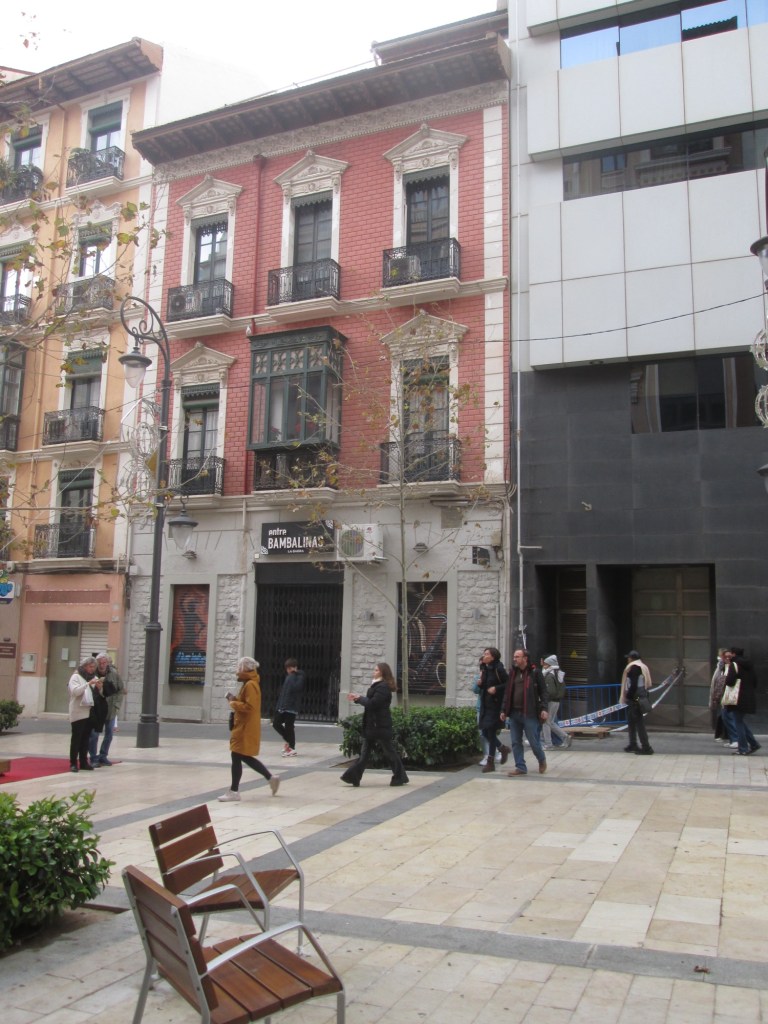

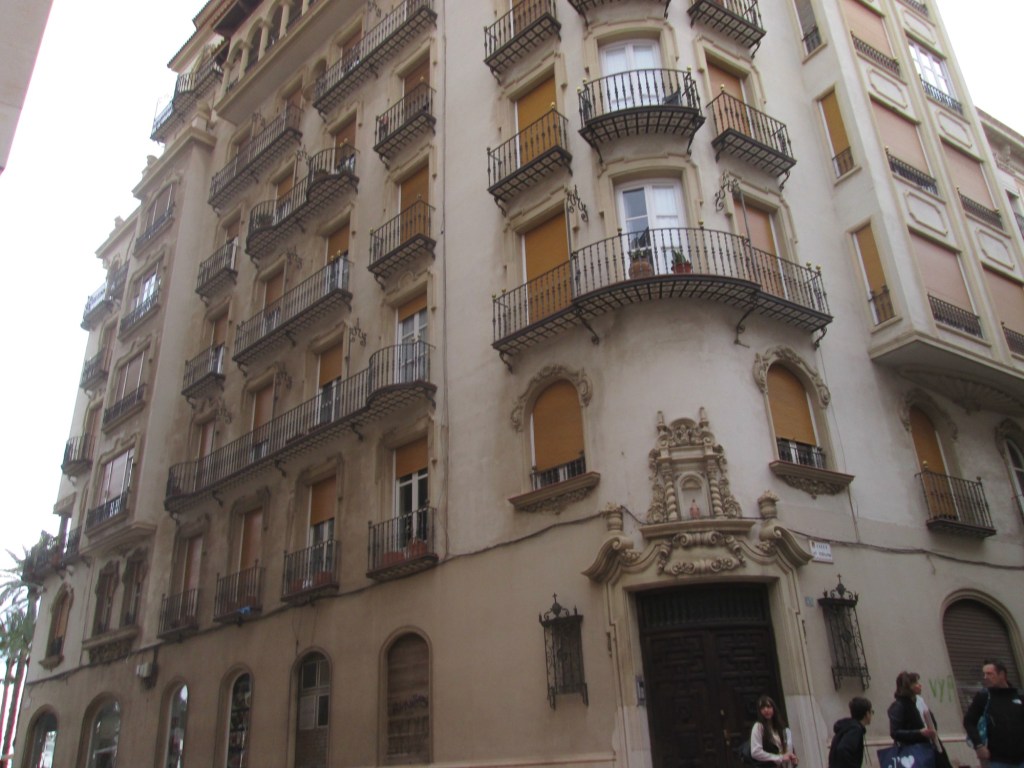
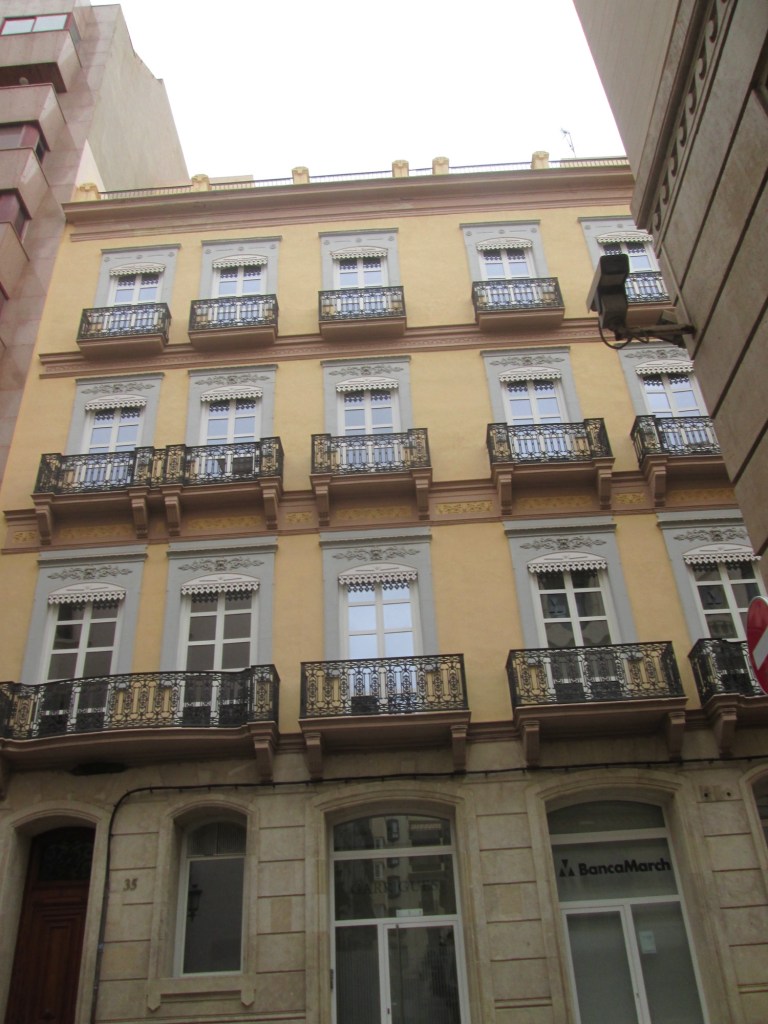
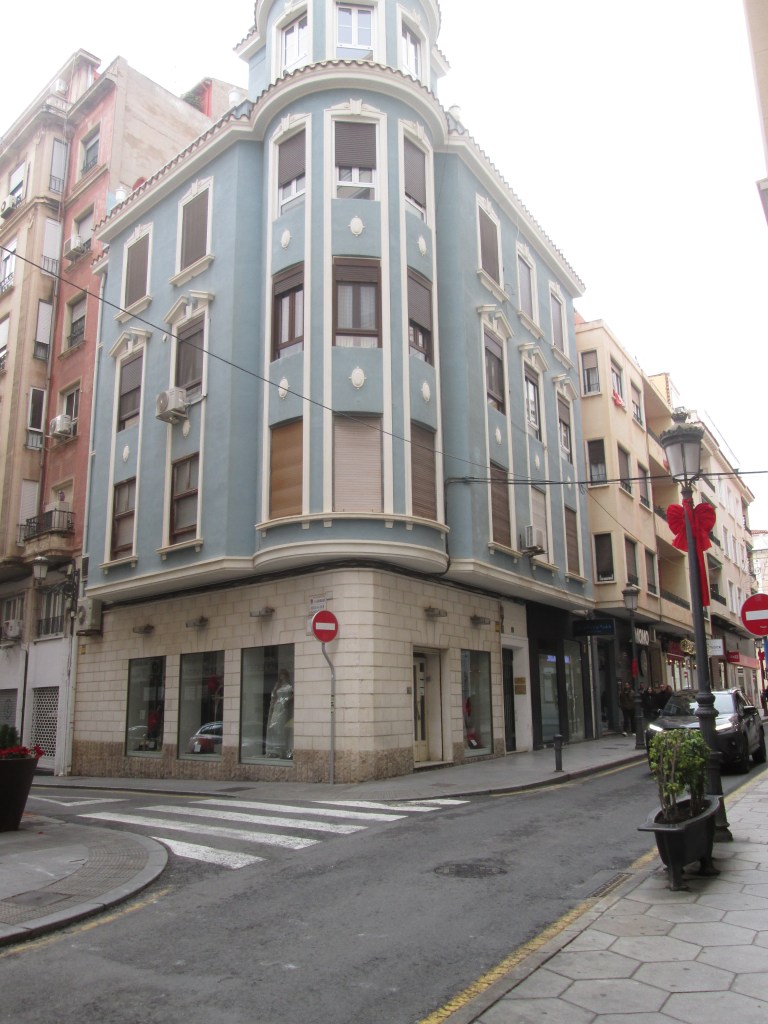
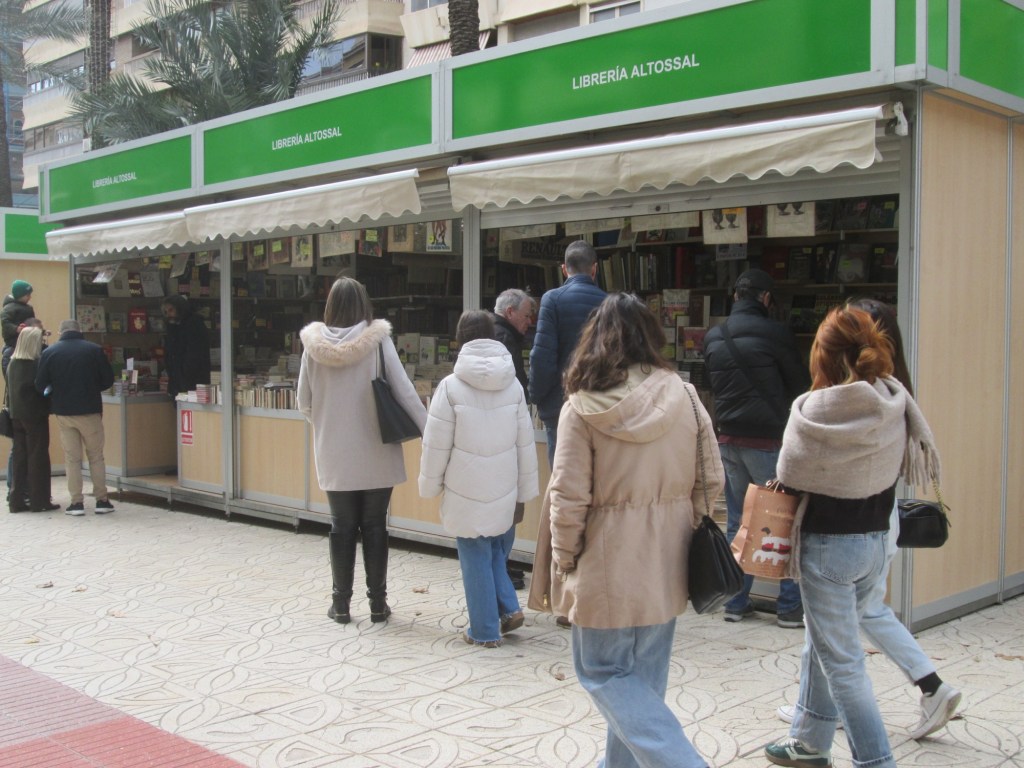
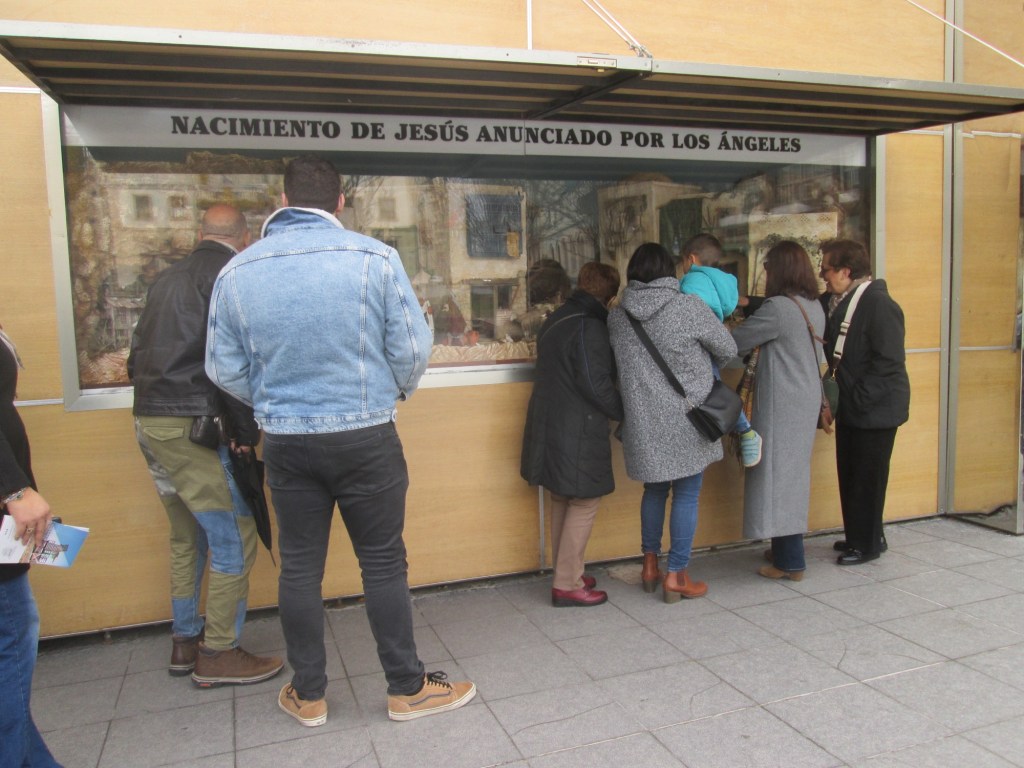
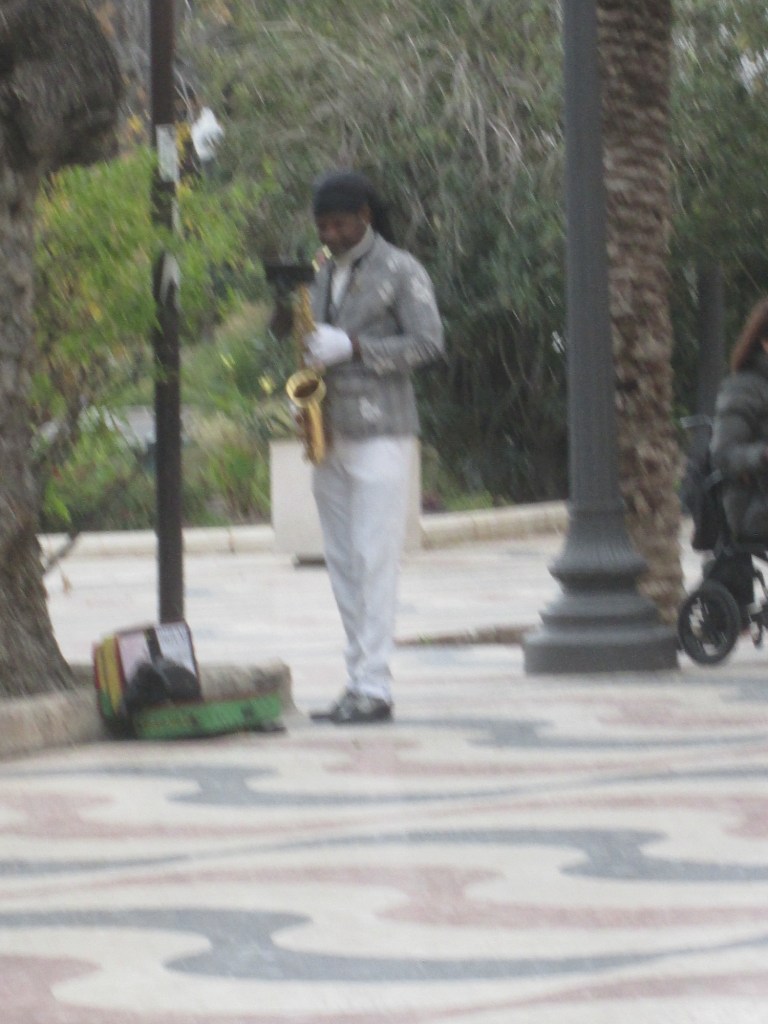
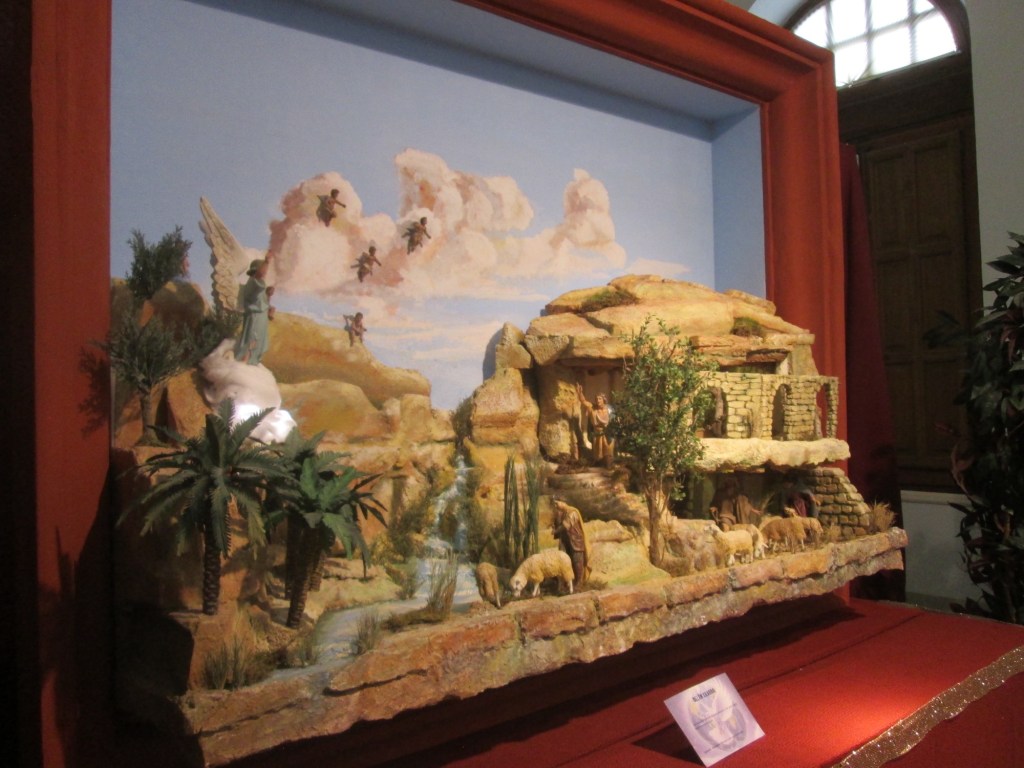
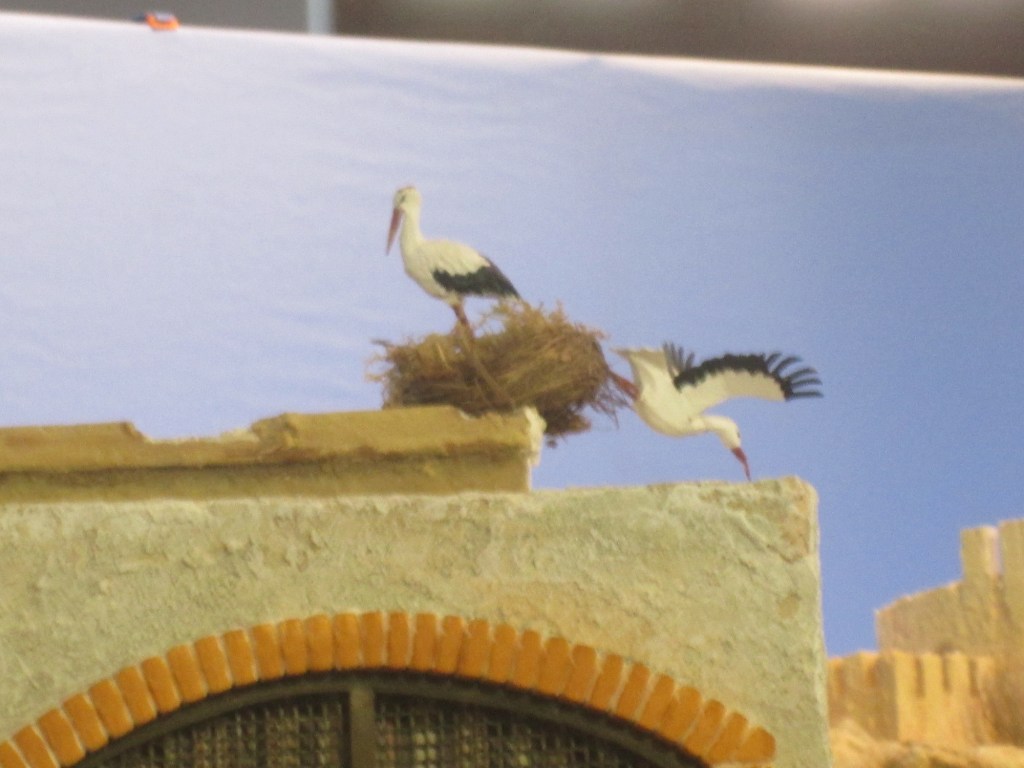
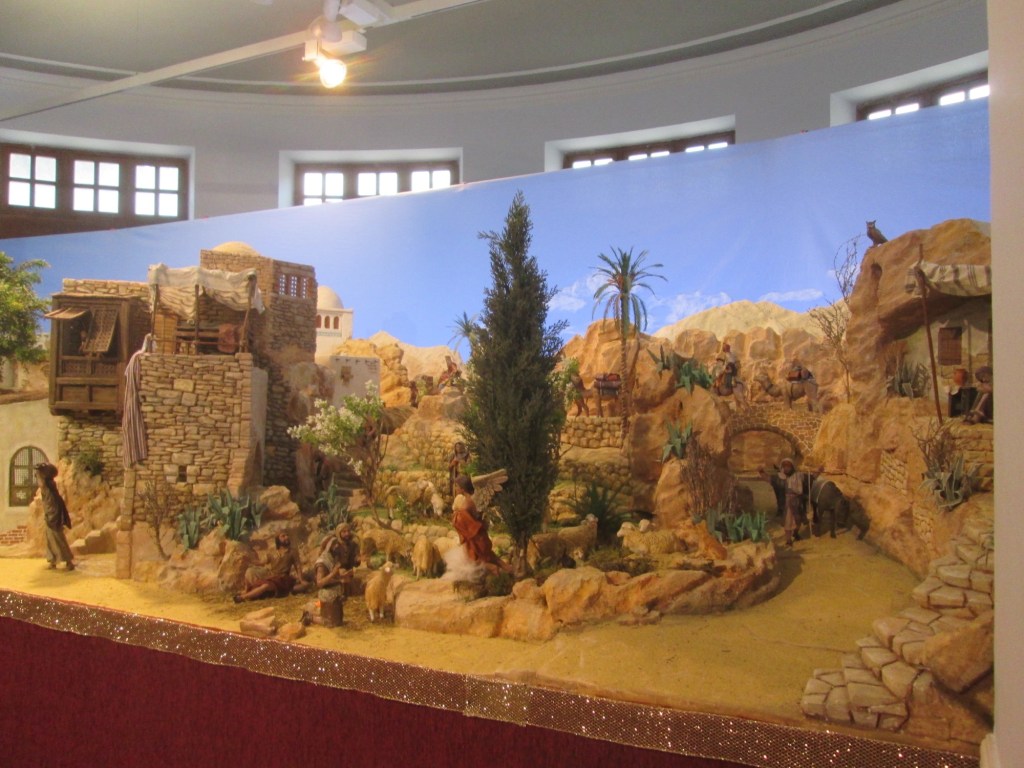
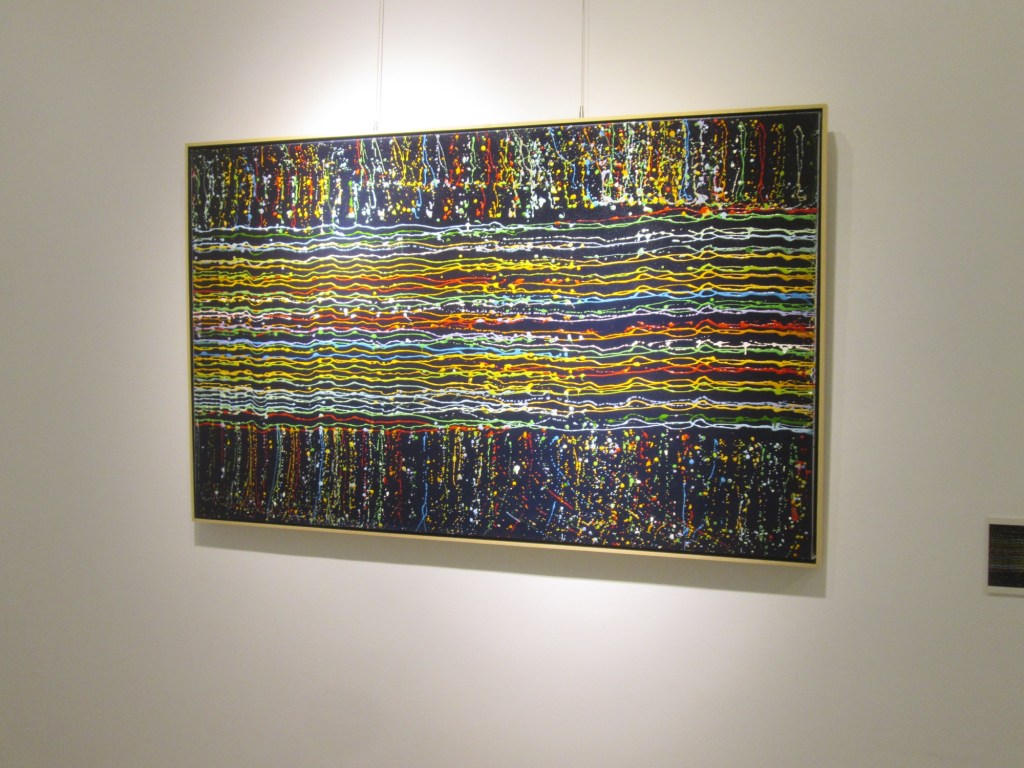
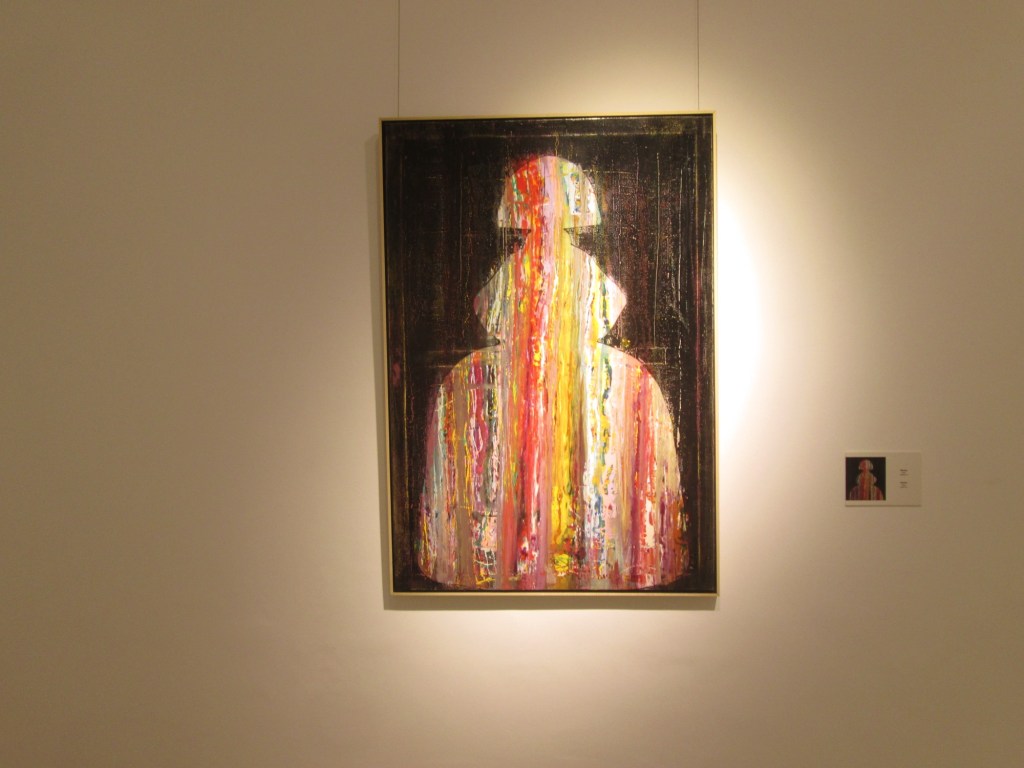
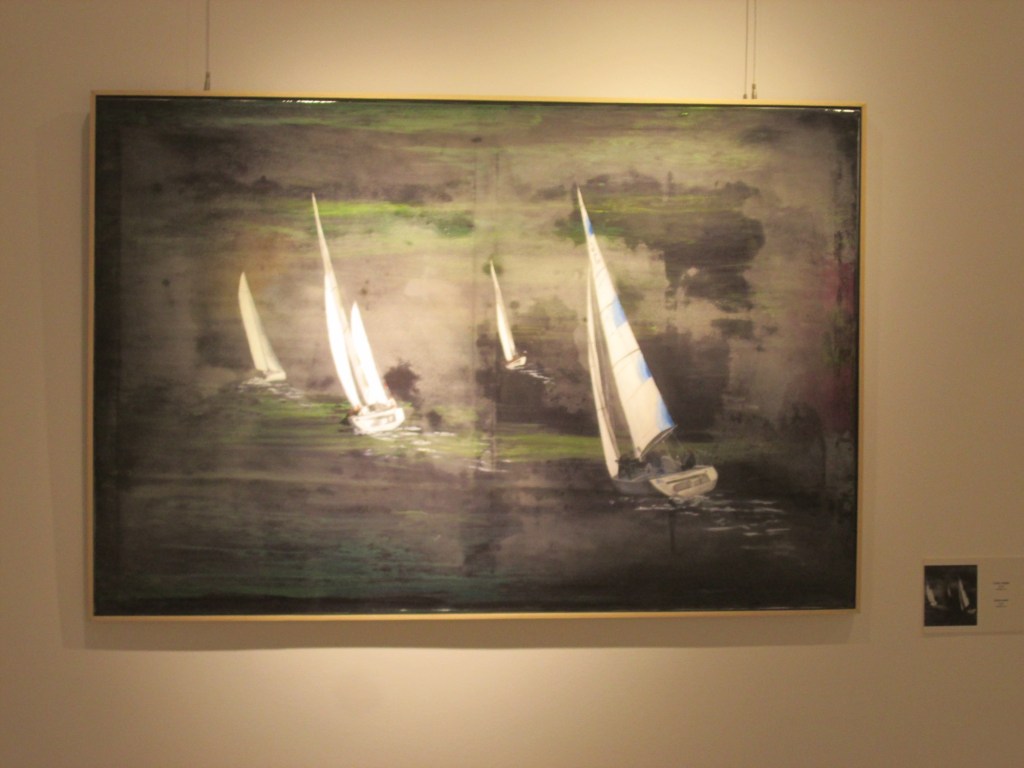
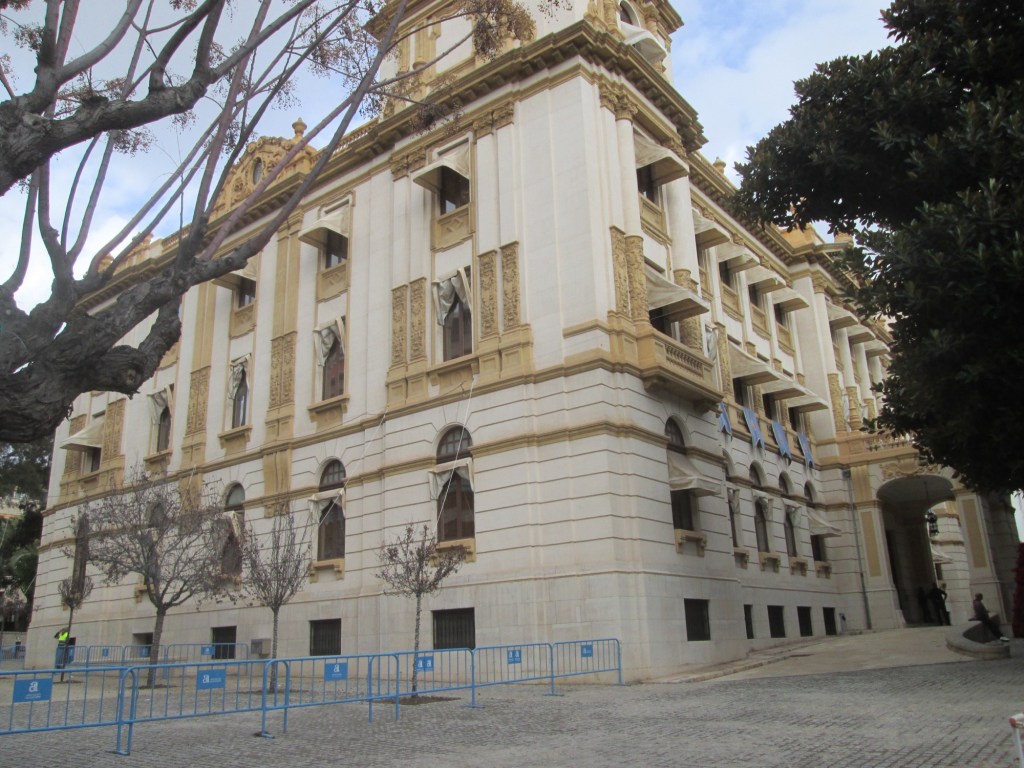
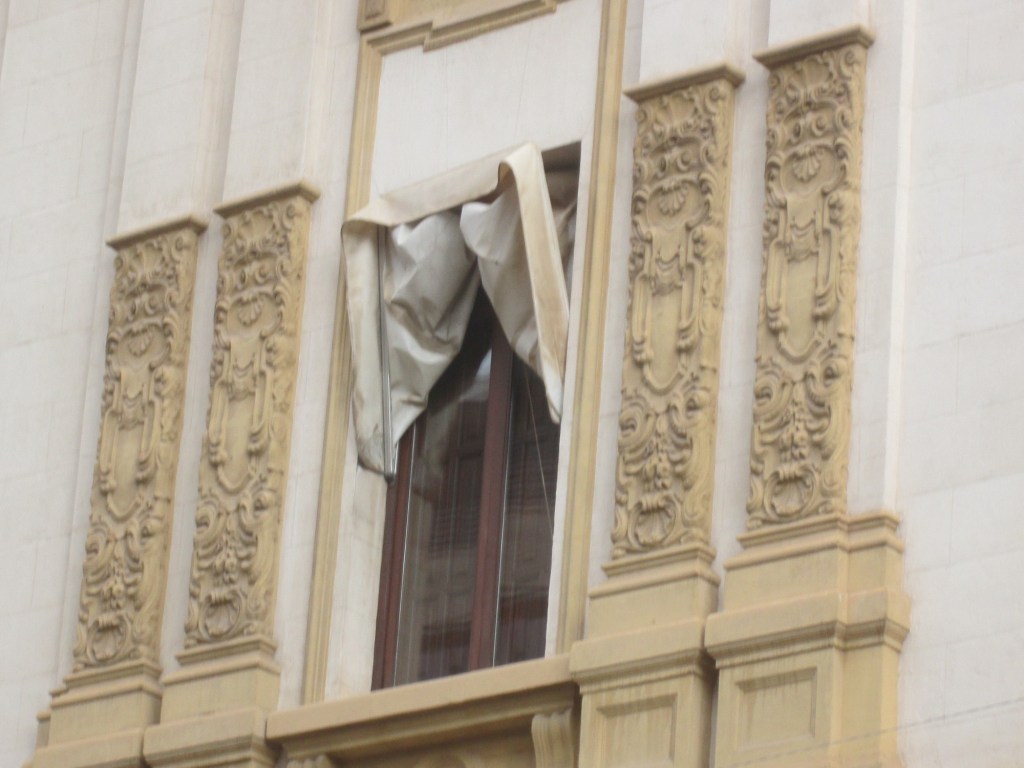
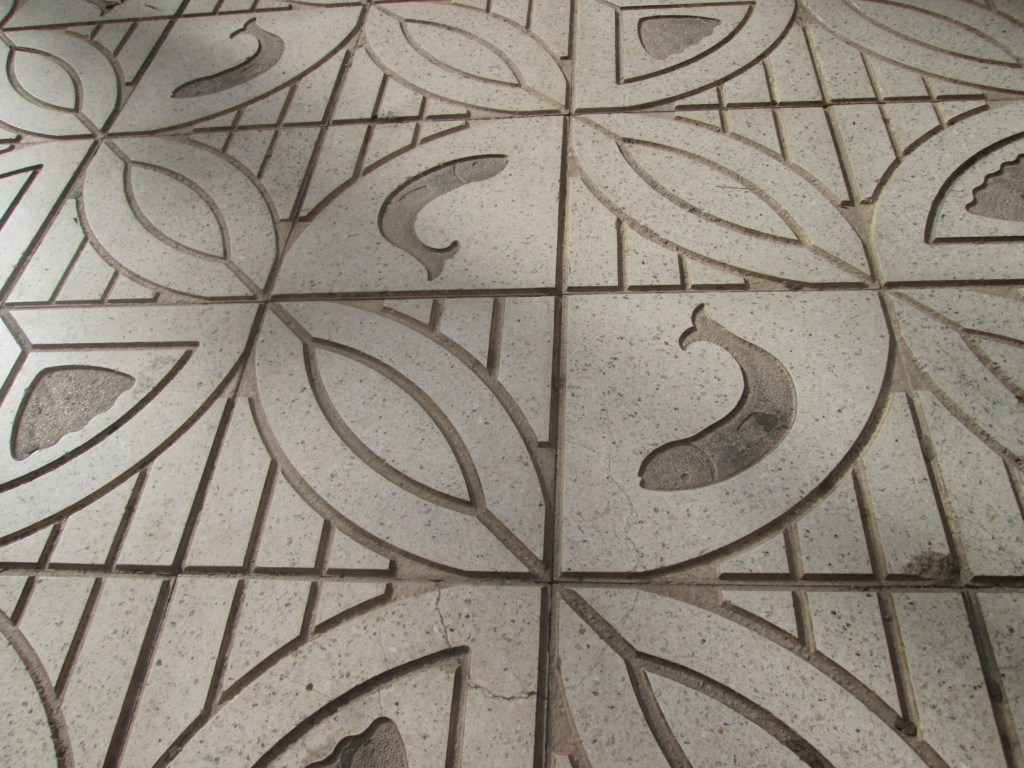
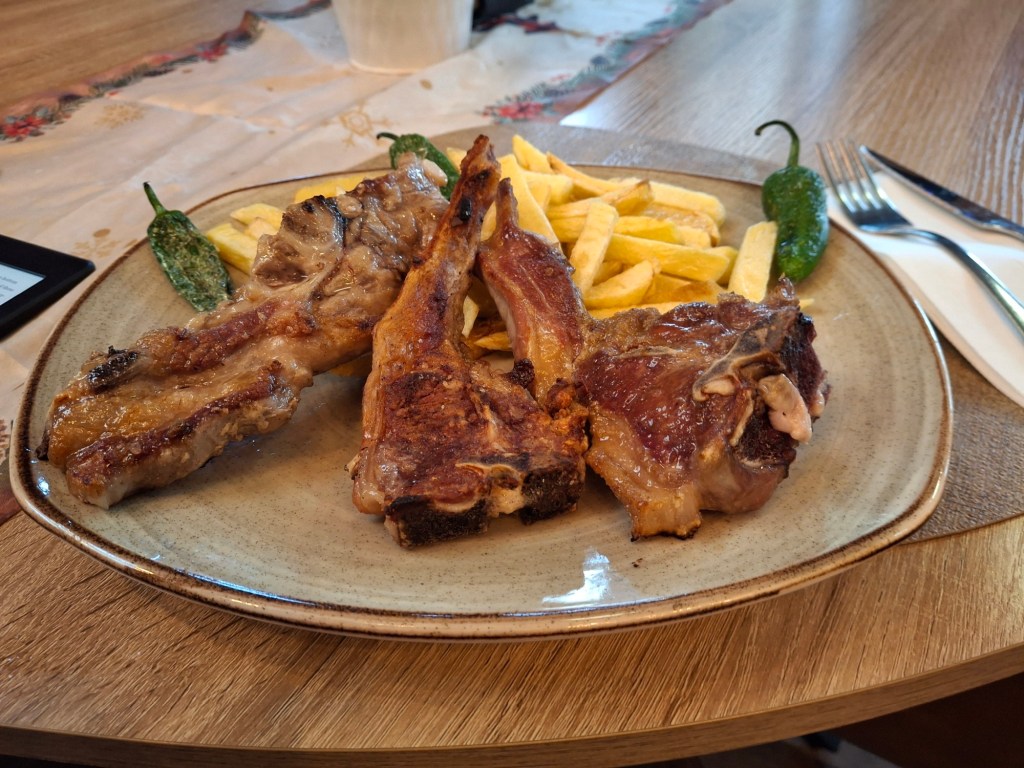
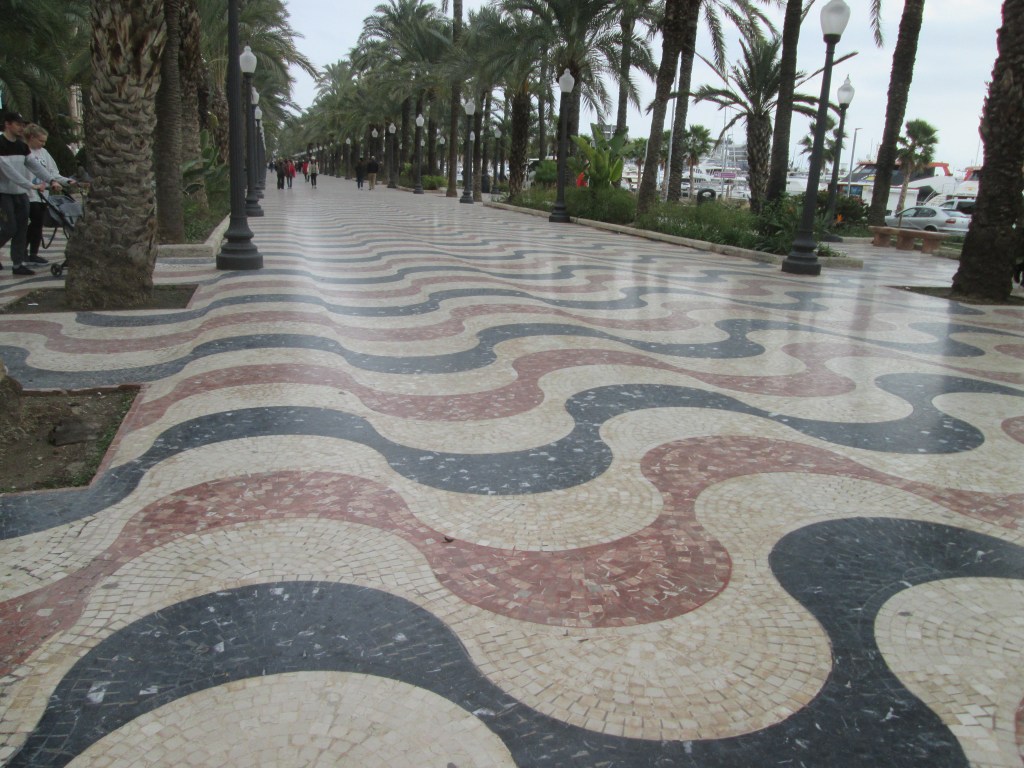
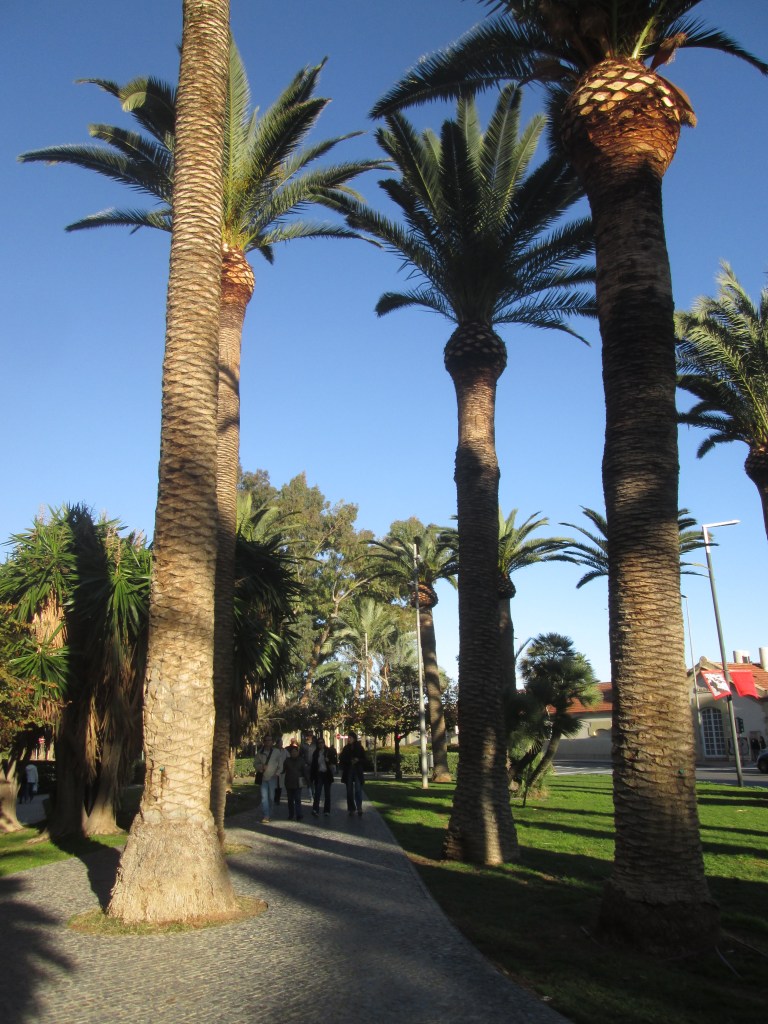
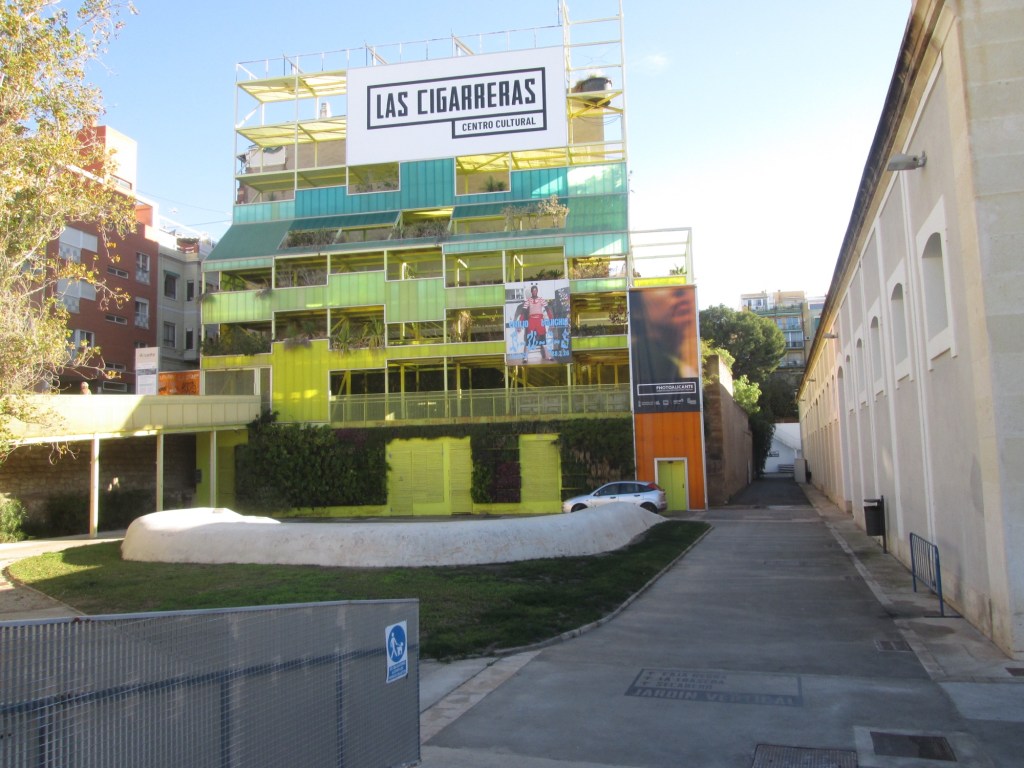
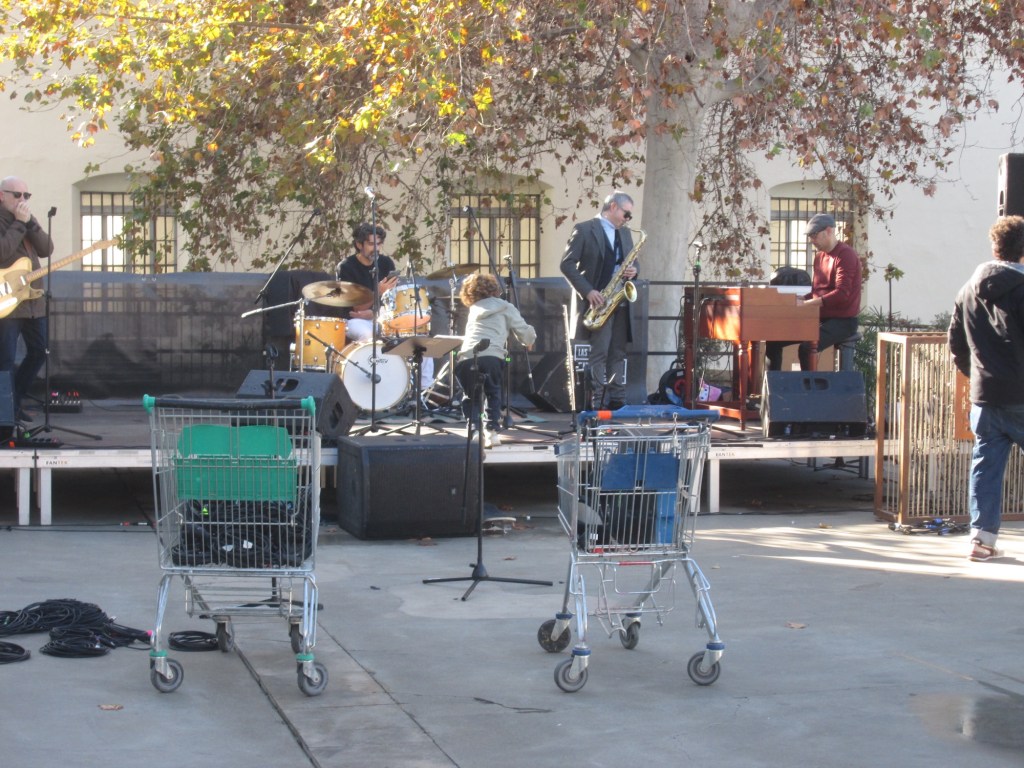
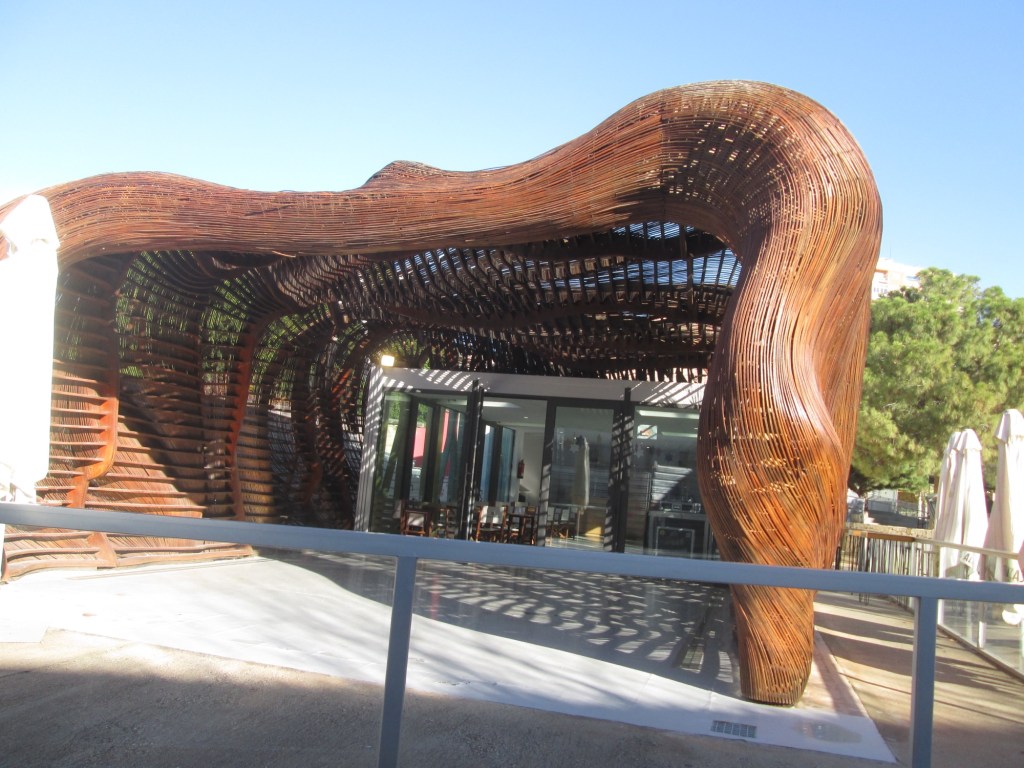
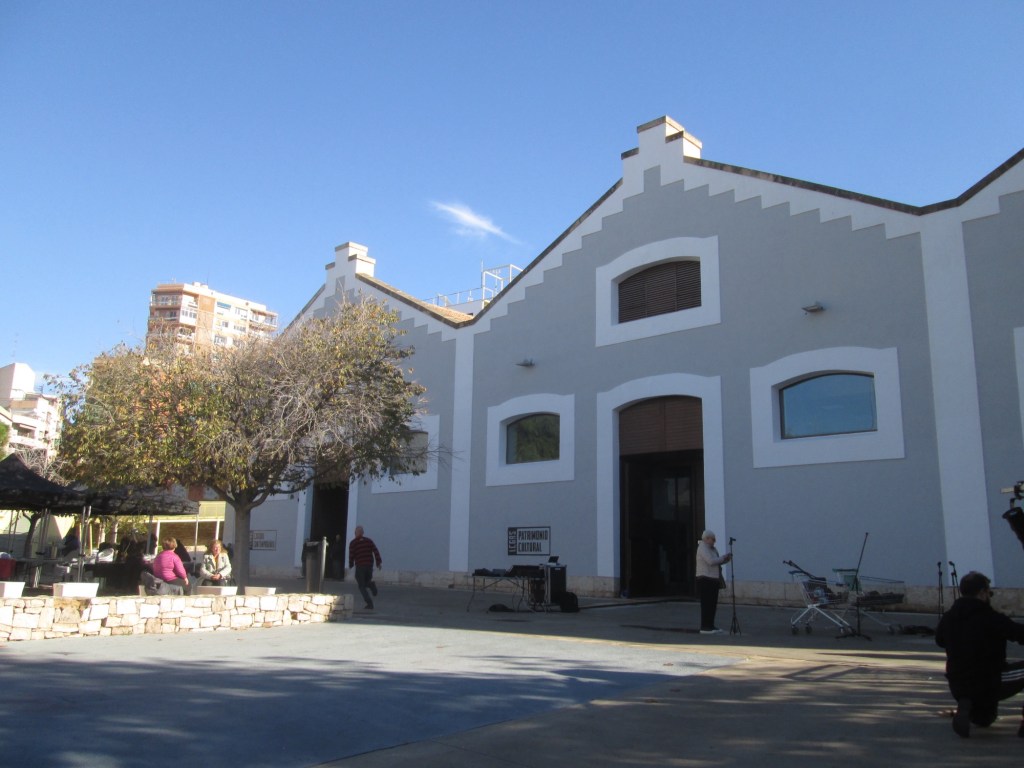
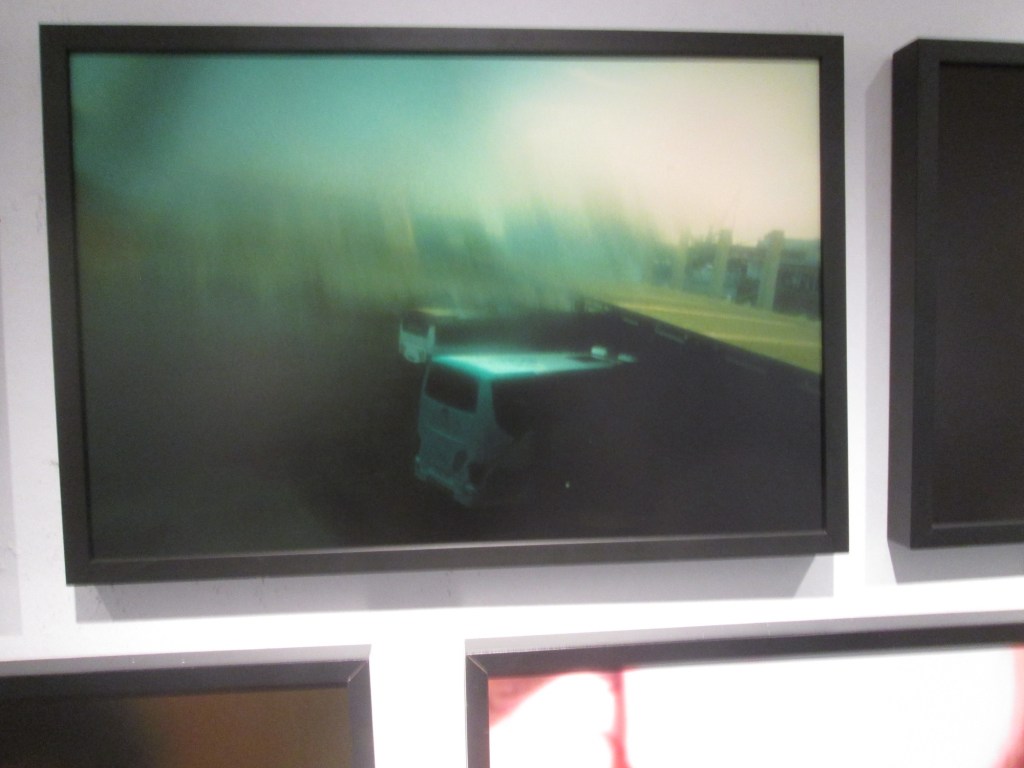
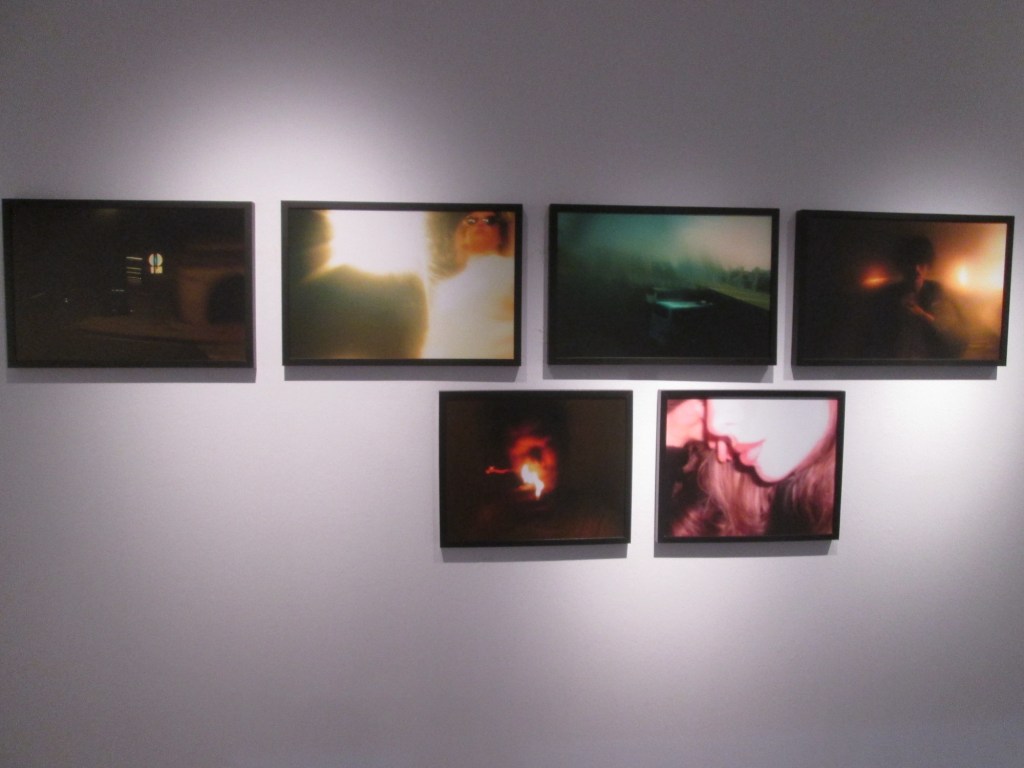
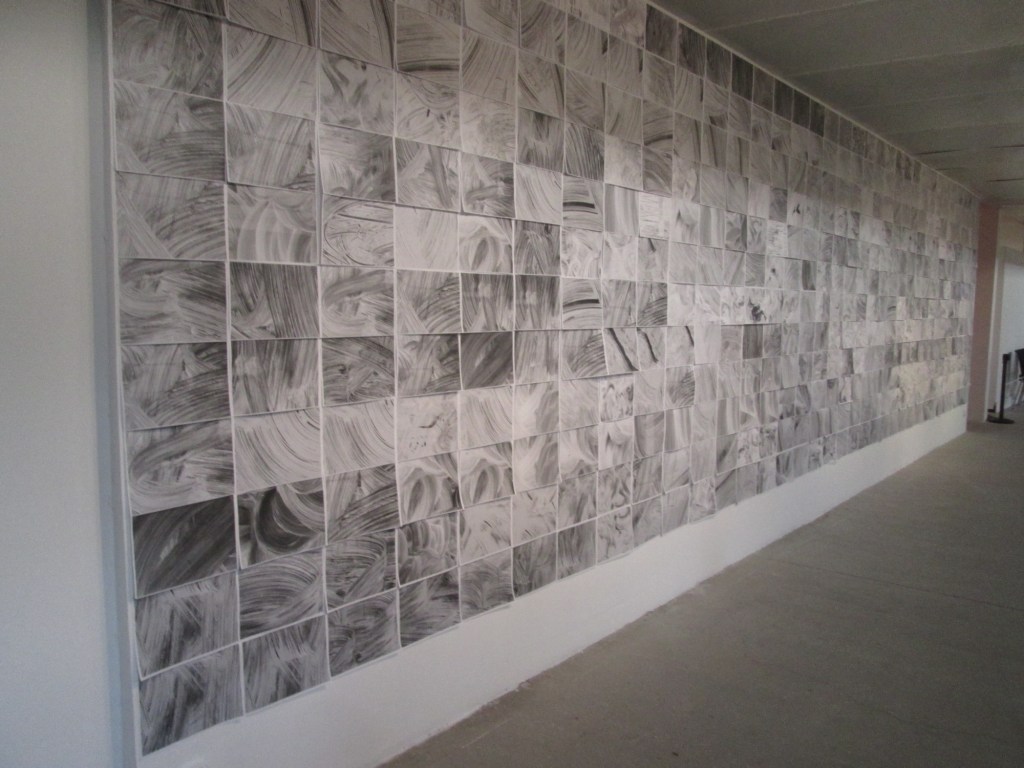
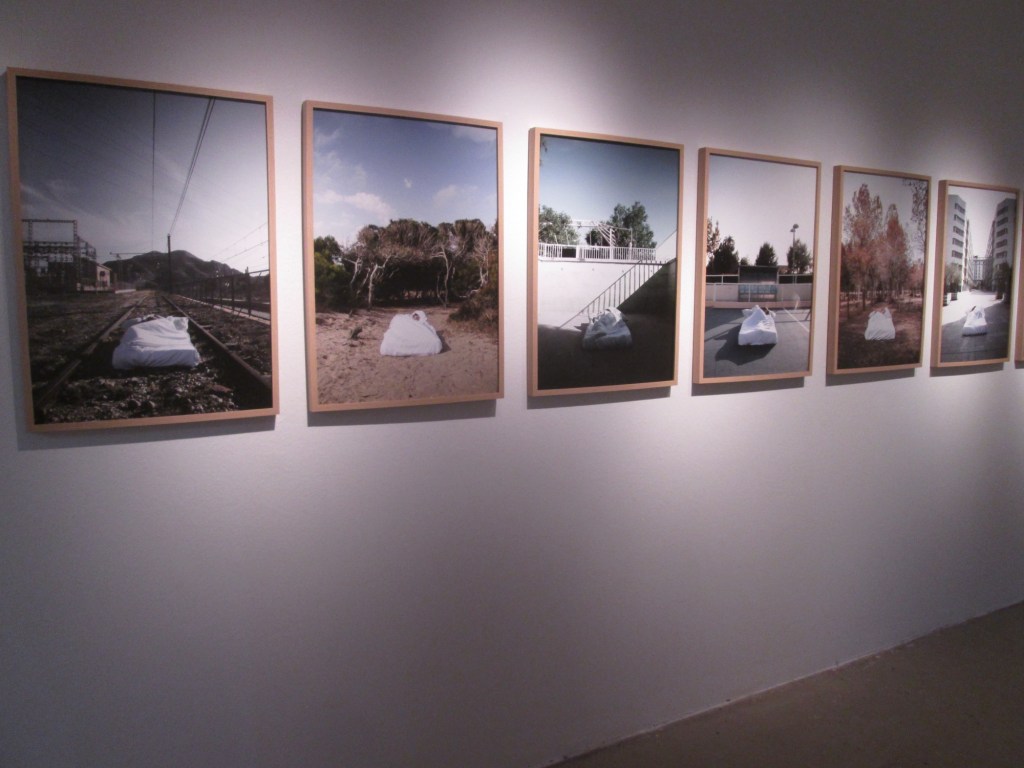
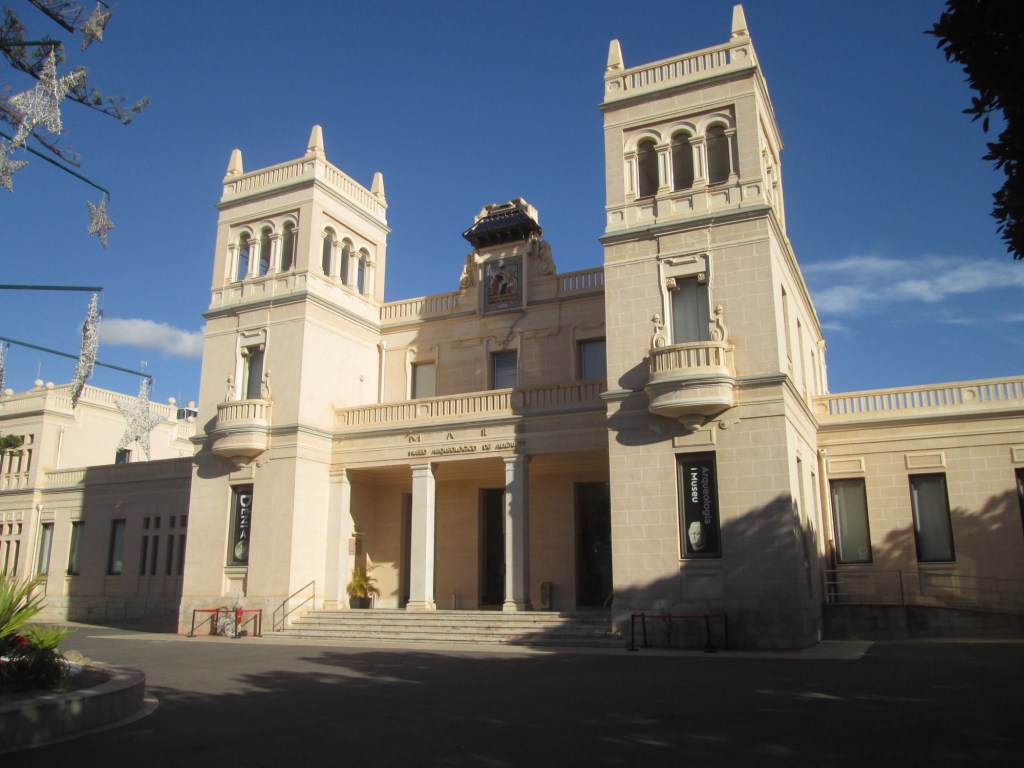
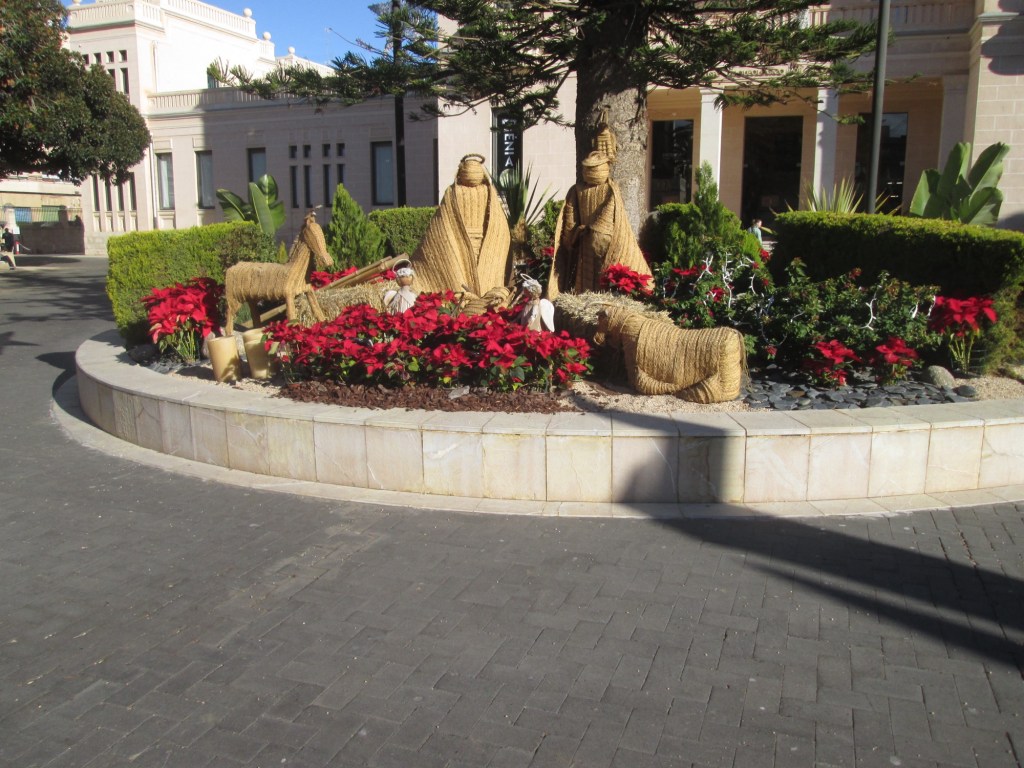
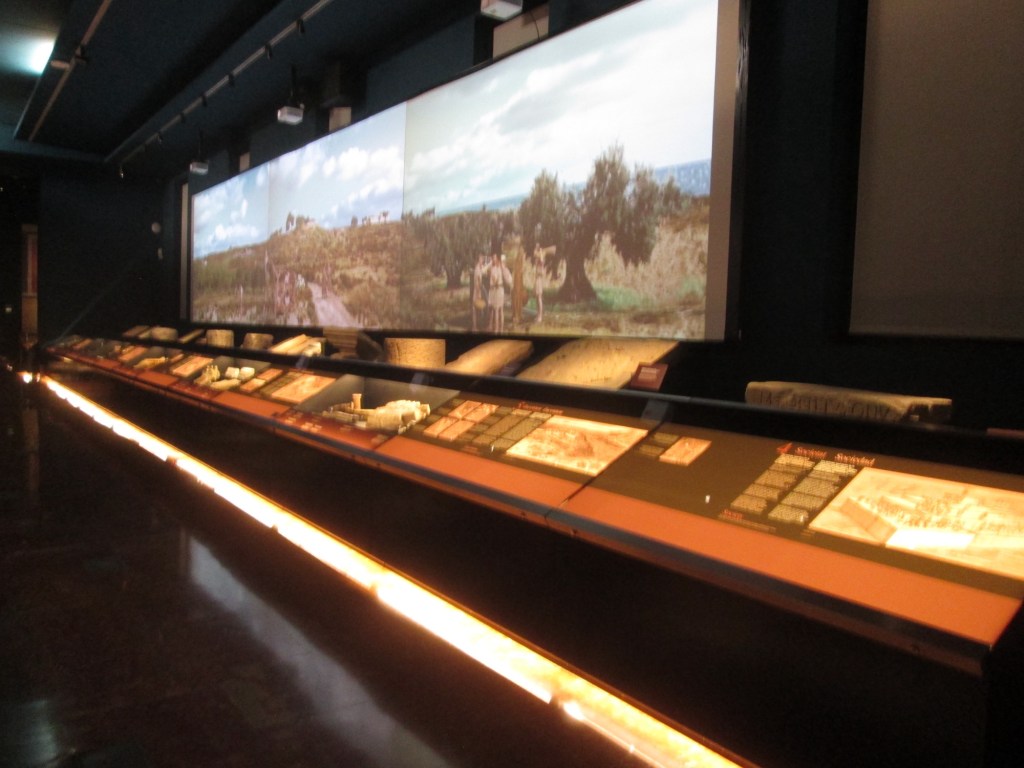

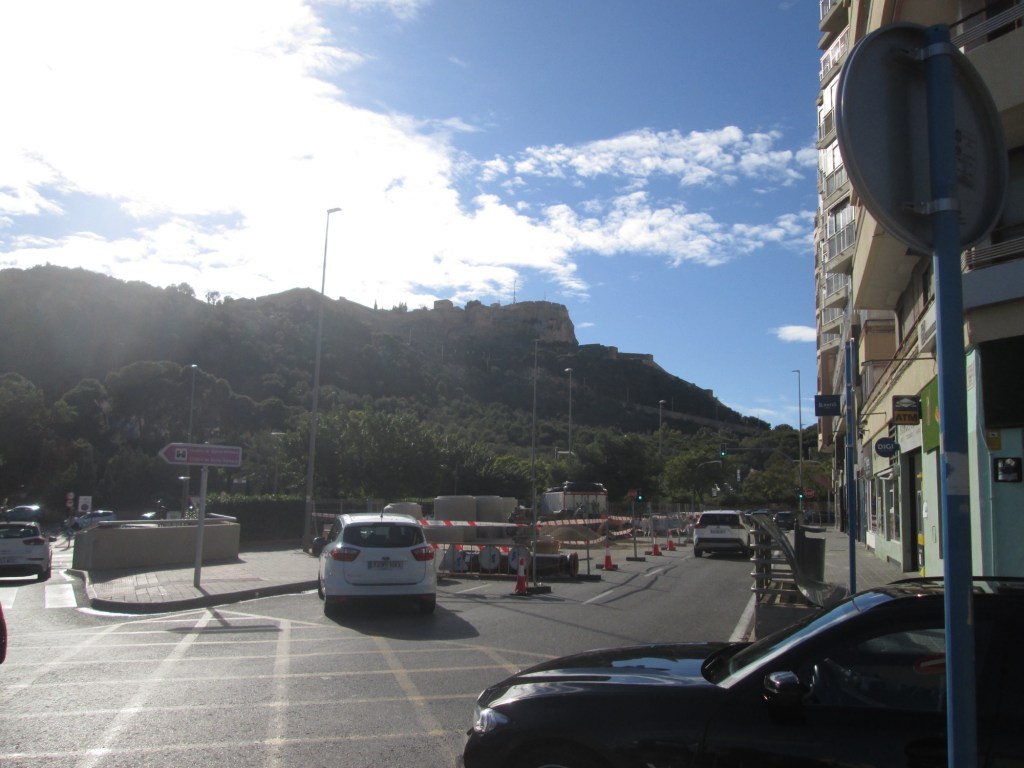
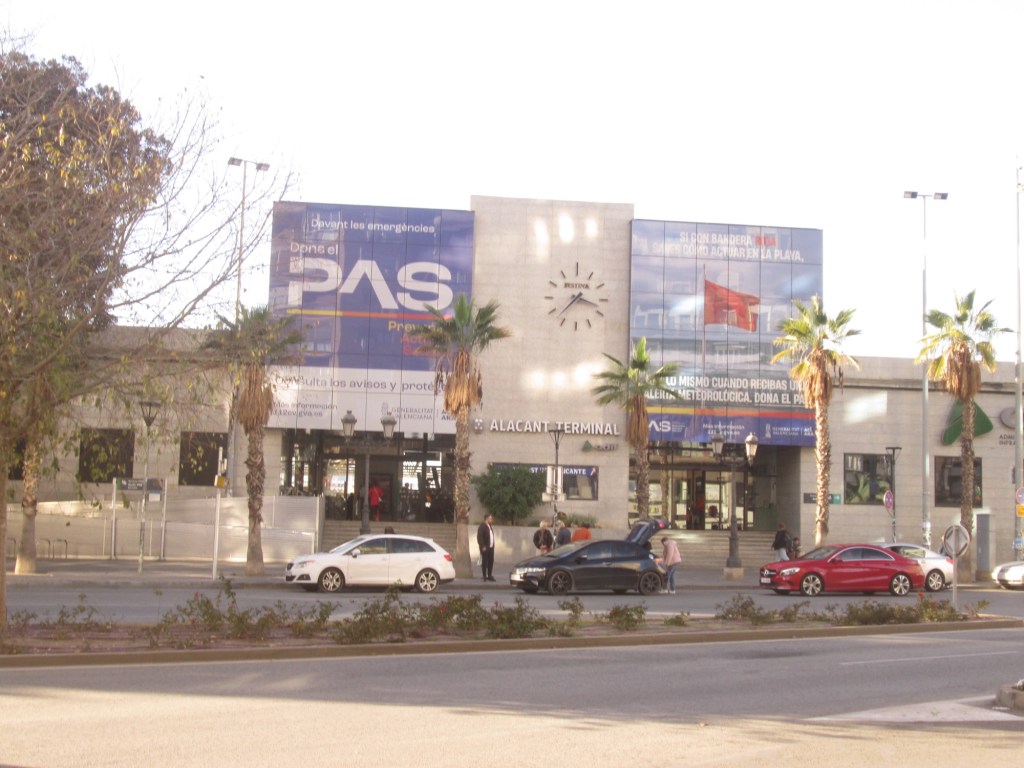
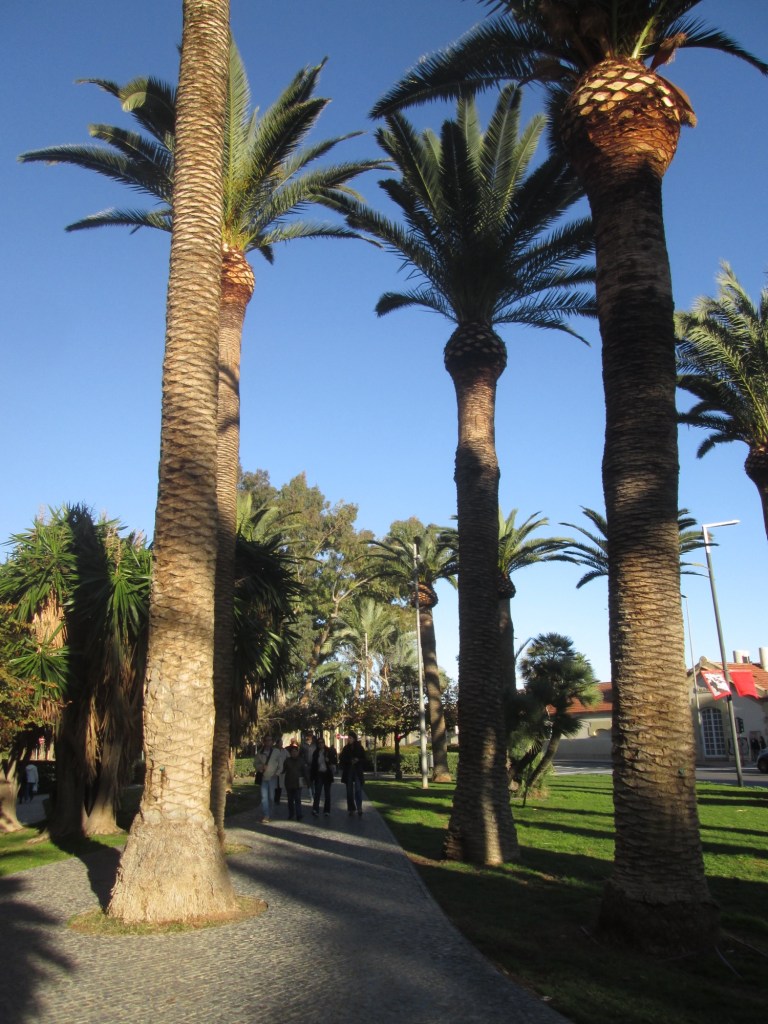
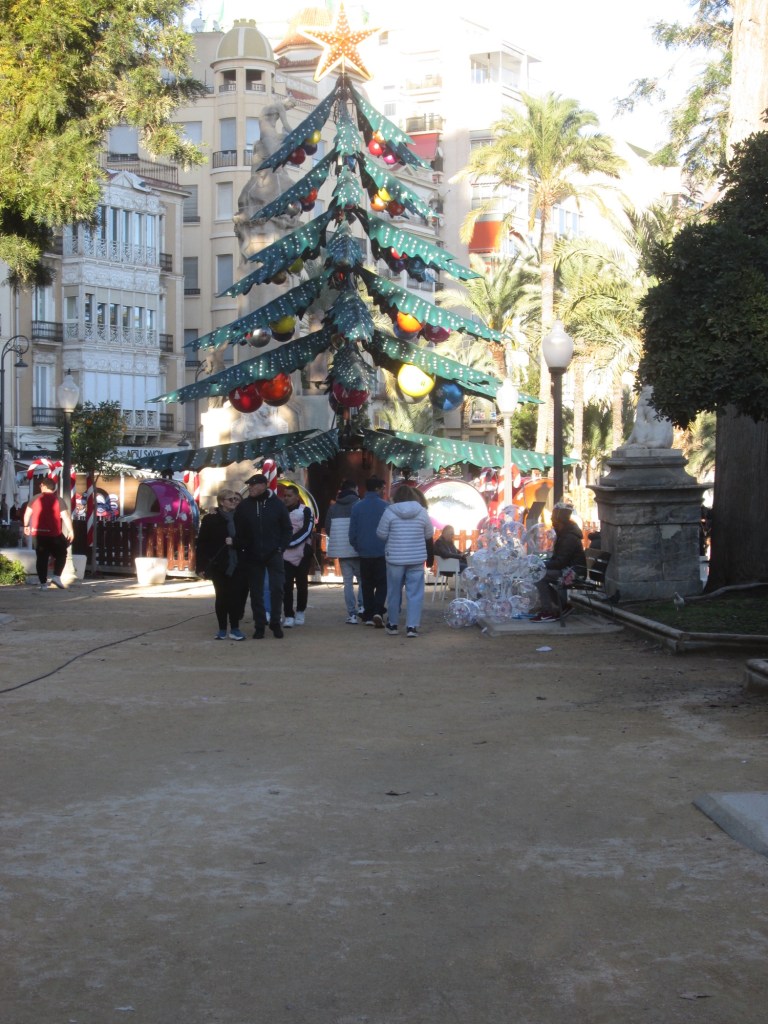
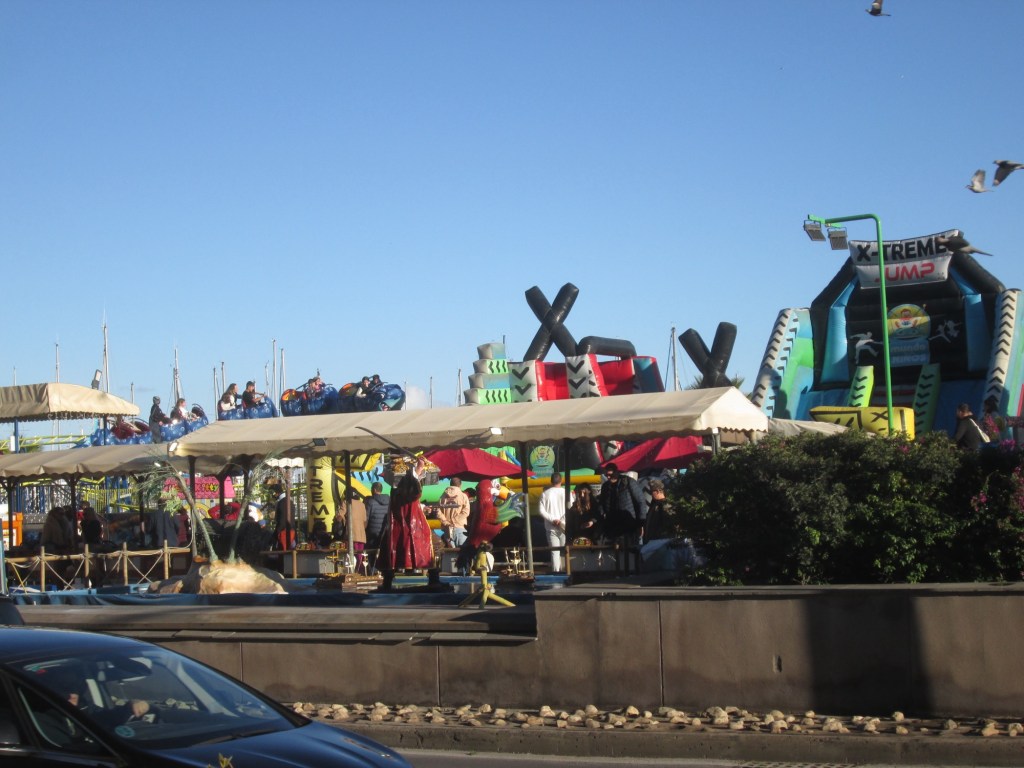
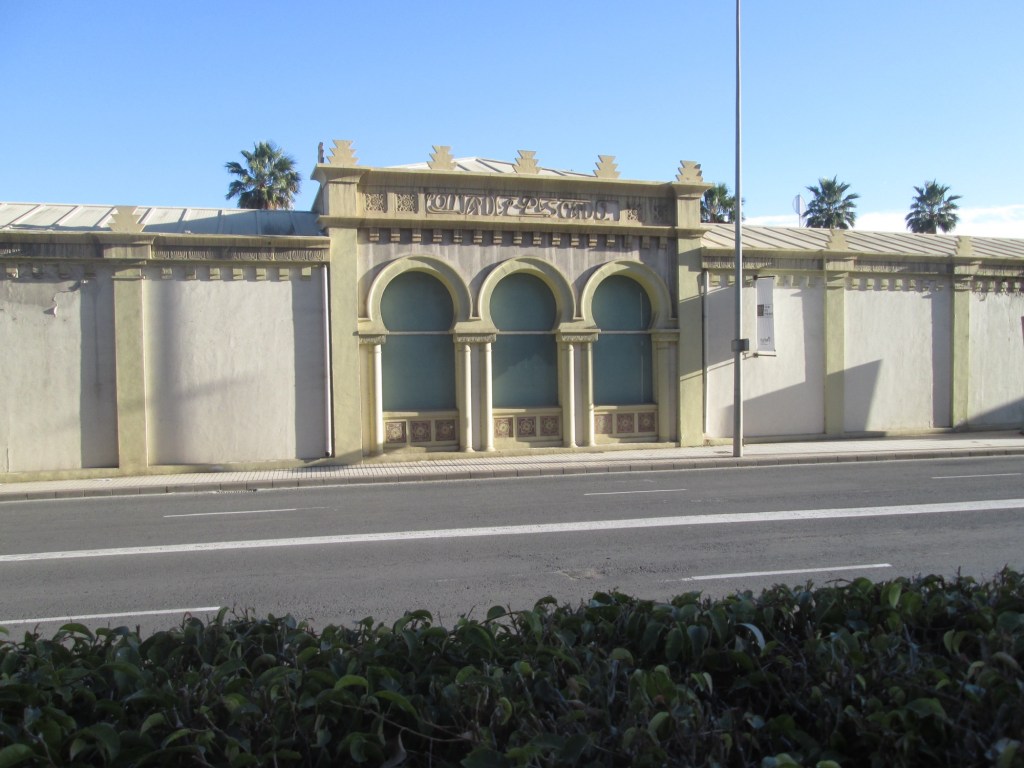
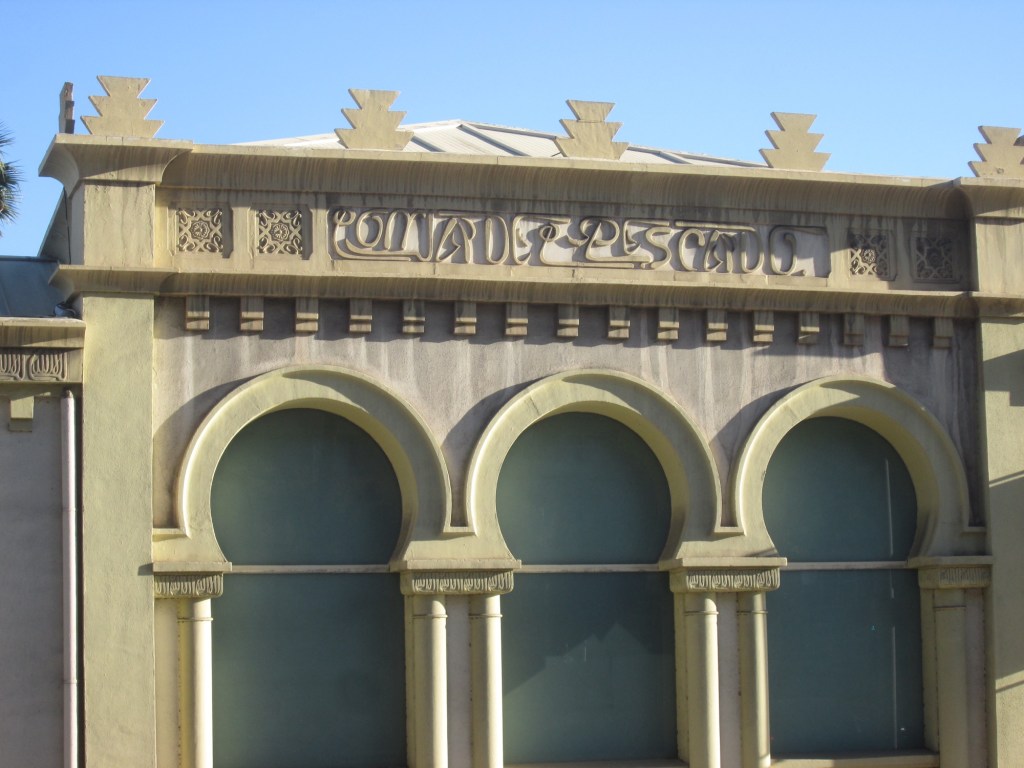
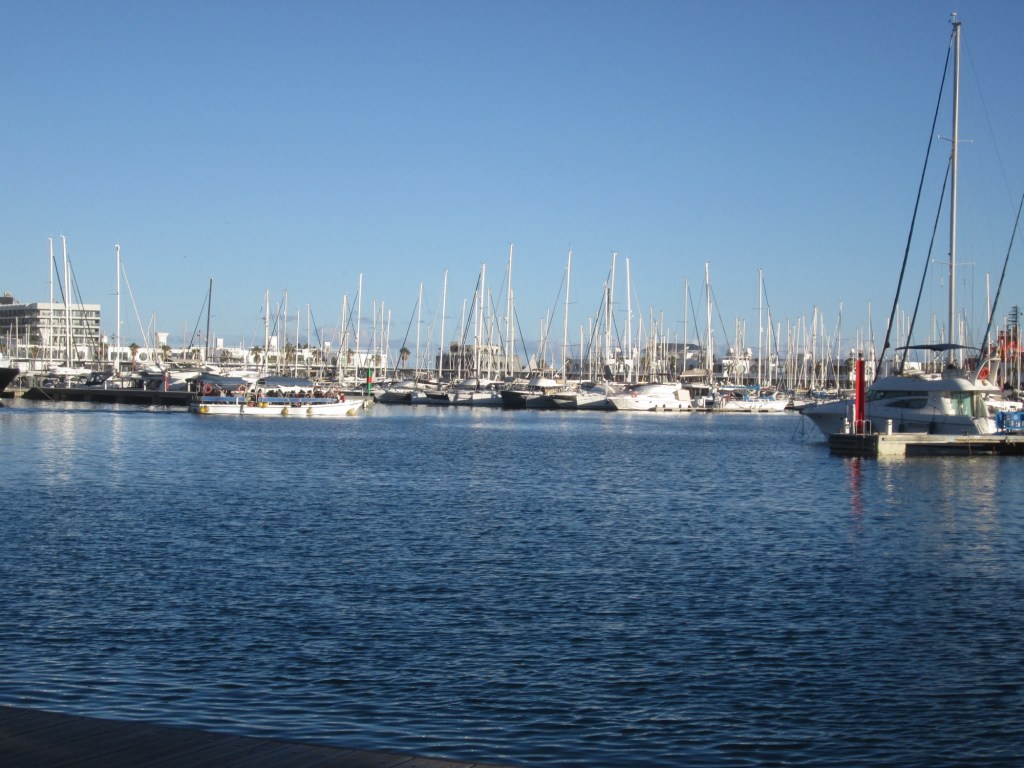
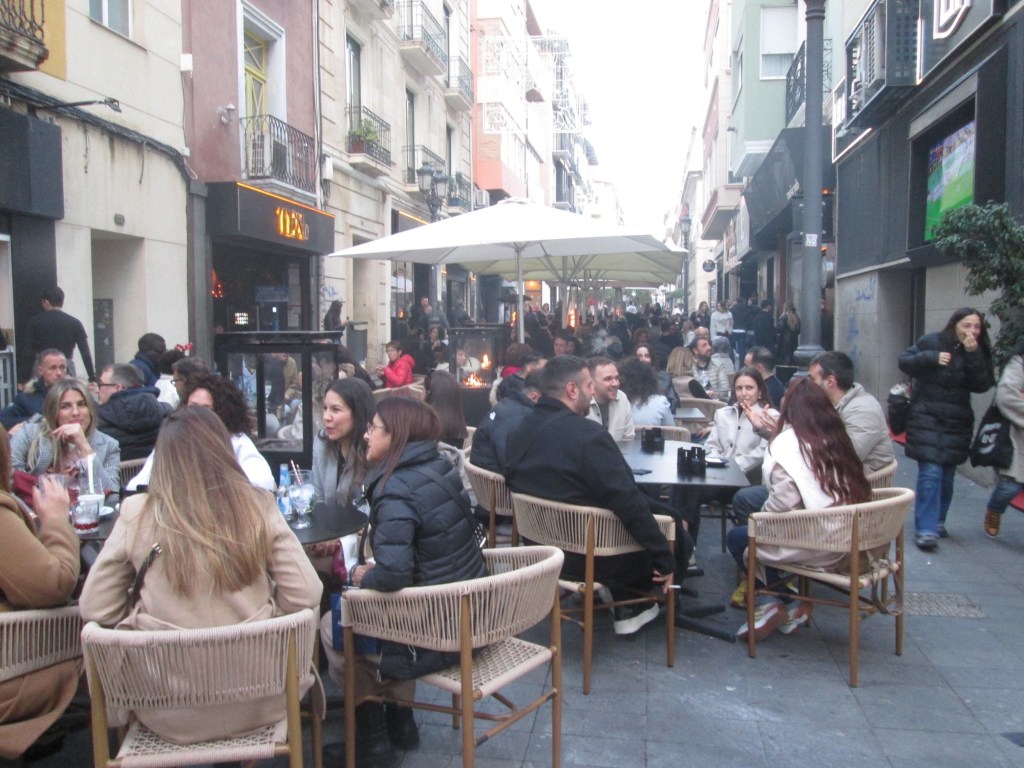
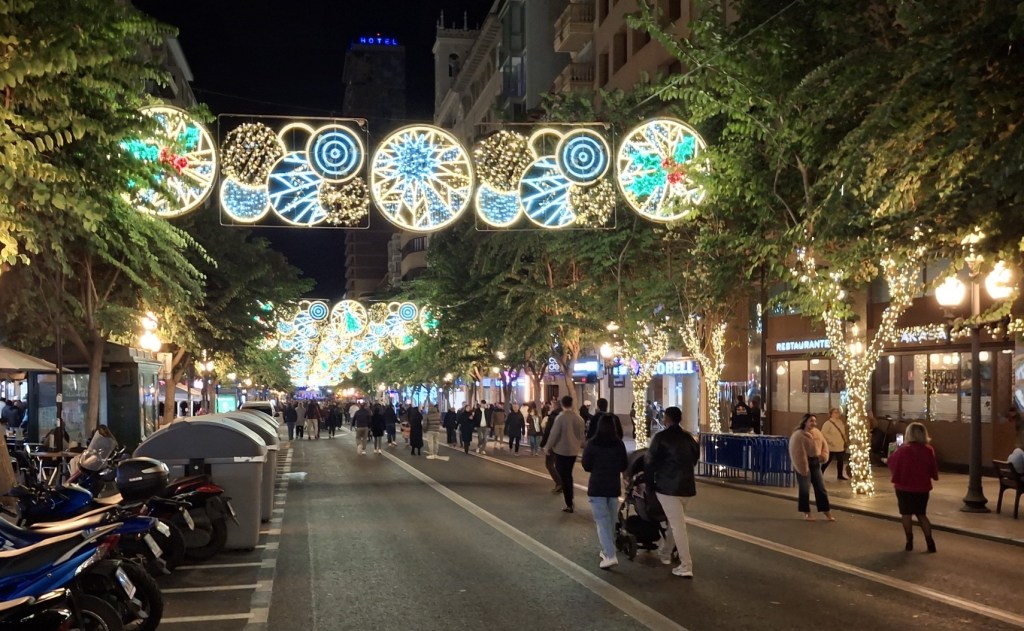
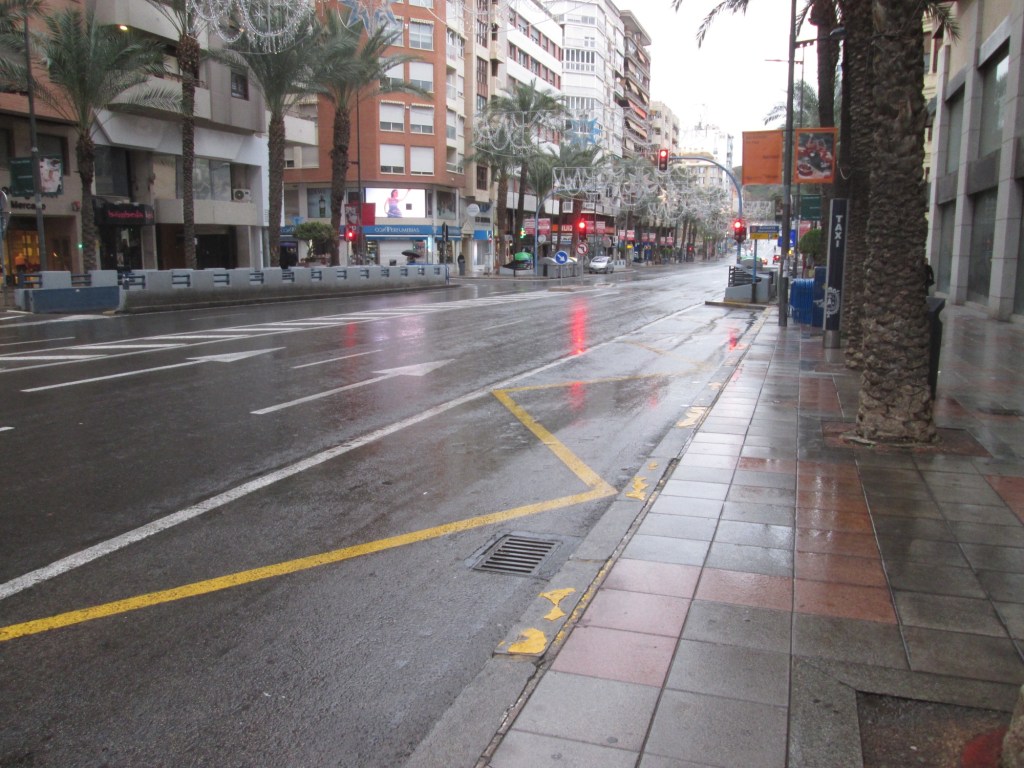
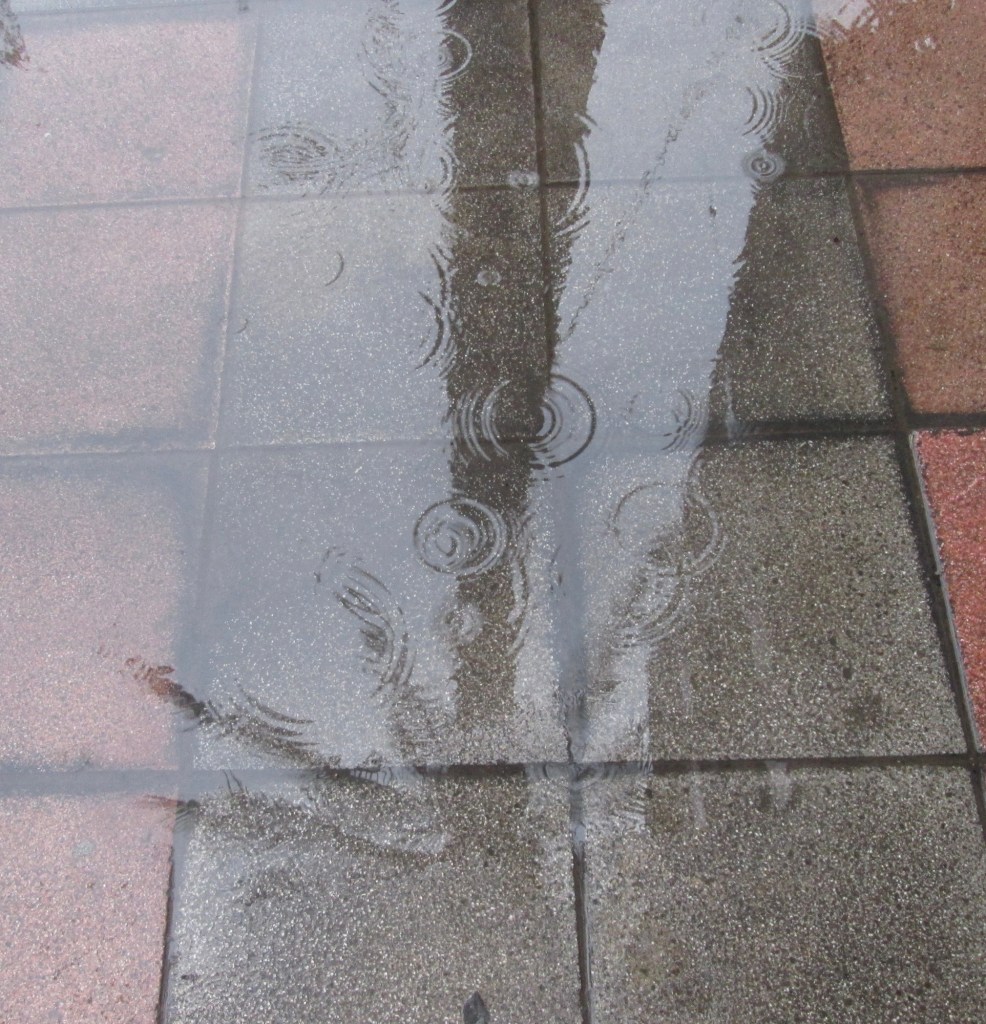
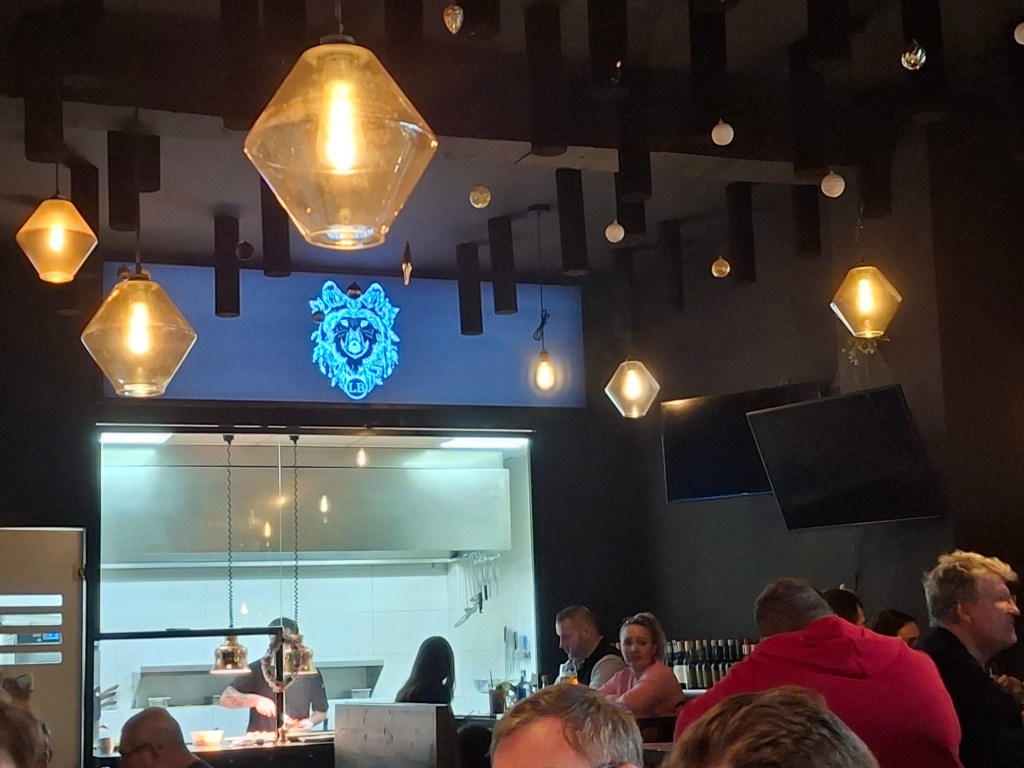
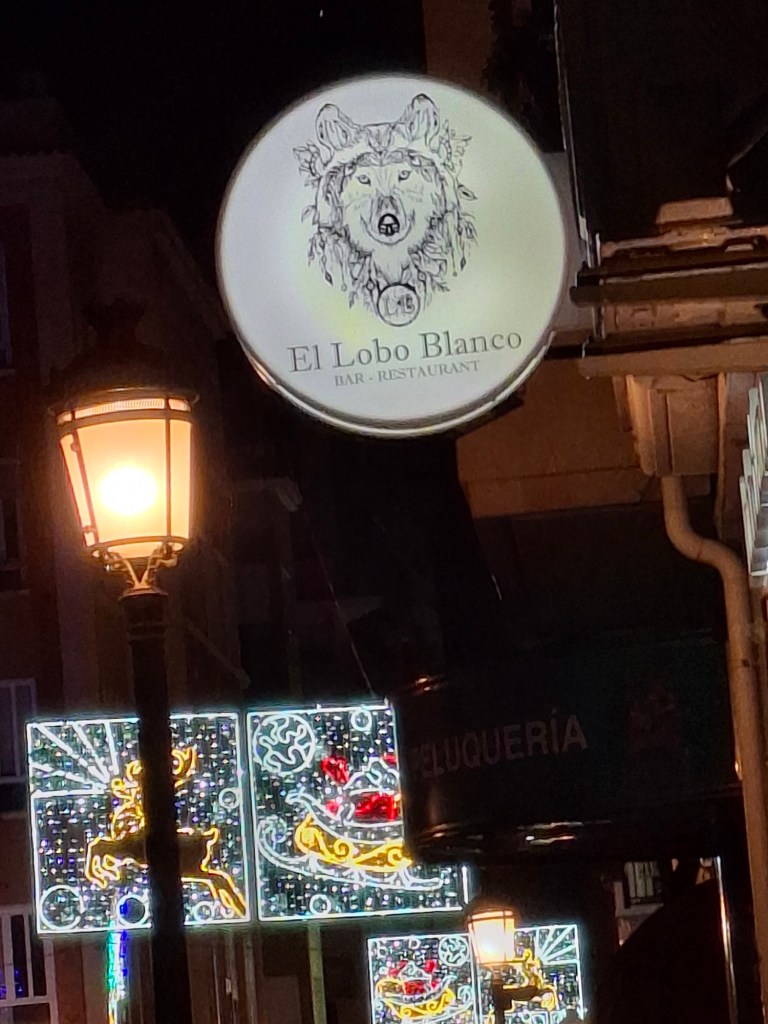
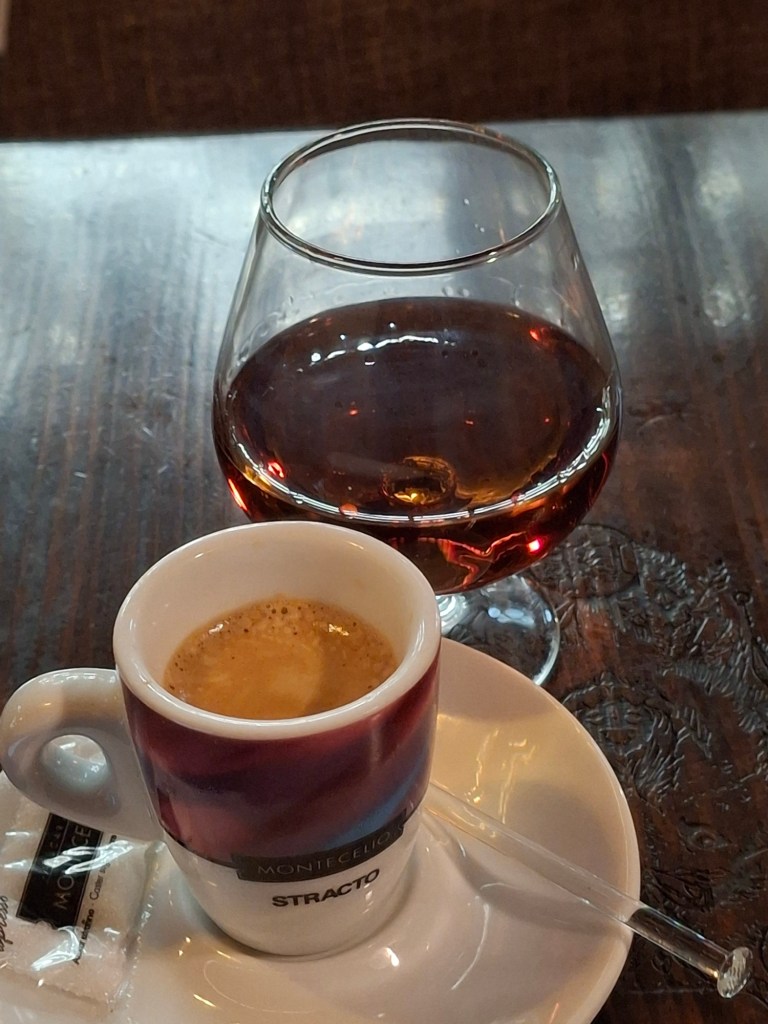
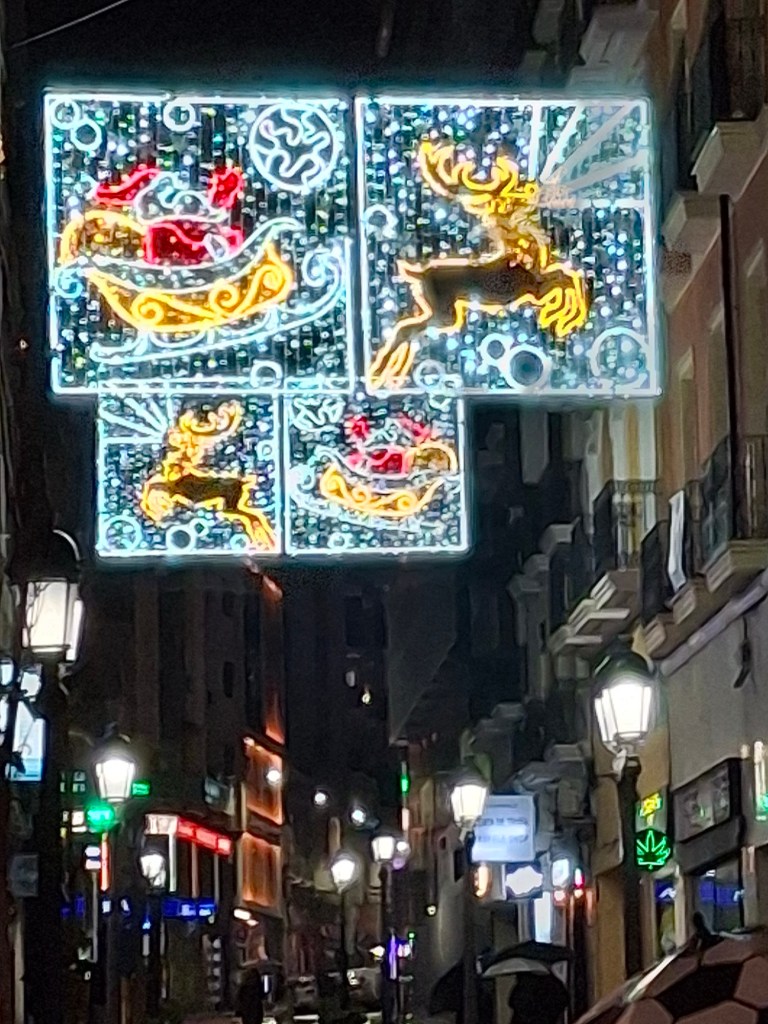
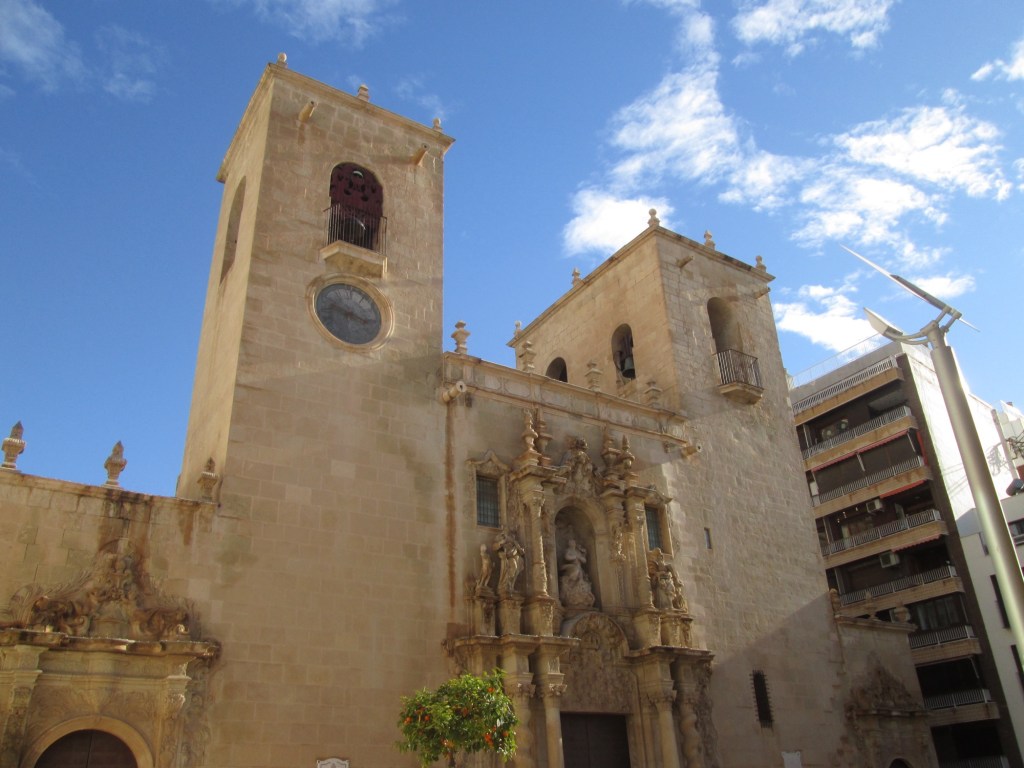
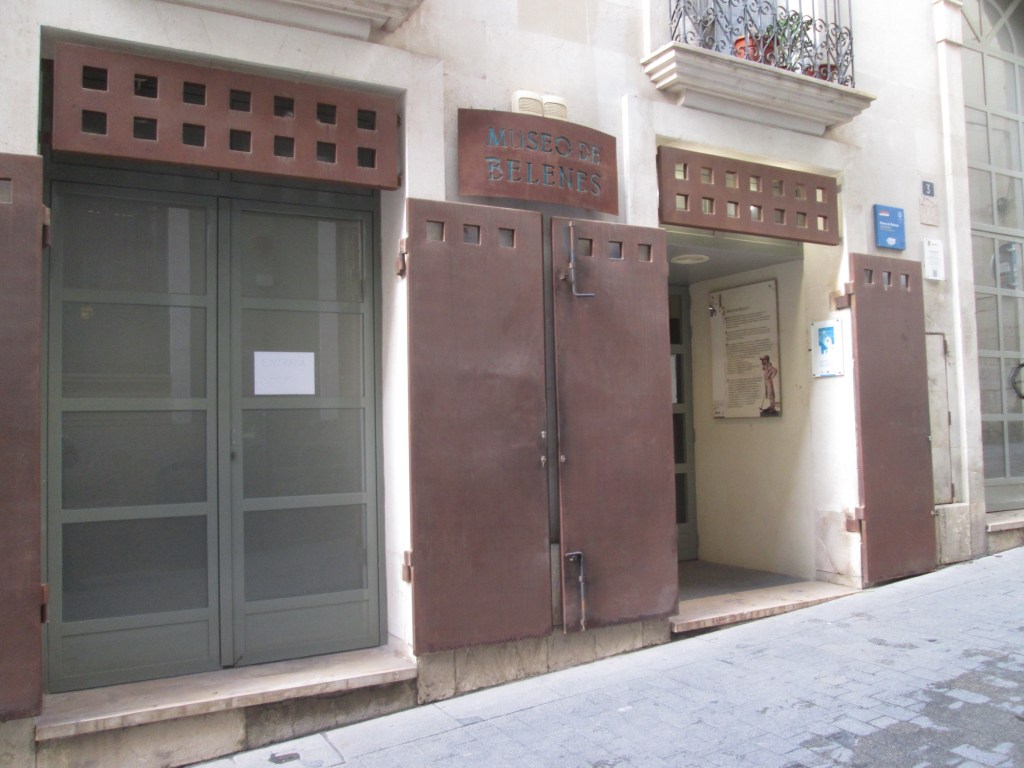
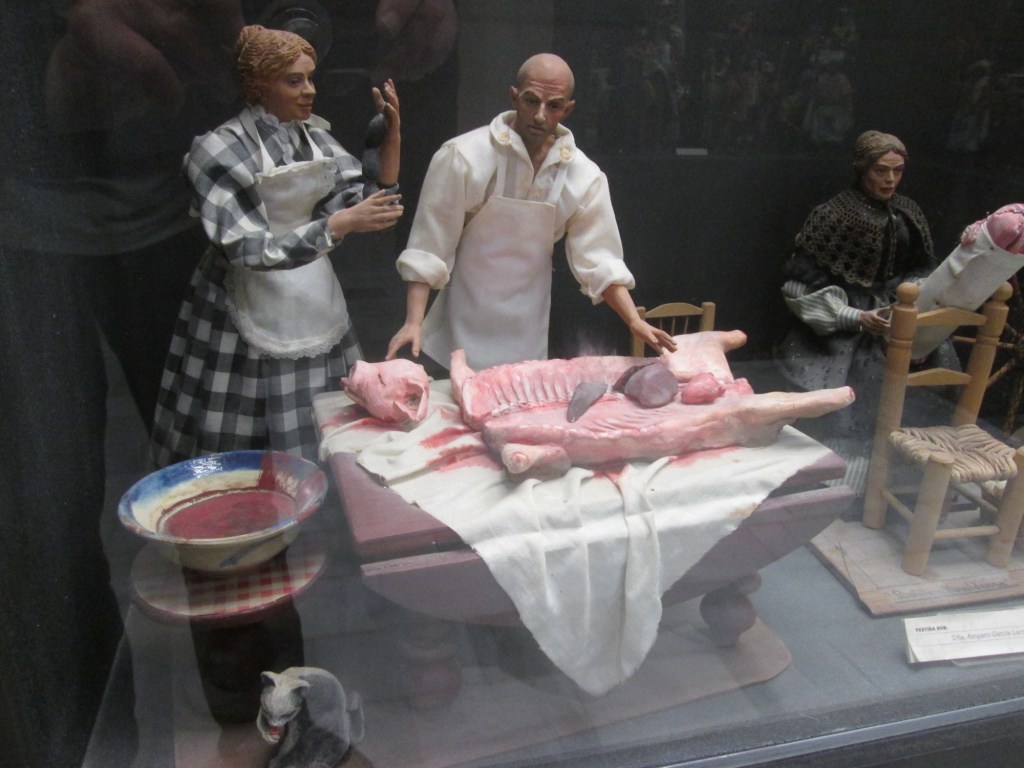

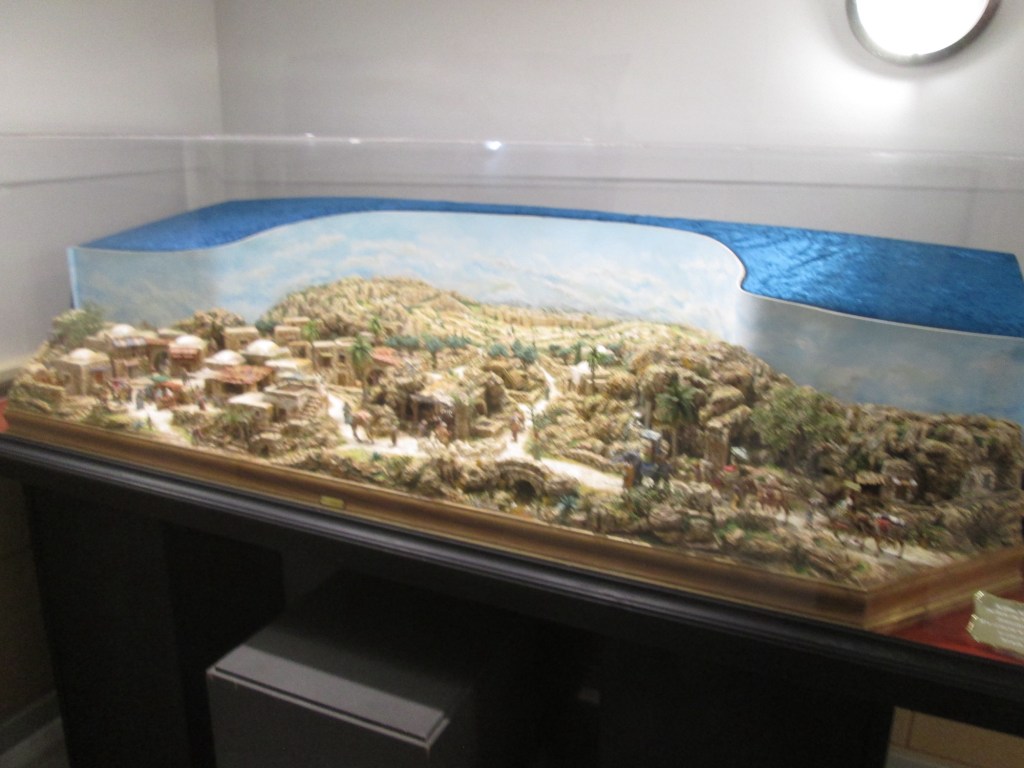
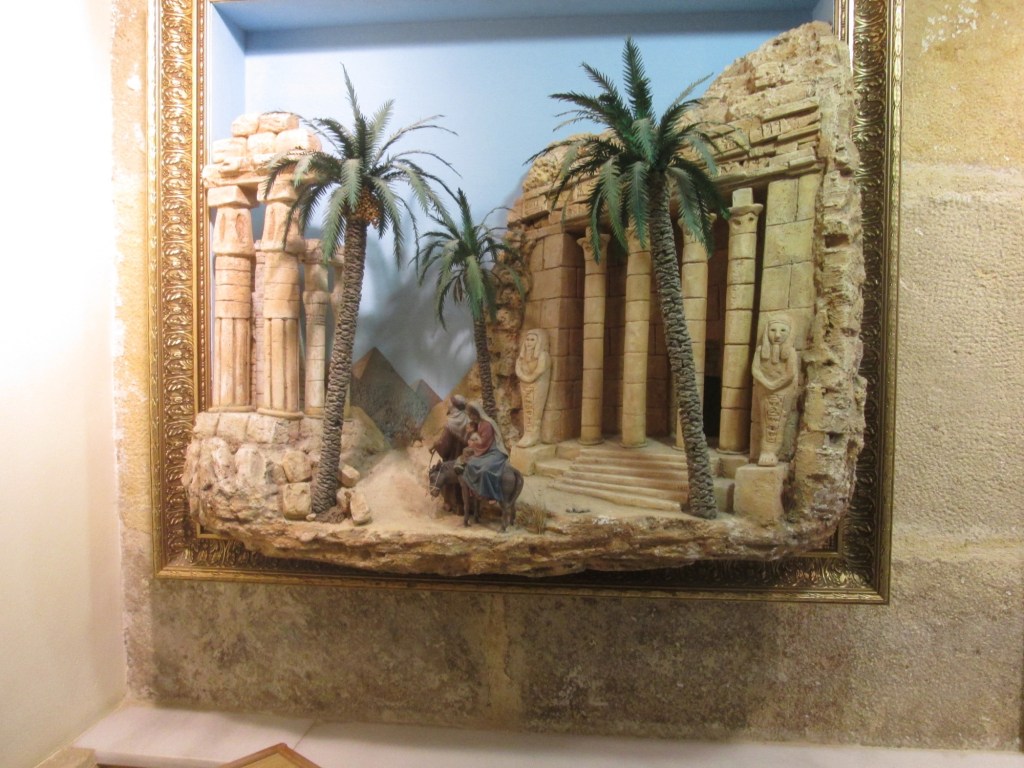
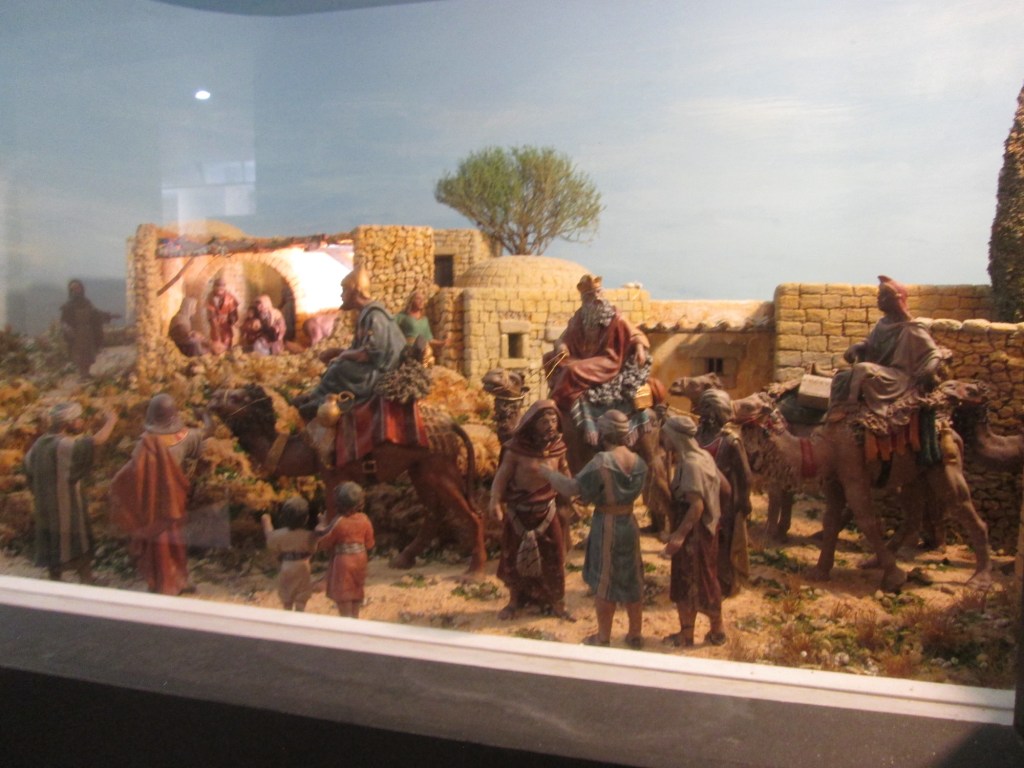

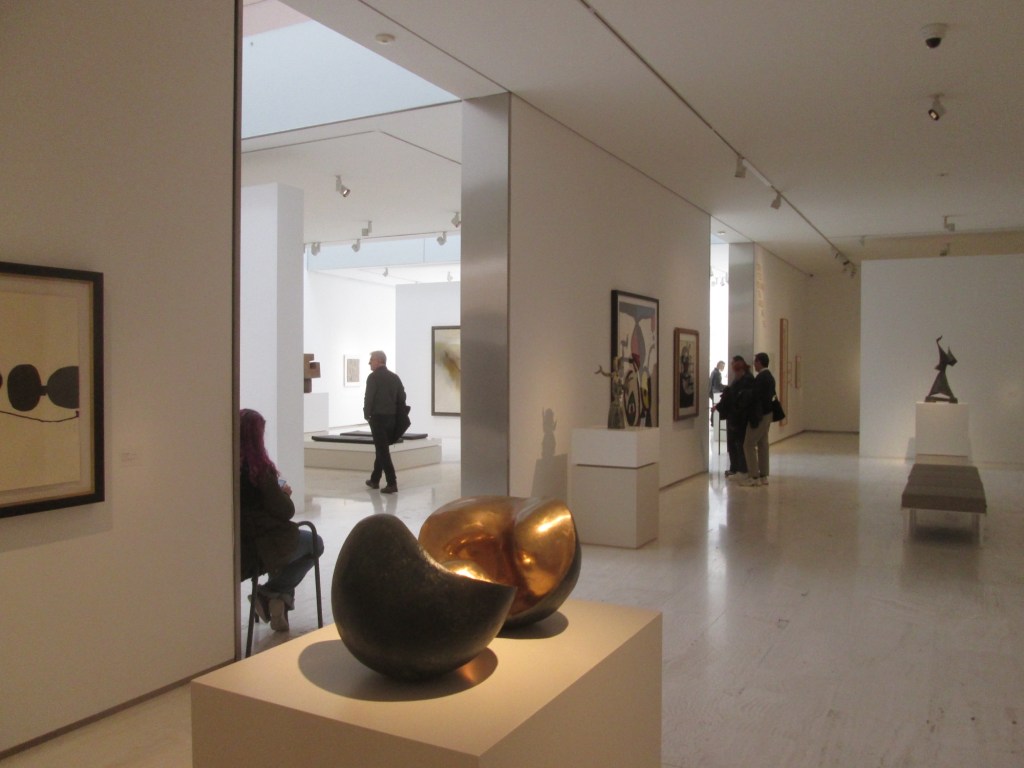
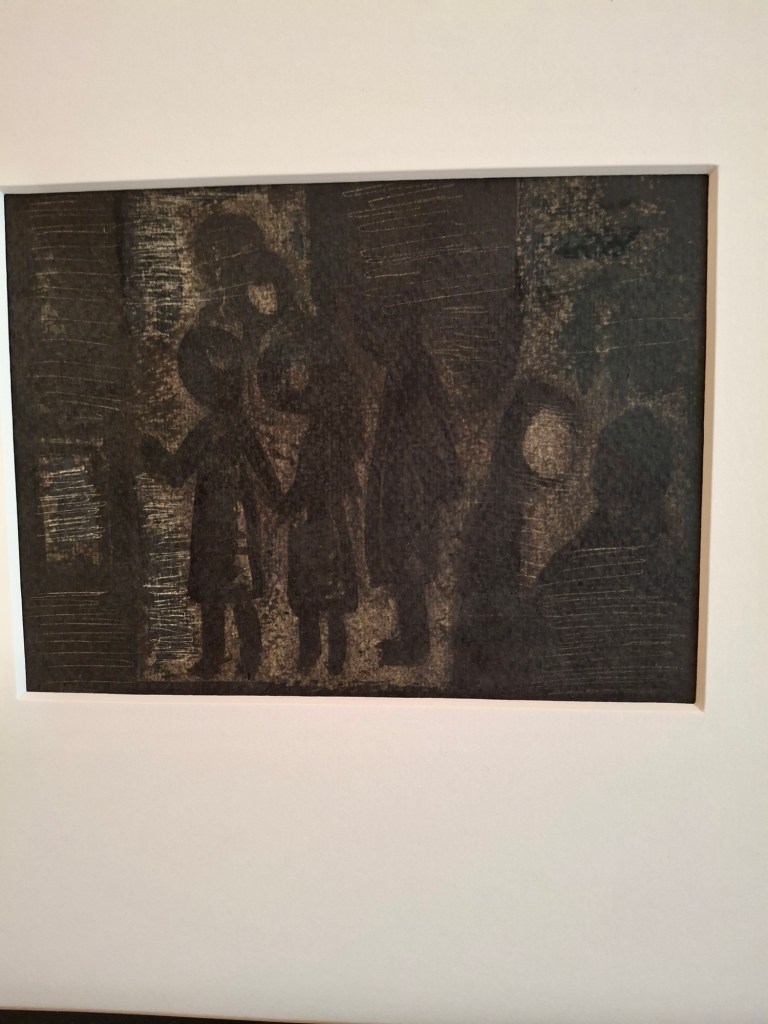
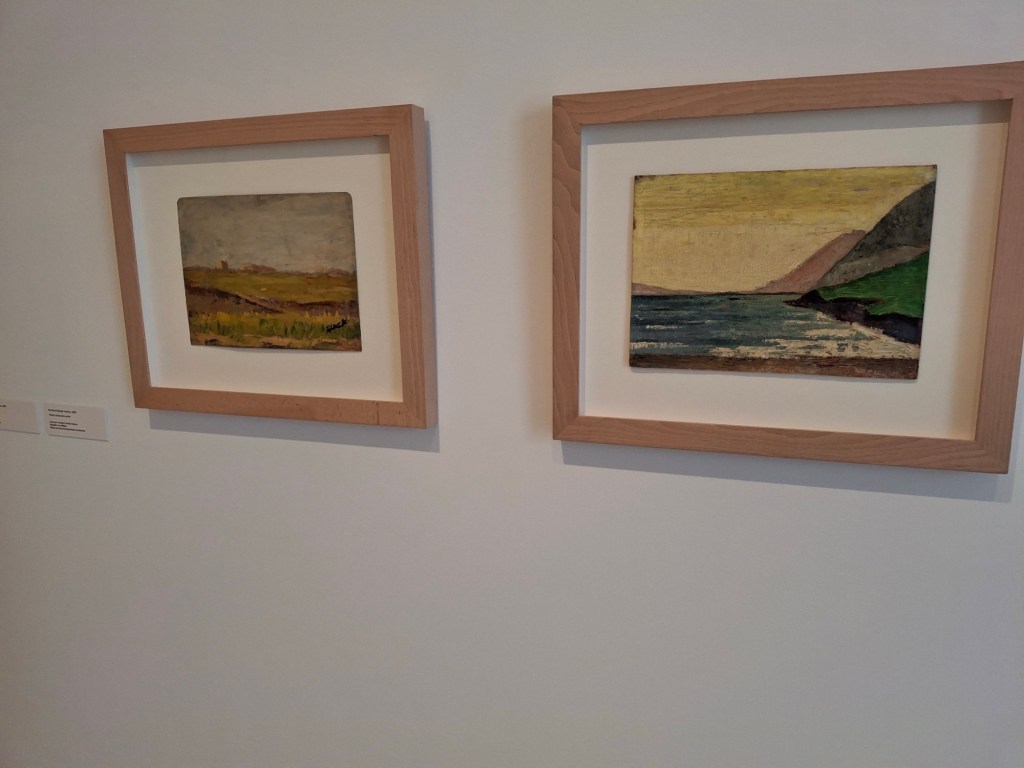
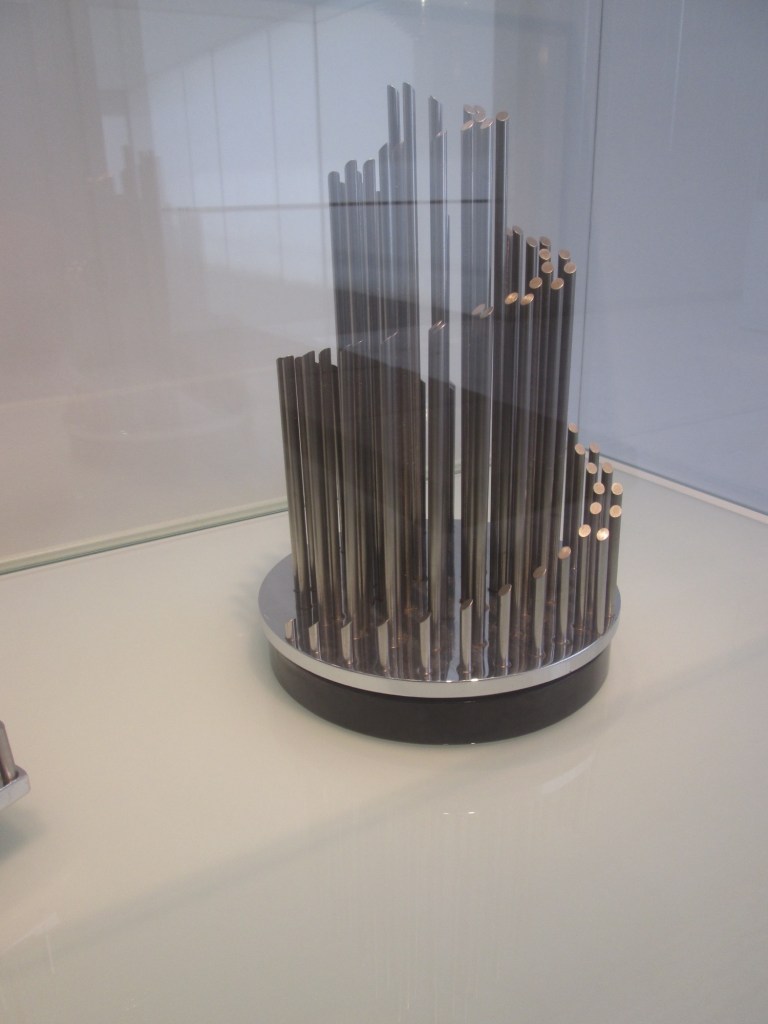
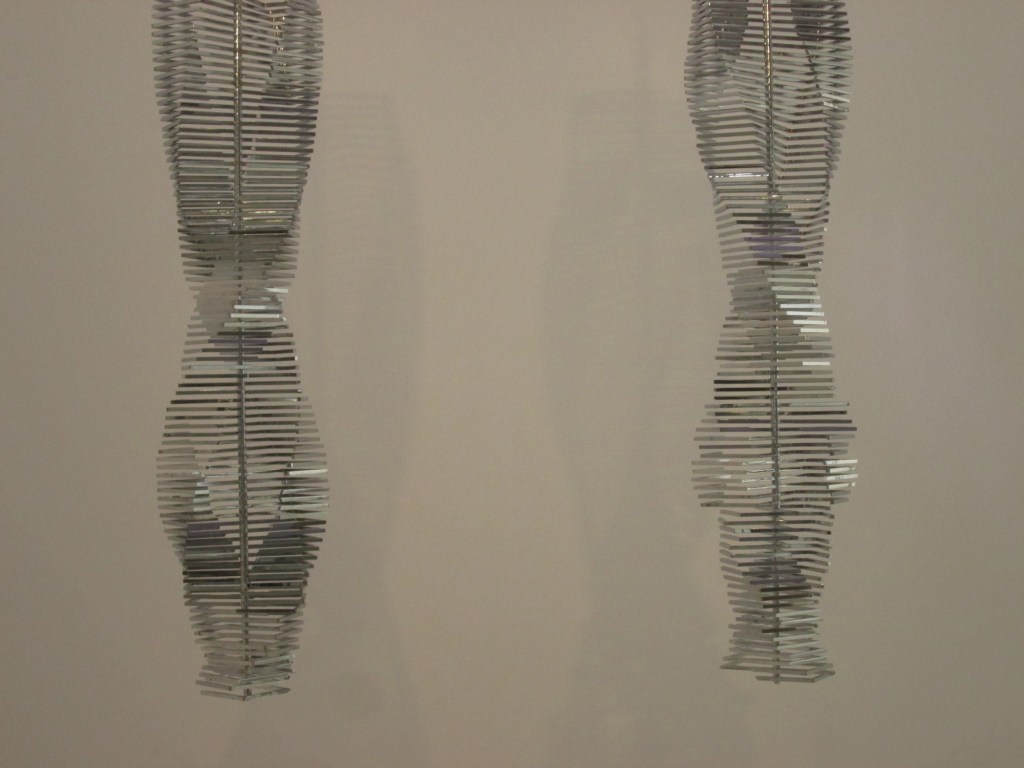


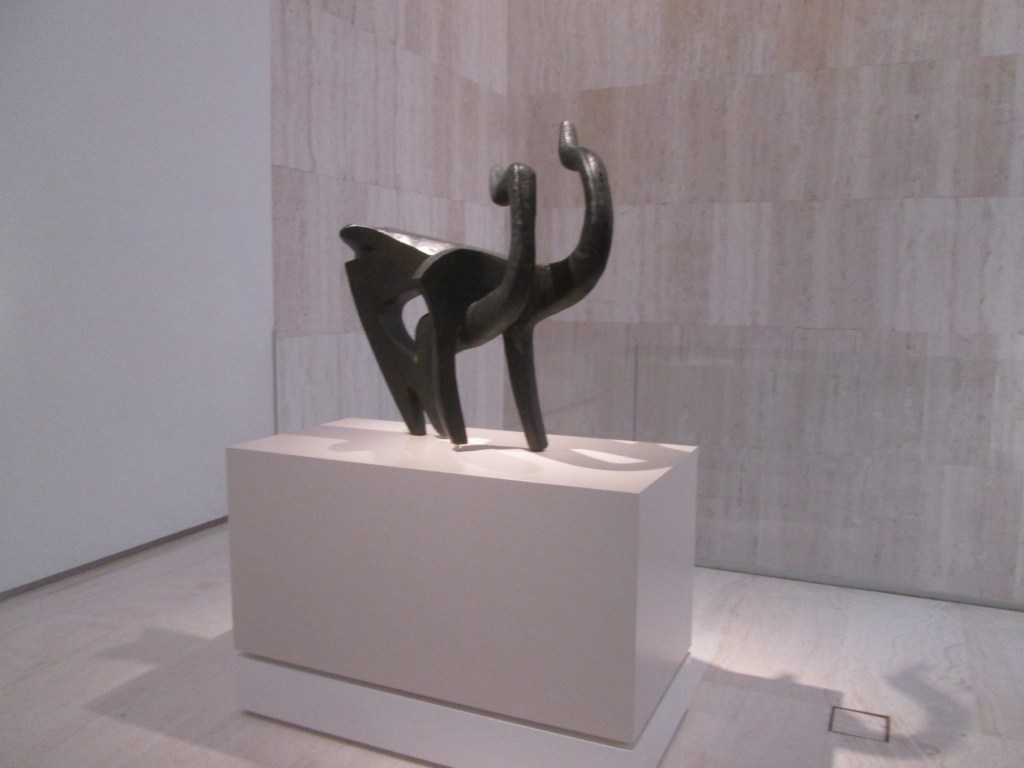
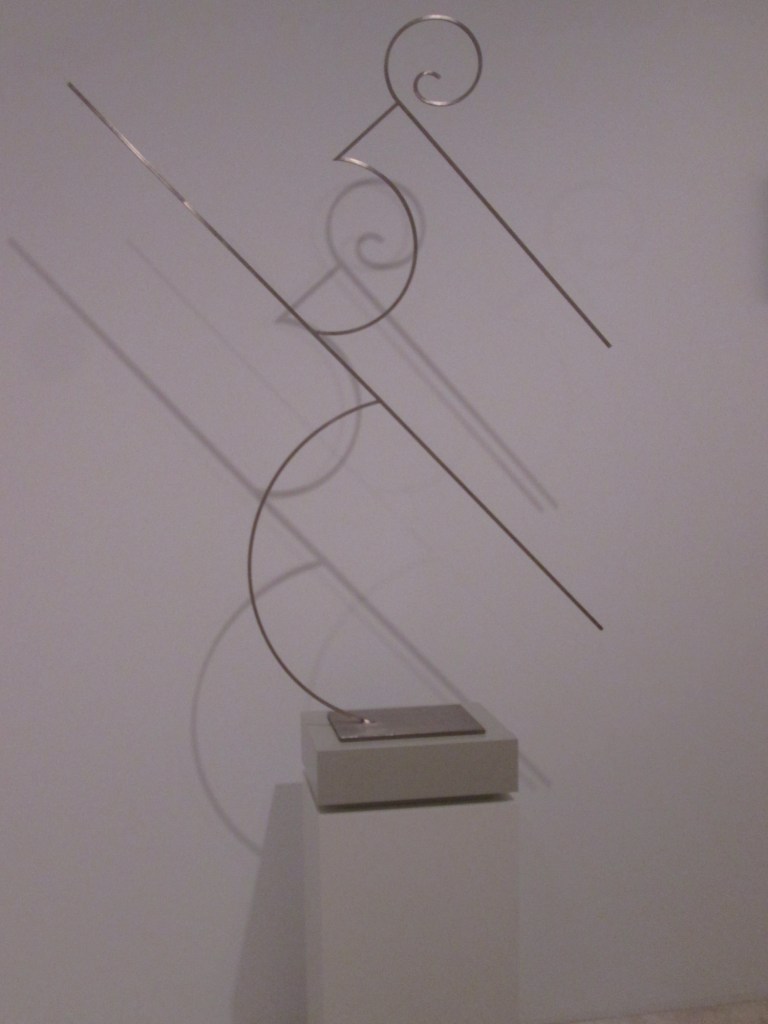
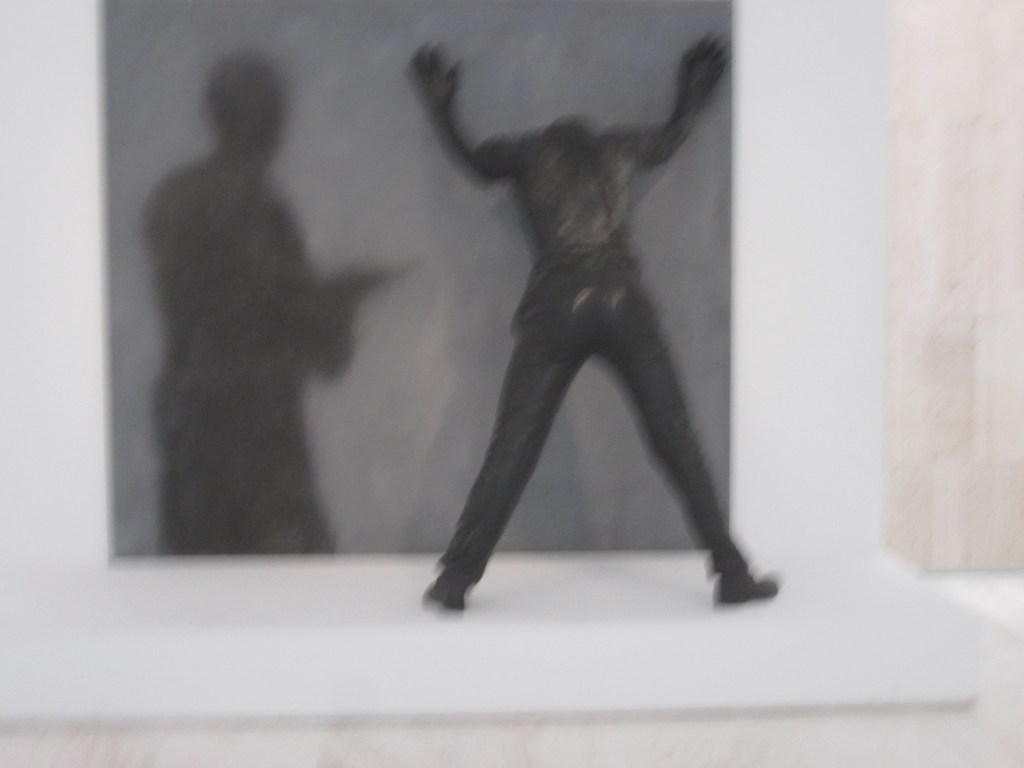
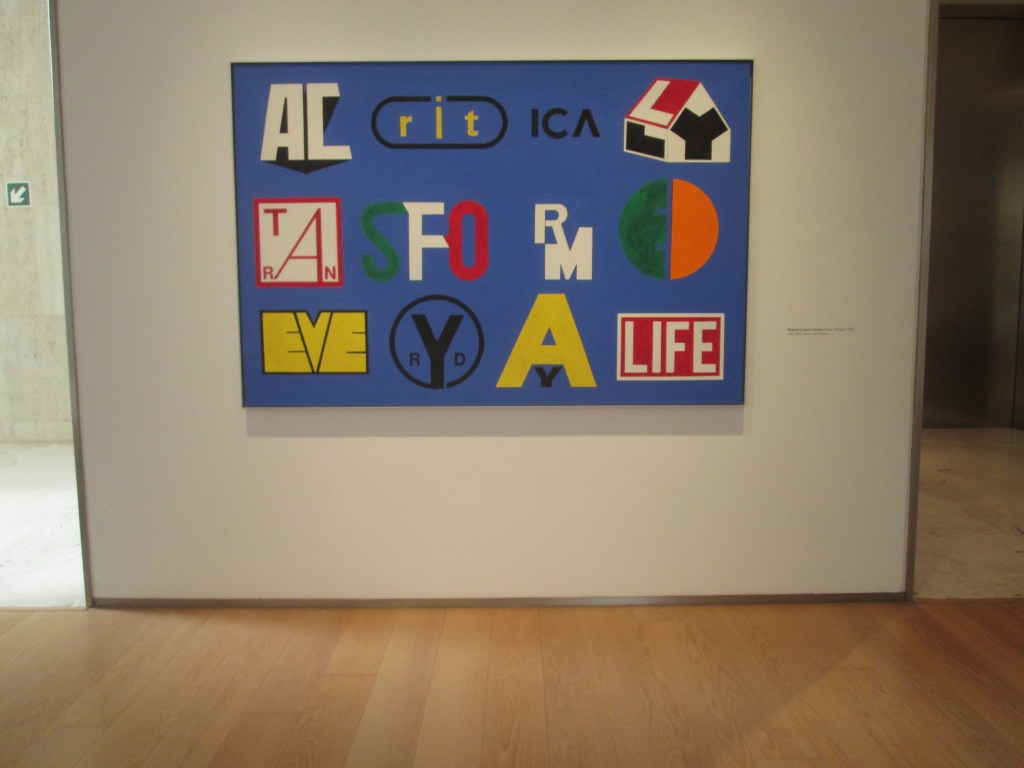
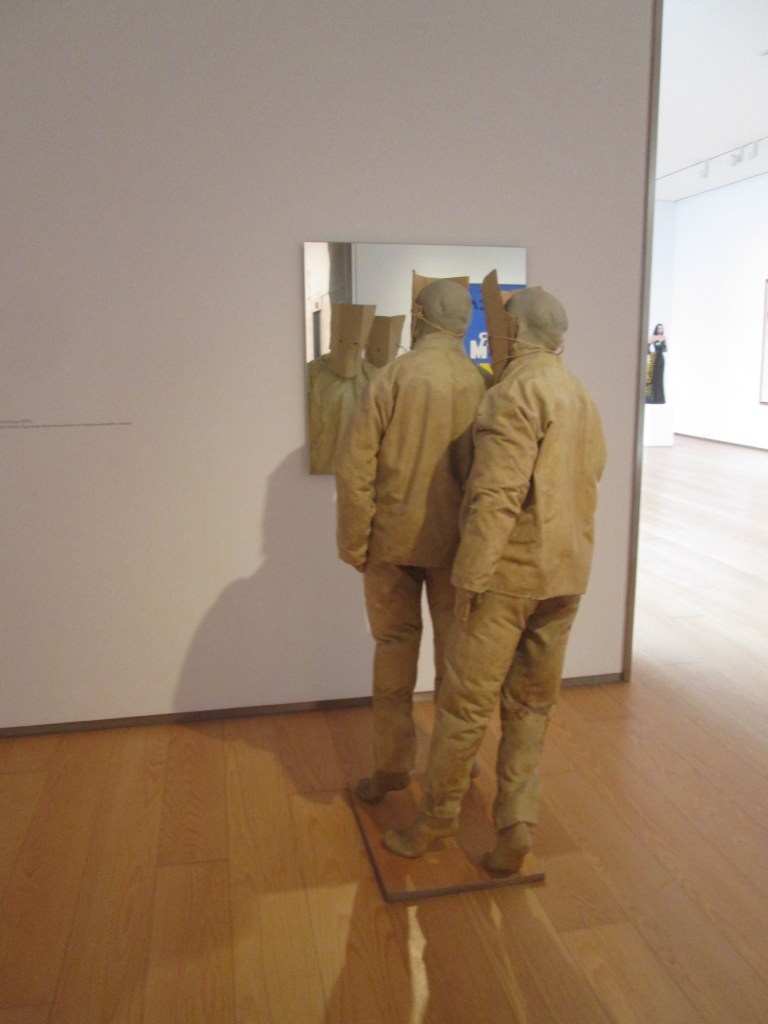

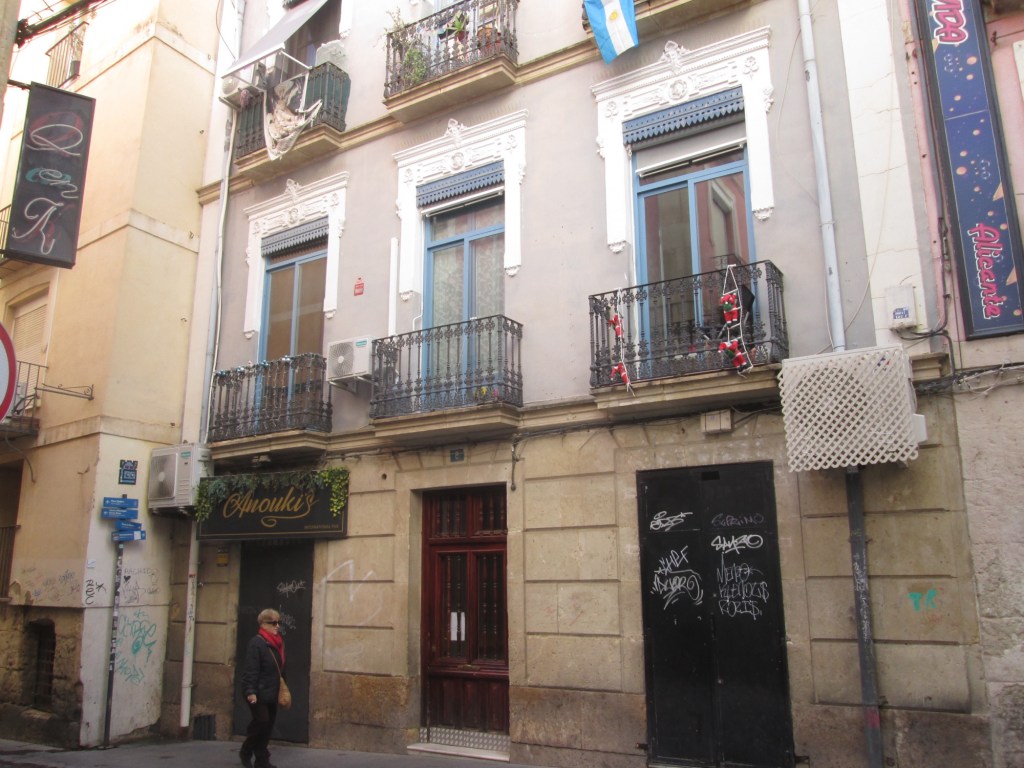

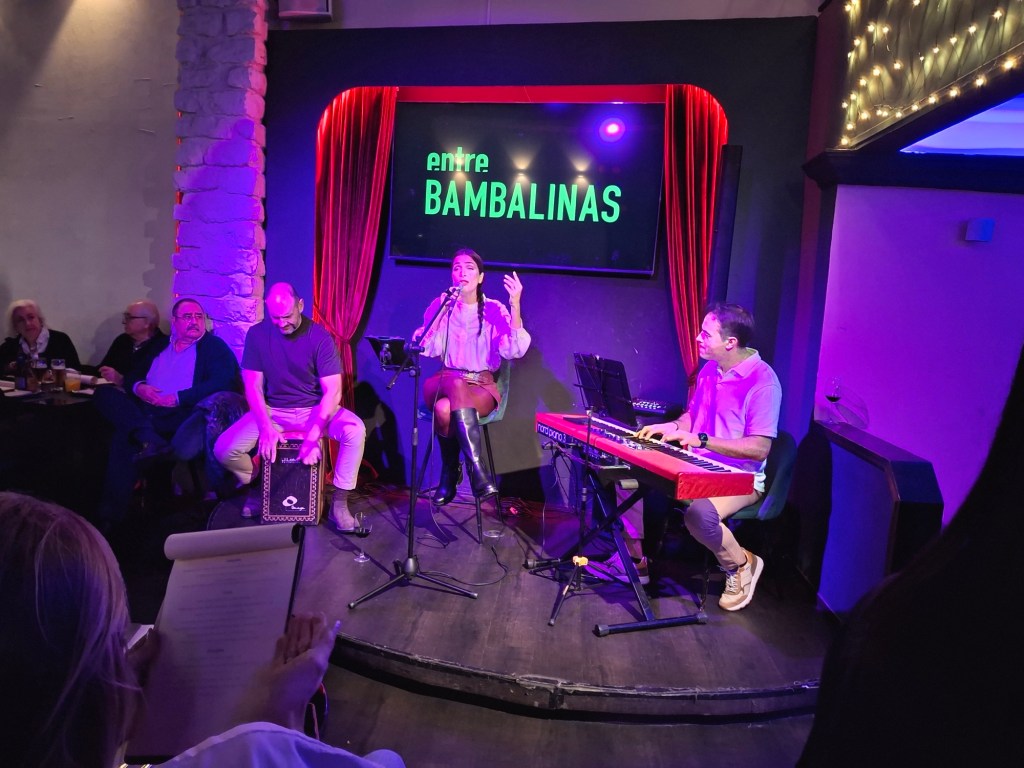

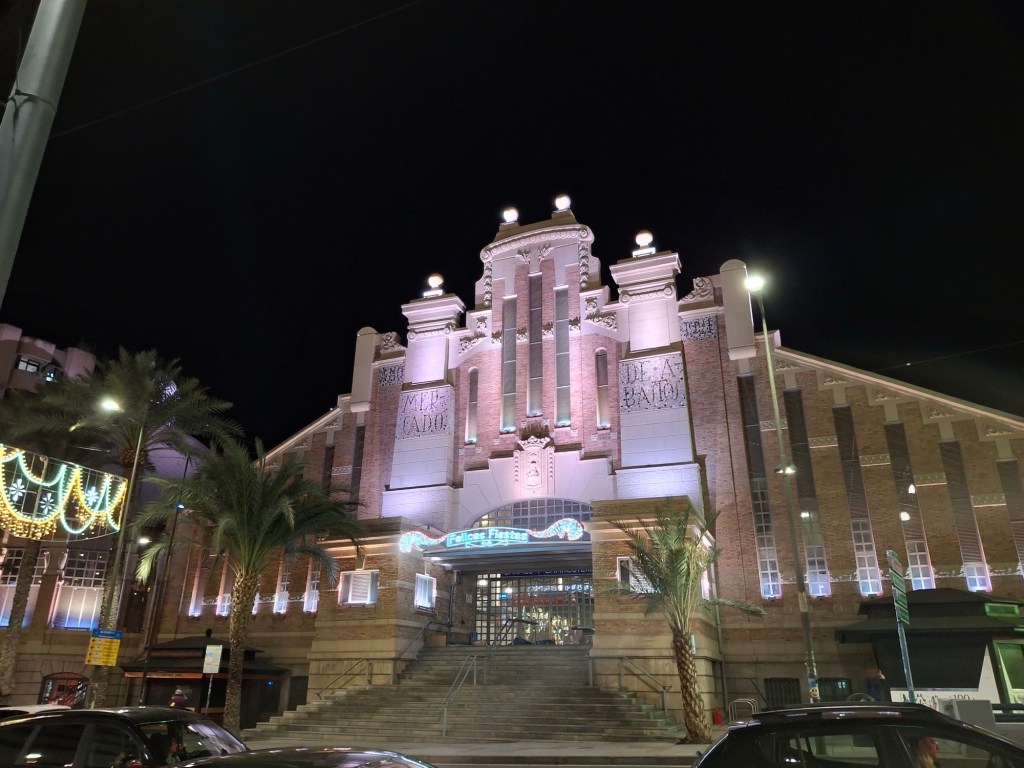
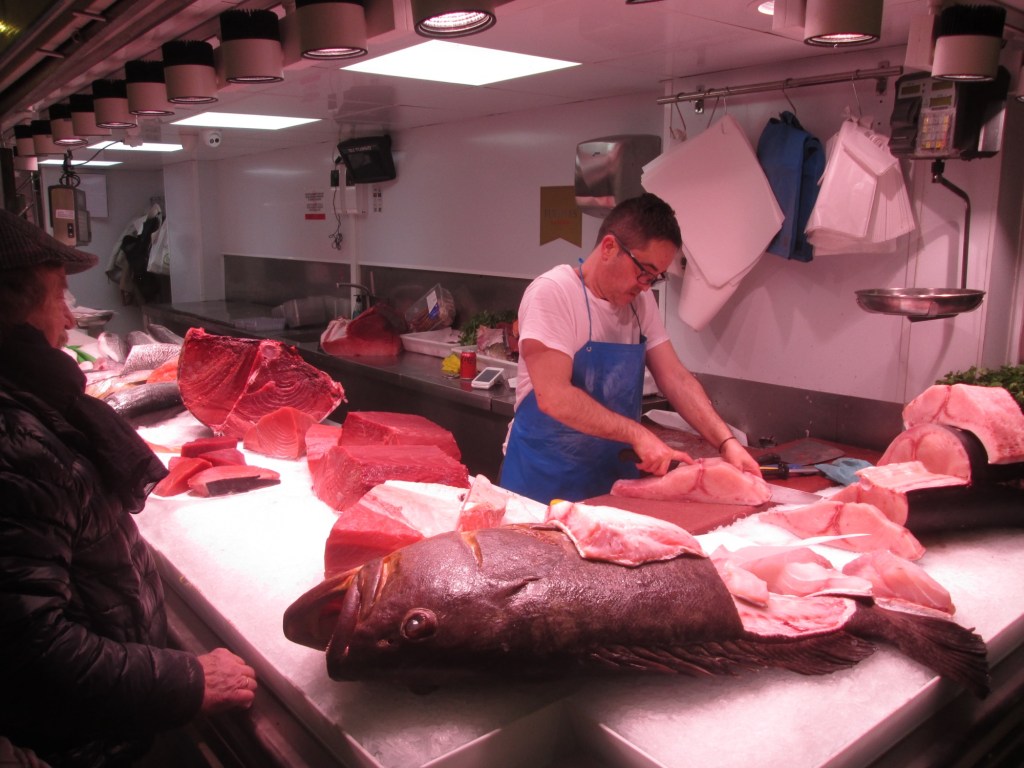
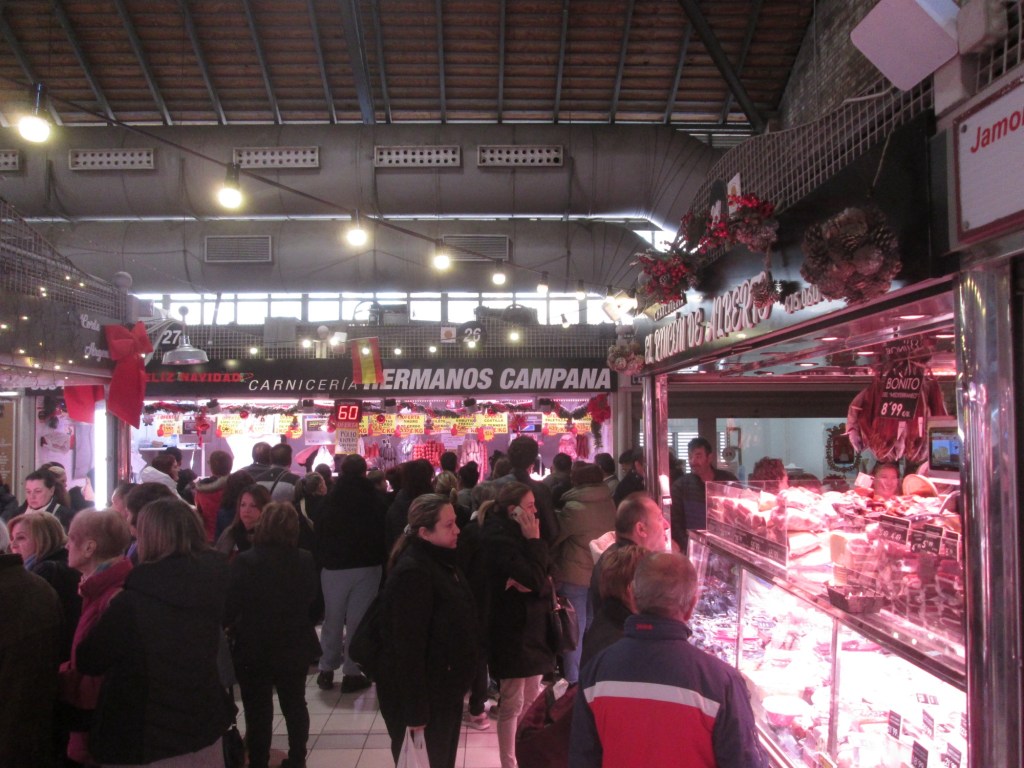
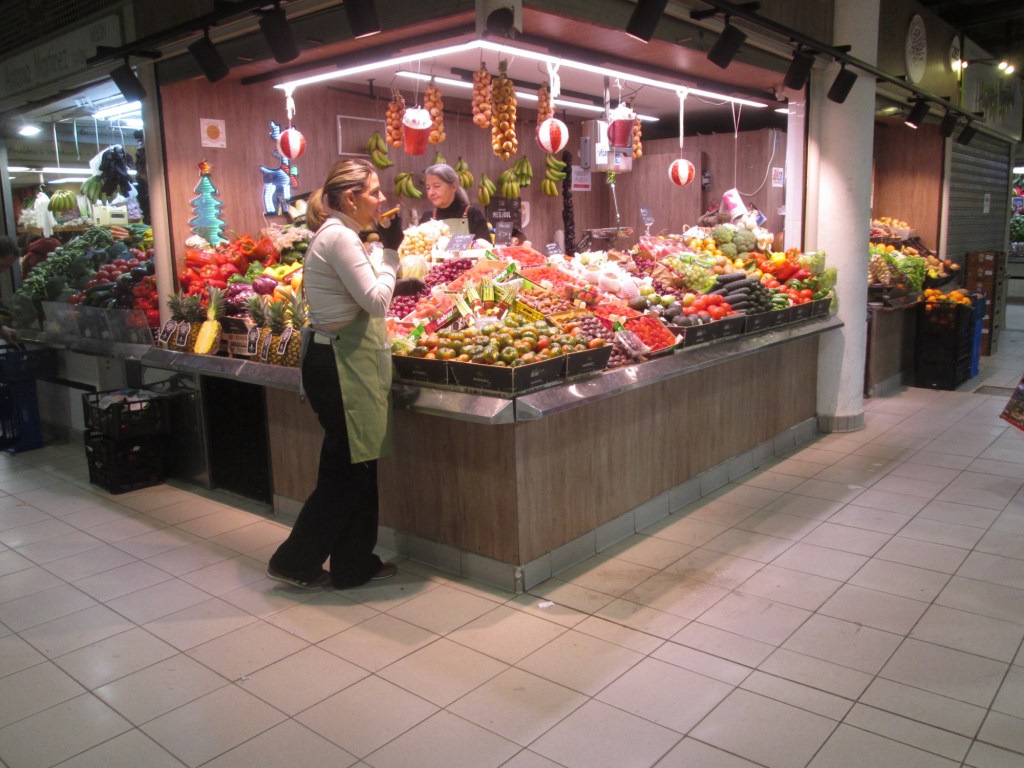
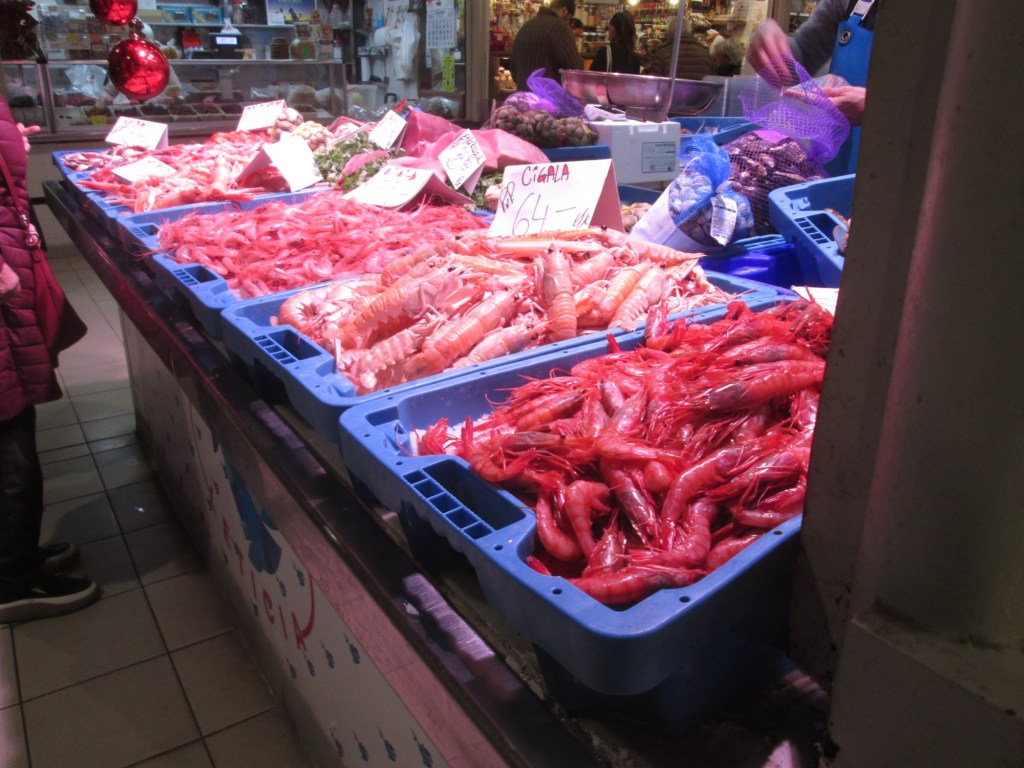
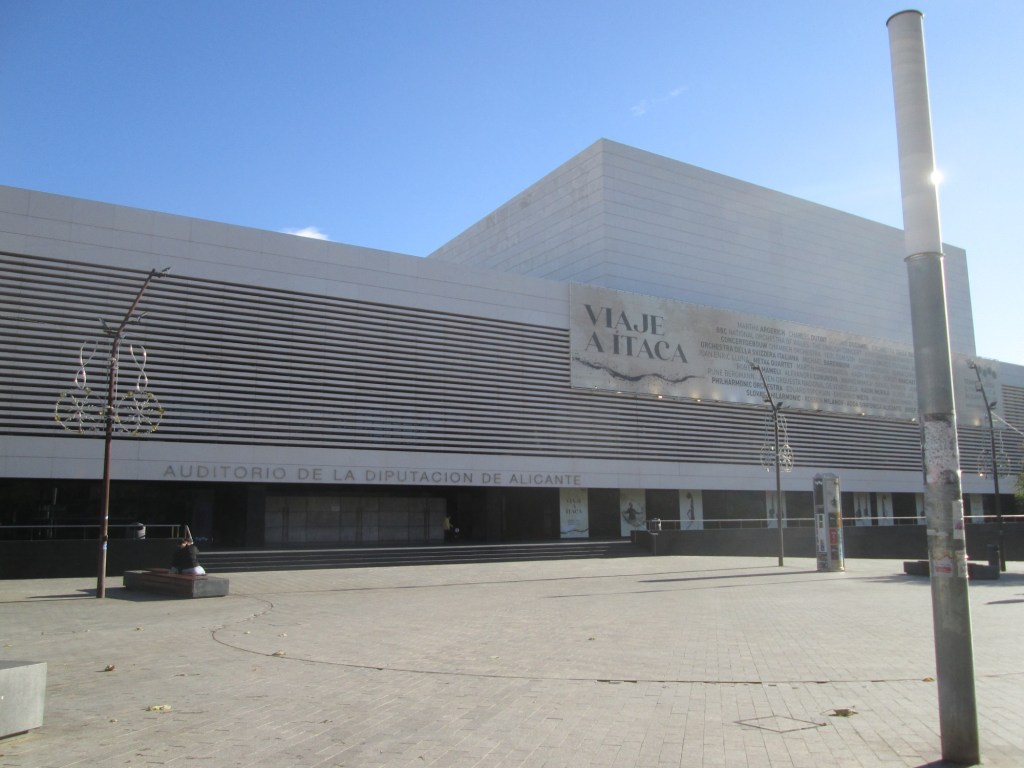


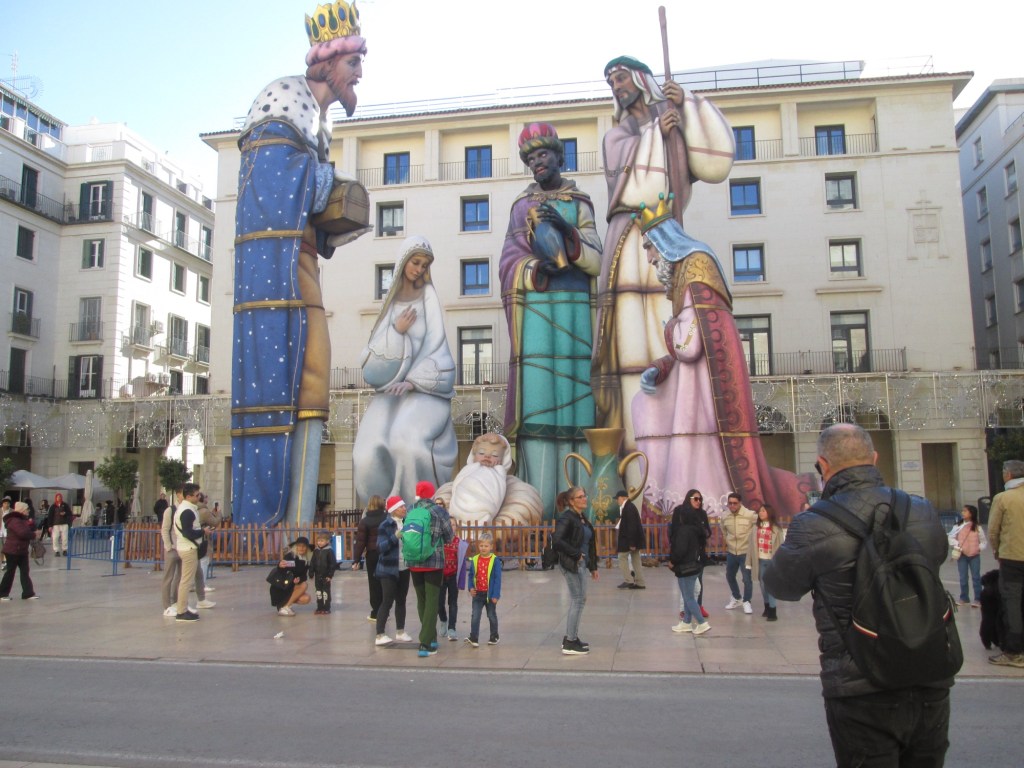
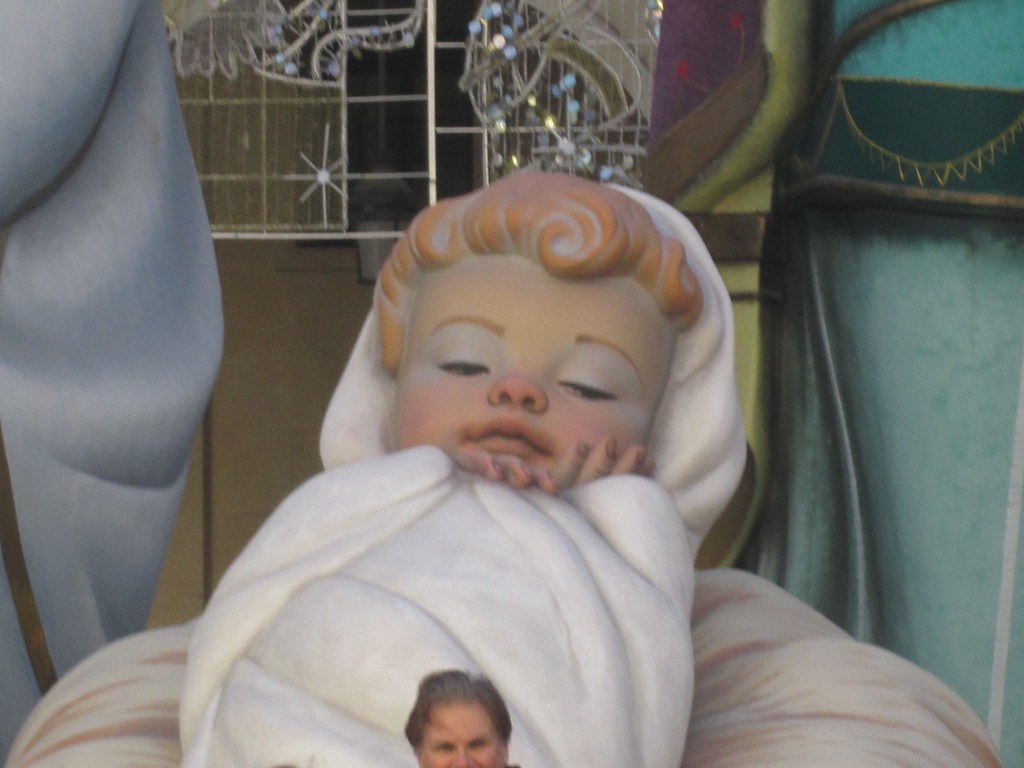
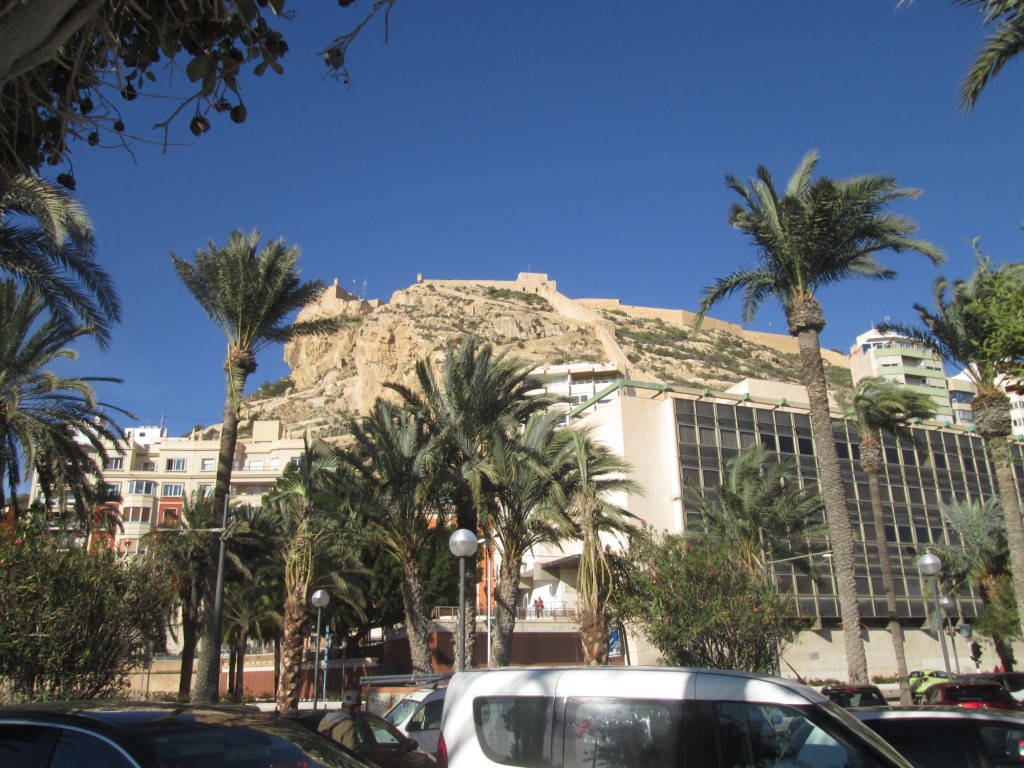

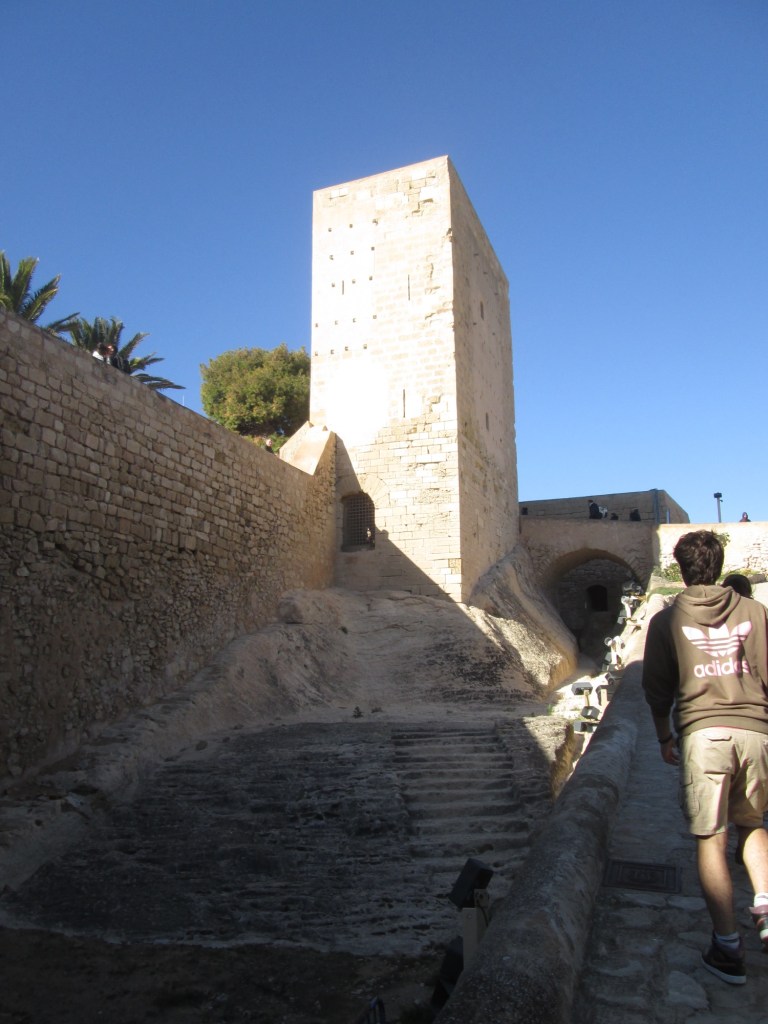
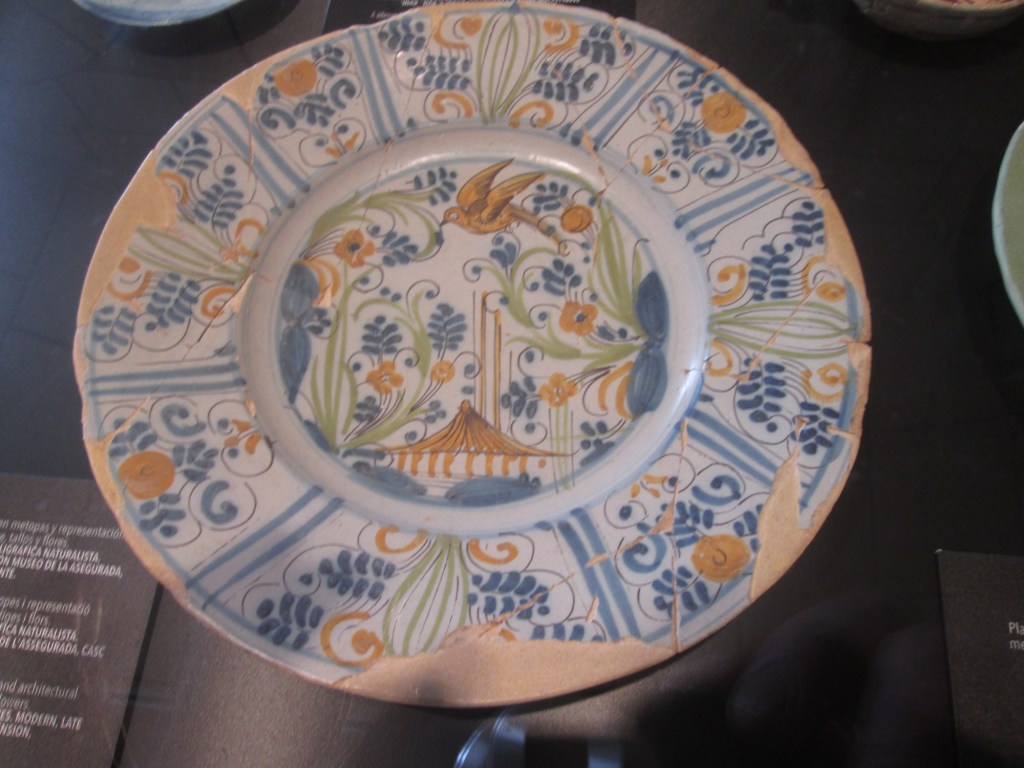
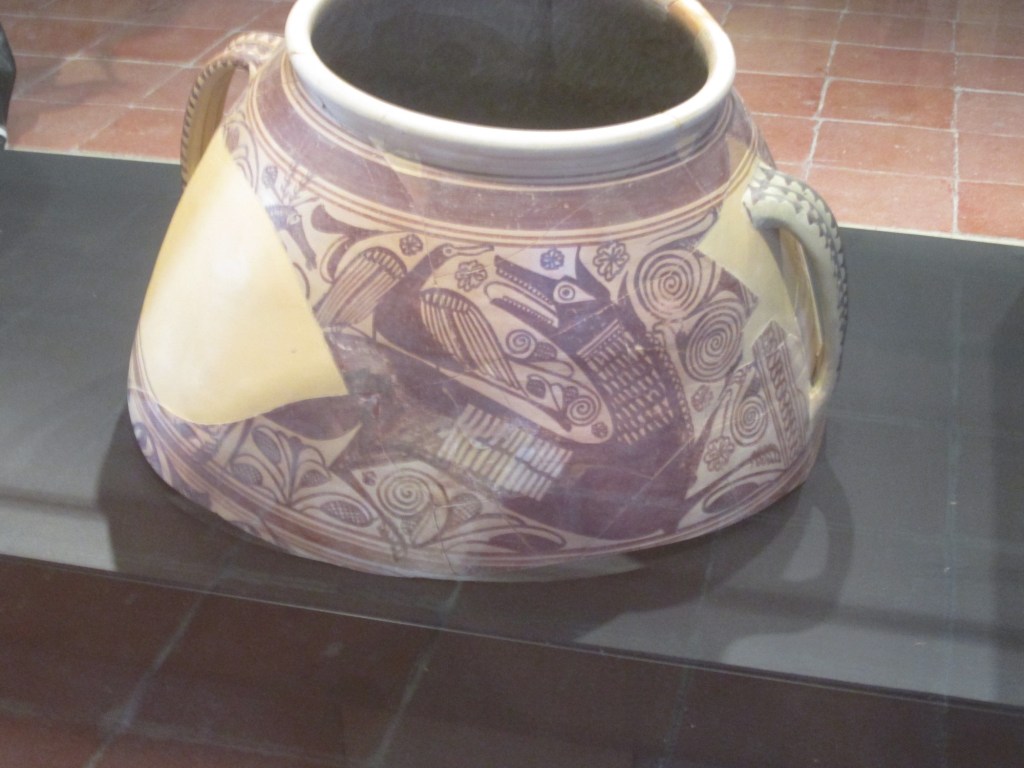
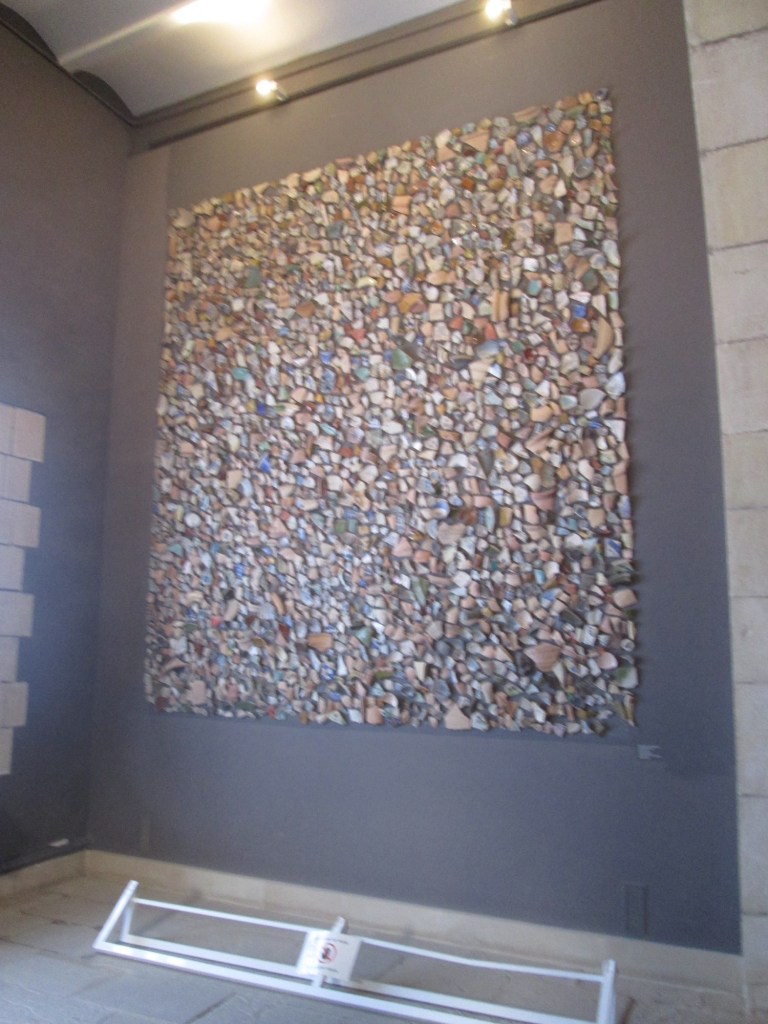

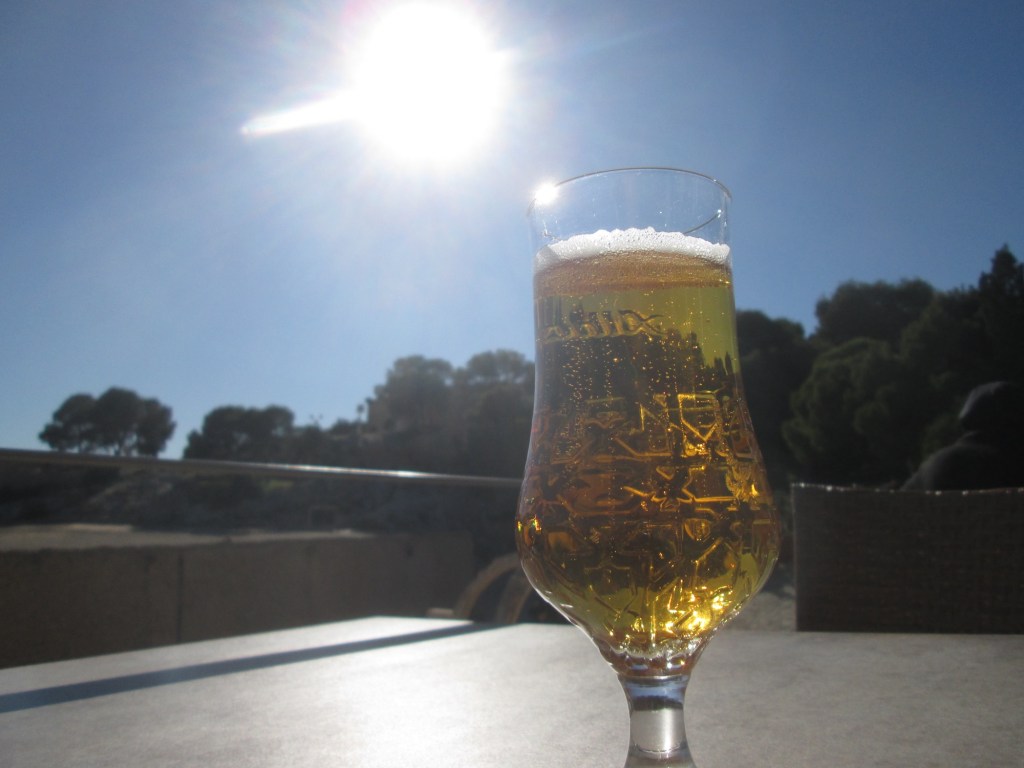
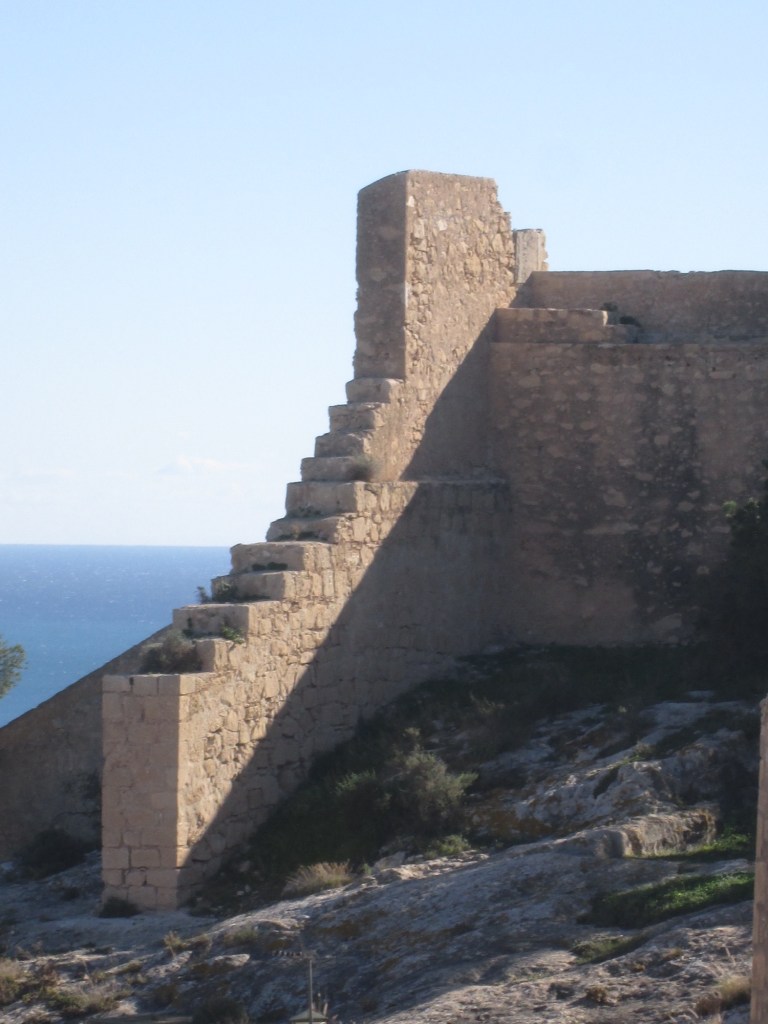
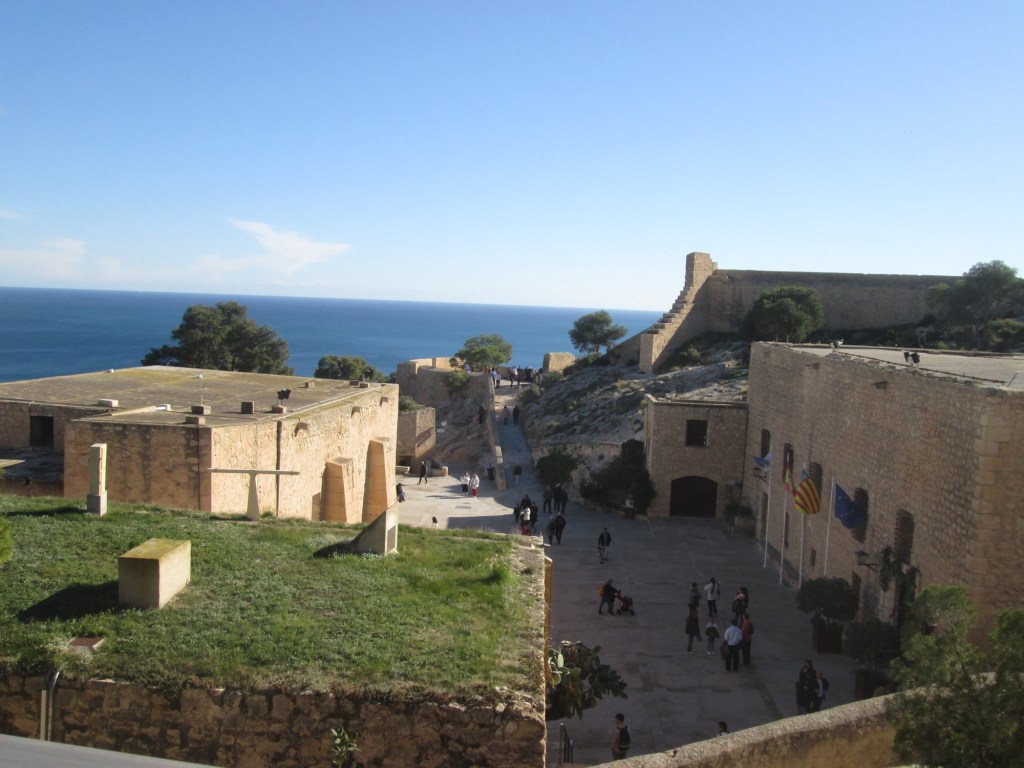
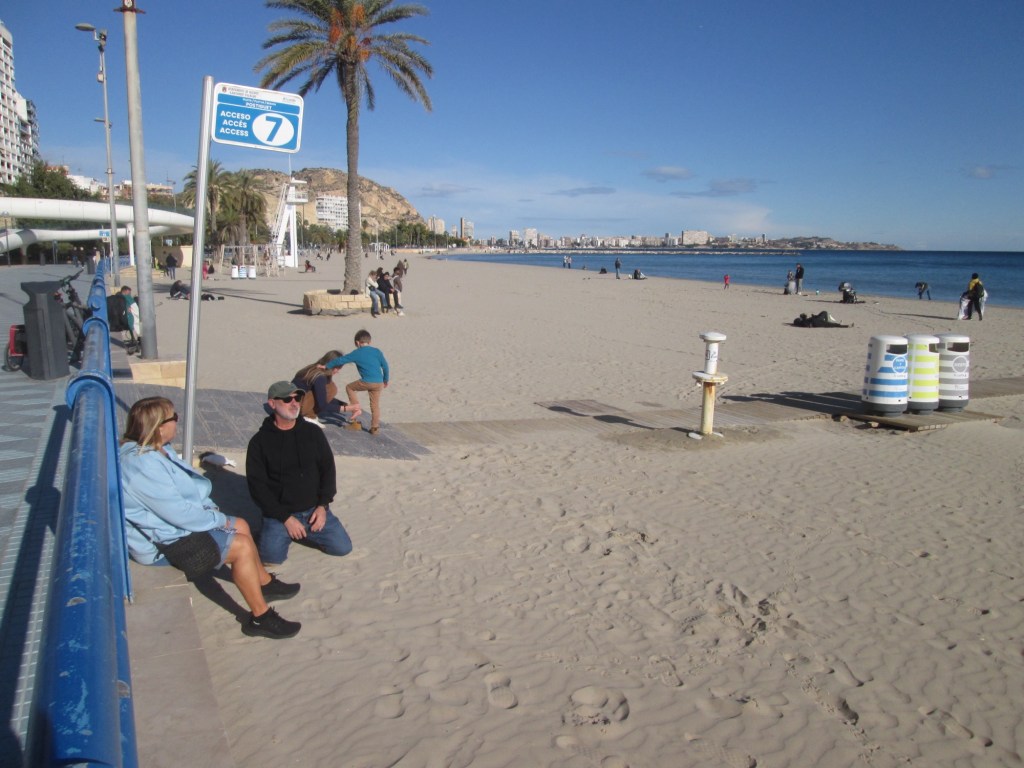
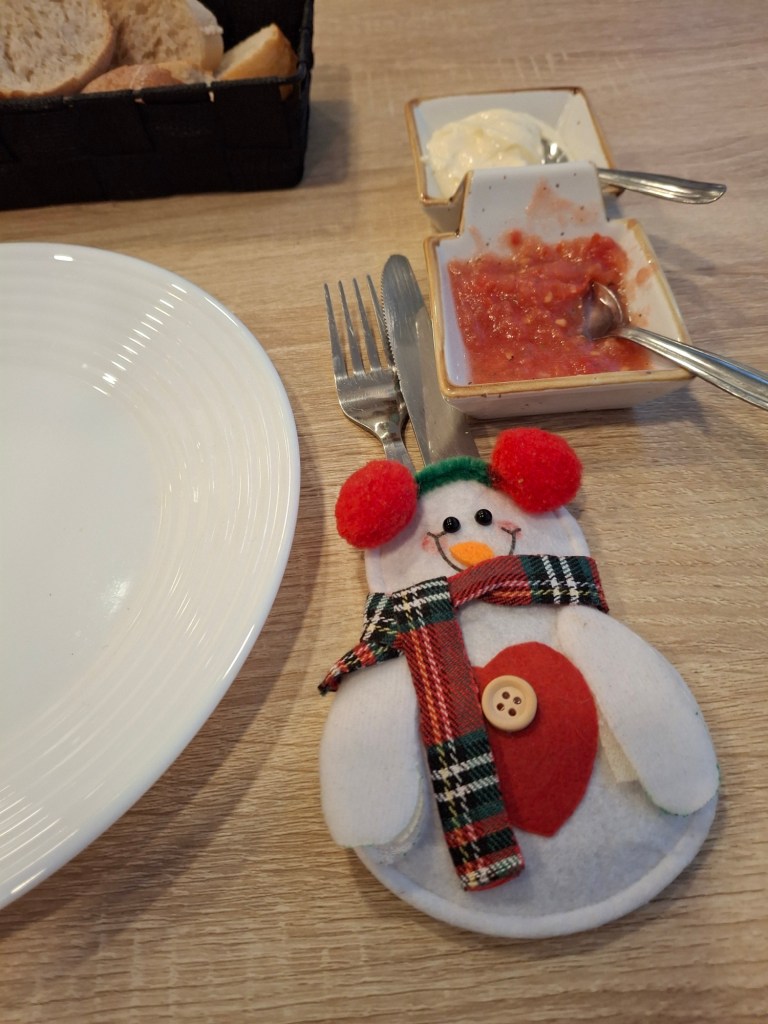
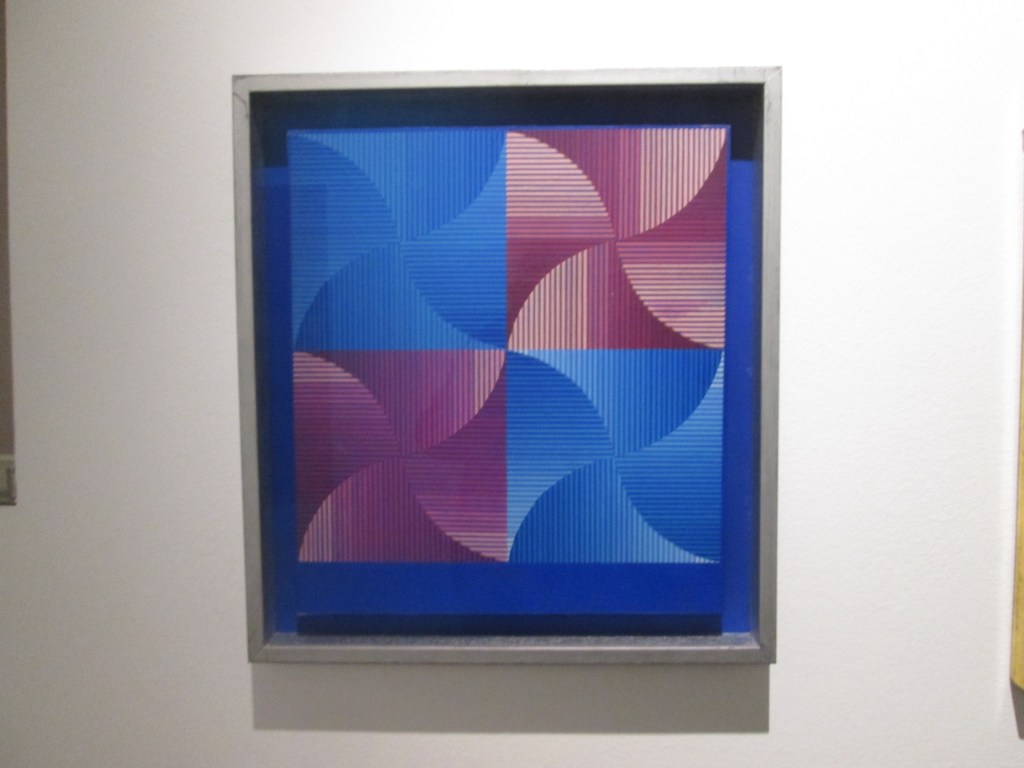
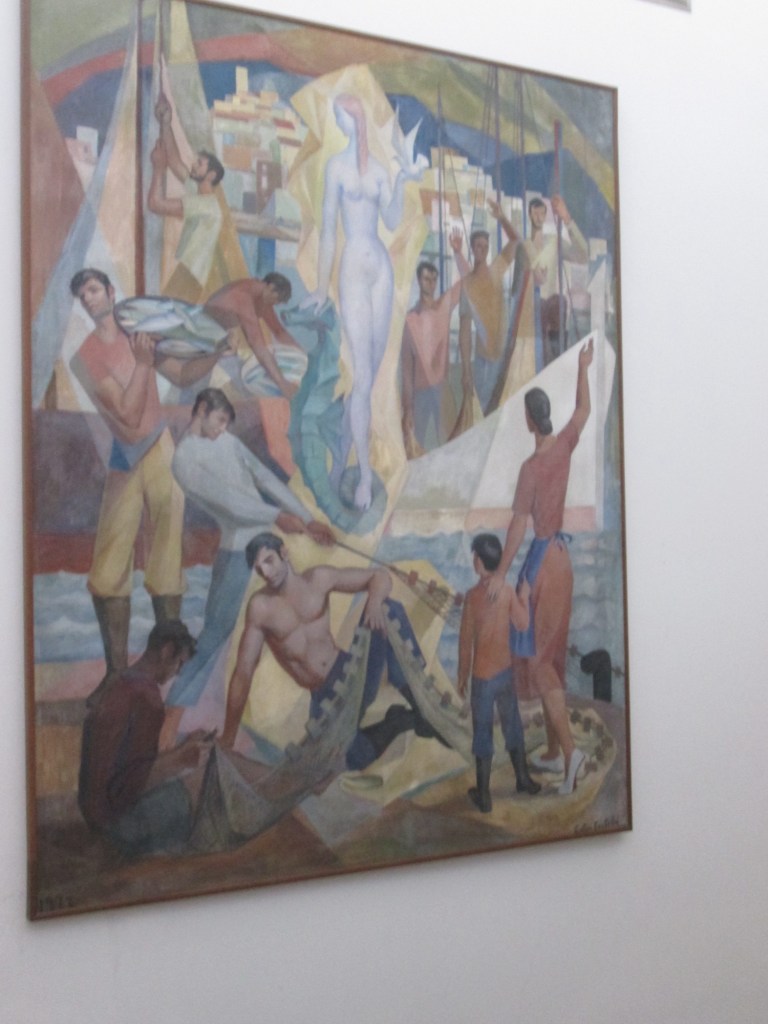
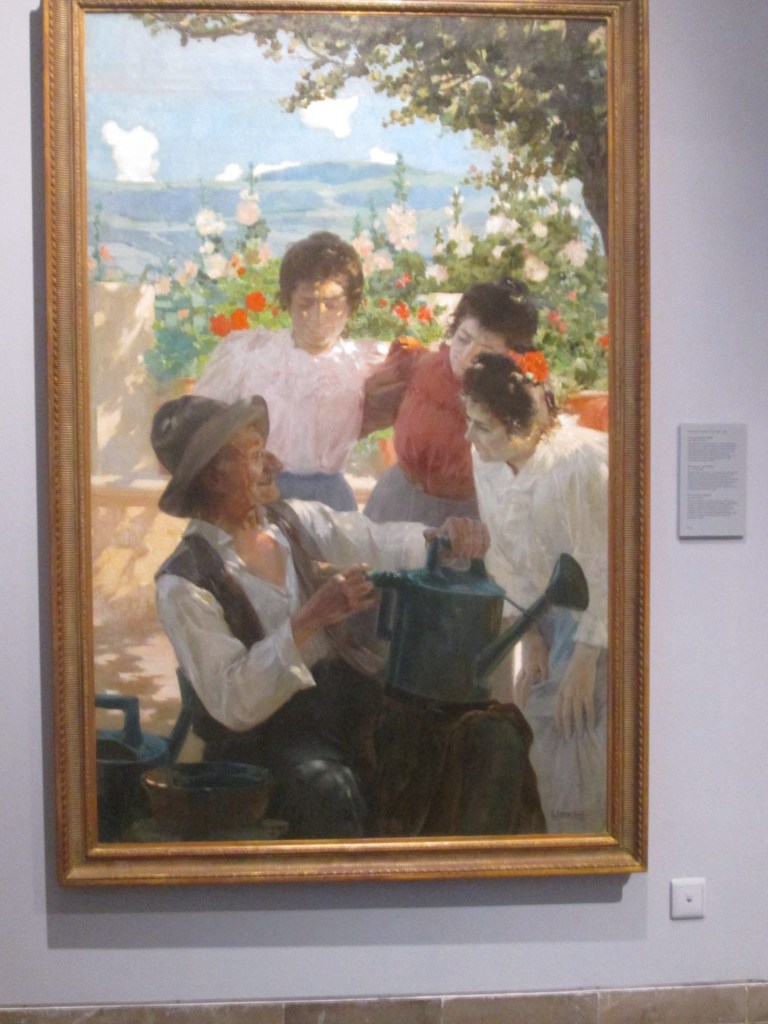

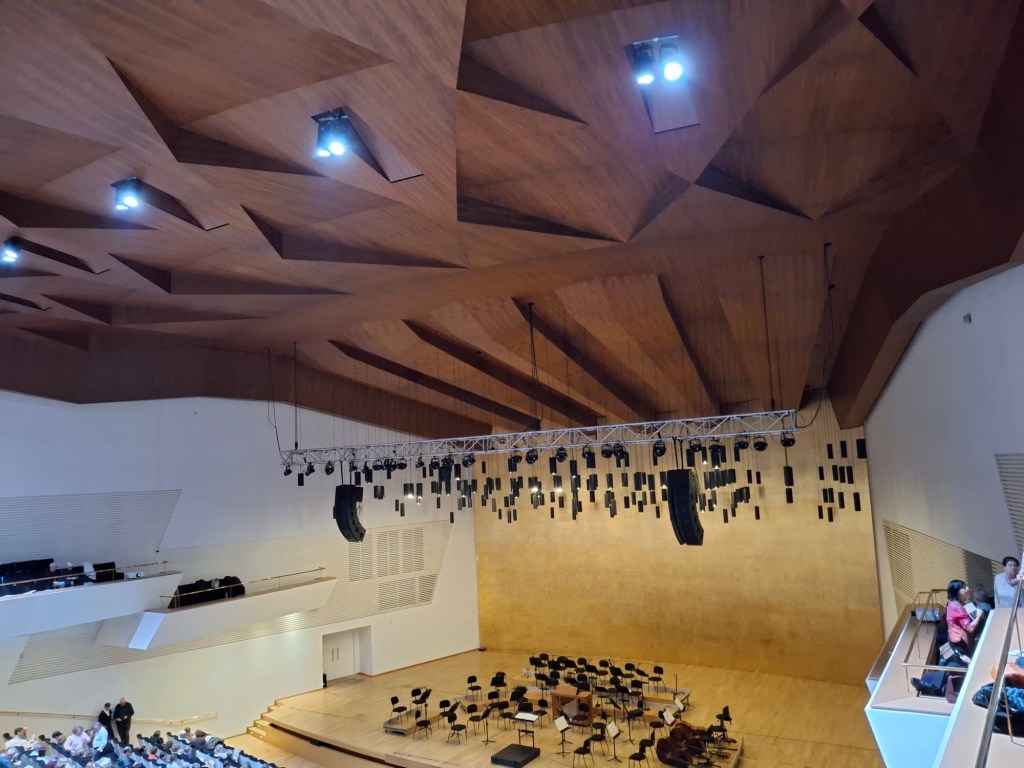
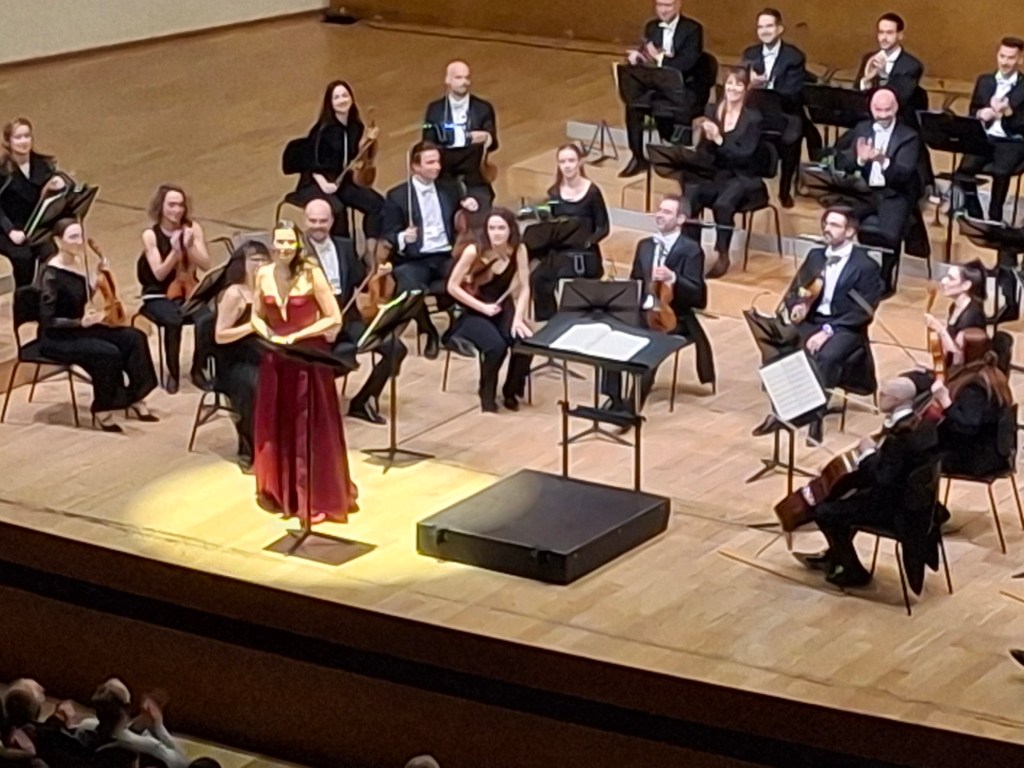
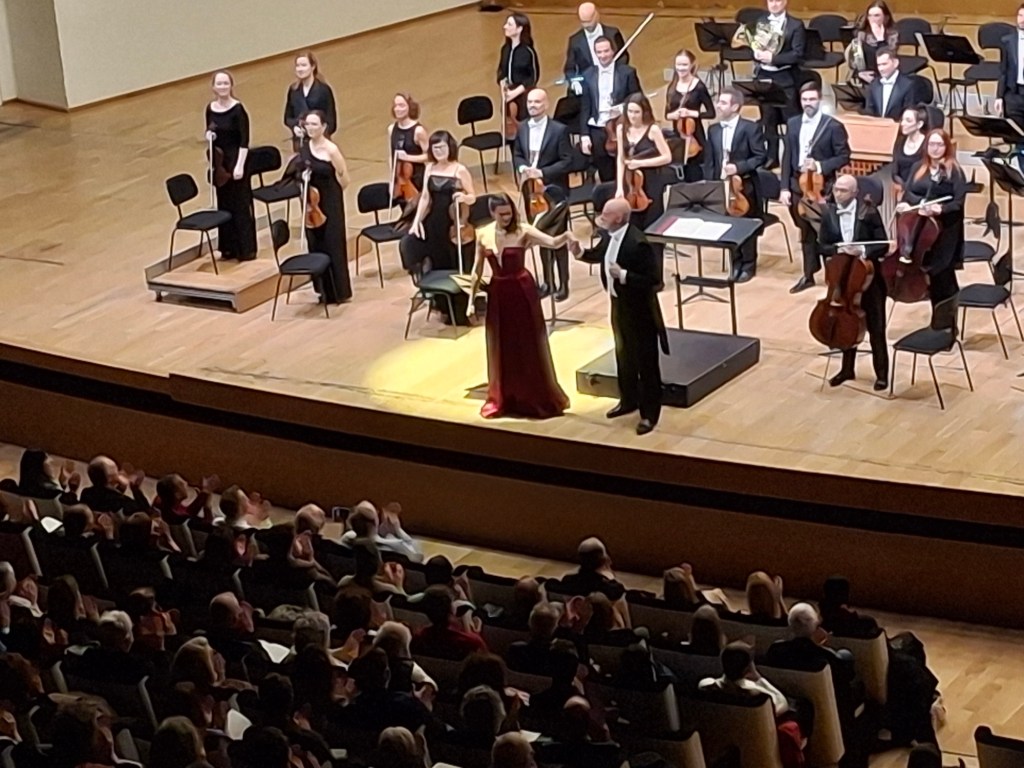
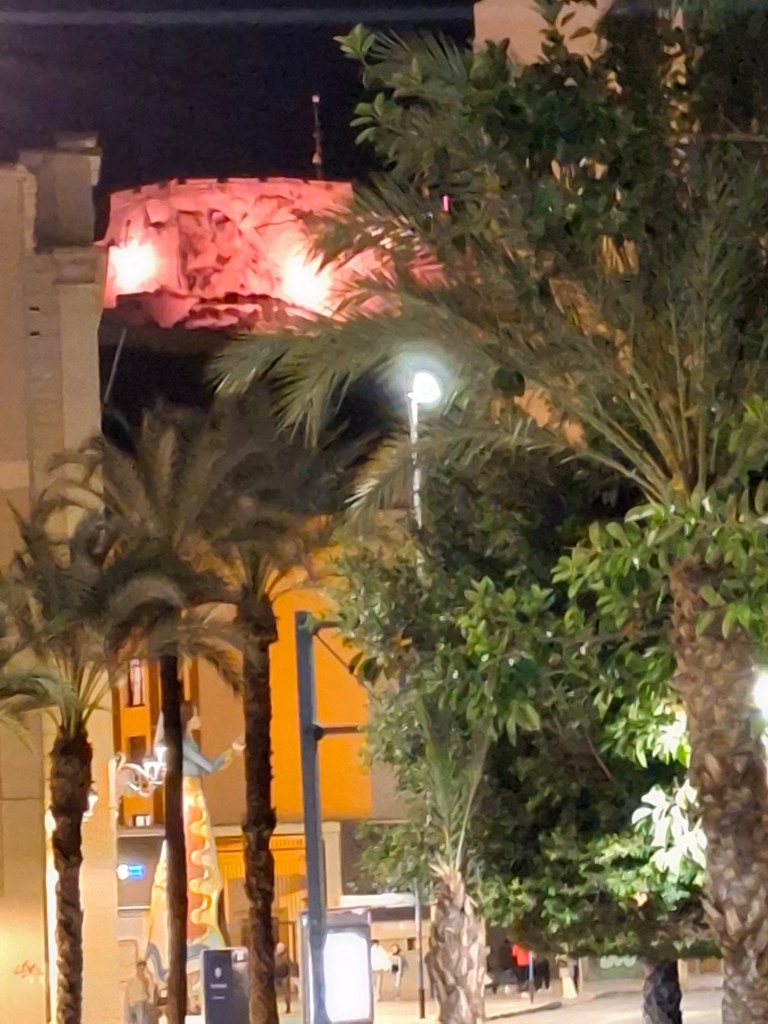
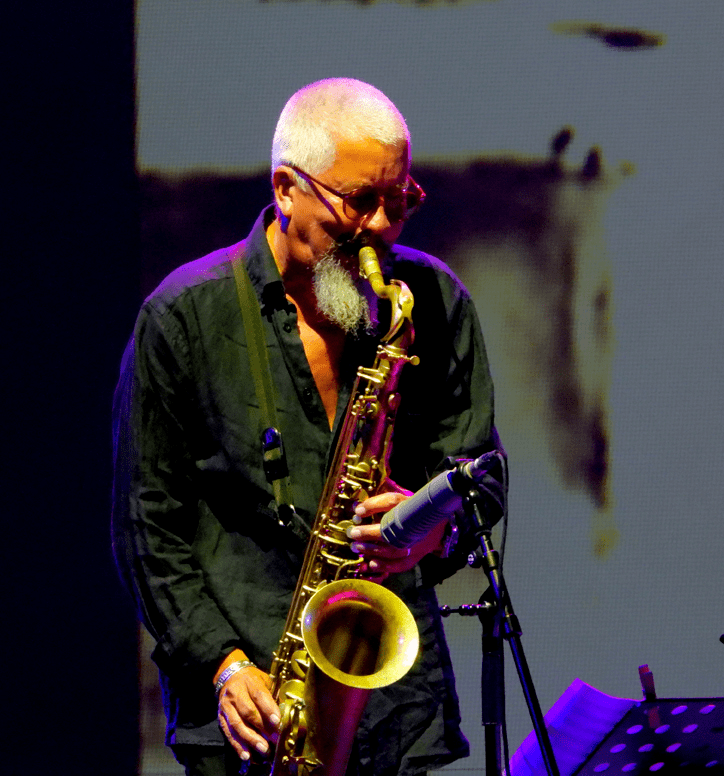
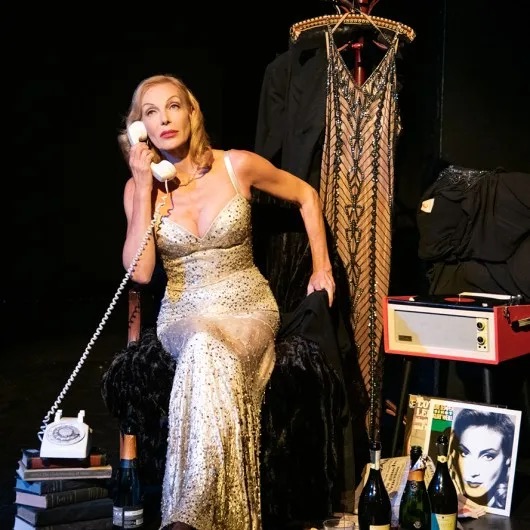

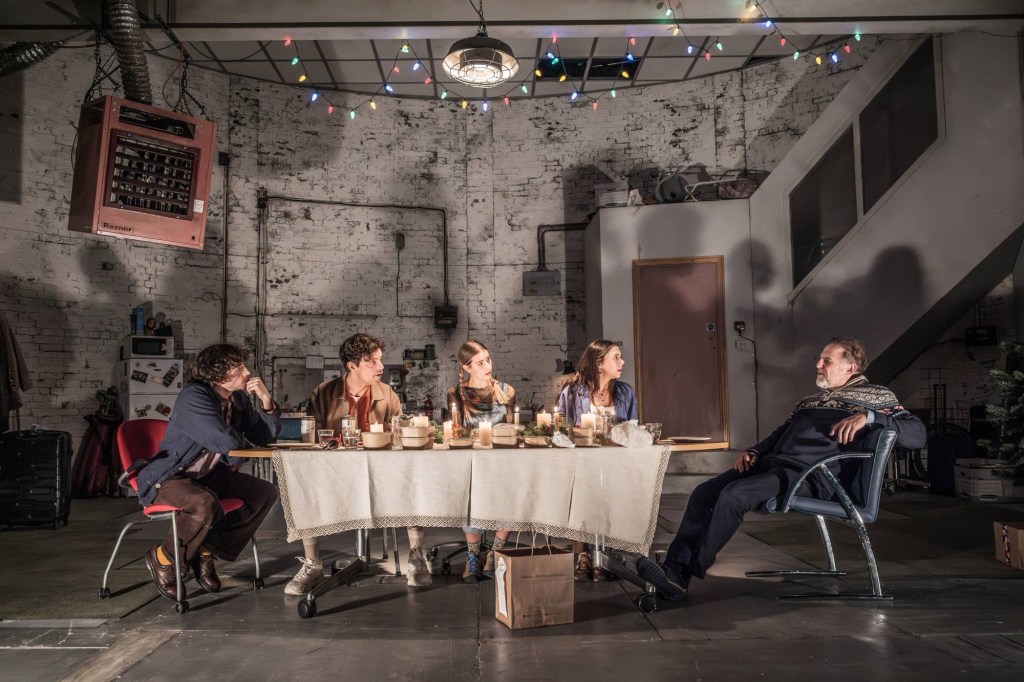

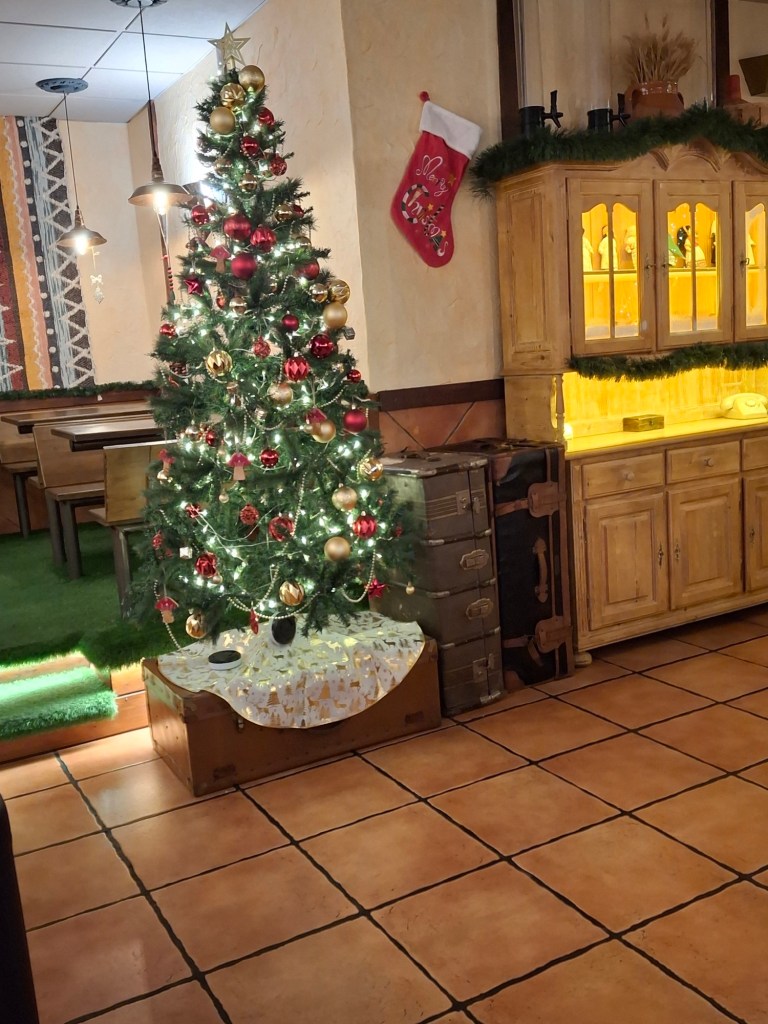
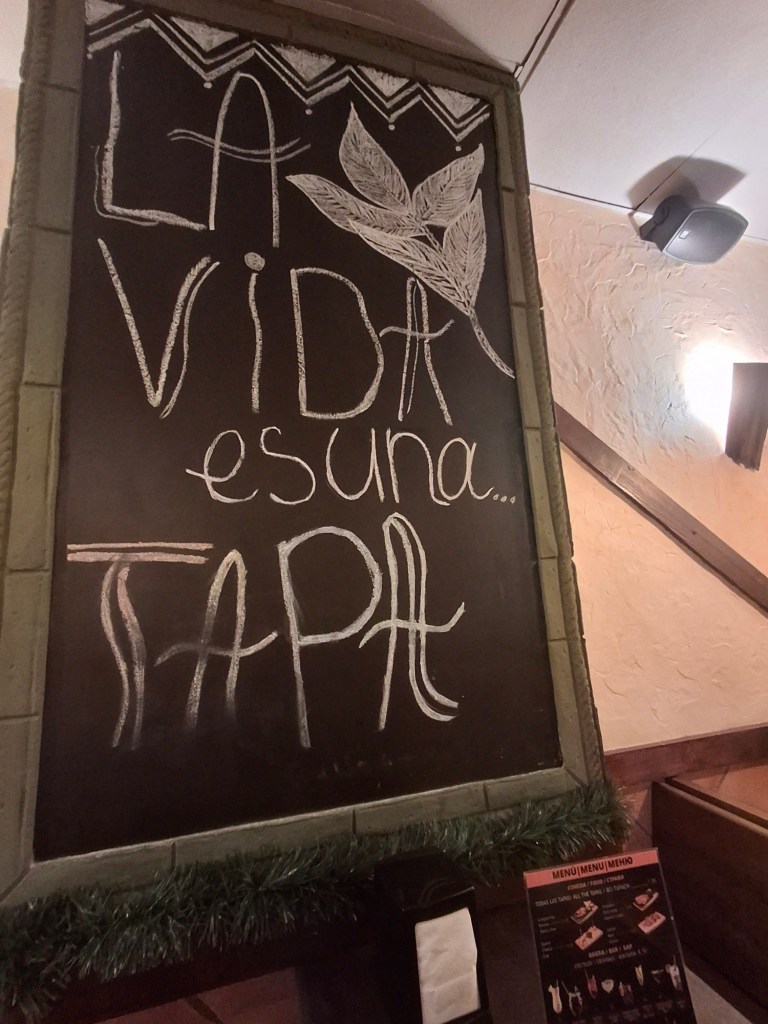
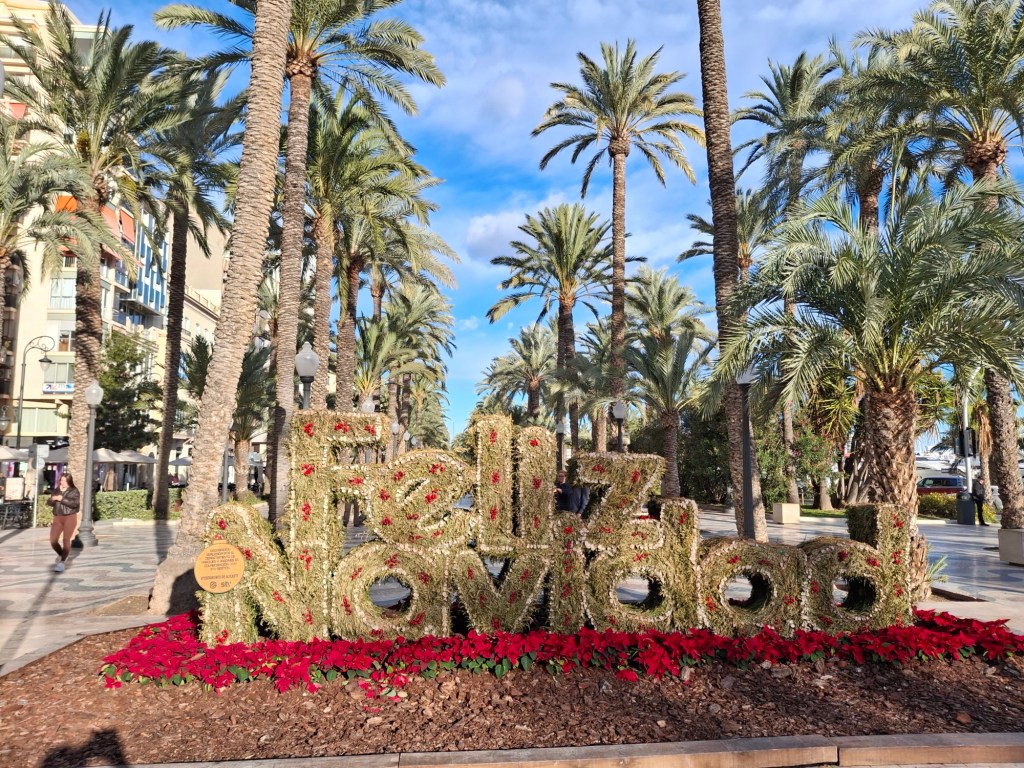
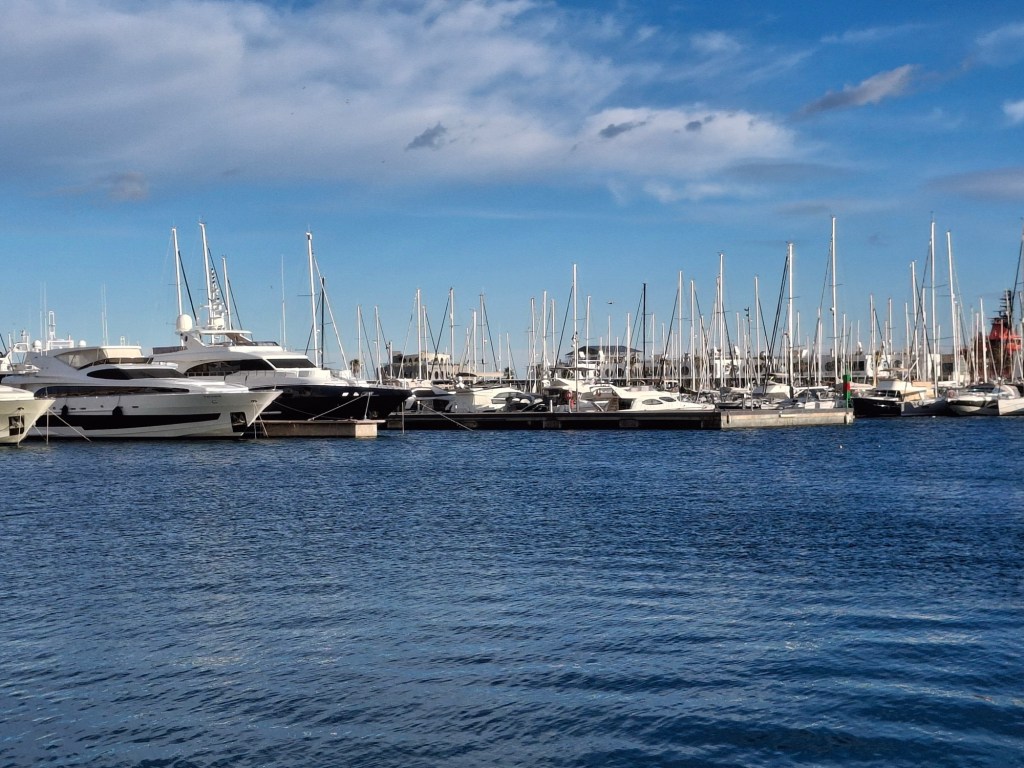
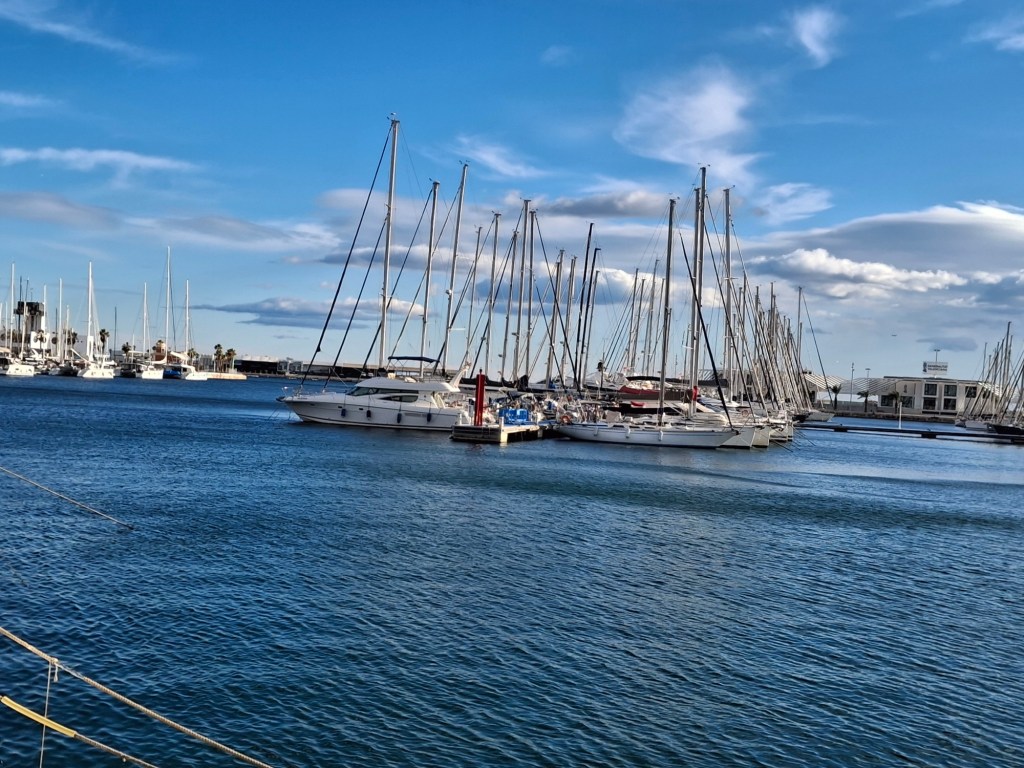


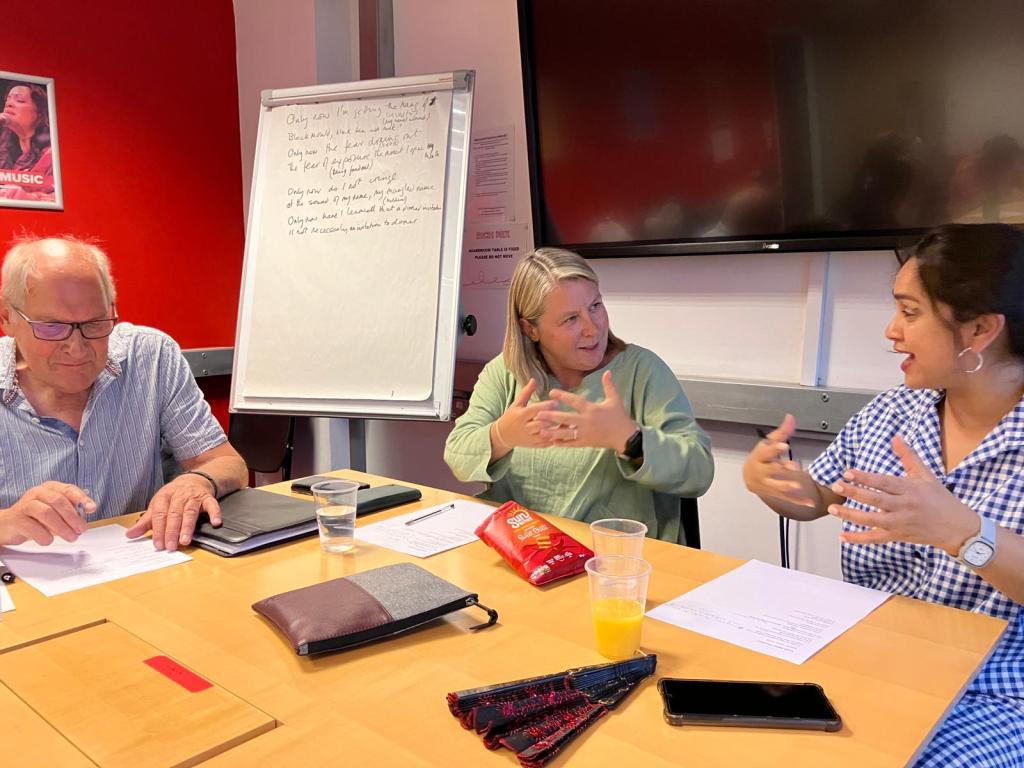

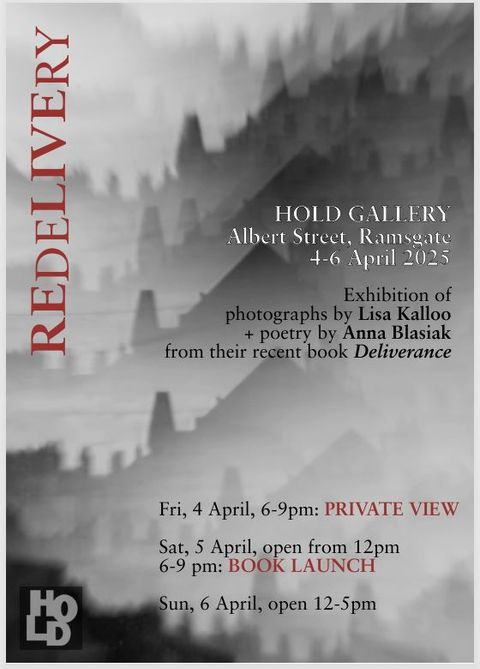
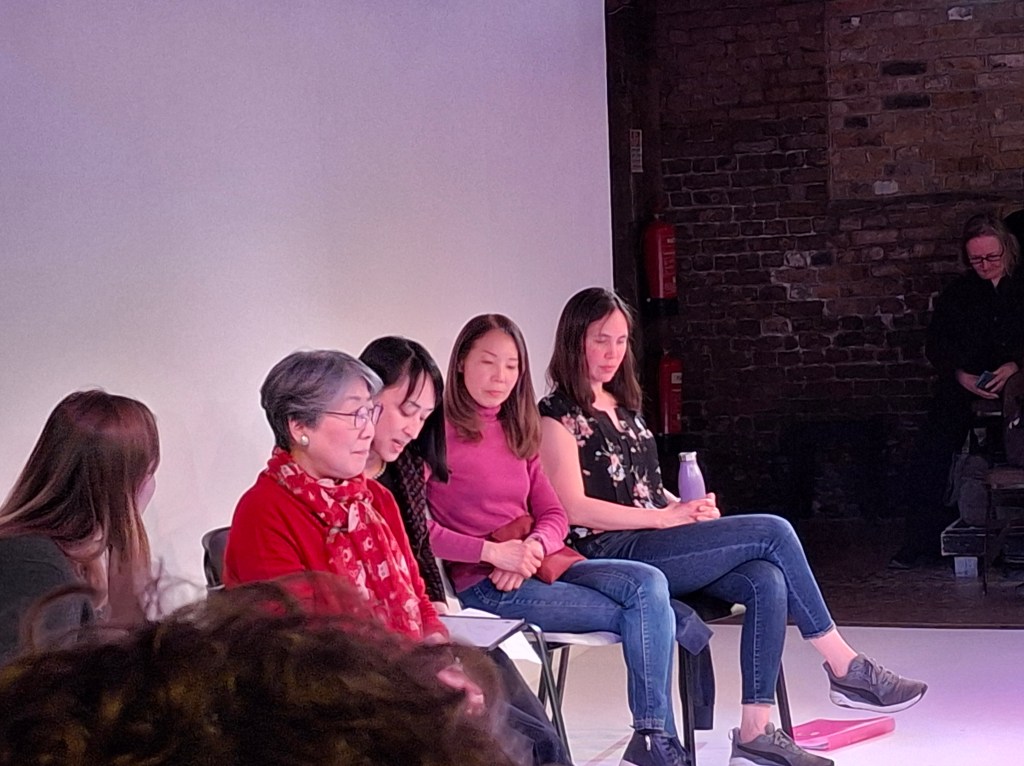




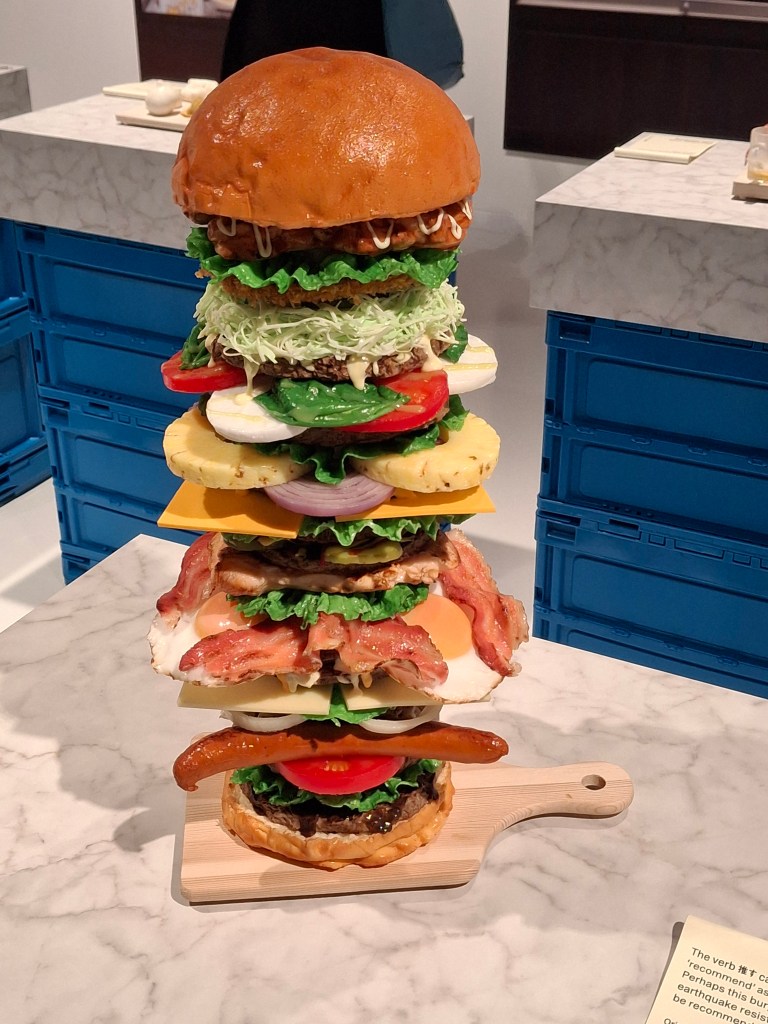


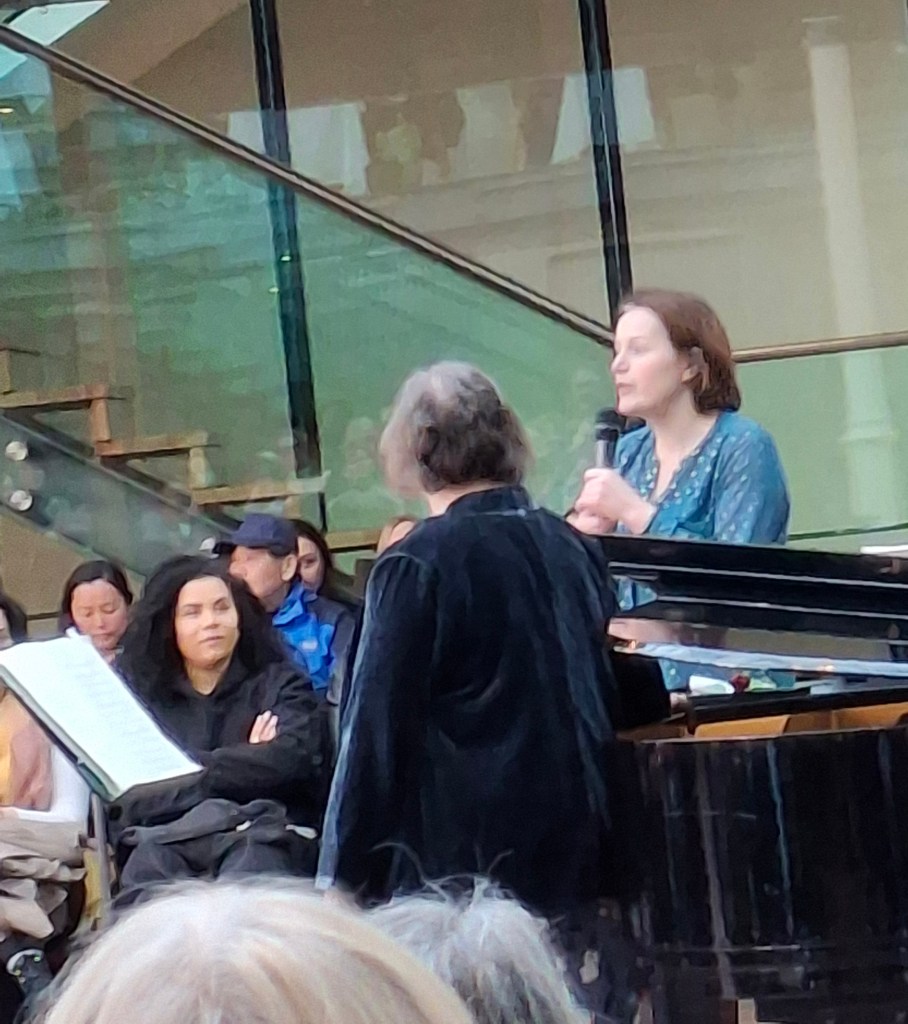

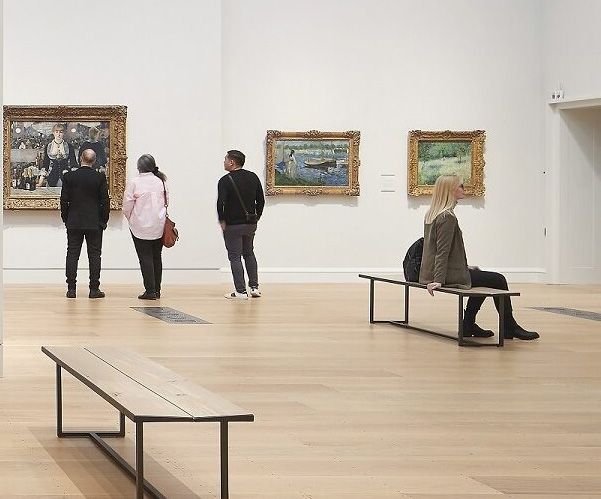


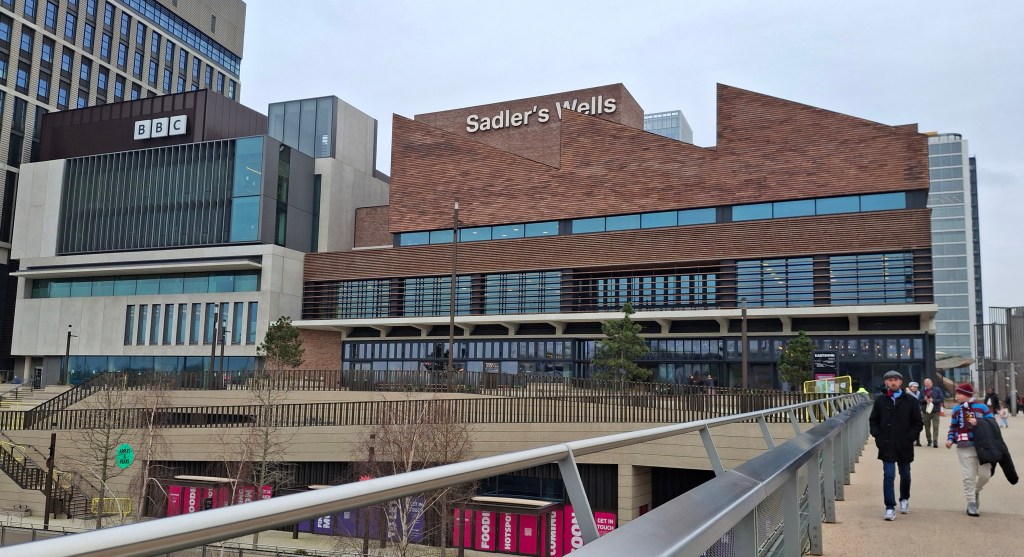


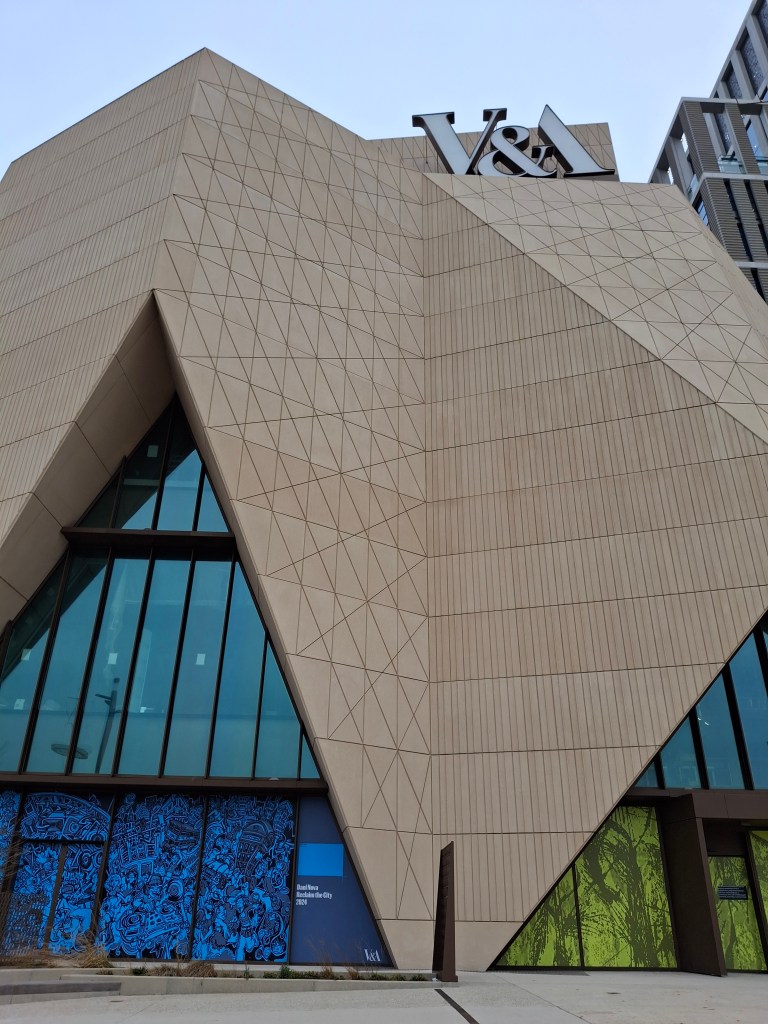


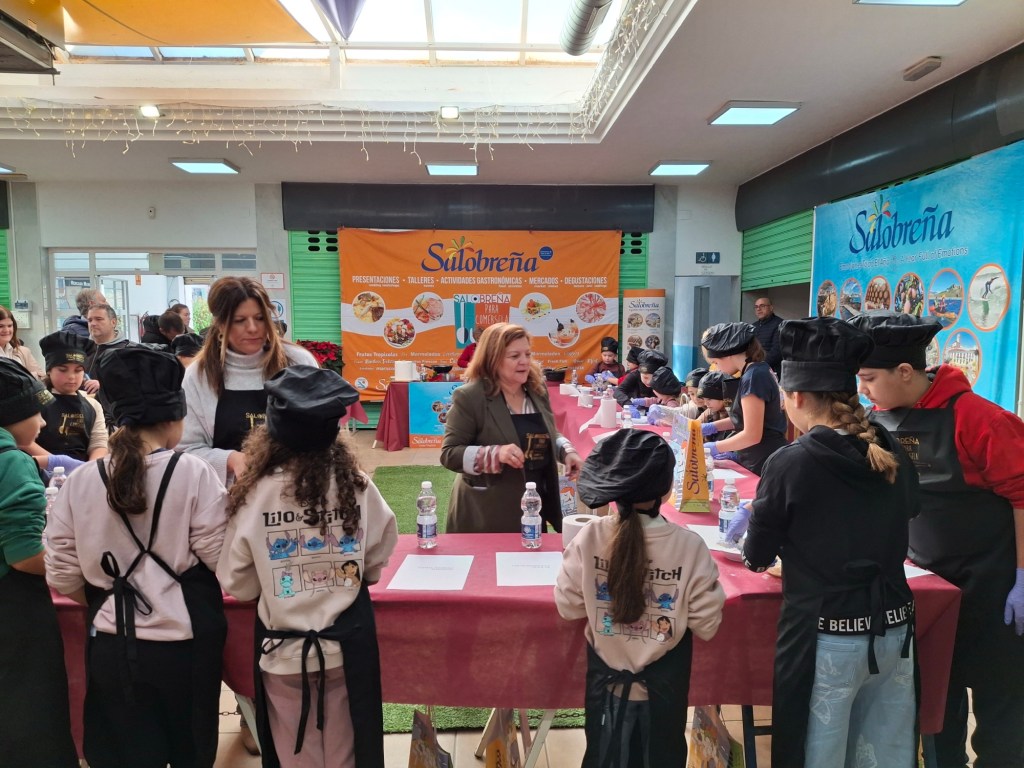
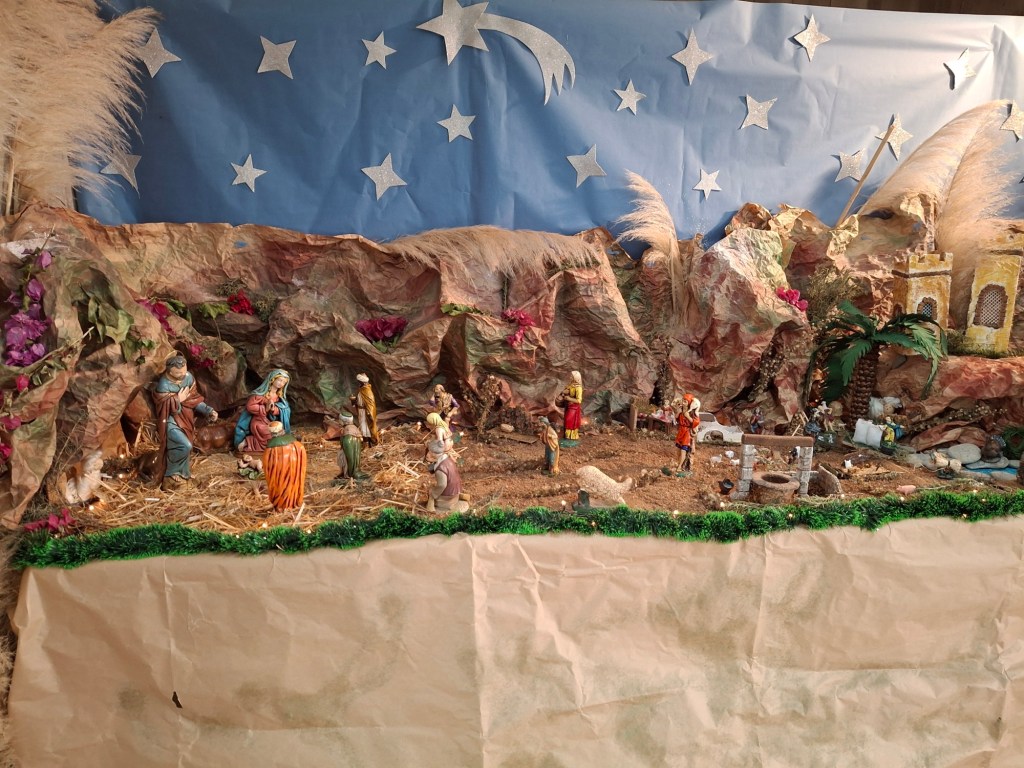



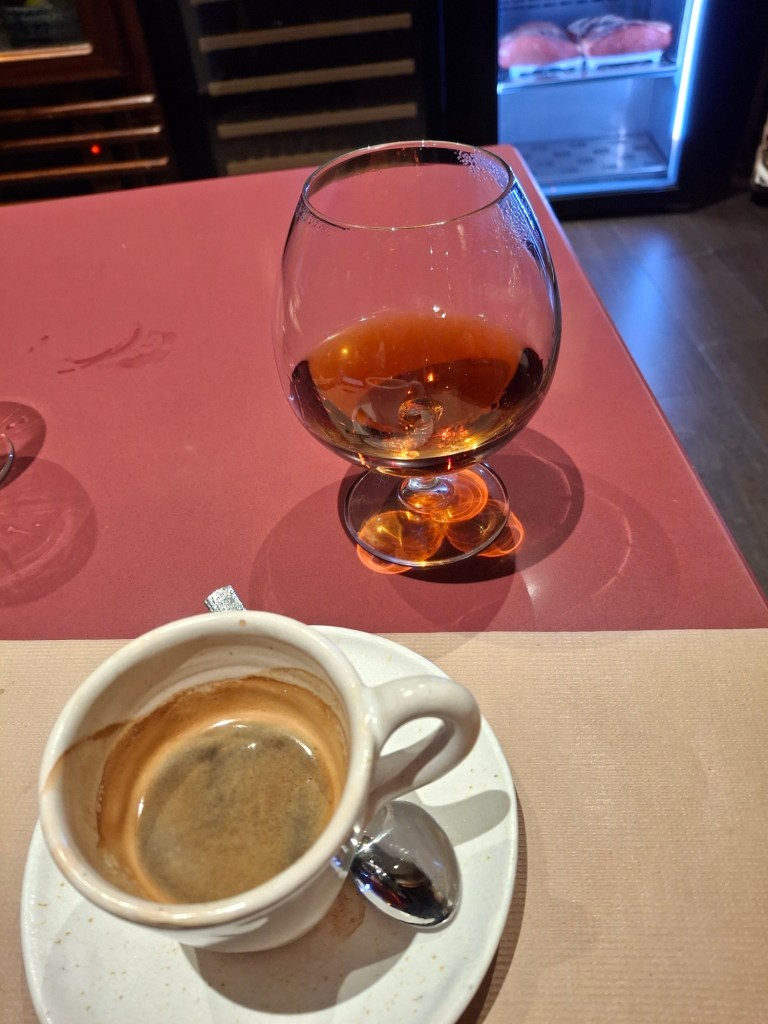


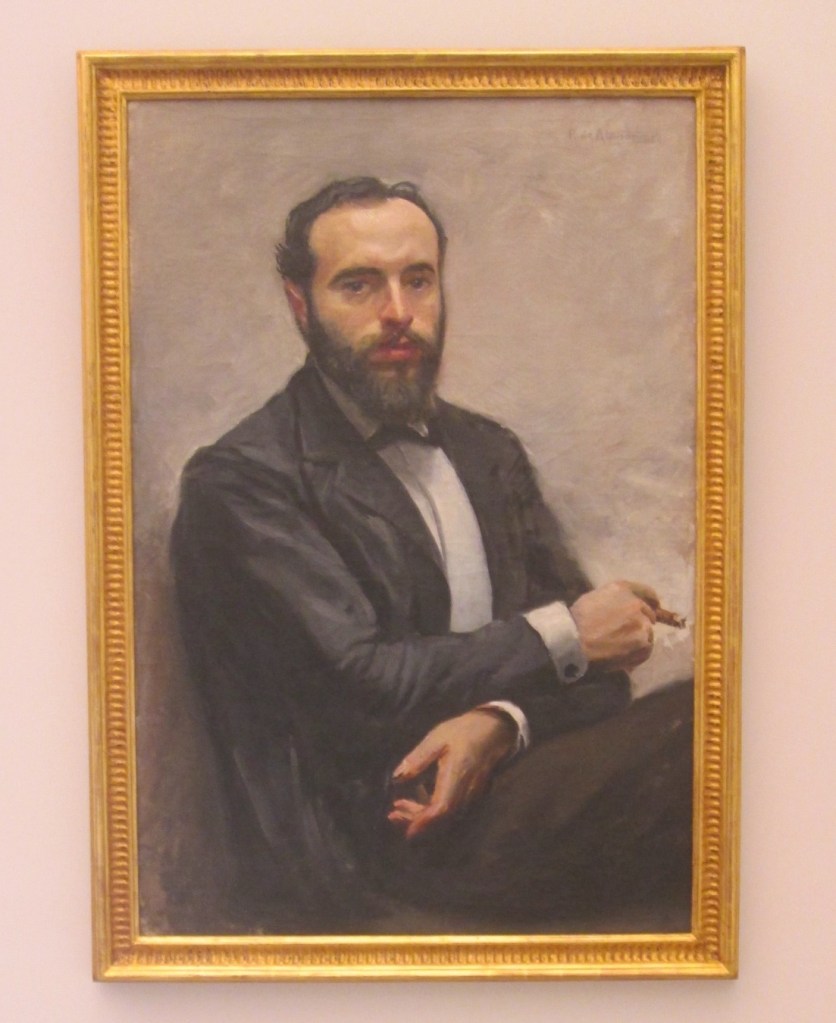


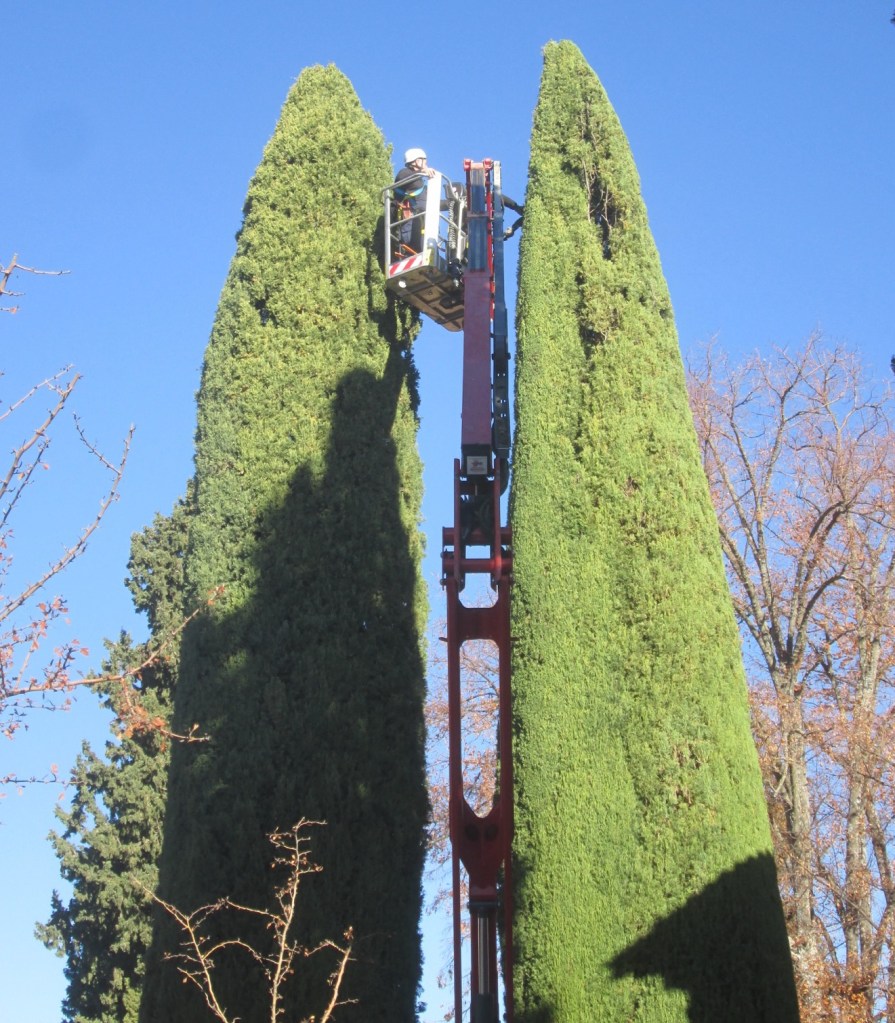


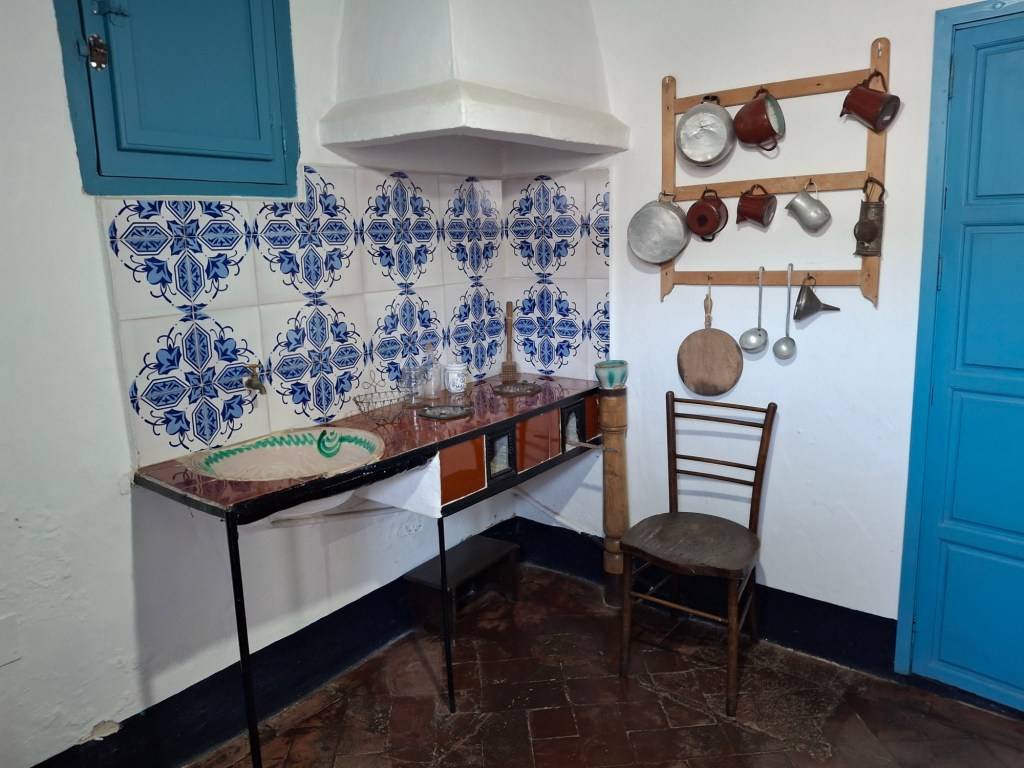
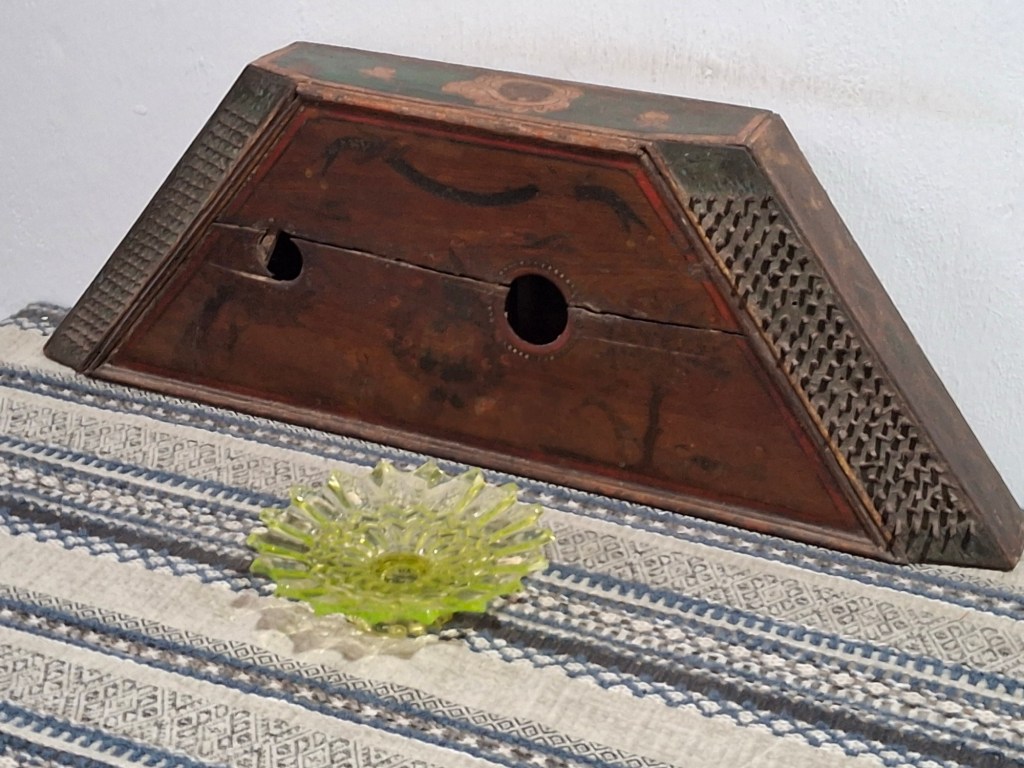


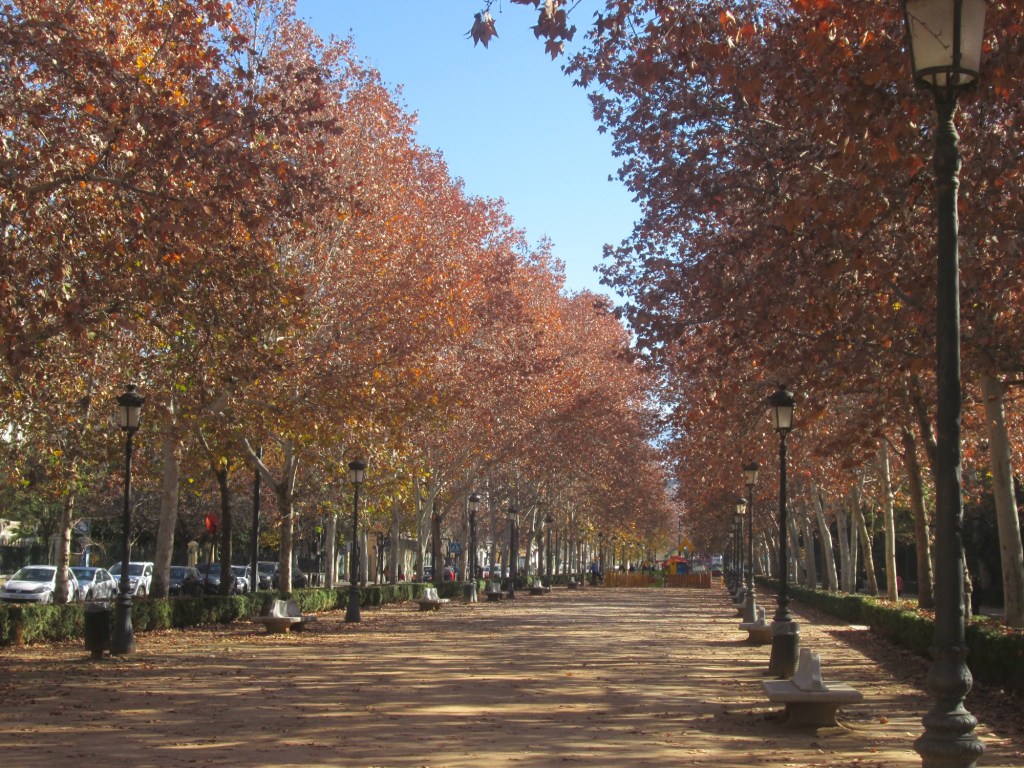


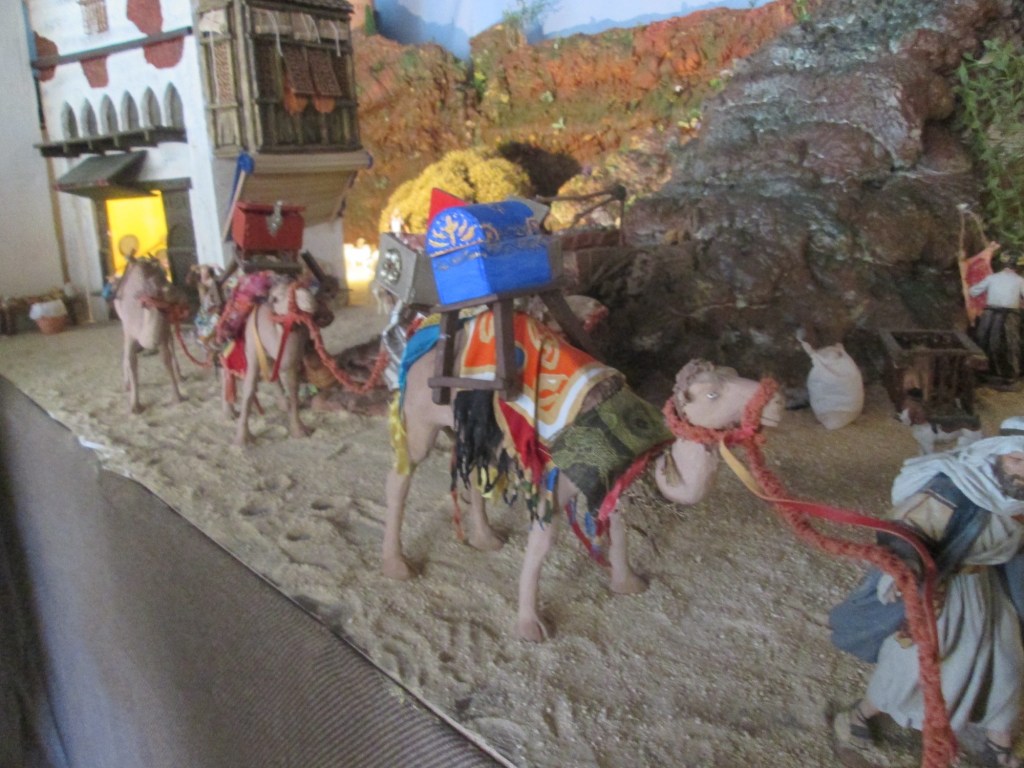




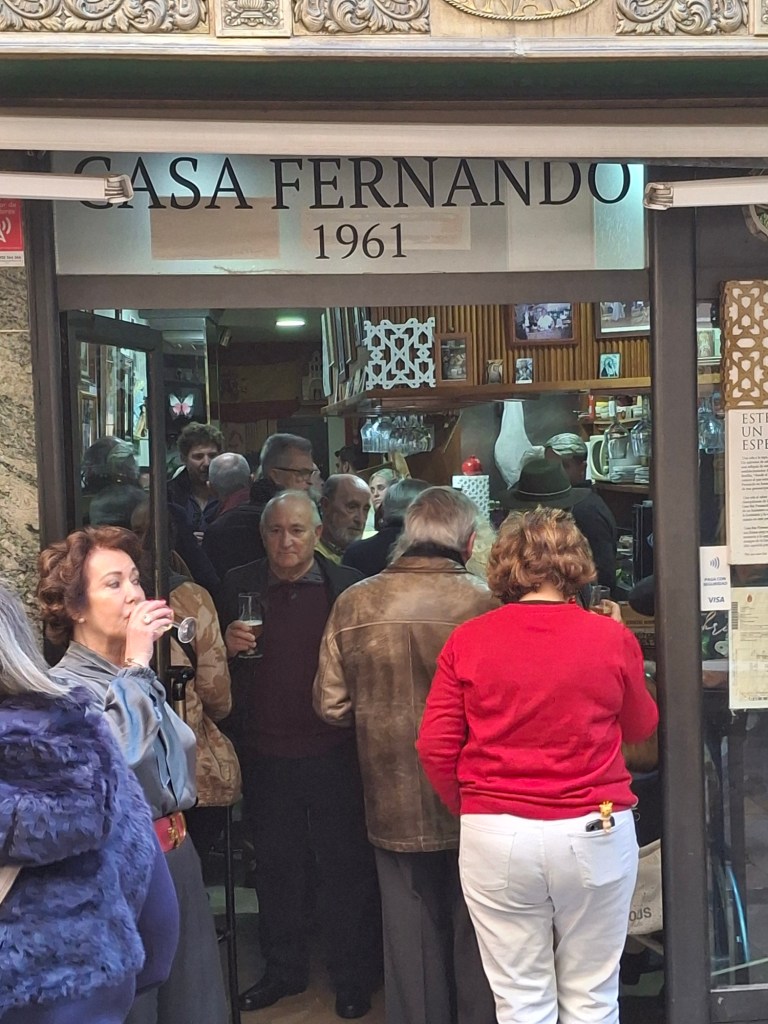


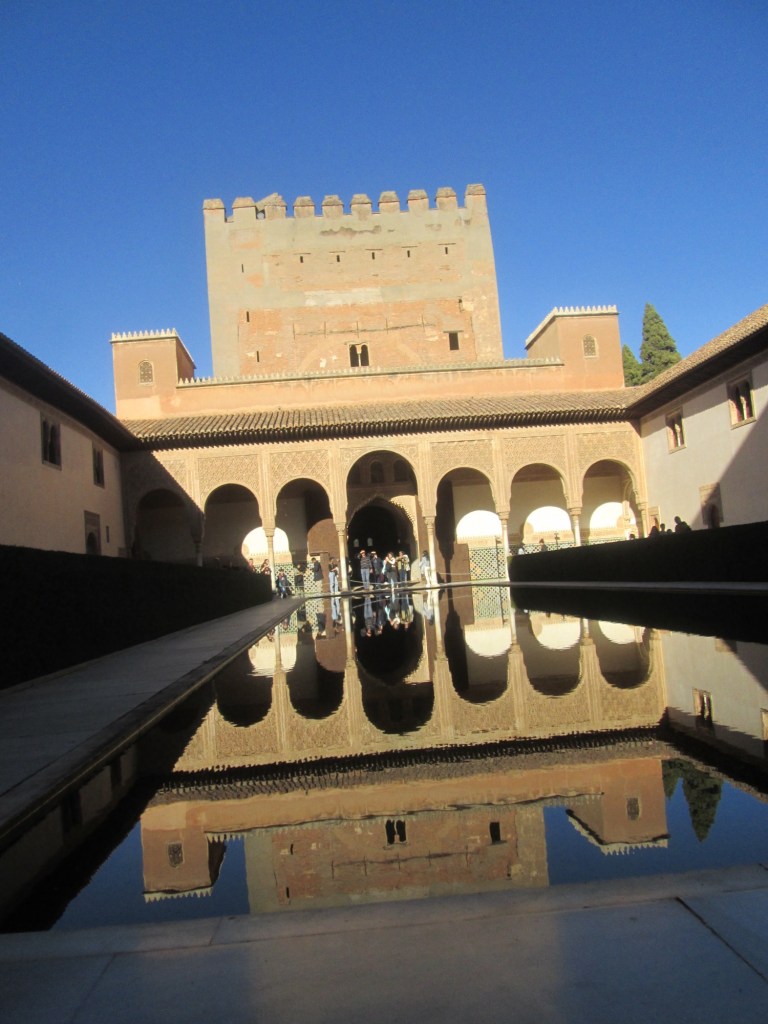
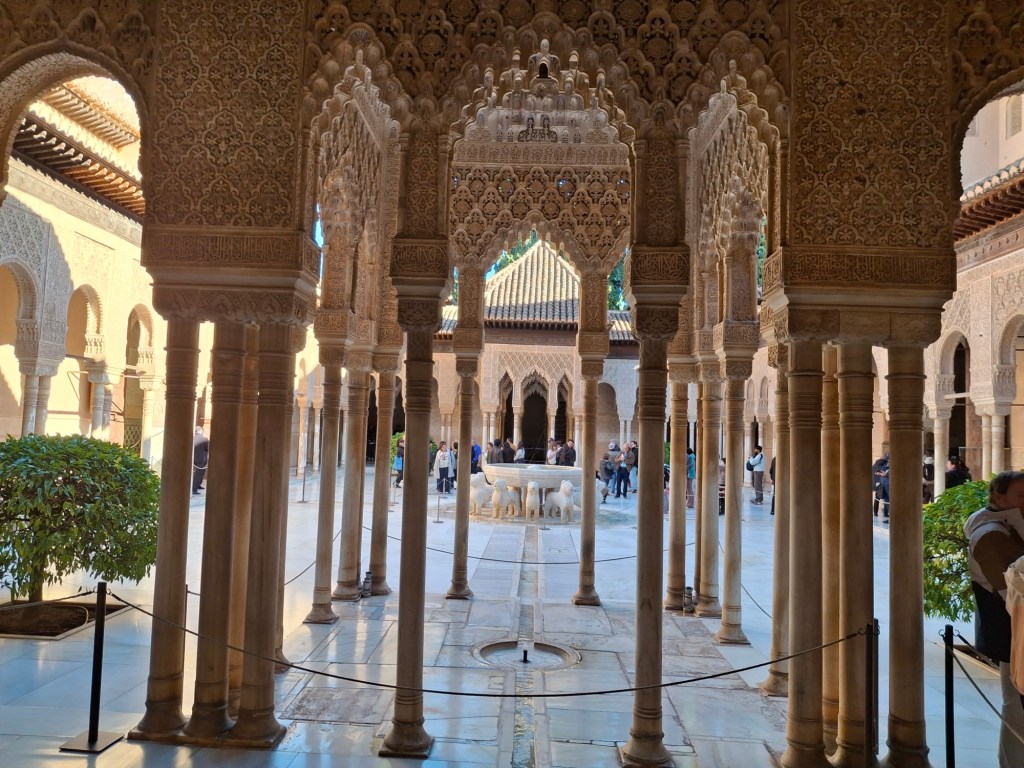



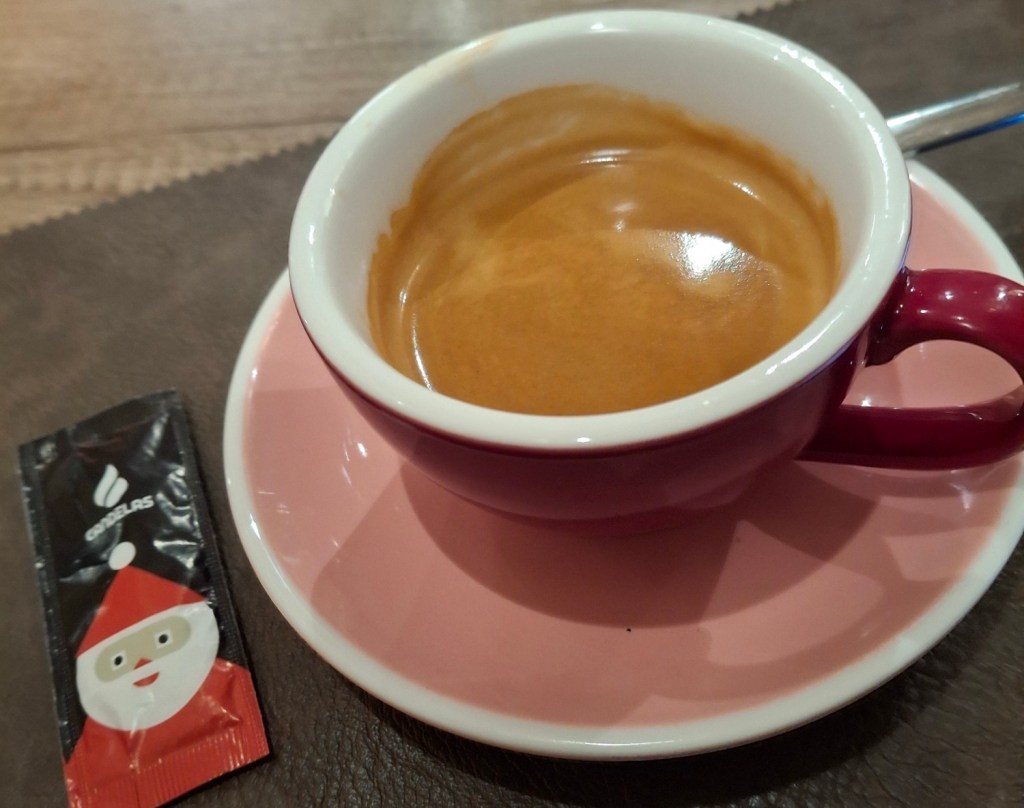
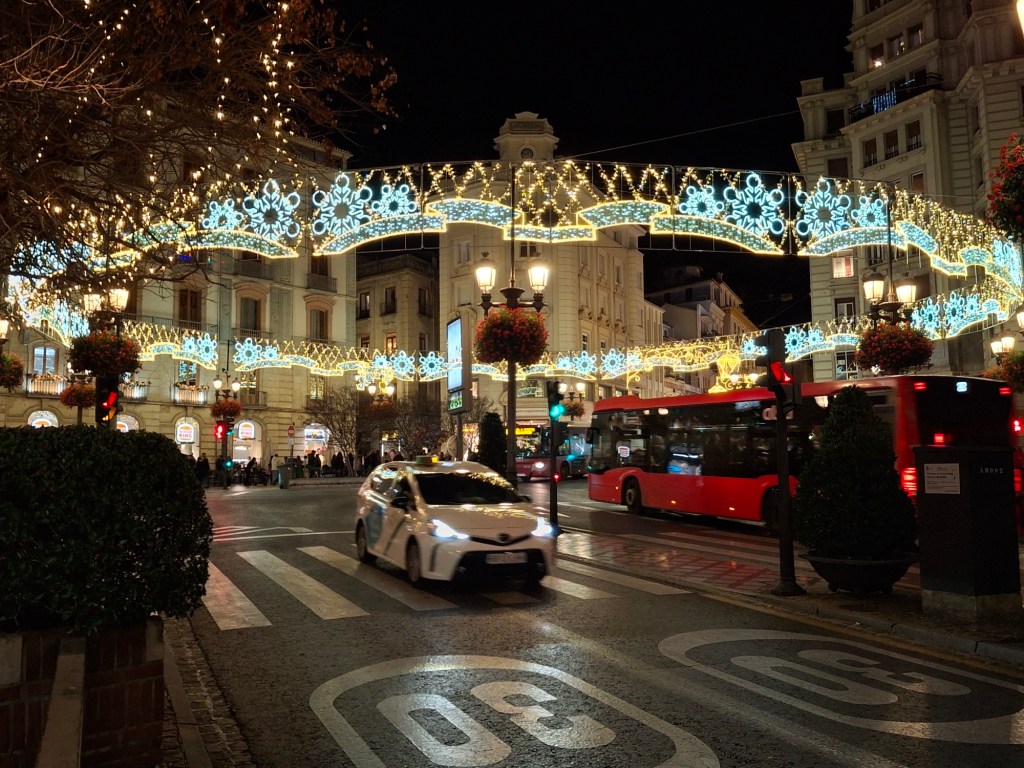


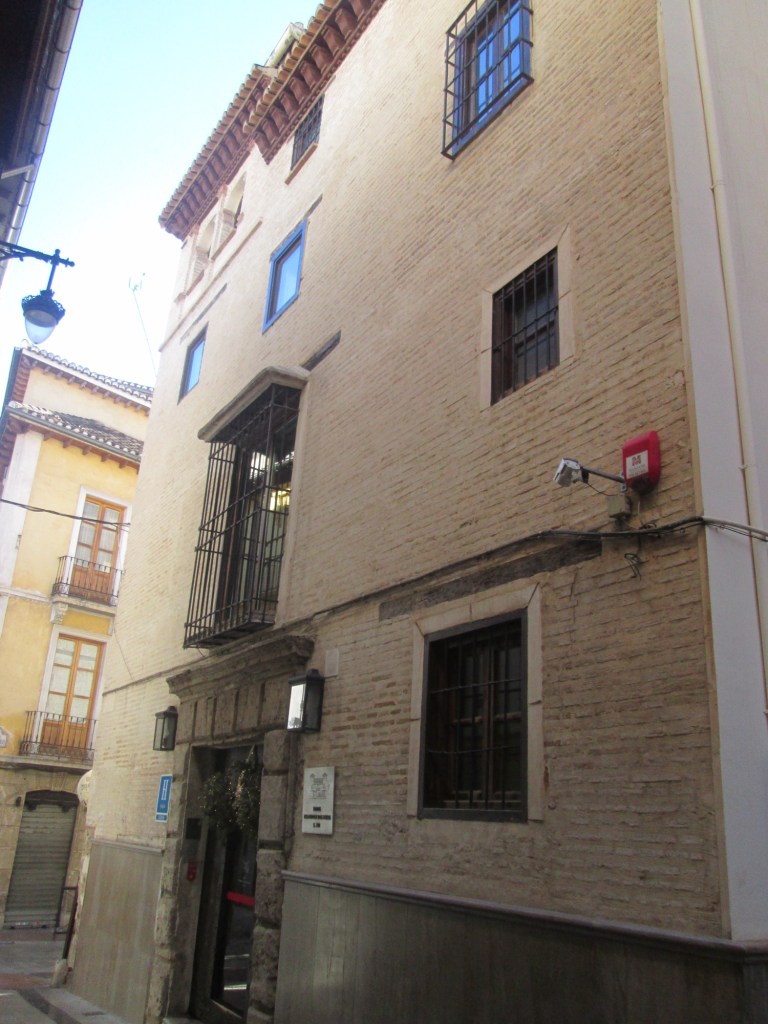

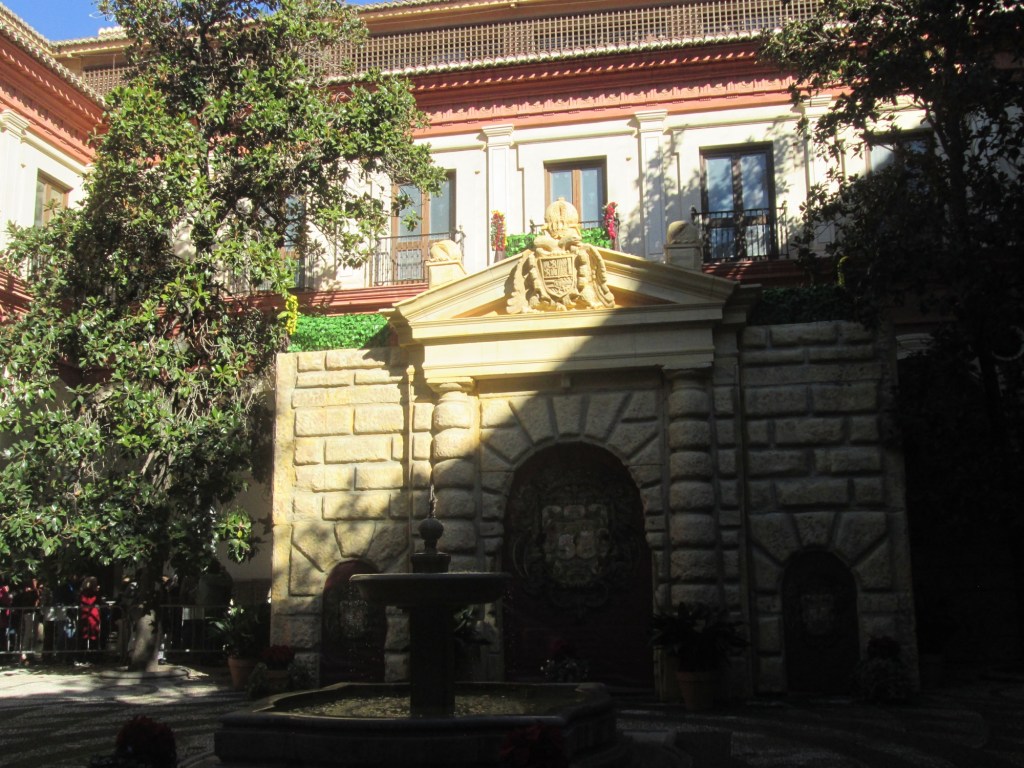



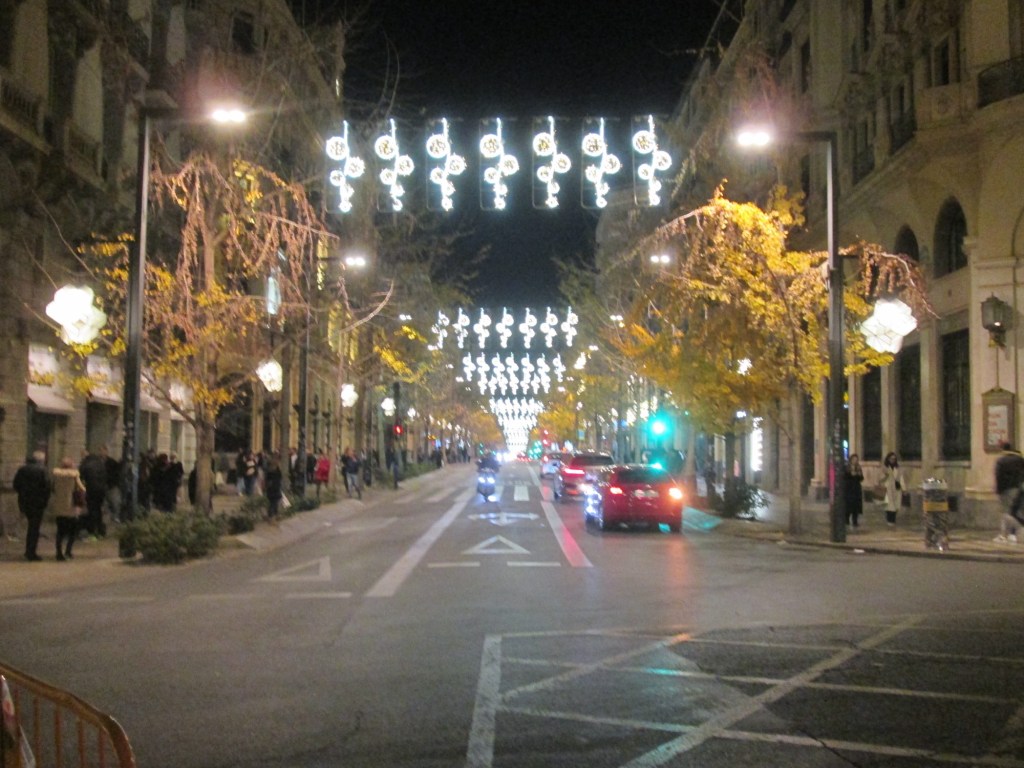




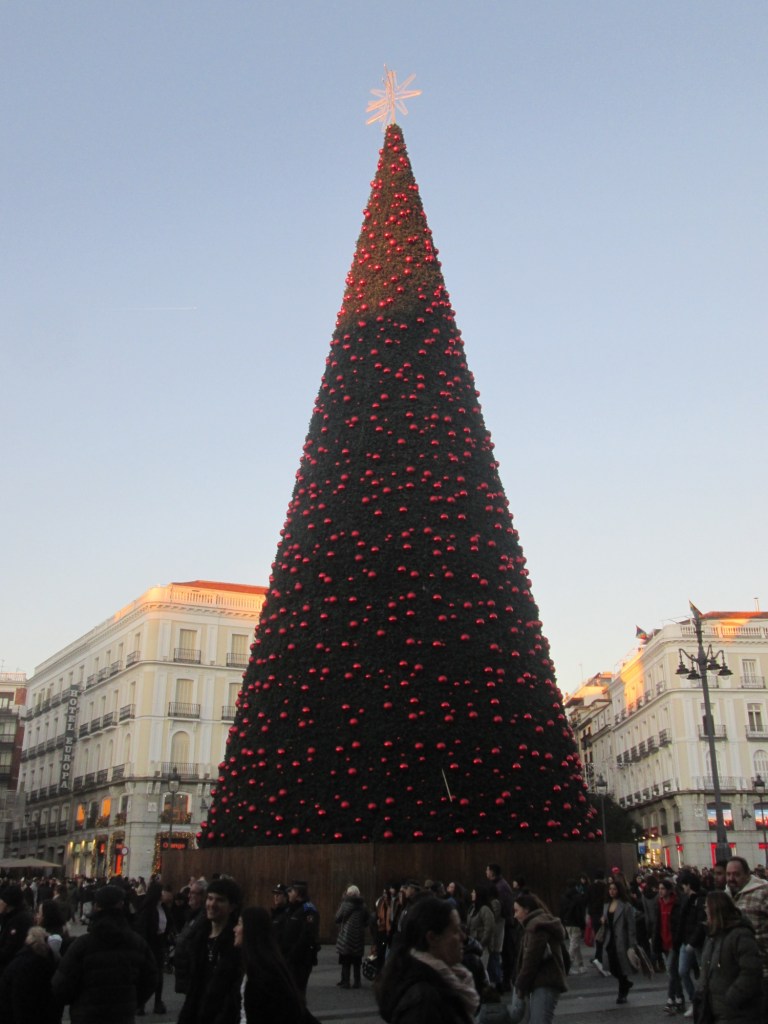


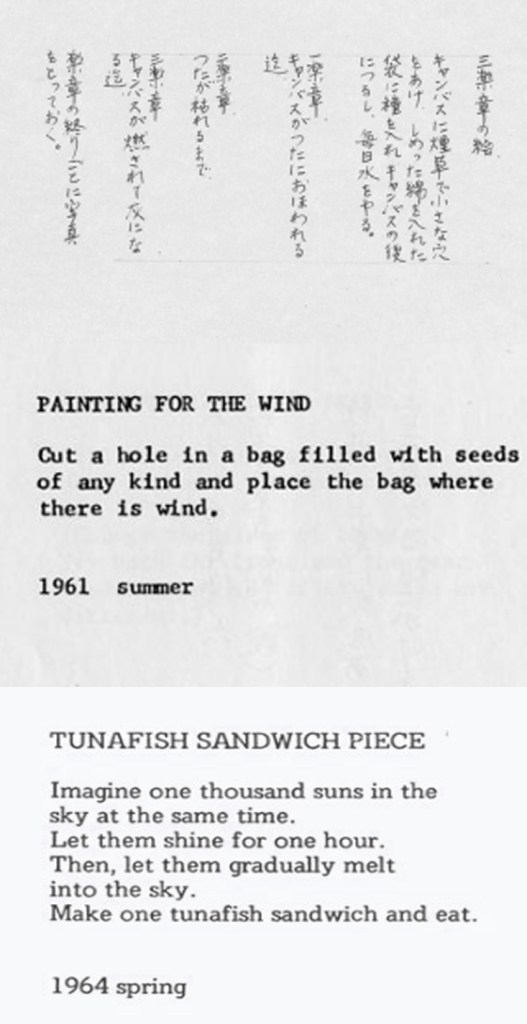


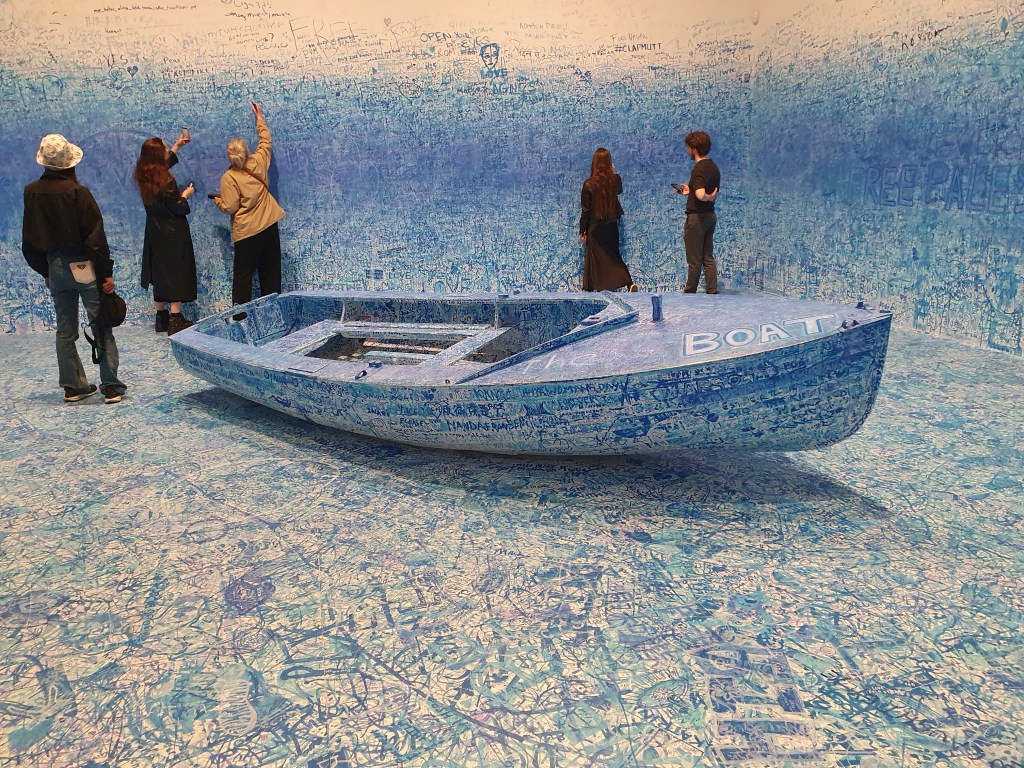



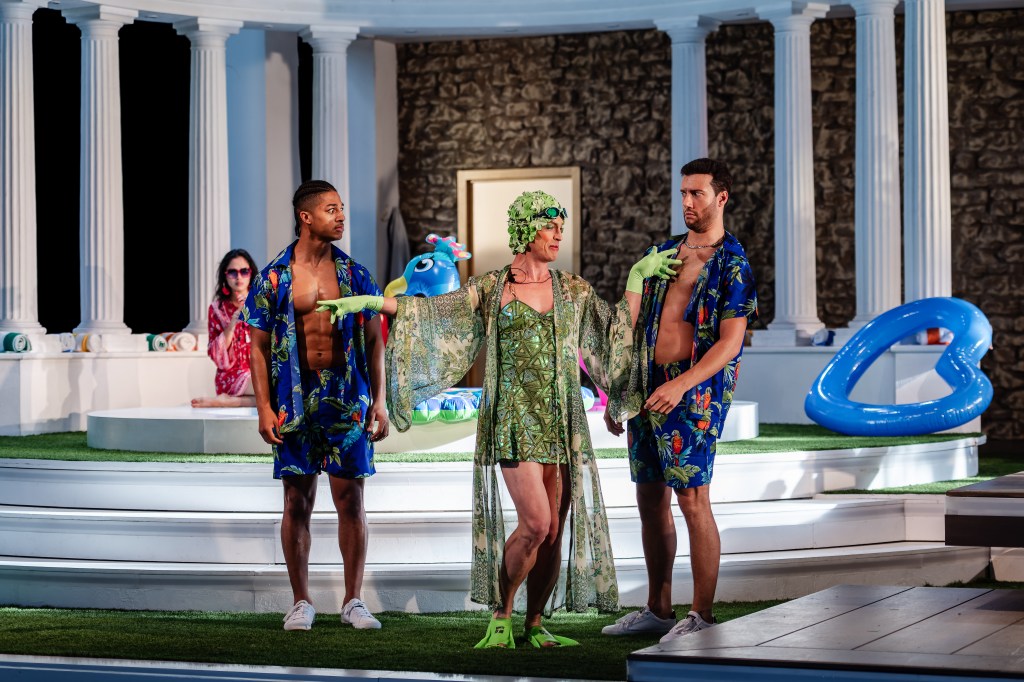


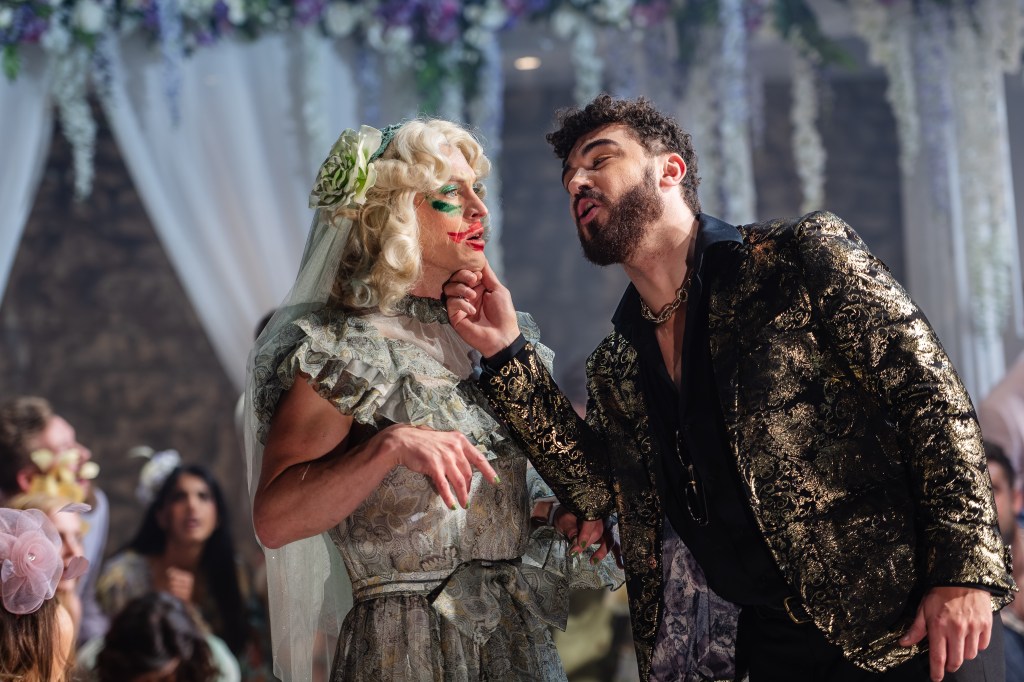


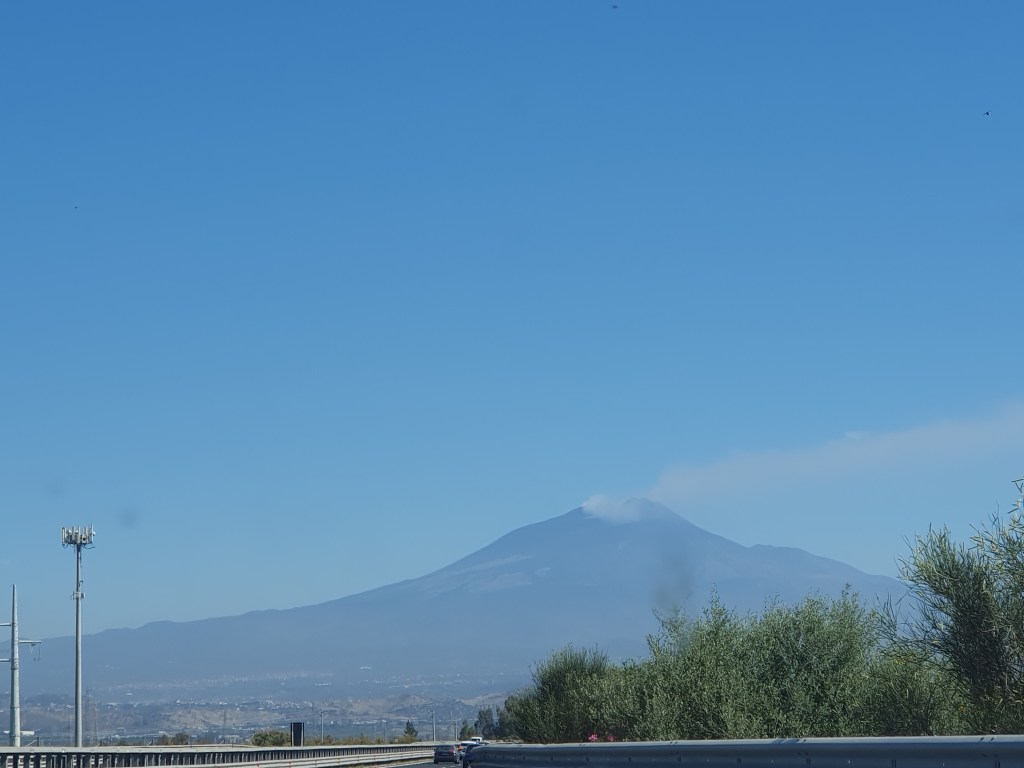


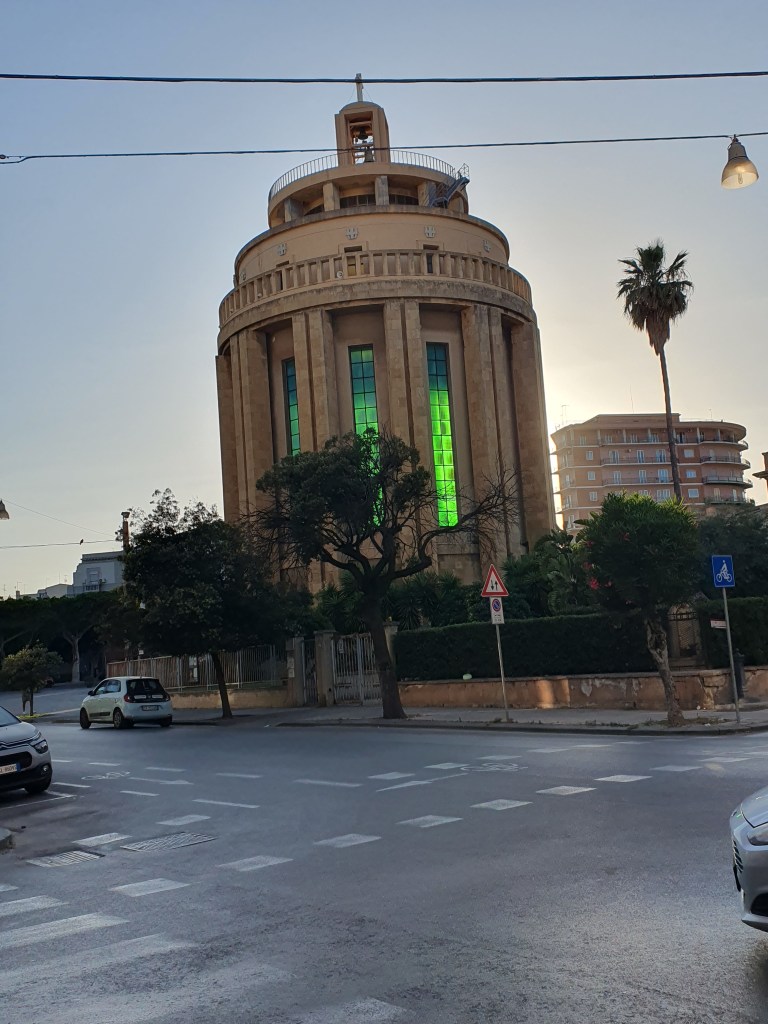


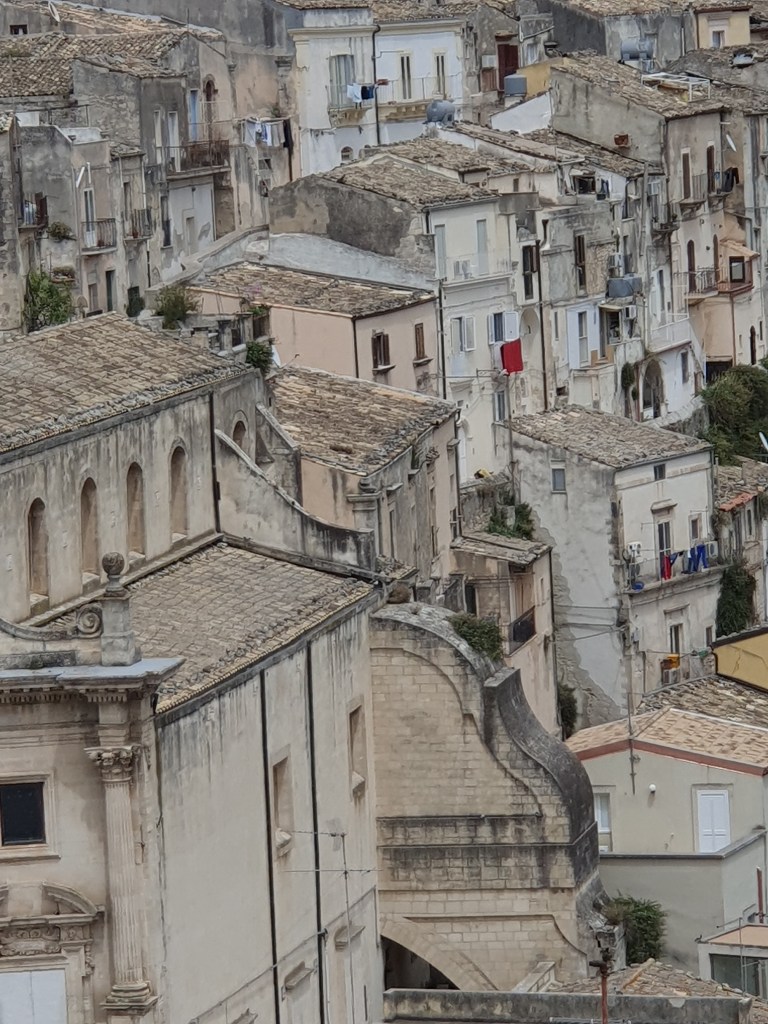




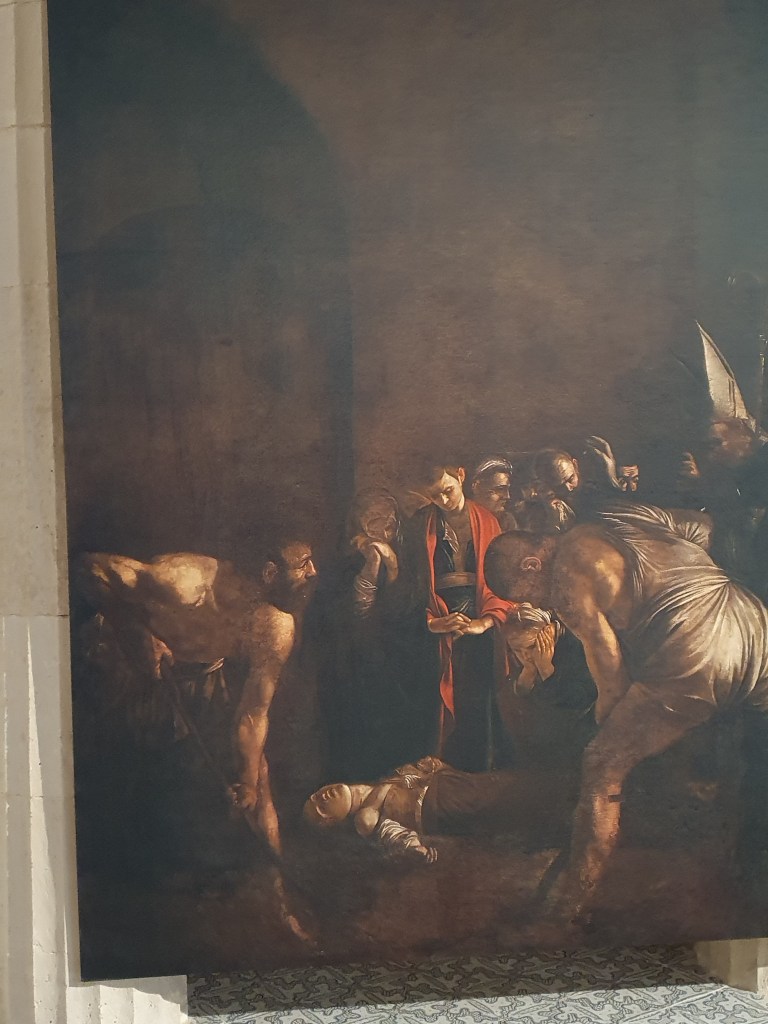


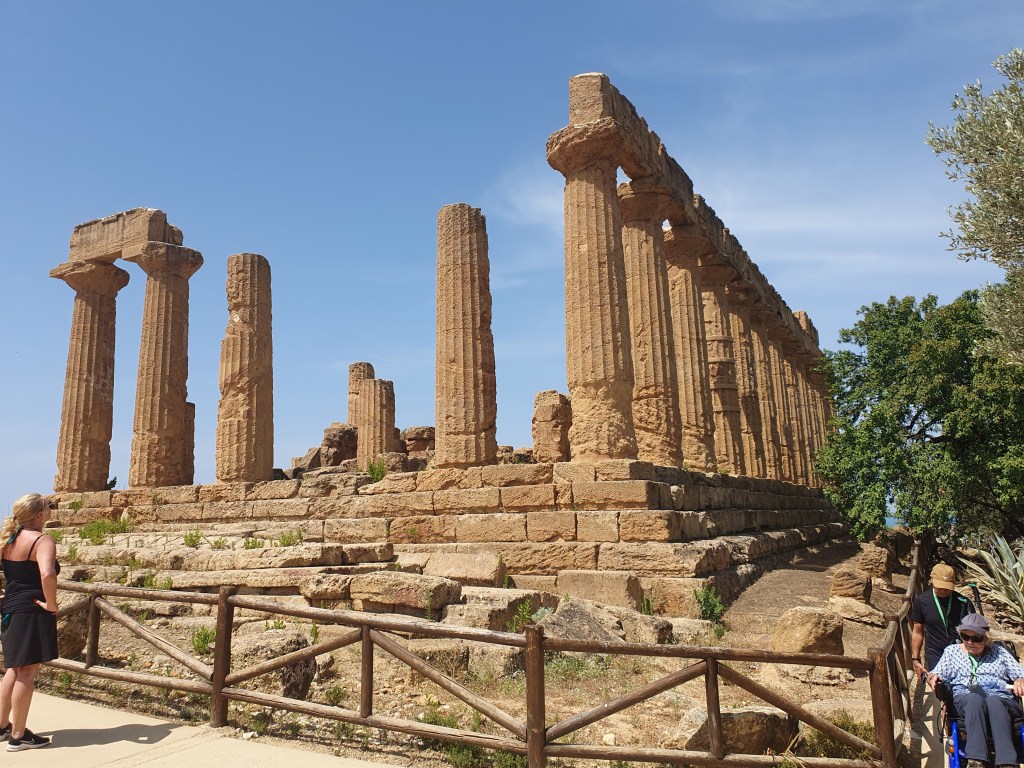


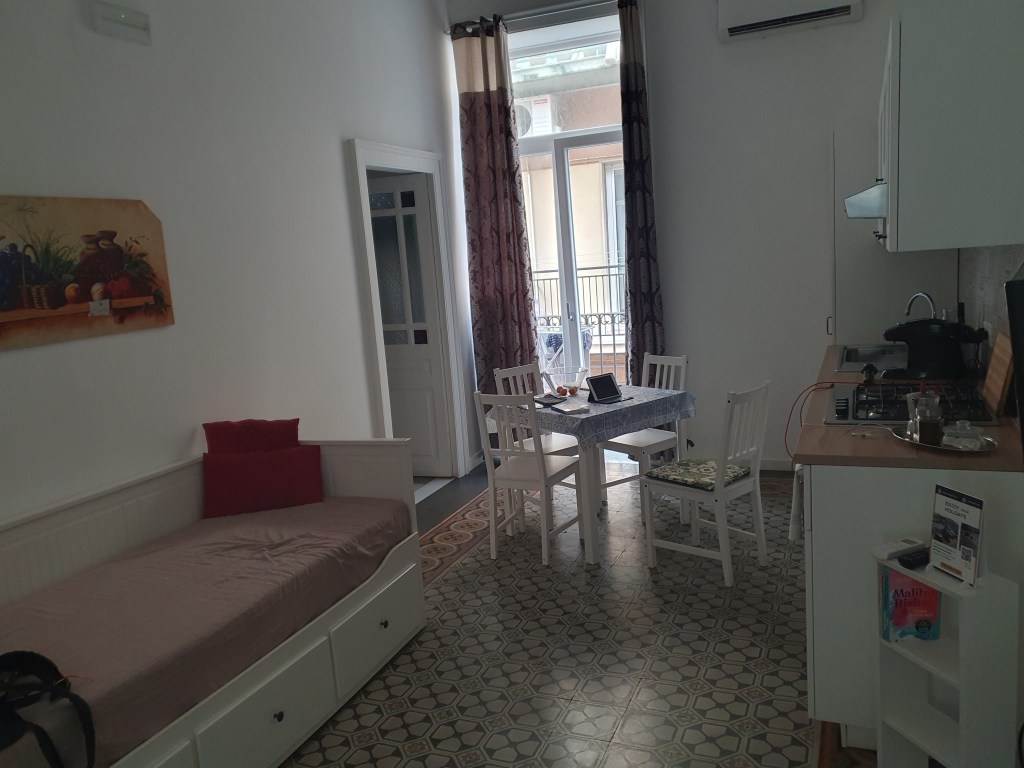


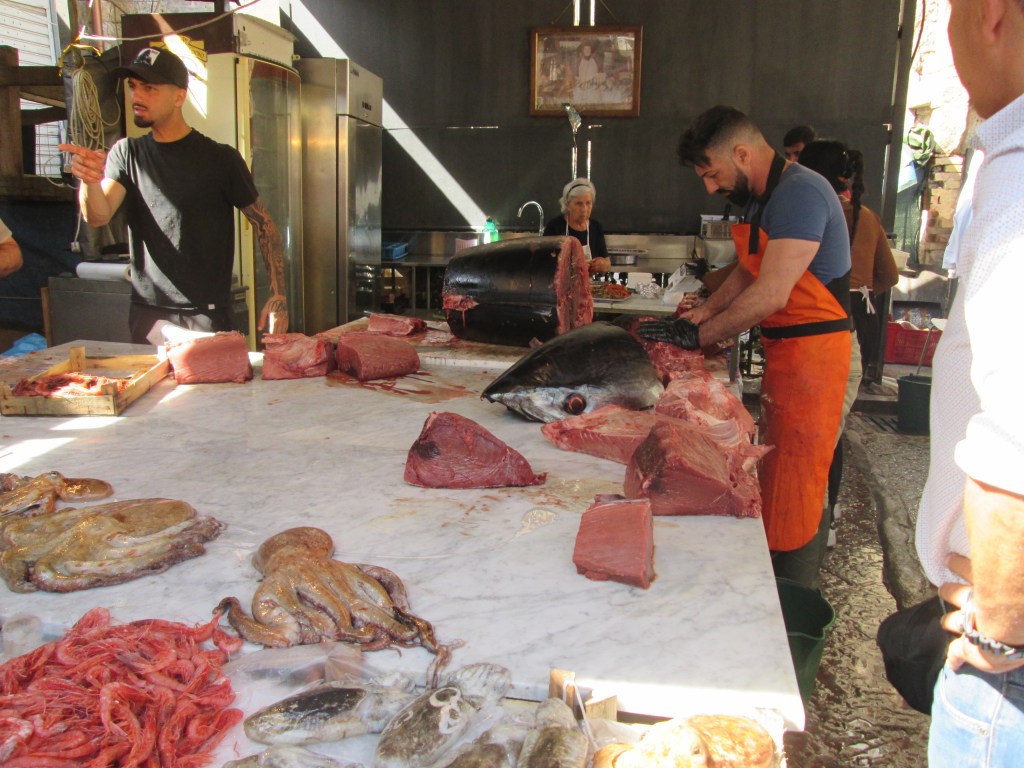
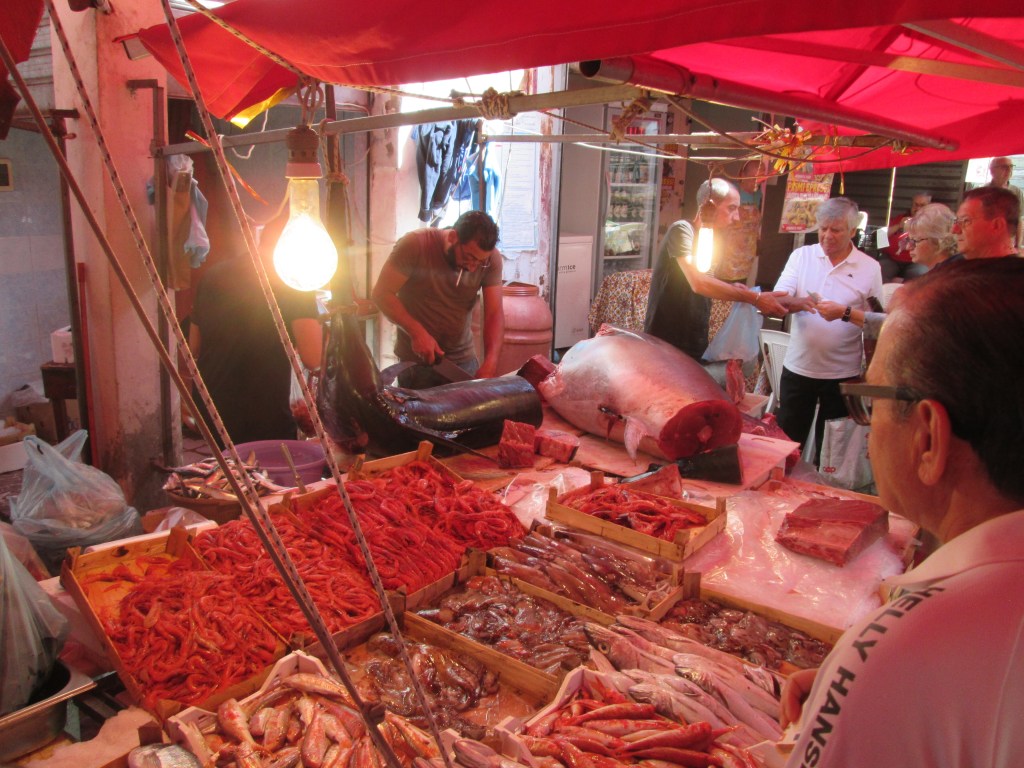


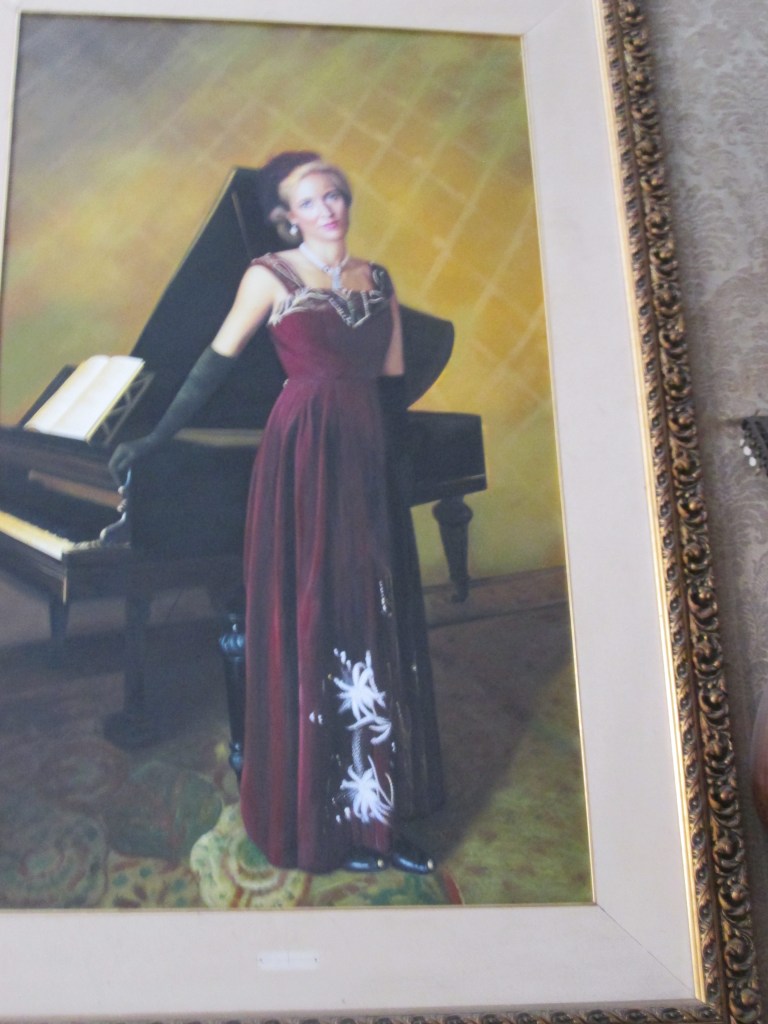


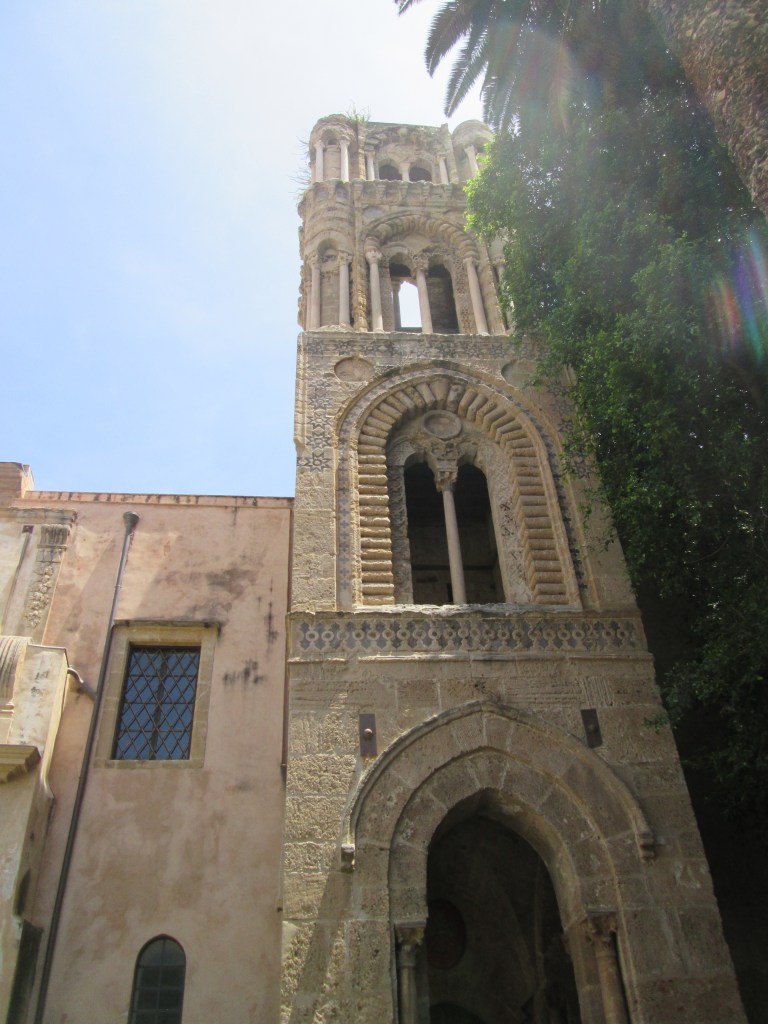





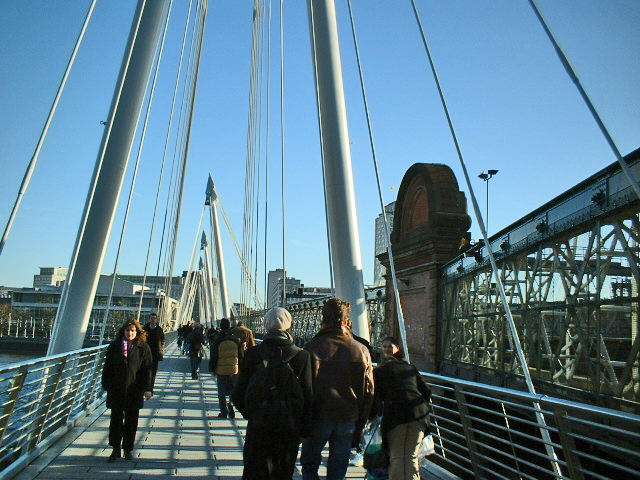


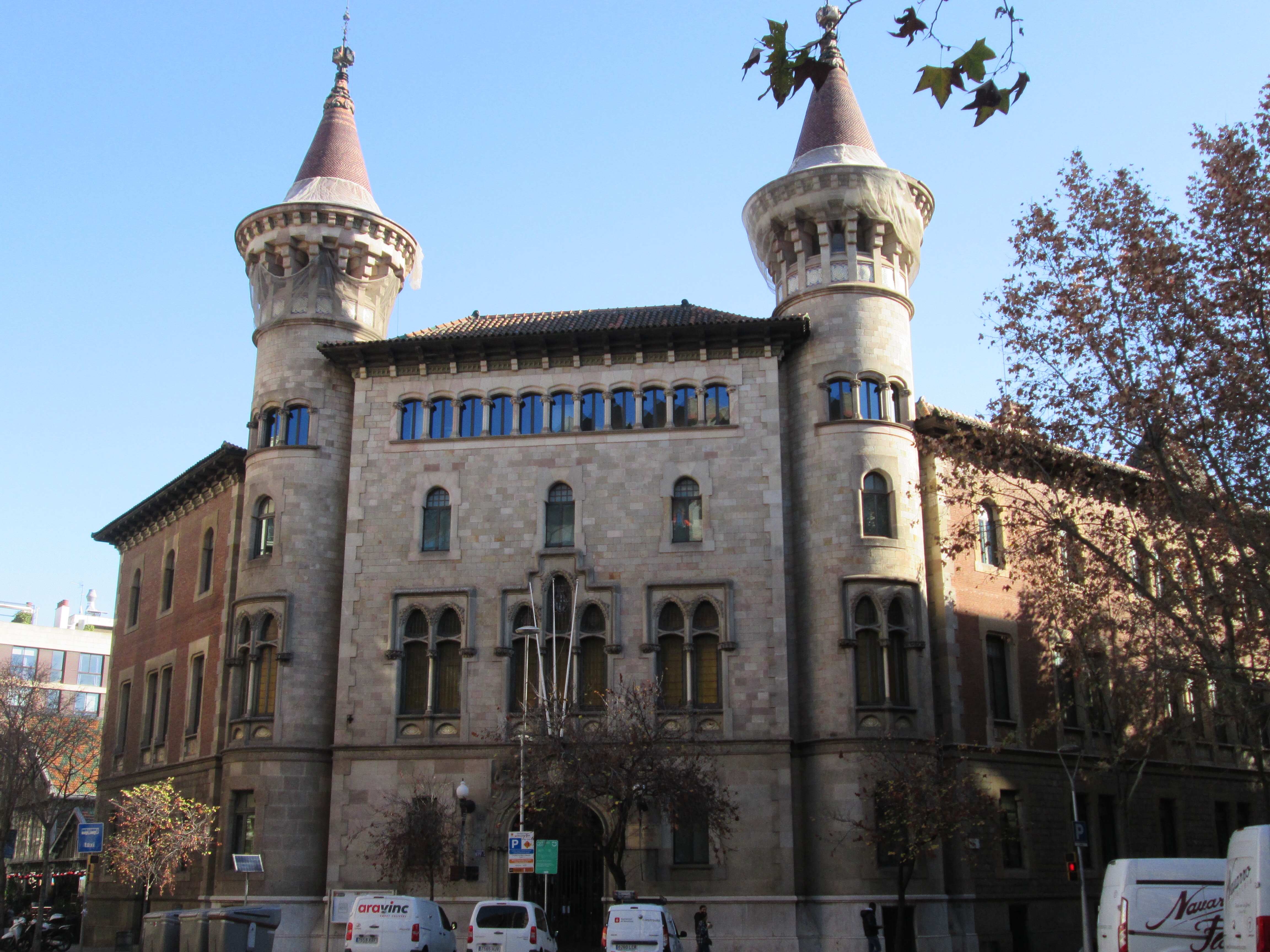


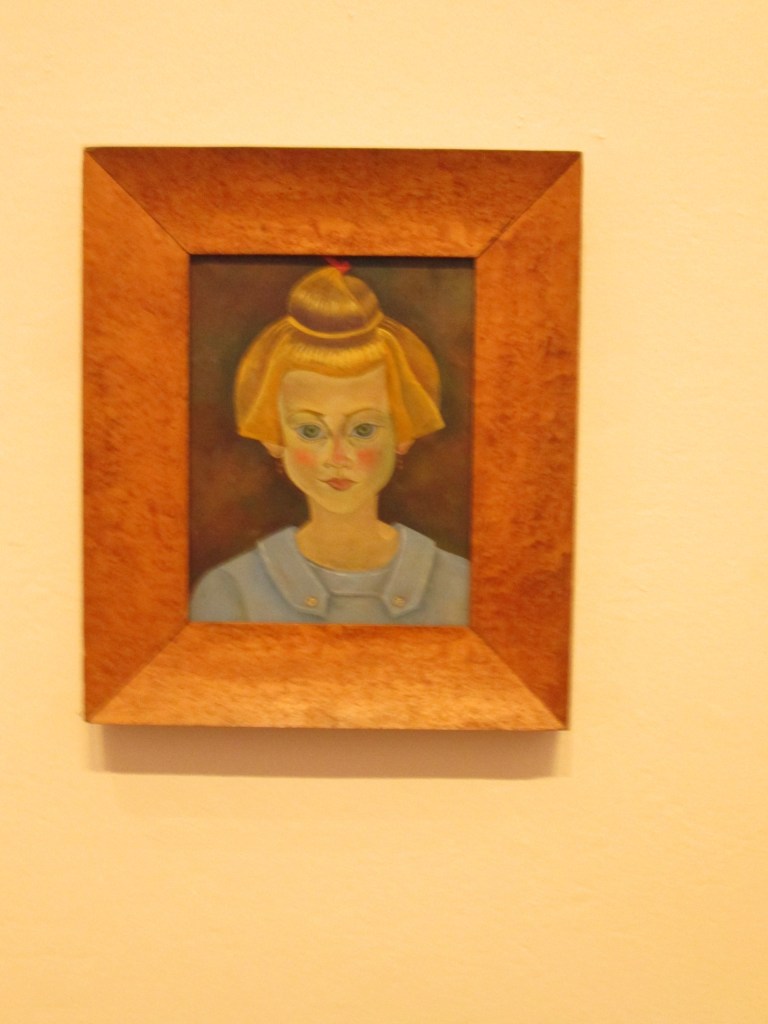

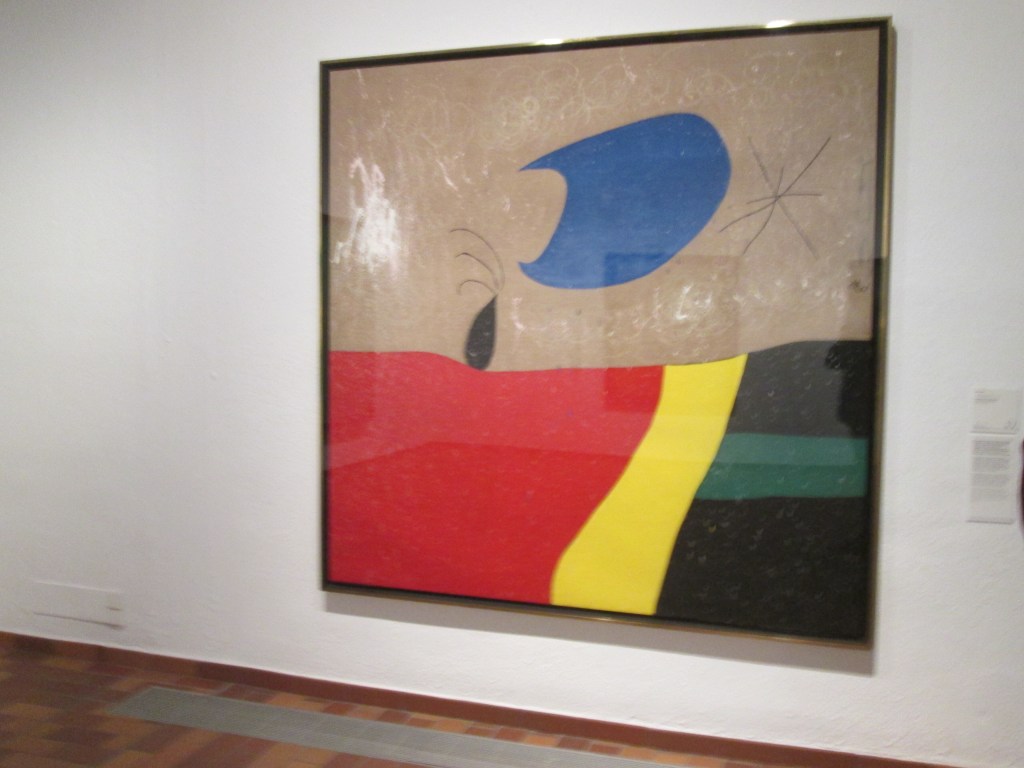


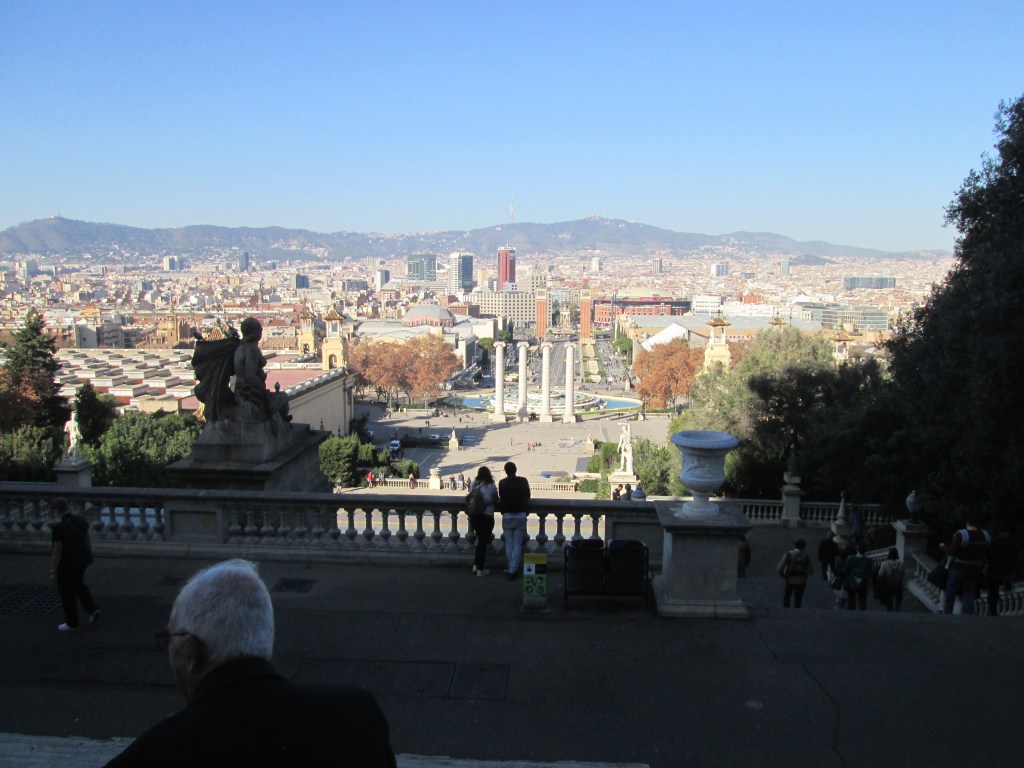


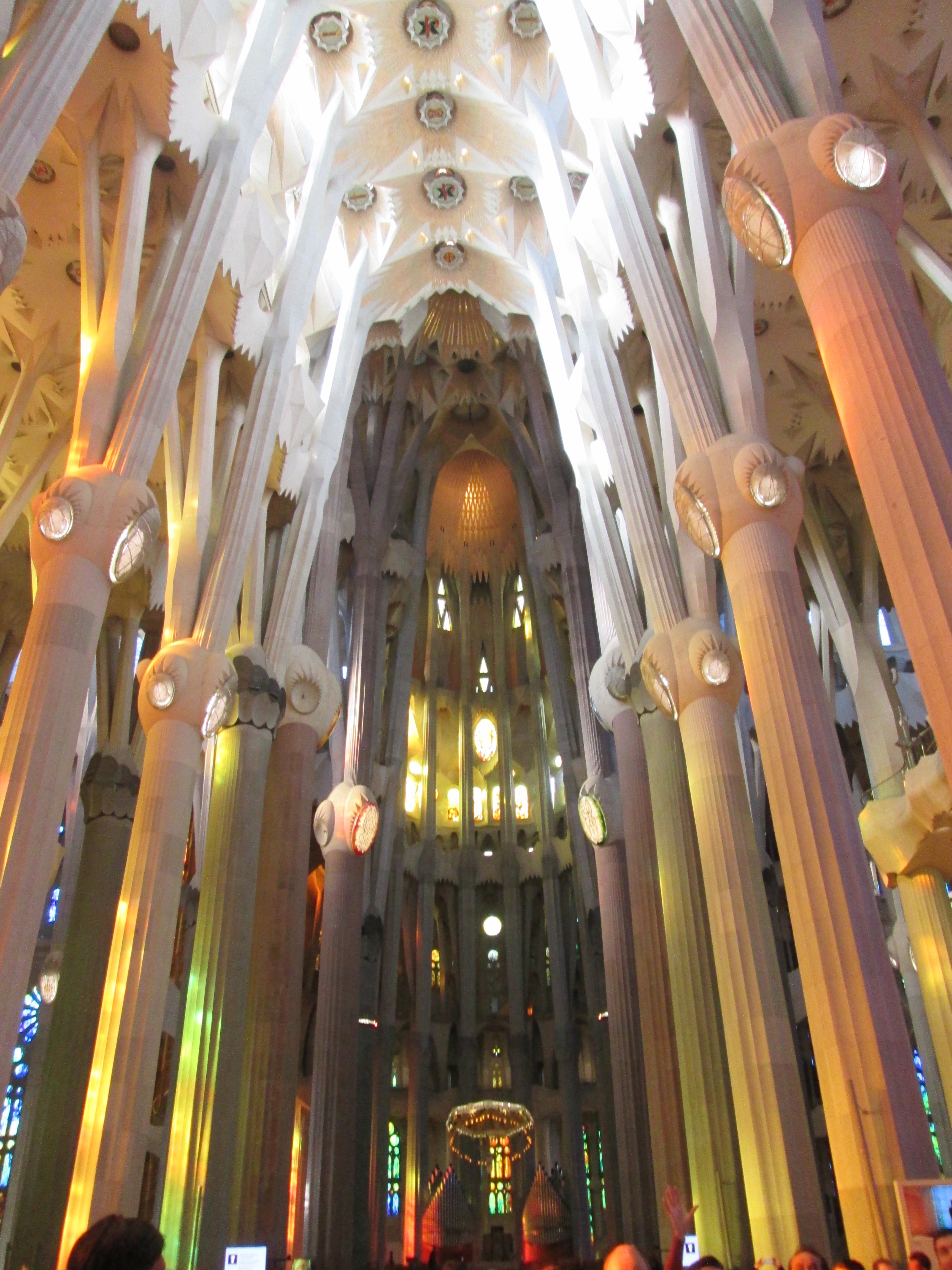




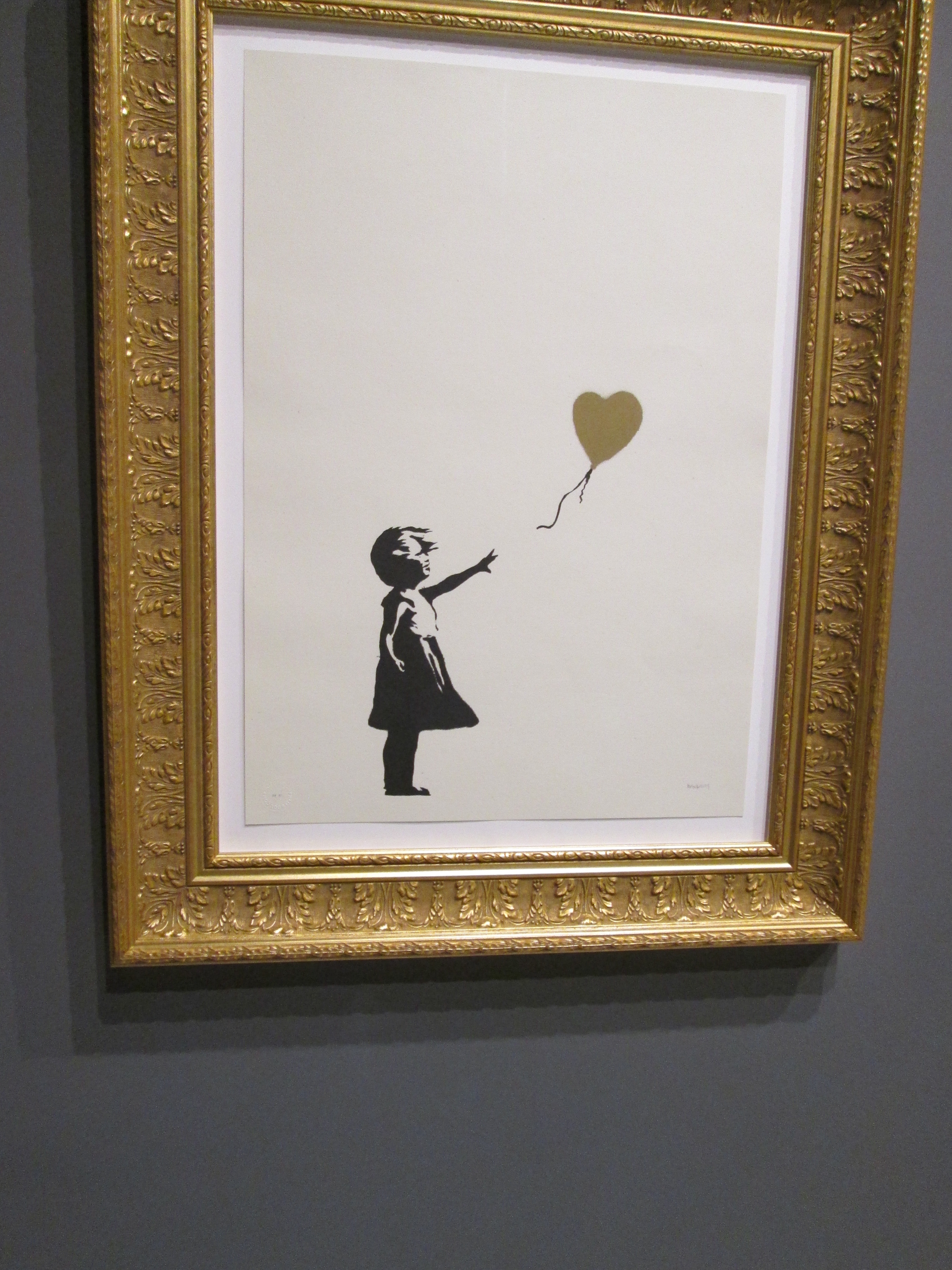


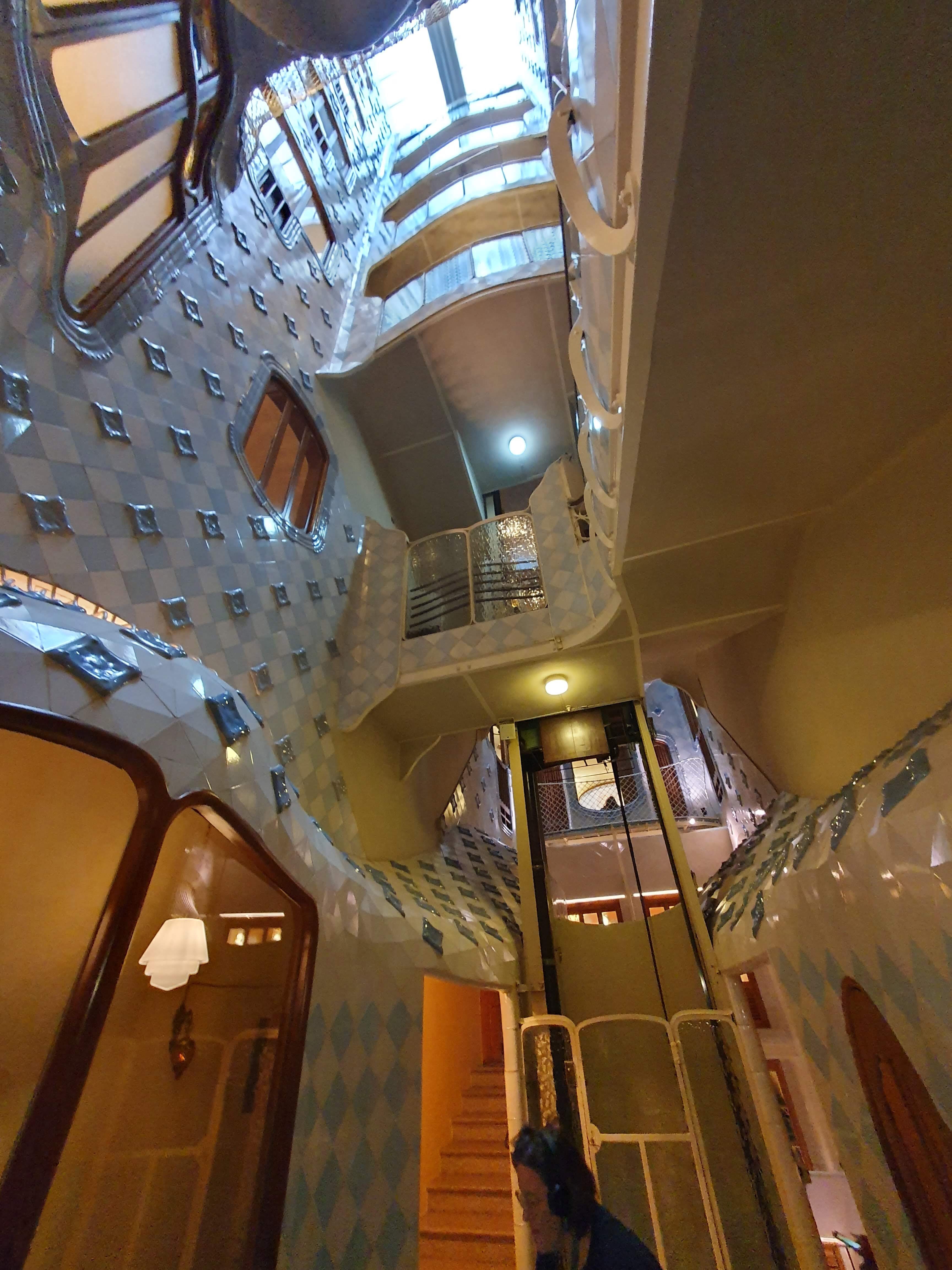



 It’s a nice train, with diverting behaviour from two young ladies, whose black suitcase rolled towards me as the train pulled out. I rescued and returned it amid great giggling. The journey was initially through industrial suburbs and just as it got interesting it went underground, But it delivers me to Passeig de Gracia station five minutes from the hotel – if you come out the correct entrance. So fifteen minutes later I rock up at the hotel where they let me check in early which is a relief as I need to sit down for a bit. It is an OK hotel in a modernisme building but sadly my room does not have one of those nice balconies overlooking the street. There is a swimming pool on the roof but not open in December. Great views over the city though.

 Soon after I was seated I was hissed at by a lady of some few years younger than me I would estimate, indicating that I was occupying her seat. My neighbour explained that a group of them usually sat together but there had clearly been an “error” at the box office. She didn’t seem that bothered and despite my offer to swap several times I was told ‘no pasa nada’ – it doesn’t matter. Maybe my limited Spanish kept her from an earbashing.









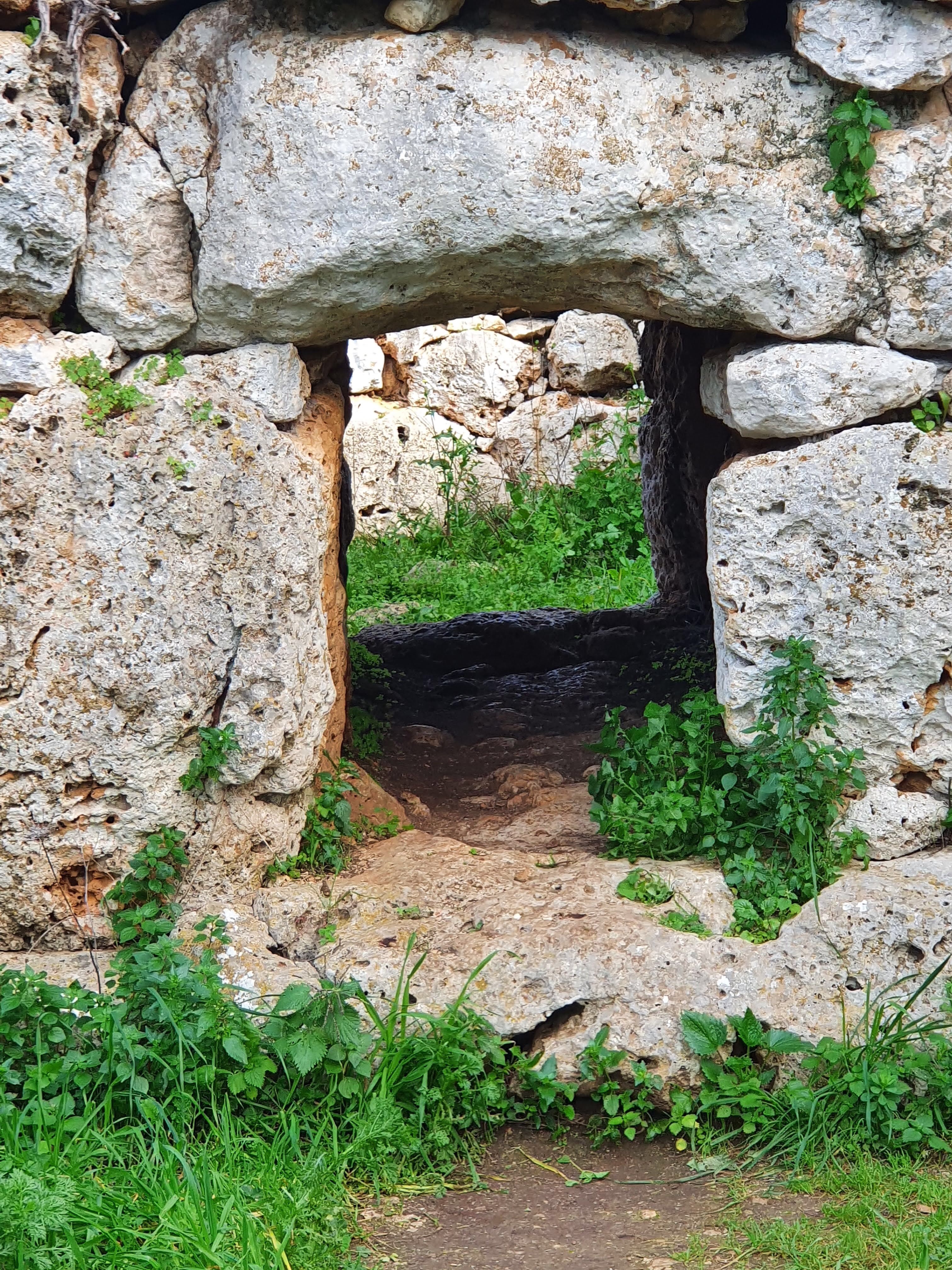


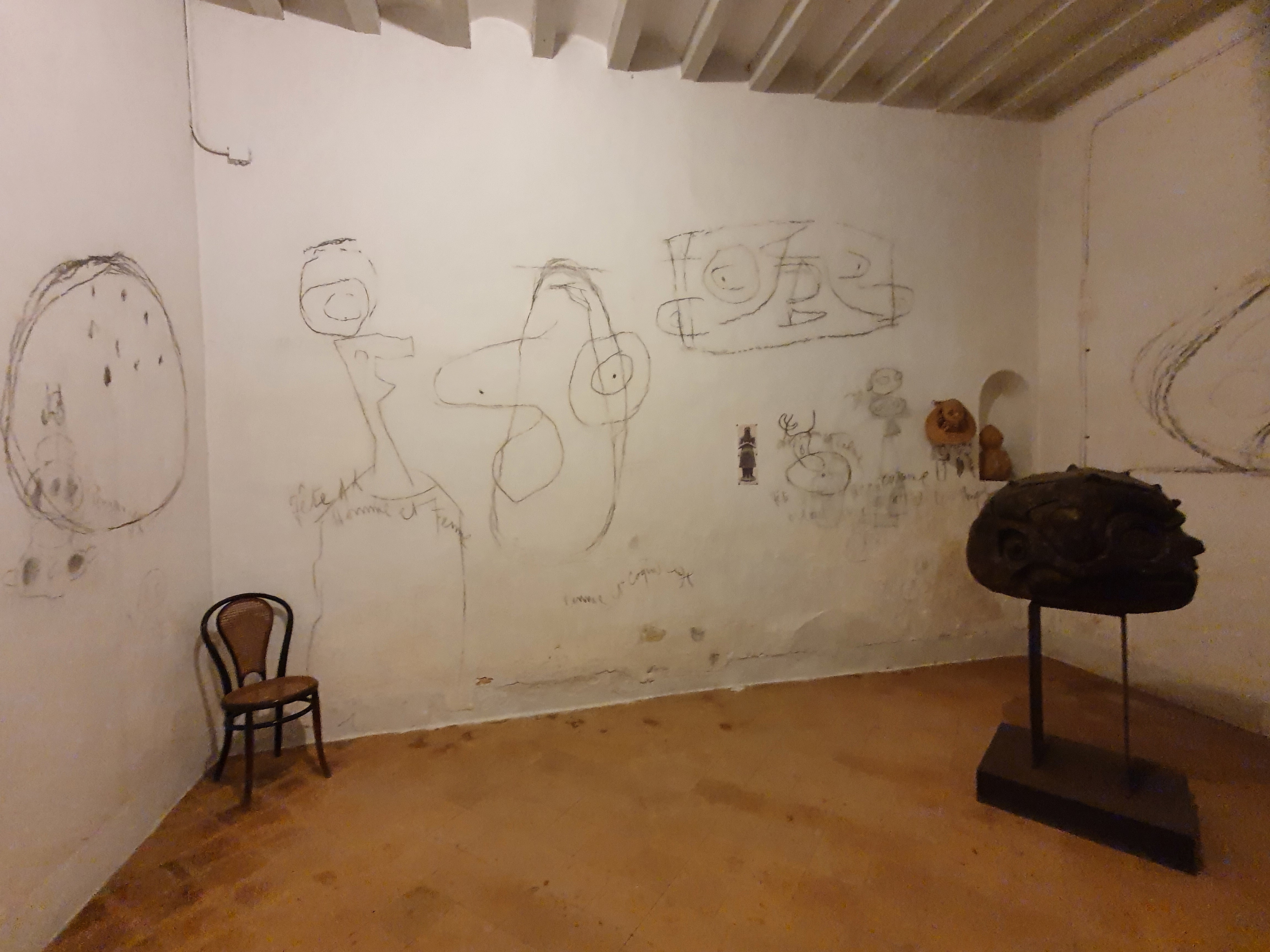


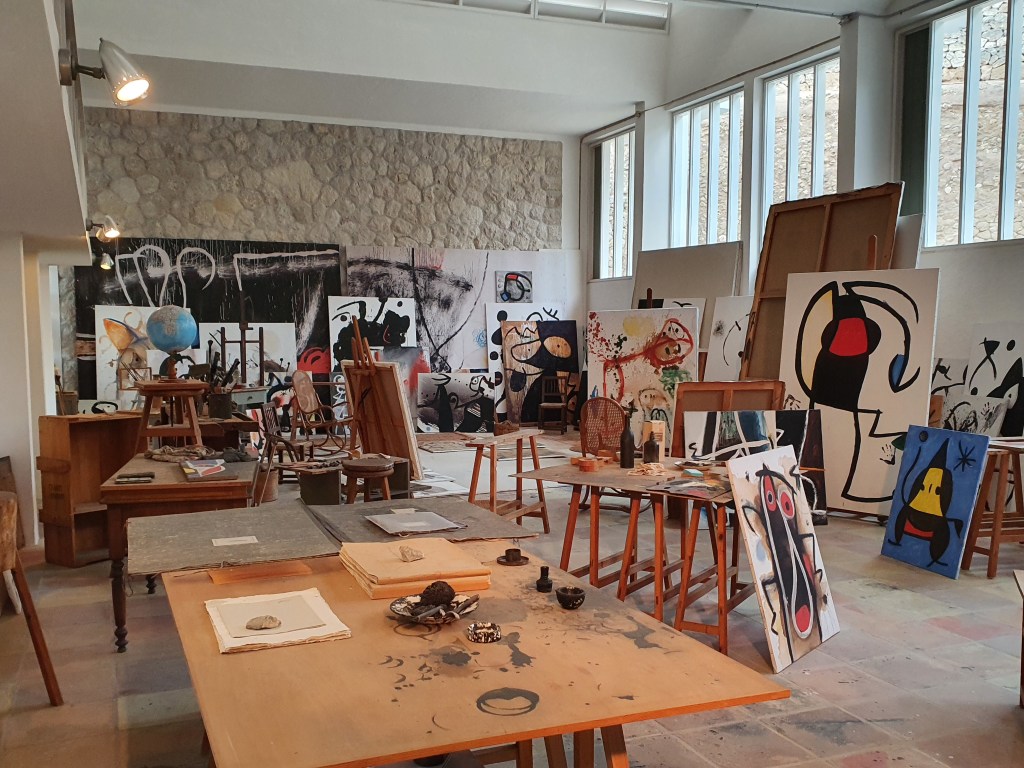




 However the hospital Hospital Puerto del Mar want me to report at 09:30 so off I set in a taxi the hotel has kindly called after my profuse apologies for their disturbed night of gore and mayhem. I had to take a taxi because from the interior of an ambulance I had no idea where we had gone and when I came out I got straight into a taxi back to the now calm hotel without really being very aware of my route or surroundings.


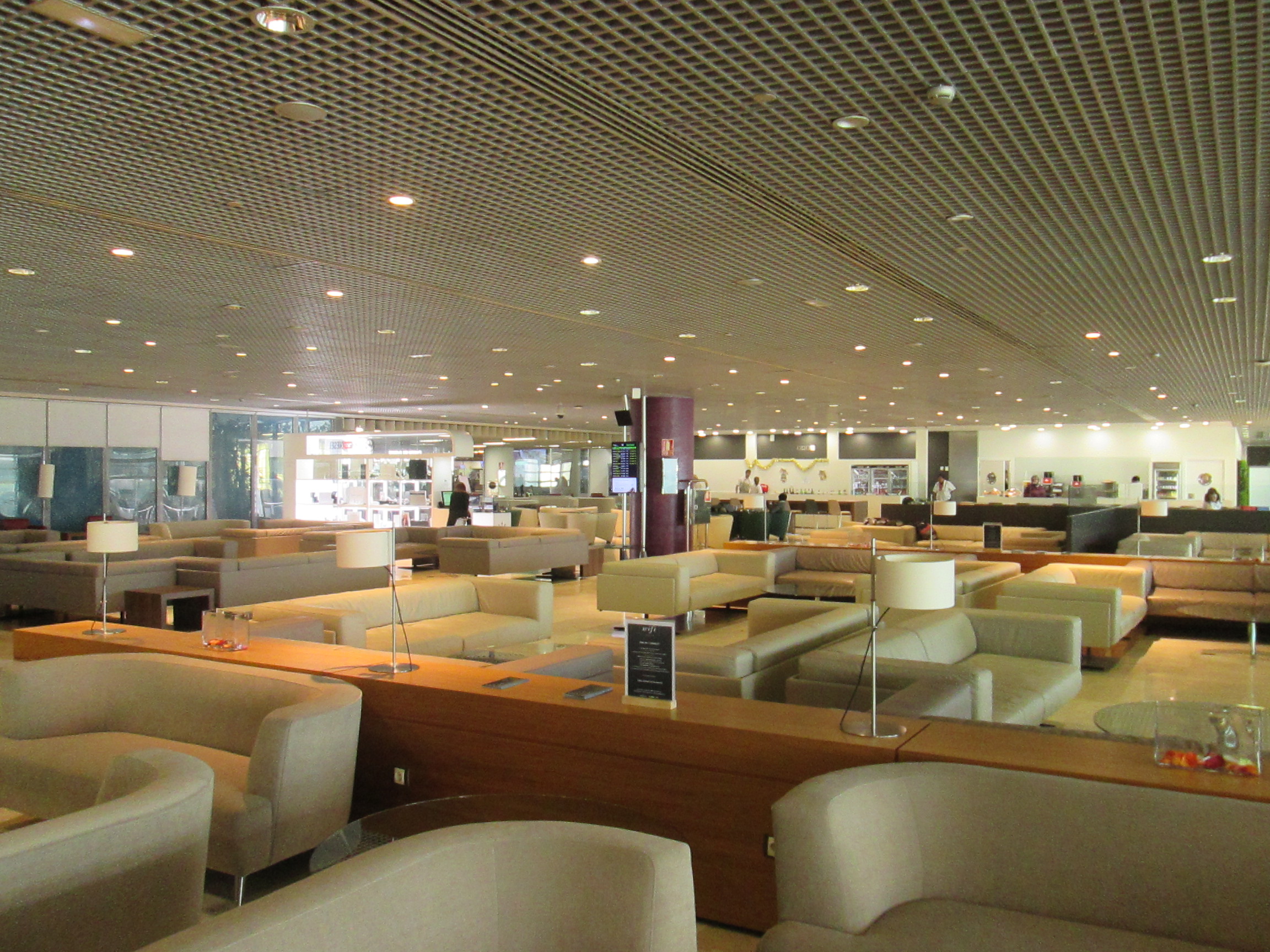 As is the new norm with Ryanair the Priority Q is longer than the paupers’. But in, I think, a first for me we board through an airbridge not by walking across the tarmac and climbing steps. The captain urges people to stow their stuff quickly as we can actually make our 16:25 take off slot if they get a move on – since we’d seen him and the cabin crew walk past us twenty minutes earlier maybe they could have got the plane loading sooner. However we’re in the air on time and I can construct the last blog from this excellent but eventful Iberian adventure. Obviously I’ll have to post it later when there’s some wifi – probably back home. Where I now am.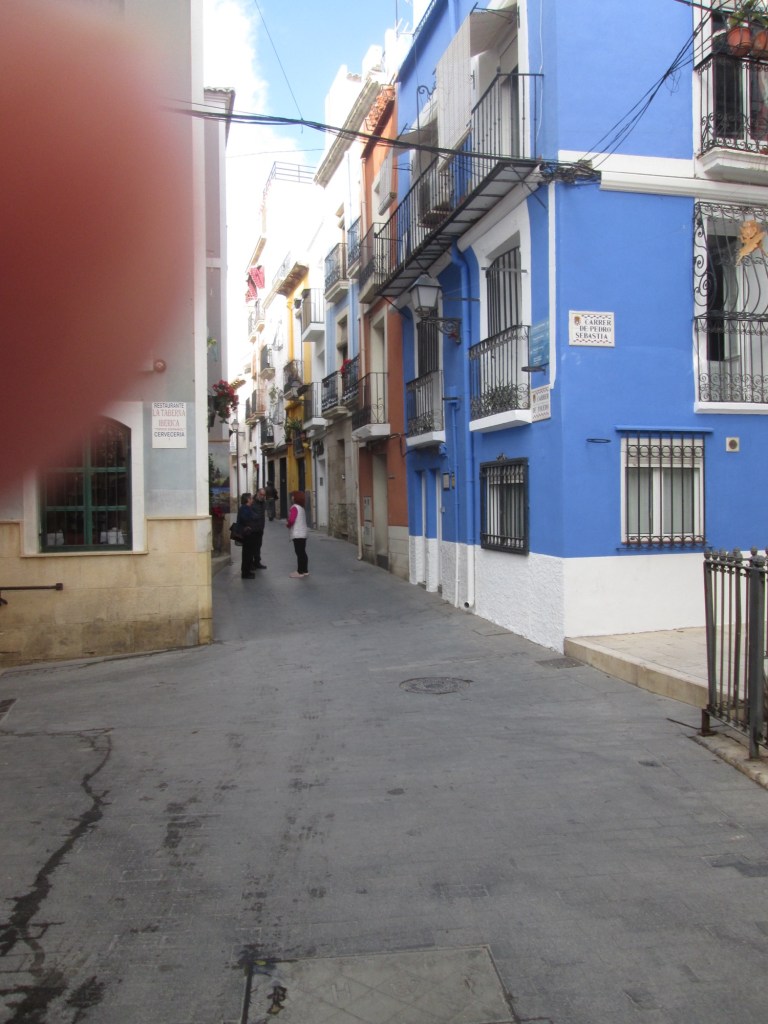

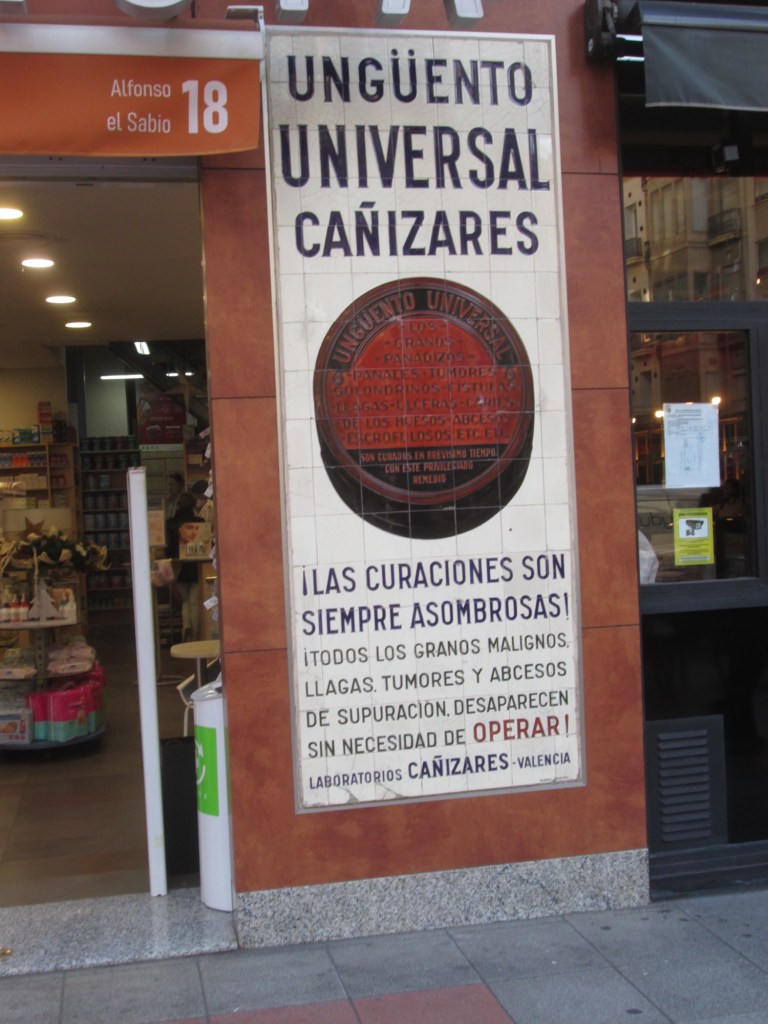
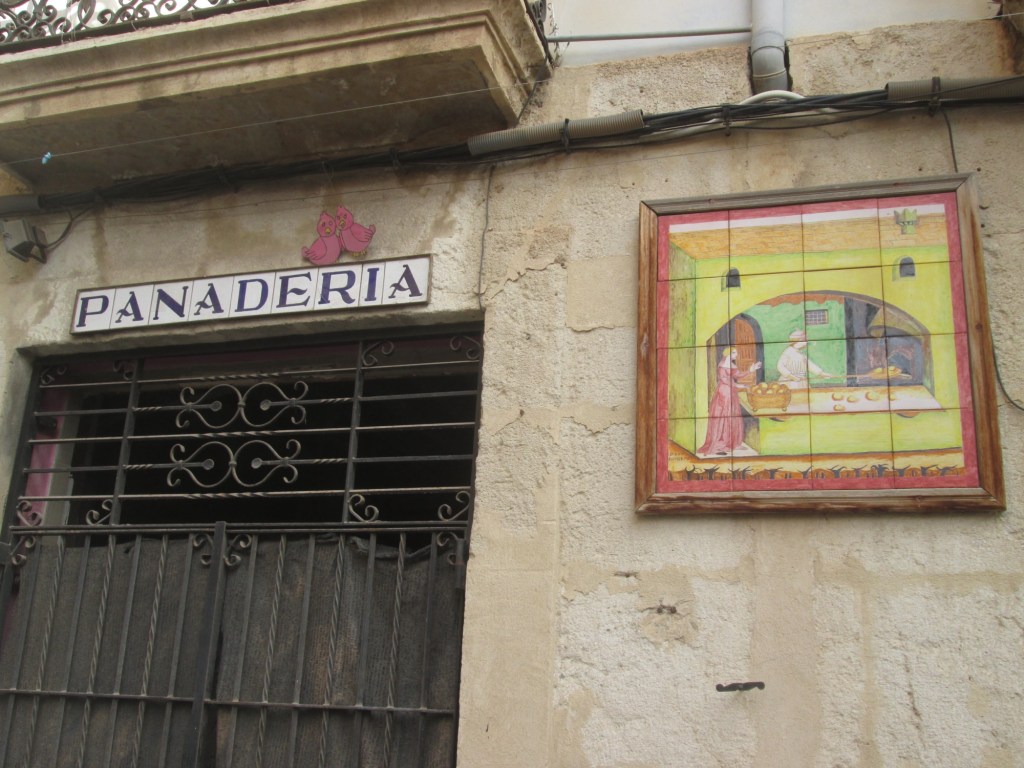
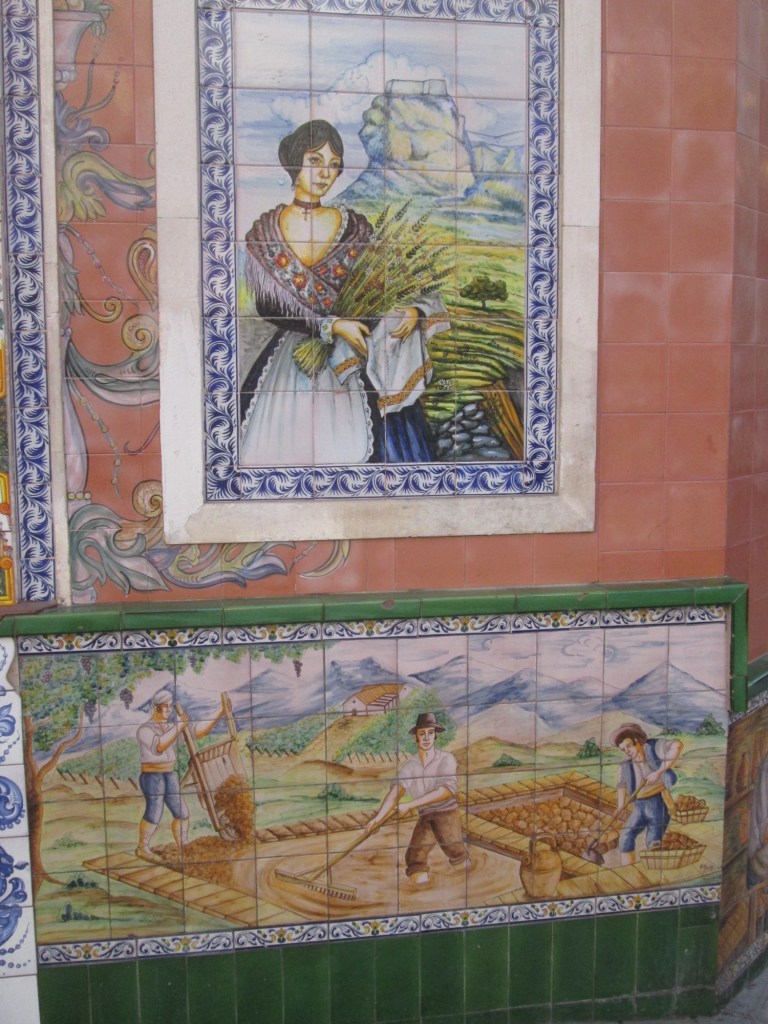
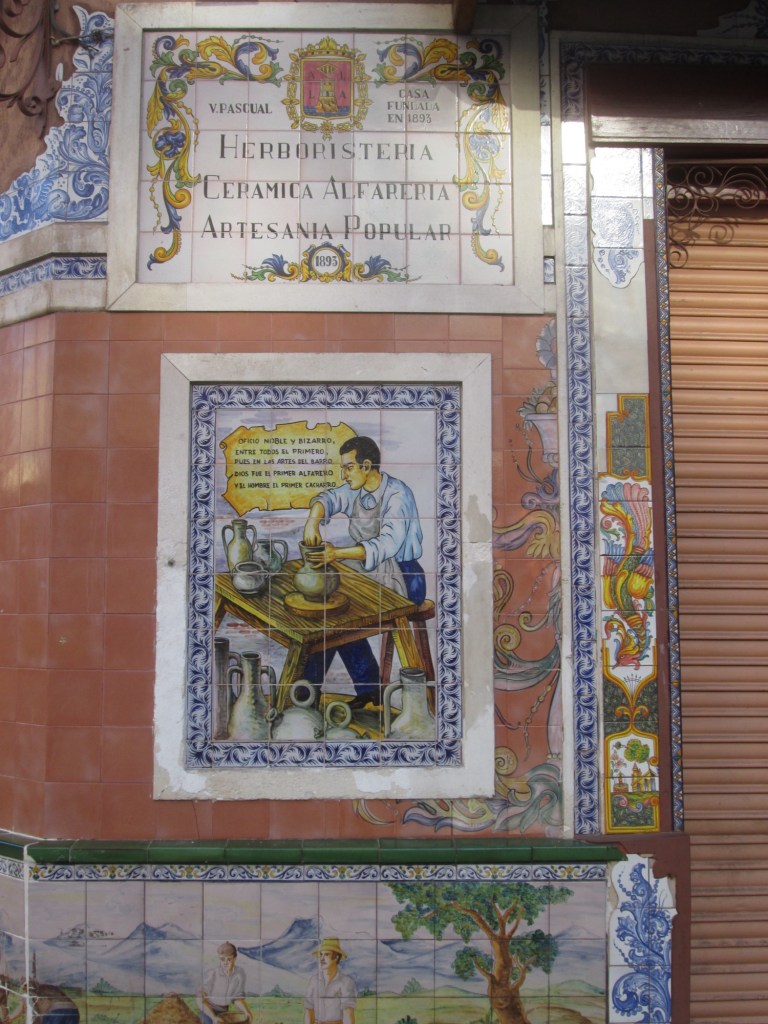
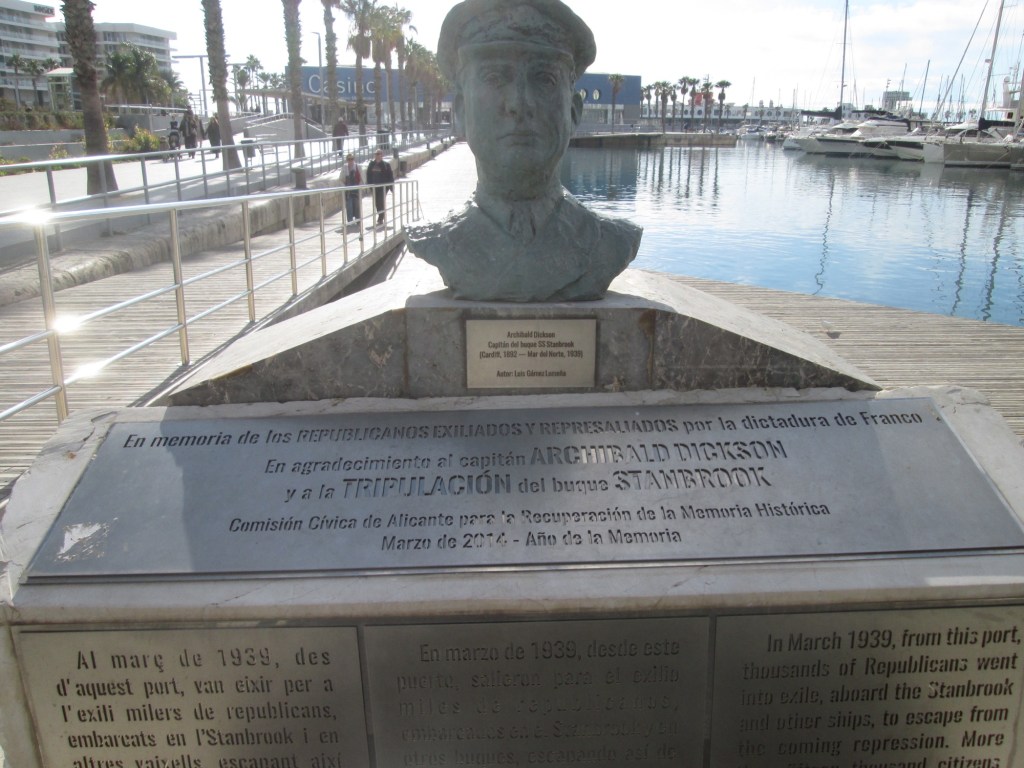

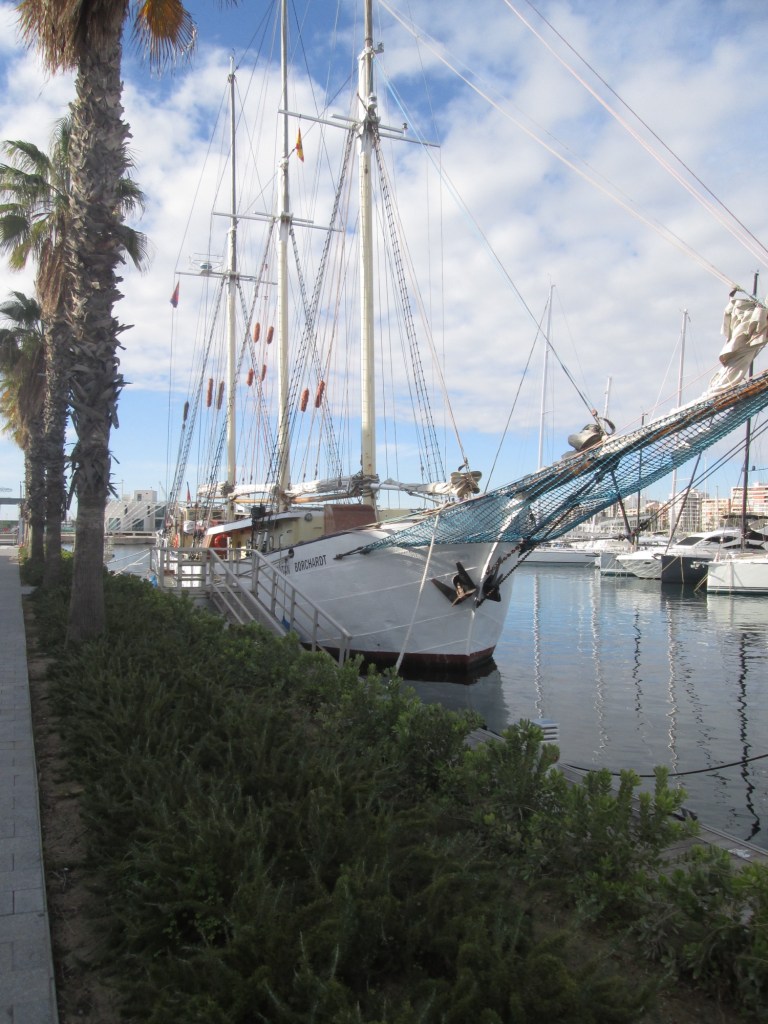
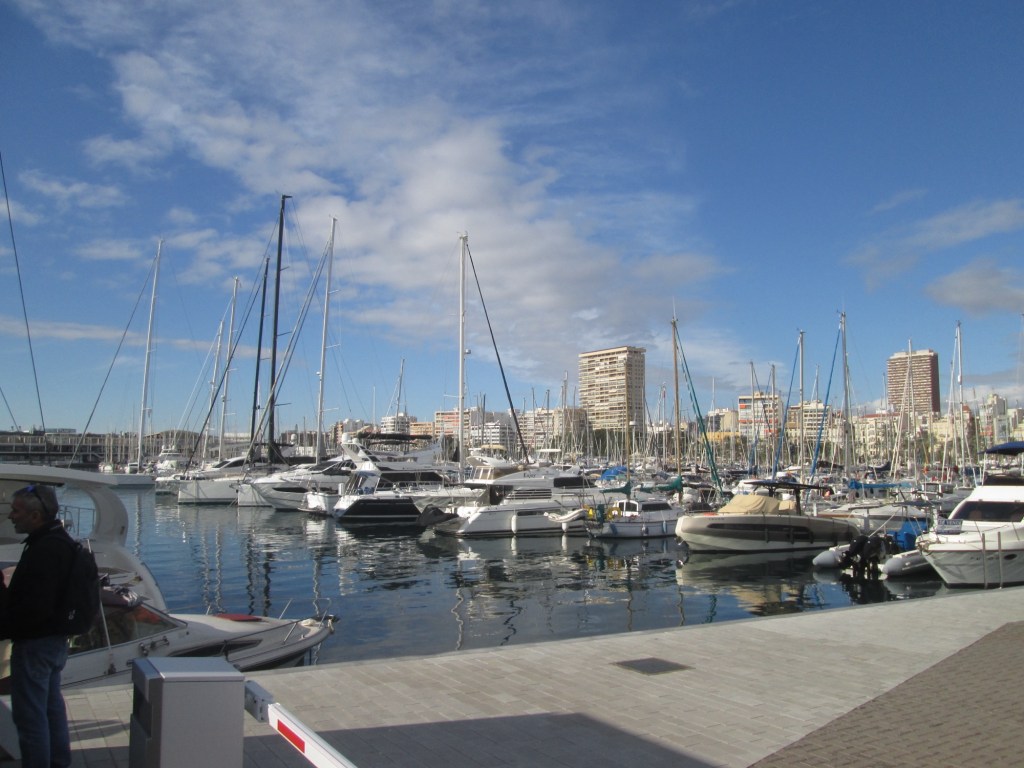

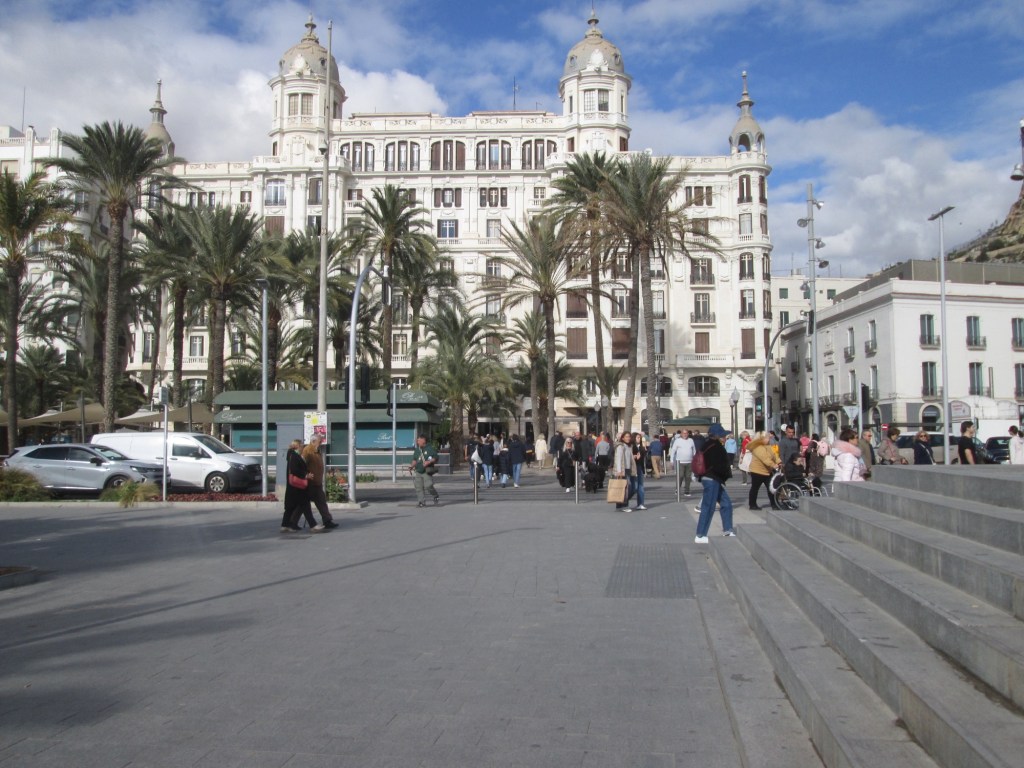
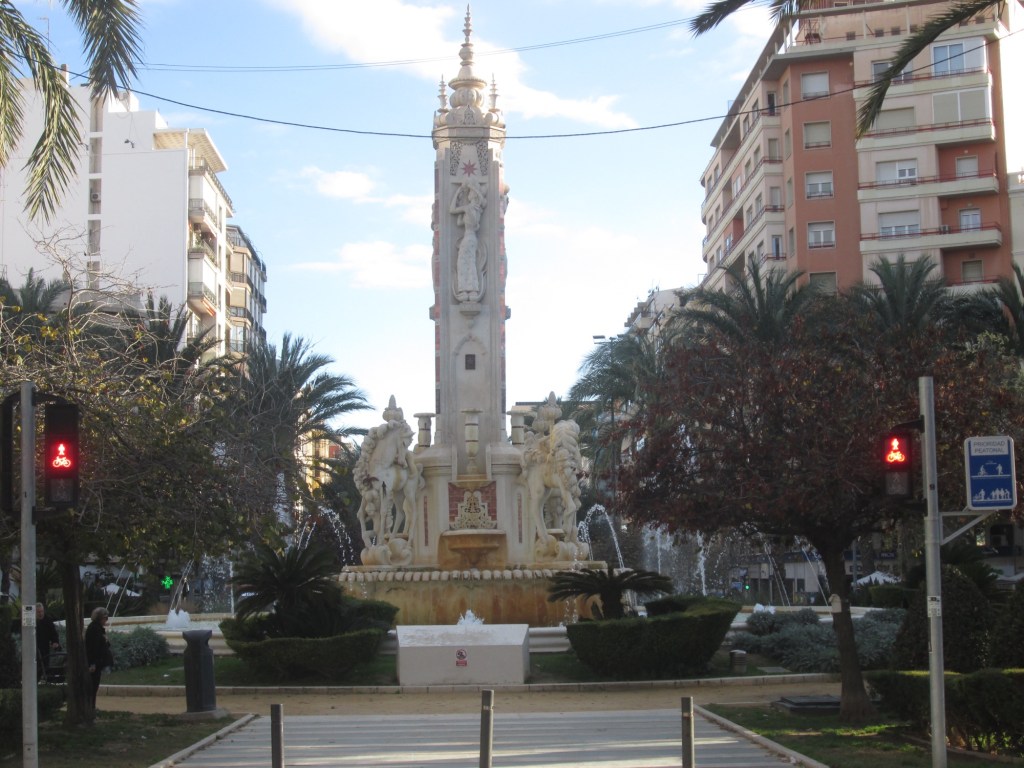
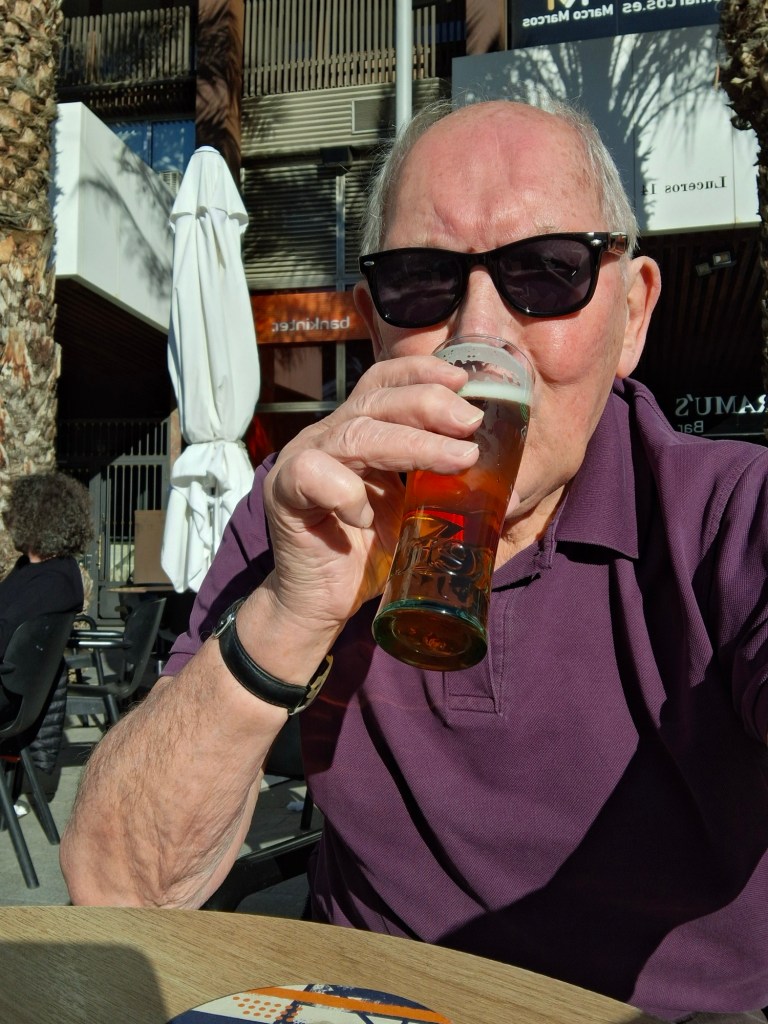


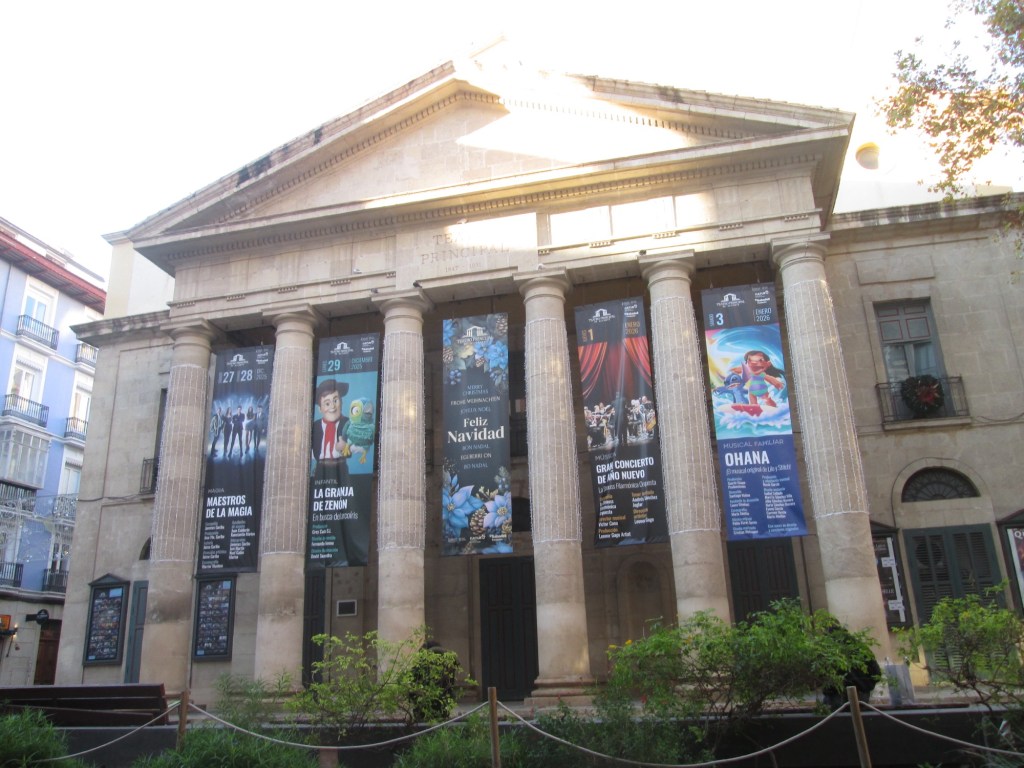
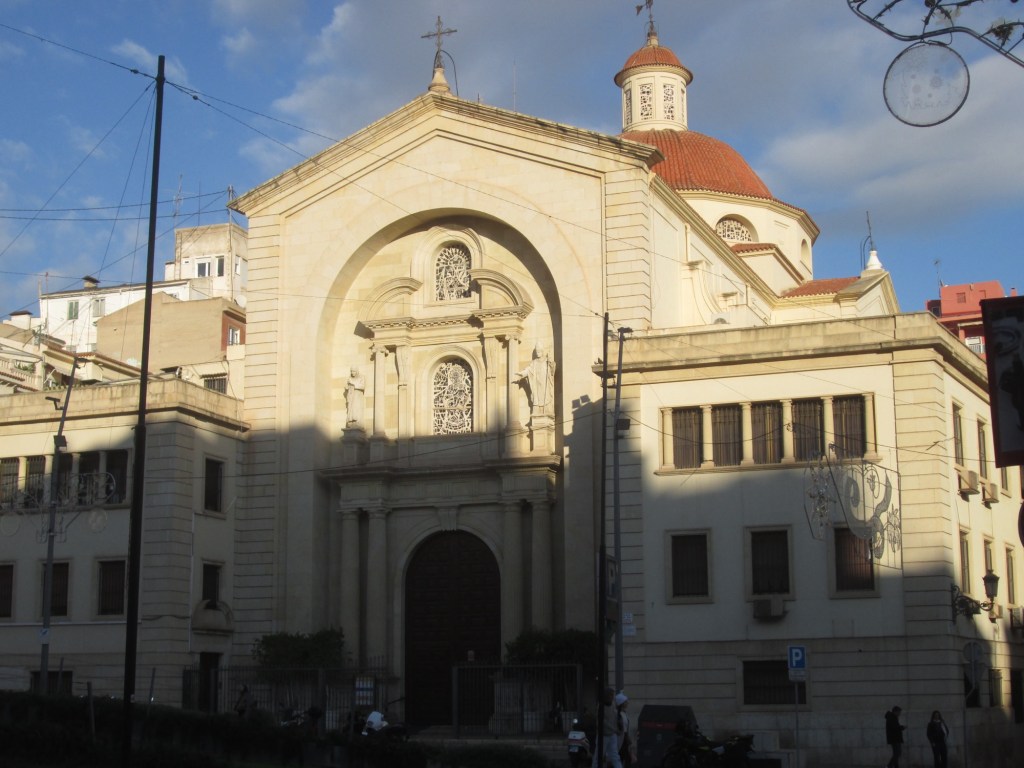


 mikeandmurakami.com