Cultural continuum

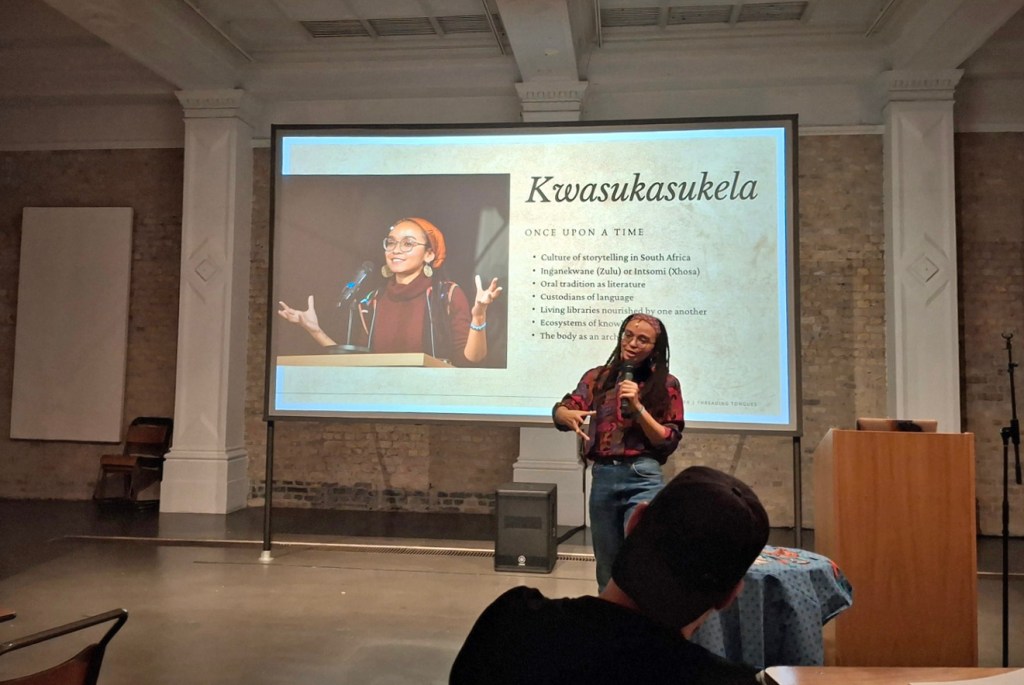
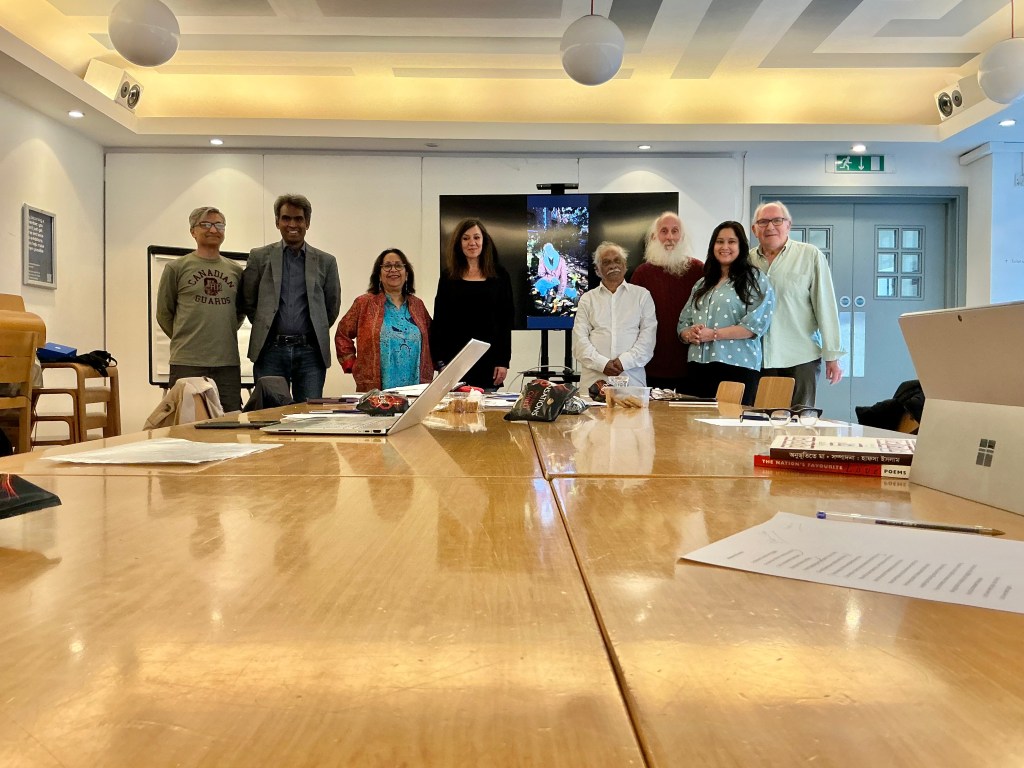
My first outing in April was to an event in the Whitechapel Gallery called Threading Words. The poetry group of which I’m a trustee has some connections with the organisers Babel’s Blessing. This charity arrnages language tuition in many tongues for recent immigrants to help them play an active part in British society. This session was led by a South African-German artist Nomakhwezi Becker who took us through a fascinating couple of hours of self-exploration based on her insights from Xhosa and other African cultures with a modern European gloss. Who knew that the intricate beadwork patterns so much a part of Zulu culture sent explicit messages such as ‘I fancy you’ or ‘Stay away’? I had a chance to chat to Khwezi and the Babel’s organiser Marina Castrillo and hope to see them both at our next BBPC gathering at the end of the month.

Nomakhwezi began by telling us about storytelling traditions which are so important in every culture – the screen reads ‘Once Upon a Time’ – and then asked us to identify things that were important to us in relation to colours, scents, the contents of drawers and handbags, the weather and places. I’m not usually a fan of heart searching in public but found Nomakhwezi’s prompts particularly well chosen so that I and those around me wrote copiously in response. I kept the messages that the session elicited and have found them helpful in planning my days.

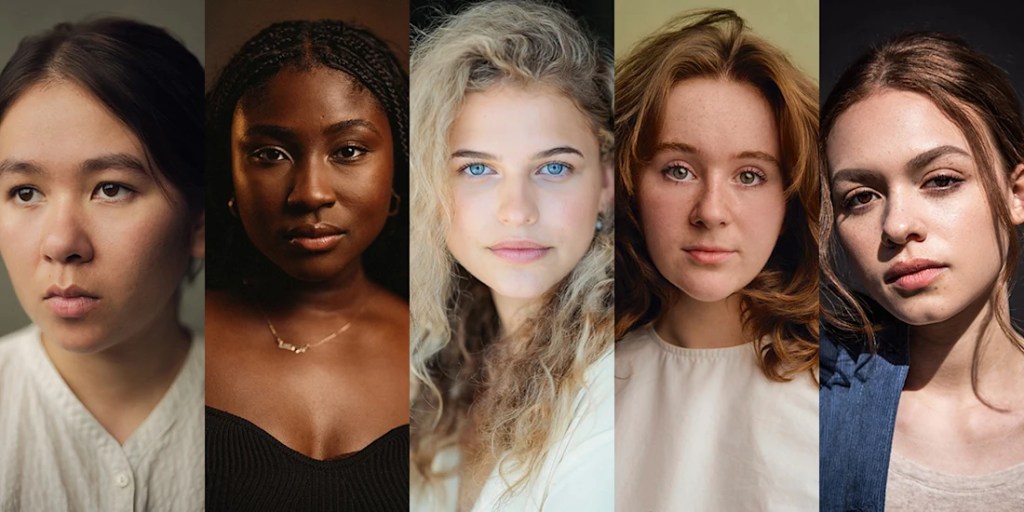
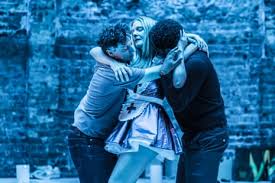
Some sensational retelling of a well-known story was taking place at the Royal Court Theatre. John Proctor Is the Villain is a retlling of Arthur Miller’s The Crucible by Kimberly Bellflower She relocates the action to a high school in Georgia where a group of – mostly – adolescent girls discuss the play with personal-inspired insights and some startling revelations. It’s set in the noughties and the young women want to set up a feminist society, I guess on the wave of #Metoo.The club is finally establshed after institutional doubts when the teacher suggests boys should be members too. The members all have clear characteritics – swot, rebel, newcomer, plus an absentee with a backstory of great importance to the subsequent revelations. The young cast – three making professional stage debuts – are outstanding and the denoument is a remarkable piece of modern theatre. Photo below courtesy Royal Court Theatre

It is getting a deserved West End transfer in 2027 when it will run at Wyndham’s Theatre from February through to April. Do go and see it – I’ll be going again. Another of this year’s highlights Arcadia is also transferring from the old Vic to the Duke of York’s in June. Miller and Stoppard are getting lots of exposure right now and rightly so.

Having seen part of the technical rehearsal, it was with interest that I went to Hampstead with Frances to the press night for the revival of Michael Frayn’s Copenhagen. You know you’re getting old when you’ve seen the original version of so many plays being revived now – one marking its fiftieth anniversary! I noticed in the technical and tonight that the three actors were miced up and wore earpieces – a growing trend I’d noticed recently. I am used to presenters with lots of technical script to deliver having it replayed through an earpiece so they can be one-take-wonders. But actors! It was clear that Richard Schiff playing Niels Bohr needed some help as he was very stumbly – some kind audience members later said they found it effective characterisation of the older man. Alex Kingston playing Bohr’s wife Margrethe had a few flufs but brought some much needed warmth to the play while Damien Maloney as Werner Heisenberg performed with German efficiency.

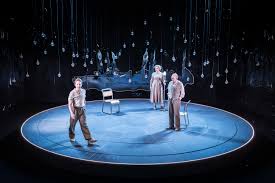
It always was a very wordy and complex play with the central mystery about the reasons for the 1941 meeting between the two former colleagues now on opposite sides in the war. As with a number of productions these days the Trumpian overtones were quite obvious and played up in Michael Longhurst’s direction. The real star of the evening was the set designed by Joanna Scotcher with a water-filled moat surrounding the central revolve and hanging light bulbs feeling like so many atomic particles. They also changed colour to suit the mood – in a series of clever lighting effects.

It was well done and thought-provoking but perhaps not the most enjoyable evening in the theatre. The after party more than made up for that with old friends and new chatting about everything under the sun – and drinking far too much. I was more restrained the next evening when I was able to catch up with my friend Rosa over dinner at the Union Club. Rosa is mostly based in a fabulous apartment in Girona nowadays but had to come back to get her car MOTed and various other chores and catch-ups. It was lovely to see her after quite a time and we put the arts world completely to rights during the evening.

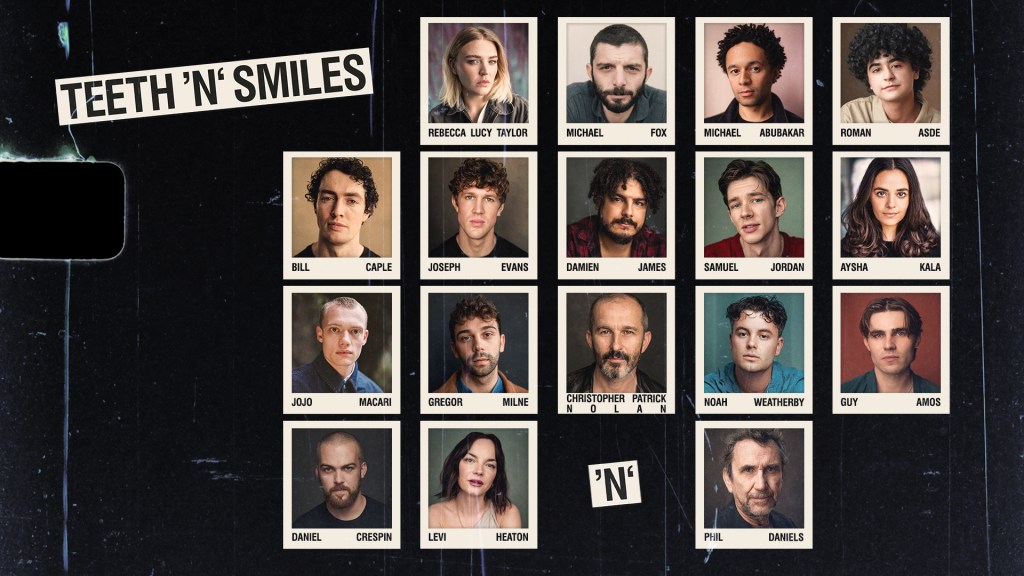
The there was another nostalgia trip to see Teeth ‘n’ Smiles having a fiftieth anniversary revival. I saw the original with Helen Mirren as Maggie Frisby, the alcoholic fading rock star, played in the Duke of York’s Theatre by Rebecca Lucy Taylor who I have to say is a better singer and can act too. Coming from Rotherham her accent was spot on. David Hare’s play still feels very much of its time despite a few updating references. But it brought back happy memories of younger times of carefree excess and thoroughly irresponsible behaviour. The set was suitably shabby and the direction by Daniel Raggett (no relation that we’ve yet discovered) was pacy and engaging. I thoroughly enjoyed the depiction of a disintegrating band with its internecine rivalries and battles. And the original music by Nic and Tony Bicat was enhanced with some new songs from RLT or Self Esteem as she is known professionally.

For some mad reason I decided to go to see Watford play against Oxford United. It’s the dog end of the season where we can’t go up or down so there’s nothing to play for but pride and there was little of that on display as we lost 2-0. This lead to a truly toxic atmosphere at the end of the match with the players standing resolutely suffering piled on of abuse from certain members of the so-called support, who are clearly too young to remember what a state the club has been in at several periods of its existence.

I was pooh-poohed by some members of our party for my decision on arrival at Oxford Station to head off to the Ashmolean Museum rather than heading straight to the pub.

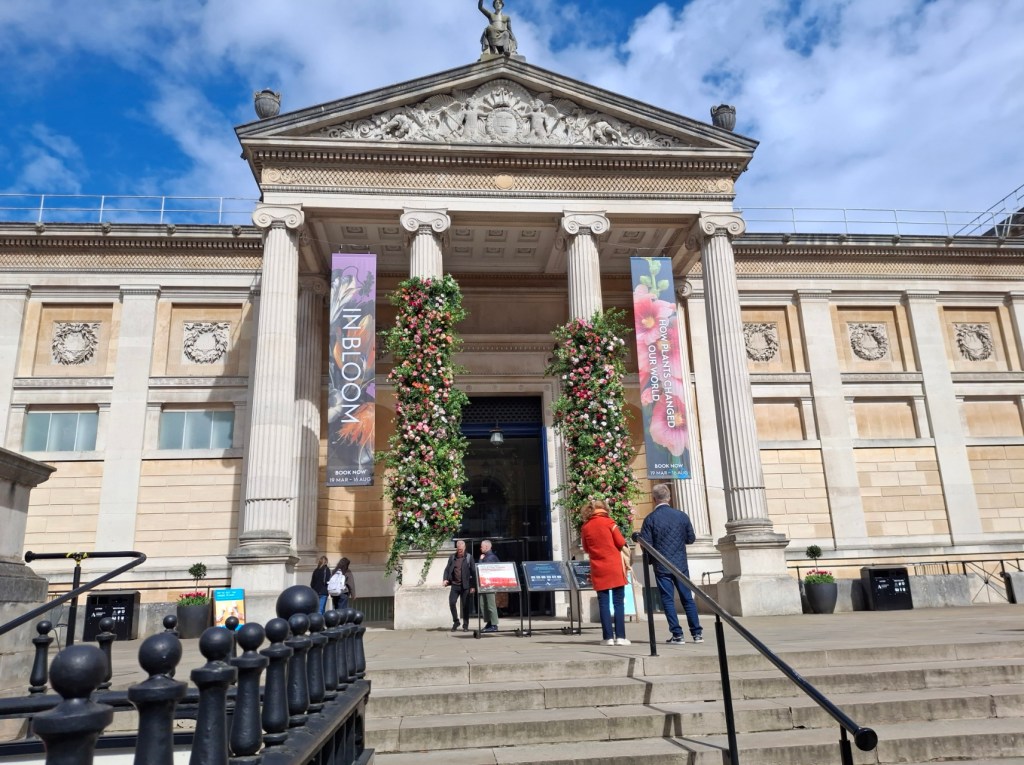
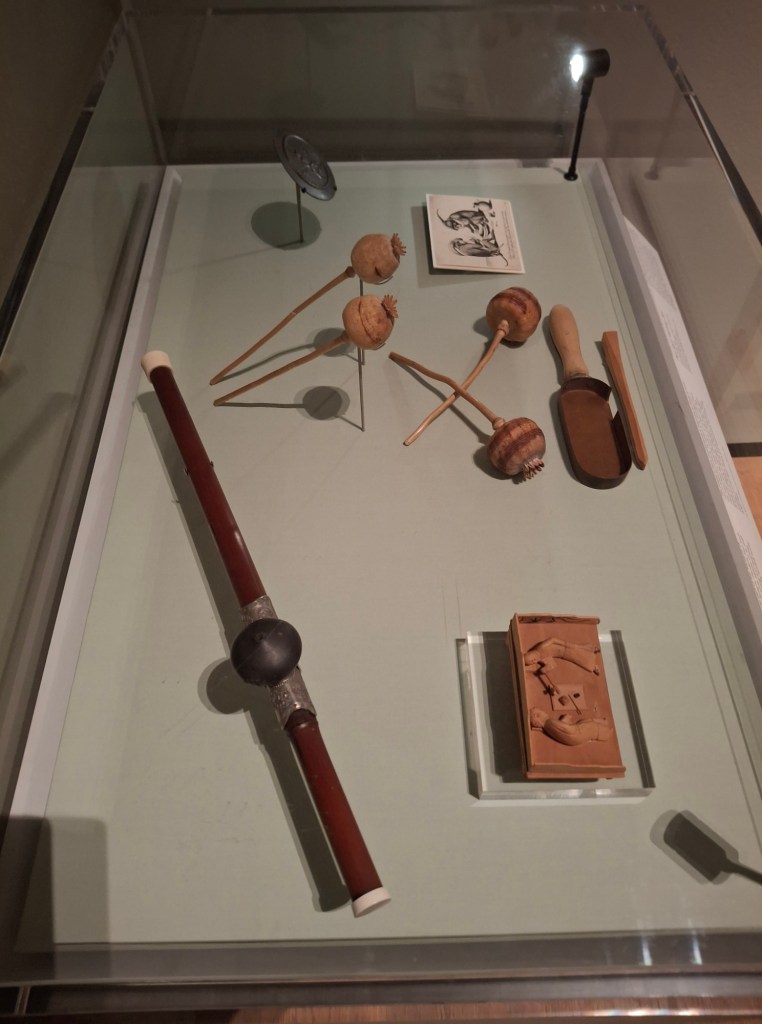
For once I made the right call – they waited 35 minutes for a bus, I was in the museum in 7 minutes. Flower displays adorned the portico presaging the exhibition called In Bloom about the history of gardening, plant hunters and the commercialisation of horticulture. It was excellent, small enough to be done in an hour or so but very informative and containing some beautiful and interesting images and objects.

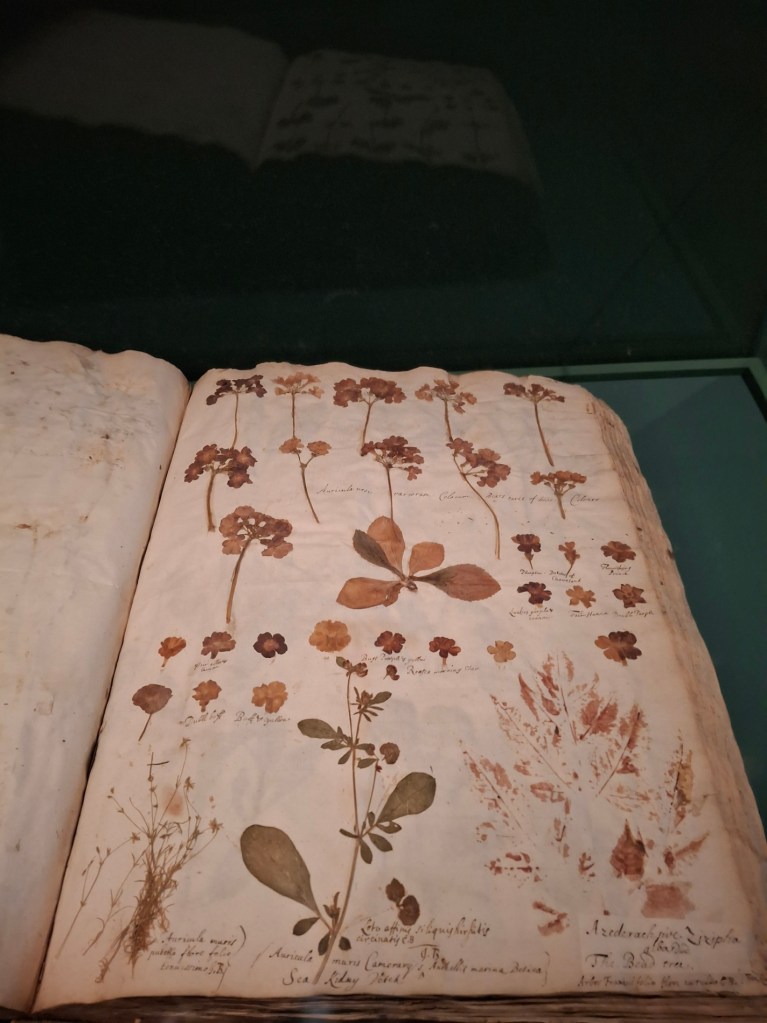
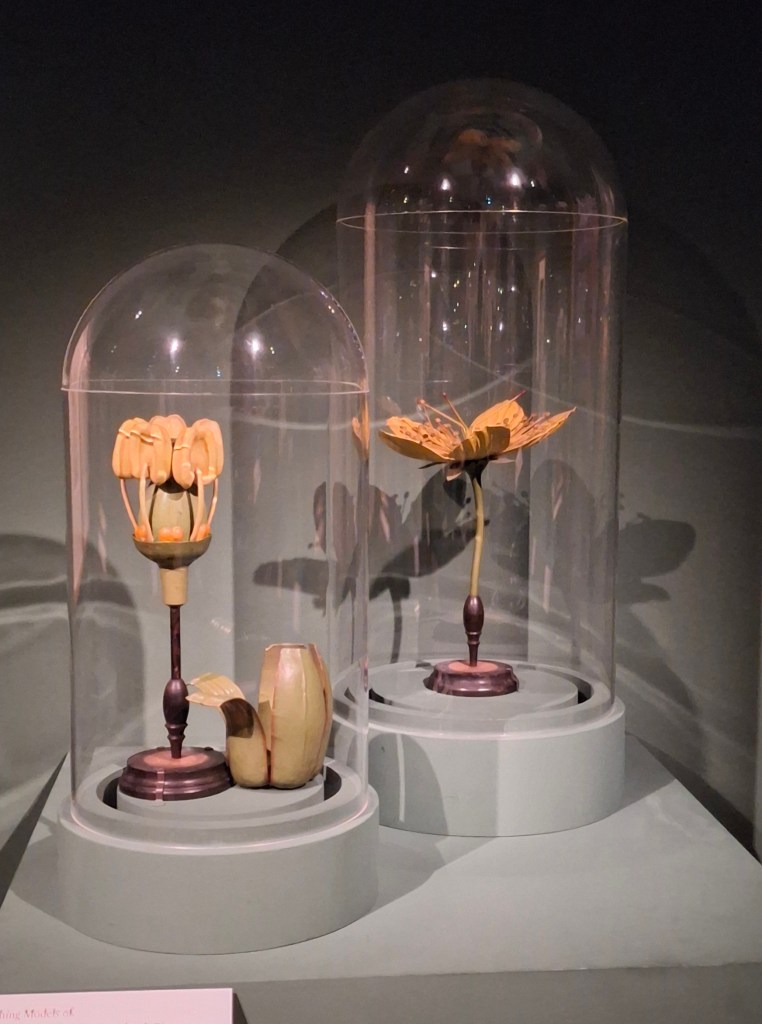
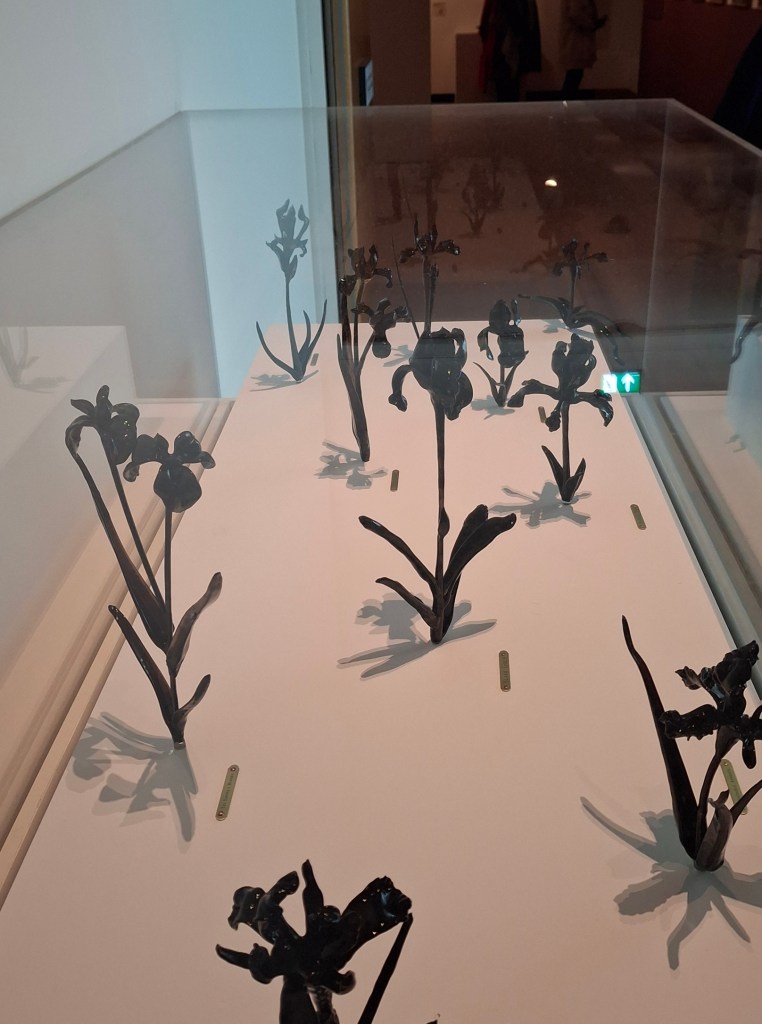
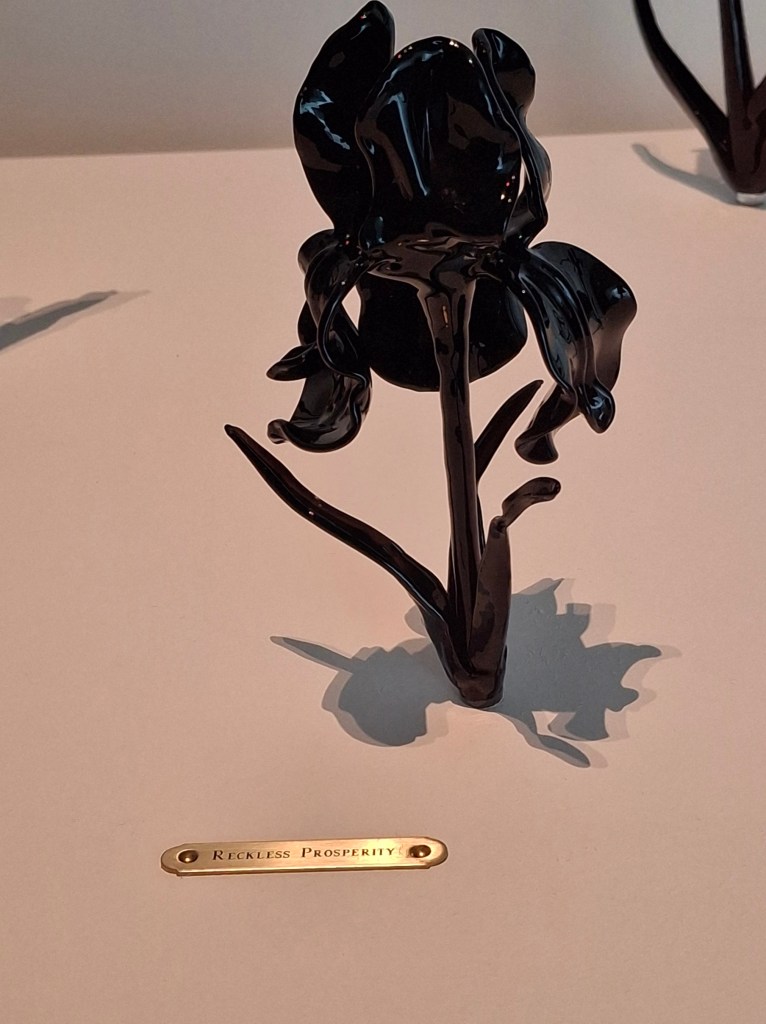
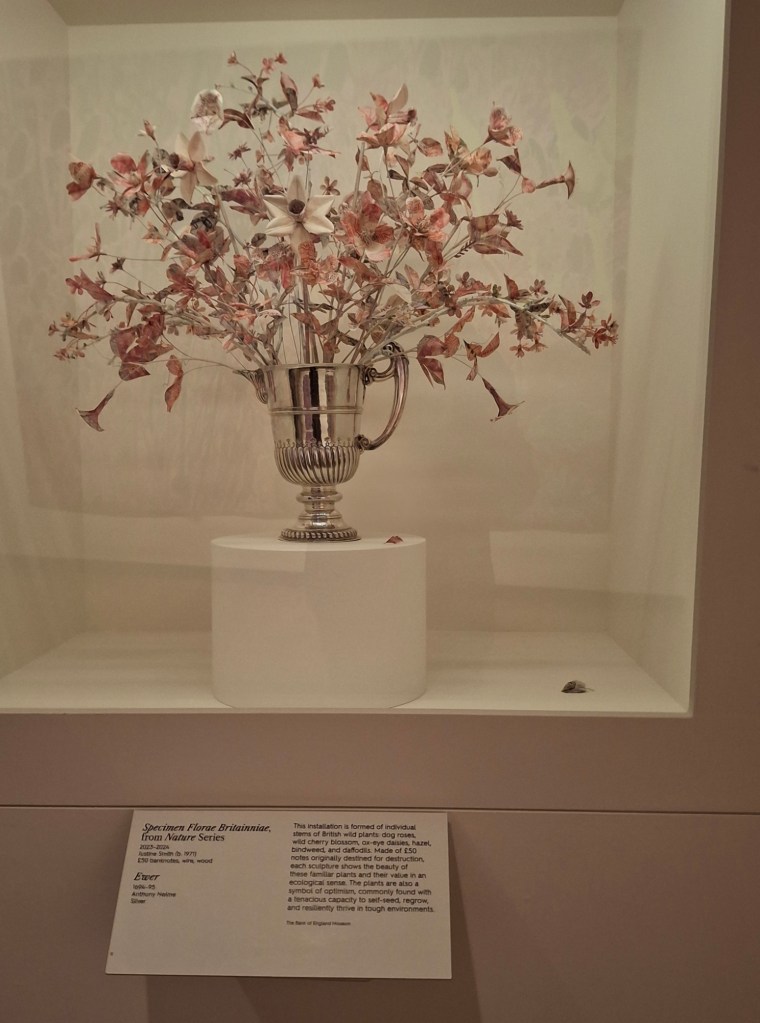
The exhibition featured early plant specimens lovingly pressed into folio volumes 400 years ago, botanical drawings, portraits of plant hunters and seed gatherers and some of the equipment they used. It didn’t shy away from the horrors brought about by the discovery of the powerful effects of the opium poppy, the mad vogue for the tulip that led to the bubble of 1634 retold in the Tom Stoppard and Deborah Moggach sceenplay for the film Tulip Fever in 2017. There were smell stations to distinguish between black and green tea and to smell burnt poppy seeds and bizarre botanical teaching models. Modern artists were invited to exhibit their reaction to the displays and there were paintings, tapestries and sculptures that extended the scope to the present. Flower displays by Justine Smith made from used banknotes epitomised the dangers of always seeking the new. The sculptures and prints of the Iranian artist Anahita Norouzi were especially striking. Her flower scultures bore significant titles focusing on the colonial exploitation and her prints made in crude oil were a timely reminder of the horrors currently unfolding in the Gulf. I’m very glad I went to see it, particularly as the football was awful and the pub had no real ale.

Romola Garai was nominated for two Oliver supporting actor roles – The Years at the Almeida (won) and Giant at the Royal Court. I reckon she’ll be up for another next time for her amazing performance (leading not supporting) as Nora in the new version of Ibsen’s A Doll’s House by Anya Reiss. It’s in a modern setting but with all the tensions of the original. The Italian rest cure is replaced by a rehab stint in a Portuguese Priory, there are maxed out credit cards and the expected higher levels of income come not from a promotion in the bank but the sale of a company which has nearly but not quite gone through. The stripped down cast leaves the children only heard through a sleep monitor but this probably helps speed up the action. I found it had a very strong link to the original while exploring more modern themes. The absence of children made Nora feel slightly less trapped in her domestic cage than the original and the conclusion was left up in the air with a quick cut to black with everyone on stage rather than a slammed door. Lots to ponder which is a good thing on leaving the theatre. Next year’s supporting actor nomination should go to Thalissa Teixeira who was the most sympathetic character as Kristine and gave a superb portrayal of the impoverished widow and former university friend.

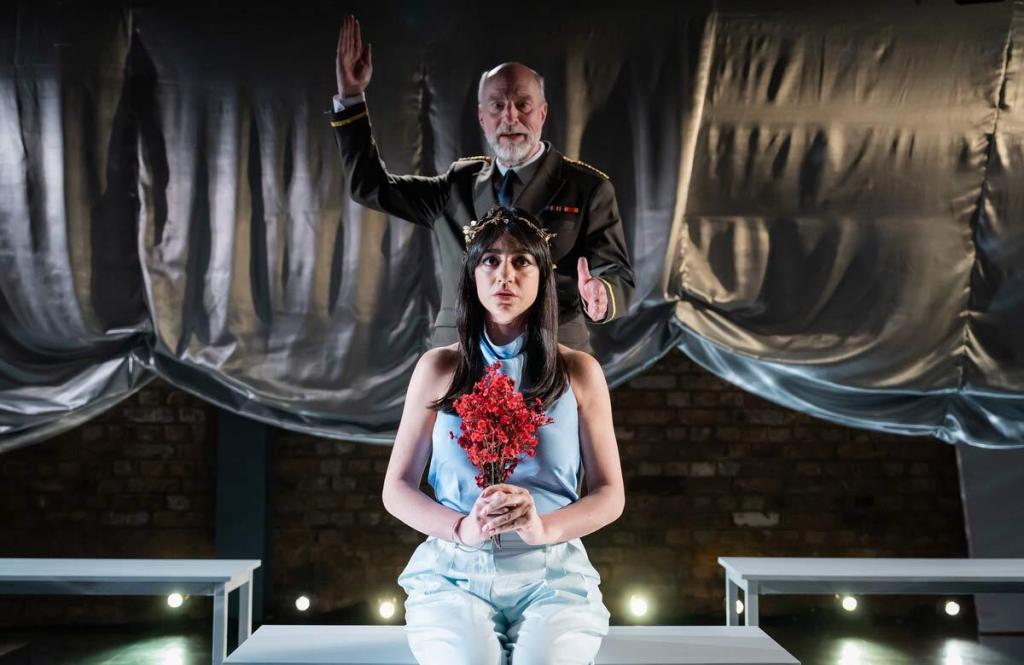
Iphigenia at the Arcola Theatre was again, a modern retelling of the familiar myth interspersed with live footage in various languages from people who had lost children through famine, refugee journeys and other misfortunes. These unwilling sacrifices made the dilemma faced by Agamemnon and Clytemnestra all the more poignant. It was an effective version with some fourth wall breaking moments and a haunting musical accompaniment. The backdrop of sails which turned into waves and the simple set framed some fine performances from Simon Kunz as Agamemnon, Mithra Malex as his daughter and Indra Ove. The modern political scene was never far from your thoughts as Agamemnon was prepared to kill his daughter in order to get wind for his fleet to sail into battle in a distant land in an unwinnable war – until a wooden horse tipped the balance after ten years of slaughter. We never learn anything myth or history it seems.

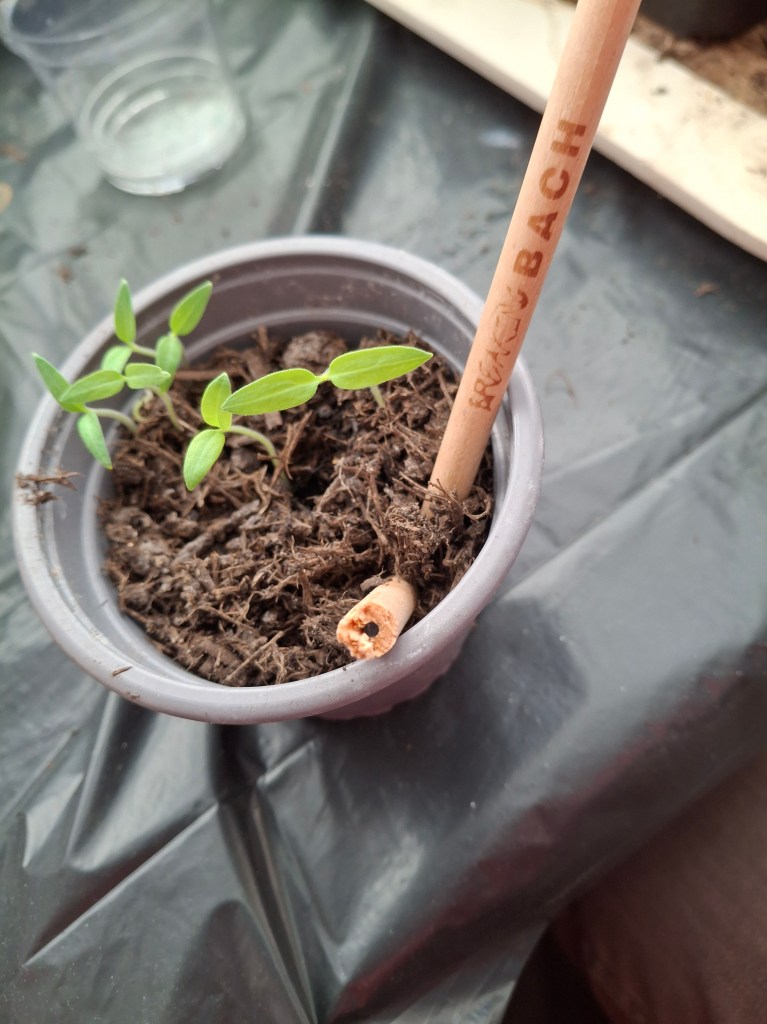
So it’s off to the Queen Elizabeth Hall for the latest in OAE’s experiments. One of the things I love about the organization is that they are always trying new ways of presenting music. Last year there was the amazing Breaking Bach promoted with among other things, plantable pencils. Mine says it’s sunflower seeds but the seedlings look very like tomatoes to me. At least they germinated! I shared this photo with some of the OAE team online and before the concert and we all eagerly await the next set of leaves and glorious sunflowers to plant out. I’ve promised to document progress.

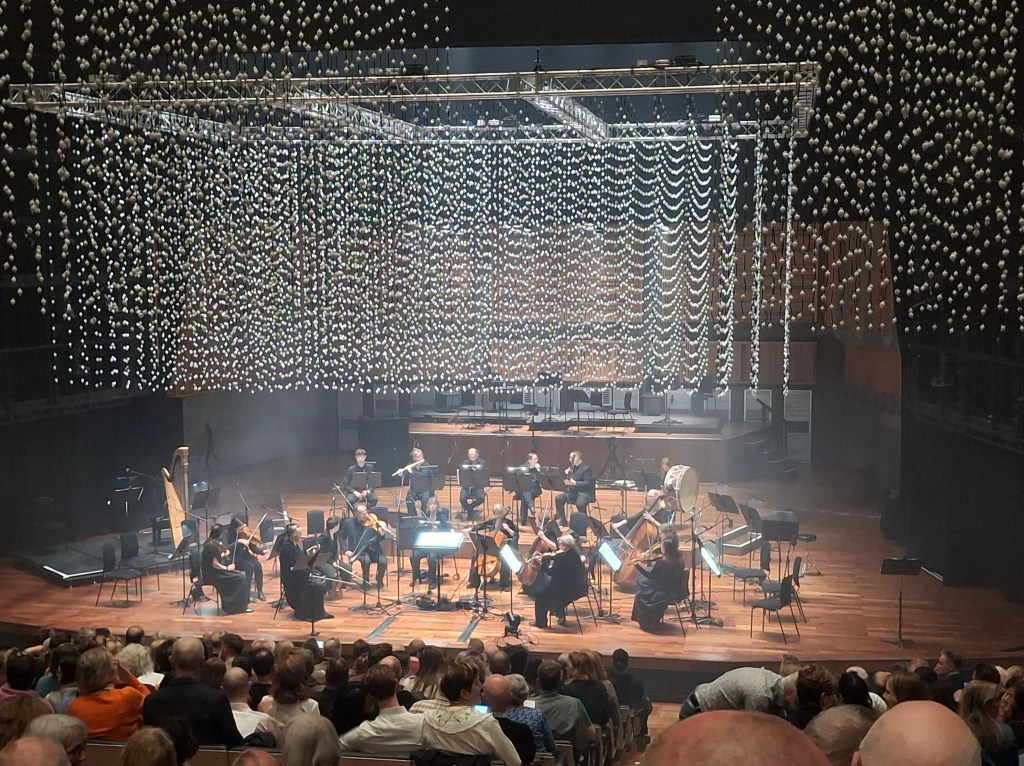
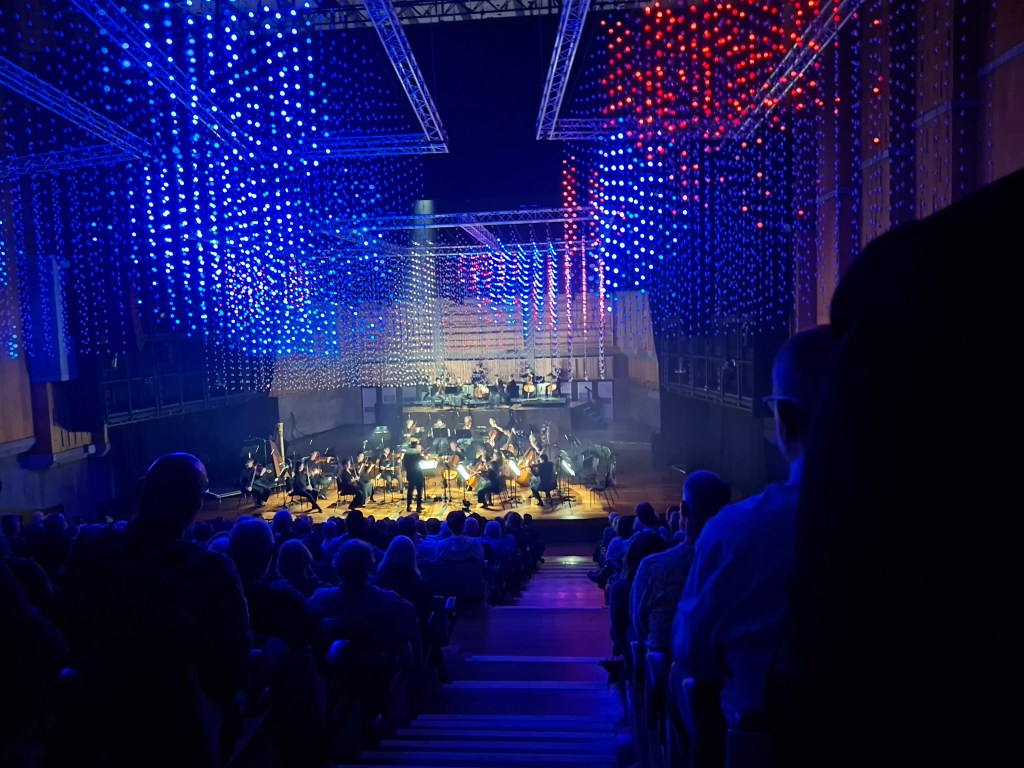
The concert tonight is Echoes of Hill and Horizon and present music outside OAE’s normal comfort zone. In collaboration with the Southbank Centre and Squidsoup – a specialist lighting company. The blurb promised “an immersive soundscape” and we were treated to bird calls in the foyer recorded at Leith Hill, Place Vaughan Williams’ home, to prepare us for his The Lark Ascending. What shocked on entering the hall was the massive grids with their arrays of tiny lightbulbs. I was glad I had chosen a rear stalls seat as there was one bank of lights above the central walkway behind front stalls punters’ eyelines. What was to come?

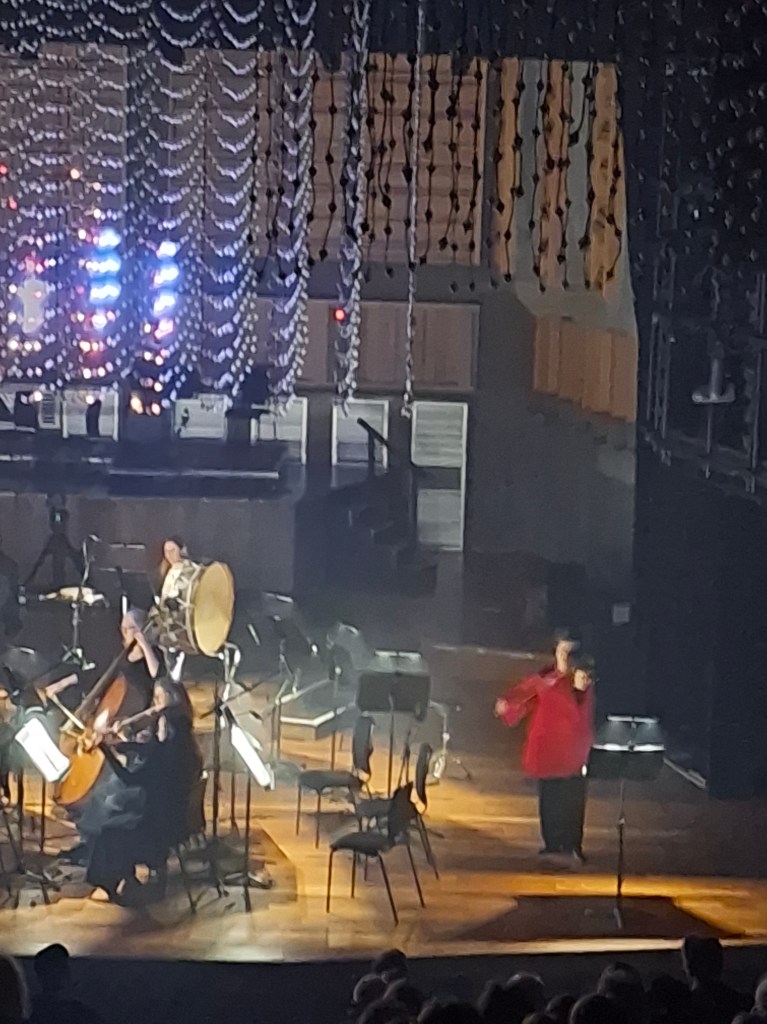
House lights dimmed, the orchestra played the opening bars and then Kati Debretzeni’s soaring violin was heard offstage. She emerged and continued to play from various points on the stage before disappearing again at the end. It was an inspired performance all the more effective because it’s the first time she’s ever played it. She explains her approach entertainingly here. The lighting streams showed said lark (oddly in red and white looking more like a Welsh dragon) flitting from side to side and back to front always rising with the thousands of bulbs able to change colour magically – it reminded me of the lights on the Copenhagen set last week. The lighting changes fitted well with the moods of the music – sometimes a bit obvious like the green swathes for Fantasia on Greensleeves – but often enhancing my appreciation of the music. For Vaughan Williams’ Fantasia on a theme of Thomas Tallis the orchestra split in two with some effective antiphonal layered playing in this familiar piece. What mattered most for me about the evening was the Southbank’s Concrete Voids sound system. Each musician had a stand mic beside them and the lightly amplified mix played into the auditorium was astounding. Every note was clear, as you’d expect from this band, but the enveloping effect of the surround sound was for me the highlight of the evening. To hear very familiar repertoire in such a new way was really satisfying and sent me from the hall with a real buzz of delight. Did the lights mean a lot? Probably a bit gimmicky and added only slightly to the pleasure of the music. But the Comncrete Voids system added a lot.

And the next evening there’s another stunning stage debut at the Kiln Theatre. And he’s only playing John Lennon! Noah Ritter was the debuntant alongside the chameleon that is Calam Lynch as Brian Epstein in Tom Wright’s play Please, Please Me. it was insightful, touching on Epstein’s discovery and subsequent management of the Beatles – none of their music was heard because of massive licencing fees, it seems. The one woman in the cast Eleanor Worthington-Cox plays John’s Aunt Mimi as well as Cyn/Cilla John’s first wife and Epstein’s other signing Cilla Black. She was excellent tin all three roles with subtle changes of headgear and wigs. The versatile set wheeled and danced across the stage with the outline of the Cavern Club providing a background. Amit Sharma’s direction allowed space for the play’s themes of Jewishness, illicit homosexuality, addiction and privacy stolen by beatlemania to unfurl in crisp dialogue with many moments of humour amongst the overall gloom thrown by Brian’s death aged 32 two years before homosexuality was made legal un the UK.

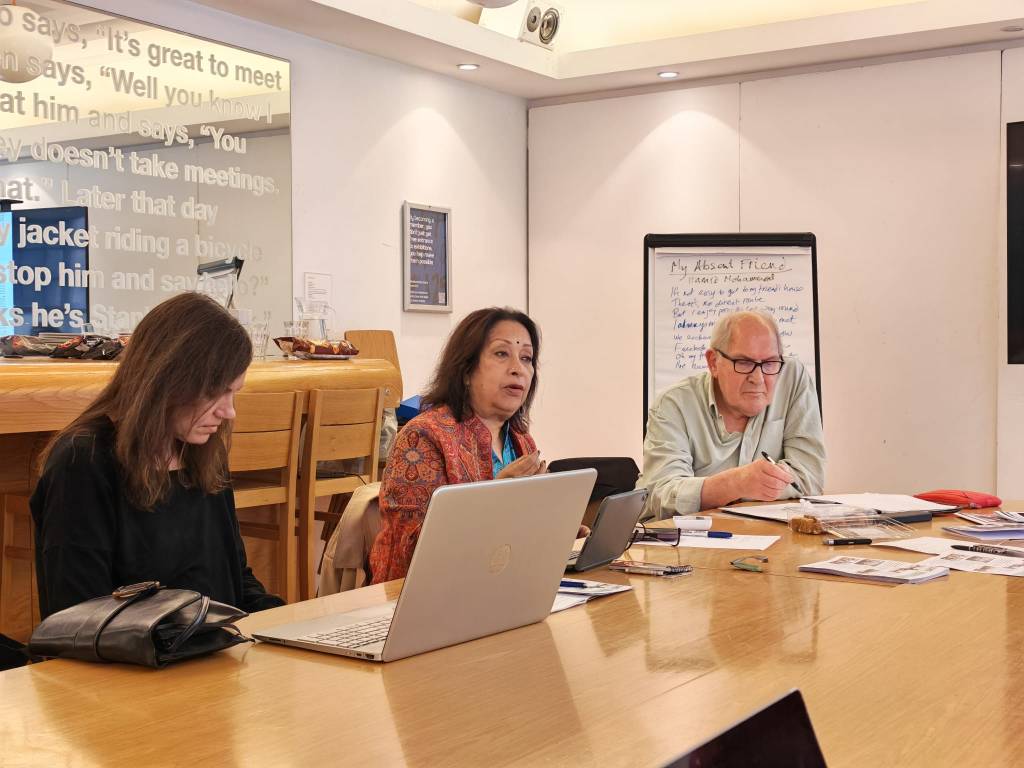
Bookending the blog neatly, the last Sunday of alternate months means it’s time to head back to the Whitechapel Gallery for the British Bilingual Poetry Collective’s Bi-monthly Meetup. At the last meeting we’d agreed a theme of Absent Friends as 26 April was the anniversary of one of our member’s father’s death and it was the week when my late wife Dee had her birthday so it seemed a good occasion to remember those no longer with for whatever reasons. Several poignant poems were read and lively discussion ensued as memories were exchanged.

Too busy to blog …

It’s been a long time since I last did this. There’s been a lot going on. Cataract operations and follow ups. British Bilingual Poetry Collective’s first appearance at the Barbican. Football matches. Women’s World Cup cricker. Copy to prepare for Watford Museum and editing for TU Delft. A massive crop of quinces to be cooked and made into jelly, pickles, marmalade and membrillo. But still time for a few theatre and concerts. And while my last post began with a trek west across south London to see my granddaughter play in her band, this one starts with a diagonal trip north to Alexandra Palace to see my son-in-law perform.

It’s 20 years since The Thick of It hit our screens and so why not have a party to celebrate? The creator Armando Ianucci was joined by the stars Peter Capaldi, Rebecca Front and Chris Addison, who at the time was mainly known as a standup comedian rather than an actor. The evening was elegantly hosted by Miles Jupp. There was lots of chat about the provenance (Yes Minister), about the semi-improvisatory nature of the scripts and the fluid filming style. There was a lot of swearing of course and a pre-interval recreation of the Tucker/Reeder sacking scene. It was a very entertaining evening although as a fellow-traveller on the bus back to Finsbury Park said: “It turned a bit into the Chris Addison show in the second half.” When tasked with this Chris confessed it was PTSD from all those panel shows he used to do.

Next up was another visit to Acland Burghley School for a recital by the Orchestra of the Age of Enlightenment’s new intake to their Rising Stars scheme. Every two years the OAE recruits young singers to serve a kind of apprenticeship with opportunities to appear at their concerts and develop their professional lives. This year’s group seemed pretty well set to me with well-delivered introductions to their Handel arias.

They were left to right Sofia Kirwan-Baez (soprano), Angharad Rowlands (mezzo-soprano), Hugo Brady (tenor) and Peter Edge (baritone).  Chosen from over 100 singers who applied they were accompanied by a chamber group of OAE players conducted from the harpsichord by Steven Devine. It’s really encouraging to see so much young talent embarking on their chosen careers.

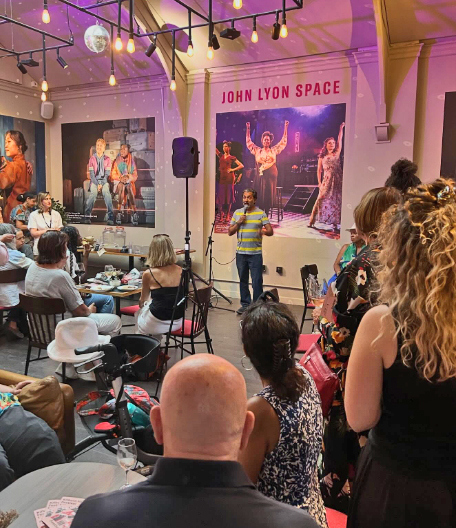
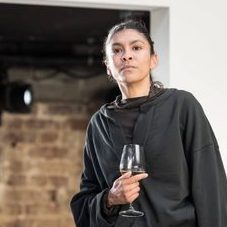
The last Sunday of every other month finds me co-hosting a BBPC poetry adda (get together). We read, perform and often translate poetry and have voluble discussions about what we hear. This month we had a performance poet Pip McDonald perform a couple of pieces and then engage in a valuable discussion about the art of performance with many tips for budding performers. It was a friendly and positive occasion, with tea and snacks, as I hope the photos demonstrate.

So what’s occurring at Marble Arch? After the horror of that artificial hill, it was a delight to discover that there’s a new MOCO in town. I’ve visited the museums in Barcelona and Amsterdam but had missed out on the fact that MOCO London opened in September last year but had an email with a voucher for half-price entry so off I set. It’s a similar collection of modern and contemporary works with Banksy, Emin, Hirst, Kusama, Opie and Warhol all present and correct but with some excellent pieces that were completely new to me. One of thee first images to confront me was a photo of Elton John by Chris Levine, currently in a dispute with a collaborator over his holographic portraits of the late queen. I was then lured into a fascinating psychedelic infinity mirror room and then to its exact opposite in a contemplative installation Lunar Garden by Daniel Arshan inspired by the classic Japanese Zen gardens I enjoyed so much in Japan. There were a lot of really interesting artworks on display so it will be firmly on my agenda of museum visits as they have changing displays as well as the permanent collection. And it’s a spacious and elegant space over three floors.

I don’t often go to see a play twice in ten days but when Frances and I went to see The Land of the Living at the Dorman Theatre at the National, I said “I should have brought Rosa to this”. So I told her about it and we went together a week later. Rosa is my artist friend, one of whose major installations Lost treats the adoption scandal that took place in Spain between the late 30s and early 90s, known as the Spanish Stolen Children and she is currently working on a similar work featuring the American US Adoption Re-homing scheme. You can check Rosa’s work out at https://artcollaboratif.com. This play by David Lan, who used to be the creative director at the Young Vic, is about the attempt to repatriate children who were stolen from Ukraine and Poland by the Nazis because of their suitability to breed the super Aryan race. It was disturbing, thought-provoking and contained a masterful performance by Juliet Stevenson, an actor I’ve long admired. But there were also moments of humour and theatricality as when the Dorfman’s traverse stage is converted into a swaying train taking children back to their homes.

Both Frances and I have marvelled at the genius of Indhu Rubasingham and her work transforming the Kiln Theatre. Now she’s the artistic director of the National and as someone said after the play she’s spent a year of the Kiln’s budget on her first production as director in the Olivier. Bacchae is losely based on Euripides in a debut play by  Nima Taleghani – a brave commission to open your first season at the nation’s principal theatre. Did it work? Hell yes! Rambunctious rapping, rhyming, big revolves, flying and dancing brought the contrast between the lifestyles and philosophies of Dionysus and Pentheus sharply into focus and the ever-present chorus of bacchantes led by Clare Perkins kept the whole spectacle flowing through mood swings and emotional turmoil. Ukweli Roach, James McArdle and Sharon Small shared the lead roles. There were lots of laughs, lots of theatrical in jokes and while it may not be what conventional NT audiences were expecting all the people we spoke to thought it was great fun.

My friend Jadwiga likes lunchtime recitals and has a list of churches and venues where she goes regularly so I was delighted to be able to take her to a lunchtime recital in a venue she hadn’t been to before. Some time ago on a vist to Ramsgate for the launch of Anna Blasiak’s latest book, I met Gabriela Mocan of the Romanian Cultural Institute and had taken my friend Dana to an evening concert there. The upshot is that I’m on their mailing list and was attracted by a recital by a Romanian pianist Kira Frolu in St Bartholomew the Great in Smithfield.

Jadwiga was suitably impressed by this ancient church and we were both enthralled by the young pianist’s performance of an Georges Enescu suite – Mélodie, Mazurk mélancolique and Burlesque from Suite No.3 Op.18 – to keep the Romanian theme running followed by a wonderful performance of one of my favourite pieces Mussorgsky’s Pictures at an Exhibition which is great in Ravel’s orchestration but rather special in the original piano form. It was made all the more poignant as the last movement is called ‘The Heroes’ Gate at Kyiv’.

Once again it was a privilege to experience the wealth of talent emerging from British conservatoires (Royal Academy of Music in Kira’s case) and a tragedy that so many of them will struggle to make a living because governments plural don’t care about the arts. We had a light lunch after the concert and walkedpast St Paul’s Cathedral and then through Postman’s Park with its fascinating plaques to people who died trying to save others’ lives. We then crossed the Millennium Bridge and along the south bank where I peeled off to meet Rosa for an early supper in the Archduke before making my second trip to the Dorman for The Land of the Living. It was interesting to see it from a different viewpoint and its powerful messages rang through again. I’m pleased to say Rosa was impressed too.

The Barbican Centre ran a series of October events under the title Voiced: the Festival for Endangered Languages. My poetry group BBPC was invited to contribute in three sessions. We ran a Translation Circle on Saturday 11 October (top below), our chair Shamim read poems in Sylheti in person on Friday 17 (left below) and in a foyer display through headphones and Eeshita and Anahita produced a polylingual audiovisual poem at the final session on Saturday 18. (Eeshita introduces the poem and the BBPC team celebrates.)

Shamim and I have run a number of translation session together but we usually know several of the people present. Not this time. Because of GPDR the barbican couldn’t even let us know who had signed up. However we did enlist the talent of Anna Blasiak to prepare a poem in Polish and Kashubian (endangered mix of Polish and German used on the north coast) which we then translated as a group which contained speakers of ten different languages. Interesting! However, the organiser got good feedback and we had a good party after the final session.

A change of mood on the Sunday as I moved back into the world of music with the OAE performing their first concert of their 40th anniversary season at the Queen Elizabeth Hall – Handel’s oratorio Solomon. It’s a fine work that includes the ever popular Arrival of the Queen of Sheba. Conducted by John Butt who has a long association with the OAE, it was great to see two of the rising stars from last week in the two choirs with Angharad having a small solo role as the second harlot involved in the famous judgement. The main character of Solomon was sung by one of the first intake of Rising Stars Helen Charlston, Zadok by Hugo Hymas and a Levite by Florian Störtz fellow alumni of the scheme. The three sections of the oratorio are very different in style and emotional impact but it was a pleasure to hear the crisp playing of the orchestra and the beautiful antiphonal choirs raising the roof.

The period was rounded off with visits to the Young Vic and the National again. A couple of weeks’ ago Frances was invited to an insight event in the Young Vic rehearsal room at which we heard from some of the actors and from director Nadia Fall about the forthcoming production of Joe Orton’s Entertaining Mr Sloane. I think I saw the first revival at the Royal Court in 1975 with Beryl Reid and Malcolm Macdowell. It raised a lot of scandalous outrage among certain elements of society and the media.

Tamzin Outhwaite is the central character Kath in this production with Jordan Stephens as Mr Sloane. Poor Joe Orton is best remebered for being murdered by his boyfriend but he actually wrote some very funny plays (Mr Sloane, Loot, What the Butler Saw).

Within the frequent elements of farce are strong messages about unwanted pregnancy, homosexuality, promiscuity, race and class and hints of criminality. Well worth reviving in our once again intolerant times.

Another of the benefits of friendship with Frances was an invite to a talk to staff in the archive and design departments of the NT followed by a matinee performance of Hamlet. This is the second production in Indhu Rubasingham’s first season at the National and was directed by her deputy artistic director Robert Hastie. Hiran Abeysekera plays the prince quite brilliantly with much more humour than usual and a very emotional reading of the role. He’s matched by an outstanding performance from Francesca Mills as Ophelia who skips and dances across the stage enlivening every scene she’s in and casting a shadow over others after her death. It’s brilliantly staged in a palatial ballroom with an amazing mural which we were told in the pre-meet contains portraits of everyone who has played Hamlet at the National.

Another fun week with a few surprises

On Monday I went with Frances to see Eugene Ionesco’s Rhinoceros at the Almeida Theatre. I’d read this in French as part of my studies at UCL back in the 60s, when we’d complained that the reading list was too classical and old-French oriented. The Theatre of the Absurd struck a chord with the young and foolish me and I even directed a production of fellow-absurdist Alfred Jarry’s Ubu sur la Butte in the Lycee Francais annual drama compettiton for London college French departments. We got the best actor award. The core of Rhinoceros was still there with its warning about totalitarianism embodied in the metaphor of the residents of a small town in France turning into rhinoceroses. But the adaptation with audience participation conducted by Paul Hunter though elaborate hand gestures and claps and rhinoceros roars with kazoos made it a very different spectacle. Translated and directed by Omar Elerian – he also did a great version of Ionesco’s The Chairs here a couple of years back – it incorporated humour, menace, slapstick and some cod metaphysical discussions and an interpolated song sequence in Italian by love-object Daisy sung brilliantly by Anoushka Lucas with back projected slogan “What do you want meaning for?” The playing for laughs may have detracted a little from Ionesco’s warnings of extremism but it was a fun night in the theatre.

Anoushka Lucas as Daisy and Sope Dirisu as Berenger in Rhinoceros.

Imagine my shock on Tuesday morning when The Guardian had the following headline. I had to send it to warn Frances in case they’d escaped from the theatre and were invading Islington and Tufnell Park.

Life really does imitate art

I’d been meaning to go to the Dulwich Picture Gallery to see the Tirzah Garwood exhibition for some time and now I had a chance. As with so many women artists I knew of her mainly as the wife of Eric Ravilious whose work I had always liked. Their artist enclave at Great Bardfield in Essex with Edward and Charlotte Bawden is well documented but I was delighted to find out more about Tirzah who admitted that managing the family and the household had interfered with her own artistic development.

And what an artist she was in so many media and despite all the household wrangling! She started out as a talented maker of woodcuts – and many know of my love of a print – and with Charlotte Bawden she established a reputation for marbling paper – all the rage for lampshades and book endpapers in the pre-war years. The exhibition features embrodery, a quilt, wood engravings and some model village collages in box frames which were inventive and charming. Finally she was able to turn to oil painting at which she adopted a somewhat naive style with surprising elements like the trees in the Photo Shoot below made with prints from gathered leaves. It’s well worth a visit and is on till 26 May. It’s also very funny – she obviously had a great sense of humour. That’s her in the train compartment.

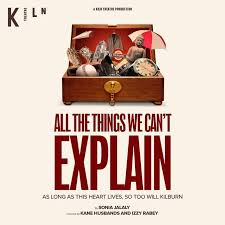
Thursday evening sees me join Frances again, this time at the Kiln Theatre in Kilburn to see Shanghai Dolls a new play by Amy Ng. The dolls of the title are two influential characters in Chinese history: Jiang Qing who as Mme Mao is generally regarded as the architect of the disastrous Cultural Revolution; and Sun Weishi who was the adopted daughter of Mao’s arch rival Chou En Lai and became China’s first female theatre director. Before the play we were able to introduce a friend who has recently moved to the area and her daughters to the Kiln which we hope will become a useful cultural hub for them – teenage eyes widened at the thought of £5 cinema tickets! I enjoyed the play very much despite some slightly melodramatic delivery from time to time., But it brought back some distant memories. I was in China in 1981 as part of a lecture and workshop visit when I worked for the Inner London Education Authority. This was five years after the end of the Cultural Revolution but we saw the effect it had had on artists with hands wrecked by rural toil, writers’ spirits broken through lack of books. Several people – including our interpreter Sho-jian asking if I could marry her so she could get out of China – were adamant that the movement had been an utter failure, but were still not willing to talk about it openly, only when we found quiet unmonitored corners.

I had tickets for a Wigmore Hall concert on Saturday but thanks to a recommendation from Frances I went first of all to the Royal Academy of Arts to see the Brasil! Brasil! The Birth of Modernism exhibition. Good call Fran! The last time a major exhibition of Brazilian art was held in London was at the RA in 1944 – I didn’t go as I was one. The show featured ten different artists who had had an influence on mid twentieth century art movements in Brazil. Sadly it closes on 21 April but you can get a flavour here. Many of the artists had studied in Europe but most had a very distinctive local feel featuring indigenous characters and local traditions. Given that some of our friends are members of Morris sides, I liked the Brazilian equivalent.

With time in hand I sauntered up Bond Street towards the Wigmore Hall and with sunny skies, warm weather I looked up and saw something i’d never noticed before. On the Time-Life Building half way up is a screen by Henry Moore from 1952. It’s appaerntly a very rare example of work of this kind in that he could sculpt both sides. I’ve walked along Bond Street many times but to my shame had never noticed it before.

And when I turned round from snapping one surprise, I got another. The Halcyon Gallery where I recently reported my surprise at Bob Dylan’s paintings, there’s a superb array of Hockney works on paper. These range from the early lithographs of Celia Birtwell and Californian pools to recent iPad drawings in Yorkshire and Normandy. I need to win the lottery before I can go back as a customer but the staff are most obliging and informative if you just want to look. Then it was time to make for the original target of today’s outing after some unexpected delights along the way.

I met a young music composition student Zyggy de Somogyi a couple of years ago at a weekend in Oborne in Dorset and we’ve remained in touch. Indeed I asked Zyggy to write the music tracks for the series of videos we made to celebrate 100 Years at Vicarage Road for Watford Football Club in 2022. Basing his work on some fan chants I sent he matched the predominant sounds of the decades – ragtime, swing etc to drive the narratives along. I’m here today to listen to the world premieres of two of his works commissioned by the Royal Philharmonic Society Composers Programme which gives young musiciians space to develop. Ten years ago Dani Howard was on the same programme and I met her at the same weekend in Dorset – small world.

Zyggy introducing the first work Music for the quarter life crisis Etude for synth. This was a solo work for Xiaowen Shang. It opened with dramatic synthesiser notes and segued into lyrical passages. Then recurring motifs transferred from the synth to an almost orchestral piano sequence. The playing was emotionally powerful and was rapturously received by a fair sized audience for Easter Saturday at lunch time for an all contemporary music gig.

Other pieces were a new work by Ashkan Layegh, a trio by Lowell Lieberman that showed off the skills of the group Temporal Harmonies Inc – Xiaowen on piano, Lydia Walquist on flute and Mikolaj Piszczorowicz on the cello, followed by Caroline Shaw’s wonderful In manus tuas is based on a motet by Thomas Tallis arranged for solo cello and Kaija Saariaho’s Mirrors for flute and cello. The concluding work was Zyggy’s second premiere IN THE EVENT THAT YOU STAY, This was written with the trio in mind and indeed with their collaboration. It’s in four movements which included drama, bombast, a peaceful second movement, a sense of progression and a finale which featured soft vocalising chanting of the title and eventually all members singing. It brought a lump to the throat. I was a very impressive work and I hope it enters the repertoire of contemporary chamber music.

I had a chance to meet with all the musicians in, and outside the Cock and Lion pub as well as several members of Zyggy’s family. His mum said she was pleasantly surprised with his compositions because there were tunes in his pieces which she thought he’d had knocked out of him at uni. “He used to write tunes,” she said “and then he didn’t.” There certainly were tunes and they were very professionally played. It was a real pleasure to listen to andf then spend time with these talented young musicians. Cuts notwithstanding, there’s great stuff going on out there.