The kids are alright …

So I get a glimpse of a possible future as we go to see Care at the Young Vic. It’s a harrowing watch, featuring life in a care home for elderly and dementia-affected people. Alexander Zeldin’s play and his own direction of it pull you right into the care home where the brilliant Joan played by Linda Bassett is convinced her daughter Lynn – Rosie Cavaliero – and her grandson have come to take her home.
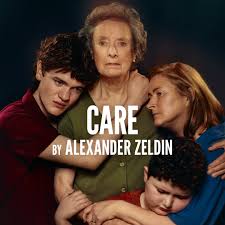
The confusion of dementia, the emptiness of the days, the loneliness while always being surrounded by others are all poignantly present in the script which has a few moments of humour and one of agonising pathos as one resident mistakes another for his late wife and they hug. As characters die off they join us in the auditorium enhancing the sense of our involvement. The final scenes are horrendously powerful and reinforced my support for the Assited Dying Bill – please get it through!

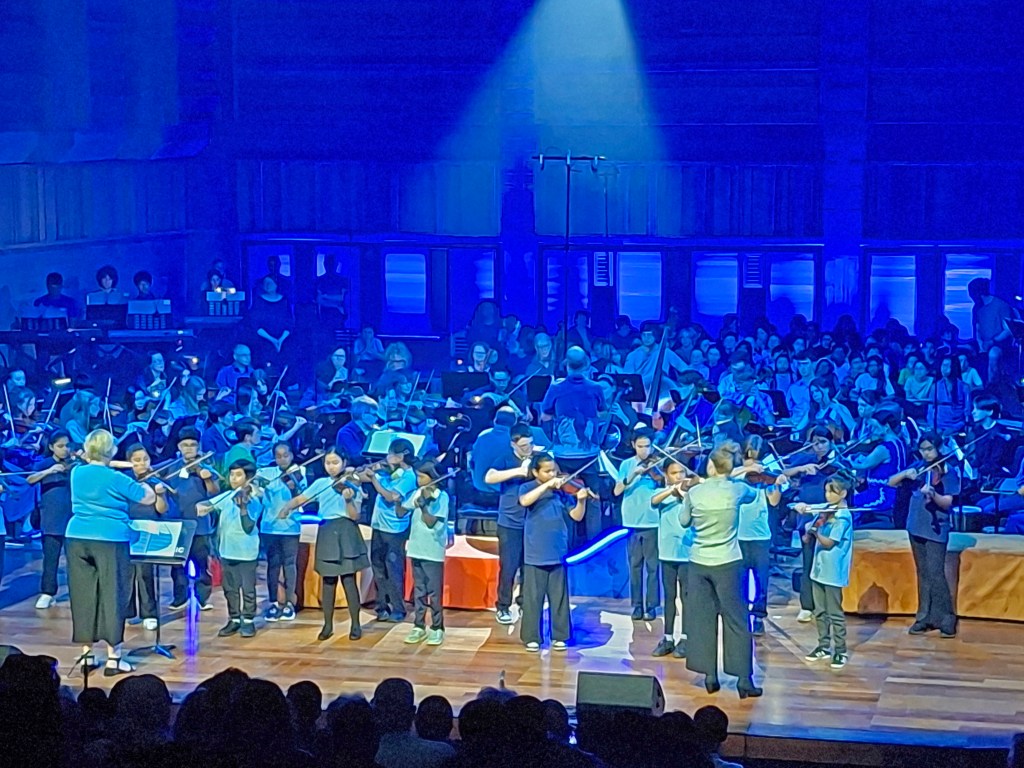
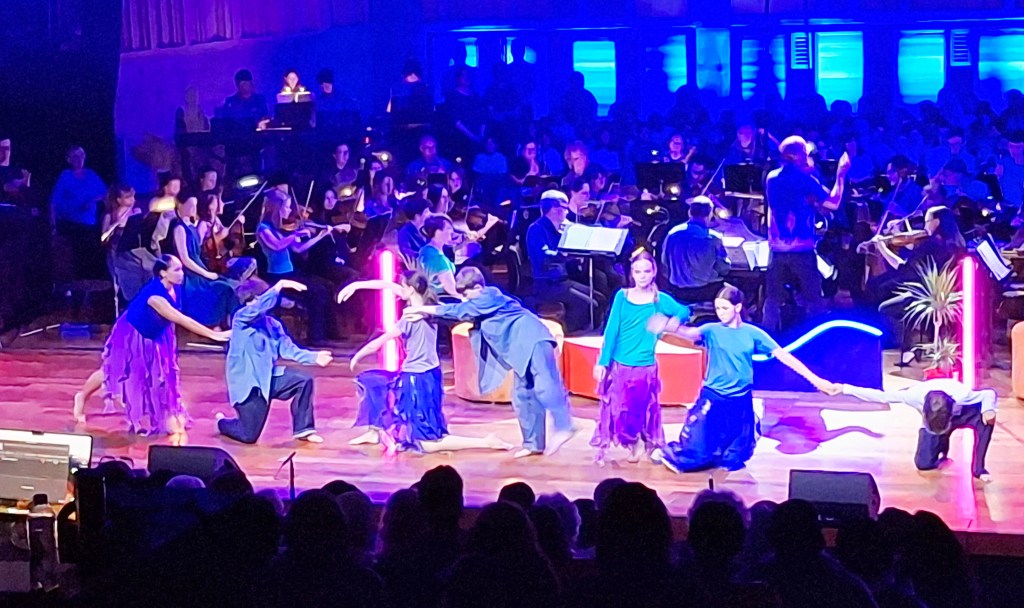
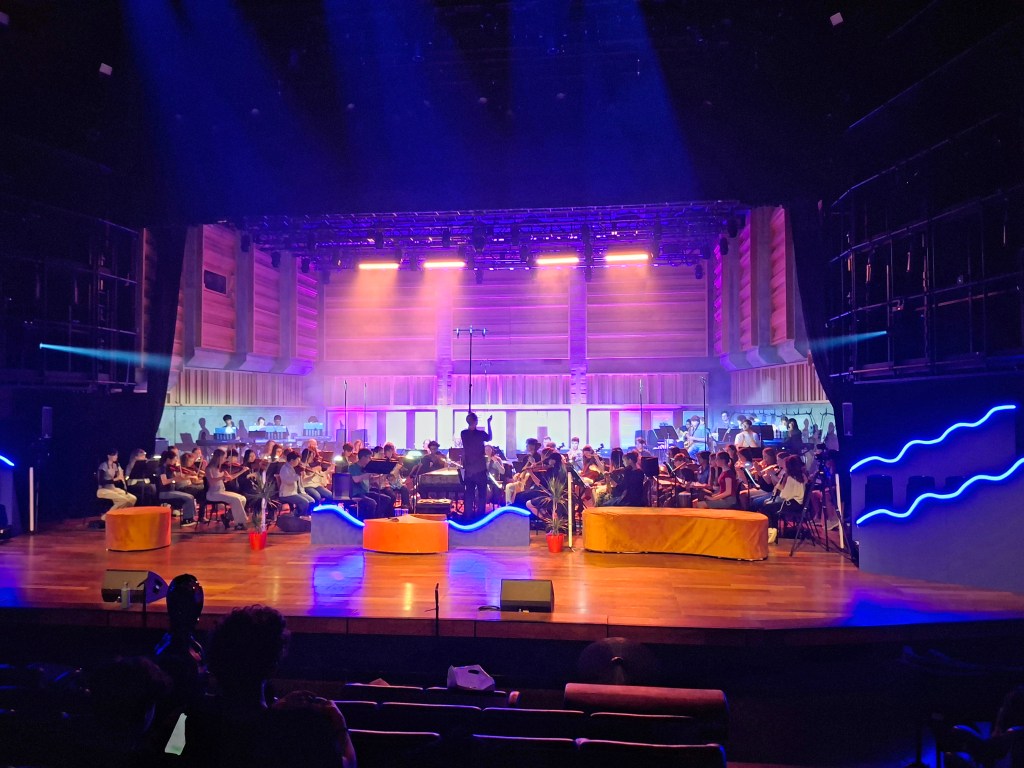
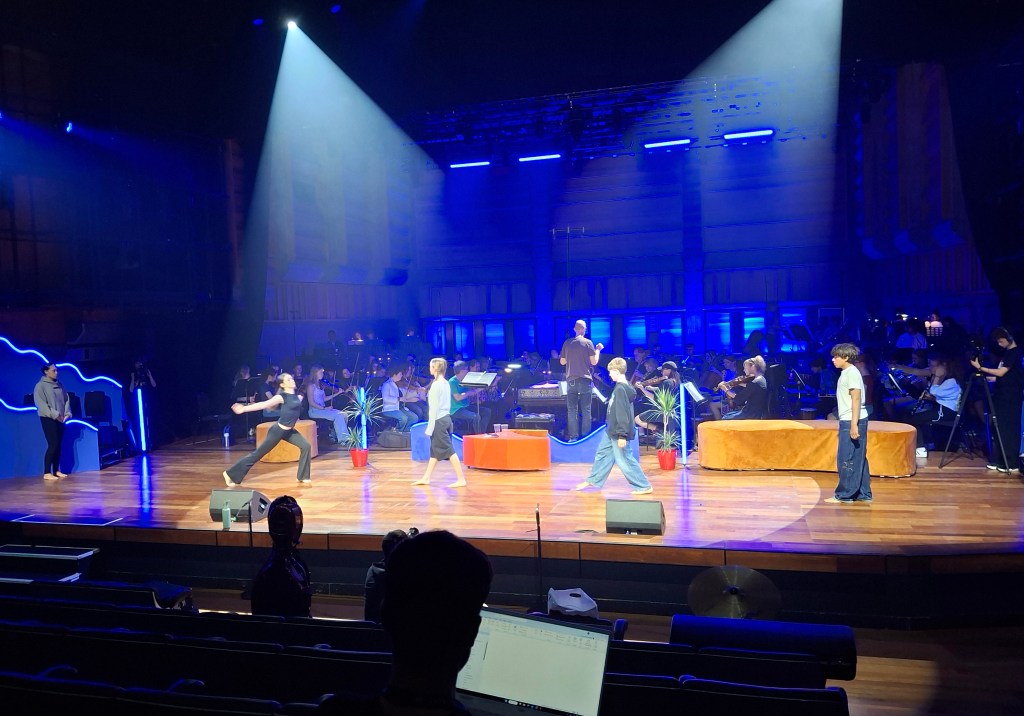
At the other end of the mortal scale, there were some 80 primary school students, 50 secondary students alongside the Orchestra of the Age of Enlightenment for its annual community opera Life of the Sea. I was invited as a friend to attend the rehearsal and had also booked for the show in the evening. Devised by Hazel Gould, it takes the form of a TV chat show with young performers as guests. These include young musicians and dancers, a rock band and string players in various stages of school who form the Fiddlers on the Reef. The final guest is an adventurer who had discovered a new island in the Pacific Ocean. This of course transpires to be the vast area of accumulated plastics which we dump all the time and subtly delivered ecological messages are delivered. Given the maritime theme there was Purcell and Handel mixed with sea shanties and sequences written by James Redwood – a regular collaborator alongside writer Hazel with OAE’s Education Director Cherry Forbes. I’d really like all politicians who support cuts to the arts to be made to come and see shows like this as the depth of talent on show, the confidence-building association with professional actors and musicians and the sheer joy of artictic collaboration need to be appreciated by those holding the purse strings. A big thank you to all the kind people who donated time and money to ensure that activities like this can so enhance young peoples’ lives. With adequate resources and places to gather the kids are alright.
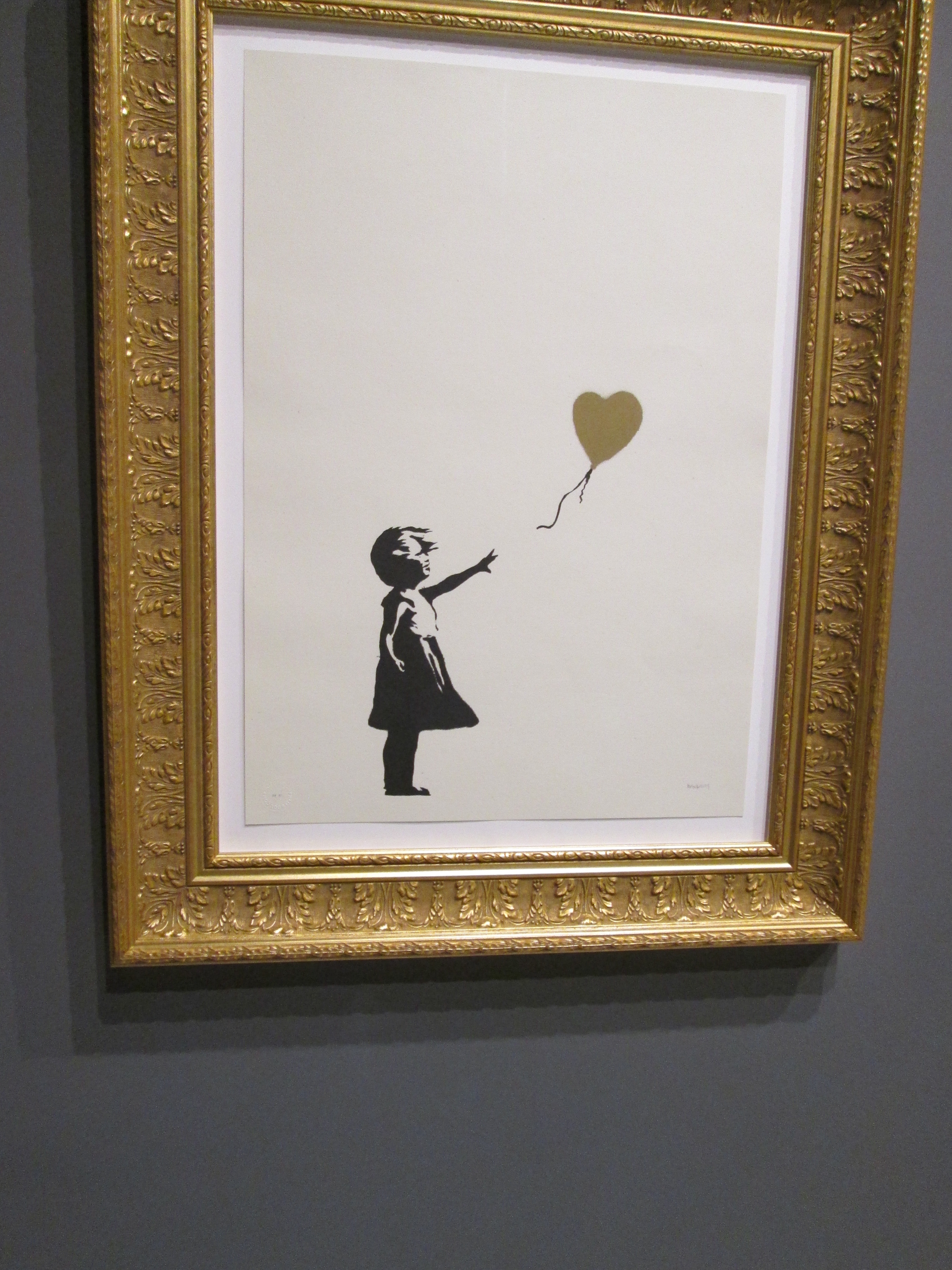
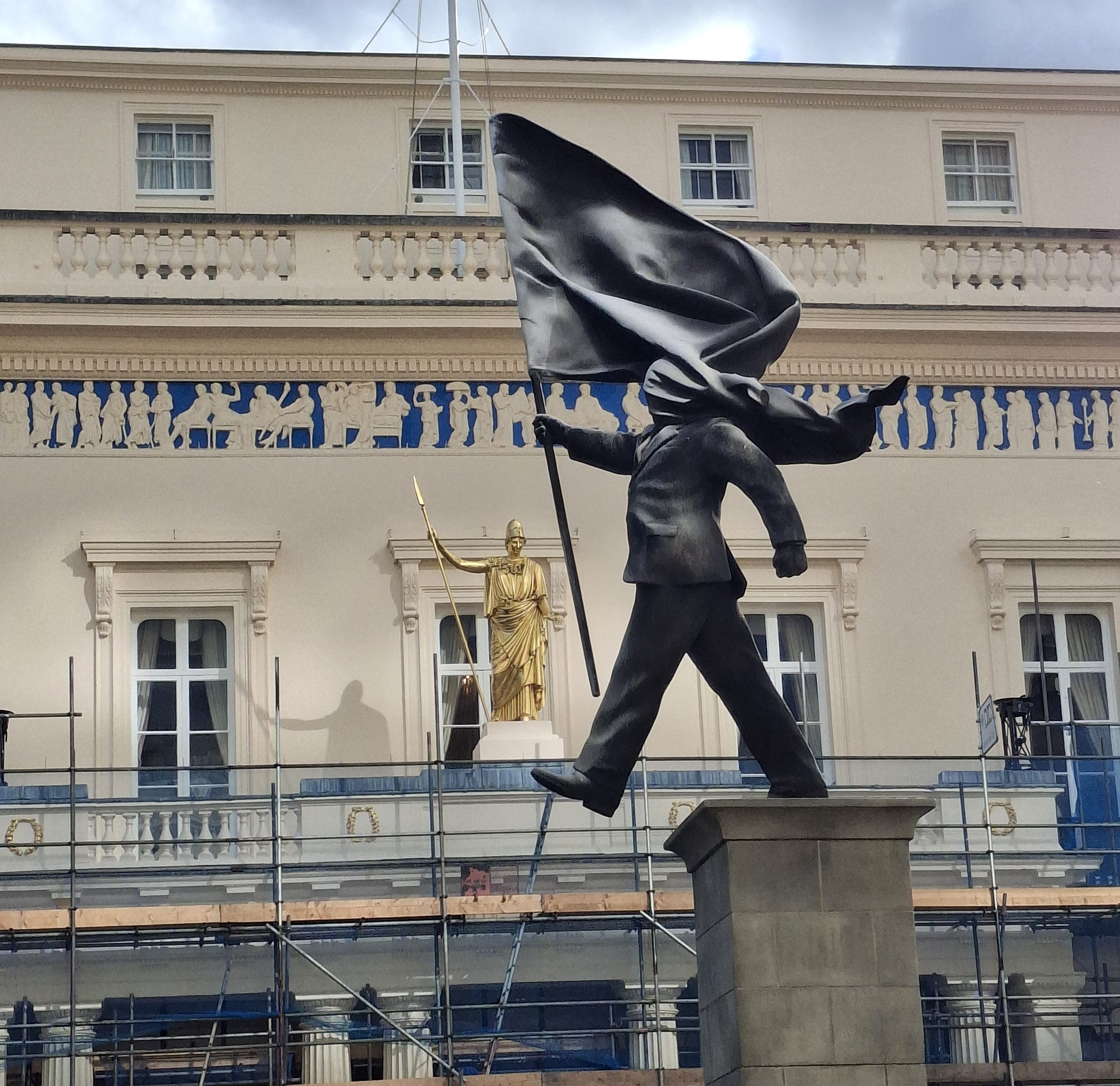
Next up were a couple of dining outings – the City Orns first Thursday meeting was small with just Fran, Richard and me at Fish! in Borough Market. On the way (ish) I popped into Yoshino to pick up my next supply of gyokuro from Lisa and had the opportunity to admire Bansky’s brilliant installation in Waterloo Place. How they did it is miraculous and I like this shot with the gilded statue representing the pinnacle of the establishment on the Atheneum Club in the background – shame they couldn’t clear the scaffolding away for me.
During dinner Richard – Surrey cricket member asked if I’d like to go to see Hampshire – my team – at the Oval on Monday. I said that would be lovely and should we go on afterwards to see Glengarry Glenross at the Old Vic after the match. Tickets booked and a pleasant evening ensued with a nightcap in Brindisa Tapas round the corner. Friday lunch at the Union Club – very non-establishment with friends Dede, Yvonne and Gwyn has been known to go on until rather late. Indeed as we left at six, there was an “Are you still here?” enquiry from reception. We had been enjoying their lovely roof terrace so away from the main areas. This was a very responsible visit for us – we must be getting old.

The Oval visit was a washout – Richard never made it at all and I saw 18 overs of cricket amid the rain delays. The weather ensured that the game ended as a draw which I’ll take as this has not been a great start to Hampshire’s season. I met Richard in the backstage bar at the Old Vic and then we went to see Glengarry Glenross. I had seen a version at the NT in 1983 and at the Playhouse in 2017. I like the play for its rapid fire dialogue among unscrupulous estate agents vying for a prize Cadillac, a set of steak knives or the sack depending on their position on the monthly deal closures board. For this revival director Patrick Marber had chosen to go with an all female cast with Indira Varma and Rosa Salazar as the leads.
I found it initially odd that they didn’t change the characters’ genders but followed the text to the letter. Soon it didn’t matter as the drama of backstabbing, conning and horsetrading, burglary and deceit just took over as it had before. It was done in the round as is all of this Old Vic season and it worked well in the office scene but the opening in the Chinese restaurant was a bit sketchy with a couple of hanging lanterns suggesting the space. It occasionally got a bit shouty but in all it was another very enjoyable encounter with a very fine play.

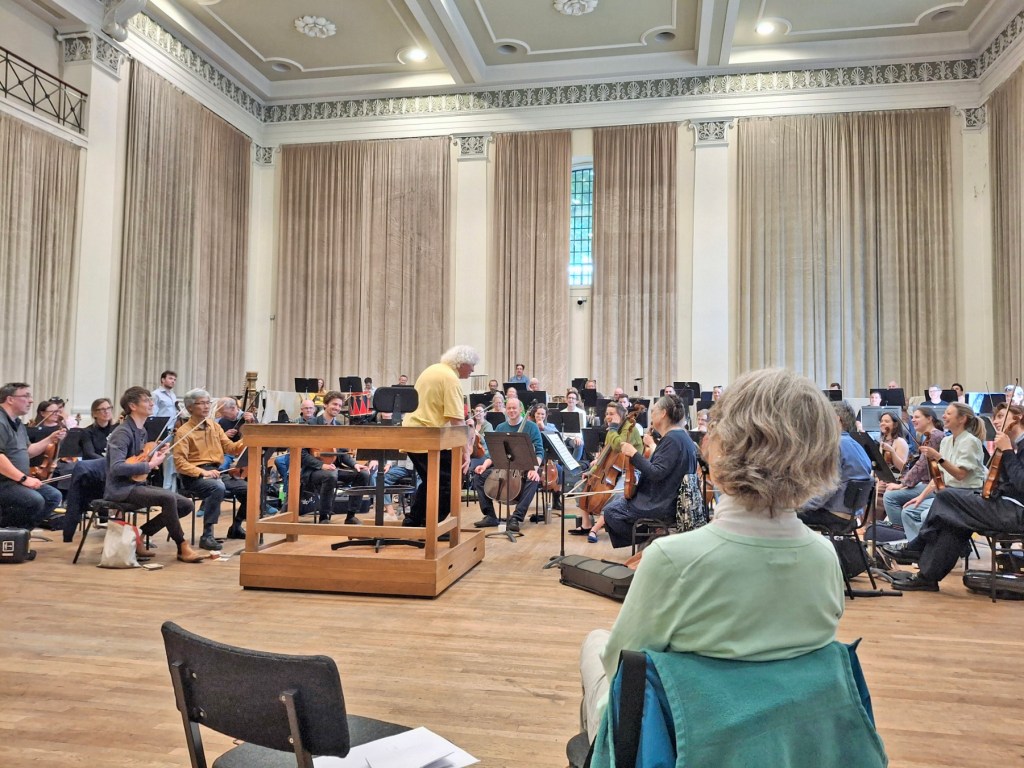
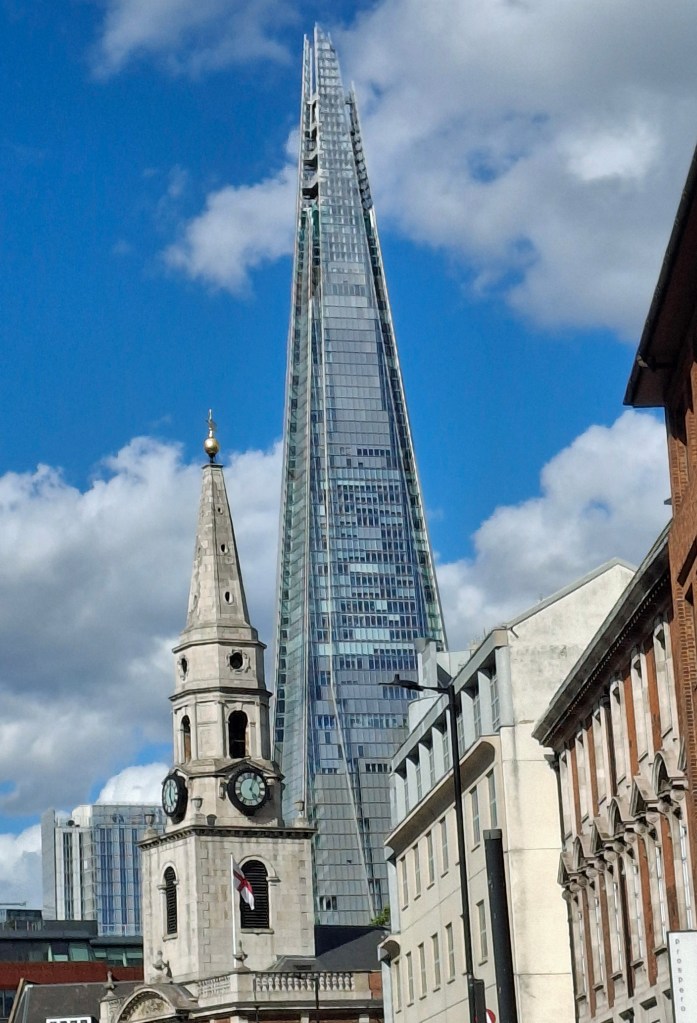
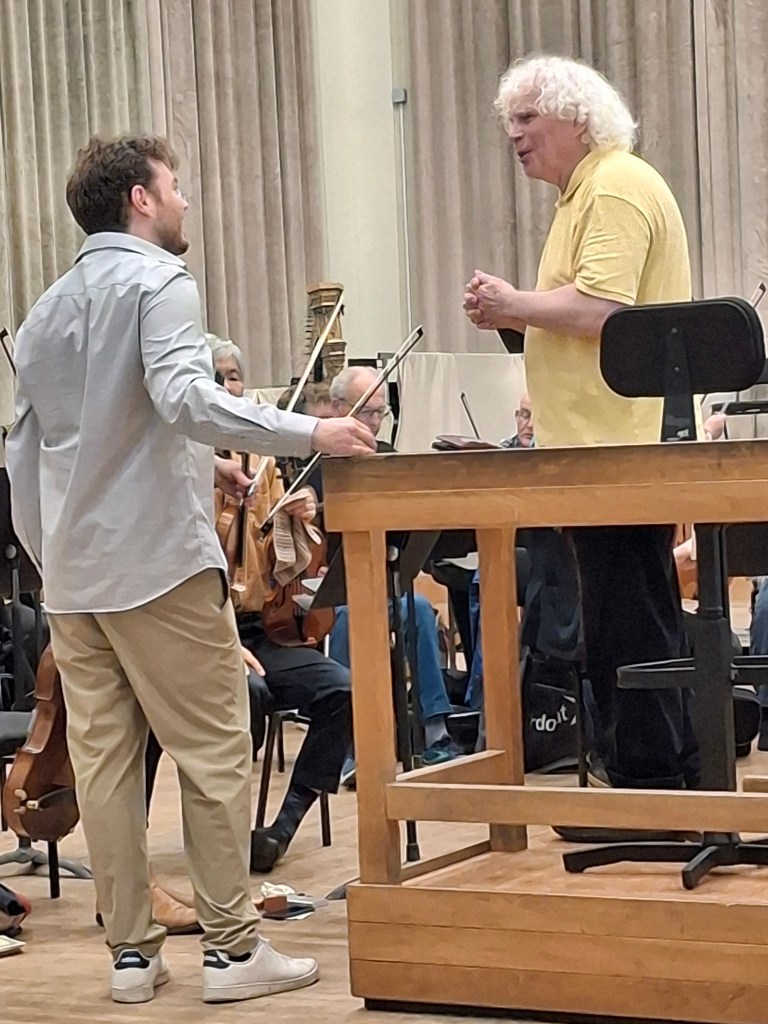
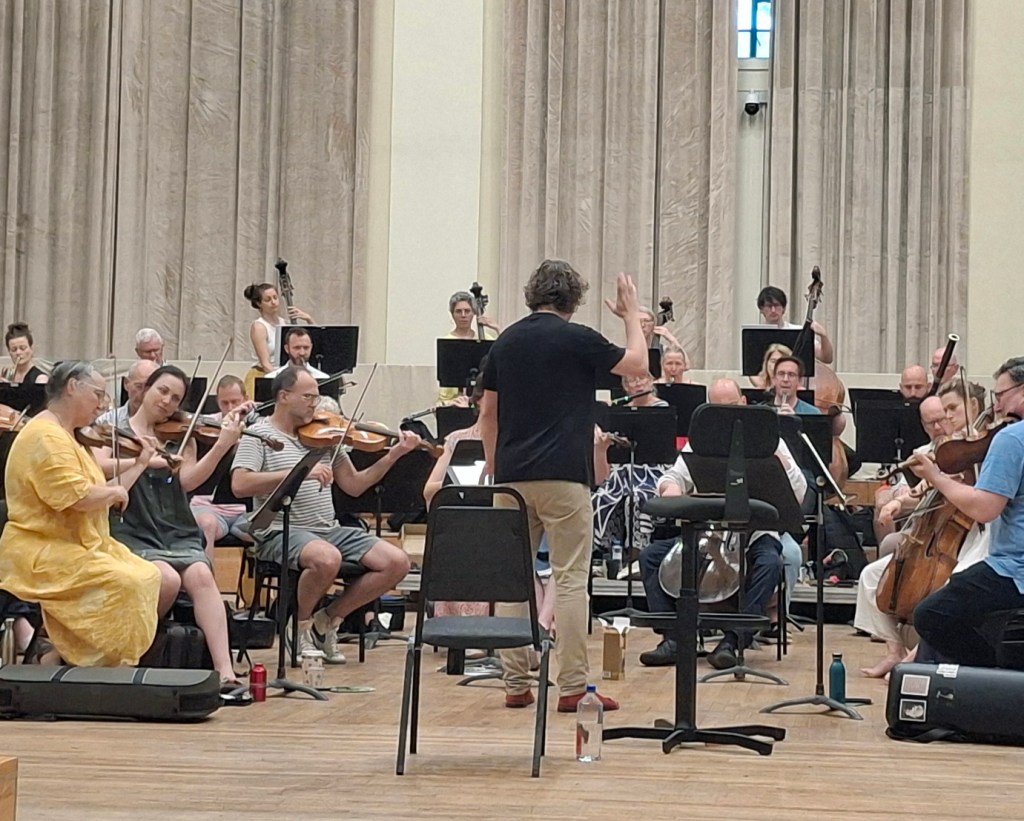
The next day I was at another rehearsal with the OAE – this time a very special one. Sir Simon Rattle had been one of the earliest supporters of the orchestra back in 1986 and when invited back to play in the 40th anniverary season he accepted immediately and elected to play two Berlioz works – the well-known Symphonie Fantastique and the equally brilliant but less performed Harold in Italy. The rehearsal took place in the Henry Wood Hall – previously Trinity Church until the 1960s and now a favourite space for several orchestras on account of its brilliant accoustic. They were working on Harold in Italy while I was there with the viola soloist Timothy Ridout walking around the space visiting various sections of the orchestra as he played the featured viola parts. It was fascinating to hear the interchange between various members and the conductor about stress and pace, intensity and melody. It seems all conductors demonstrate their wishes through dum de dah vocalisation – most mellifluous! On the way back I was struck by the juxtaposition of the spire of Dickens’ church St George the Martyr from 1122 and the Shard from 2012 both fine pieces of architecture gracing the area 900 years apart.
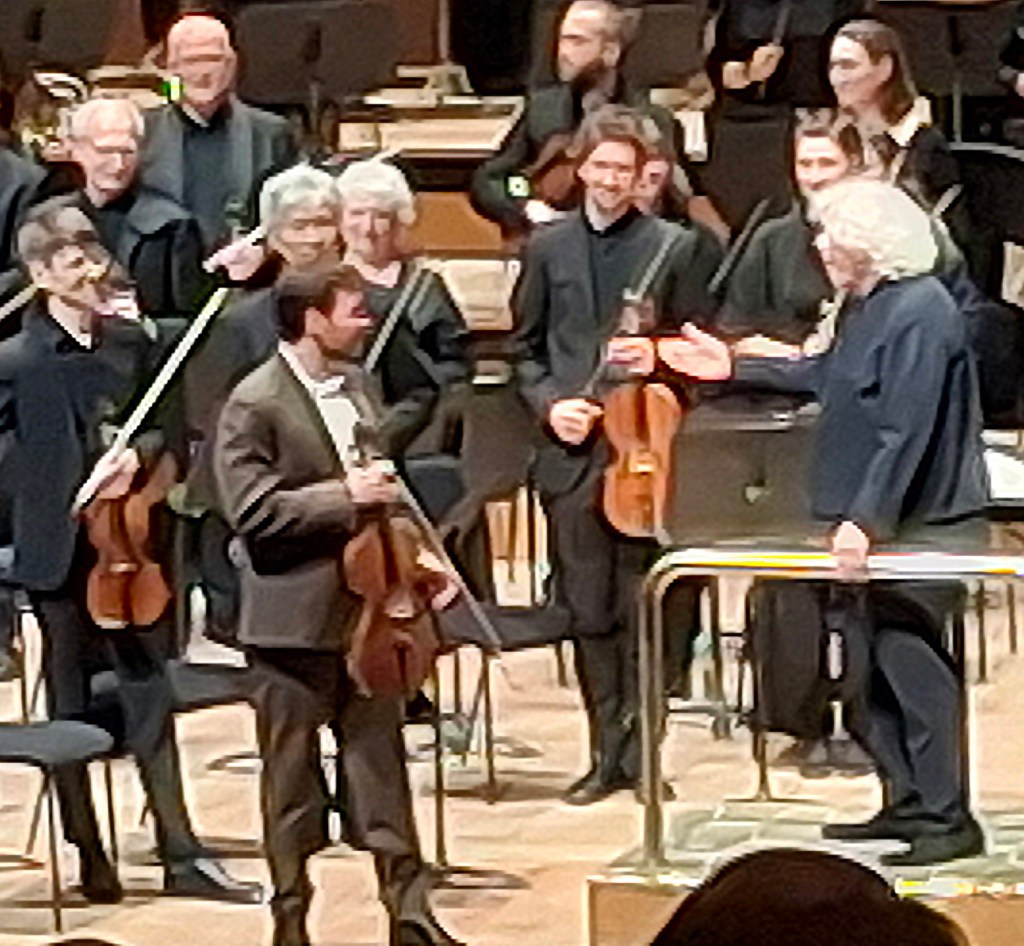
At a pre-concert talk some of the players shared their delight about playing not just ‘historically informed’ but actually on period instruments. For the baroque and classical periods they have to use excellently crafted copies of period instruments since the real ones would have disintegrated. Tonight they were playing on instruments made at the time Berlioz was writing in 1830. Their excitment was palpable.The concert itself was a huge success. In the first part with Harold in Italy Timothy Ridout with his viola approached the stage from the auditorium, as in rehearsal visited most sections of the orchestra and concluded the piece from a box. He gave a sensitive performance with clear tone and wonderful variations to match the mood of Harold’s adventures through the Italian landscape. The Symphonie Fantastique was a revelation with such clarity from the period instruments and varied dynamics in Simon Rattle’s energetic direction. The talk had suggested things to look out for and it did enhance the experience. Brilliant music performed by expert musicians conducted by a genius they are pleased to call a friend of the OAE.
Focusing on events in the Iran-Iraq war of the 1980s Under the shadow at the Almeida is an all too timely reminder of the effects of repressive regimes on women and of life under war conditions. With her husband off at the front, Shideh, played wonderfully by Leila Farzad, is left in her Tehran apartment with her daughter and possibly a malevolent spirit or djinn. Forbidden from continuing her studies to be a doctor because of prior political activism, Shideh is frustrated by her enforced domesticity and becomes increasingly disturbed by physical and psychological damage.
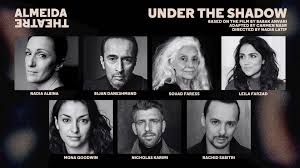
Adapted from  Babak Anvari’s 2016 horror film which I had not seen, it was a thought-provoking evening with some very dramatic effects and some fine performances. Especially affecting were the rush to the air raid shelter where all the cast gather below the front of the stage and discuss their fears. And there’s one amazing coup de theatre which I won’t spoil.

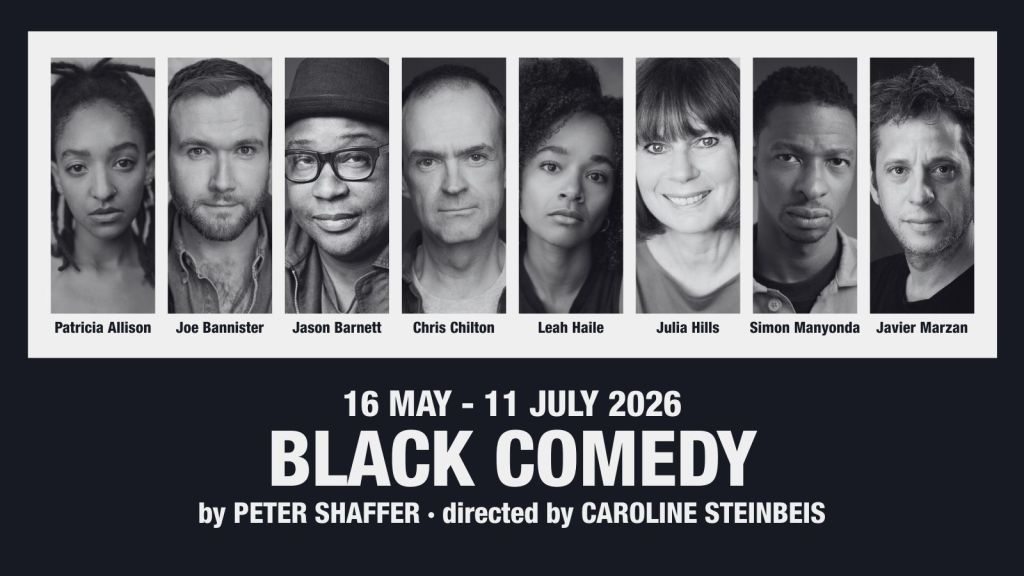
The next outing was of a rather different nature. As a patron of the Orange tree Theatre in Richmond, Frances was invited to a sponsors’ dinner in the neighbouring Italian before a performance of Peter Shaffer’s Black Comedy. The meal was tasty and enlivened with theatre chat from various guests. The play is a hilarious farce. What a contrast to the psychological thriller that was Equus! In a brilliant piece of staging alternate scenes are set in pitch blackness representing times when the room was lit and bright lighting when powercuts had reduced the room to darkness. The actors coped brilliantly with this trope delivering witty lines in the dark and bumping into each other in the light. The central plot of a sculptor ‘borrowing’ a neighbour’s furniture to impress a dealer provided lots of fun and some snappy characterisation.
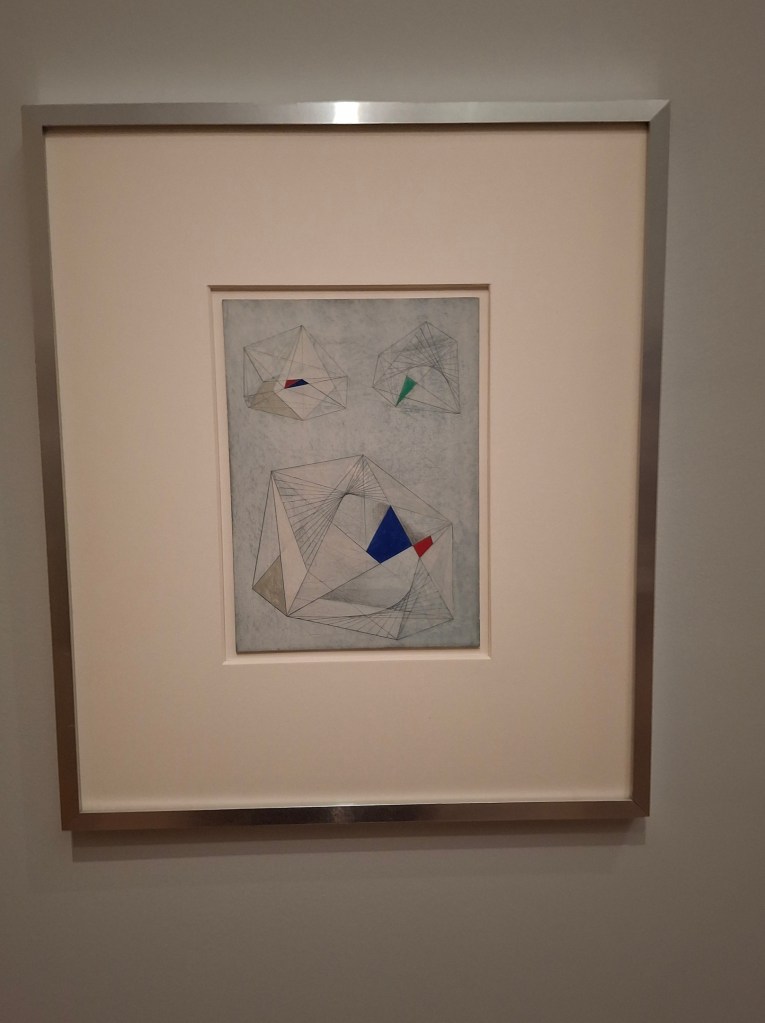
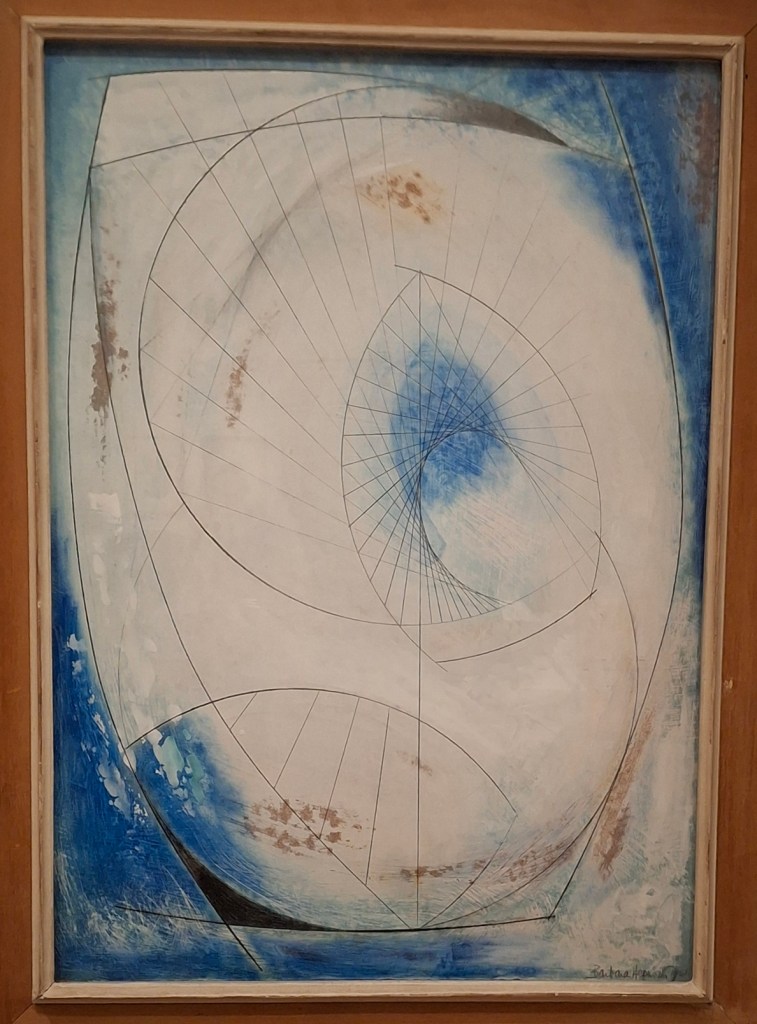
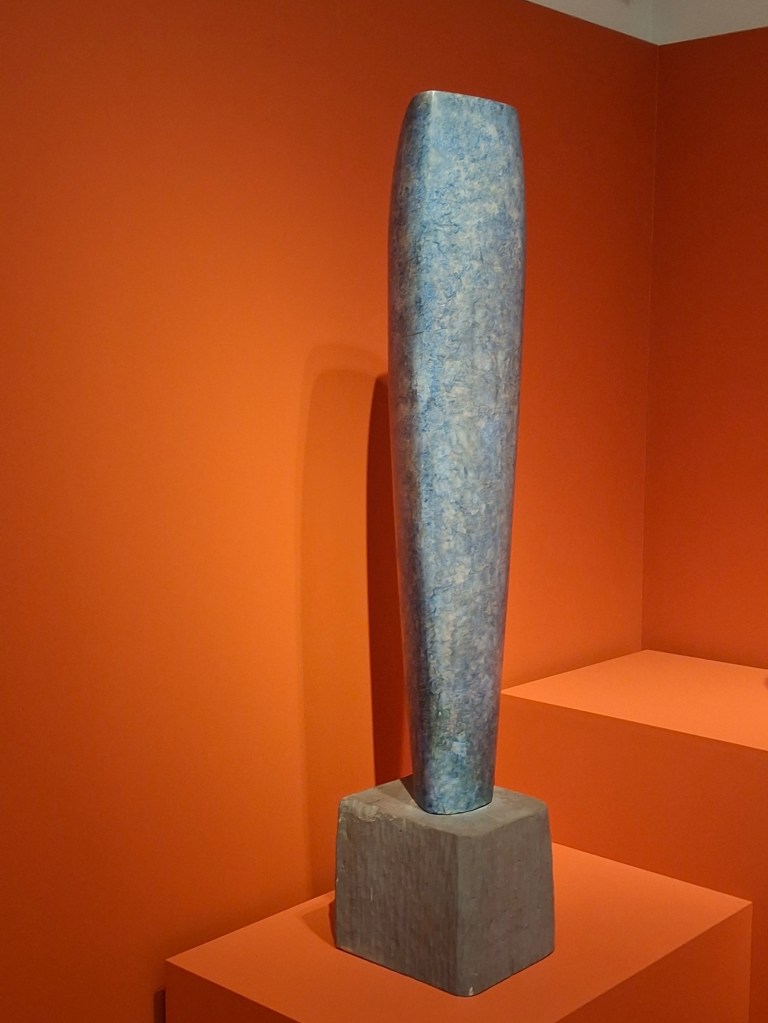
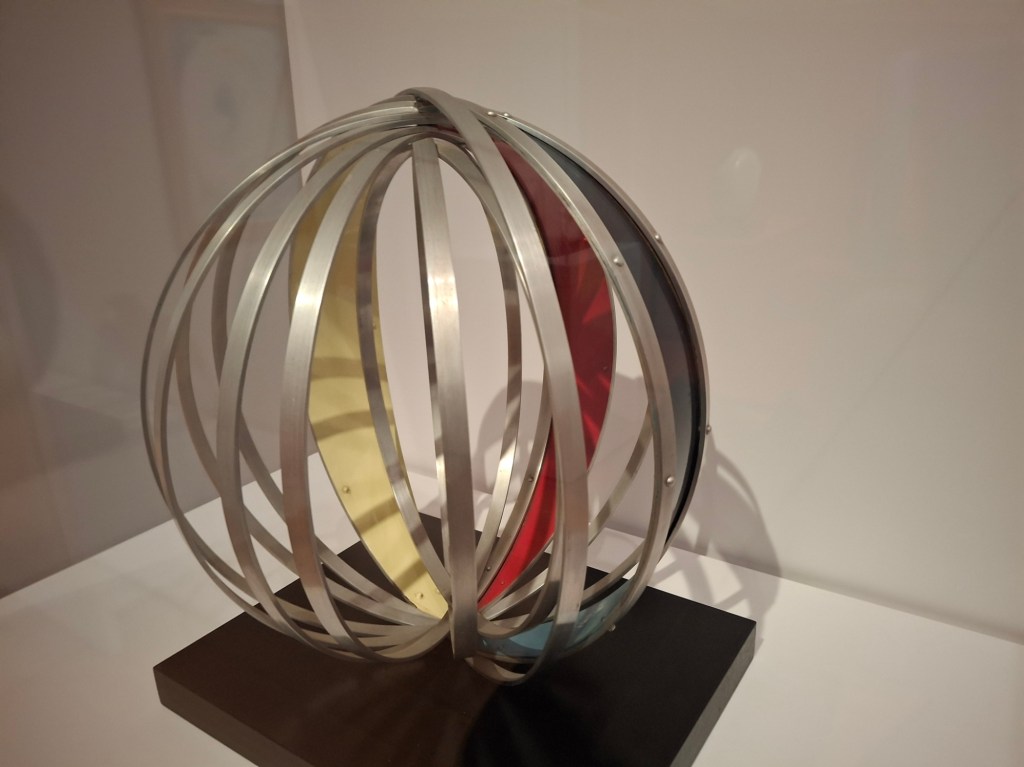
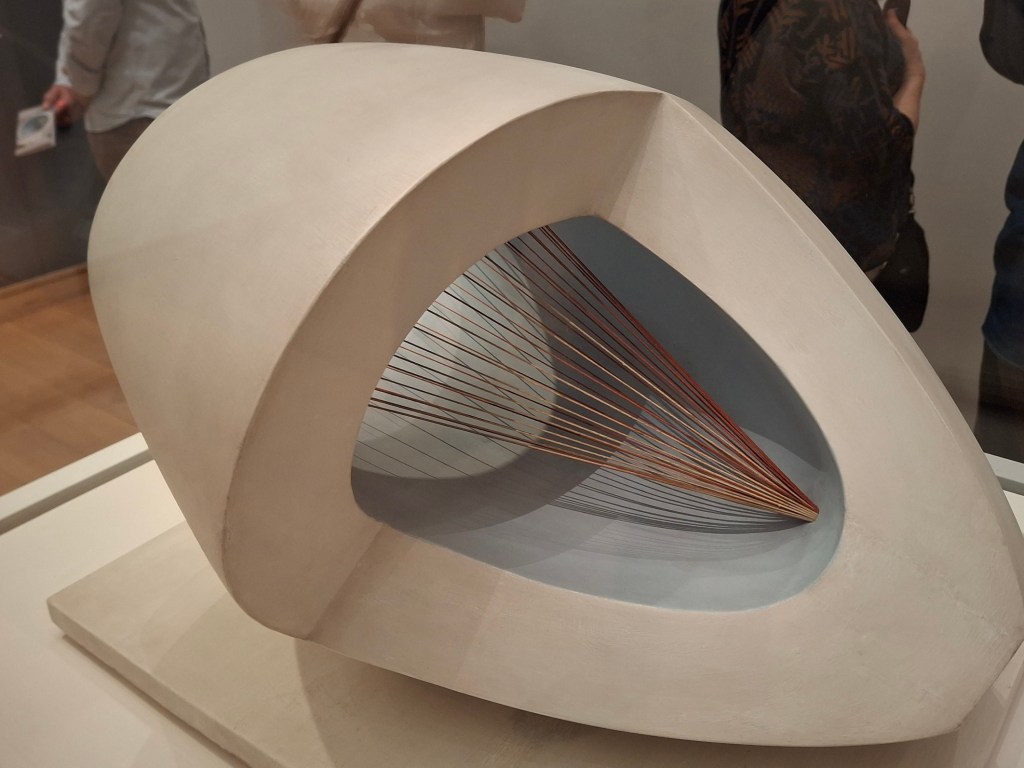
The Courtauld Gallery has an exhibition of Hepworth in Colour. A few years back I had enjoyed a visit to the eponymous gallery in Wakefield. Some of the works displayed in London were on loan from there but, shown in a different contex, took on a new resonance. A number of sculptural works were surrounded by lots of drawings and sketches which I was not familiar with and they gave insights into her approach to colour. In one sphere with panels in yellow, red and black she displayed a surprising side of her as a Watford fan! More common were the pale blues of the sea in Cornwall where she lived most of her life and some elegant painted columns and forms in painted plaster and bronze.
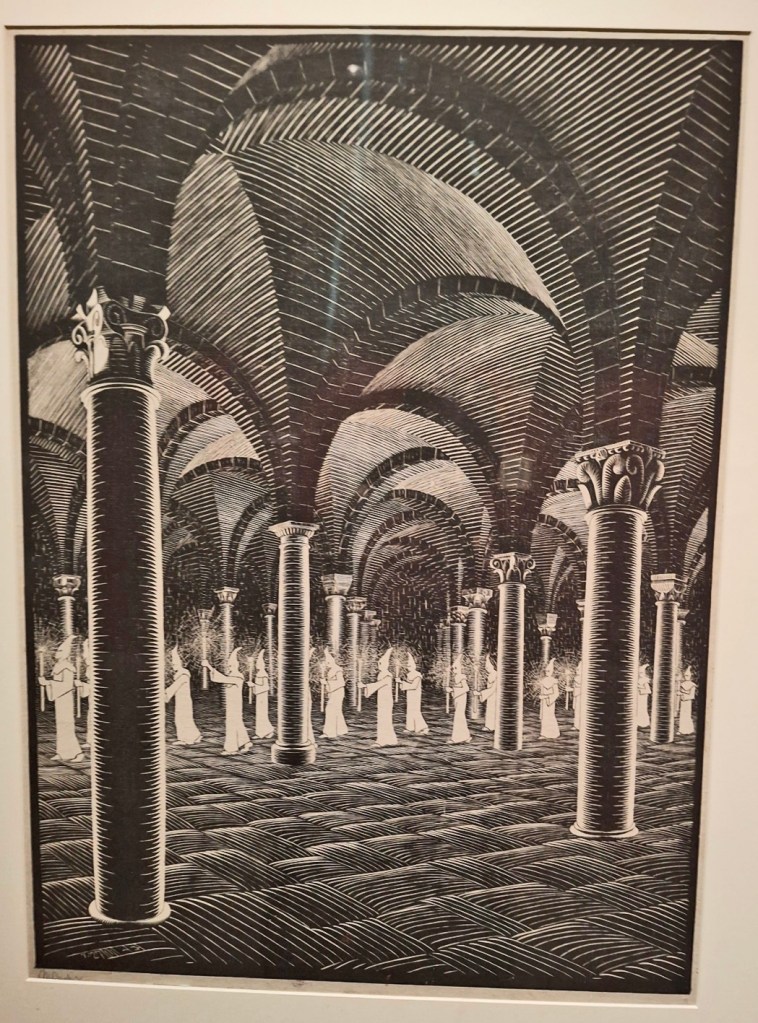
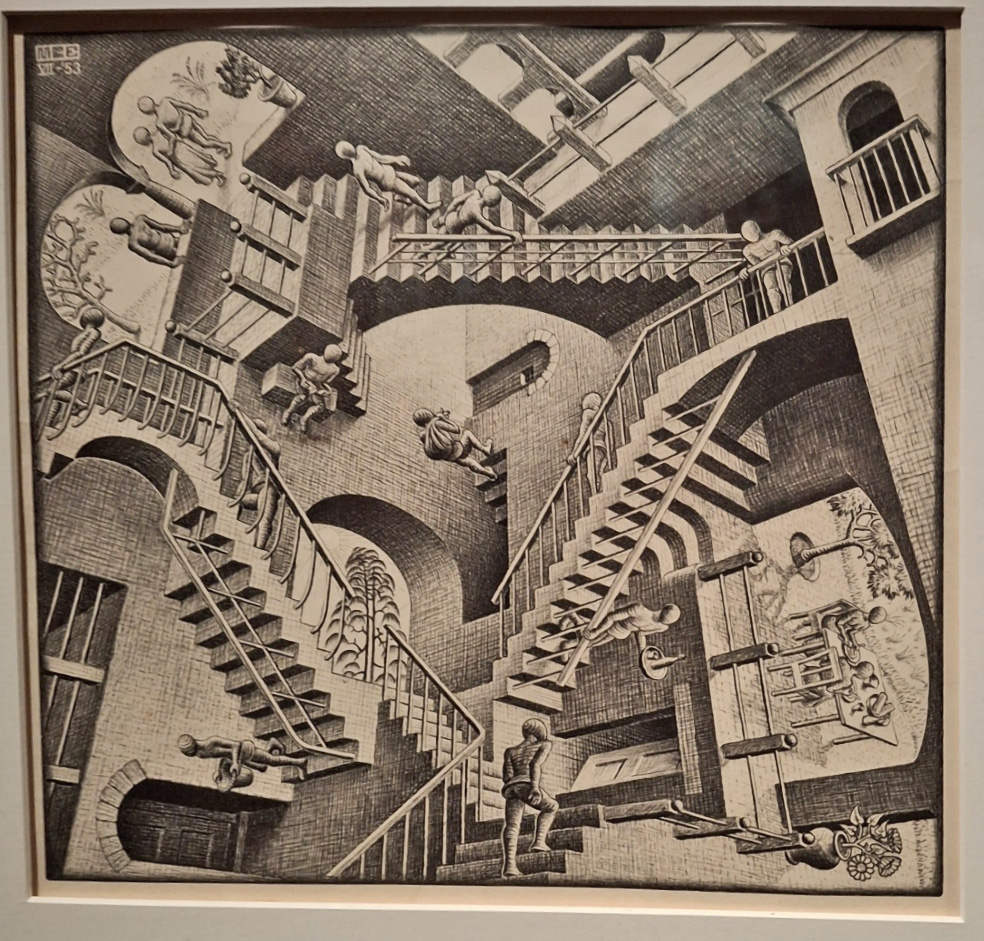
Just across the courtyard of Somerset House is the blockbuster exhibition of M C Escher, the first comprehensive showing of his work in the UK. I thought I’d better go while I was here. And comprehensive it truly is with over 150 works on display alongside artifacts he used to achieve his trademark tessellations, repetitative patterns and the impossible drawings for which he is mostly famed. It’s very interactive with infinity mirror rooms, scale-distorting rooms and spheres which you hold to view yourself in a very different way. I hadn’t realised how much he had been influenced by the patterns in Arabic art he’d seen on a trip to Spain. I was particularly taken by an etching of the Cordoba mosque with its eerie Semana Santa nazareno-hooded figures and it was interesting to see the famous ‘Relativity’ in the original lithograph form and as an animated screen version.
My friend Graham was down from Bradford and we agreed to meet up in the Black Eel in Dalston for a beer and then go to see Quartet in Autumn at the Arcola theatre. This also entailed a short visit to the excellent Five Fingers for a curry on the way to the theatre. I think this was my fourth or fifth visit and the food never disappoints and service is always interesting. Barbara Pym’s novel enjoyed a vogue in the 70s and has now been adapted for the stage by Samantha Harvey whose Orbital won the Booker prize in 2024. As a thirty-something the four bickering, miscommunicating fogeys on the verge of retirement seemed a long way off. Now not so much!
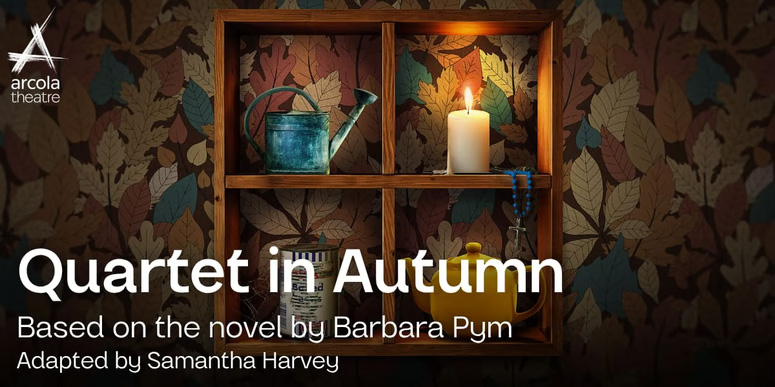
The humour of Pym’s writing has been retained in the adaptation and the characters each have opportunities to explain their lives of disappointment, underachievement and give rein to their hopes and fears. Four actors sitting talking often with their backs to you is not an easy setting to manage but the experience of Dominic Dromgoole as director and of his four excellent actors makes this an evening of entertainment and emotional engagment.

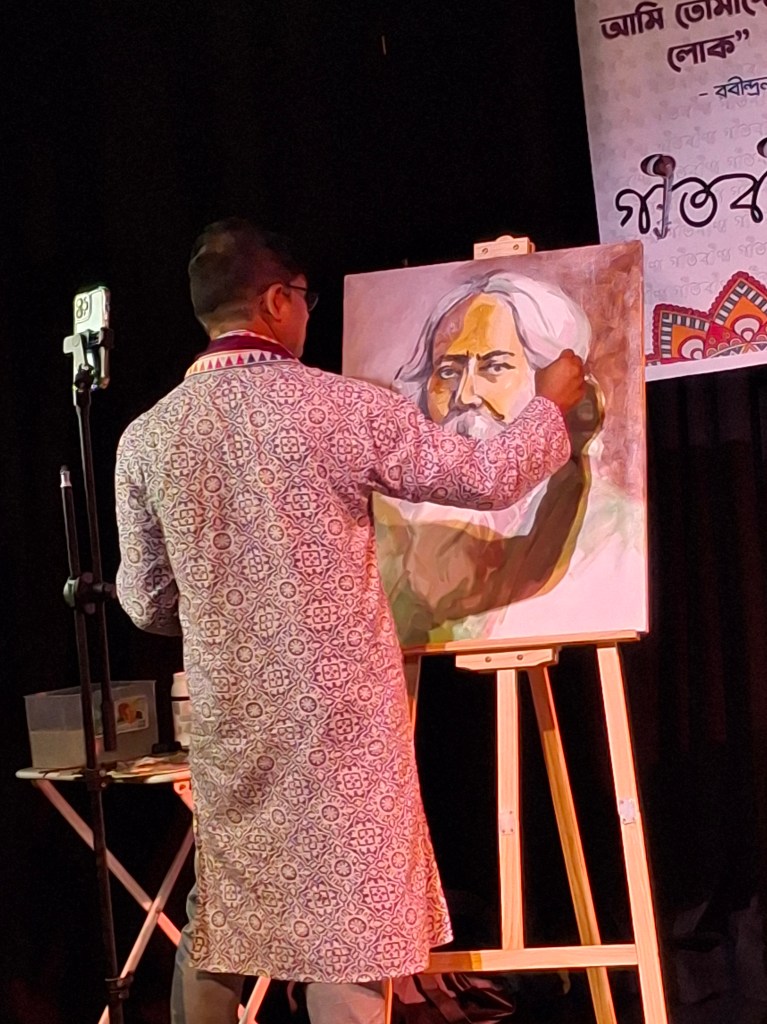
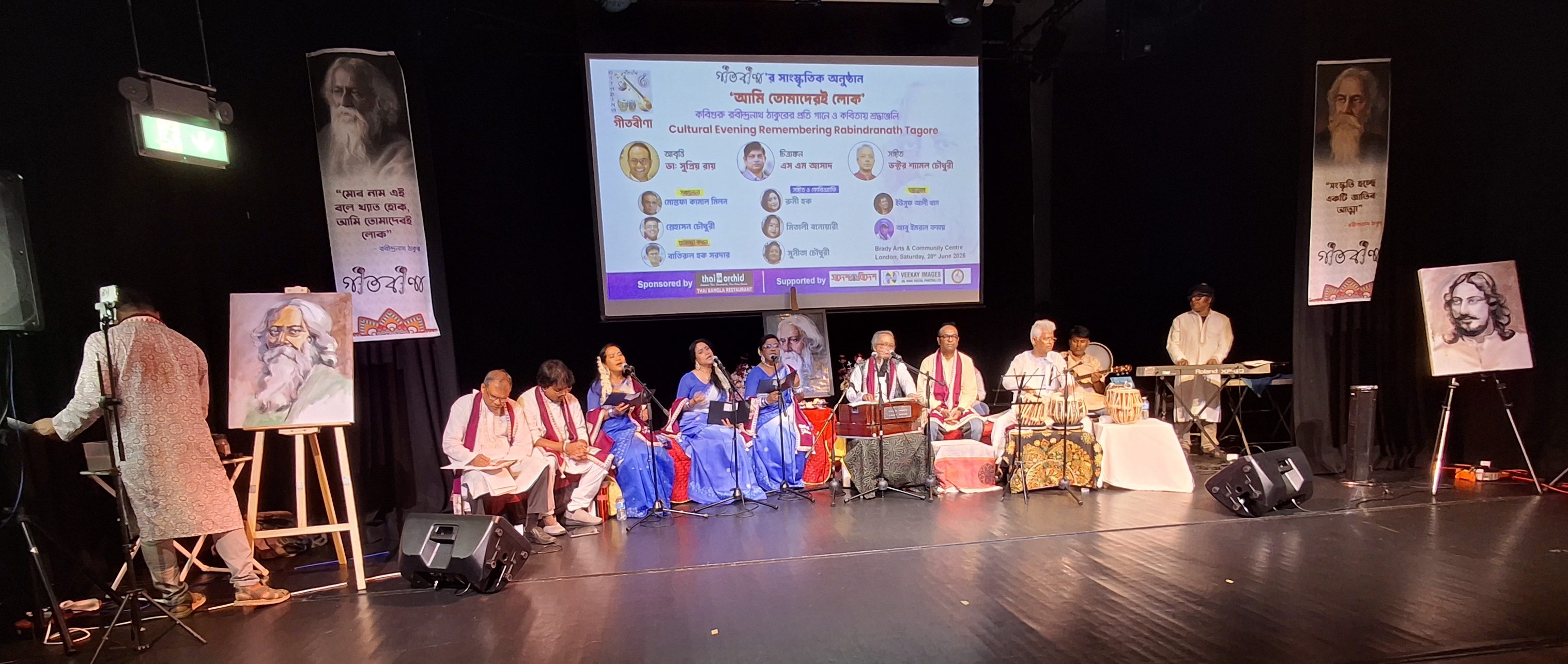
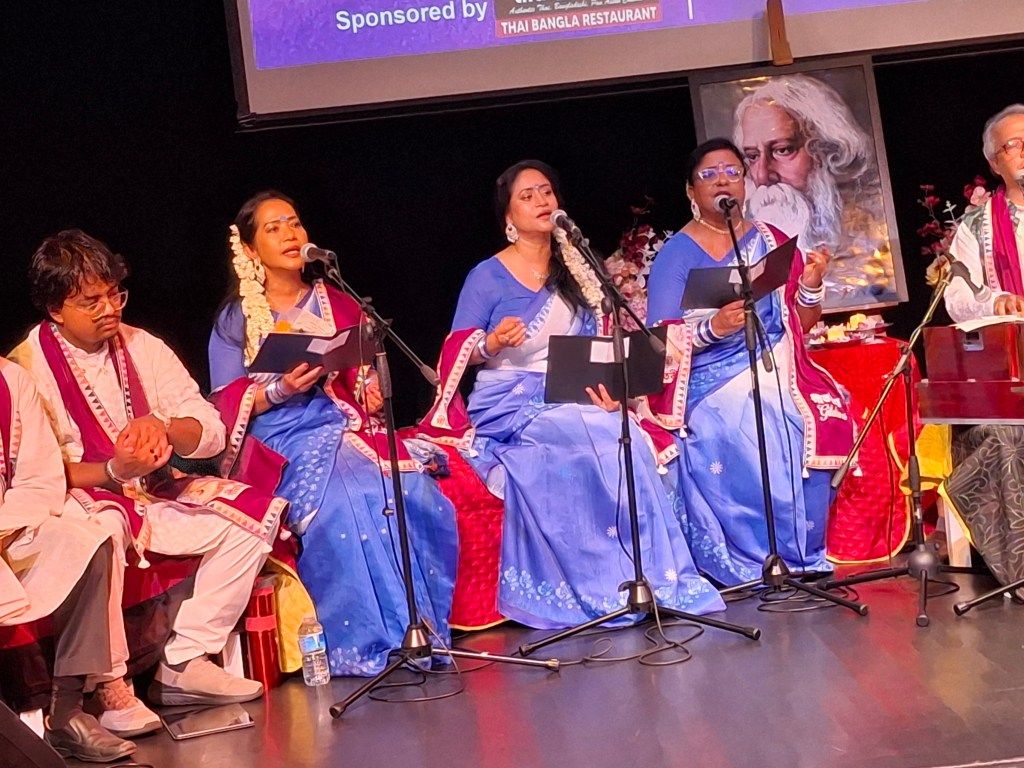
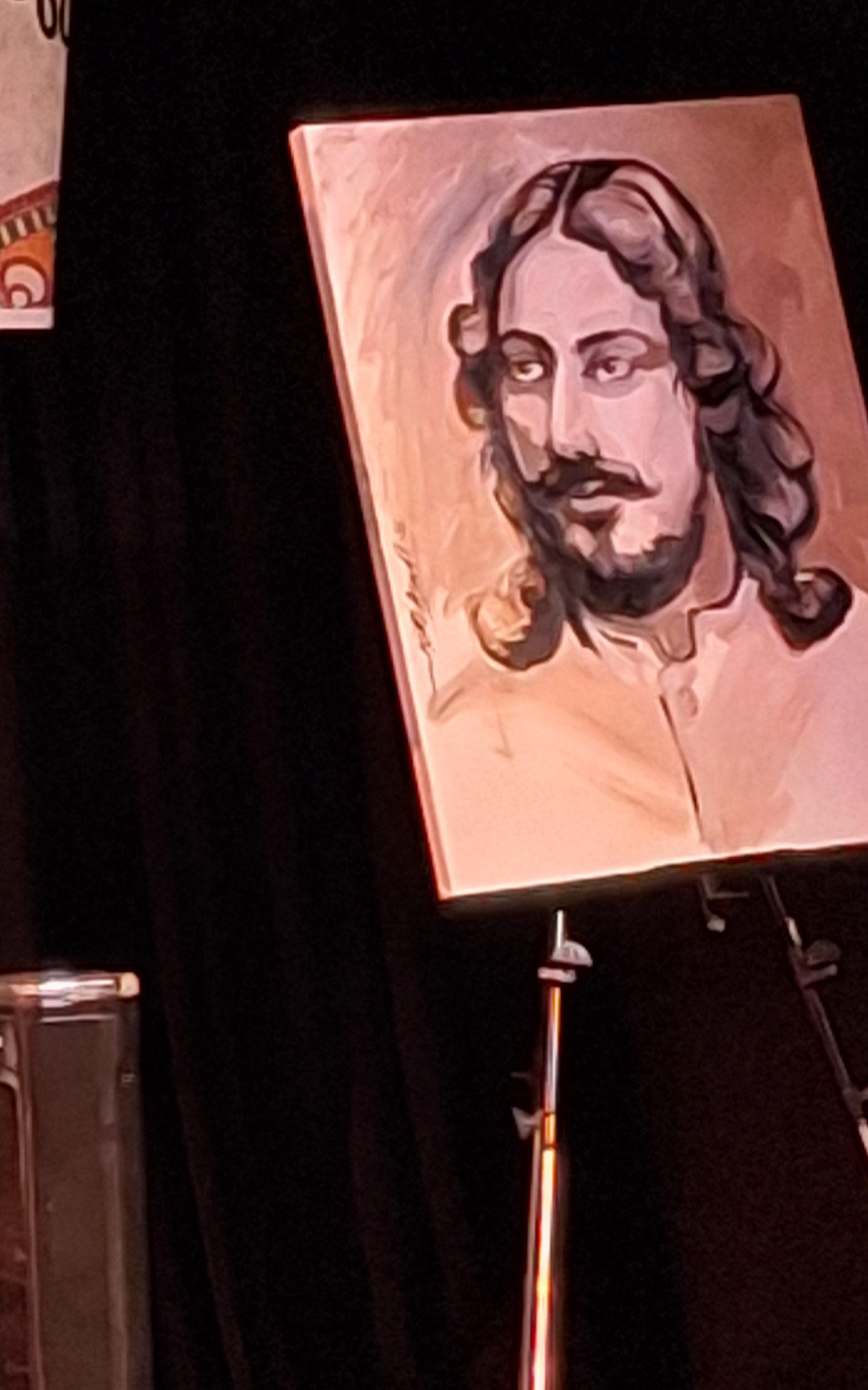
I think I’ve mentioned before Gitabina, the Bengali musical group curated by my friend Rumy Haque. They had a concert in memory of Rabindranath Tagore at the Brady Arts and Community Centre in Whitechapel on Saturday. I went along with my BBPC colleagues Shamim and Samaha and got a brief hero’s welcome as I had just consulted Cricinfo to see that the Tigresses (Bangladesh Women) had soundly defeated Pakistan Women in the T20 Womens World Cup. Given the political history of the two nations this victory was especially sweet. I met several friends and acquaintances and then went into the main hall for the concert which combined singing with recitations of Tagore’s works. Rumy had helpfully provided translations for several of the songs and the readings were delivered so powerfully that detailed understanding was not required to appreciate the content of the core messages. Another interesting facet was the real time painting of portraits of Tagore in his youth and as an elderly statesman. Like being at Sky’s Portrait Artist of the Year with added music. An enjoyable evening out with a difference.
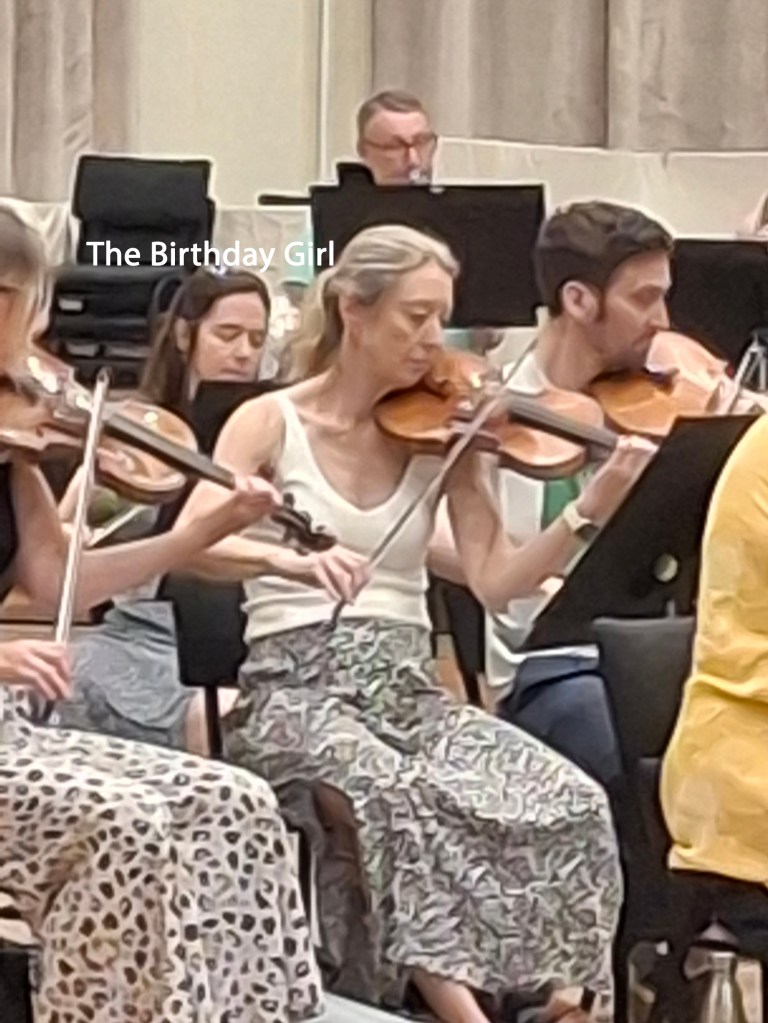
I set off early for the Henry Wood Hall for another OAE rehearsal. It’s hot and when I arrive at Lee Station there’s a train on the platform and a stream of would-be passengers coming towards me. “No trains from Lee for several hours,” says one so I join the downward flow and get a bus to Lewisham and then a train to London Bridge and walk to the hall in good time for a susprise opening. Conductor Maxim Emelyanychev calls the rehearsal to order and the strains of Happy Birthday ring out. This was a special treat for Rebecca Bell a violinist celebrating her’s today. As before, observing the conductor explain his wishes to the band was fascinating. Lots of da, da, dums and jumping in the air for “more emphasis here”. The concert of Brahms, Dvorak and Hadyn tomorrow looks like being another real treat. Just a block from Trinity Church Square is Great Dover Street along which runs the 21 bus with its destination panel saying ‘Lewisham Shopping Centre’ so no hassle with trains on the way back and a short walk to the blessed 273 to get me home relatively unaffected by the 35 degree heatwave which looks set to continue. I was glad of my gamcha from Dhaka – a scarf of quick wicking cotton that keeps the sweatiest Englishman in the world – me – from the ravages of the midday sun.
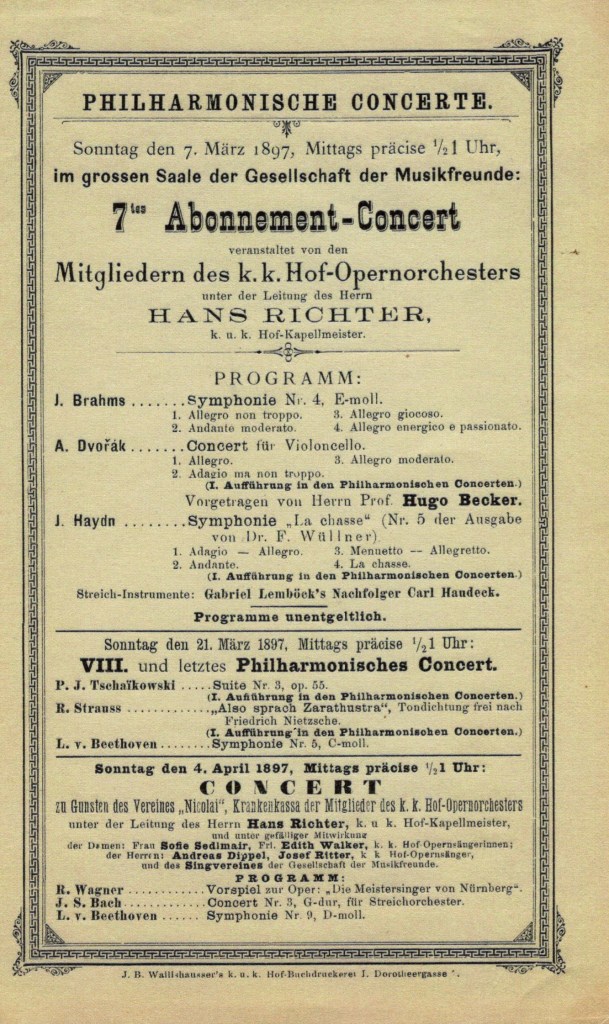
And so to the concert itself. Billed as Brahms’ Last Concert, the programme replicated the concert from 7 March 1897 in Vienna, the last time that Brahms heard his own music performed as he died just a month later. Starting with the massive fourth symphony was completely counter-intuitive to a modern concert going audience – but it worked as it filled the first half of the evening with all the emotions. Joyful dance, slow intensity and a mournful brooding final section with perhaps a hint of hope make this a very emotional ride. In the second half Steven Isserlis played Dvorak’s cello concerto with flair and passion – at the pre-concert talk he said he played the first movement on a record obsessively at the age of ten and still loves it today. It showed. The Haydn symphony gave the evening a lively conclusion with its dance beats and final headlong rush across the fields in pursuit of who knows what. Whatever it is, it gave the work its nickname of The Hunt – the final movement is actually called La Chasse on the manuscript. It was a fitting conclusion to the first half of OAE’s 40th anniversary season which they take up again in October at the Southbank after stints at Glyndbourne and the Proms.

Too busy to blog …

It’s been a long time since I last did this. There’s been a lot going on. Cataract operations and follow ups. British Bilingual Poetry Collective’s first appearance at the Barbican. Football matches. Women’s World Cup cricker. Copy to prepare for Watford Museum and editing for TU Delft. A massive crop of quinces to be cooked and made into jelly, pickles, marmalade and membrillo. But still time for a few theatre and concerts. And while my last post began with a trek west across south London to see my granddaughter play in her band, this one starts with a diagonal trip north to Alexandra Palace to see my son-in-law perform.
It’s 20 years since The Thick of It hit our screens and so why not have a party to celebrate? The creator Armando Ianucci was joined by the stars Peter Capaldi, Rebecca Front and Chris Addison, who at the time was mainly known as a standup comedian rather than an actor. The evening was elegantly hosted by Miles Jupp. There was lots of chat about the provenance (Yes Minister), about the semi-improvisatory nature of the scripts and the fluid filming style. There was a lot of swearing of course and a pre-interval recreation of the Tucker/Reeder sacking scene. It was a very entertaining evening although as a fellow-traveller on the bus back to Finsbury Park said: “It turned a bit into the Chris Addison show in the second half.” When tasked with this Chris confessed it was PTSD from all those panel shows he used to do.

Next up was another visit to Acland Burghley School for a recital by the Orchestra of the Age of Enlightenment’s new intake to their Rising Stars scheme. Every two years the OAE recruits young singers to serve a kind of apprenticeship with opportunities to appear at their concerts and develop their professional lives. This year’s group seemed pretty well set to me with well-delivered introductions to their Handel arias.

They were left to right Sofia Kirwan-Baez (soprano), Angharad Rowlands (mezzo-soprano), Hugo Brady (tenor) and Peter Edge (baritone).  Chosen from over 100 singers who applied they were accompanied by a chamber group of OAE players conducted from the harpsichord by Steven Devine. It’s really encouraging to see so much young talent embarking on their chosen careers.

The last Sunday of every other month finds me co-hosting a BBPC poetry adda (get together). We read, perform and often translate poetry and have voluble discussions about what we hear. This month we had a performance poet Pip McDonald perform a couple of pieces and then engage in a valuable discussion about the art of performance with many tips for budding performers. It was a friendly and positive occasion, with tea and snacks, as I hope the photos demonstrate.

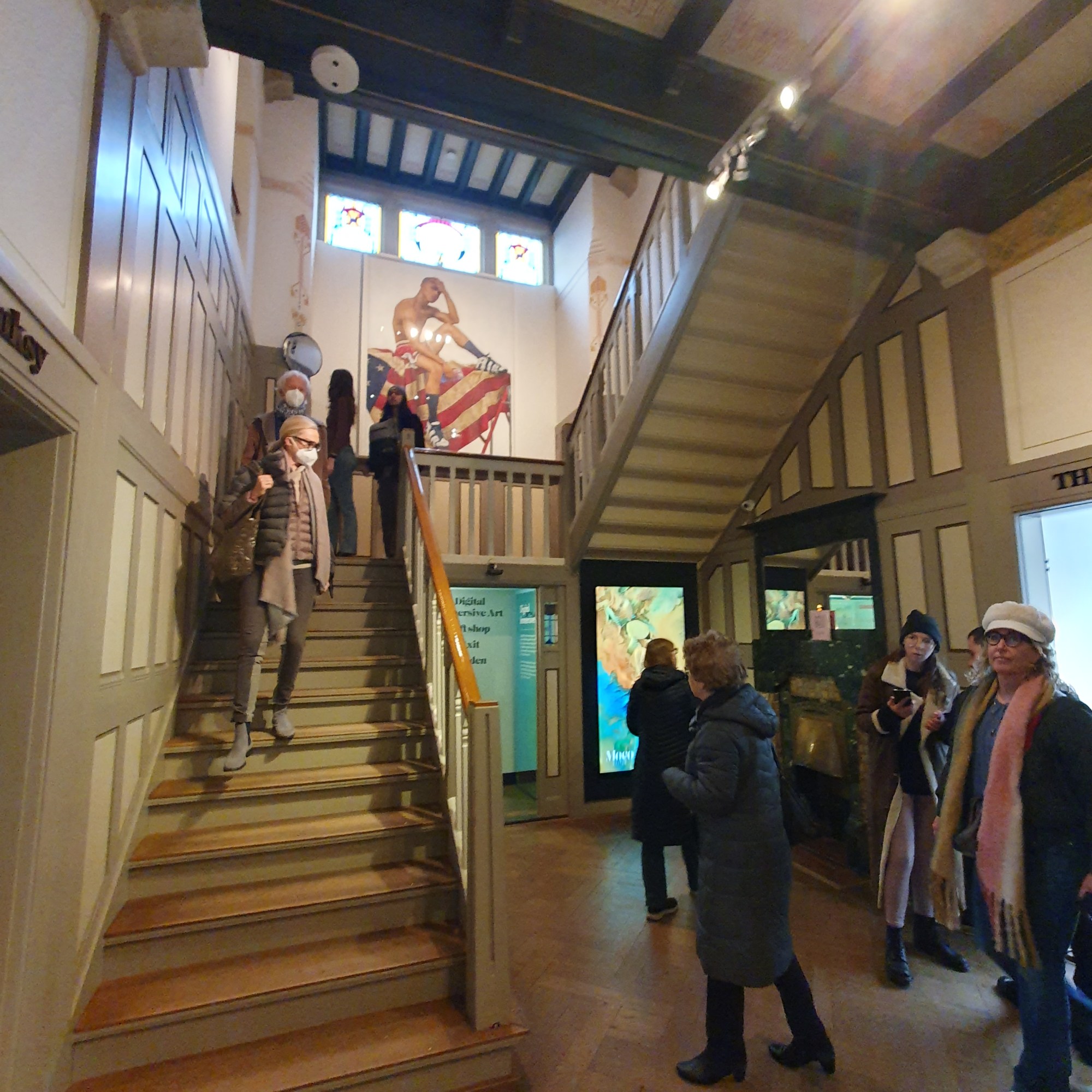
So what’s occurring at Marble Arch? After the horror of that artificial hill, it was a delight to discover that there’s a new MOCO in town. I’ve visited the museums in Barcelona and Amsterdam but had missed out on the fact that MOCO London opened in September last year but had an email with a voucher for half-price entry so off I set. It’s a similar collection of modern and contemporary works with Banksy, Emin, Hirst, Kusama, Opie and Warhol all present and correct but with some excellent pieces that were completely new to me. One of thee first images to confront me was a photo of Elton John by Chris Levine, currently in a dispute with a collaborator over his holographic portraits of the late queen. I was then lured into a fascinating psychedelic infinity mirror room and then to its exact opposite in a contemplative installation Lunar Garden by Daniel Arshan inspired by the classic Japanese Zen gardens I enjoyed so much in Japan. There were a lot of really interesting artworks on display so it will be firmly on my agenda of museum visits as they have changing displays as well as the permanent collection. And it’s a spacious and elegant space over three floors.

I don’t often go to see a play twice in ten days but when Frances and I went to see The Land of the Living at the Dorman Theatre at the National, I said “I should have brought Rosa to this”. So I told her about it and we went together a week later. Rosa is my artist friend, one of whose major installations Lost treats the adoption scandal that took place in Spain between the late 30s and early 90s, known as the Spanish Stolen Children and she is currently working on a similar work featuring the American US Adoption Re-homing scheme. You can check Rosa’s work out at https://artcollaboratif.com. This play by David Lan, who used to be the creative director at the Young Vic, is about the attempt to repatriate children who were stolen from Ukraine and Poland by the Nazis because of their suitability to breed the super Aryan race. It was disturbing, thought-provoking and contained a masterful performance by Juliet Stevenson, an actor I’ve long admired. But there were also moments of humour and theatricality as when the Dorfman’s traverse stage is converted into a swaying train taking children back to their homes.

Both Frances and I have marvelled at the genius of Indhu Rubasingham and her work transforming the Kiln Theatre. Now she’s the artistic director of the National and as someone said after the play she’s spent a year of the Kiln’s budget on her first production as director in the Olivier. Bacchae is losely based on Euripides in a debut play by  Nima Taleghani – a brave commission to open your first season at the nation’s principal theatre. Did it work? Hell yes! Rambunctious rapping, rhyming, big revolves, flying and dancing brought the contrast between the lifestyles and philosophies of Dionysus and Pentheus sharply into focus and the ever-present chorus of bacchantes led by Clare Perkins kept the whole spectacle flowing through mood swings and emotional turmoil. Ukweli Roach, James McArdle and Sharon Small shared the lead roles. There were lots of laughs, lots of theatrical in jokes and while it may not be what conventional NT audiences were expecting all the people we spoke to thought it was great fun.

My friend Jadwiga likes lunchtime recitals and has a list of churches and venues where she goes regularly so I was delighted to be able to take her to a lunchtime recital in a venue she hadn’t been to before. Some time ago on a vist to Ramsgate for the launch of Anna Blasiak’s latest book, I met Gabriela Mocan of the Romanian Cultural Institute and had taken my friend Dana to an evening concert there. The upshot is that I’m on their mailing list and was attracted by a recital by a Romanian pianist Kira Frolu in St Bartholomew the Great in Smithfield.

Jadwiga was suitably impressed by this ancient church and we were both enthralled by the young pianist’s performance of an Georges Enescu suite – Mélodie, Mazurk mélancolique and Burlesque from Suite No.3 Op.18 – to keep the Romanian theme running followed by a wonderful performance of one of my favourite pieces Mussorgsky’s Pictures at an Exhibition which is great in Ravel’s orchestration but rather special in the original piano form. It was made all the more poignant as the last movement is called ‘The Heroes’ Gate at Kyiv’.

Once again it was a privilege to experience the wealth of talent emerging from British conservatoires (Royal Academy of Music in Kira’s case) and a tragedy that so many of them will struggle to make a living because governments plural don’t care about the arts. We had a light lunch after the concert and walkedpast St Paul’s Cathedral and then through Postman’s Park with its fascinating plaques to people who died trying to save others’ lives. We then crossed the Millennium Bridge and along the south bank where I peeled off to meet Rosa for an early supper in the Archduke before making my second trip to the Dorman for The Land of the Living. It was interesting to see it from a different viewpoint and its powerful messages rang through again. I’m pleased to say Rosa was impressed too.

The Barbican Centre ran a series of October events under the title Voiced: the Festival for Endangered Languages. My poetry group BBPC was invited to contribute in three sessions. We ran a Translation Circle on Saturday 11 October (top below), our chair Shamim read poems in Sylheti in person on Friday 17 (left below) and in a foyer display through headphones and Eeshita and Anahita produced a polylingual audiovisual poem at the final session on Saturday 18. (Eeshita introduces the poem and the BBPC team celebrates.)

Shamim and I have run a number of translation session together but we usually know several of the people present. Not this time. Because of GPDR the barbican couldn’t even let us know who had signed up. However we did enlist the talent of Anna Blasiak to prepare a poem in Polish and Kashubian (endangered mix of Polish and German used on the north coast) which we then translated as a group which contained speakers of ten different languages. Interesting! However, the organiser got good feedback and we had a good party after the final session.

A change of mood on the Sunday as I moved back into the world of music with the OAE performing their first concert of their 40th anniversary season at the Queen Elizabeth Hall – Handel’s oratorio Solomon. It’s a fine work that includes the ever popular Arrival of the Queen of Sheba. Conducted by John Butt who has a long association with the OAE, it was great to see two of the rising stars from last week in the two choirs with Angharad having a small solo role as the second harlot involved in the famous judgement. The main character of Solomon was sung by one of the first intake of Rising Stars Helen Charlston, Zadok by Hugo Hymas and a Levite by Florian Störtz fellow alumni of the scheme. The three sections of the oratorio are very different in style and emotional impact but it was a pleasure to hear the crisp playing of the orchestra and the beautiful antiphonal choirs raising the roof.

The period was rounded off with visits to the Young Vic and the National again. A couple of weeks’ ago Frances was invited to an insight event in the Young Vic rehearsal room at which we heard from some of the actors and from director Nadia Fall about the forthcoming production of Joe Orton’s Entertaining Mr Sloane. I think I saw the first revival at the Royal Court in 1975 with Beryl Reid and Malcolm Macdowell. It raised a lot of scandalous outrage among certain elements of society and the media.

Tamzin Outhwaite is the central character Kath in this production with Jordan Stephens as Mr Sloane. Poor Joe Orton is best remebered for being murdered by his boyfriend but he actually wrote some very funny plays (Mr Sloane, Loot, What the Butler Saw).

Within the frequent elements of farce are strong messages about unwanted pregnancy, homosexuality, promiscuity, race and class and hints of criminality. Well worth reviving in our once again intolerant times.

Another of the benefits of friendship with Frances was an invite to a talk to staff in the archive and design departments of the NT followed by a matinee performance of Hamlet. This is the second production in Indhu Rubasingham’s first season at the National and was directed by her deputy artistic director Robert Hastie. Hiran Abeysekera plays the prince quite brilliantly with much more humour than usual and a very emotional reading of the role. He’s matched by an outstanding performance from Francesca Mills as Ophelia who skips and dances across the stage enlivening every scene she’s in and casting a shadow over others after her death. It’s brilliantly staged in a palatial ballroom with an amazing mural which we were told in the pre-meet contains portraits of everyone who has played Hamlet at the National.

Last day – more art and a celebration

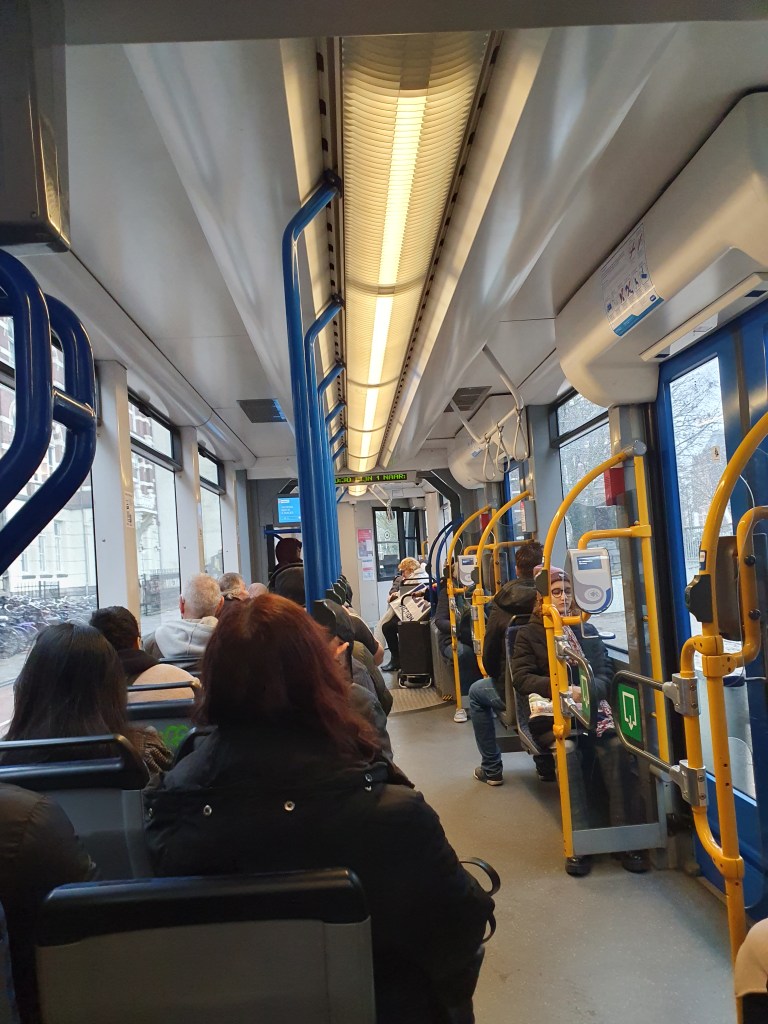
Last day of the trip and we decide to eschew the buffet breakfast at Cafe Moer and take our suitcases for a short walk up Overtoom to the Toasty Cafe we’d walked past on Monday’s exploration. Pink grapefruit juice, coffee and croissant and we’re off to the tram stop heading for Leidseplein – getting the hang of direction of travel and so on by now. The trams are very frequent and easy to use. You can buy a transport card or just touch in and out with a credit card or phone. They look quite small from outside with just two coaches but have Tardis-like interiors.

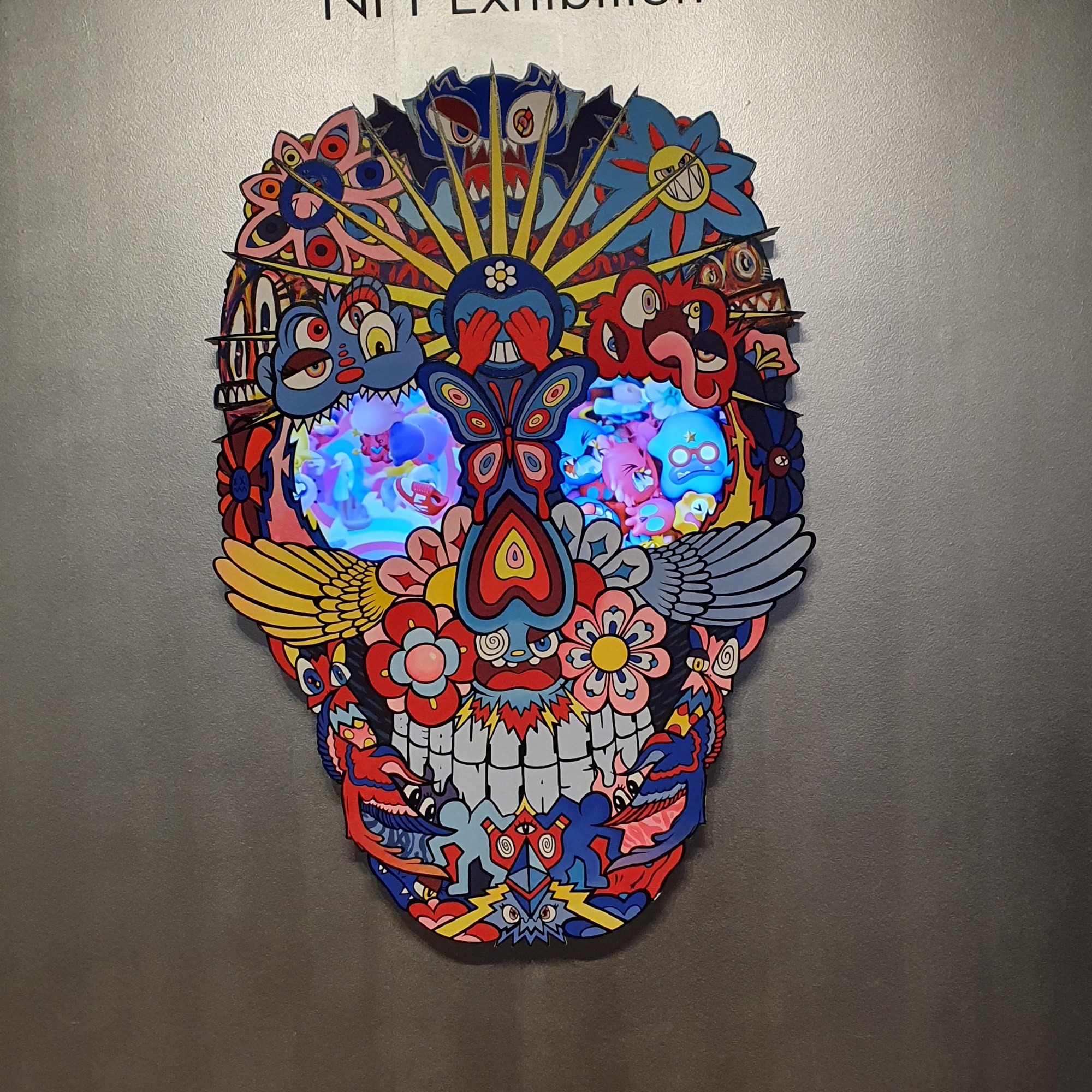
As we walked across Museumplein yesterday, we’d spied a locker storage facility in the Q-Park garage and so our first port of call was here to leave our suitcases knowing we could retrieve them later and get a tram back to Centraal Station from the stop opposite the Concertgebouw. This proved very easy and secure and saved us either trekking back to the hotel or going to the station twice. We had two more museums to tick off before checking in for the return Eurostar jouney at three-thirty. I had been to the Moco in Barcelona at Christmas and so was keen to visit the original in Amsterdam. Their mission is to present modern and contemporary artists in elegant surroundings. In Barcelona the museum occupies the fine old Palacio Cervelló not far from the equally impressive Picasso Museum. In Amsterdam they took over the historic Villa Alsberg next to the Van Gogh Museum. They have a significant number of authenticated Banksy originals and prints, some Yayoi Kusama pumpkins, a couple by Warhol, Basquiat and Keith Haring – and a Damien Hirst. There were also many artworks and video installations which were fascinating to explore. Some left me cold and uncomprehending, others I revelled in. That’s art I guess. One area was devoted to NFTs which despite all attempts I still don’t understand. One artist in the NFT exhibit that really appealed to me was Andres Reisinger whose environmental messages video Arcadia is accompanied by narration and an undulating minimalist music track. It has some phenomenal animation in the visuals and the poetry is very affecting. The room had a mirror wall so seeing ourselves and the video images stretching off into infinity reminded me of walking the great length of Hockney’s Normandy frieze at Saltmills in Bradford a while back. You can see Arcadia on Vimeo and Reisinger, composer RAC and poet Arch Hades talk about making it on YouTube.

Moco museum exterior and stairwell, Banksy’s faceless policemen, Kusama pumpkin, Takashi Murakami X Virgil Abloh sculpture and an animated NFT

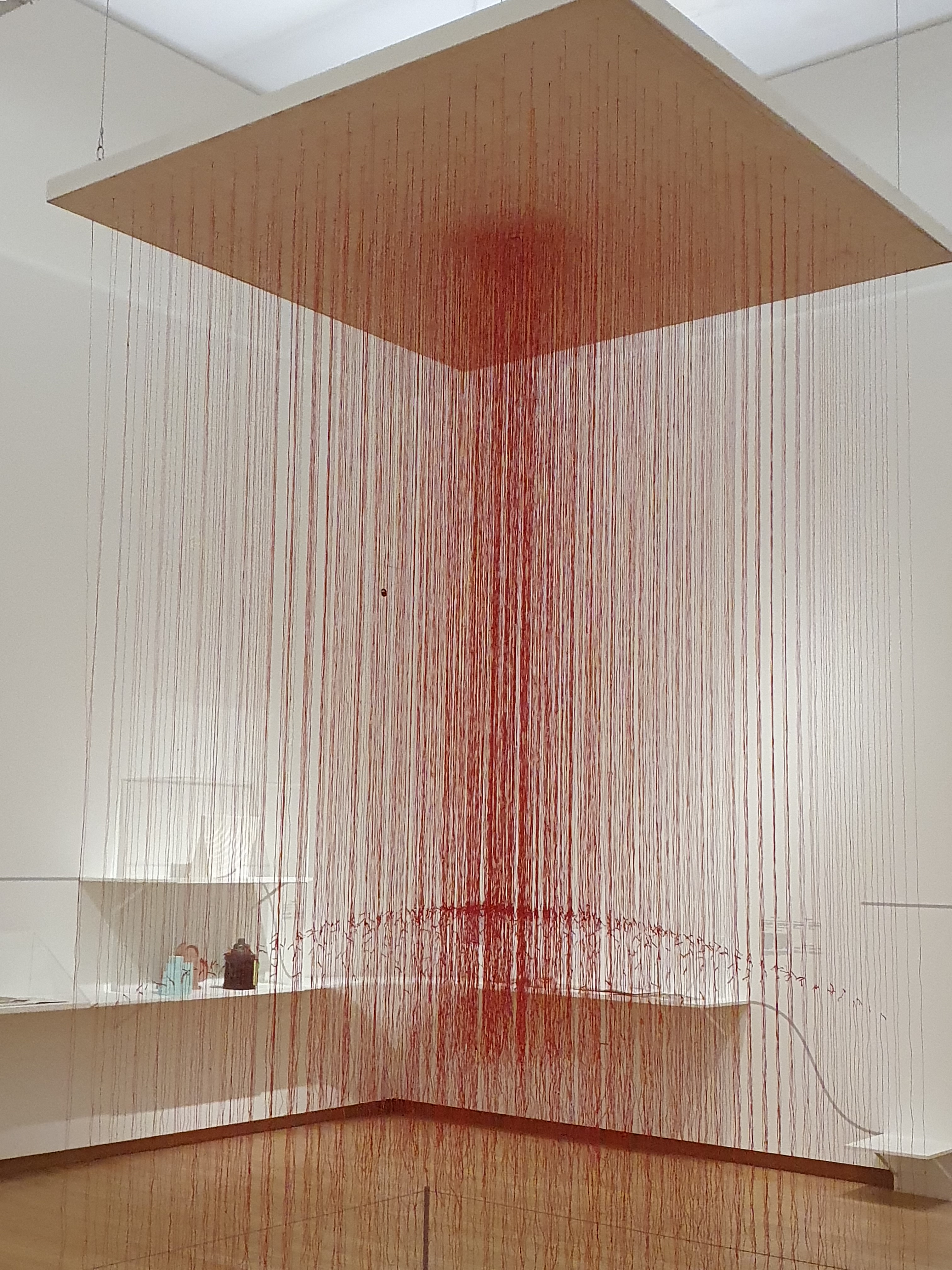
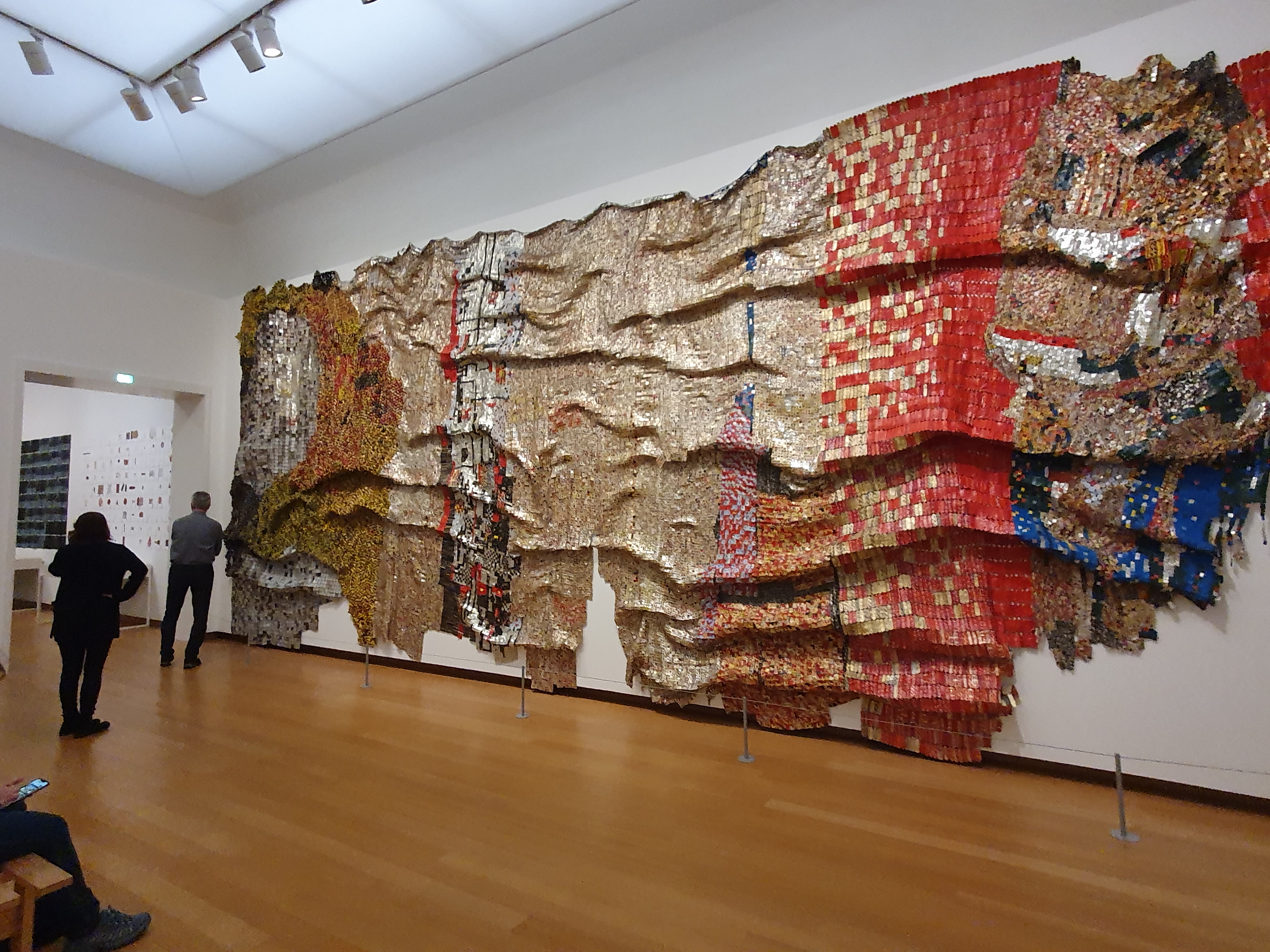
Time for lunch now and we decided to take it in the elegant cafe at the Stedelijk Museum which was to be our last port of call on our cultural marathon. The museum is in someways I suppose the Tate Modern to Tate Britain comparison with the Rijksmuseum. The permanent collection is divided into three sections: up to 1950, 1950-80 and 1980 to the present. It’s striking modern entrance hall conceals a fine Victorian edifice from 1895. I guess we might be having art fatigue but I found it the least interesting of our visits although there were still quite a few objects that caught my eye.

Stedelijk Museum exterior, Vanishing Point cotton sculpture by Lenore Towney, El Anatsui’s In the World But Don’t Know the World made from bottle tops and found objects which reminded me of the huge Miro tapestry with umbrellas I’d seen in Barcelona at Christmas and Paul Citroen’s Escher-like Metropolis.

We set off to collect our luggage with Fran nobly fetching mine as well, as I’d omitted to take photos of the museums as I’d originally thought I wouldn’t be writing a blog about this trip. But we’ve had such a good time I just thought I had to share. We board a tram at Concertgebouw and soon arrive at the main station – another impressive building.

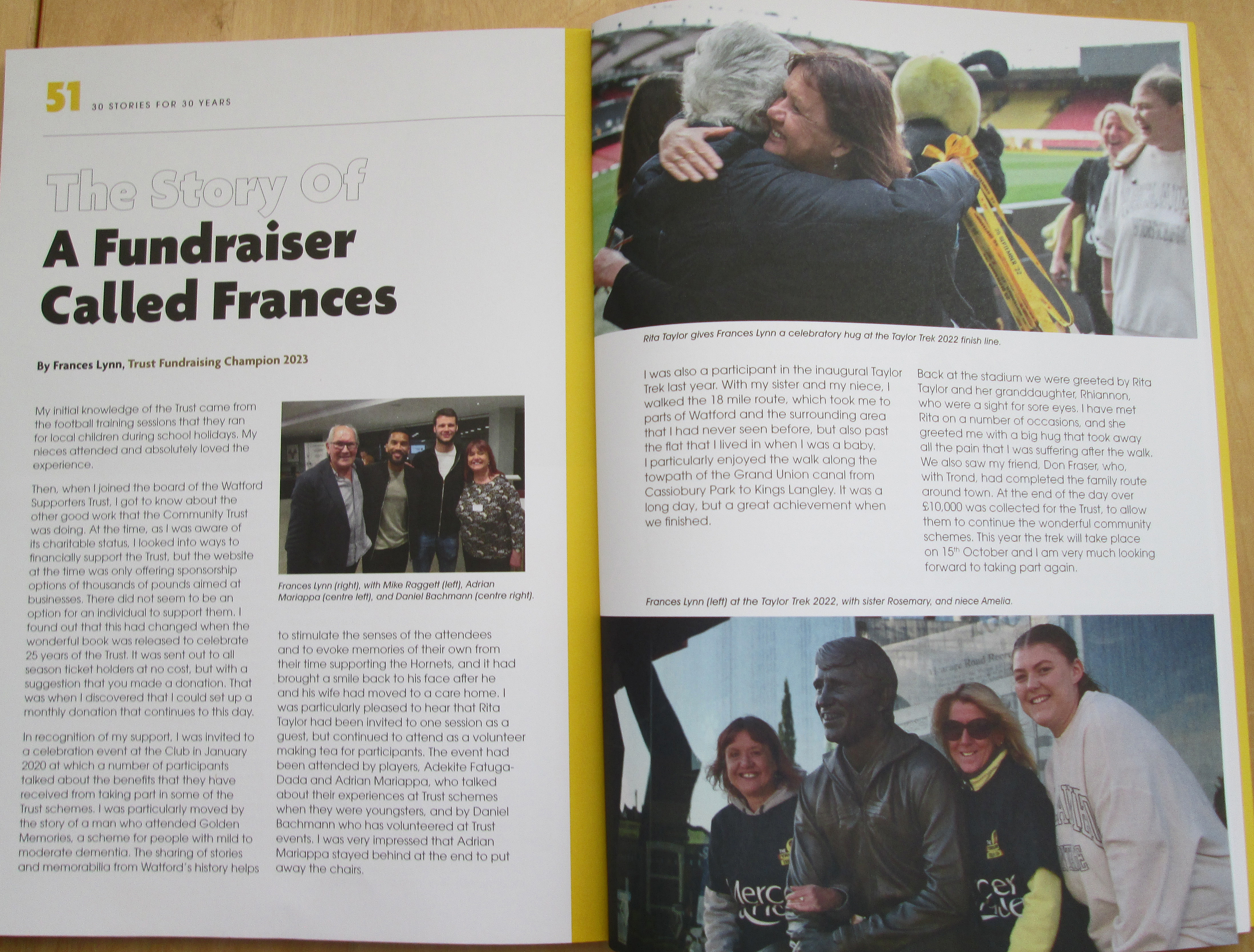
Check in at Amsterdam was less good than in London as we were all cooped up for an hour in a small enclosure on Platform 15 with few seats and no food facilities other than a vending machine. Every visit we’ve made this trip has been followed, almost instantly, with a request for feedback. I am very bored with this constant search for meaningless comment and generally disregard them but I did fill in Eurostar’s with my thoughts about the check in arrangements in Amsterdam. The journey itself was impeccable, so much so that at one point I said to Fran that we must be nearing Lille and she replied that we were already in England. We parted at St Pancras with the words ‘See you tomorrow’ since the reason for our return was to attend Thursday’s Gala Dinner for the Watford Community Sports & Education Trust to celebrate 30 years. Can it really be five years ago that I wrote a book for them? The evening was a total delight with many current and former players present as well as many friends and colleagues. We were presented with a substantial book containing the annual impact review and thirty stories from Trust supporters. Fran and I were delighted to find ourselves on adjacent pages.

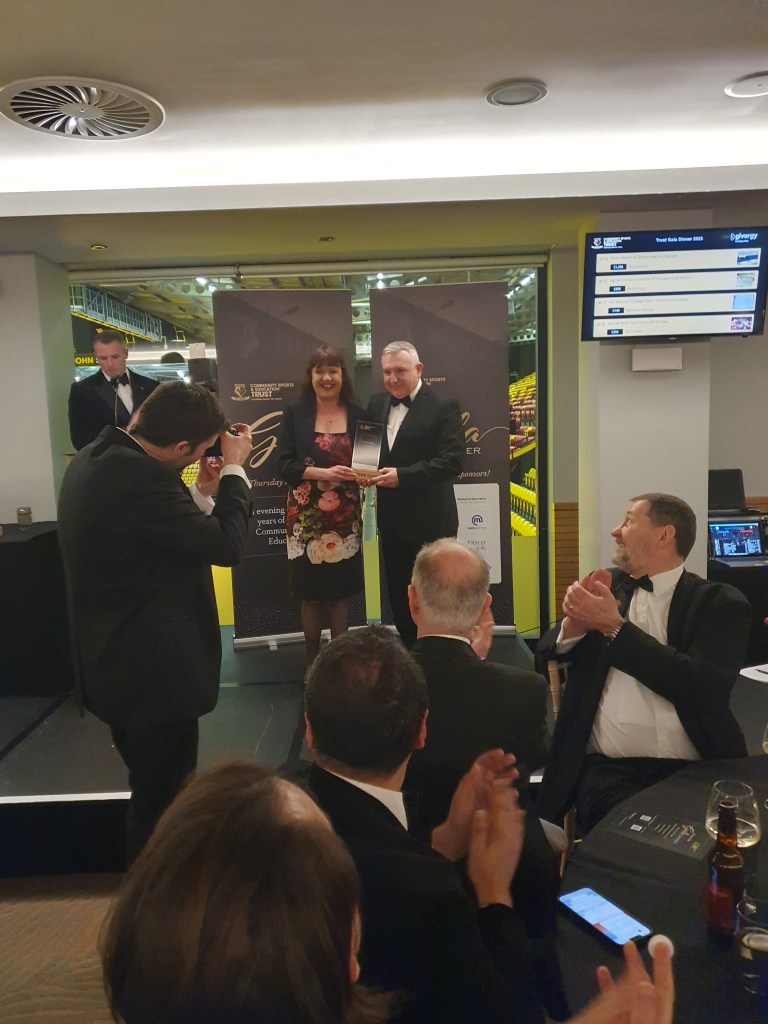
The evening was made even more special when Fran collected an award for being the Trust’s Fundraising Champion. We then stayed partying until far too late but it was a brilliant culmination of a week celebrating all the things we love – art. music, travel, beer and wine, food, friends and football.

Culture magpie

So Friday morning begins with a trip to El Corte Ingles to secure a USB to lightning cable. I don’t think I’ve ever been to Spain without at some point setting foot in the country’s prime department store. It delivered what I needed on the seventh floor – escalators all the way I’m pleased to say. Next on the agenda was to follow the advice given me on Wednesday evening and book a guided tour of the Palau de la Musica Catalana – all sorted for 11:30 tomorrow.

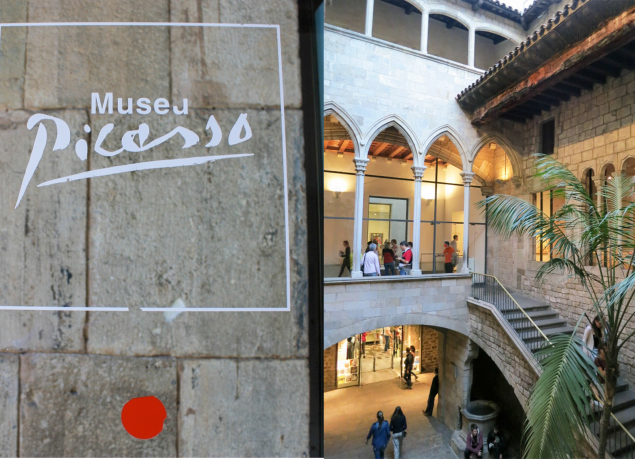
Next stop the Museu Picasso Barcelona – also free with Barca Card but they make you get a paper ticket from the box office as well. I’ve been here a couple of times before and while there’s always a good selection of Picasso’s paintings, prints and ceramics there is a major exhibition as well. This one is devoted to David-Henry Kahnweiler the German born dealer, collector and patron who did much to launch the careers of Picasso, Braque and Juan Gris.

Kahnweiler was quick to spot the movement that would become cubism and established a tiny gallery (four square metres) at the age of 23 where he exhibited early works by the then unknown Picasso, Braque, Leger, van Dongen and Vlaminck. He was friends with all of them and made good sales to kickstart their careers. As a German he had to go into exile in Switzerland during the First World War. He was considered an alien and his entire collection was sold by the French authorities in auctions at the Hotel Drouot. The sale catalogues make for interesting reading and a comprehensive listing of early twentieth century art.

Picasso sketching Kahnweiler, one of the photos in the exhibition.

There were works by many of his protégés and details of weekly soirées at Bourgogne-Billancourt where he entertained artists and potential purchasers. Picasso once wrote, ‘Where would we all be without Kahnweiler’s sense of business?’ I found it all fascinating, so much so that I took no photos – sorry. That is until I came to the huge room devoted to Picasso’s deconstruction of Velazquez’s Las Meninas. He made a series of over 50 paintings in which he analysed and recreated aspects of the famous work. This is my favourite. I love his self-portrait at the bottom right and the dog and the use of many images of his familiar iconography that find no place in the original.

After nearly three hours it’s time for some lunch. Everywhere in this area – the Born – will be expensive as it’s a major tourist attraction. However I find a corner in a popular venue and emerge refreshed. The Messi shirt shows that Argentina’s captain is still much loved in Barca. I was also surprised to find a flight of Japanese kites in an adjacent courtyard.

A few metres along Calle Moncada is a Museum new to me – MOCO. It has a branch in Amsterdam and opened in Barcelona in 2016 and I haven’t been here since before then. It’s devoted to MOdern/COntemporary artworks and features Keith Haring, Julien Opie, Damien Hirst, Dali and Banksy as well as less familiar local names. I did take a few photos here.

As I’m quite a way down in the old part of the city I think it’s time to see the sea – well at least Barcelona harbour. As it’s Christmas time there are lots of tacky amusements on offer spoiling (for curmudgeonly me) a stroll along the waterfront. But there are some highlights. Graphics have always been wacky here since the Olympics, there’s always one seagull that won’t conform and I enjoyed the peace of the sun going down across the harbour looking out to the World Trade Centre where we filmed material for a promotional video for the Direct English franchise several years ago. All of course under the watchful gaze of Cristobal Colon.