The kids are alright …

So I get a glimpse of a possible future as we go to see Care at the Young Vic. It’s a harrowing watch, featuring life in a care home for elderly and dementia-affected people. Alexander Zeldin’s play and his own direction of it pull you right into the care home where the brilliant Joan played by Linda Bassett is convinced her daughter Lynn – Rosie Cavaliero – and her grandson have come to take her home.
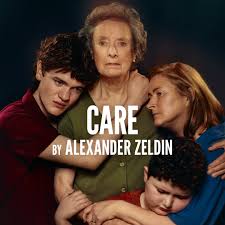
The confusion of dementia, the emptiness of the days, the loneliness while always being surrounded by others are all poignantly present in the script which has a few moments of humour and one of agonising pathos as one resident mistakes another for his late wife and they hug. As characters die off they join us in the auditorium enhancing the sense of our involvement. The final scenes are horrendously powerful and reinforced my support for the Assited Dying Bill – please get it through!

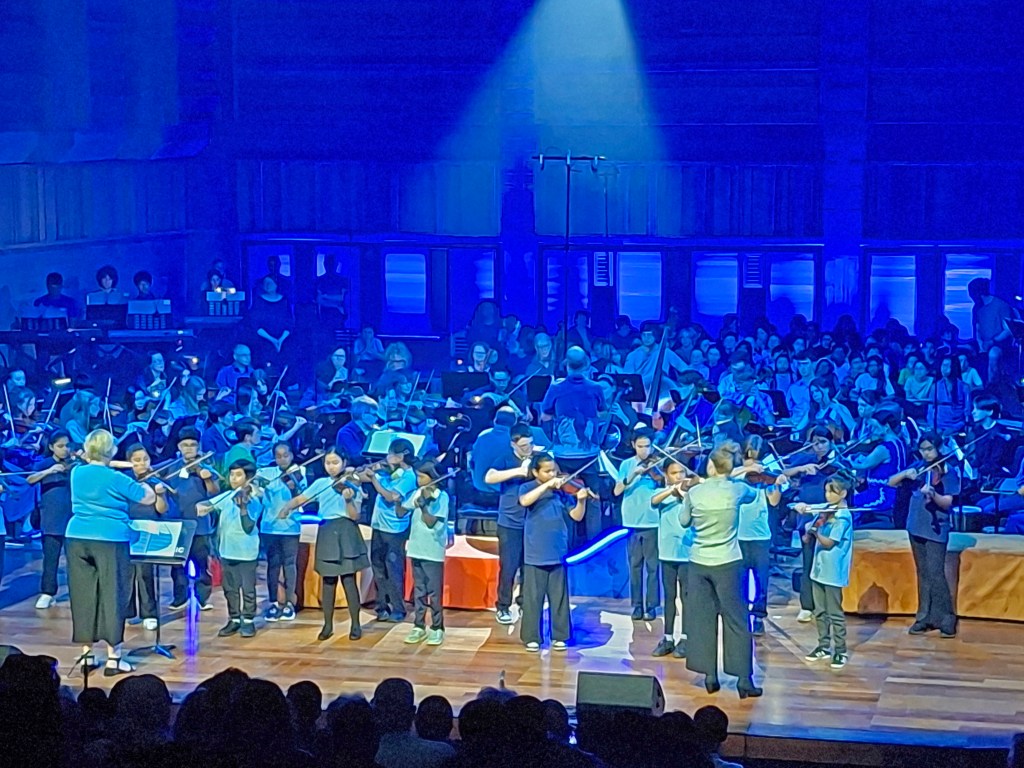
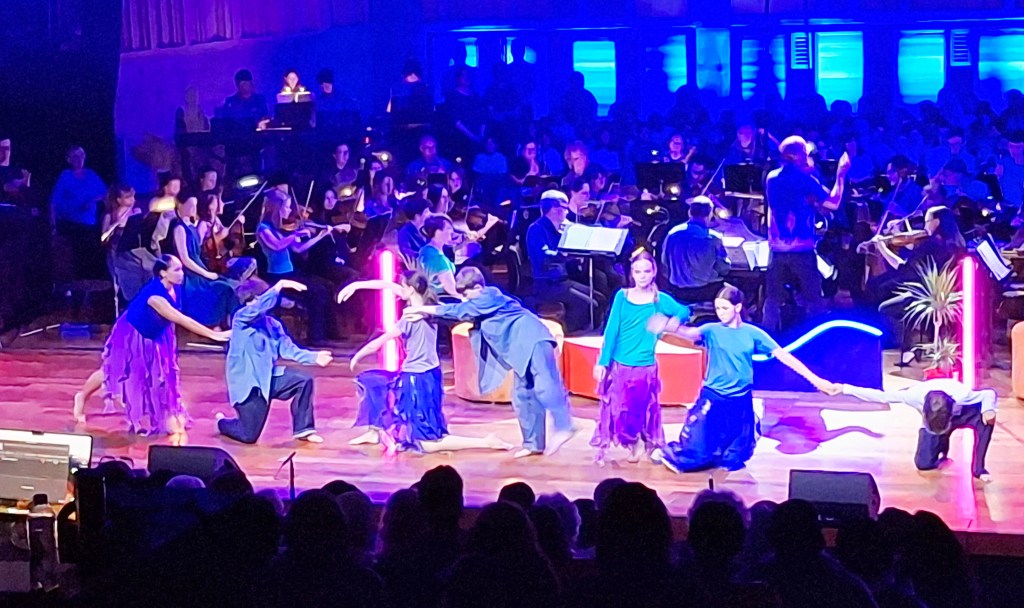
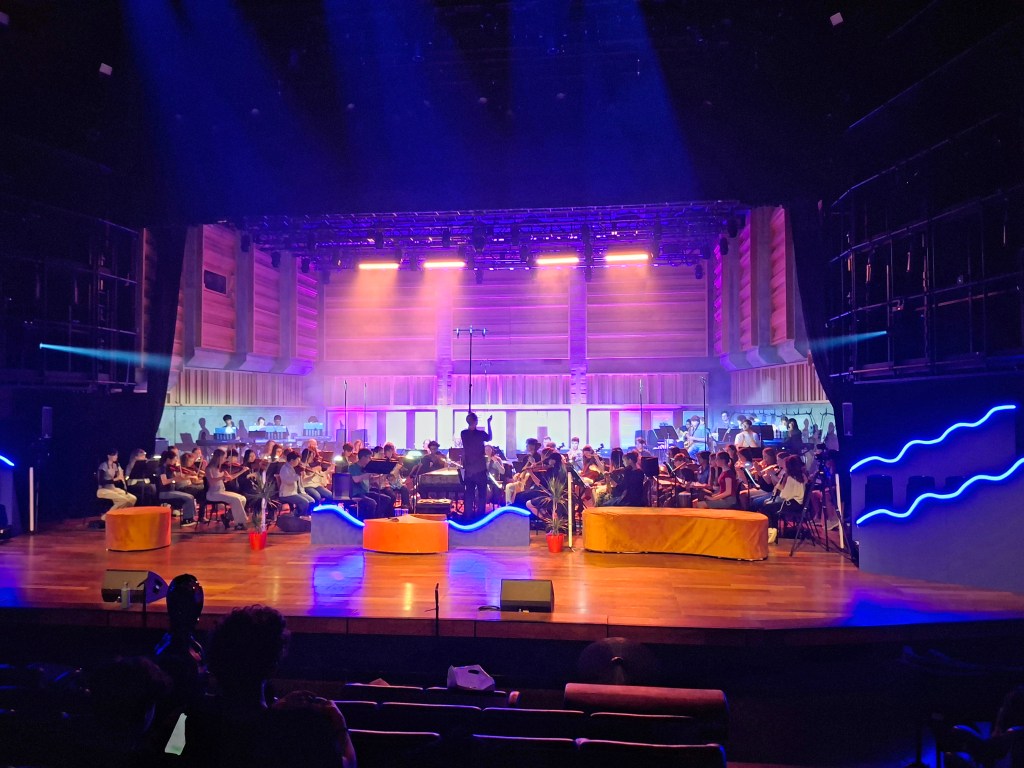
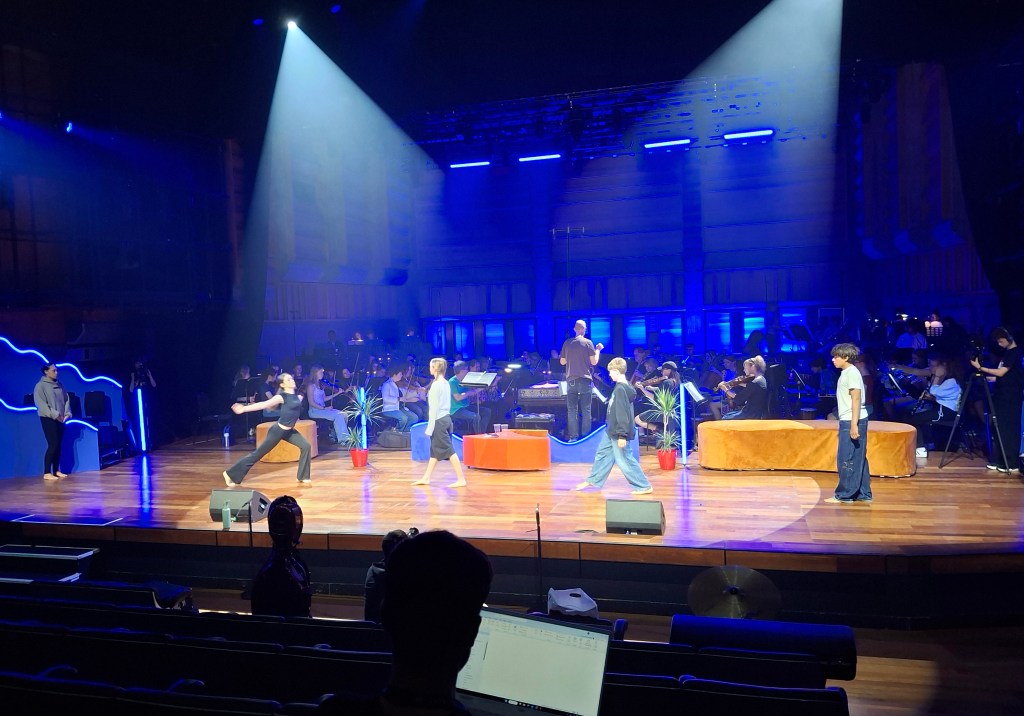
At the other end of the mortal scale, there were some 80 primary school students, 50 secondary students alongside the Orchestra of the Age of Enlightenment for its annual community opera Life of the Sea. I was invited as a friend to attend the rehearsal and had also booked for the show in the evening. Devised by Hazel Gould, it takes the form of a TV chat show with young performers as guests. These include young musicians and dancers, a rock band and string players in various stages of school who form the Fiddlers on the Reef. The final guest is an adventurer who had discovered a new island in the Pacific Ocean. This of course transpires to be the vast area of accumulated plastics which we dump all the time and subtly delivered ecological messages are delivered. Given the maritime theme there was Purcell and Handel mixed with sea shanties and sequences written by James Redwood – a regular collaborator alongside writer Hazel with OAE’s Education Director Cherry Forbes. I’d really like all politicians who support cuts to the arts to be made to come and see shows like this as the depth of talent on show, the confidence-building association with professional actors and musicians and the sheer joy of artictic collaboration need to be appreciated by those holding the purse strings. A big thank you to all the kind people who donated time and money to ensure that activities like this can so enhance young peoples’ lives. With adequate resources and places to gather the kids are alright.
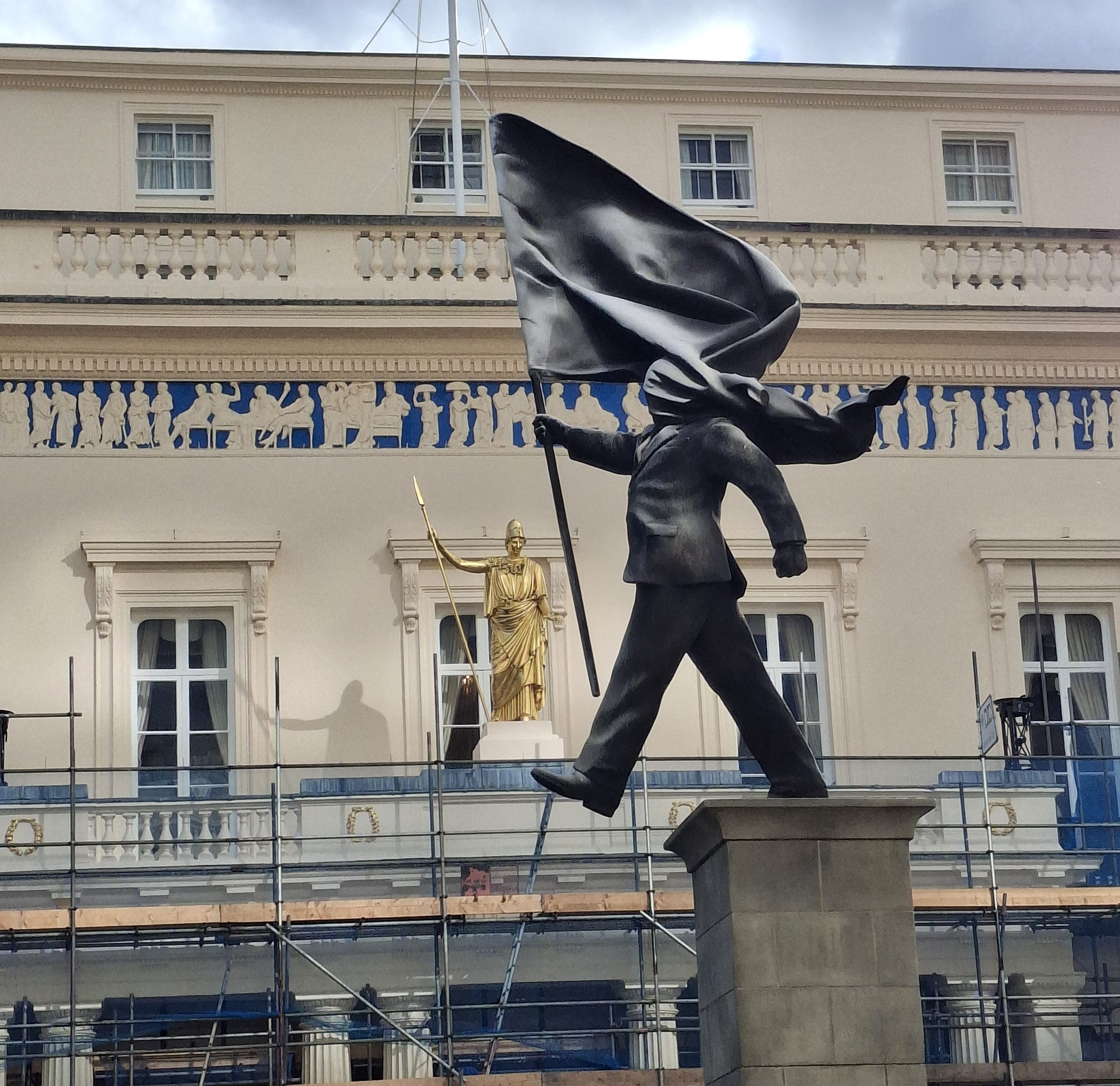
Next up were a couple of dining outings – the City Orns first Thursday meeting was small with just Fran, Richard and me at Fish! in Borough Market. On the way (ish) I popped into Yoshino to pick up my next supply of gyokuro from Lisa and had the opportunity to admire Bansky’s brilliant installation in Waterloo Place. How they did it is miraculous and I like this shot with the gilded statue representing the pinnacle of the establishment on the Atheneum Club in the background – shame they couldn’t clear the scaffolding away for me.
During dinner Richard – Surrey cricket member asked if I’d like to go to see Hampshire – my team – at the Oval on Monday. I said that would be lovely and should we go on afterwards to see Glengarry Glenross at the Old Vic after the match. Tickets booked and a pleasant evening ensued with a nightcap in Brindisa Tapas round the corner. Friday lunch at the Union Club – very non-establishment with friends Dede, Yvonne and Gwyn has been known to go on until rather late. Indeed as we left at six, there was an “Are you still here?” enquiry from reception. We had been enjoying their lovely roof terrace so away from the main areas. This was a very responsible visit for us – we must be getting old.

The Oval visit was a washout – Richard never made it at all and I saw 18 overs of cricket amid the rain delays. The weather ensured that the game ended as a draw which I’ll take as this has not been a great start to Hampshire’s season. I met Richard in the backstage bar at the Old Vic and then we went to see Glengarry Glenross. I had seen a version at the NT in 1983 and at the Playhouse in 2017. I like the play for its rapid fire dialogue among unscrupulous estate agents vying for a prize Cadillac, a set of steak knives or the sack depending on their position on the monthly deal closures board. For this revival director Patrick Marber had chosen to go with an all female cast with Indira Varma and Rosa Salazar as the leads.

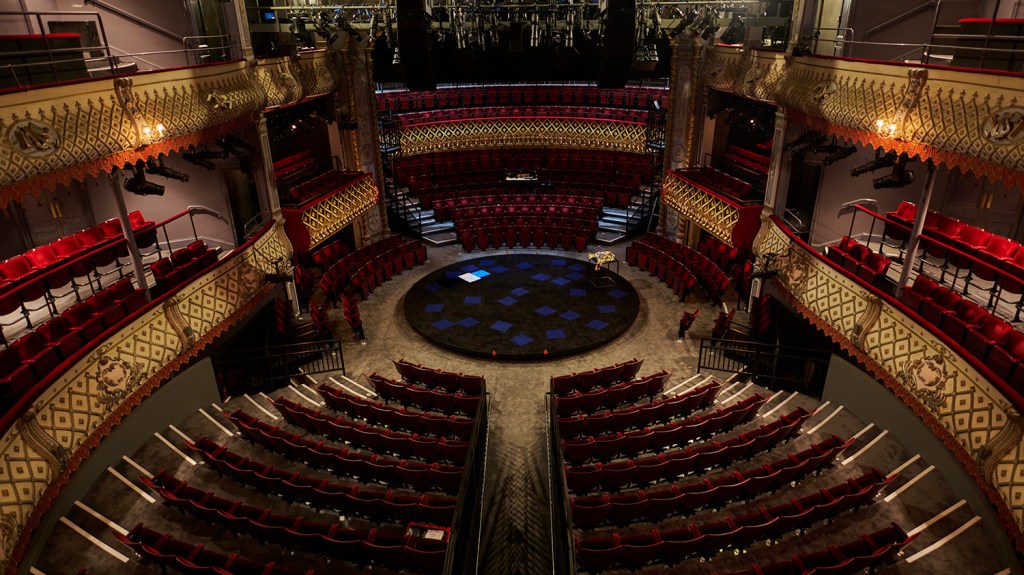
I found it initially odd that they didn’t change the characters’ genders but followed the text to the letter. Soon it didn’t matter as the drama of backstabbing, conning and horsetrading, burglary and deceit just took over as it had before. It was done in the round as is all of this Old Vic season and it worked well in the office scene but the opening in the Chinese restaurant was a bit sketchy with a couple of hanging lanterns suggesting the space. It occasionally got a bit shouty but in all it was another very enjoyable encounter with a very fine play.

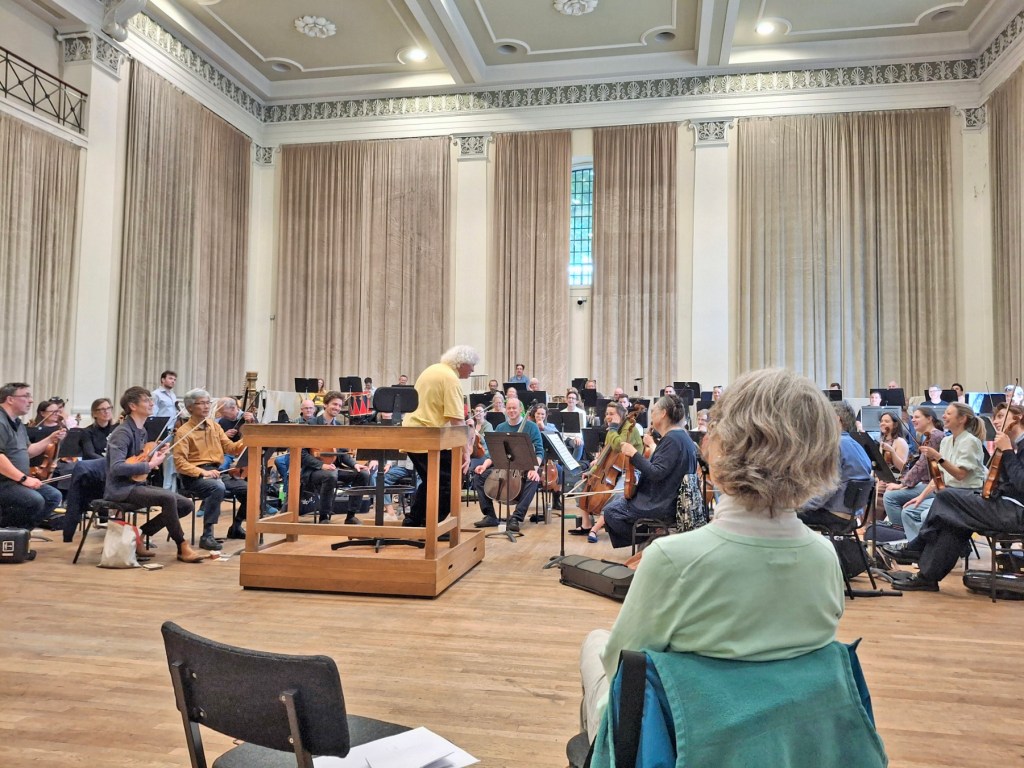
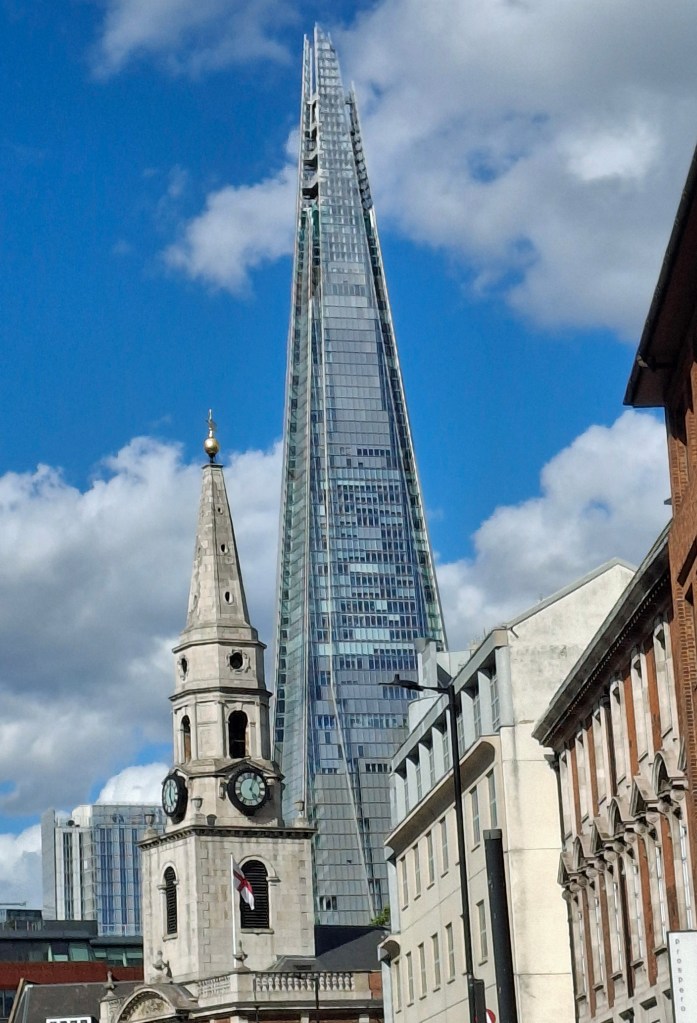
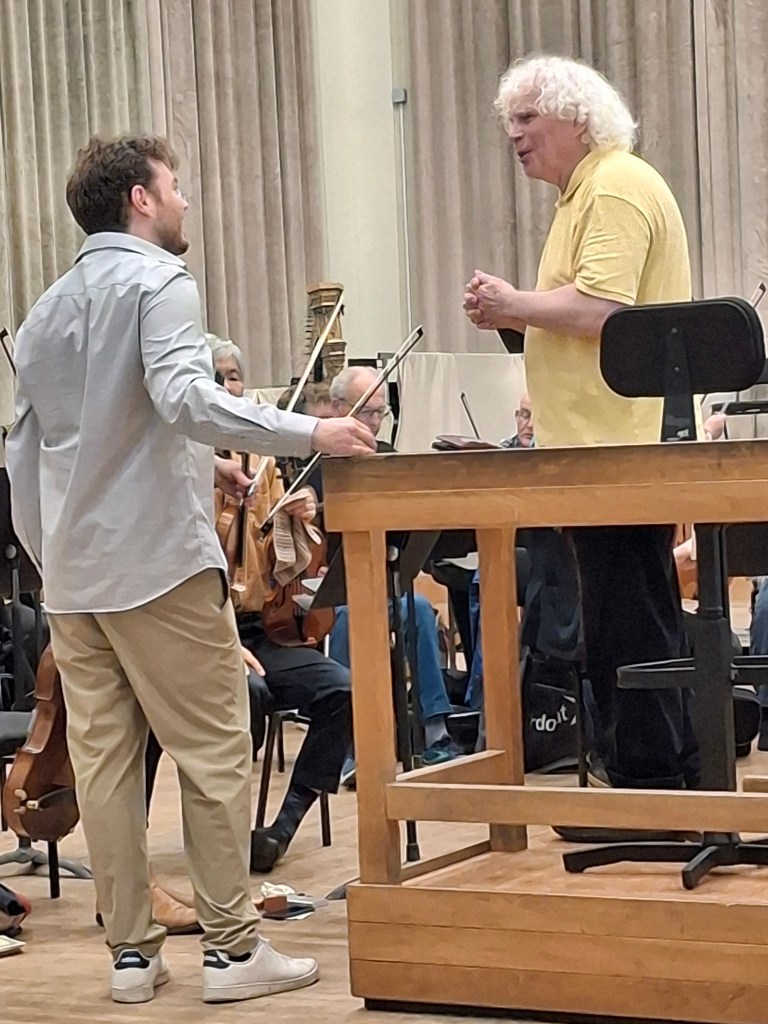
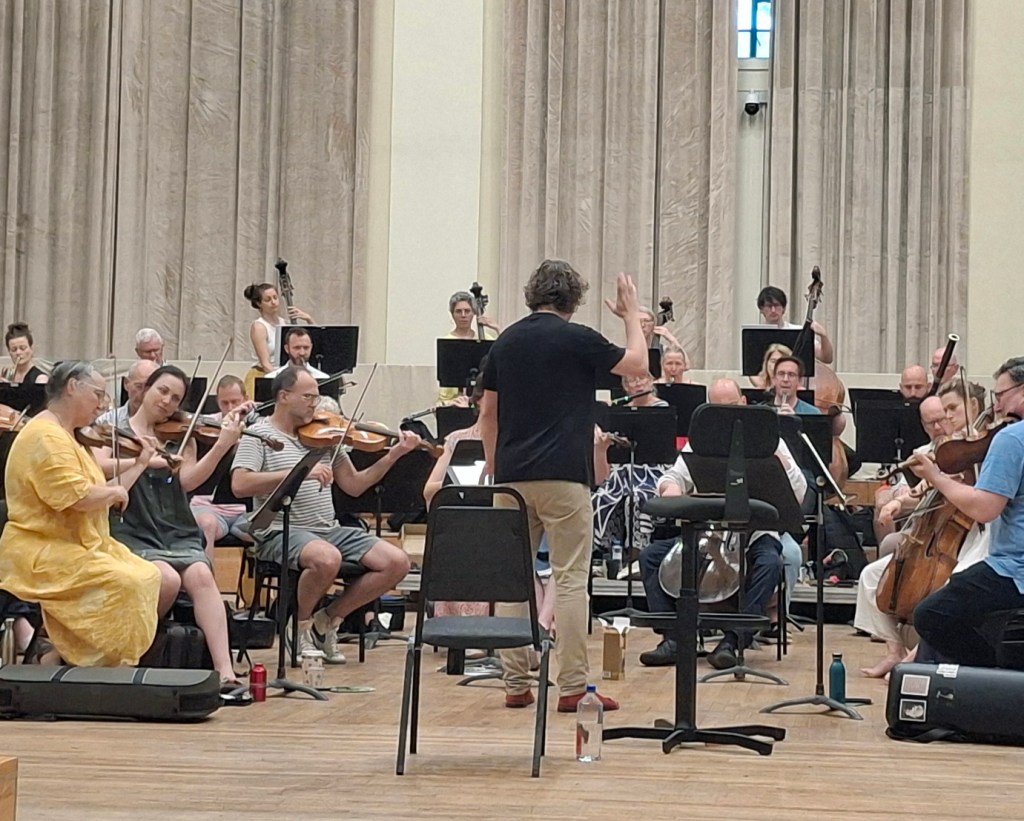
The next day I was at another rehearsal with the OAE – this time a very special one. Sir Simon Rattle had been one of the earliest supporters of the orchestra back in 1986 and when invited back to play in the 40th anniverary season he accepted immediately and elected to play two Berlioz works – the well-known Symphonie Fantastique and the equally brilliant but less performed Harold in Italy. The rehearsal took place in the Henry Wood Hall – previously Trinity Church until the 1960s and now a favourite space for several orchestras on account of its brilliant accoustic. They were working on Harold in Italy while I was there with the viola soloist Timothy Ridout walking around the space visiting various sections of the orchestra as he played the featured viola parts. It was fascinating to hear the interchange between various members and the conductor about stress and pace, intensity and melody. It seems all conductors demonstrate their wishes through dum de dah vocalisation – most mellifluous! On the way back I was struck by the juxtaposition of the spire of Dickens’ church St George the Martyr from 1122 and the Shard from 2012 both fine pieces of architecture gracing the area 900 years apart.
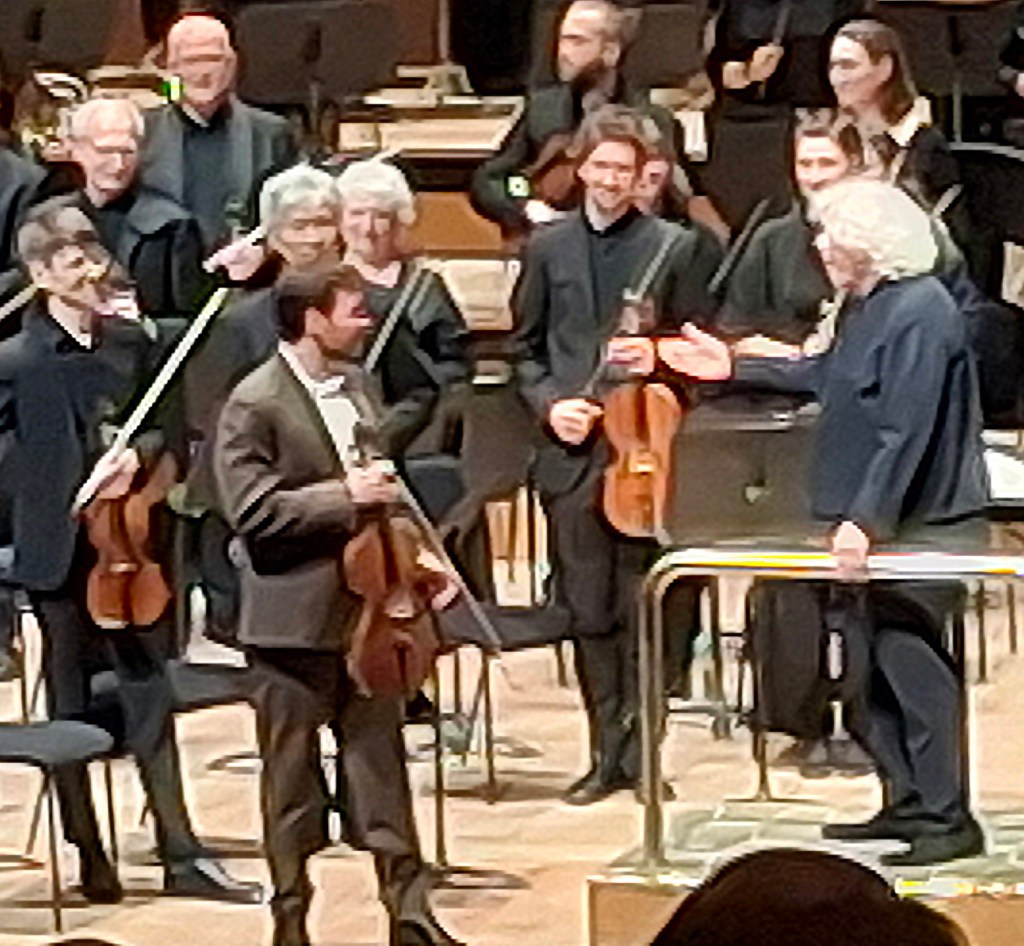
At a pre-concert talk some of the players shared their delight about playing not just ‘historically informed’ but actually on period instruments. For the baroque and classical periods they have to use excellently crafted copies of period instruments since the real ones would have disintegrated. Tonight they were playing on instruments made at the time Berlioz was writing in 1830. Their excitment was palpable.The concert itself was a huge success. In the first part with Harold in Italy Timothy Ridout with his viola approached the stage from the auditorium, as in rehearsal visited most sections of the orchestra and concluded the piece from a box. He gave a sensitive performance with clear tone and wonderful variations to match the mood of Harold’s adventures through the Italian landscape. The Symphonie Fantastique was a revelation with such clarity from the period instruments and varied dynamics in Simon Rattle’s energetic direction. The talk had suggested things to look out for and it did enhance the experience. Brilliant music performed by expert musicians conducted by a genius they are pleased to call a friend of the OAE.
Focusing on events in the Iran-Iraq war of the 1980s Under the shadow at the Almeida is an all too timely reminder of the effects of repressive regimes on women and of life under war conditions. With her husband off at the front, Shideh, played wonderfully by Leila Farzad, is left in her Tehran apartment with her daughter and possibly a malevolent spirit or djinn. Forbidden from continuing her studies to be a doctor because of prior political activism, Shideh is frustrated by her enforced domesticity and becomes increasingly disturbed by physical and psychological damage.
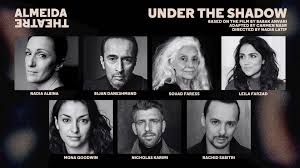
Adapted from  Babak Anvari’s 2016 horror film which I had not seen, it was a thought-provoking evening with some very dramatic effects and some fine performances. Especially affecting were the rush to the air raid shelter where all the cast gather below the front of the stage and discuss their fears. And there’s one amazing coup de theatre which I won’t spoil.

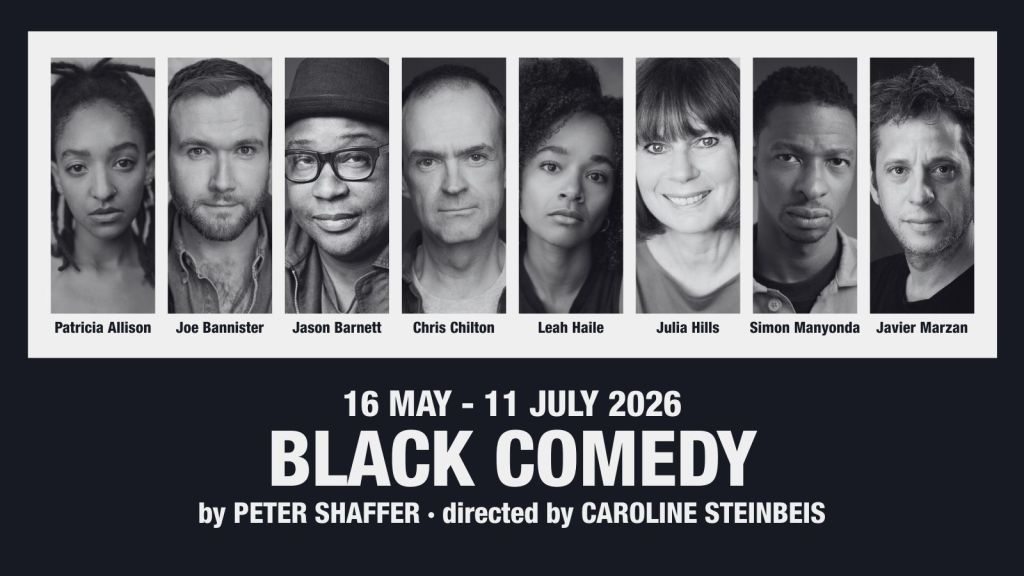
The next outing was of a rather different nature. As a patron of the Orange tree Theatre in Richmond, Frances was invited to a sponsors’ dinner in the neighbouring Italian before a performance of Peter Shaffer’s Black Comedy. The meal was tasty and enlivened with theatre chat from various guests. The play is a hilarious farce. What a contrast to the psychological thriller that was Equus! In a brilliant piece of staging alternate scenes are set in pitch blackness representing times when the room was lit and bright lighting when powercuts had reduced the room to darkness. The actors coped brilliantly with this trope delivering witty lines in the dark and bumping into each other in the light. The central plot of a sculptor ‘borrowing’ a neighbour’s furniture to impress a dealer provided lots of fun and some snappy characterisation.
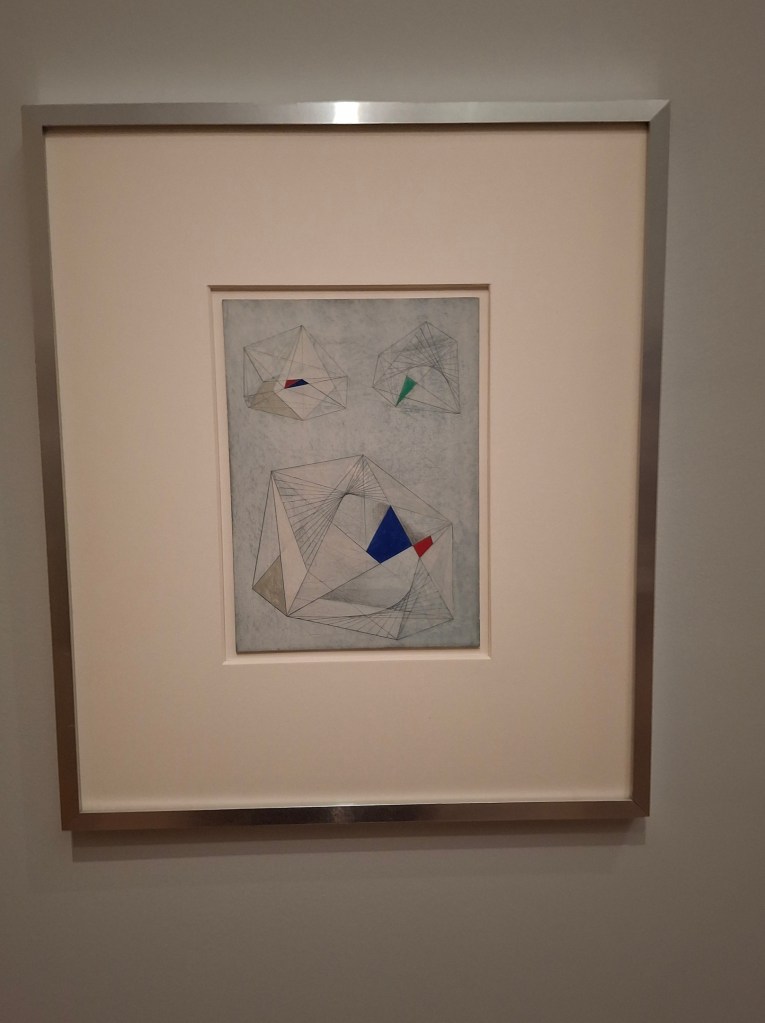
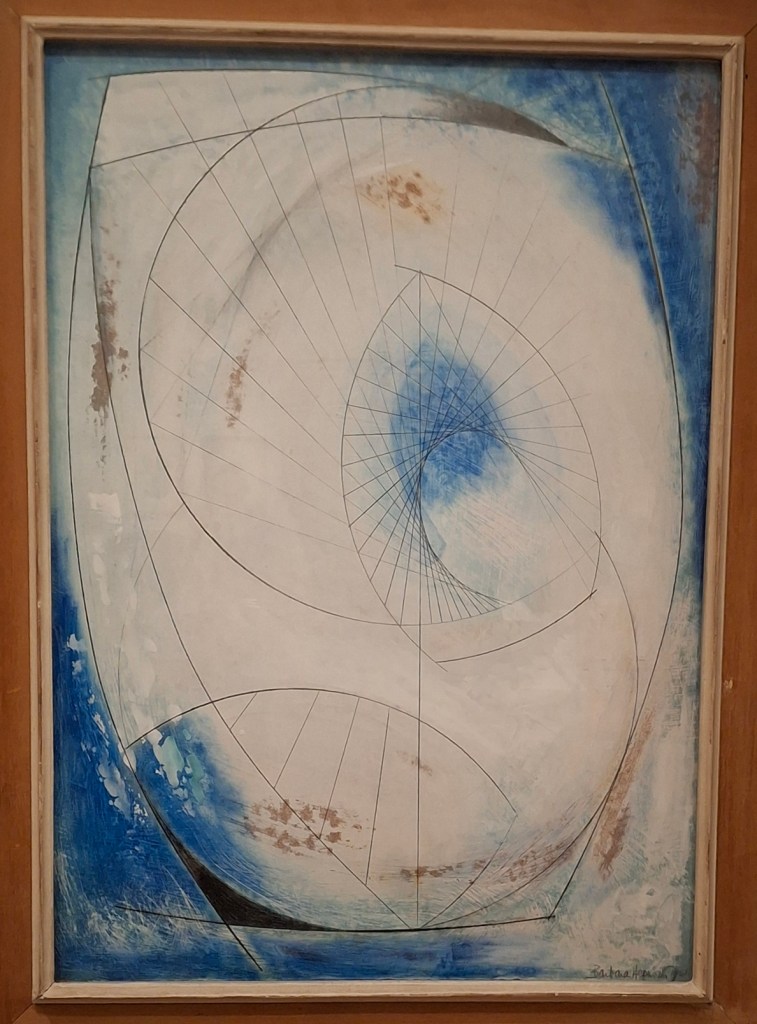
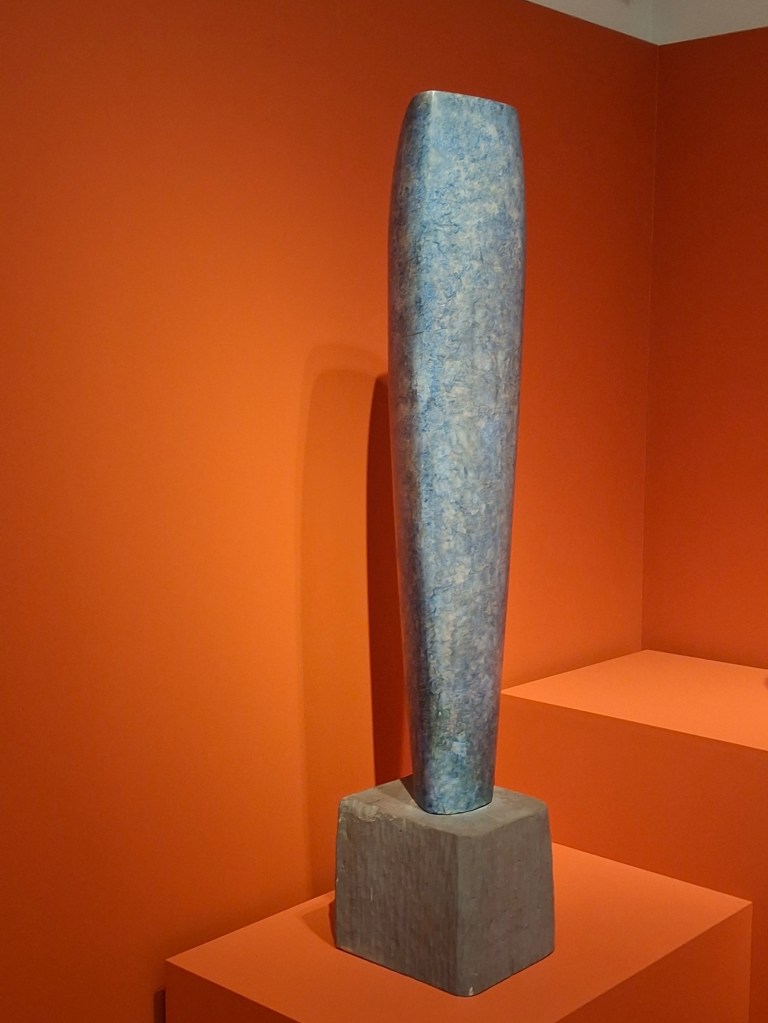
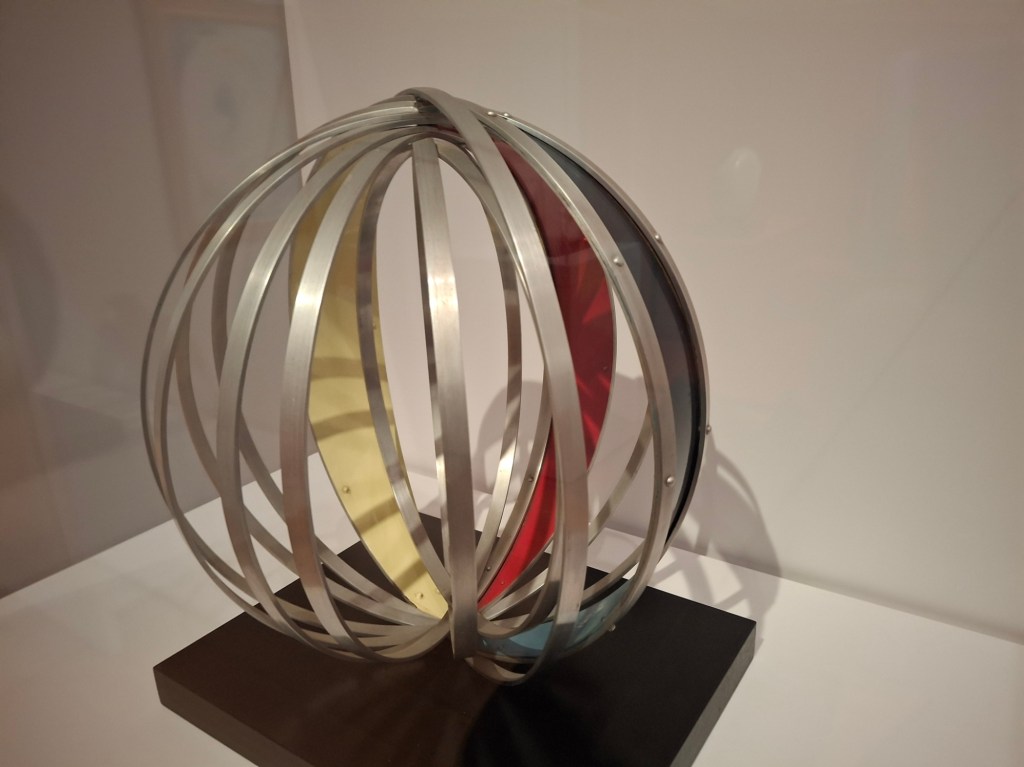
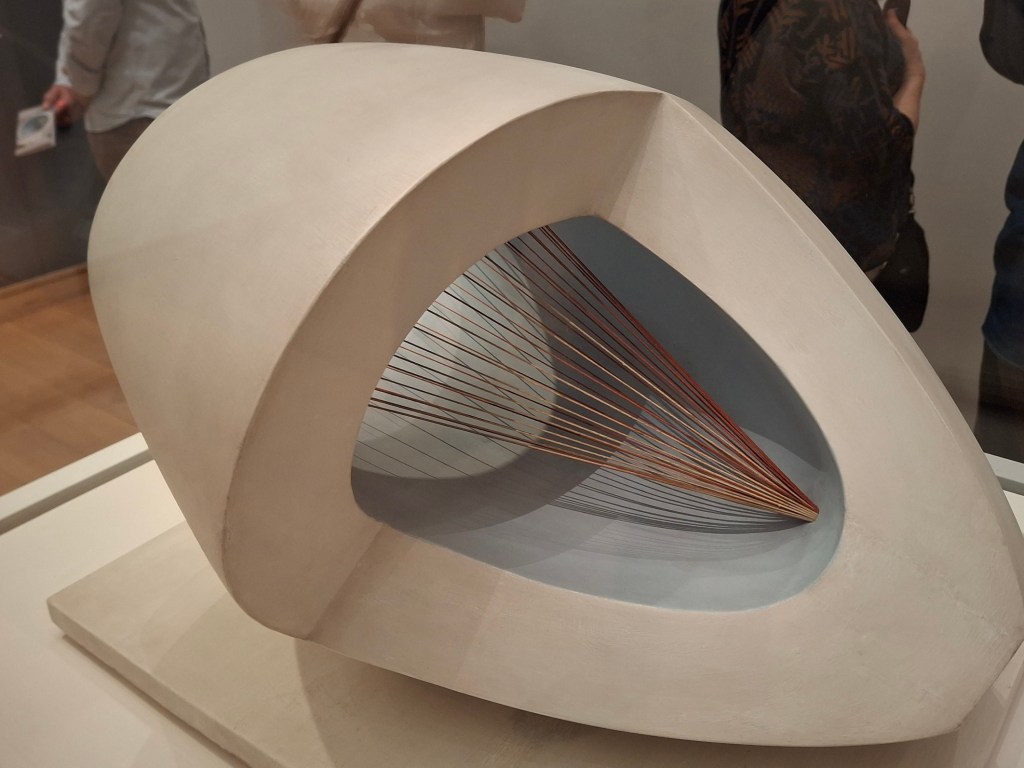
The Courtauld Gallery has an exhibition of Hepworth in Colour. A few years back I had enjoyed a visit to the eponymous gallery in Wakefield. Some of the works displayed in London were on loan from there but, shown in a different contex, took on a new resonance. A number of sculptural works were surrounded by lots of drawings and sketches which I was not familiar with and they gave insights into her approach to colour. In one sphere with panels in yellow, red and black she displayed a surprising side of her as a Watford fan! More common were the pale blues of the sea in Cornwall where she lived most of her life and some elegant painted columns and forms in painted plaster and bronze.
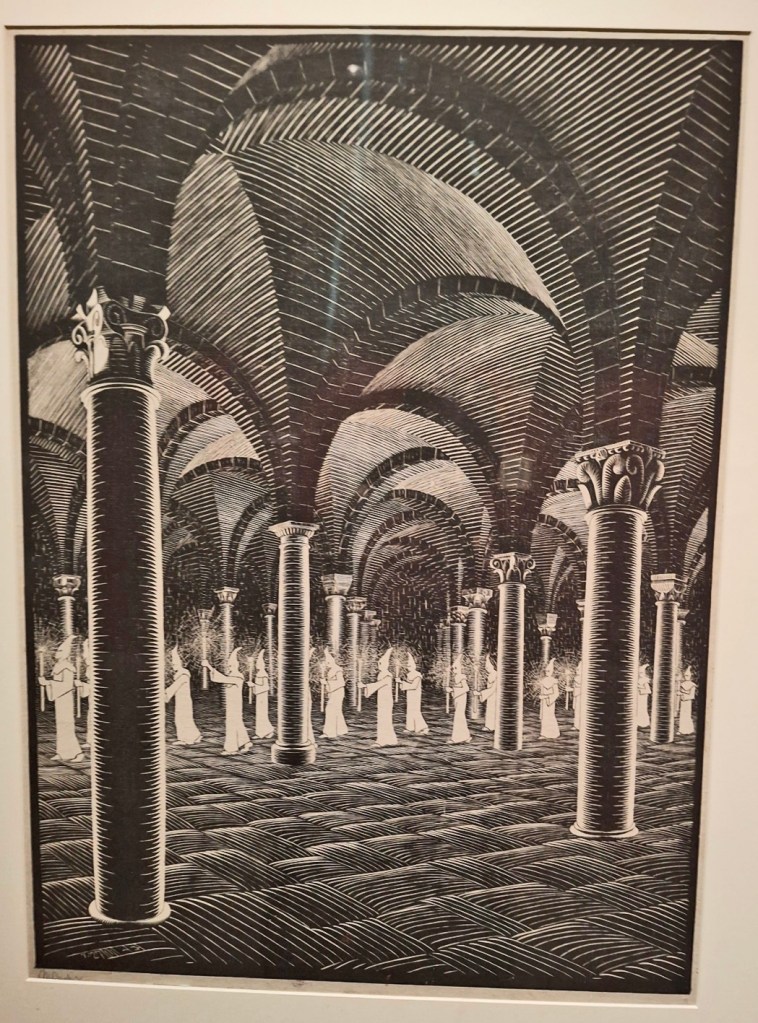
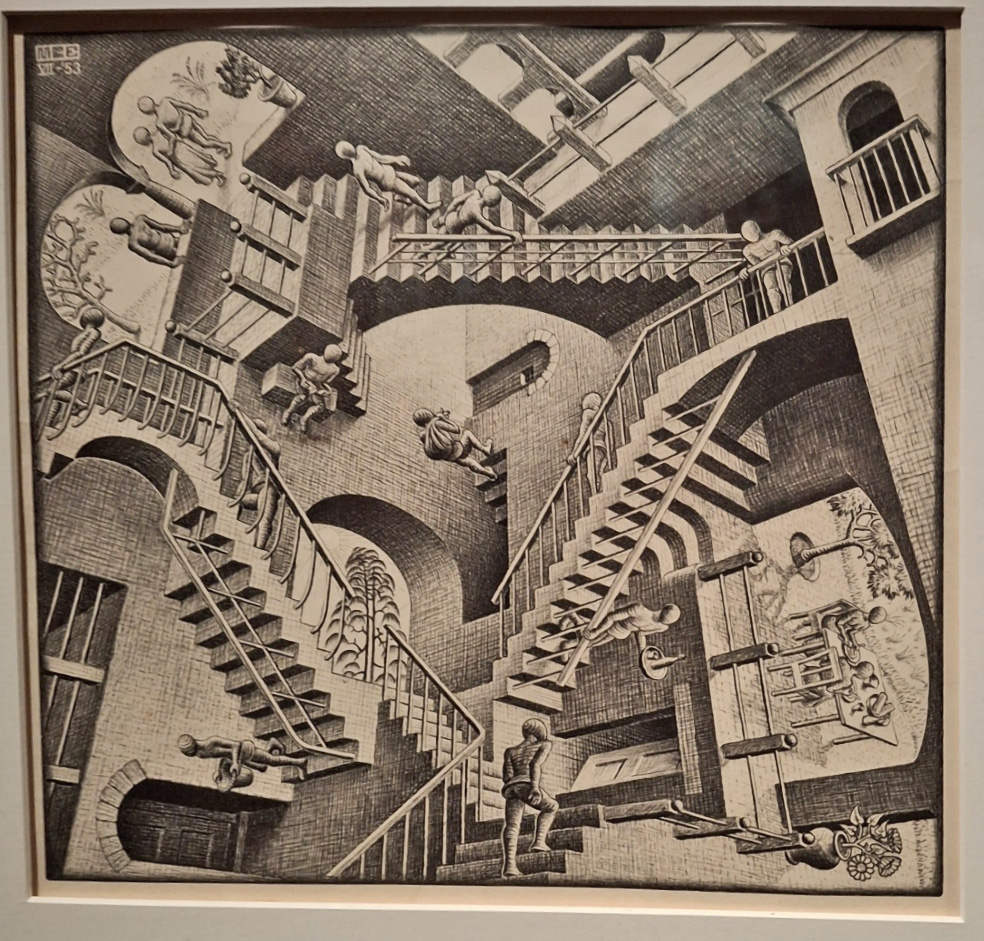
Just across the courtyard of Somerset House is the blockbuster exhibition of M C Escher, the first comprehensive showing of his work in the UK. I thought I’d better go while I was here. And comprehensive it truly is with over 150 works on display alongside artifacts he used to achieve his trademark tessellations, repetitative patterns and the impossible drawings for which he is mostly famed. It’s very interactive with infinity mirror rooms, scale-distorting rooms and spheres which you hold to view yourself in a very different way. I hadn’t realised how much he had been influenced by the patterns in Arabic art he’d seen on a trip to Spain. I was particularly taken by an etching of the Cordoba mosque with its eerie Semana Santa nazareno-hooded figures and it was interesting to see the famous ‘Relativity’ in the original lithograph form and as an animated screen version.
My friend Graham was down from Bradford and we agreed to meet up in the Black Eel in Dalston for a beer and then go to see Quartet in Autumn at the Arcola theatre. This also entailed a short visit to the excellent Five Fingers for a curry on the way to the theatre. I think this was my fourth or fifth visit and the food never disappoints and service is always interesting. Barbara Pym’s novel enjoyed a vogue in the 70s and has now been adapted for the stage by Samantha Harvey whose Orbital won the Booker prize in 2024. As a thirty-something the four bickering, miscommunicating fogeys on the verge of retirement seemed a long way off. Now not so much!
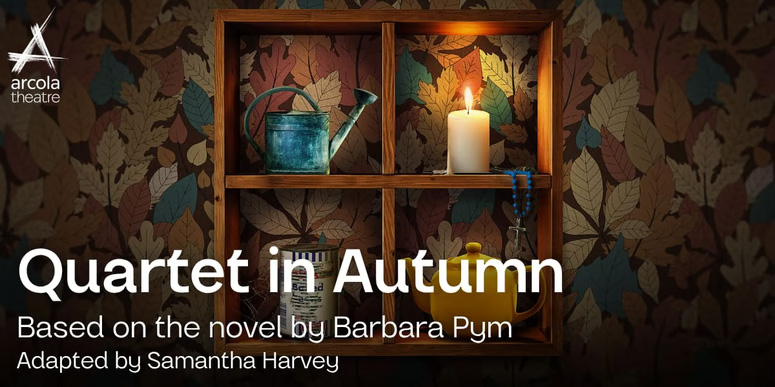
The humour of Pym’s writing has been retained in the adaptation and the characters each have opportunities to explain their lives of disappointment, underachievement and give rein to their hopes and fears. Four actors sitting talking often with their backs to you is not an easy setting to manage but the experience of Dominic Dromgoole as director and of his four excellent actors makes this an evening of entertainment and emotional engagment.

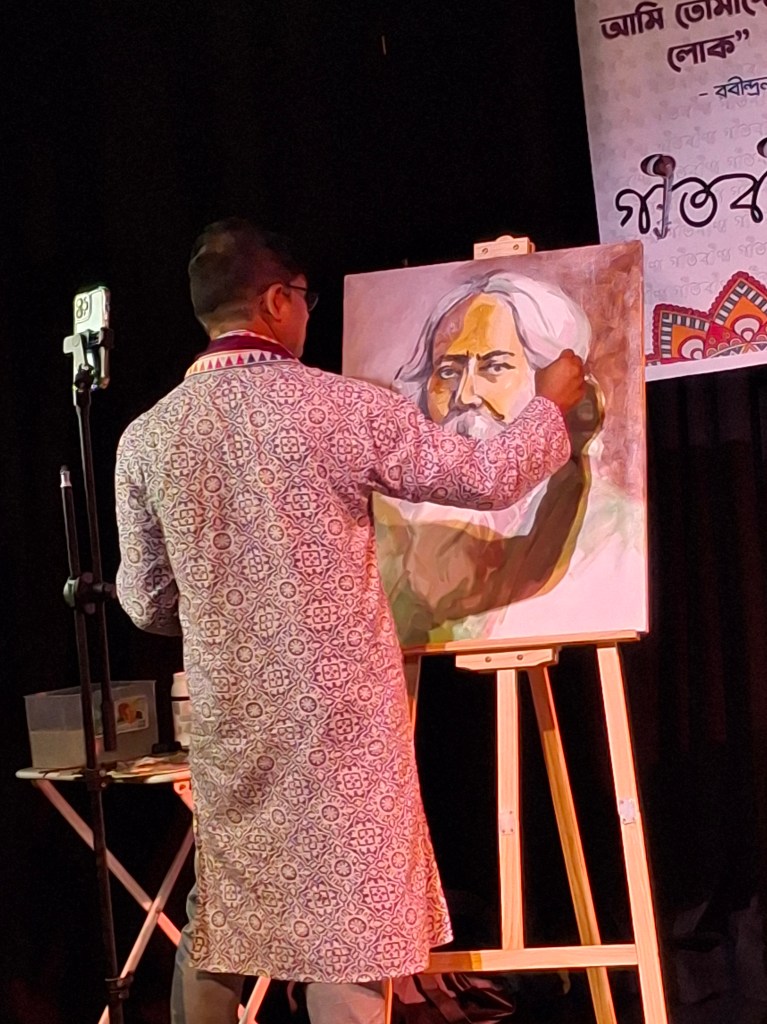
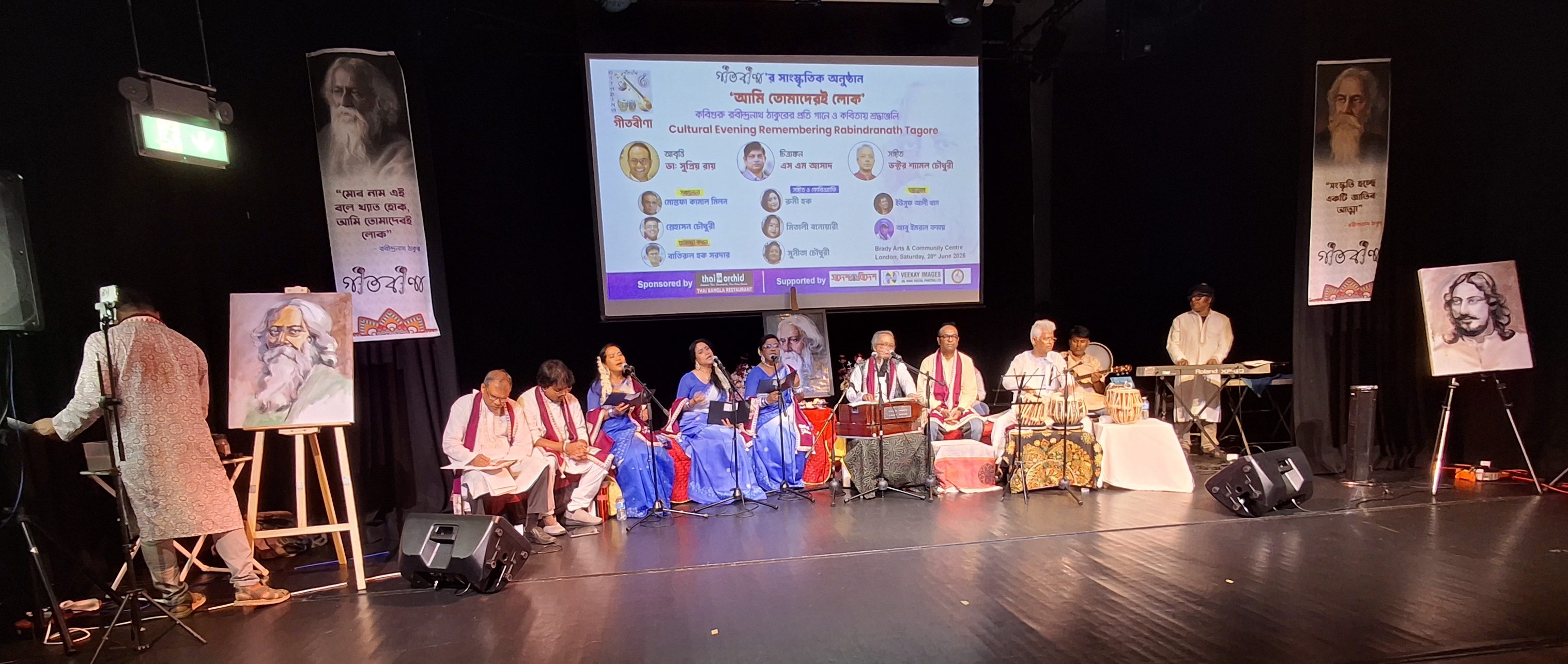
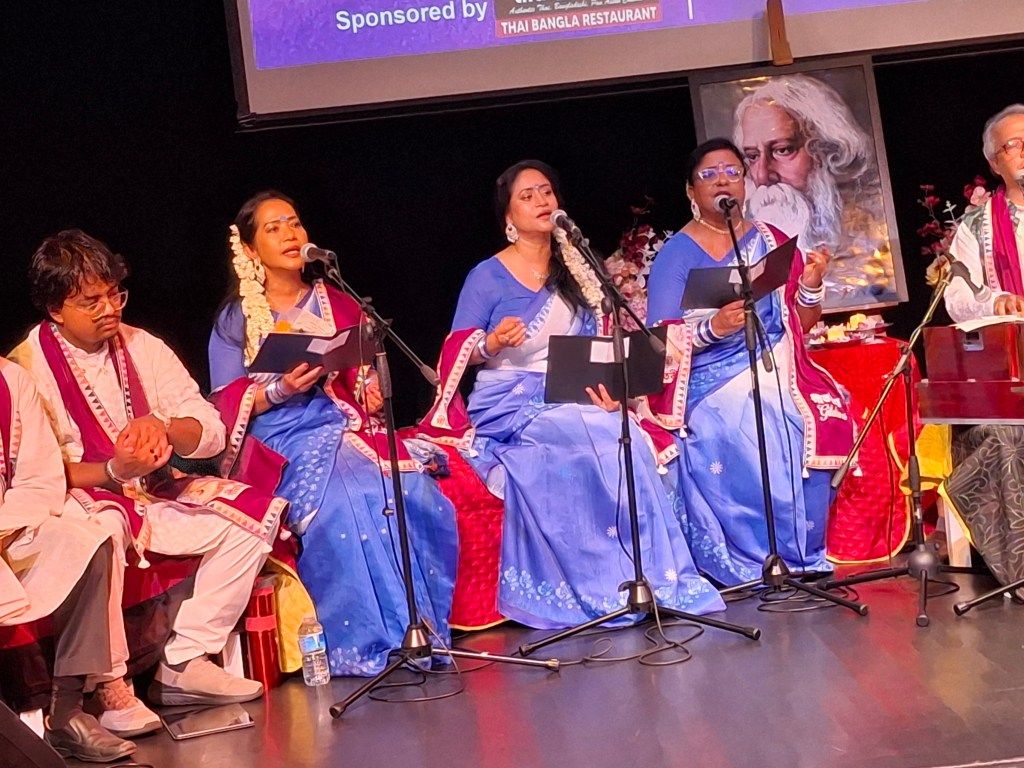
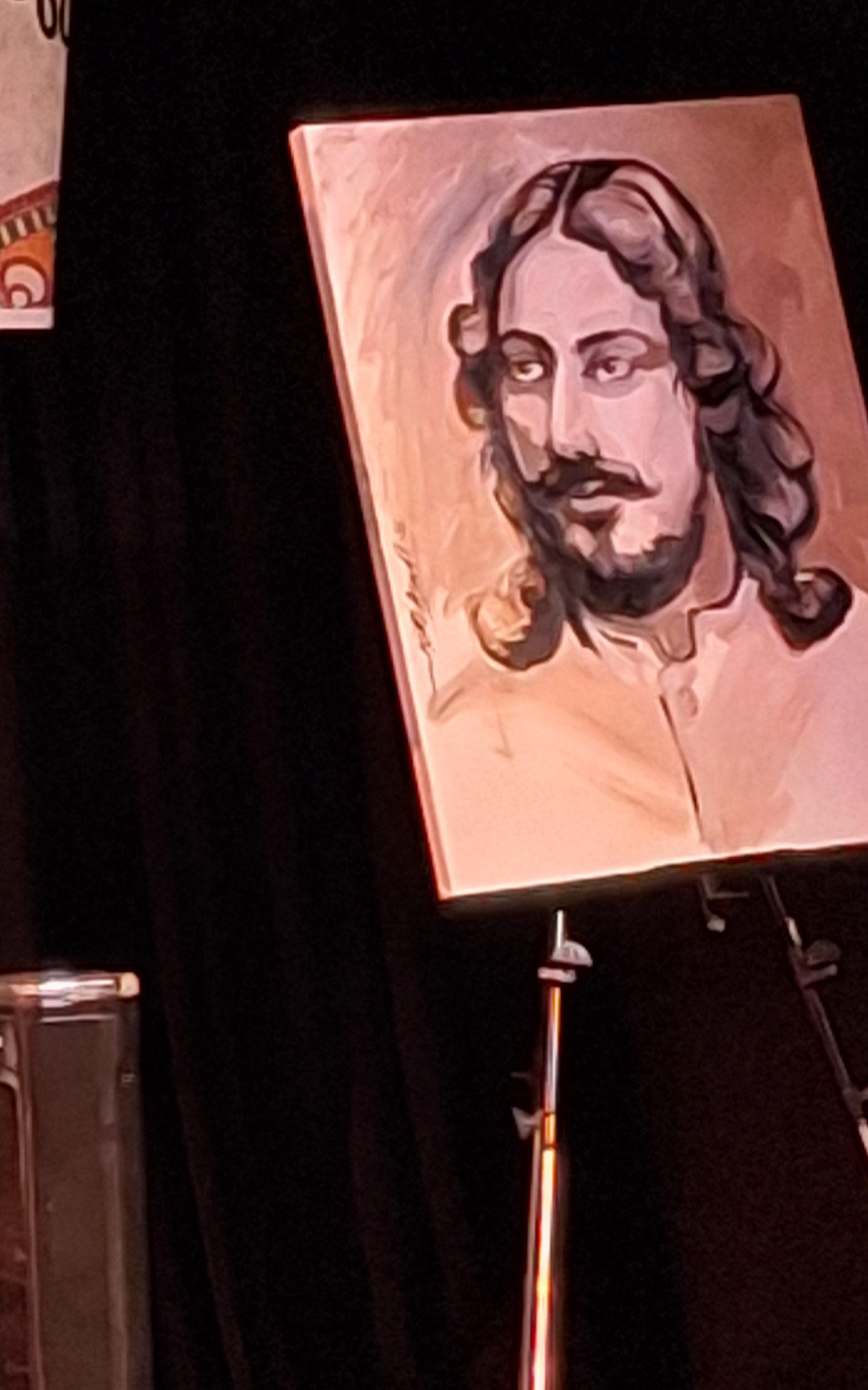
I think I’ve mentioned before Gitabina, the Bengali musical group curated by my friend Rumy Haque. They had a concert in memory of Rabindranath Tagore at the Brady Arts and Community Centre in Whitechapel on Saturday. I went along with my BBPC colleagues Shamim and Samaha and got a brief hero’s welcome as I had just consulted Cricinfo to see that the Tigresses (Bangladesh Women) had soundly defeated Pakistan Women in the T20 Womens World Cup. Given the political history of the two nations this victory was especially sweet. I met several friends and acquaintances and then went into the main hall for the concert which combined singing with recitations of Tagore’s works. Rumy had helpfully provided translations for several of the songs and the readings were delivered so powerfully that detailed understanding was not required to appreciate the content of the core messages. Another interesting facet was the real time painting of portraits of Tagore in his youth and as an elderly statesman. Like being at Sky’s Portrait Artist of the Year with added music. An enjoyable evening out with a difference.
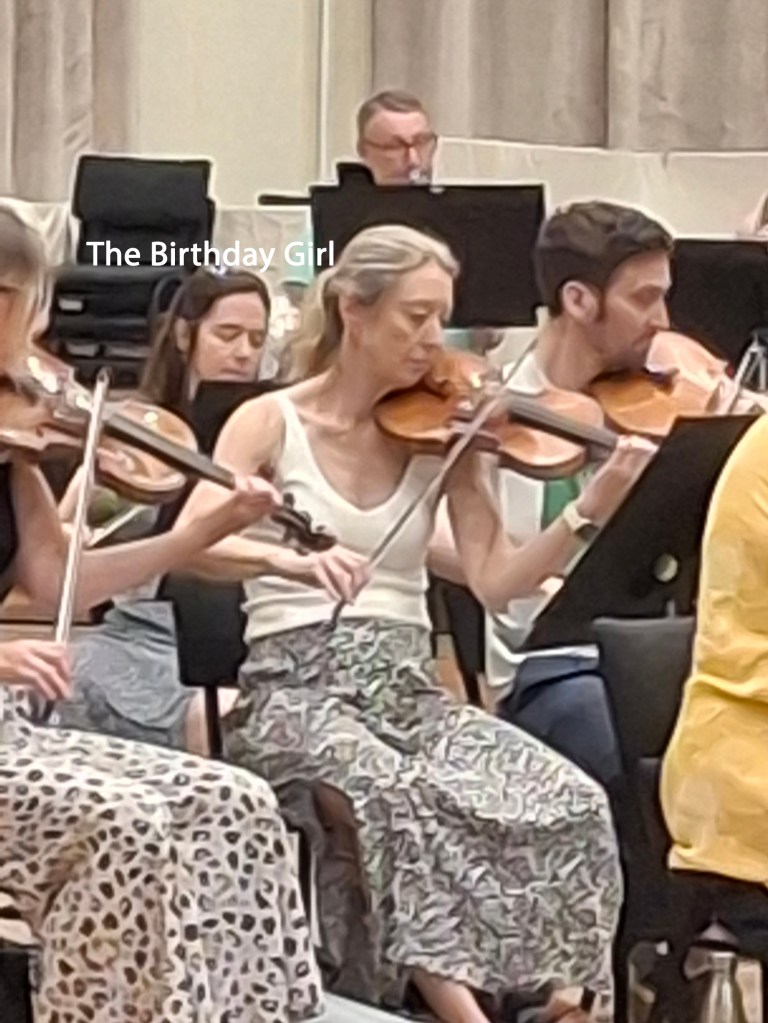
I set off early for the Henry Wood Hall for another OAE rehearsal. It’s hot and when I arrive at Lee Station there’s a train on the platform and a stream of would-be passengers coming towards me. “No trains from Lee for several hours,” says one so I join the downward flow and get a bus to Lewisham and then a train to London Bridge and walk to the hall in good time for a susprise opening. Conductor Maxim Emelyanychev calls the rehearsal to order and the strains of Happy Birthday ring out. This was a special treat for Rebecca Bell a violinist celebrating her’s today. As before, observing the conductor explain his wishes to the band was fascinating. Lots of da, da, dums and jumping in the air for “more emphasis here”. The concert of Brahms, Dvorak and Hadyn tomorrow looks like being another real treat. Just a block from Trinity Church Square is Great Dover Street along which runs the 21 bus with its destination panel saying ‘Lewisham Shopping Centre’ so no hassle with trains on the way back and a short walk to the blessed 273 to get me home relatively unaffected by the 35 degree heatwave which looks set to continue. I was glad of my gamcha from Dhaka – a scarf of quick wicking cotton that keeps the sweatiest Englishman in the world – me – from the ravages of the midday sun.
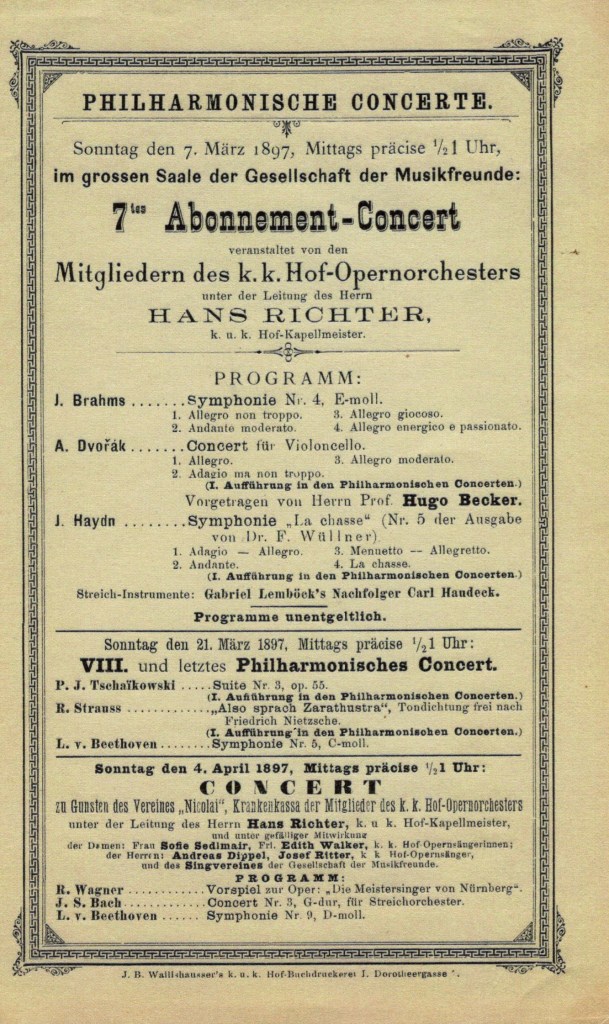
And so to the concert itself. Billed as Brahms’ Last Concert, the programme replicated the concert from 7 March 1897 in Vienna, the last time that Brahms heard his own music performed as he died just a month later. Starting with the massive fourth symphony was completely counter-intuitive to a modern concert going audience – but it worked as it filled the first half of the evening with all the emotions. Joyful dance, slow intensity and a mournful brooding final section with perhaps a hint of hope make this a very emotional ride. In the second half Steven Isserlis played Dvorak’s cello concerto with flair and passion – at the pre-concert talk he said he played the first movement on a record obsessively at the age of ten and still loves it today. It showed. The Haydn symphony gave the evening a lively conclusion with its dance beats and final headlong rush across the fields in pursuit of who knows what. Whatever it is, it gave the work its nickname of The Hunt – the final movement is actually called La Chasse on the manuscript. It was a fitting conclusion to the first half of OAE’s 40th anniversary season which they take up again in October at the Southbank after stints at Glyndbourne and the Proms.

Where did January go?

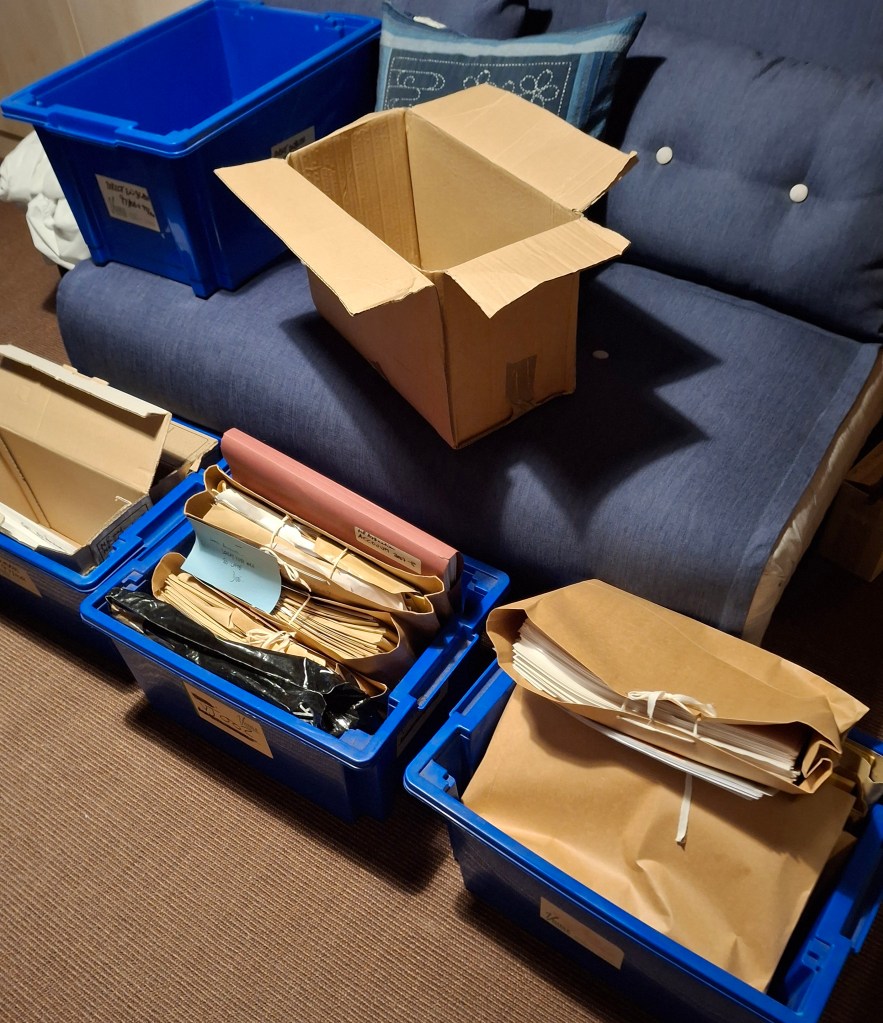
So after a refreshing break in Alicante it’s home to reality: car for MOT; final eye test after cataract surgery and the promise I made to sort out 45 years worth of company paper work for shredding. So glad I did take my Christmas break.

The first play of the new year was the intriguingly named Bengal Tiger at the Baghdad Zoo at the Young Vic. The tiger of the title is the ghost of an animal shot by a US marine stationed in Iraq during the ill-founded war. It (in human actor form) prowls around the stage bringing memories for the marines and philosophical questions for their interpreter Musa who used to be the gardener to Saddam Hussein’s two sons, who appear later, and cause a guilt-trip for Musa who allowed them to exploit his daughter.

It was surreal, written by Rajiv Joseph and directed by  Omar Elerian who has a track record with surreal with Ionesco’s The Chairs and Rhinoceros which we saw at the Almeida. It was funny. moving, if a bit erratic, but a worthy start to a year of theatregoing.

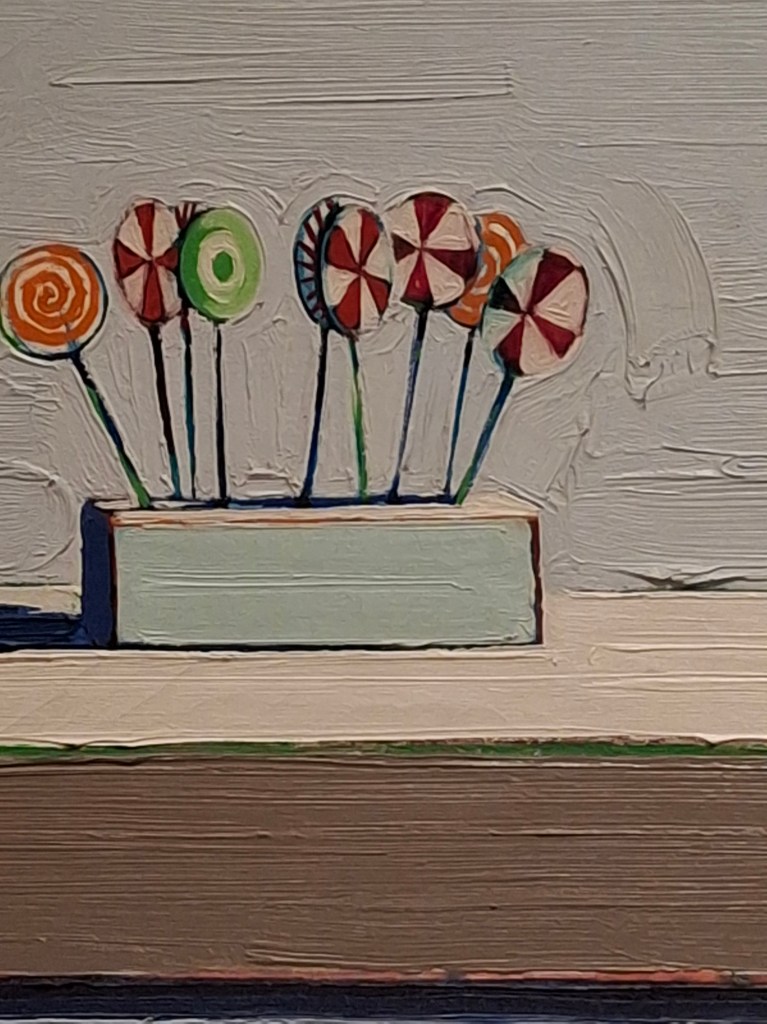
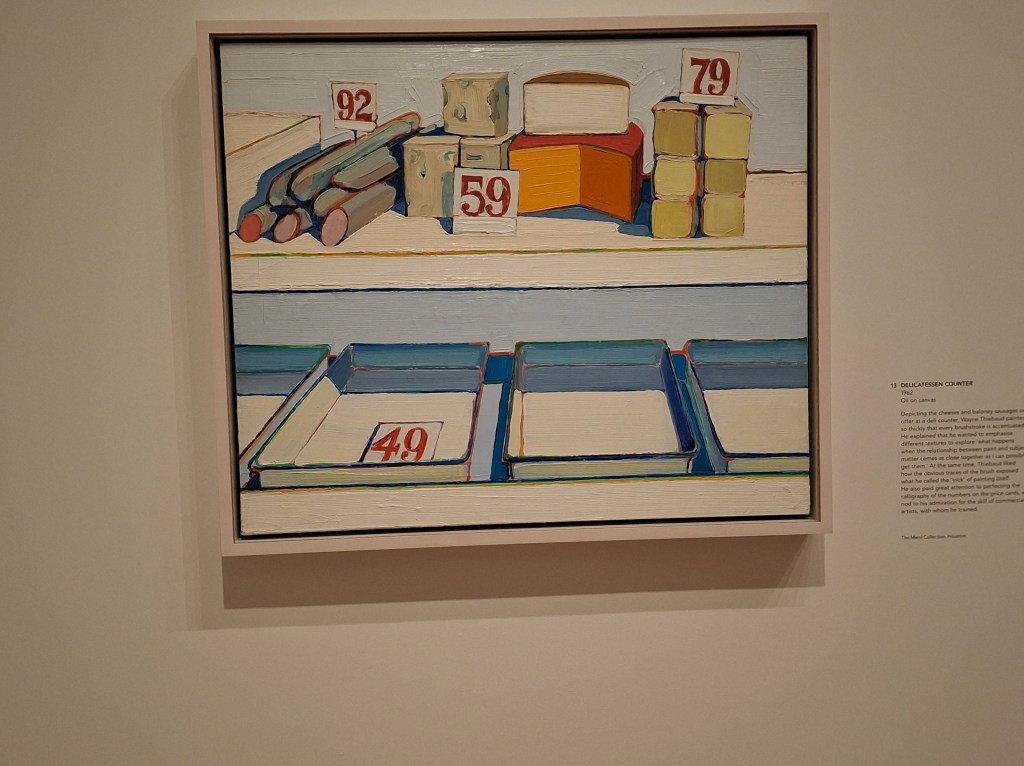
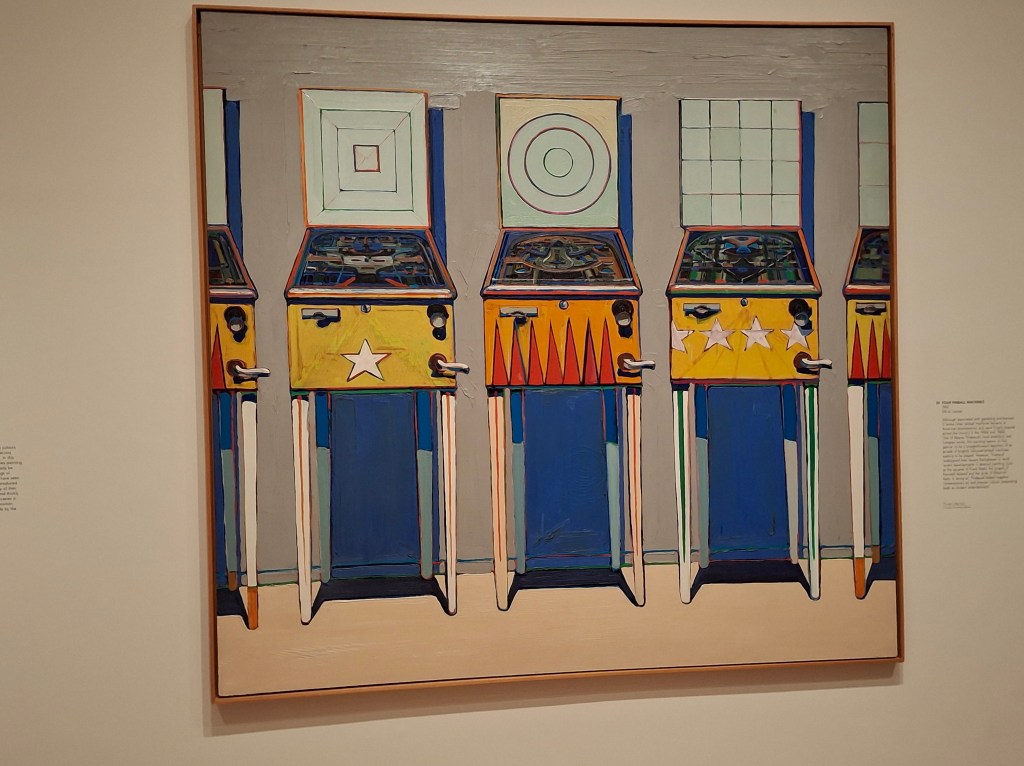
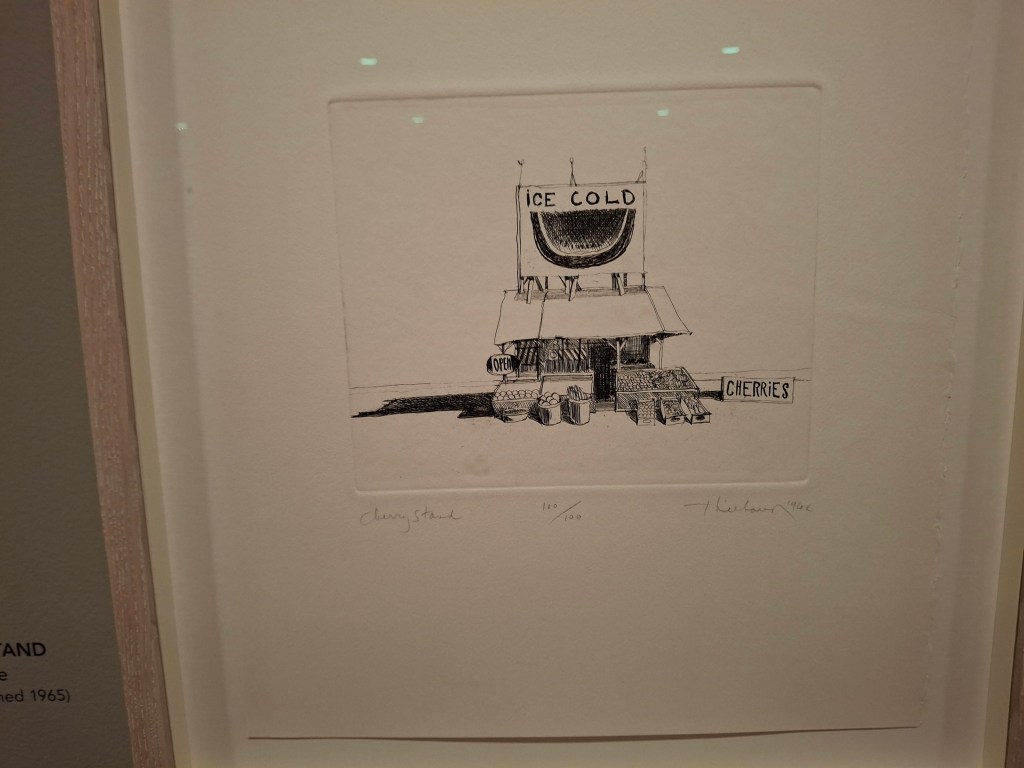
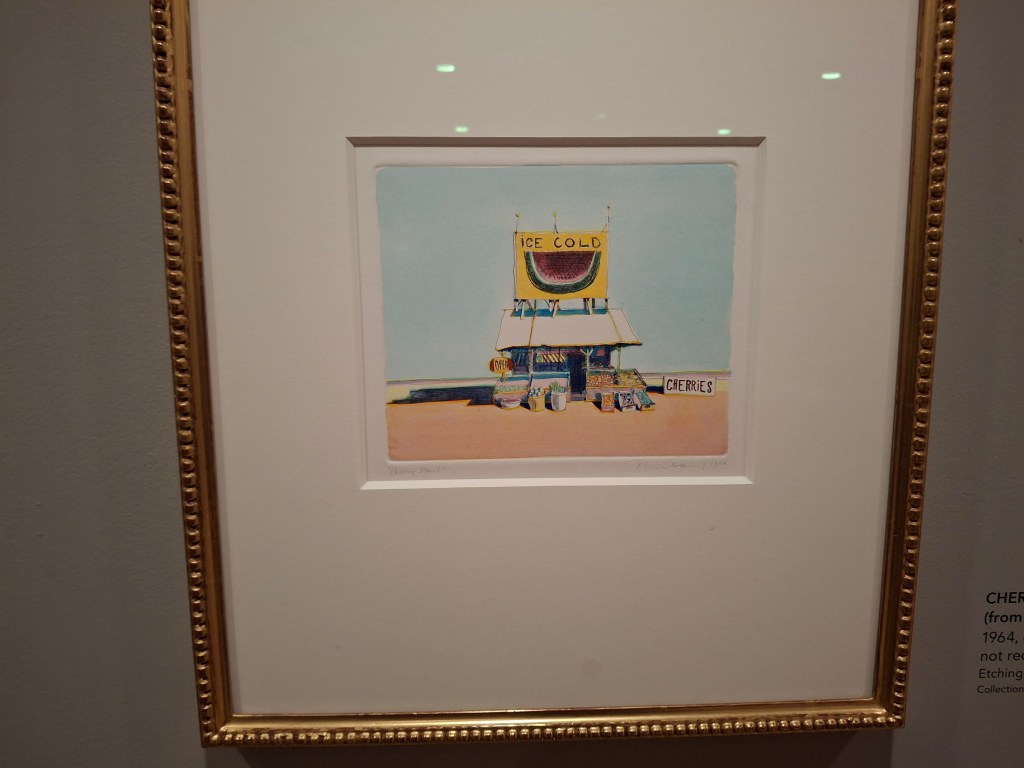
I loved Maggie O’Farrell’s book Hamnet. I did not like Lolita Chakrabarti’s stage version which a gang of us went to see at the Garrrick with great expectations and emerged with great disapppointment. I had misgivings therefore about the much talked-about film version, somehat allayed when I noted that Chloé Zhao co-wrote it with the book’s author. So I booked a matinee showing at Picturehouse Central and decided to go into town early and take in the last few days of Wayne Thibault at the Courtauld Gallery. I don’t think I’d heard of him but an email from the gallery intrigued me so off I went and am very glad I did, The exhibition was entirely of works from the 1960s when he was grouped with the Pop Art movement. He painted still lives of everyday Americana – slot machines, deli counters, cakes and the like. They were very affecting in making you look intensely at the ordinary and think about things in a new way. He also made prints of several of the subjects one of which on display he had hand coloured twenty years after making the original etching.

I had an hour to spare before the film so popped into Yoshino to say Happy New Year to Lisa, collect my supply of gyokuro tea – my first drink of every day – and have a delightful light lunch chatting to Lisa as she prepared the space for a 30 strong party of Japanese bankers that evening.

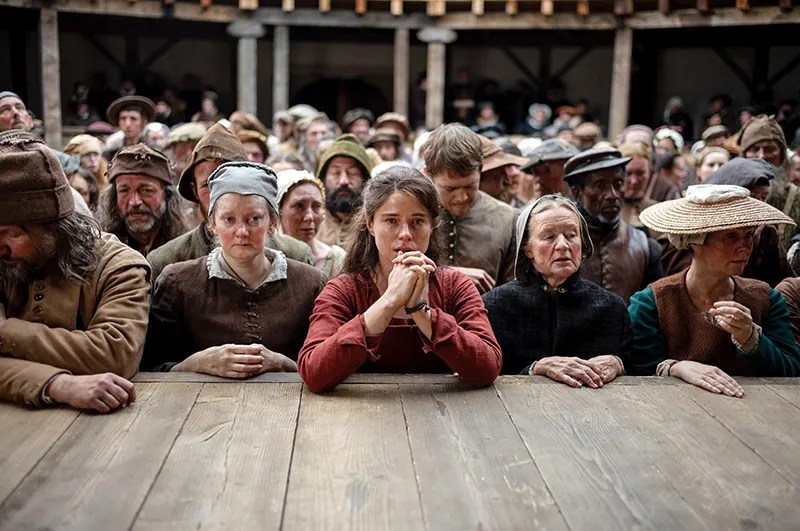
Hamnet the film did not disappoint. It matched the slow reveals of the book, filled the screen with nature, glovemaking and the love and the games of young children. The storytelling was clear and excellent and the child actors were all very accomplished. The tragedy was well handled and the closing scenes at the Globe had me welling up. What a performance from Jessie Buckley! I knew she was good but this was astonishing.

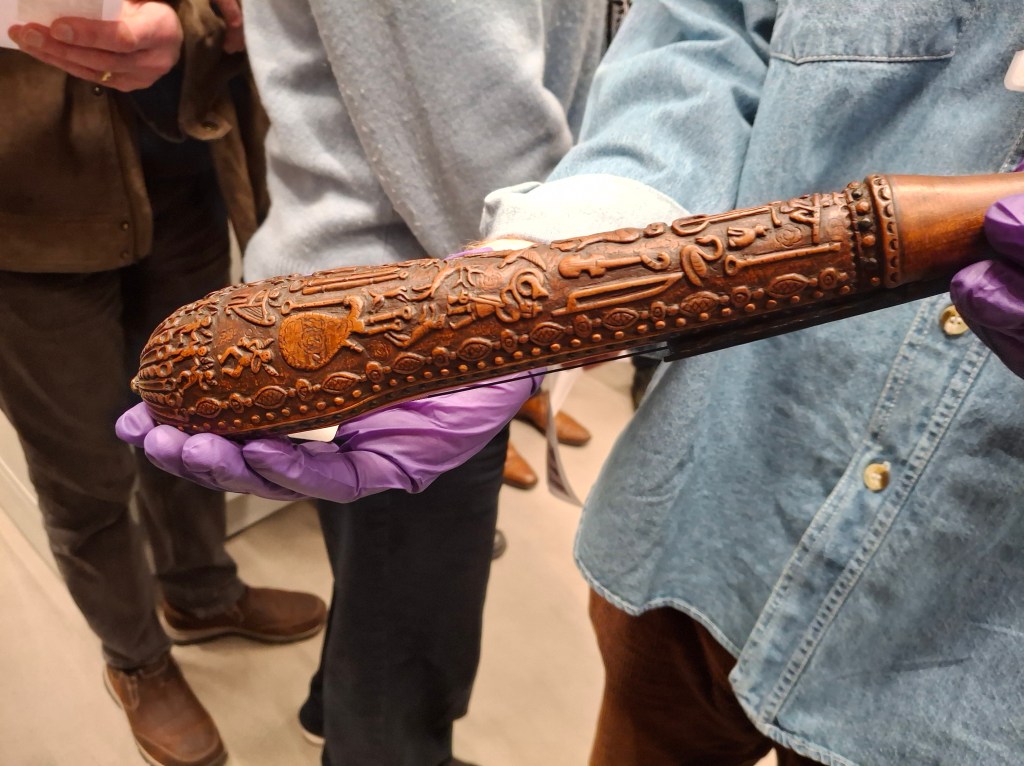
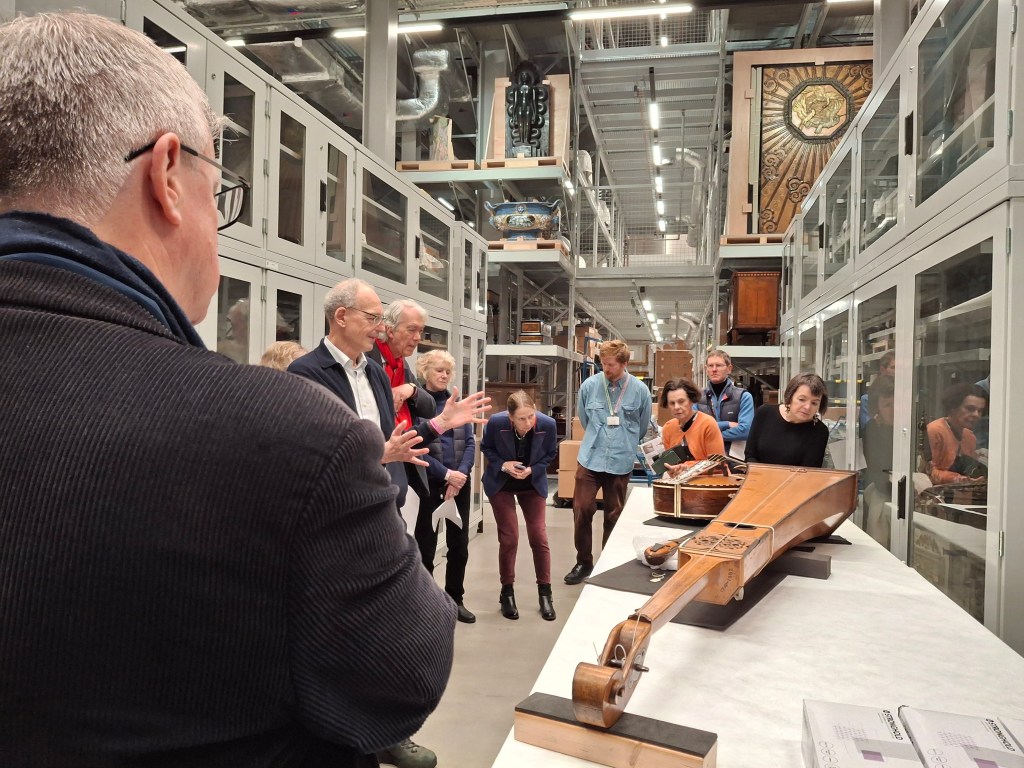
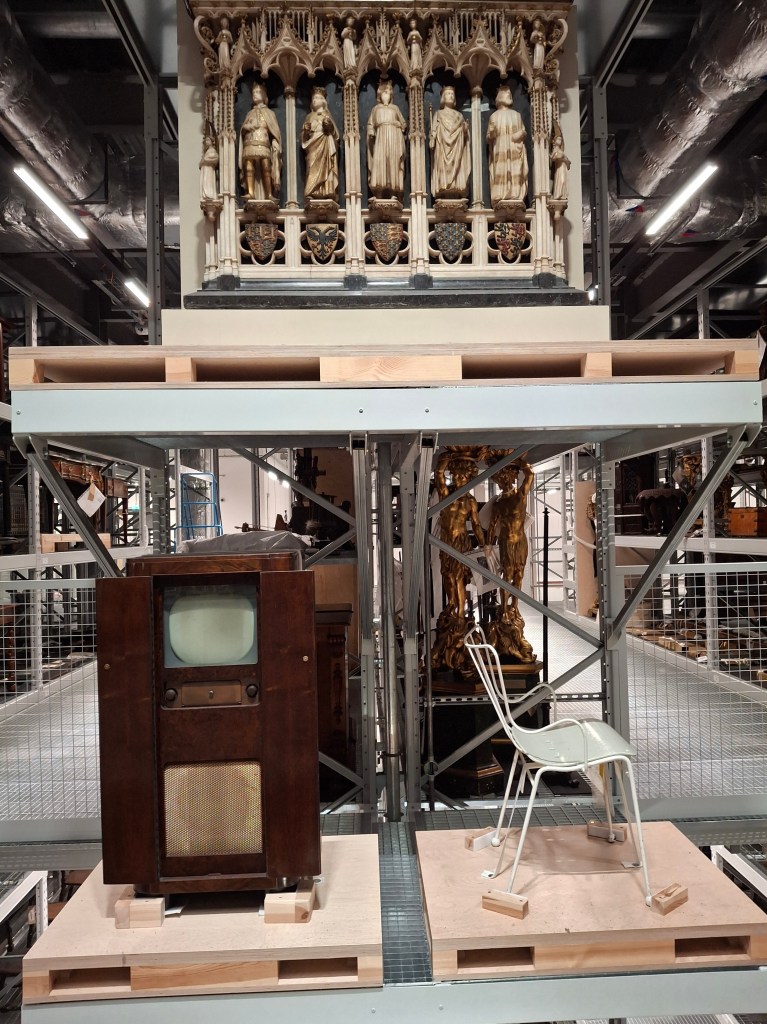
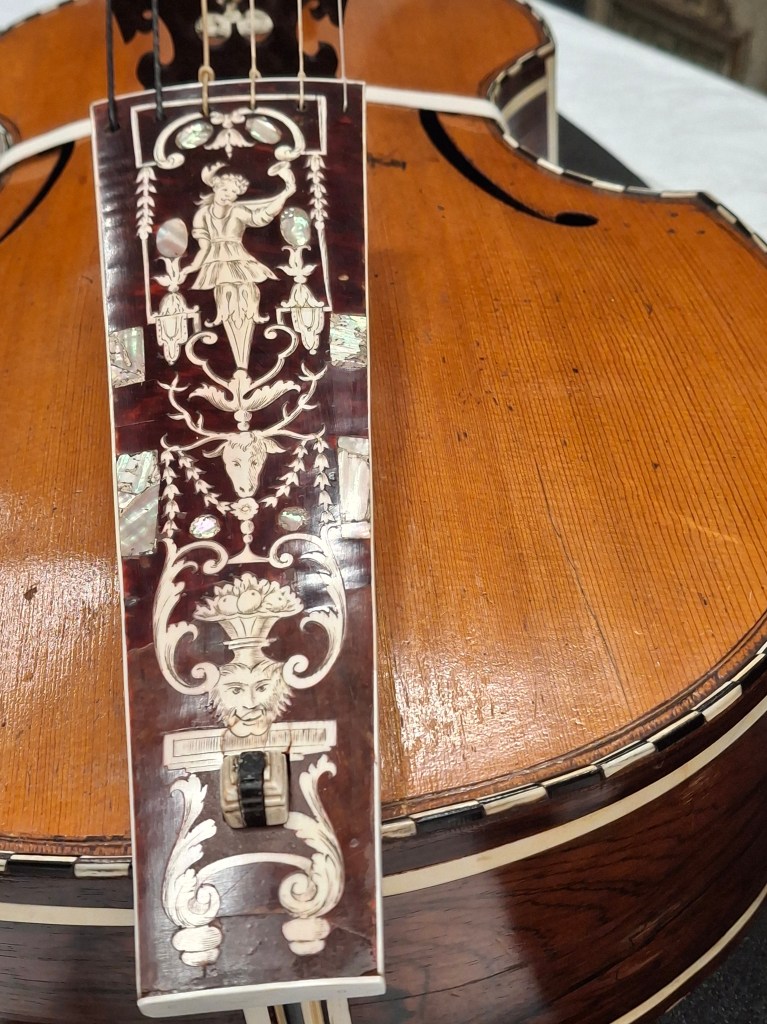
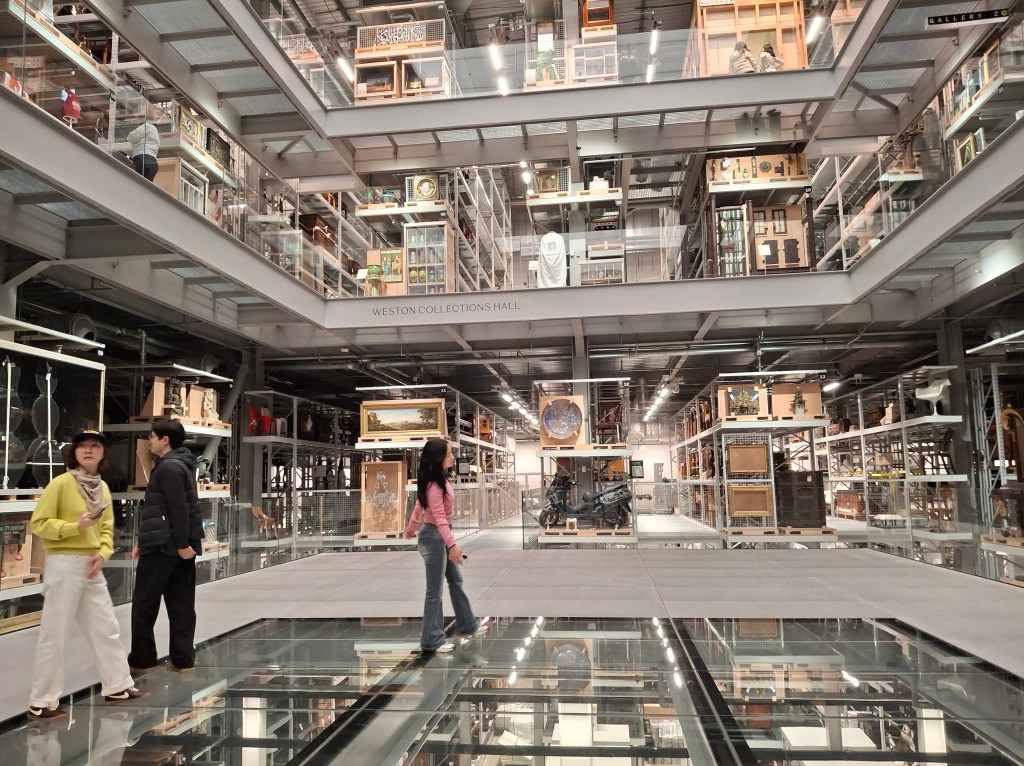
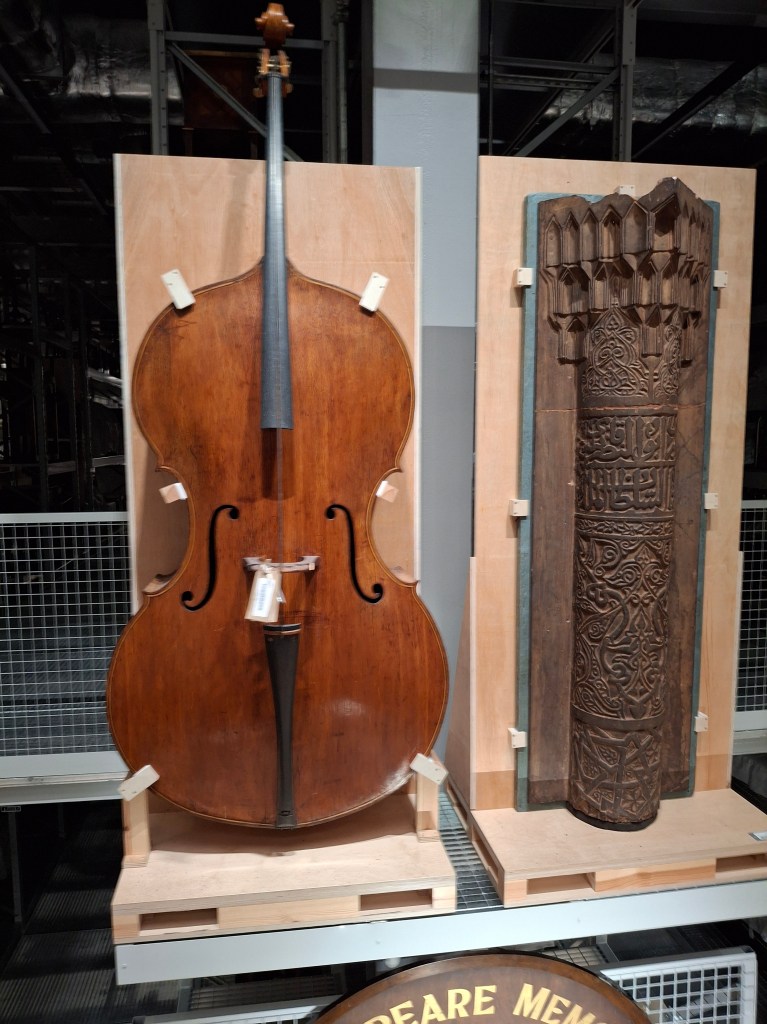
From time to time, the orchestra of the Orchestra of the Age of Enlightenment organises trips for Friends. I wrote about a visit to the amazing Hatchlands keyboard collection with Steven Devine last year. This one was to explore the wonder that is the V&A East Storehouse with Martin Kelly, my viola-playing team captain when we won the Chistmas Quiz. Martin had selected a number of instruments from the extensive V&A catalogue and gave us fascinating insights into the contruction, history and use of instruments ranging from the tiny kit fiddle used by dance masters to the enormous Dragonetti bass via a serpent and a harp and others from the racks. Some of the detail of design, carving and inlay was phenomenal. The breathtaking size of the storehouse and the randomness of displays made for a fascinating visit even after Martin had finished his excellent part of the tour.

Then it was back from drenched Hackney Wick to the Royal Opera House for an insight evening on the subject of Boris Godunov with my friend Susie Stranders taking us expertly through Mussorgsky’s score. I got there early and spent an hour not reading my book but chatting to a gentlemen with shared widowerhood and love of music as topics for conversation. As we left the table to go to the talk we shook hands and he said, “By the way I’m Mike”. “Me too,” I replied. Susie’s talk was peppered with anecdotes from performances and some excerpts sung by cast members including Bryn Terfel who is Godunov.

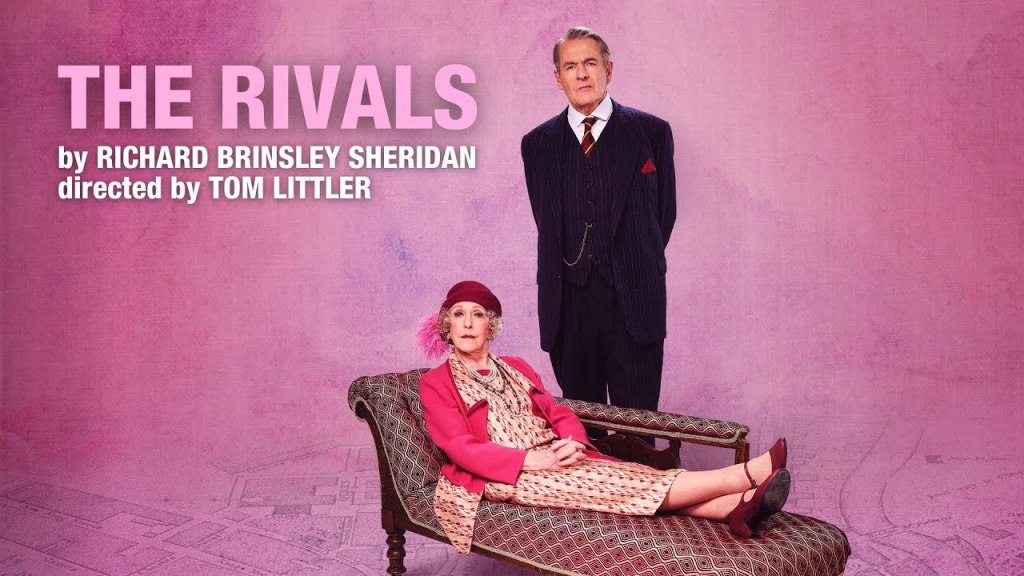
I’ve seen Sheridan’s The Rivals several times but went with Frances to The Orange Tree on her recommendation, She’d already seen it when I was away and came to see it again. I congratulate her on her taste. Updated to the flapper era 1920s, Tom Littler’s production was wonderfully funny and Patricia Hodge as Mrs Malaprop was outstanding. The rest of the cast were superb too in the intimate Orange Tree space where you feel part of the action. I recalled going with my grandchildren to see the Richard Bean and Oliver Chris update Jack Absolute Flies Again at the NT a few years ago. Sheridan’s work from 1775 stands a lot of different interpretations. Must be something about the core material!

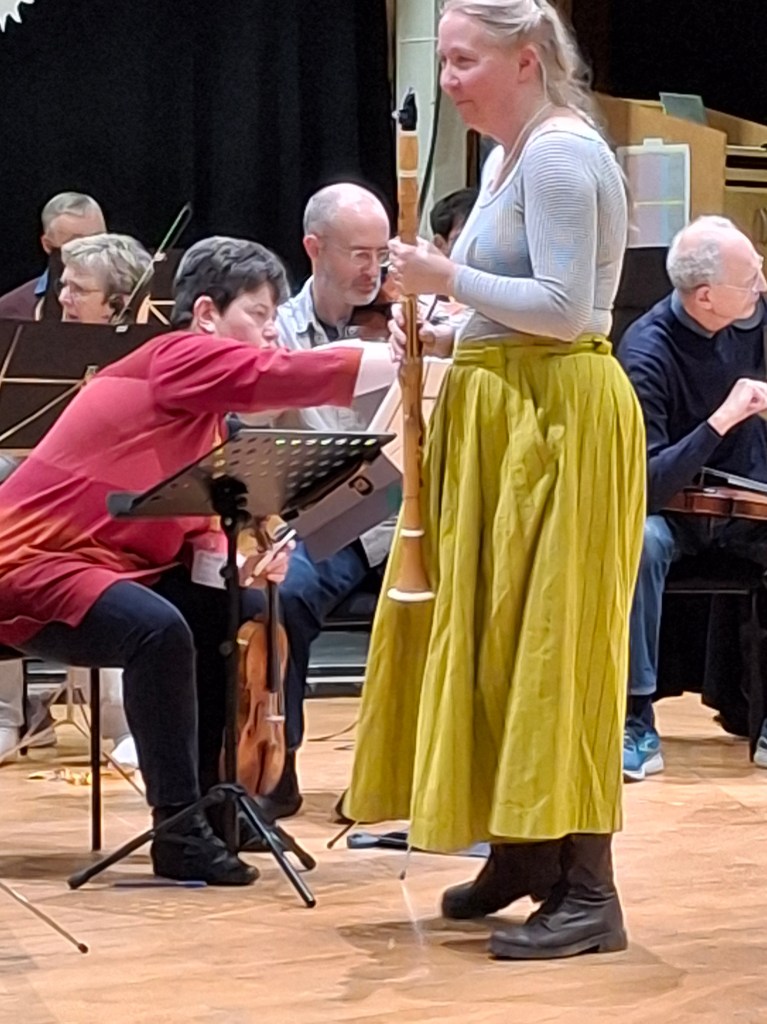
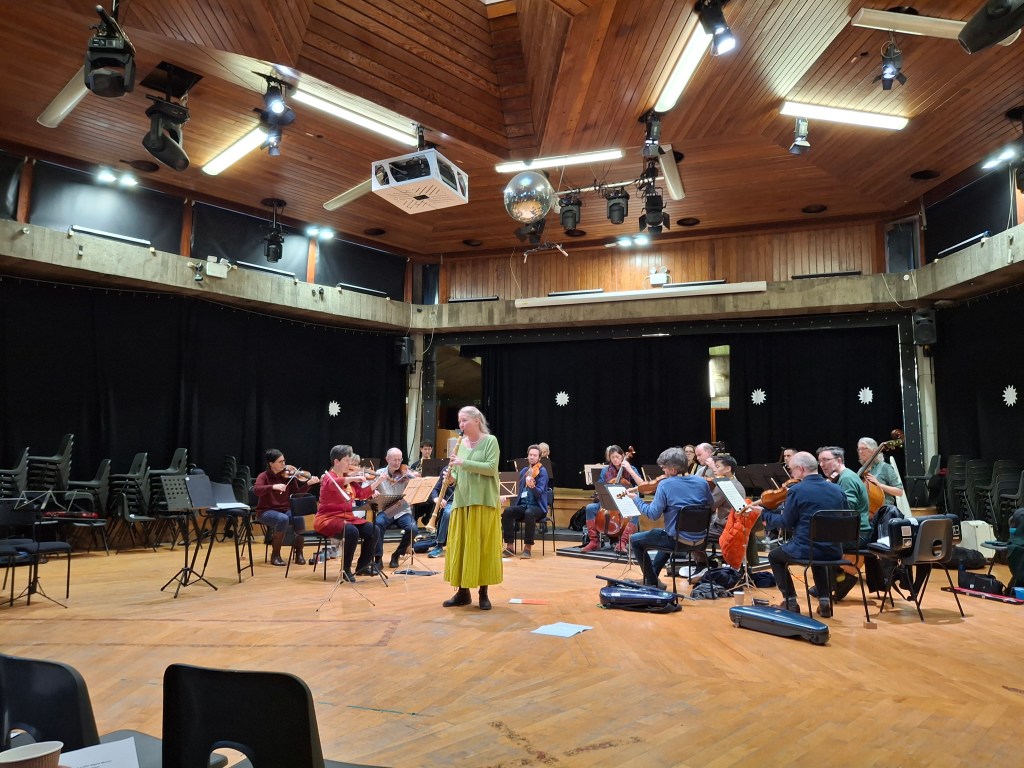
The OAE often invites friends and the local community to open rehearsals at its base in Acland Burghley School. On this day there was a Friends event at 2 pm followed by a Community one at 4. I was very impressed to see the numbers of people streaming into the school as I was leaving. The orchestra was rehearsing mostly Mozart’s clarinet concerto played by principal clarinetist Katherine ‘Waffy’ Spencer and directed from the violin by leader Kati Debretzeni. Waffy was at pains to point out that the work was written for the basset clarinet and she has had one made specially so that the concerto can be heard as Mr M intended. As always it’s fascinating to eavesdrop on the discussions that form the final performance and the exchange of ideas around this most democratic of orchestras. They were off to the Anvil in Basingstoke, Oxford and the Warwick Arts Centre before coming into the Queen Elizabeth Hall on Sunday 1 February. Waffy then introdued a piece they were going to play as an encore – an adaptation of an aria from Mozart’s Die Entfuhrung where the warring male and female protagonists were a bassoon and her clarinet. It was lively and very funny.

I then made an interesting cross north London journey on the C11 bus – Gospel Oak, Hampstead Heath, the Royal Free Hospital, Belsize Park and eventually Swiss Cottage – to the Hampstead Theatre to join Frances for a new play in the smaller downstairs space The Ghost in Your Ear.

This was an interesting event in which we were all equipped with headphones to hear the script of a ghost story being read by an actor in a sound studio for an audiobook. It’s written and directed by Jamie Armitage and the sound design is buy the brothers Ben and Max Ringham who did such a great job with Blindness at the Donmar back in the lockdown days. As someone who has spent a lot of time in the control room of audio studios it was intrinsically interesting and the story getting progressively scary was very well paced. Frightening it was, but not heart-attack inducingly so.

I got a final sign off after my cataract operations and can now revert to my familiar state as ‘a bloke who wears glasses’ with varifocals with no correection for distance and enough for close up that I can type and read my phone and kindle without need to rummage about for reading glasses. I then had the pleasure of two trips to the Union Club, first to have lunch with my dear friend Michele who has had a hard year as as a make-up artits as the film and TV industry shrinks and then for dinner a couple of days later with newly-master’s Guildhall graduate Kristina, a fine soprano, her boyfriend Luka and Paola who looks after tickets and data for the OAE and who I know well from my many visits to their gigs. On both occasions food, wine, service and company were excellent.

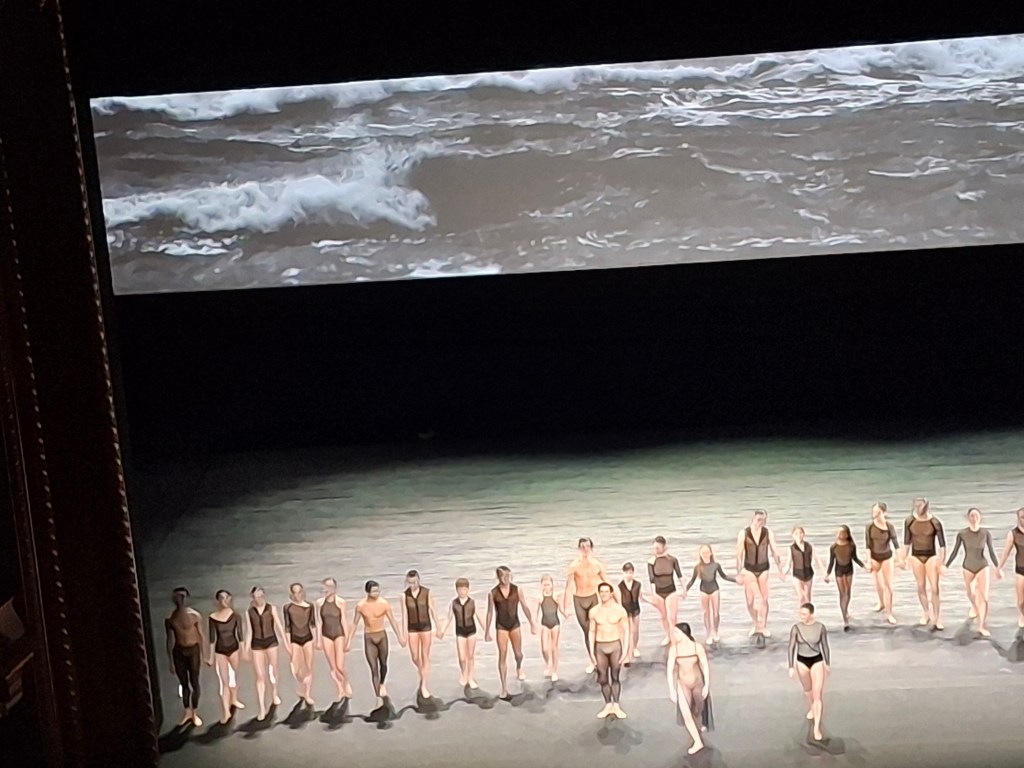
I went ( slightly by mistake and rescued by checking my ticket folder) to a matinee of Woolfworks at the Royal Opera House. This ballet had been heavily advertised in ROH emails and I had hoped Rosa might be back from Spain to come with me. Not to be however so I set off on my own and didn’t pick up any new friends called Mike on this occasion. The ballet by Wayne McGregor is based on three Virginia Woolf books: Mrs Dalloway; Orlando and The Waves. I’d read the first two but not The Waves, which I’ve now purchased. The work is classed as a three-act ballet but I felt it was three one-act ballets given the variety of source material and treatment. Mrs Dalloway was all bustling charatcters around three huge revolving wooden frames introduced by Gillian Anderson reading an excerpt from Woolf’s essay On Craftsmanship. The stories of Clarissa and the shell-shocked Septimus intertwine with elegant moves. Orlando matches the surreal nature of the book by having gold-costumed charaters with ruffs anf bustles making their way through several centuries and a gender change all accompanied by a startling laser display that carved up the stage and indeed us in the auditorium. The Waves was played out against a projected backdrop of extremely slo-mo monochrome waves and ends with her suicide note being read. The score was specially composed by Max Richter and was very filmic, dramatic and emotional. It’s still on and comes to cinemas from 9 February if you fancy a look. Highly recommended. https://www.rbo.org.uk/tickets-and-events/live-in-cinemas-woolf-works-details

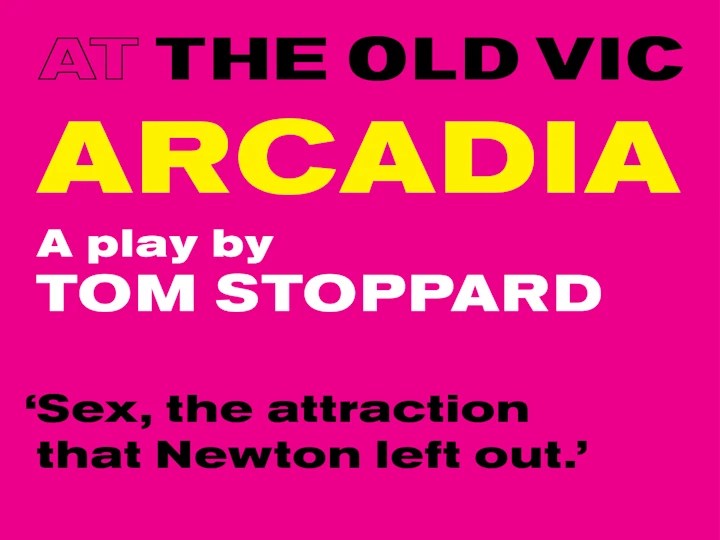
The last week of January contained three remarkable outings to the theatre. The first was Tom Stoppard’s Arcadia, generally acknowledged as his masterpiece and you can see why. With its time shifts, a quest for the unknowable, dangerous relationships and moments of side-splitting humour it makes for a mind expanding evening. I’d seen the original NT production and this version at the Old Vic couldn’t be more different, but as with Sheridan earlier, the class of the work shines through. Whereas the NT production was naturalistic with vistas of stately home parkland, the design of which is an imporatnt factor in the play, Carrie Cracknell’s version at the Old Vic is sparse, in the round with a few props and helps you to concentrate the interplay of the characters and the richness of the language. It was a bit of a shock also to see the venerable Old Vic transformed for an in the round production as apparently all this season’s plays will be.

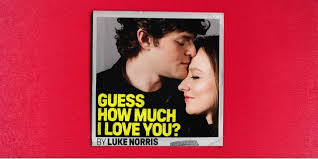
The mood changed abruptly the next evening when we went to see Guess How Much I Love You at the Royal Court. Written by actor Luke Norris and directed by Jeremy Herrin it is a play about a couple’s loss of a child through a non-viable pregnancy. Their grief and their reactions to it are powerful and moving. Rosie Sheedy and Robert Aramayo – newly Bafta-nominated for I Swear that day – display an array of reactions to the terrible news the ultrasound scan brings them through changing scenarios over time. But within the overall sadness of their plight the play has great moments of lightness and humour. Very effective set design and lighting gave a real sense of their enclosed and captive lives as they lived through the intensity of loss and eventually move towards a more promising future.

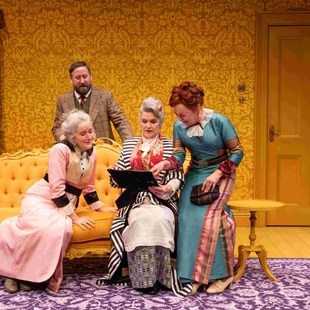
After intellectual exercise and emotional turmoil the week ended with J B Priestley’s When We Are Married at the Donmar. Sheer madness and hilarious farce ‘oop north’ when three couples discover that they weren’t officially married by a young curate 25 years ago. Facades fall away, roles reverse, past pecadillos intrude and there is a literally staggering performance from Ron Cook as the photographer from ‘The Argus’ who has been sent to snap the triple anniversary for the paper. Told to go away he gets progressively drunk, his cheeks redder at every new appearance, and crashes his way through the set. It was a shock to see John Hodgkinson as the host of the celebrations Joseph Helliwell since we last saw him covered in blood as Titus Andronicus. I’d never seen this play before and it made me rethink Priestley who I only knew from An Inspector Calls and Time and The Conways.

The month ended with a final piece of drama on the stage of Vicarage Road Football Stadium where I had the pleasure of Frances’ company in the hospitality Sir Elton John Suite which I’d won through The Supporters’ Trust lottery. We had good food and wine, visits from Luther Blissett and Tommy Mooney, a poor loss to Swansea City on the pitch and later the news that our much-loved manager Javi Gracia had resigned. He’d been back to his family in Malaga earlier in the week and I think decided that wet, grey Watford was not where he wanted to be. The club have gone through many managers (23 I think, some twice as with Gracia) over the fifteen years the current owners have been in charge but only a few have got in first by resigning.

No Mow – No Blog – May

Well the lawn didn’t quite escape the mower despite the warm weather and slow growth of grass but it had to have a tidy up. What did escape was the keyboard – too busy to type this month! It all started on Saturday 3rd with the last game of the season – unlucky draw – followed by a farewell to the season lunch at L’Artista and then Frances, Rose and myself whizzing off for a pre-concert Guinness in the Toucan with Ian Prowse (he didn’t have one) before he took to the stage at the 100 Club. It was as always with him a brilliant evening’s entertainment.

Then on Monday 5th Fran and I went to see the new Conor McPherson play The Brightening Air at the Old Vic. It’s a wonderful depiction of dysfunctional Irish rural family life with a standout performance from Rosie Sheehy as the disruptive Billie. The next day I had to record one of the English Language Teaching audiobooks that I do a couple of times a year. My voice over actor John Hasler (doing 16 different voices in Aussie accents around an RP narration – amazing) is about to rejoin the cast of Fawlty Towers at the Apollo Theatre with a bigger role than he had in the first run so I’ll probably catch that at some point in the run that starts late June.

Next up was a favourite ukiyo-e printmaker Hiroshige at the British Museum. I am familiar with most of the images displayed but seeing the vibrancy of the originals compared with reproductions was astonishing. The exhibition also included several indications of the complexity of making multi-coloured woodblock prints, inking them up and making sure paper is accurately registered. A technical triumph but also witty, emotional and dramatic scenes of love, life and landscape. It was interestingly curated too with prints fixed to scrolls which themselves were often the destination of woodblock prints.

With my mind firmly back in Japan I spent the evening downstairs at the Hampstead Theatre in the midst of a video game. The play was Personal Values and combined characters’ real lives with their personae in the game they were endlessly playing. As a non-gamer it left me a bit confused but others enjoyed it very much.

Back at Hampstead the following Monday saw a very different set of games presented. This was an adaptation by Richard Bean of David Mamet’s 1987 film, Mamet’s debut as both writer and director. It was powerful, twisty, scary and shocking but immense fun. I hadn’t seen the film for ages but recall it being altogether darker and while there were some elements of that here, it was as you’d expect with Richard Bean rather more about the laughs. I’m looking forward to more card games and sleaze when we see Dealer’s Choice at the Donmar next month.

Music started the month and gave me a real highlight in the middle. Sunday 18th found me in the Temple of Art and Music in Mercato Metropolitano, the sprawling food fest at the Elephant and Castle. The group in which my granddaughter plays keyboard, flute and does backing vocals – elegantly called Soulstice – were asked to headline a Youth Open Mic session. There’s a clip here – not very well recorded and not by me! They are usually an all girl band but their drummer couldn’t make the gig so a brother kindly stepped in. I’m prejudiced of course but they are actually rather good with a soul-tinged mix of their own originals, Sade, Amy Winehouse and so on..

Different but no less enjoyable was the Orchestra of the Age of Enlightenment’s concert at the Royal Festival Hall with Sir Andras Schiff conducting from the piano in a Schumann programme with a little Mendelssohn in between. It started with the Konzertstück which is a very lively piece for piano and orchestra and was followed by familiar passages from Mendelssohn’s Midsummer Nights’ Dream and Schiff played Schumann’s only piano concerto after the interval. He had talked last year at an open rehearsal of his pleasure in having a brown Blüthner fortepiano rather than the shiny black Steinways that are usually provided.

He had it again tonight and did us proud, not only in the opening piece and the concerto, but gave us a solo encore of Brahms’ Albumblatt and then closed the piano lid very firmly and got the whole orchestra to play Mendelssohn’s Fingal’s Cave as a bonus encore. Coming at the end of an eight day tour to Vienna, Graz, Antwerp, Amsterdam and Munich the energy of Sir Andras and the orchestra was quite amazing. And with even more bonuses – a preconcert talk with Laura Tunbridge, professor of music at Oxford, and an interval drinks reception for friends – it was a night to remember.

Sir Andras Scxhiff leaves the stage, leaving behind his favourite instrument.

On my way to the OAE concert I went to the National Portrait Gallery to see the exhibition of Edvard Munch portraits. These were very impressive with clear characterisation of friends and family placed in relevant environments. He obviously didn’t like several of his subjects as these were not flattering portraits but reflected Munch’s relationship with them and indeed with himself. I couldn’t escape the musical theme of the month of May as my two favourites were The Brooch which is a lithograph of an English violinist who styled herself Eva Mudocci and a quick stetch of Edward Delius at a concert in Wiesbaden. I also liked his walking self-portrait and a double portrait of the lawyer Harald Norgaard and his wife Aase with whom he had a lengthy relationship. It’s an unusual composition and was quite striking. Munch knew Harald from his youth and painted Aase separately on a number of occasions.

I also made it to another British Museum exhibition after being a radiotherapy buddy to a friend who is going through the final stages of cancer treatment. She is great company despite the circumstances and we have spent some good times together. As I remember myself radiotherapy leaves you pretty wiped out so she declined the offer of accompanying me to the BM understandably preferring home and rest. The exhibition was mostly of objects from the museum’s own collections but shed a fascinating insight into the religions of India – Hindu, Jain and Buddhism through their artefacts and what they symbolised. The galleries also had birdsong, tolling bells and chanting played quietly to make it a multisensory visit.

My next adventure was into the world of words. The British Bilingual Poetry Collective resumed our Bi-monthly Poetry Meets at Bard Books on Roman Road in Bow. Shamim Azad and I led a session of poetry readings, discussion, translation and an open mic session which was much enjoyed by all present.

The late May bank holiday was spent having an early supper with Rosa and then a visit to the Wigmore Hall to hear the amazing percussionist Colin Currie. I wish they didn’t have a photo ban because the array of drums, marimba, vibraphones, glockenspiel and other thing you can bang to make music filled the entire stage. A varied programme showcased his ability to make exciting, moving, thoughtful and adventurous sounds emanate from this staggering collection of instrumental forces.

My main motivation for going was the world premiere of Vasa a Concerto for Solo Percussion by Dani Howard, a young composer I’ve been pleased to call a friend for a few years now. It was a complex piece featuring a series of different tempos, emotions and melodies. Dani had worked with Colin to devise the final form and told us later that she had to have a diagram of the stage layout of the marimba, two vibraphones, cymbals, drums and other devices, many of them foot-operated, so that she could ensure she was writing things Colin could physically move around the instruments to execute. It was a very rewarding evening concluding with some excellent conversation in the pub.

I had intended to give After the Act at the Royal Court a miss as I’m not a big fan of musicals. However the indisposition of Fran’s intended companion meant that she asked me to go. The content should have been – and was – of real interest. The ‘Act’ was the appalling 1985 Section 28 that forbade taechers in schools and colleges to mention homosexuality, Equally appallingly it was only repealed in 2003.

The play contained some verbatim quotes from individuals – teachers, parents and students – who had suffered from the act, recreations of protests including a daring 1988 abseil in the House of Lords and, for my taste, too many occasions when serious issues resulted in the cast of four bursting into song accompanied by onstage keyboardist and drummer.

The next evening was far more satisfactory. Because Terrance Rattigan’s The Deep Blue Sea was on at the Theatre Royal Haymarket we were able to pop into Yoshino for a quick pre-theatre sample of Lisa’s excellent cuisine and hosting. Some analysts feel that the doomed love affair represented in the play was Rattigan’s sublimation of his own homosexuality – still illegal when he wrote it in 1952.

Starring the wonderful Tamsin Greig with a fine supporting cast, this was a faithful period-set production that allowed the play’s veiled messages space to emerge from the context and the conversations around love and death, suicide and survival, protest and resignation, passion and comoanionship were brilliantly done, very moving and affecting.

Thursday saw Fran and I make our hat-trick of theatregoing with a trip to Islington to see Ava Pickett’s debut play 1536. The setting is sixteenth century Essex where three friends indulge in gossip – has Henry really ditched Anne Boleyn? – their own relationships with men and each other and the role of women in a patriarchal society. It’s bold, it’s funny. it’s sexy and it makes you wonder how much better things really are today. The rolling changes in friendships are brilliantly delivered in crisp dialogue and while history is all around, the play tells us a lot about today. As a writer on the brilliant The Great on Channel 4, Ava Pickett is clearly a name to watch out for.

The month’s finale was a trip with Frances to see Simon Russell Beale in Titus Andronicus at the Swan Theatre in Stratford-upon-Avon. After a pleasant drive up we had a late lunch, checked into the hotel and then made our way to the theatre. It was my first time in the Swan and we were a bit surprised that this production was in the smaller space, not the main hall. However the intimacy of the location made the horrors of Shakespeare’s most violent play (or is it Coriolanus?) very clear.

The production certainly didn’t stint on Kensington gore but used brilliant lighting and sound effects to protect us from witnessing the worst atrocities. SRB was his usual excellent self but was by no means outstanding. The whole cast under the direction of the versatile Max Webster was superb and brought the subtleties of the text into play as well as the torrid drama. And on reflection, yes this is the most violent of Shakespeare’s works.

We went out to Anne Hathaway’s house next morning for a walk around the orchards, had an enlightening tour of the house from excellent guides and then made our way back to London. A fine ending to a full and varied month of culture. As Shakespeare’s contemporary Thomas Dekker put it “O, the month of May, the merry month of May”.