August unfolds

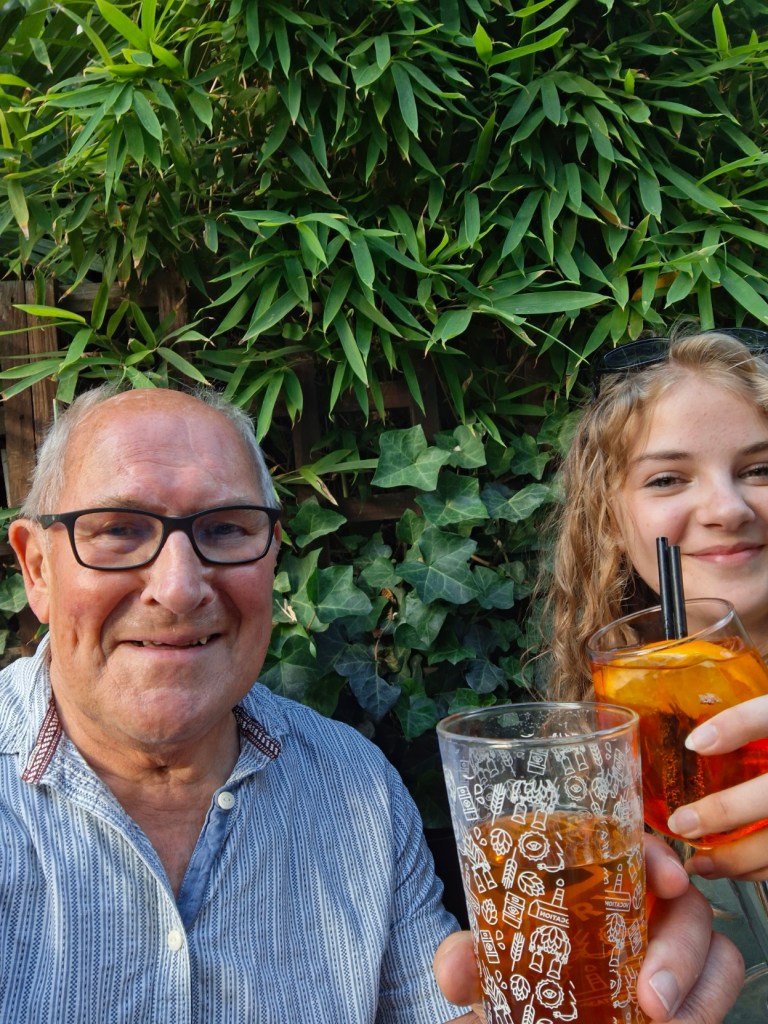
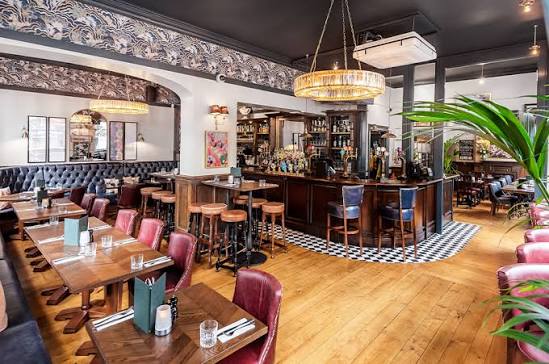
August started well with an invitation to my granddaughter’s18th birthday party. Daisy could at last legally buy a pint and I enjoyed a few with her and many other family members and friends in the Shortlands Tavern. It has recently implemented an “No under 21s after 8pm” rule after recent troubles with young people. My daughter thinks these were largely self-inflicted by putting televisions everywhere and staying open late during the World Cup and encouraging a younger clientele. We were not ushered off the premises but chose to leave around nine after a good evening of catching up. Daisy and the family had just returned from a fabulous trip to Vietnam and Cambodia about which I heard lots of good things.

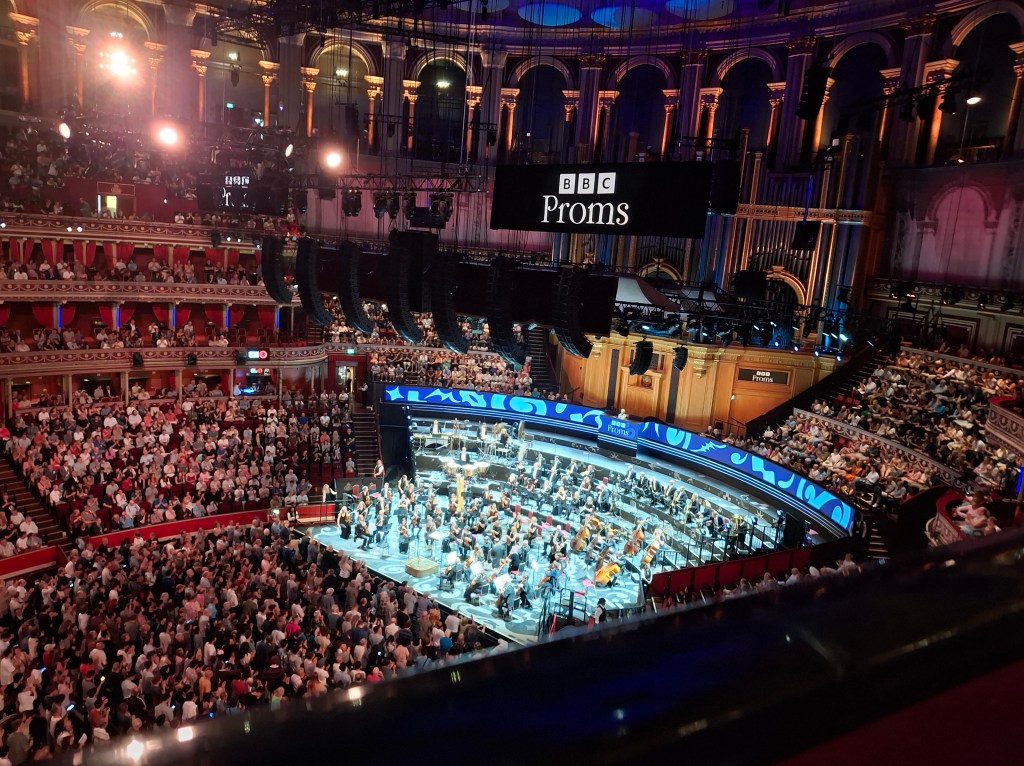
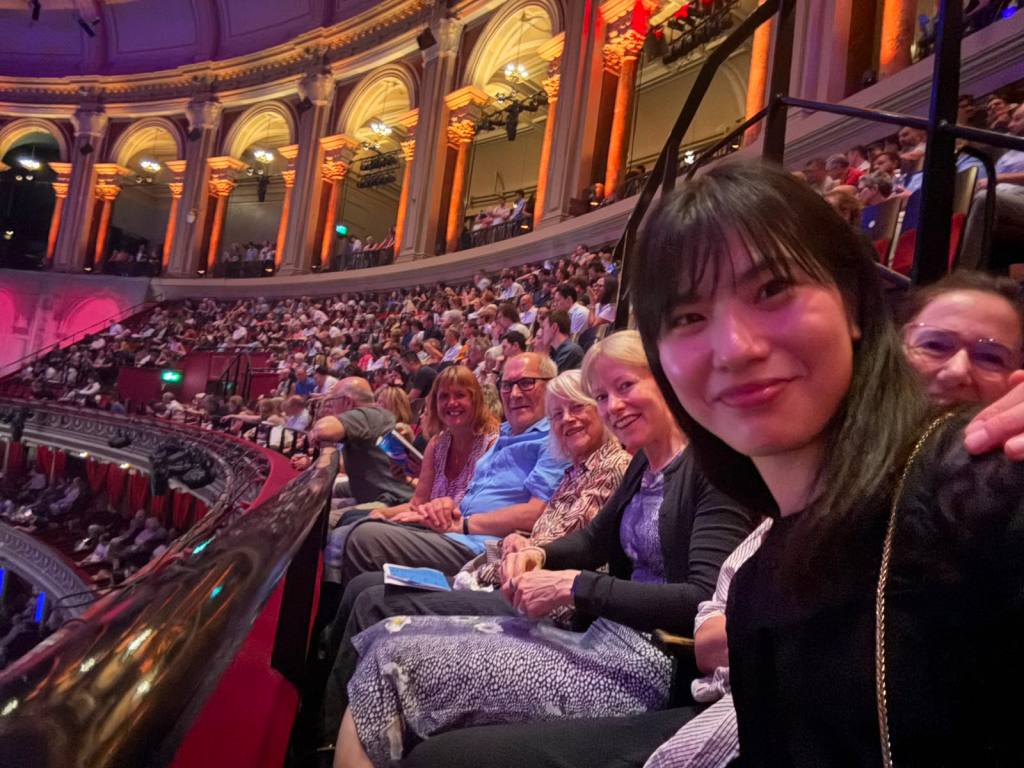
The next Sunday saw another trip to the Royal Albert Hall to a concert by the Orchestra of the Age of Enlightenment. I had arranged to dine with Frances in the Queen’s Arms the lovely nearby pub where we had missed Dani Howard on the previous Sunday’s Prom trip. There are still no trains into Charing Cross from Lee so I thought a bus from Victoria to the RAH would be easy. Not so. The National March for Palestine had caused a massive gridlock around Hyde Park Corner – no problem with that a worthy cause – but a TFL guy advised that he couldn’t say when the next 52 bus would make it down to Victoria. There were two other concert goers who were anxious about making the trip as they wanted to catch the Hockney at Serpentine North before the concert – I just wanted to get to the pub to meet Frances. So I suggested a taxi. They were worried about cost but finally we agreed and were joined by a fourth passenger so all costs were shared.

By a brilliantly circuitous route the driver contrived in good time to drop three of us at the hall and took the fourth woman on to her home on Kensington High Street – raised eyebrows were met with “I downsized a big house into a tiny postage stamp flat!” Good food, wine and conversation ensued and we made our way to the hall.

The OAE development team had suggested we might like to join them for a pre-concert or interval drink at their box. We headed there to find that only white wine was on offer. In a piece of noble generosity my friend Luka whizzed off to source some red as Fran and I had not wished to switch from our dinner tipple. Thanks Luka – much appreciated! Some very interesting conversations with other guests included music, lack of arts funding and cricket. The concert itself was excellent. I had never heard of, let alone heard music by, Zelenka. He was admired by Bach and Telemann and I enjoyed his Misere for its brooding intensity and varied choral writing but especially for the soprano lines for Erin Morley who was in brilliant form in this piece and in two Mozart concert arias. In between Peter Whelan directed the OAE in a performance of Mozart’s Masonic Funeral Music a rather strange requiem for a fellow mason as indeed was Zelenka’s piece. It was a very engaging first half with the band on great form under a conductor they love working with. The second half was devoted to Hadyn’s Nelson Mass where Erin Morley was joined by Helen Charlston, Guy Cutting and William Thomas. Both Helen and Guy are graduates of the Rising Stars programme through which the OAE helps so many young singers progress their careers. While Erin Morley has the lion’s (esses’?) share of the arias, the other voices worked well to provide us with a thoughtful version of this complex work with its low strings and drums contrasting with steely blasts from the trumpets and lush orchestral ensemble passages. Another great evening at the Proms.

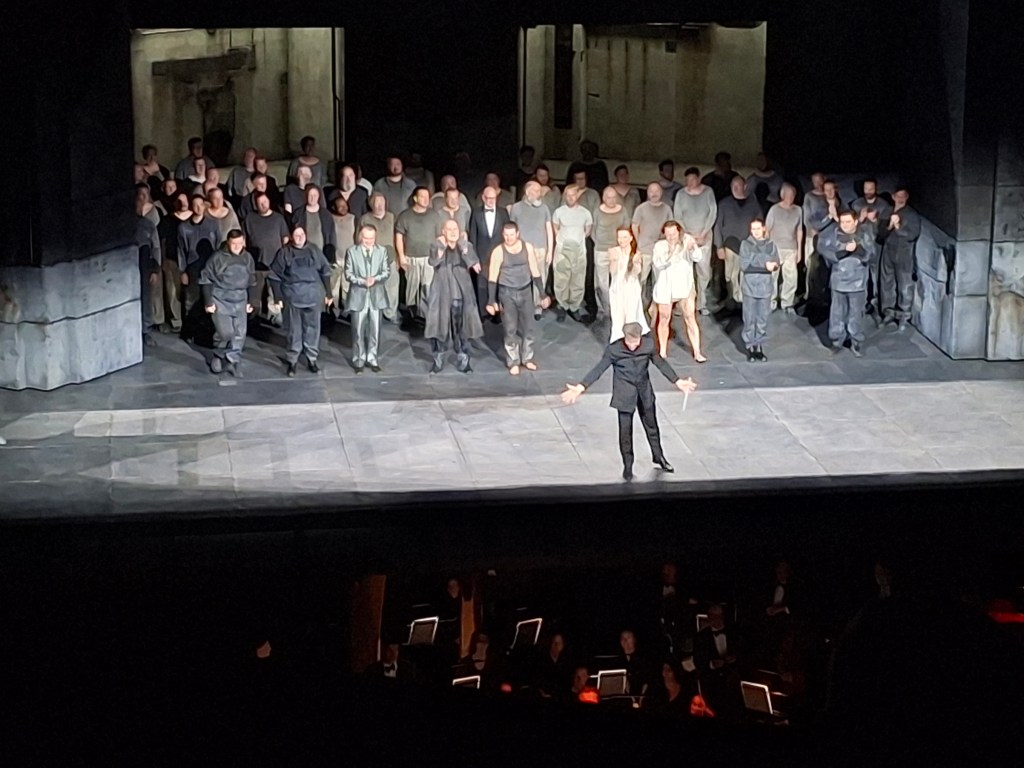
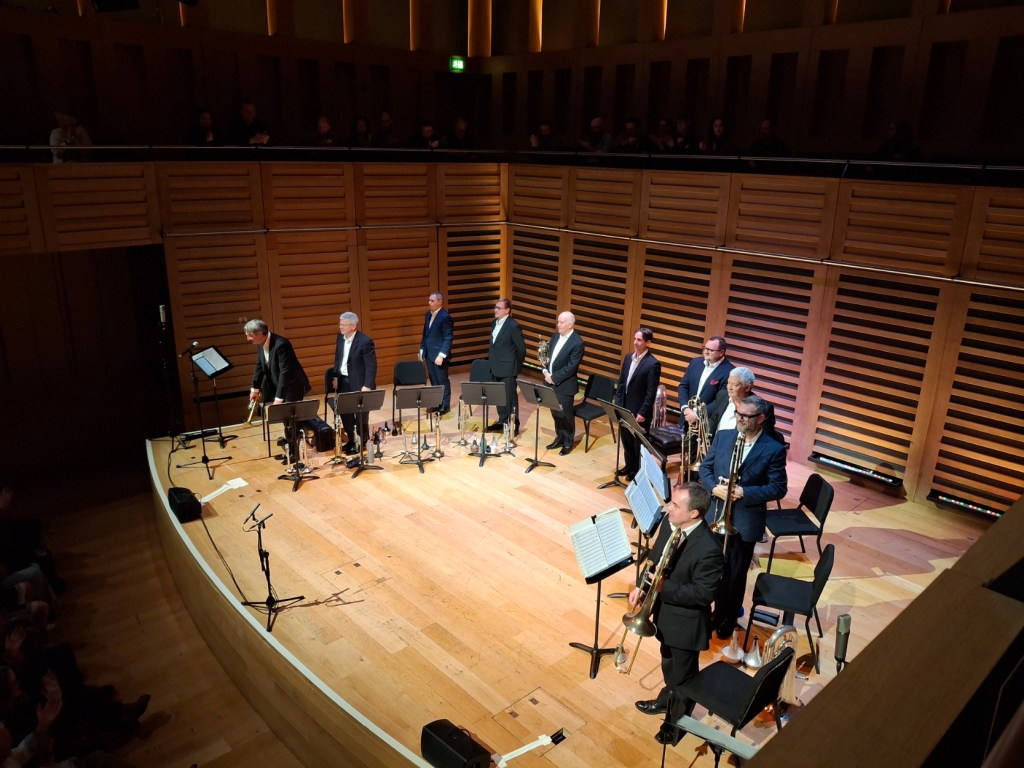
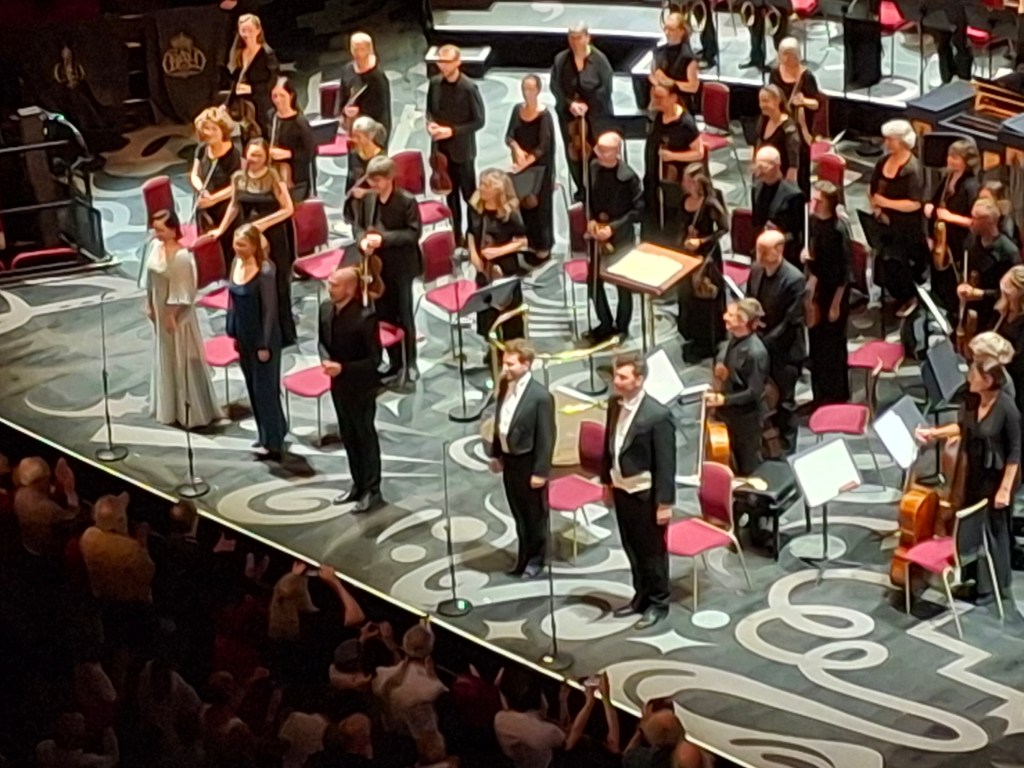
Erin Morley, Helen Charlston, Peter Whelan, Guy Cutting and William Thomas receive applause

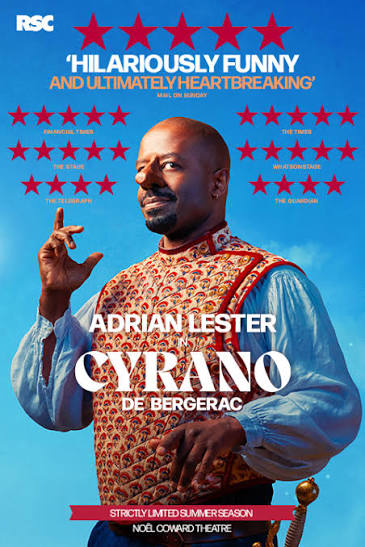
The next trip was to catch up with Adrian Lester and Susannah Fielding in Cyrano which has transferred from Stratford to the Noel Coward Theatre in St Martin’s Lane. I met Fran again for a pre-theatre snack in the excellent Barrafina in Adelaide Place – wonderfully convenient for Charing Cross station which is today again receiving trains from Lee for the first time in a month. Barrafina staff are chatty, the food superb and the wine slipped down nicely. As did the play. I’ve always known Adrian Lester was a great actor but this performance was outstanding and backed up by a superb cast of actors and musicians who roamed around the theatre throughout a really funny and emotional evening. As someone who likes playing with words, I loved this adaptation by Debris Stevenson and director Simon Evans which absolutely crackled with one-liners, classy put downs and truly duff verse as well as some emotional interplay in the love triangle. Brilliant!

You know you are getting old when the NHS offers you a vaccination against a virus you’ve never heard of. I looked up RSV and found that it was respiratory syncytial virus and the vaccination is intended for “older adults and newborn babies”. So I’m now worried that I’m entering Shakespeare’s seventh age and will finish up “sans teeth, sans eyes, sans taste, sans everything”. As an asthmatic anyway I thought I’d better do it and discover that the nearest pharmacy I can attend is in Downham Way which “sans car” is an exciting two-bus ride away.

It all worked out fine and to date, the possible flu-like symptoms I was warned of haven’t materialised and my weak lungs have some extra protection. And I had a trip as a passenger through some of the less familiar parts of southeast London.

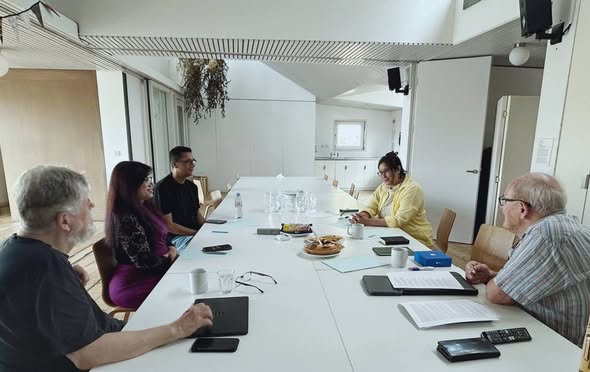
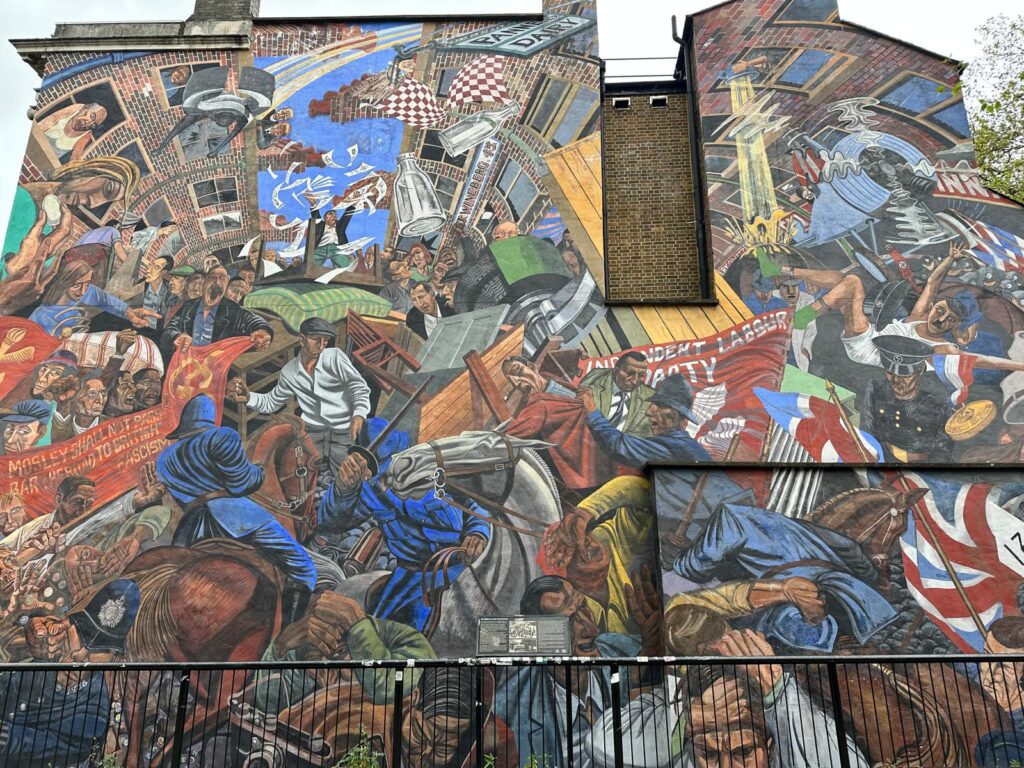
BBPC is working with New Cockney Poets towards an event on 4 October to commemorate the 90th anniversary of the Battle of Cable Street when the East End rose to repel Owald Mosley’s fascists from marching through the area. So we set our participants the theme of East End Identity for this session’s poems. Some wrote on the day, some had prepared poems ahead of the meeting and others who couldn’t attend sent in their poems. Inspiration came from a film of the action back in 1936 with first hand commentary from a particpant and from the Cable Street mural.

My friend Jadwiga and I celebrate each others’ birthdays with a lunch. We share a date 19 but are two months apart. Because of lots of other commitments we celebrated mine in August at Ognisko, Jadwiga’s favouriite Polish restauarant in Exhibition Road. After a surprisingly hot beetroot soup – we both expected it to be cold – I then had a rabbit leg in mixed vegetables and Jadwiga who doesn’t eat meat had smoked salmon blinis.

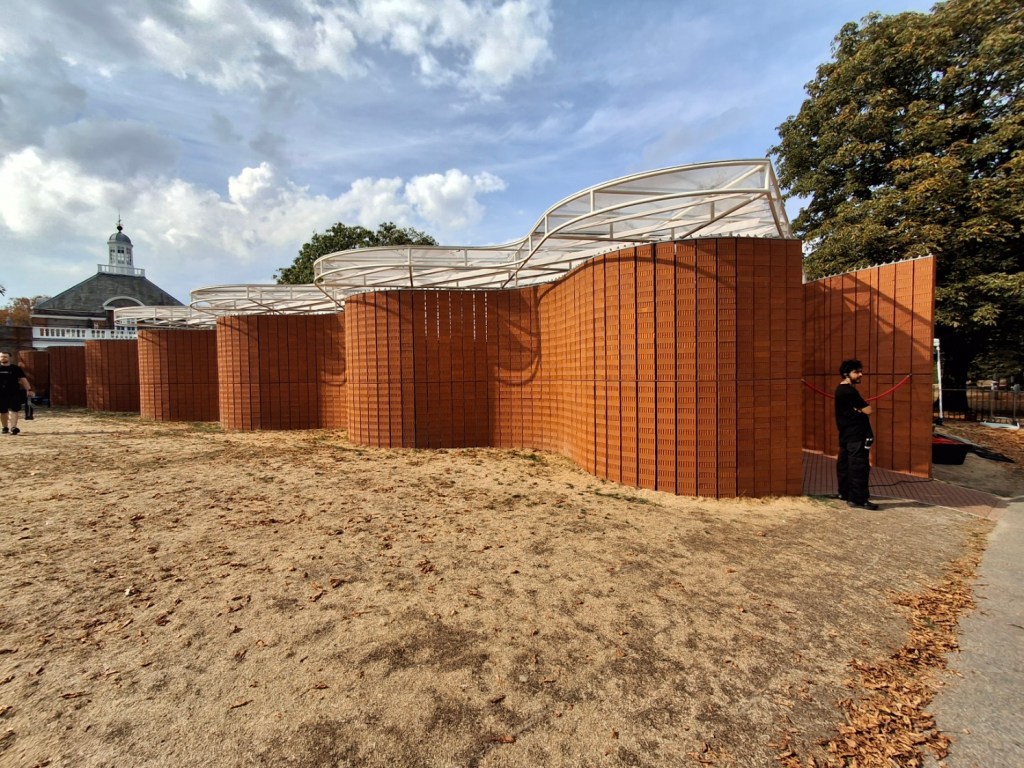
Our tradiiton is then to walk up and view the current year’s Serpentine Pavilion. Unfortunately it was closed for a private event so we could only admire the fine red brickwork of its construction. Designed by LANZA atelier from Mexico City the design is known amusingly as a crinkle-crankle wall. The serpentine nature of the wall apparently gives it more stability and uses fewer brisks. It is certainly very curvy and has some bricks with inttricate patterns baked in. We weren’t able to experience its translucent canopy roof so had to make do with the website images for the effect.

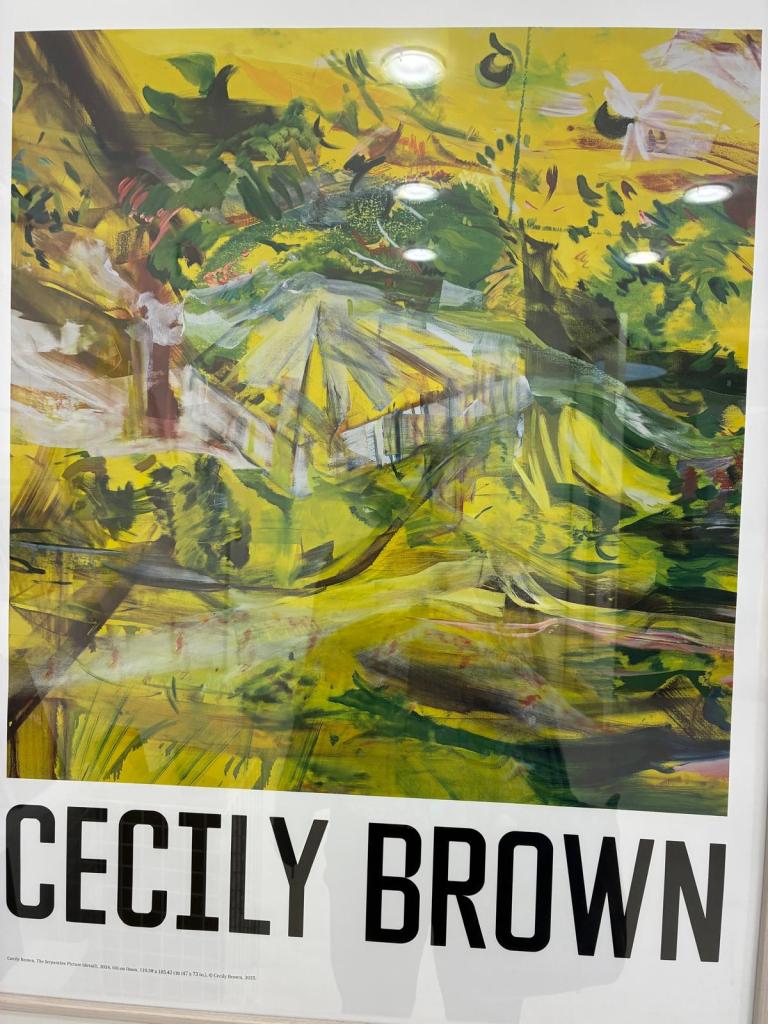
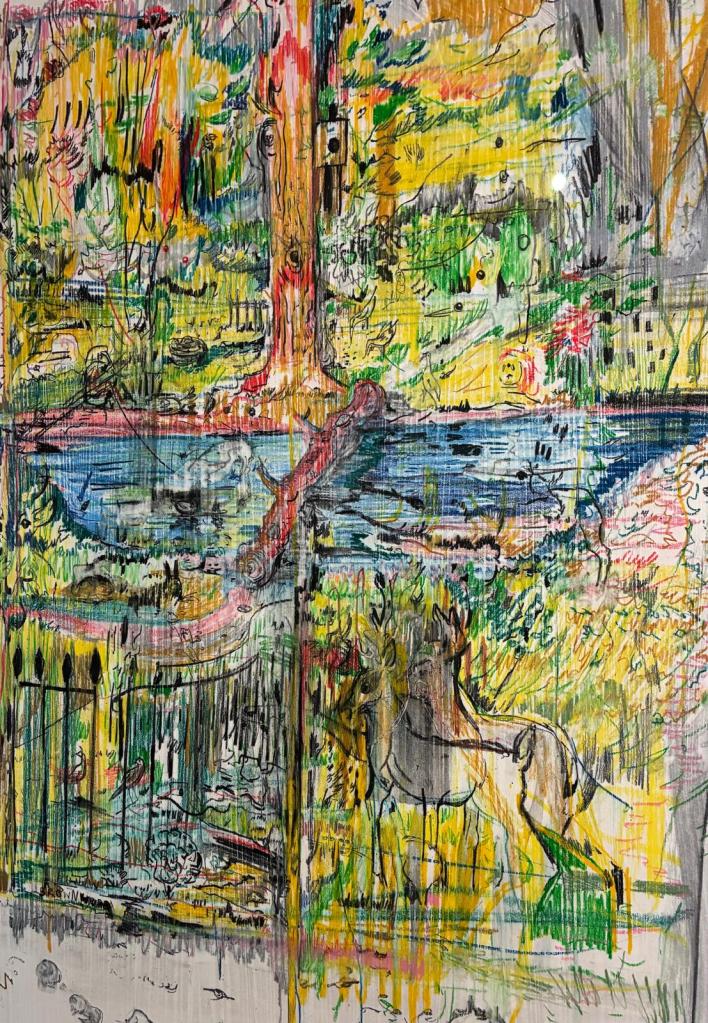
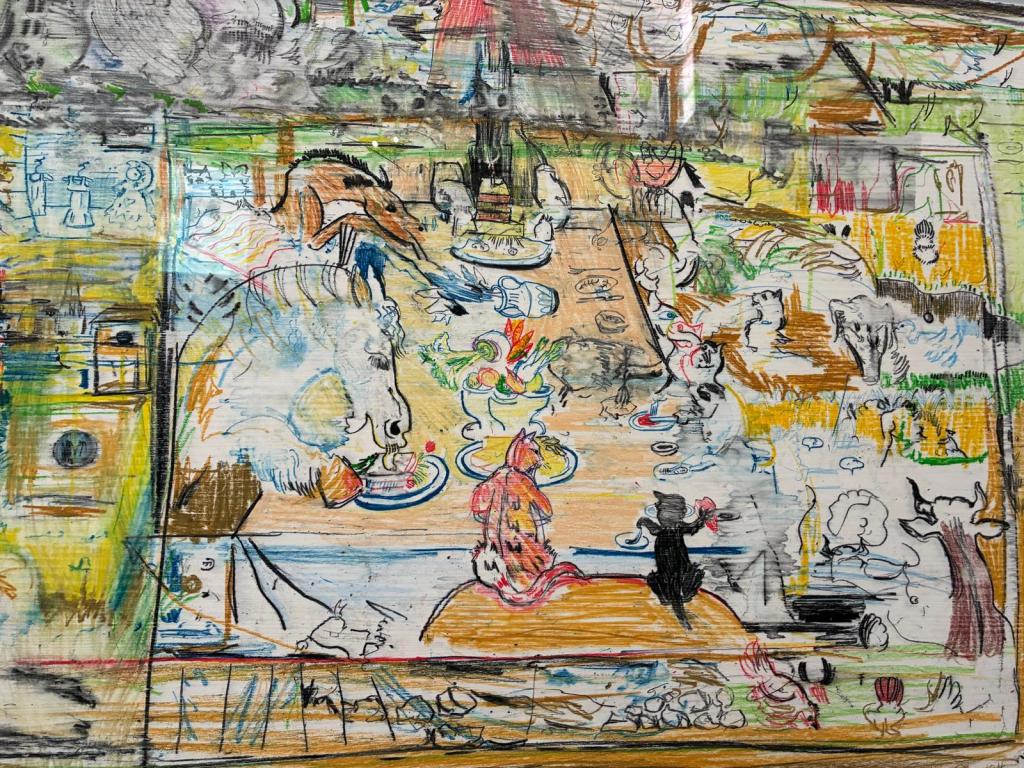
What we did discover was a new artist in the Gallery. We had to admit that neither of us knew anything about Cecily Brown a Btritish born painter who trained at the Slade and moved to the USA in 1994. They are mostly very large colourful canvases close to abstraction. However as you look closer there are humans, animals and especially fallen logs over streams in a reccurring series of “Nature Walks”. She applies paint in very thick broad strokes in the majority of works here but we both really liked some of her smaller works, These are mainly monotypes, that is one-off prints, not editions, to which she adds pen and ink drawing, crayon and pastels to great effect. I found these really interesting in subject matter and technique. An unexpected pleasure that rounded out the birthday treat very nicely.

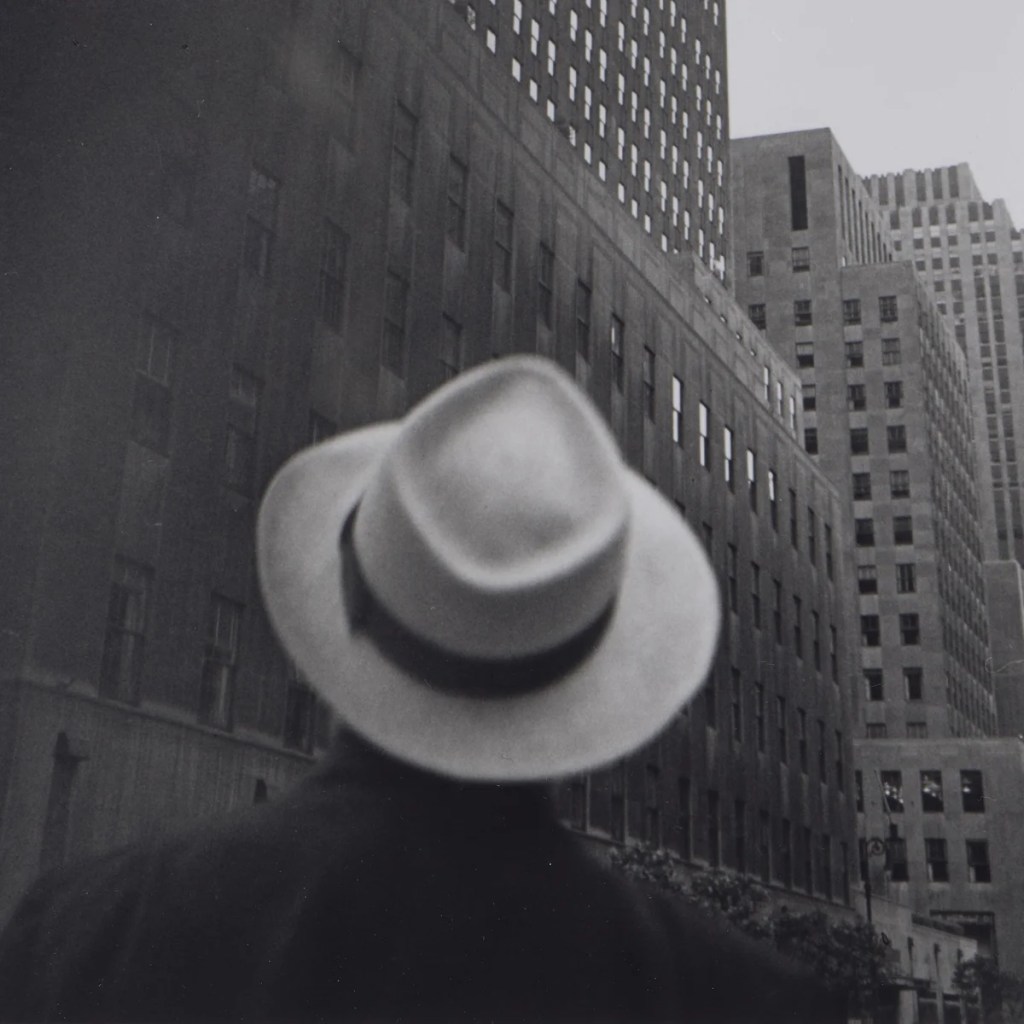
Another cross south London multi-bus trip found me at the gate of the Dulwich Picture Gallery. A couple of weeks ago Lucy Nicholson, herself a renowned photographer, recommended the exhibition Portrait of a City which showcases over 100 images of urban life in the USA from 1907 to 2012. Many are by well-known photographers like Diane Arbus, Saul Leiter, Alfred Stieglitz, Helen Levitt and Bruce Anderson and many by others I hadn’t heard of. The photographs themselves were all worthy of a long look just as images but build a dramatic impression of urban life in America over the century. There were some interesting film clips too.Thanks for the tip Lucy.

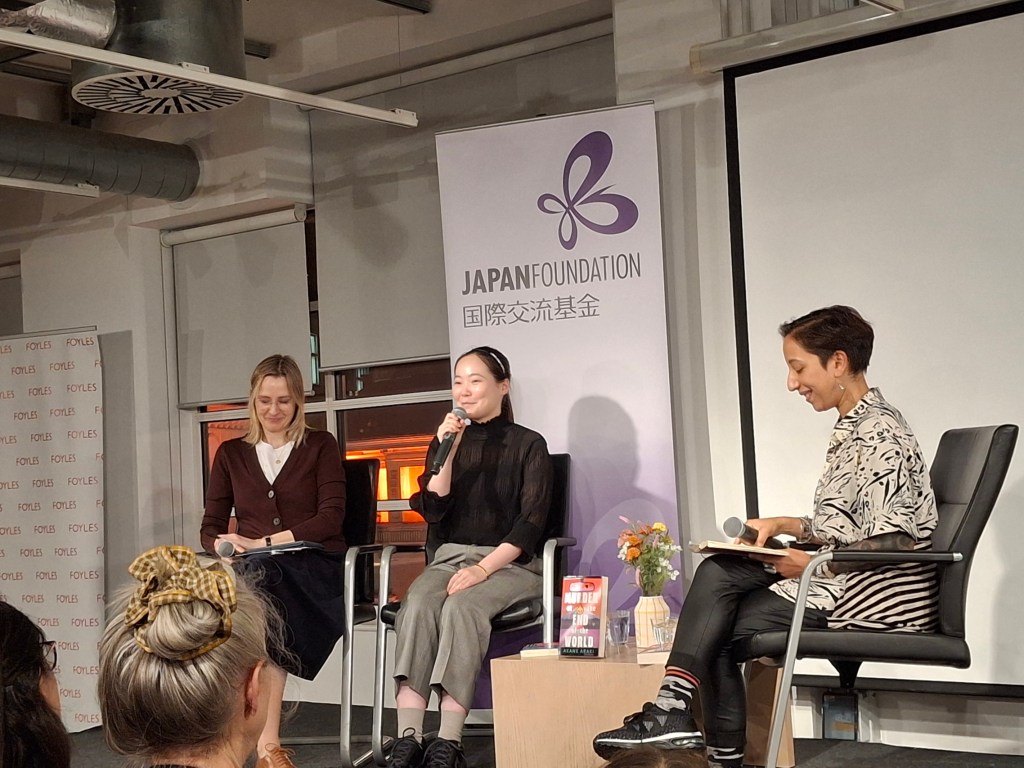
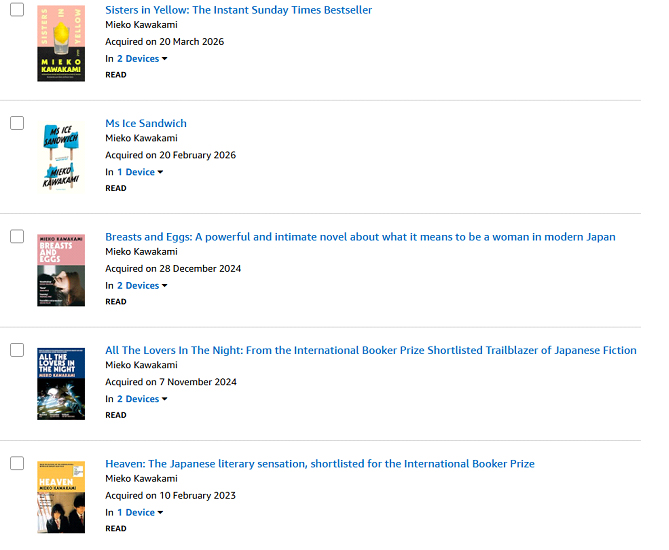
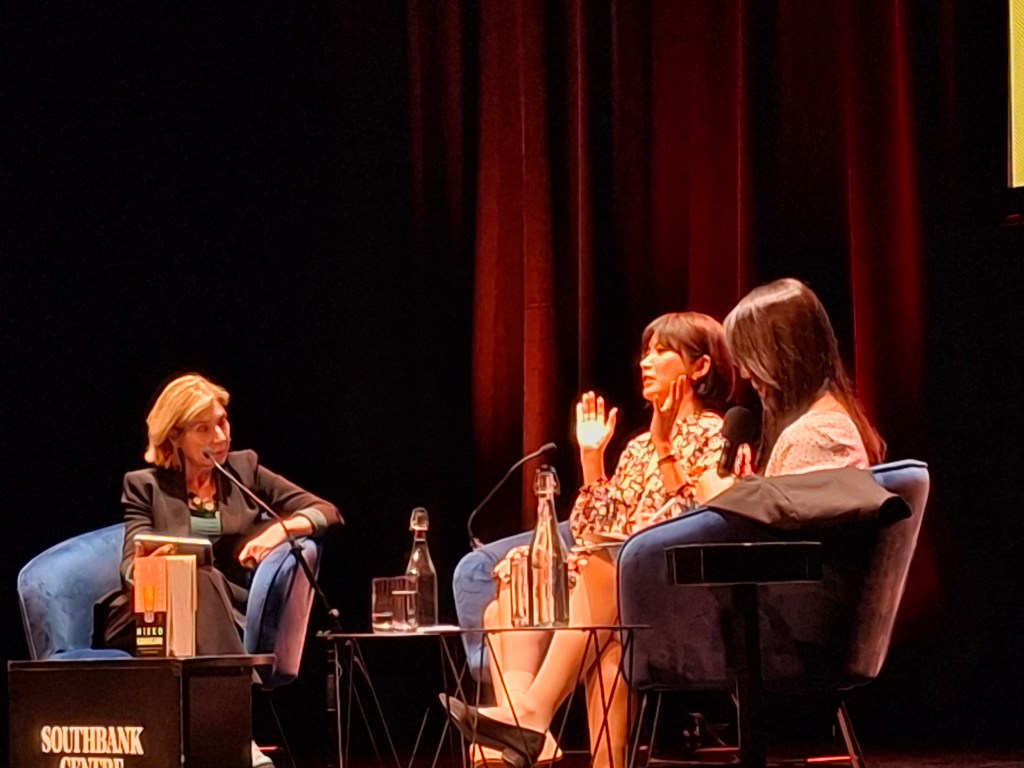
More bus journeys took me from Dulwich to the Southbank Centre for a talk by a favourite Japanese writer Mieko Kawakami. I debated taking a photo of her book titles in my Kindle to sign but decided that would not be cool. Her talk was fascinating covering her own rather deprived background, her writing style and choice of themes – all quite different so far in the five books I’ve read. Then a large chunk of the evening was devoted to talking about Murakami and translation. The description of the collaboration with translators and the degree of trust involved was very insightful. At one point she said that Jay Rubin, who has translated a lot of Murakami, was of the opinion that Murakami’s translation into Japanese of Catcher in the Rye was better as a read than Salinger’s original – quite a claim. Mieko also talked with admiration of Murakami’s beautiful Japanese. She was funny – you knew when a joke was coming because the Japanese in the room laughed before the superb interpreter, whose name I didn’t catch, – could deliver the English equivalent. A fascinating evening and some re-reading to be done withn new perspectives on the books.

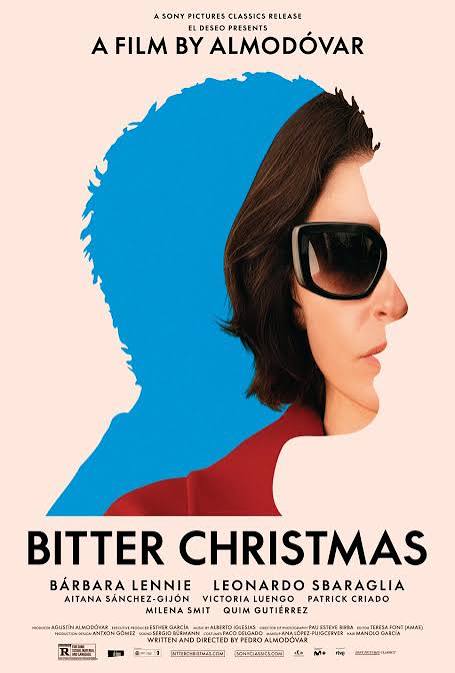
The arrival of a new Almodovar film is a real incentive to venture into Picturehouse Central for a treat. His latest is Amarga Navidad – Bitter Christmas in English. A recurring theme in his later work has been the blurring of fiction and reality. How ethical is it to steal someone else’s life story for your script? As always, the sets and wardrobe are strikingly colourful and chic. The acting is emotionally powerful and the split era timescale works well with tragic events of 2004 being purloined for eminent director Raul’s (Leonardo Sbaraglia) 2025 script.

Relationships across genders are vivdly drawn and the close friendships of the female characters contrast with the more withdrawn males. The execption here is the brilliant Patrick Criado a firefighter who moonlights as a stripper in brilliant glitzy underpants who is supportive of the panic attack prone commercials director Elsa, played by Barbara Lennie. In a gender swap Elsa is Raul’s alter ego in the modern day script. The parallel stories intertwine in an intriguing way and as so often music plays an important part – Alberto Iglesias’ score won the Soundtrack Award at the Cannes Film Festival and a haunting Mexican song from Chavela Vargas makes an impact. This is not Almodovar’s best work but I found it riveting throughout and with Madrid at Christmas and the black sand of Lanzarote as locations and his brillinat designers’ sets, props and costumes it are always visually as well as intellectually and morally interesting.

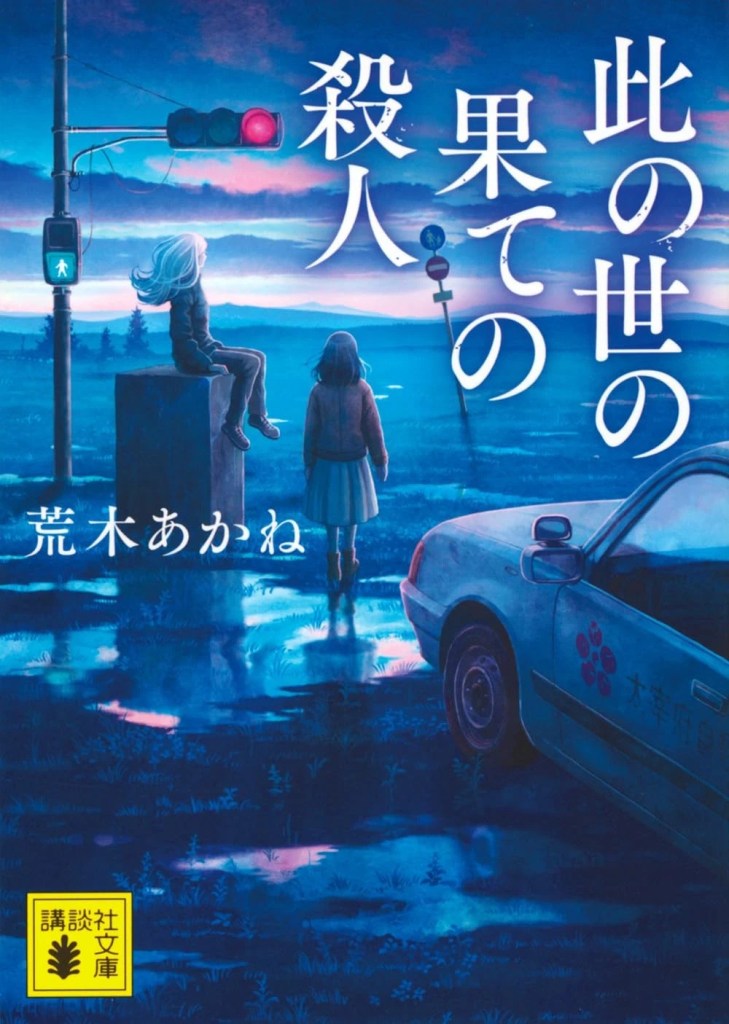
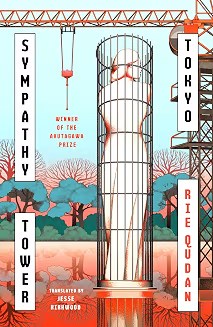
After the film, I popped into Yoshino to pick up my supply of gyokuro and apart from the usual delightful catch up with Lisa, I had the bonus of seeing Shoko who had come to the Prom a couple of weeks ago that featured Dani Howard’s concerto for brass Signal. Shoko had been away in Poland for a week and is now back in London where she works at a Japanese bank. Both these women are delightful company and a longer session at Yoshino where food as well as beer will be taken is planned. Shoko approved of my current reading – a hilarious, scary, futuristic satire called Tokyo-to Dojo-to or The Sympathy Tower Tokyo. She doesn’t completely share my love of Murakami finding his “beautiful Japanese” (Meiko Kawakami) prose quite hard going sometimes.

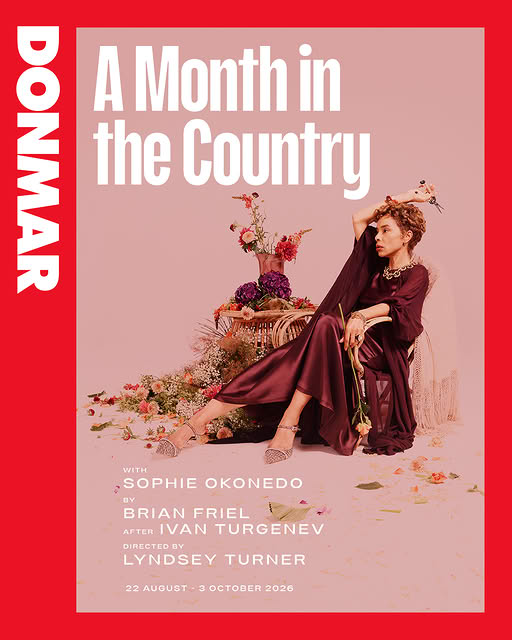
A Month in the Country is Ivan Turgenev’s most famous (only performed) stage work although there have been adaptations for the stage of several of his novels including Fathers and Sons also by Brian Friel whose version I just saw at the Donmar. I have seen the play before but it was difficult to tell whether what the audience shared was more Turgenev or Friel. OK, the plot was Turgenev with the pampered, moody Natalya longing for a true connection, preferably with a younger beau, from her loveless marriage – very Nordic, with echoes of Strindberg, Ibsen and of course Chekhov. However the latter comparison is retrospective as this play predates his better known compatriot’s theatre debut by 25 years. As we enter we find a leafy glass box through which said Natalya peers out from her symbolic prison – a little heavy perhaps. No complaints with the rest of the production though. It moves swiftly through the scenes with the box descending as a marker. The sets are sparse with lots of very wafty grasses and minimal furniture. Natalya’s gowns are exquisite – hats off to the design team – and the other cast wardrobe well chosen for their characters. But that’s all surface, what about the play?

Sophie Okonedo can seemingly do no wrong. She gives a faultless performance as the sneering and demanding diva Natalya and as the pleading and needy would-be mistress. Just brilliant! Alastair Petrie was also outstanding as the spurned but devoted lover-in-waiting, Patrick Gibson was a revelation as the young tutor Alexey by turns falling in and out of love with both Natalya and her ward Vera in a nuanced performance. I couldn’t fault any of the supporting cast who are too many to list – it’s a big cast for a small space – but they all do justice to Friel’s witty adaption. Oh did I mention that it is sidesplittingly funny? I was sitting behind critic Mark Lawson whose frequent guffaws should guarantee a good review. It’s an evening about love and marriage – the first both requited and not and the latter a prison and a promise. I think I wrote that the Donmar’s The Guilty was my play of the year. This runs it close.

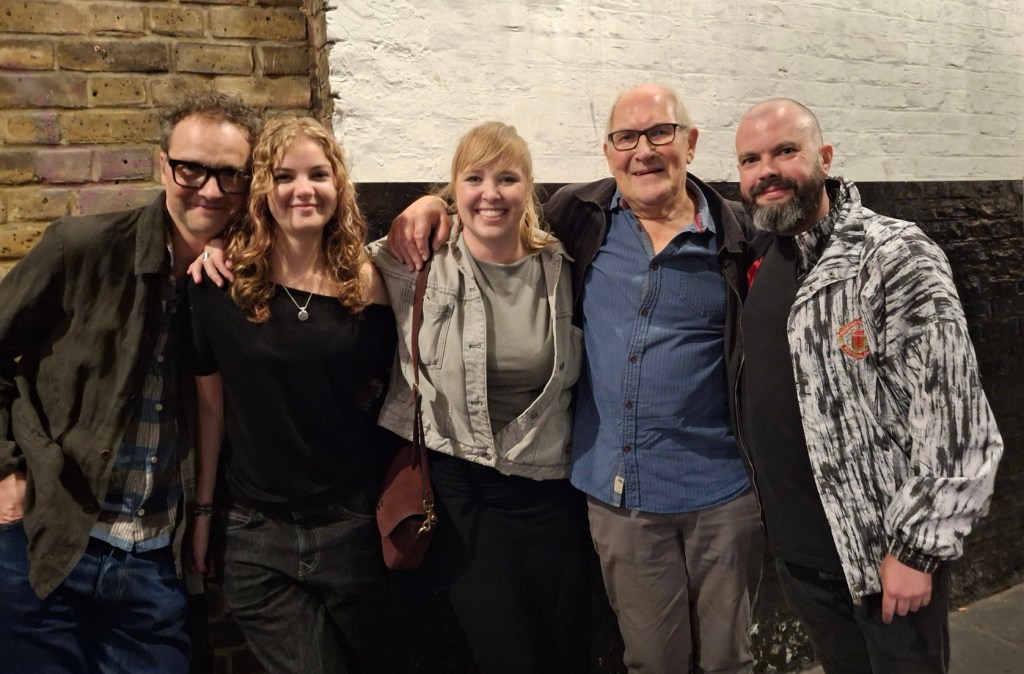
This blog started and ends with my granddaughter. For some time Dani Howard and her partner Sion Jones had said they could arrange for Daisy to sit in the pit beside their friend flautist Holly during a performance of Oliver! at the Gielgud Theatre. A great opportunity for work-experience for one about to study music and drama at the Guildford School of Acting. After an early supper in Pasta Evangelsists in Wardour Street, the Addisons and I arranged to meet and make introductions in the Blue Posts pub and then walk to the theatre. Why are there two Blue Posts pubs within about 300 yards of each other? I knew the one in Berwick Street very well from days past when recording voice overs with Chris Timpson at his studio in Duck Lane round the corner. However Dani and Sion were in the one in Rupert Street – even closer to the theatre. Oops! We did meet, chat and become firm friends all round and then Jo, Chris and I went in the front door to take our seats in the stalls while Daisy went in through the stage door. She found it loud – it is remarkable how much noise a 12 piece band can produce – interesting and useful. After the show we then all (minus Jo who had a bit of a headache) gathered at the other Blue Posts for a debrief, some networking and a few drinks before heading off home after a thoroughly entertaining evening.

After the show outside the other Blue Posts

Speed blog

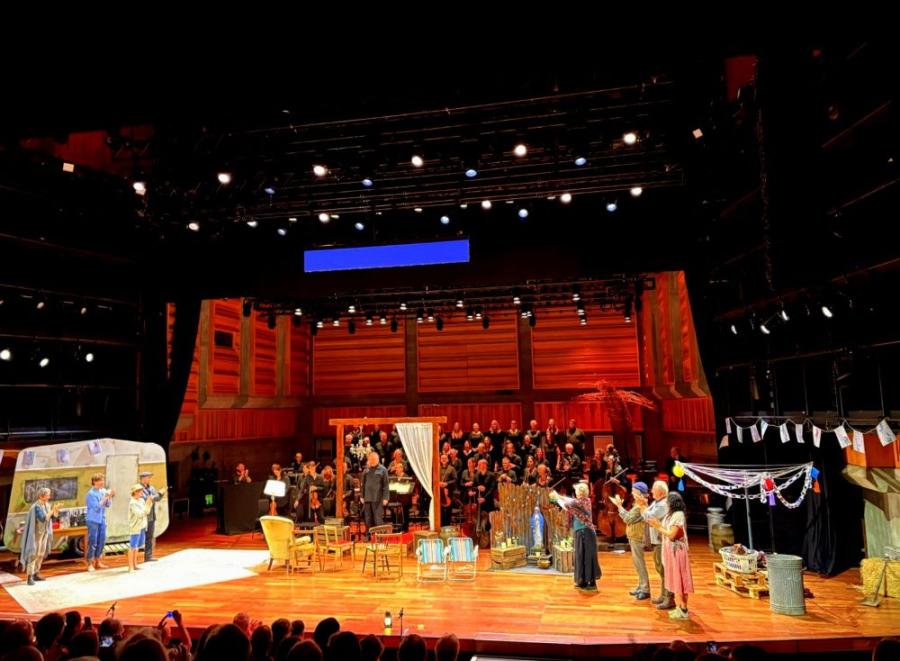
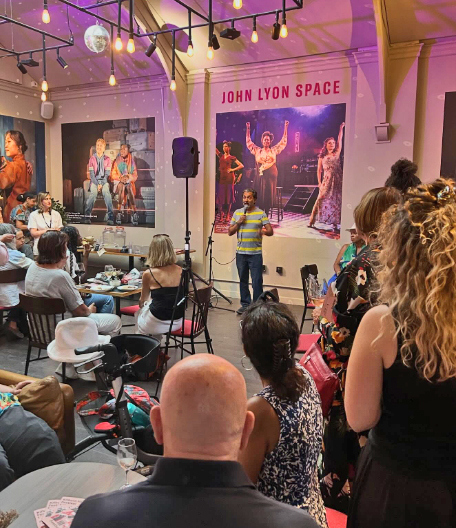
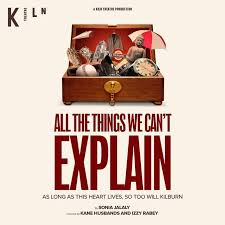
Just had to get down three amazing days. First a trip with Frances to the opening night of the Kilburn High Road Festival at the Kiln Theatre. We had a chance to chat to the creative director Amit Sharma, trustee Alastair Levy, aspiring actors and others with a glass of wine and excellent food before going into the theatre to see All the things we can’t explain. This is a community production in which 80 cast members ranging from ages 6 to 80, open the festival by searching for the beating heart of KIlburn. As with the OAE’s Life of the Sea back in June at the QEH, it is so encouraging to see so many people from diverse backgrounds engaged in the arts. It was a fun piece with lots of dramatic twists, solo turns for just about everybody and brilliantly choreographed movement with all 80 on stage pretty much throughout. It celebrates the ‘people, memories and shared experiences that make a true community’ – and it did. A great initiative from the Kiln as the start of a fortnight’s programme of events in various venues and on the street up and down the High Road. It quite took me back to the 70s when Ian Dury went on tour with his pre-Blockheads band Kilburn and the High Roads.

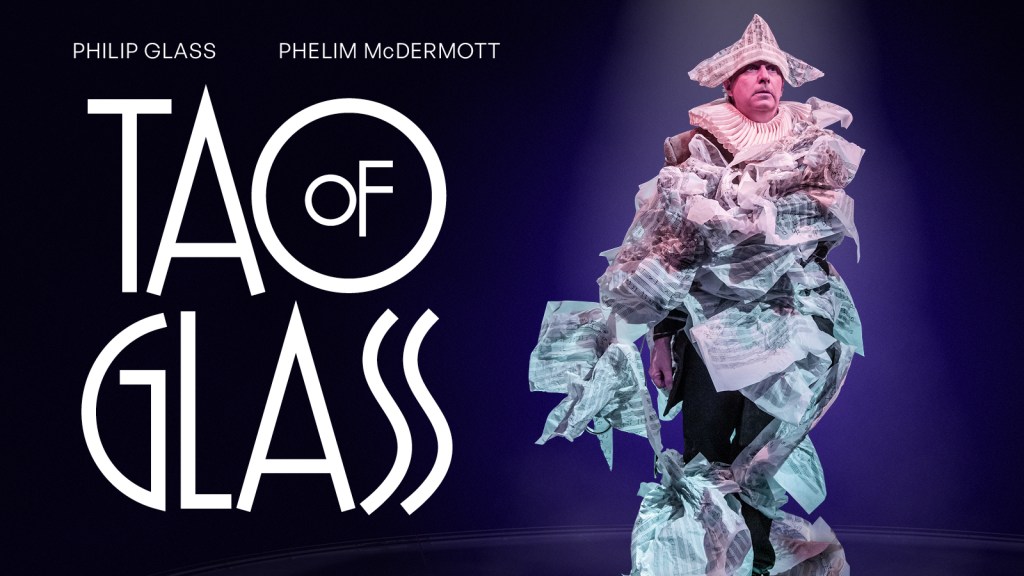
On Saturday I had the pleasure of meeting up with Rosa, now largely based in Girona so a sadly infrequent culture companion, to see The Tao of Glass at sohoplace. Rosa had expressed a wish to see it in an email so I booked not knowing much about it, but thinking that, as it featured the work of director Phelim McDermott who had done such a brilliant job with My Neighbour Totoro and much earlier Philip Glass’s opera Akhnahten back in 2016, we’d give it a go. Oh so glad we did! It’s a piece of totally indescribable theatrical magic accompanied throughout by a score by Philip Glass played live by a quartet of violin, clarinet, piano and percussion – the latter included a sequence played on kitchen utensils. From its opening scene with a bemused looking Phelim sitting in the front row of the stalls through a series of sequences using puppets, mime, shadow play, music manuscript paper, huge fluorescent-tube-lit rings ascending and descending from the flies, sellotape and both a deconstructed and a self-playing piano and a Dansette record-player, it tells the story of McDermott’s lifelong obsession with Philip Glass and his music. It was truly astonishing and moving.

We both got quite emotional at times as well as belly-laughing. That’s what theatre is all about. And it’s all physical – no green screen, no AI, just an amazing set of people contributing to a wild imagination. It’s rare that a show gets the maximum 4 or 5 stars from every outlet but Tao did. Go see it if you can. It’s on until 12 September.

Rosa was meeting another friend in the evening and I needed to get back to join neighbour two-doors up Pritie Arnolda’s birthday party. She welcomed 150 people with a huge marquee in the garden, wonderful food and ample drinks – soft and otherwise. It was lovely to catch up with other neighbours, new acquaintances and with Pritie and DJ Dom who have been friends since they first moved in with very young children who are now teenagers. And I have another birthday party this week as my granddaughter Daisy turns 18. Where do the years go?

And then I got to see Rosa again on Sunday when a group of us went to see the world premiere of my friend Dani Howard’s Concerto for Brass ‘SIGNAL’ her first commission from the BBC Symphony Orchestra as a composer. Six of us assembled in the Verdi Restaurant for an enjoyable meal before the concert. Unfortunately Dani was in the Queen’s Arms pub round the corner in Queen’s Gate Mews – an old-haunt from her days at the Royal College of Music opposite the Royal Albert Hall and a pub I’ve enjoyed on a few occasions. Her WhatsApp letting me know came too late for me go and see her there and get back for our 6.15 table booking which was quite important as we were welcoming a new friend to the group – Shoko Yamana. Shoko is also a friend of Lisa Maitland who runs Yoshino restaurant. Lisa had met Dani when she, Sion and I went there for dinner back in March when she was working on the Prom commission and Lisa was excited to hear about it. Lisa couldn’t come today as she had to work but suggested that Shoko might enjoy the concert. Fortunately she fitted right into our group and was no stranger to the RAH as this was her fourth prom of the season. But as she said “This is the first time sitting down in the Albert Hall”. Well, she’s very young but two hours standing is not an option for me anymore! She is also a viola player and has travelled widely, so we had a very engaging and interesting pre-concert chat. Shoko joined Jadwiga and her daughter Lucy, Frances, Rosa and me.

But to the main event. Dani’s concerto features the brass sections of the orchestra as groups of soloists rather than having any one instrument out in front with the conductor Paavo Järvi. It has fine passages for strings and woodwind and percussion but it’s the horns, tombones, tuba and trumpets that are the stars of the show. There was some very touching call and response between the sections, lots of her trademark downward slurs and lots of sparkling high notes which sent a tingle through the auditorium. The Guardian reviewer found it as impressive as we did: Bright, celebratory and eminently likable, the music shimmered and frothed, its energetic outbursts crowned with fluttering trumpets and underpinned by sonorous bass trombone and tuba. I really enjoy Dani’s style of composition and listened to the concert again on Monday, It’s on BBC Sounds here with Dani talking about the motivation for the piece and its title Signal symbolising communication. The next item was Tchaikovsky’s Second Violin Concerto a familiar work played by the Greek virtuoso Leonidas Kavakos. It was interesting in parts but failed to fully engage me. His encore of a Bach partita was much more to my taste. After an interval spent entirely queuing for the inadequate loos we heard a complete new work, for me, Scriabin’s Symphony Number 2. It was a final work in 1901 before he became more experimental in works I did know. This reminded me of Mahler, Wagner and Richard Strauss and in one movement with a big storm and calm aftermath of Beethoven’s Sixth Symphony. I thoroughly enjoyed it and all in all it proved a wonderful culmination to a weekend of culture with friends old and new.

‘Twas Valentine’s day in St Alban’s …

So after a busy start to February, its halfway point was marked with a trip to St Alban’s – the first for a long time for me. The occasion was the christening of the extended family’s newest addition Louisa Deeley. I was delighted to note that her middle names were Denise (my late wife) and her great grandmother Rosemary who was there and I was pleased to have a long chat with her over tea. The party decamped to a pub to watch Scotland demolish England in the rugby – large Scottish contingent present. I made my excuses and went to visit my composer friend Dani Howard who conveniently lives opposite the Mayflower pub in the city centre where we had a lovely few beers with her and her partner Sean chatting about all sorts of things musical and other. Dani has a busy schedule ahead with trips to Hong Kong for the premiere of her Cello Concerto to be played by her former mentor about which she’s a bit nervous, several performances of the Saxophone Concerto for Jess Gillam which I heard in Poole last year and concerts in Germany, the Netherlands and three weeks in Florida in October as a “Master-Artist” at the Atlantic Centre for the Arts Residency Programme working with composers, performers and poets.

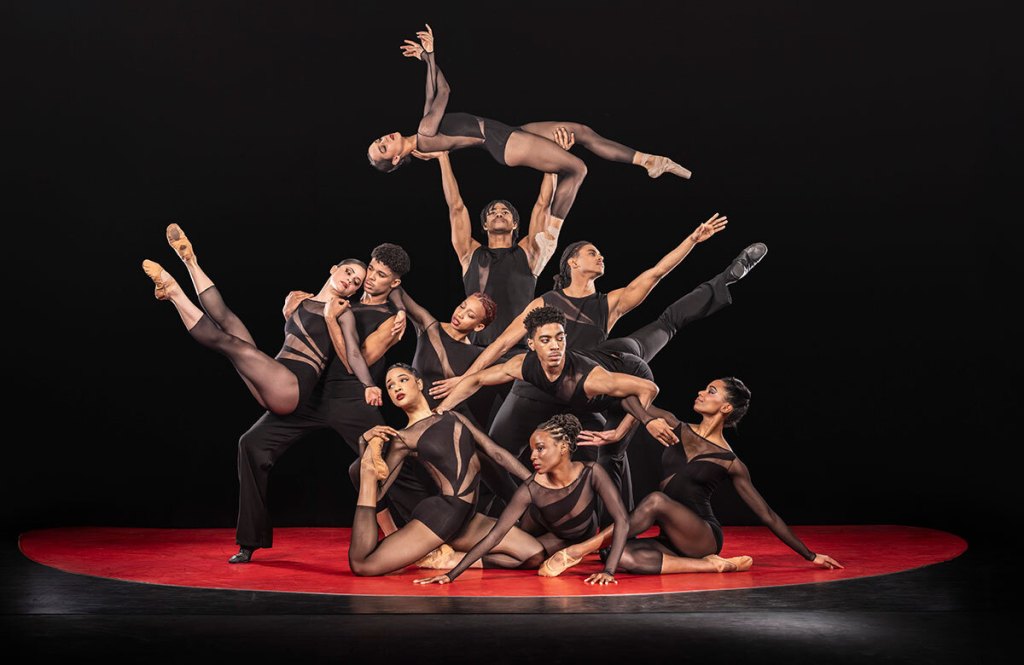
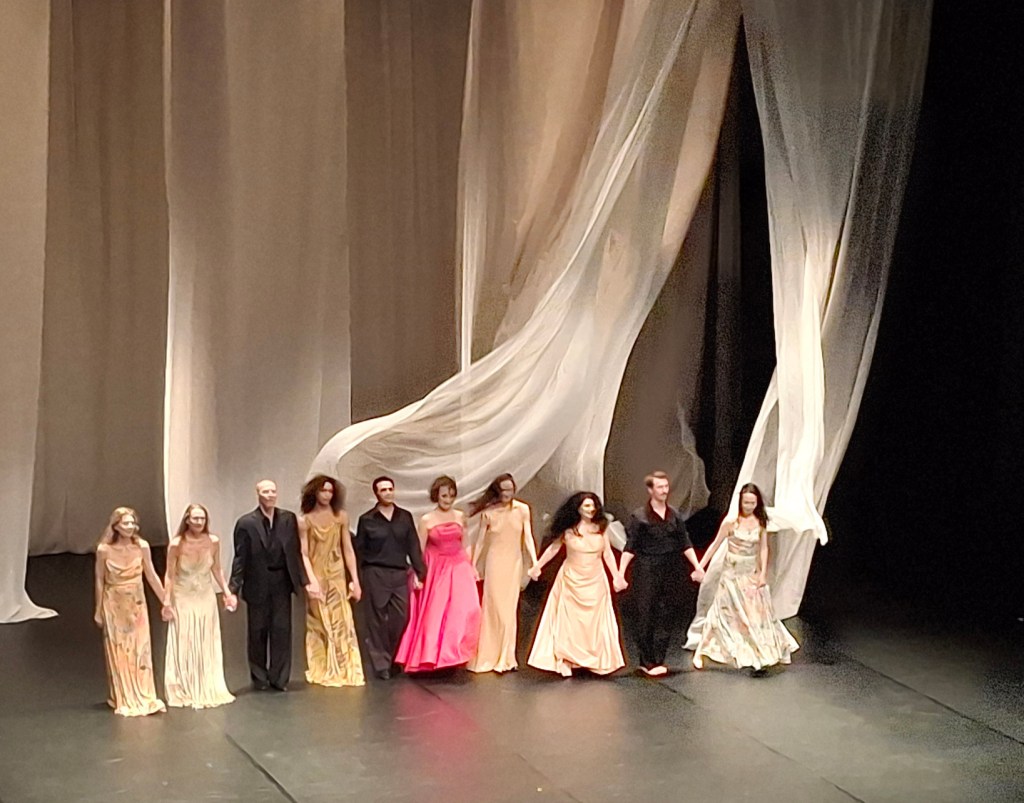
Then after a fairly quiet week a hectic weekend was upon us. On Friday I went with my friend Hattie to see Pina Bausch’s Tanztheater Wuppertal perform the amazing Sweet Mambo. With a flowing white drape background which sometimes billowed and was sometimes still and occasionally swallowed the dancers, the dance unfolded with a series of scenes in which women seduce and repel men, in which they find some common ground and other in which they have a laugh together. The fact that there are three men and six women probably indicates where Pina’s sympathies lie. The sound track is eclectic with classical, ambient, jazz and spoken words. As so often with her confections, it sounds like a mess but somehow it works with a mesmerising beauty. We left the theatre with big smiles on our faces.

Fabulous frocks and flowing drapes in Sweet Mambo

The next day promised to be a bit of a scramble with a trip to Watford for football followed by a cross London dash to the Arcola Theatre for a play in the evening. My initial journey was complicated by there being no Metropolitan Line trains to Watford – my usual route when not driving – as it deposits me much closer to the West Herts Sports Club, where we meet for pre-match drinks and chat, than Watford Junction. It was all worthwhile as our new manager – third of this season, 23rd since the Pozzo family bought the club in 2012 – coaxed the team to a 2-0 victory over Derby County. After the match two Overground trains took us via a highly complex platform change at Willesden Junction (thank goodness Fran was with me or I’d have got completely lost). We met up with Farzana in the Arcola bar before watching a highly entertaining one-man show with a Watford connection.

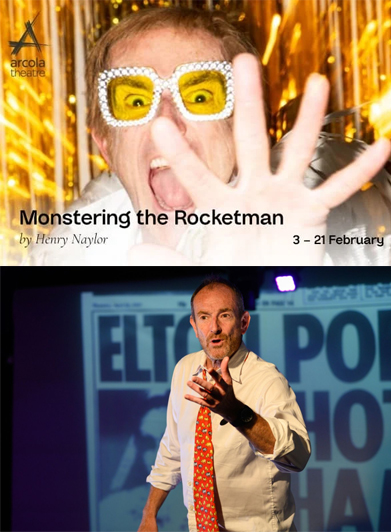
Monstering the Rocketman devised and performed by Henry Naylor was originally at the Edinburgh Festival but the excellent Arcola gave it a worthy London run. It featured the dreadful Kelvin Mckenzie’s vitriolic attack on Elton John, the total lack of facts and evidence for which resulted in the biggest libel suit in history with Elton taking on the might of The Sun and the power of the Murdoch empire. With video clips and garish headline displays Naylor told the full story in a variety of characters in a funny, terrifying and eloquent way. He was one of the lead writers for Spitting Image back in the day and his satirical skills enabled him to skewer McKenzie and cronies in a revealing and most enjoyable 75 minutes. As it was still early we three made our way to the excellent Five Fingers for a fine curry.

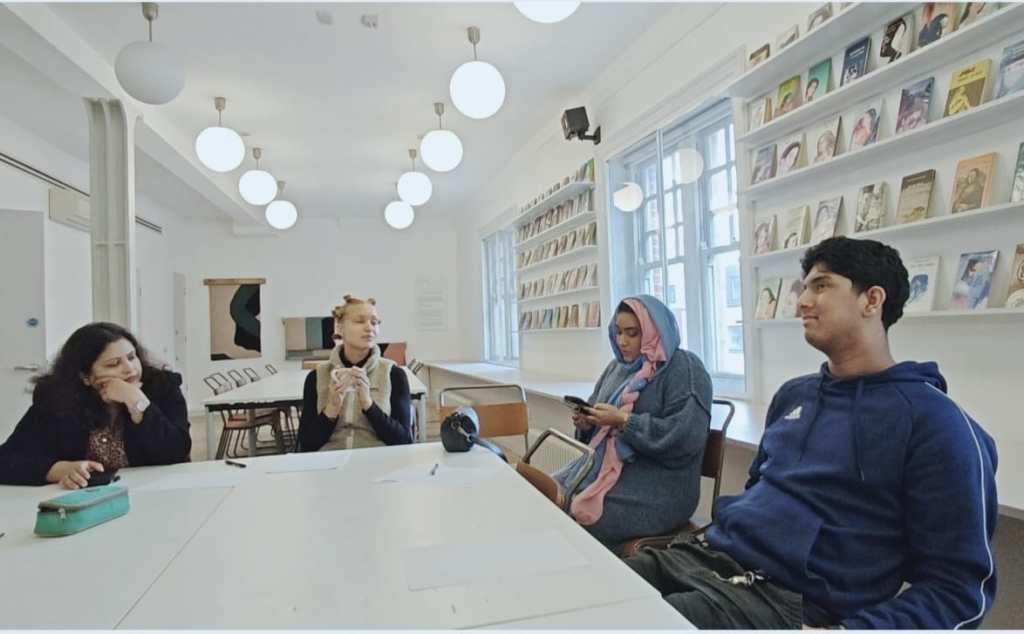
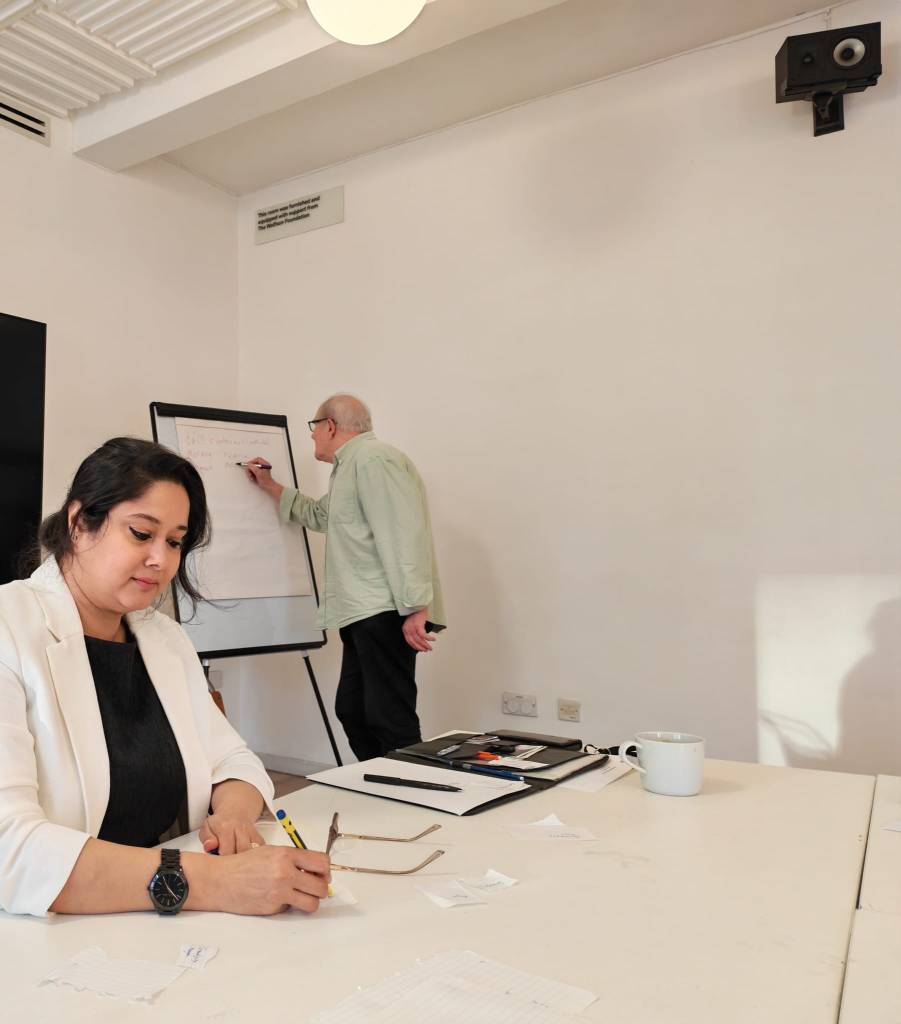
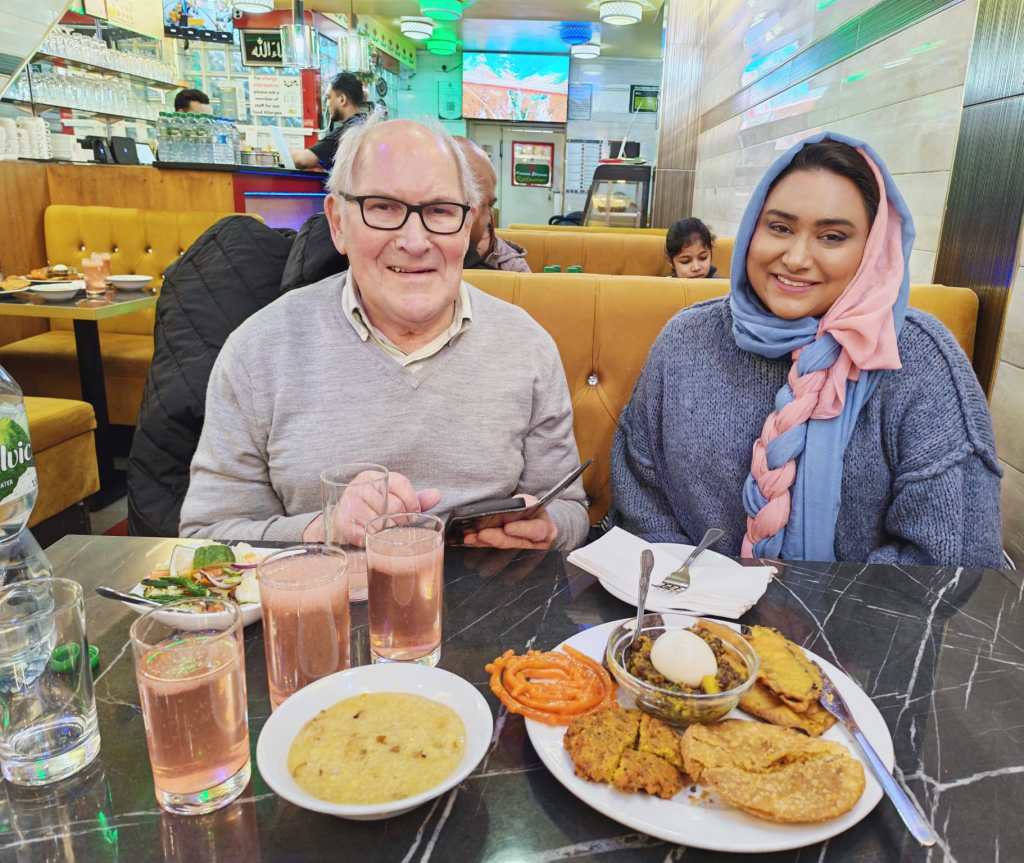
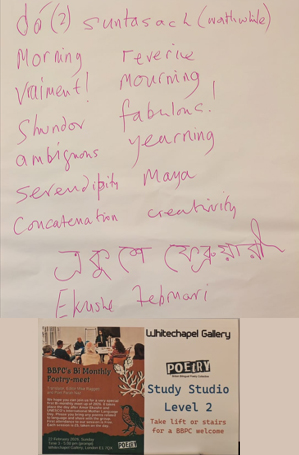
Saturday 21 was UNESCO International Mother Language Day so it was appropriate that our British Bilingual Poetry Collective (BBPC) group had our regular meeting on Sunday 22 and could focus on the topic with a group of regulars and two people joining us for the first time. I outlined the origin of the Day which started in Bangladesh when five students were executed for speaking Bengali rather tha Urdu and was observed there ever since. Then the government suggested to UNESCO that it should be global which it has been since 1999. I had asked my friend Shumi to bring her delightful poem Banglish about her experience of growing up bilingually in London, I had sourced a number of others I could read and a lively discussion ensued with contributions with many different experiences. We had a technical task to conclude in which all of us suggested two words which I then wrote up on the flip chart. The session’s ‘homework’ was to write a poem incorporating all the words. Three poems resulted which were not bad at all. If you want to give it a try the words are below. As some of the group were observing the Ramadan fast, we repaired to a local restaurant to enjoy iftar the moment the sun set. The chef did a count down for us and then promptly brought much-needed, by some, food.

It doesn’t stop – Monday was off to Hampstead Theatre for the press night of Bird Grove by Alexi Kaye Campbell. It was a fascinating examination of the trials of a radical young woman Mary Ann Evans fighting a rigid father as well as contemporary mores. This radical young woman later still had to assume a male identity, George Eliot, in order to publish her seven novels and a number of short stories. Ironically she was allowed to publish translations under her own name. The play was rooted in the father daughter dispute and her association with some undesirably left wing friends.

A touch of near-slapstick was introduced through her would-be suitor needing a marriage to secure his inheritance. He was sent off with a flea in his ear. It was interesting with Mr Evans pouring guilt onto his daughter about overreaching their funds to put her in the titular grand house and her steadfast resolve to resist being bullied to church but it stirred up a wish for a play that reached further into her later life and success against the odds. Maybe that’s in the works.

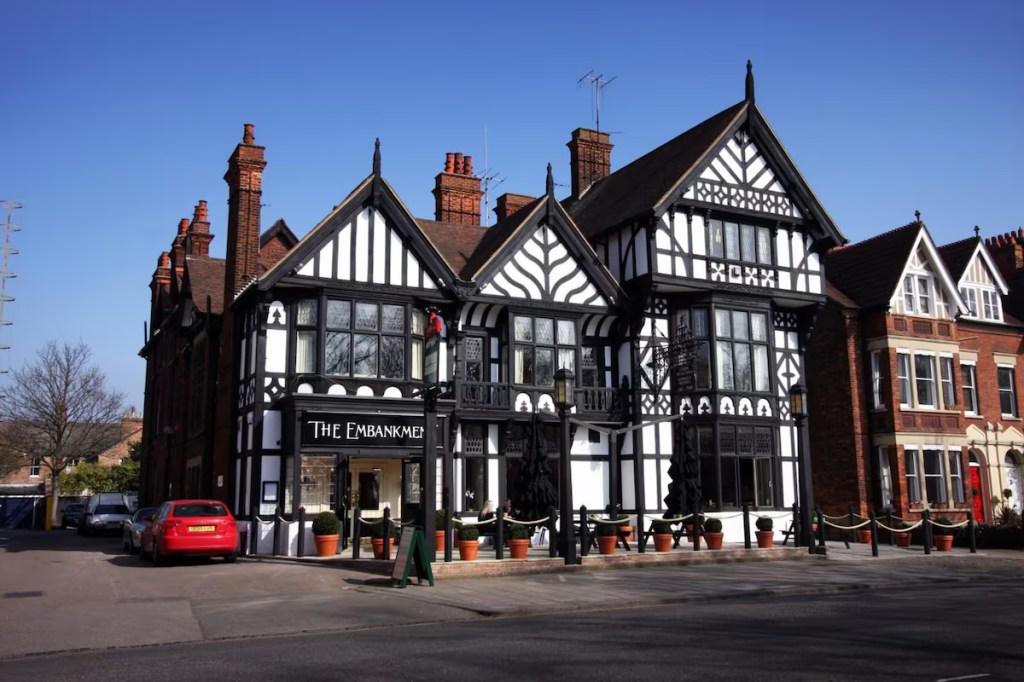
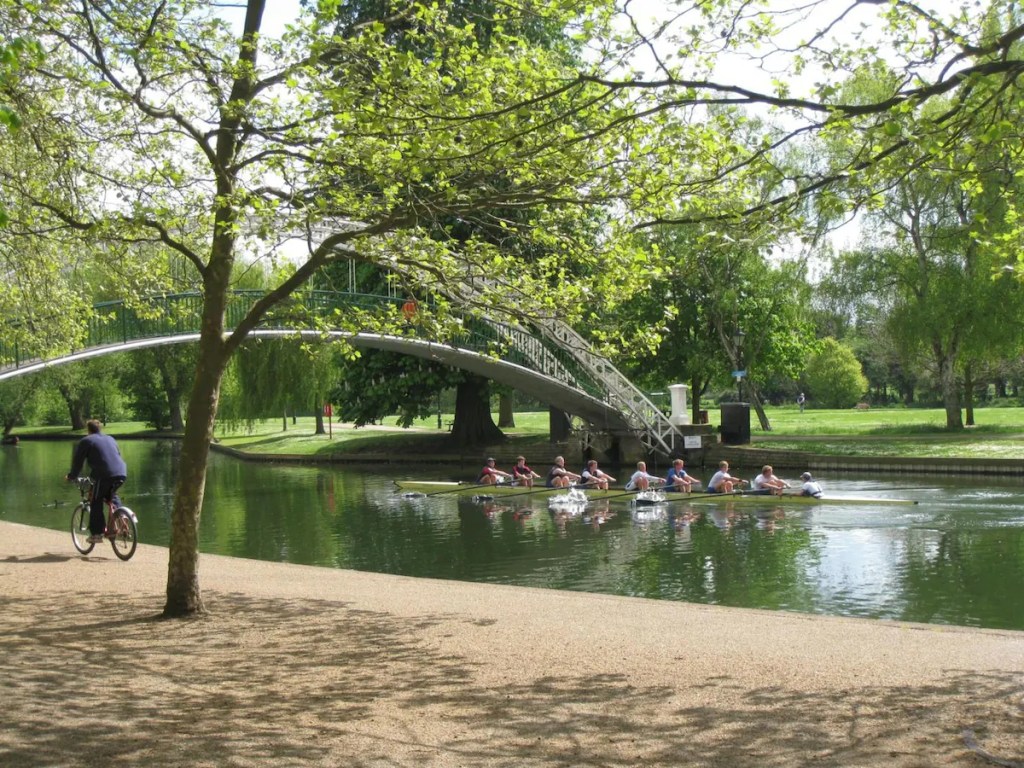
Tuesday was deadline day for BBPC to submit its proposals for the 2026 Season of Bangla Drama. We had discussed these as a group but it fell to me to get them in on time. Then on Wednesday I went to Bedford to have lunch with my friend Jossy who I hadn’t seen for a while. How lucky were we! After the murk and mizzle of the year to date we had a sunny day and could lunch in shirtsleeves on the patio of the Embankment pub (thanks to Pete and Julie Bradshaw for the local knowledge) overlooking the Great Ouse with its scullers, joggers, dog walkers and cyclists. The pub had good food and wine and apparently has rooms. We then strolled back to Bedford Station through a less beautiful part of the town but down by the river all was fine and we had a lively discussion on a wide variety of topics.

The Royal Festival Hall was full on Thursday for the OAE’s concert with Robin Ticciati – music director at Glyndebourne and familiar with the orchestra from its residency there. The programme was Mozart’s last three symphonies, 39, 40 and 41. These are pretty familiar items in the classical repertoire but are not often heard together, so a clever piece of programming. Once again, the conductor’s vision and energy, the orchestra’s use of period appropriate instruments made the works sound really fresh and new. The ‘Jupiter’, probably the most famous, occupied the second half and had atmospheric string playing in counterpoint with lush woodwind and powerful brass. A delight.

The evening was rounded off by the news from the Development Director telling me that the OAE’s sensational Breaking Bach project will have a series of performances in the UK next year and will be visiting the United States as well. Stemming from the orchestra being based in a school this ground breaking (sorry!) production deserves this exposure.

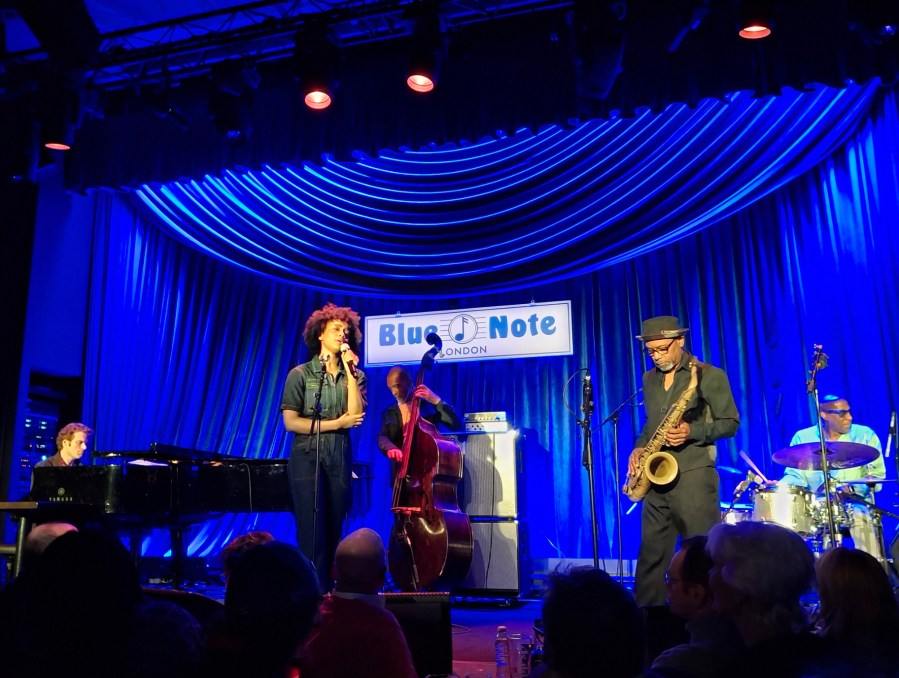
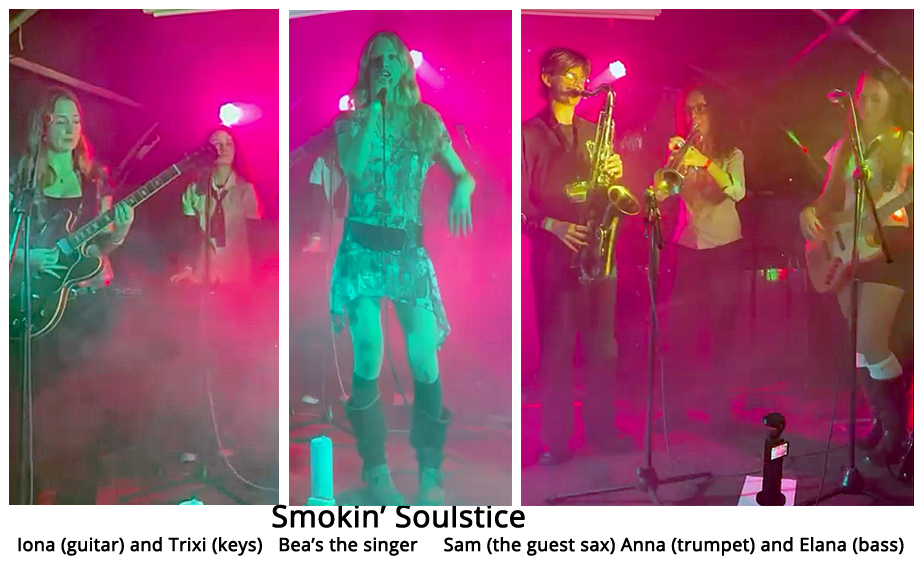
The next Sunday I had a music experience of a very different kind with a trip to an arch under Herne Hill Station to wear my SOULSTICE GRANDAD T-shirt with pride and see the group in which my granddaughter (Daisy but Trixi in the band) plays keyboard and flute and sings. Every time I see them they get better – different set list incorporating original material and covers, tighter arrangements and harmonies and tonight they had a guest saxophonist Sam to add to the exhilarating session amid the smoke machines and lighting of the Off The Cuff venue. (Image below contains stills from a video courtesy of Chris Addison as holding a pint in one hand and my coat in the other I couldn’t get my phone out.)

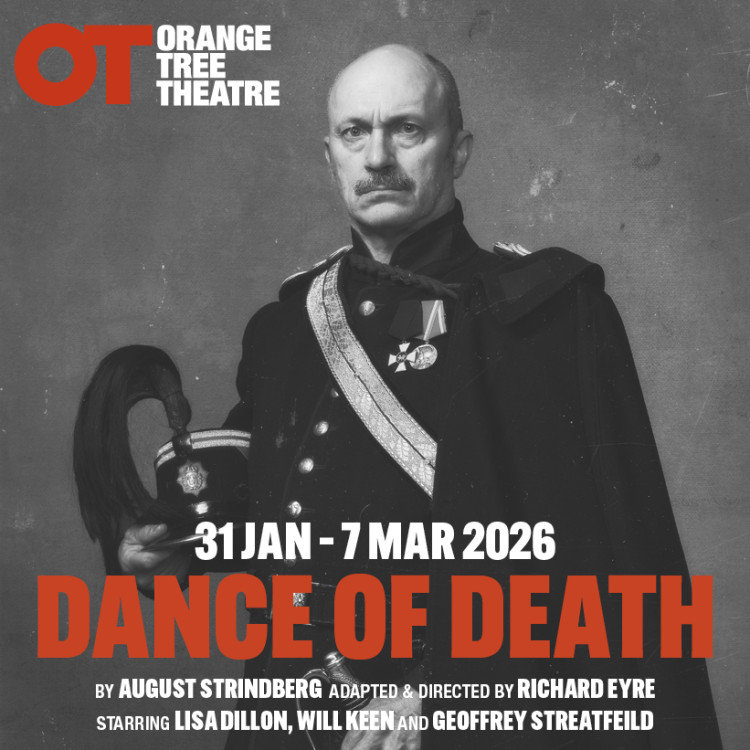
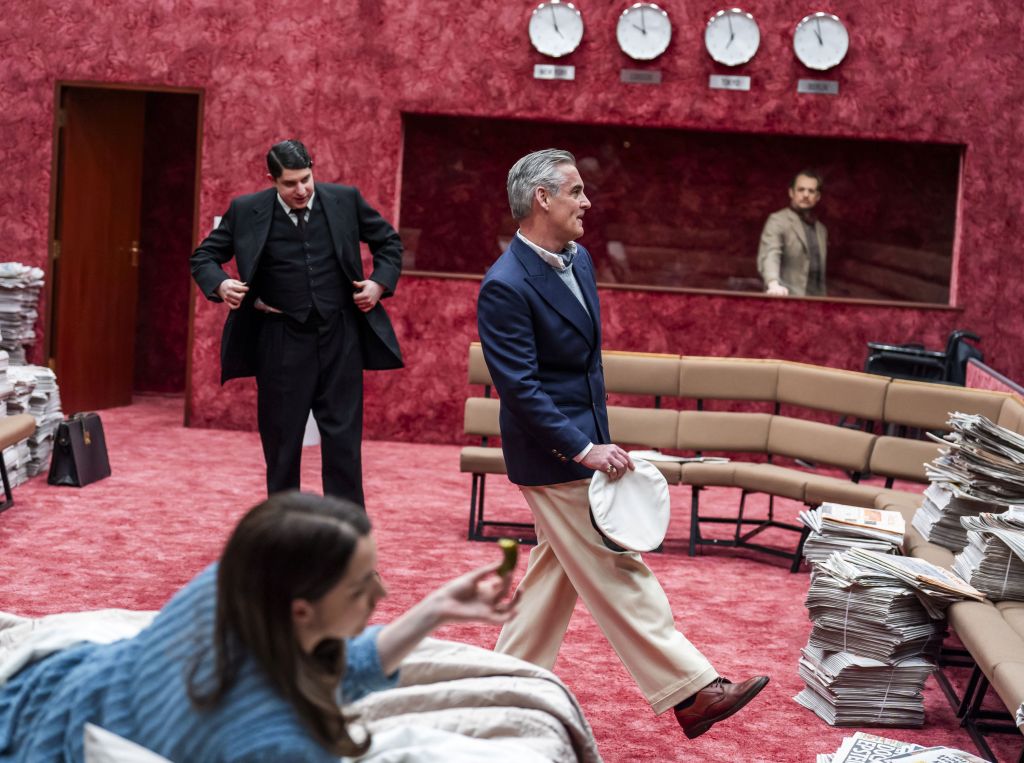
Two intense family dramas were next on the agenda. Richard Eyre’s adaptation of Strinberg’s Dance of Death at the Orange Tree was unremittingly bleak as a couple try to destroy each other. Updating it to the quarantine era of Spanish flu gave it an added claustrophobia as did the cluttered set. It was an evening to be admired for its production and acting rather than enjoyed. I knew a bit more what to expect the next night at the Young Vic as I had been to the Insight session last month. However the actual production came as quite a surprise. I’d seen the beige leather semi circle that forms a large part of the set previously but the red plush carpet on the floor and walls, the observation window and the fact that the audience reamined under the harshest of house lights as the action began were truly unexpected.

Arthur Miller is all over London at the moment, but Broken Glass is a late play and not often performed. The key element is the lower limb paralysis of Sylvia, played brilliantly by Pearl Chanda, a Brooklyn Jewish woman. After reading and hearing news of the Nazi Kristallnacht pogrom, suddenly her legs won’t work and she’s confined to bed. Attempting to explain this reveals all sorts of marital and family issues which see the characters unravelling before us, including a Dr Hyman played by Alex Waldman whose Freudian practices encourage Sylvia to imagine she’s sleeping with him. It was a demanding watch but made us think about current day issues of genocide to which many turn a blind eye – are we paralysed because there is nothing we can do? Leaving the lights on for much of the play was quite distracting as we were sitting opposite both Sir Lennie Henry and mostly significantly the Guardian theatre critic Arif Akbar. What would those hastily written notes revel in tomorrow’s paper? She’s usually quite a harsh reviewer but gave this four stars.

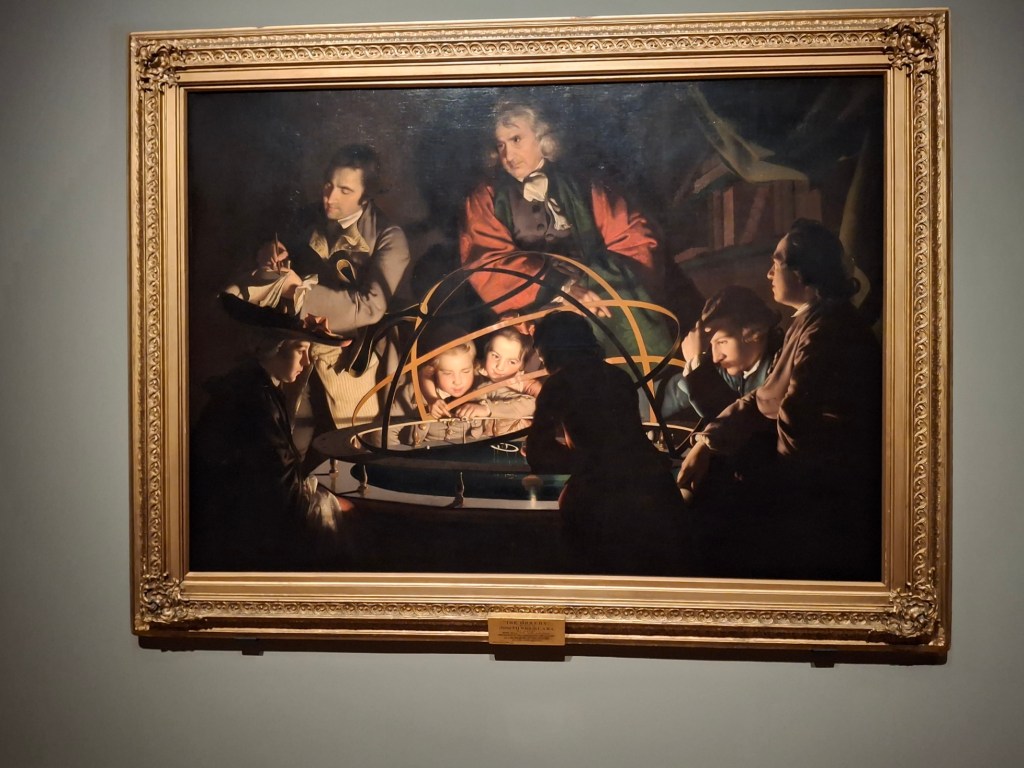
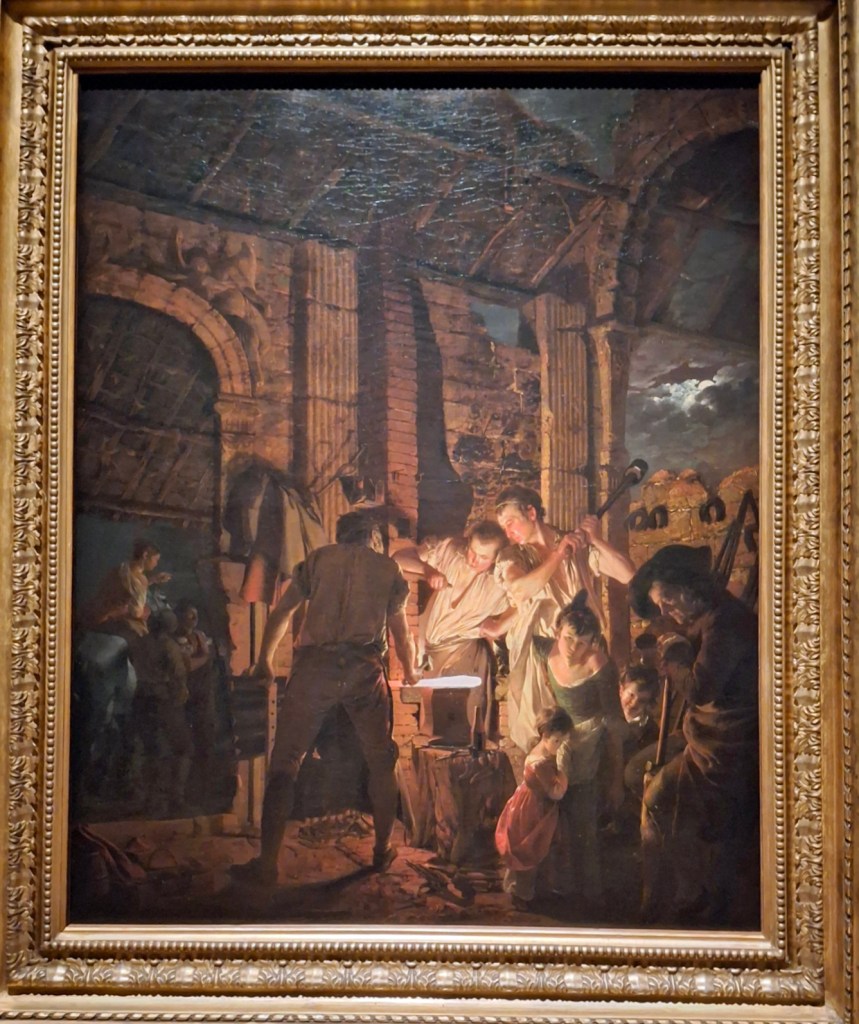
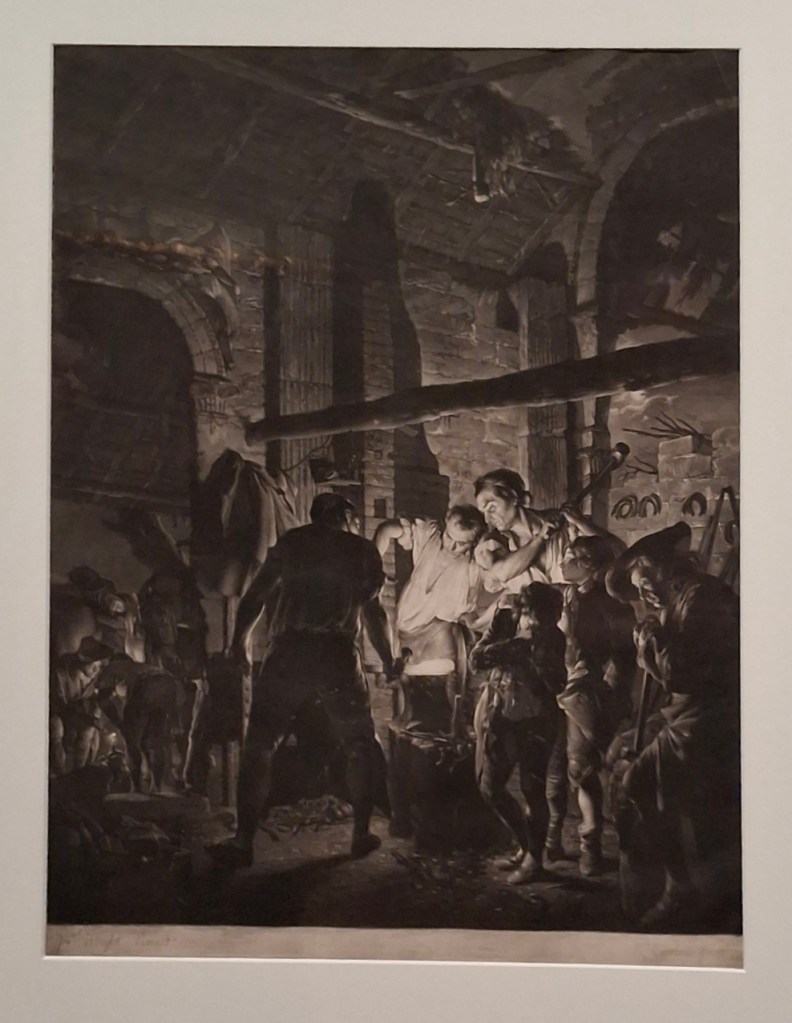
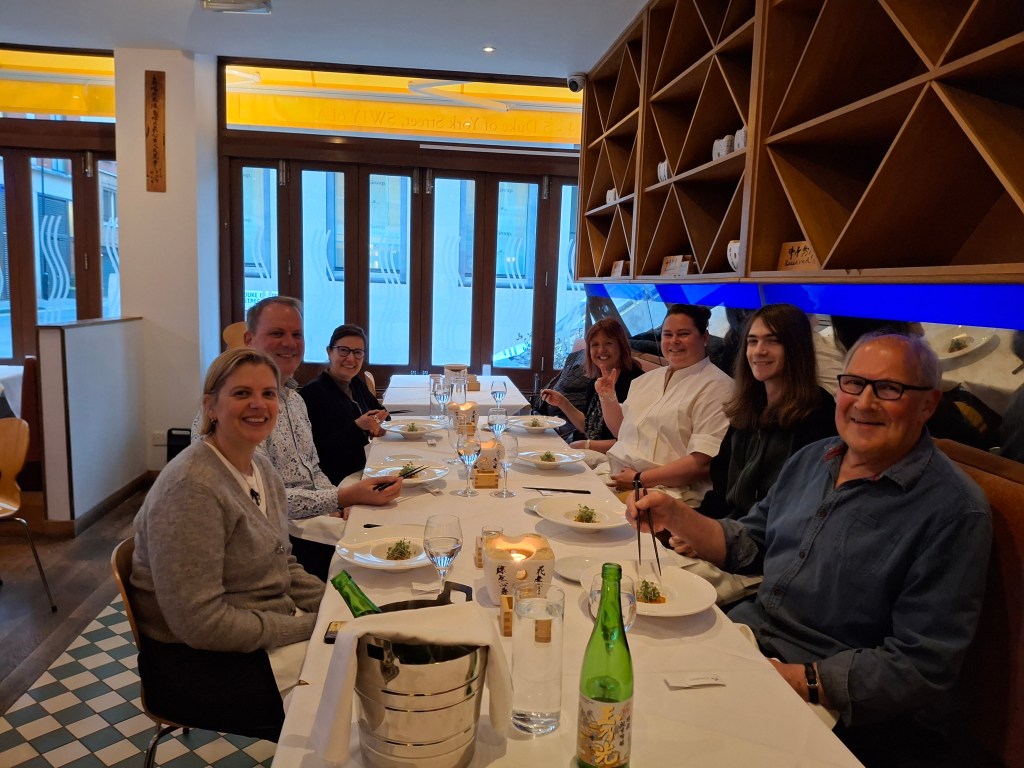
My grandson Jake, somehow turned 20 on Saturday and had decided that he’d like to go back to Yoshino for his annual birthday dinner. Ever happy to oblige I had words with Maitresse D’ Lisa and she came up with a really excellent menu for us. But before that, I decided to go to the National Gallery to see the Joseph Wright of Derby exhibition. I’d seen some of his paintings a few years ago in Norwich and was fascinated by his use of small and focused light sources. I gather his take on chiaroscuro is called ‘tenebrism’. In most of the paintings apart from the canndle or lamp light there was always a glint of moonlight in the background. As a big fan of printmaking as well as painting it was interesting to see mezzotint versions of his paintings which were obviously the main way of making money from your work at the time. Seeing them alongside each other was enlightening and the fact that one featured an orrery when I was about to meet my physics student Jake added another layer of interest. It’s a small show but well worth a visit. Walking through the other galleries it also remoinded me what a wealth of high class art is at our disposal for free still. I must go more often and revel in the Canalettos and Guardis and Turner v Constable without paying £24 for the privilege at the Tate. Oh and there are some favourite Goya, Velaquez and Murillo canvases I hadn’t seen for a long time – and as they say – so much more.

Then to the real business of the day. Anybody who has read previous blogs will know how important Yoshino is in my life. Dee and I first went to the old Yoshino in 2009 or 10 (I wasn’t blogging then or I’d know) when it was in Picadilly Place and came to know Lisa the Maitresse D’ quite well. Since then she’s been on a family outing to see My Neighbour Totoro at the Barbican and came to Glyndebourne with me in 2023 and we went as a family to the soft opening (right) of the new premises in Duke of York Street in April last year – minus Chris filming in Dublin and Daisy who didn’t fancy it, plus Rosa and Frances. So Lisa knows us all too.
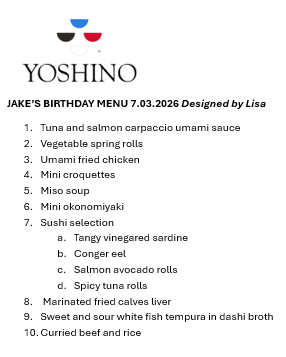
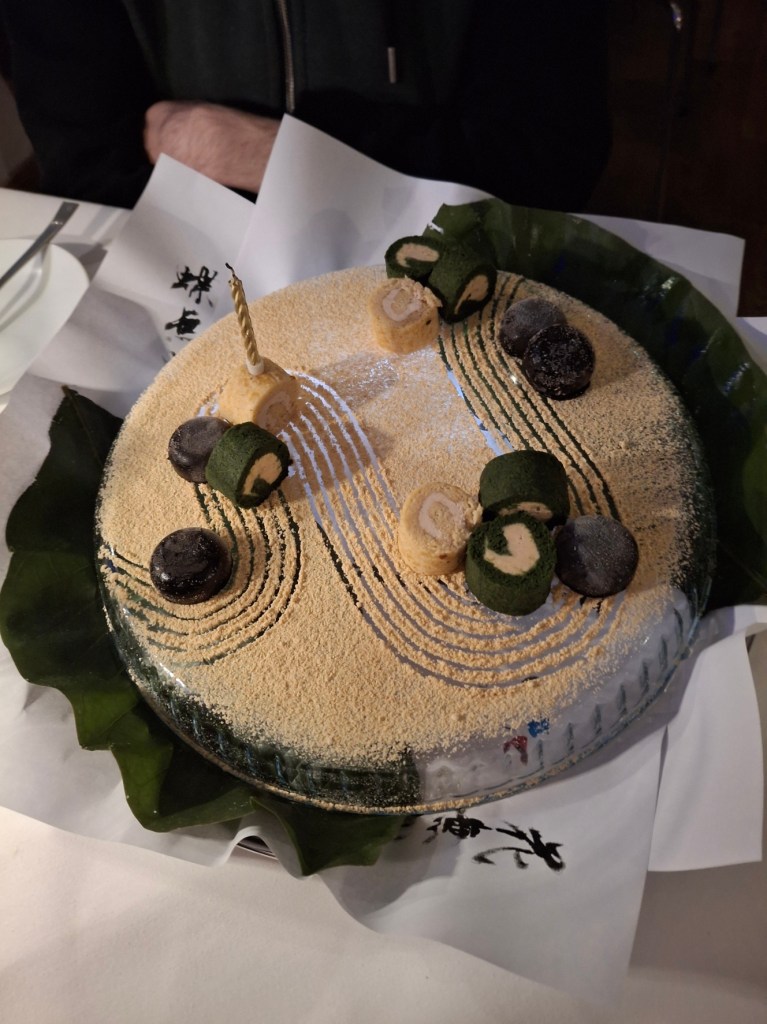
However when Jake said he’d like his birthday dinner at Yoshino there was rejoicing in lots of the family with a little trepidation on the part of a slightly picky Daisy. So I asked Lisa to book us in and design a menu for us with alternatives for Daisy. She pulled out all the stops and gave us an absolute feast of taste and texture sensations including making an alcohol free campari for non-drinker Jake. And as she had run out of my ‘usual’ sake – I wonder why – she offered me two options to taste before we settled on an excellent dry alternative. Daisy surprised herself and us by being really adventurous and enjoying things she wouldn’t have looked at – sake included. On a previous visit we’d tried a curry dish and had not been impressed. Lisa brought us a bowl of curry and rice saying it was spice combination number 47. Well this variety certainly hit the spot.This wonderful evening concluded with Lisa and her colleague Naomi bringing Jake a birthday cake of ice cream filled chocolates and soy and matcha mochi swiss roll slices all arranged on a raked zen garden. What a night! What service!

Where did January go?

So after a refreshing break in Alicante it’s home to reality: car for MOT; final eye test after cataract surgery and the promise I made to sort out 45 years worth of company paper work for shredding. So glad I did take my Christmas break.

The first play of the new year was the intriguingly named Bengal Tiger at the Baghdad Zoo at the Young Vic. The tiger of the title is the ghost of an animal shot by a US marine stationed in Iraq during the ill-founded war. It (in human actor form) prowls around the stage bringing memories for the marines and philosophical questions for their interpreter Musa who used to be the gardener to Saddam Hussein’s two sons, who appear later, and cause a guilt-trip for Musa who allowed them to exploit his daughter.

It was surreal, written by Rajiv Joseph and directed by  Omar Elerian who has a track record with surreal with Ionesco’s The Chairs and Rhinoceros which we saw at the Almeida. It was funny. moving, if a bit erratic, but a worthy start to a year of theatregoing.

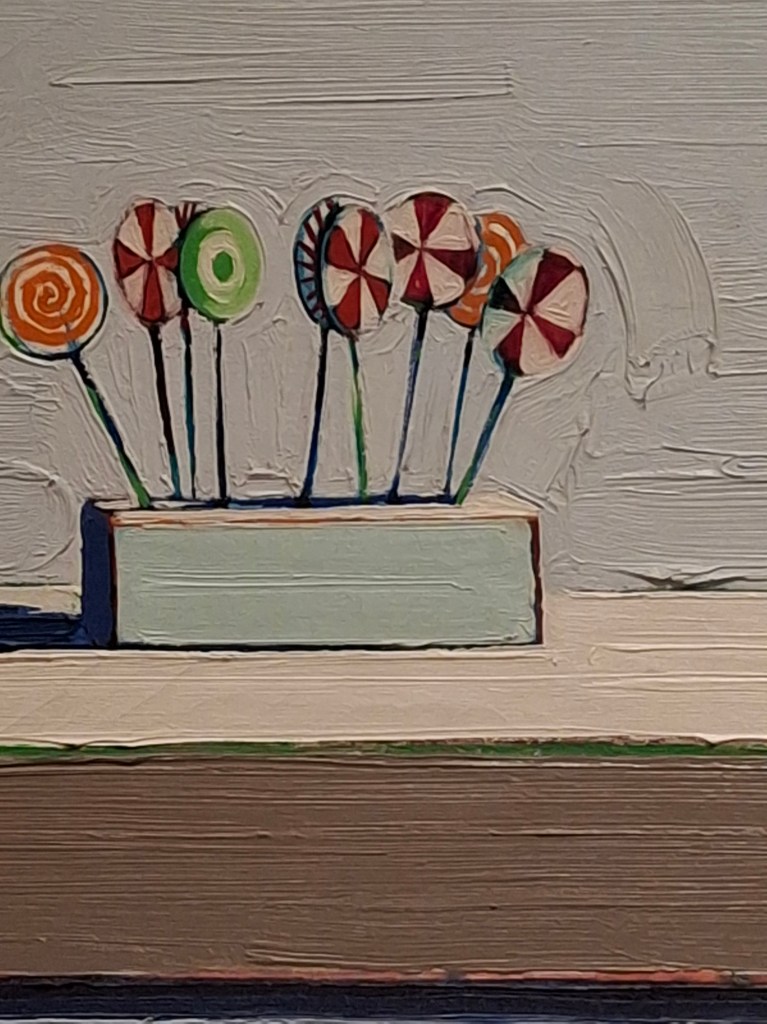
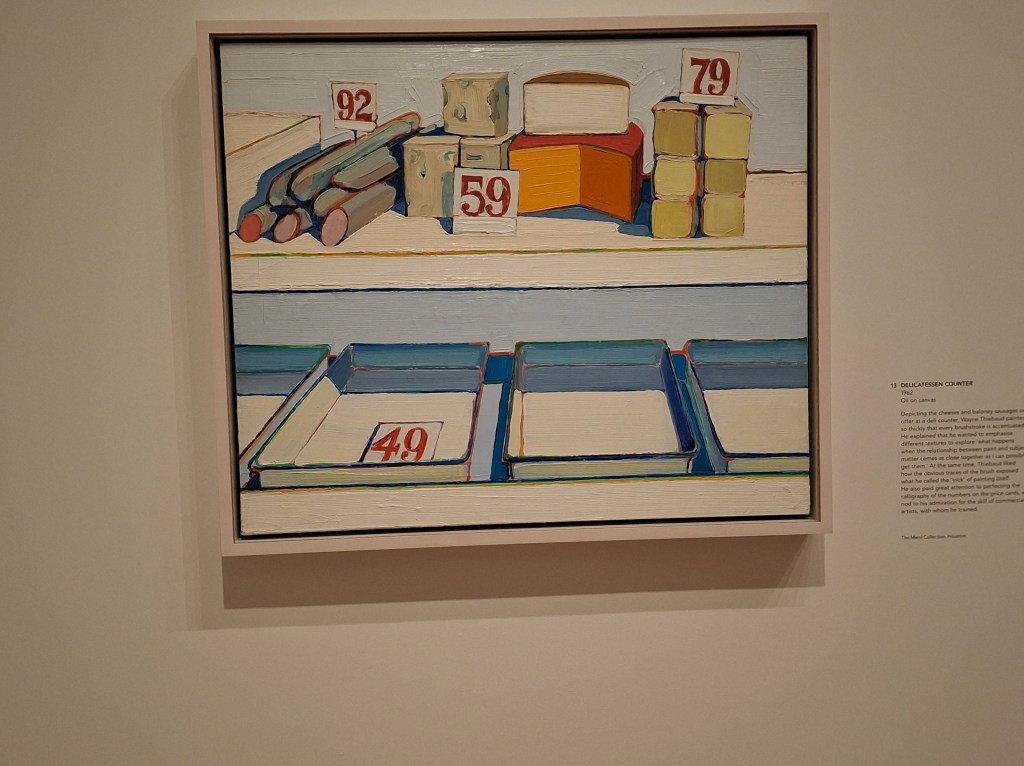
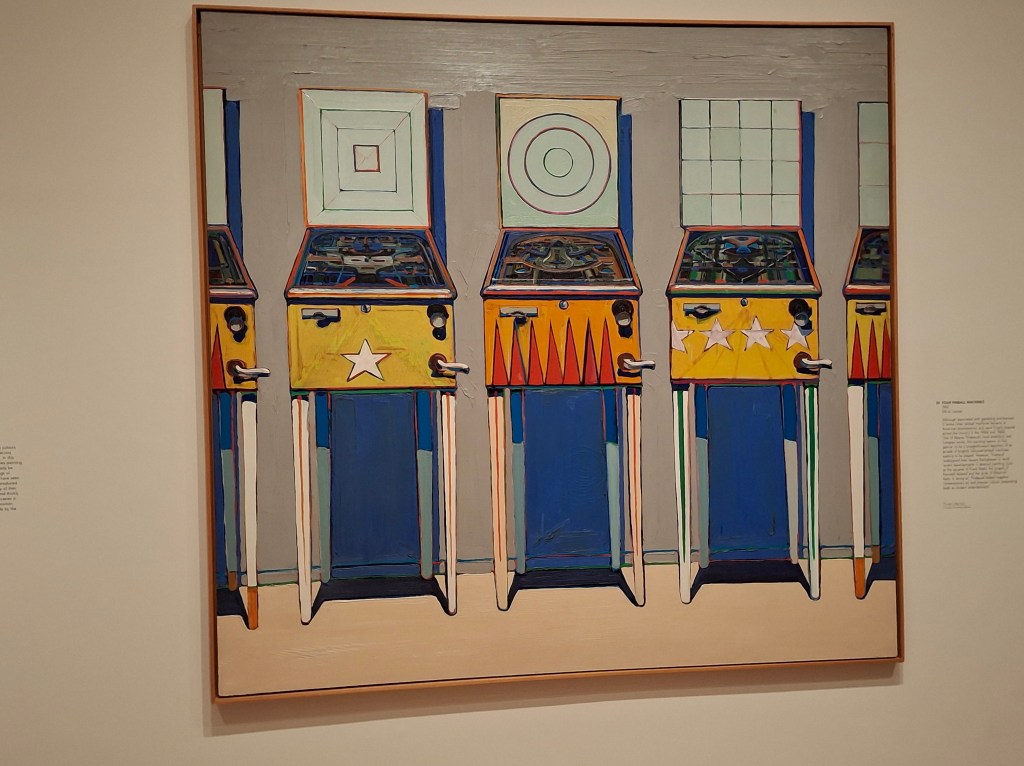
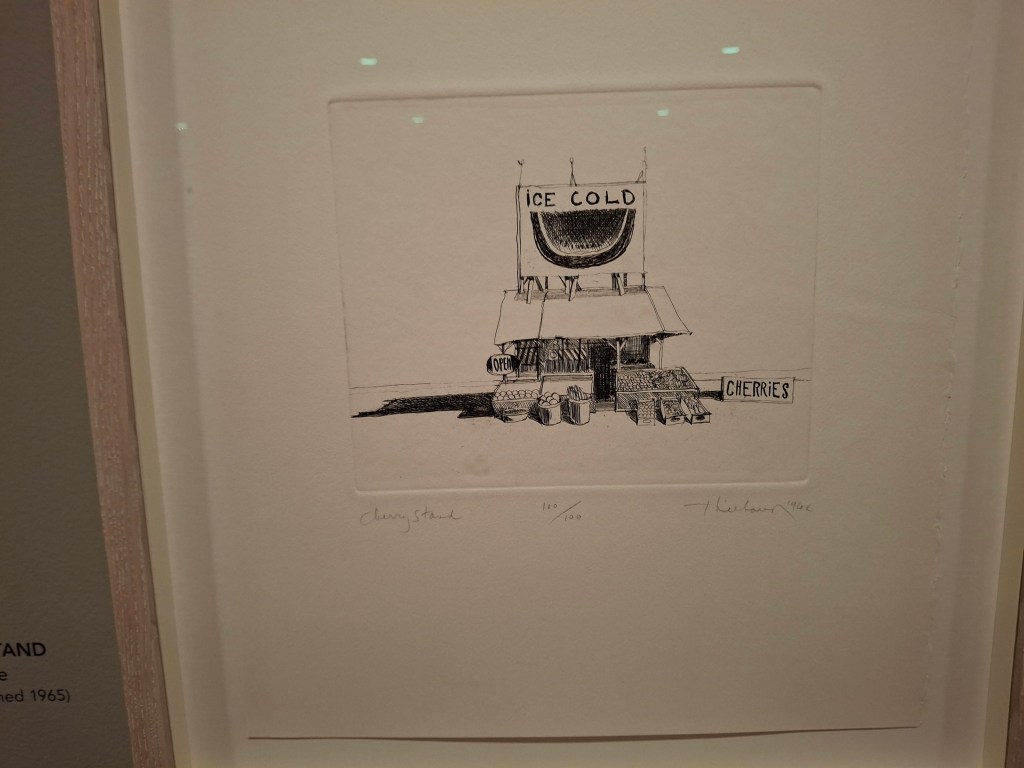
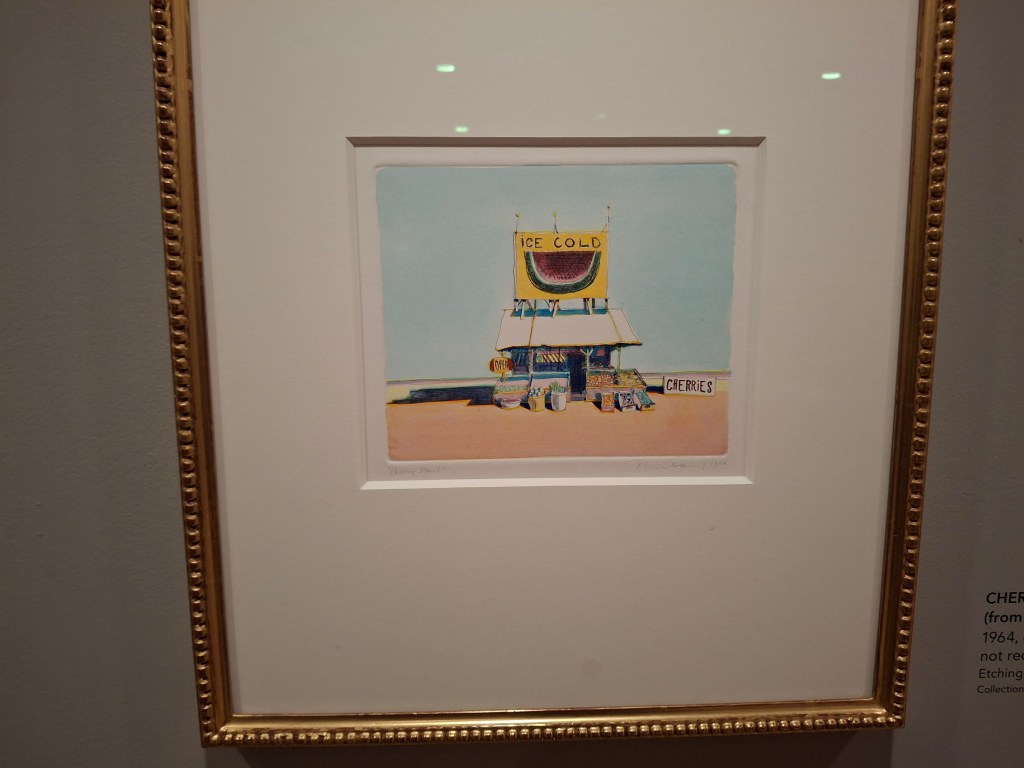
I loved Maggie O’Farrell’s book Hamnet. I did not like Lolita Chakrabarti’s stage version which a gang of us went to see at the Garrrick with great expectations and emerged with great disapppointment. I had misgivings therefore about the much talked-about film version, somehat allayed when I noted that Chloé Zhao co-wrote it with the book’s author. So I booked a matinee showing at Picturehouse Central and decided to go into town early and take in the last few days of Wayne Thibault at the Courtauld Gallery. I don’t think I’d heard of him but an email from the gallery intrigued me so off I went and am very glad I did, The exhibition was entirely of works from the 1960s when he was grouped with the Pop Art movement. He painted still lives of everyday Americana – slot machines, deli counters, cakes and the like. They were very affecting in making you look intensely at the ordinary and think about things in a new way. He also made prints of several of the subjects one of which on display he had hand coloured twenty years after making the original etching.
I had an hour to spare before the film so popped into Yoshino to say Happy New Year to Lisa, collect my supply of gyokuro tea – my first drink of every day – and have a delightful light lunch chatting to Lisa as she prepared the space for a 30 strong party of Japanese bankers that evening.

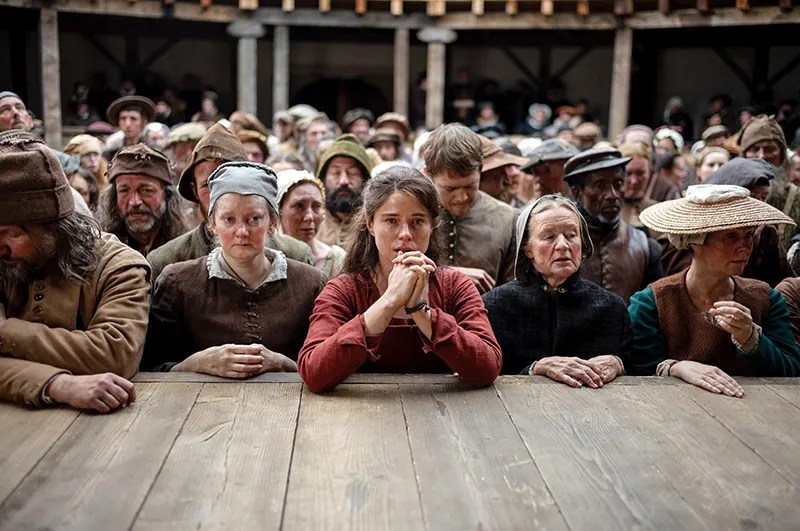
Hamnet the film did not disappoint. It matched the slow reveals of the book, filled the screen with nature, glovemaking and the love and the games of young children. The storytelling was clear and excellent and the child actors were all very accomplished. The tragedy was well handled and the closing scenes at the Globe had me welling up. What a performance from Jessie Buckley! I knew she was good but this was astonishing.

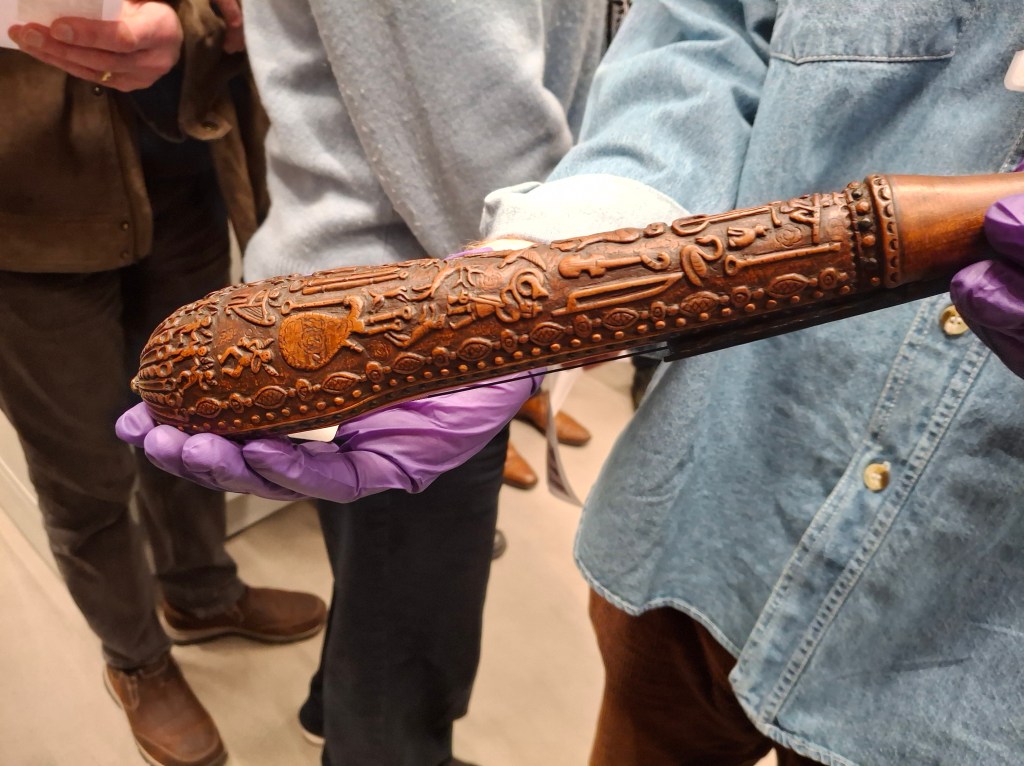
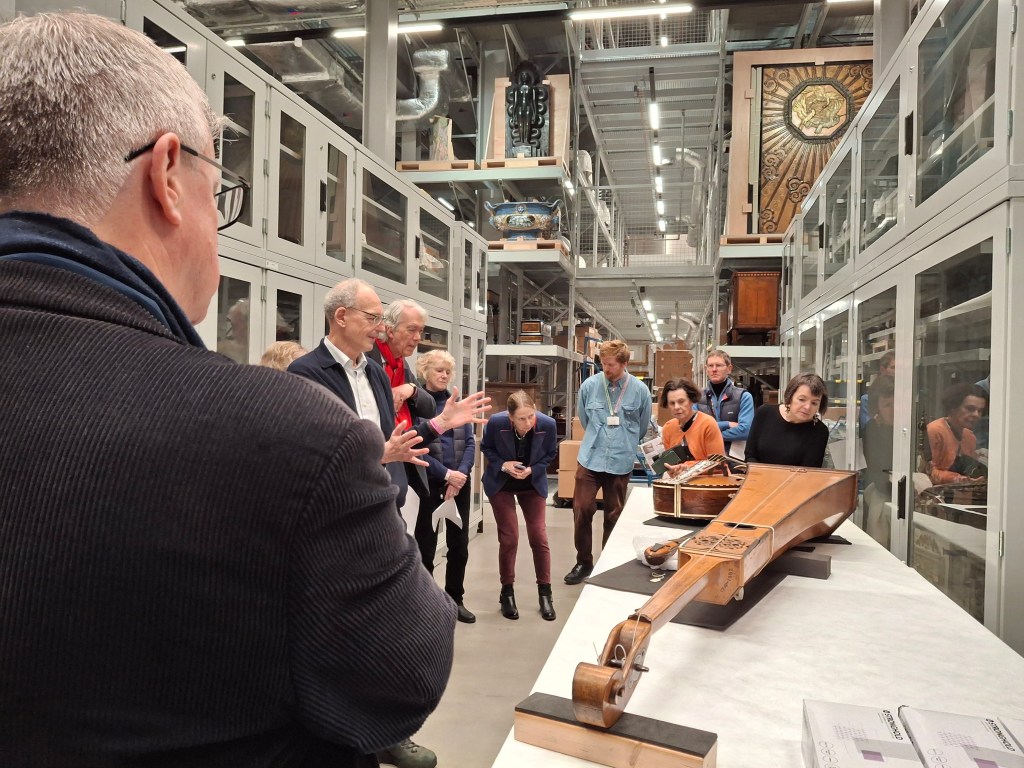
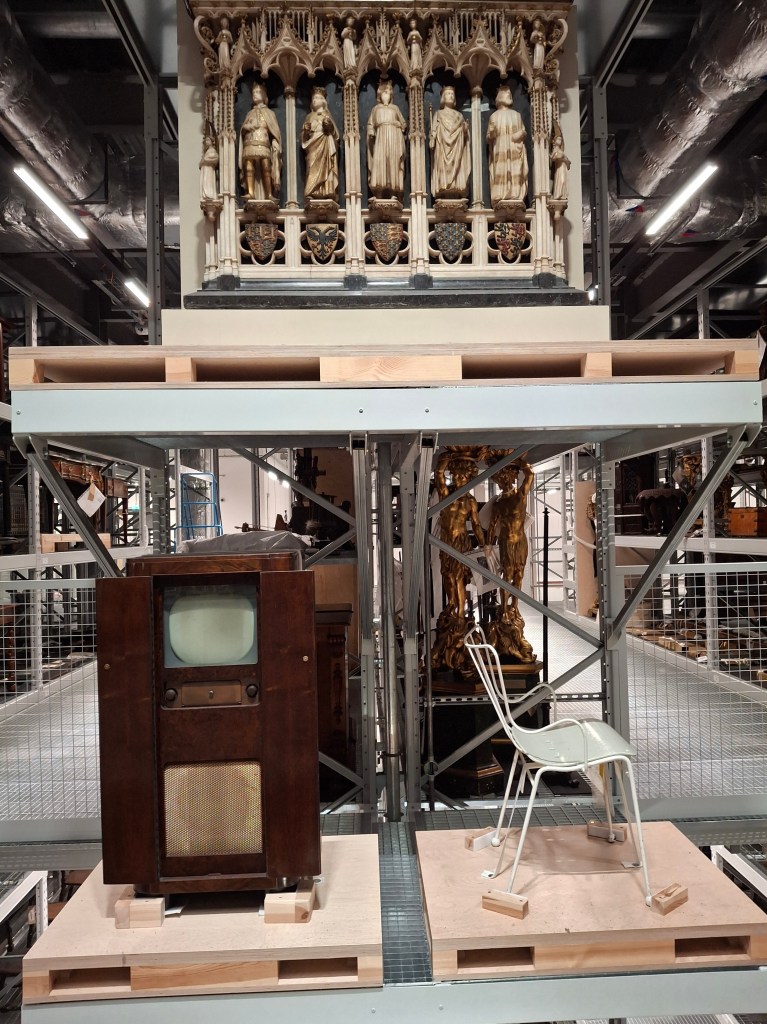
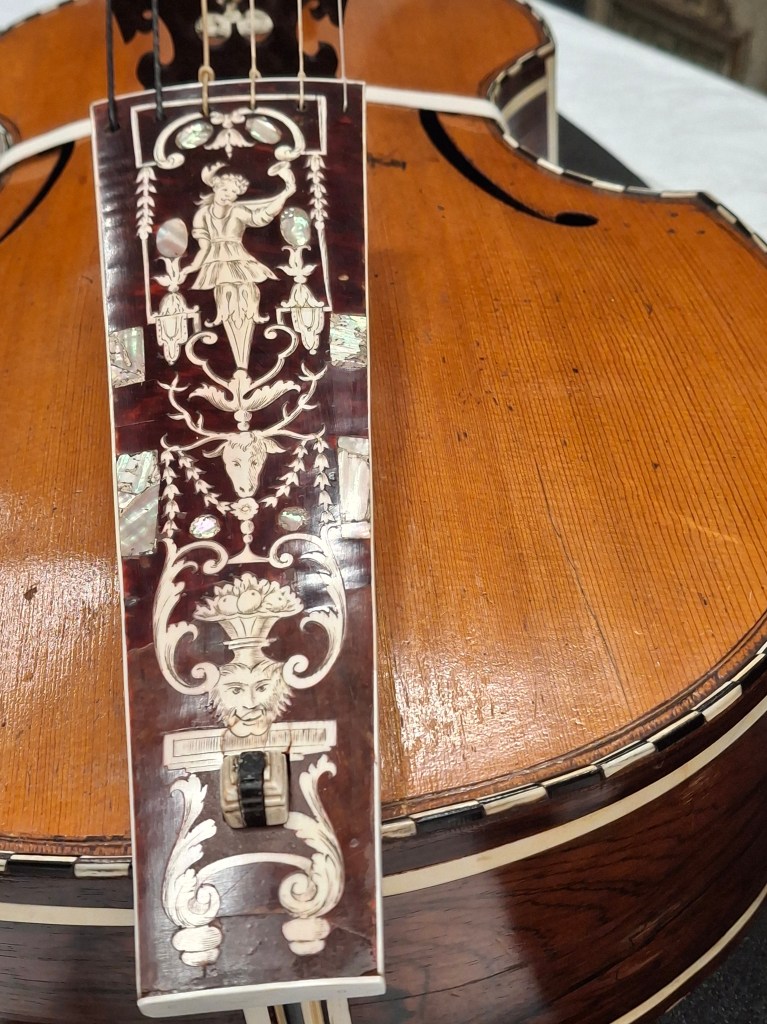
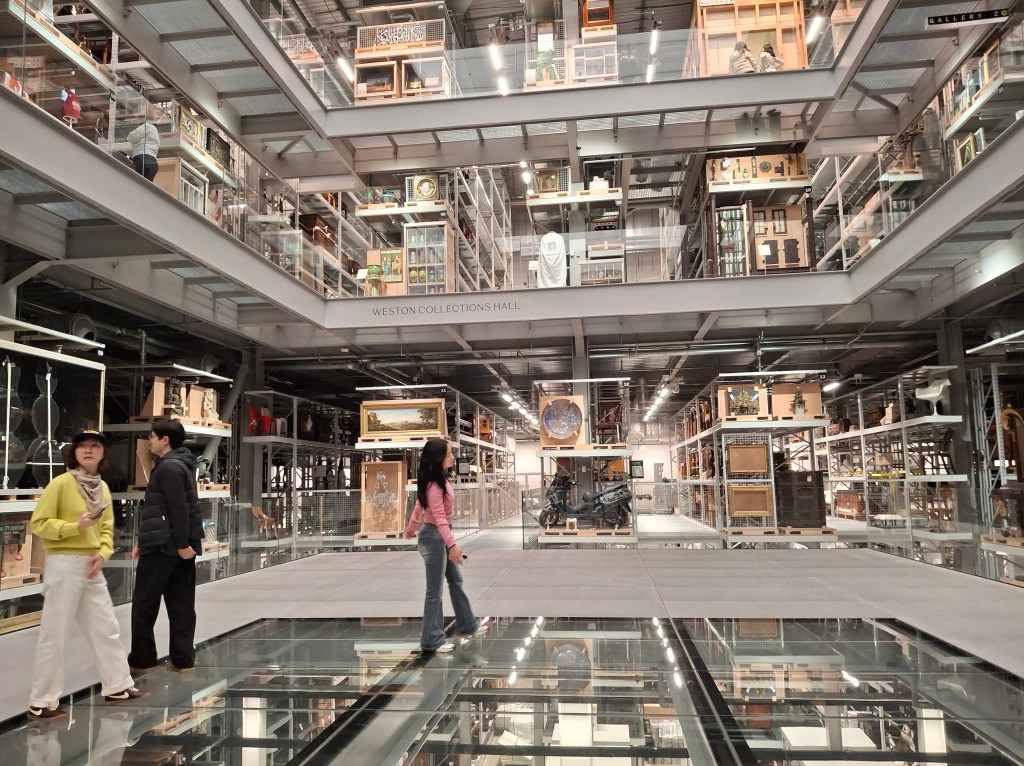
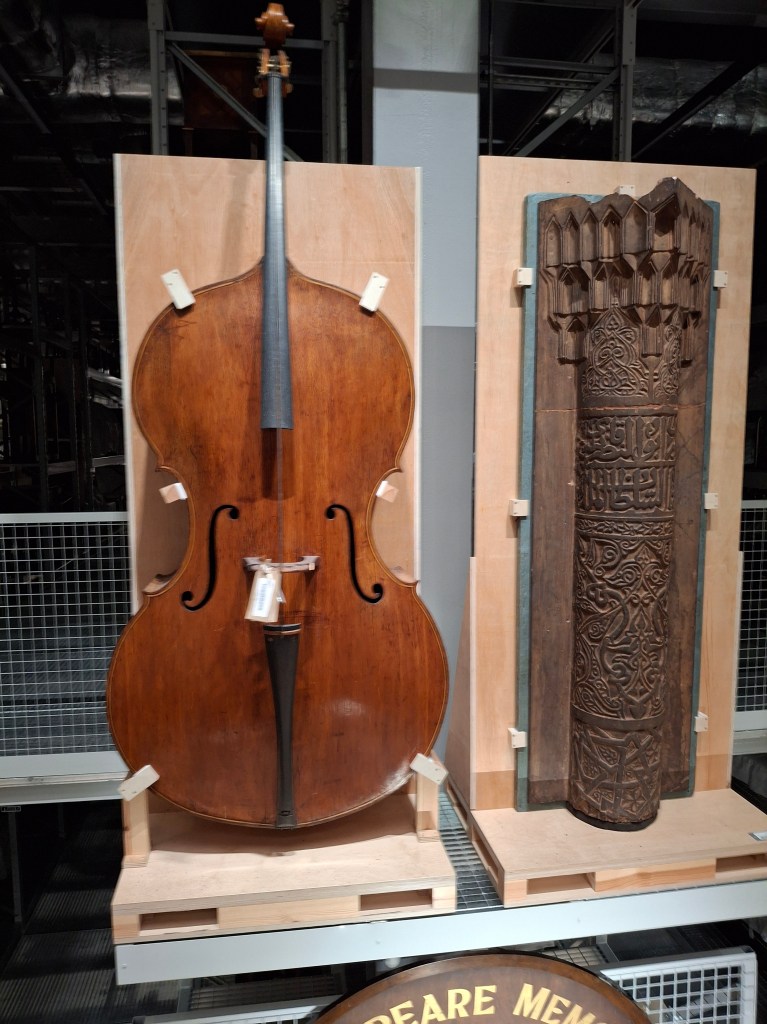
From time to time, the orchestra of the Orchestra of the Age of Enlightenment organises trips for Friends. I wrote about a visit to the amazing Hatchlands keyboard collection with Steven Devine last year. This one was to explore the wonder that is the V&A East Storehouse with Martin Kelly, my viola-playing team captain when we won the Chistmas Quiz. Martin had selected a number of instruments from the extensive V&A catalogue and gave us fascinating insights into the contruction, history and use of instruments ranging from the tiny kit fiddle used by dance masters to the enormous Dragonetti bass via a serpent and a harp and others from the racks. Some of the detail of design, carving and inlay was phenomenal. The breathtaking size of the storehouse and the randomness of displays made for a fascinating visit even after Martin had finished his excellent part of the tour.

Then it was back from drenched Hackney Wick to the Royal Opera House for an insight evening on the subject of Boris Godunov with my friend Susie Stranders taking us expertly through Mussorgsky’s score. I got there early and spent an hour not reading my book but chatting to a gentlemen with shared widowerhood and love of music as topics for conversation. As we left the table to go to the talk we shook hands and he said, “By the way I’m Mike”. “Me too,” I replied. Susie’s talk was peppered with anecdotes from performances and some excerpts sung by cast members including Bryn Terfel who is Godunov.

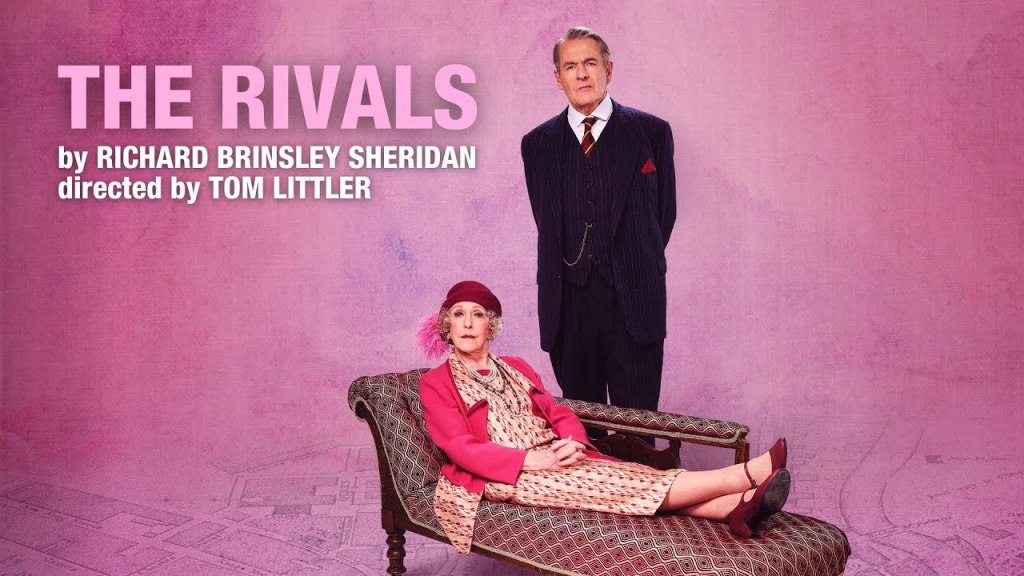
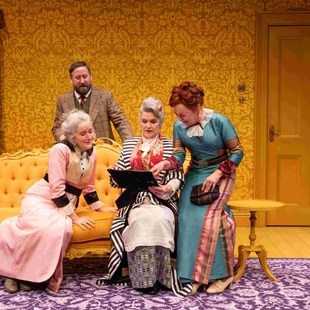
I’ve seen Sheridan’s The Rivals several times but went with Frances to The Orange Tree on her recommendation, She’d already seen it when I was away and came to see it again. I congratulate her on her taste. Updated to the flapper era 1920s, Tom Littler’s production was wonderfully funny and Patricia Hodge as Mrs Malaprop was outstanding. The rest of the cast were superb too in the intimate Orange Tree space where you feel part of the action. I recalled going with my grandchildren to see the Richard Bean and Oliver Chris update Jack Absolute Flies Again at the NT a few years ago. Sheridan’s work from 1775 stands a lot of different interpretations. Must be something about the core material!

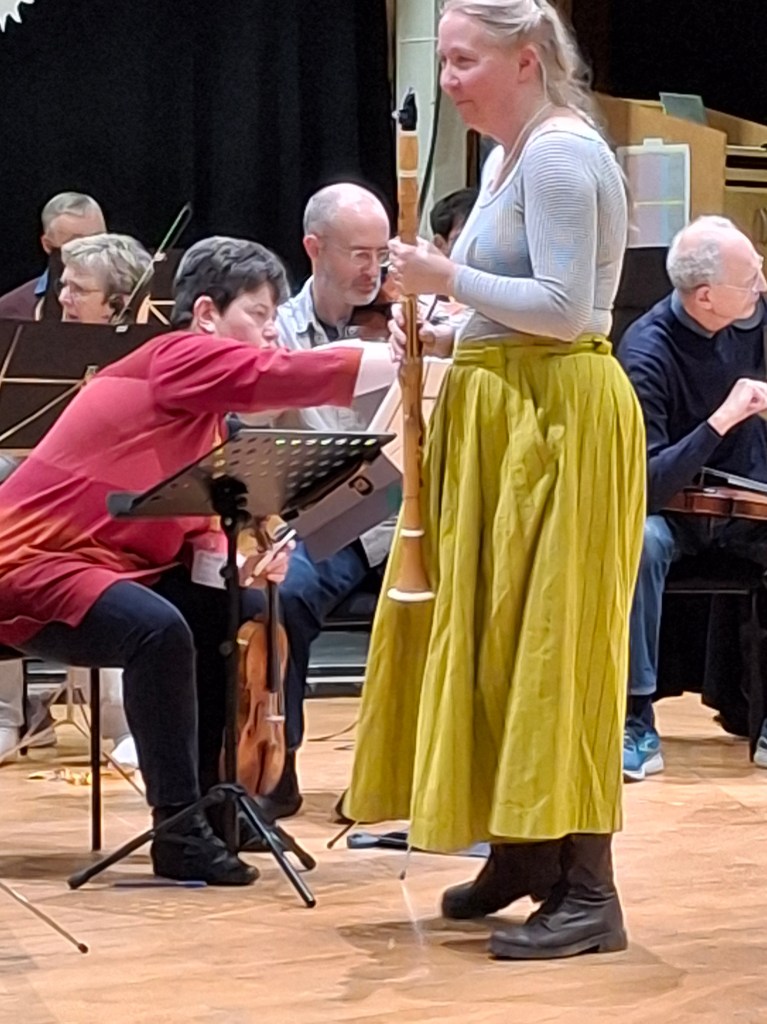
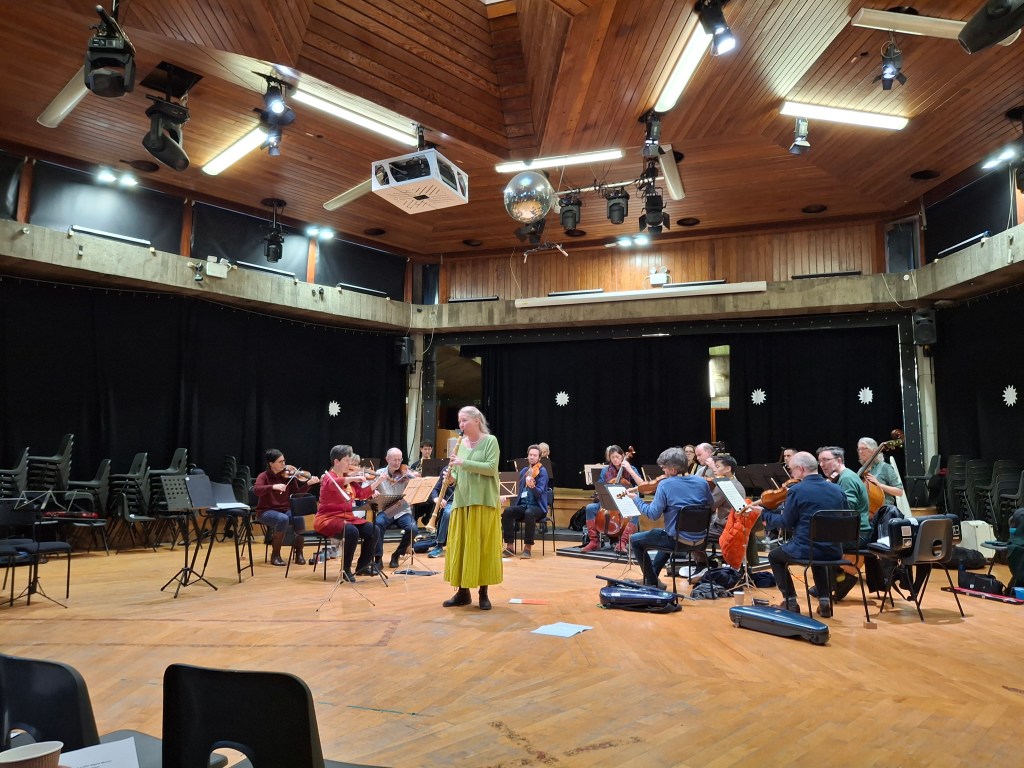
The OAE often invites friends and the local community to open rehearsals at its base in Acland Burghley School. On this day there was a Friends event at 2 pm followed by a Community one at 4. I was very impressed to see the numbers of people streaming into the school as I was leaving. The orchestra was rehearsing mostly Mozart’s clarinet concerto played by principal clarinetist Katherine ‘Waffy’ Spencer and directed from the violin by leader Kati Debretzeni. Waffy was at pains to point out that the work was written for the basset clarinet and she has had one made specially so that the concerto can be heard as Mr M intended. As always it’s fascinating to eavesdrop on the discussions that form the final performance and the exchange of ideas around this most democratic of orchestras. They were off to the Anvil in Basingstoke, Oxford and the Warwick Arts Centre before coming into the Queen Elizabeth Hall on Sunday 1 February. Waffy then introdued a piece they were going to play as an encore – an adaptation of an aria from Mozart’s Die Entfuhrung where the warring male and female protagonists were a bassoon and her clarinet. It was lively and very funny.
I then made an interesting cross north London journey on the C11 bus – Gospel Oak, Hampstead Heath, the Royal Free Hospital, Belsize Park and eventually Swiss Cottage – to the Hampstead Theatre to join Frances for a new play in the smaller downstairs space The Ghost in Your Ear.

This was an interesting event in which we were all equipped with headphones to hear the script of a ghost story being read by an actor in a sound studio for an audiobook. It’s written and directed by Jamie Armitage and the sound design is buy the brothers Ben and Max Ringham who did such a great job with Blindness at the Donmar back in the lockdown days. As someone who has spent a lot of time in the control room of audio studios it was intrinsically interesting and the story getting progressively scary was very well paced. Frightening it was, but not heart-attack inducingly so.

I got a final sign off after my cataract operations and can now revert to my familiar state as ‘a bloke who wears glasses’ with varifocals with no correection for distance and enough for close up that I can type and read my phone and kindle without need to rummage about for reading glasses. I then had the pleasure of two trips to the Union Club, first to have lunch with my dear friend Michele who has had a hard year as as a make-up artits as the film and TV industry shrinks and then for dinner a couple of days later with newly-master’s Guildhall graduate Kristina, a fine soprano, her boyfriend Luka and Paola who looks after tickets and data for the OAE and who I know well from my many visits to their gigs. On both occasions food, wine, service and company were excellent.

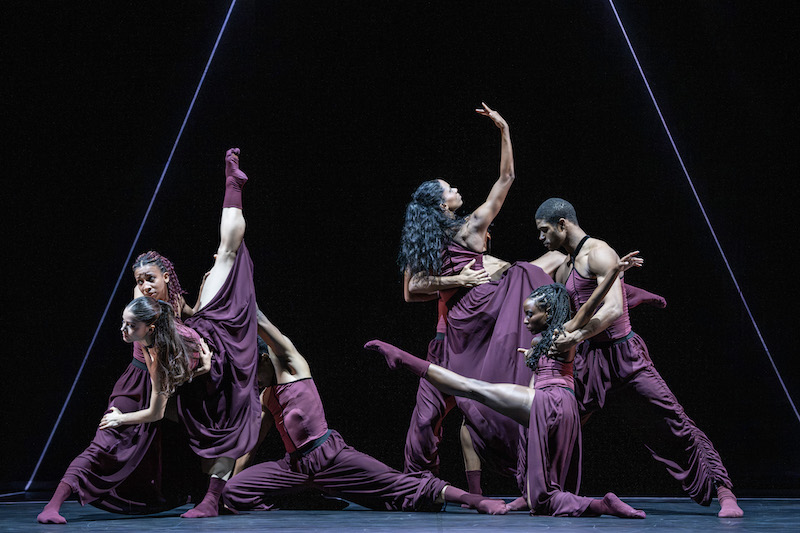
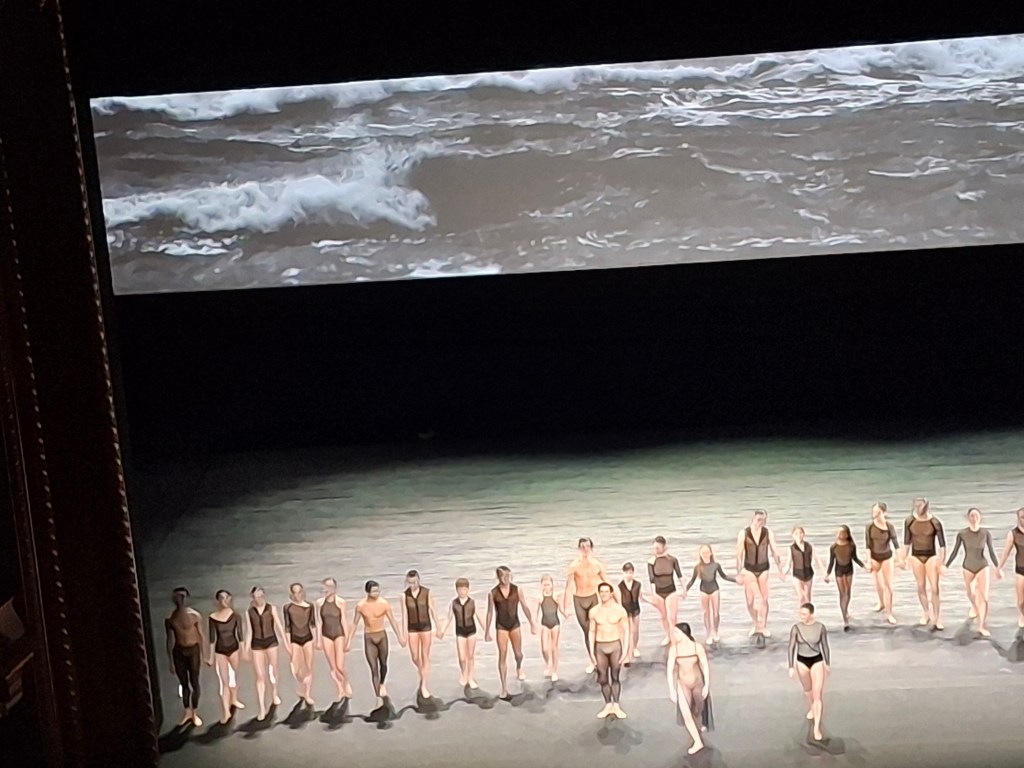
I went ( slightly by mistake and rescued by checking my ticket folder) to a matinee of Woolfworks at the Royal Opera House. This ballet had been heavily advertised in ROH emails and I had hoped Rosa might be back from Spain to come with me. Not to be however so I set off on my own and didn’t pick up any new friends called Mike on this occasion. The ballet by Wayne McGregor is based on three Virginia Woolf books: Mrs Dalloway; Orlando and The Waves. I’d read the first two but not The Waves, which I’ve now purchased. The work is classed as a three-act ballet but I felt it was three one-act ballets given the variety of source material and treatment. Mrs Dalloway was all bustling charatcters around three huge revolving wooden frames introduced by Gillian Anderson reading an excerpt from Woolf’s essay On Craftsmanship. The stories of Clarissa and the shell-shocked Septimus intertwine with elegant moves. Orlando matches the surreal nature of the book by having gold-costumed charaters with ruffs anf bustles making their way through several centuries and a gender change all accompanied by a startling laser display that carved up the stage and indeed us in the auditorium. The Waves was played out against a projected backdrop of extremely slo-mo monochrome waves and ends with her suicide note being read. The score was specially composed by Max Richter and was very filmic, dramatic and emotional. It’s still on and comes to cinemas from 9 February if you fancy a look. Highly recommended. https://www.rbo.org.uk/tickets-and-events/live-in-cinemas-woolf-works-details

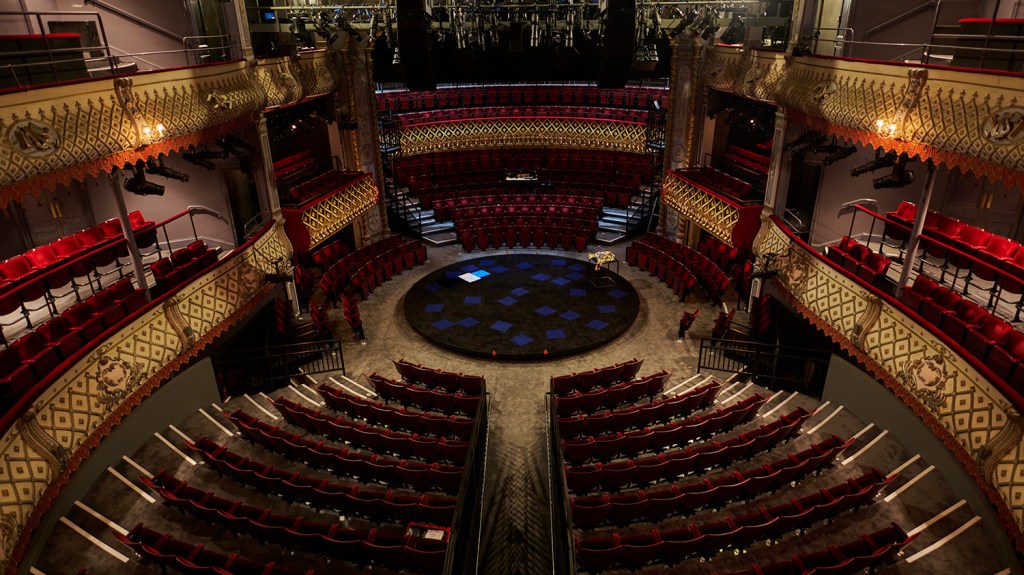
The last week of January contained three remarkable outings to the theatre. The first was Tom Stoppard’s Arcadia, generally acknowledged as his masterpiece and you can see why. With its time shifts, a quest for the unknowable, dangerous relationships and moments of side-splitting humour it makes for a mind expanding evening. I’d seen the original NT production and this version at the Old Vic couldn’t be more different, but as with Sheridan earlier, the class of the work shines through. Whereas the NT production was naturalistic with vistas of stately home parkland, the design of which is an imporatnt factor in the play, Carrie Cracknell’s version at the Old Vic is sparse, in the round with a few props and helps you to concentrate the interplay of the characters and the richness of the language. It was a bit of a shock also to see the venerable Old Vic transformed for an in the round production as apparently all this season’s plays will be.

The mood changed abruptly the next evening when we went to see Guess How Much I Love You at the Royal Court. Written by actor Luke Norris and directed by Jeremy Herrin it is a play about a couple’s loss of a child through a non-viable pregnancy. Their grief and their reactions to it are powerful and moving. Rosie Sheedy and Robert Aramayo – newly Bafta-nominated for I Swear that day – display an array of reactions to the terrible news the ultrasound scan brings them through changing scenarios over time. But within the overall sadness of their plight the play has great moments of lightness and humour. Very effective set design and lighting gave a real sense of their enclosed and captive lives as they lived through the intensity of loss and eventually move towards a more promising future.

After intellectual exercise and emotional turmoil the week ended with J B Priestley’s When We Are Married at the Donmar. Sheer madness and hilarious farce ‘oop north’ when three couples discover that they weren’t officially married by a young curate 25 years ago. Facades fall away, roles reverse, past pecadillos intrude and there is a literally staggering performance from Ron Cook as the photographer from ‘The Argus’ who has been sent to snap the triple anniversary for the paper. Told to go away he gets progressively drunk, his cheeks redder at every new appearance, and crashes his way through the set. It was a shock to see John Hodgkinson as the host of the celebrations Joseph Helliwell since we last saw him covered in blood as Titus Andronicus. I’d never seen this play before and it made me rethink Priestley who I only knew from An Inspector Calls and Time and The Conways.

The month ended with a final piece of drama on the stage of Vicarage Road Football Stadium where I had the pleasure of Frances’ company in the hospitality Sir Elton John Suite which I’d won through The Supporters’ Trust lottery. We had good food and wine, visits from Luther Blissett and Tommy Mooney, a poor loss to Swansea City on the pitch and later the news that our much-loved manager Javi Gracia had resigned. He’d been back to his family in Malaga earlier in the week and I think decided that wet, grey Watford was not where he wanted to be. The club have gone through many managers (23 I think, some twice as with Gracia) over the fifteen years the current owners have been in charge but only a few have got in first by resigning.

No Mow – No Blog – May

Well the lawn didn’t quite escape the mower despite the warm weather and slow growth of grass but it had to have a tidy up. What did escape was the keyboard – too busy to type this month! It all started on Saturday 3rd with the last game of the season – unlucky draw – followed by a farewell to the season lunch at L’Artista and then Frances, Rose and myself whizzing off for a pre-concert Guinness in the Toucan with Ian Prowse (he didn’t have one) before he took to the stage at the 100 Club. It was as always with him a brilliant evening’s entertainment.

Then on Monday 5th Fran and I went to see the new Conor McPherson play The Brightening Air at the Old Vic. It’s a wonderful depiction of dysfunctional Irish rural family life with a standout performance from Rosie Sheehy as the disruptive Billie. The next day I had to record one of the English Language Teaching audiobooks that I do a couple of times a year. My voice over actor John Hasler (doing 16 different voices in Aussie accents around an RP narration – amazing) is about to rejoin the cast of Fawlty Towers at the Apollo Theatre with a bigger role than he had in the first run so I’ll probably catch that at some point in the run that starts late June.

Next up was a favourite ukiyo-e printmaker Hiroshige at the British Museum. I am familiar with most of the images displayed but seeing the vibrancy of the originals compared with reproductions was astonishing. The exhibition also included several indications of the complexity of making multi-coloured woodblock prints, inking them up and making sure paper is accurately registered. A technical triumph but also witty, emotional and dramatic scenes of love, life and landscape. It was interestingly curated too with prints fixed to scrolls which themselves were often the destination of woodblock prints.

With my mind firmly back in Japan I spent the evening downstairs at the Hampstead Theatre in the midst of a video game. The play was Personal Values and combined characters’ real lives with their personae in the game they were endlessly playing. As a non-gamer it left me a bit confused but others enjoyed it very much.

Back at Hampstead the following Monday saw a very different set of games presented. This was an adaptation by Richard Bean of David Mamet’s 1987 film, Mamet’s debut as both writer and director. It was powerful, twisty, scary and shocking but immense fun. I hadn’t seen the film for ages but recall it being altogether darker and while there were some elements of that here, it was as you’d expect with Richard Bean rather more about the laughs. I’m looking forward to more card games and sleaze when we see Dealer’s Choice at the Donmar next month.

Music started the month and gave me a real highlight in the middle. Sunday 18th found me in the Temple of Art and Music in Mercato Metropolitano, the sprawling food fest at the Elephant and Castle. The group in which my granddaughter plays keyboard, flute and does backing vocals – elegantly called Soulstice – were asked to headline a Youth Open Mic session. There’s a clip here – not very well recorded and not by me! They are usually an all girl band but their drummer couldn’t make the gig so a brother kindly stepped in. I’m prejudiced of course but they are actually rather good with a soul-tinged mix of their own originals, Sade, Amy Winehouse and so on..

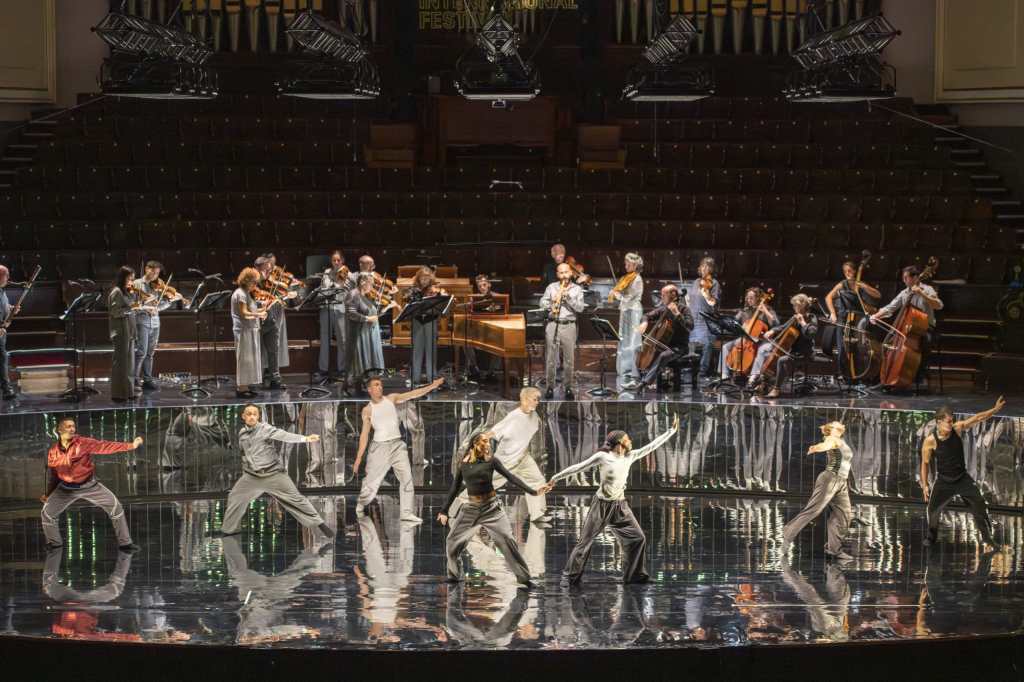
Different but no less enjoyable was the Orchestra of the Age of Enlightenment’s concert at the Royal Festival Hall with Sir Andras Schiff conducting from the piano in a Schumann programme with a little Mendelssohn in between. It started with the Konzertstück which is a very lively piece for piano and orchestra and was followed by familiar passages from Mendelssohn’s Midsummer Nights’ Dream and Schiff played Schumann’s only piano concerto after the interval. He had talked last year at an open rehearsal of his pleasure in having a brown Blüthner fortepiano rather than the shiny black Steinways that are usually provided.

He had it again tonight and did us proud, not only in the opening piece and the concerto, but gave us a solo encore of Brahms’ Albumblatt and then closed the piano lid very firmly and got the whole orchestra to play Mendelssohn’s Fingal’s Cave as a bonus encore. Coming at the end of an eight day tour to Vienna, Graz, Antwerp, Amsterdam and Munich the energy of Sir Andras and the orchestra was quite amazing. And with even more bonuses – a preconcert talk with Laura Tunbridge, professor of music at Oxford, and an interval drinks reception for friends – it was a night to remember.

Sir Andras Scxhiff leaves the stage, leaving behind his favourite instrument.

On my way to the OAE concert I went to the National Portrait Gallery to see the exhibition of Edvard Munch portraits. These were very impressive with clear characterisation of friends and family placed in relevant environments. He obviously didn’t like several of his subjects as these were not flattering portraits but reflected Munch’s relationship with them and indeed with himself. I couldn’t escape the musical theme of the month of May as my two favourites were The Brooch which is a lithograph of an English violinist who styled herself Eva Mudocci and a quick stetch of Edward Delius at a concert in Wiesbaden. I also liked his walking self-portrait and a double portrait of the lawyer Harald Norgaard and his wife Aase with whom he had a lengthy relationship. It’s an unusual composition and was quite striking. Munch knew Harald from his youth and painted Aase separately on a number of occasions.

I also made it to another British Museum exhibition after being a radiotherapy buddy to a friend who is going through the final stages of cancer treatment. She is great company despite the circumstances and we have spent some good times together. As I remember myself radiotherapy leaves you pretty wiped out so she declined the offer of accompanying me to the BM understandably preferring home and rest. The exhibition was mostly of objects from the museum’s own collections but shed a fascinating insight into the religions of India – Hindu, Jain and Buddhism through their artefacts and what they symbolised. The galleries also had birdsong, tolling bells and chanting played quietly to make it a multisensory visit.

My next adventure was into the world of words. The British Bilingual Poetry Collective resumed our Bi-monthly Poetry Meets at Bard Books on Roman Road in Bow. Shamim Azad and I led a session of poetry readings, discussion, translation and an open mic session which was much enjoyed by all present.

The late May bank holiday was spent having an early supper with Rosa and then a visit to the Wigmore Hall to hear the amazing percussionist Colin Currie. I wish they didn’t have a photo ban because the array of drums, marimba, vibraphones, glockenspiel and other thing you can bang to make music filled the entire stage. A varied programme showcased his ability to make exciting, moving, thoughtful and adventurous sounds emanate from this staggering collection of instrumental forces.

My main motivation for going was the world premiere of Vasa a Concerto for Solo Percussion by Dani Howard, a young composer I’ve been pleased to call a friend for a few years now. It was a complex piece featuring a series of different tempos, emotions and melodies. Dani had worked with Colin to devise the final form and told us later that she had to have a diagram of the stage layout of the marimba, two vibraphones, cymbals, drums and other devices, many of them foot-operated, so that she could ensure she was writing things Colin could physically move around the instruments to execute. It was a very rewarding evening concluding with some excellent conversation in the pub.

I had intended to give After the Act at the Royal Court a miss as I’m not a big fan of musicals. However the indisposition of Fran’s intended companion meant that she asked me to go. The content should have been – and was – of real interest. The ‘Act’ was the appalling 1985 Section 28 that forbade taechers in schools and colleges to mention homosexuality, Equally appallingly it was only repealed in 2003.

The play contained some verbatim quotes from individuals – teachers, parents and students – who had suffered from the act, recreations of protests including a daring 1988 abseil in the House of Lords and, for my taste, too many occasions when serious issues resulted in the cast of four bursting into song accompanied by onstage keyboardist and drummer.

The next evening was far more satisfactory. Because Terrance Rattigan’s The Deep Blue Sea was on at the Theatre Royal Haymarket we were able to pop into Yoshino for a quick pre-theatre sample of Lisa’s excellent cuisine and hosting. Some analysts feel that the doomed love affair represented in the play was Rattigan’s sublimation of his own homosexuality – still illegal when he wrote it in 1952.

Starring the wonderful Tamsin Greig with a fine supporting cast, this was a faithful period-set production that allowed the play’s veiled messages space to emerge from the context and the conversations around love and death, suicide and survival, protest and resignation, passion and comoanionship were brilliantly done, very moving and affecting.

Thursday saw Fran and I make our hat-trick of theatregoing with a trip to Islington to see Ava Pickett’s debut play 1536. The setting is sixteenth century Essex where three friends indulge in gossip – has Henry really ditched Anne Boleyn? – their own relationships with men and each other and the role of women in a patriarchal society. It’s bold, it’s funny. it’s sexy and it makes you wonder how much better things really are today. The rolling changes in friendships are brilliantly delivered in crisp dialogue and while history is all around, the play tells us a lot about today. As a writer on the brilliant The Great on Channel 4, Ava Pickett is clearly a name to watch out for.

The month’s finale was a trip with Frances to see Simon Russell Beale in Titus Andronicus at the Swan Theatre in Stratford-upon-Avon. After a pleasant drive up we had a late lunch, checked into the hotel and then made our way to the theatre. It was my first time in the Swan and we were a bit surprised that this production was in the smaller space, not the main hall. However the intimacy of the location made the horrors of Shakespeare’s most violent play (or is it Coriolanus?) very clear.

The production certainly didn’t stint on Kensington gore but used brilliant lighting and sound effects to protect us from witnessing the worst atrocities. SRB was his usual excellent self but was by no means outstanding. The whole cast under the direction of the versatile Max Webster was superb and brought the subtleties of the text into play as well as the torrid drama. And on reflection, yes this is the most violent of Shakespeare’s works.

We went out to Anne Hathaway’s house next morning for a walk around the orchards, had an enlightening tour of the house from excellent guides and then made our way back to London. A fine ending to a full and varied month of culture. As Shakespeare’s contemporary Thomas Dekker put it “O, the month of May, the merry month of May”.