
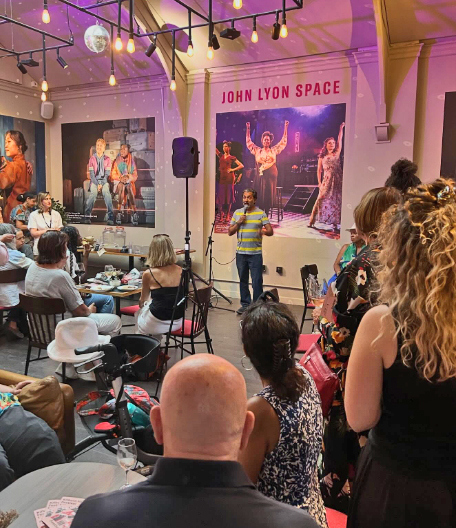
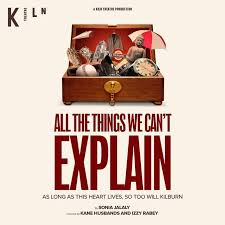
Just had to get down three amazing days. First a trip with Frances to the opening night of the Kilburn High Road Festival at the Kiln Theatre. We had a chance to chat to the creative director Amit Sharma, trustee Alastair Levy, aspiring actors and others with a glass of wine and excellent food before going into the theatre to see All the things we can’t explain. This is a community production in which 80 cast members ranging from ages 6 to 80, open the festival by searching for the beating heart of KIlburn. As with the OAE’s Life of the Sea back in June at the QEH, it is so encouraging to see so many people from diverse backgrounds engaged in the arts. It was a fun piece with lots of dramatic twists, solo turns for just about everybody and brilliantly choreographed movement with all 80 on stage pretty much throughout. It celebrates the ‘people, memories and shared experiences that make a true community’ – and it did. A great initiative from the Kiln as the start of a fortnight’s programme of events in various venues and on the street up and down the High Road. It quite took me back to the 70s when Ian Dury went on tour with his pre-Blockheads band Kilburn and the High Roads.
On Saturday I had the pleasure of meeting up with Rosa, now largely based in Girona so a sadly infrequent culture companion, to see The Tao of Glass at sohoplace. Rosa had expressed a wish to see it in an email so I booked not knowing much about it, but thinking that, as it featured the work of director Phelim McDermott who had done such a brilliant job with My Neighbour Totoro and much earlier Philip Glass’s opera Akhnahten back in 2016, we’d give it a go. Oh so glad we did! It’s a piece of totally indescribable theatrical magic accompanied throughout by a score by Philip Glass played live by a quartet of violin, clarinet, piano and percussion – the latter included a sequence played on kitchen utensils. From its opening scene with a bemused looking Phelim sitting in the front row of the stalls through a series of sequences using puppets, mime, shadow play, music manuscript paper, huge fluorescent-tube-lit rings ascending and descending from the flies, sellotape and both a deconstructed and a self-playing piano and a Dansette record-player, it tells the story of McDermott’s lifelong obsession with Philip Glass and his music. It was truly astonishing and moving.
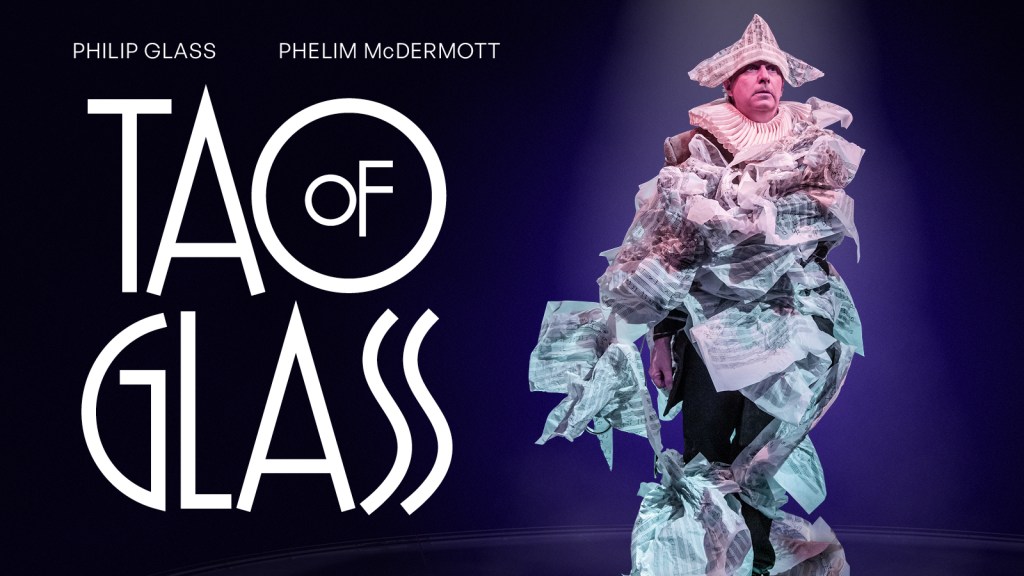
We both got quite emotional at times as well as belly-laughing. That’s what theatre is all about. And it’s all physical – no green screen, no AI, just an amazing set of people contributing to a wild imagination. It’s rare that a show gets the maximum 4 or 5 stars from every outlet but Tao did. Go see it if you can. It’s on until 12 September.
Rosa was meeting another friend in the evening and I needed to get back to join neighbour two-doors up Pritie Arnolda’s birthday party. She welcomed 150 people with a huge marquee in the garden, wonderful food and ample drinks – soft and otherwise. It was lovely to catch up with other neighbours, new acquaintances and with Pritie and DJ Dom who have been friends since they first moved in with very young children who are now teenagers. And I have another birthday party this week as my granddaughter Daisy turns 18. Where do the years go?
And then I got to see Rosa again on Sunday when a group of us went to see the world premiere of my friend Dani Howard’s Concerto for Brass ‘SIGNAL’ her first commission from the BBC Symphony Orchestra as a composer. Six of us assembled in the Verdi Restaurant for an enjoyable meal before the concert. Unfortunately Dani was in the Queen’s Arms pub round the corner in Queen’s Gate Mews – an old-haunt from her days at the Royal College of Music opposite the Royal Albert Hall and a pub I’ve enjoyed on a few occasions. Her WhatsApp letting me know came too late for me go and see her there and get back for our 6.15 table booking which was quite important as we were welcoming a new friend to the group – Shoko Yamana. Shoko is also a friend of Lisa Maitland who runs Yoshino restaurant. Lisa had met Dani when she, Sion and I went there for dinner back in March when she was working on the Prom commission and Lisa was excited to hear about it. Lisa couldn’t come today as she had to work but suggested that Shoko might enjoy the concert. Fortunately she fitted right into our group and was no stranger to the RAH as this was her fourth prom of the season. But as she said “This is the first time sitting down in the Albert Hall”. Well, she’s very young but two hours standing is not an option for me anymore! She is also a viola player and has travelled widely, so we had a very engaging and interesting pre-concert chat. Shoko joined Jadwiga and her daughter Lucy, Frances, Rosa and me.
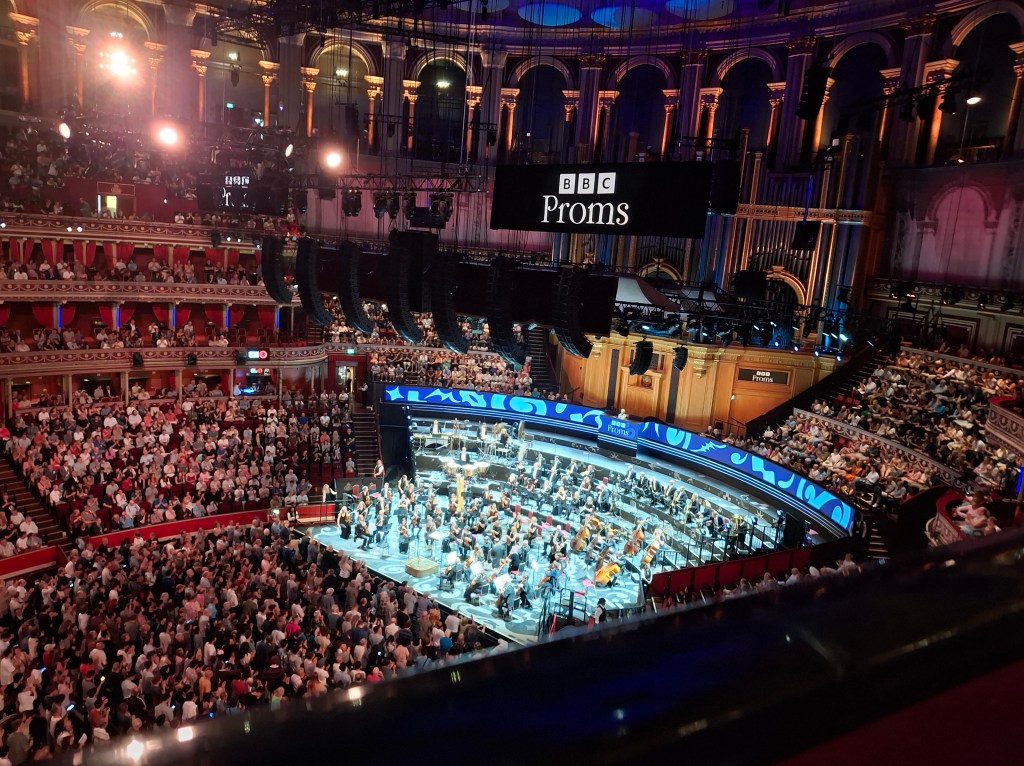
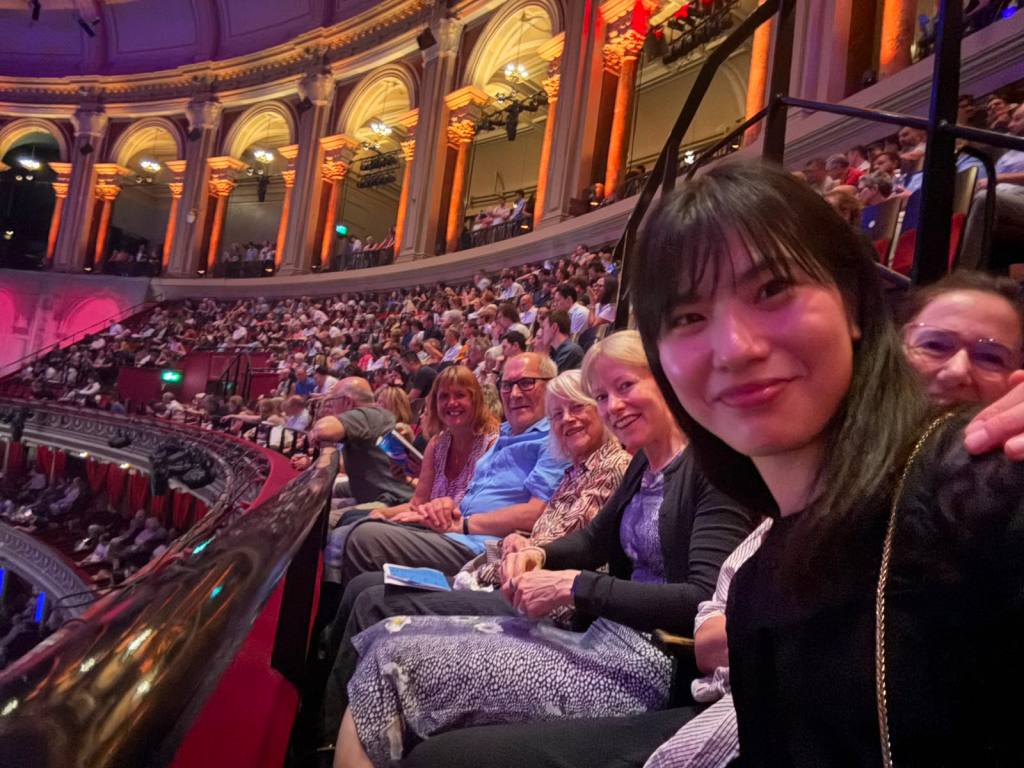
But to the main event. Dani’s concerto features the brass sections of the orchestra as groups of soloists rather than having any one instrument out in front with the conductor Paavo Järvi. It has fine passages for strings and woodwind and percussion but it’s the horns, tombones, tuba and trumpets that are the stars of the show. There was some very touching call and response between the sections, lots of her trademark downward slurs and lots of sparkling high notes which sent a tingle through the auditorium. The Guardian reviewer found it as impressive as we did: Bright, celebratory and eminently likable, the music shimmered and frothed, its energetic outbursts crowned with fluttering trumpets and underpinned by sonorous bass trombone and tuba. I really enjoy Dani’s style of composition and listened to the concert again on Monday, It’s on BBC Sounds here with Dani talking about the motivation for the piece and its title Signal symbolising communication. The next item was Tchaikovsky’s Second Violin Concerto a familiar work played by the Greek virtuoso Leonidas Kavakos. It was interesting in parts but failed to fully engage me. His encore of a Bach partita was much more to my taste. After an interval spent entirely queuing for the inadequate loos we heard a complete new work, for me, Scriabin’s Symphony Number 2. It was a final work in 1901 before he became more experimental in works I did know. This reminded me of Mahler, Wagner and Richard Strauss and in one movement with a big storm and calm aftermath of Beethoven’s Sixth Symphony. I thoroughly enjoyed it and all in all it proved a wonderful culmination to a weekend of culture with friends old and new.


