August unfolds

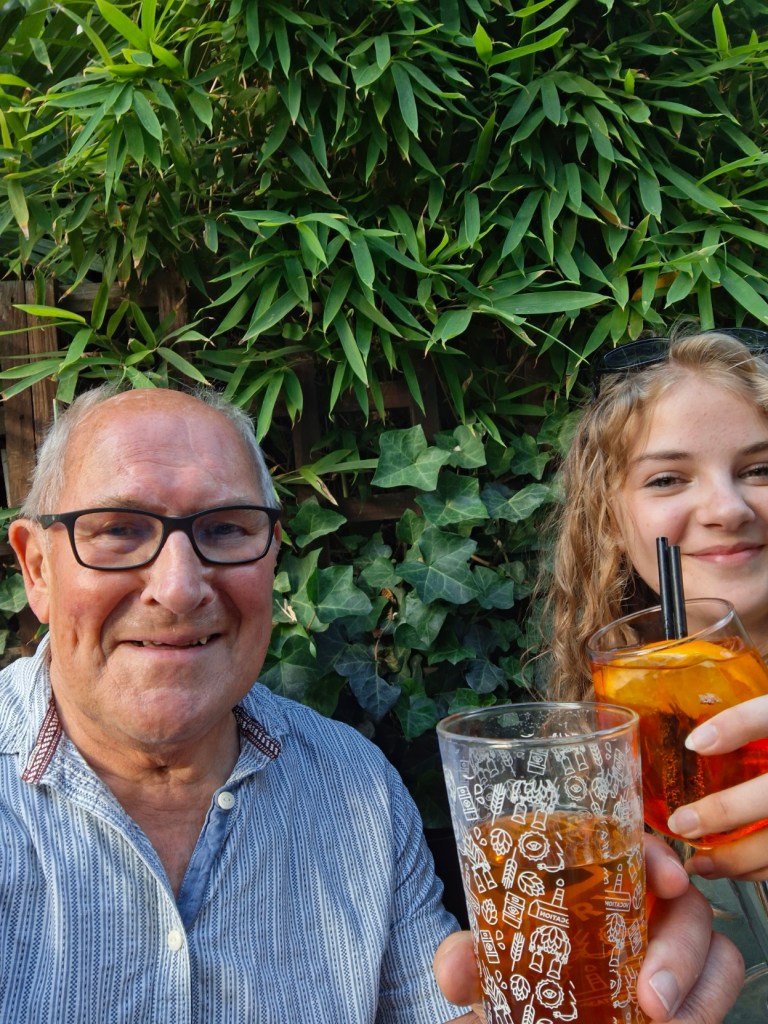
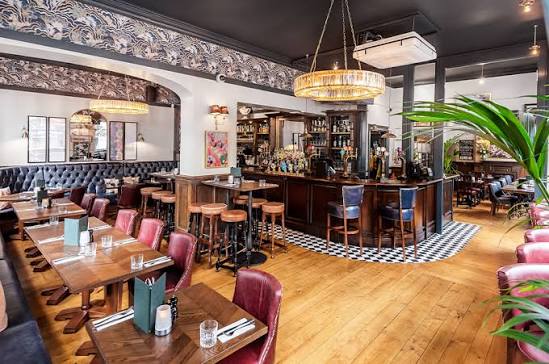
August started well with an invitation to my granddaughter’s18th birthday party. Daisy could at last legally buy a pint and I enjoyed a few with her and many other family members and friends in the Shortlands Tavern. It has recently implemented an “No under 21s after 8pm” rule after recent troubles with young people. My daughter thinks these were largely self-inflicted by putting televisions everywhere and staying open late during the World Cup and encouraging a younger clientele. We were not ushered off the premises but chose to leave around nine after a good evening of catching up. Daisy and the family had just returned from a fabulous trip to Vietnam and Cambodia about which I heard lots of good things.

The next Sunday saw another trip to the Royal Albert Hall to a concert by the Orchestra of the Age of Enlightenment. I had arranged to dine with Frances in the Queen’s Arms the lovely nearby pub where we had missed Dani Howard on the previous Sunday’s Prom trip. There are still no trains into Charing Cross from Lee so I thought a bus from Victoria to the RAH would be easy. Not so. The National March for Palestine had caused a massive gridlock around Hyde Park Corner – no problem with that a worthy cause – but a TFL guy advised that he couldn’t say when the next 52 bus would make it down to Victoria. There were two other concert goers who were anxious about making the trip as they wanted to catch the Hockney at Serpentine North before the concert – I just wanted to get to the pub to meet Frances. So I suggested a taxi. They were worried about cost but finally we agreed and were joined by a fourth passenger so all costs were shared.

By a brilliantly circuitous route the driver contrived in good time to drop three of us at the hall and took the fourth woman on to her home on Kensington High Street – raised eyebrows were met with “I downsized a big house into a tiny postage stamp flat!” Good food, wine and conversation ensued and we made our way to the hall.
The OAE development team had suggested we might like to join them for a pre-concert or interval drink at their box. We headed there to find that only white wine was on offer. In a piece of noble generosity my friend Luka whizzed off to source some red as Fran and I had not wished to switch from our dinner tipple. Thanks Luka – much appreciated! Some very interesting conversations with other guests included music, lack of arts funding and cricket. The concert itself was excellent. I had never heard of, let alone heard music by, Zelenka. He was admired by Bach and Telemann and I enjoyed his Misere for its brooding intensity and varied choral writing but especially for the soprano lines for Erin Morley who was in brilliant form in this piece and in two Mozart concert arias. In between Peter Whelan directed the OAE in a performance of Mozart’s Masonic Funeral Music a rather strange requiem for a fellow mason as indeed was Zelenka’s piece. It was a very engaging first half with the band on great form under a conductor they love working with. The second half was devoted to Hadyn’s Nelson Mass where Erin Morley was joined by Helen Charlston, Guy Cutting and William Thomas. Both Helen and Guy are graduates of the Rising Stars programme through which the OAE helps so many young singers progress their careers. While Erin Morley has the lion’s (esses’?) share of the arias, the other voices worked well to provide us with a thoughtful version of this complex work with its low strings and drums contrasting with steely blasts from the trumpets and lush orchestral ensemble passages. Another great evening at the Proms.
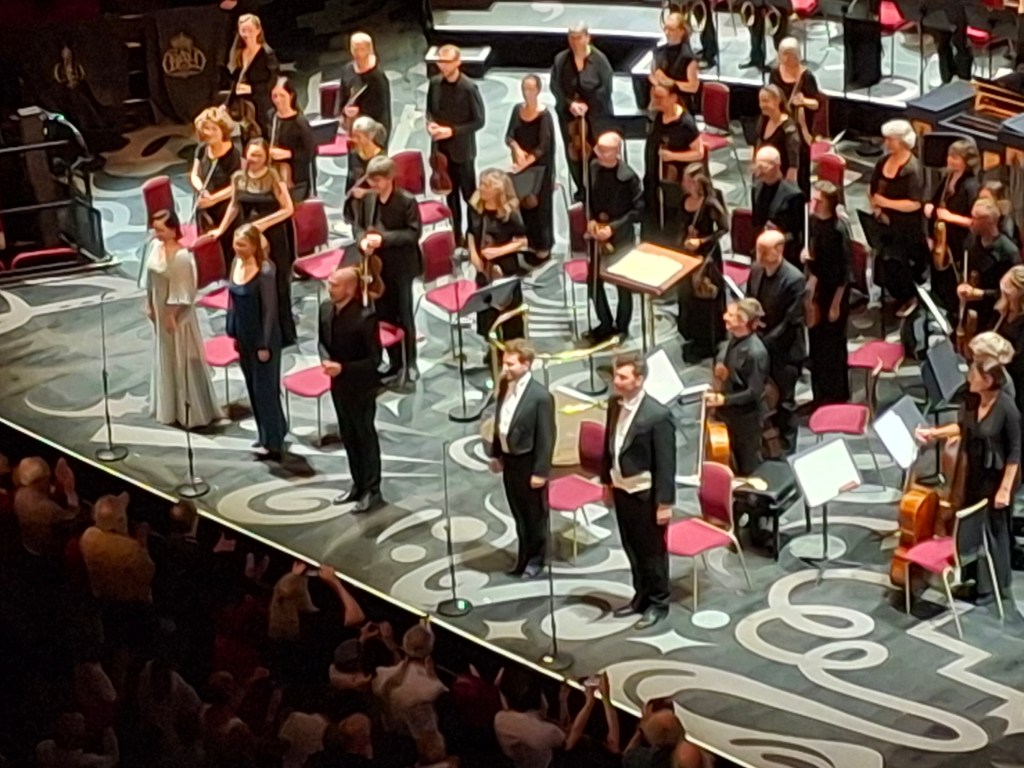
Erin Morley, Helen Charlston, Peter Whelan, Guy Cutting and William Thomas receive applause

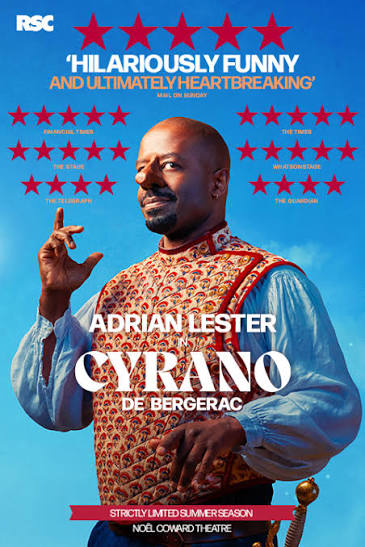
The next trip was to catch up with Adrian Lester and Susannah Fielding in Cyrano which has transferred from Stratford to the Noel Coward Theatre in St Martin’s Lane. I met Fran again for a pre-theatre snack in the excellent Barrafina in Adelaide Place – wonderfully convenient for Charing Cross station which is today again receiving trains from Lee for the first time in a month. Barrafina staff are chatty, the food superb and the wine slipped down nicely. As did the play. I’ve always known Adrian Lester was a great actor but this performance was outstanding and backed up by a superb cast of actors and musicians who roamed around the theatre throughout a really funny and emotional evening. As someone who likes playing with words, I loved this adaptation by Debris Stevenson and director Simon Evans which absolutely crackled with one-liners, classy put downs and truly duff verse as well as some emotional interplay in the love triangle. Brilliant!

You know you are getting old when the NHS offers you a vaccination against a virus you’ve never heard of. I looked up RSV and found that it was respiratory syncytial virus and the vaccination is intended for “older adults and newborn babies”. So I’m now worried that I’m entering Shakespeare’s seventh age and will finish up “sans teeth, sans eyes, sans taste, sans everything”. As an asthmatic anyway I thought I’d better do it and discover that the nearest pharmacy I can attend is in Downham Way which “sans car” is an exciting two-bus ride away.

It all worked out fine and to date, the possible flu-like symptoms I was warned of haven’t materialised and my weak lungs have some extra protection. And I had a trip as a passenger through some of the less familiar parts of southeast London.

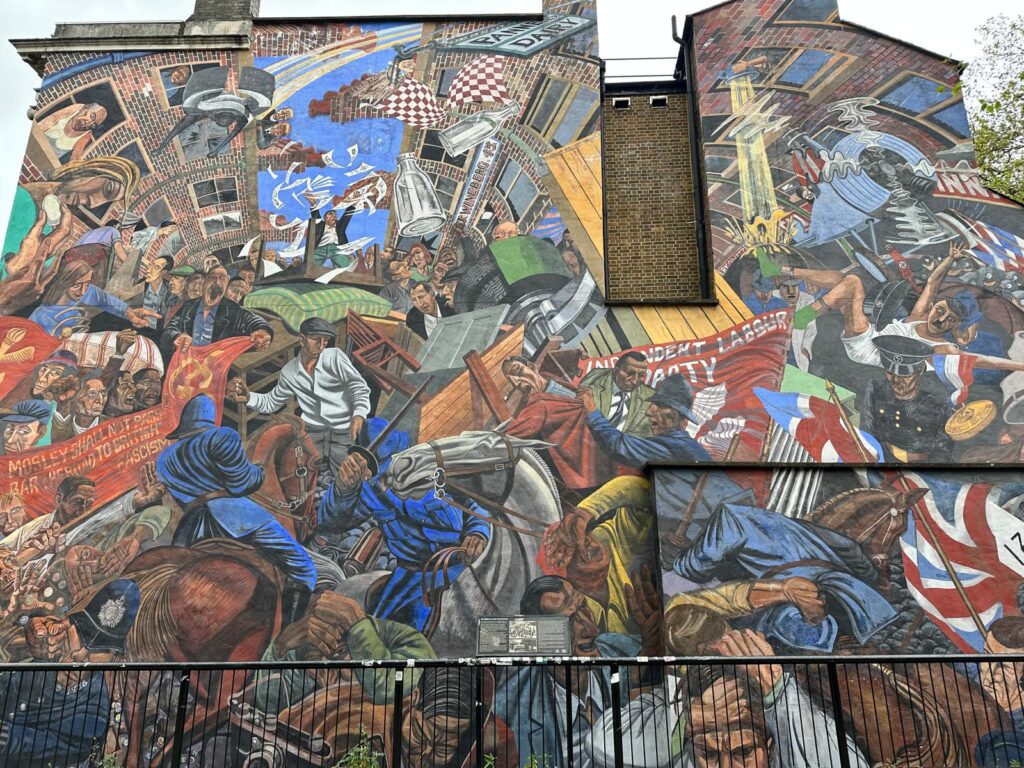
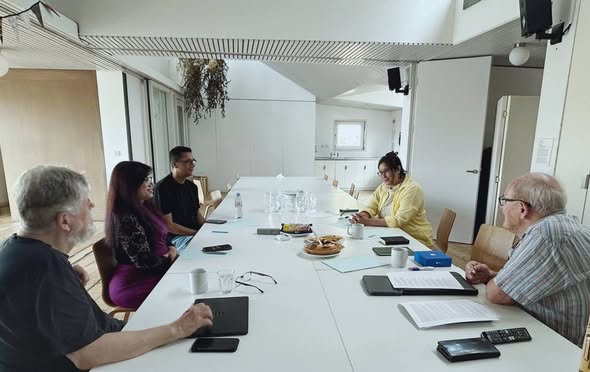
BBPC is working with New Cockney Poets towards an event on 4 October to commemorate the 90th anniversary of the Battle of Cable Street when the East End rose to repel Owald Mosley’s fascists from marching through the area. So we set our participants the theme of East End Identity for this session’s poems. Some wrote on the day, some had prepared poems ahead of the meeting and others who couldn’t attend sent in their poems. Inspiration came from a film of the action back in 1936 with first hand commentary from a particpant and from the Cable Street mural.
My friend Jadwiga and I celebrate each others’ birthdays with a lunch. We share a date 19 but are two months apart. Because of lots of other commitments we celebrated mine in August at Ognisko, Jadwiga’s favouriite Polish restauarant in Exhibition Road. After a surprisingly hot beetroot soup – we both expected it to be cold – I then had a rabbit leg in mixed vegetables and Jadwiga who doesn’t eat meat had smoked salmon blinis.
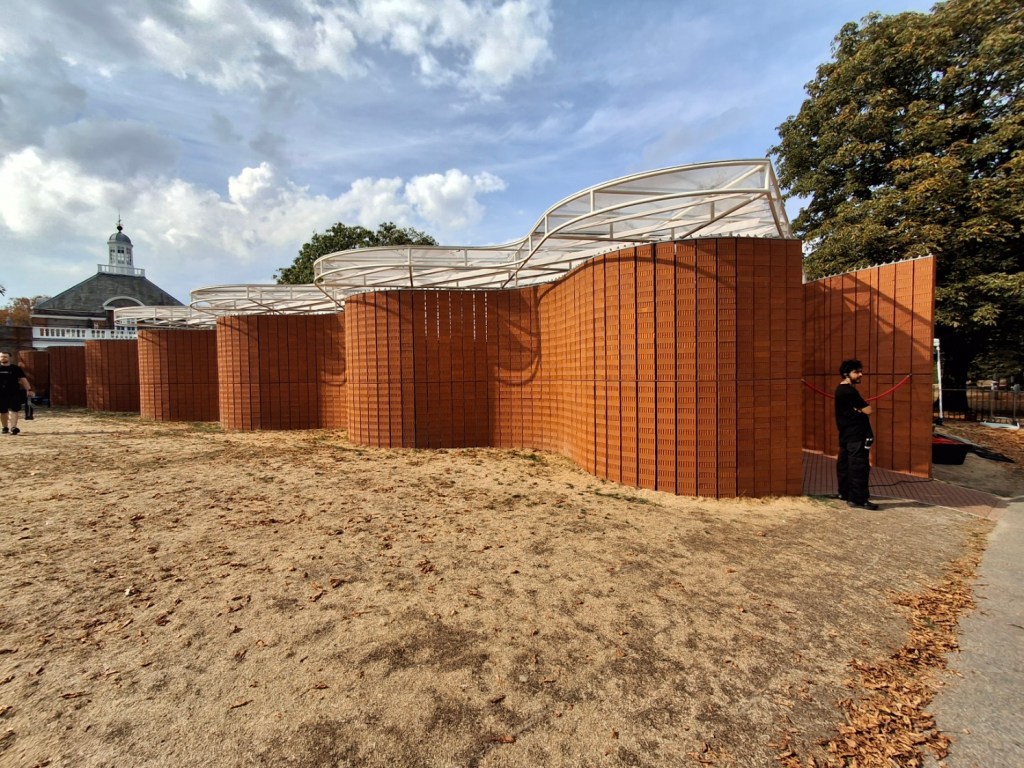
Our tradiiton is then to walk up and view the current year’s Serpentine Pavilion. Unfortunately it was closed for a private event so we could only admire the fine red brickwork of its construction. Designed by LANZA atelier from Mexico City the design is known amusingly as a crinkle-crankle wall. The serpentine nature of the wall apparently gives it more stability and uses fewer brisks. It is certainly very curvy and has some bricks with inttricate patterns baked in. We weren’t able to experience its translucent canopy roof so had to make do with the website images for the effect.

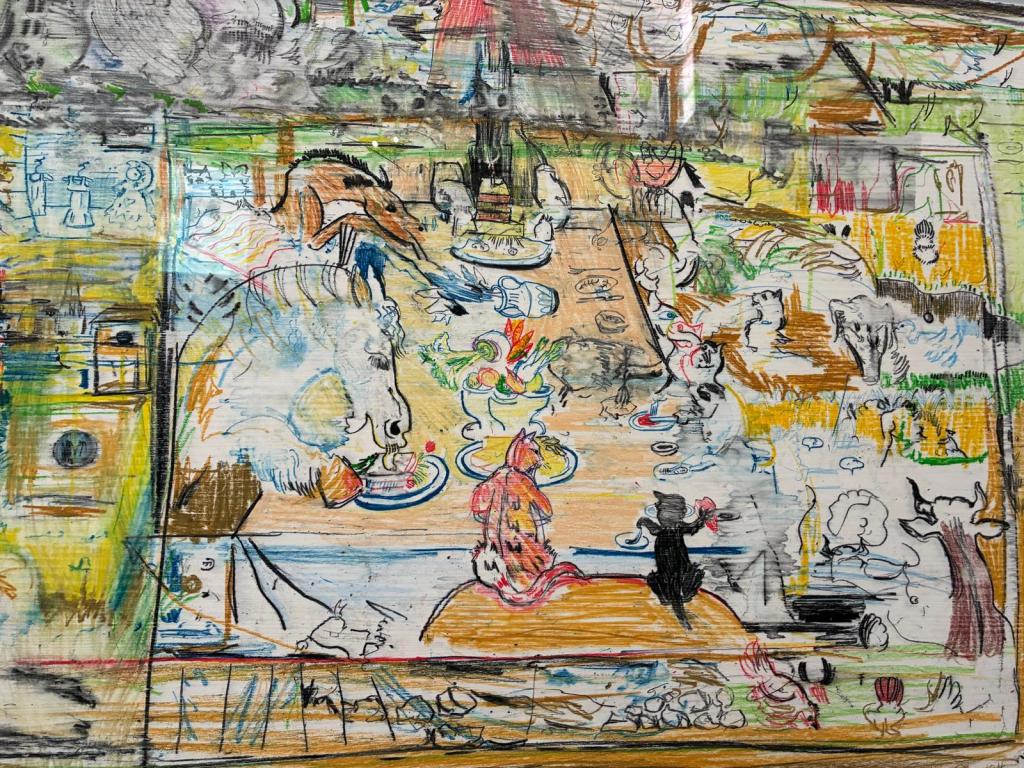
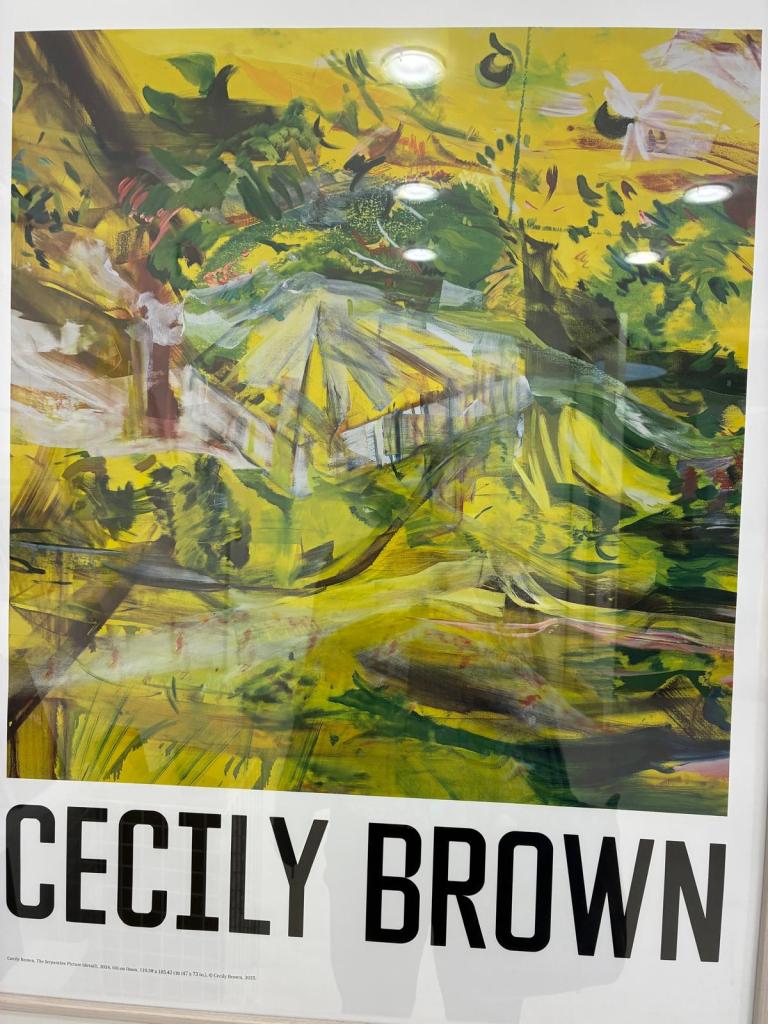
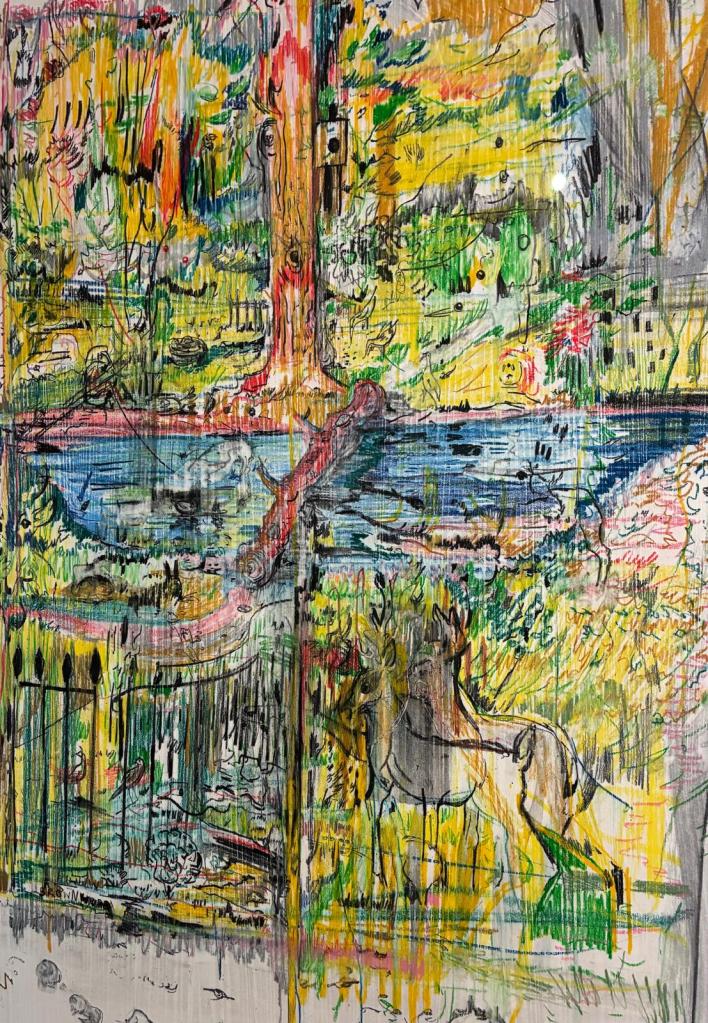
What we did discover was a new artist in the Gallery. We had to admit that neither of us knew anything about Cecily Brown a Btritish born painter who trained at the Slade and moved to the USA in 1994. They are mostly very large colourful canvases close to abstraction. However as you look closer there are humans, animals and especially fallen logs over streams in a reccurring series of “Nature Walks”. She applies paint in very thick broad strokes in the majority of works here but we both really liked some of her smaller works, These are mainly monotypes, that is one-off prints, not editions, to which she adds pen and ink drawing, crayon and pastels to great effect. I found these really interesting in subject matter and technique. An unexpected pleasure that rounded out the birthday treat very nicely.
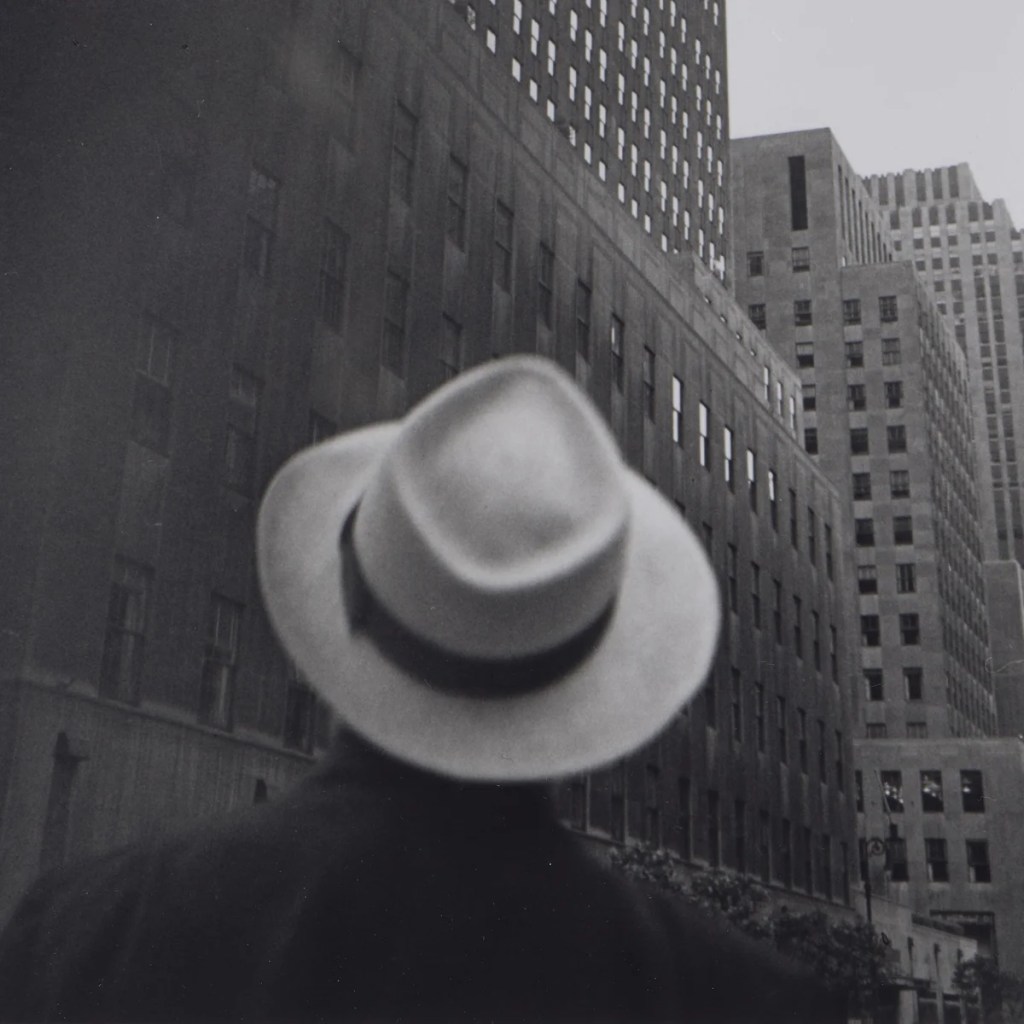
Another cross south London multi-bus trip found me at the gate of the Dulwich Picture Gallery. A couple of weeks ago Lucy Nicholson, herself a renowned photographer, recommended the exhibition Portrait of a City which showcases over 100 images of urban life in the USA from 1907 to 2012. Many are by well-known photographers like Diane Arbus, Saul Leiter, Alfred Stieglitz, Helen Levitt and Bruce Anderson and many by others I hadn’t heard of. The photographs themselves were all worthy of a long look just as images but build a dramatic impression of urban life in America over the century. There were some interesting film clips too.Thanks for the tip Lucy.
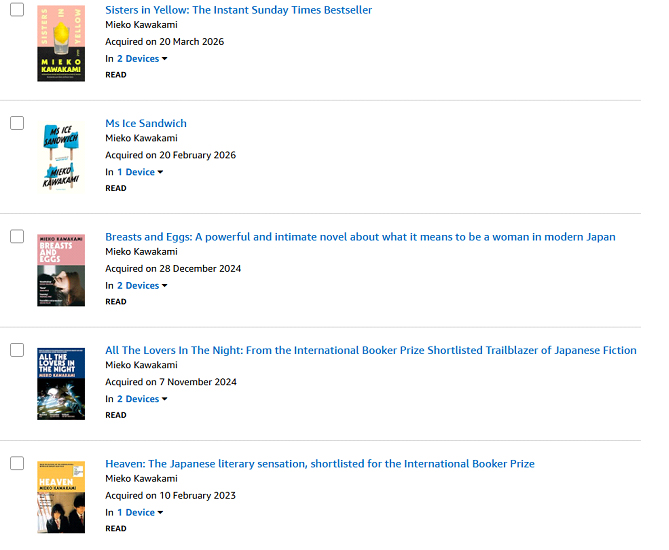
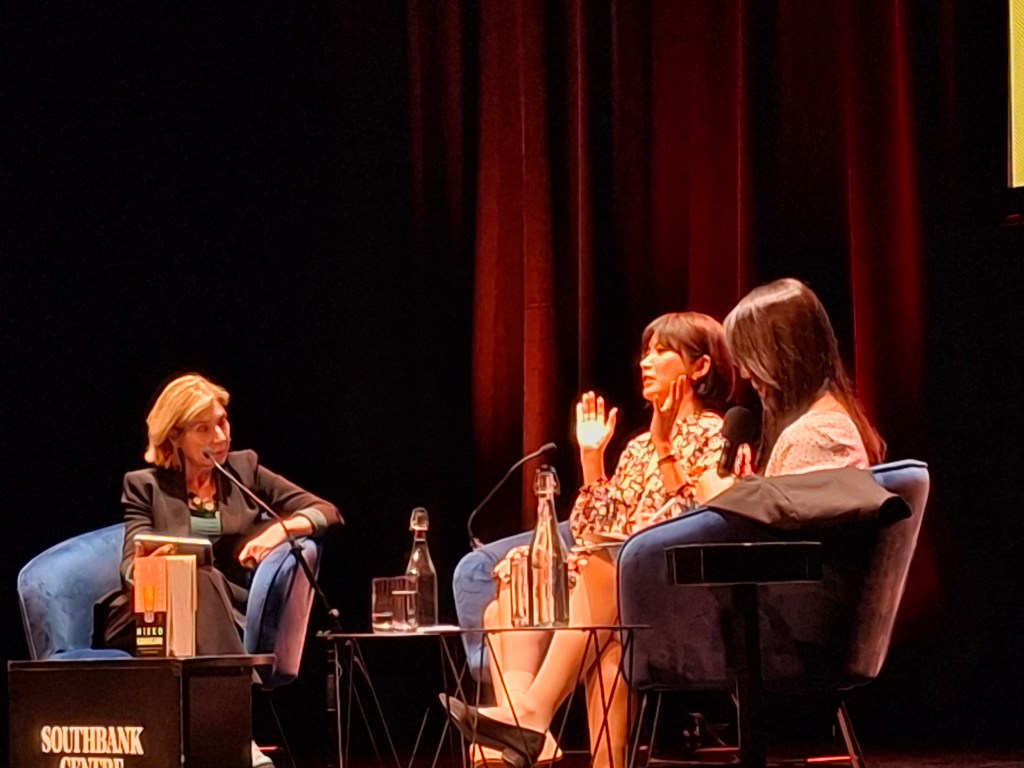
More bus journeys took me from Dulwich to the Southbank Centre for a talk by a favourite Japanese writer Mieko Kawakami. I debated taking a photo of her book titles in my Kindle to sign but decided that would not be cool. Her talk was fascinating covering her own rather deprived background, her writing style and choice of themes – all quite different so far in the five books I’ve read. Then a large chunk of the evening was devoted to talking about Murakami and translation. The description of the collaboration with translators and the degree of trust involved was very insightful. At one point she said that Jay Rubin, who has translated a lot of Murakami, was of the opinion that Murakami’s translation into Japanese of Catcher in the Rye was better as a read than Salinger’s original – quite a claim. Mieko also talked with admiration of Murakami’s beautiful Japanese. She was funny – you knew when a joke was coming because the Japanese in the room laughed before the superb interpreter, whose name I didn’t catch, – could deliver the English equivalent. A fascinating evening and some re-reading to be done withn new perspectives on the books.
The arrival of a new Almodovar film is a real incentive to venture into Picturehouse Central for a treat. His latest is Amarga Navidad – Bitter Christmas in English. A recurring theme in his later work has been the blurring of fiction and reality. How ethical is it to steal someone else’s life story for your script? As always, the sets and wardrobe are strikingly colourful and chic. The acting is emotionally powerful and the split era timescale works well with tragic events of 2004 being purloined for eminent director Raul’s (Leonardo Sbaraglia) 2025 script.
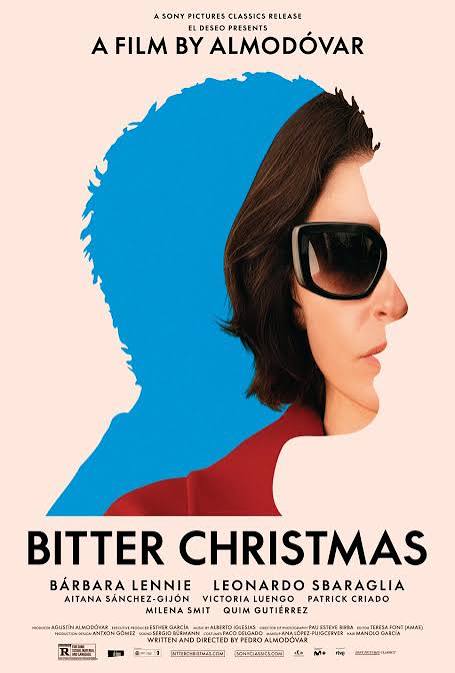
Relationships across genders are vivdly drawn and the close friendships of the female characters contrast with the more withdrawn males. The execption here is the brilliant Patrick Criado a firefighter who moonlights as a stripper in brilliant glitzy underpants who is supportive of the panic attack prone commercials director Elsa, played by Barbara Lennie. In a gender swap Elsa is Raul’s alter ego in the modern day script. The parallel stories intertwine in an intriguing way and as so often music plays an important part – Alberto Iglesias’ score won the Soundtrack Award at the Cannes Film Festival and a haunting Mexican song from Chavela Vargas makes an impact. This is not Almodovar’s best work but I found it riveting throughout and with Madrid at Christmas and the black sand of Lanzarote as locations and his brillinat designers’ sets, props and costumes it are always visually as well as intellectually and morally interesting.

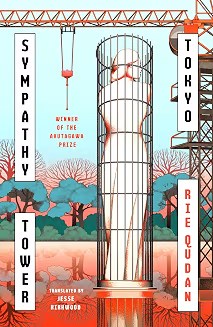
After the film, I popped into Yoshino to pick up my supply of gyokuro and apart from the usual delightful catch up with Lisa, I had the bonus of seeing Shoko who had come to the Prom a couple of weeks ago that featured Dani Howard’s concerto for brass Signal. Shoko had been away in Poland for a week and is now back in London where she works at a Japanese bank. Both these women are delightful company and a longer session at Yoshino where food as well as beer will be taken is planned. Shoko approved of my current reading – a hilarious, scary, futuristic satire called Tokyo-to Dojo-to or The Sympathy Tower Tokyo. She doesn’t completely share my love of Murakami finding his “beautiful Japanese” (Meiko Kawakami) prose quite hard going sometimes.
A Month in the Country is Ivan Turgenev’s most famous (only performed) stage work although there have been adaptations for the stage of several of his novels including Fathers and Sons also by Brian Friel whose version I just saw at the Donmar. I have seen the play before but it was difficult to tell whether what the audience shared was more Turgenev or Friel. OK, the plot was Turgenev with the pampered, moody Natalya longing for a true connection, preferably with a younger beau, from her loveless marriage – very Nordic, with echoes of Strindberg, Ibsen and of course Chekhov. However the latter comparison is retrospective as this play predates his better known compatriot’s theatre debut by 25 years. As we enter we find a leafy glass box through which said Natalya peers out from her symbolic prison – a little heavy perhaps. No complaints with the rest of the production though. It moves swiftly through the scenes with the box descending as a marker. The sets are sparse with lots of very wafty grasses and minimal furniture. Natalya’s gowns are exquisite – hats off to the design team – and the other cast wardrobe well chosen for their characters. But that’s all surface, what about the play?
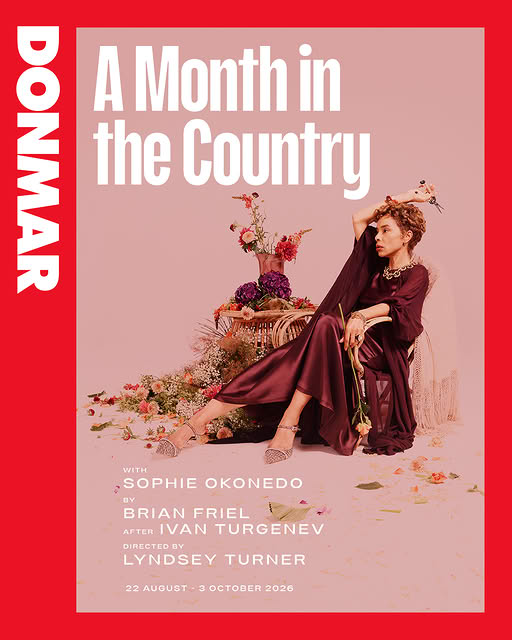
Sophie Okonedo can seemingly do no wrong. She gives a faultless performance as the sneering and demanding diva Natalya and as the pleading and needy would-be mistress. Just brilliant! Alastair Petrie was also outstanding as the spurned but devoted lover-in-waiting, Patrick Gibson was a revelation as the young tutor Alexey by turns falling in and out of love with both Natalya and her ward Vera in a nuanced performance. I couldn’t fault any of the supporting cast who are too many to list – it’s a big cast for a small space – but they all do justice to Friel’s witty adaption. Oh did I mention that it is sidesplittingly funny? I was sitting behind critic Mark Lawson whose frequent guffaws should guarantee a good review. It’s an evening about love and marriage – the first both requited and not and the latter a prison and a promise. I think I wrote that the Donmar’s The Guilty was my play of the year. This runs it close.

This blog started and ends with my granddaughter. For some time Dani Howard and her partner Sion Jones had said they could arrange for Daisy to sit in the pit beside their friend flautist Holly during a performance of Oliver! at the Gielgud Theatre. A great opportunity for work-experience for one about to study music and drama at the Guildford School of Acting. After an early supper in Pasta Evangelsists in Wardour Street, the Addisons and I arranged to meet and make introductions in the Blue Posts pub and then walk to the theatre. Why are there two Blue Posts pubs within about 300 yards of each other? I knew the one in Berwick Street very well from days past when recording voice overs with Chris Timpson at his studio in Duck Lane round the corner. However Dani and Sion were in the one in Rupert Street – even closer to the theatre. Oops! We did meet, chat and become firm friends all round and then Jo, Chris and I went in the front door to take our seats in the stalls while Daisy went in through the stage door. She found it loud – it is remarkable how much noise a 12 piece band can produce – interesting and useful. After the show we then all (minus Jo who had a bit of a headache) gathered at the other Blue Posts for a debrief, some networking and a few drinks before heading off home after a thoroughly entertaining evening.
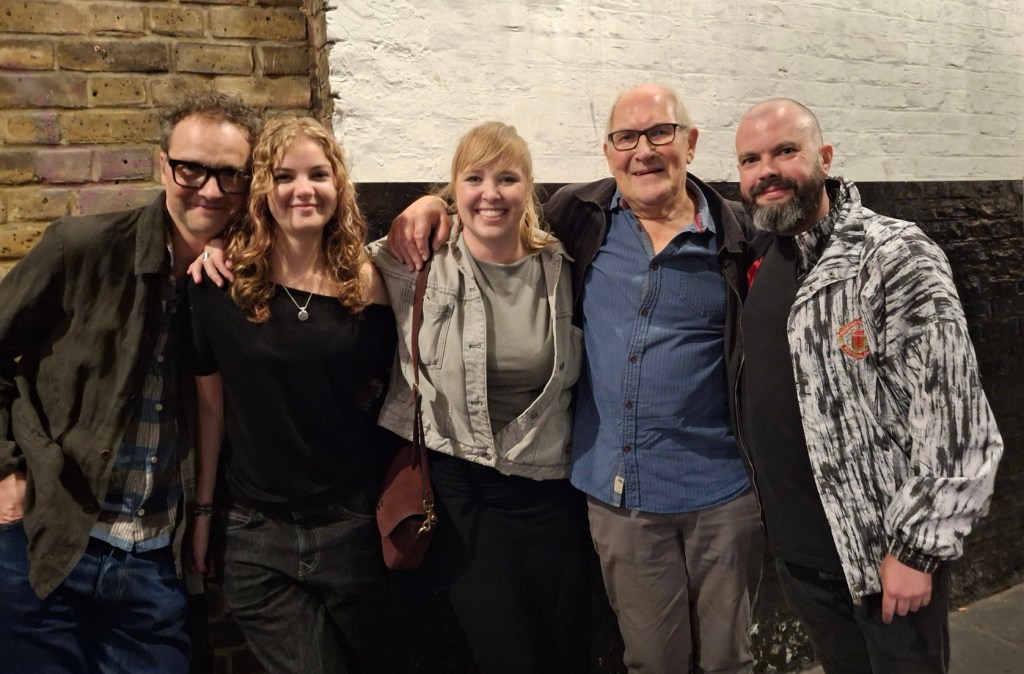

After the show outside the other Blue Posts

Marching on …

Finally after all the gloom of the year to date we had a few days of sun and I was able to plant some vegetables – broad beans and parsnips so far – check on the onions and garlic planted last autumn and do the annual hack and slash of all the dead brush from last year’s flowers. Then as I turned to go indoors the sunset showed me my next big task. The tree in the left foreground is my quince which has given us so much membrillo and jelly over the years but has lots of overlapping branches and needs a really good prune. A start has been made.

My rather aching limbs picked up some energy on Monday evening as I set off fot the Wigmore Hall to hear the Irish Baroque Orchestra play The Trials of Tenducci as the first part of a tour to Dublin, Limerick, New York and Virginia. I’m a great admirer of Peter Whelan who leads the IBO and the energy and clarity the band brings to the repertoire.

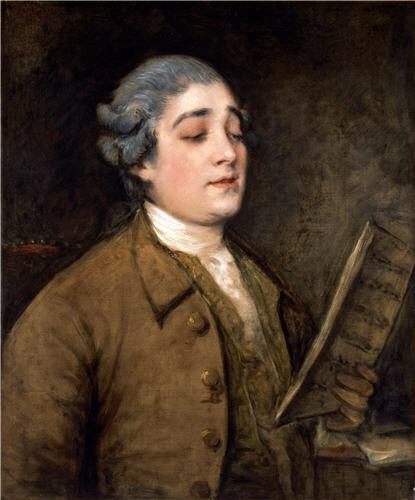
Tonight’s was an interesting programme based around the exploits of one Giusto Fernando Tenducci, a famous eighteenth century castrato singer. Born in Siena he came to London in 1758 and later moved to Dublin where he met and married Dorothea who later bore two children but later sued him for divorce for non-consummation. He became something of a celebrity – he was painted by Gainsborough, was friends with J C Bach and a singing teacher to Mozart. He was also to spend eight months in a debtors’ prison in London and later in Ireland. One admirer wrote of his voice: ‘neither man’s nor woman’s but it is more melodious then either’. Tenducci by Gainsborough in the Barber Art Gallery in Birmingham.

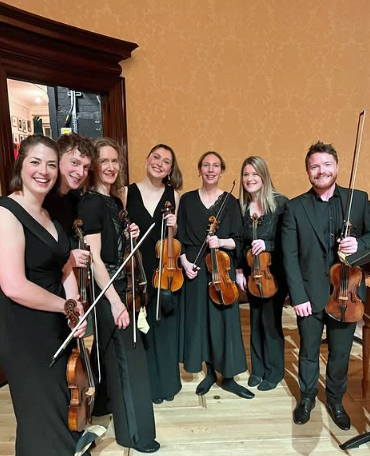
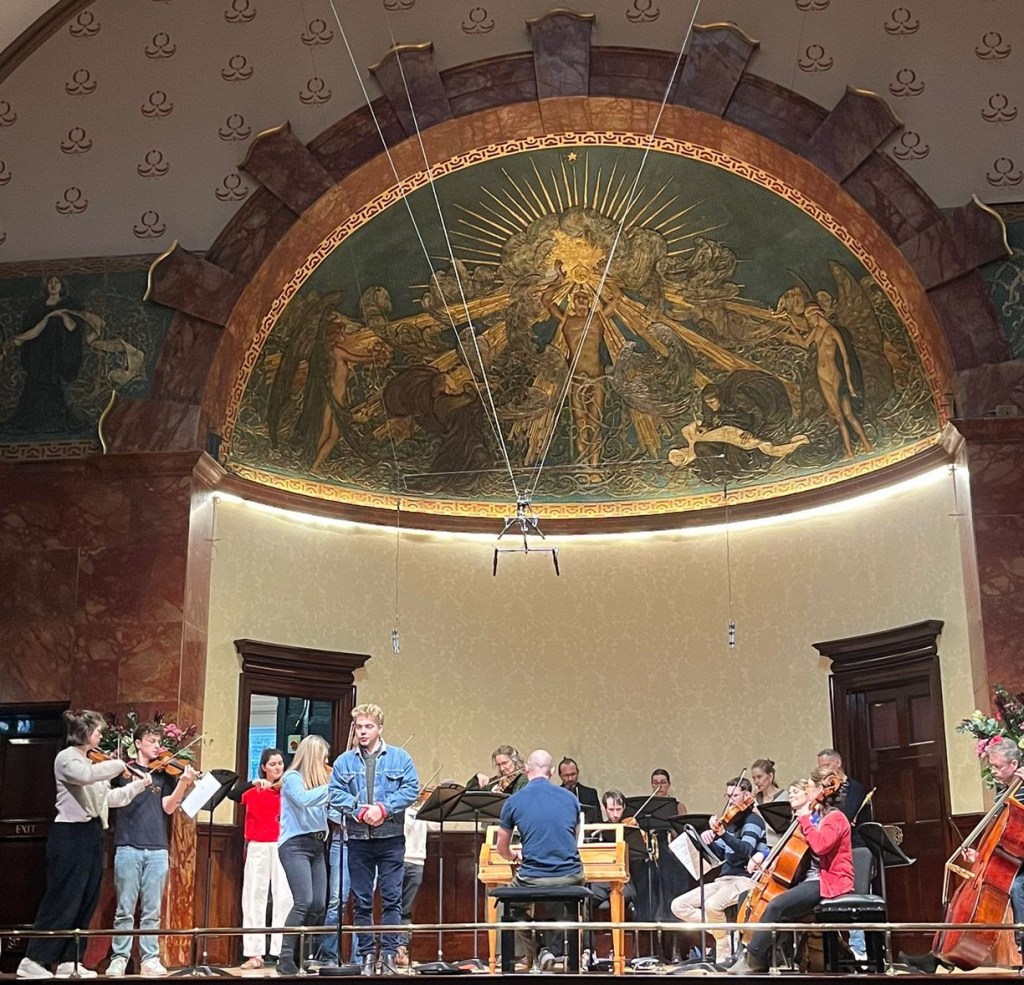
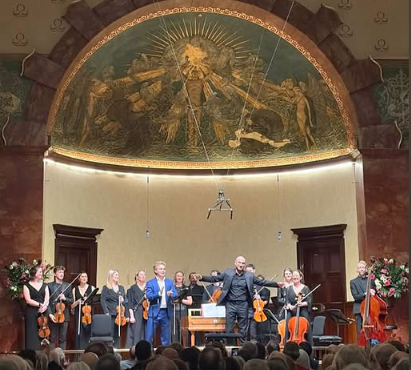
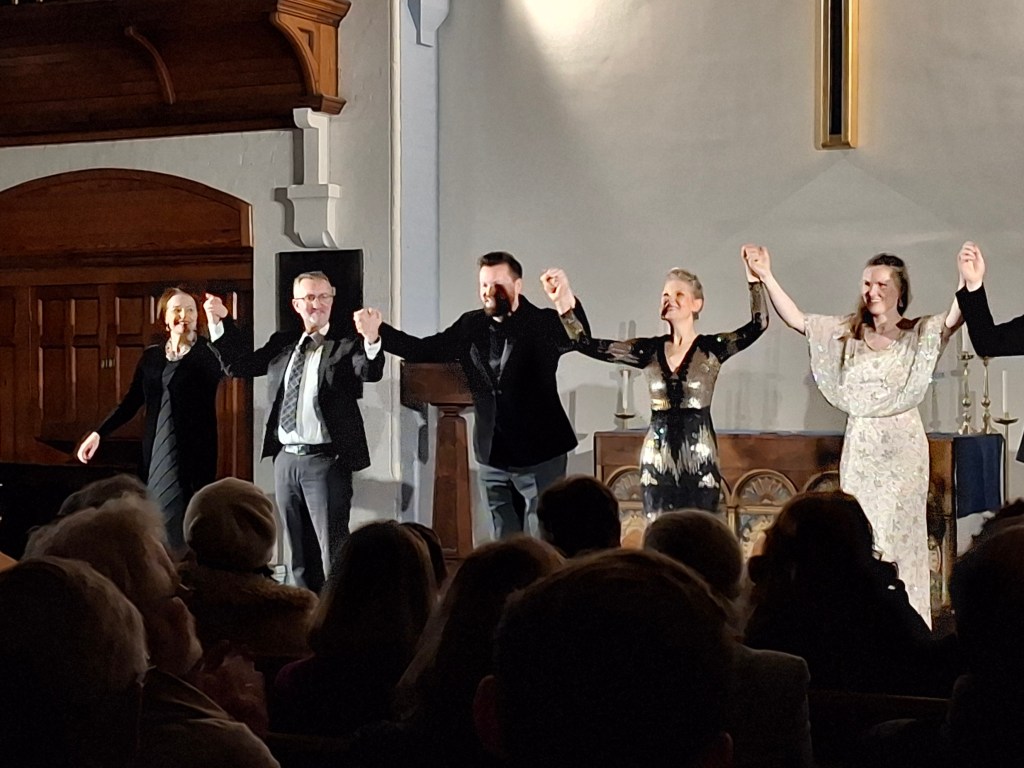
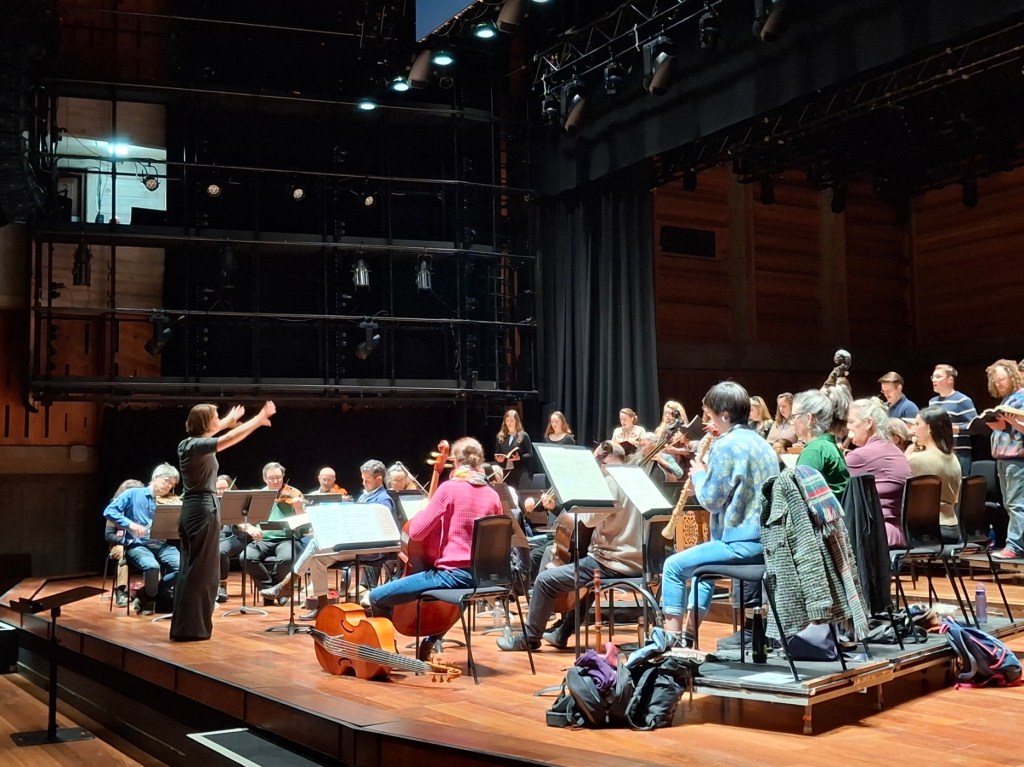
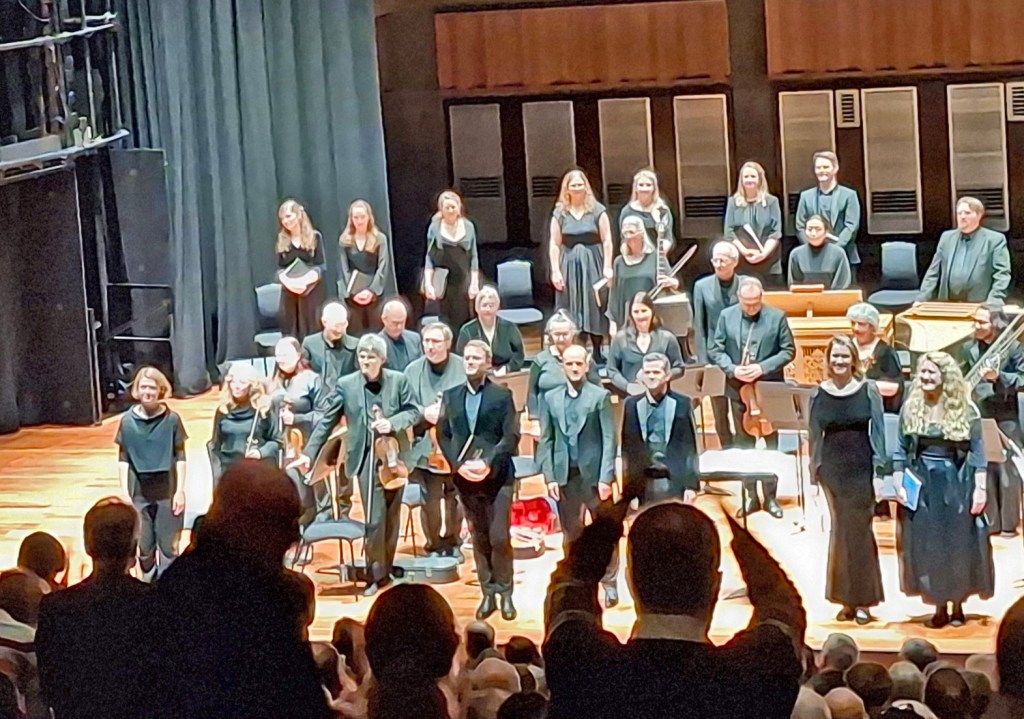
Having heard last week Mozart’s last three symphonies, each half of the evening began with two of his earliest ones, numbers 1 and 4. Short, sharp and lively, they set the sense of fun for the evening which involved works which Tenducci had sung or were by his friends and contemporaries. Tenducci’s role was taken by the excellent countertenor Hugh Cutting who expressed his delight that high range male soprano voices were no longer the result of mutilation. He sang arias by Gluck, Thomas Arne, J C Bach and Mozart and as an opera singer he filled them with expressiveness and drama. The orchestral playing in an oboe concerto by Johann Christian Fischer and the symphonies and a rollicking version of Tommaso Giordani’s Overture and Irish Medley which contained well-known Irish folk tunes was brilliant with a small orchestra filling the hall with an eclectic and delightful programme. And afterwards I was able to catch up with violinist Jenna Raggett as she and fellow violin players were taking a selfie. And the IBO conveniently posted photos of the rehearsal and the final bow.

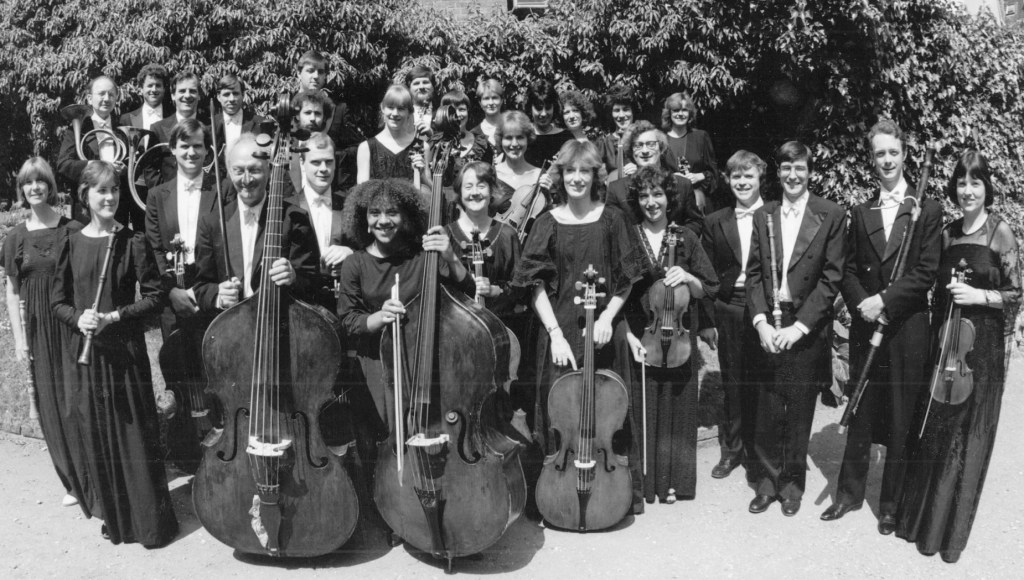
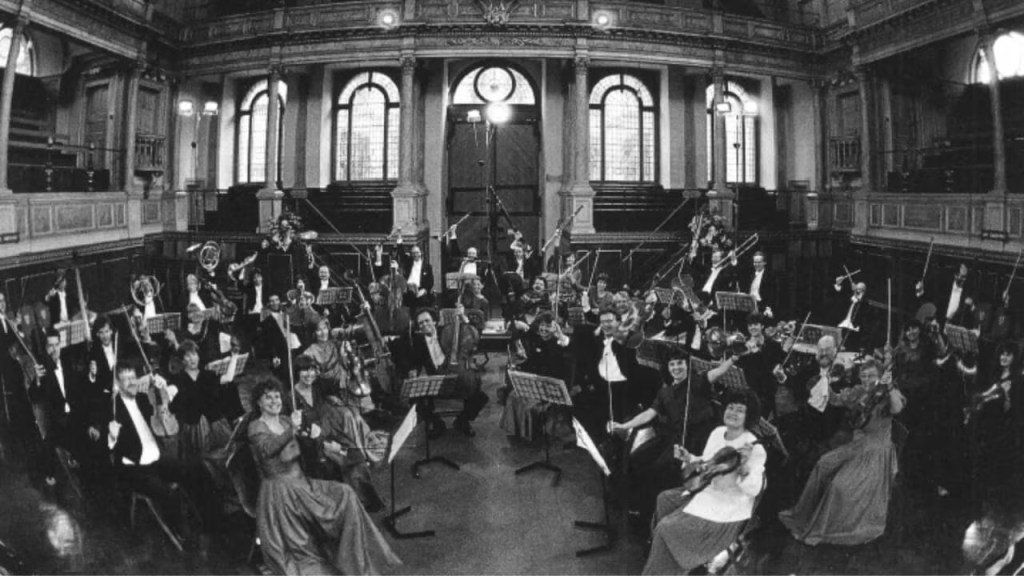
Later in the week my favourite orchestra the OAE held a session to launch its Southbank Programme for 2026-27, Held in the elegant hall of Acland Burghley School in Tufnell Park and hosted by Radio 3 and Proms star Katie Derham, the evening had music from a string quartet with vocals from tenor Hugo Hymas who was one of the OAE’s ‘Rising Stars’ in the 2019 cohort. While discussing each of the concerts with long standing players Annette Isserlis (viola), Cecelia Bruggemeyer (bass) and Martin Lawrence (horn), we also heard the fascinating story of the band’s formation back in 1986 when a number of players decided they were doing all the work and others were getting all the plaudits so they formed an orchestra that was run by its players not by a single celebrated conductor. It’s proved a great success for forty years and has allowed for concerts with a wide variety of conductors and several directed from within the orchestra itself. Another very pleasant evening in the company of friends and with some excellent music from Vivaldi, Bach, Handel and Mozart.

Friday brought a real surprise. Ace pianist and dear friend Susie Stranders invited me to a gala evening with St Paul’s Opera in Clapham. Well if Susie’s involved it will be good so off I set in a convoluted cross Sarf Lunnun jaunt with a bus, two trains and a walk to a wonderfully simple church, St Paul’s Clapham, to meet my friend Jadwiga who was coming from Putney. I’ve been previously to similar evenings in Fulham Palace and the Blackheath Halls and it appears that there are many occasional opera group and societies all over London and indeed the country. It’s great that there are so many opportunities for talented young singers to engage with diverse audiences in different locations. St Paul’s Opera has a dynamo at its heart in Tricia Ninian and the evening was billed as David Butt Philip and Friends. David has been associated with St Paul’s Opera since 2017 and gathered some great friends to perform arias and songs from Handel and Mozart through Wagner and Bizet to Britten and Bernstein. David was joined by soprano Ellie Laugharne, mezzo Marta Fontanals-Simmons and bass Liam James Karai. As accompanists for the four singers Susie was reunited with Eric Melear with whom she had been on the young artists programme at the Grand Opera Studio in Houston back in 2000. Both experienced repetiteurs, they managed to make the piano sound like a full orchestra in the fine acoustic of the church. I can’t make St Paul’s production of La Traviata this summer as I’m out of town at a wedding but I’m sure it will be worth a trip.

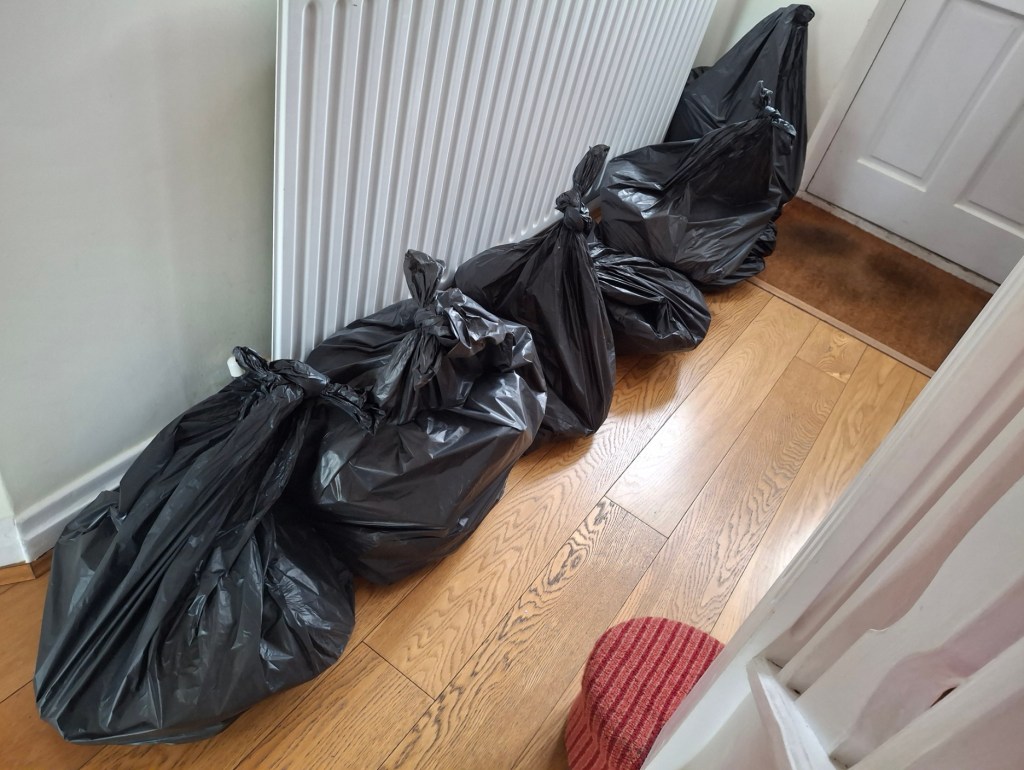
A business bagged up for shredding! 30 years of my various company documents all on their way to be shredded. Because many of the call sheets and contact lists, invoices and (remember them?) cheque stubs contain the names and details of several rather well-known names I’ve been lucky enough to work with over the years, they can’t just go into my Lewisham Council recycling bin. So off they go to Restore Data Shred for secure and certified destruction.

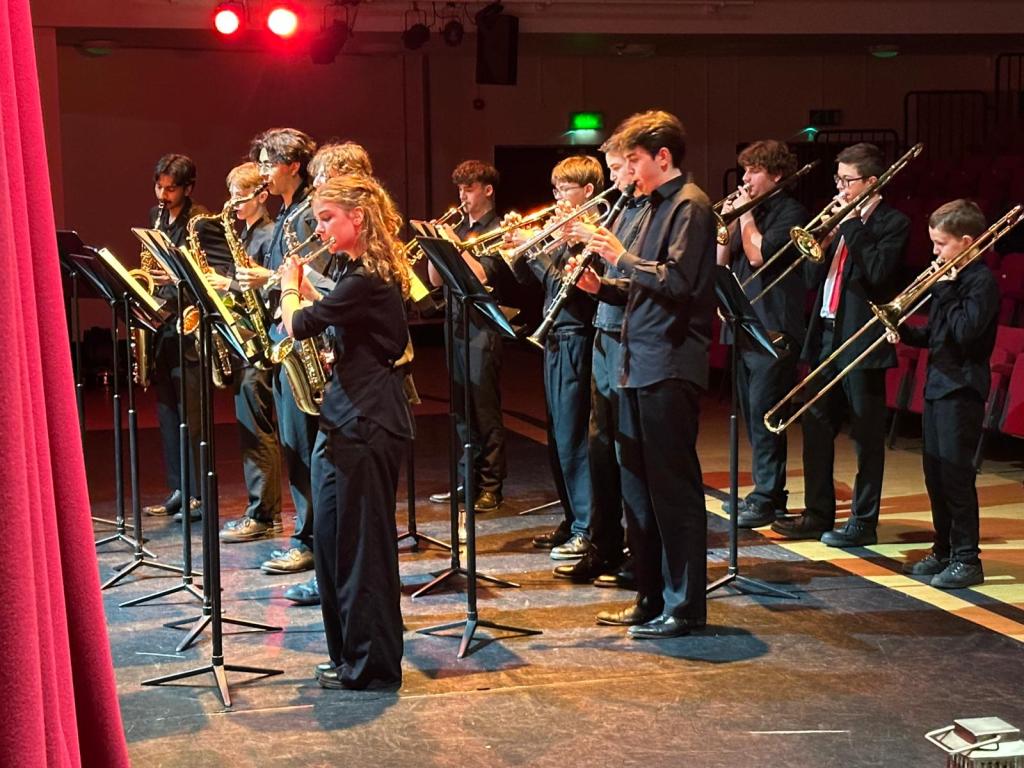
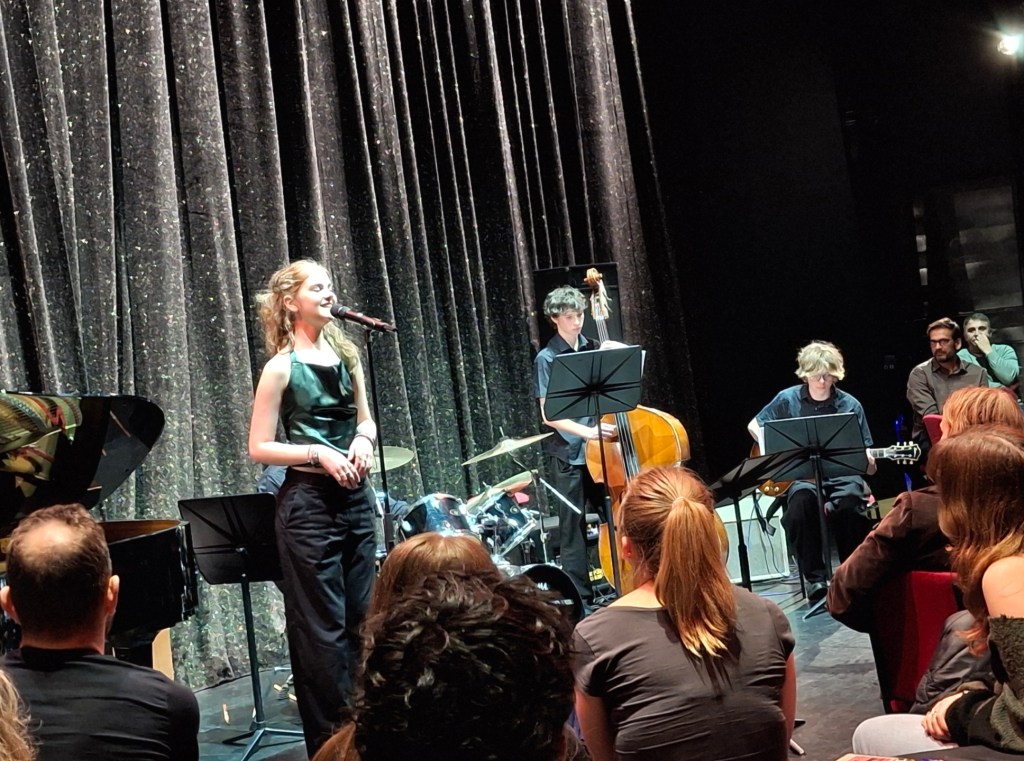
After that it was a visit to Langley Park Boys School for an ‘Evening of Jazz’ in which my granddaughter was playing flute in the big band numbers. The evening opened with a quintet featuring Sam on tenor sax who had guested with Soulstice last week at Off the Cuff. They were very good as were the big band that played a few standards. Then to my surprise after Soulstice lead singer Bea had sung Round Midnight, Trixi (Daisy) stepped up to the mic to sing Dream a Little Dream for Me. Her parents had failed to inform proud grandad that she was a featured soloist as well and she gave an emotional rendition of a fine thirties song imbuing Gus Kahn’s lyric with a real sense of longing. The whole evening was a further confirmation of the immense depth of talent that is produced when the arts in schools are properly respected and resourced. Soap box suspended for now!

Next to the Donmar for Anna Ziegler’s Evening all Afternoon – a tense two-hander with Anastasia Hille as Jennifer, a suspect new stepmother and Erin Kellyman, making her stage debut, as Delilah, the suspicious and resentful daughter. Both actors are superb – Hille is all internalised emotion, with staunch British values, stiff upper lip and sense of decorum, responding stoically to the taunts thrown at her. I really can’t believe that this was Kellyman’s stage debut – apparently she’s well-known on screen but not in shows I’ve seen. (I also note now that Erin will be in the TV show 2026 – the successor to the 2012 and W1A satires that lit up our screens with [presentation of wondrous, pretentious incompetence.)

Jennifer is a young, bolshie, opinionated half Brit, half Brooklyn tornado who rages at her mother’s early death and her father’s gall in replacing her. The play revealed many ideas of grief, loneliness, age differences, relationships and an eventual uneasy and tentative rapprochement. With some scenes of dialogue between the two characters and others where they address us the audience directly the revolve stage worked really well against a dark blue brooding set. Lots of food for thought in a dramatic short play.

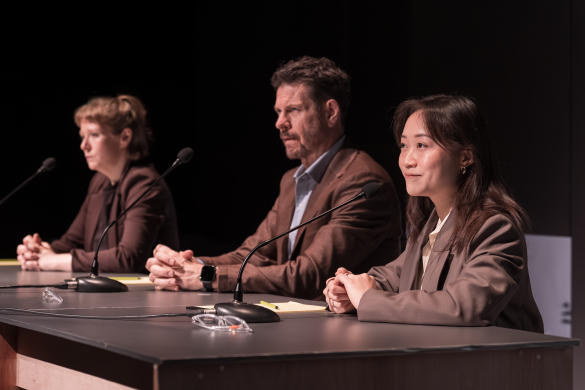
The next night at Hampstead downstairs we saw R.O.I. (Return on Investment) another short new play by Aaron Loeb which examined the releationship between creator and investor in the context of big pharma. Paul, Lloyd Owen, runs a venture capital fund with which he intends to change the world. His colleague May Lee, played by Millicent Wong, is on the hunt for a unicorn – a start up company with a $1billion valuation which will gain her a partnership and personal wealth. Along comes Willa, Letty Thomas, with a cure that will eradicate cancer from the entire world. I wondered if she was the real deal or another Elizabeth Holmes of Theranos ignominy – who did get a mention in the script. We were left to wonder throughout as the wonderdrug trials progress through successful initial stages into really murky territory to avoid scrutiny by the FDA. Add an affair between Paul and Willa, gaslighting May Lee, questionable views about ethnic types and a Congressional tribunal – there’s a whole lot going on in there, including a late appearance of The Woman (Sarah Lam) perhaps showing where May might be heading. It’s very sharp and witty in its dialogue and there are many moments of humour among the sad implication that power and money will always corrupt even the most well-meaning of souls.

Willa, (Letty Thomas) Paul (Lloyd Owen) and May (Millicent Wong) at the tribunal.

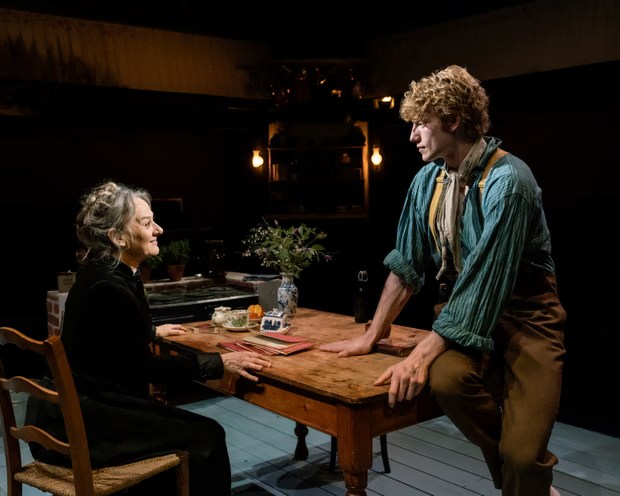
Next was a trip to Richmond for Vincent in Brixton which I missed at the NT in 2002 but this seems to be a time of revivals what with Teeth and Smiles and Copenhagen on the horizon. Nick Wright’s imagined revelations of van Gogh’s year in lodgings in Brixton, while working as an art dealer in Covent Garden, was a delight. The amazing Niamh Cusack led a cast in which three of the four were making their stage debuts – quite a week for debuts! It’s a quiet domestic piece in which we are treated to the kitchen odours of cooking on a working stove and later shared Niamh’s pride at her separation of egg yolk and white done in real time. It’s like a mystery story where you know the outcome but the characters don’t. Vincent was scathing about the work of fellow lodger Sam but we didn’t see any of his own work or sense his promise. He was a confused young man in a foreign country experiencing strong emotions and desire for the first time. Initially attracted to the daughter Eugenie, it was to landlady Ursula that we are led to believe he lost his virginity. It’s a play about grief, Ursula still in widow’s black, restless relationships and passion and everyday life gently unfolding in the Orange Tree’s intimate space.

Niamh Cusack as Ursula with Jeroen Frank Kales as Van Gogh. 
Photograph: Johan Persson/Orange Tree

The next day Fran invited me to join her for a technical rehearsal of Copenhagen at Hampstead Theatre. This time I had seen the original production of Michael Frayn’s play back in 1998. The staging was very similar with a sparse set with three chairs. At Hampstead there is the addition of a spectacular set back wall which I won’t describe so as not to spoil your gasps when you see it. It’s fascinating to see how lighting, sound and movement blocking subtly affect your understanding of what is taking place. Can’t wait to see the whole thing in a couple of weeks’ time. It’s a real festival of Michaels – Frayn, Blakemore the original director and Longhurst this revival.

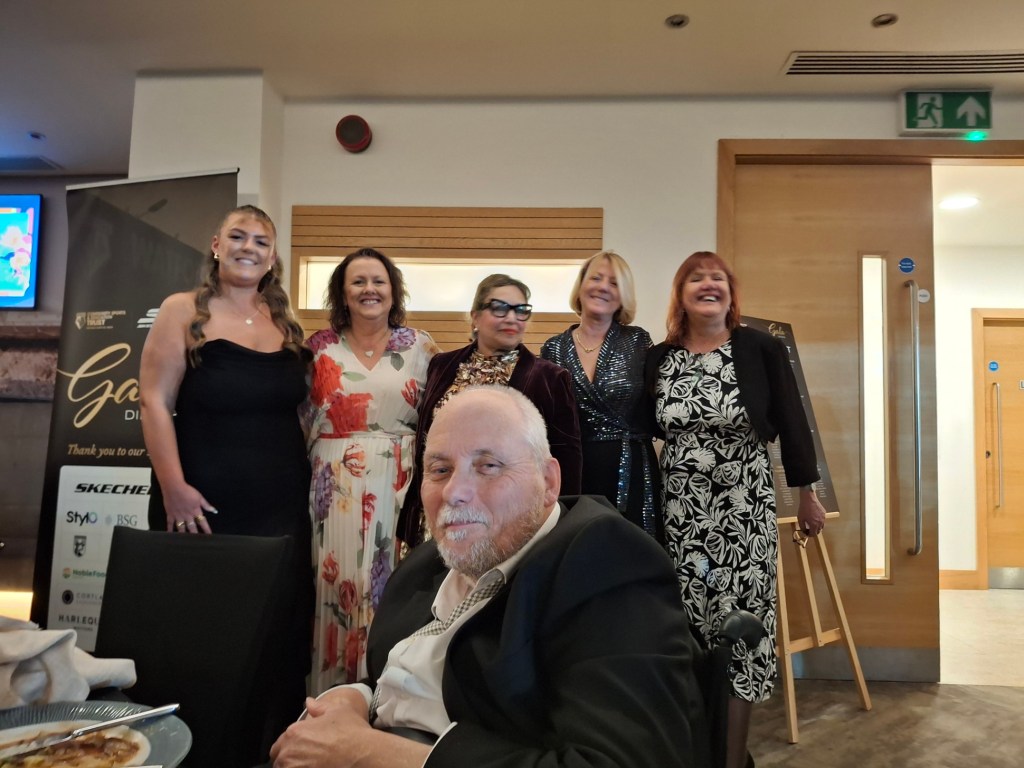
Thursday was the Watford Community Sports & Education Trust’s Annual Gala Dinner and so the usual suspects assemble at Vicarage Road for an evening celebrating what the charity has achieved against the gloom of the economy, through the dedication of staff and volunteers. It came as a pleasant surprise to me to discover that Frances’ sister Rose (second from right) has been asked to succeed Simon Macqueen as chair of the trustees. Well deserved for her energy and enthusiasm for the work it does. We all had a great time chatting to former and current players and meeting young people the Trust has helped over the years.

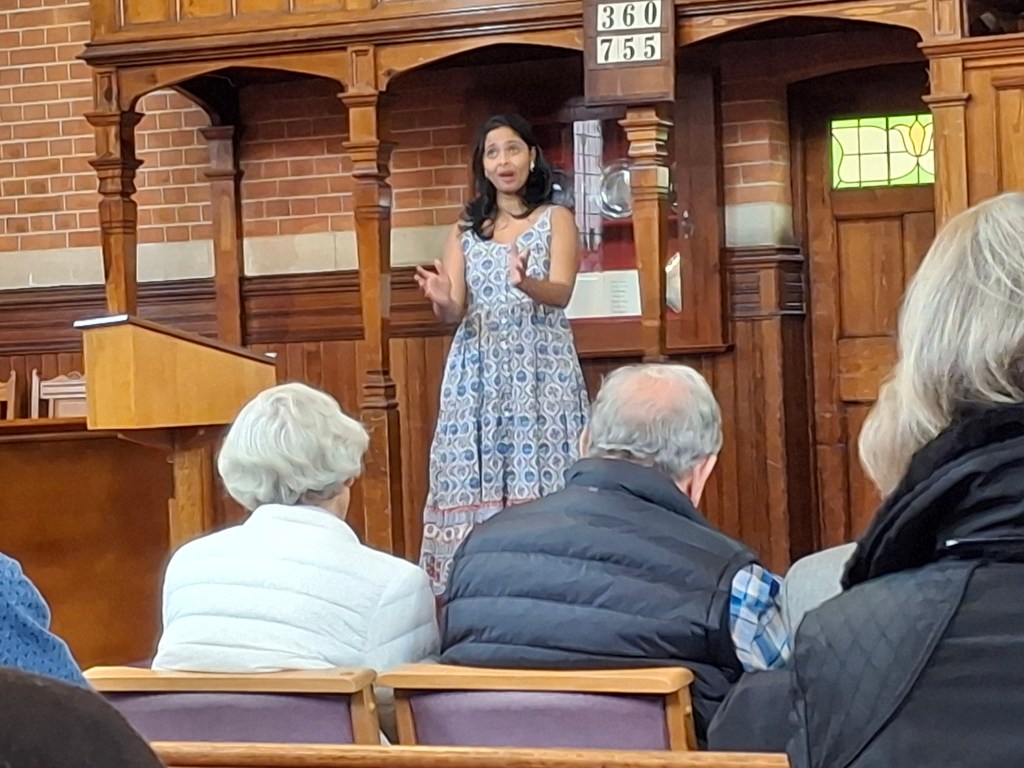
As it was a late finish, Rose had kindly invited Fran and me to stay with her and husband Mark in Bovingdon. This proved a great boon for me as I planned to catch my friend Kristina Ammatil giving a lecture/recital in Henley-on-Thames the next morning. So I set off for a pleasant drive through the Chilterns and made it in good time to hear Kristina discuss allegory in opera with the title: Love, Gods and Mortals. It was a well argued essay supported with slides and illustrated with excerpts from operas old and modern in Kristina’s powerful, melodic soprano accompanied by Jack Redman at the piano. She is particulary keen to perform contemporary repertory and introduced us to several pieces I didn’t know. I was very pleased to have the serendipitous chance to attend from nearby rather than making the trip from London.

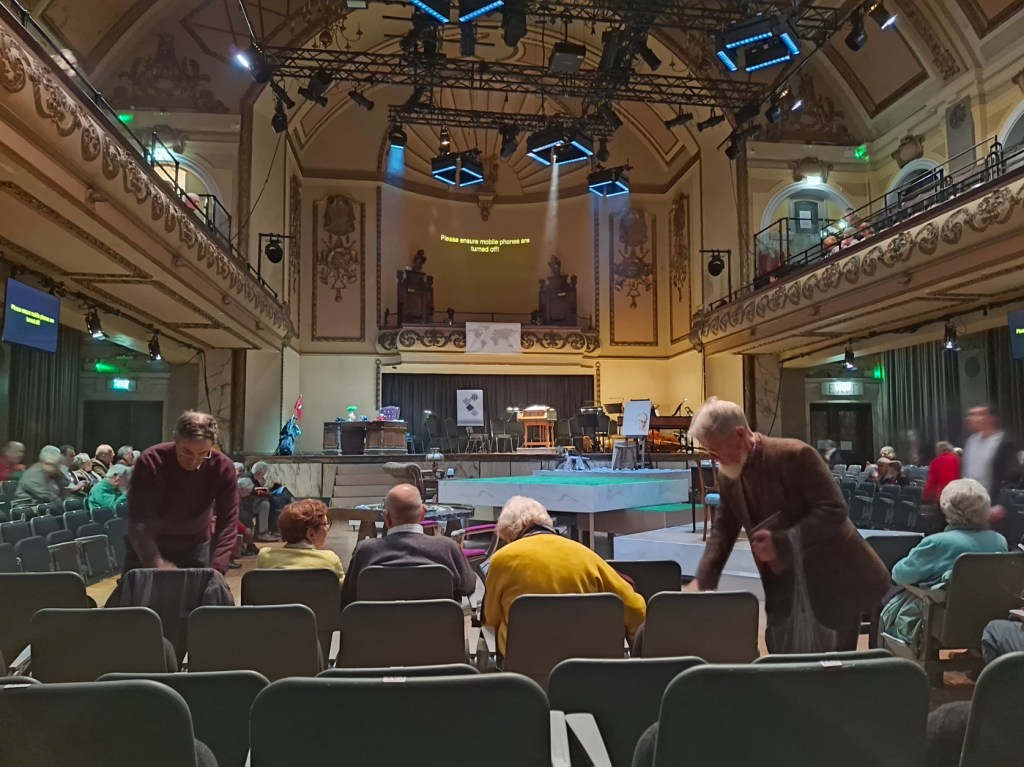
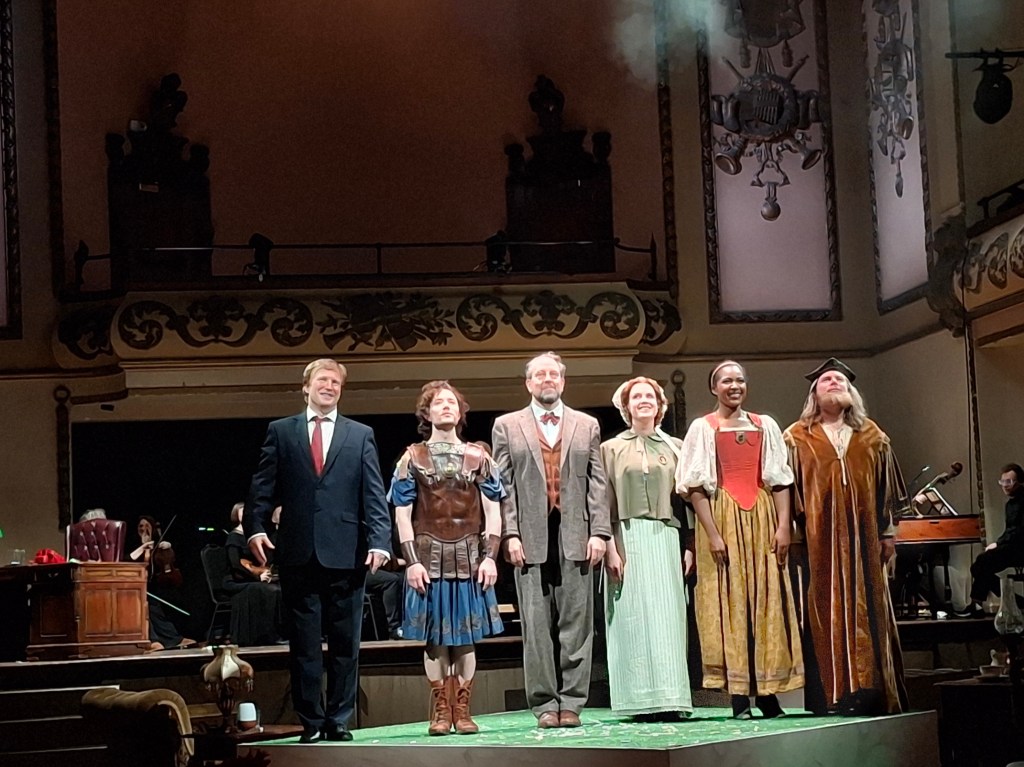
I had a chance to chat with Kristina and her boyfriend Luka after the event for a catch up before dashing (I wish! Thanks M25.) back home to park and unpack the car and catch a train and bus to Shoreditch for a performance of Handel’s Tamerlano from which I’d heard excepts but never seen the whole of this great opera. Part of the annual London Handel Festival this was taking place in a completely new venue for me – the splendid Shoreditch Town Hall.

The orchestra under Laurence Cummings were superb and the production was delivered in a witty English language update of the original Italian. The design and concept led one to rename the opera Trumperlano since a blue suited, red tie wearing golfer Tamerlano, a Tartar emperor, tries to impose his will on the traditionally-costumed Turkish sultan Bajazet and grab his daughter Asteria who is in love with a Greek prince Andronico. It’s convoluted but hey it’s opera from 1724 and the London crowds loved it.

The year 1724 was a good one for Handel as he wrote Rodelinda and Giulio Cesare in the same year. I’ve now seen all three in the space of the last two years. They are all full of great tunes and high drama mixed in with a sense of humour which makes them very appealing. Certainly the Shoreditch audience loved the whole thing given the ovation the singers and players received at the end. A very varied musical day!

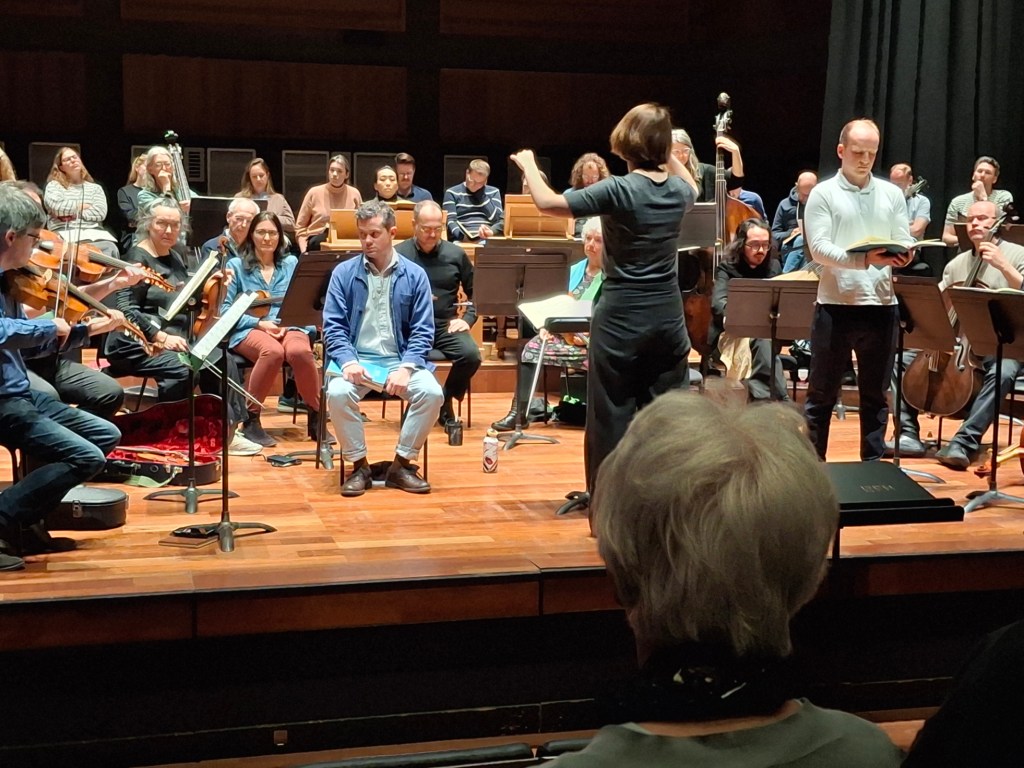
My last cultural outing of March also celebrated, by a weird coincidence, the year 1724 which just happened to be the date of Bach’s St John Passion which the OAE were performing in the Queen Elizabeth Hall. As a ‘friend’ I was also invited to attend the rehearsal with German conductor Johanna Soller making her debut appearance with the orchestra. She knows how to get asked back – she cut Sunday’s rehearsal by an hour – always goes down well with musicians! This rehearsal may have been brief but it was also fascinating. Ms Soller is clearly a producer as well as conductor, keyboard star and singer. She started by having the QEH staff move the rostra about so that the chorus formed a shallow horeshoe rather than a straight line; she moved soloists’ seats to better catch the hall’s lighting and during the course of the rehearsal frequently skipped off the stage, ran up the aisle to listen from the cheap seats and make sure we’d all get the best possible experience in the evening. She gave a number of notes and we could hear their immediate effect on volume, phrasing, pronunciation and diction. All very impressive but did it work?

Emphatically, yes! Her energy and dramatic timing made this one of the most operatic readings of the mass and that includes Peter Sellars’ staged version with Simon Rattle and the OAE in 2019. The orchestra have played both Bach passions many times but sounded fresh and engaged last night. The score is so melodic and dramatic – the build up to scene 33 “And behold, the curtain in the temple was torn in two pieces from top to bottom. And the earth shook, and the cliffs were rent, and the graves opened up, and many bodies of saints arose.” shook the entire hall. This is in contrast to the beautiful alto aria “Es ist vollbracht – It is finished” sung by the wonderful Helen Charlston continuing her long assoctaion with the OAE having been one of its early Rising Stars. All soloists were excellent James Way as the evangelist, Peter Edge – one of the current cohort of Rising Stars – as Christus, Hillary Cronin, Jonathan Hanley and then Tristan Hambelton as Pilate was outstanding in his empathetic reading as the representative of Roman law. Johanna Soller congratulated all areas of the orchestra in turn and selflessly stood to one side as the band and soloists took their bow, A fine debut and let’s see much more of her in the UK.

Royal Albert Raggetts

When I met Jenna Raggett back in March at St George’s Hanover Square, we agreed to keep in touch. We did and so I set off with family and friends to the Royal Albert hall to see a BBC Prom given by the Irish Baroque Orchestra in which Jenna plays violin. So we had the delightful moment pre-concert in which Jenna could say “Michael Raggett meet Michael Raggett”. Her father is also a Michael and stayed and had a chat to me and two other Raggetts – Tom and Caroline – while Jenna went off to change and prepare. The Irish branch also have a cousin Michael who lives in Basingstoke! Also with us were my friend Jadwiga and her daughter Lucy and son-in-law Brian who were amused by this weird nominal encounter. We then went to our excellent seats and enjoyed a most magnificent performance of Handel’s Alexander’s Feast, a work I’d not heard before. We all enjoyed it thoroughly as did the critics (here’s just one of the reviews). In another coincidence the counter tenor Hugh Cutting was performing and we had seen him a Garsington back in June in Handel’s Rodelinda and singing with Tom’s choir Pegasus the next day at St John’s Smith Square . All the soloists were great as was the energetic conducting of Peter Whelan and of course the mellifluous playing of the violins!

Peter Whelan saluting the orchestra and soloists.
And then we got the Hallelujah Chorus as an encore.
Behind Closed Doors …

That outing marked the end of August but September has started with some further treats. Thanks to my friend Frances’ patronage of several theatre companies, I get invited to some behind the scenes events as well as the plays themselves. We had the privilege of going into the rehearsal room at the Young Vic for a Q&A with the cast of Joe Orton’s Entertaining Mr Sloane. It was a fascinating discussion of how the outrage it caused in 1963 was in danger of being repeated in our time too in the case of people who don’t conform to some British ‘norm’.

Also it was interesting to hear how the actors ahd prepared for their roles, including a visit by Tamzin Outhwaite to Sheila Hancock who had played Kath in one of the earliest productions. It was also a special moment to be able to look at the maquette for the set and see the marks and props laid out for rehearsals. We also had a chance to chat to the new artistic director of the Young Vic and director of the play Nadia Fall.

A couple of days later Fran invited me to a patrons’ event at the Orange Tree Theatre in Richmond. Again it was a huge privilege to be present at a technical rehearsal – the moment when all the elements – lighting, sound, wardrobe – some easing needed of tight waistcoat and attention to a cravat – script assistant, technical crew and of course the actors and director put it all together in the actual theatre space. Once again it was the Orange Tree’s artistic director Tom Littler who was directing the play – August Strindberg’s Creditors in a new translation by Howard Brenton, whose brilliant Churchill in Moscow we saw here earlier in the year.

The cast was very impressive Charles Dance and Nicholas Farrell were working through a lengthy scene with references to the third cast member Geraldine James who was in the theatre but not involved on stage during our visit. Watching silently from the balcony it was interesting to look at the processes of blocking the scene, adjusting lighting and sound levels and to note the great difference in approach between directing for the stage and for television. An afternoon of real insight. Can’t wait to see the full play.

And out in the open …

My friend and colleague in the British Bilingual Poetry Collective, Shamim Azad had been asked to curate a family day at the Serpentine Pavilion in Kensington Gardens. This was very special as this year’s pavilion, the 25th, is the work of Marina Tabassum a renowned Bangladeshi archictect. There were sessions of storytelling, poetry performance and traditional Bengali song and dance throughout the day from 10 until 3 in the afternoon.

Our poets included our executive director Eeshita Azad originally from Bangladesh, Sara Kärpänen originally from Finland, Chiko Jones originally from Nigeria and Pip McDonald still from Sunderland. They each recited poems to an enthralled audience – in all cases mixing their original language with English.

As well as our own group Shamim had invited an experienced and engaging storyteller Sally Pomme Clayton who opened the proceedings and Mukto Arts who played and danced after our poets with some fine traditional Bengali tunes and encouraged the audience to come and join them which they did with ages ranging from, I would guess six months in a baby sling, to seniors like me.

I’ve been to many of the annual temporary Serpentine Pavilions over the years with memorable ones from Zaha Hadid, Frank Gehry, Sou Fujimoto, Theaster Gates and Ai Wei Wei with Herzog and de Meuron. It was wonderful to see Marina Tabassum’s pavilion which she calls A Capsule in Time filled with these performances and also with seed planting, weaving, character creation and role play sessions going on concurrently. A really fun day out and I was just there to support our team not to perform which was a great relief.

Gentle June

After the madness of May the new month starts at a somewhat gentler pace. First up on 2 June is a trip to Glyndebourne to see the Festival’s first ever production of Wagner’s last opera Parsifal. Having just driven to Stratford and back, I decided to do this one by train and the excellent £10 return Glyndebourne bus service from Lewes Station. It worked really well and I arrived on the most beautiful sunny day, took a walk around the lake, had a glass of wine and watched all the lovely people. I decided on a dark suit rather than the full DJ and it’s becoming clear that the dress code is much more relaxed than it used to be – there were even men in shorts! Oh and had a preview of dinner!

So, into the auditorium and during the wonderfully atmospheric overture a caption appears on the curtain referencing Cain and Abel. Now Wagner had already mashed up Arthurian legend with strict Roman Catholic Good Friday rituals. Could the story take another level of myth? Well in my opinion, no. The main charaters’ alter egos or older doppelgänger mooching around at the back of the set didn’t do it for me and the construct that Klingsor and Amfortas had been quarreling brothers also didn’t wash. All that said it was magnificently sung and the orchestra under Robin Ticciati was just sublime. And there were some great moments of theatre in Jetske Mijnssen’s production too. I loved the gang of Kundry clones whooshing down on poor Parsifal and I liked the procession of Titurel’s coffin round and round the altar before laying him to rest. On the coach back to Lewes one visitor complained that this went on a bit too long to which I replied “Well, there is a lot of music to get through before the next aria and at least there was some action.” Despite some reservations about the over-concepty production it was a great evening and I’m very glad I saw, but especially, heard it.

The next evening (Tuesday) saw me join a friend from 50 years ago, Alison Dunn, at her retirement party in the splendid Humble Grape wine bar off Fleet Street – a great choice as that’s where we first knew each other when she worked on Education and Training magazine with Barry Turner a long-standing writer and editor friend who did some consultancy work for me in my guise as an educational publisher back in the 70s. Tasked with speaking to everyone in the room – I only knew Ali – I did about 70% and what some fine famaily, friends and former colleagues she has.

Each year in November the British Bilingual Poetry Collective, of which I’m a trustee, runs an interactive poetry event as part of Tower Hamlets’ Season of Bangla Drama. So on Wednesday Shamim Azad, the founder, and I head off to see the coordinator of the festival Kazi Ruksana Begum to discuss plans schedules and the broad outline of this year’s event. The theme for 2025 is ‘Kindness’ and we’ll be switching our focus from Rabindranath Tagore to the national poet of Bangladesh Kazi Nazrul Islam in a session with the title Kindness with Kazi.

< Last years’ poster

The evening brings the last concert I’ll see in the Orchestra of the Age of Enlightenment’s Southbank season. It’s an old favourite but like you’ve never heard it before. Elgar’s Enigma Variations must be one of the most played pieces in the repertoire with ‘Nimrod’ known in many different forms. However, the OAE presents ‘ historically informed’ performances so to hear the music played on gut strings, wooden not metal flutes, French not German bassoons made it sound completely fresh. Quite possibly how Elgar himself would have heard it. The variations formed the second half of the concert. Before the interval we heard his lively concert overture In the South written while he was in southern Italy and reflecting the sounds and landscape of the country. The mezzo Frances Gregory then performed five of Elgar’s Sea Pictures with great sensitivity and bursts of power to soar above the rich orchestral tones. the Portuguese conducter Dinis Sousa made his debut with the OAE and clearly developed a great rapport with them. He’s the principal conducter of the Royal Northern Sinfonia based a the Glasshouse in Gateshead and looks a fine prospect.

I remember a lot of excitement around Patrick Marber’s Dealer’s Choice back in 1997 in the confines of the Cottesloe theatre at the National and I enjoyed it very much at the time. I was looking forward to this revival in the similarly contrained arena of the Donmar and it didn’t disappoint, mainly thanks to a brilliant performance from Hammed Animashaun as Mugsy. The banter between the boys, the knowledge that he’s going to lose and his dream of opening a restaurant in a disused toilet in Bow infuse the whole play which has a spectacular set transformation that’s worth the ticket alone. As with House of Games, I’m more than ever convinced I’m not cut out to be a gambler.

I should have gone to Garsington to see Tchaikovsky’s Queen of Spades on Friday. However my frequent opera comapnion Jadwiga was unwell and I couldn’t find a replacement at short notice. The brilliant box office have moved my booking to 21 June and we’ll be seeing Handel’s Rodelinda instead.

My next musical outing was on Sunday 8 June when I went to a new venue for me – Charterhouse. It was a concert organised by the Barbican as part of the European Concert Hall Organisation’s (ECHO) rising stars programme. It was a recital for trumpet and piano and featured a premiere piece Continuum by my friend Dani Howard. Dani had worked with the trumpet player Matilda Lloyd to create the piece. As Matilda said in her intro “It started with an icecream on the beach”. Knowing Dani’s large orchestral works, her opera and hearing her percussion composition for Colin Currie last month, it confirmed – if it needed it – her versatility and gift for melody and creating atmospheres. Matilda and her pianist Jonathan Ware had played this piece 18 times as they toured the European concert halls who form the ECHO with this one being the last. They all kindly invited me to join them for tea and cake or a beer after the concert so it was altogether a super Sunday afternoon.

As a special offer if you’d booked a Barbican ticket you could see the Encounters exhibition for a fiver, so I did. This was in a small gallery on floor 2 and featured the contrasting works of Giacometti, with whom I was familiar, and Huma Bhabha who I didn’t know at all. Huma was born in Pakaistan but is now based in upstate New York. Her monumental works which incorporate found materials contrast with the elegant skinny figures of Giacometti. I know which ones i’d like to own but it was an interesting hour contemplating differeing approaches to making sculptures.

Continuing with our catholic cultural chase, my next visit was to Sadler’s Wells with my daughter Jo to see Mathew Bourne’s The Midnight Bell . This was a belated birthday outing for Jo and we had a fine early supper in Moro before making our way through the heaving Exmouth Market up Rosebery Avenue. What are all these people doing out on a Tuesday? The ballet is set in sleazy Soho in the 30 where the eponymus pub is host to prostitutes, closeted illegal gays, a lovestruck barman and various other denizens of nighttime London. There were duets, larger ensemble pieces, the most amazing and fluent set changes and original music blended with ballads from the era sung with original vinyl hiss and crackle, endless style and commitment by booming baritones. We both enjoyed it a lot and chatted about it as we made our way back to Farringdon for trains back home. It’s good to enjoy your daughter’s birthday treat too!

Yoshitomo Nara is an artist I’d seen a little of and so off I went to the Hayward Gallery to see what must be one of his biggest ever shows outside Japan with over 150 works displayed. He’s the epitome of Japanese kawaii kitsch but with a twist – those sweet faced Hello Kitty style children’s faces contain messages of disquiet, protest and fear. Nara is very political in his work and repeats themes throughout his long career which the exhibition spans. There are installation – a ramshackle shed, a teacup fountain, paintings, drawings and sculptures spread over the whole expanse of the Hayward. It was fascinating to start with but there’s just too much to see and too much repetition of the themes that are dear to him. I’m glad I went however and got to have a chat with a film crew shooting it for The Sunday Times.

There was a double challenge getting from the gallery to my dinner with friends in Soho. First I had to navigate the waterfall and fountains on the walkway. They were fun – a cascade from the level above, water pouring from a waist and a green figure with a fountain for a head. Then I had to make my way across the Hungerford footbridge the scene of my disastrous fall last May. I managed both and had a great evening. I’ve been a fan of Nubya Garcia the young British saxophonist for a long time and managed to pop into the Queen Elizabeth Hall to get one of the last few tickets for her gig there next Thursday. It’s part of Little Simz’ Meltdown Festival which sounded a bit youth for me but I do like Nubya’s music so I bought one

The warm up band, Oreglo were a quartet of keyboard, drums, guitar and tuba – the latter becoming an instrument of choice it seems since Theon Cross in Sons of Kemet and other of the new groups that have arisen from Tomorrow’s Warriors – also a training ground for Nubya which she graciously acknowledged in her concert introductions. Oreglo were full of life and energy in a field that spanned jazz and prog rock and were an adequate preparation for the main event.

I was very surprised to see the band walk on stage Sam Jones headed for the drum kit but that doesn’t look like Daniel Casimir and that is certainly not Joe Armon jones at the keyboards. Nubya then followed in a huge-skirted off the shoulder gown and later introduced Lyle Barton at the keys and Max Luthert on bass. It’s a tribute to the quality of musicianship that you didn’t notice the personnel changes – yes the solos might have been a bit different but they fitted the music, mostly from the latest album Odyssey. She proudly announced that she had done all the arrangements for the strings that are on the album herself – taking her out of her comfort zone to make the sounds she wanted to hear. She also apologized for the lack of a string section tonight but had rearranged the songs for this concert. I am so glad I bought that ticket. The album is great and different but her live performances and those of these superb players were electrifying. She even did a walkabout through the audience with the final song from the album ‘Triumphance’ with its spoken word lyrics of life enhancing advice about resilience, tolerance and collective power. Nubya is true talent at the height of her own powers who received a standing ovation from the packed QEH audience which did include a few other people of my generation as well as all the meltdown youth.

After another visit to the Union Club, this time for lunch with a friend, we set off in the evening to enjoy The Taming of the Shrew in Tredegar Square in Mile End performed by a group called Shakespeare in the Squares. They perform an adapted version of one of the bard’s plays – different each year – in squares across London. I think it was 18 this year. The production includes songs for the audience to sing along with, some high quality acting and projection against traffic and aircraft and other ambient noise. And not only do they speak Shakespeare’s words eloquently they also play instruments and sing. We were lucky that it was a beautiful sunny pre-solstice evening and it was hugely enjoyable. I’ll try another venue next year.

The Taming of the Shrew in Tredegar Square

More music on Sunday when my son was singing with the choir Pegasus and the Outcry Ensemble at St John’s Smith Square. Two fanfares opened the evening the familiar Copland’s Common Man and Joan Tower’s Uncommon Woman which I didn’t know and then a Britten choral work which I’d never heard ‘Ad Majorem Dei Gloriam’ which was, I’m told, very hard to sing but was a great listen with six differently styled sections setting the words of Gerard Manley Hopkins for unaccompanied voices. I had a good catch up with Tom in the interval and then enjoyed Britten’s Variations on a theme of Frank Bridge and Leonard Bernstein’s Chichester Psalms where the countertenor soloist was none other than Hugh Cutting who had been at Garsington the night before. I was able to tell him how much we’d enjoyed Rodelinda and his performance tonight. He too enjoyed the production at Garsington and thought it worked well, especially the dancers.

The Outcry Ensemble and Pegasus Choir at St John’s Smith Square

A week of triumphs

The week started with a couple of weird happenstances – two very good friends of mine from way back in the seventies got in touch and we’ve arranged to meet and catch up. With five decades of life, love, marriages and deaths to discuss – it should be fun. A triumph for the connected world.

The sun came out and I got to do some much-needed gardening clearance, pruning and even some planting. I also had an evening at home during which I was able to watch the amazing Adolescence the Jack Thorne/Stephen Graham four part series on Netflix. 

It’s a shame that British tv is in the state where to make a show of this brilliance and significance it has to be on a streamer. The message it conveys about incel inculcation seemingly by osmosis in teenage boys needs the widest possible audience to have the societal impact that Mr Bates had. As television it is magnificent with stand out performances from Stephen Graham (expected), Ashley Walters (playing totally against type) and Owen Cooper (staggering newcomer’s first role) with superb support from a fine cast. It follows the proven meme of ‘show don’t tell’ with director Philip Barrantini employing the fluid single-take camerawork that allows you to observe how this tragedy has come to pass. It’s not an easy watch because of the content and the fact that you are emotionally – almost physically – invested in every nuance. A triumph for filmaking and communicating essential information – would have been even greater had it been on the BBC or Channel 4.

Tuesday’s triumph was for honesty over spin. I was setting off on a train for a meeting at Watford Museum having judged the connections to help me get there on time. However the train from Lee to Charing Cross kept stopping and then running extremely slowly. Rather than the usual tannoy guff the driver came on and said: “I apologise for the extremely long time it has taken us to get into Charing Cross this morning . I’d like to explain why it has been so slow but I haven’t a clue”. I was late but we still had a good meeting helping sort out Watford FC and its charity, the Community Sports & Education Trust’s, presence in the new museum when it moves later this year.

Wednesday took me to St George’s Hanover Square to hear Handel’s Trionfo del Tempo e del Disinganno an oratorio he wrote in Rome in 1707 when he was 22.  Beauty (Bellezza), struggles to reject the short-termist sensual temptations offered by Pleasure (Piacere) but receives wise and benevolent counsel from Time (Tempo) and Enlightenment (Disinganno). The title tells you who wins. It’s a wonderful score with lyrical arias, instrumental sequences favouring different sections of the orchestra and it was performed brilliantly by the Irish Baroque Orchestra directed by Peter Whelan from the harpsichord as part of the annual London Handel Festival.

It was sung by four exceptional soloists seen above taking their bows with Peter Whelan far left. Rowan Pierce, soprano, was the naive Beauty, Helen Charlston’s powerful mezzo offered seductive temptations as Pleasure which were countered by Jess Dandy, a contrasting mellow mezzo representing Enlightenment while James Way’s tenor called Time. Rowan, Helen and James were in the first group of ‘Rising Stars’ of the Orchestra of the Age of Enlightenment which anyone has read previous blogs will know is my favourite ensemble. Their two-year programme serves as an apprenticeship for young professionals giving them the opportunity to perform with the orchestra in a wide variety of repertoire. It clearly works as these alumni were in super form.

In a week that started with weird happenstances, this evening continued the pattern. On the programme sheet I noticed that one of the violinists was called Jenna Raggett. Now my surname is not that common so I asked the orchestra manager if she would pass my card to Jenna. We had a chat after the concert and we were both delighted to meet each other. Jenna said “I’ve never met another Raggett” and was going to share the news with her parents and we’ll hopefully keep in touch. I wasn’t aware of any Irish connection so research is needed into clan Raggett.

During the time I got home from the Trionfo concert and when I went out to my car mid morning on Thursday, it had been broken into and the battery had drained as the radio was left on with no volume so it looks like deliberate vandalism as there was nothing stolen just a horrid mess to sort out and an annoyingly repetitive police report to file online.

The AA came and charged up the battery and I was able to make my planned journey to Bovingdon.

I was kindly invited to stay the night there after accompanying Frances, her sister Rose and her niece Amelia to the Annual Gala Dinner of the Watford Community Sports & Education Trust. As we left for Watford I was surprised to have a phone call from the police asking if there was any CCTV footage available or other evidence. I had to confirm that there wasn’t – I don’t pay to have my Ring doorbell record video (cheapskate!) – and asked whether I wanted to be referred to Victim Support. I thanked Irena for the offer but thought there were others more urgently in need of the service.

The Gala is a great occasion celebrating the charity work of the excellent organisation which is in itself a triumph at a time of shrinking budgets and donations. 17, 796 individuals have used it services or facilities in the last year providing a huge social benefit to the community in Hertfordshire and the London Borough of Harrow. It was a chance to catch up with friends, former and current players and to chat to the head coach Tom Cleverly who we’ve known since he came to Watford on loan as a seventeen-year-old when he sat on a table with Dee and me at that year’s end of season dinner with a leg in plaster and needing crutches to collect his player of the season award. It’s a delight to see him doing so well with limited resources.