The kids are alright …

So I get a glimpse of a possible future as we go to see Care at the Young Vic. It’s a harrowing watch, featuring life in a care home for elderly and dementia-affected people. Alexander Zeldin’s play and his own direction of it pull you right into the care home where the brilliant Joan played by Linda Bassett is convinced her daughter Lynn – Rosie Cavaliero – and her grandson have come to take her home.
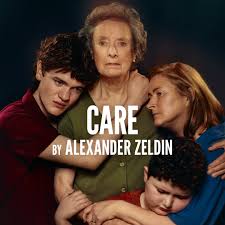
The confusion of dementia, the emptiness of the days, the loneliness while always being surrounded by others are all poignantly present in the script which has a few moments of humour and one of agonising pathos as one resident mistakes another for his late wife and they hug. As characters die off they join us in the auditorium enhancing the sense of our involvement. The final scenes are horrendously powerful and reinforced my support for the Assited Dying Bill – please get it through!

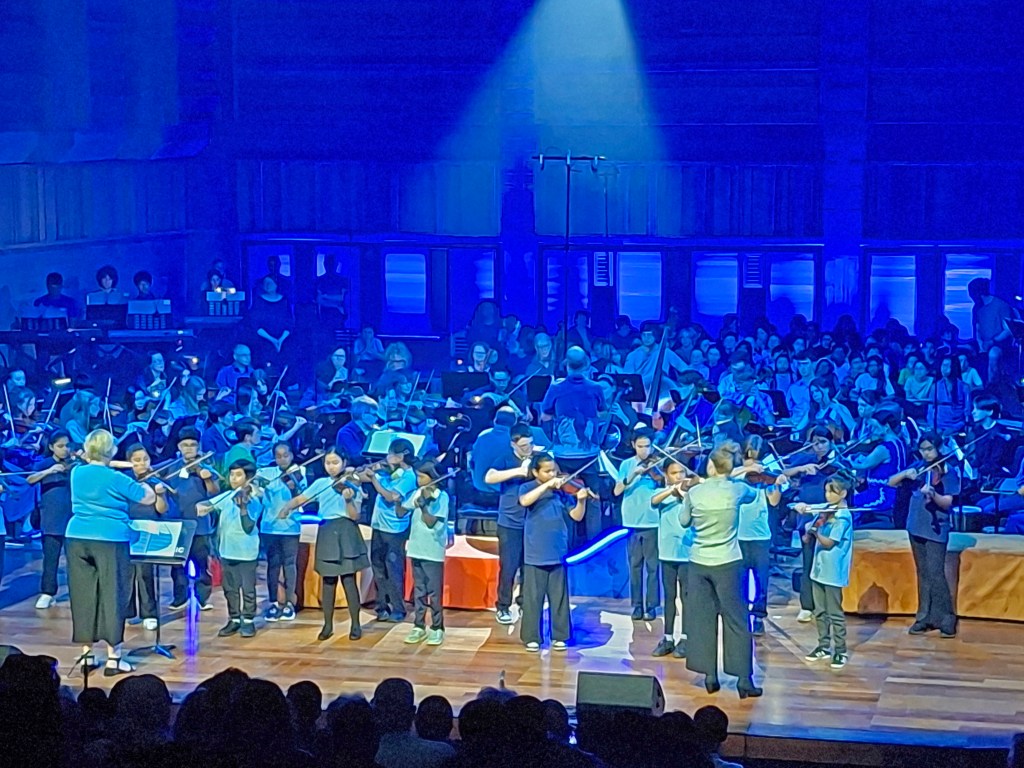
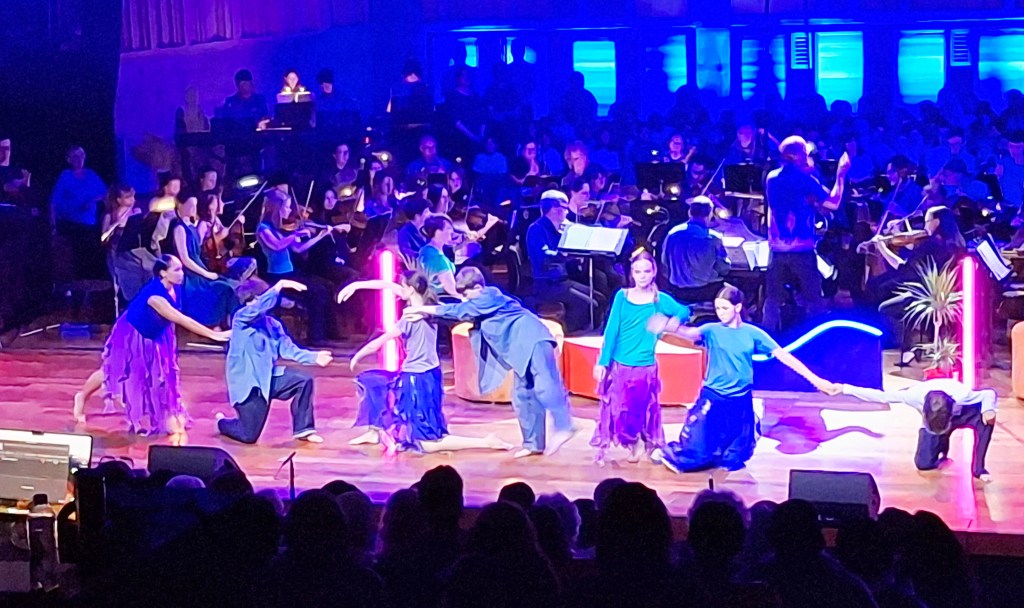
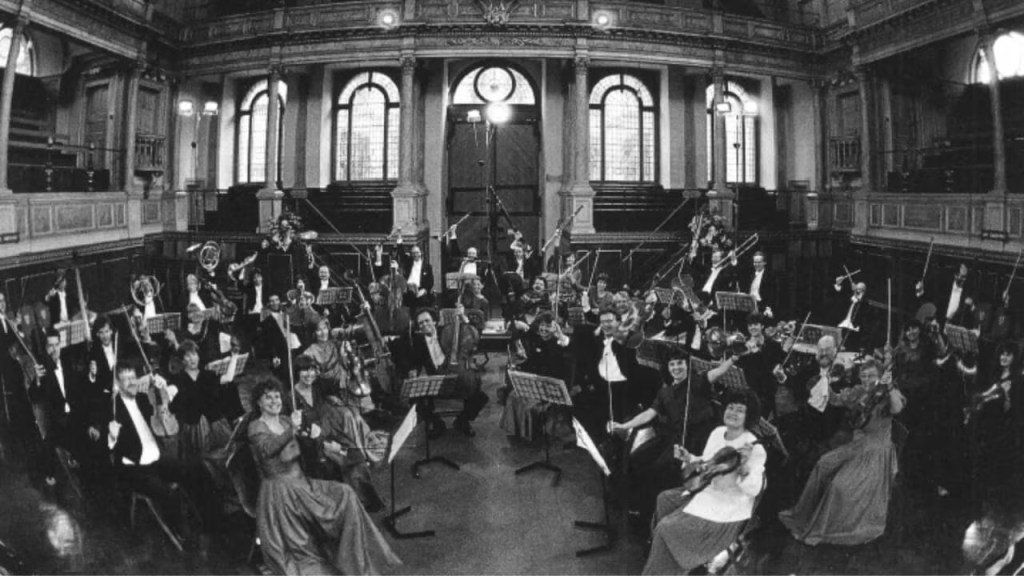
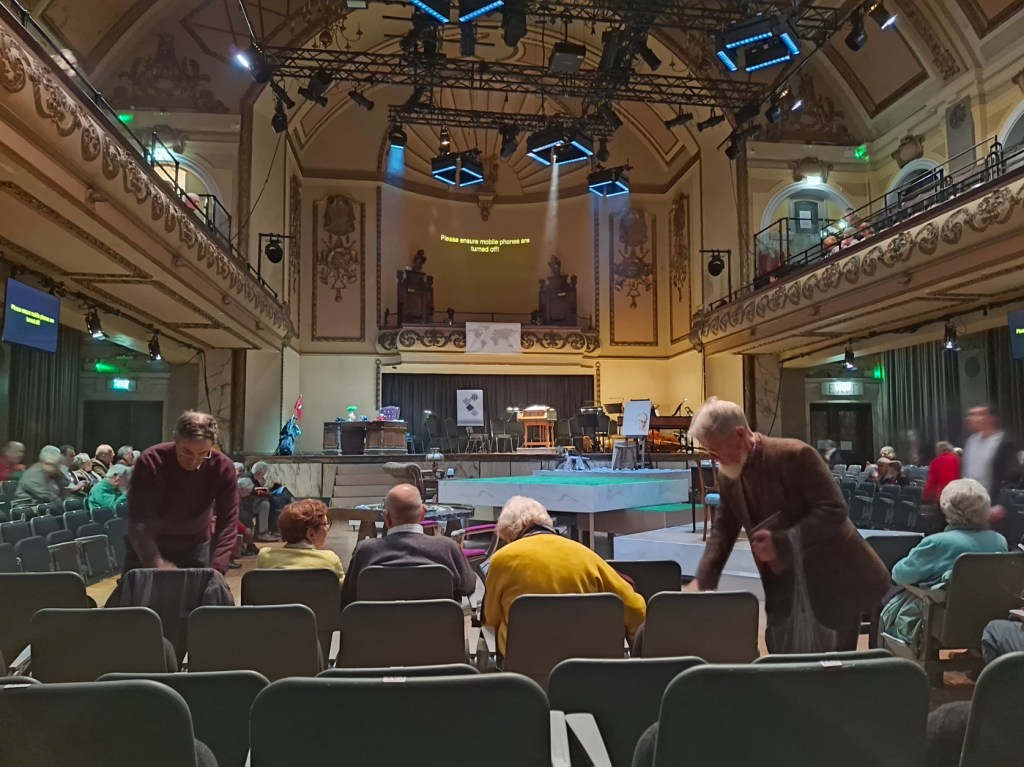
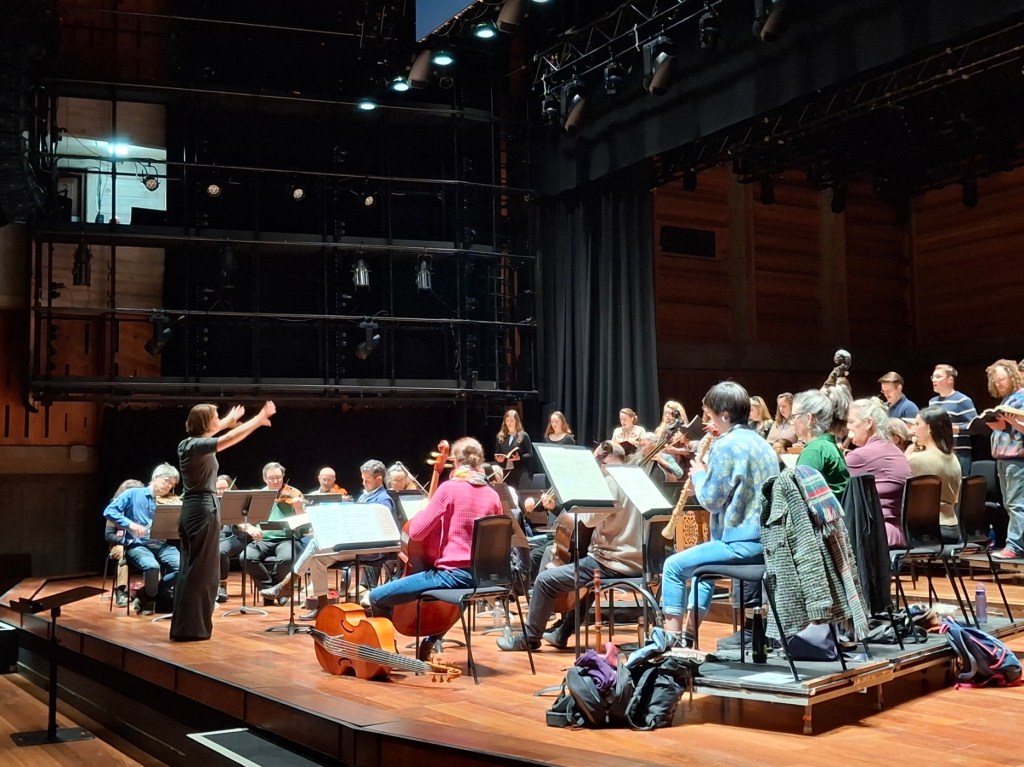
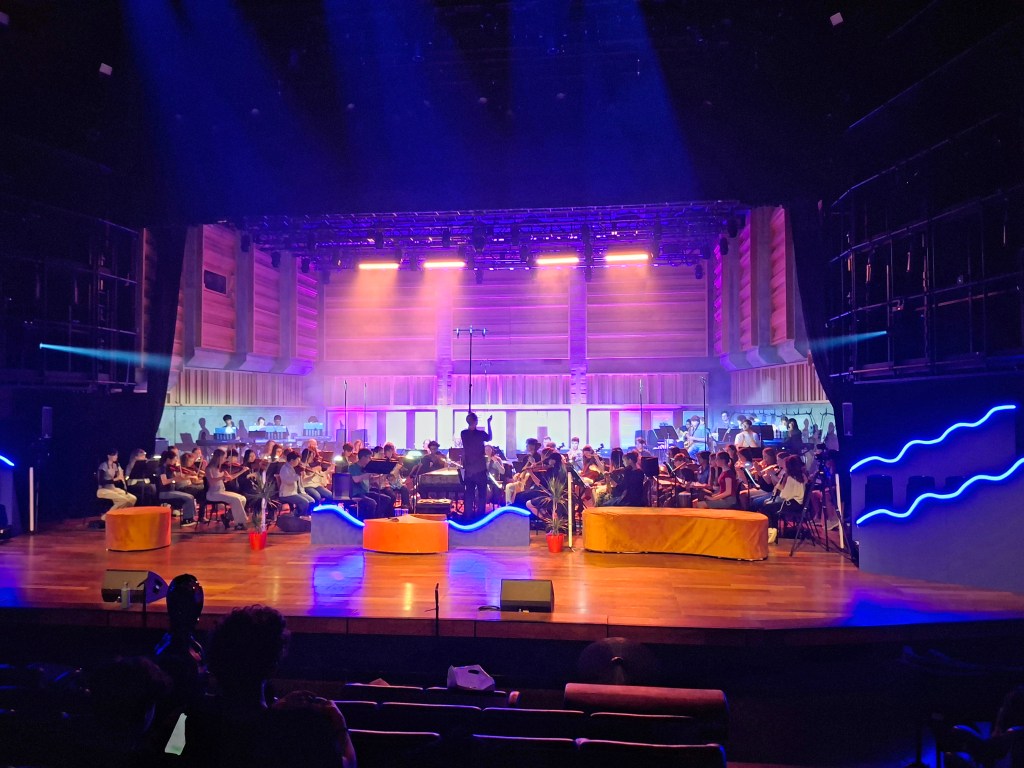
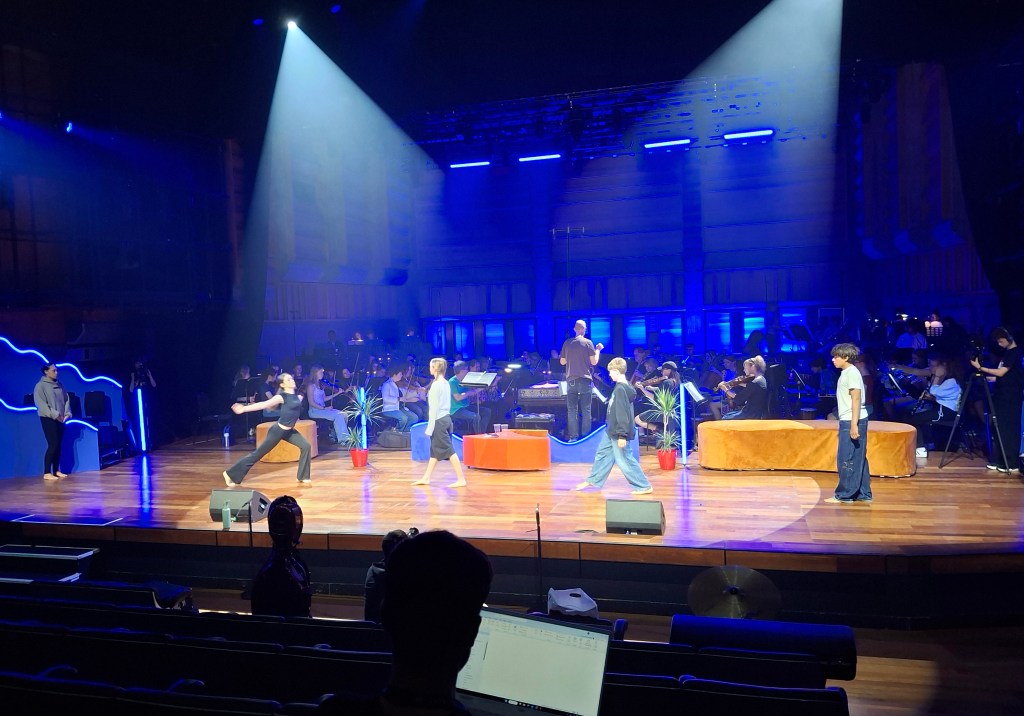
At the other end of the mortal scale, there were some 80 primary school students, 50 secondary students alongside the Orchestra of the Age of Enlightenment for its annual community opera Life of the Sea. I was invited as a friend to attend the rehearsal and had also booked for the show in the evening. Devised by Hazel Gould, it takes the form of a TV chat show with young performers as guests. These include young musicians and dancers, a rock band and string players in various stages of school who form the Fiddlers on the Reef. The final guest is an adventurer who had discovered a new island in the Pacific Ocean. This of course transpires to be the vast area of accumulated plastics which we dump all the time and subtly delivered ecological messages are delivered. Given the maritime theme there was Purcell and Handel mixed with sea shanties and sequences written by James Redwood – a regular collaborator alongside writer Hazel with OAE’s Education Director Cherry Forbes. I’d really like all politicians who support cuts to the arts to be made to come and see shows like this as the depth of talent on show, the confidence-building association with professional actors and musicians and the sheer joy of artictic collaboration need to be appreciated by those holding the purse strings. A big thank you to all the kind people who donated time and money to ensure that activities like this can so enhance young peoples’ lives. With adequate resources and places to gather the kids are alright.
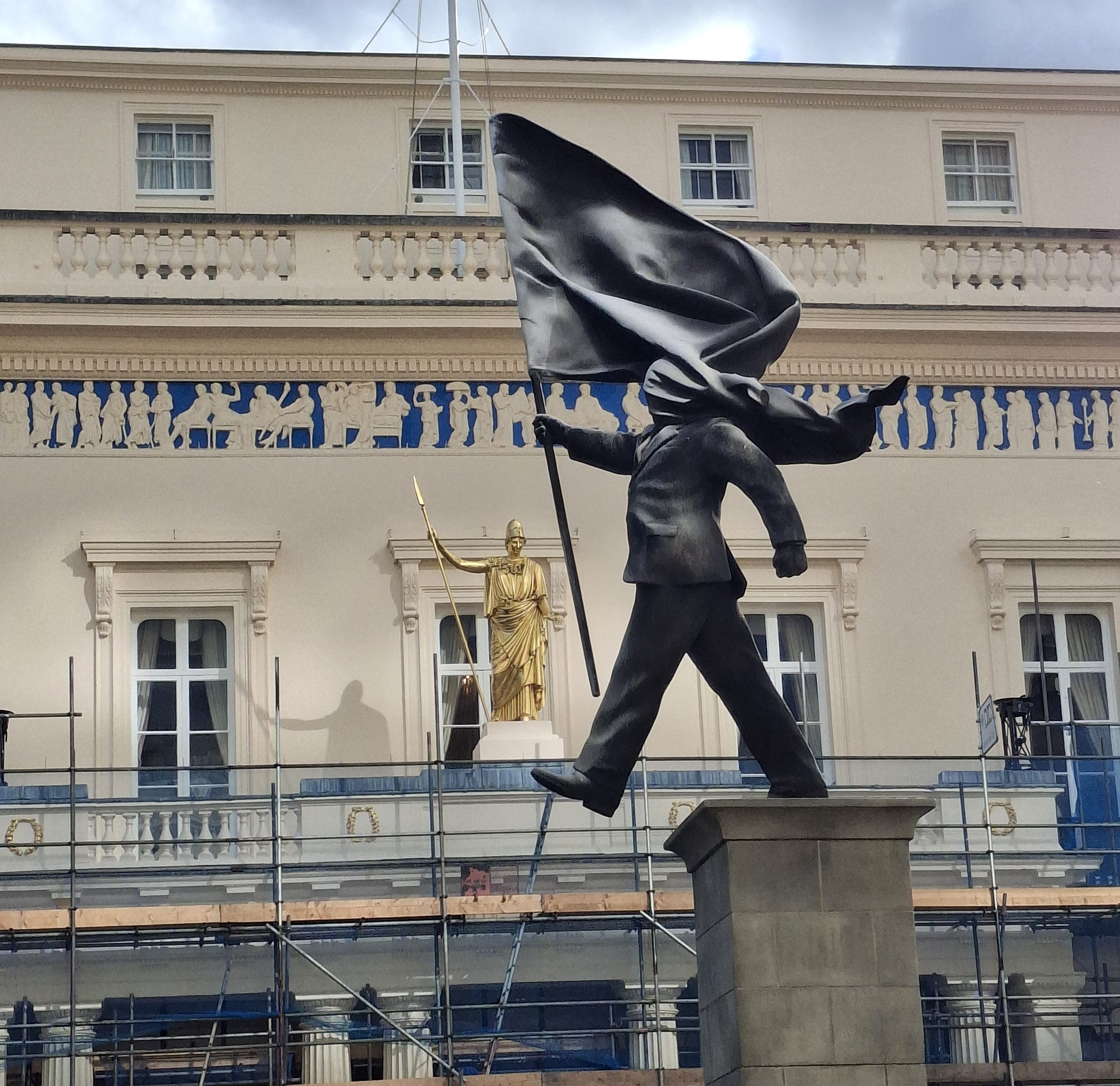
Next up were a couple of dining outings – the City Orns first Thursday meeting was small with just Fran, Richard and me at Fish! in Borough Market. On the way (ish) I popped into Yoshino to pick up my next supply of gyokuro from Lisa and had the opportunity to admire Bansky’s brilliant installation in Waterloo Place. How they did it is miraculous and I like this shot with the gilded statue representing the pinnacle of the establishment on the Atheneum Club in the background – shame they couldn’t clear the scaffolding away for me.
During dinner Richard – Surrey cricket member asked if I’d like to go to see Hampshire – my team – at the Oval on Monday. I said that would be lovely and should we go on afterwards to see Glengarry Glenross at the Old Vic after the match. Tickets booked and a pleasant evening ensued with a nightcap in Brindisa Tapas round the corner. Friday lunch at the Union Club – very non-establishment with friends Dede, Yvonne and Gwyn has been known to go on until rather late. Indeed as we left at six, there was an “Are you still here?” enquiry from reception. We had been enjoying their lovely roof terrace so away from the main areas. This was a very responsible visit for us – we must be getting old.

The Oval visit was a washout – Richard never made it at all and I saw 18 overs of cricket amid the rain delays. The weather ensured that the game ended as a draw which I’ll take as this has not been a great start to Hampshire’s season. I met Richard in the backstage bar at the Old Vic and then we went to see Glengarry Glenross. I had seen a version at the NT in 1983 and at the Playhouse in 2017. I like the play for its rapid fire dialogue among unscrupulous estate agents vying for a prize Cadillac, a set of steak knives or the sack depending on their position on the monthly deal closures board. For this revival director Patrick Marber had chosen to go with an all female cast with Indira Varma and Rosa Salazar as the leads.

I found it initially odd that they didn’t change the characters’ genders but followed the text to the letter. Soon it didn’t matter as the drama of backstabbing, conning and horsetrading, burglary and deceit just took over as it had before. It was done in the round as is all of this Old Vic season and it worked well in the office scene but the opening in the Chinese restaurant was a bit sketchy with a couple of hanging lanterns suggesting the space. It occasionally got a bit shouty but in all it was another very enjoyable encounter with a very fine play.

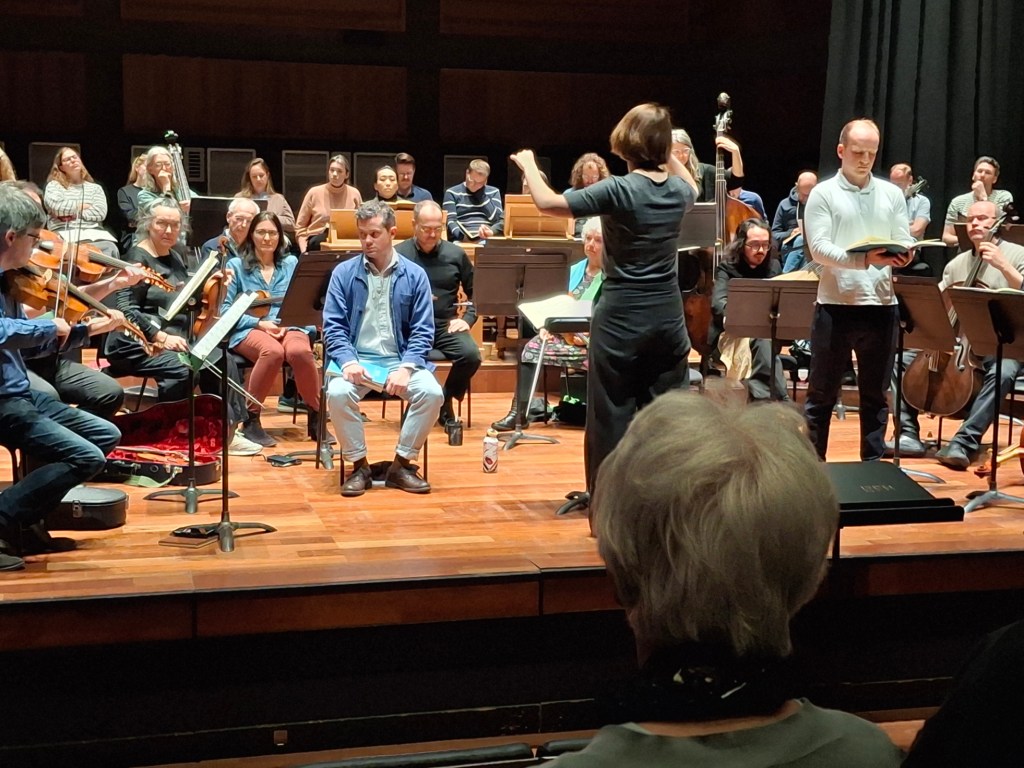
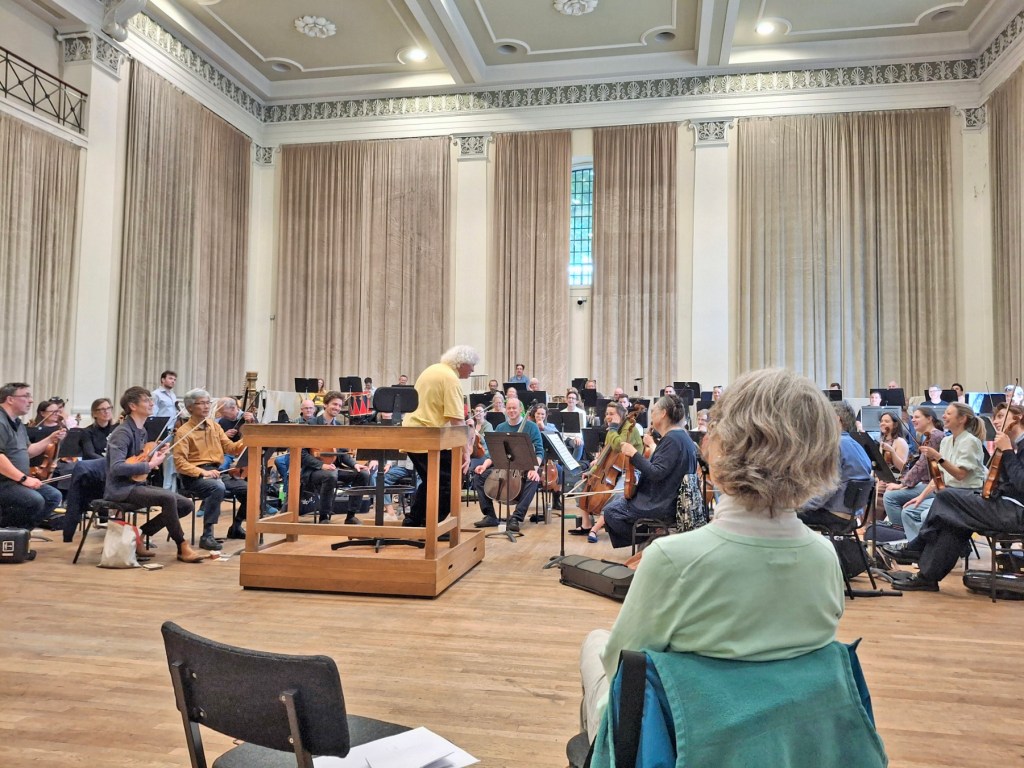
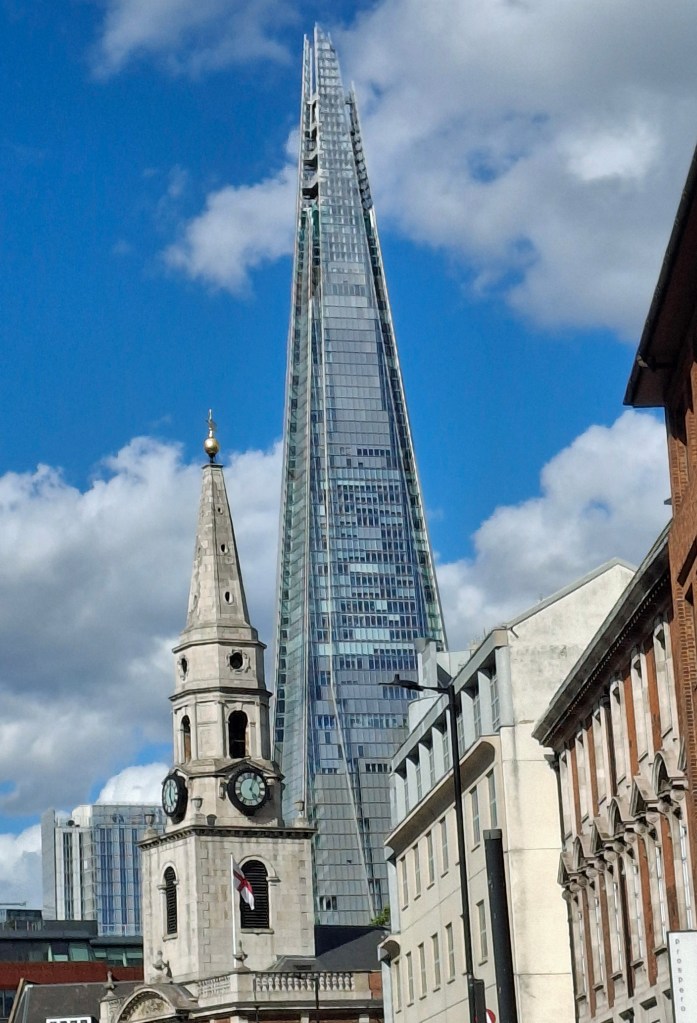
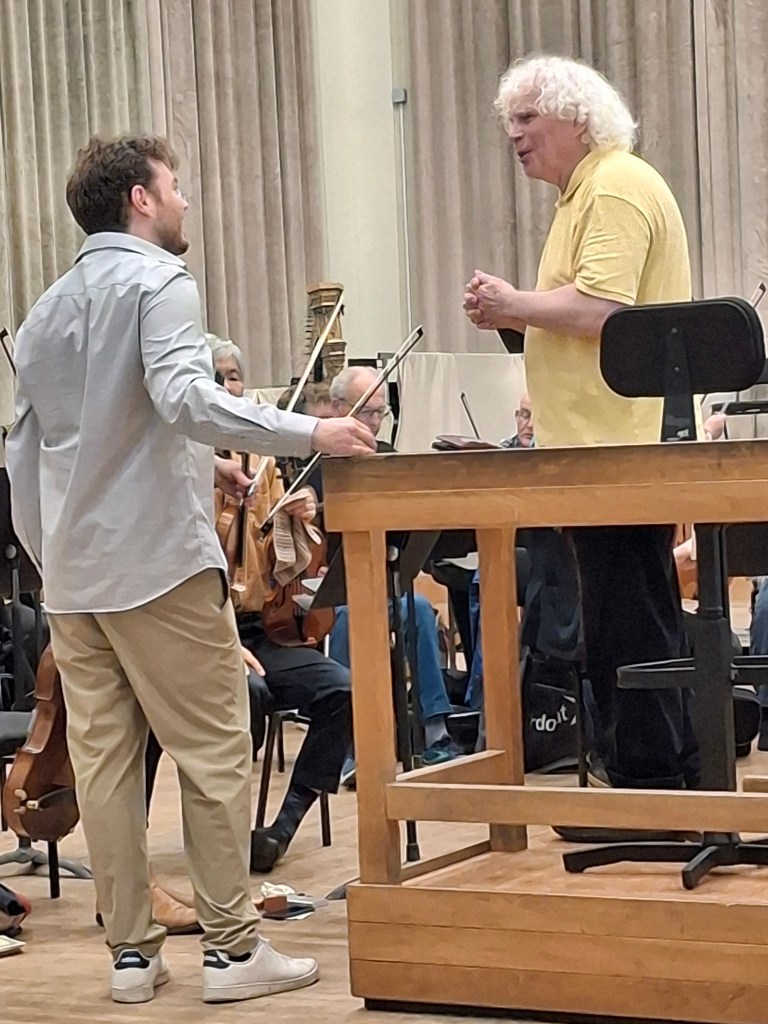
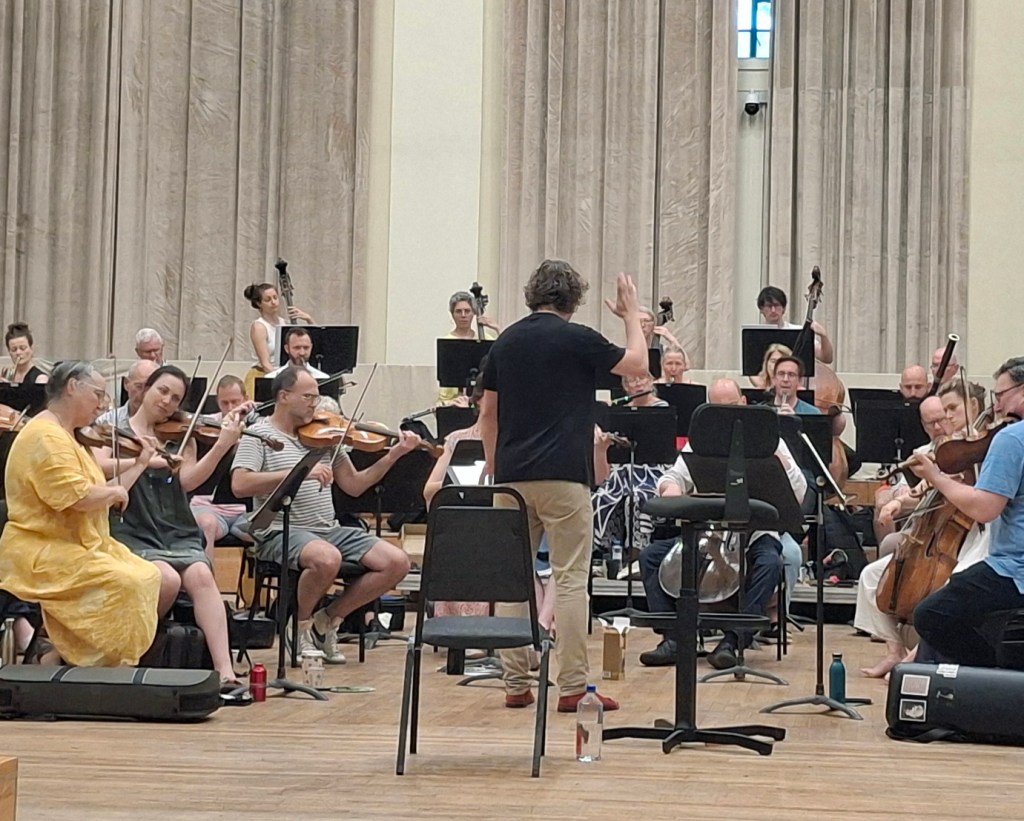
The next day I was at another rehearsal with the OAE – this time a very special one. Sir Simon Rattle had been one of the earliest supporters of the orchestra back in 1986 and when invited back to play in the 40th anniverary season he accepted immediately and elected to play two Berlioz works – the well-known Symphonie Fantastique and the equally brilliant but less performed Harold in Italy. The rehearsal took place in the Henry Wood Hall – previously Trinity Church until the 1960s and now a favourite space for several orchestras on account of its brilliant accoustic. They were working on Harold in Italy while I was there with the viola soloist Timothy Ridout walking around the space visiting various sections of the orchestra as he played the featured viola parts. It was fascinating to hear the interchange between various members and the conductor about stress and pace, intensity and melody. It seems all conductors demonstrate their wishes through dum de dah vocalisation – most mellifluous! On the way back I was struck by the juxtaposition of the spire of Dickens’ church St George the Martyr from 1122 and the Shard from 2012 both fine pieces of architecture gracing the area 900 years apart.
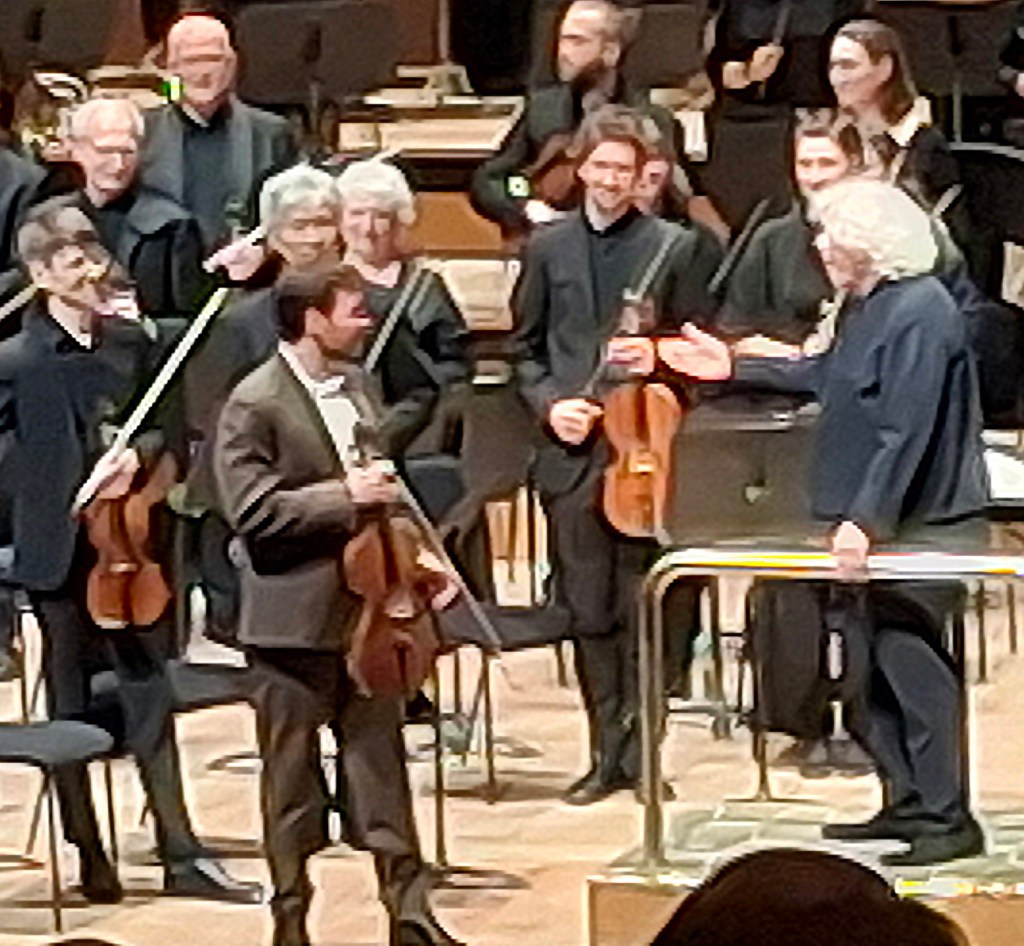
At a pre-concert talk some of the players shared their delight about playing not just ‘historically informed’ but actually on period instruments. For the baroque and classical periods they have to use excellently crafted copies of period instruments since the real ones would have disintegrated. Tonight they were playing on instruments made at the time Berlioz was writing in 1830. Their excitment was palpable.The concert itself was a huge success. In the first part with Harold in Italy Timothy Ridout with his viola approached the stage from the auditorium, as in rehearsal visited most sections of the orchestra and concluded the piece from a box. He gave a sensitive performance with clear tone and wonderful variations to match the mood of Harold’s adventures through the Italian landscape. The Symphonie Fantastique was a revelation with such clarity from the period instruments and varied dynamics in Simon Rattle’s energetic direction. The talk had suggested things to look out for and it did enhance the experience. Brilliant music performed by expert musicians conducted by a genius they are pleased to call a friend of the OAE.
Focusing on events in the Iran-Iraq war of the 1980s Under the shadow at the Almeida is an all too timely reminder of the effects of repressive regimes on women and of life under war conditions. With her husband off at the front, Shideh, played wonderfully by Leila Farzad, is left in her Tehran apartment with her daughter and possibly a malevolent spirit or djinn. Forbidden from continuing her studies to be a doctor because of prior political activism, Shideh is frustrated by her enforced domesticity and becomes increasingly disturbed by physical and psychological damage.
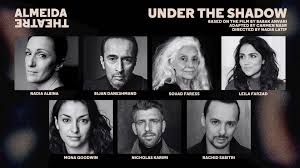
Adapted from  Babak Anvari’s 2016 horror film which I had not seen, it was a thought-provoking evening with some very dramatic effects and some fine performances. Especially affecting were the rush to the air raid shelter where all the cast gather below the front of the stage and discuss their fears. And there’s one amazing coup de theatre which I won’t spoil.

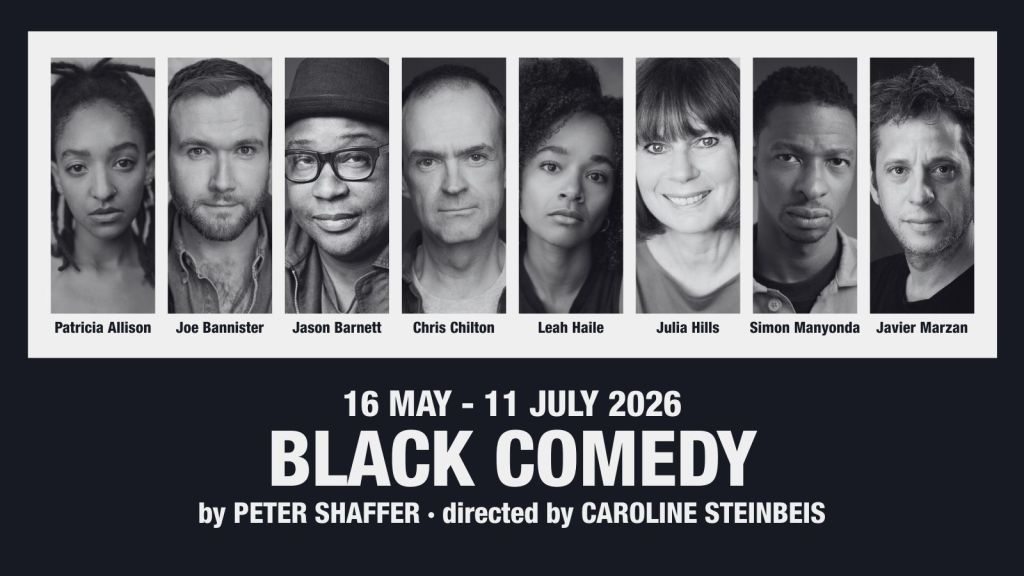
The next outing was of a rather different nature. As a patron of the Orange tree Theatre in Richmond, Frances was invited to a sponsors’ dinner in the neighbouring Italian before a performance of Peter Shaffer’s Black Comedy. The meal was tasty and enlivened with theatre chat from various guests. The play is a hilarious farce. What a contrast to the psychological thriller that was Equus! In a brilliant piece of staging alternate scenes are set in pitch blackness representing times when the room was lit and bright lighting when powercuts had reduced the room to darkness. The actors coped brilliantly with this trope delivering witty lines in the dark and bumping into each other in the light. The central plot of a sculptor ‘borrowing’ a neighbour’s furniture to impress a dealer provided lots of fun and some snappy characterisation.
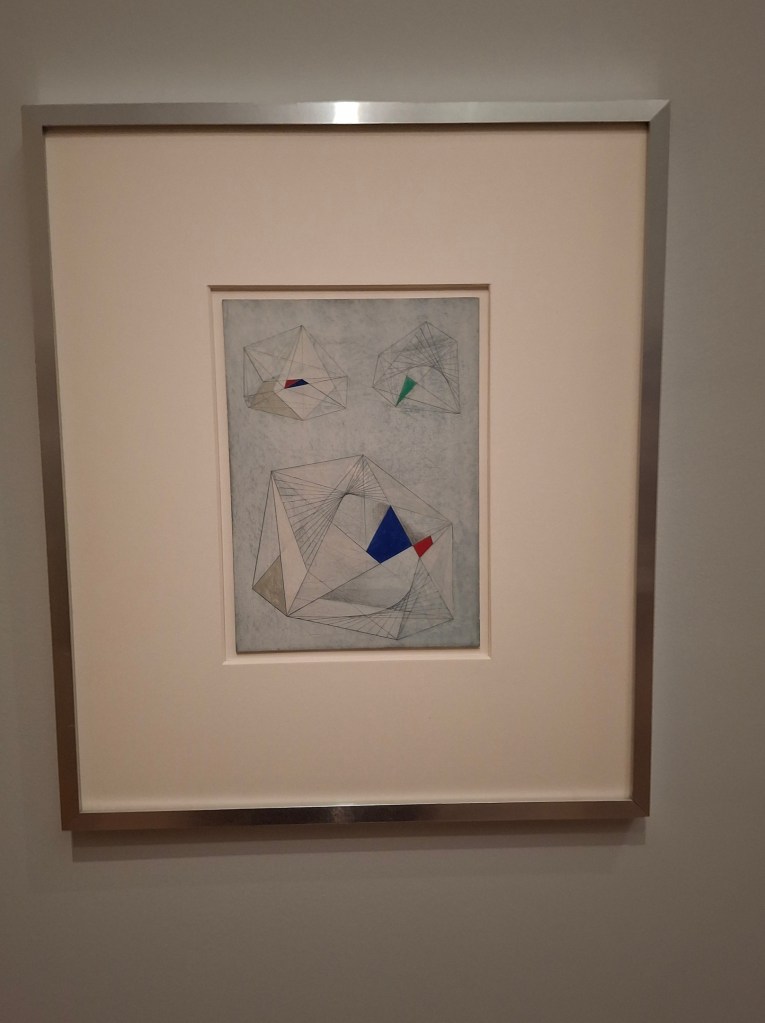
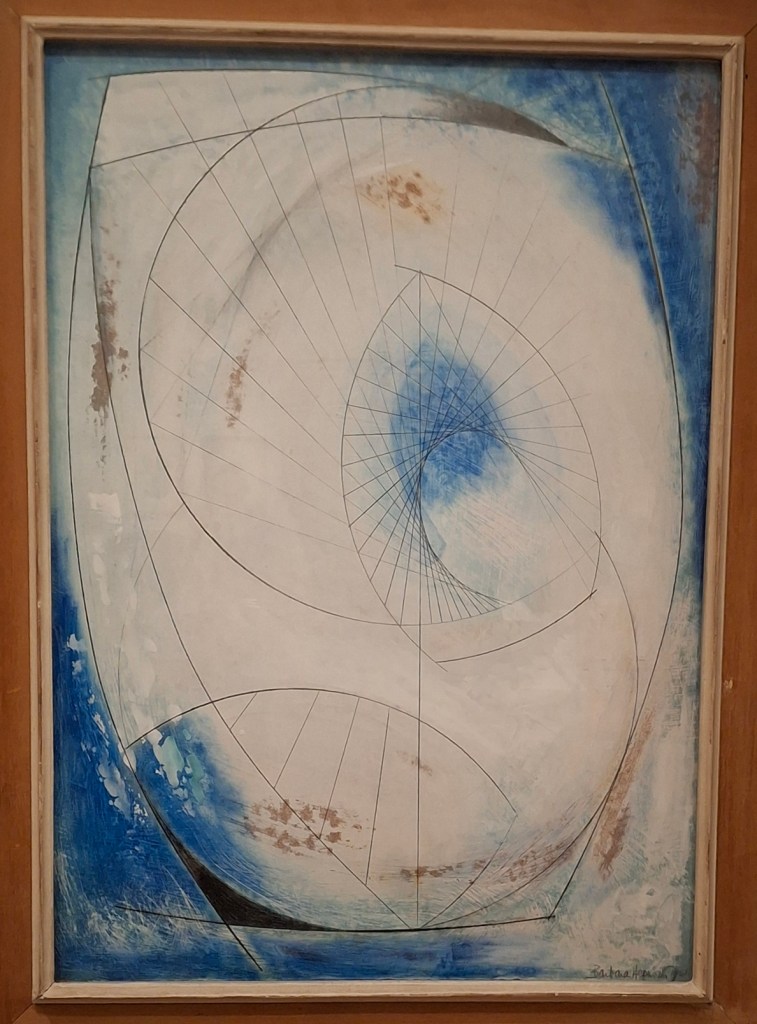
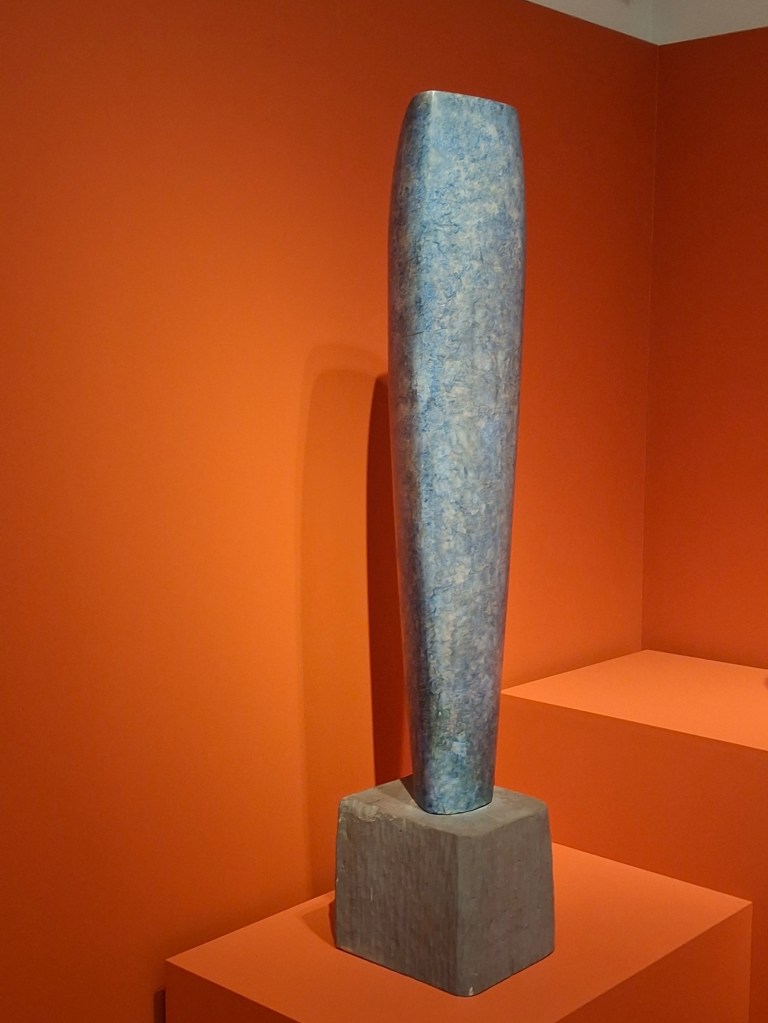
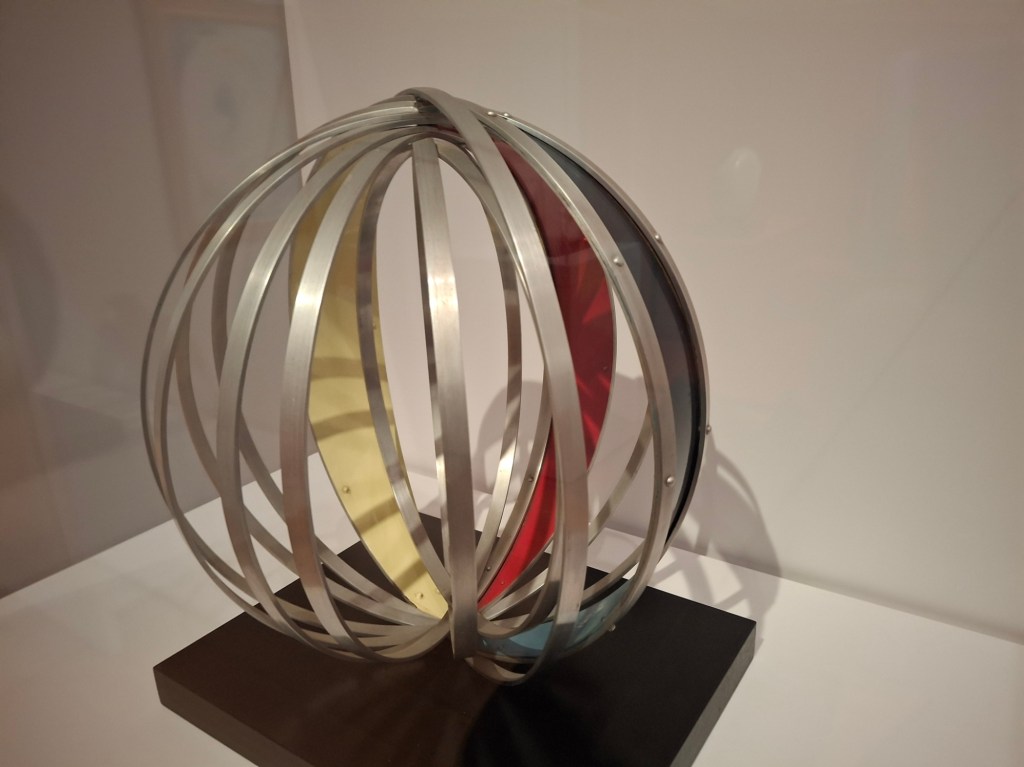
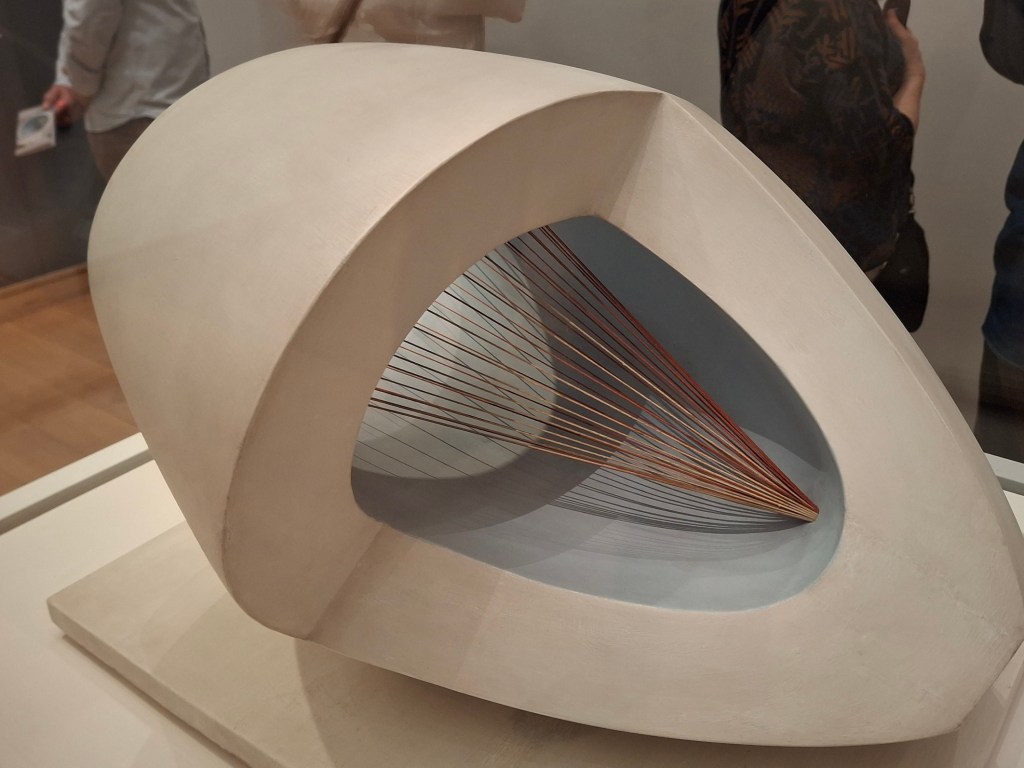
The Courtauld Gallery has an exhibition of Hepworth in Colour. A few years back I had enjoyed a visit to the eponymous gallery in Wakefield. Some of the works displayed in London were on loan from there but, shown in a different contex, took on a new resonance. A number of sculptural works were surrounded by lots of drawings and sketches which I was not familiar with and they gave insights into her approach to colour. In one sphere with panels in yellow, red and black she displayed a surprising side of her as a Watford fan! More common were the pale blues of the sea in Cornwall where she lived most of her life and some elegant painted columns and forms in painted plaster and bronze.
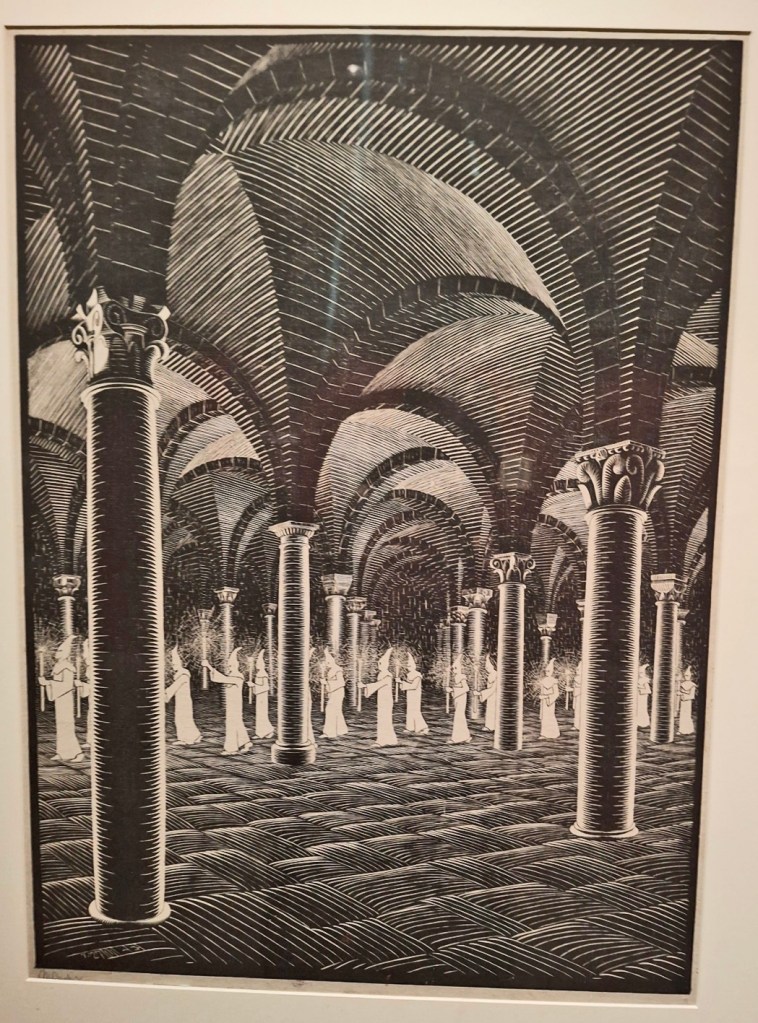
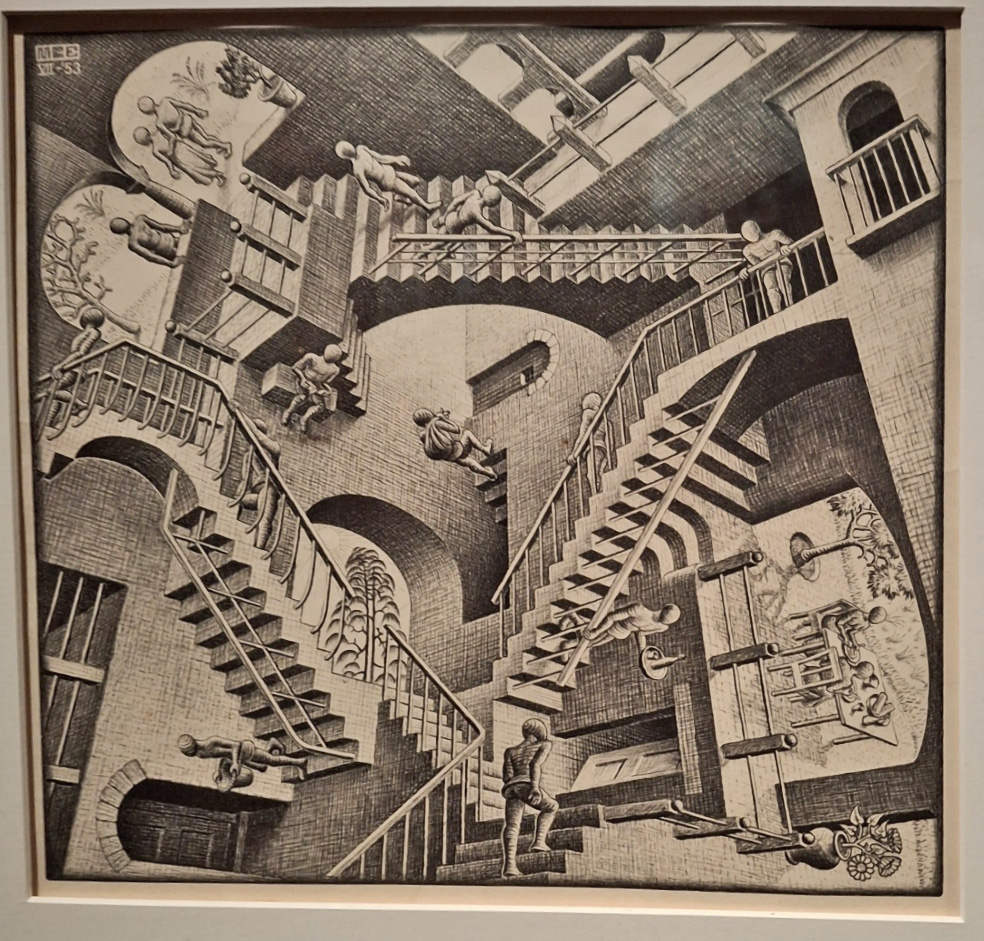
Just across the courtyard of Somerset House is the blockbuster exhibition of M C Escher, the first comprehensive showing of his work in the UK. I thought I’d better go while I was here. And comprehensive it truly is with over 150 works on display alongside artifacts he used to achieve his trademark tessellations, repetitative patterns and the impossible drawings for which he is mostly famed. It’s very interactive with infinity mirror rooms, scale-distorting rooms and spheres which you hold to view yourself in a very different way. I hadn’t realised how much he had been influenced by the patterns in Arabic art he’d seen on a trip to Spain. I was particularly taken by an etching of the Cordoba mosque with its eerie Semana Santa nazareno-hooded figures and it was interesting to see the famous ‘Relativity’ in the original lithograph form and as an animated screen version.
My friend Graham was down from Bradford and we agreed to meet up in the Black Eel in Dalston for a beer and then go to see Quartet in Autumn at the Arcola theatre. This also entailed a short visit to the excellent Five Fingers for a curry on the way to the theatre. I think this was my fourth or fifth visit and the food never disappoints and service is always interesting. Barbara Pym’s novel enjoyed a vogue in the 70s and has now been adapted for the stage by Samantha Harvey whose Orbital won the Booker prize in 2024. As a thirty-something the four bickering, miscommunicating fogeys on the verge of retirement seemed a long way off. Now not so much!
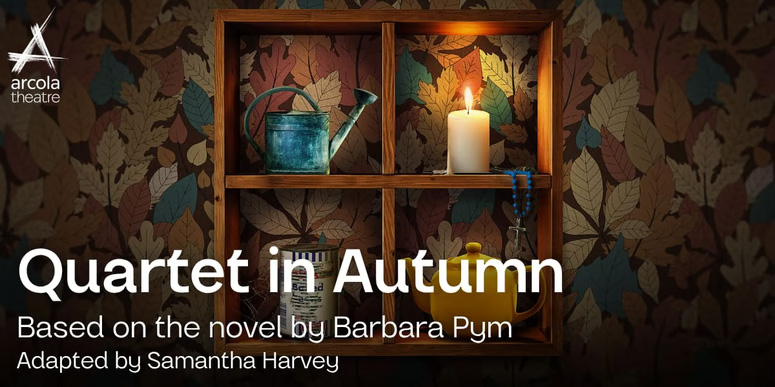
The humour of Pym’s writing has been retained in the adaptation and the characters each have opportunities to explain their lives of disappointment, underachievement and give rein to their hopes and fears. Four actors sitting talking often with their backs to you is not an easy setting to manage but the experience of Dominic Dromgoole as director and of his four excellent actors makes this an evening of entertainment and emotional engagment.

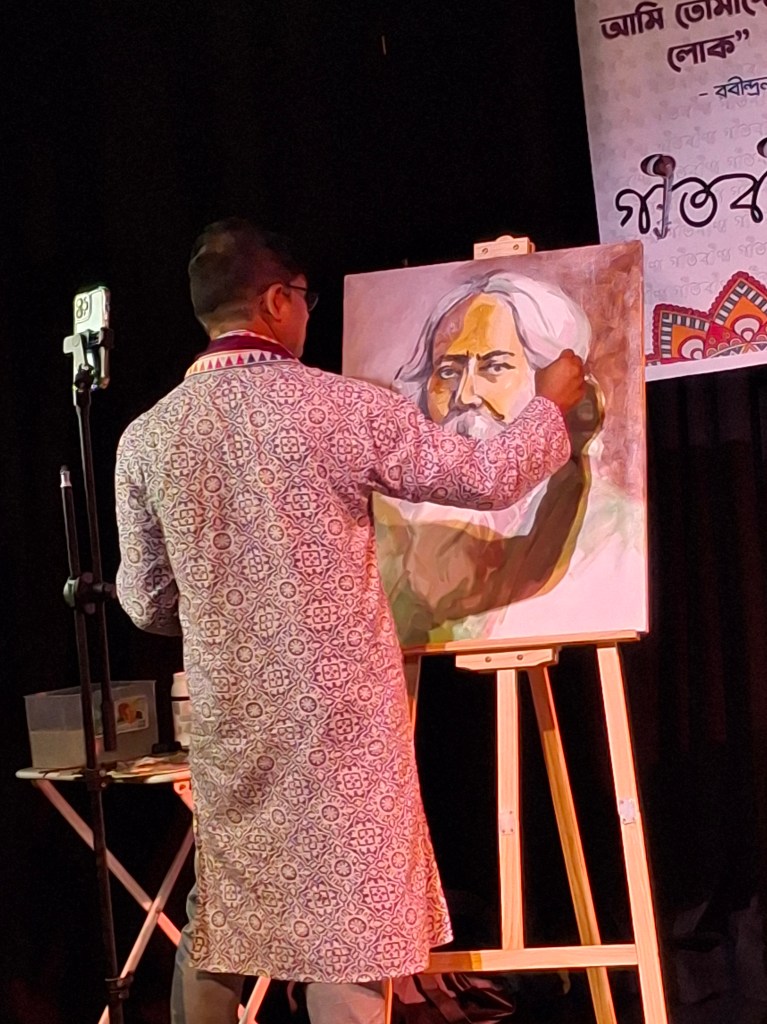
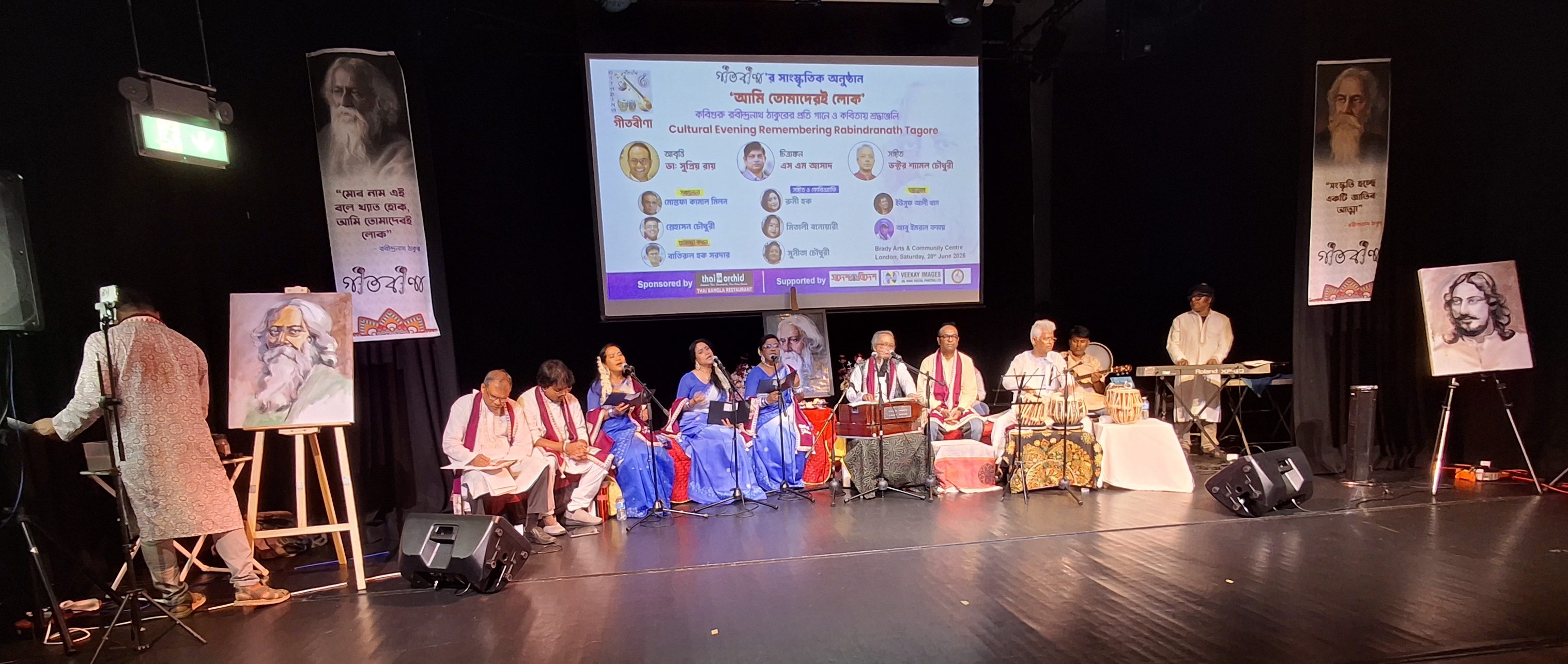
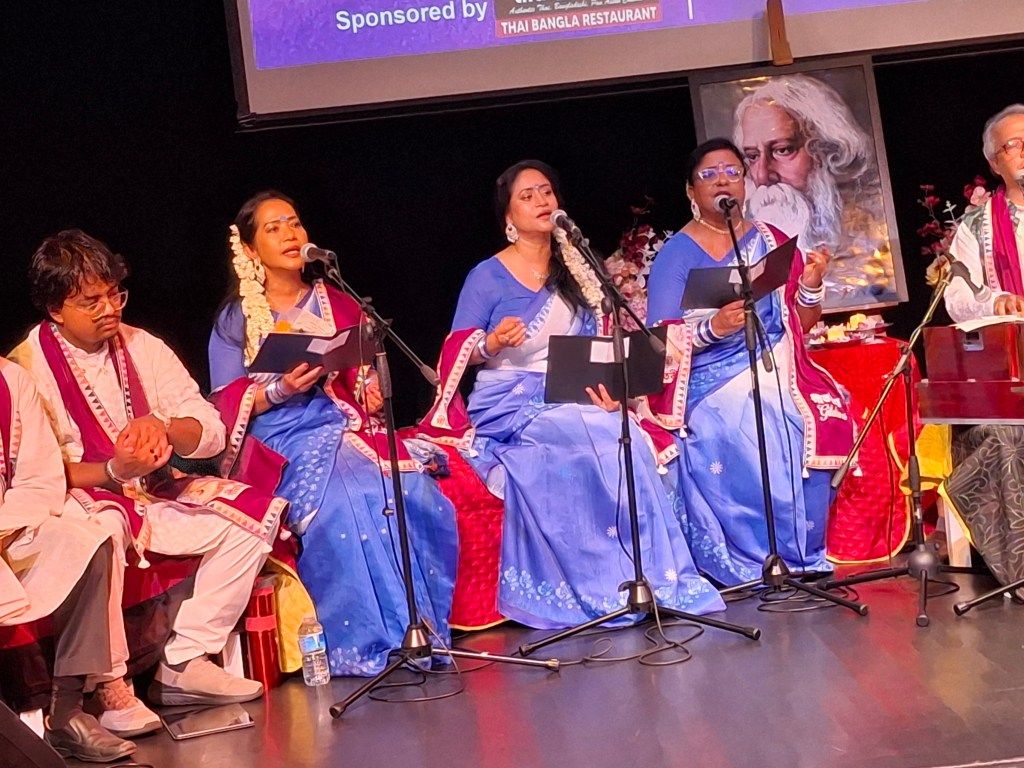
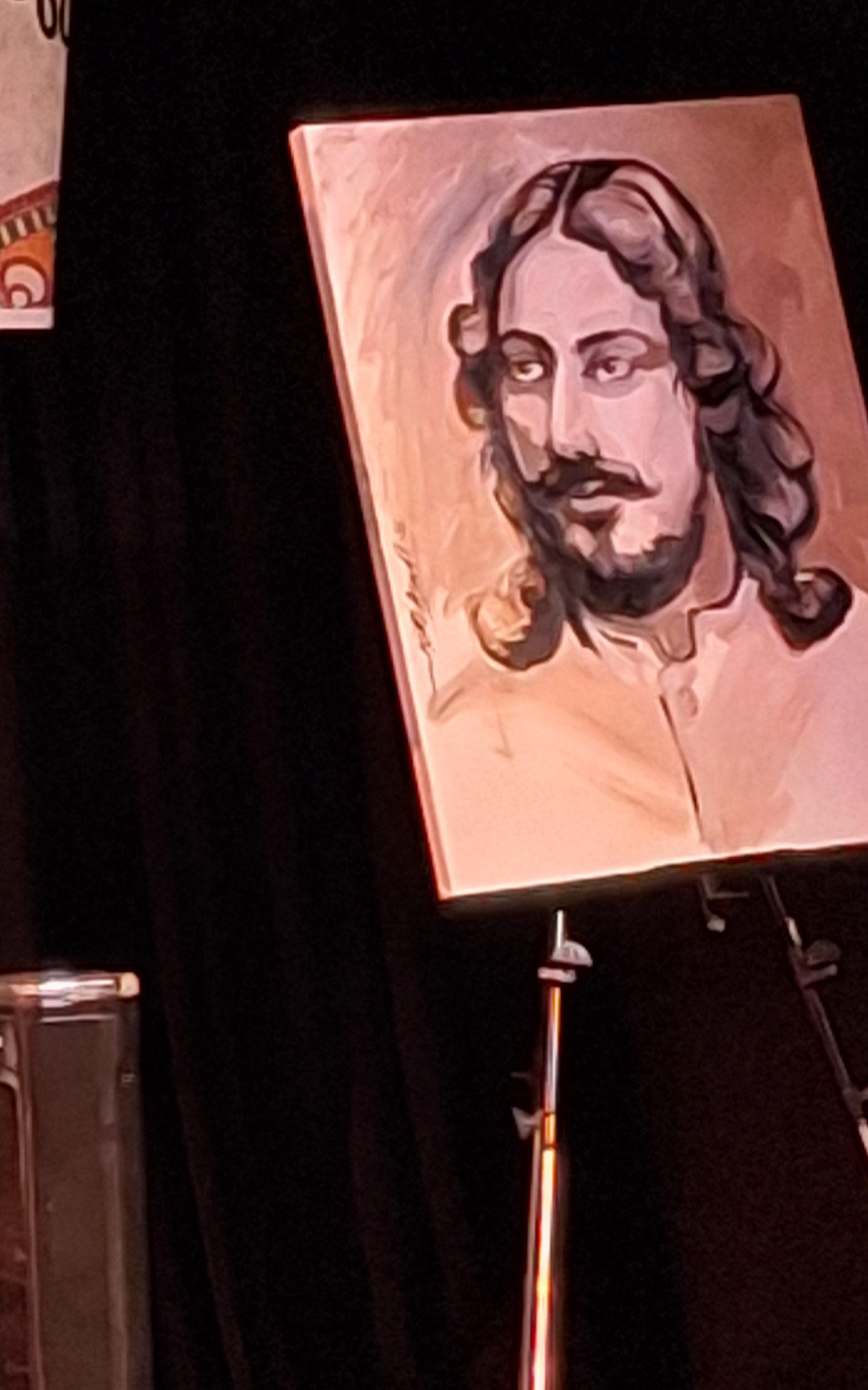
I think I’ve mentioned before Gitabina, the Bengali musical group curated by my friend Rumy Haque. They had a concert in memory of Rabindranath Tagore at the Brady Arts and Community Centre in Whitechapel on Saturday. I went along with my BBPC colleagues Shamim and Samaha and got a brief hero’s welcome as I had just consulted Cricinfo to see that the Tigresses (Bangladesh Women) had soundly defeated Pakistan Women in the T20 Womens World Cup. Given the political history of the two nations this victory was especially sweet. I met several friends and acquaintances and then went into the main hall for the concert which combined singing with recitations of Tagore’s works. Rumy had helpfully provided translations for several of the songs and the readings were delivered so powerfully that detailed understanding was not required to appreciate the content of the core messages. Another interesting facet was the real time painting of portraits of Tagore in his youth and as an elderly statesman. Like being at Sky’s Portrait Artist of the Year with added music. An enjoyable evening out with a difference.
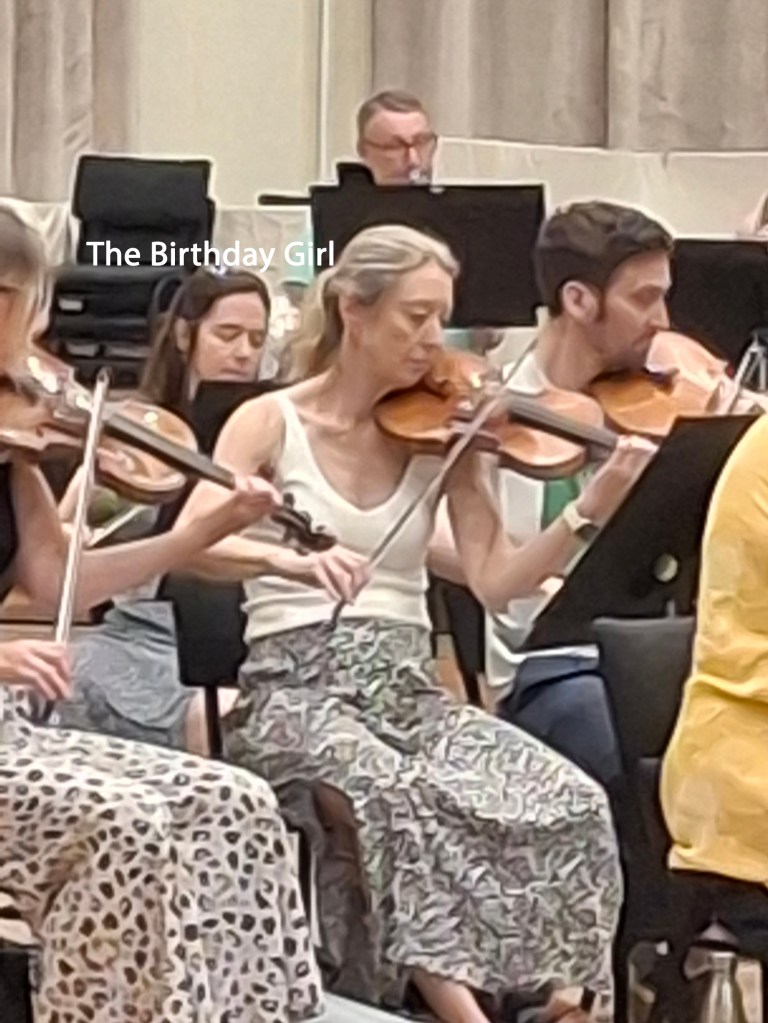
I set off early for the Henry Wood Hall for another OAE rehearsal. It’s hot and when I arrive at Lee Station there’s a train on the platform and a stream of would-be passengers coming towards me. “No trains from Lee for several hours,” says one so I join the downward flow and get a bus to Lewisham and then a train to London Bridge and walk to the hall in good time for a susprise opening. Conductor Maxim Emelyanychev calls the rehearsal to order and the strains of Happy Birthday ring out. This was a special treat for Rebecca Bell a violinist celebrating her’s today. As before, observing the conductor explain his wishes to the band was fascinating. Lots of da, da, dums and jumping in the air for “more emphasis here”. The concert of Brahms, Dvorak and Hadyn tomorrow looks like being another real treat. Just a block from Trinity Church Square is Great Dover Street along which runs the 21 bus with its destination panel saying ‘Lewisham Shopping Centre’ so no hassle with trains on the way back and a short walk to the blessed 273 to get me home relatively unaffected by the 35 degree heatwave which looks set to continue. I was glad of my gamcha from Dhaka – a scarf of quick wicking cotton that keeps the sweatiest Englishman in the world – me – from the ravages of the midday sun.
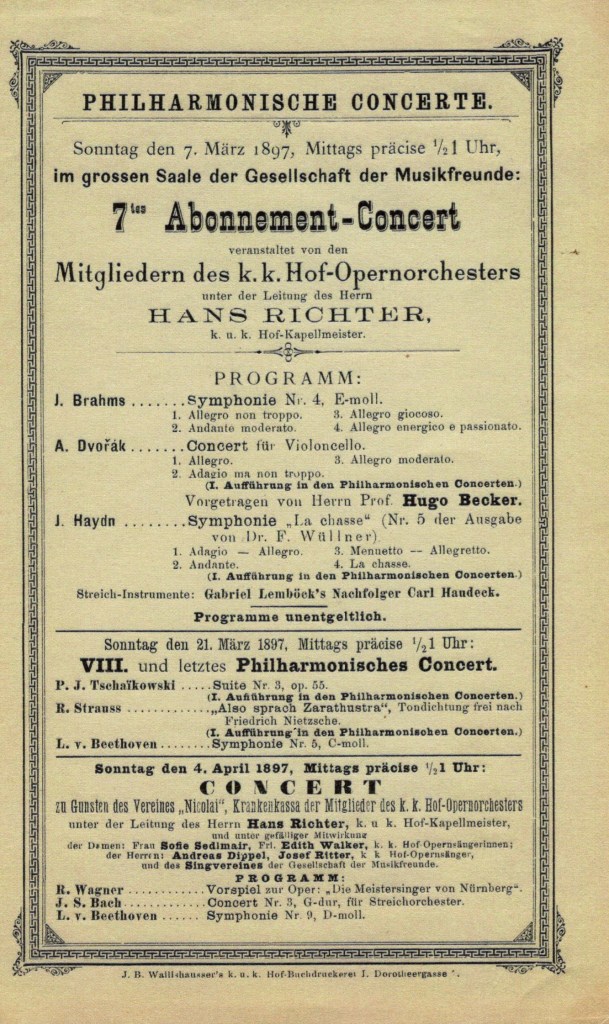
And so to the concert itself. Billed as Brahms’ Last Concert, the programme replicated the concert from 7 March 1897 in Vienna, the last time that Brahms heard his own music performed as he died just a month later. Starting with the massive fourth symphony was completely counter-intuitive to a modern concert going audience – but it worked as it filled the first half of the evening with all the emotions. Joyful dance, slow intensity and a mournful brooding final section with perhaps a hint of hope make this a very emotional ride. In the second half Steven Isserlis played Dvorak’s cello concerto with flair and passion – at the pre-concert talk he said he played the first movement on a record obsessively at the age of ten and still loves it today. It showed. The Haydn symphony gave the evening a lively conclusion with its dance beats and final headlong rush across the fields in pursuit of who knows what. Whatever it is, it gave the work its nickname of The Hunt – the final movement is actually called La Chasse on the manuscript. It was a fitting conclusion to the first half of OAE’s 40th anniversary season which they take up again in October at the Southbank after stints at Glyndbourne and the Proms.

Marching on …

Finally after all the gloom of the year to date we had a few days of sun and I was able to plant some vegetables – broad beans and parsnips so far – check on the onions and garlic planted last autumn and do the annual hack and slash of all the dead brush from last year’s flowers. Then as I turned to go indoors the sunset showed me my next big task. The tree in the left foreground is my quince which has given us so much membrillo and jelly over the years but has lots of overlapping branches and needs a really good prune. A start has been made.

My rather aching limbs picked up some energy on Monday evening as I set off fot the Wigmore Hall to hear the Irish Baroque Orchestra play The Trials of Tenducci as the first part of a tour to Dublin, Limerick, New York and Virginia. I’m a great admirer of Peter Whelan who leads the IBO and the energy and clarity the band brings to the repertoire.

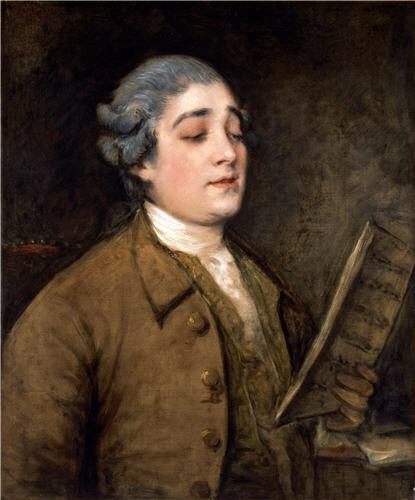
Tonight’s was an interesting programme based around the exploits of one Giusto Fernando Tenducci, a famous eighteenth century castrato singer. Born in Siena he came to London in 1758 and later moved to Dublin where he met and married Dorothea who later bore two children but later sued him for divorce for non-consummation. He became something of a celebrity – he was painted by Gainsborough, was friends with J C Bach and a singing teacher to Mozart. He was also to spend eight months in a debtors’ prison in London and later in Ireland. One admirer wrote of his voice: ‘neither man’s nor woman’s but it is more melodious then either’. Tenducci by Gainsborough in the Barber Art Gallery in Birmingham.

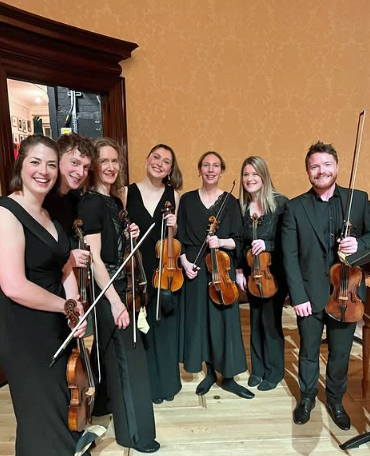
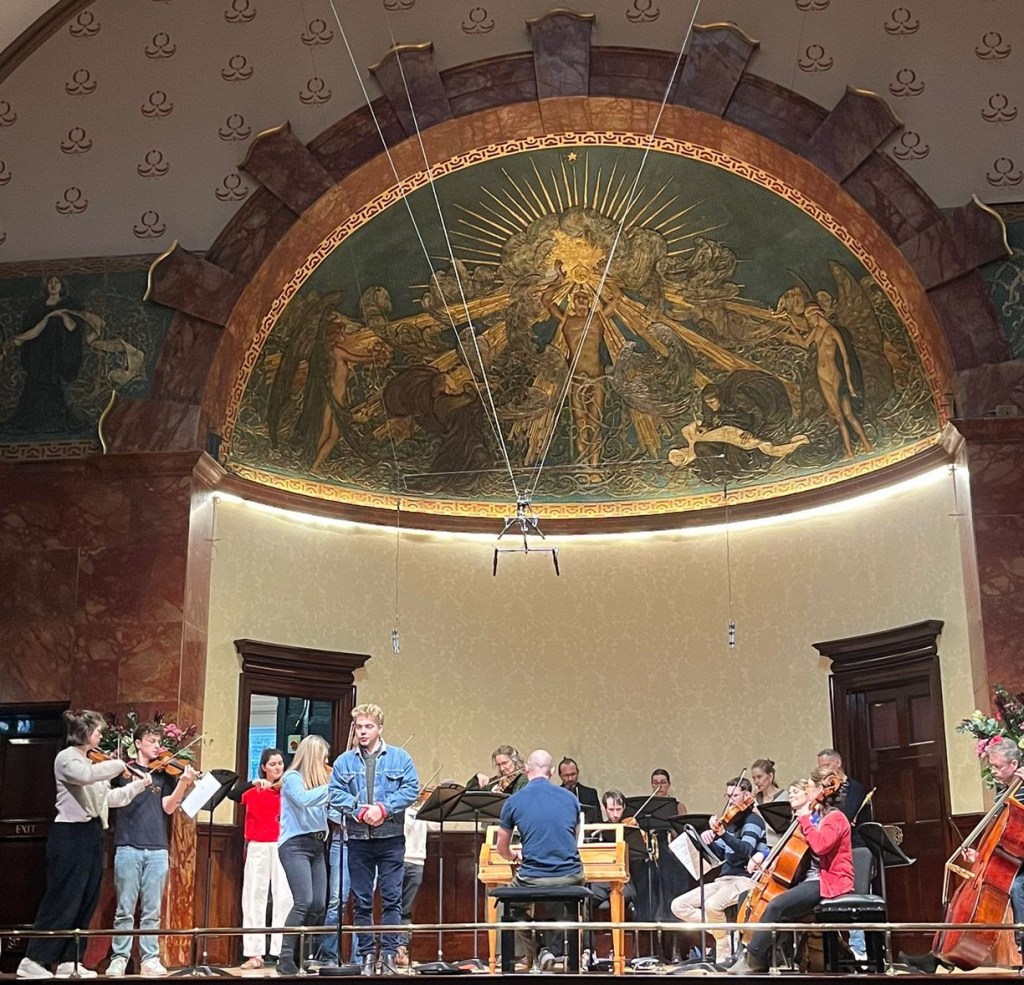
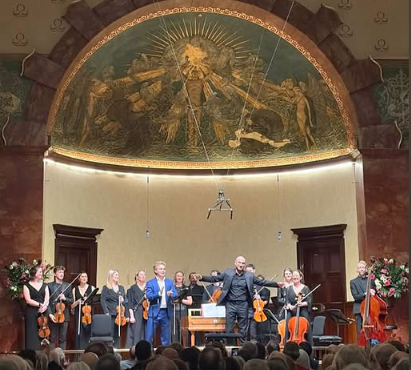
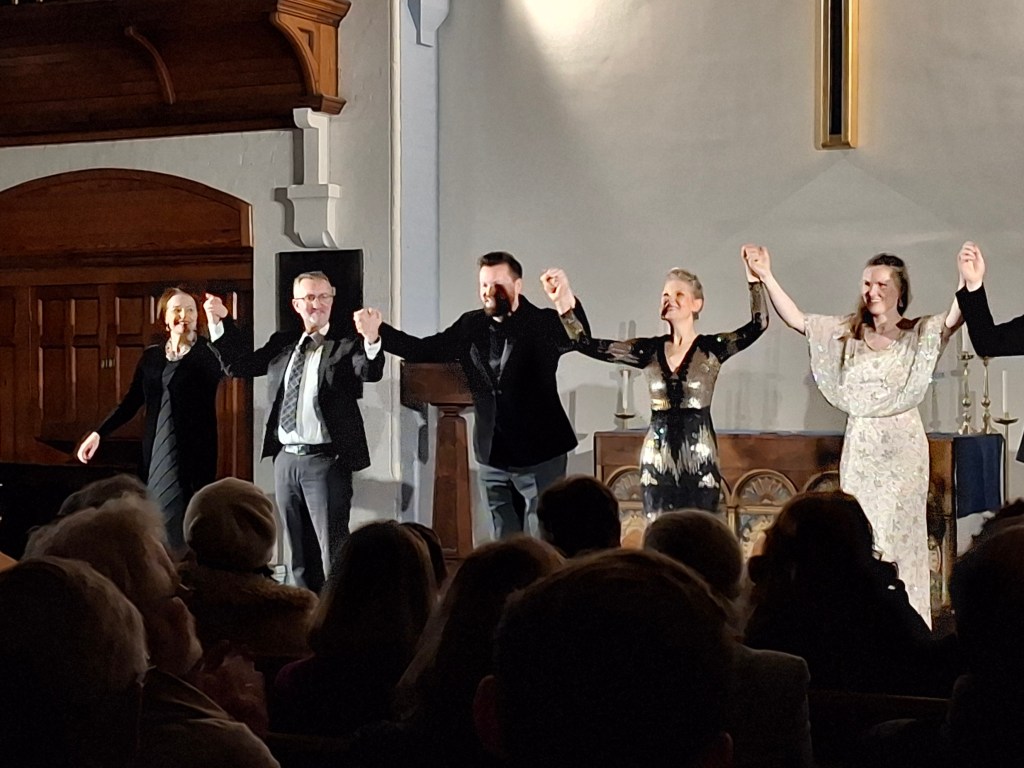
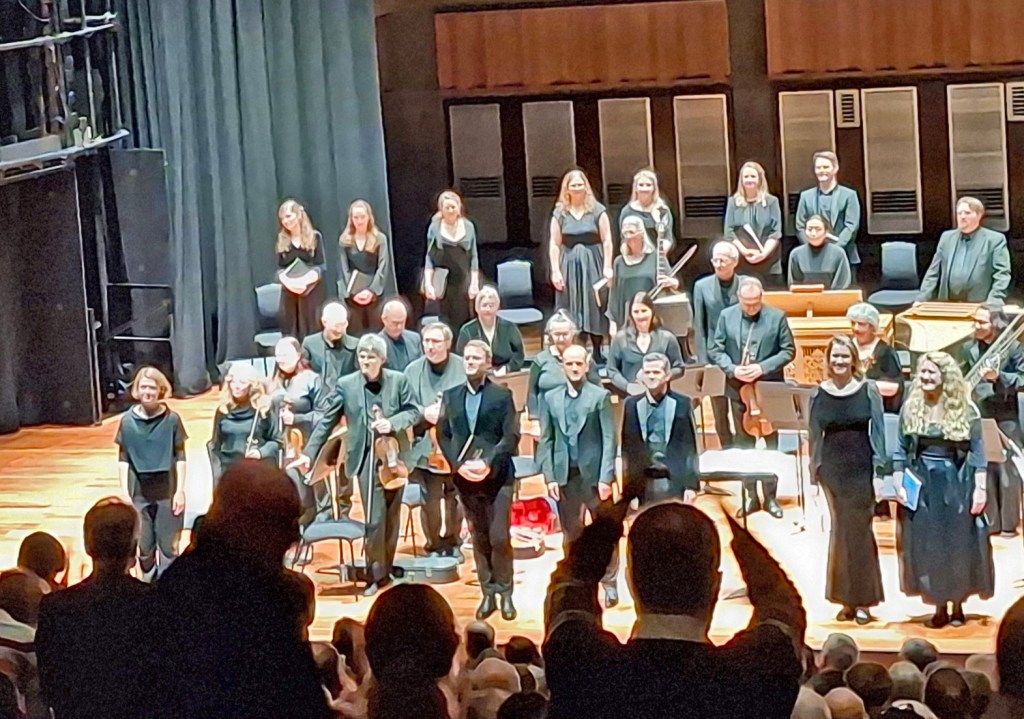
Having heard last week Mozart’s last three symphonies, each half of the evening began with two of his earliest ones, numbers 1 and 4. Short, sharp and lively, they set the sense of fun for the evening which involved works which Tenducci had sung or were by his friends and contemporaries. Tenducci’s role was taken by the excellent countertenor Hugh Cutting who expressed his delight that high range male soprano voices were no longer the result of mutilation. He sang arias by Gluck, Thomas Arne, J C Bach and Mozart and as an opera singer he filled them with expressiveness and drama. The orchestral playing in an oboe concerto by Johann Christian Fischer and the symphonies and a rollicking version of Tommaso Giordani’s Overture and Irish Medley which contained well-known Irish folk tunes was brilliant with a small orchestra filling the hall with an eclectic and delightful programme. And afterwards I was able to catch up with violinist Jenna Raggett as she and fellow violin players were taking a selfie. And the IBO conveniently posted photos of the rehearsal and the final bow.

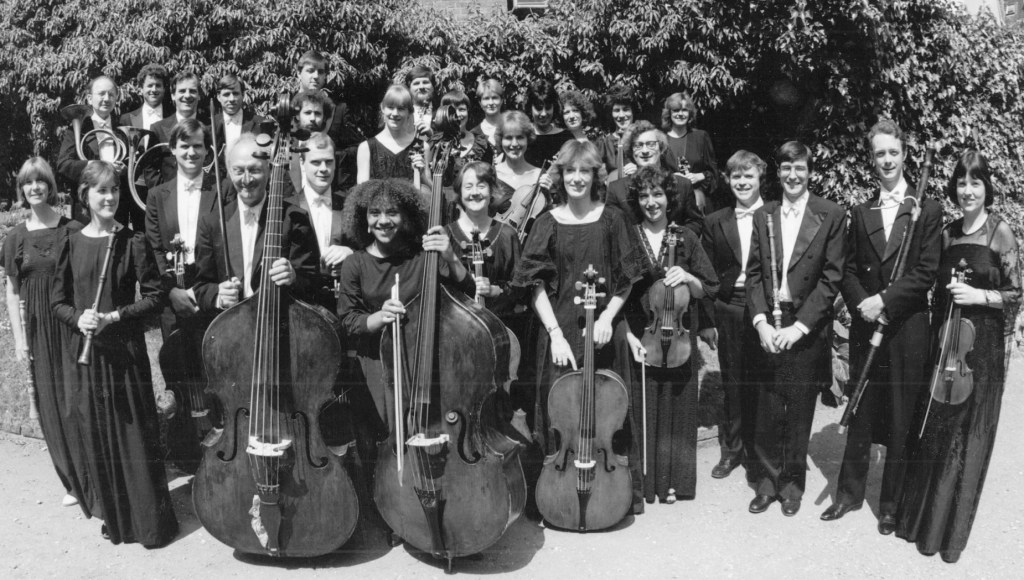
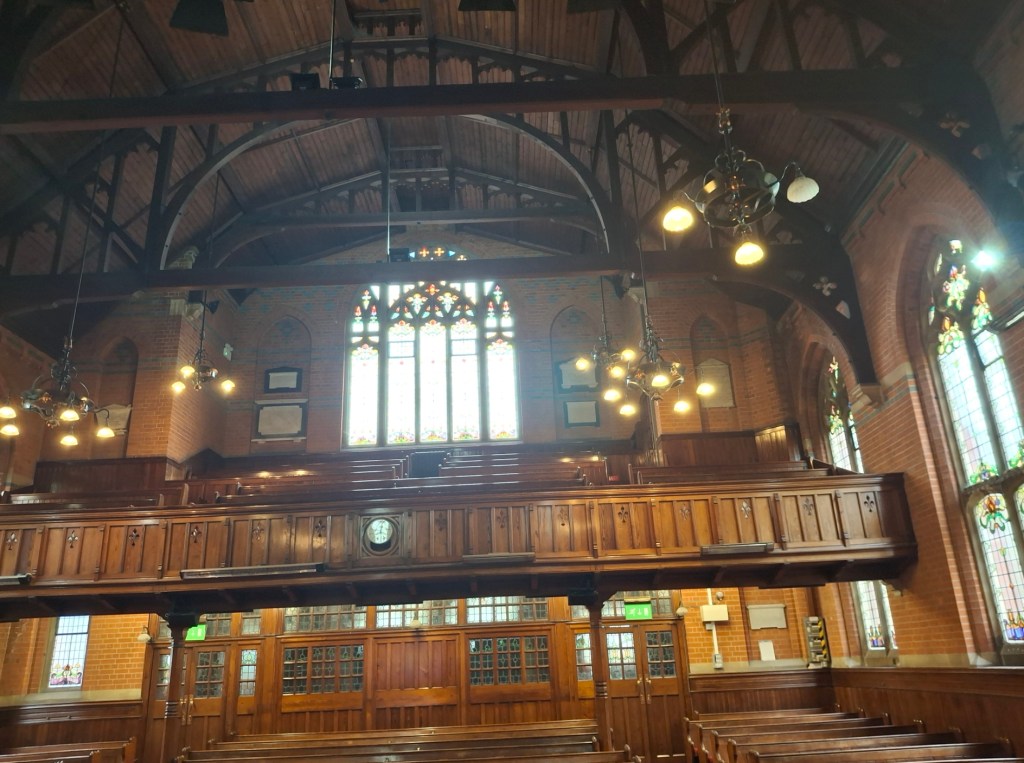
Later in the week my favourite orchestra the OAE held a session to launch its Southbank Programme for 2026-27, Held in the elegant hall of Acland Burghley School in Tufnell Park and hosted by Radio 3 and Proms star Katie Derham, the evening had music from a string quartet with vocals from tenor Hugo Hymas who was one of the OAE’s ‘Rising Stars’ in the 2019 cohort. While discussing each of the concerts with long standing players Annette Isserlis (viola), Cecelia Bruggemeyer (bass) and Martin Lawrence (horn), we also heard the fascinating story of the band’s formation back in 1986 when a number of players decided they were doing all the work and others were getting all the plaudits so they formed an orchestra that was run by its players not by a single celebrated conductor. It’s proved a great success for forty years and has allowed for concerts with a wide variety of conductors and several directed from within the orchestra itself. Another very pleasant evening in the company of friends and with some excellent music from Vivaldi, Bach, Handel and Mozart.

Friday brought a real surprise. Ace pianist and dear friend Susie Stranders invited me to a gala evening with St Paul’s Opera in Clapham. Well if Susie’s involved it will be good so off I set in a convoluted cross Sarf Lunnun jaunt with a bus, two trains and a walk to a wonderfully simple church, St Paul’s Clapham, to meet my friend Jadwiga who was coming from Putney. I’ve been previously to similar evenings in Fulham Palace and the Blackheath Halls and it appears that there are many occasional opera group and societies all over London and indeed the country. It’s great that there are so many opportunities for talented young singers to engage with diverse audiences in different locations. St Paul’s Opera has a dynamo at its heart in Tricia Ninian and the evening was billed as David Butt Philip and Friends. David has been associated with St Paul’s Opera since 2017 and gathered some great friends to perform arias and songs from Handel and Mozart through Wagner and Bizet to Britten and Bernstein. David was joined by soprano Ellie Laugharne, mezzo Marta Fontanals-Simmons and bass Liam James Karai. As accompanists for the four singers Susie was reunited with Eric Melear with whom she had been on the young artists programme at the Grand Opera Studio in Houston back in 2000. Both experienced repetiteurs, they managed to make the piano sound like a full orchestra in the fine acoustic of the church. I can’t make St Paul’s production of La Traviata this summer as I’m out of town at a wedding but I’m sure it will be worth a trip.

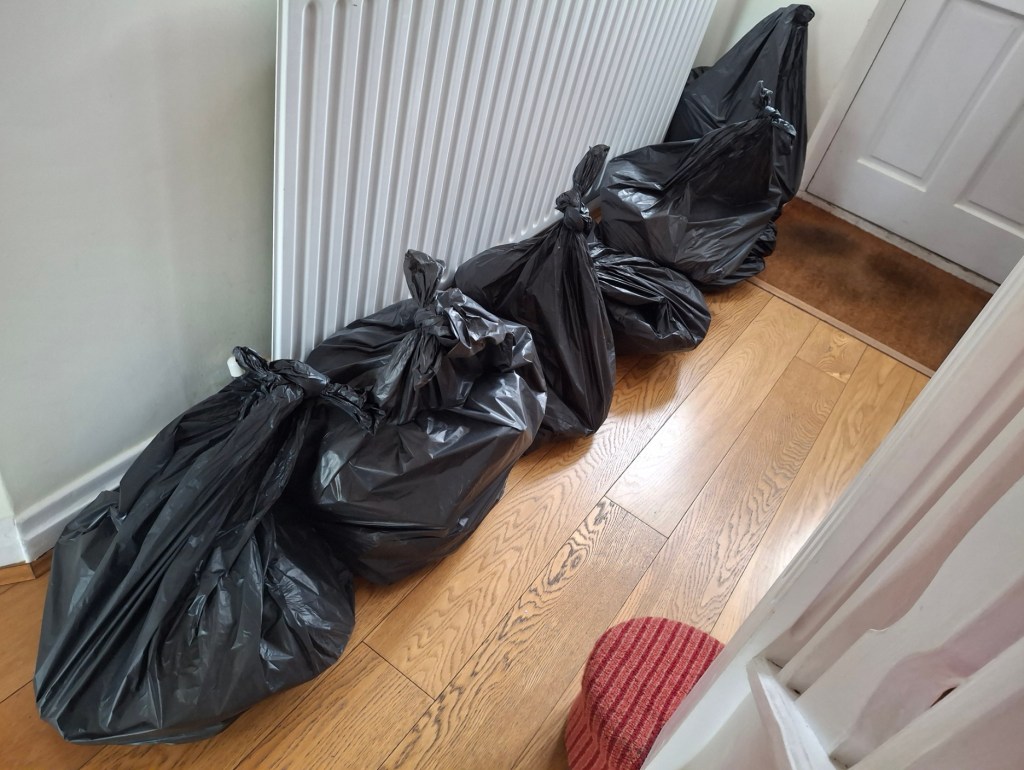
A business bagged up for shredding! 30 years of my various company documents all on their way to be shredded. Because many of the call sheets and contact lists, invoices and (remember them?) cheque stubs contain the names and details of several rather well-known names I’ve been lucky enough to work with over the years, they can’t just go into my Lewisham Council recycling bin. So off they go to Restore Data Shred for secure and certified destruction.

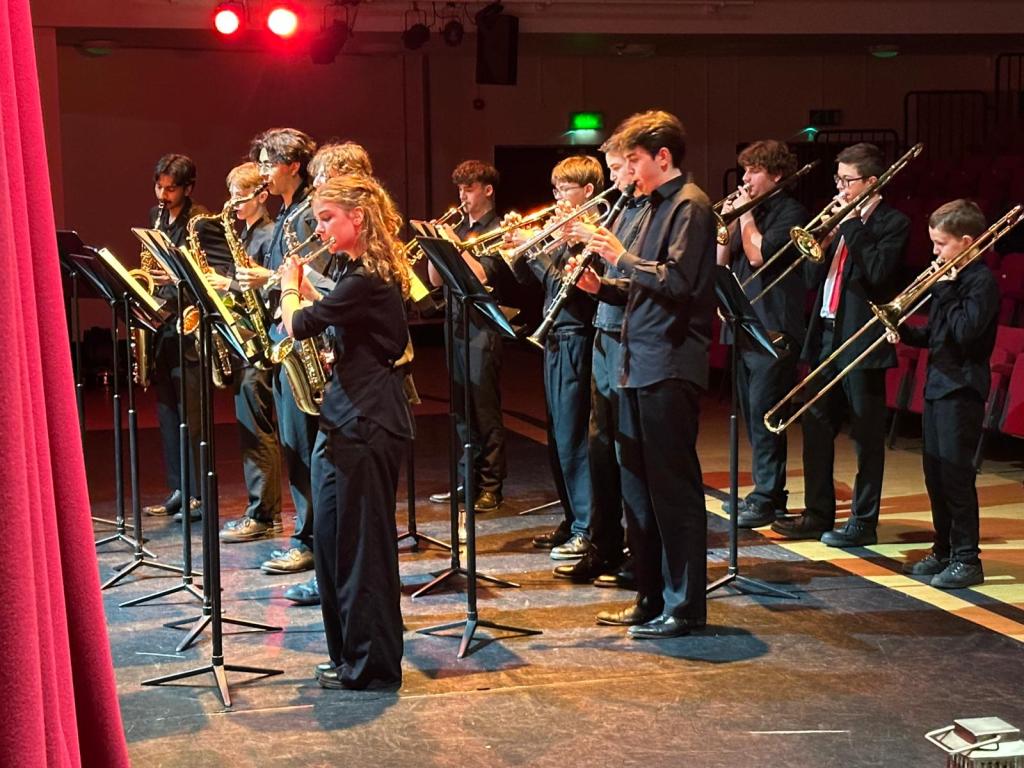
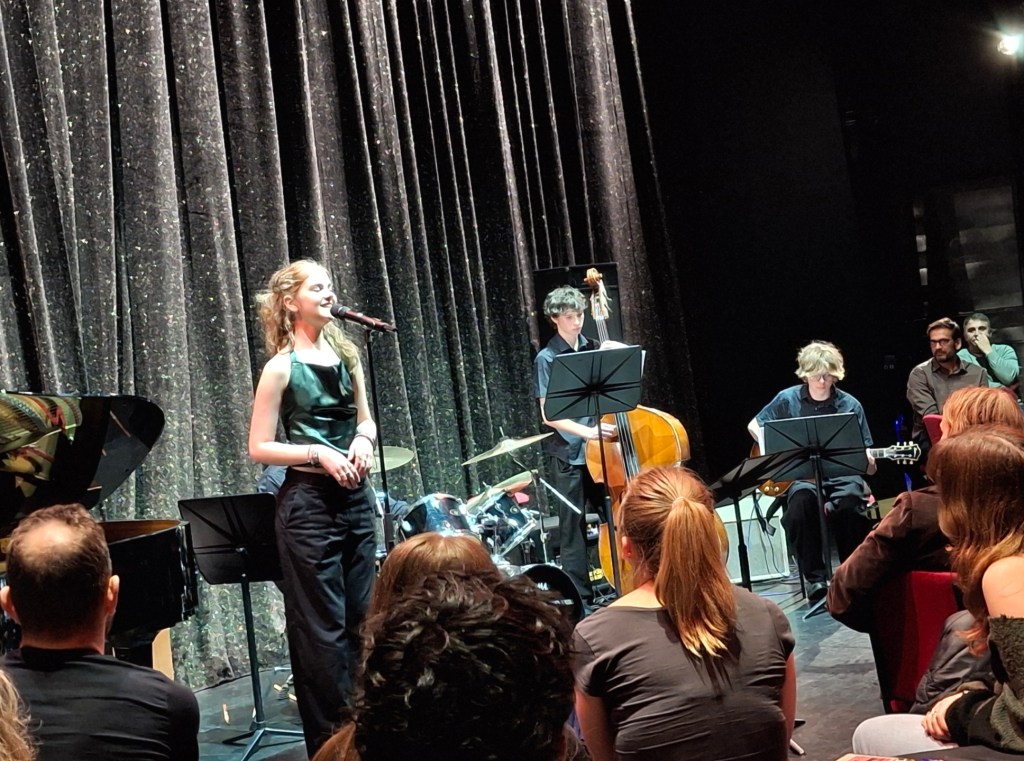
After that it was a visit to Langley Park Boys School for an ‘Evening of Jazz’ in which my granddaughter was playing flute in the big band numbers. The evening opened with a quintet featuring Sam on tenor sax who had guested with Soulstice last week at Off the Cuff. They were very good as were the big band that played a few standards. Then to my surprise after Soulstice lead singer Bea had sung Round Midnight, Trixi (Daisy) stepped up to the mic to sing Dream a Little Dream for Me. Her parents had failed to inform proud grandad that she was a featured soloist as well and she gave an emotional rendition of a fine thirties song imbuing Gus Kahn’s lyric with a real sense of longing. The whole evening was a further confirmation of the immense depth of talent that is produced when the arts in schools are properly respected and resourced. Soap box suspended for now!

Next to the Donmar for Anna Ziegler’s Evening all Afternoon – a tense two-hander with Anastasia Hille as Jennifer, a suspect new stepmother and Erin Kellyman, making her stage debut, as Delilah, the suspicious and resentful daughter. Both actors are superb – Hille is all internalised emotion, with staunch British values, stiff upper lip and sense of decorum, responding stoically to the taunts thrown at her. I really can’t believe that this was Kellyman’s stage debut – apparently she’s well-known on screen but not in shows I’ve seen. (I also note now that Erin will be in the TV show 2026 – the successor to the 2012 and W1A satires that lit up our screens with [presentation of wondrous, pretentious incompetence.)

Jennifer is a young, bolshie, opinionated half Brit, half Brooklyn tornado who rages at her mother’s early death and her father’s gall in replacing her. The play revealed many ideas of grief, loneliness, age differences, relationships and an eventual uneasy and tentative rapprochement. With some scenes of dialogue between the two characters and others where they address us the audience directly the revolve stage worked really well against a dark blue brooding set. Lots of food for thought in a dramatic short play.

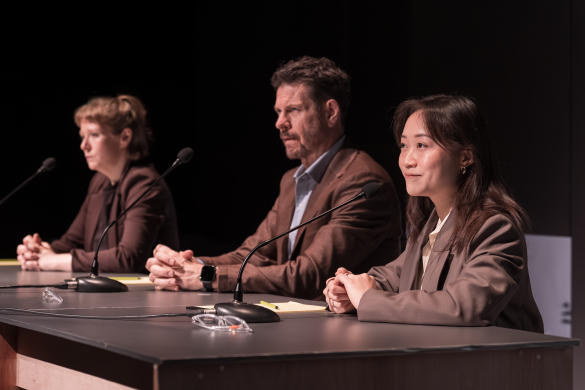
The next night at Hampstead downstairs we saw R.O.I. (Return on Investment) another short new play by Aaron Loeb which examined the releationship between creator and investor in the context of big pharma. Paul, Lloyd Owen, runs a venture capital fund with which he intends to change the world. His colleague May Lee, played by Millicent Wong, is on the hunt for a unicorn – a start up company with a $1billion valuation which will gain her a partnership and personal wealth. Along comes Willa, Letty Thomas, with a cure that will eradicate cancer from the entire world. I wondered if she was the real deal or another Elizabeth Holmes of Theranos ignominy – who did get a mention in the script. We were left to wonder throughout as the wonderdrug trials progress through successful initial stages into really murky territory to avoid scrutiny by the FDA. Add an affair between Paul and Willa, gaslighting May Lee, questionable views about ethnic types and a Congressional tribunal – there’s a whole lot going on in there, including a late appearance of The Woman (Sarah Lam) perhaps showing where May might be heading. It’s very sharp and witty in its dialogue and there are many moments of humour among the sad implication that power and money will always corrupt even the most well-meaning of souls.

Willa, (Letty Thomas) Paul (Lloyd Owen) and May (Millicent Wong) at the tribunal.

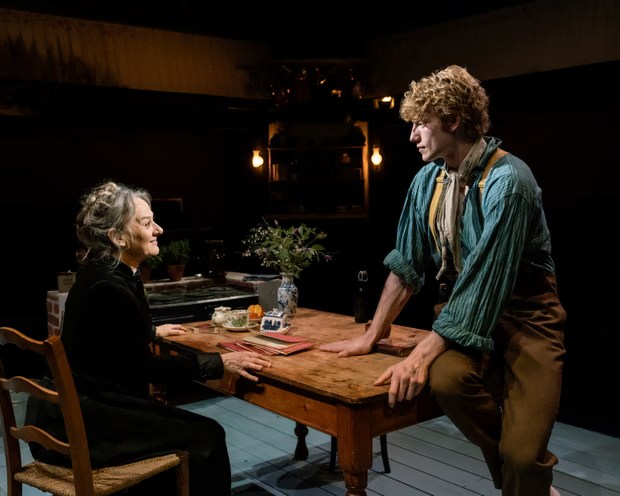
Next was a trip to Richmond for Vincent in Brixton which I missed at the NT in 2002 but this seems to be a time of revivals what with Teeth and Smiles and Copenhagen on the horizon. Nick Wright’s imagined revelations of van Gogh’s year in lodgings in Brixton, while working as an art dealer in Covent Garden, was a delight. The amazing Niamh Cusack led a cast in which three of the four were making their stage debuts – quite a week for debuts! It’s a quiet domestic piece in which we are treated to the kitchen odours of cooking on a working stove and later shared Niamh’s pride at her separation of egg yolk and white done in real time. It’s like a mystery story where you know the outcome but the characters don’t. Vincent was scathing about the work of fellow lodger Sam but we didn’t see any of his own work or sense his promise. He was a confused young man in a foreign country experiencing strong emotions and desire for the first time. Initially attracted to the daughter Eugenie, it was to landlady Ursula that we are led to believe he lost his virginity. It’s a play about grief, Ursula still in widow’s black, restless relationships and passion and everyday life gently unfolding in the Orange Tree’s intimate space.

Niamh Cusack as Ursula with Jeroen Frank Kales as Van Gogh. 
Photograph: Johan Persson/Orange Tree

The next day Fran invited me to join her for a technical rehearsal of Copenhagen at Hampstead Theatre. This time I had seen the original production of Michael Frayn’s play back in 1998. The staging was very similar with a sparse set with three chairs. At Hampstead there is the addition of a spectacular set back wall which I won’t describe so as not to spoil your gasps when you see it. It’s fascinating to see how lighting, sound and movement blocking subtly affect your understanding of what is taking place. Can’t wait to see the whole thing in a couple of weeks’ time. It’s a real festival of Michaels – Frayn, Blakemore the original director and Longhurst this revival.

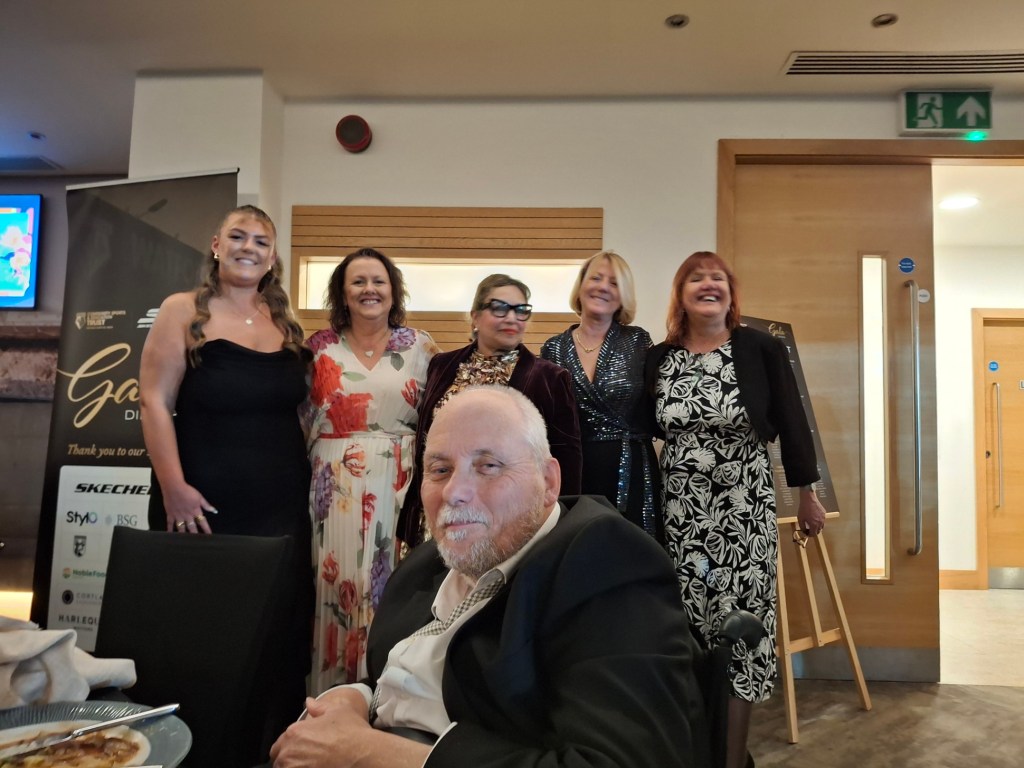
Thursday was the Watford Community Sports & Education Trust’s Annual Gala Dinner and so the usual suspects assemble at Vicarage Road for an evening celebrating what the charity has achieved against the gloom of the economy, through the dedication of staff and volunteers. It came as a pleasant surprise to me to discover that Frances’ sister Rose (second from right) has been asked to succeed Simon Macqueen as chair of the trustees. Well deserved for her energy and enthusiasm for the work it does. We all had a great time chatting to former and current players and meeting young people the Trust has helped over the years.

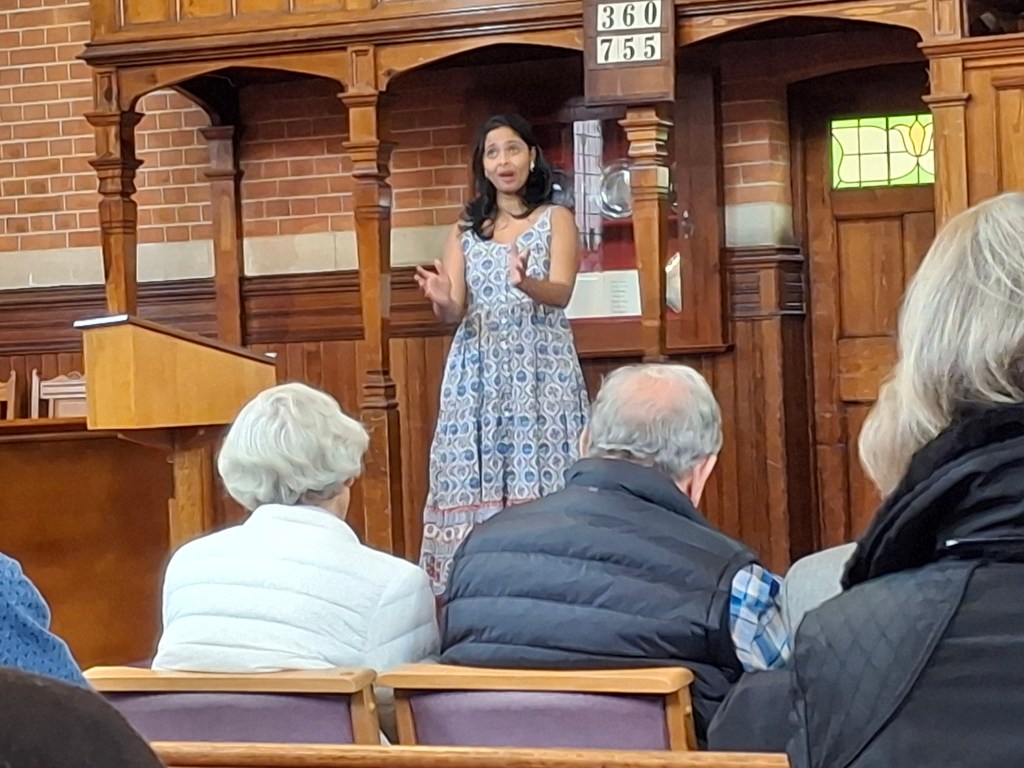
As it was a late finish, Rose had kindly invited Fran and me to stay with her and husband Mark in Bovingdon. This proved a great boon for me as I planned to catch my friend Kristina Ammatil giving a lecture/recital in Henley-on-Thames the next morning. So I set off for a pleasant drive through the Chilterns and made it in good time to hear Kristina discuss allegory in opera with the title: Love, Gods and Mortals. It was a well argued essay supported with slides and illustrated with excerpts from operas old and modern in Kristina’s powerful, melodic soprano accompanied by Jack Redman at the piano. She is particulary keen to perform contemporary repertory and introduced us to several pieces I didn’t know. I was very pleased to have the serendipitous chance to attend from nearby rather than making the trip from London.

I had a chance to chat with Kristina and her boyfriend Luka after the event for a catch up before dashing (I wish! Thanks M25.) back home to park and unpack the car and catch a train and bus to Shoreditch for a performance of Handel’s Tamerlano from which I’d heard excepts but never seen the whole of this great opera. Part of the annual London Handel Festival this was taking place in a completely new venue for me – the splendid Shoreditch Town Hall.

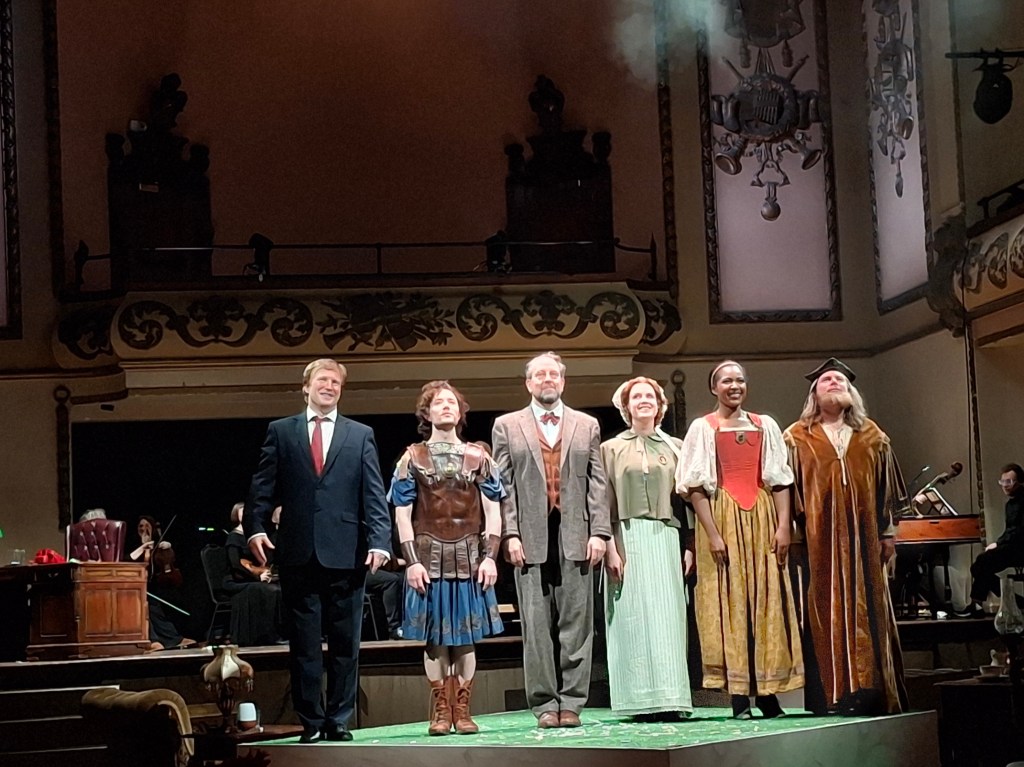
The orchestra under Laurence Cummings were superb and the production was delivered in a witty English language update of the original Italian. The design and concept led one to rename the opera Trumperlano since a blue suited, red tie wearing golfer Tamerlano, a Tartar emperor, tries to impose his will on the traditionally-costumed Turkish sultan Bajazet and grab his daughter Asteria who is in love with a Greek prince Andronico. It’s convoluted but hey it’s opera from 1724 and the London crowds loved it.

The year 1724 was a good one for Handel as he wrote Rodelinda and Giulio Cesare in the same year. I’ve now seen all three in the space of the last two years. They are all full of great tunes and high drama mixed in with a sense of humour which makes them very appealing. Certainly the Shoreditch audience loved the whole thing given the ovation the singers and players received at the end. A very varied musical day!

My last cultural outing of March also celebrated, by a weird coincidence, the year 1724 which just happened to be the date of Bach’s St John Passion which the OAE were performing in the Queen Elizabeth Hall. As a ‘friend’ I was also invited to attend the rehearsal with German conductor Johanna Soller making her debut appearance with the orchestra. She knows how to get asked back – she cut Sunday’s rehearsal by an hour – always goes down well with musicians! This rehearsal may have been brief but it was also fascinating. Ms Soller is clearly a producer as well as conductor, keyboard star and singer. She started by having the QEH staff move the rostra about so that the chorus formed a shallow horeshoe rather than a straight line; she moved soloists’ seats to better catch the hall’s lighting and during the course of the rehearsal frequently skipped off the stage, ran up the aisle to listen from the cheap seats and make sure we’d all get the best possible experience in the evening. She gave a number of notes and we could hear their immediate effect on volume, phrasing, pronunciation and diction. All very impressive but did it work?

Emphatically, yes! Her energy and dramatic timing made this one of the most operatic readings of the mass and that includes Peter Sellars’ staged version with Simon Rattle and the OAE in 2019. The orchestra have played both Bach passions many times but sounded fresh and engaged last night. The score is so melodic and dramatic – the build up to scene 33 “And behold, the curtain in the temple was torn in two pieces from top to bottom. And the earth shook, and the cliffs were rent, and the graves opened up, and many bodies of saints arose.” shook the entire hall. This is in contrast to the beautiful alto aria “Es ist vollbracht – It is finished” sung by the wonderful Helen Charlston continuing her long assoctaion with the OAE having been one of its early Rising Stars. All soloists were excellent James Way as the evangelist, Peter Edge – one of the current cohort of Rising Stars – as Christus, Hillary Cronin, Jonathan Hanley and then Tristan Hambelton as Pilate was outstanding in his empathetic reading as the representative of Roman law. Johanna Soller congratulated all areas of the orchestra in turn and selflessly stood to one side as the band and soloists took their bow, A fine debut and let’s see much more of her in the UK.

Culture vultures

So day two of our culture trip dawned with a pleasant buffet breakfast in Cafe Moer and then a twenty-five min ute walk through Vondelpark heading diagonally for the Van Gogh Museum which I’d sensibly prebooked for 11:30, which was of course 10:30 on our body clocks and quite early enough to start the serious part of the day. Vondelpark is a huge green space with lakes and ponds, cycleways and roads and some pedestrian paths but it was our first moment of realising just how profuse and dangerous cyclists are in this city. Add to their sheer numbers the fact that motorised vehicles like scooters and golf buggies also use the cyclepaths and you take your life in your hands every time you cross one. It’s also sometimes difficult to know which is the footpath and which the cycleway.

Vondelpark today and as I saw it with skaters in March 2018.

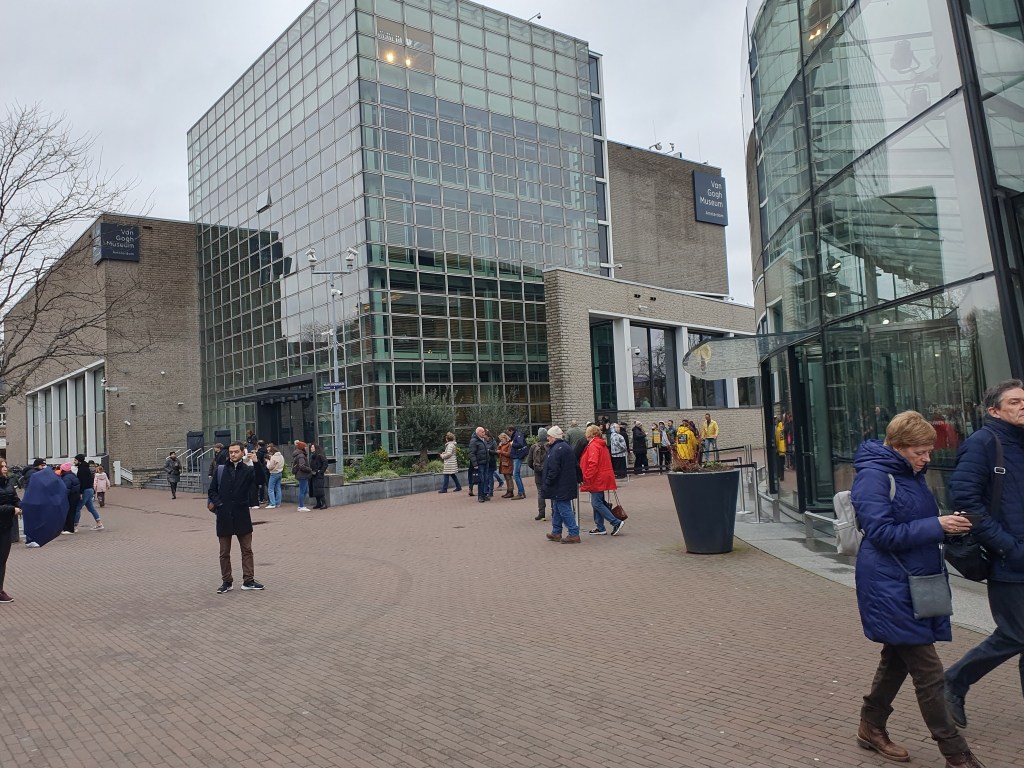
We arrived slightly early at the Van Gogh Museum to see a sign saying ‘Sold out for today’ so feeling very smug at having booked from the UK in advance, we strolled past the waiting line into the museum. It houses the biggest collection of Van Gogh’s works in the world. We had booked for the special exhibition Choosing Vincent. Portrait of a Family History which made it clear to us why this was the case. Vincent’s sister-in-law was married to Theo for less than two years before he died soon after Vincent. But Jo van Gogh-Bonger and later her son – also Vincent – were largely responsible for promoting Van Gogh’s reputation as a major artist and later establishing the museum which bears his name.

The Van Gogh Museum, Amsterdam. Circular entry lobby on the right and the manin collection on the left.

We had time to explore the main collection before and after visiting the fascinating family story which was elegantly curated by getting you to follow a timeline on the floor which led to information panels, personal objects, photographs and paintings. It was staggering to find that at periods of his life he turned out a painting a day. It was also interesting to see how his style varied continually – a carefully painted image with oils thinly applied one day and the next the fervent impastoed brush stokes we generally associate with him. It was then time to head of in search of lunch before the manin event – Vermeer at 14:30. My memory from five years ago failed us so we had quite a roundabout trek to Leidseplein where I remember there being lots of bars. I was shocked when we did get there that so many are now chain operations rather than the local bars I recalled. However we found a very pleasant bar-restaurant under the Casino called Grand Cafe Lido in tribute to its predecessor which had been a landmark in the area since 1937. We had a canalside table (indoors), good beer and food and lots of boating and bird activity on the Singel or Leidsegracht canal (not sure what it’s called at this point).

Our rather damp entry to the Vermeer exhibition at the Rijksmuseum.

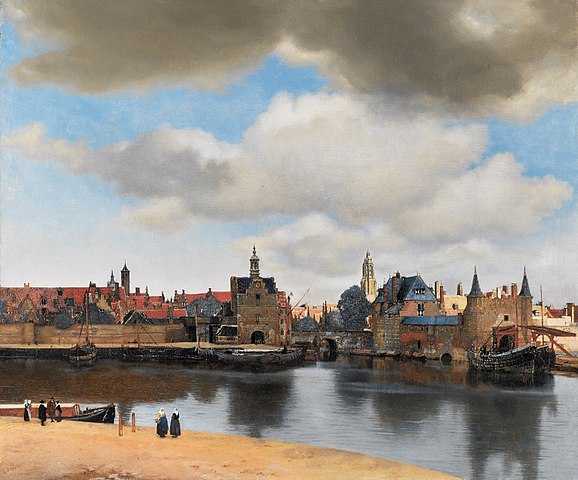
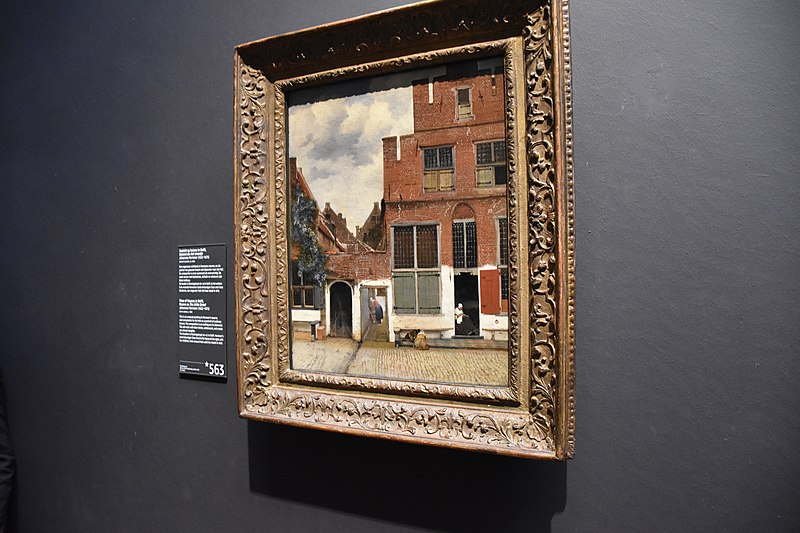
But it was well worth it. Again with prebooked tickets we breezed in deposited coats and bag and entered the intimate worlds created by Johannes Vermeer. Having said that, the first thing we see is a View of Delft and Little Street both of which are exterior views of aspects of life in the city. The degree of detail in the characters in each picture is remarkable. You can almost hear the conversations.

The whole exhibition just grew from this simple start. Paintings were elegantly displayed against the dark grey walls. Captions were clear and available from a QR code on my phone and the 28 paintinbgs were all well spaced so although the exhibition is a complete sell out you didn’t feel unduly crowded and had ample time to look at each painting. The most exciting innovation for us was the semicircular barrier at just below waist height around the majority of paintings which meant you could wait briefly for your turn to be one of the six people in the front line with an uninterrupted view. As we moved around it was fascinating to see how the same window, ther same model, the same yellow, fur-edged jacket, a globe and other props from his studio cropped up time and again. It seems that after that early blast of the outdoors he shut himself in his studio and just painted there. One aspect of his work I thought I knew was that subjects were always lit from the left. Quite a shock then to find three lit from the right: Girl with a red hat, Girl with a flute and The Lacemaker.

We took our time and wandered hither and yon, sometimes together sometimes not until we met up the the last room but as we prepared to leave we asked each other ‘Did you see her?” ‘No,’ was the response. We knew the Girl with the Pearl Earring was going back to its usual home the Maritshuis in the hague on 30 March but she should be here still. We retraced our steps, enquired of a guide and did get to admire perhaps, thanks to Tracy Chevalier, his most famous work. And very wonderful it is too. I have been reluctant of late to buy art exhibition catalogues but this was one I had to have and a fine exploration of his work it is. Reproductions of all the paintings but also lots of small detailed views to explore Vermeer’s technique. Many of the paintings were worked on for a lengthy period with evidence of recomposing them with overpainting revealed by x-ray analysis. Worth the trip to Amsterdam? Absolutely and there’s more to come.

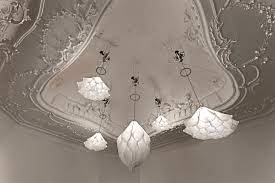
As we went down the stairs to the loos at the exit from the exhibition, I noticed white fluffy things whooshing down from ornately plastered ceiling. It was a great installation and from the information desk we managed to elicit that it was by Studio Drift. The web confirmed that it’s called Shylight and there’s a fascinating video of it on their website and on YouTube.

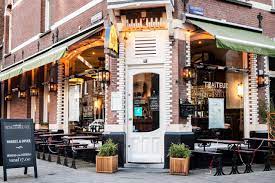
We now had a couple of hours to pass before gpoing to the Concertgebouw for a concert at 8.15 pm. As that would not finish until well after ten, we thought eating first might be a good idea. I remembered finding a great bar to the southwest of the concert hall so we set off in that general direction and happened across a very suitable place. It wasn’t the one I remembered from my last trip – I later discovered that Brasserie van Dam was just one block further west. However the Eetcafé Schotsheuvel did us very well. It was pretty empty when we arrived and we had a beer wondering whether to just have the one and move on before finally deciding to stay and eat. The staff were friendly and became increasingly busy as by the time we left to head back to our concert, the place was heaving with locals – always a good sign. Extremely tasty crab cakes and fries with garlic mayo and a substantial pork rib and a decent bottle of wine saw the time fly by and our decision to stay well justified.

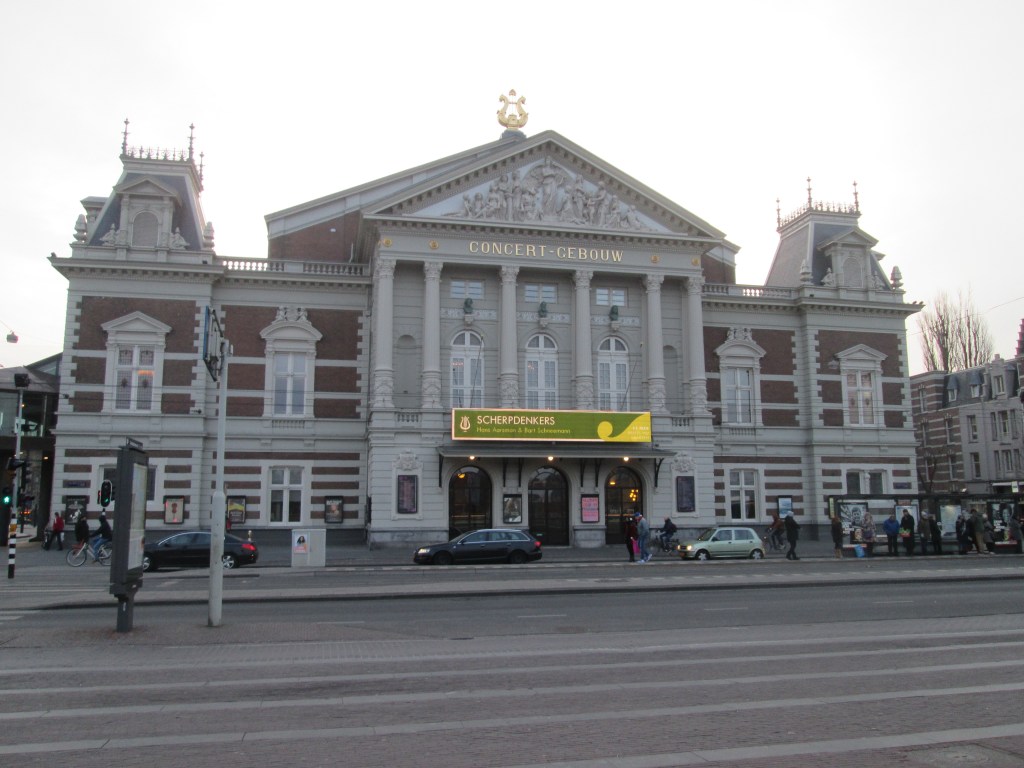
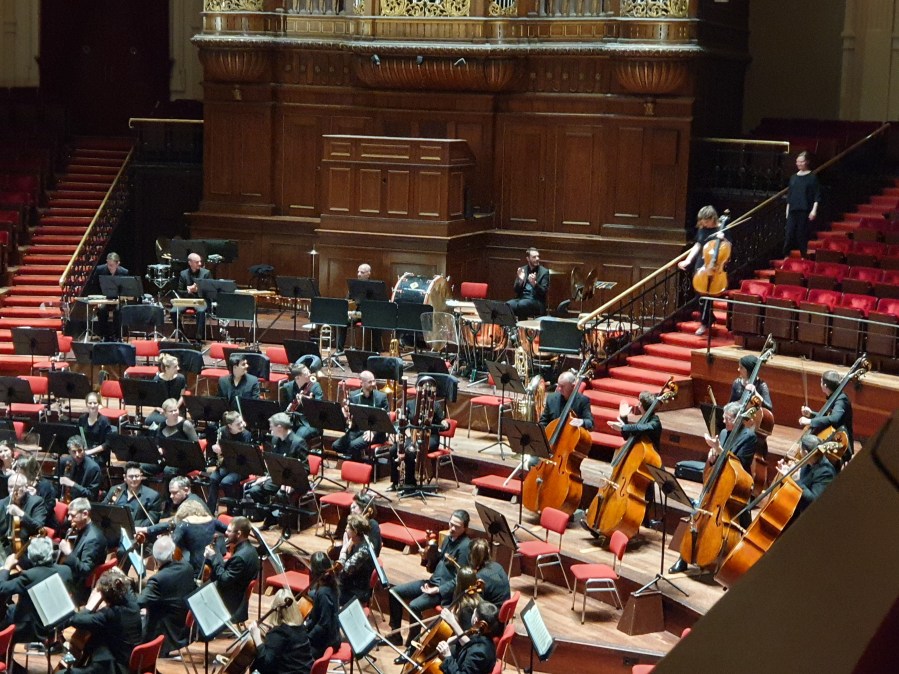
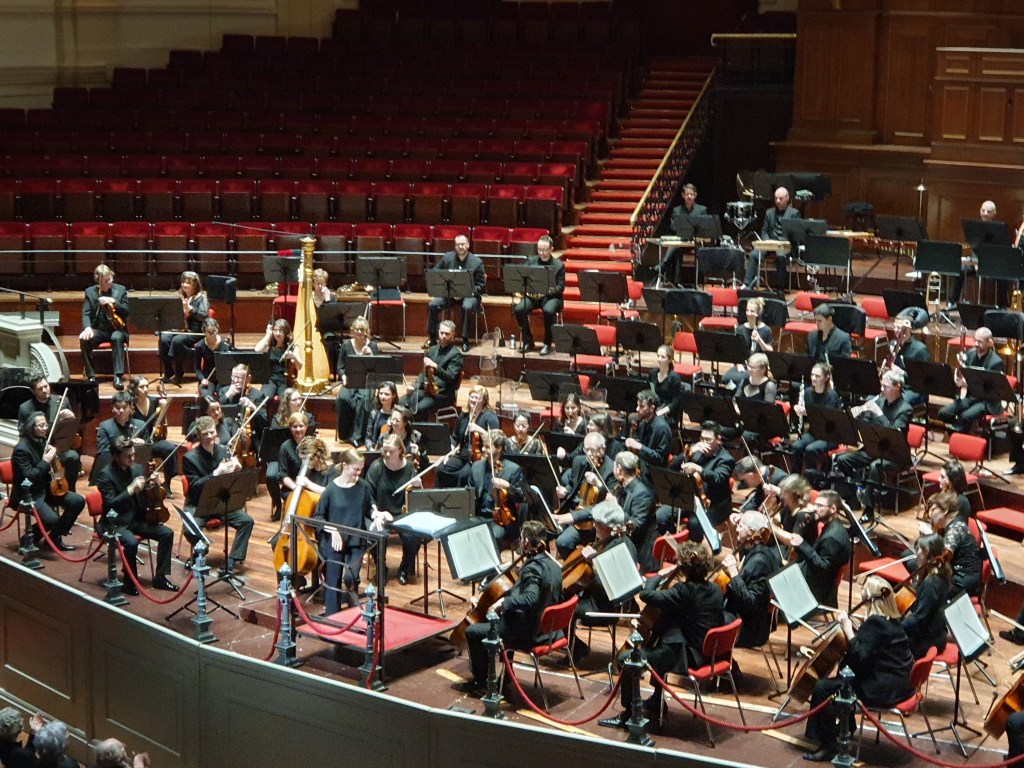
We make our way back to the Concertgebouw and settle into sided balcony seats with a good view of the stage. The concedrt is given by the City of Birmingham Symphony Orchestra which came to major international prominence under Simon Rattle who joined it in 1980 when he was just 25 and made it into a world renowned orchestra during his 18 years as music director. Tonight the baton is in the hands of the young Mirga Gražinytė-Tyla the Lithuanian conductor who became MD at the CBSO in 2016 at the age of 20. So what we were about to hear could be called ‘Simon Rattle’s Tyla-made Army’. Watford fans groan, others ask for an explanation in the comments!

Concert-Gebouw exterior with excellent gold harp on the roof

The concert started with a piece I’d never heard of by Mieczysław Weinberg who was described as Polish-Russian and died in 1996. It was his Sinfonietta No.1 and was a rousing big orchestra number with loads of percussion – a big night for the glockenspiel and tambourine man – vast swathes of brass interspersed with lyrical folk tunes in the strings. It was 20 enjoyable minutes and had something of a film score feel to it. This was followed by the Shostakovich cello concert played by Julia Hagen a rising star according to the Citizens of Beethoven who awarded her the Beethoven Ring for 2022 and others. When I read she plays a cello made in Cremona in 1684, I was fearful of a trip on the lengthy flight of stairs conductor and soloists must use to make a grand applause-filled entrance. It was very well done and conductor and soloist clearly had a strong rapport. At the interval we went out into the bar and picked up a glass of wine at no charge. As Fran pointed out, it means they can get through the interval drinks dispense much more quickly when they are not faffing about with payments. We sat with two Dutch gentlemen who inevitably asked how we were enjoying Brexit. ‘Not!’ was our emphatic reply. They smiled wryly.

The second part of the concert was Prokoviev’s suite from the ballet Romeo and Juliet. It’s a work I know and love and I don’t think I’ve heard it played better than under Grazintye-Tyla here in Amsterdam. So many earworms from the dance of the Montagues and Capulets to the plaintive tune for the young Juliet – I’m still humming it now. After massive rounds of standing ovations we left the hall and knowing our hotel was in a street called Overtoom we boarded – at my insistence – a tram that said it stopped at Overtoom. Only it stopped at the wrong end and Google maps said we were 20 minutes walk from the hotel. I now know that Overtoom is straight as a die for slightly over 1.5 kilometres. So we walked back to the Rijksmuseum and the tram stop at Leidseplein and took the correct tram this time which left us with a mere six minutes walk to the hotel. Moral – swot up on the tram map before you dash onto the first one you see. So an amazing day of varied culture came to an end with a rewarding last glass of wine to round it off.