The kids are alright …

So I get a glimpse of a possible future as we go to see Care at the Young Vic. It’s a harrowing watch, featuring life in a care home for elderly and dementia-affected people. Alexander Zeldin’s play and his own direction of it pull you right into the care home where the brilliant Joan played by Linda Bassett is convinced her daughter Lynn – Rosie Cavaliero – and her grandson have come to take her home.
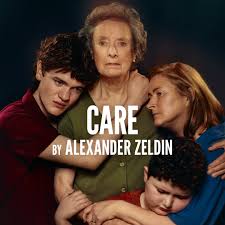
The confusion of dementia, the emptiness of the days, the loneliness while always being surrounded by others are all poignantly present in the script which has a few moments of humour and one of agonising pathos as one resident mistakes another for his late wife and they hug. As characters die off they join us in the auditorium enhancing the sense of our involvement. The final scenes are horrendously powerful and reinforced my support for the Assited Dying Bill – please get it through!

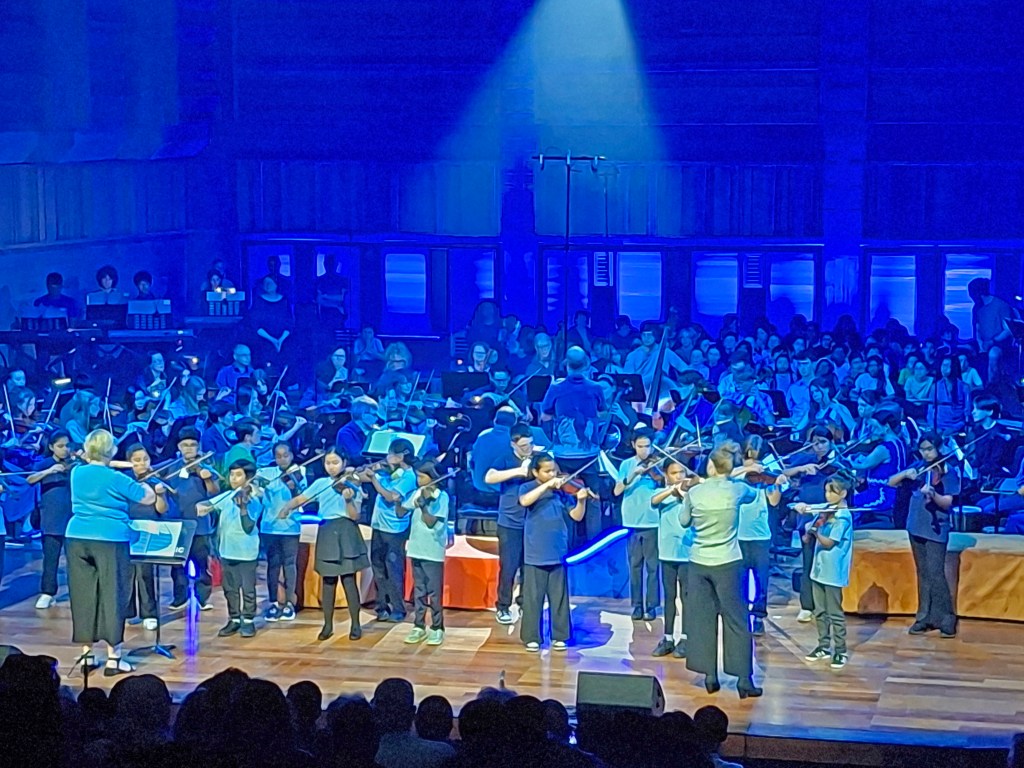
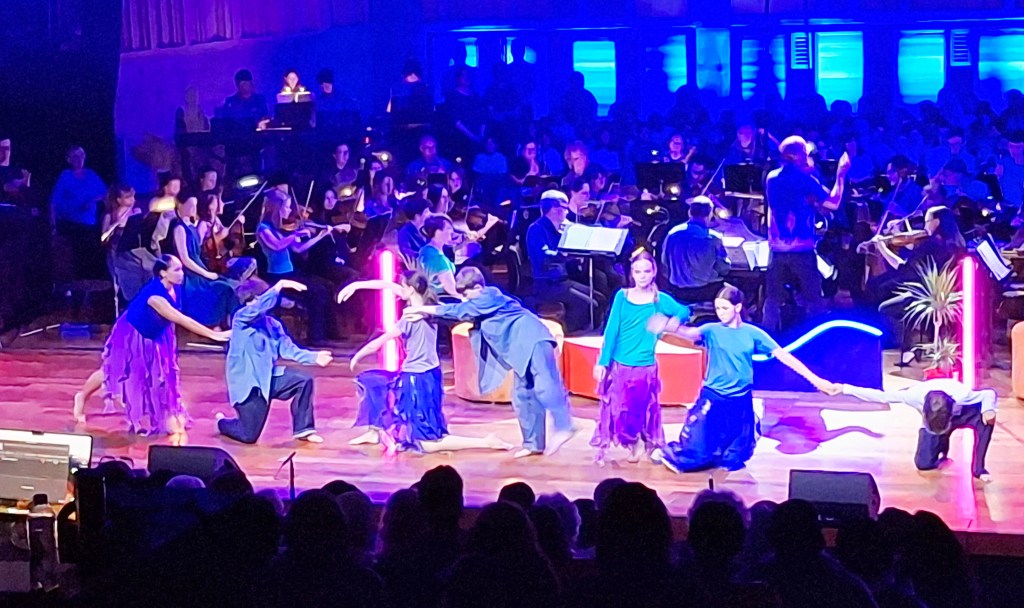
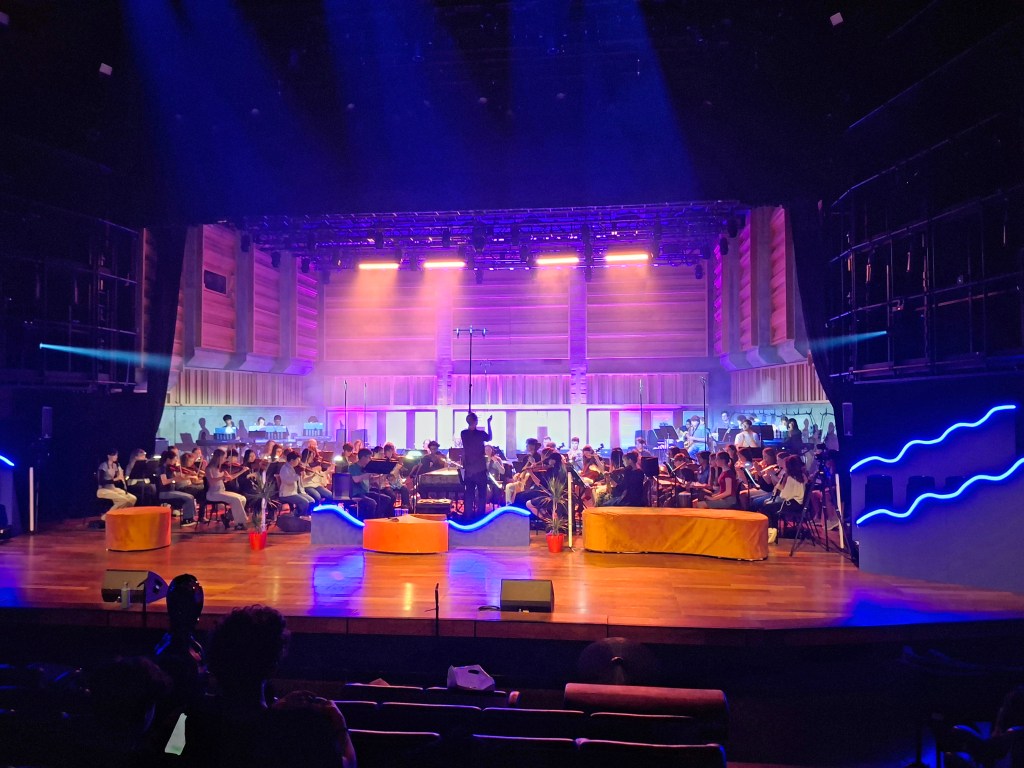
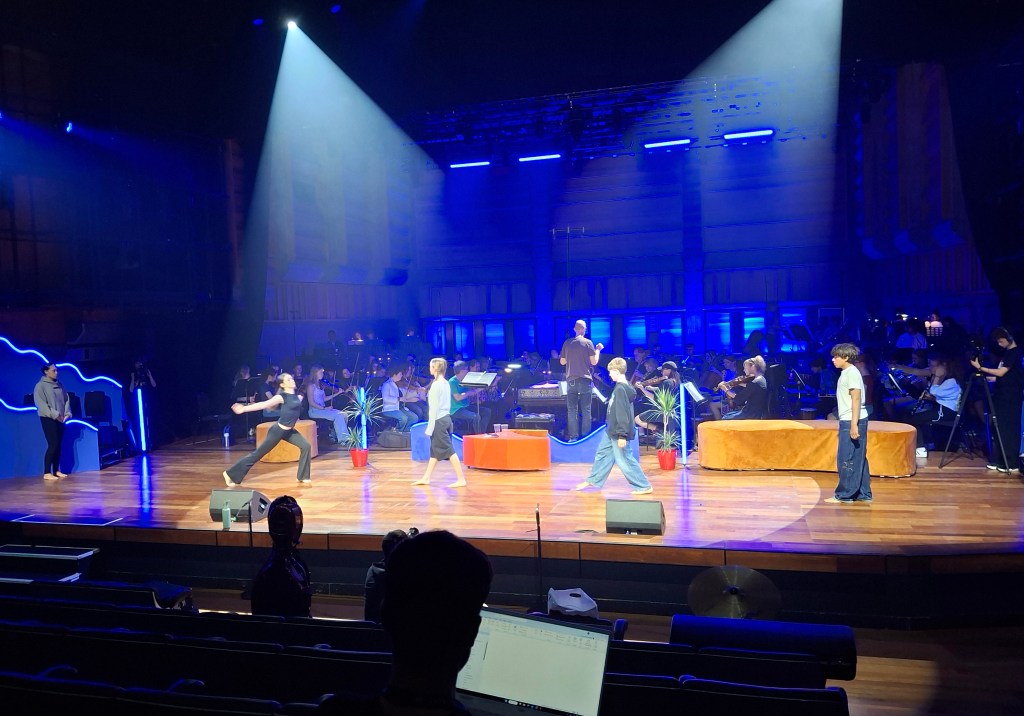
At the other end of the mortal scale, there were some 80 primary school students, 50 secondary students alongside the Orchestra of the Age of Enlightenment for its annual community opera Life of the Sea. I was invited as a friend to attend the rehearsal and had also booked for the show in the evening. Devised by Hazel Gould, it takes the form of a TV chat show with young performers as guests. These include young musicians and dancers, a rock band and string players in various stages of school who form the Fiddlers on the Reef. The final guest is an adventurer who had discovered a new island in the Pacific Ocean. This of course transpires to be the vast area of accumulated plastics which we dump all the time and subtly delivered ecological messages are delivered. Given the maritime theme there was Purcell and Handel mixed with sea shanties and sequences written by James Redwood – a regular collaborator alongside writer Hazel with OAE’s Education Director Cherry Forbes. I’d really like all politicians who support cuts to the arts to be made to come and see shows like this as the depth of talent on show, the confidence-building association with professional actors and musicians and the sheer joy of artictic collaboration need to be appreciated by those holding the purse strings. A big thank you to all the kind people who donated time and money to ensure that activities like this can so enhance young peoples’ lives. With adequate resources and places to gather the kids are alright.
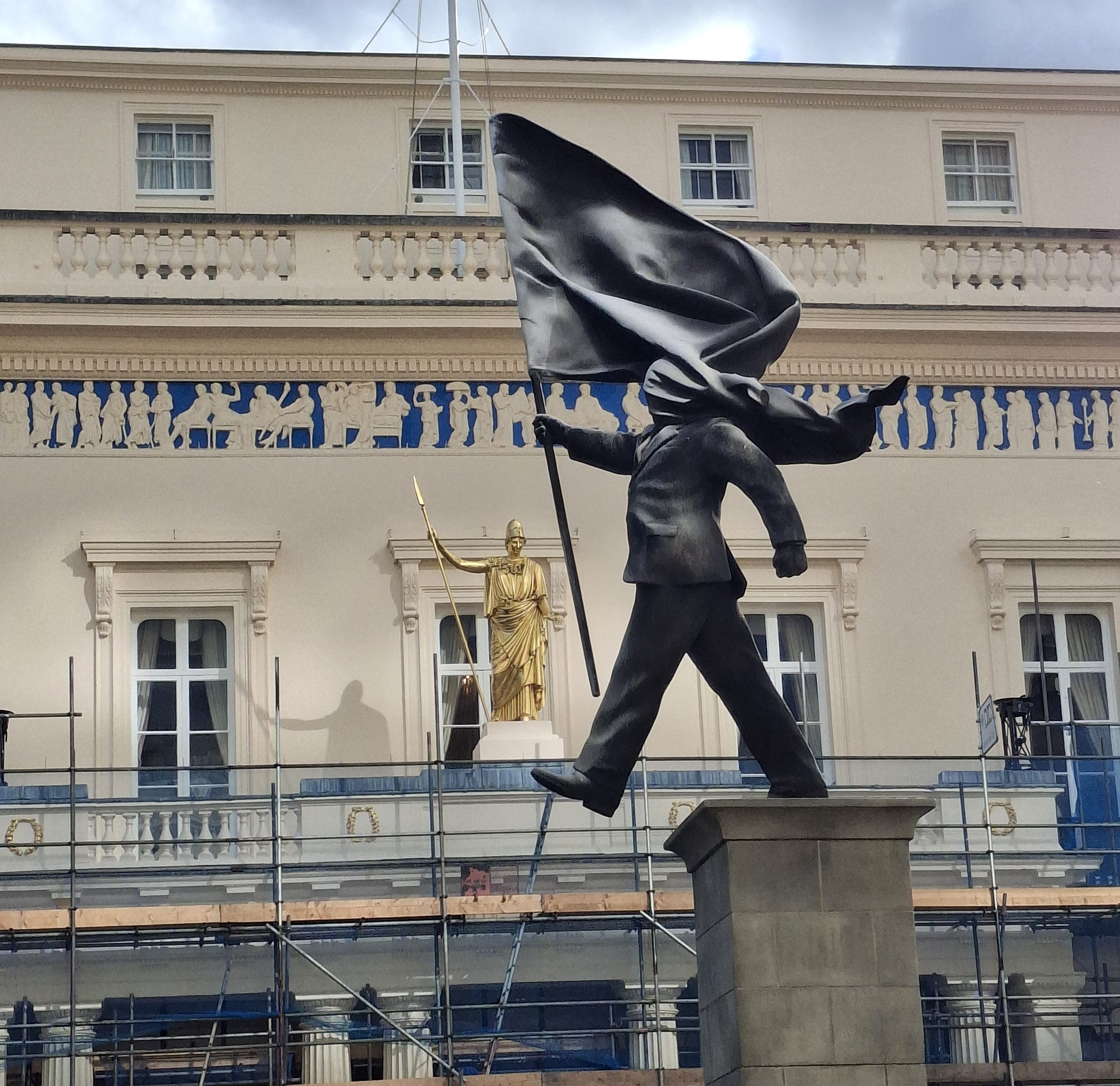
Next up were a couple of dining outings – the City Orns first Thursday meeting was small with just Fran, Richard and me at Fish! in Borough Market. On the way (ish) I popped into Yoshino to pick up my next supply of gyokuro from Lisa and had the opportunity to admire Bansky’s brilliant installation in Waterloo Place. How they did it is miraculous and I like this shot with the gilded statue representing the pinnacle of the establishment on the Atheneum Club in the background – shame they couldn’t clear the scaffolding away for me.
During dinner Richard – Surrey cricket member asked if I’d like to go to see Hampshire – my team – at the Oval on Monday. I said that would be lovely and should we go on afterwards to see Glengarry Glenross at the Old Vic after the match. Tickets booked and a pleasant evening ensued with a nightcap in Brindisa Tapas round the corner. Friday lunch at the Union Club – very non-establishment with friends Dede, Yvonne and Gwyn has been known to go on until rather late. Indeed as we left at six, there was an “Are you still here?” enquiry from reception. We had been enjoying their lovely roof terrace so away from the main areas. This was a very responsible visit for us – we must be getting old.

The Oval visit was a washout – Richard never made it at all and I saw 18 overs of cricket amid the rain delays. The weather ensured that the game ended as a draw which I’ll take as this has not been a great start to Hampshire’s season. I met Richard in the backstage bar at the Old Vic and then we went to see Glengarry Glenross. I had seen a version at the NT in 1983 and at the Playhouse in 2017. I like the play for its rapid fire dialogue among unscrupulous estate agents vying for a prize Cadillac, a set of steak knives or the sack depending on their position on the monthly deal closures board. For this revival director Patrick Marber had chosen to go with an all female cast with Indira Varma and Rosa Salazar as the leads.
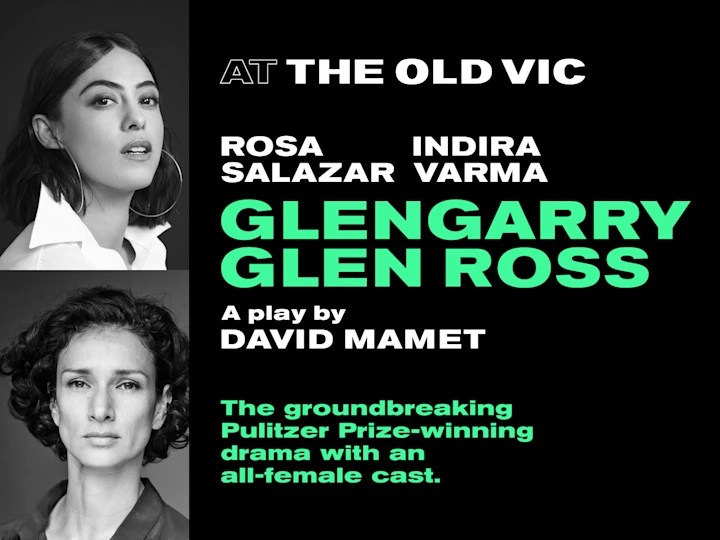
I found it initially odd that they didn’t change the characters’ genders but followed the text to the letter. Soon it didn’t matter as the drama of backstabbing, conning and horsetrading, burglary and deceit just took over as it had before. It was done in the round as is all of this Old Vic season and it worked well in the office scene but the opening in the Chinese restaurant was a bit sketchy with a couple of hanging lanterns suggesting the space. It occasionally got a bit shouty but in all it was another very enjoyable encounter with a very fine play.

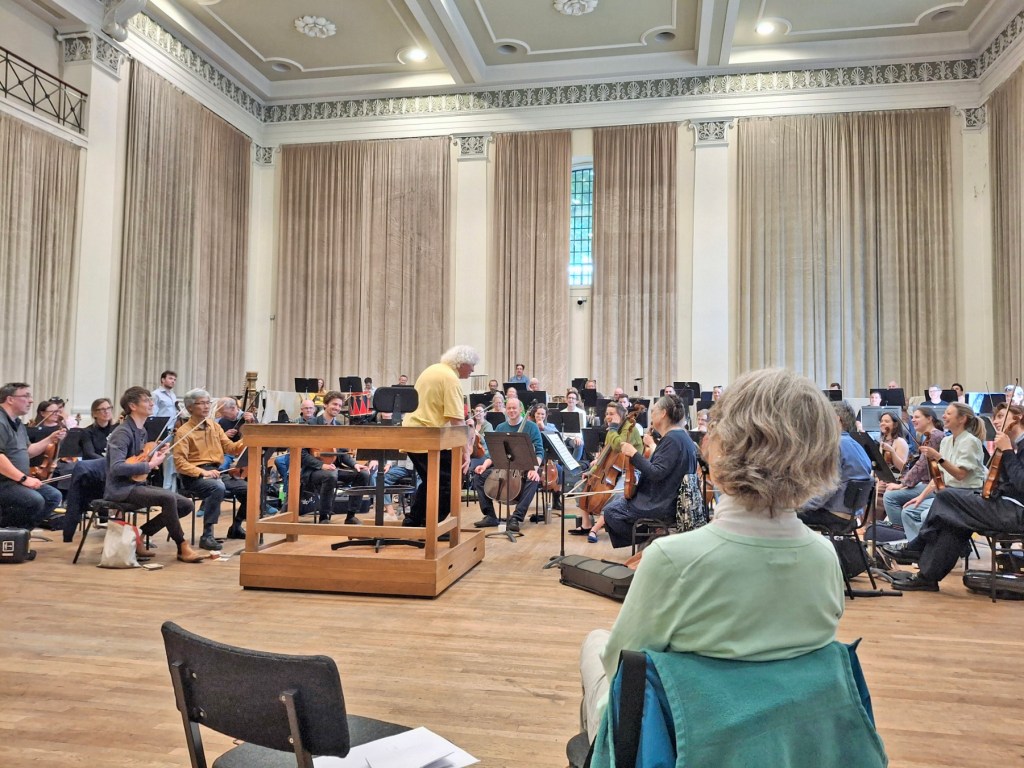
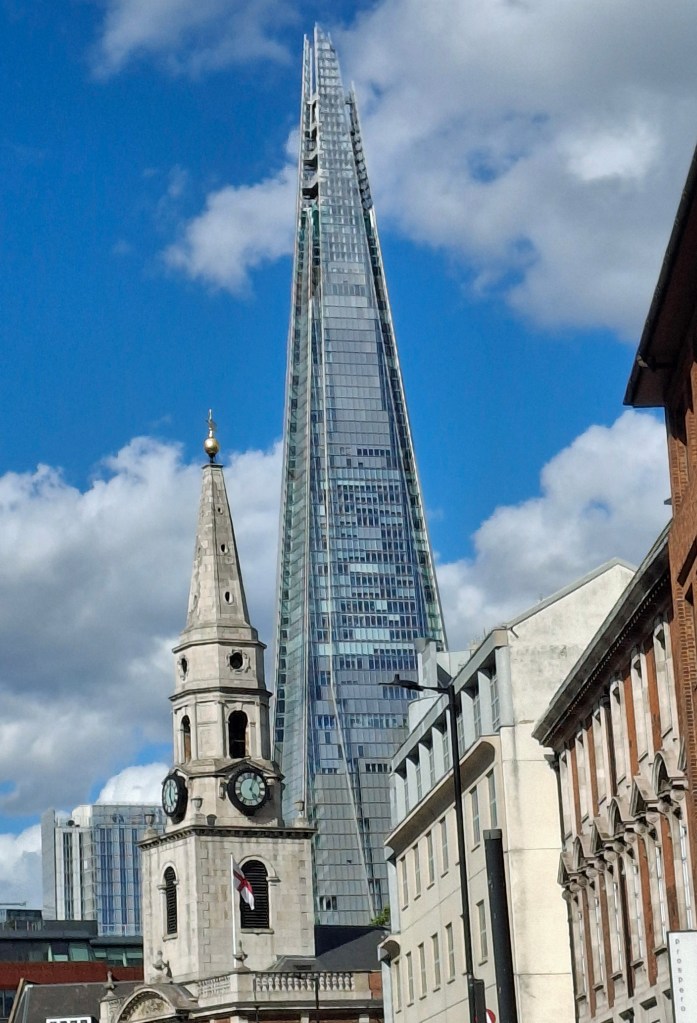
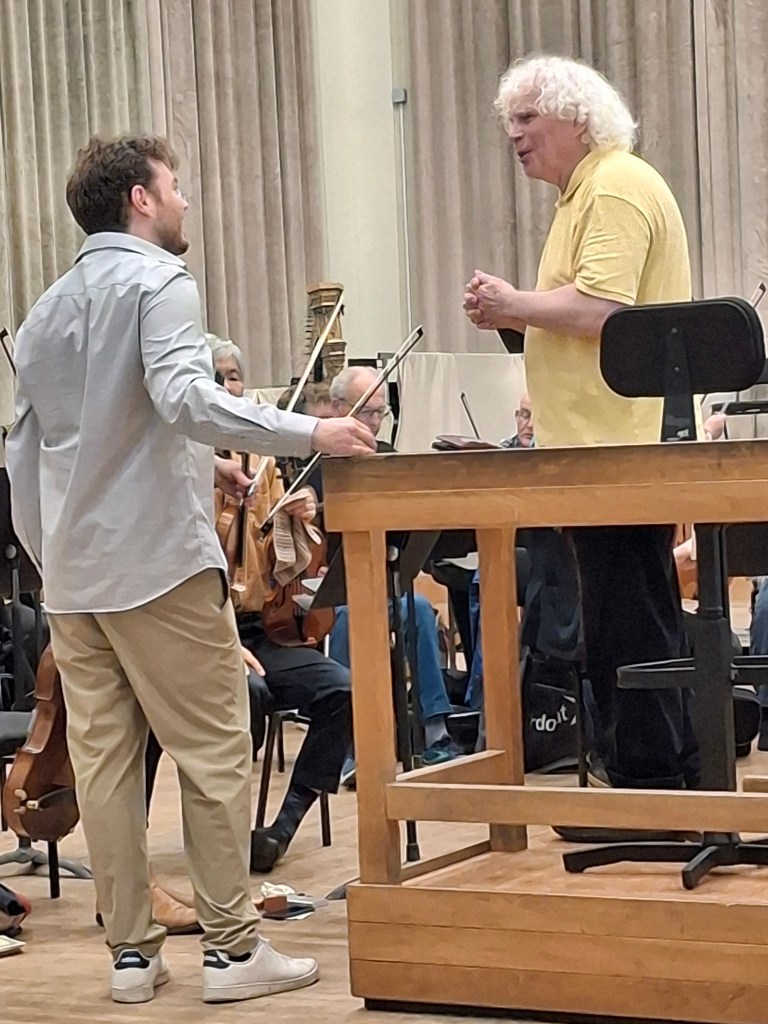
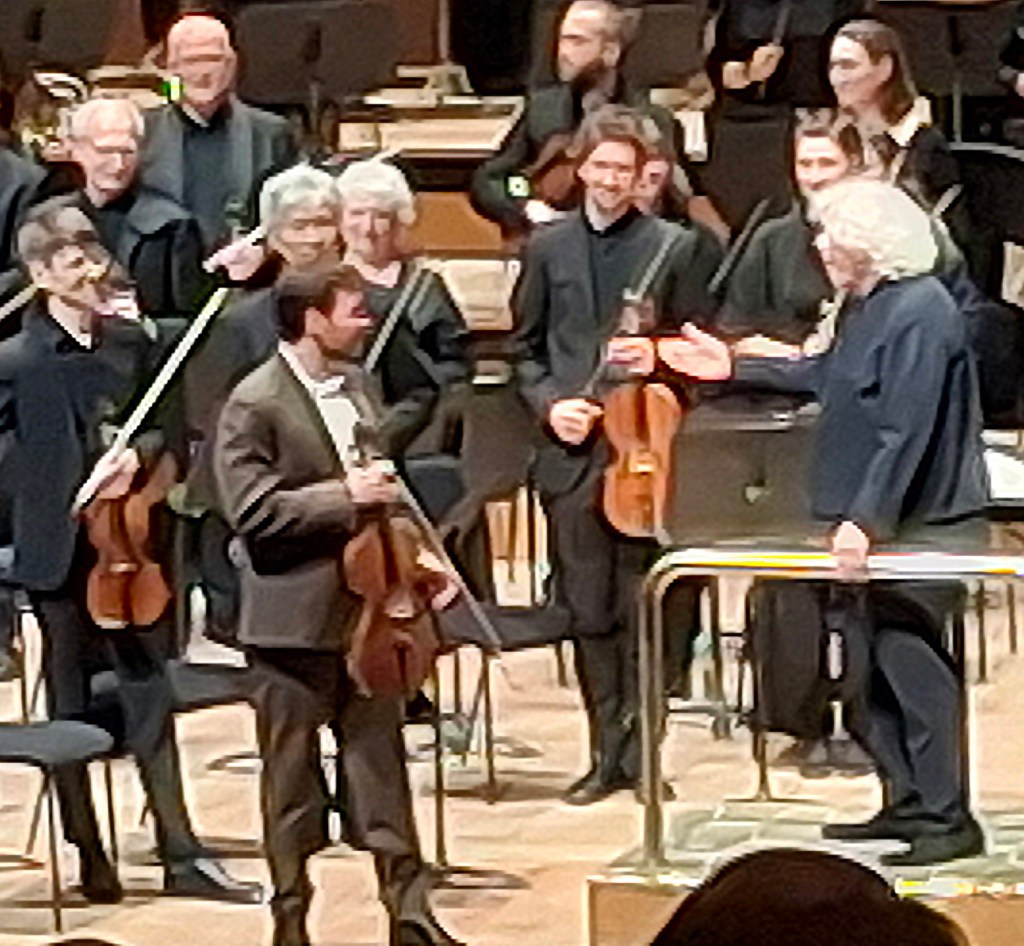
The next day I was at another rehearsal with the OAE – this time a very special one. Sir Simon Rattle had been one of the earliest supporters of the orchestra back in 1986 and when invited back to play in the 40th anniverary season he accepted immediately and elected to play two Berlioz works – the well-known Symphonie Fantastique and the equally brilliant but less performed Harold in Italy. The rehearsal took place in the Henry Wood Hall – previously Trinity Church until the 1960s and now a favourite space for several orchestras on account of its brilliant accoustic. They were working on Harold in Italy while I was there with the viola soloist Timothy Ridout walking around the space visiting various sections of the orchestra as he played the featured viola parts. It was fascinating to hear the interchange between various members and the conductor about stress and pace, intensity and melody. It seems all conductors demonstrate their wishes through dum de dah vocalisation – most mellifluous! On the way back I was struck by the juxtaposition of the spire of Dickens’ church St George the Martyr from 1122 and the Shard from 2012 both fine pieces of architecture gracing the area 900 years apart.
At a pre-concert talk some of the players shared their delight about playing not just ‘historically informed’ but actually on period instruments. For the baroque and classical periods they have to use excellently crafted copies of period instruments since the real ones would have disintegrated. Tonight they were playing on instruments made at the time Berlioz was writing in 1830. Their excitment was palpable.The concert itself was a huge success. In the first part with Harold in Italy Timothy Ridout with his viola approached the stage from the auditorium, as in rehearsal visited most sections of the orchestra and concluded the piece from a box. He gave a sensitive performance with clear tone and wonderful variations to match the mood of Harold’s adventures through the Italian landscape. The Symphonie Fantastique was a revelation with such clarity from the period instruments and varied dynamics in Simon Rattle’s energetic direction. The talk had suggested things to look out for and it did enhance the experience. Brilliant music performed by expert musicians conducted by a genius they are pleased to call a friend of the OAE.
Focusing on events in the Iran-Iraq war of the 1980s Under the shadow at the Almeida is an all too timely reminder of the effects of repressive regimes on women and of life under war conditions. With her husband off at the front, Shideh, played wonderfully by Leila Farzad, is left in her Tehran apartment with her daughter and possibly a malevolent spirit or djinn. Forbidden from continuing her studies to be a doctor because of prior political activism, Shideh is frustrated by her enforced domesticity and becomes increasingly disturbed by physical and psychological damage.
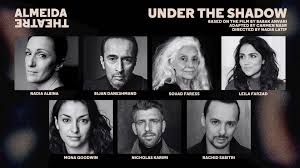
Adapted from  Babak Anvari’s 2016 horror film which I had not seen, it was a thought-provoking evening with some very dramatic effects and some fine performances. Especially affecting were the rush to the air raid shelter where all the cast gather below the front of the stage and discuss their fears. And there’s one amazing coup de theatre which I won’t spoil.

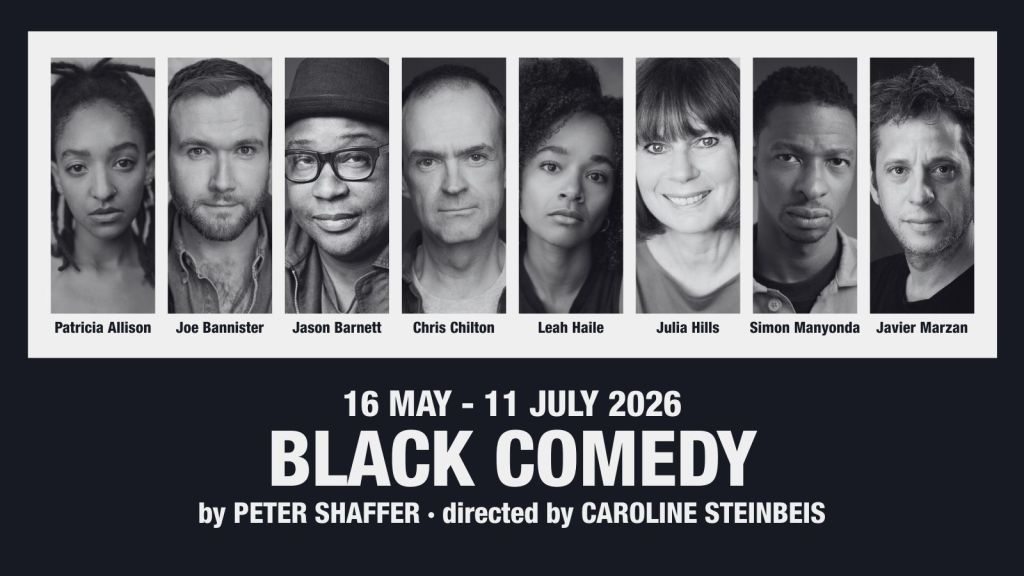
The next outing was of a rather different nature. As a patron of the Orange tree Theatre in Richmond, Frances was invited to a sponsors’ dinner in the neighbouring Italian before a performance of Peter Shaffer’s Black Comedy. The meal was tasty and enlivened with theatre chat from various guests. The play is a hilarious farce. What a contrast to the psychological thriller that was Equus! In a brilliant piece of staging alternate scenes are set in pitch blackness representing times when the room was lit and bright lighting when powercuts had reduced the room to darkness. The actors coped brilliantly with this trope delivering witty lines in the dark and bumping into each other in the light. The central plot of a sculptor ‘borrowing’ a neighbour’s furniture to impress a dealer provided lots of fun and some snappy characterisation.
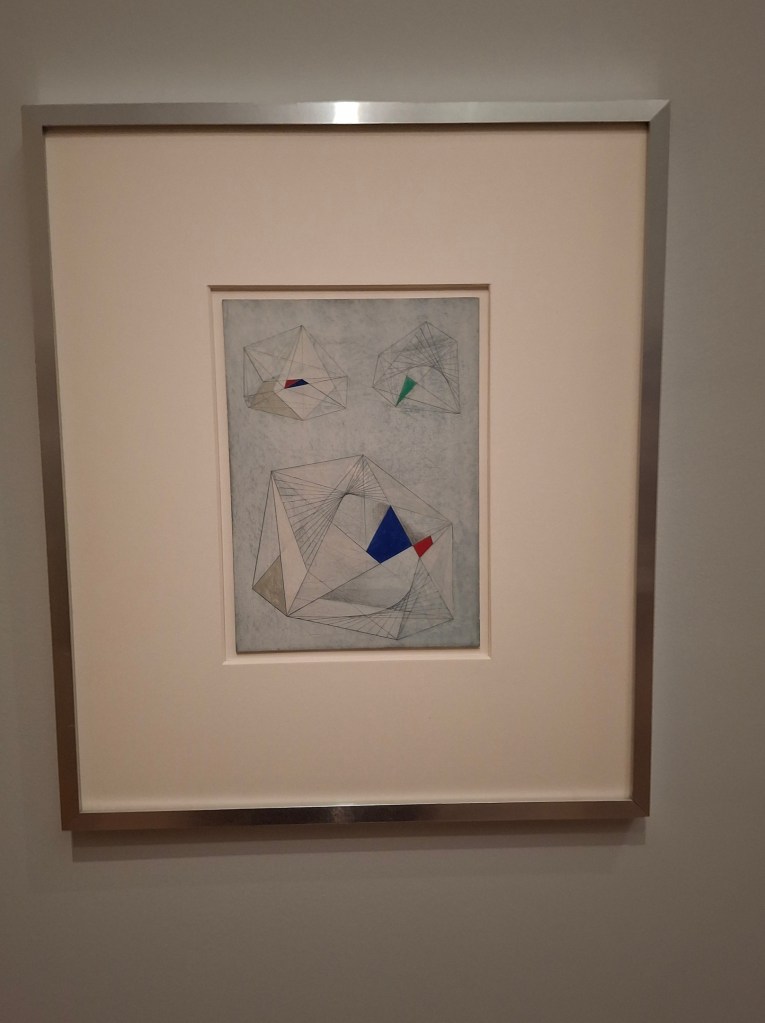
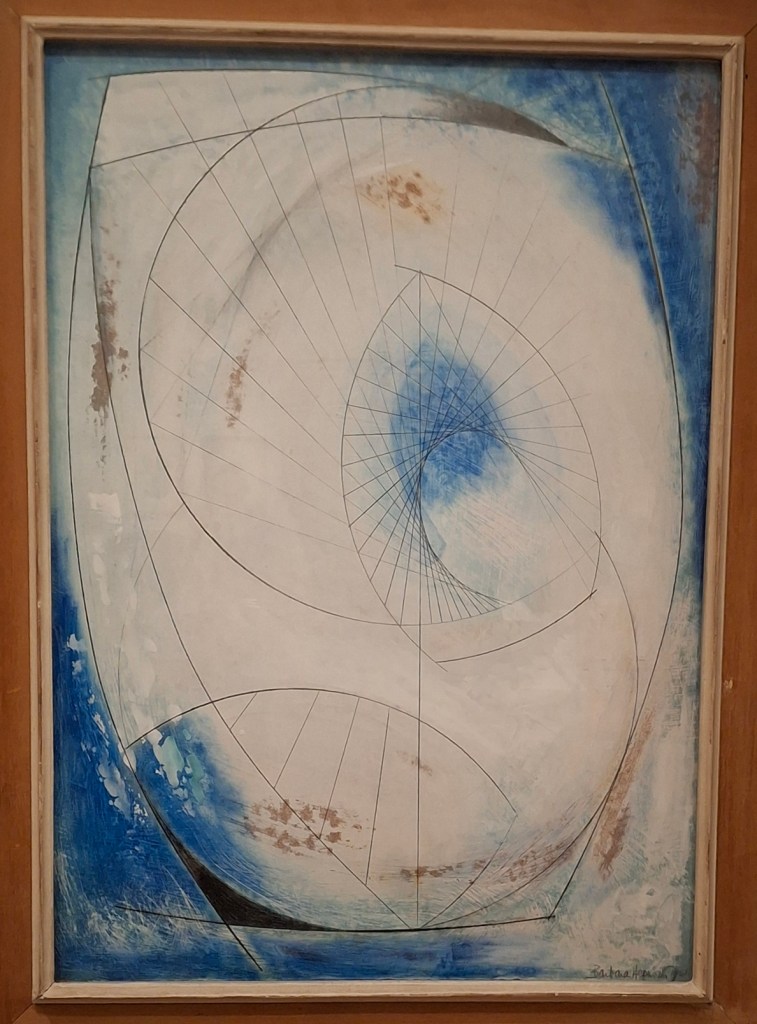
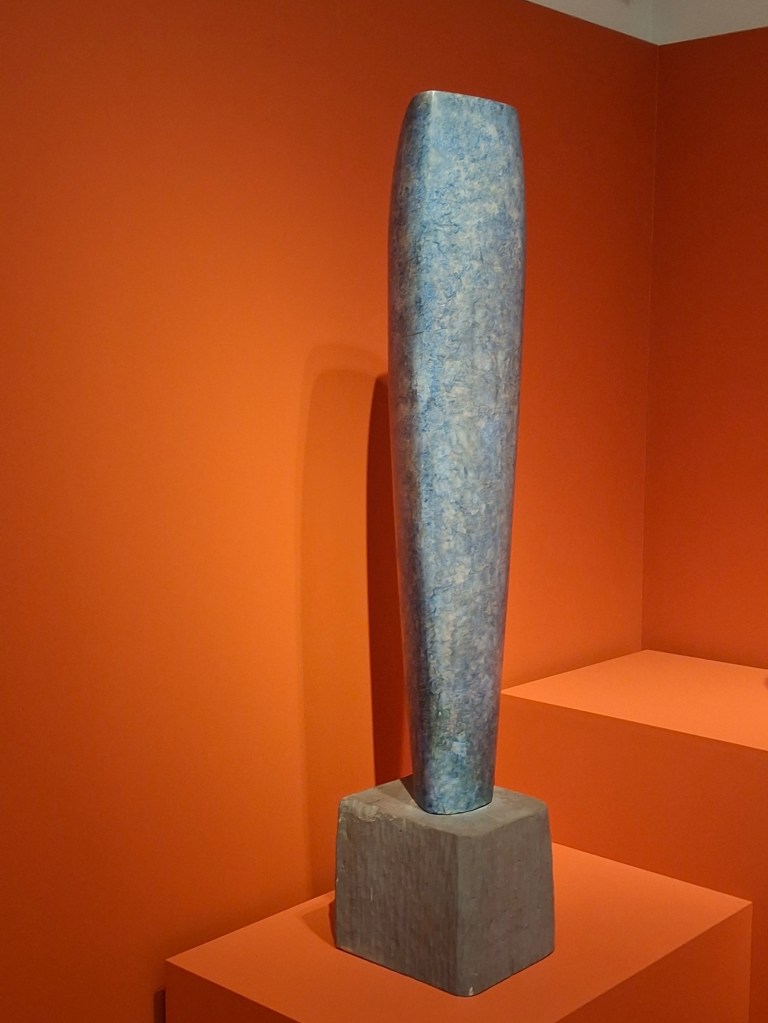
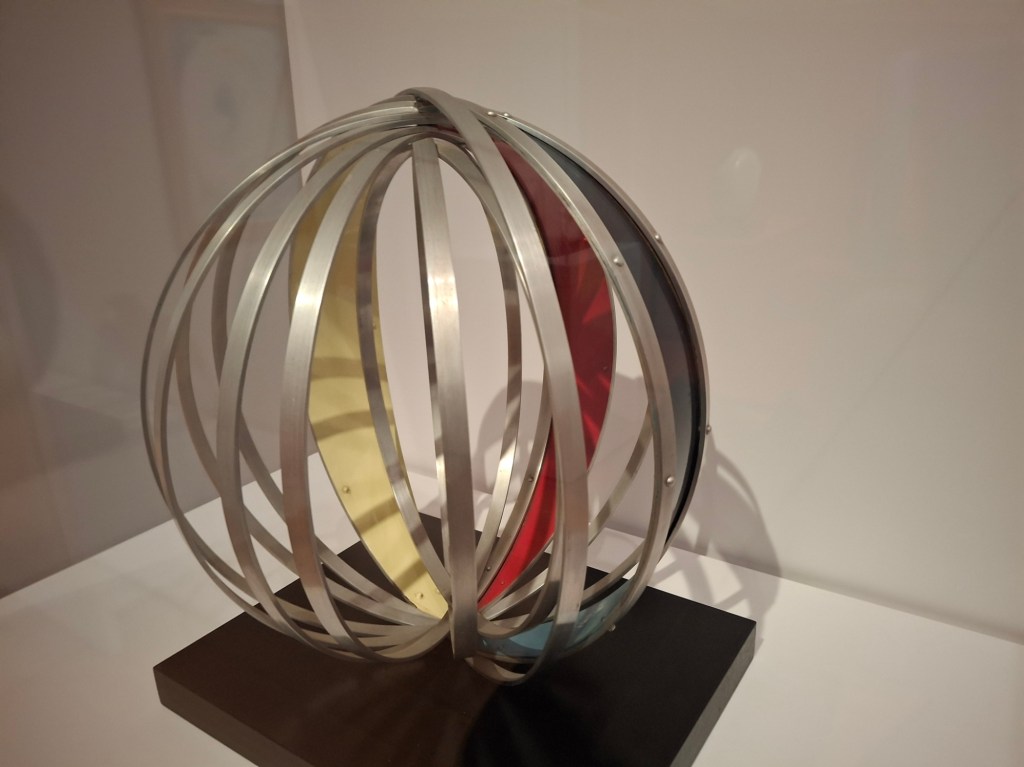
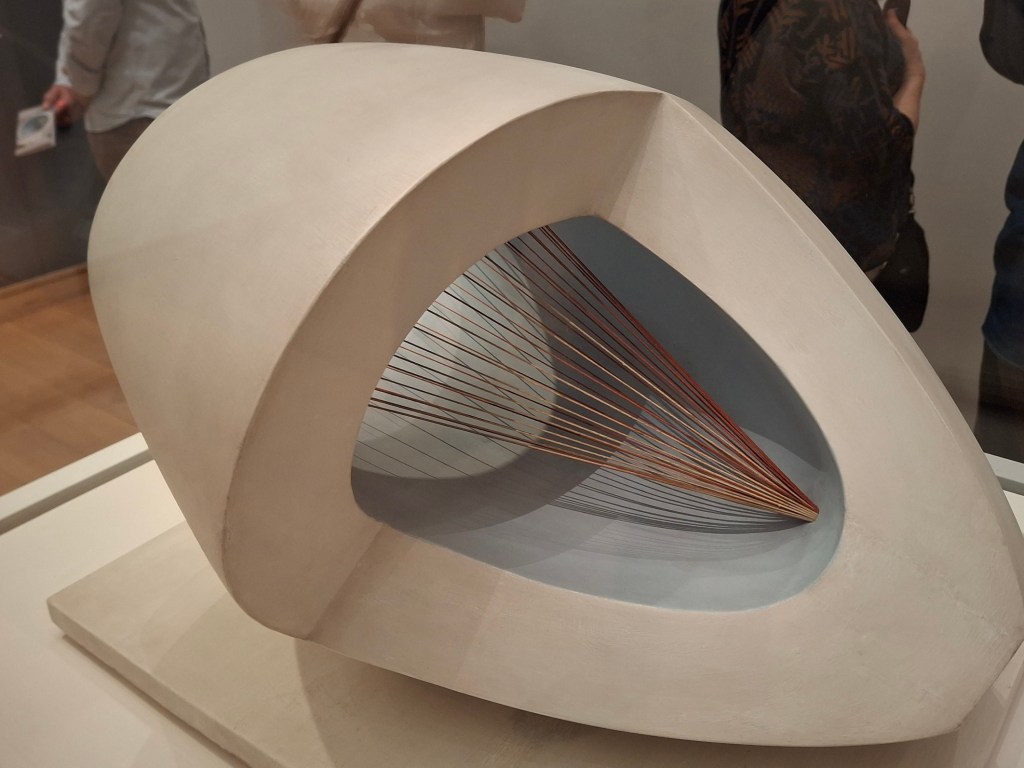
The Courtauld Gallery has an exhibition of Hepworth in Colour. A few years back I had enjoyed a visit to the eponymous gallery in Wakefield. Some of the works displayed in London were on loan from there but, shown in a different contex, took on a new resonance. A number of sculptural works were surrounded by lots of drawings and sketches which I was not familiar with and they gave insights into her approach to colour. In one sphere with panels in yellow, red and black she displayed a surprising side of her as a Watford fan! More common were the pale blues of the sea in Cornwall where she lived most of her life and some elegant painted columns and forms in painted plaster and bronze.
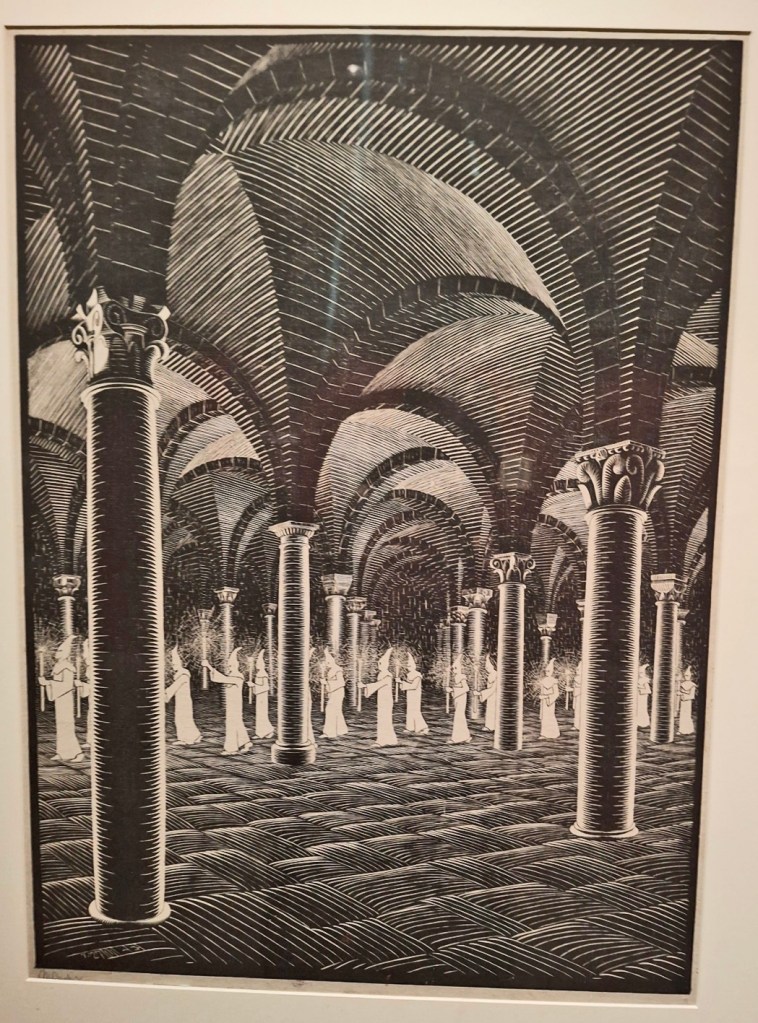
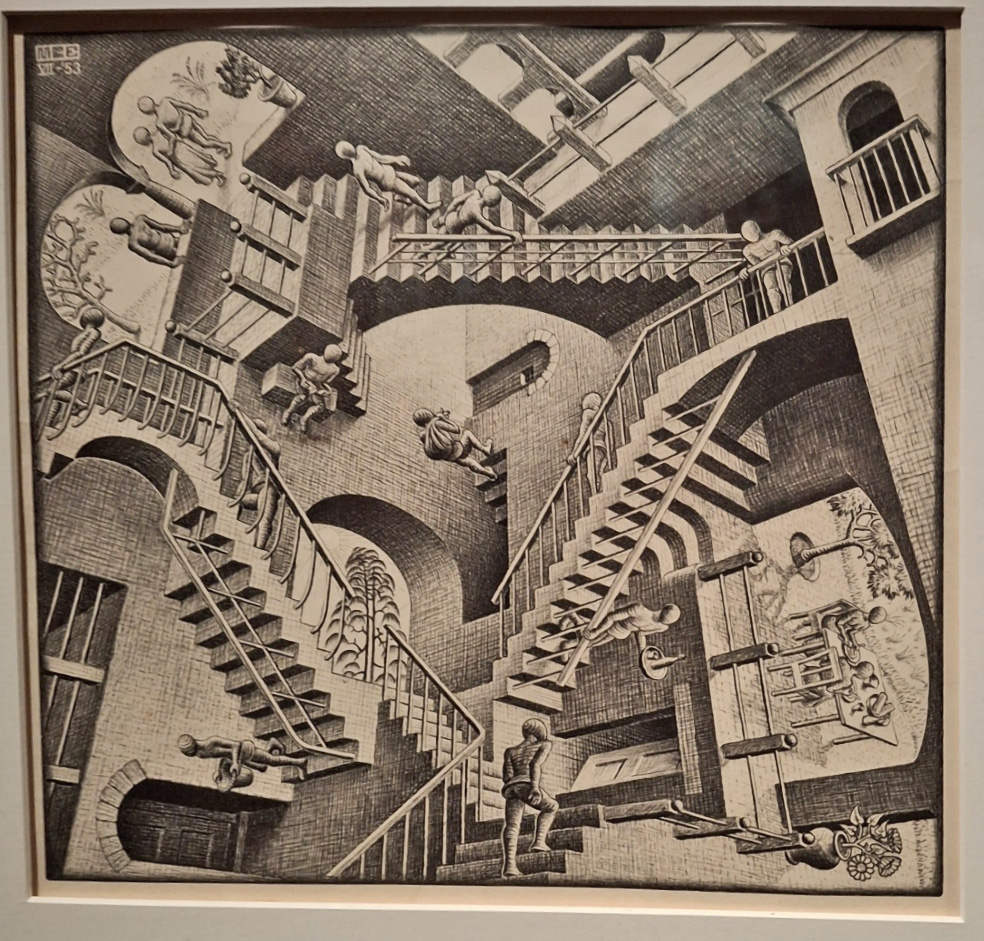
Just across the courtyard of Somerset House is the blockbuster exhibition of M C Escher, the first comprehensive showing of his work in the UK. I thought I’d better go while I was here. And comprehensive it truly is with over 150 works on display alongside artifacts he used to achieve his trademark tessellations, repetitative patterns and the impossible drawings for which he is mostly famed. It’s very interactive with infinity mirror rooms, scale-distorting rooms and spheres which you hold to view yourself in a very different way. I hadn’t realised how much he had been influenced by the patterns in Arabic art he’d seen on a trip to Spain. I was particularly taken by an etching of the Cordoba mosque with its eerie Semana Santa nazareno-hooded figures and it was interesting to see the famous ‘Relativity’ in the original lithograph form and as an animated screen version.
My friend Graham was down from Bradford and we agreed to meet up in the Black Eel in Dalston for a beer and then go to see Quartet in Autumn at the Arcola theatre. This also entailed a short visit to the excellent Five Fingers for a curry on the way to the theatre. I think this was my fourth or fifth visit and the food never disappoints and service is always interesting. Barbara Pym’s novel enjoyed a vogue in the 70s and has now been adapted for the stage by Samantha Harvey whose Orbital won the Booker prize in 2024. As a thirty-something the four bickering, miscommunicating fogeys on the verge of retirement seemed a long way off. Now not so much!
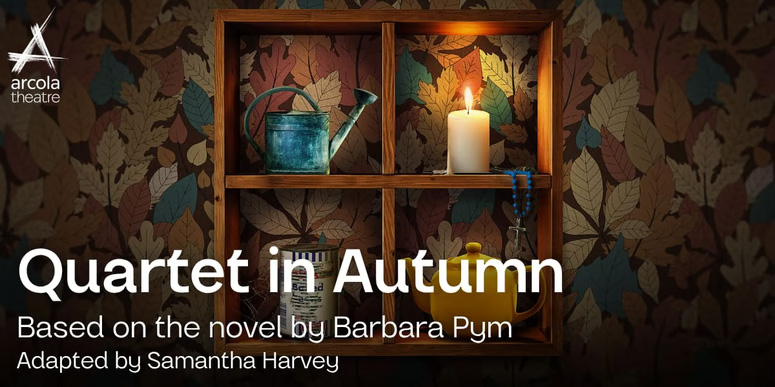
The humour of Pym’s writing has been retained in the adaptation and the characters each have opportunities to explain their lives of disappointment, underachievement and give rein to their hopes and fears. Four actors sitting talking often with their backs to you is not an easy setting to manage but the experience of Dominic Dromgoole as director and of his four excellent actors makes this an evening of entertainment and emotional engagment.

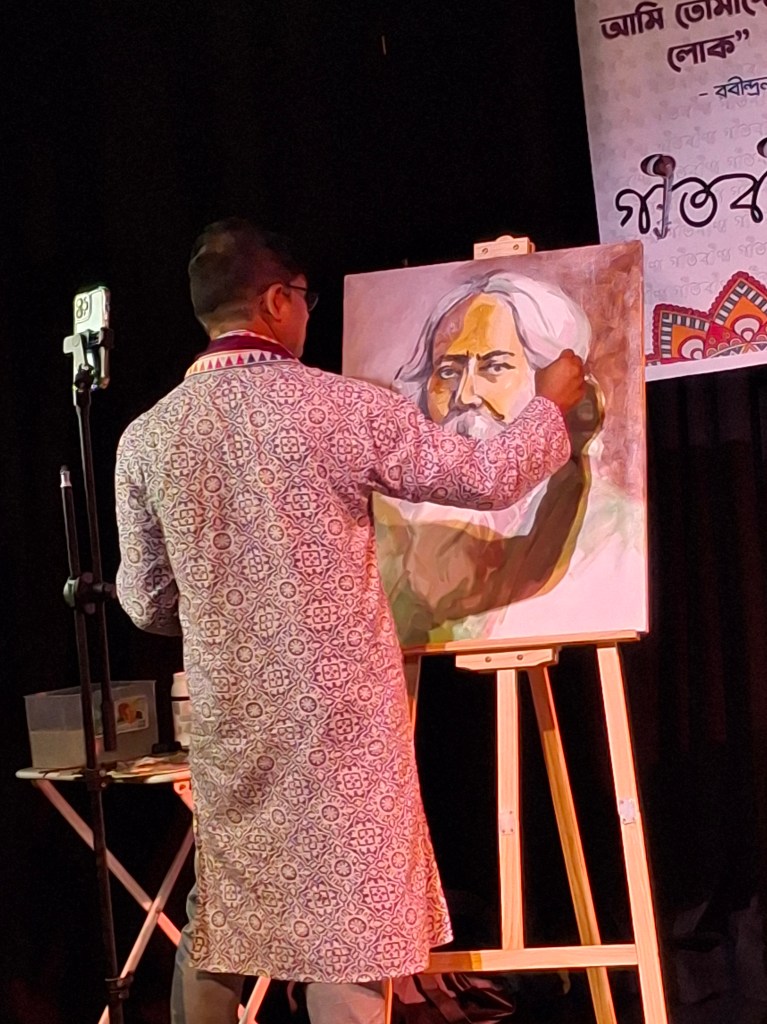
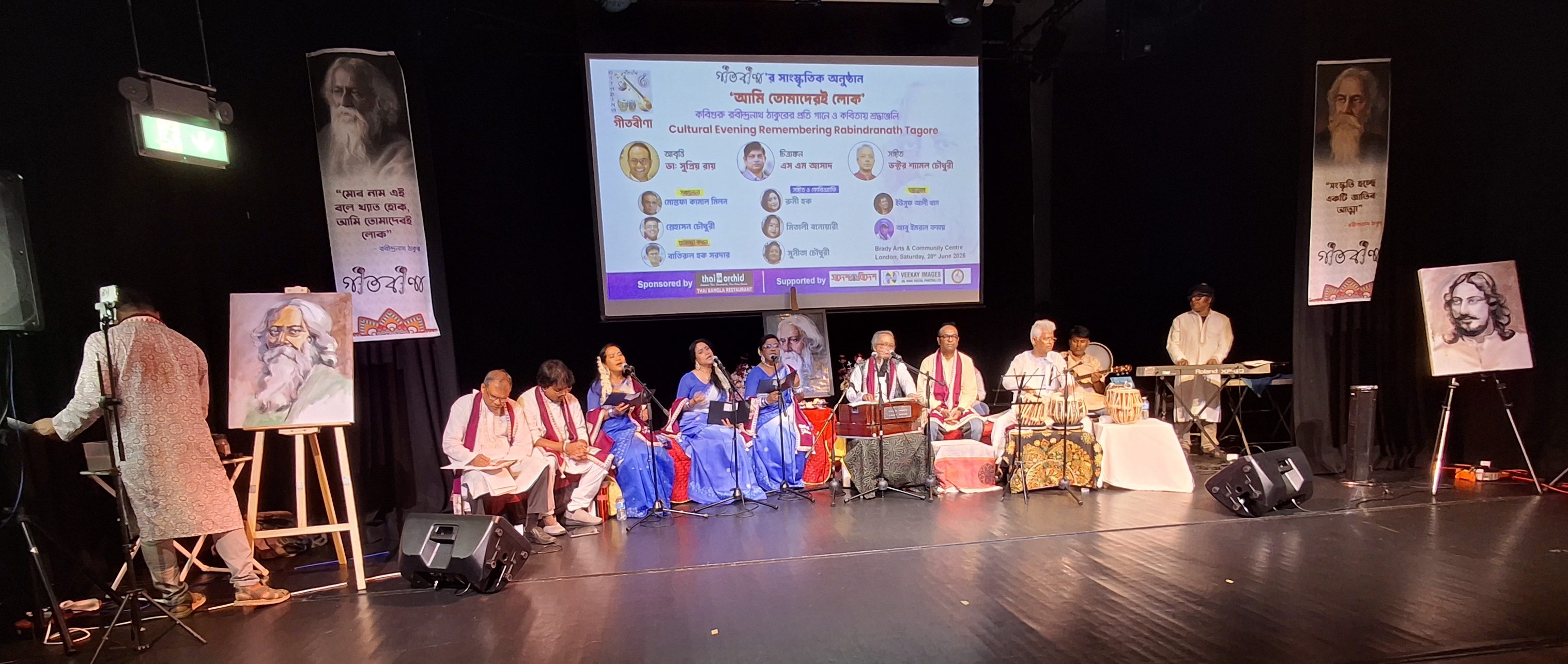
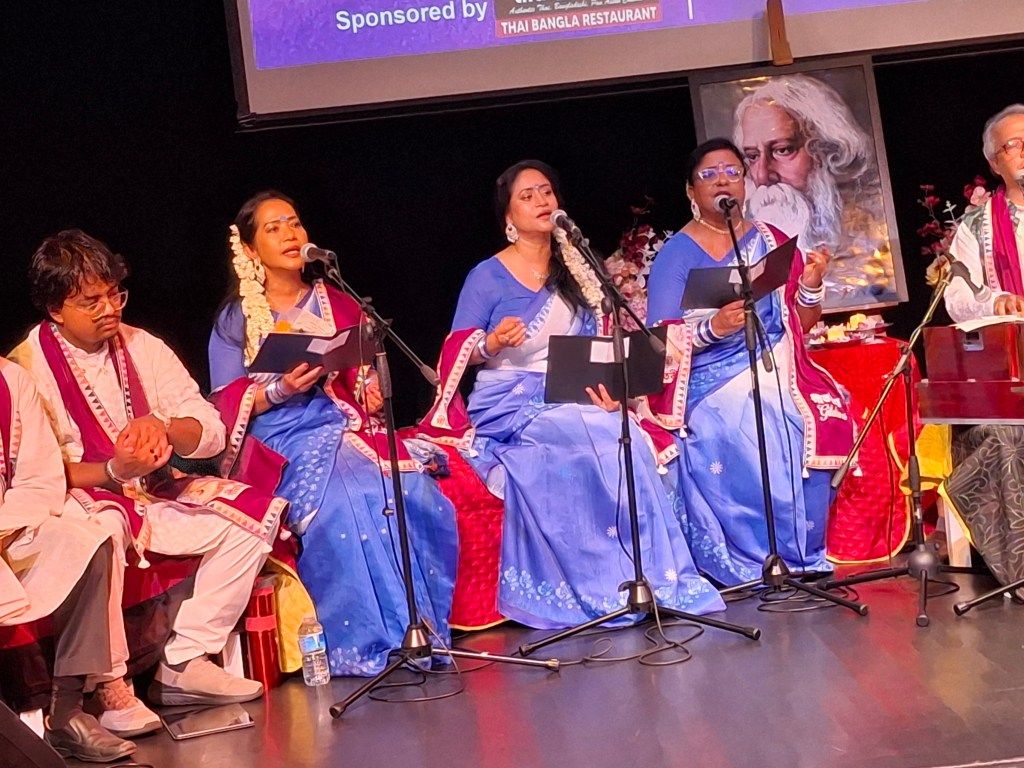
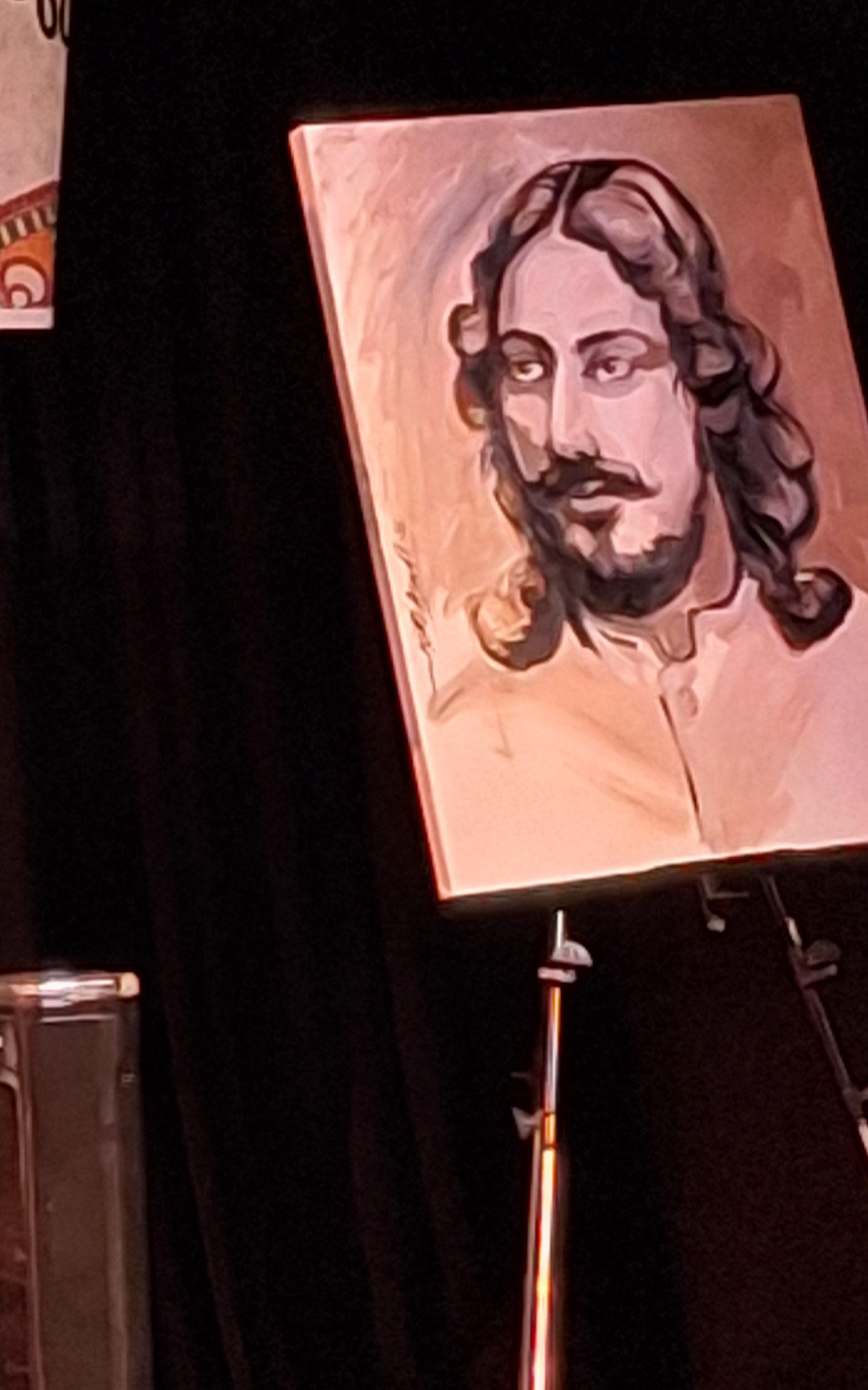
I think I’ve mentioned before Gitabina, the Bengali musical group curated by my friend Rumy Haque. They had a concert in memory of Rabindranath Tagore at the Brady Arts and Community Centre in Whitechapel on Saturday. I went along with my BBPC colleagues Shamim and Samaha and got a brief hero’s welcome as I had just consulted Cricinfo to see that the Tigresses (Bangladesh Women) had soundly defeated Pakistan Women in the T20 Womens World Cup. Given the political history of the two nations this victory was especially sweet. I met several friends and acquaintances and then went into the main hall for the concert which combined singing with recitations of Tagore’s works. Rumy had helpfully provided translations for several of the songs and the readings were delivered so powerfully that detailed understanding was not required to appreciate the content of the core messages. Another interesting facet was the real time painting of portraits of Tagore in his youth and as an elderly statesman. Like being at Sky’s Portrait Artist of the Year with added music. An enjoyable evening out with a difference.
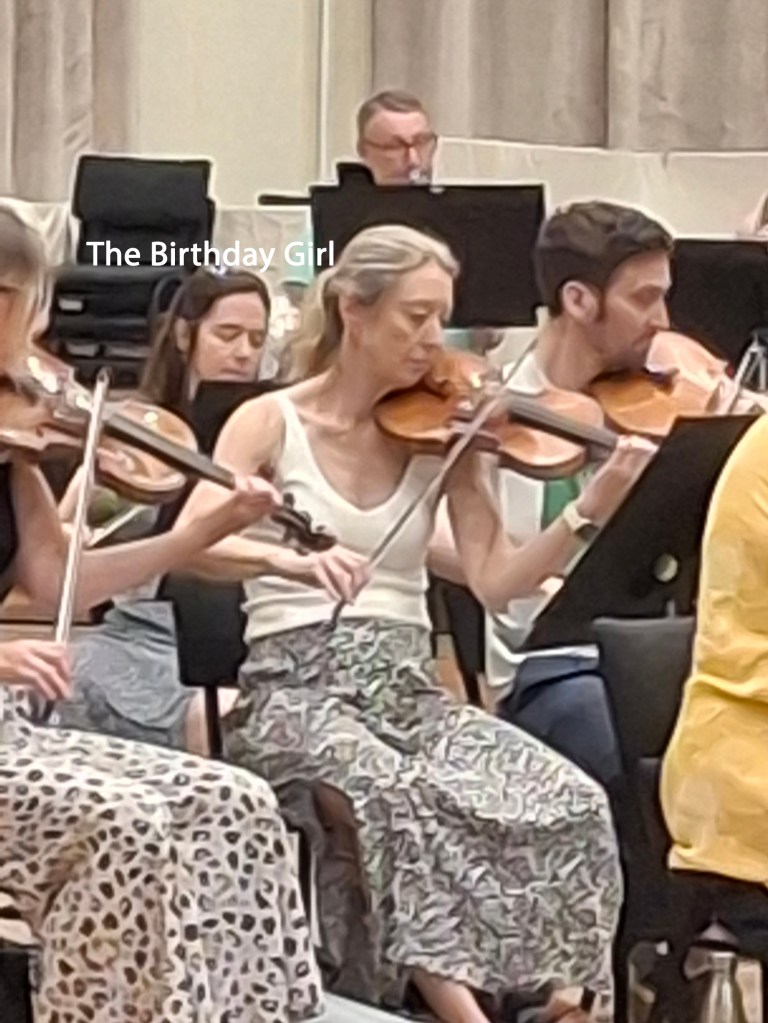
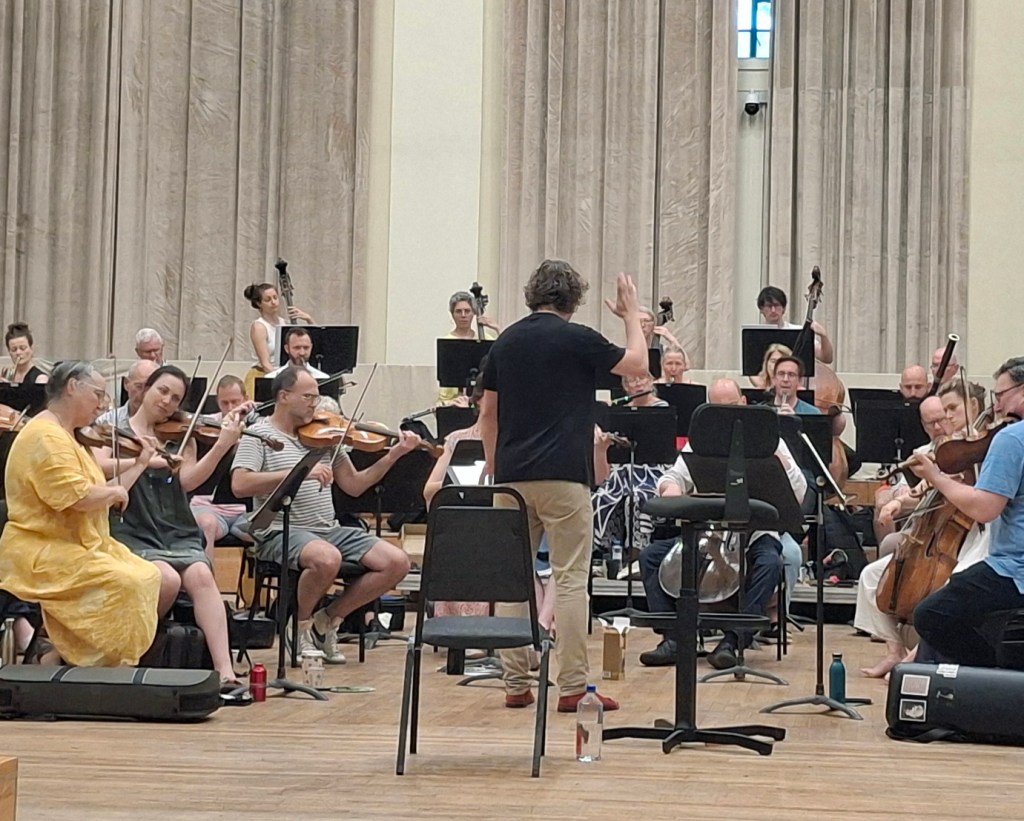
I set off early for the Henry Wood Hall for another OAE rehearsal. It’s hot and when I arrive at Lee Station there’s a train on the platform and a stream of would-be passengers coming towards me. “No trains from Lee for several hours,” says one so I join the downward flow and get a bus to Lewisham and then a train to London Bridge and walk to the hall in good time for a susprise opening. Conductor Maxim Emelyanychev calls the rehearsal to order and the strains of Happy Birthday ring out. This was a special treat for Rebecca Bell a violinist celebrating her’s today. As before, observing the conductor explain his wishes to the band was fascinating. Lots of da, da, dums and jumping in the air for “more emphasis here”. The concert of Brahms, Dvorak and Hadyn tomorrow looks like being another real treat. Just a block from Trinity Church Square is Great Dover Street along which runs the 21 bus with its destination panel saying ‘Lewisham Shopping Centre’ so no hassle with trains on the way back and a short walk to the blessed 273 to get me home relatively unaffected by the 35 degree heatwave which looks set to continue. I was glad of my gamcha from Dhaka – a scarf of quick wicking cotton that keeps the sweatiest Englishman in the world – me – from the ravages of the midday sun.
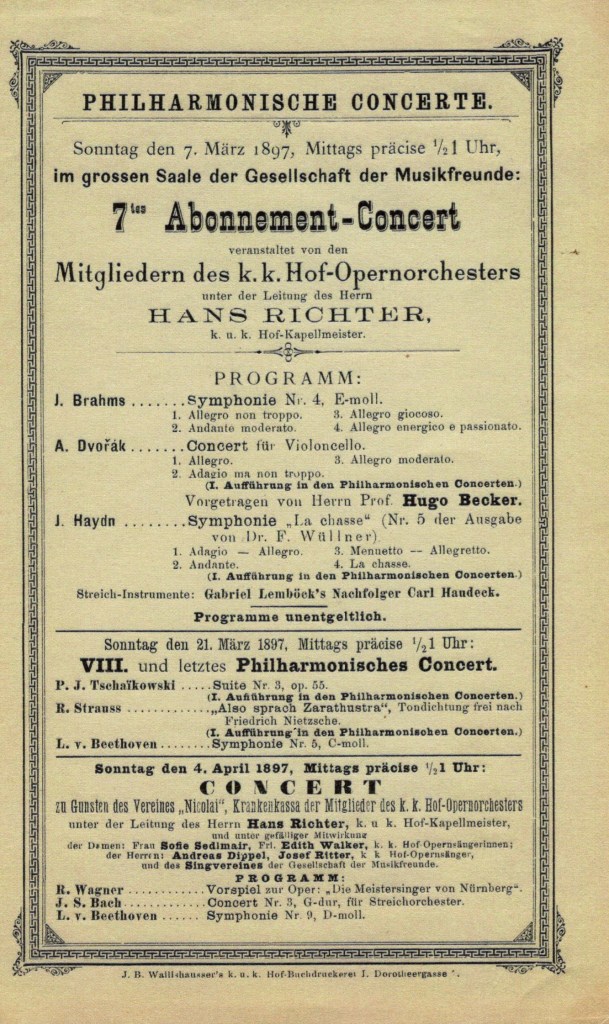
And so to the concert itself. Billed as Brahms’ Last Concert, the programme replicated the concert from 7 March 1897 in Vienna, the last time that Brahms heard his own music performed as he died just a month later. Starting with the massive fourth symphony was completely counter-intuitive to a modern concert going audience – but it worked as it filled the first half of the evening with all the emotions. Joyful dance, slow intensity and a mournful brooding final section with perhaps a hint of hope make this a very emotional ride. In the second half Steven Isserlis played Dvorak’s cello concerto with flair and passion – at the pre-concert talk he said he played the first movement on a record obsessively at the age of ten and still loves it today. It showed. The Haydn symphony gave the evening a lively conclusion with its dance beats and final headlong rush across the fields in pursuit of who knows what. Whatever it is, it gave the work its nickname of The Hunt – the final movement is actually called La Chasse on the manuscript. It was a fitting conclusion to the first half of OAE’s 40th anniversary season which they take up again in October at the Southbank after stints at Glyndbourne and the Proms.

Masterpieces metamorphosed

Les Bonnes by Jean Genet was one of the plays I read at university in the 60s and I’d seen the film version with Glenda Jackson, Susannah York and Vivien Merchant a decade later, so it was with great anticipation that I went with Frances to see what Kip Williams would make of it. After last year’s Picture of Dorian Gray with Sarah Snook we expected screens to play a part. And they did. And how! The filmy curtains initial framing the set gave us the feeling of trangressively entering madame’s boudoir and then the fun began. The role-playing maids of the title act out fantasies of dominating and eventually killing their disdainful mistress.

Quite how the actors managed to use their cameras and select filters to produce the effects on the screens that dominated the background, I’ll never know. Emotional performance while managing tech – the demands are high on acting skills these days! Phia Saban and Lydia Wilson met them with apparent ease. Yerin Ha was a little too camp and age-adjacent for my taste as the draconian madame but it was a great evening’s entertainment. With Kip Williams you learn to accept that things will change – it was billed as ‘a version’ after all.

Before going to the Donmar, I had been to the Dulwich Picture Gallery with Jadwiga to see the exhibition devoted to Anne Ancher, a Danish painter I confess I’d never heard of. Living all her life in the town of Skagen at the extreme northern point of Denmark she was devoted to capturing light in the landscape but especially in portraits and interiors where there were hints of the influence of Vermeer in the lighting effects. She died in her seventies in 1935 and the paintings cover most of her long life. The exhibition runs till March 2026 and is highly recommended not just by me – it got 5 stars in The Guardian.

Next up was a group outing with Frances, Farzana, Richard and me to see Assembled Parties at Hampstead. It’s a blackish comedy written by Richard Greenberg and was a great hit on Broadway in 2013. Set two decades apart in the same apartment of screen star Julie, we find a Jewish family celebrating Christmas with assorted relatives, friends and others. In Act 2 Julie is widowed and has a feel of a Norma Desmond who life has passed by and only survives in her rather less opulent surrounding by the invisible support of others.

Among these is her sister-in-law Faye, superbly played by Tracey-Ann Oberman in scintillating form who gets the best lines and attitude. We all found Julie, as played by Jennifer Westfeldt a little unconvincing but the poignancy of the reduced means and expectations of a once proud family showed through the many laughs that the script also gave us.

Talking of metamorpheses, how do you make a 500+ page 2004 Booker prize-winning novel into a two hour stage play? Fran and I had been to an Almeida insight session earlier at which the answers were clear – get an ace adaptor in Jack Holden and a great director in Michael Grandage. The resulting script clearly had to leave a lot out for those of us familiar with The Line of Beauty, but author Alan Hollinghurst had been involved throughout and the evening gave us a good account of the early days of Thatcherism, the gay scene in the 80s with the spectre of Aids and the class system in full flow. And it did contain some very explicit scenes of sex and drug taking that were so much a part of the source. The lessons of a dangerous era seem not to have been learned – the wealth and class gap is ever wider, tolerance of ‘otherness’ is at a very low ebb again and politics and politicians remain completely out of touch with everyman.

And follow that with another great challenge. How do you bring “one of the most important English-language poems of the 20th century” to the stage? Adrian Dunbar has produced and directed a staging of T S Eliot’s The Waste Land. There’s the full text of the 434 lines of the poem spoken by four actors but it’s interspersed with music by Nick Roth for a jazz quintet and the Guildhall Session Orchestra conducted by John Harle. Added to this melange was some of the earliest colour footage of London which evoked and echoed Eliot’s words about his adopted city such as “Under the brown fog of a winter dawn / A crowd flowed over London Bridge, so many / I had not thought death had undone so many.” Hearing Eliot’s complex work recited added greatly to my appreciation of it. The music was an interesting complement, never overlapping with the text and the footage was just stunning. A fascinating hour in the Queen Elizabeth Hall.

I was up bright and early the next morning to drive down to Hatchlands House near Guildford for one of the Orchestra of the Age of Enlightenment’s periodic Friends’ excursions. The house contains the Cobbe Collection which has a staggering array of keyboard instruments owned and played by some of the great composers among them Purcell, Johann Christian Bach, Mozart, Haydn, Beethoven, Chopin, Mahler and Elgar as well as the piano that Napoleon gave to Josephine. We were conducted through this historical tour by the OAE’s principal keyboard player Steven Devine with added insights from the eponymous collector Alec Cobbe, a little jet lagged after flying in from Ireland that morning. Their shared knowledge and Steven’s keyboard artistry made for an engaging trip and added substantially to my own musical education.

I travelled back in good time to join Frances, Farzana and Richard for a trip to the Pinter Theatre to see the revival of Conor McPherson’s The Weir. Timing was such that we were able to have a pre-theatre dinner in the wonderful Yoshino. Lisa was her usual welcoming self and managed to feed us elegantly as well as the late-arriving Farzana (thoughtless colleagues on Zoom calls!) with food that delighted her on her first visit before we all set off.

It’s a play I’ve seen before – nothing happens in a rural Irish pub, but everything happens in the minds, interplay and scary stories of the four male locals and the incomer Valerie. With Brendan Gleeson and Sean McGinley in the cast it was a super evening of witty dialogue, hidden back stories and brooding atmosphere. Lots of Guinness and scathing references to Harp drinkers – remember Harp?

23 years ago I filmed a studio interview and a gig at the Cavern Club in Liverpool with a young indie singer songwriter Ian Prowse. It was part of a language teaching video series for teenagers in Europe that we did in a yoof magaziney style. Dee and I loved his music and attitude and we remain friends after all this time. So on Saturday I set off for the Half Moon in Putney for a set from his current band Amsterdam. Frances joined me at the pub hot foot from Derby where she’d seen Watford’s first away win for eight months! I settled for the TV experience and was glad I’d conserved my energies as the evening was an all singing all dancing show with the band on top form – standin’ and boppin’ for two hours takes it out of us old uns!

The next day Frances and I and Farzana went to a new venue in London that led to another incredible evening – this time of multi-influenced jazz. HERE at Outernet is beside Centre Point and Tottenham Court Road Station. It’s deep in the basement but we weren’t bothered by noise from the tube. We were enthralled by a brilliant set from Nubya Garcia and her band. Anyone who has read my blogs knows I am a huge fan, following her from her early days in Lewisham pubs. This set – mostly songs from her latest album Odyssey – was supported by visuals on the giant screen at the back of the stage. Nubya herself was in great form with her mix of musical cultures inflecting her music, but with some lovely old school touches like references to My Funny Valentine and other classics in her solos. This lady does jazz. An ever-present in her line up over the years has been Sam Jones on drums. What is it about drummers called Jones? Jo held Count Basie’s band together, Philly Joe was Miles’ and Bill Evans’s favourite, Elvin was inseparable from Coltrane and now there’s this guy Sam whose propulsive and imaginative work takes the band into the stratosphere. Farzana and Fran had to put up with me hustling one of Nubya’s former managers as I’ve quoted Nubya in a pitch for BBPC to the Deptford Literary Festival next year. (I later got her blessing so forgive me!) What a night!

Next up was a theatre road trip. Fatherland by the precocious Nancy Farino who also starred in it, is a journey of discovery between an ominously named father, Winston Smith, and his daughter Joy in a converted school bus to County Mayo to discover some newly discovered heritage. Car seats on wheels and lighting effects neatly deliver the bus to the stage. There’s a great deal of barbed and bitchy banter among the deeper affection and interpolated scenes with father and a solicitor indicate that Winston’s life coaching practice has led to a suicide for which he’s being sued. Joy also lets us into her mind world of fears and fantasies. Nancy Farino has come through the Hampstead Theatre’s Inspire programme. More power to it if it continues to produce work of this quality.

Work of high quality was a trademark for Josef Hadyn. The OAE had been touring a programme of symphonies and a piano concerto through Germany, Switzerland and Italy with Sir Andras Schiff at the keyboard and as conductor (I nearly wrote with the baton but his hands are expressive enough). The did a concert in Udine and I had to wonder whether any of the Pozzo family attended – the Pozzos own both Udinese and Watford football clubs. The last date on this tour was at the Queen Elizabeth Hall.

I like Haydn’s rhythmic impulse, his unpredcitability and his sense of fun and the two symphonies – one from his early period No 39 at the Esterhaza Court and No 102 from his prime in London showed real development of style and technique and were a joy to listen to as was Sir Andras’ performance of the concerto No 11 played on a Walter fortepiano just like one we’d seen at the Cobbe Collection a few days earlier.

Another busy month concluded with BBPC’s last bimonthly poetry meet up of the year at the Whitechapel Gallery which took the form of a review of the year’s activities and an open mic session for a dozen poets to share their own work or read from their favourite poets.

Many of us then went to the nearby Altab Ali Park for the launch of this year’s bijoyphool. This is the Bengali victory flower which has evolved from the British Remembrance Day poppy.

The green and red flower is worn for the first two weeks of December and commemorates the Bengali language wars of 1952, the war of independence of 1971 and the countless citizens who died in them and since. Three of the freedom fighters from the latter war were present in front of a replica of the Shahad Minar matryrs’ memorial in Dhaka. It was a privilege to be asked to say a few words for the local TV chanel about what it meant to be there at this moving ceremony.

The final event of this year’s Season of Bangla Drama was a play Joyontika produced by Trio Arts about post partum depression, a topic little discussed in the community but which affects many women. It was a mixture of drama, dance and polemic with some interesting technical tropes and delivered a powerful message. I was able to catch up with a few friends and indulge in some super spicy biryani to conclude a successful Season – delivered this year with no funding from the Arts Council. All hail to the indefatigable Kazi Ruksana Begum the Arts Development Officer for Tower Hamlets for bringing it all together.

Carry On Culture

After my slightly odd Valentine’s weekend I plunged into a fortnight of amazing cultural activity. Keeping on keeping on will, I hope, hold dementia at bay. Another life motto has always been ‘Do it while you can’. I don’t usually write about this stuff but the blog is partly for me to reminisce with when I can get out anymore. So ignore if you just like my travels not my opinions.

So here’s how it all kept coming. Monday 17 February East is South at Hampstead Theatre courtesy of Frances’ patronage. Company, canapes, networking first class play not so much. It was a semi sci-fi thriller/Line of Duty style interrogation about data leaks from a world changing computer programme Logos. Written by Beau Willimon the creator of the US version of House of Cards, its subject matter was highly apposite with the march of AI. However it sometimes felt as if the script had been written by AI with strange diatribes, a virtually unused character and rather cliched and confusing flashbacks.

The next night made up for any disappointment. Following my previous exploration of Sadler’s Wells East Tuesday saw me heading for the Rosebery Avenue Sadler’s for Pina Bausch’s Vollmond. Need Es to lift your spirits? Well they were here aplenty! Entertaining, exquisite, energetic, enthralling. It was one of the last things Bausch choreographed and it a lot lighter in mood than some of her work.

We had dancers flirting, arguing, courting and conversing often soaked in torrential water flowing from the flies. I got talking in the interval to a couple of professional classical musicians – she harpist, he oboe – which was an interesting precursor to Wednesday. We all absolutely loved the performance and my only regret was that two friends who would have loved it couldn’t be with me.

Wednesday evening saw me accompanied by local resident Frances to the launch of the 2025-26 season of the Orchestra of the Age of Enlightenment of which I’ve been a long-time supporter and occasional contributor of blogs, scripts and articles. It was help in the wonderful brutalist hexagonal hall of their home Acland Burghley School in Tufnell Park. Alongside the exciting reveal of Fantastic Symphonies to be played between October and March at the Southbank Centre and on tour, we were treated to a recital by the mezzo-soprano Helen Charlston accompanied on the harpsichord by Satako Doi-Luck. Helen benefitted from the OAE’s rising stars scheme and now has a stellar recital career covering baroque, classical and contemporary repertoire. However she will find it hard to stop being asked about singing Dido’s Lament backwards in an OAE video. Satako is part of Ensemble Moliere that specialises in exploring the world of Baroque music. I’ve been to a couple of their concerts too. But the plans for celebrating OAE’s 40th anniversary are exciting with the return of early supporter Sir Simon Rattle who contributed a splendid video interview to the evening, alongside many other familiar figures in OAE history. Check out the programme here and let me know if you fancy joining me to hear this fantastic group of players and lovely people.

I stayed home on Thursday and on Friday joined my friend Opu Islam at the launch of an exciting heritage project in the Bengali community in the East End. It’s an initiative from the Season of Bangla Drama to which the British Bilingual Poetry Collective (of which I am a gtrustee) contributes each year. There were discussions with producers and poetry recitals as well. It’ll be interesting to see the outcome in the 2026 festival.

What a treat on Saturday with Celia Imrie and Tamsin Greig both on stage at the Donmar Warehouse in Backstroke! Two superb actors trading mother daughter love and insults in equal measure in a fascinating if slightly baggy play. It made me wonder if writers are always the best people to direct their own work. Still a hugely enjoyable evening.

I woke on Sunday at 10:15 after finally falling asleep at six after a horrendous night with acute toothache. This was too late for me to get to Watford to see our arch rivals Luton beaten 2-0 some revenge for our defeat in the reverse fixture. It was on the telly and the house was filled with shouting best left on the terraces.

I’d arranged to visit a friend Nuala O’Sullivan on Monday afternoon before going to join Frances at the Orange Tree in Richmond. Nuala was a BBC World Service colleague back in 2009 and then co-wrote on of my ELT series with me in 2014-15, She has subsequently founded and runs the highly successful Women Over Fifty Film Festival so it was great to talk film, literature and life with her. Walthamstow to Richmond is not the most straightforward journey but I’m glad I made it. Frances had been invited to a special staging of the play in the hope (successful) of luring her back as a patron. At a reception we had an opportunity to talk with Tom Littler the artistic director of the Orange and also the director of the play we were about to see. Both very impressive.

I’ve long been a fan of Howard Brenton from the controversy over The Romans in Britain back in 1980, through plays like Pravda at the National, The Arrest of Ai Wei Wei and Drawing the Line at Hampstead. This new work Churchill in Moscow in which two would-be world leaders slugged it out in negotiations could not be more timely. Dramatically it was frightening, funny and fascinating with wonderful supporting roles for the two interpreters who put their own palliative gloss on what Churchill and Stalin were saying to each other. In the compact space of the Orange Tree you really felt part of the action.

The rest of the week was calmer just on Thursday a pre-concert talk about and an electrifying performance of the Beethoven Violin Concerto with Vilde Frang and the Eroica Symphony in which Maxim  Emelyanychev conducted the OAE in a rousing performance with no residual hint of Napoleon.  

Then there was a trip to Watford as part of a consulting group helping plan the move of the Watford Museum from the old site in what was Benskin’s Brewery into the Town Hall later this year. Lots of interesting ideas with fellow supporters and friends. I also foolishly decided to have an occasional away-day trip to our game at Stoke on Saturday which proved beyond all doubt that we go for the people not the football – excruciatingly dull match – adjudged a bore draw by colleague Frances in her blog, but great beer and conversation.

And the next week was pretty similar …