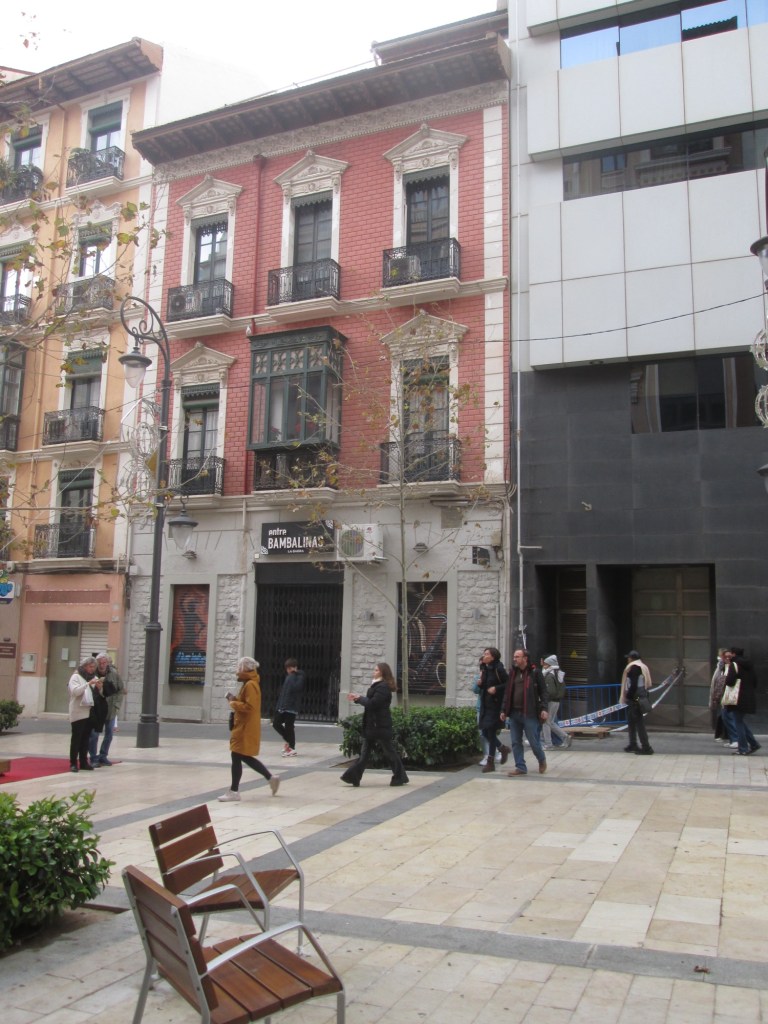
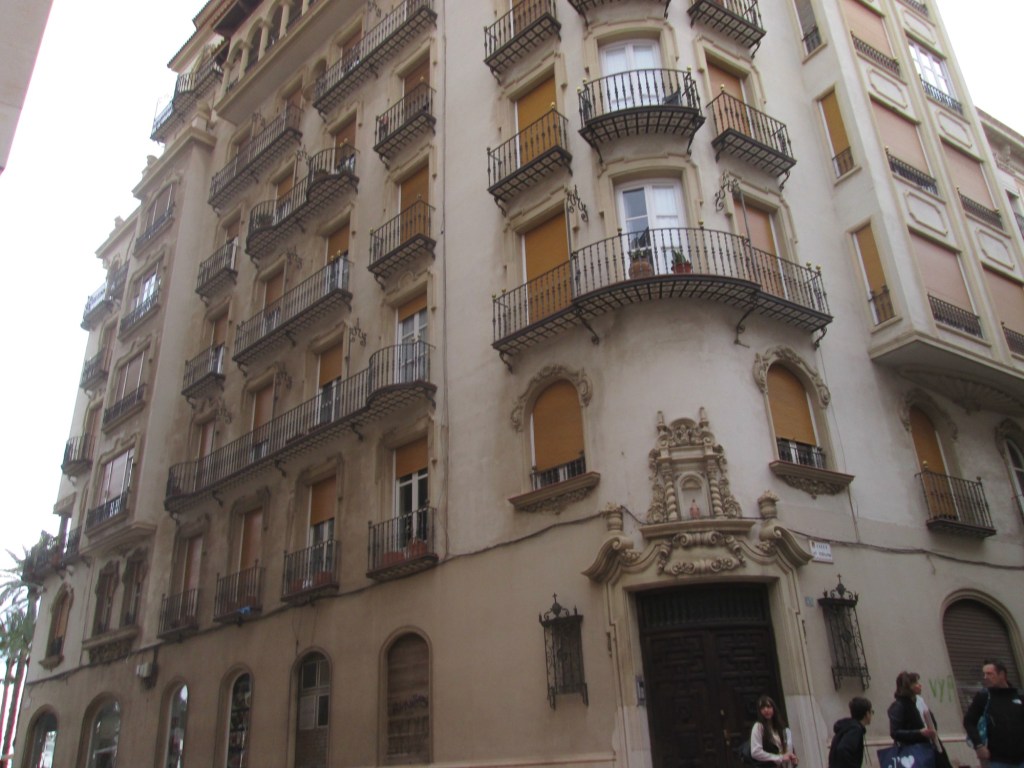
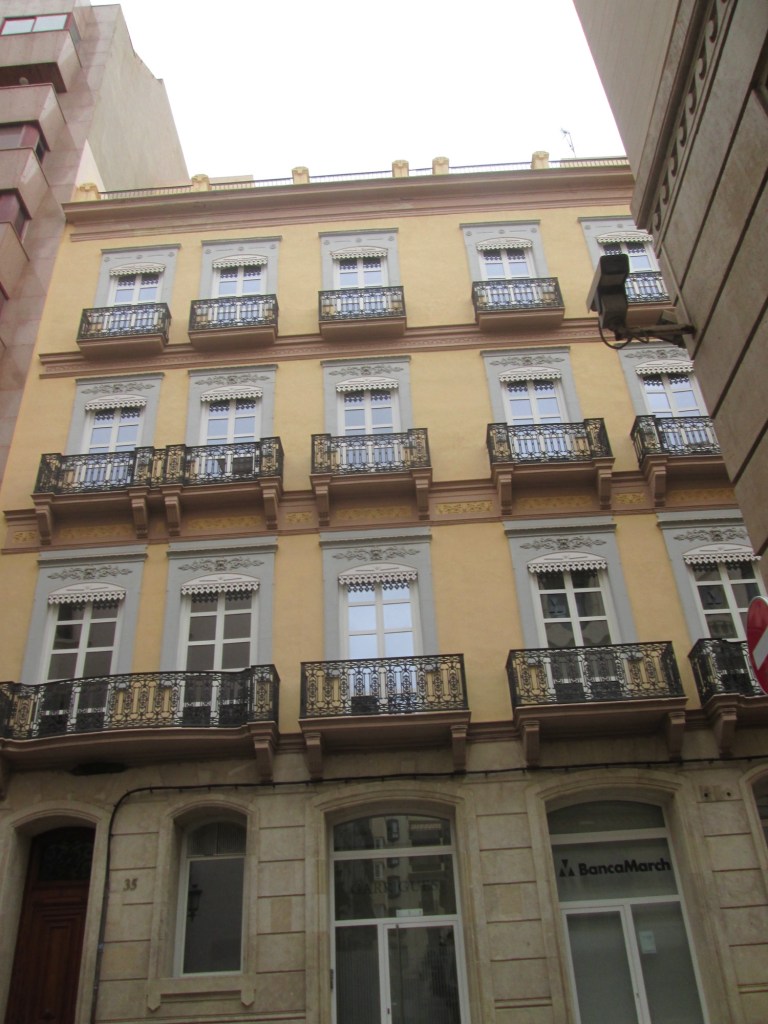
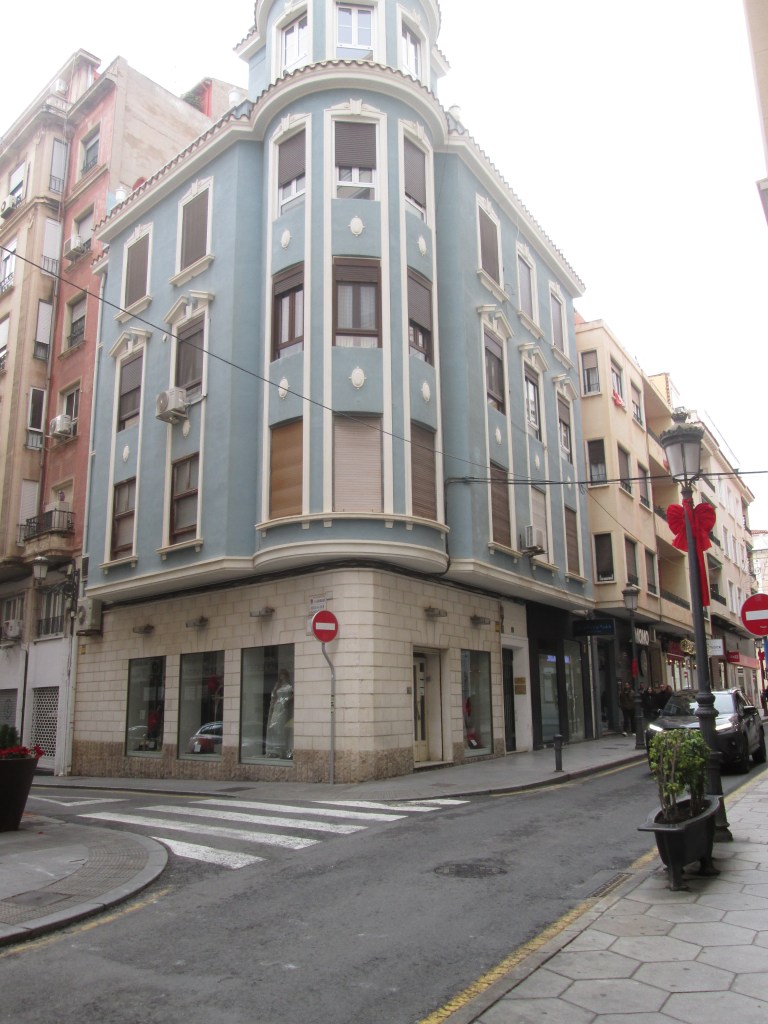
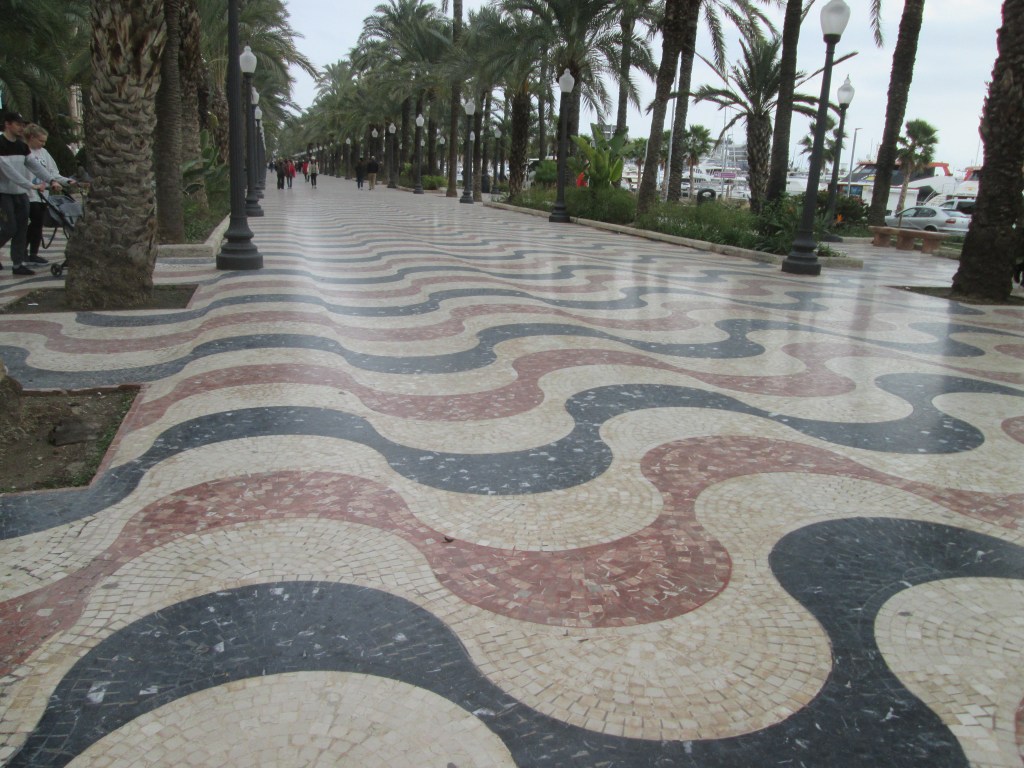
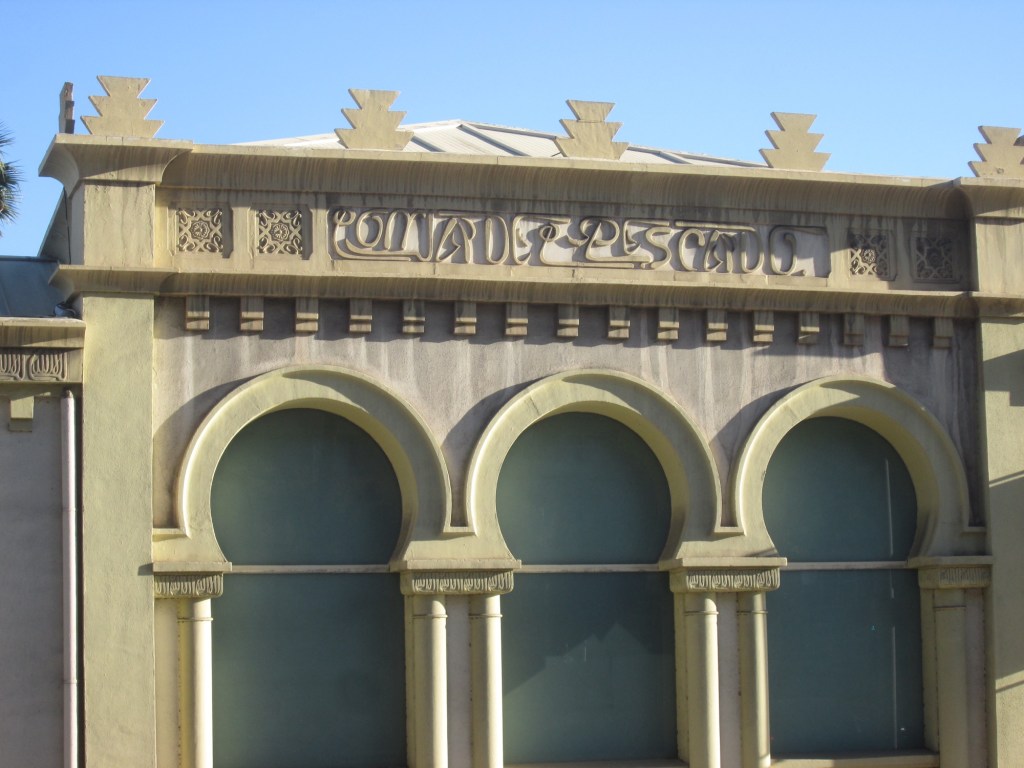
Last days can often be difficult on holiday, not least this one with a flight booked to depart at 10 pm. I took breakfast in the hotel for a change, packed and left my luggage at the hotel and set off for another stroll around this city I have come to like. There are some fine buildings, I love the chairs randomly glued to the pavements so you can take a break whenever you feel the need. There are some excellent examples of turn of the century (19-20) archictecture dotted around the streets.
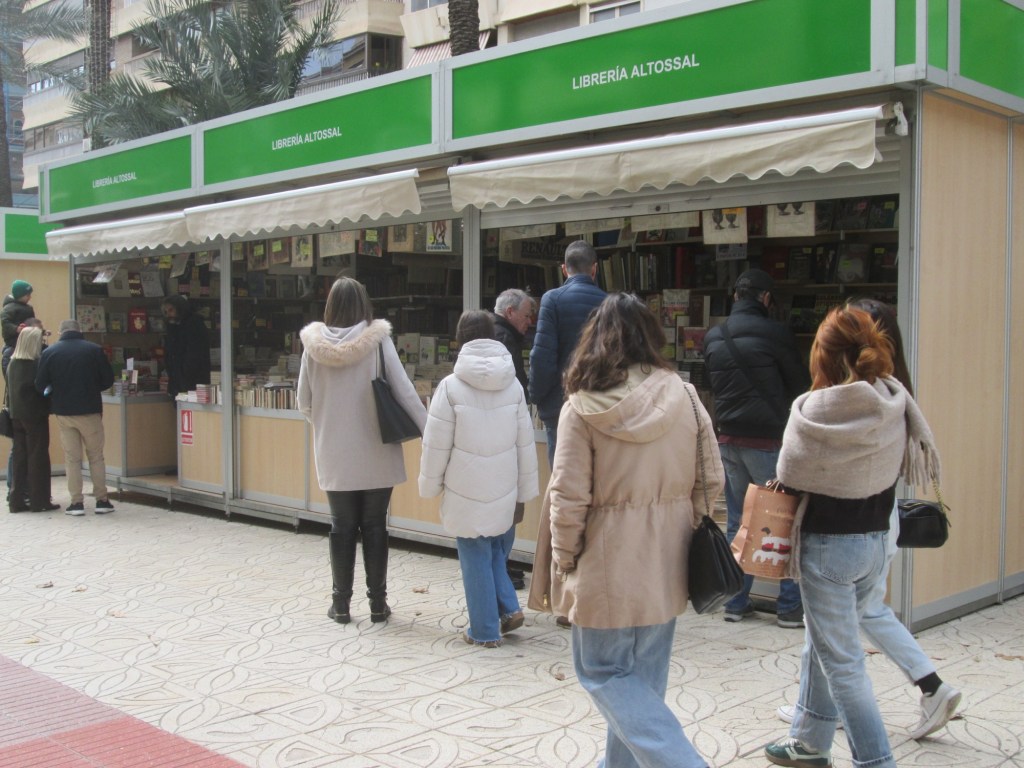
My route takes me past the book cabins I’d seen before and this time they were open. Paperbacks ranged from 5 to 12 euros with some deals three for 12 euros. There were a few English and German titles among them as well and all the kiosks seemed to be doing steady business. Good to see lots of children’s books, history and philosophy as well as fiction from popular Spanish authors like Perez-Reverte, Carlos Zafron. Javier Marias and Almudena Grandes and of course translations of John Grisham and Dan Brown. I didn’t see any Harry Potter.
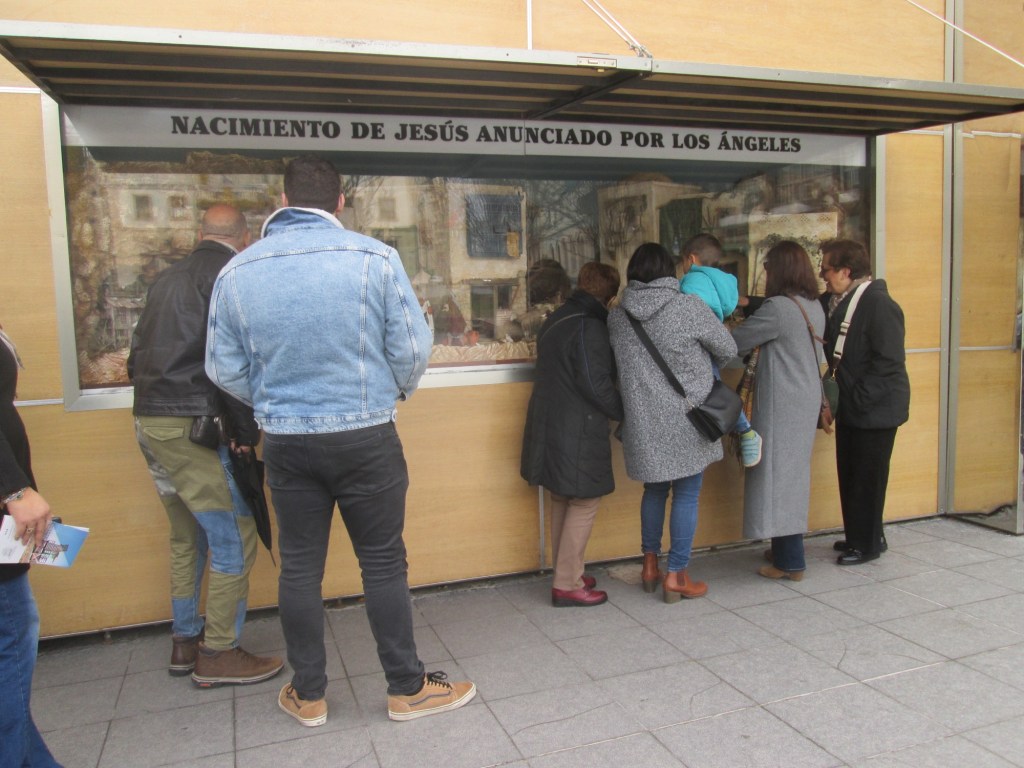
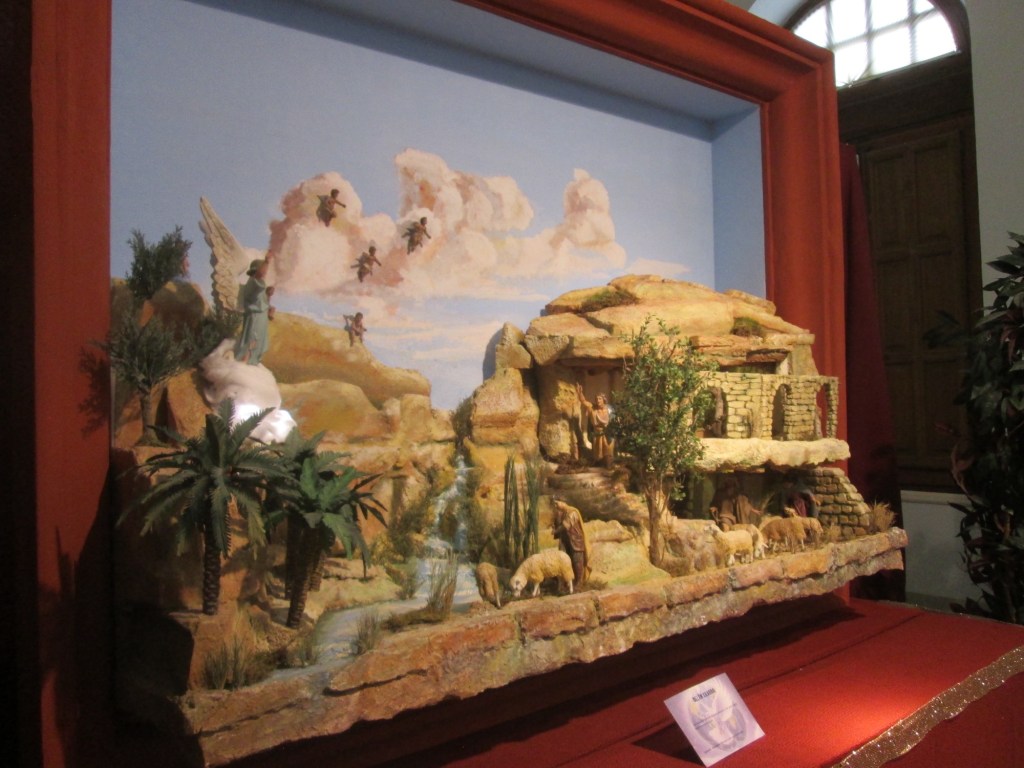
Also attracting a lot of attention was the four sided display of belenes in front of the Town Hall with scenes of the birth, shepherds and three kings – Los Reyes – who are of course all-important in Spain with the 6th January almost bigger than Christmas.
Down by the marina a lone saxophonist busker was trying hard but basically was practising his scales in public with scores on a phone attached to his alto.
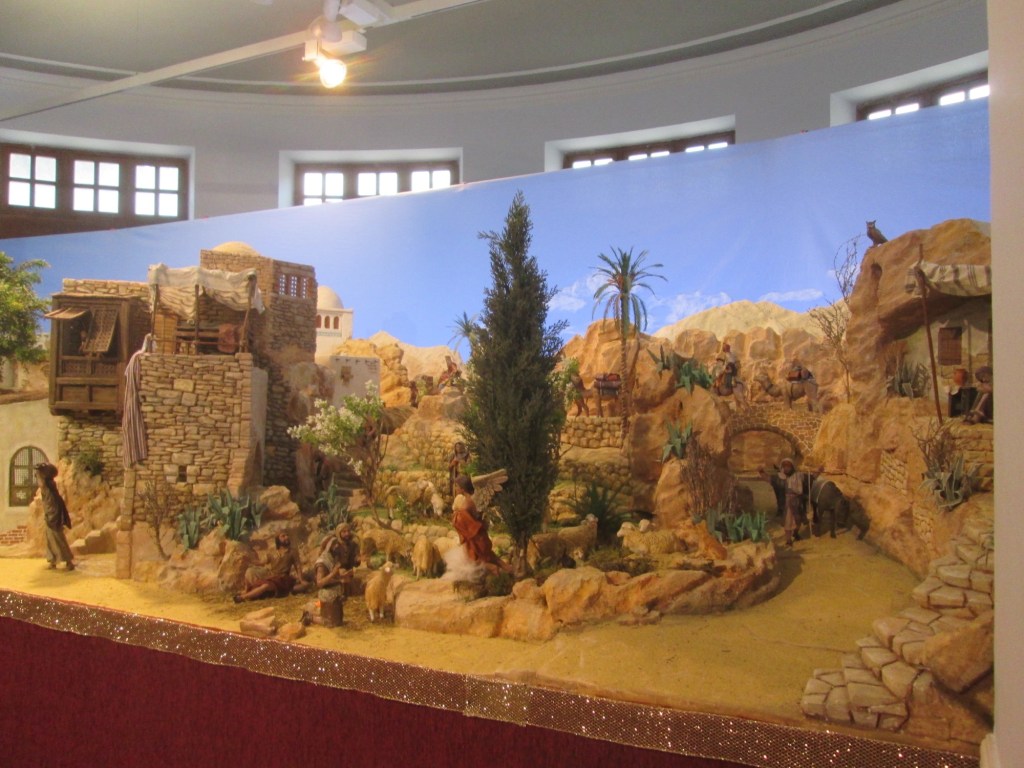
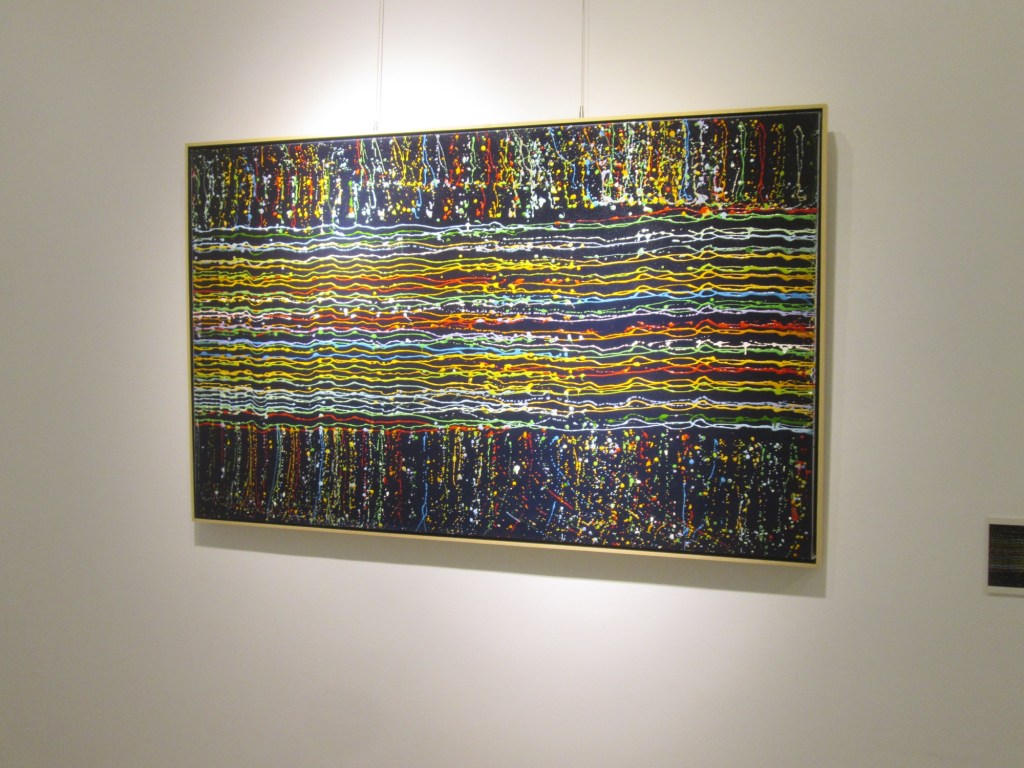
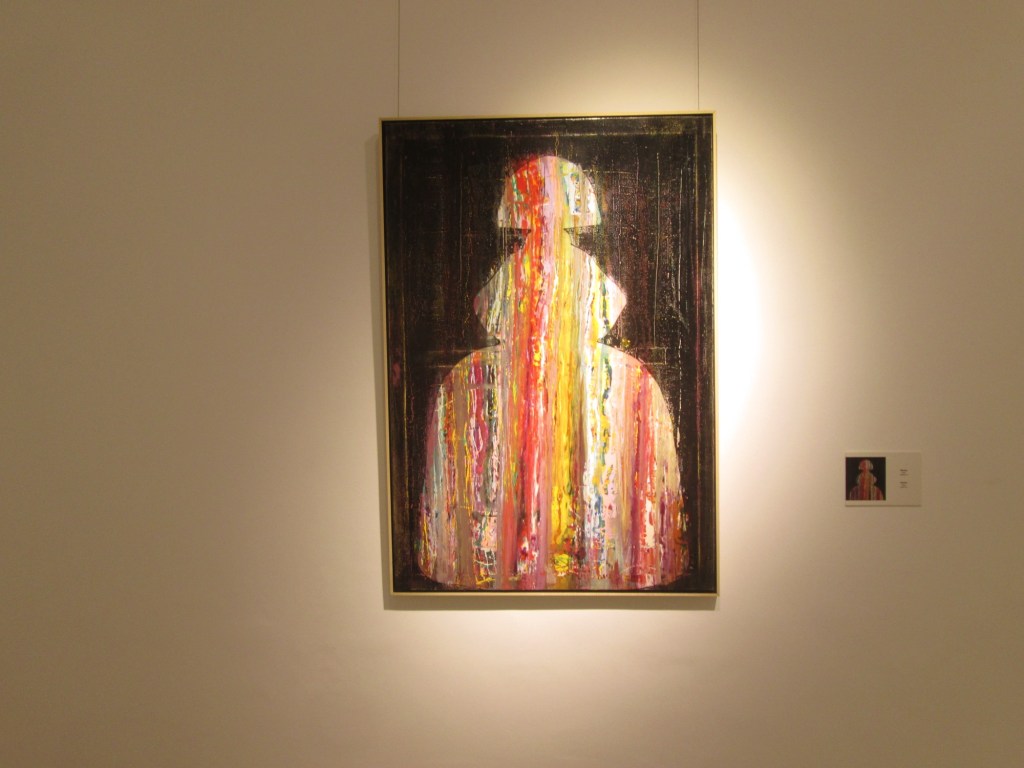
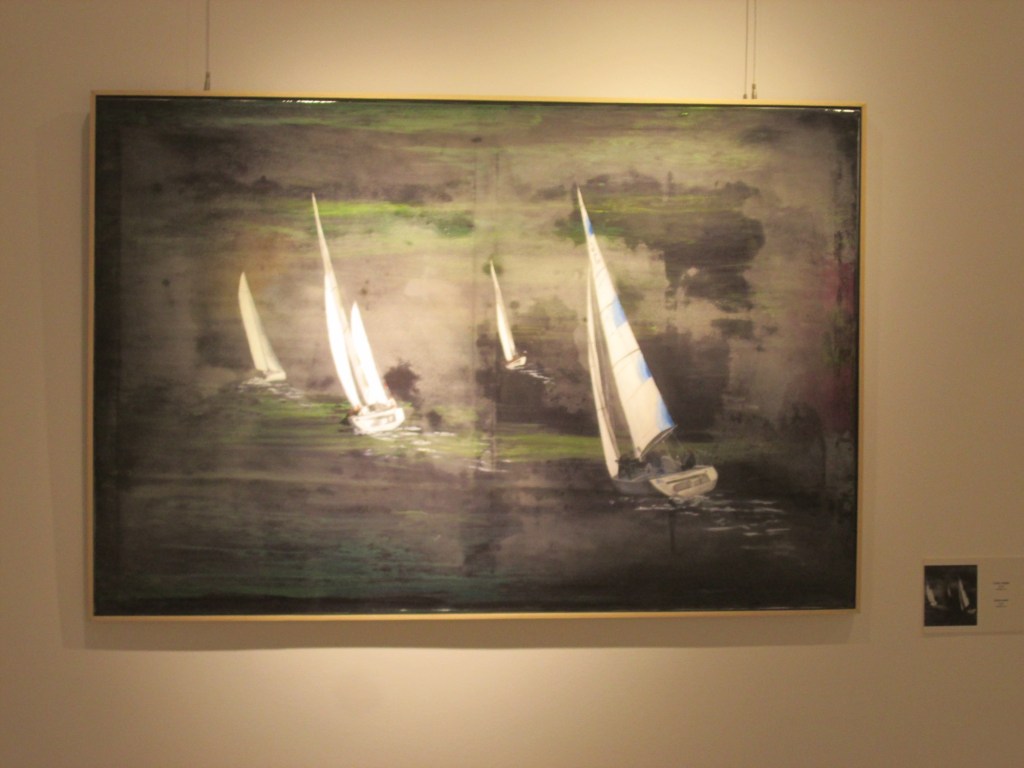
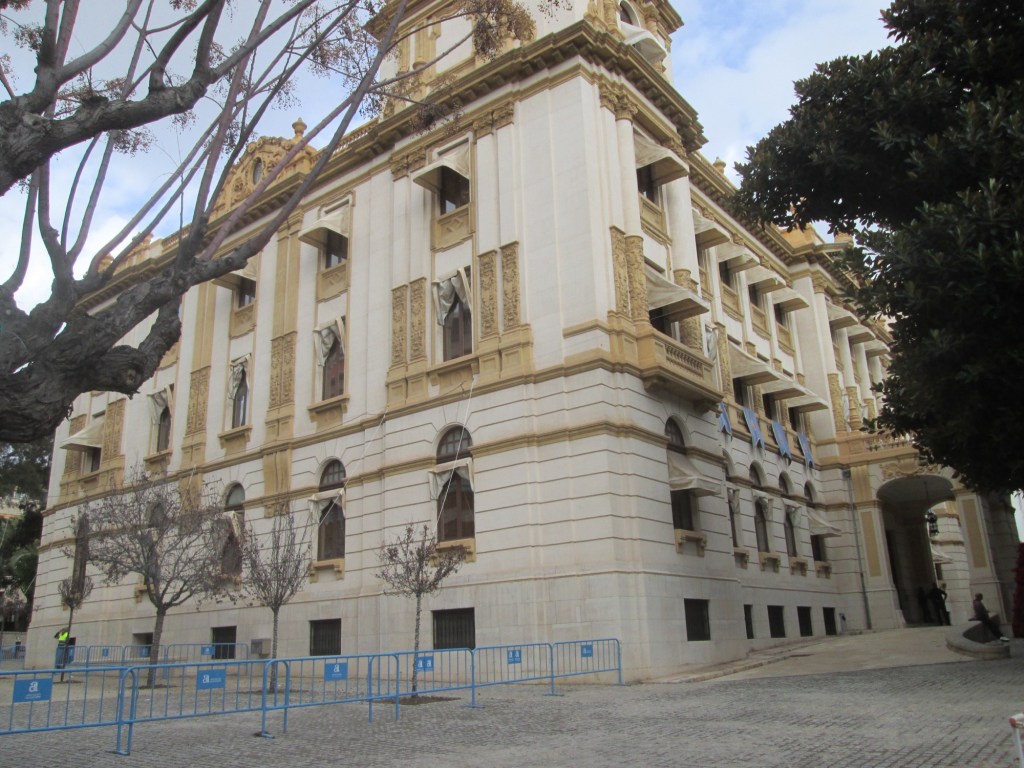
Wandering back up through the avenues what should I come across but another museum, The Palacio Principal, with displays of – you guessed it- belenes but also an exhibition by Francisco Rubio which involved an interesting mix of abstract and figurative work, sometimes in combination.
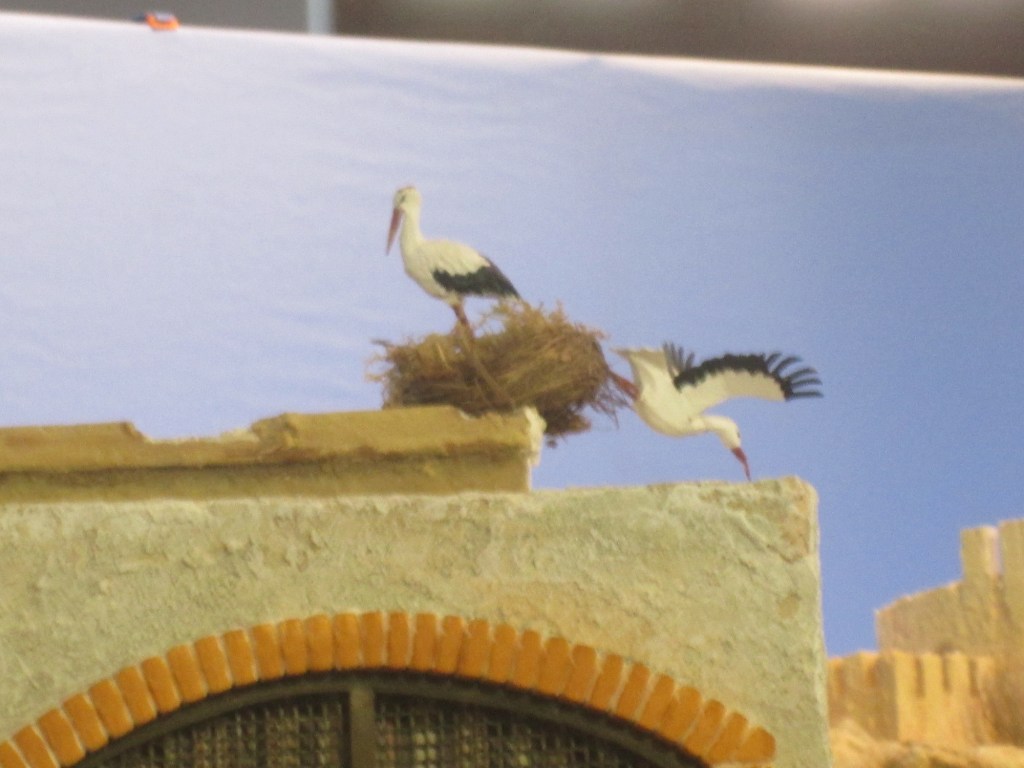
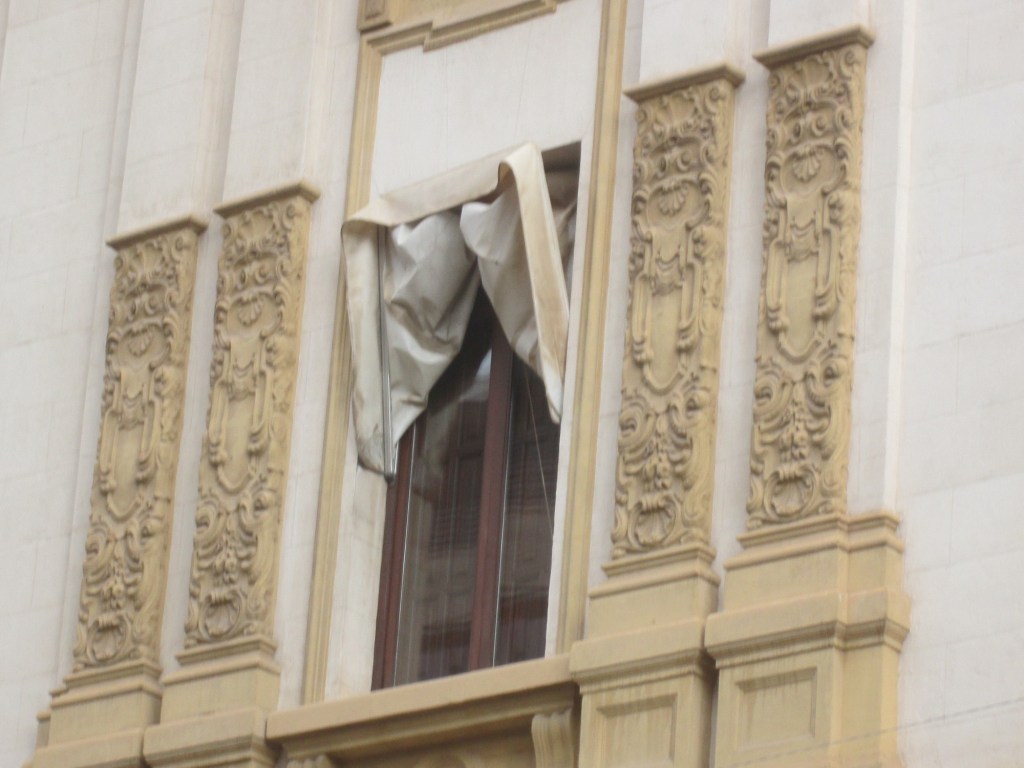
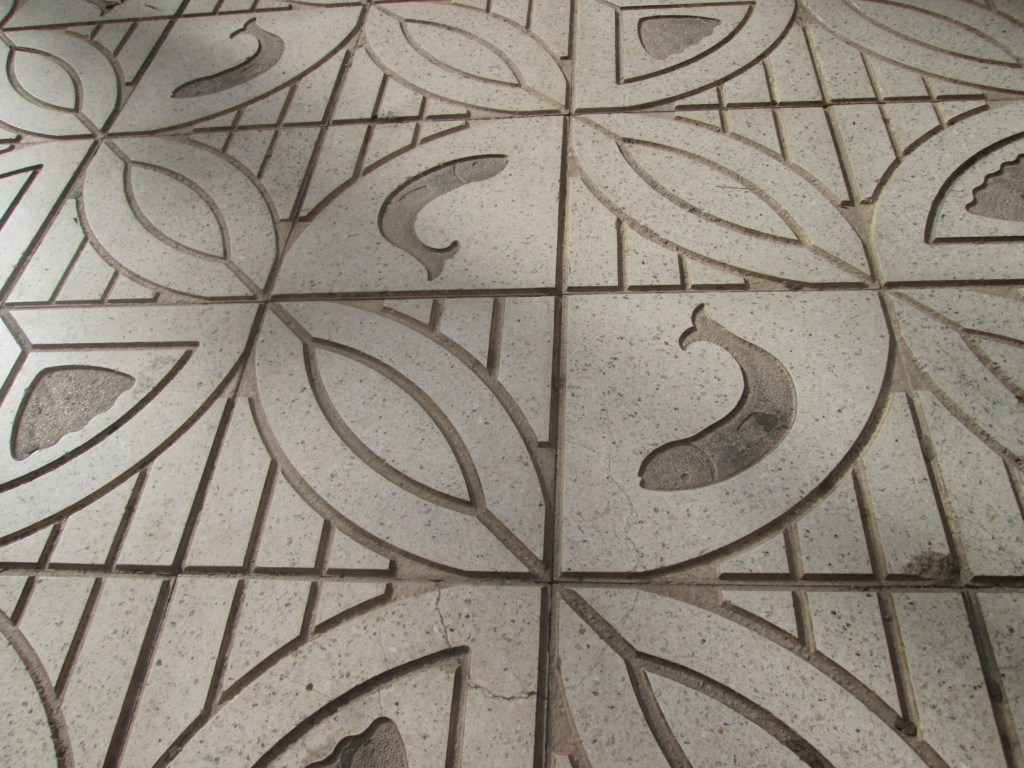
Look at those angels!Storks to bring the baby?Panoramic belenRubio in Pollock mode‘La menina’ and I could feel VelasquezSailing in the fogThe Palace – built in 1928Stonework detailPavement with fun fish slabs
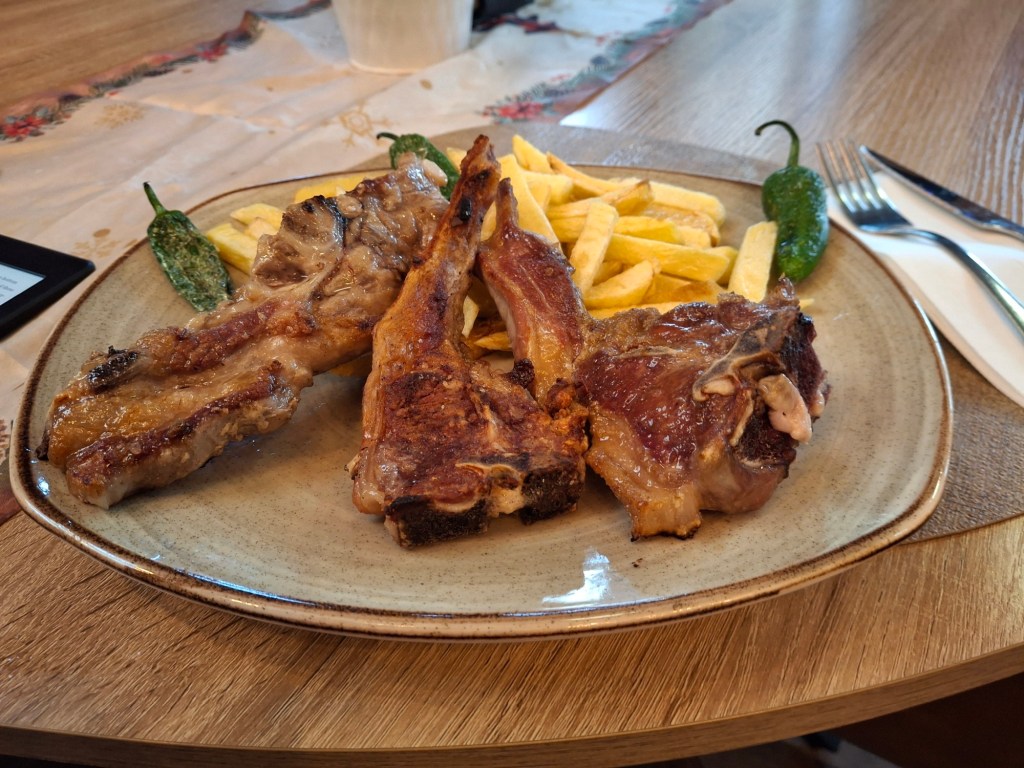
I’m not fan of photographing meals but my lamb cutlets for my last lunch were worthy and very tasty as well – but no hot padron peppers! Then back to the hotel to collect cases and the C6 bus to the airport. It’s every 15 minutes and whisks us via the train station and then through the newish suburbs, past a huge desalination plant and along the beach at Playa de Agua Amarga before turning west to the airport.
In the hotel there was an exhortation to be very sparing of water – keep your towels, take shorter showers as there has always been an acute shortage of water in the area. One woman I was chatting to before the music the other evening told me that 80% of Alicante’s drinking water – I had declined any alongside my meal – comes from desalination and that she had frequently in her childhood faced water being turned off in her home. I tried to joke that Christmas Day had changed all that but am not quite sure it worked.
I had equivocated for quite a while about whether to make this trip – can I bear the inevitable airport hustle, am I too old to be doing this stuff, can I better last year’s wonderful week in Madrid and Granada? I am so glad I did. I’ve explored a new city, found new artworks, architecture and archaeology. I’ve been to classical and jazzy gigs and had great food. Apart from the soggy Christmas Day the sun has shone and temperatures have been around 17-18 degrees Celsius in the day. People have been friendly and I’ve actually managed a few conversations. I have one regret. I’ve ogled other people’s arroces – you mustn’t call them paella here. These rice dishes come with seafood, meat and vegetable versions and are very similar to the Valencian staple with crusty base and pan-cooked rice and accompaniments. Problem? They are always for a minimum of two people. So I’ll just have to find someone to come back with me.
This is a phrase that crops up at lot on news and entertainment channels on the television. Also here in Spain it is in the context of warnings of snow and road closures in the Pyrenees and sea surges and flood warnings in Malaga and Cadiz – Global heating is humbug, right. It features large in the Ian McEwan book. The news tells me also that in Spain, physical shopping is beating online by a distance – and seeing the number of bags being carried around Alicante, I can believe it.
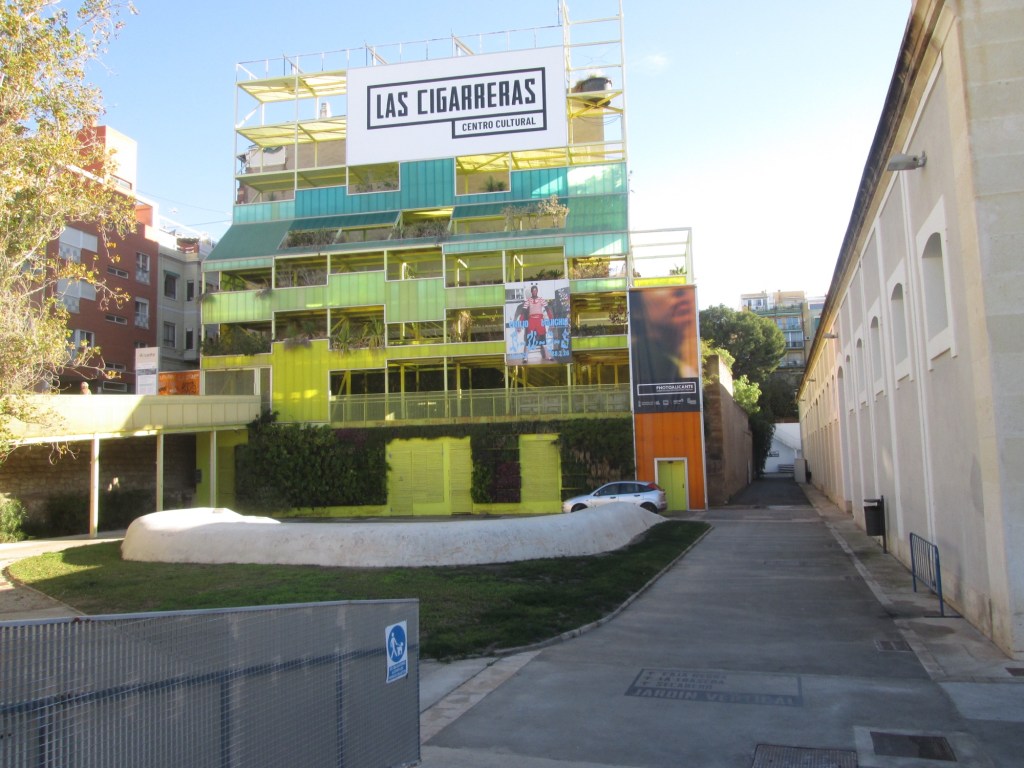
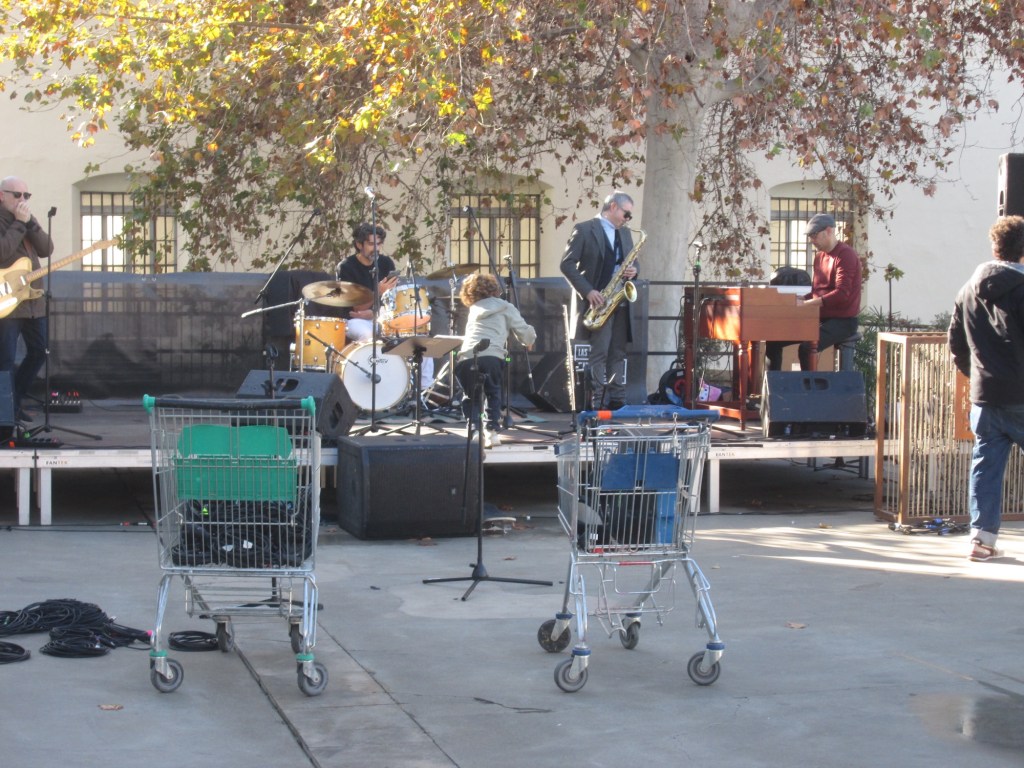
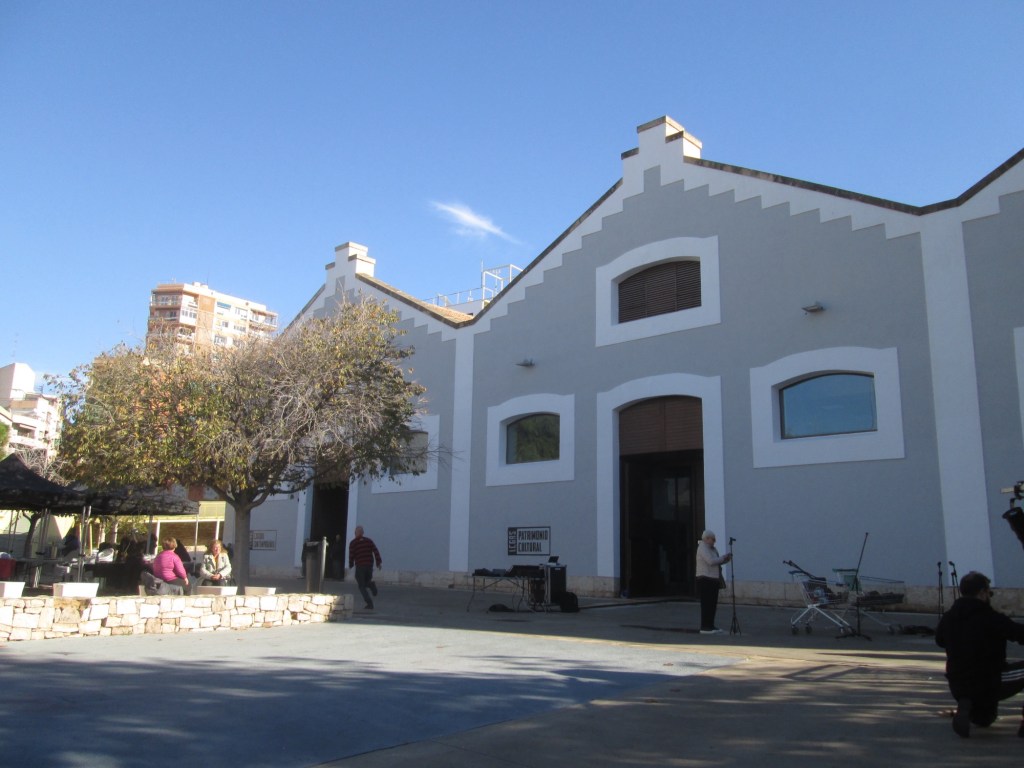
However I didn’t go shopping this morning as I had a couple more museums on my list. The first was in the old tobacco factory, Las Cigarreras which is now a multi-use cultural centre. It was walkable in 20 minutes so off I set in the sunny morning after another excellent breakfast near the bull ring. As I arrived there was a jazz combo doing a sound check for a lunchtime gig. They sounded OK but nothing to wait around several hours for.
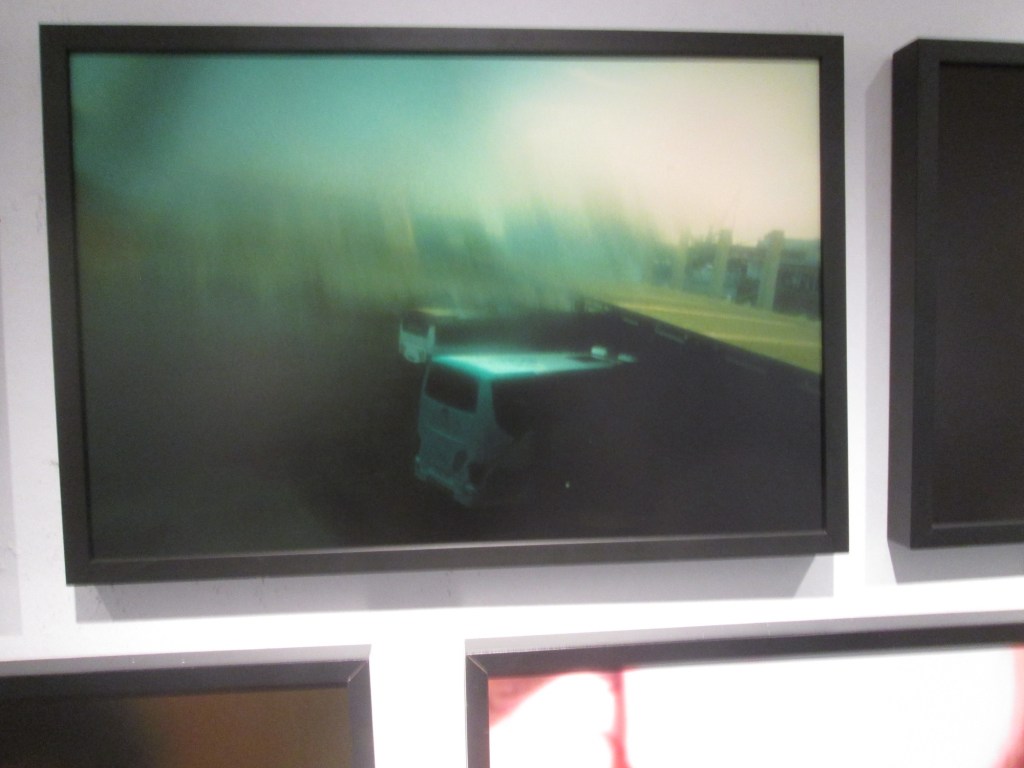
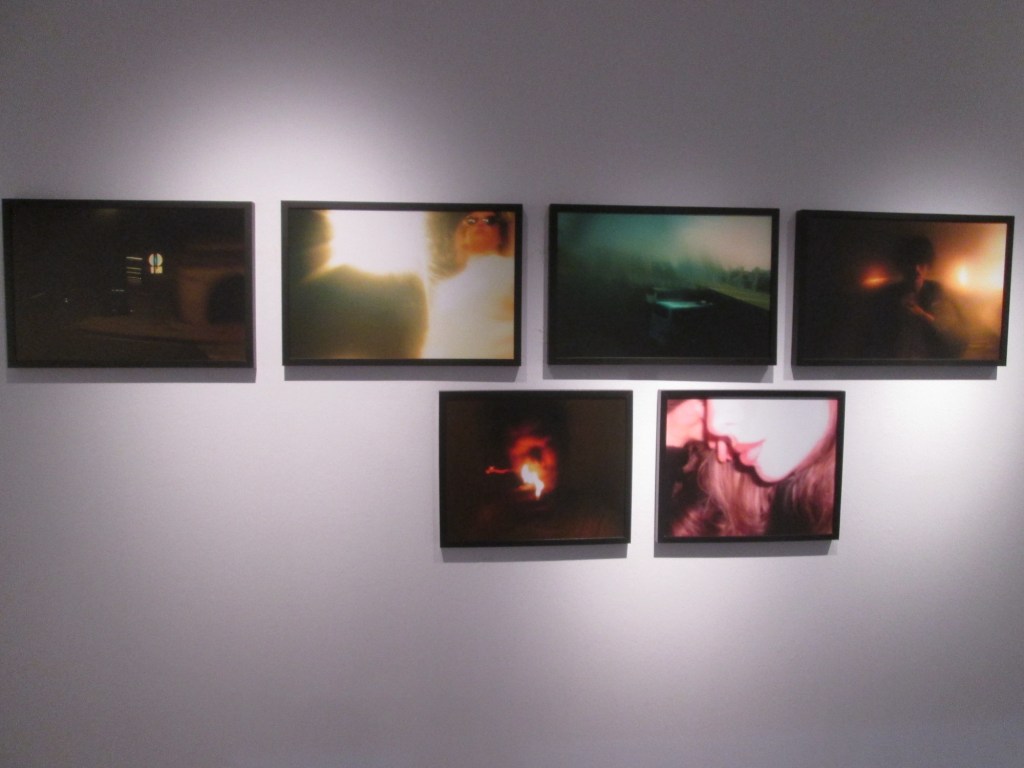
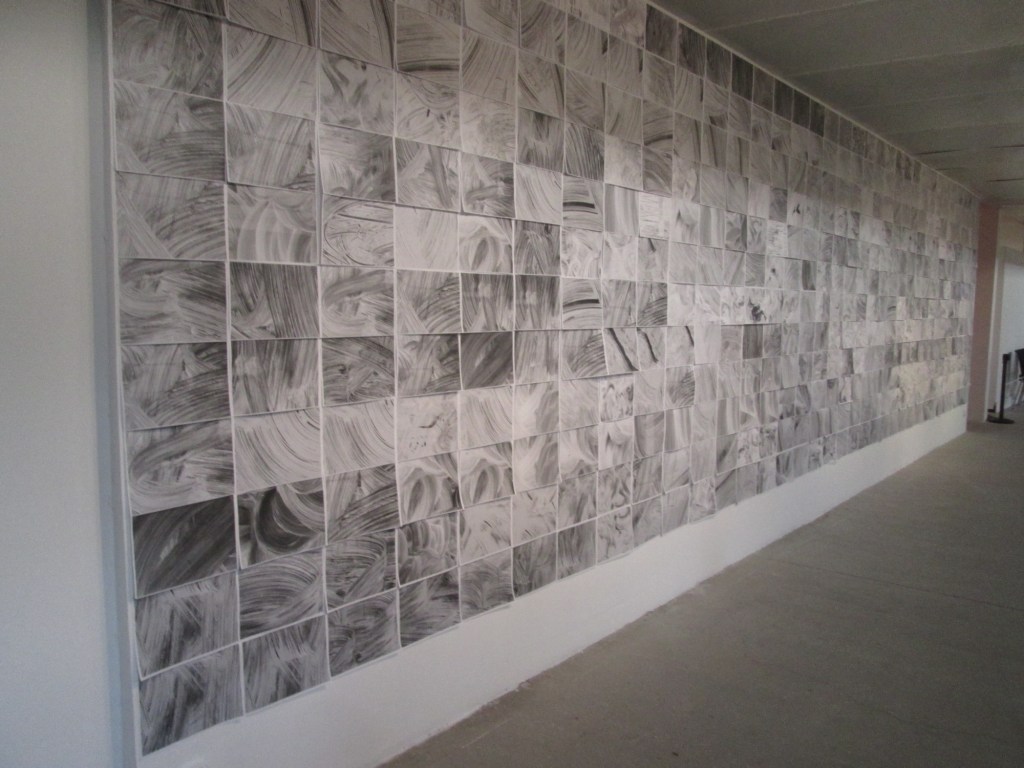
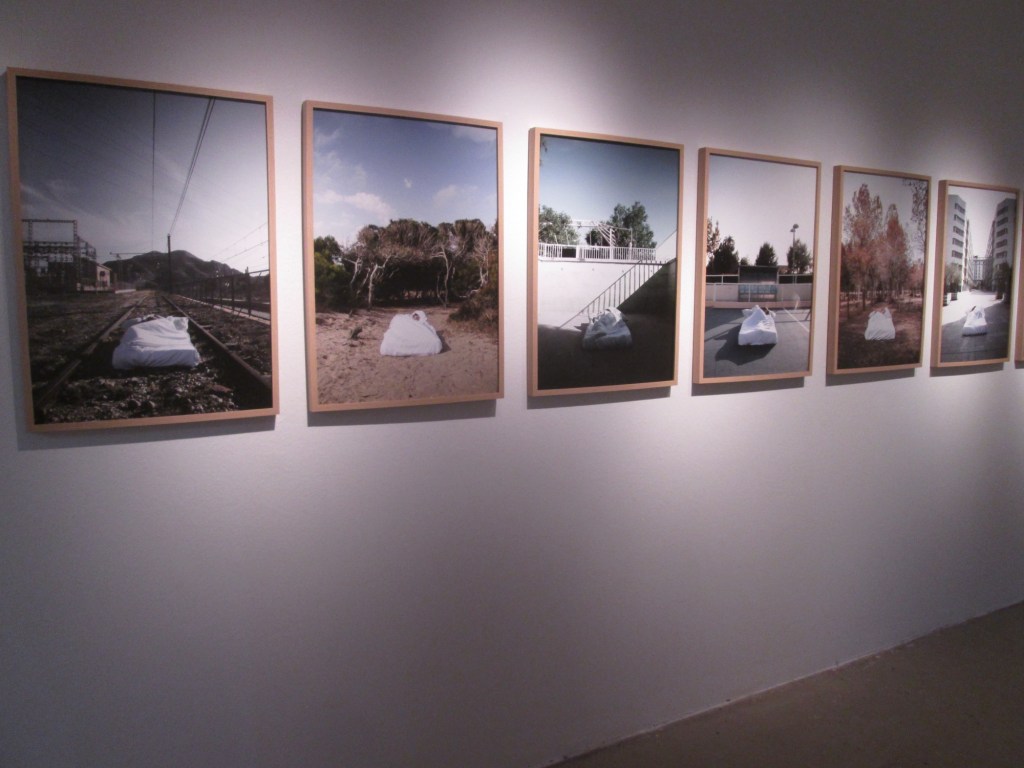
Inside one of the grey former factory buildings was a photographic exhibition with a series of experimental images from a variety of photographers. One of the exhibitor’s work reminded me of my friend Lisa Kalloo’s in the use of pinholes, Vaseline and other distorting factors to produce amazing images. Others used reflecting metal objects under water, scratched lines on negatives, printed out and made into a montage wall and a social comment on homelessness with a bed featuring in various locations.
I had had no idea what to expect as the Cigarreras website wouldn’t work for me in the UK, but I thought the buildings were worth a visit anyway. It was a thought-provoking show that made me vow to go to more unconventional exhibitions back at home and broaden my view of what constitutes art. It needs to raise emotion, stimulate ideas and challenge conventional attitudes. This did all of that.
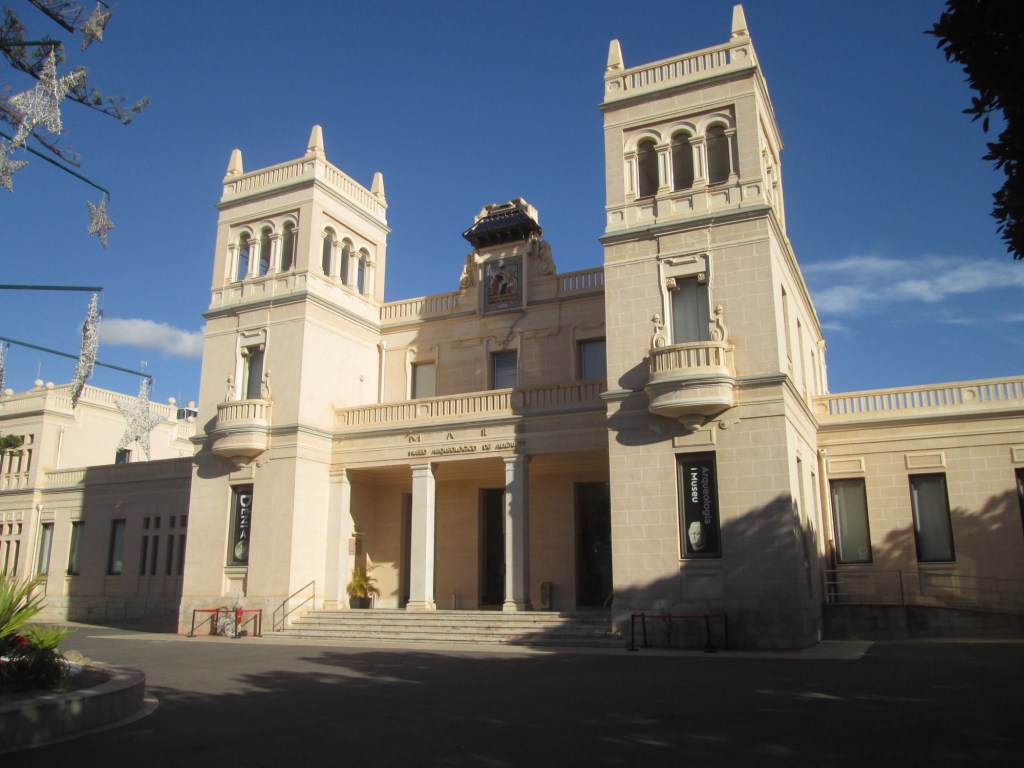
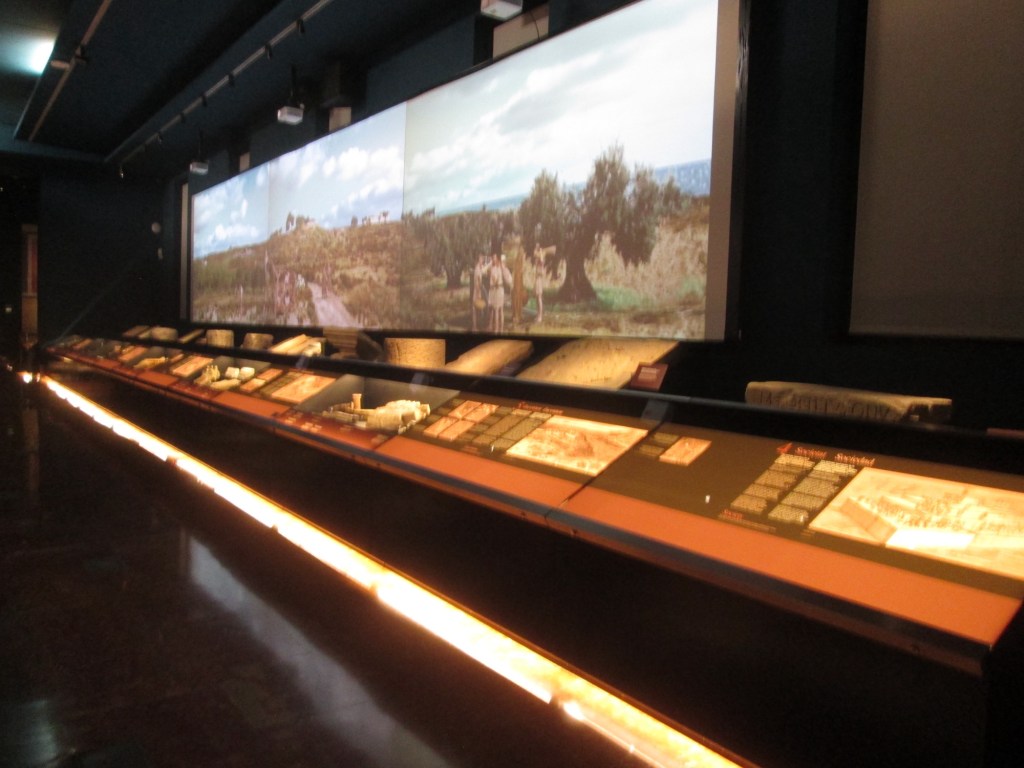
MARQ – the Museum of Archeology – was feted as European Museum of the Year in 2024 and it’s easy to see why. It’s in a former hospital and has displays not only of objects found in the area from the Bronze Age onwards but has reconstructed videos of life in each of the main eras of Alicante history – Iberian, Roman, Jewish, Arabic, Christian and modern democracy. Sadly only the introductions to displays are in English so my Catalan and Spanish got stretched now and then.
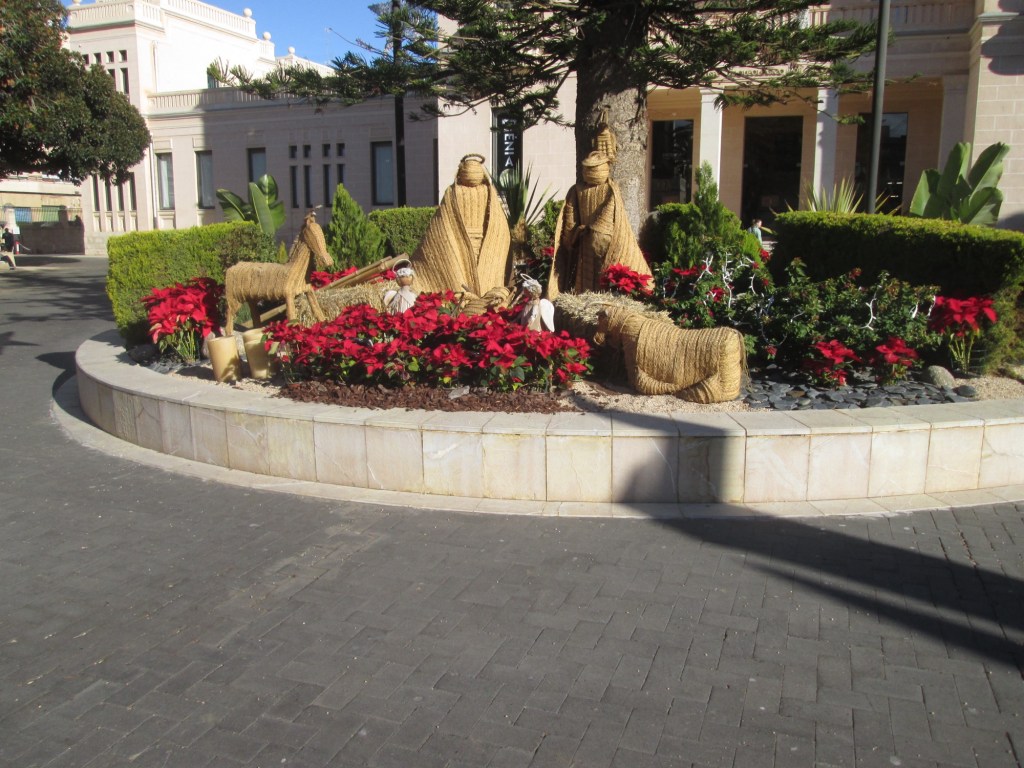
MARQInteresting straw belenMovies supplement the displaysLike being on a dig
One of its great features that Dee, who always wanted to go on a dig, would have loved was the reconstructions of archeological investigation sites throughout the eras. We had been to Empurias in Catalonia so knew about Spain’s lengthy history but MARQ made it clearer in a dramatic and intelligent way. Well worth the walk to both morning venues and my lunch saw me have my first slices of Serrano ham – how can I been five days without?
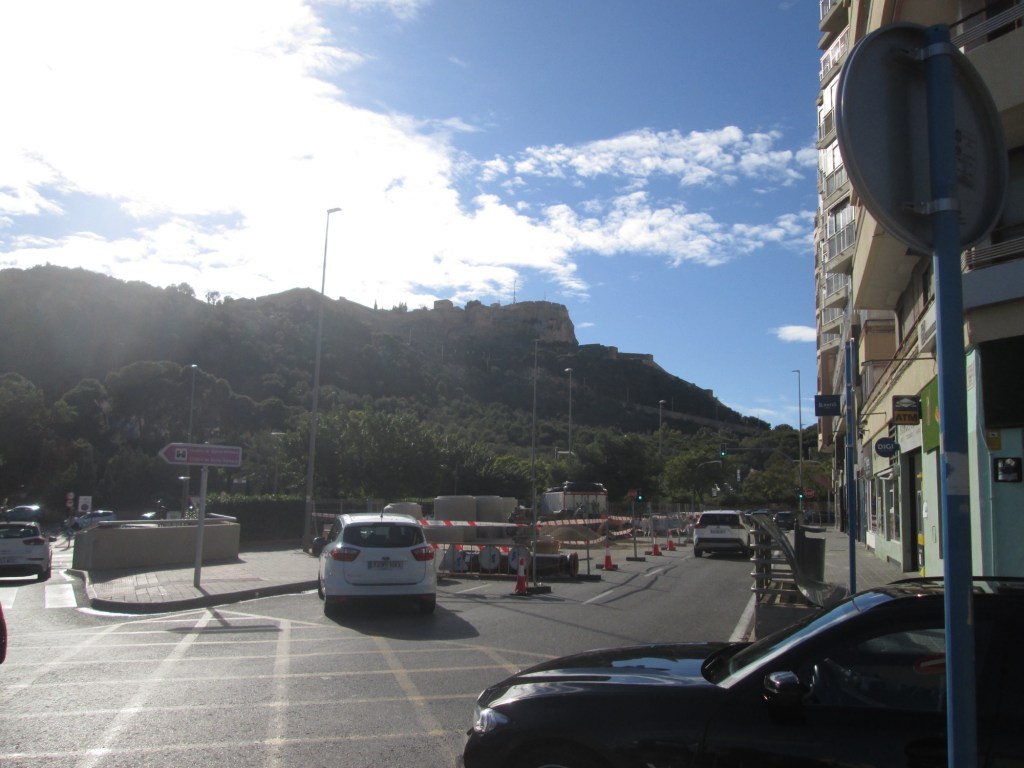
On the way back from MARQ a different view of the castle
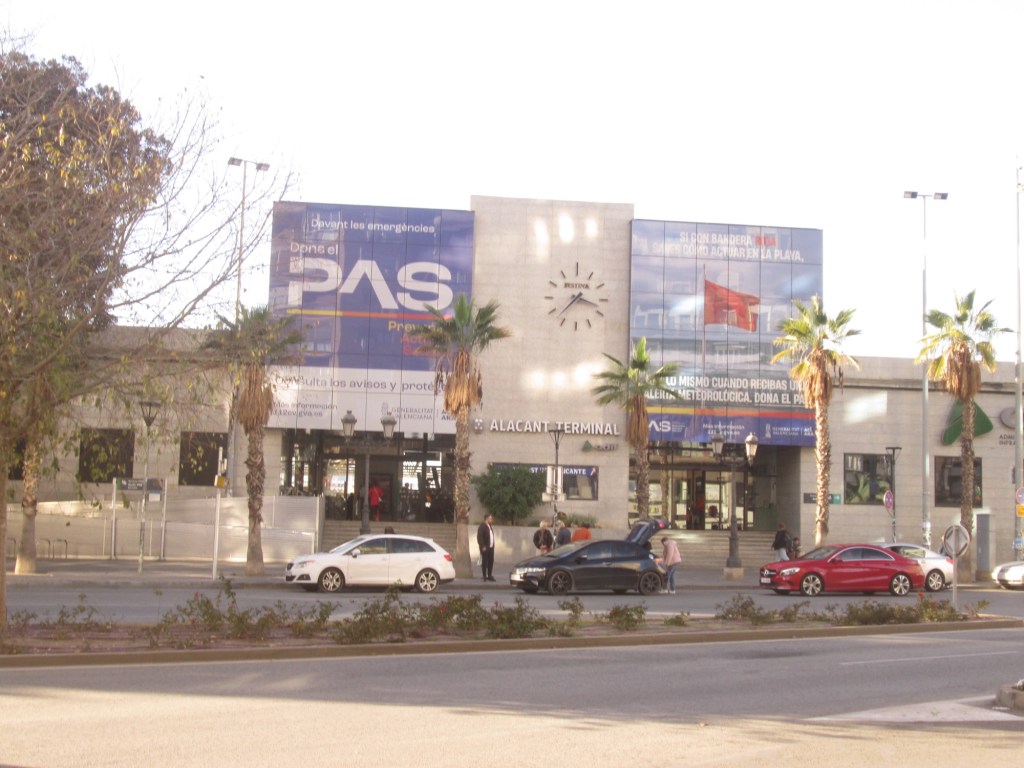
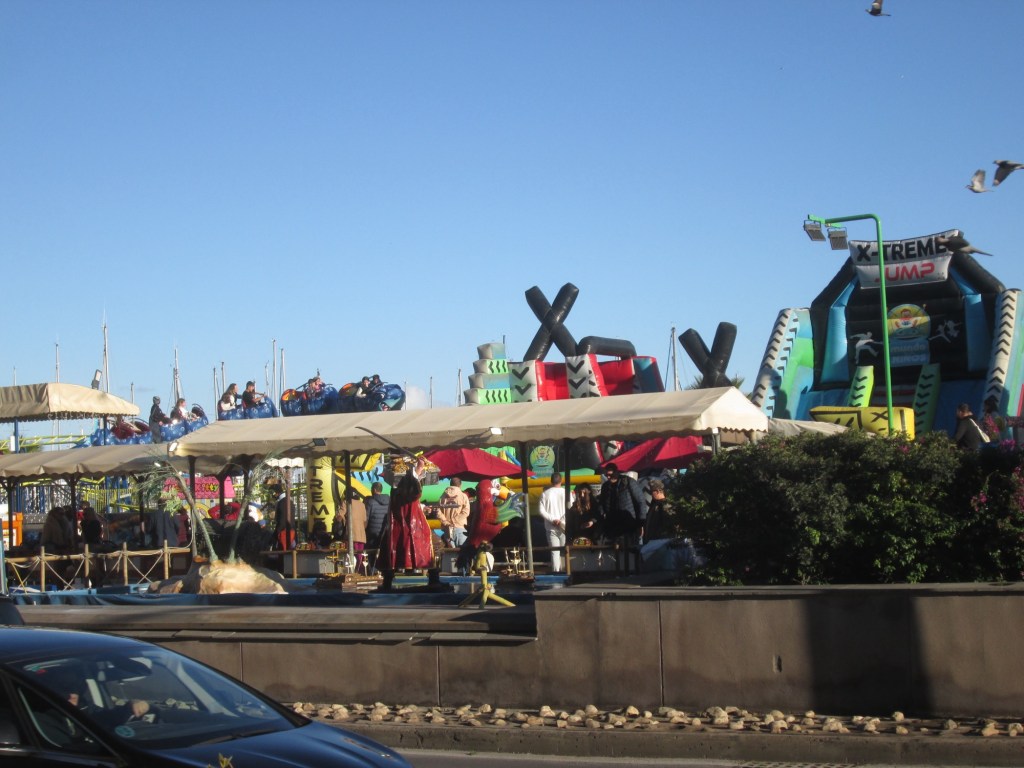
Most Spanish cities have an interesting rail terminal – not Alicante. But I walked there and then back down through interesting streets to find myself back at the southern end of the marina past an amusement park and passing by the lovely fisherman’s terminal.
Dull stationThe martyrs promenadeJust like Granada last yearA shark roller coaster and extreme jumps in Winter Wonderland
I spent another period in the sun finishing my book and then thirst prevailed and I went back into the mad centre of the city where every bar was full and families were meeting up noisily after shopping. Busy!
Fish marketFish market signMarina from the southFind me a table!
Things were no less busy when I went out to eat a bit later but one of the older restaurants Labradores – well you have to solid with the workers don’t you – found me a table and delivered a fine series of tapas – gambas al ajillo, pincho moruño finished off with some brilliant blue cabrales cheese. Oh and some excellent local wine. One thing I’ve discovered here is that tapas are much bigger than I’d experienced elsewhere in Spain, so care is required when ordering!
Sunday morning is spent packing, leaving cases in the hotel lock up and going in quest of breakfast. Options were very limited as it is Sunday when places open very late. I do succeed in finding a hotel bar open to the public and then go to remedy the third museum visit I lost when the Darro called.
On the way I spot my first Irish pub in Granada – there may be others – but I thought this made a change from Murphy’s and O’Neill‘s. It wasn’t yet open so I can’t vouch for the quality of the Guinness.
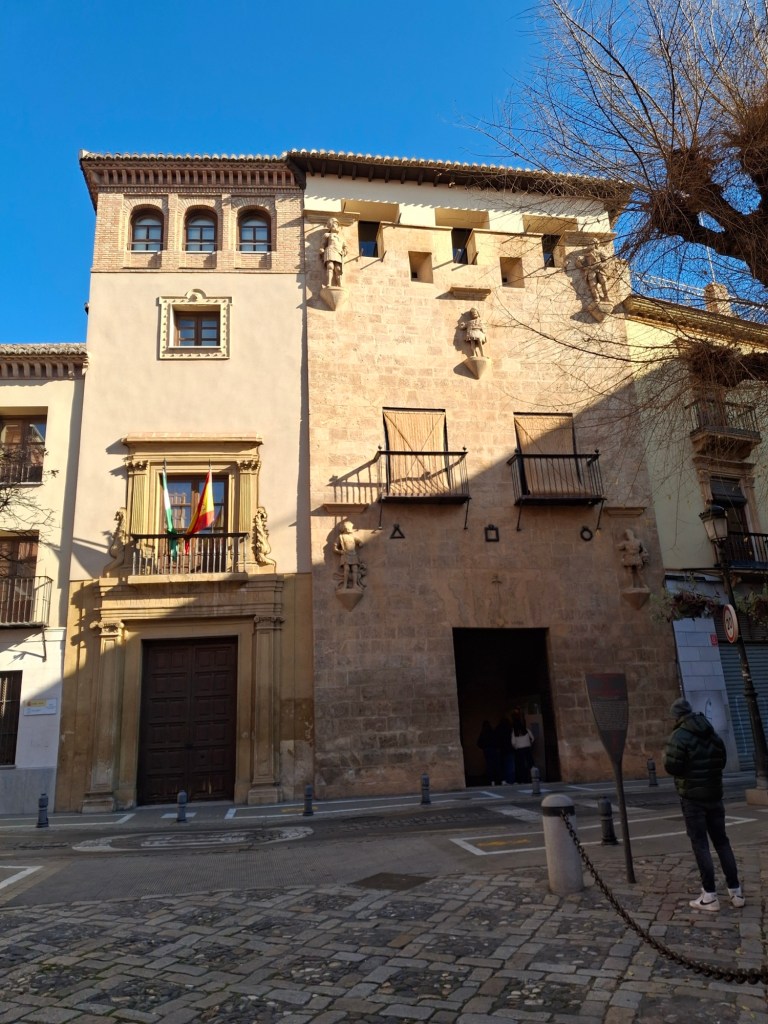
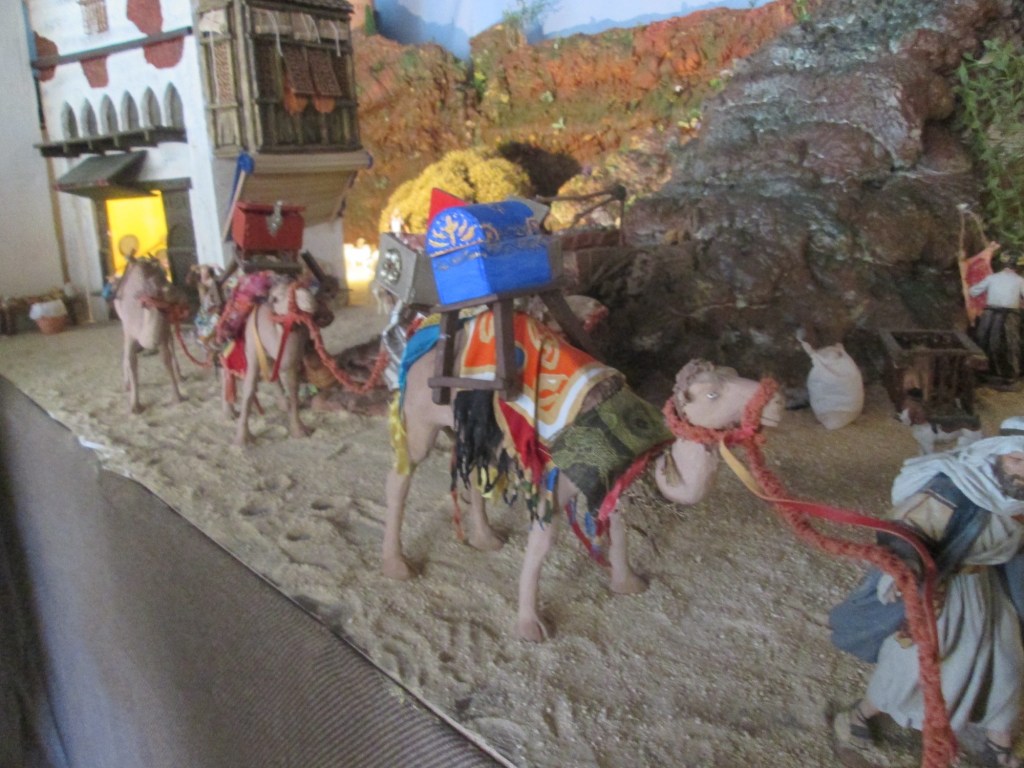
I’m glad I made it to the Museo Casa de Los Tiros ( tiros = muskets apparently among the stones at the top of the building. Entry is free but photos and selfie-sticks are prohibited, but I dodged the guards a bit as it was interesting. There was a special exhibition of figures and landscapes for belens and some unusual ones – a belen in a barrel, another in the shape of a pomegranate. Some were on loan from the International Museum of Belen Arts – who knew! I found it.
Museo Casa de Los Tiros
The upper floors were devoted to material about the city – important figures – Ganivet was there of course, room layouts from various periods when the building was the arts hub of Granada, posters from events, newspaper cuttings, photographs, including de Falla and Lorca. There was a wonderfully ornate set of toasting forks and a great quilt. It was well worth the wait.
The main hall with wall painting remnantsManuel de FallaRoccoco toasting forks
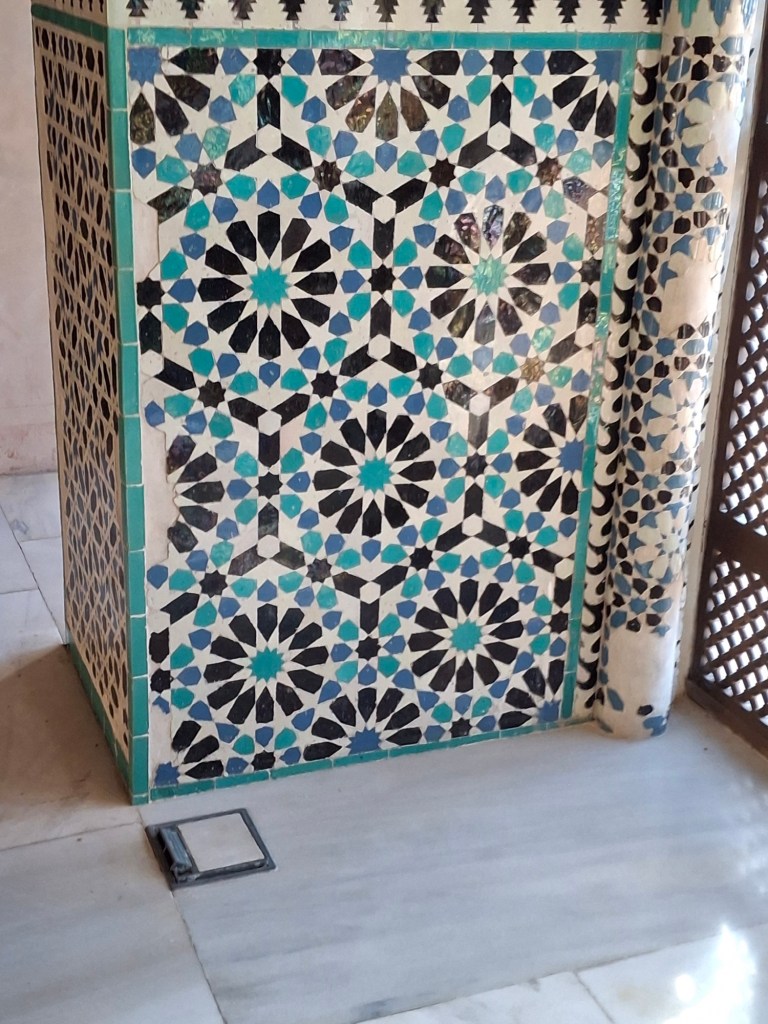
Not far from here was something that had escaped my plans for visits – the Cuarto Real de San Domingo. It’s free on Sundays so why not? A pleasant enough garden leads to a modern construction covering the remains of an Arab palace built before the Alhambra in the 13th century. Excavated floor layouts can be seen through a glass platform (slightly unnerving), with tiles, mosaics and walls indicating the palace arrangements. When the Dominicans took it over they demolished most of it but kept the qubba which has the fabulous decoration styles that were later repeated in its more famous companion up the hill. The space also has occasional exhibitions although not today. I’m glad I found it at the next-to-last minute.
An ancient wellThe qubba wall decorationMoorish tile patterns
Interesting things I found while wandering about were cooking oil recycling on the street along side a receptacle for used batteries too and I was lucky enough to be greeted by a peal of bells from one of the many fine churches. Then it seemed time to head back for a farewell beer in the Futbol Café. Today’s tapa was a small dish of seafood paella.
The bus stop I’d been using several timesd this week was called Fuente de Las Batallas but I’d never seen the fountain working until today. A fitting farewell as I board the number 4 to the train station.
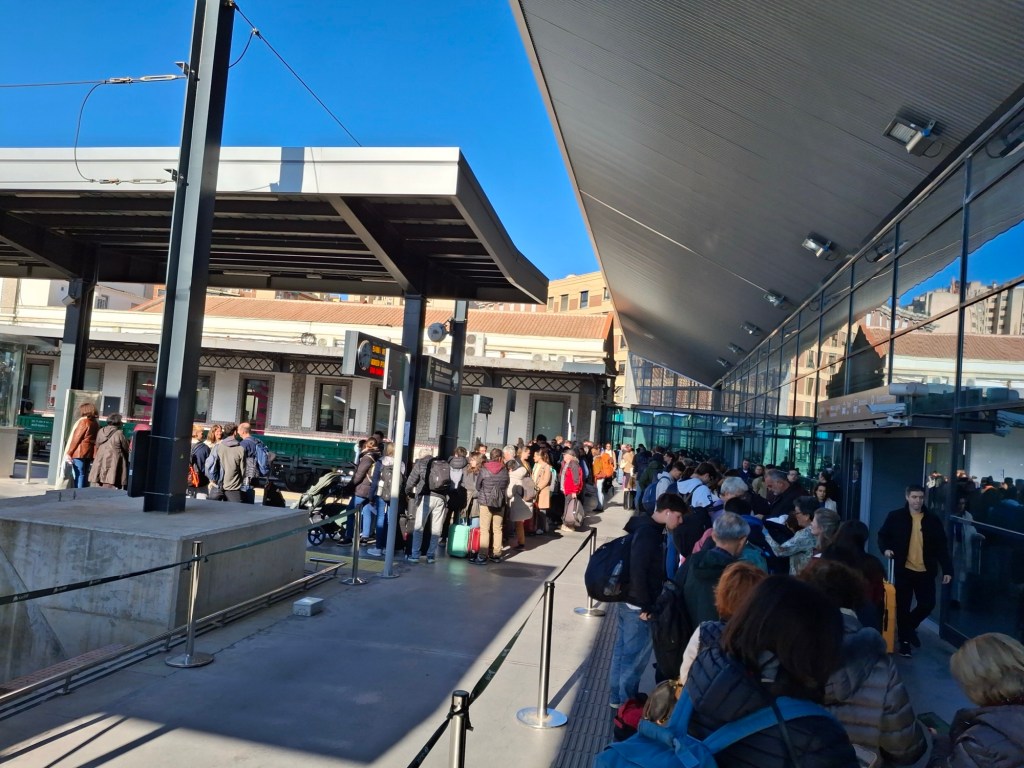
They advise you on the train ticket that doors close two minutes before departure but don’t warn you that after a baggage check and wand screening, you then stand in a queue for half an hour before they let you on board. I’m glad left plenty of time to get to the station. It felt pretty chaotic, but the train left only seven minutes late so I suppose they know what they are doing.
The multi-stranded queue snaking towards the train
I happened to be in the Cafeteria having the snack I thought I’dhave time to get at the station in Granada when we passed somewhere we had once visited because of the name – Castillo del Almodovar del Rio. I don’t think he ever set a film there, but it’s wacky enough.
The train made it to Madrid on time and via a labyrinthine series of escalators and travellators, I emerged into the chilly air of Madrid Atocha. I’d booked another hotel quite close and was there in 10 minutes walk, after admiring the lights around the Atocha fountain, making real trees into giant snowflakes.
It was a small room in a functional hotel but good for the one night. It was also in touching distance of a couple of restaurants where I had a beer in the courtyard and then decided to stay and eat if they had a table inside. They did and I was informed that they had a fine piece of hake – as far from the sea as you can get and I eat fish! However it is pretty much obligatory to eat merluza when in Spain. Buenprovecho!
Mountain air yesterday, I decided I needed sea air today. Motril is due south of Granada and takes about 50 minutes so off I go after a tyre screeching exit from the seriously steep parking garage. I find a lot of Spanish parking places difficult to get in and out of – thank God I didn’t accept the Transit! We did part of this route several years ago before it was the A44 motorway but I was delighted to see the sign by the roadside as we cross through the pass over which the Christians finally banished the Moors I’m sure it used to say Ultimo Suspiro – the last sigh.
Crossing it brings into view something I’ve not seen so far this week – clouds, high and fluffy but definitely clouds. O level geography comes flooding back! Convection. I reach Motril without problems except that as it is surrounded by a flat plain it is littered with polytunnels – the port is renowned for its exports of fruit – they even grow mangoes and avocados here. The town itself looks dull and I find myself on the western side with signs to Salobreña which we did visit many years ago and I recalled as being much more agreeable. It had a convenient parking place and a cafe where I had my usual breakfast. I then strolled around the lower part of the town deciding against either driving or walking up to the magnificent castle that stands atop the hill.
The pleasant pedestrian street where I had breakfastThe castle tower above the white town
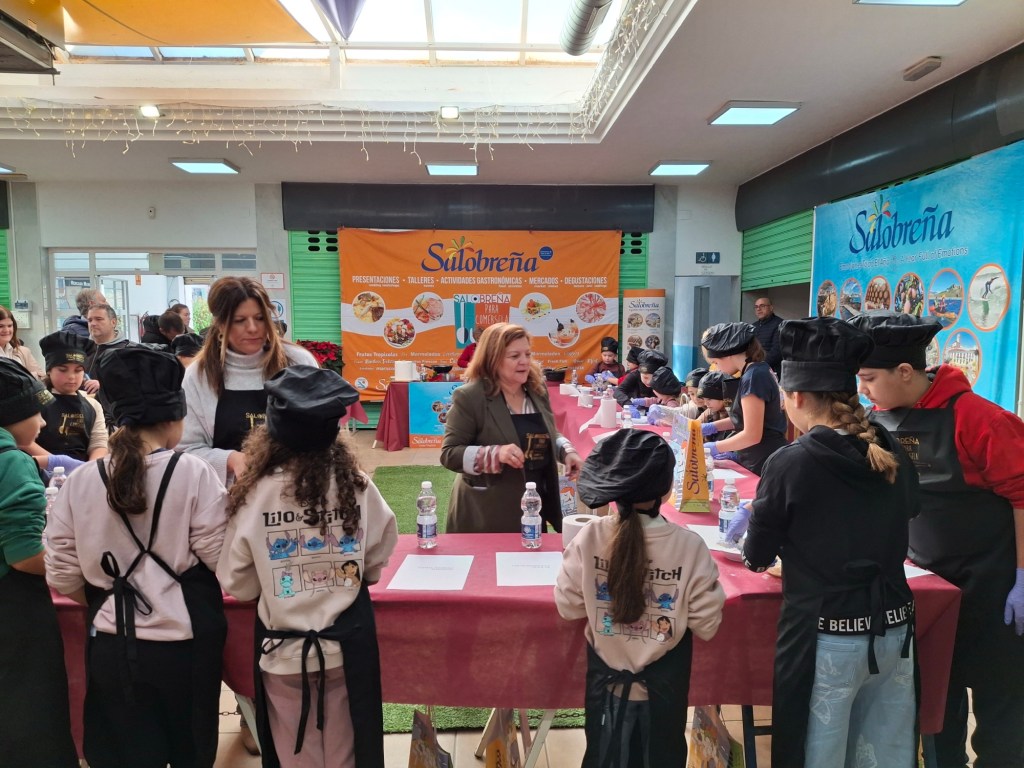
I was looking for a seafront but from a convenient map saw that the beaches were grouped around it but not directly connected to the centre. On my wanders I encountered the market, so had to take a look. There were disappoiningly few stalls but a class of children making bread and a belen on a proper modest scale.
I need a walk beside the sea so head for Caleta-La Guardia which again has a free parking place at the entrance from which there’s another view of the impressive Salobrańa castle.
There’s a wide curving beach with the greyish sand that is common along the Costa Tropical along which I take a bracing stroll – the onshore wind is quite strong and the porridge-like sand gives my calves a real work out. I pass a woman emerging from the sea – it’s probably too warm for the likes of Fran and other year-round swimmers – but she clearly enjoyed it. Bar Manolo provided a restorative stop after my exertions – another version of that spicy chickpea tapa and an Alhambra beer.
The beaches and the beached at Caleta-La Guardia
As well as twisty mountain roads I love driving along twisty and dippy coastal roads and the one along here is brilliant as spurs of the sierra run right into the sea. Many, many years ago I recall driving along stretches of the N340 still being constructed and the surface was compacted stones not tarmac. It’s much smoother today – they do roads well in Spain. An exhilarating section of the Carretera de Almeria takes me along to Almuñecar which I think will make a good stop for lunch. It’s a very busy resort town and as I crawl through he promenade and beach area I can see no signs of parking possibility. After a second circuit I abandon hope and decide to head out somewhere else. I can’t even stop to check alternatives to the main A7-A44 motorway route. So I’m inexorably sucked in to the return route home – where’s your navigator when you need her – until a red light comes on to tell me I’m low on petrol. This was the result of a tricksy deal from Alamo whose policy is full out/full return, but because of all their scrambles yesterday my deal was half full out/half full back. How are you supposed to gauge that? From the morning’s journey I knew there were two service areas near Granada but none on this southern stretch. I ask Dolores for the nearest petrol station who confirms the one I know and in a strange car I don’t know if we’ll make it.
There’s a sign for Lanjaron and La Alpujarra coming up so I take the bold (or stupid) decision to exit the motorway in quest of gas. Lanjaron is a town renowned for its mineral water – we must have drunk almost as much of it as of Vichy Catalan – so if there’s a business there’s got to be a petrol station. My relief when I saw this was palpable since the odds of getting assistance in the high mountains for a rental car were pretty low.
The source of my favourite tipple!
In the distance just beyond the factory was my salvation. Transportes Lanjaron, as well as servicing their own vehicles, have a couple of pumps selling fuel to the public. It felt a bit odd as you had to go through factory style iron gates but it worked and I slightly misjudged the quantity being miffed to see the fuel needle pointing at three quarters. The journey back along the A-348 was much calmer and I enjoyed its sinuous progress through the sierra. In retrospect, I wish I’d gone on into the town to see if there was anywhere to park – hindsight, eh! In both directions the mountains are very impressive with eagles out-soaring the peaks, dense forested slopes, blue glints of reservoirs, occasional bright green meadows and cuttings revealing red and ochre rock faces as this amazing road was carved out. You’ll have to make do with my words as there’s nowhere to stop and snap.
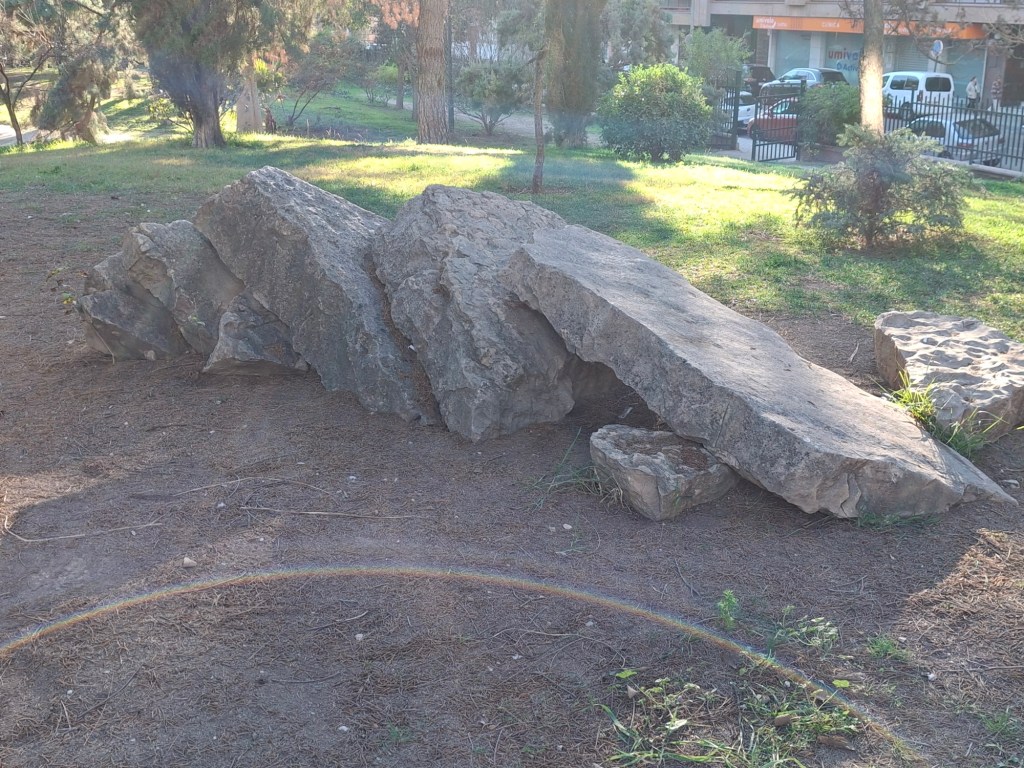
I follow a more sensible route back into Granada this time so I think Dolores has forgiven me. The car is scratch and dink free and my deposit is returned and I go in quest of the number 4 to get me back into the centre. As I start walking down Avenida de la Constitution I come to another of those little parks. This one is part of the University Campus and I’m attracted to a sculpture of stone slabs and a little further on what looks very like a Henry Moore. Research needed to identify as there were no plaques displayed.
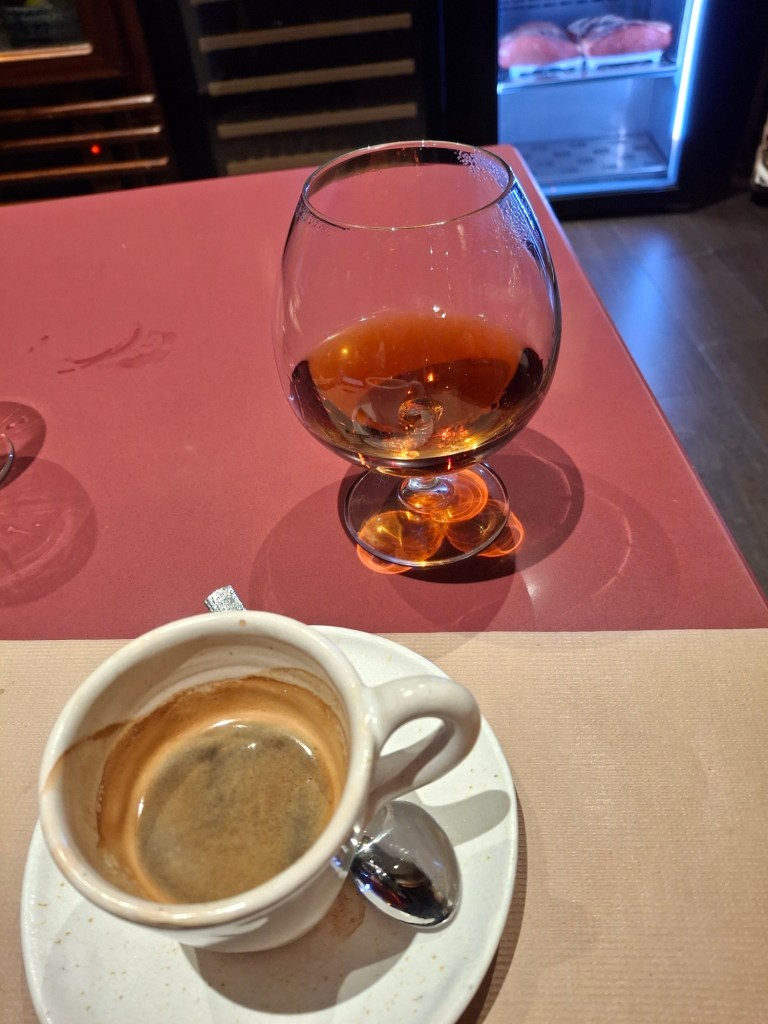
A new tapa experience with my beer in Puerta Real – a slice of toast with pâté topped with an anchovy which proved a very pleasant taste contrast. Following the difficulties of the last few days I booked a table for 8.30 in La Chicotá one of the smarter looking places up Navas street. A different take on berenjenas with the aubergine cut into chip-like slices and fried with a separate sugar cane honey dispenser. There was a very tempting meat fridge looking at me but seeing the size of the steaks being served I played safe with the meat balls which were excellent. They even had half-bottles of wine so that was a result – a red from Rioja Alavesa. And as it was my last night in Granada, I treated myself to a copa with my coffee. A very acceptable Carlos I. Should sleep well tonight.
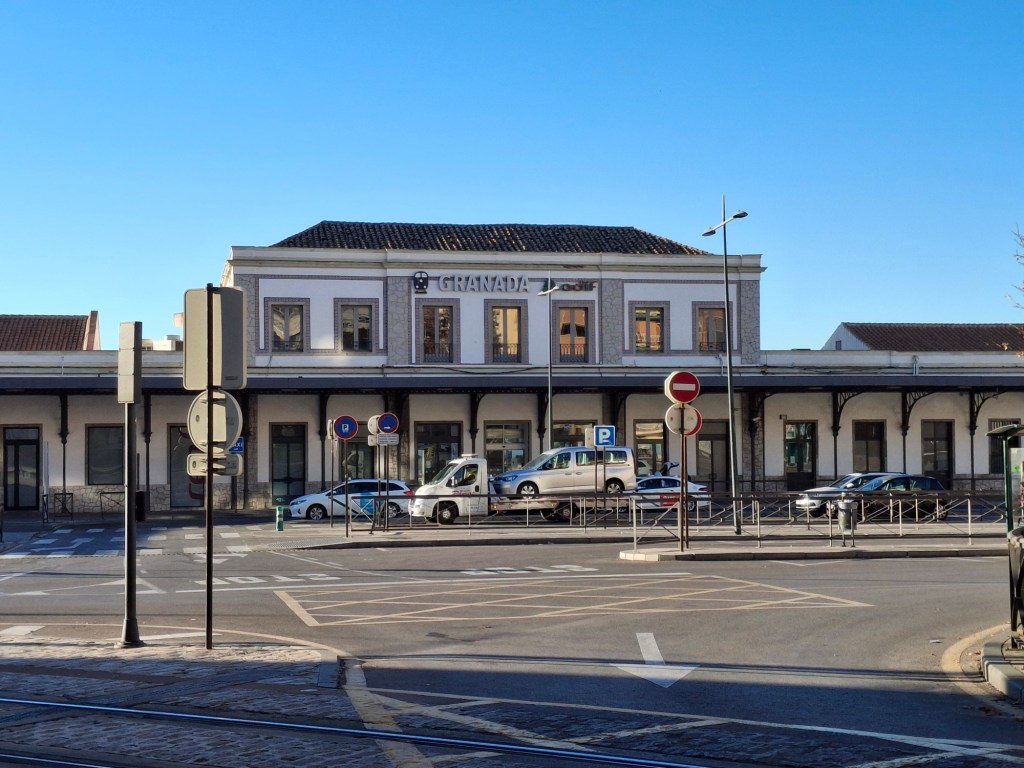
I had decided from London to rent a car for two days so as to venture out of town to a few places I wanted to visit or revisit. So the number 4 bus takes me on an interesting route to the station where Alamo have a car waiting for me.
Or have they? My reservation is all in order at the desk but they’ve just had a rush of bookings from incoming trains and it might take a few minutes to sort. I say fine, I’ll just use the loo and join them in the car park serving Granada’s train station. Would I like a Transit? No not with the streets I have to negotiate to get to the hotel’s parking partner. A recipe for excess charges for scrapes I reckon.
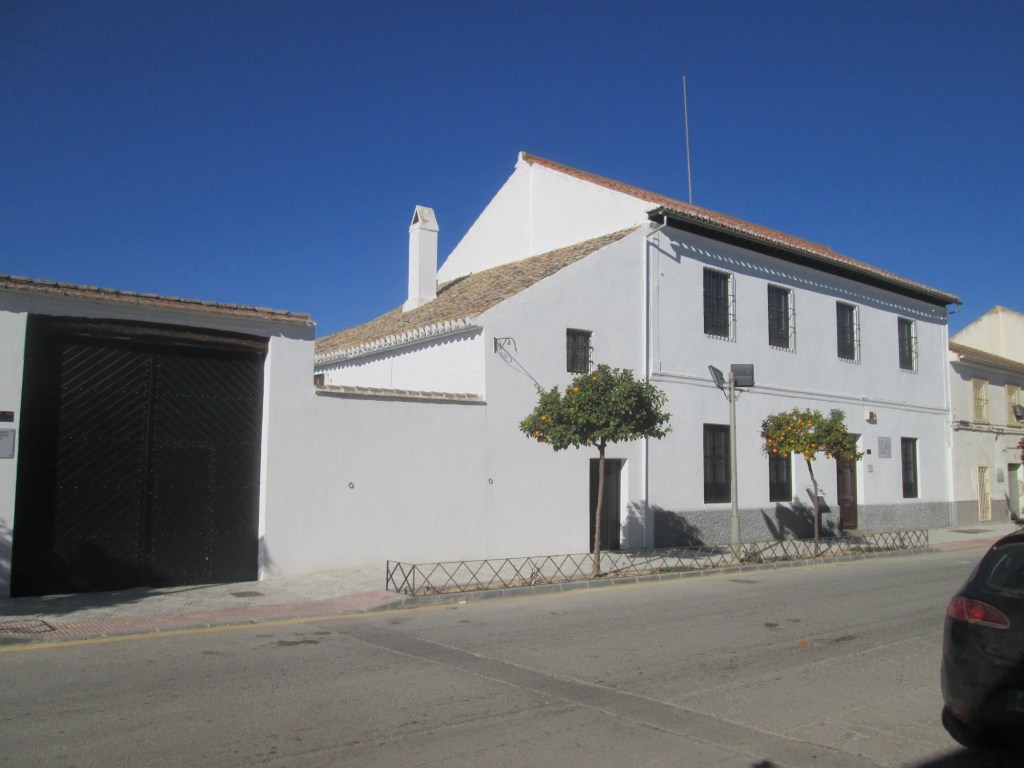
Eventually in a Citroen You, with a USB port to hook up my phone for SatNav, I’m off out of there. At the time of writing, after a day’s driving, I haven’t yet crunched the gears, but have hit the wipers when trying to indicate left. A lengthy suburban dual carriageway gets me quickly to the A92 a motorway I know well from its more westerly stretches as it links Almeria in the east to Antequera and Sevilla in the west. It’s not long before Dolores advises me to take the exit for Fuente Vaqueros, across flat farmland with great stands of poplars to the Casa Natal FGL – where he was born. There’s no tour for two hours – well it is winter and nowhere seems to just let you wander anymore.
I therefore head for Villarrubio where Lorca moved next in his young life and find that a tour has just started but that I can join them in the audiovisual barn where a three-screen projection shows us aspects of his life with actors recreating but not speaking and lots of shots of nature and butterflies – he was a big fan of mariposas.
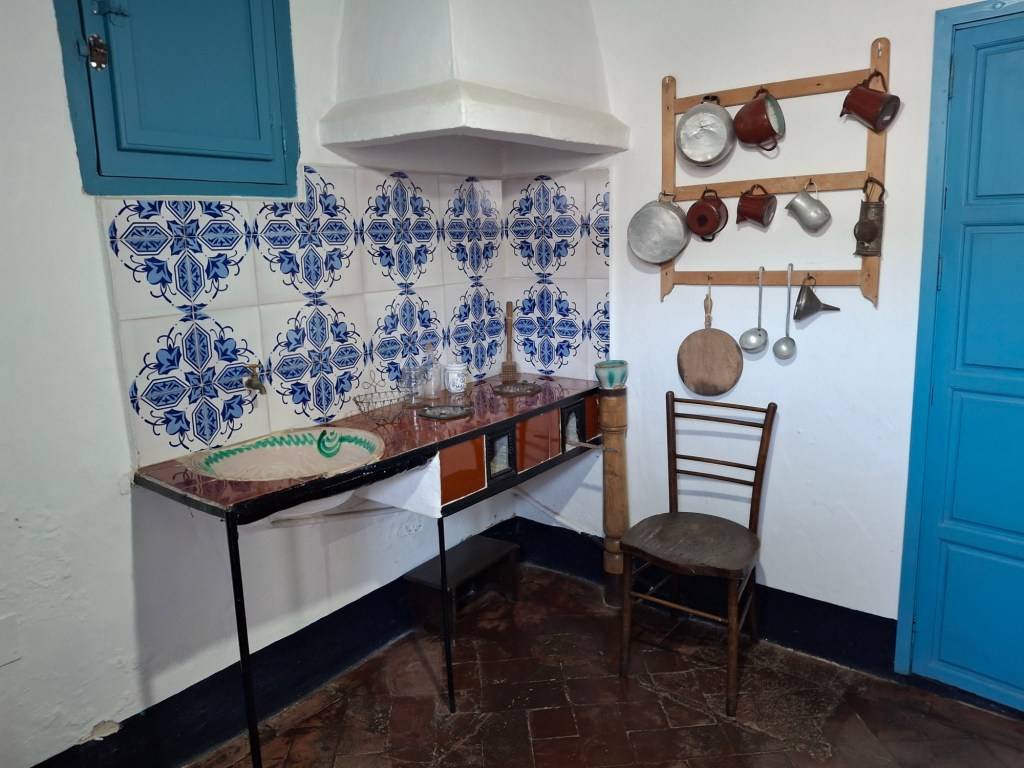
We then move into the house where guide Ana tells lots about the family life of the time, his friends and neighbours and then lets us roam through the property. A smart salon, tiny kitchen and lumpy beds give a good impression of life at the turn of the 20th century.
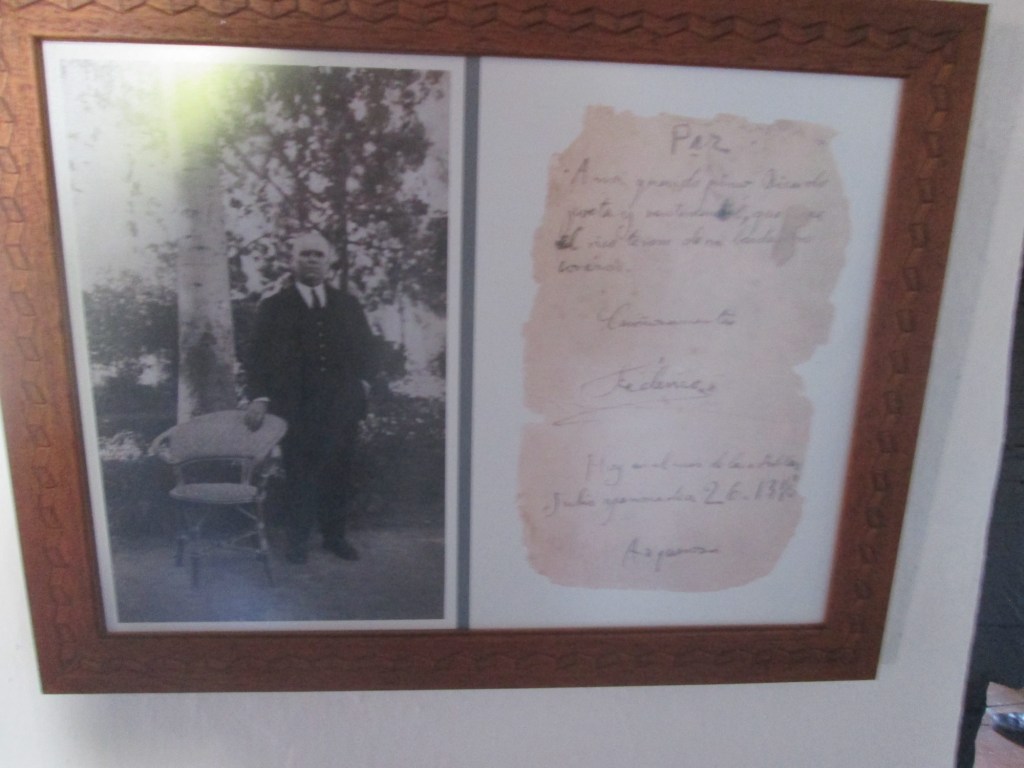
The courtyardThe salon with piano borrowed from/friendsAn original play script
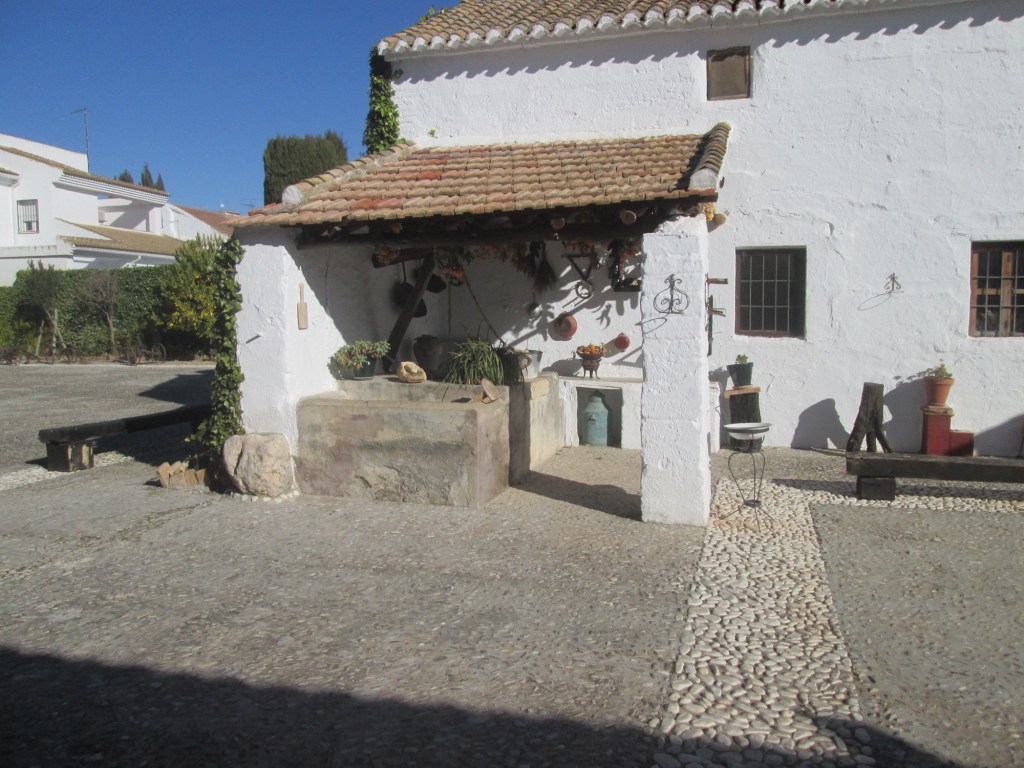
But there’s a bonus as the trip next goes to a house in an adjacent street which was the inspiration for his play The House of Bernarda Alba. His family shared a well with neighbour, Frasquita Alba Serra, who seems to have been a domineering matron. Lorca admitted she was the prototype for Bernarda the irascible materfamilias who poisons her daughters’ lives in the play.
The exteriorThe well of inspiration?
Before we go into the house there are further video presentations introducing the main characters in the play and acting out snippets from their scenes. It was informative and interesting especially for genuine students, but our random tour group got restless and started to move around. I suggested to Ana that she might keep to Bernarda and one other character per tour rather than all six. I’ll never know.
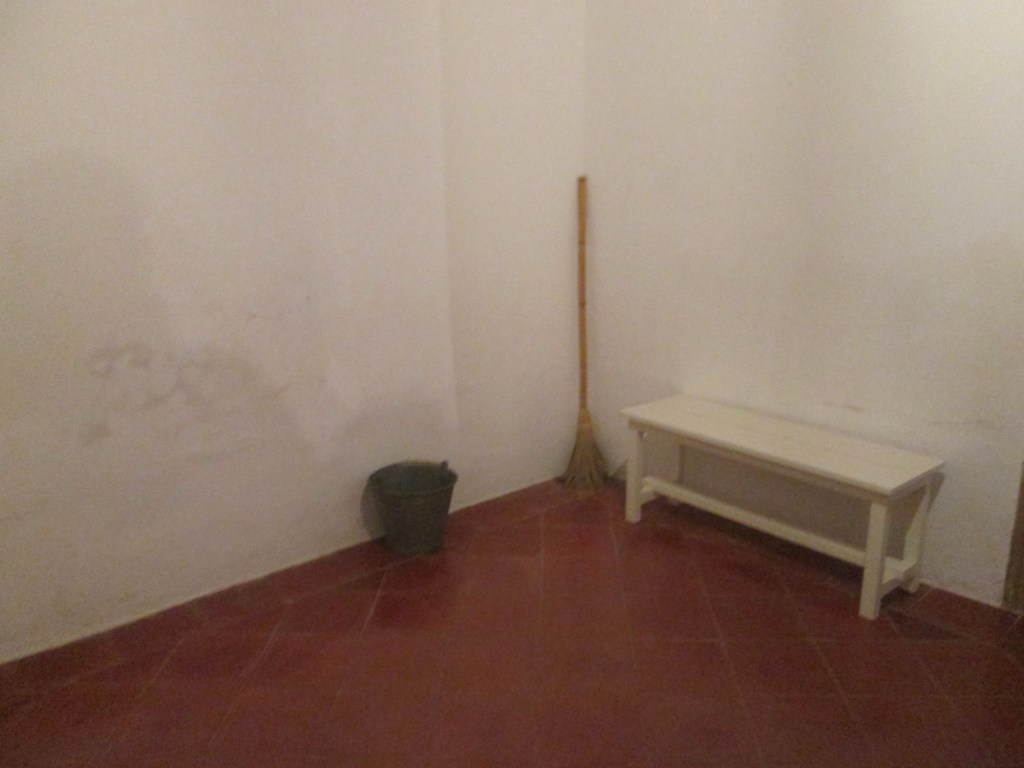
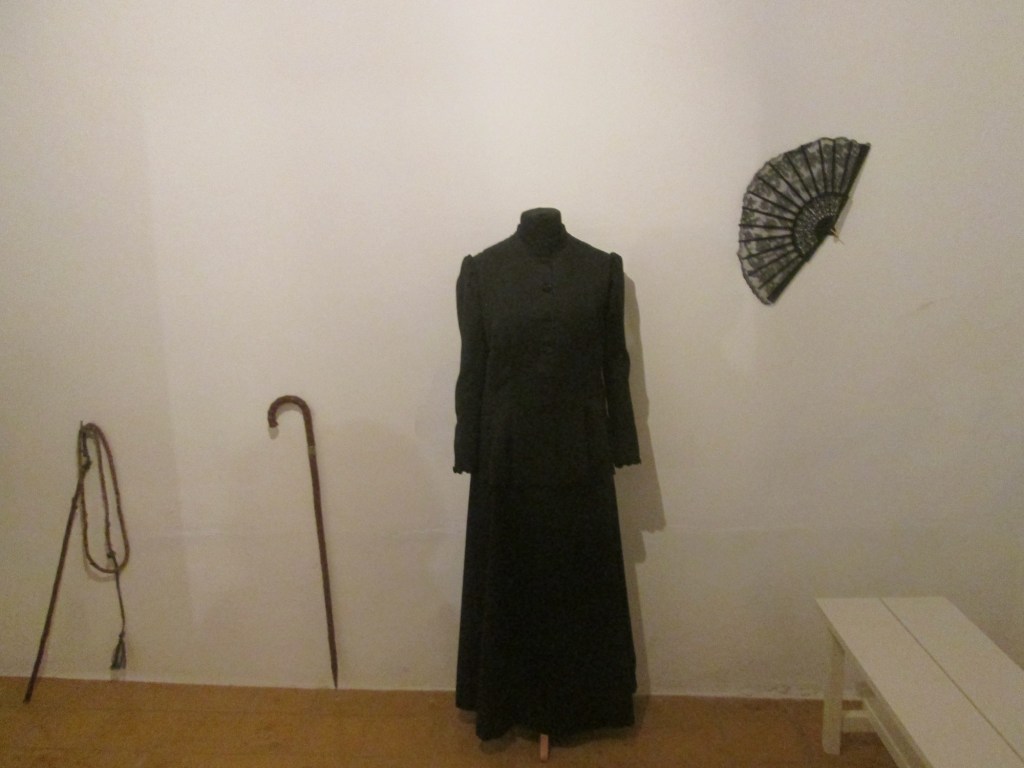
You can see where wardrobe and set designers get their inspiration!
This has been fun and I find what appears to be the town’s only cafe for a much needed coffee. I chat to one the owners who says she might have had an English couple a few years back but is surprised to hear I’m from London. People tend to do the museum tour from coaches so Villarrubio sees little benefit. Sad.
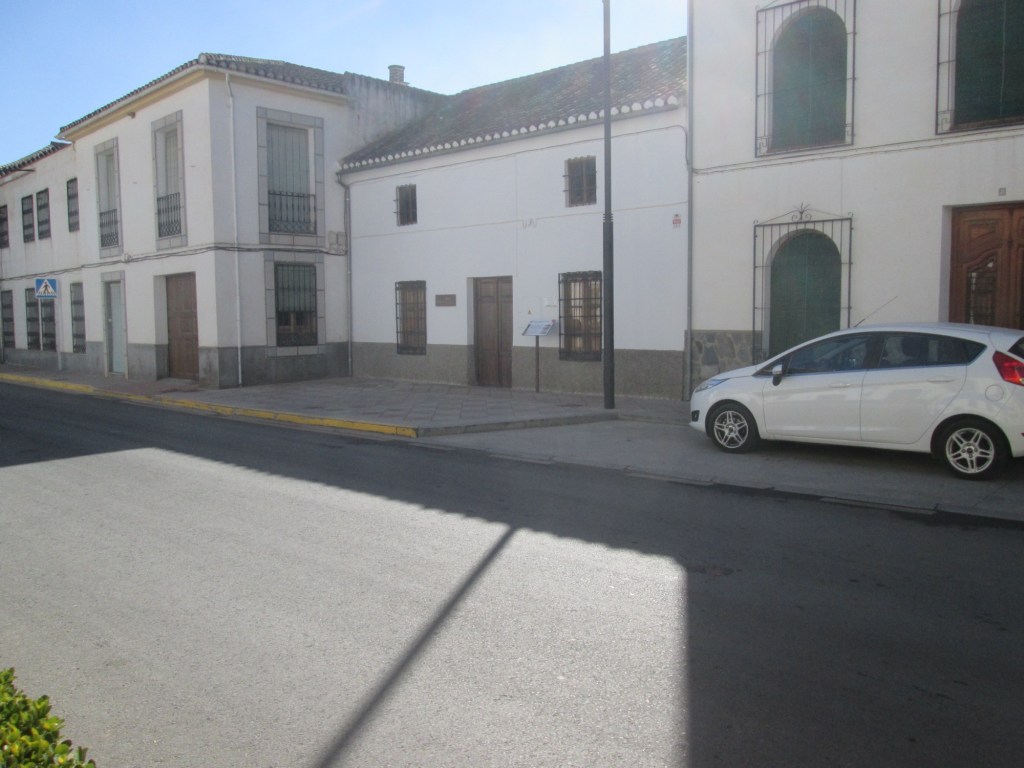
I head back to Fuente Vaqueros to find the museum closed as it is nearly two – it’s official closing time and clearly no time for a tour. I’m not too bothered because Dee and I did get to see the house on our previous trip and will have photos at home – more rummaging in the loft! In contrast to Villarrubio, Fuente is all over Lorca. Is where you were born more important than where you started writing? Or is it just shrewd marketing?
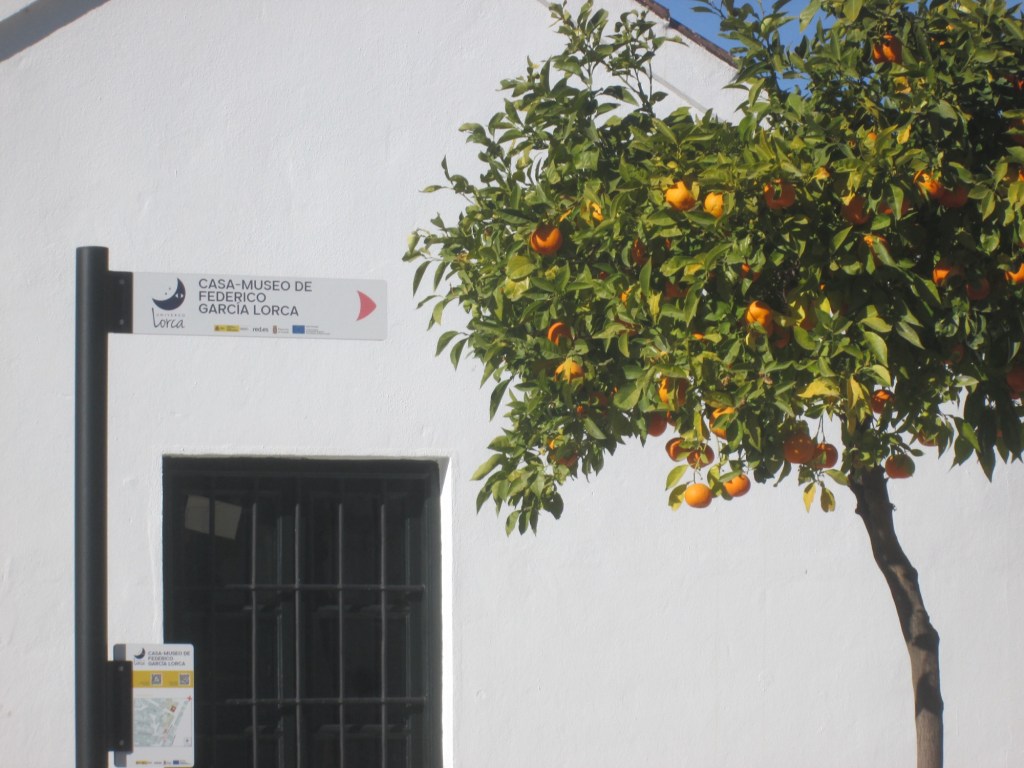
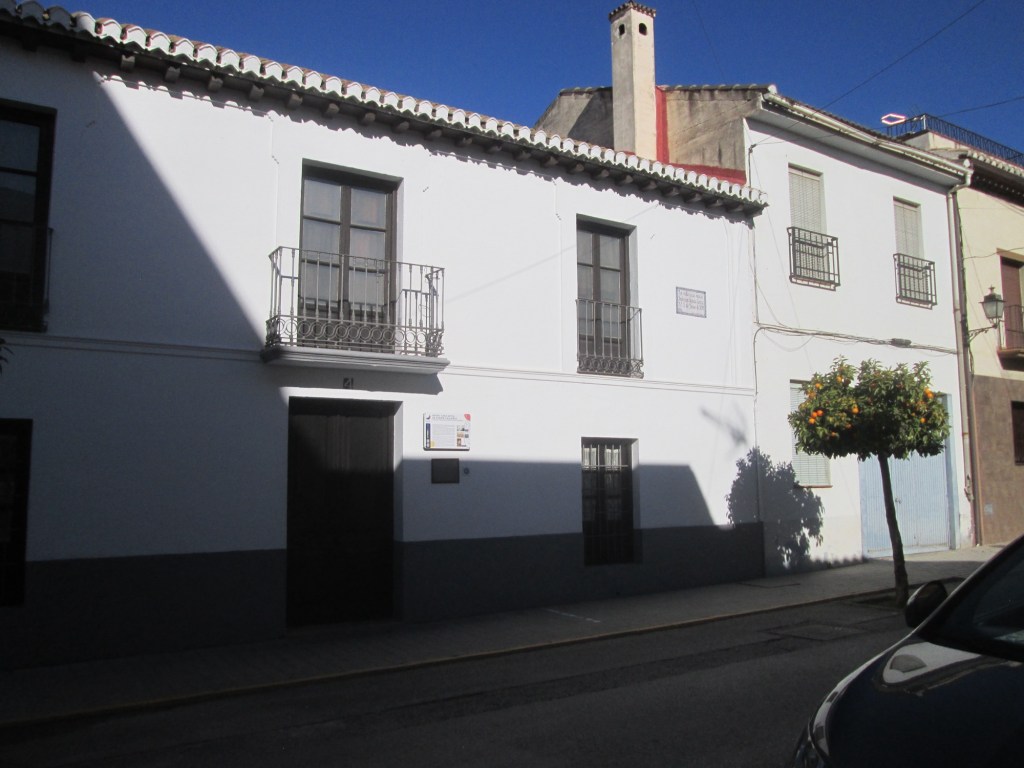
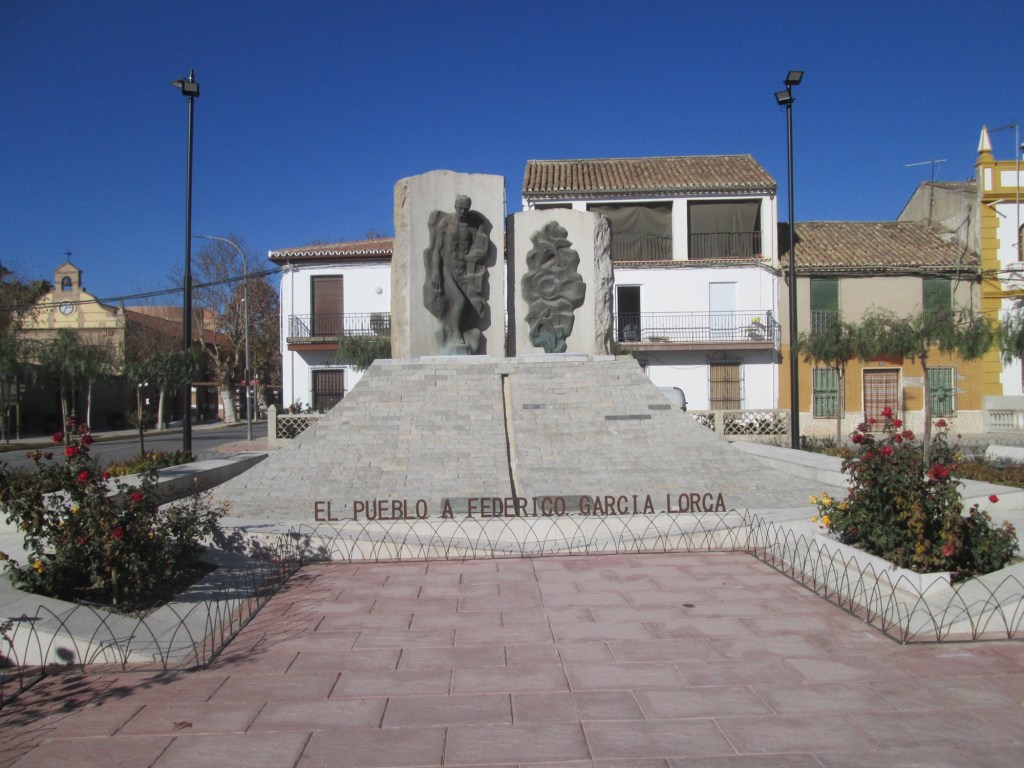
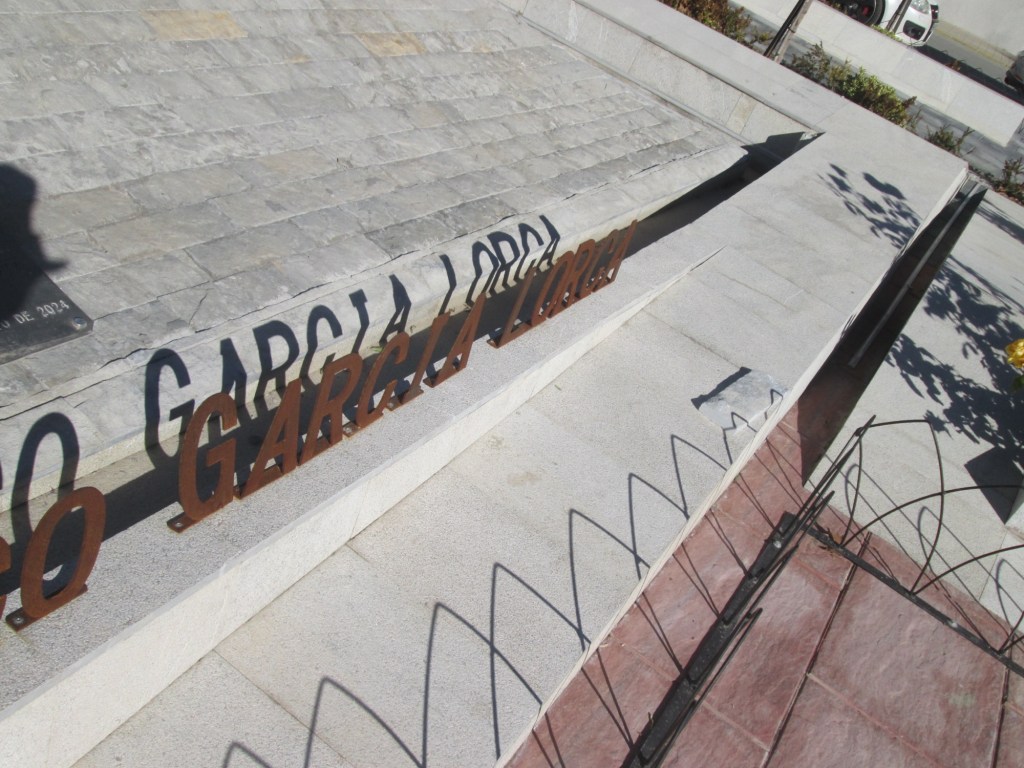
Exterior sign with orangesThe birthplaceMonument on the main paseoI loved the shadow from the Corton steel letters below his monument.
The Bar Malaga was more used to seeing Brits but was welcoming nonetheless and provided some spicy chicken wings after a bread and chorizo tapa – old school! The tapa originally was a piece of bread to keep the flies out of your drink. I ponder the day as I eat and have one beer – I’m driving. There’s no more Lorca on offer and I’m not going to go back into town and park. A quick Google and I’m on my way.
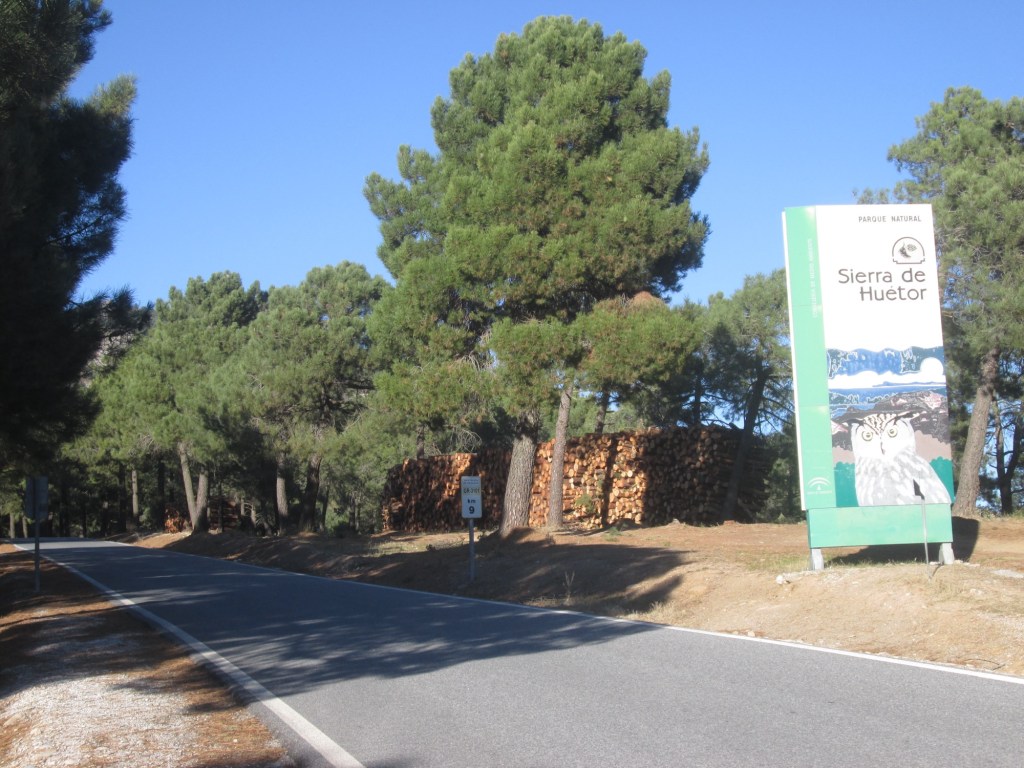
The Sierra de Huetor nature park is half an hour away and offers walks in the mountains and the source of the Rio Darro. Too much temptation. Satnav rushes me there along the A92 from whose slip road it is accessed in moments. I park up and start to walk.
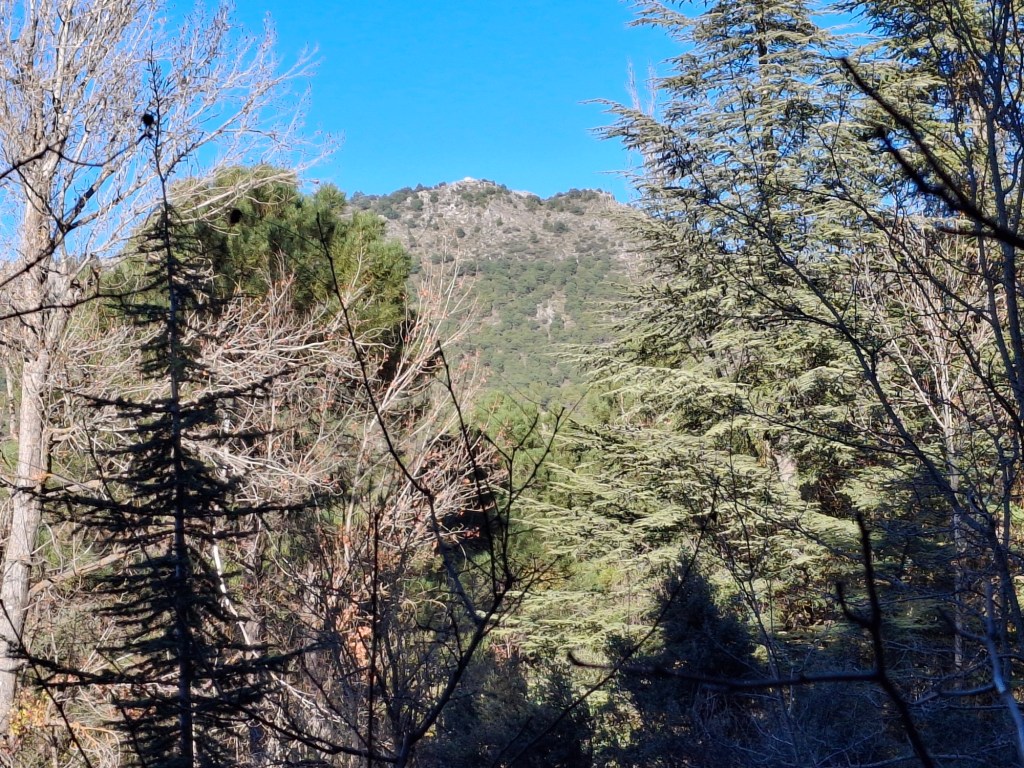
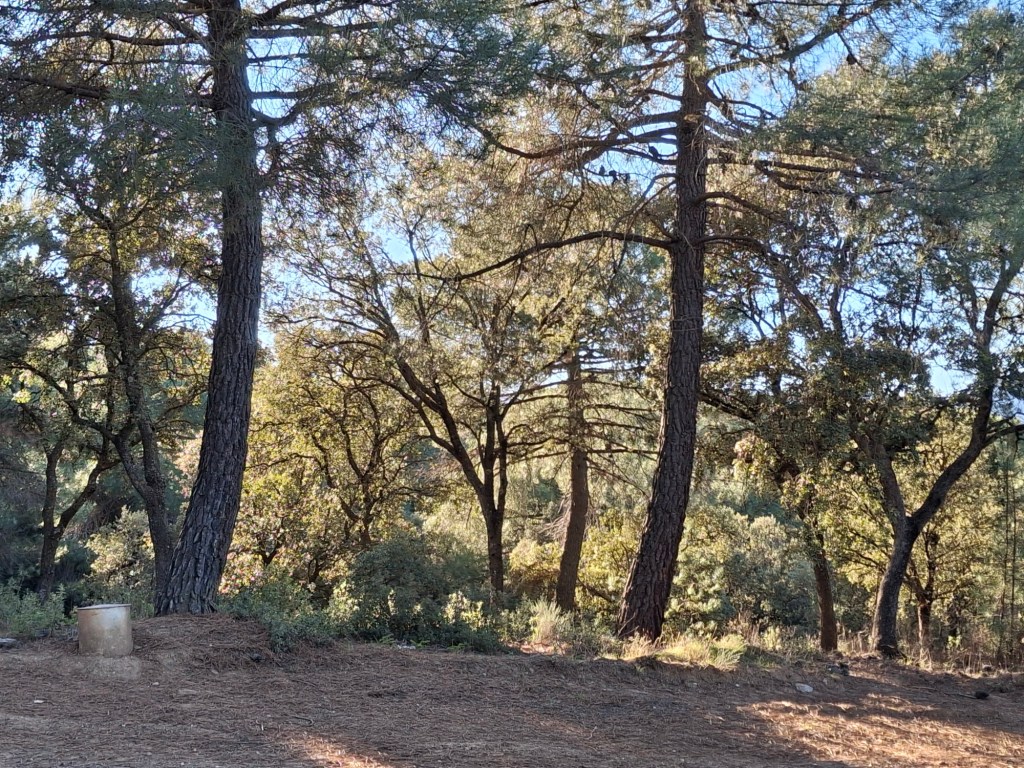
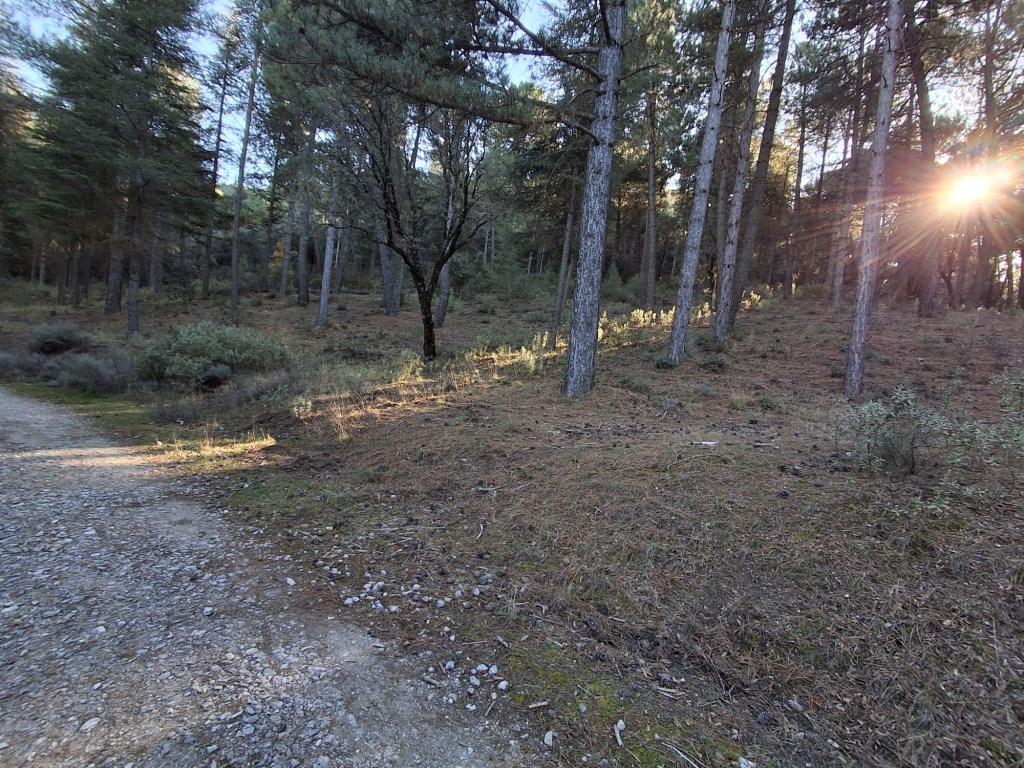
The mountains here range from 1000 to 1700 metres so there will be ups and downs. Fortunately I find a path that undulates gently but the sign to the source of the Darro heads steeply downhill so I control my disappointment. It’s very mixed woodland and some above treeline barren outcrops. Mediterranean and Scotch pines, holm and cork oak cover an undercroft of rosemary, thyme myrtle and plants I couldn’t identify. It was a soothing walk triggering many memories and providing fabulous light patterns through the trees.
Quite high at the topMost of the walkGood to see forest management I loved this river of light through a break
After an hour communing with nature (!) I thought I’d better head back before the light went and I subjected Dolores to lots of “Recalculating Route“ as I wanted a proper twisty mountain drive, not a motorway. It was great through tree-lined well-paved but narrow roads and I only saw one other vehicle. However when I let her guide me Dolores got her own back on the approach to Granada Centre where I think I’ve now been through every polygono industrial around the city and back into the centre through the scariest narrow streets imaginable. In fact I could have done the whole thing more easily without SatNav help as I’ve walked and used buses on much of the route. However I did finally get back to the Parking favoured by the hotel to find a FULL sign. However I parked badly with hazards on and approached the pay desk with my Palacio de Los Navas credentials and to the horror of others behind me I was allowed in to take what did appear to be the last space in the garage. Thanks hotel! I managed to grab a stool in the busy Rosario Varela whose staff wore tees emblazoned with WHAT THE FUCK IS ROSARIO VARELA? Answer: a very popular local bar with a slightly hippie vibe. I asked whether it was Friday or Christmas that led to the crowds and they said Siempre Viernes – so Thursday hasn’t taken over here as the start of the weekend.
Six people just left foreground so I could get a shot. It soon filled up.
Back to the hotel to freshen up and then start the search for somewhere with a table for one. A stool at the counter in Zorro Viejo delivered with seafood gyoza and patatas bravas Zorro style were perfect. Crispy gyoza with cod and prawns and a very garlicky and paprika sauce on the patatas served me well – not gourmet but hip street food is the place’s vibe. Pure theatre watching the bar staff hooking down glasses, clunking giant ice cubes, carrying awesome numbers of plates and glasses just managing to cope with the onrush of orders. One server with multiple plaits and piercings, Pilar, confided “It’s a bit like performance and we love our jobs“. How can we import this’s attitude?
I planned to visit three museums today – Granada’s Fine Arts, Manuel de Falla‘s house and the Museo de Los Tiros and get back to the hotel to listen to Watford v Portsmouth commentary on my phone. The Bellas Artes is up in the Alhambra complex so it was grab a coffee and tostada (tomato, ham and olive oil on a lovely wholemeal toast) in Bongo which is right across from the Alhambra bus stop.
The museum is in Carlos V’s massive ego trip of a palace, had lots of steps, contained a few interesting paintings but swathes of third rate Christian canvases that I’m afraid didn’t detain me long. Jeff Koons had “interacted“ with some of them by placing shiny blue balloons in front of them so that we could reflect. I didn’t waste the pixels.
The outstanding item and a real surprise was a loan of the Three Graces from the Picasso Museum in Malaga. Painted at the height of his classical period, it’s a stunning piece that looks like sculpture until you get close. I’d gazed at it in Malaga and loved seeing it here again.
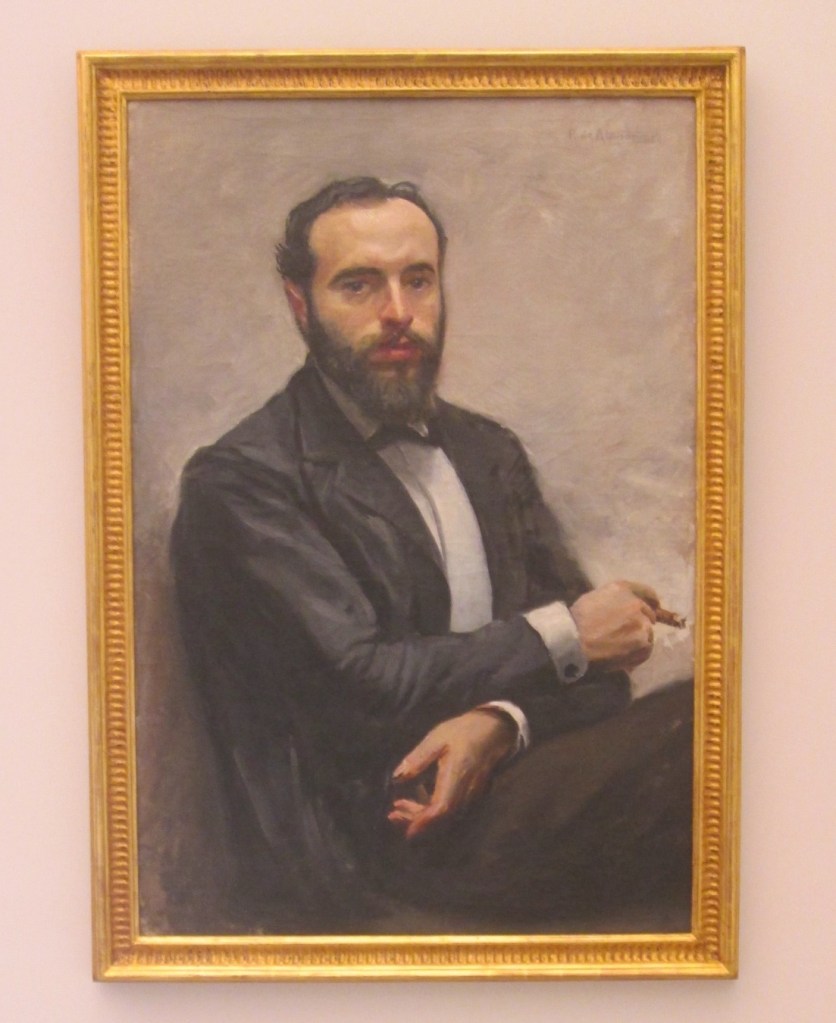
Apart from that, there were a few paintings I liked and some that had interest for other reasons. One of the main streets near me is called Angel Ganivet who I couldn’t place but thought I’d vaguely heard of. He was a diplomat, traveller and writer who committed suicide by drowning in 1898 after years of syphilis-induced depression – how to get a street named for you and your portrait painted! One of his books was called Granada Bella (Beautiful Granada) so I guess that explains it.
Angel GanivetA realistic rather than idealised Madonna and child A rather good interior of a lady reading
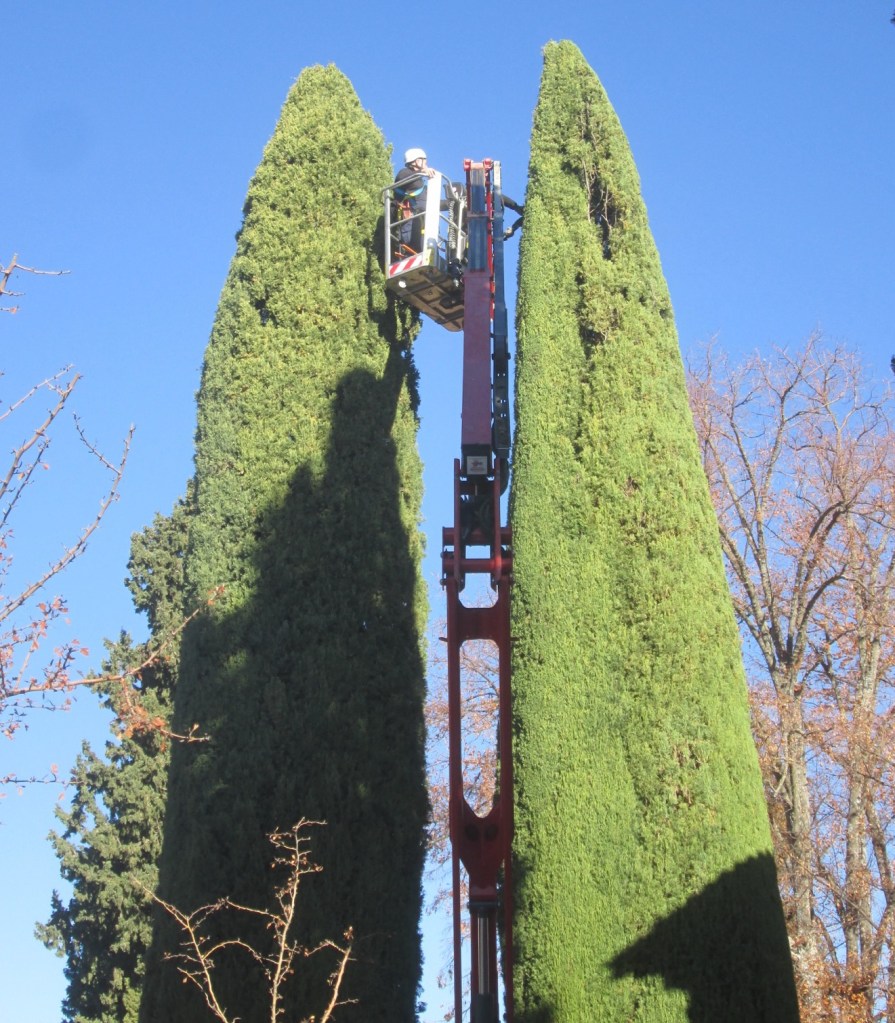
Then it was up towards the Parador to grab a coffee on its terrace for old times sake but the terrace was closed because of an operation I’d never seen before. Did you ever wonder if cypresses had a natural shedding system to keep the elegant slender shape? I had wondered once or twice. Well here’s the answer.
Cherry-picker hedge trimming!
The Parador’s courtyard does have a nice bell tower – it was a convent – and some nice paving patterns.
So I set off for the Casa-Museo Manual de Falla about fifteen minutes walk away to find a sign saying “Tour in Progress. No more than 25 minutes wait“. There was a convenient garden in the sun presided over by a bust of the composer so I sat there and read for a while.
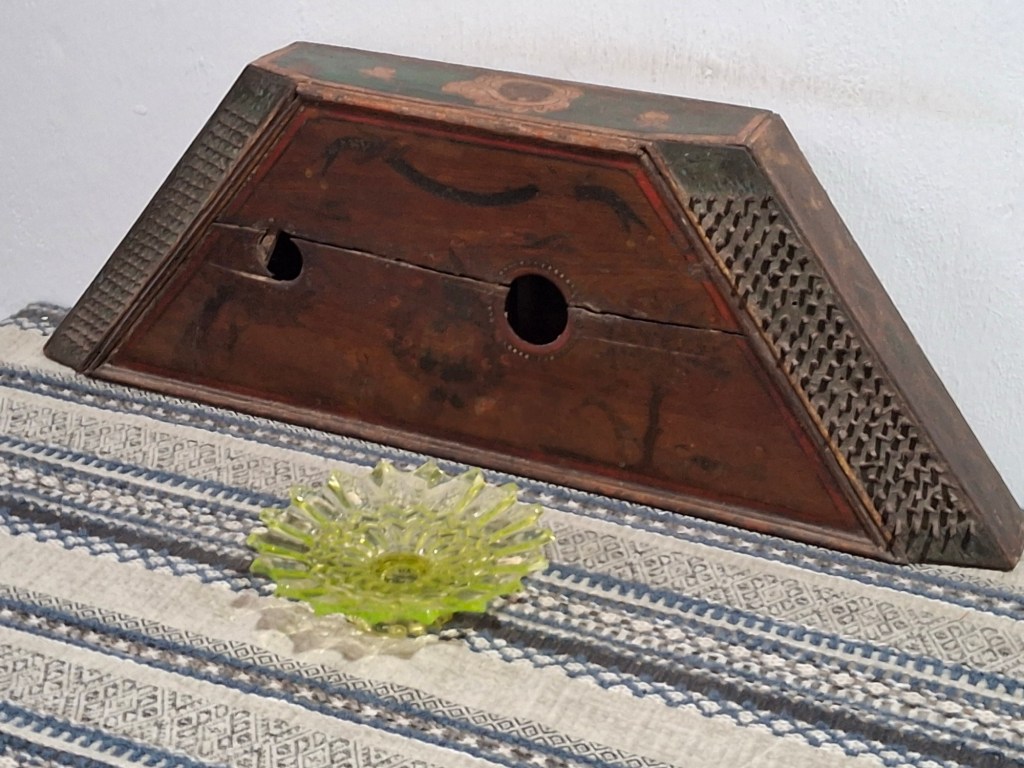
Never go back they say and Dee and I had a magical visit here many years ago when one of our tour party was allowed to play de Falla‘s piano which had been a gift from the makers Pleyel in Paris – they also gave one to Chopin in Mallorca but that’s in another blog ( or search Chopin). No playing this trip but a couple from Granada now living in Elephant and Castle and a Dutch mother and son (I think!) made for a pleasantly small group to tour this fascinating little house. Big things for me were a zither Lorca gave him as a present, a myriad of ashtrays as MdF was a chain smoker and a hypochondriac – a heart attack finally took him – lots of Catholic symbols, but somehow he became a great composer of wild things like El Amor Brujo, La Tricorne and the lyrical Night in the Gardens of Spain. A friend of Lorca, Picasso and Debussy, Diaghilev and Balanchine, He skipped to Argentina when the Spanish Civil War broke out and died there. But 20-odd years of his life are vividly apparent in this little house. An absolute gem.
De Falla’s clock he cherished as it reminded him of his birthplace in Cadiz, another city I love, his office with another super typewriter, the Pleyel piano, the sitting room, pantry and Lorca’s zither gift.
One of my go-to DVDs is the Carlos Saura films that featurede Falla’s El Amor Brujo, Lorca’s Blood Wedding and Bizet’s Carmen. The DVD isn’t available, it seems, but I’m sure they are out there on YouTube. Antonio Gades and Cristina Hoyos are dancers at the peak of both classical, flamenco and modern dance genres – fantastic stuff. Do find and enjoy.
I walk down into Plaza Nueva via a steep stony pathway with slippery fallen leaves – but hey I take it slowly and don’t fall over. Rewarding myself with a beer a rabbit hole appears. I walked along the Rio Genil yesterday but I’m now at the start of a walk alongside the Rio Darro. Can’t resist. So I set now off in the opposite direction to the third museum into the heart of the Albaicin and Sacromonte. The latter is the gypsy quarter and every other building seems to have a tablao flamenco as well as a whole street of shops selling souvenirs you’ll regret once you get home. OK I’m a cynic.
The Rio Darro, one of many bridges that lead to costly restaurants and the remains of a the Arco del Cadi that linked Alhambra and Albaicin.
It’s now time for a light lunch – quite a mission as every restaurant and bar is rammed. However I do find a table beside a multigenerational family with baby screaming until finally breastfed. Ignoring all this I enjoyed a tapas of a bagel with sobresada, olive oil and ham and then some pinchos morunos – herby pork chunks on skewers. But now museum #3 or football? No contest – I’ve already had WhatsApp pics of a happy gang in the West Herts Sports and Social Club and I miss them, so the least I can do is torture myself by going back to the hotel and listening to the commentary.
My route takes me through a part of the city I hadn’t seen before passing the splendid Capilla Real sadly half shrouded in construction awning. But soon I’m on familiar ground and down heaving Calle Navas to the hotel. (Oh yes, as someone said in a comment – isn’t the sky blue!)
Back home. Oh shit we’re behind on 10 minutes through – surprise, surprise – a defensive error. Then in the second half there’s a was it wasn’t it penalty. Well thank God Kayembe scored it. Tension builds – we don’t do draws at home. It all sounds a bit fractious with punch ups and time wasting until – reach for the cava – Rocco Vata scores in the fifth minute of six of added time. Three points – back in the playoff positions. I need a lie down.
But I recovered to go out for dinner – delicious lamb cutlets with a spicy sauce and confit red peppers and a glass or two of a local wine from Granada – a Tempranillo from Bodegas Vilaplana – which was very pleasant indeed and before this trip I didn’t know Granada had a DOC. Ain’t travel fun!
Earlier in the week, I’d thought today might be a good time to explore the parks that flank the river Genil on the southern side of the city. Thinking few cafes would be open early, I had booked the hotel’s buffet breakfast which gave me a good start to the day. I then ventured into the outside world and started my walkabout on the rambla that leads to the big roundabout down by the river. Just lovely.
One of the things I love about this city is the pavement decorations made from light and dark grey stones. They vary from area to area and some have quite intricate patterns.
The pomegranate is the symbol of GranadaFlowers and starsGeometric designs
As I reach the paseo I’m confronted by a plethora of Christmas attractions; a traditional carousel which says adults can ride too! Then there’s a mini train driven by Santa and a huge snow slide as well as a skating rink.
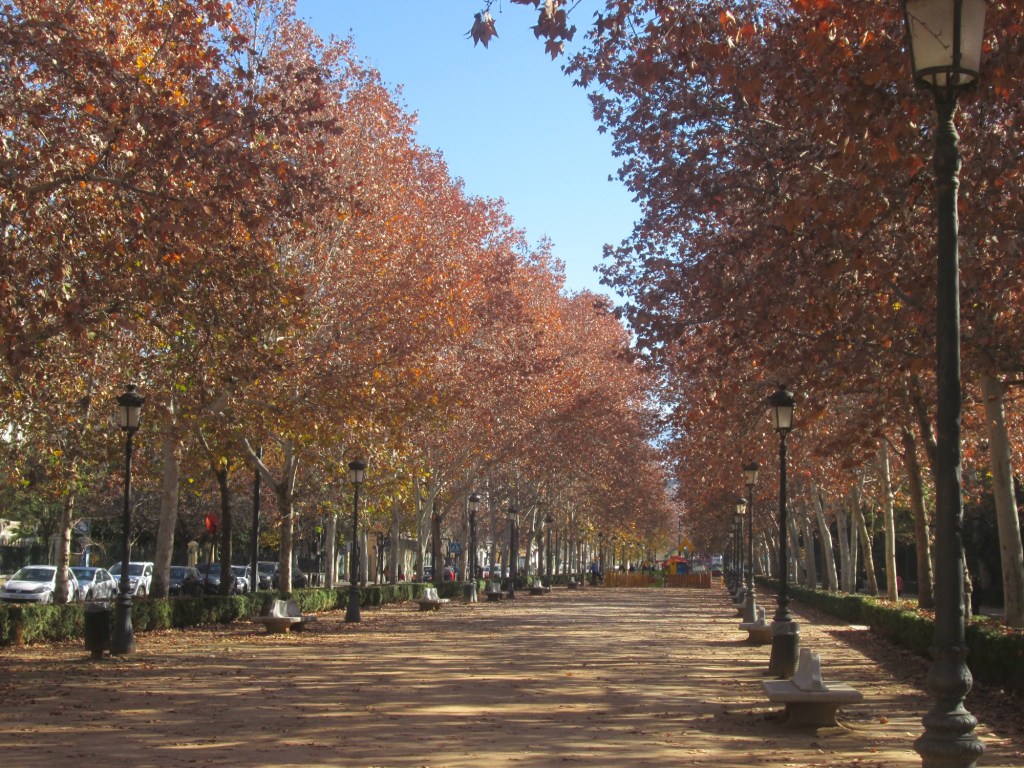
The riverside promenade is quite wide and offers a number of options for walkers – a pavement right beside the river mostly used by people in wheelchairs and runners, a tree and shrub lined walk for strolling in the shade and a sand and gravel avenue among plane trees. I do bit of the walk in each, just because I can.
It has seating areas, fountains and statues and makes for an interesting amble. The city is well provided with explanatory signs so some history and context are hoovered up along the way. This eagle topped- column is dedicated to Don San Pedro de Galatino a businessman who saw the potential for tourism from the Sierra Nevada and built roads and tramways to enable access from Granada. Clearly a worthy entrepreneur.
At the moment the river is a shallow stream but the cleverly arranged boulders form a series of weirs to manage the flow in spring when the snow melt from the Sierra Nevada turns into a torrent – at least that’s I’m told by a gent who engages me in conversation. They say the snow is early this year and could be heavy come January.
After a while on the right bank I come to a modern metal sided bridge which takes me over the Genil and after a time I wonder how far it will be before the next one. It is in fact about a kilometre before I can cross back over in front of a very impressive sports complex in which tennis and basketball are underway in the morning sun.
My wander back along the other bank begins to take on some urgency as I’ve been on the move for well over an hour now and the aroma of prawns in garlic means that a restaurant and therefor loos can’t be far away. I reach Restaurante Nagare and enquire if I can get a table for a drink – I always try to make a purchase so as not to take advantage. This request is met with laughter which I soon realise is because the entire place – probably a hundred or so covers – is reserved for Christmas Day lunches, a tradition we had noticed in previous visits. They were kind enough to waive the “Loos only for customers” rule and let me in. I make it along to the plaza where I started my walk and find a table in El Sifon which brings me a beer and a delicious tapa of spicy chickpeas.
I cross over the Roman Bridge – built in the 13th century but on the foundations of an earlier Roman era bridge hence its name. It’s pedestrianised now and flanked by a modern vehicle river crossing.
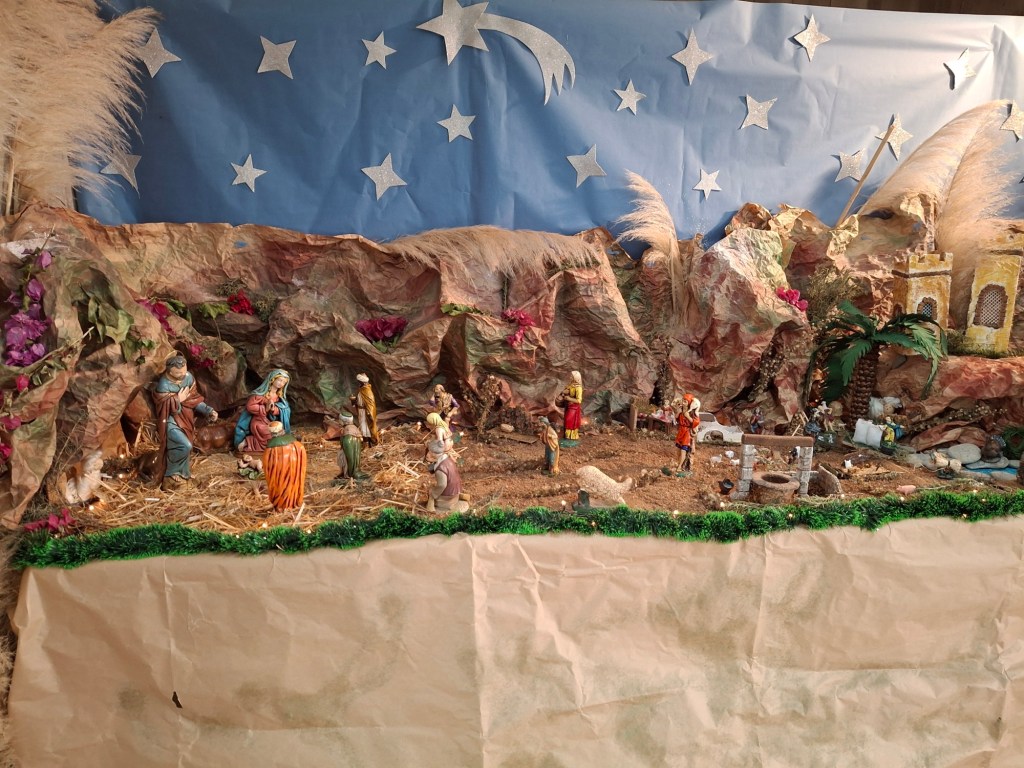
On the south side of the river I find a lengthy queue for a massive Belen in a big marquee. Years ago these used to be quite modest affairs but they have become huge with whole scenarios of daily life as well as the nativity essentials of stable, shepherds and wise men. Just after leaving it I passed a shop where you can buy all the elements to make your own at home.
The Alhambra gets a look in of course and you can make your from this shop.
This area also has the Congress and Exhibition Centre. Apart from conferences and trade shows it has an auditorium but sadly no music for me this visit. I’m secretly relived as going up all those steps could be a challenge.
Given the state of restaurants I’ve seen on my walk, I am fortunate to get a table – inside only – at Biloba which is not far from the Cafe Futbol which itself has no space. So I’m a bit apprehensive that if this place has room, will the food any good or excessively expensive. The tapa with my beer is a delicious small dish of paella with a whole prawn and some chunks of pork and chicken. Meat close to the bone is always the most tasty and I had pigs cheeks the other day so I choose the rabo de toro – oxtail in a delicious herby and garlicky gravy. Accompanied by a good red from DOC Granada, I needn’t have worried about the fact that they had room for me. It was delicious, reasonably priced and set me up for another picnic supper in my room as all the restaurants will be closed again tonight. So the evening is spent reading, writing, watching some TV and includes a video call to the family which rounds off a lovely Christmas Day.
I have always been a big fan of Federico Garcia Lorca as a poet, playwright, composer and martyr. He came from Granada so I had to take the opportunity of exploring his heritage in and around the city. I had seen the stunning Harriet Walter in The House of Bernarda Alba on stage and Glenda Jackson playing Bernarda in the film. And both Juliet Stevenson in a regular performance of Yerma followed by Bille Piper’s stunning portrayal in the adaption at the Young Vic showed the current relevance of Lorca’s work. l’m renting a car later in the week to visit his birthplace and early home in Fuente Vaqueros and Valderrubio but today is concentrated in the city itself. I decide not to breakfast in the Cafe Futbol again as I need to head off in the opposite direction. I do find the requisite juice and coffee but then get sidetracked on the way. I later discovered it was just as well as the FGL Centre doesn’t open until 11:00.
First I walk past this arched entrance which I discover is to El Corral de Carbon which dates from the early 1300s and was an al-fundaq – a corn exchange and lodging house for merchants bringing wheat to the city. It has a splendid courtyard with huge grape vines climbing up its pillars to form a canopy – sadly bare at this time of year.
Then I was back at the market – one of my weaknesses in any town or city. The Mercado de San Agustin did not disappoint with its superb seafood and ham stalls, lots of bars and lots of noise.
By now it is well past opening time and I set off for the first objective of the day. Spot the writer!
It took a long time and a lot of wrangling to get a centre to celebrate Lorca in his home province – Madrid and New York got there much earlier. This modern building houses the archive of his works that was assembled by family after a) his death, secretly and b) after Franco, more openly. There are thousands of manuscripts of plays, poems, songs and prose; extensive exchanges of correspondence with publishers and producers; recordings of poetry readings; many, many photographs and some video and the big surprise to me lots of his sketches and paintings. I knew he pretty much defined polymath but the paintings and drawings echoing Miro and Dali, Braque and Picasso had escaped my appreciation on previous encounters with his work.
The main display area is on the second or third basement floor – I stopped counting the steps – and has objects, dresses worn by Marianna Xirgu at the premieres of Bernarda Alba and Yerma and letters, press cuttings, brilliant period posters, photographs and the drawings.
I had just started to snap a few when a museum lady came to ask where I was from. She seemed delighted I was from Londres, But also told me photography was forbidden. So all I’ve got are his typewriter and his amazing signature.
I spent a couple of hours soaking up all this Lorciana during which time my appreciation for him grew even more – he was only 38 when they shot him so what might he have gone on to achieve? One of the posters was for a performance by his touring theatre group La Barraca which he founded to take drama to the villages and the people and an incarnation of which still exists. Dee and I saw them perform one of his farces, the very sexy Don Perlimplin in Ubeda a few – probably fifteen – years ago. We didn’t have much Spanish at the time but the action told the story very clearly as explained by the play’s subtitle “An erotic lace-paper valentine in three acts and a prologue”. Happy memories came back as I looked at a Barraca poster.
Fortunately I found a lift to take me from -3 to 0 which saved the legs doing all those stairs upwards. The outside world was perfect with sun, not a cloud to be seen and pharmacy signs indicating 16 degrees. Time for a stroll to the next location the Parque FGL about fifteen minutes away. As so often the walk passed through a couple of the delightful squares that seem to be a characteristic of Granada and indeed many Spanish cities. This one was Plaza Trinidad and there was a long queue for what was obviously a popular bakery kiosk and of course you can’t escape him for long in Granada.
A sense of déjà vu occurred as I crossed the Camino de Ronda where I’d changed buses on Sunday. I was soon at the entrance to the park which is extensive with a number of different areas.
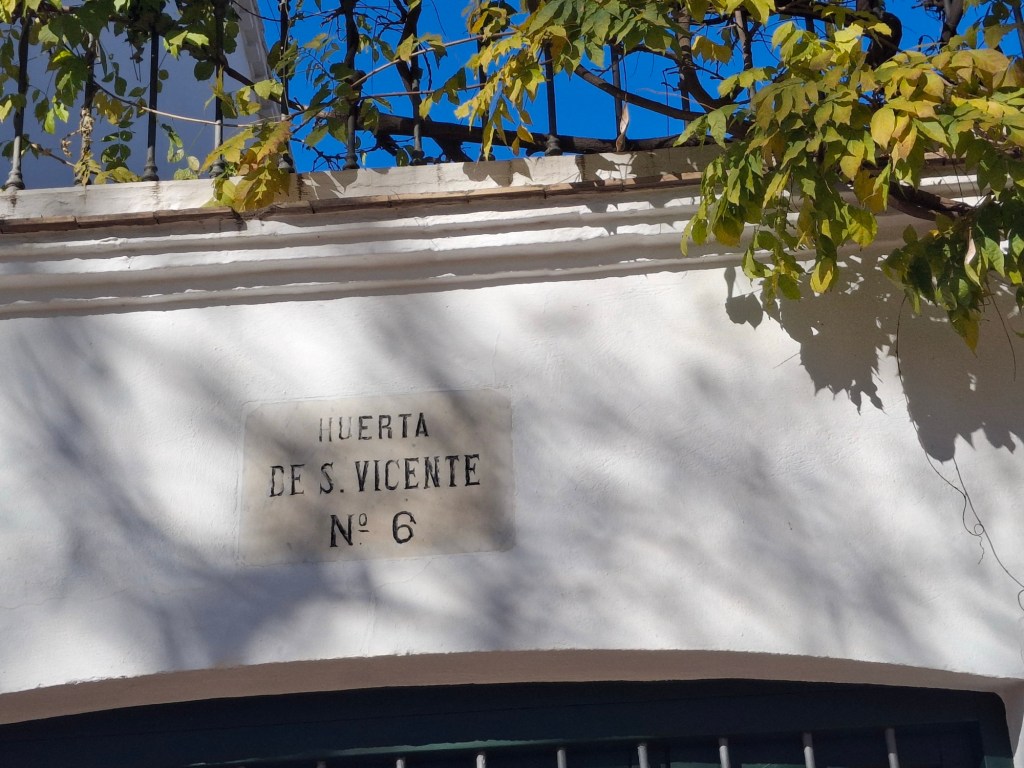
It also contains the Huerta de San Vicente, the Lorca family summer home in Granada. It narrowly survived a demolition order in 1975 – was Granada still run by Francoists? But public outcry saved it and created the park around it. It’s now a museum but is closed on Christmas Eve but I may get back down later in the week.
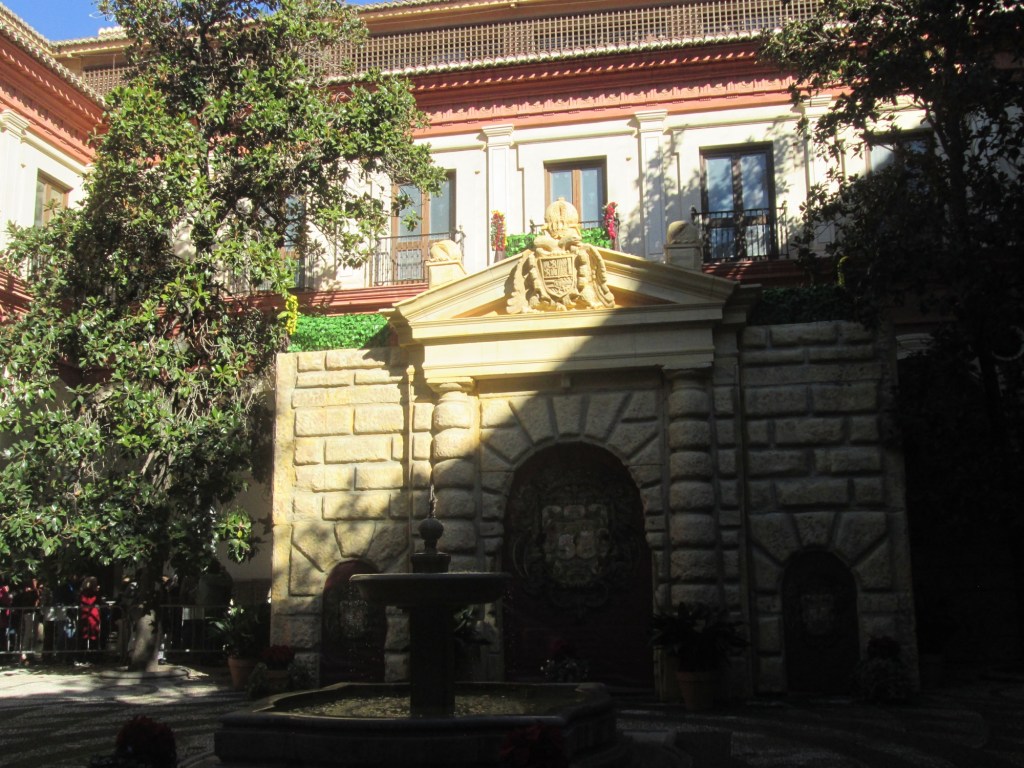
I was moved to write a poem while in the gardens which I’ve shared with my BBPC colleagues but won’t bore you all with here. I walked back into the centre along Calle Recogidas another posh shopping street halfway along which I spied a rather nice looking courtyard in the sun – ideal for a beer – first of the day at 14:30 – call this holiday! The courtyard I discovered is part of a smart hotel Palacio de Los Patos in the Hospes hotel chain. We had stayed in one of these in Valencia a few years back ad had enjoyed it very much. But posh street, posh hotel. I could have stayed for 1.75 nights for the price I’m paying for seven nights at my Palacio de Las Navas. Maybe when I win the lottery! But they did give me a free tapa of couscous with seafood.
Patio at Palacio de Los Patos a bit earlier in the year (thanks Tenedor)
The street leads back to the Puerta Real which is close to home and I think about getting some lunch remembering that everything shuts in the evening on Christmas Eve in Spain. Lone eating is difficult when you occupy a table that could take two but on this day it was looney.
This was the state of one of the bars further up Calle Navas – utterly rammed – as were all the others and I received a lot of shaken heads and “lo siento“ responses. I eventually found a pizza place that could give me a pavement table and had a rather good ravioli with roquefort. I then repair to the grocery shop to get some cheese, ham and chorizo for an evening picnic as all the restaurants said they were going to close.
In the evening, Netflix told me a film I’d like was expiring on 31 December so I watched Todos lo Saben (Everybody Knows) a convoluted family drama and kidnap story with Penelope Cruz and Javier Bardem. It wasn’t brilliant but showed current village/small town life in a way I’m sure Lorca would have approved. Peasants not the posh centre stage.
Tour booked for midday, I woke, showered successfully with the new sleeve and set off for breakfast. The hotel does provide a buffet but you have to book it the day before and I hadn’t.
I walk down the slope towards a small square and what do I see? Cafe Futbol – how could I not? In the well-heated exterior area were lots of people doing churros y chocolate but for me it was the more modest orange juice, cafe solo doble and a croissant. Great start to the day.
I then decided to stroll down the Street of the Virgin towards a tree- lined Paseo alongside the river Genil. This was a recce, but a stroll along here is probably on the cards for Christmas Day. As I returned up the nearby and strangely named Acero del Darro – the Darro river is on the other side of the Alhambra and this road leads to the Genil. Ah well. I am drawn, as so often, into El Corte Ingles the big department store chain as it has loos and the opportunity to replace a falling apart credit card wallet. Back to the hotel to pick up my ticket for the tour and set off up the street to catch the 30 bus to the Alhambra – I’m encouraged to be there 15 minutes early. Nearing the bus stop I realise I left my phone in the room so it’s a quick dash back to retrieve that I make the next bus and the ride up to the Alhambra is crowded but I get there in time to meet Laura, our guide for the next several hours.
We start just outside the entrance to the Parador which brings back a dash of nostalgia and some very happy memories. It was such a delight to walk from breakfast on the terrace straight into the Generalife Gardens.
The said Generalife is where the tour leads us first. Laura points out to the non-Spanish speakers, that it is not an insurance company (!) but the sultan’s summer palace. It gives us great views of the whole complex, a look down on the gardens which grow vegetables and fruit for the palace and we stroll through the summer palace itself noting the areas that are still essentially moorish and those which the conquering Christians decided to convert to more northerly tastes. This theme repeats throughout the tour since the Moors held Spain from 711 until 1492 when Philip and Isabella finally managed to drive them out. So there’s a lot of Arabic influence to overturn. And a lot of mis-translation of Arabic names into Spanish as in this one:
Bib-al-hambra was thought to be the original name which means red gate to the Alhambra but was confused by the incomers with Bib-al-jambra which would have been wine gate. Since Muslims don’t do alcohol it seems that red gate is the most likely but the name Puerta de Vino is on all the signboards.
As we leave the Generalife and move to the fortress and palaces of the Alhambra, Laura gives us some history and context of the astounding engineering capabilities of the Arabs and the ongoing archaeology that is uncovering more of the plebeian areas of the site. To support the sultans and their courts there would have had to be hundreds if not thousands of ordinary folk who baked, spun, made leather, did carpentry, built palaces and castles. They lived in the Medina which has been partially uncovered in recent years.
Medina excavations
The most impressive feat of the period of Mohammed I in the 13th century was to make water flow uphill and to capture the river Darro six kilometres away and through water wheels and aqueducts supply his new hilltop city with all the water it needed. There was an interesting BBC report a couple of years back that explains it all and here is part of the original aqueduct that gave the complex the water it needed for drinking, bathing, for fountains and for flushing loos.
The tour takes us next to the alcazaba, the military part of the city. It’s impressive in size and scale and that it is constructed from local compacted earth and not from quarried stone. It also affords great views over Granada and of the sow-topped Sierra Nevada some 40 km to the south east.
Albaicin and Sacromonte areasSierra Nevada
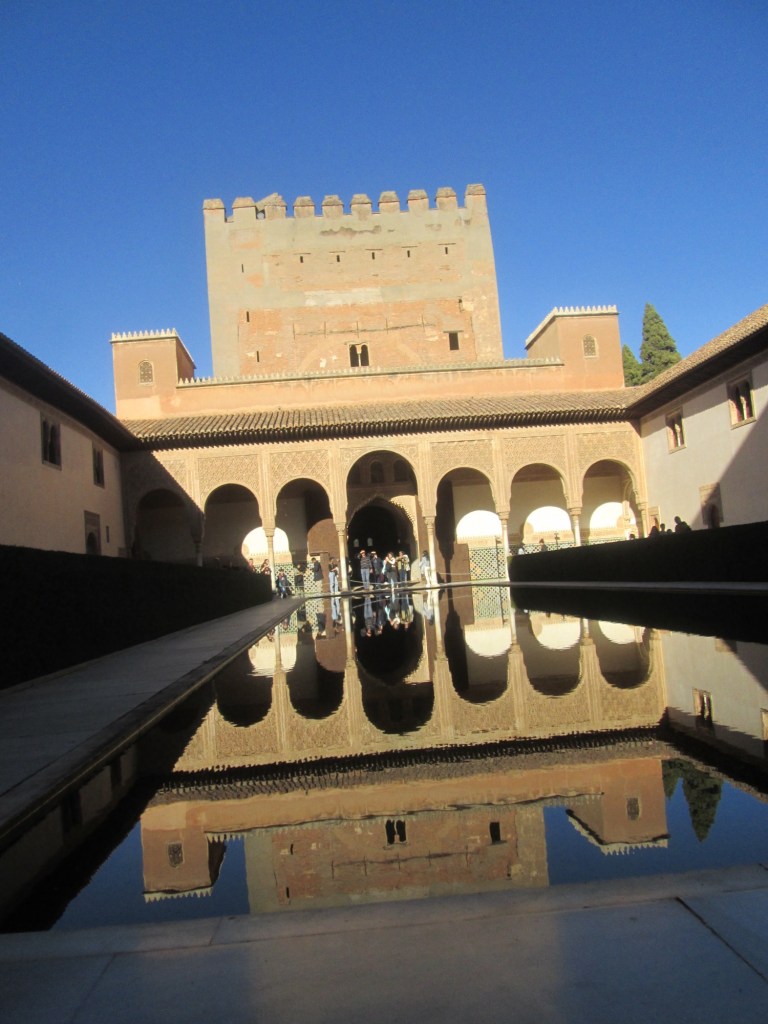
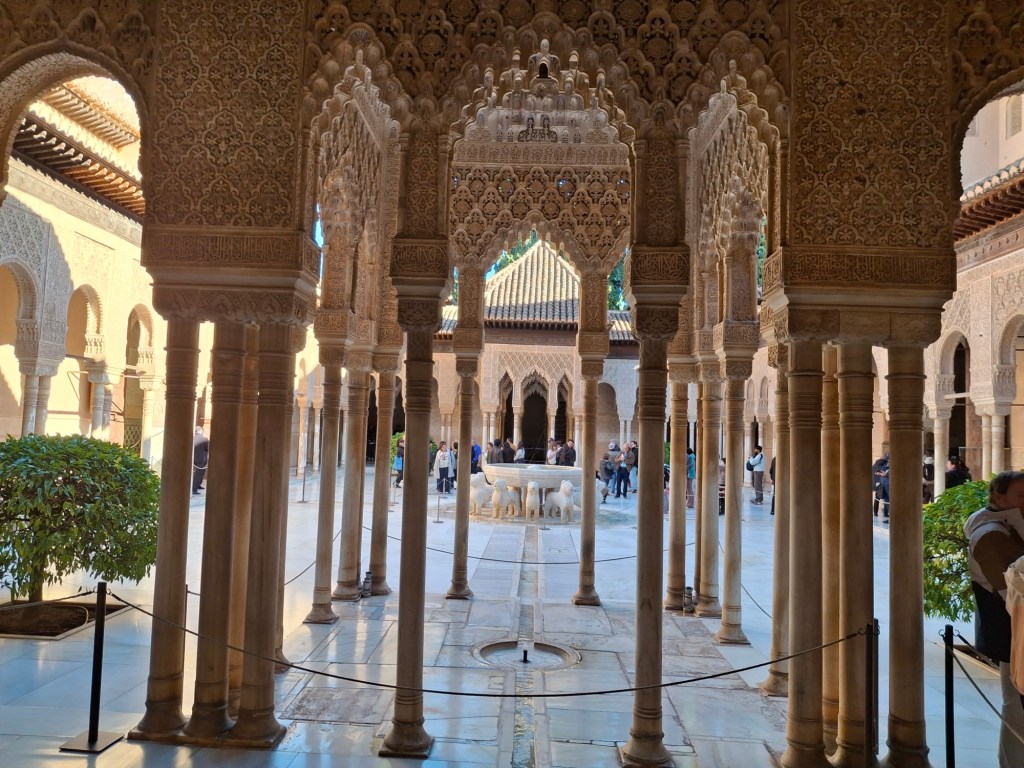
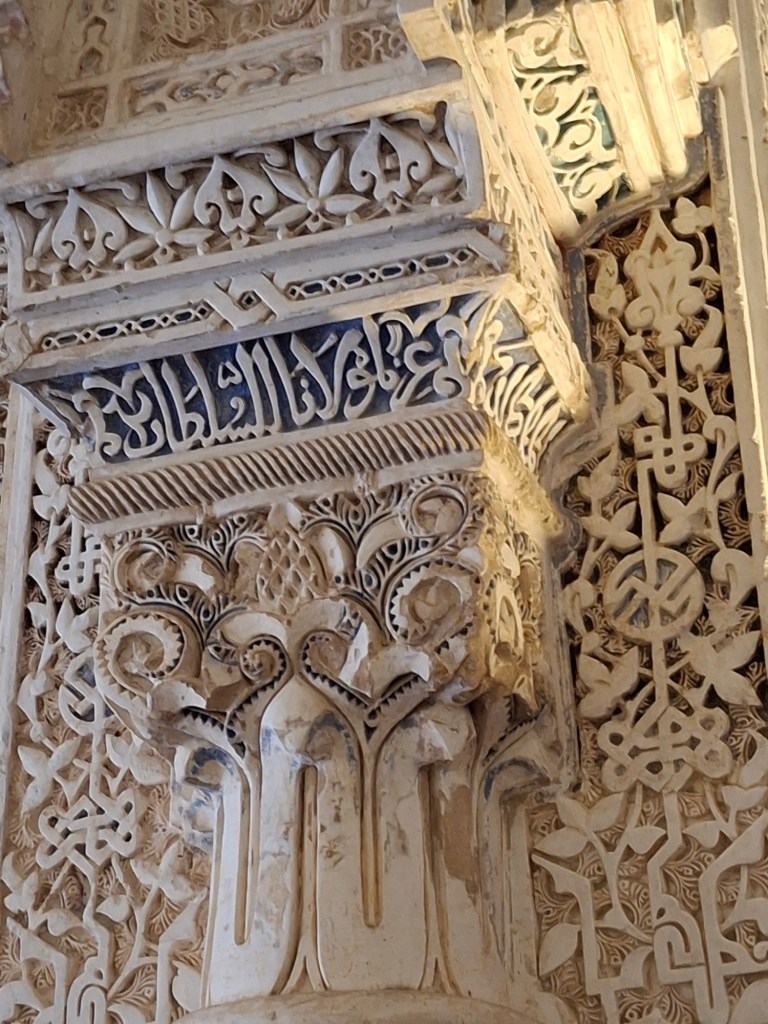
My recollection of the amazing decoration, elegant architecture and layout of the Nasrid Palaces was more the reinforced on a second viewing. When Dee and I had been here before we were able to wander at will but now with many vying tour groups – 9000 visitors on a busy day! – it was all a bit more regimented but still with time to admire the craftsmanship in wood, plaster, marble and tiles that make the palaces worth anyone’s time to visit. In my loft at home I have negs and contact sheets of the black and white shots I took on our previous visit – must dig them out when I’m back. Here’s a flavour of today’s visit – in colour.
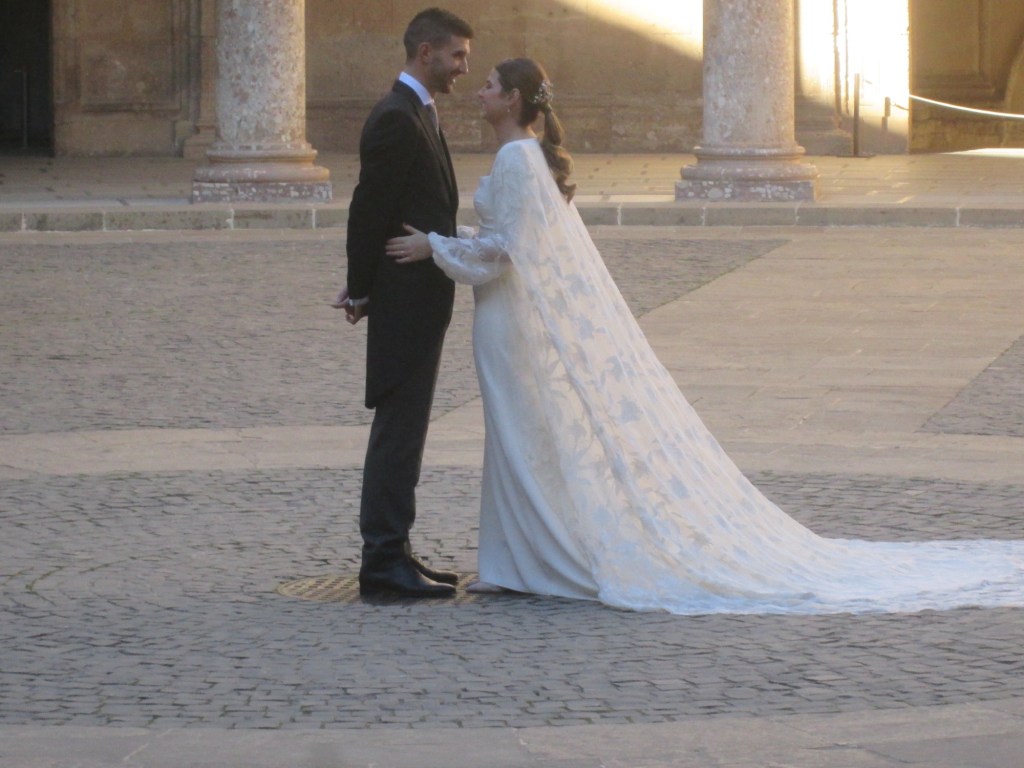
Laura had been a brilliant guide giving us a short break during which she could smoke a couple of cigarettes – her theory is that smoke numbs the throat and gives her the ability to talk in a foreign language non-stop for three and a half hours. We didn’t discuss the other side effects! On the way out there was either a wedding or a magazine photoshoot in the centre of the very ugly palace that the Hapsburg Holy Roman Emperor and Charles V of Spain plonked in the midst of all this elegance to make his mark. I had hoped after being on my feet for five hours to get the bus back into town but it was so crowded that I gave up and walked – blissfully down – back to the centre. It was a pleasant stroll through the Gomerez forest and passing the ruins of the Bibalrambla Gate which was one of the original entries to the Arabic city from the 11th century until 1492 and is commemorated in the name of the main square.
Much needed respite came in the way of beer and a plate of freshly sliced Iberian ham and the discovery that I was only about 10 minutes form the hotel, where I went to put my feet up for a bit and write up yesterday.
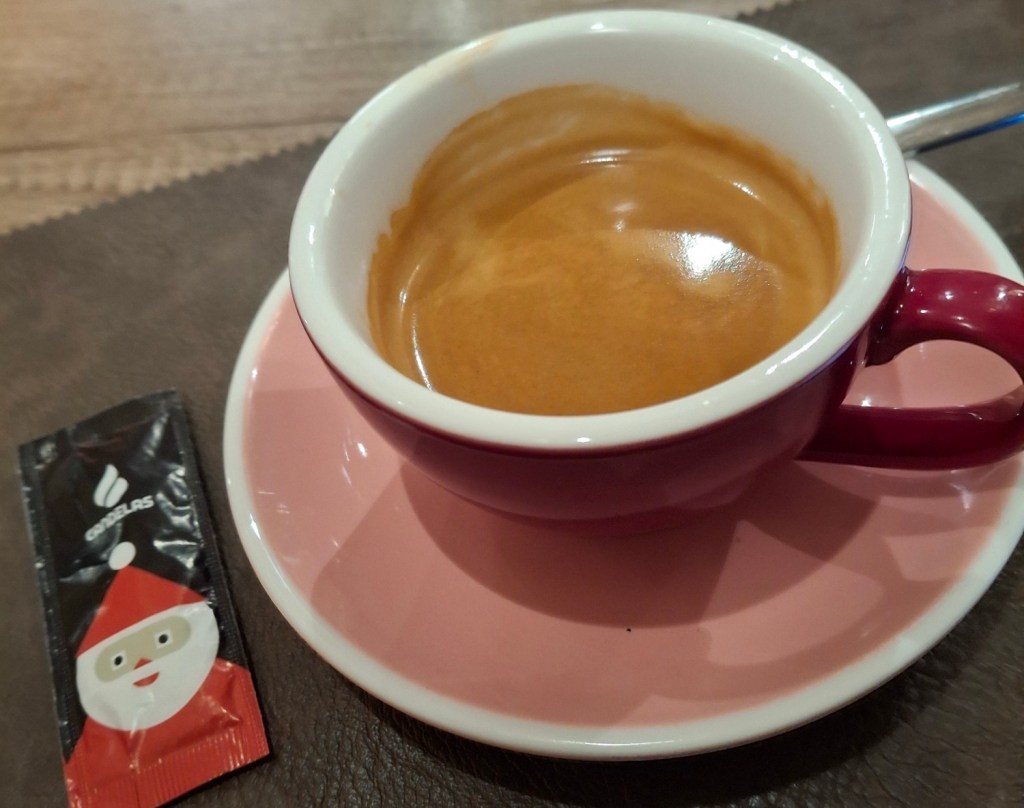
I then made an evening tapas crawl and finished up in a quite posh restaurant where I was able to have another favourite dish carilleras de cerdo (pigs cheeks) served with half a baked apple and caramelised onions – a new take on traditional pork with apple sauce. They just overdid the Christmas thing with my coffee.
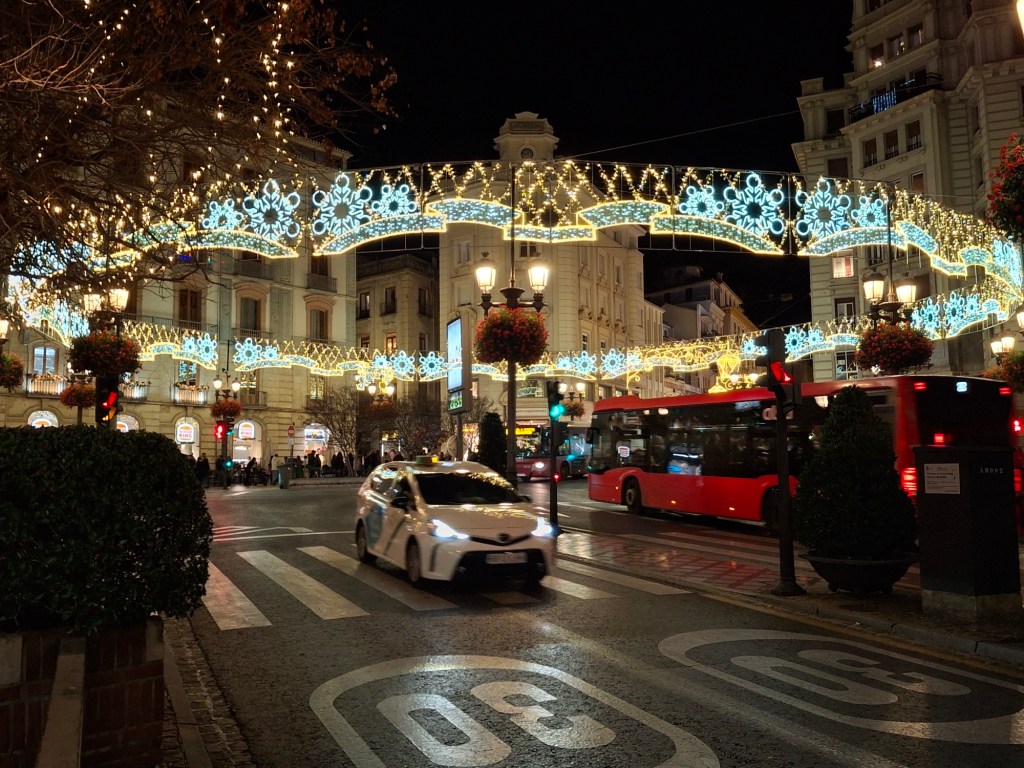
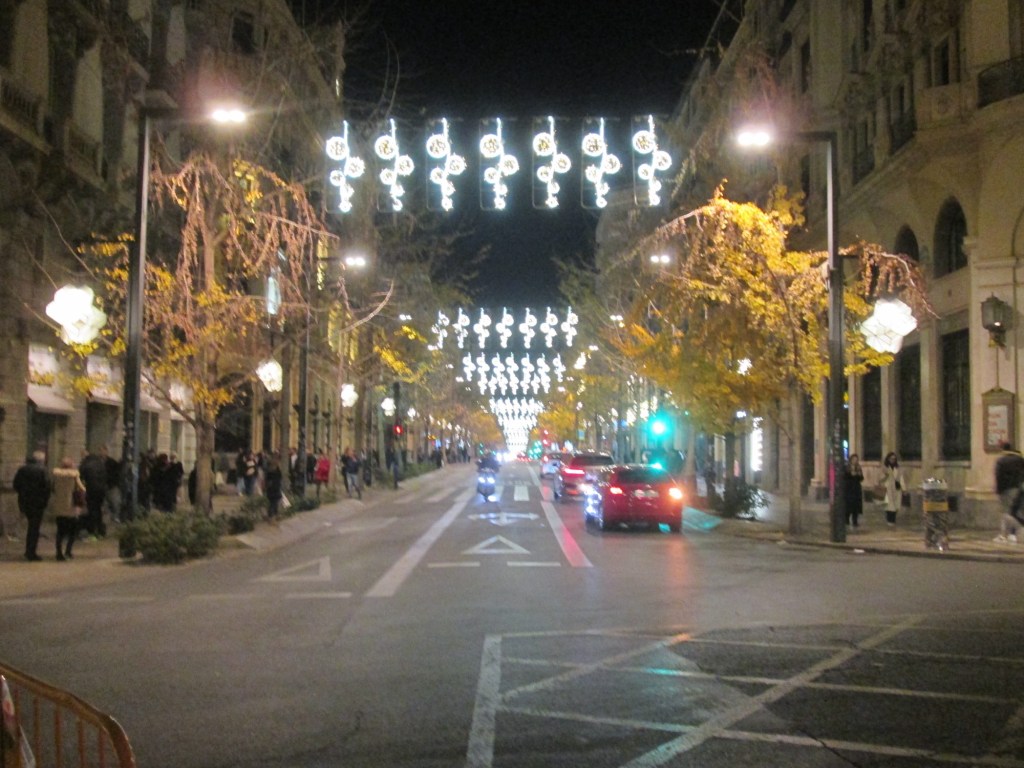
Then it was back via another spectacular lights display – a circle round the Puerta Real and when I got back even Navas Street was showing its Christmas spirit.
A circle of light at Puerta RealCalle Navas at night
So, I leave the hotel in what I thought was good time to catch the 07:35 to Granada. However given the construction work around Atocha Station it’s quite a trek to get there. Then once inside it’s up an escalator, through a huge airport style mall and then an airport style baggage security check which I hadn’t been expecting. However I find seat 7 in coach 2 which I’d been told by train operator Renfe was a special seat with extra space and fewer passengers to ensure a quiet journey. All good you’d think. But just opposite was a family of four with one fairly studious 7 year-old boy but a totally fractious 3 year-old daughter who screamed pretty well non-stop except when being stuffed with food. Bliss! I then freaked out as the announcer said the next stop would be Cordoba. Now I know enough about Spanish geography to position Granada due south of Madrid with Cordoba a long way to the south west. It dawned on me that the AVE (high speed) routes were limited and that it made sense to first build tracks to serve Cordoba, Sevilla and Malaga direct and then construct a new west-east line through Andalusia. As it happens we had seen much of the construction work for this route when visiting friends who used to live in Antequera or renting a cottage in the hamlet of La Parilla, near Iznajar some years ago. Some familiar scenery flashed by as we raced across Andalucia.
However the train did arrive at Granada Station at the time predicted and apart from my neighbours it was a good trip – announcements in Spanish and English, a trolley coffee service (which I didn’t use as it was instant Nescafé – in Spain!) and was clean and comfortable.
My plan was to walk to a nearby bus stop and get a bus to within a five minutes walk of my hotel. Oops! Read the front of the bus more carefully, Michael – CENTRO CERRADO DESVIO POR CAMINO DE RONDA. It meant it wasn’t going anywhere near where I wanted to be but the excellent CityMapper told me where to get off and take another bus. It worked and I arrived much too early to check in but they kindly relieved me of my bags, took my passport and sent me off to explore.
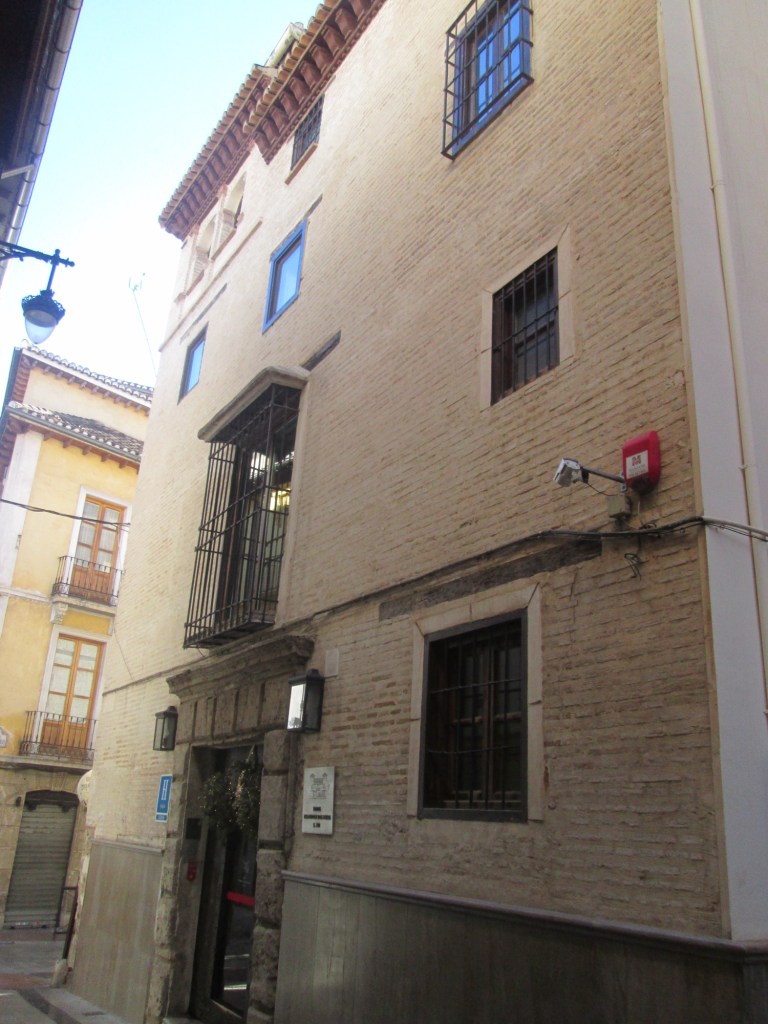
It’s a very fine hotel converted from a sixteenth century palace but fortunately with a lift and modern plumbing and facilities. I selected it because my only prior knowledge of hotels in Granada was the magnificent Parador inside the Alhambra where Dee and I stayed many years ago. This one looked OK and was five minutes walk from lots of things I wanted to do. Arriving before check-in rather forces you to go and explore which I did with glee as Calle Navas where the hotel is located is in a pedestrianised street full of bars and restaurants.
Calle Navas
I was waylaid by the aroma of a decent coffee and then discovered that by walking straight up the road I was soon in the famous Plaza Bib Rambla said to be the heart of the city. And boy do they do Christmas here. A Christmas tree circus flying chair device, a cycle-powered traditional carousel and signs to Belens everywhere. These are the scenes of Bethlehem that are a tradition all over Spain. This one was in the splendid Town Hall building.
I followed the wise men in hope!Granada Town HallChristmas tree chairoplanes
I found myself outside the market – Mercado de San Agustin which was still pretty lively on a Sunday afternoon and will be visited again. I did sit at a bar outside in bright sun where my phone said it was 17 degrees- oh that’s why I’m here. Looking at the competing menus displayed all around I chose a restaurant that served one of my favourite dishes aubergines with honey which I make myself quite often but this had the added benefit of being topped with miel de caňa which I can’t get in the UK. It’s black, not too sweet and made from sugar cane. My travels took me past the Cathedral, the Lorca centre I intend to visit on Tuesday – in common with most of the world it seems museums don’t open on Mondays – and onto the high-end shopping street Reyes Catolicos, which I skipped along not being much of a window shopper.
My one piece of shopping involved getting a protective sleeve to cover the dressing on my left leg so I could shower properly – in Madrid it had been an early morning struggle to keep it dry. Fortunately protect is protegir and bandage sounds pretty much like vendaje , so I emerge from the farmacia with just what I needed – and it worked well this morning by the way.
I went back to the hotel about five thirty where my luggage had already been taken to my very pleasant room and I spent a while unpacking, organising myself and taking a breather after a fairly hectic day. Post first day blog, read a bit of the Booker prizewinning Orbital and then it’s time to head out for dinner. There are lots of tourists so you can eat at any time you like really but the local families in the place I chose came in around nine to nine-thirty so a bit earlier than Madrid. It proclaimed to be famous for its croquetas so I ordered three filled with morcilla (black pudding) and caramelised onions. They were delicious and very filling so I had a small bowl of chips topped with freshly sliced ham and a spicy tomato sauce. I needed to walk off this repast so I headed off to the central area again to be blinded by the amount of sparkling lights strung across every main thoroughfare. They do do Christmas in Granada!
Back home for a little nightcap, a bit more book and a look forward to tomorrow’s trip to the Alhambra which I had pre booked with an English guide whereas our previous visit from the Parador allowed us to wander at leisure among those amazing palaces and gardens. Apparently you can still get day tickets but the queues are enormous. I’ll find out tomorrow.









































 mikeandmurakami.com