
SUNDAY 9 JUNE
Back in UK on Friday evening, Saturday shopping and multiple laundry sessions and Sunday it’s off to the Tate Modern with neighbours Sean and Maria and my friend Rosa who last saw me on crutches for Pina Bausch’s Nelken at Sadler’s Wells at the end of january. We four went to see the exhibition Yoko Ono: Music of the Mind. It was back in the sixties when I first heard about her when her film Bottoms caused a great media storm. I’d then obviously been aware of the John Lennon connection but had not really thought about her as a serious artist. But my goodness she is – yes there are some stunts that may be a bit gratuitous, but taken as a body of work this exhibition shows her to be a serious, thought-provoking artist – and very Japanese in her mental processes.
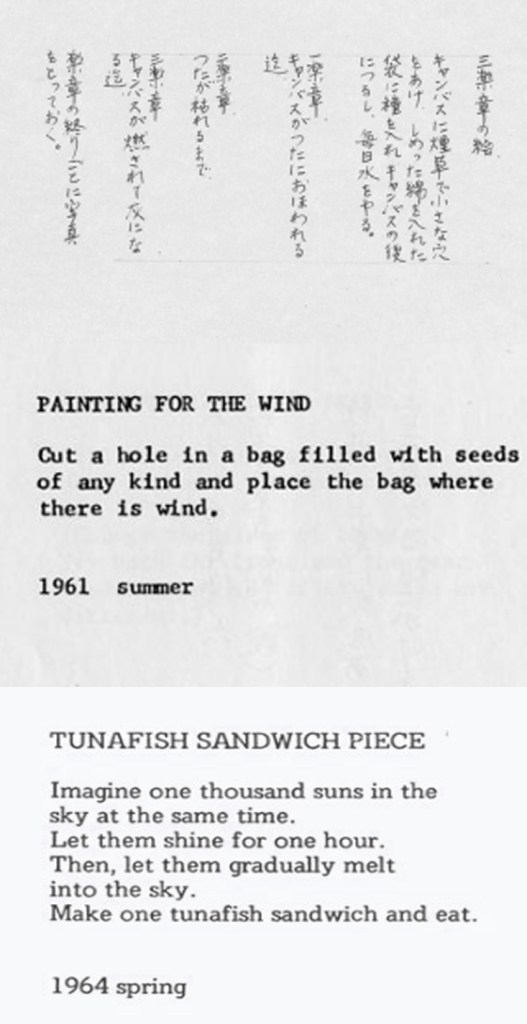
Her earliest works were immaculately typed and calligraphed utterly surrealist notions in her Action Poems with a wide variety of ideas that make you think about dreams, reality and which you’d prefer to be in. So many of these contain messages like the Painting for the Wind where you think how wonderful it would be if new seeds were spread by the wind allowing new life to grow, This idea recurred many years later when she and John sent acorns to world leaders to plant trees for peace. Some of the responses they received are displayed too. It is quite shocking to realise that Yoko was doing things 60 years ago that are considered edgy today. There are far too many to comment on all of them and to read all the works in the show you’d need to be there for days not hours. I might go gain.
Then there’s the mesmeric striking and burning of a match filmed at 2000 frames a second and replayed in ultra slow motion. You can’t take your eyes off it. Throughout the exhibition there is a constant exhortation to get involved to become art yourself – one of us did..


The joint projects with Lennon like the Bed In for Peace were shown in films you could watch from benches or bean bags and for many younger visitors these were probably news – I’m old enough to remember them vividly from media coverage at the time. Another of their films Film number 11: Fly was truly disturbing as a number of flies crawled over the naked body of the wonderfully named Virginia Lust accompanied by a very experimental audio track with Yoko’s vocals, John’s guitar and various tape recorder reverse effects. As a producer I hope they paid Ms Lust a substantial fee for her ordeal – she hardly flinched under all those tickly flies’ feet.

I had vaguely heard of the Half a Room project that Yoko first showed at MoMA in 1967. It does make you think about completeness, wholeness and things you are missing in life and trains the eye to see things differently.
As indeed does the bullet hole in a pane of glass where she encourages us to go and look from the other side. When first shown in Germany it was punningly entitled Das Gift with its pleasant English comnnotation but in German gift means poison. It reminds us that John Lennon was tragically shot by a bullet and there are far too many still being fired in conflicts all over the world. She and John were always very politically engaged. Their famous poster WAR IS OVER if you want it can be seen in the background and in many other areas of the exhibition

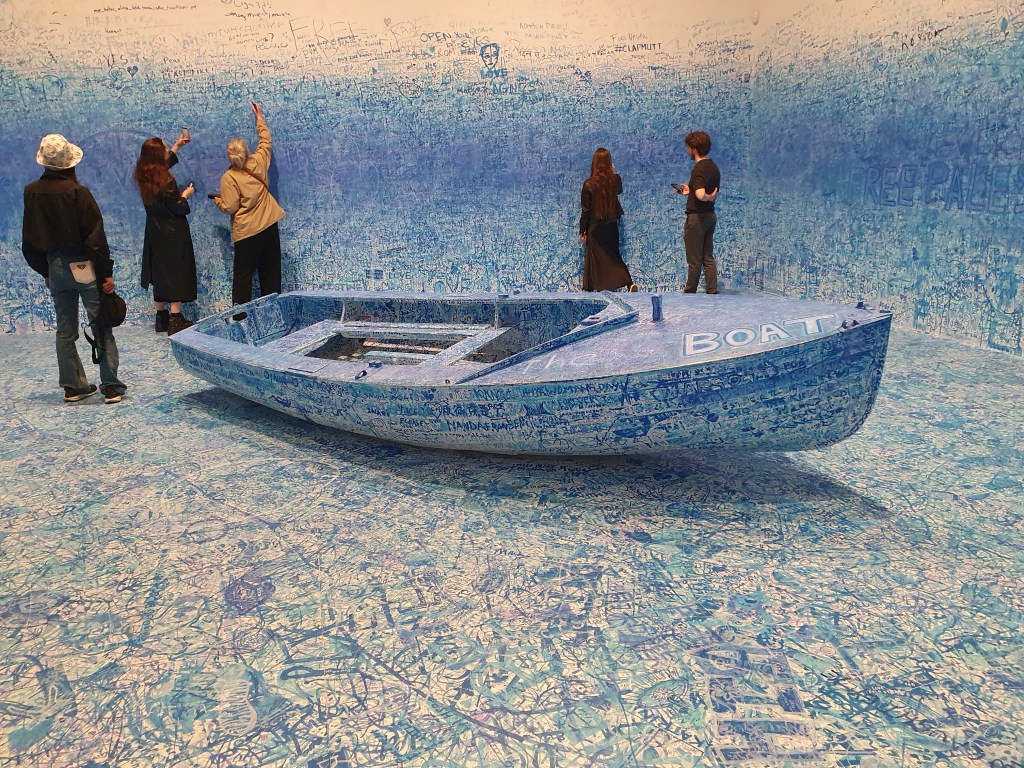
Getting involved is always on offer – playing chess on all-white boards, climing a step ladder to look at the sky, watching the sky above the Tate on an old B&W TV in real time – they are all asking us to think about art and artificality, imagination and reality and it certainly gave me a great deal of food for thought and arguments to counter those who dismniss this as gimmicks not art. Politics and collaboration are featured in the last two major exhibits. One started as a completely white painted room with a refugee boat as its centerpiece. During the course of the exhibition people have been invited to write messages in varying colours of blue felt pen so that the boat itself and the walls are covered in messages – some highly legible and frequent like FREE PALESTINE, others more intimate expressions of love. And the final room asks visitors to write messages of love for their mothers and pin them to a wall that is growing ever thicker as post-it notes are superimposed on one another.
MONDAY 10 JUNE
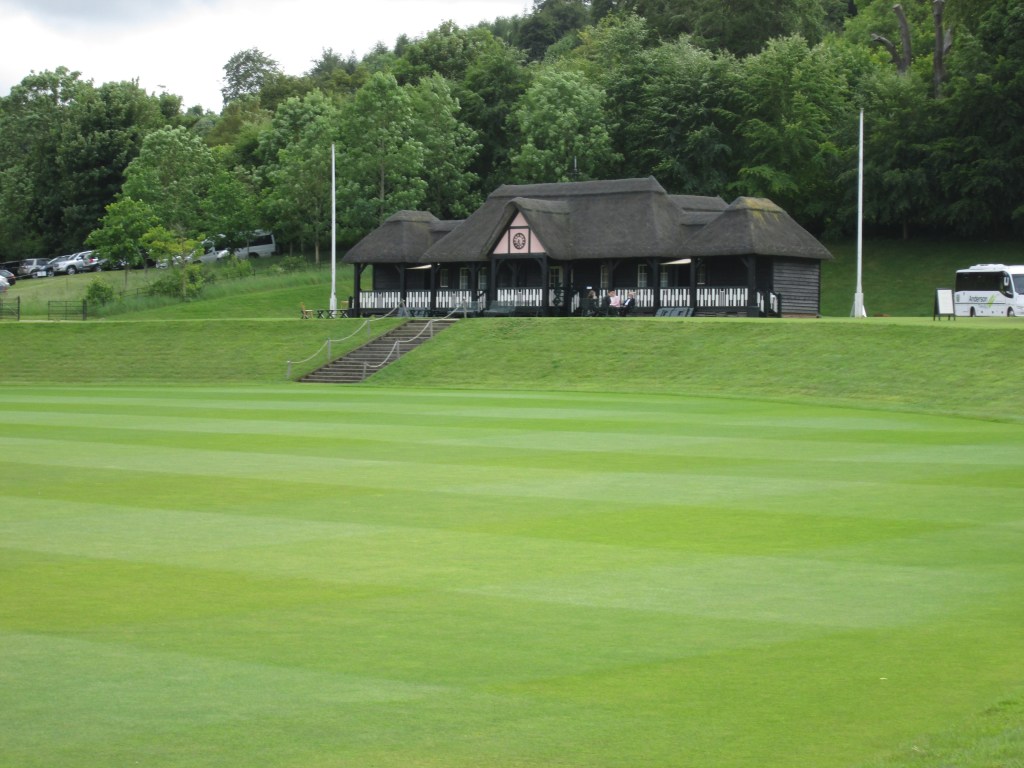
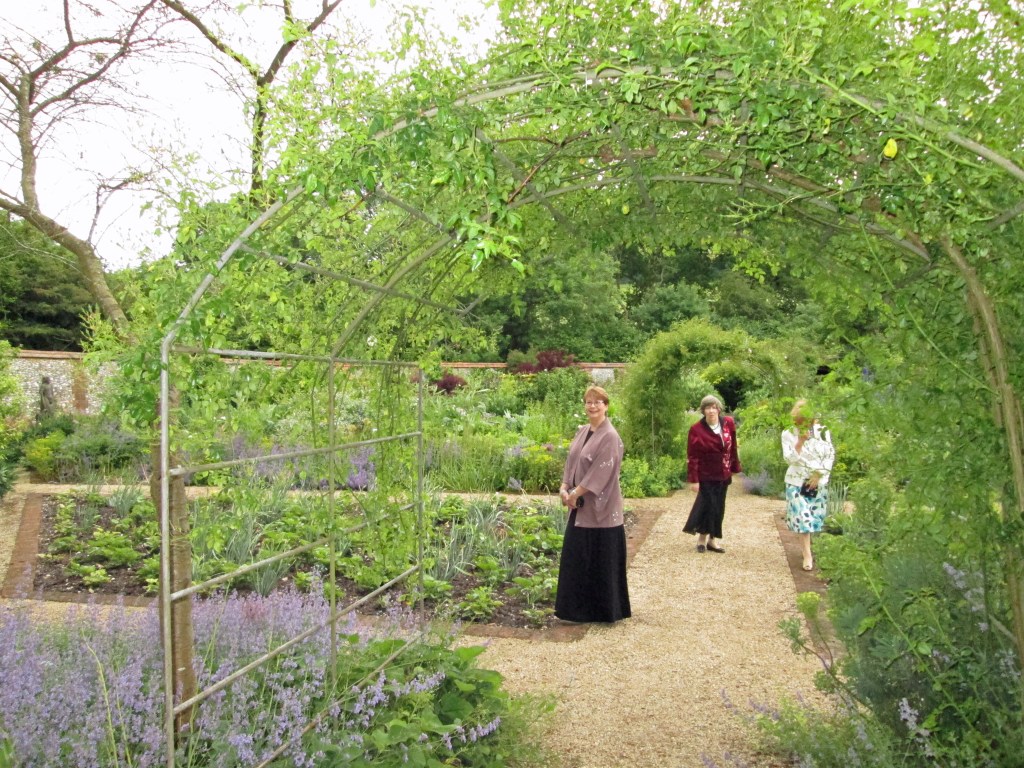
Then on Monday it’s off to Garsington Opera for a performance of Platée, an opera by Jean-Philippe Rameau I’d never seen and only ever heard extracts from. I’m quite a fan of the Baroque and even managed once to use a piece from his opera-ballet Les Indes Galantes as the soundtrack for a infant formula corporate video I made back in the 80s. I’ve been a friend of Garsington for many years now since beinhg introduced to it by my friend Susie Stranders (now at the Royal Opera House) who was music director for several years. I love the brilliantly maintained cricket pitch and the vintage coach ride to the walled garden and especially the glass box opera pavilion all among the lush Chiltern Hills. It helps that they mount outstanding productions with world-class musicians, singers and directors.


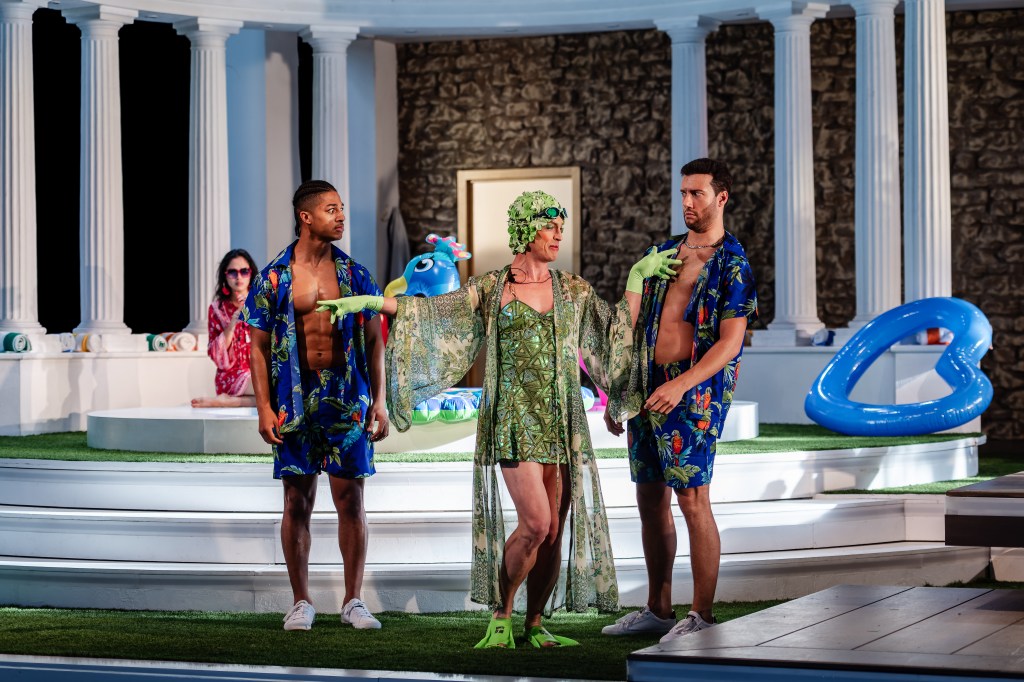
So now to Platée with my friend Jadwiga and I keen to explore new adventures knowing little of the story except that it was the familiar theme of the Gods interfering with mortals for their own nefarious purposes. On entering the pavilion we are surprised and delighted by the set which takes the form of Studio 3 at Olympus TV – a particular delight for me having spent a lot of my professional life in such places. During the lengthy and very lovely overture a script conference is taking place where execs demand creatives find ways to boost the falling ratings of the hit show Jupiter and Juno – or should that be Juno and Jupiter as egos are involved here. There are tacky (deliberately) animations on the big screen, the occasional countdown clock that we used to hope the public would never see. There is some brilliant choreography with the meeting room tables swinging around while the creatives search for a solution and for Thespis, Momus and Thalie (Holly Brown a very convincing stomping about the set frustrated producer) as they sort out the new scenario. Now there’s, rightly, no photography allowed during the production and I’m extremely grateful to Garsington for sending me some images to illustrate this blog. Sadly none of them show the entire set in all its glory – plunge pool, colonnade, cocktail bar, fire pit and so on – so hurry and bag a ticket if you can and go and see it for yourself.

The plot is convoluted but what matters is the music. First heard in 1745 at the wedding of the son of Louis XV of France to Maria Teresa Rafaela of Spain, the main character is a none too attractive nymph with whom the team persuade Jupiter to fall in love. Given that Maria Teresa was said to be no beauty, I wonder if there were a few sniggers among the wedding guests. The tradition at the time as we know from Handel was to combine dance with the singing bits to keep the audience happy and there are long passages where you just revel in the melodies, the unusual inventions Rameau introduced in both time and instrumental effects – a timekeeping tambourine was a lovely surprise. I was also struck by his brilliant writing for voices – the trio for the three seen above was ravishing and the choral pieces were beautifully sung by the Garsington Chorus. In the pit was the English Concert under the baton of Paul Agnew who knows this piece really well having sung the role of Platée several times. They were lively and committed throughout. It is a comic opera and the music included some funny elements that were presented skilfully. So yes, Platée is a role for a high tenor making the ingongruity of Jupiter falling for ‘them’ (in modern day wokery I guess) all the more absurd.


Jupiter enters in a glitzy gold golf buggy and after a beauty parade in Love Island style chooses the dowdy nymph rather than the very pissed off supermodels who were gracing the stage with their colour coordinated wheelie luggage.
Photo: Clive Barda

Special mention has to be made of the dancers who produced some spectacular displays. My eyeballs will never lose the image of them lying in rubber swim rings performing synchronised swimming moves. Nor will I forget the whole casts’ falling repeatedly asleep while waiting for Jupiter to come to the wedding and equally the brilliant staccato movement of their chairs across the set in another scene. As Platée becomes more excited about the impending wedding we have an interlude from a sparkling La Folie whose sheen and style are a contrast to poor Platée’s OTT wedding outfit.

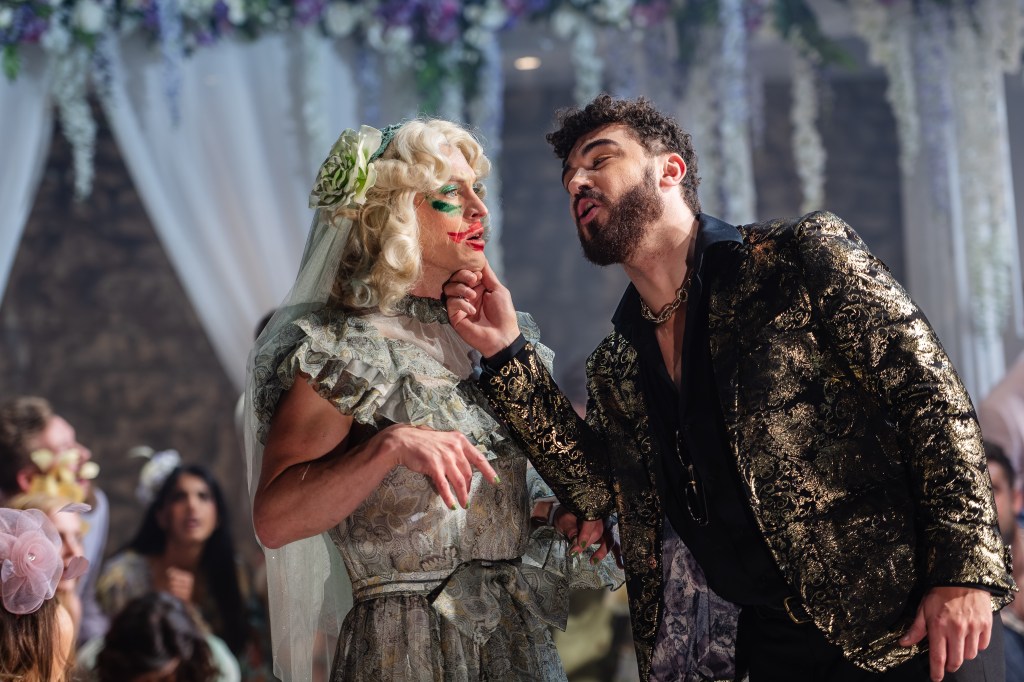
Photo: Julian Guidera
As we drove home Jadwiga exclaimed that she’d never seen anything like it. I have to agree that Luisa Muller’s production – so different in tone from the last of her productions we’d seen here Britten’s Turn of the Screw – but so admirably suited to the harum scarum, off the wall plot and the musical twists and turns. The TV execs got what they wanted – Juno stormed in full of jealously but then saw Platée and realised that she’s been gulled and all ended happily ever after for Juno and Jupiter.

As I said in another post last week when gods and mortals mingle it always ends in tears for the earthlings. It was a cruel end for Platée ridiculed for her pretension and slinking off back to her swamp. But then life ain’t fair is it? What is fair is that, despite everything, Garsington Opera can still put on evenings like this despite the draconian cut backs to the arts. In fact they’ve just opened a wonderful facility on the site Garsington Studios so that rehearsals can take place simultaneously for different productions and sets can be contructed, wardrobe and props made, making the whole production process so much smoother for all concerned. And when not used for the company, the studios can be hired out to produce income. Thank you Garsington for another superb evening at the opera, I can’t wait to come back for Benjamin Britten’s A Midsummer Night’s Dream on 19 July.
 mikeandmurakami.com