It’s not all about the beef

20 sushi pink  In two Kobe days

             can we find the real source of

             Haruki’s ideas?

A taxi delivered us to Takamatsu Station bright and early – too early again for the train we’d selected with the fewest interchanges but at the gate they insisted that if we took the 09:33 Marine Liner we could get a direct train to Shin-Kobe soon after arrival in Okayama. Soon after we were seated the train attendant, as they are called, came up to us with this piece of paper with times and platforms for our interchange – without being asked and in English.

Train times takamatsu

It was just another example of the superb service we are receiving from all quarters. The train ride was under grey clouds that nearly touched the roof. So going back across the Seto-Ohashi bridge on the train was interesting as we took the lower deck which would have afforded views but for the grey. We were very impressed that a journey from a different island across the bridge and round the coast of over 150 miles had been accomplished in under two hours door to door in a combination of local train and shinkansen. Drizzle turned to a downpour as we arrived in Kobe, dropped our luggage of at the very stylish Hotel b Kobe and set off on a circular city bus tour to get our bearings.

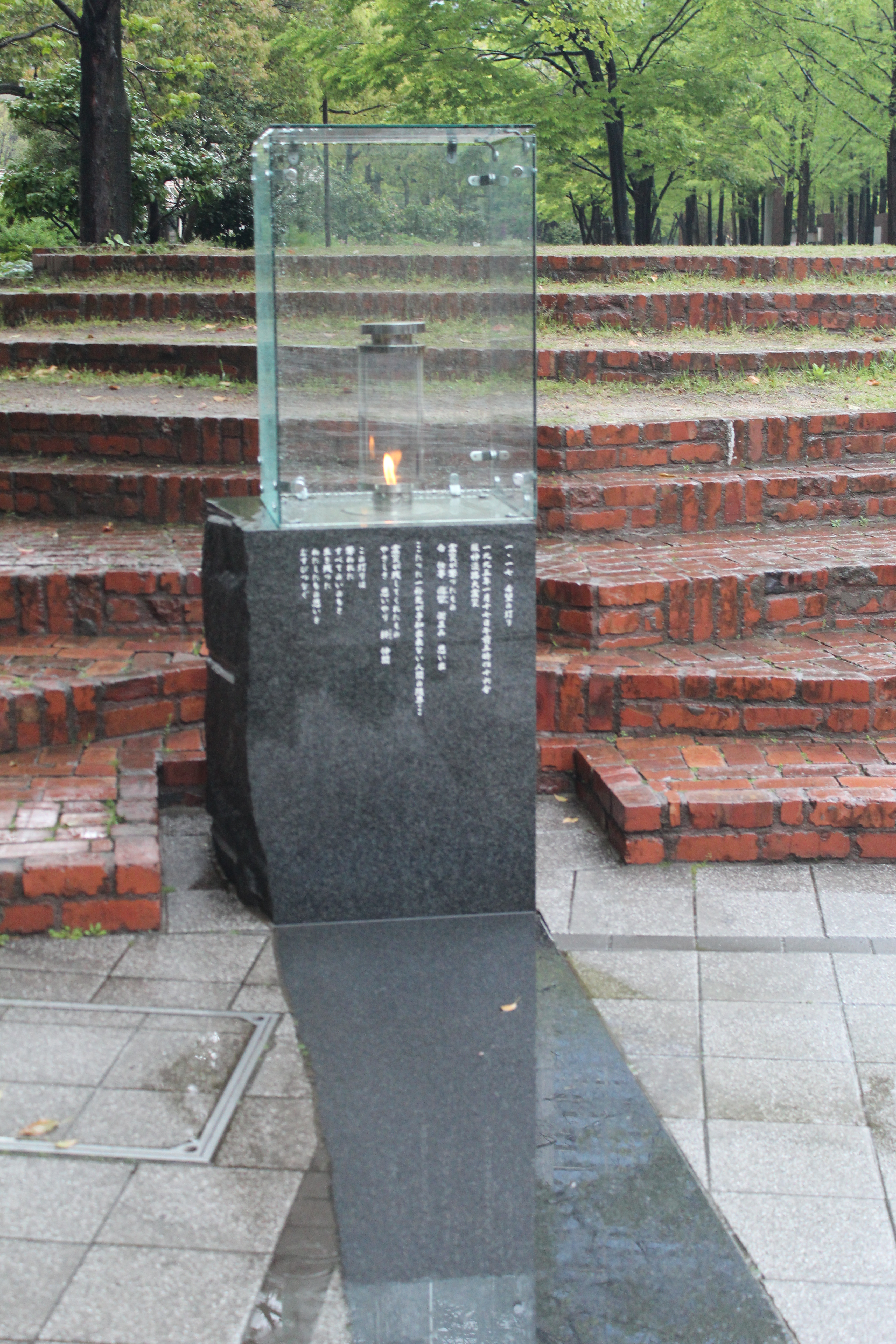
We got off the bus to visit a lovely little museum of glass bead work. We are just not used to finding a museum on the second floor of a smart downtown office block but that’s where the Kobe Lampwork Glass Museum is. With an excellent display on the long history of using glass beads for decoration it then reveals the many styles and techniques used by modern beadworkers. With the rain lessened a little as we made our way out after a fascinating hour, we then got back to the real work of the day. Just round the corner is the Higashi Yuenchi park which is home to memorials to the great Hanshin earthquake of 1995.

Murakami wrote a collection of short stories called after the quake which feature people affected in various ways by the after effects of the massive earthquake. Being in the park with it’s monuments showing the scale of the disaster and expressing the hope and determination of the people of Kobe to overcome it was extremely moving especially with the latest Tohoko tsunami so fresh in our thoughts. Juggling camera, bags and umbrella was not easy but I hope we can give some indication of what it meant.

IMG_1446  IMG_1465  IMG_1463

The 60 cm drop at the left edge of the trellis       A flame of hope burns   Memorials line the park
shows the effect of the earthquake

As the rain worsened, we decided there was only a choice of two places to visit next – the aquarium or a sake brewery tour. Hey we’ve seen lots of fish on our plates and in ponds and have only a vague notion of how sake is made so the truly educational option wins out. We hail a passing cab, opining that it’s much too far to walk – and how. The driver was a bit confused but kept on heading north along the shore road with yen flipping over alarmingly on the meter. However he did take us to the right place even if he wasn’t quite sure and hovered at the gate getting wet until an official was able to reassure him that this was indeed the Kaku Masamune Brewery which we had selected on the map we obtained from the Tourist Information at the station because our coupons gave us a free tasting and a free sake vessel each. The tour was fascinating as we followed a group of Japanese visitors who were led round by an obviously hilarious guide as sides were frequently split with laughter. It was a potentially hazardous tour evidently- and that was before any sake was consumed. A young lady came to our rescue and took us to a viewing room where a ten-minute video helpfully put into context all the equipment we had just seen.

IMG_1469 IMG_1481 IMG_1477

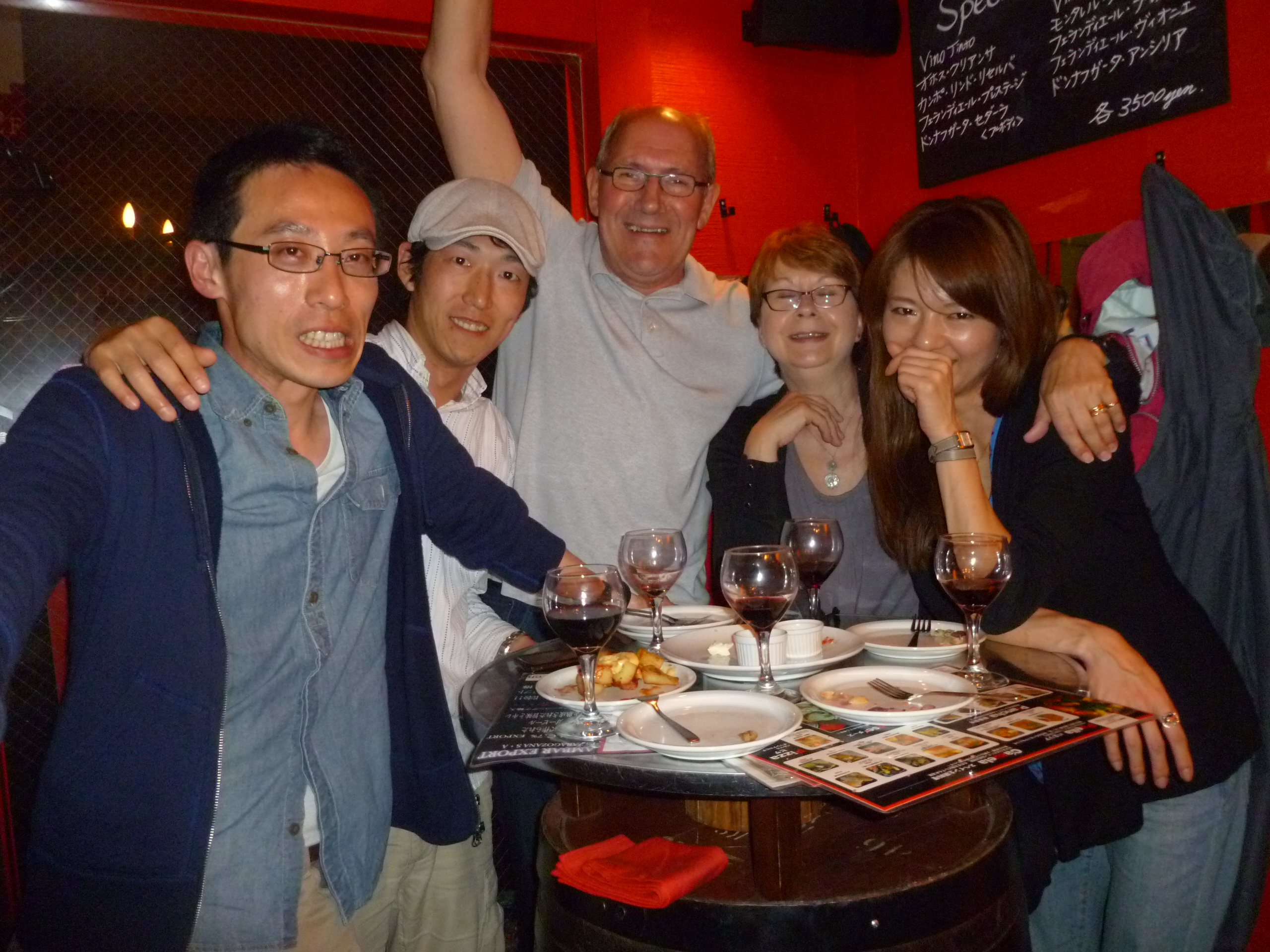
P1020184We took a train back into town and with light drizzle replacing the torrents we walked around Sannomiya, the central shopping and entertainment area of Kobe, had a beer or two and dinner of cook- it- on- the-hibachi Kobe beef and vegetables. Heresy we know, but on this tasting – admittedly not in a gourmet restaurant – Hida beef has the edge. Then drawn as always to a bar with a Spanish flag and the promise of a glass of tempranillo we were drawn into conversation with three young people, two of whom had been to study English in Hampstead three years ago. It turned into a bit of a night of great hilarity – proving again how friendly and welcoming we have found people on this trip.

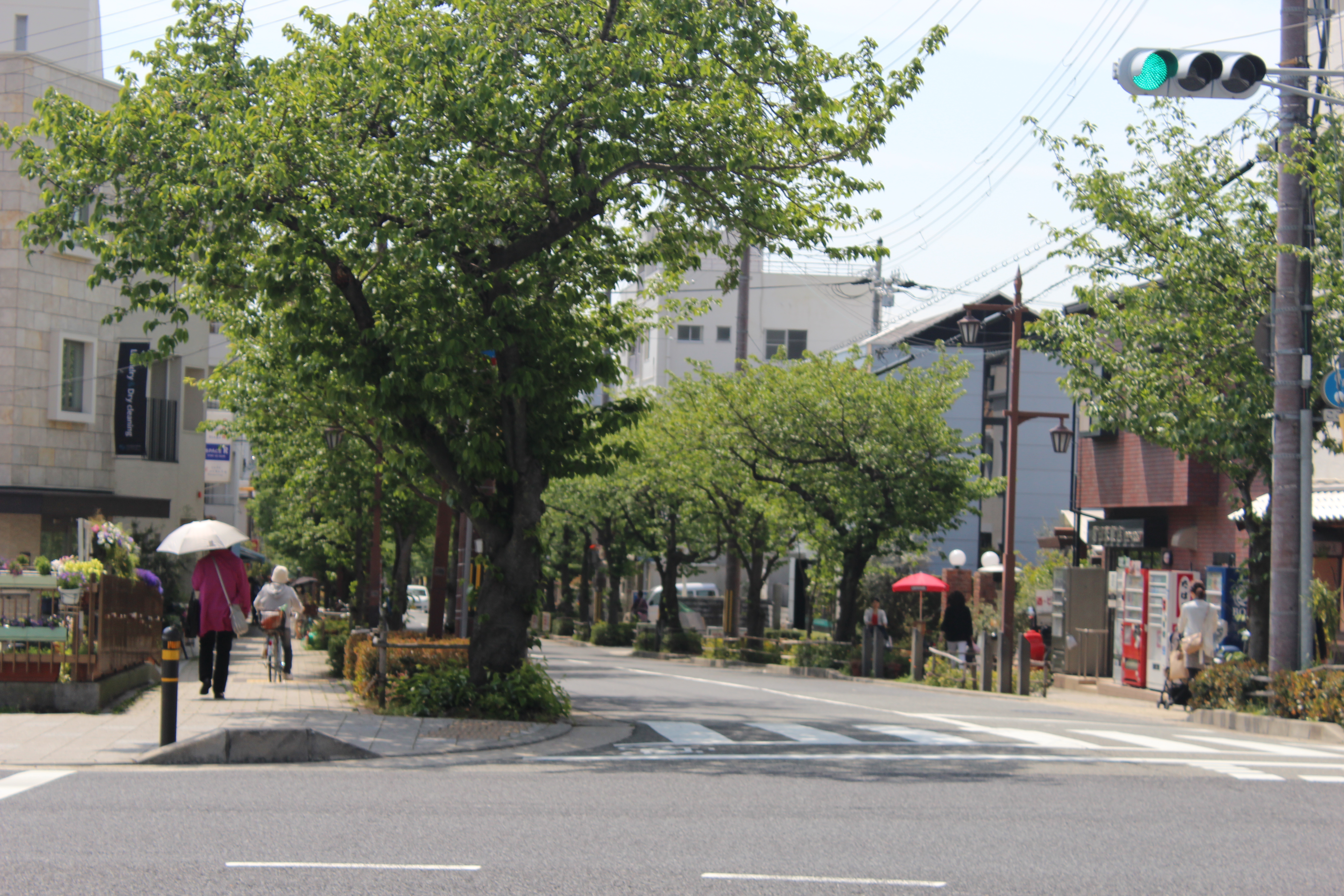
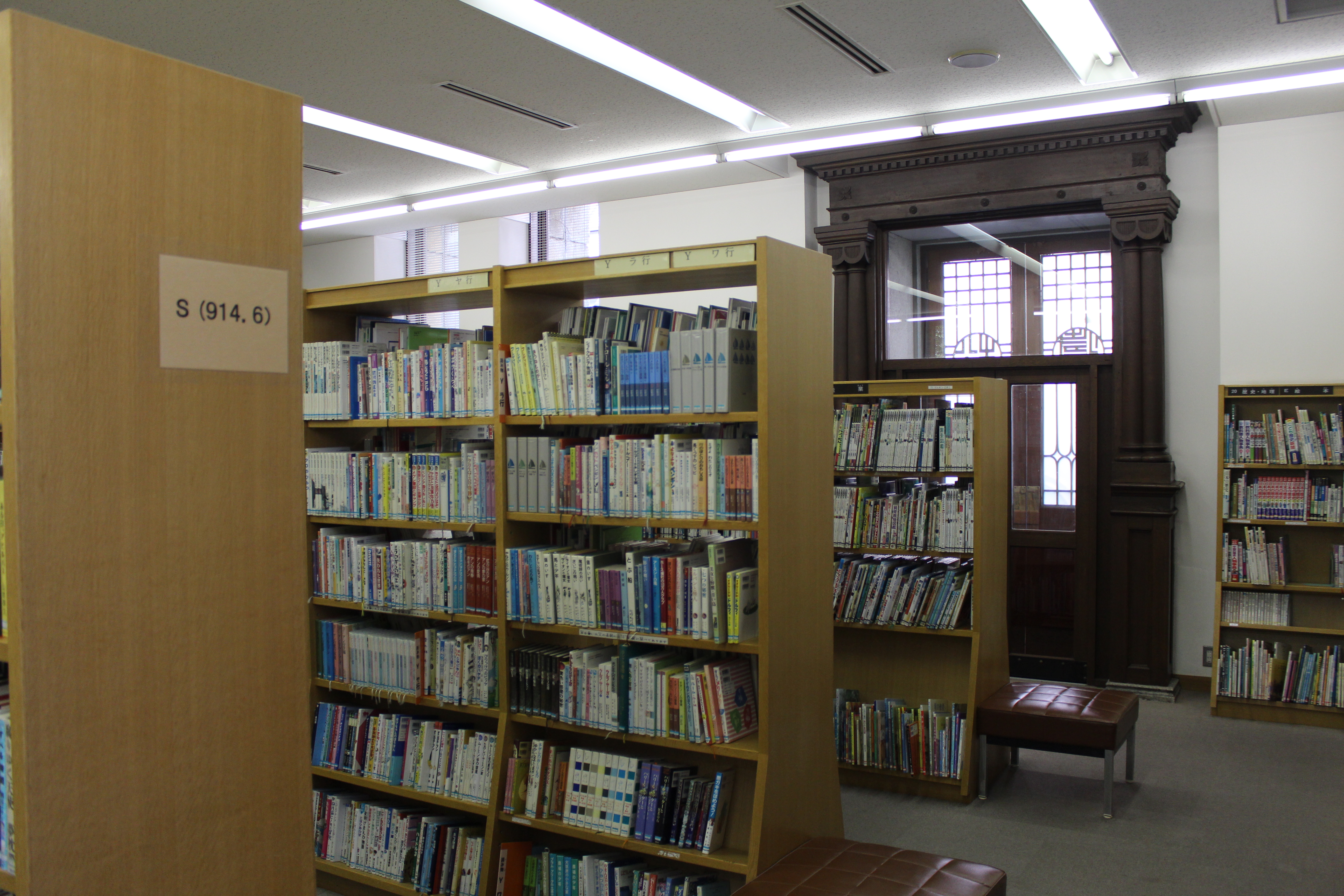
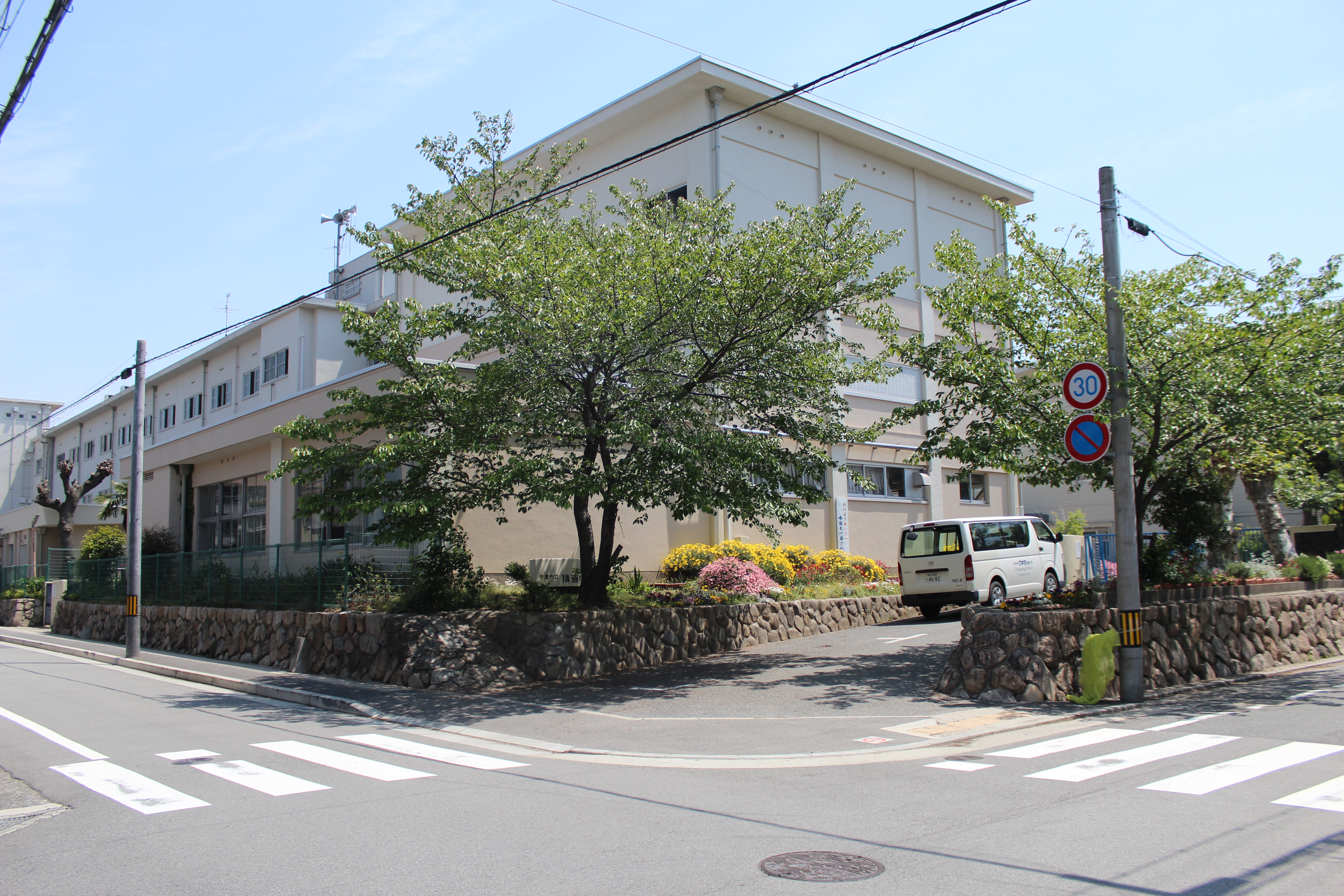
Thursday was  a complete contrast with brilliant blue skies and temperatures well over 20 degrees and there are almost as many umbrellas in the streets,  now taking on the role of parasol. The tradition of all those bamboo umbrellas in wood block prints is maintained today on the streets of modern Japan. We planned today to look for formative influences in Ashiya the Kobe suburb where Haruki lived from an early age. A couple of stops along the line to Osaka and we get off in a pleasant, probably quite affluent suburb. Did the sun always shine this brightly over the young Murakami? The reception desk staff at the hotel next to the station were wonderfully helpful in pointing us towards the library Haruki used to frequent, his Junior High School and the monkey cage which features in a story in the collection The Elephant Vanishes. The young ladies did inform us that the monkey was dead. In fact the park used to have parakeets and monkeys in cages but they were closed for economic reasons in 2010 – fate of monkeys unknown but probably properly transferred into alternative care. We strode through the elegant suburban streets and found the library with little trouble and the park was right next door.  I’d have been happy to locate and photograph the exterior but we were warmly invited in, presented meishi and blog address and were introduced to a librarian who hadn’t met Haruki but had had some considerable contact with his mother. We asked about the house he grew up in to be told it had gone but there were some older houses in the area that are similar. His Junior High School was also just a few blocks along the road. In Uchide Park with a witty touch the council has added a panel to the cage with a monkey reading Murakami’s book Kafka on the Shore.

IMG_1494  IMG_1528  IMG_1523
Leafy Ashiya                                         The Library
IMG_1534  IMG_1531  IMG_1548
The monkey cage                                   Kafka-reading monkey                        Ashiya Junior High School

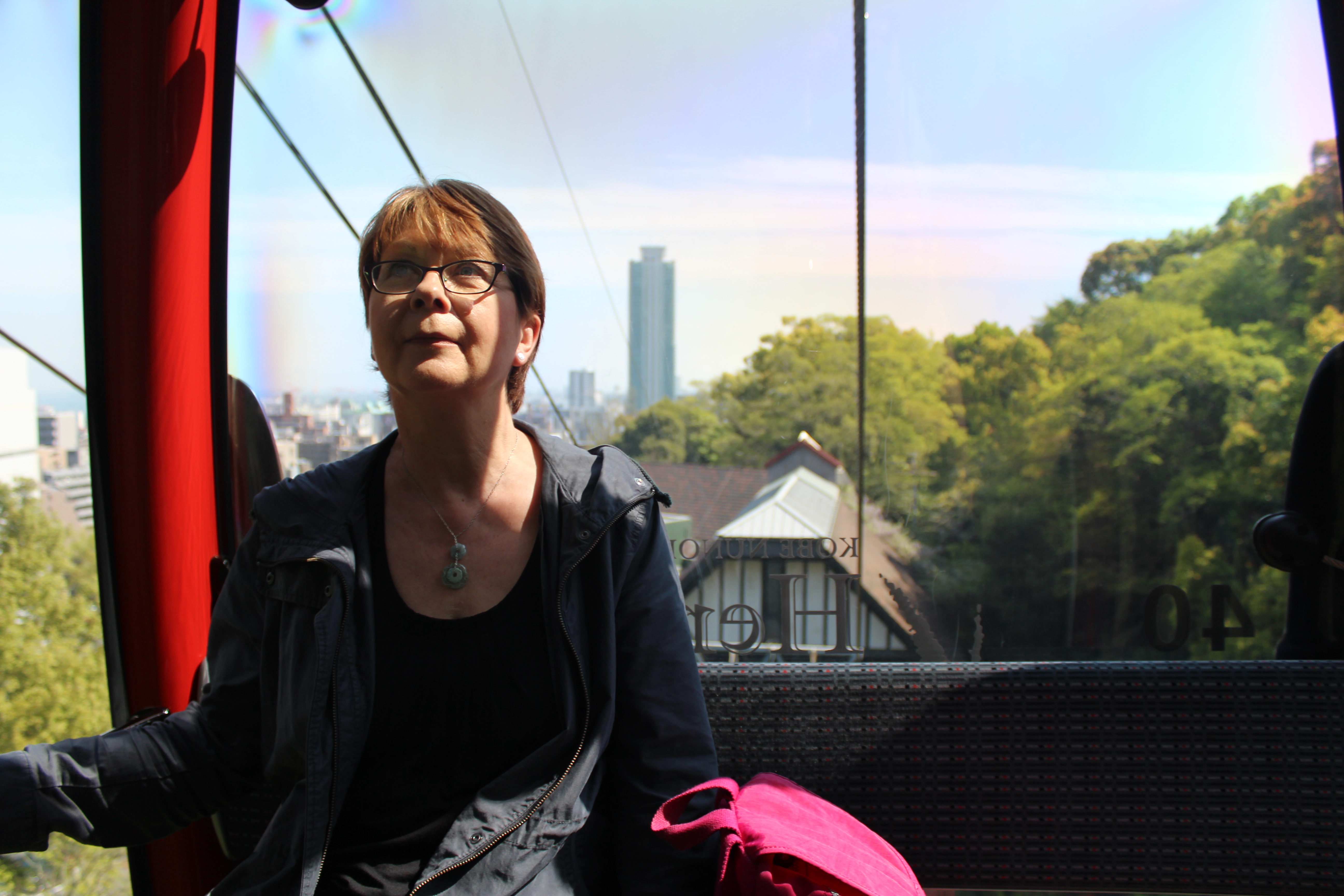
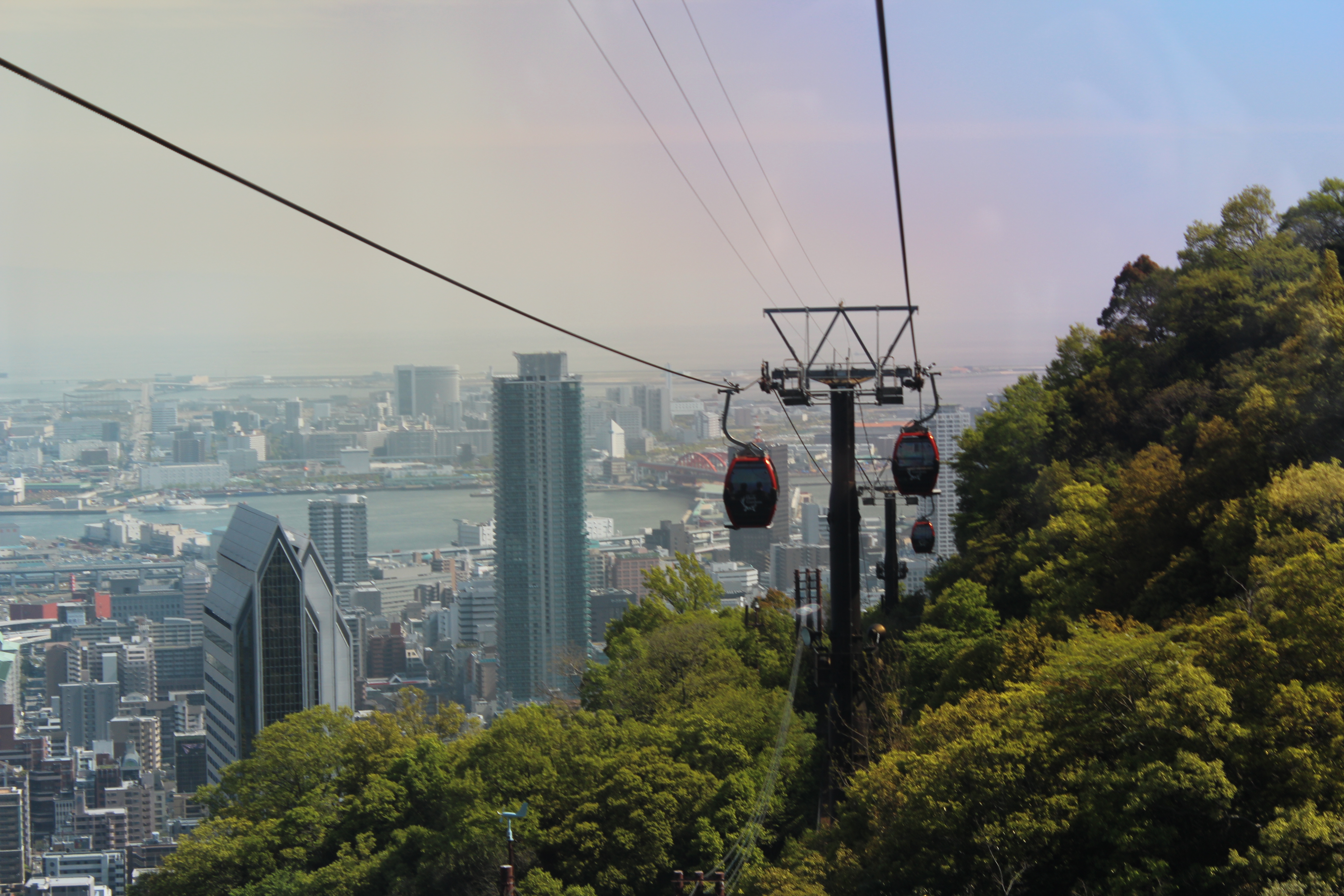
We looked for other connections and saw a few houses of the type he might have lived in. Coffee in a quaint coffee house served by a lady who must be in her eighties and back to the station to explore central Kobe further. As we’re actually on holiday too this involved a ride in a cable car to the Nunobiki Herb Gardens. The ride gives great views over the whole sprawl of Kobe and down to the port where we were headed next. Very well organized there’s a sloping path from the top cable car station to the middle point. It gave us an opportunity to indulge in some more Japanese ice-cream with fresh strawberries as they are at the height of their season and local honey. The variety of plants was excellent with many unfamiliar species and varieties among the more common and some beautiful flower beds displays gave us a restful and relaxing break.

IMG_1567  IMG_1570  IMG_1576

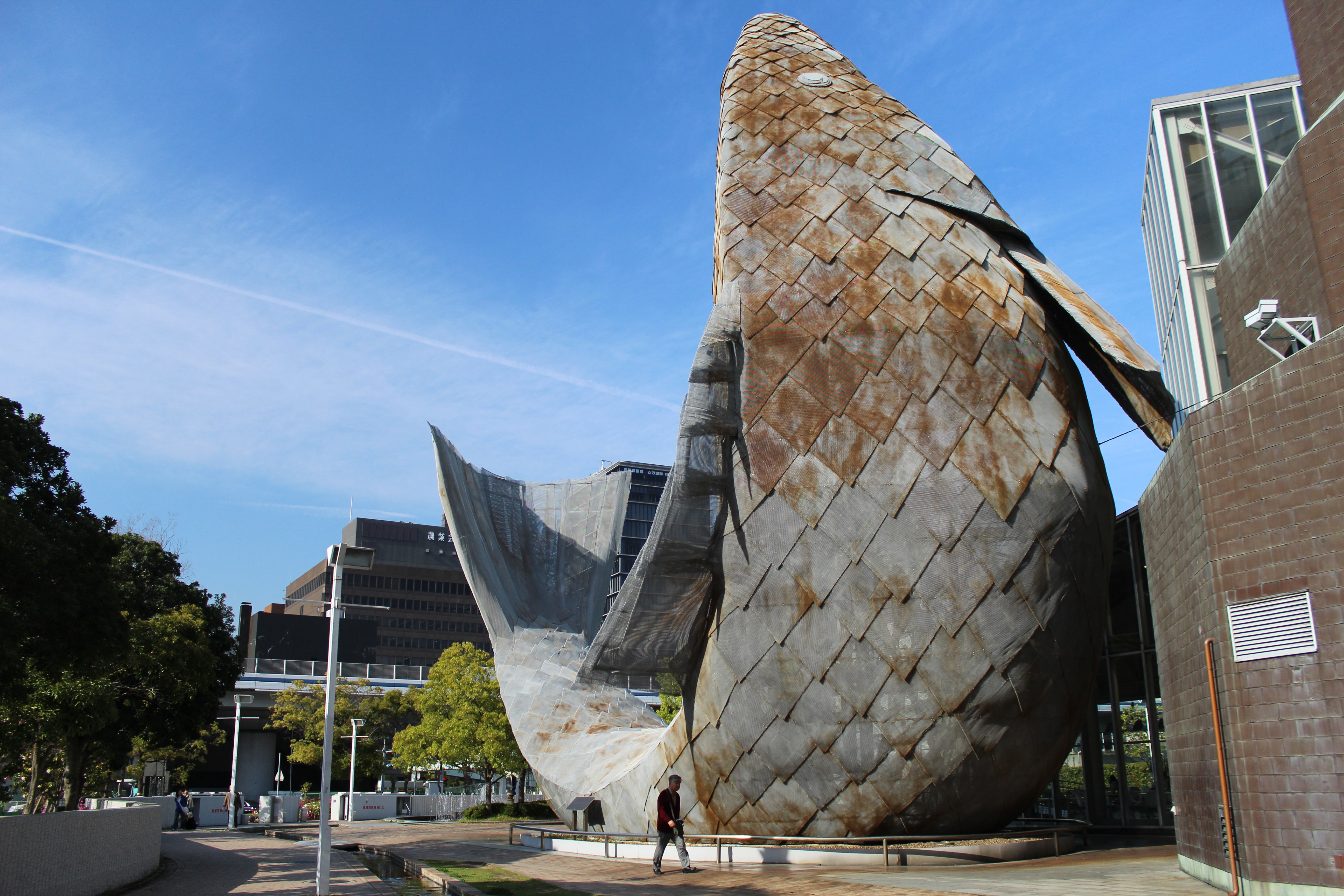
There are a number of references to the Kobe harbour area so we caught the circular tour bus to Meriken Park and were met by an enormous dancing fish designed by Frank Gehry and construction supervised by Tadao Ando – being made of steelmesh it was of great interest to us David Begbie admirers. Just beyond it was another earthquake memorial with a whole section of the collapsed harbour wall to remind visitors of just how awesome the power of the earth can be.

IMG_1596  IMG_1607

The rest of the harbour area is devoted to retail and entertainment and we had a leisurely beer watching young and trendy people come and go in stylish, outlandish and downright weird wardrobe choice. Many Japanese people have real recognizable style. Others have style that’s sometimes hard to interpret. Back to the hotel to change and out for a quiet okonomiyaki dinner – Katie was right, Kyoto rules when it comes to this mix of rösti and vegetable pancake. This was OK but the previous one was much tastier. We’ve enjoyed a couple of days in Kobe getting close to the environment that helped form Murakami and therebyinfluenced his writings. It’s a very European feeling, lively city and it’s been a fun visit even if we’ve as so often only scratched the surface.

Scampering around Shikoku

19 sushi pink Can we find Kafka

          on Shikoku’s shores and hills

          or will he escape?

First of all I (Dee) would like to thank everyone for their birthday wishes and for the cards and gifts received before we left.

Although the train service is good we decided to rent a car in Okayama to drive to Takematsu, our next stop and one of the main places to feature in Murakami’s novel Kafka on the Shore. We checked the location with the front desk who sent us to Okayama Station. I’d seen a Times Rent a Car Office in a street about a minute from the hotel but their webcheck told us to go to the station. So we do. And the Times Rent a Car office says we’re just for returns, you have to pick cars up just round from the hotel. Well it’s sunny and it’s exercise, but then they offer to drive us to the pick up point. Our baggage is still at the hotel but we accept. It’ll save us some time and we are now entering a period of serious hunting for Murakami places.

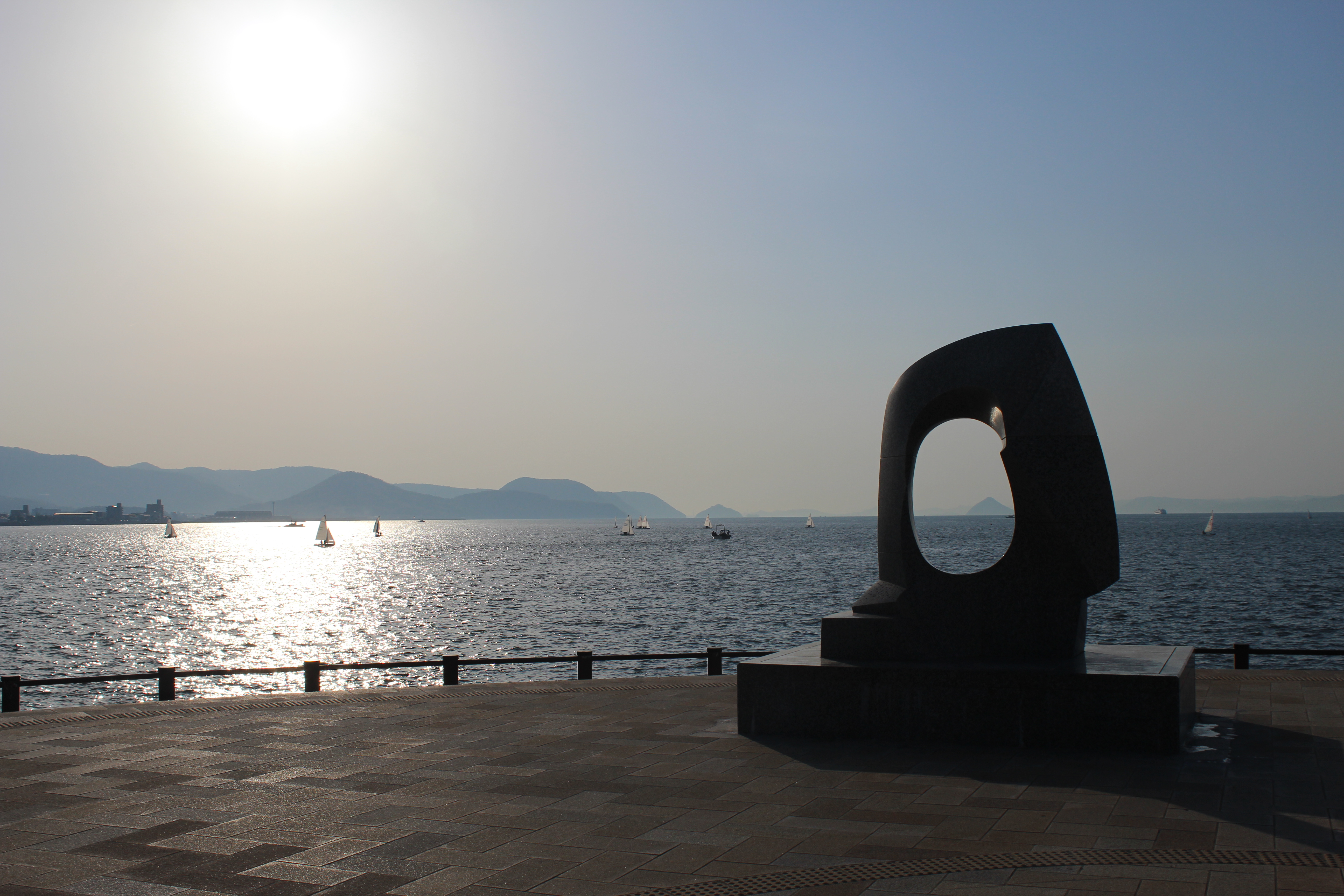
Installed in another Mazda Axela with its copious boot we set off on another sunny morning for the delights of Shikoku. The first of these was a stop at a service area as several of these are referred to in Kafka. Not this particular one but we wanted to know what they were like – excellent facilities, mediocre coffee, but warm loo seats and a peaceful garden to gather strength for the next stretch. Lots of trucks were parked up to so it could have been a stop for Nakata and Hoshino. Our next pleasure was crossing the Seto-Ohashi Bridge, the longest double-decker bridge in the world. We’d seen it yesterday from the ferry to Naoshima and now we were on it, all thirteen kilometres of it. Splendid, flying from island to island across the Inland Sea was exhilarating and you can see from it, unlike a lot of expressway travel. The toll was quite steep at ¥4800 but there is a lot of bridge to pay for.

IMG_1246 IMG_1143

Once in Takamatsu SatNav Lady – new car but no better sense of direction – delivers us to the back of the hotel where there is no visible means of access so I drive forward and we find ourselves in a pedestrianized shopping mall – oops! Creeping across it amid startled shoppers and speeding cyclists we come to a road again and escape with some relief. It takes a few false turns down side streets before once again gaining access to the front of the hotel from the correct direction – U-turns are very rare and often prevented by central barriers or cones that even I wasn’t going to take on.

Our room wasn’t ready this time but we left our luggage and went off to garden number three on our hit list, the Ritsurin Koen which was about five minutes drive up the road and had good parking so we strolled for two hours in this fascinating mixture of the South Garden – a traditional Japanese strolling garden with the usual calm atmosphere, borrowed landscape, tea houses, lanterns and bridges and the contrasting North Garden which is in a more modern style imitative of European park layouts. On discussing it later we both agreed that the traditional was much more to our liking – so the lawn’s coming up when we get back.

IMG_1261  IMG_1281

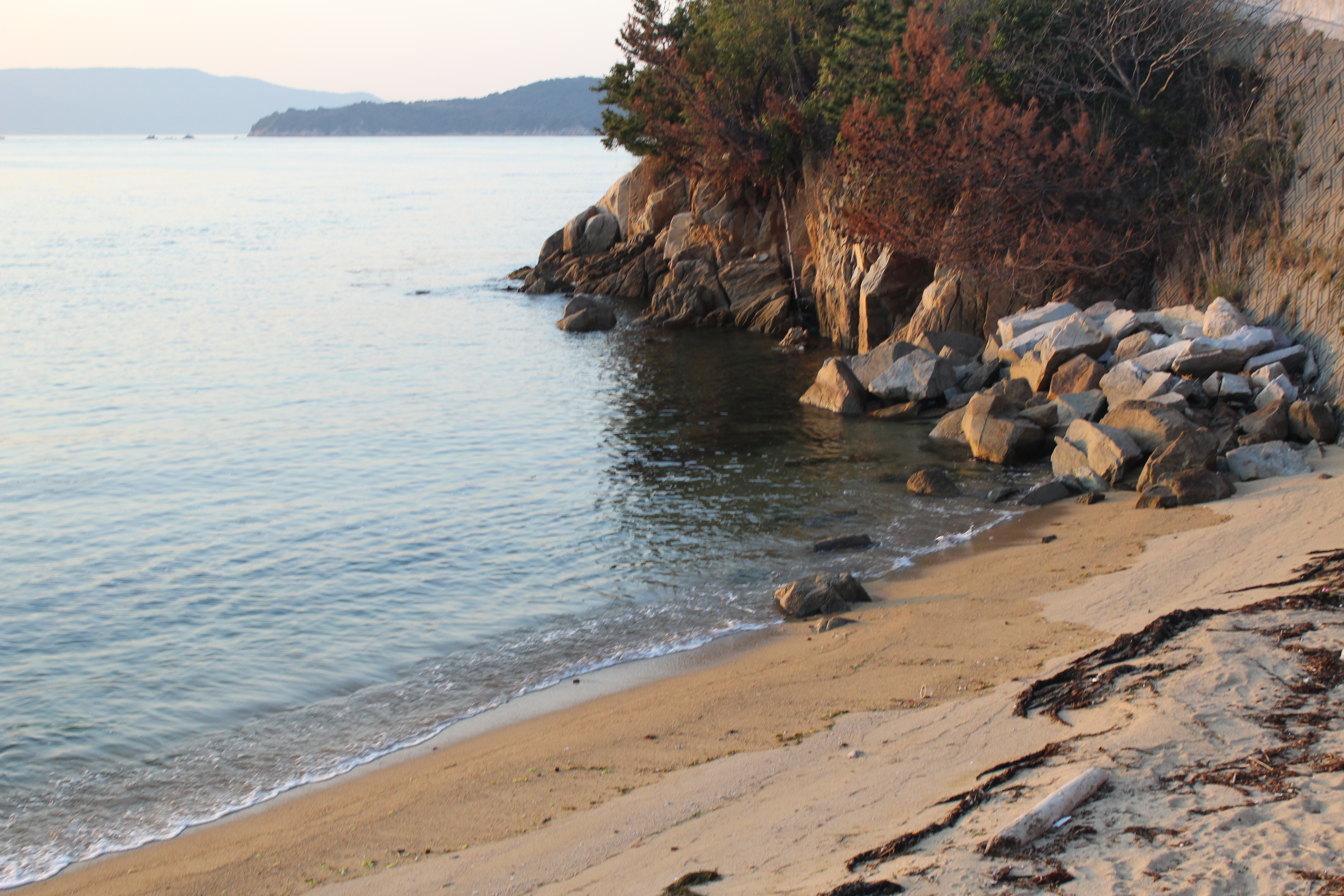
After going back to check in we drove down to Takamatsu Station which features in the book and photographed it and several hotels of the type Kafka might have stayed in on first arrival. Then it was find Colonel Sanders and Johnny Walker – 50% success rate. Yashima Shrine is thought to be the model for passages of action in the book so we went there and then drove round the coast looking for Kafka’s shore. Many beautiful coves presented themselves but no fishermen came to talk to us. Lots of crows did however. (For those who haven’t read it the hero converses frequently with a crow.) As the sun goes down we make our way back to the hotel – front entrance first time, this time – and are parked from a turntable into a vertical rotary stacking garage for the night – good value at ¥1000.

IMG_1290   IMG_1316  IMG_1298

An evening stroll through the pedestrian area resulted in us being approached by a gentleman who had probably had a few too many after leaving the office so we politely declined his offer to buy us a drink and shot some of the shady side streets where Nakata’s deals could have taken place. Dinner and back to blogging duties.

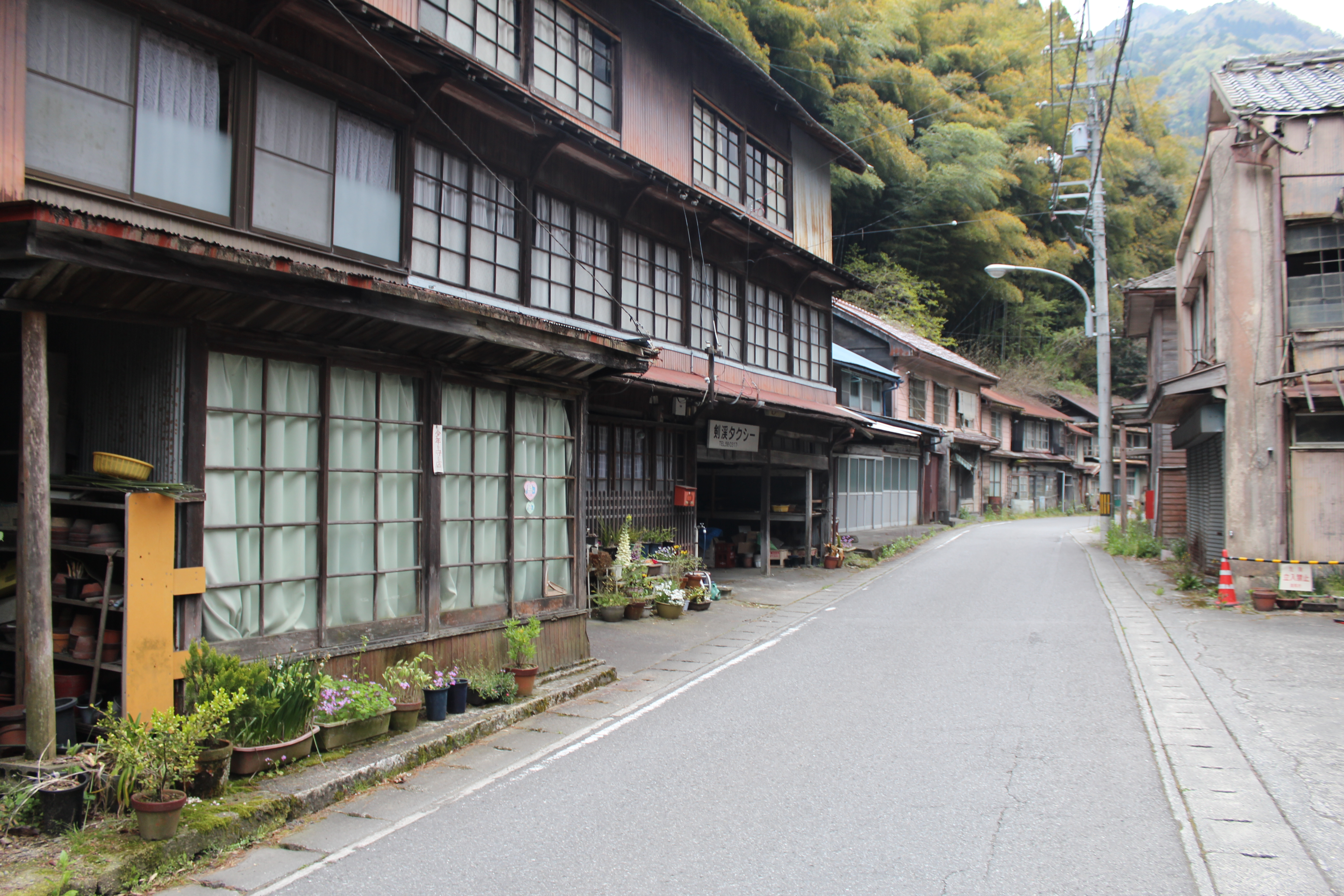
Tuesday morning sees us set of for Tokushima where Hoshino and Yakata arrive in Shikoku and stay at a hotel near the station. We find possible locations there and then head for the mountains behind Kochi where Kafka spent several bewildering passages in dense, steep, tumbling forest. We found plenty of that and some fabulous mountain scenery. The comparison with European mountains is interesting with the vista softened here by the presence of deciduous  trees and bamboo so high up, particularly at this time of year with their fresh unfurling foliage. We passed through what appeared to be a ghost town but did have a working post office and phone box and parked cars so we assume life was present. It was all very Murakami again.

IMG_1398 IMG_1399 P1020141

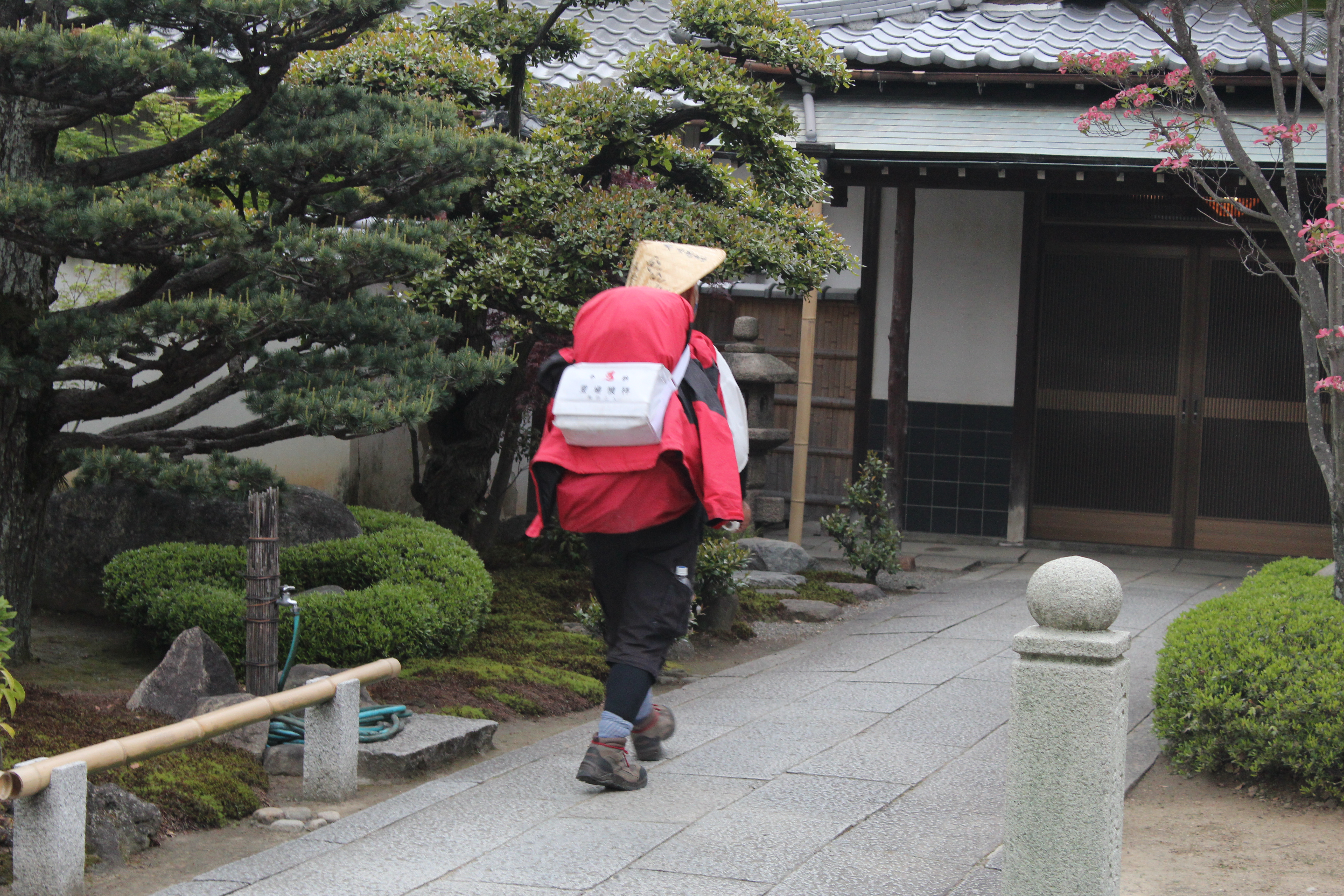
Descending from the mountains we stopped frequently as photo opportunities presented themselves to the amusement and extreme courtesy of a truck driver who repeatedly overtook us while we were stopped and then pulled in to passing places to let us go by him. It was another amazing display of generosity and selflessness. As we approached Takamatsu again we went off to find another temple alluded to in the book and saw one of the pilgrims arriving.  Shikoku is famous, among many other things, for an 88 temple, 1200 km pilgrimage which many Shingon Buddhist followers make each year and this pilgrim was on foot and dressed in the traditional manner rather than in a coach party.

IMG_1411  IMG_1415

We had to get the car back by six as we resume rail travel tomorrow so down to the port area, another easy and friendly drop off and back to the hotel for an onsen visit on the roof while our laundry swirled around in the free laundry. The communal bath was a first –  separate male and female baths here but the ritual of a thorough cleansing shower followed by wallowing in hot, briny water, cold tubs for a contrast and for men an interior and exterior option so you could see and hear the city go by while lying up to your neck in water.

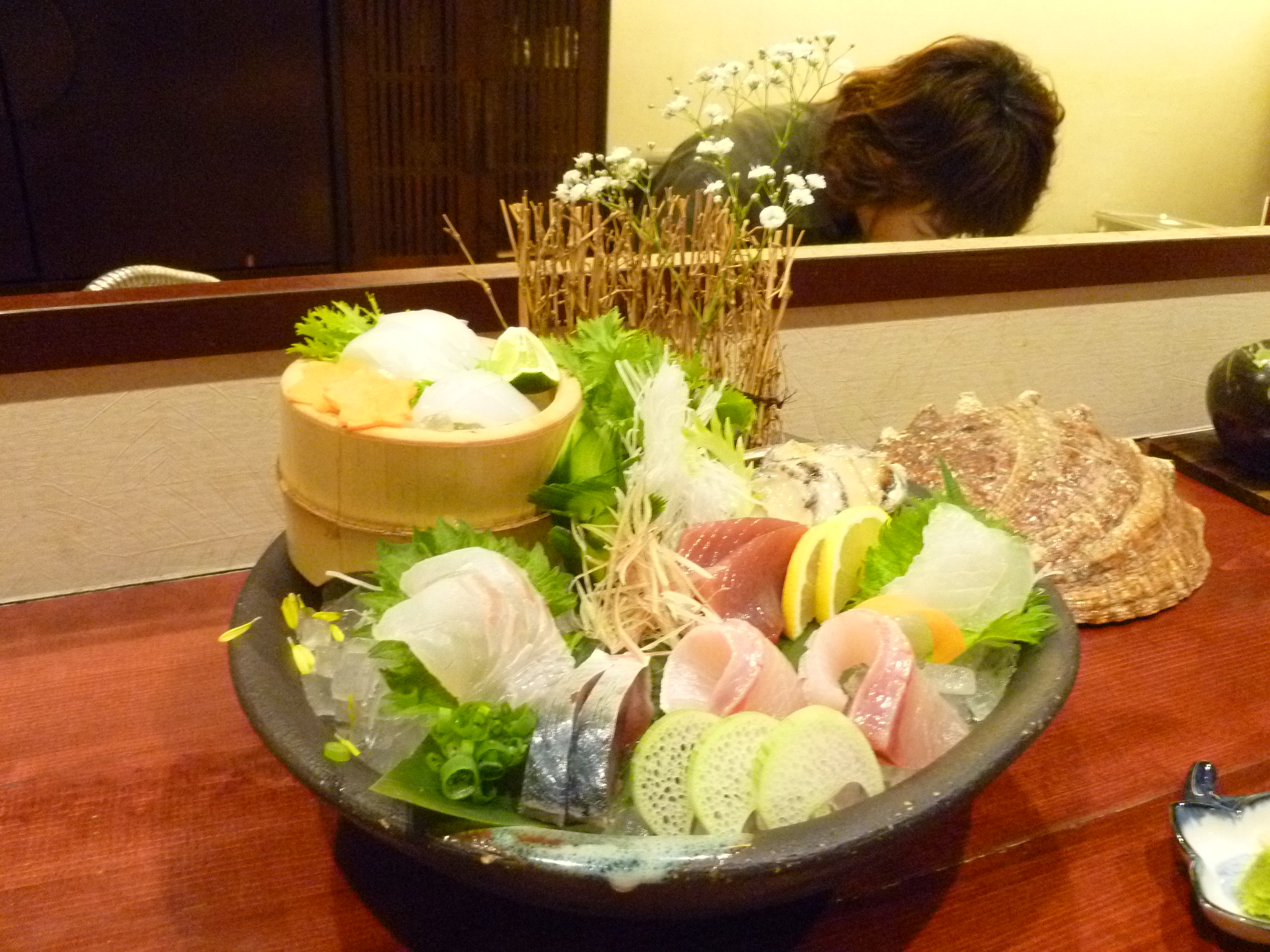
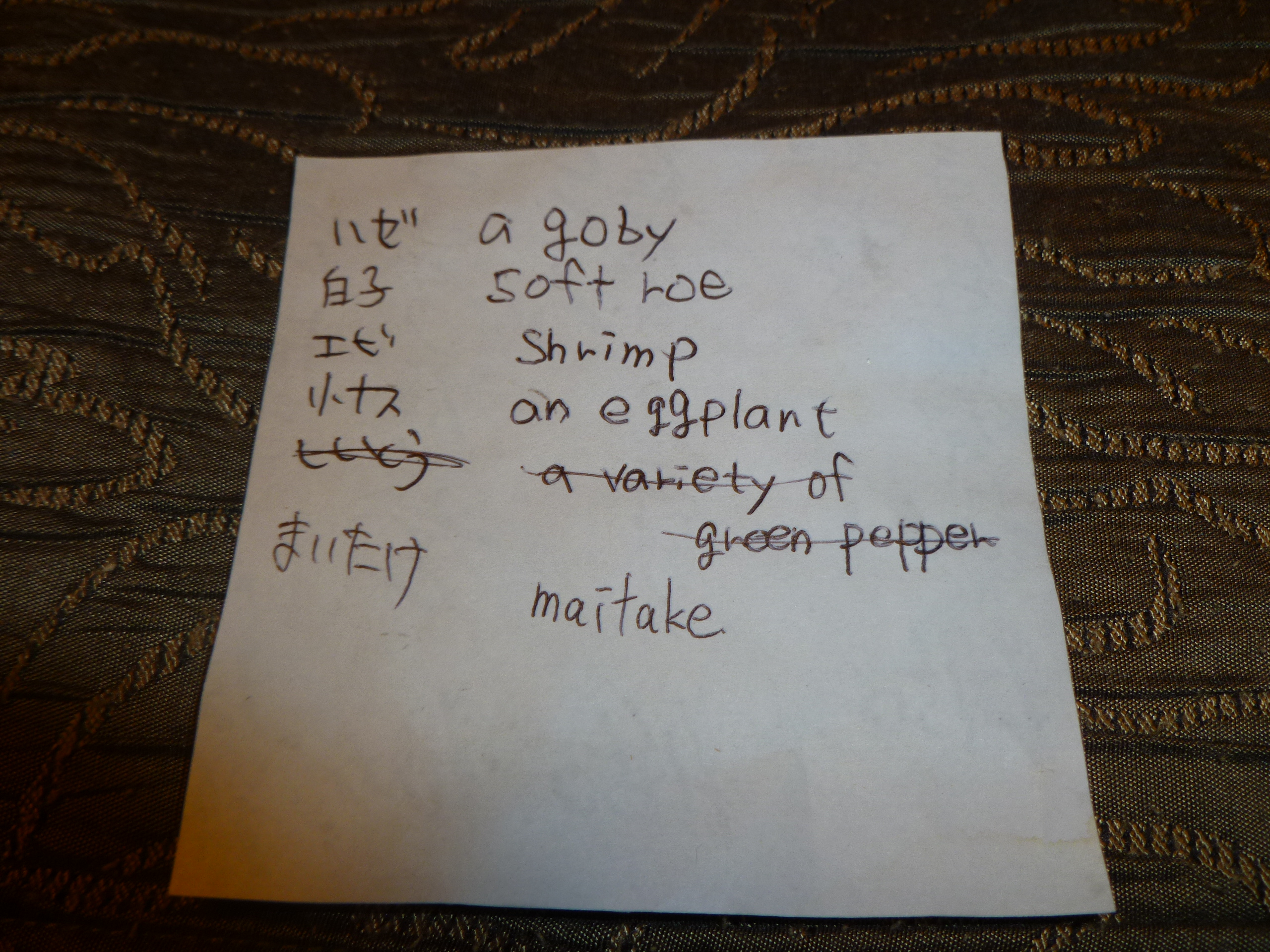
We asked reception for a recommendation for dinner and they didn’t fail us with Kokon restaurant. The sashimi dish the chef prepared was a work of art in itself and he and his assistant combined our phrase-books and their mobile phone apps to tell us exactly what we were eating. Squid, mackerel, sea bream, tuna, abalone, cuttlefish adorned the dish of ice with radish, shiso leaf and an intricately carved cucumber. When our tempura arrived it was already accompanied by a note prepared with the ingredients.

P1020147 P1020149

P1020158 P1020162

What service, what a delight!

Dee’s birthday blog

18 sushi pink copy      What’s it like to be

             far from home on your birthday?

             Well, we’d best ask Dee.

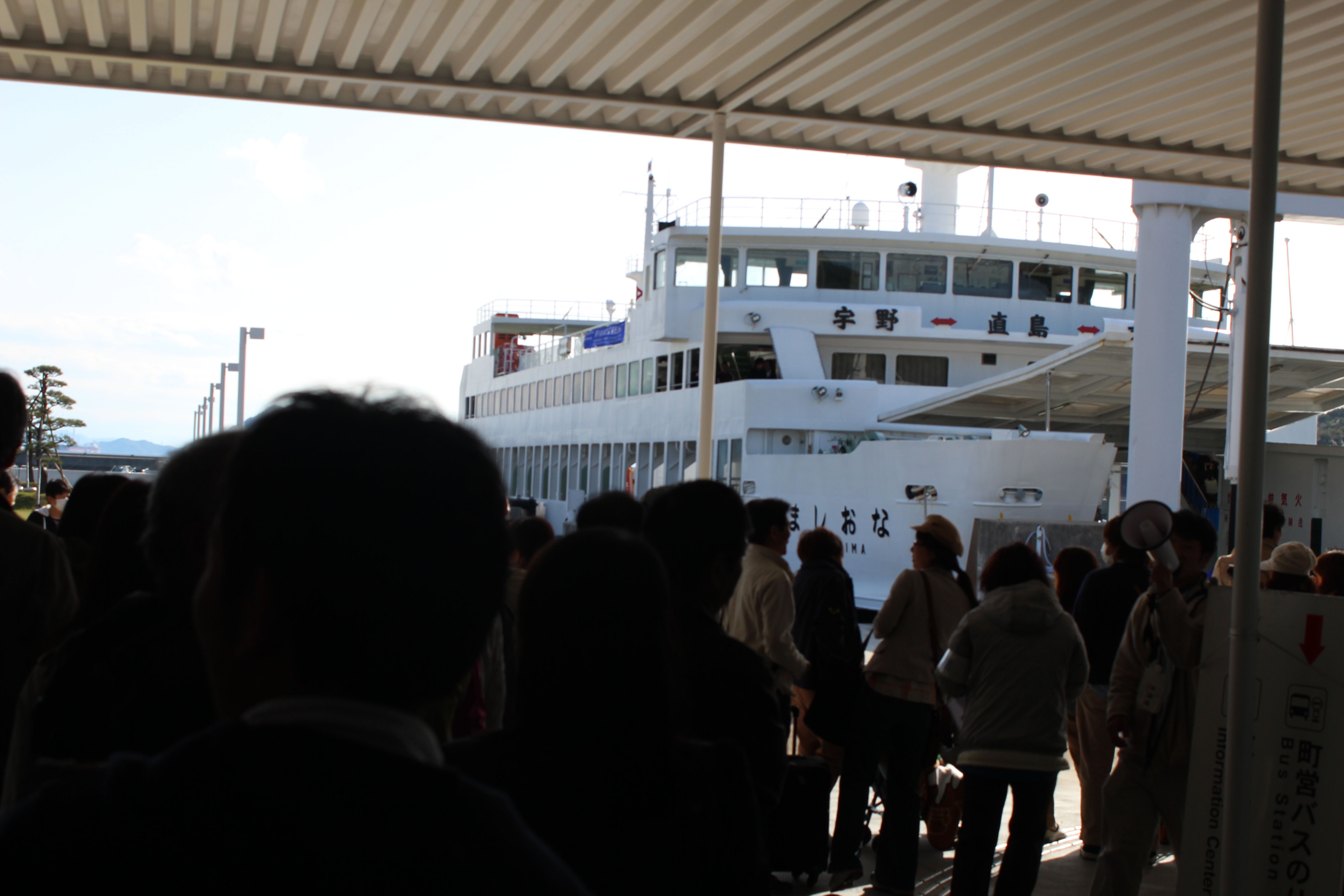
A birthday outing had been long planned. Naoshima Art Island sounded just the ticket for a day out with multiple modes of travel, walking, gardens and art to enjoy. We walked to Okayama station and took the Rainbow Bus to Uno Ferry terminal to catch the boat to Naoshima. Most of the passengers got off after fifteen minutes at Happy Village an enormous shopping, gaming and pachinko mall. We arrived at the port where numbers of volunteers guided us to buy our ferry tickets. It’s a mid-sized ro-ro car ferry and we shuffled on and made for the upper deck to enjoy the views across the Seto Inland Sea and the increasingly sunny day. Shimmering, shiny blue sea with fluffy, spring-leaved islands mark our way until after 20 minutes we arrive at the island.

IMG_1218 IMG_1119 IMG_1186 IMG_1133

There are five major areas of interest to art lovers and we walked around Miyanoura Port while waiting for the island bus to take us to the  Chichu Art Museum. At Chichu there’s a Monet Garden to entertain you while you wait to purchase your timed ticket slot and then it’s into the brilliant Tadao Ando designed museum where the most stunning work for us was a huge granite sphere in a specially designed room by Walter de Maria (sorry photography prohibited but you can get a bit of an idea of its power from the weblink.)

IMG_1173  IMG_1179

We travelled on by shuttle bus – just when you thought it was full, new seats flapped down in the central aisle to accommodate even more folk – to Bennesse House Museum another stunning Ando design for a really visitor friendly space. We were introduced, I’m ashamed to say, to the work of Yasuo Kuniyoshi a Japanese artist who emigrated to the US aged 17 and later had real trouble during the Second World War. He’s enigmatic, haunting, self-questioning and his paintings and lithographs are full of emotion and impact all displayed beautifully. The display also contains most of the contents of his New York studio which are fascinating.

We hoped to catch more of the island’s project but the need for lunch and getting back for Mr Yamamoto’s specially arranged dinner meant that we had to scuttle by shuttle to catch the ferry back and then bus back to Okayama. Bright sun all the way this time it was a brief voyage to savour. Walking back from the station we heard live music coming from the canal area so popped by to see what was going on and happened to find Espana Leon which fortunately had some cava, so a proper birthday toast was made possible.

We changed and were taxied to the Kokusai Hotel up in the hills overlooking the by now lit up city. The restaurant is essentially French in style with a few Japanese touches. First taste of wine for ages. There were more staff than diners by the time we finished and it was an interesting way to celebrate. On the way out Dee was presented with a rose which will accompany us on our travels for the next few days.

Off to Okayama

17 sushi pink Our first bullet train

        Kyoto to Okayama

        excited or what?

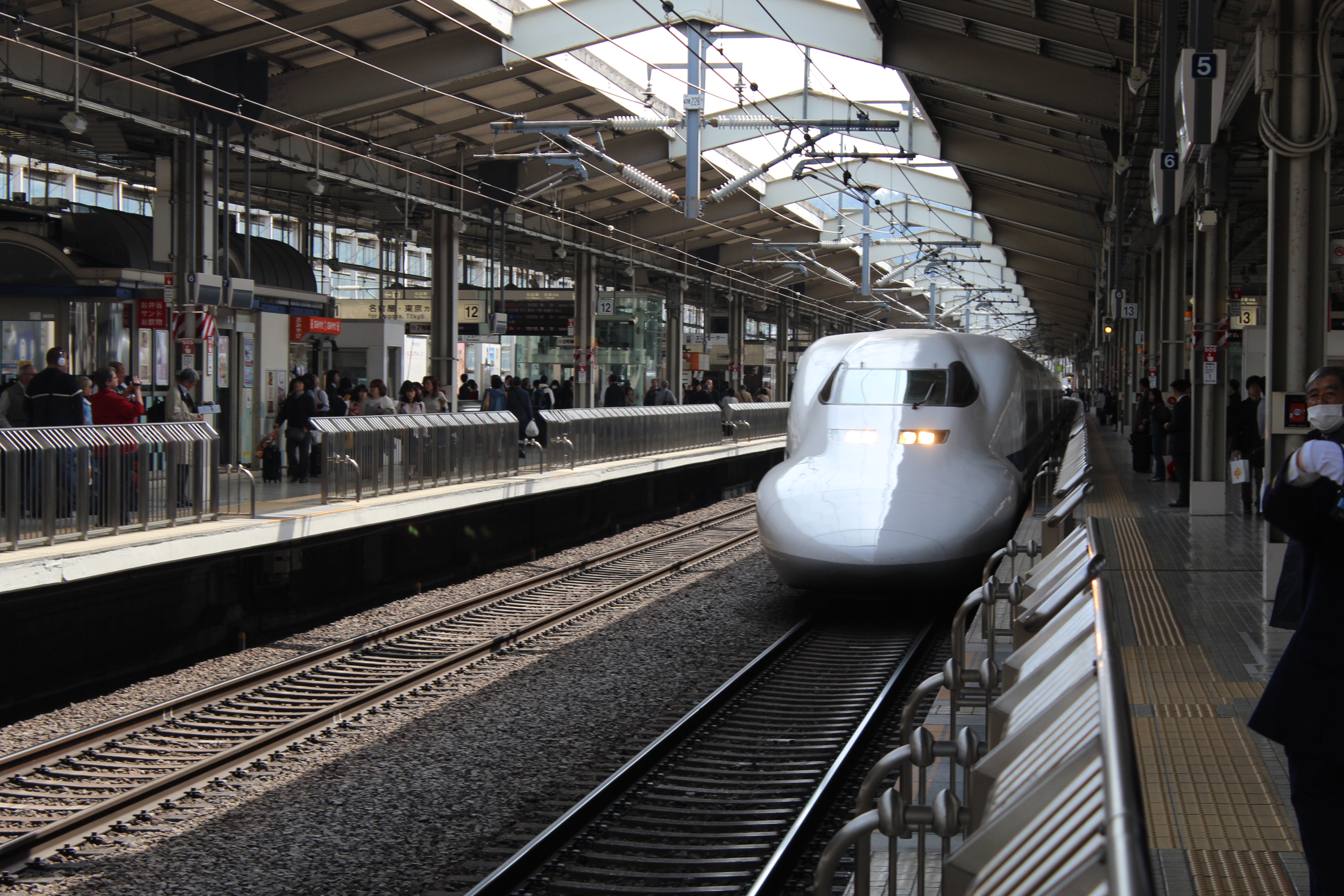
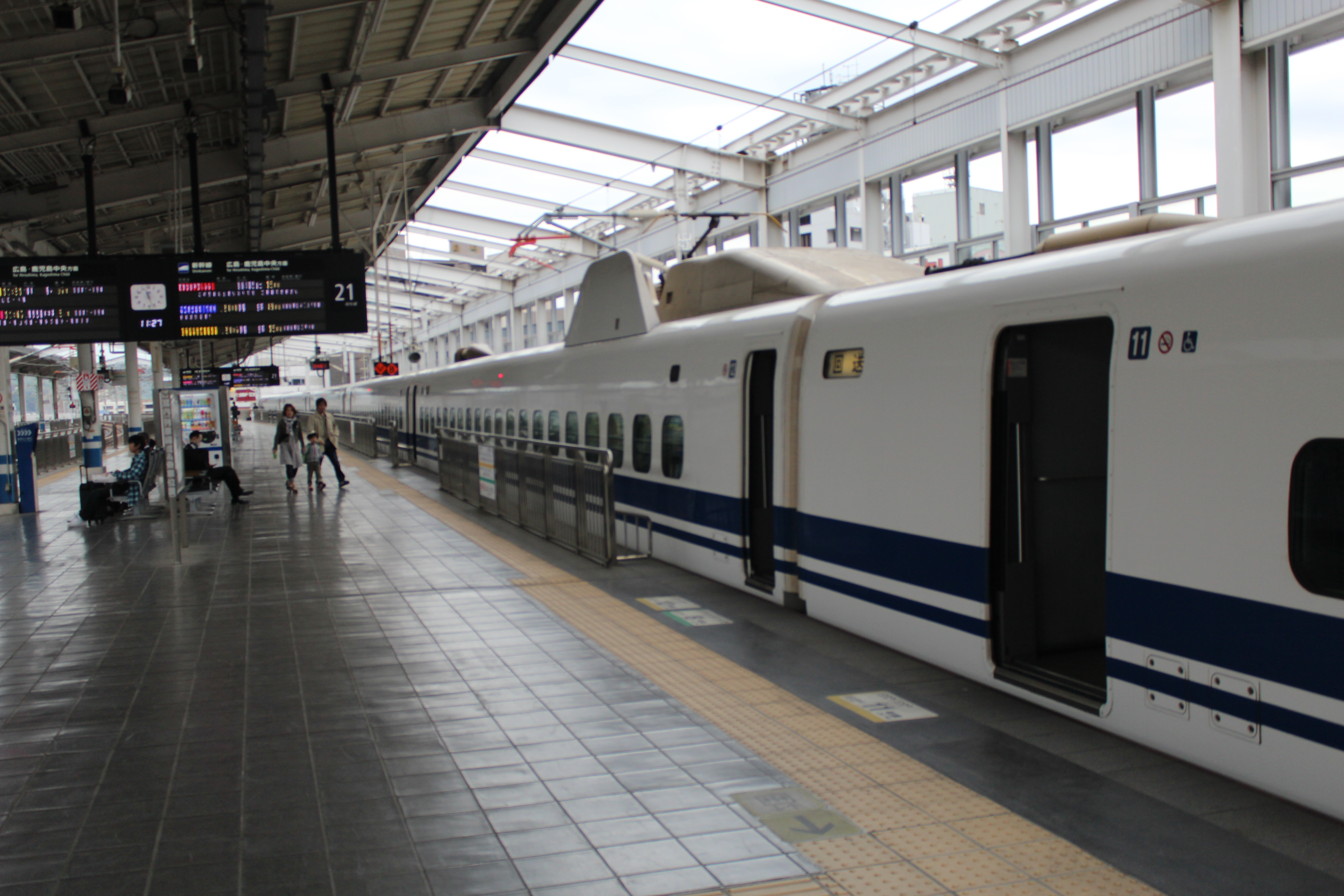
With our domestic laundry duties completed the night before, cases packed, we’re off to take our first shinkansen or bullet train to Okayama. We walk across to the station find the appropriate gate and are told we can actually get an earlier direct train rather than the 10:13 we’d planned that meant a change at Shin-Osaka. Some shinkansen are not valid for travel with JR passes so we were delighted to be told to get up there and get on. A swift purchase of a sushi box for breakfast and we’re on the platform. Slight surprise that the platform is not at ground level but up a level on stilts. Important to check with the sign boards which coaches (carriages) are for unreserved seats on a highly accurate poll of two trains it seems  they are usually the front three or five so it’s good to be waiting in the right place when the train arrives. The coach numbers are clearly marked on the platform and orderly queues form behind them. A sleek, shiny beast slides into the platform but it’s not ours. It disgorges its passengers and loads new ones swiftly from orderly queues – the Japanese do queue in the most disciplined manner everywhere – while a guard signals repeatedly to each end of the train before waving it out. Ours is next and on we get.

IMG_0968  IMG_0972  IMG_0971

First impression of how much space there is. We were worried about stowing our copious baggage but it fitted in easily. There are loos and recycling points every two carriages, a trolley service comes through with acceptable coffee and sandwiches and so on which we didn’t need to try having scoffed our sushi. After that initial delight the actual journey was a bit dull. Much of the track runs through noise-reducing barriers or tunnels so you can’t see much. But it is quite fast once it gets out of the station area. You feel that satisfying little push of the seat into your back as the acceleration kicks in. From Kyoto to Osaka is only 26 miles and we did it in 13 minutes so quick but not amazing. The rest of the trip to Okayama was similar because of three more stops but we have longer journeys ahead.

Arrival at the hotel in Okayama way ahead of check in time which as usual was three o’clock, we were utterly charmed by the hotel director who came to greet us, told us a room was ready which we could occupy straightaway with no extra charge. Mr Yamamoto speaks fluent and elegant English and had spent years travelling with groups of traders in Europe and Asia and has the style and urbanity of a well-travelled gentleman. I enlisted his help shortly after we had gone to our rooms to see if he could suggest somewhere special for dinner on Dee’s birthday next day. He went off to make enquiries and later came up with a solution and then booked both the table and a taxi to take us there.

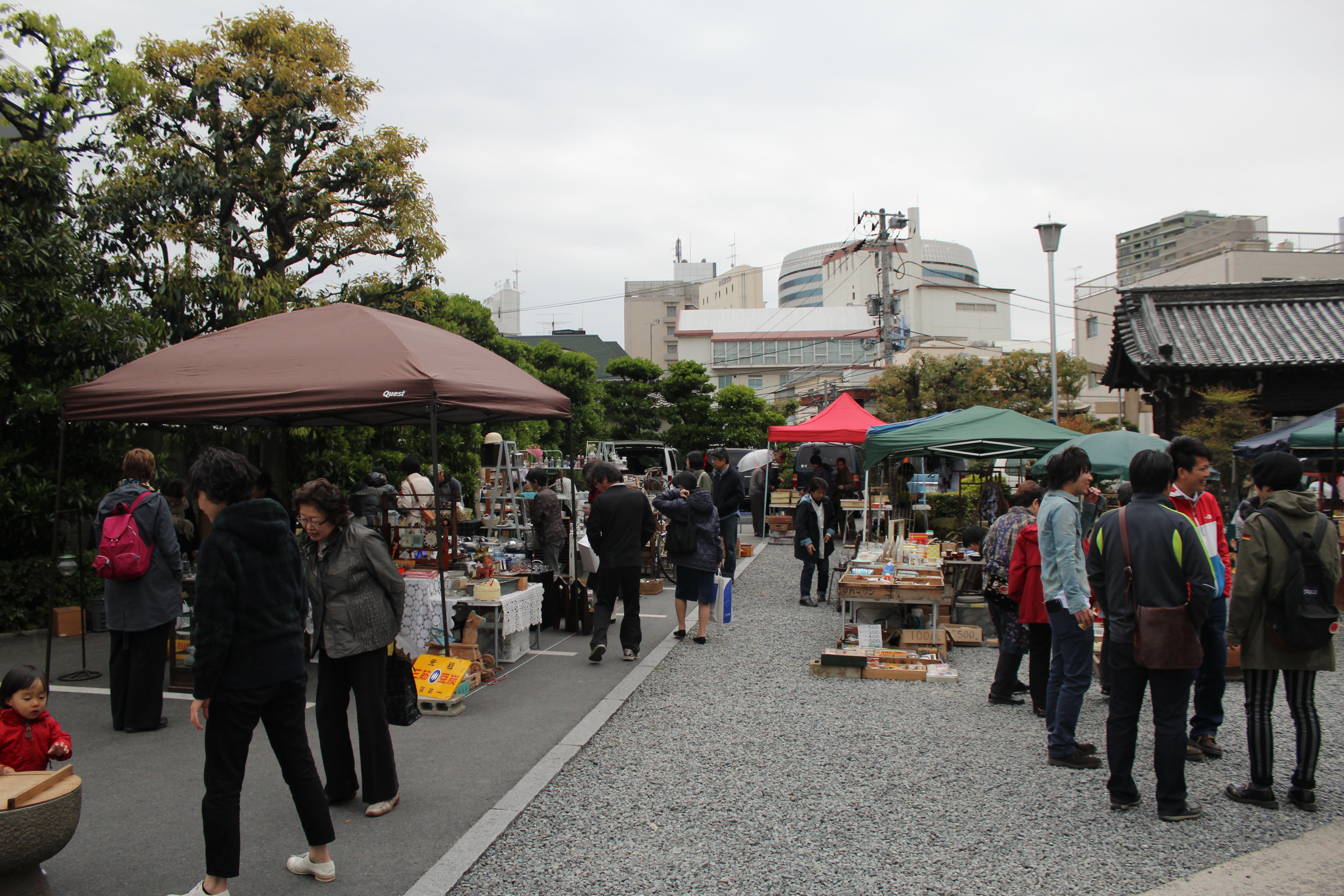
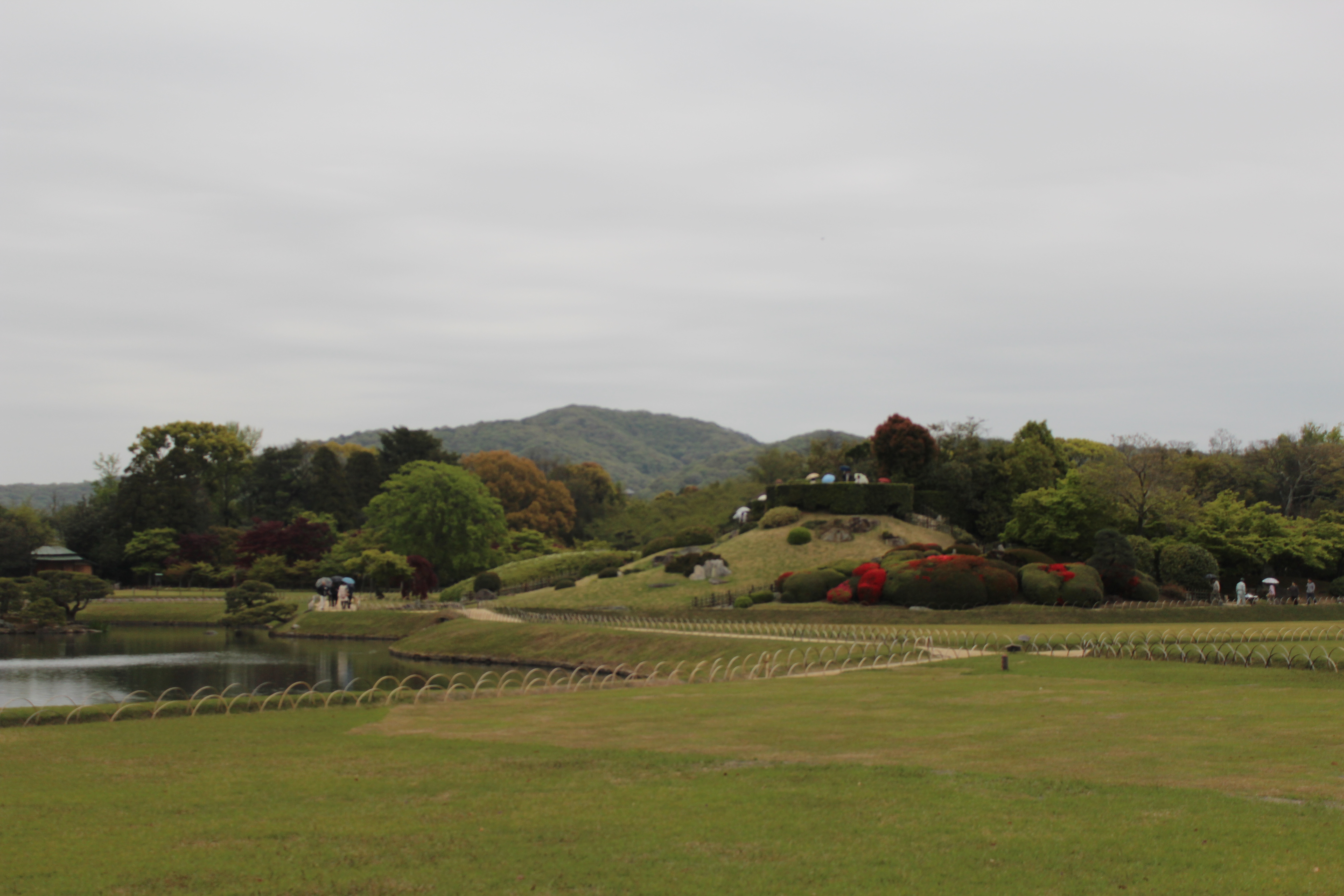
We then walked off to see number two in our great gardens of Japan subquest. Okayama is delightful. It has really funky trams, loads of buses, broad main streets behind which lie lots of atmospheric smaller ones. It feels lively and very cultured. On the way we passed by, and were of course, diverted into  a Saturday flea market in front of a shrine. Lovely pots too big to think about, dubious netsuke, old farm and cooking implements, clothes, books, prints and stall holders rushing to erect gazebos as the rain started. We did however stand on the bridge and watch cormorants in the river before going on into the Koruaken and were well rewarded.

IMG_0977 IMG_0988

IMG_1083  IMG_1025

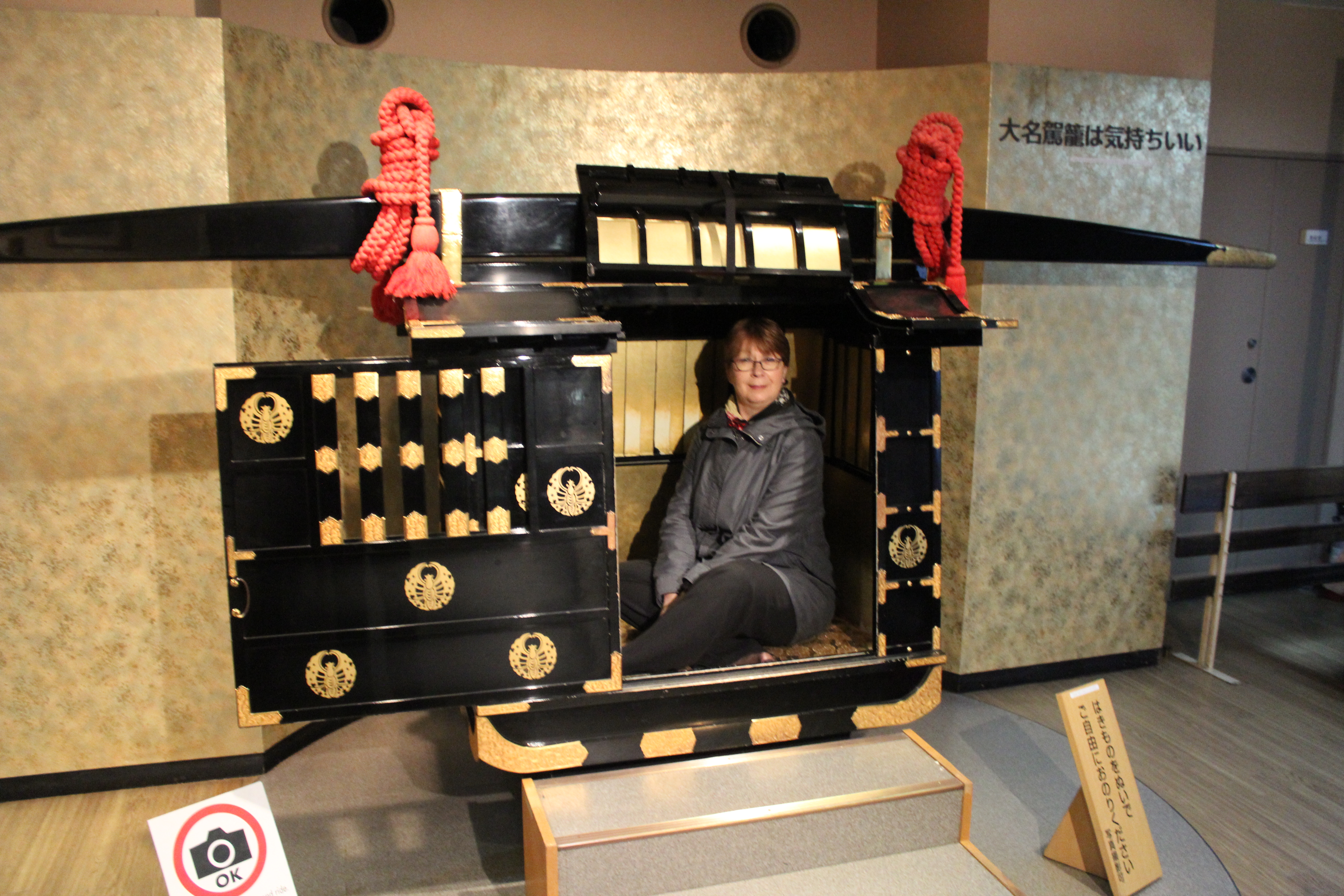
The spaciousness, variety, beauty of the planting and the “borrowed landscape” of a nearby mountain worked superbly. The rain mostly held off too. It’ll also, like Kenrokuen in Kanazawa, have it’s own page when we are back in the UK and can sort the photographs. On then to Okayama Castle which is  impressive and we hoped would have an exhibition of wood block prints, judging from the poster we spied. It did, but only three of them, poorly displayed and part of a bigger exhibit on travel in the Edo period which was interesting but not what we’d hoped for. However the nearly birthday girl did get to be carried in a palanquin!

P1020021 cropped IMG_1098

From the castle we went, getting soaked now, in quest of Maruzen Books where we succeeded in purchasing our coveted road atlas of Japan. Incredibly in a modern shopping mall were stacks and stacks of second hands books being eagerly leafed through but good numbers of people. It was a bit like a vertical version of the stalls under Waterloo Bridge outside the National Theatre.  We then wandered through a long shopping arcade with a Dutch Week so tulips and pancakes everywhere. We got lost and finally made it back to the hotel extremely bedraggled and determined to eat very close to the hotel.

IMG_1092 IMG_1111

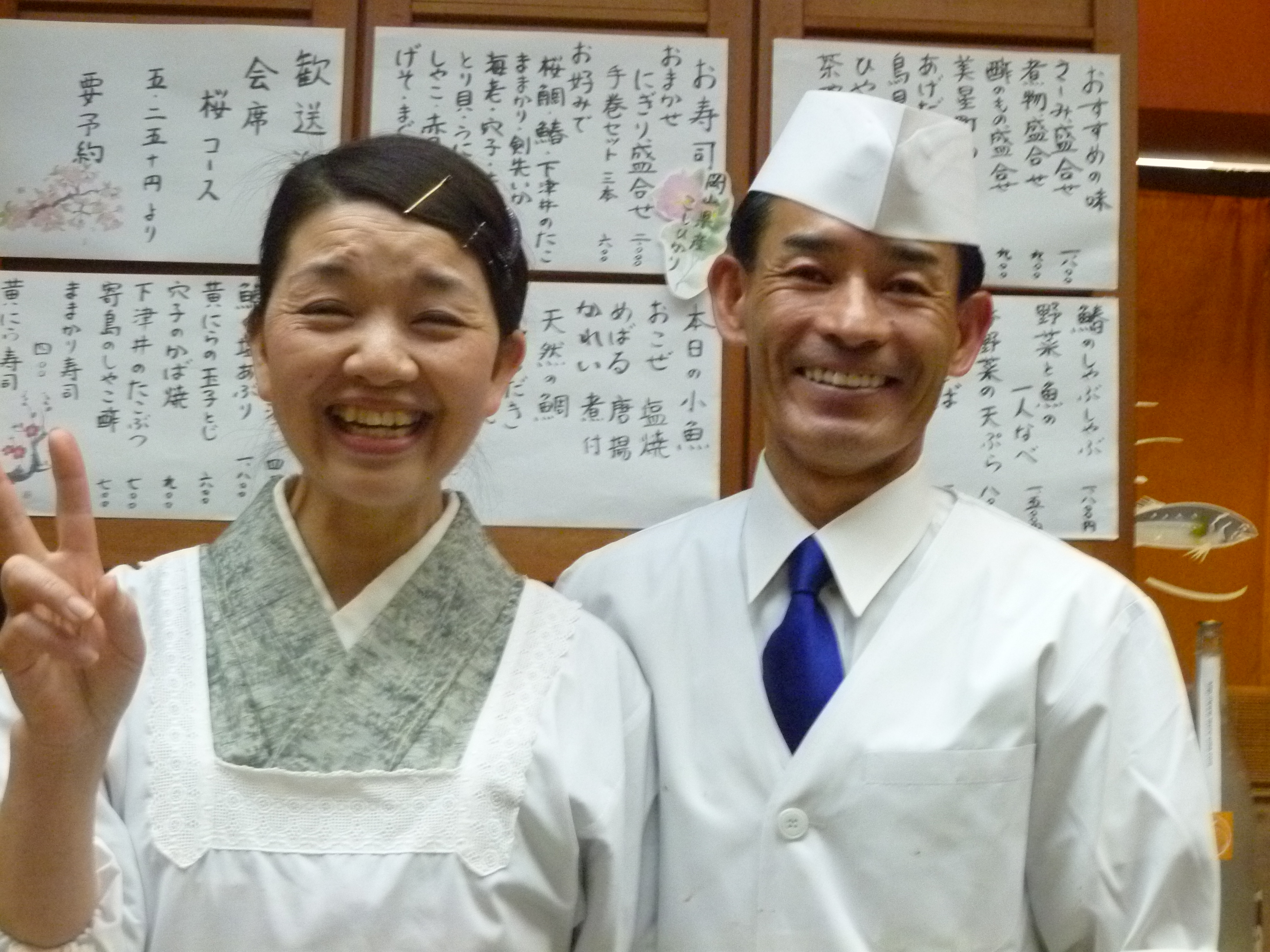
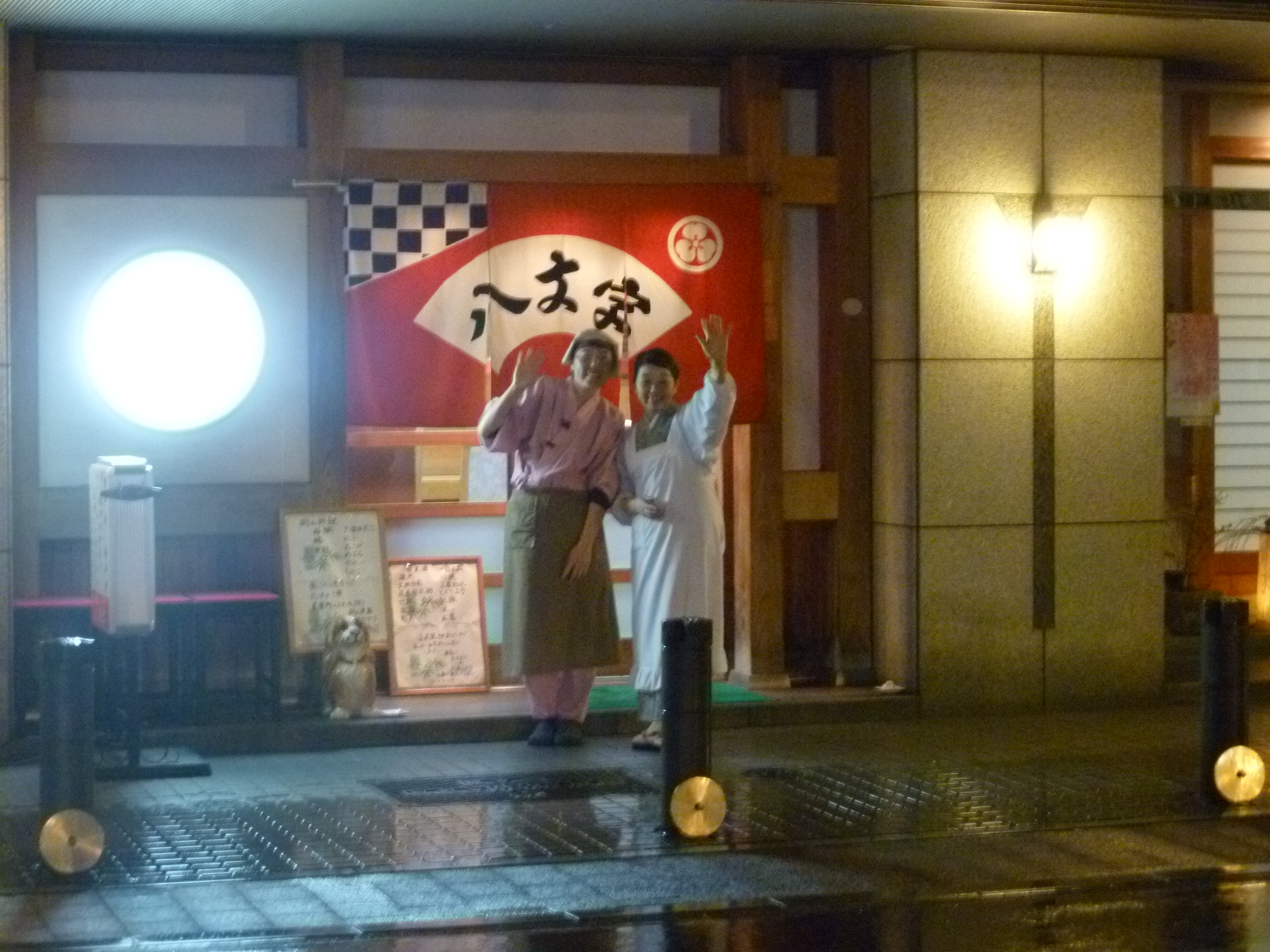
It couldn’t really have been closer – diagonally across one street, in fact a pleasant, well-planted and landscaped canal-side walking area rather like the Gion Canal in Kyoto –  and into Hachimonji a small but crowded Japanese restaurant where we were taken in hand by a gentleman of some years and guided through a “we’ll give you the best things to eat” menu. Sashimi to start was fine. Then small fish, increasing less strange vegetables, broad beans, rice of course and tempura and finally fresh strawberries, with local biscuits and a soft jelly-like blob of subtle and excellent taste. All washed down with a few beers and some sake. As he relaxed with increased shochi  consumption, it was clear that he’d fallen hook, line and sinker for the charms of my wife. I was forbidden to speak any Japanese because my wife speaks it so beautifully. She’s taught the Japanese for beautiful so she could accept his compliments. The husband and wife chef and patronne spoke a little English and went along with the banter and joshing until he took a phone call from his wife asking where the hell he was – we heard Igirisu in his shamefaced reply so we knew we were being used as an excuse. The time to break up the party finally came but not before everybody in the room had joined in a rousing rendition of Happy Birthday to Dee. Does everybody meet characters like this on their travels or is it something about us?

P1020025  P1020027

Kyoto diary

16 sushi pink Three nights in the same

         hotel, how will we cope with

         such wardrobe choice?

Good morning Kyoto. A little later than intended after completing the three day blog, going to Yodobashi – an incredible nine floors of electronics, electrical, camera and computer gear with some stationery thrown in – to buy a bigger USB drive to store all the photographs we’ve been taking. Yes they are on the cloud but it’s always reassuring to have a physical backup for us oldies. Our late night activities were accompanied by a little whisky which may have accounted for a good night’s sleep.

There’s some admin to do today too. We need to exchange our JR pass vouchers for the real thing and reserve our week after next overnight train to Hakodate. Fortunately the hotel is right across from Kyoto Station so we don’t have far to go.  JR passes were easy, the sleeper reservation not so easy as the train I had selected from Hyperdia online is no longer in service so we’ll have to go from Osaka to Tokyo and get an overnight from there to Hakodate. It’s booked and we’ll just rejig things a bit.

P1010945  IMG_0678  IMG_0684

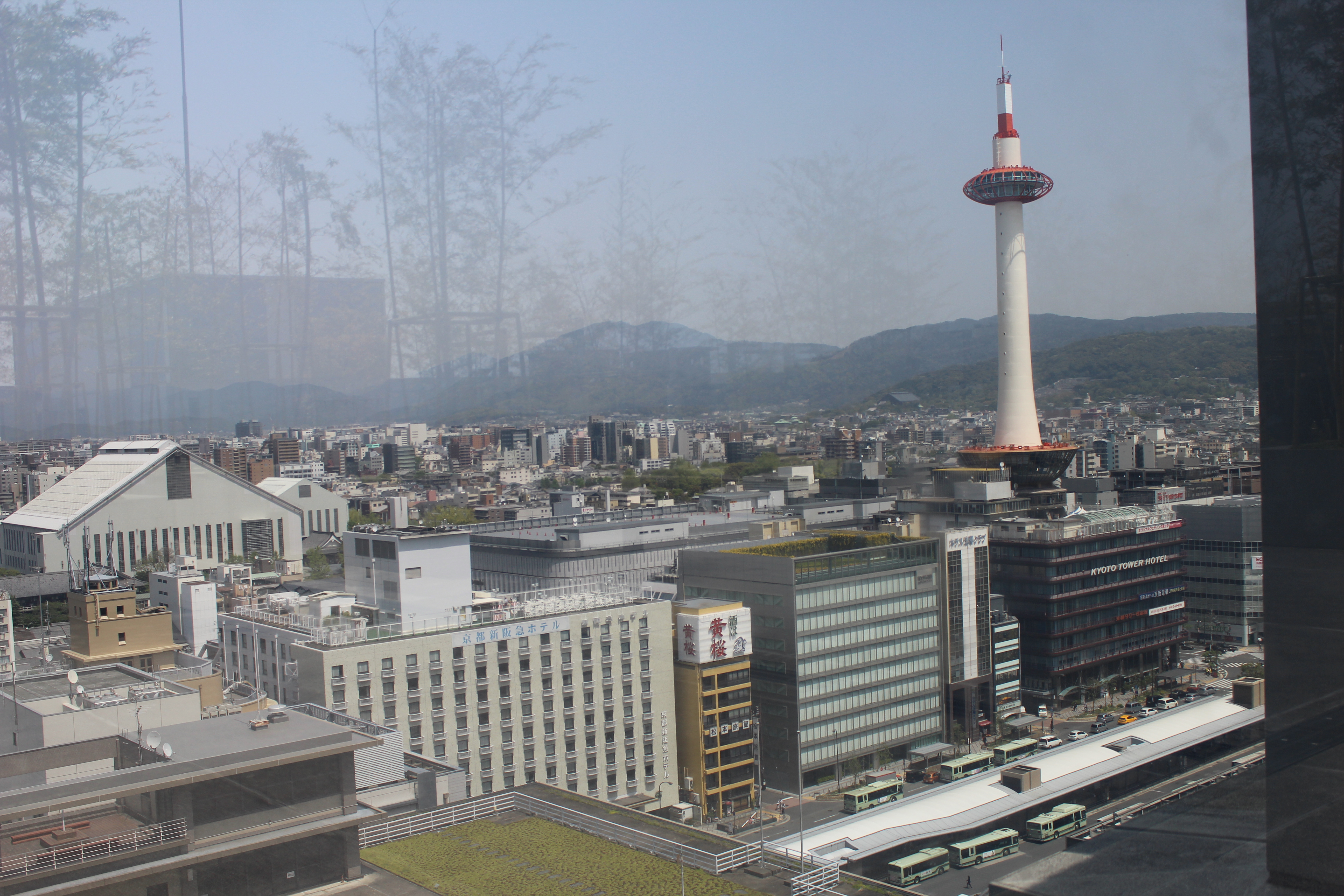
Kyoto station is stunning. A glass and steel facade with amazing angles, lines and reflections and an interior to challenge Grand Central for the classical railway station images of the future. And like the St Pancras redevelopment in London it’s making stations not just places from which to travel but places to be. It has a stage and stepped terrace for music gigs, more restaurants and shops than you can imagine and a green garden on the roof with some very clever eco planting that helps reduce heat transfer into the building – lots of summer days are over 35 degrees – 19 last year alone and it will probably rise.  From the roof there was a great view of the Kyoto Tower and our acceptable but undistinguished hotel (the one with the white T up the front). And that’s where we headed next.

Having set out in jeans and jumpers we quickly found temperatures soaring to 25 and up. We didn’t pack shorts but fortunately did have some light walking trousers and sandals which were more appropriate attire for the day – thank goodness for the three day unpacking stay. We set off with Katie’s “dorky” maps to explore some small parts of this huge city. Mastering the simple two-line subway, we went first the Shinjo-dori the main shopping street to see if we could buy a Japan road atlas in English to help with our next stages of rentacar travel. We found a big bookshop with new Murakami book posters everywhere but no road atlas. Off the main street, which is the universal, global big city shopping area, are arcades crammed with little shops which are much more interesting. Then we came to another of Katie’s suggestions, Pontocho, which is a narrow street lined with bars and restaurants overlooking the Tama River. It was so warm that we just had to go into one to enjoy the air conditioning for a bit and of course a beer. We had a great view of a team who had dammed up part of the river to build a platform out over it which apparently many of them do for the summer season. We could imagine the delights of a glass of wine out on the terrace.

Refreshed we strode off to the Nanzen-ji Temple where we enjoyed the beautiful spring garden – the shimmering colours of acers in spring are almost a match for their autumn glory and of course so much fresher. Here we also obtained, as advised, our hon (pr. hone) a folding book on which temples stamp their insignia with a hanko (handwritten kanji combined with a special rubber stamp). They are beautiful and will give us a great souvenir of our trip.

IMG_0719 IMG_0715

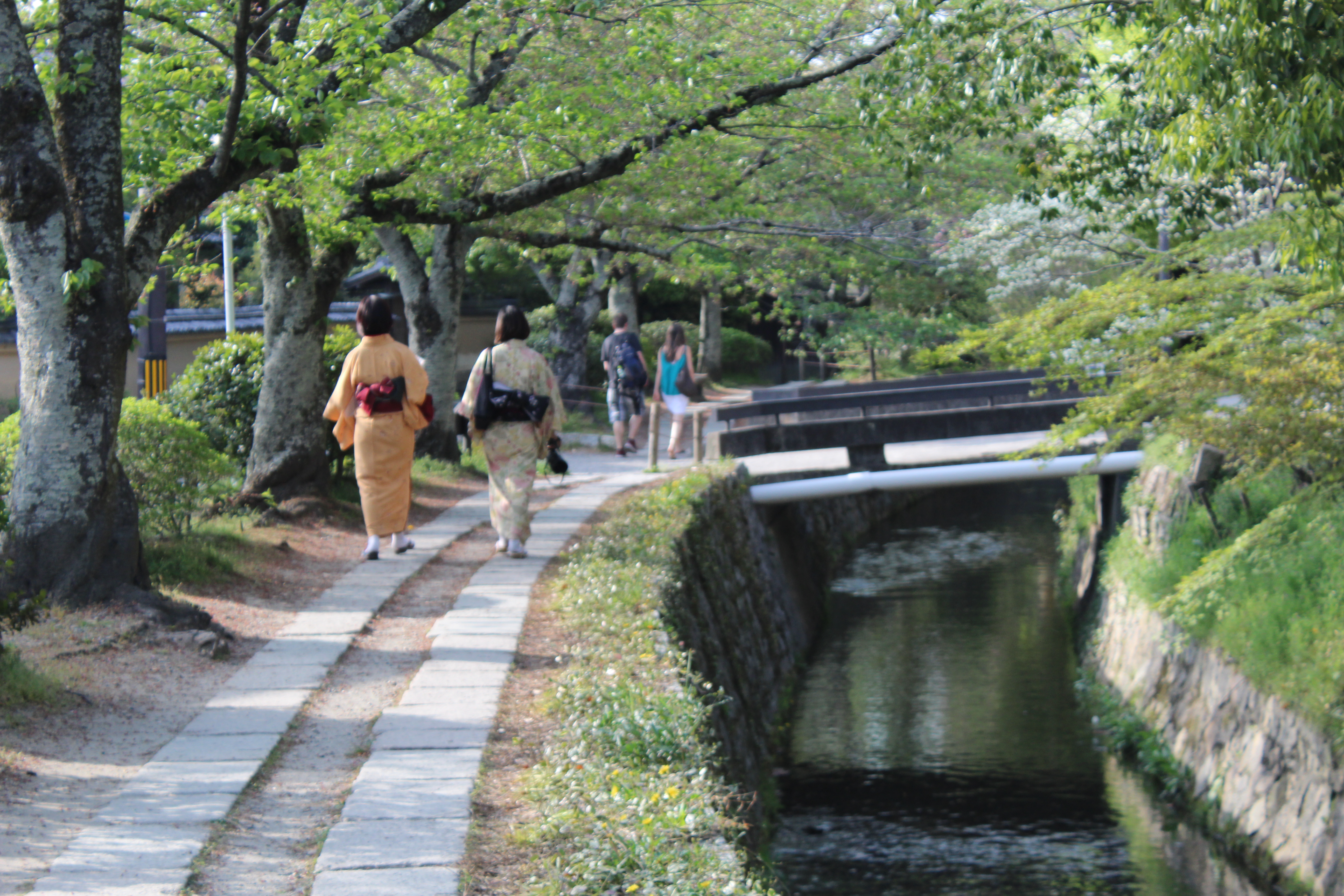
We then set off on the ‘Philosopher’s Walk’ a canal-side stroll through eastern suburbs with stretches of complete calm and peace conducive to higher thought – I certainly needed that – and small craft shops selling locally produced goods. By the time we reached the end we were well away from train lines and subway but Dee had cleverly picked up a bus map and the next one to round a corner was the 100 bound for Kyoto Station. It was very crowded at shop and shrine closing time and we stood for most of the journey which was a shame as it passed several landmarks of which we could only see the bottom half.

P1010939 IMG_0745 IMG_0761

The philosopher?  …   in pursuit of gesiha on the walk?       … this is what Dee wanted by the end of it.   

As we got back to the station, we decided to see if the Kyoto Tower had an observation gallery.  It does, we went up. Dusk falling visibility hazy after the heat of the day but a fun visit nonetheless.

IMG_0775  P1010981

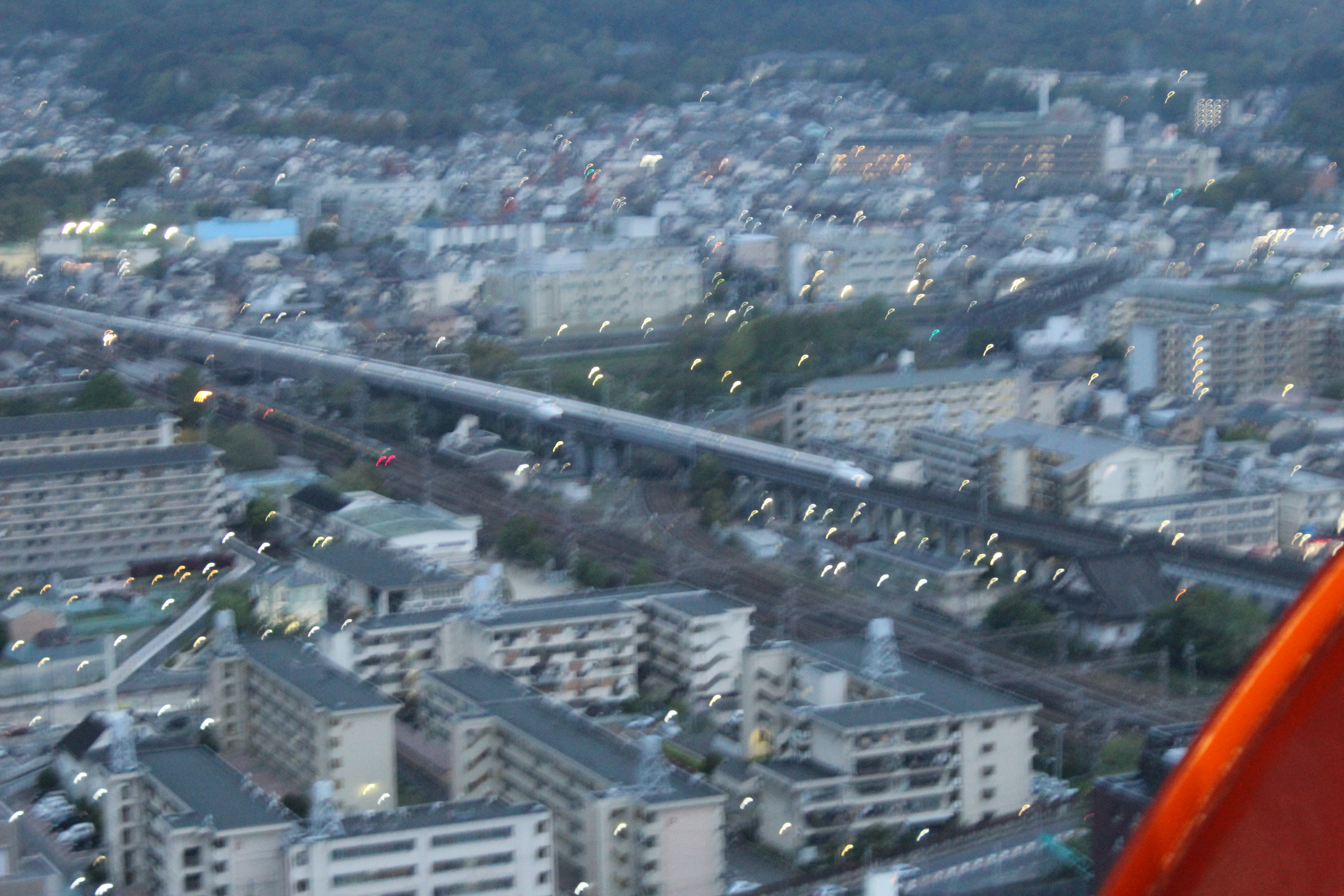
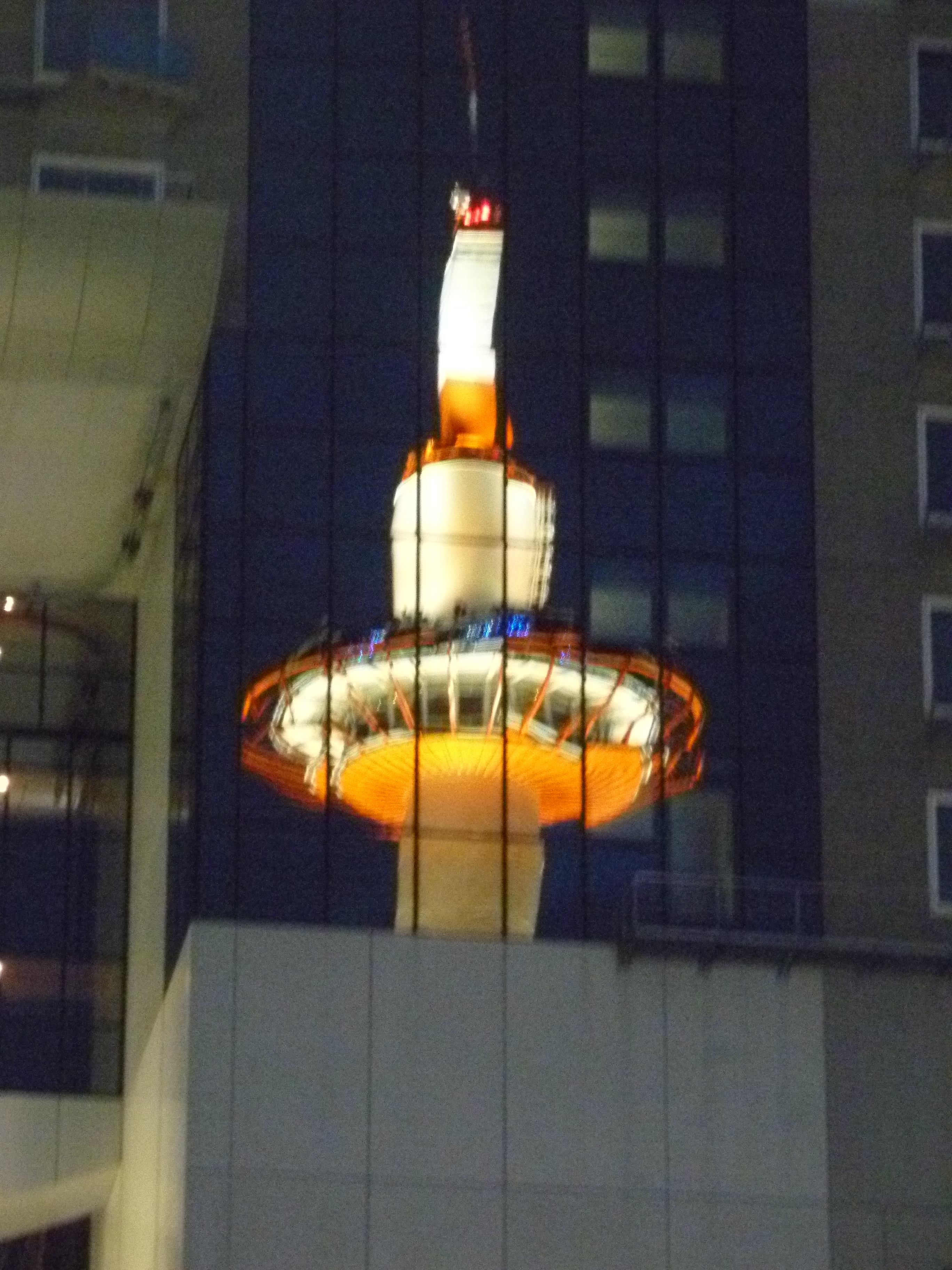
Shinkansen passing on the approach to Kyoto   The Tower reflected in Kyoto Station

After a freshen up and a couple of much needed beers following a hot day on our feet we decided to head out to find dinner locally. I don’t know if you have the same problem but we are very indecisive when confronted with a street with five restaurants all of which look interesting. We walk up, we walk back, we look at menu pictures outside and then we decide we really are hungry and are going to have to plump for one of them. We did and it turned out to be a hibachi grill place. We were shown, shoes off of course,  to a private screened booth with a footwell under our table and were served fresh vegetables and akta mackerel which we cook ourselves over a brazier with three red hot charcoal logs. Great fun and very tasty and we had chosen some excellent sashimi as a starter. We enquired of our server how she spoke such good English and it turned out that Mikita was coming to Brighton in June to study English and had been practising ahead of the trip. We have been struck by amazing meetings with people with existing and possible connections throughout the trip – there really are only six degrees of separation.

We left the restaurant and walked back towards the hotel and spied a rather lively and bright yellow-coloured bar (apologies to our Hornet friends that it is yellow AND green)  – standing only and it had a great name. So given the deprivation of yellow as we are missing so much Watford football, we thought a sake night cap was in order.  It proved a great people-watching place as late nighters popped in for a quick one on the way home and two ladies of a certain age stood consuming beer to our left until closing time – when we too were asked to drink up and depart – extremely politely. Busy, busy, Kyoto.

Masoho IMAG0158

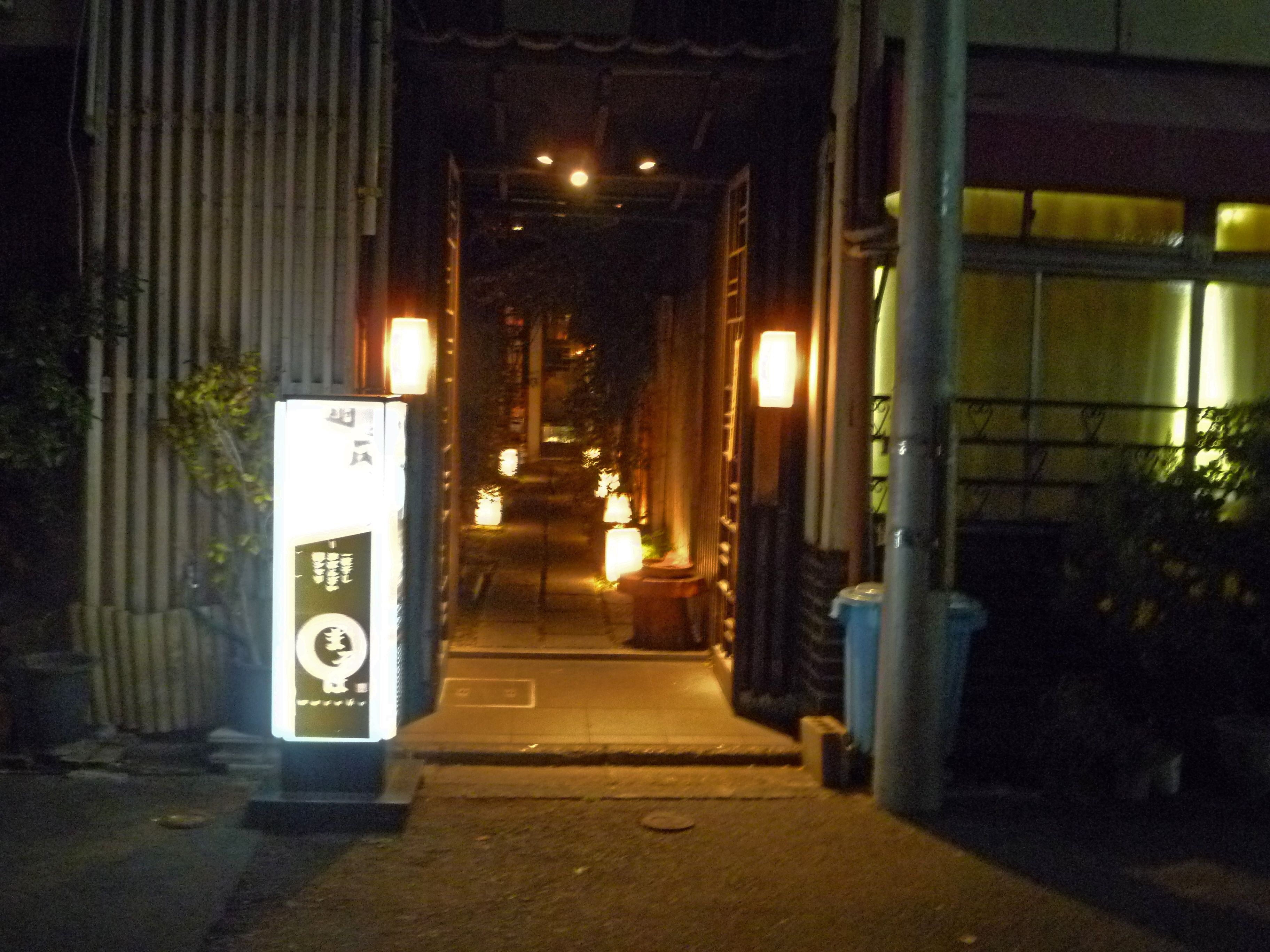
Masoho restaurant entrance                                 The last orders bar

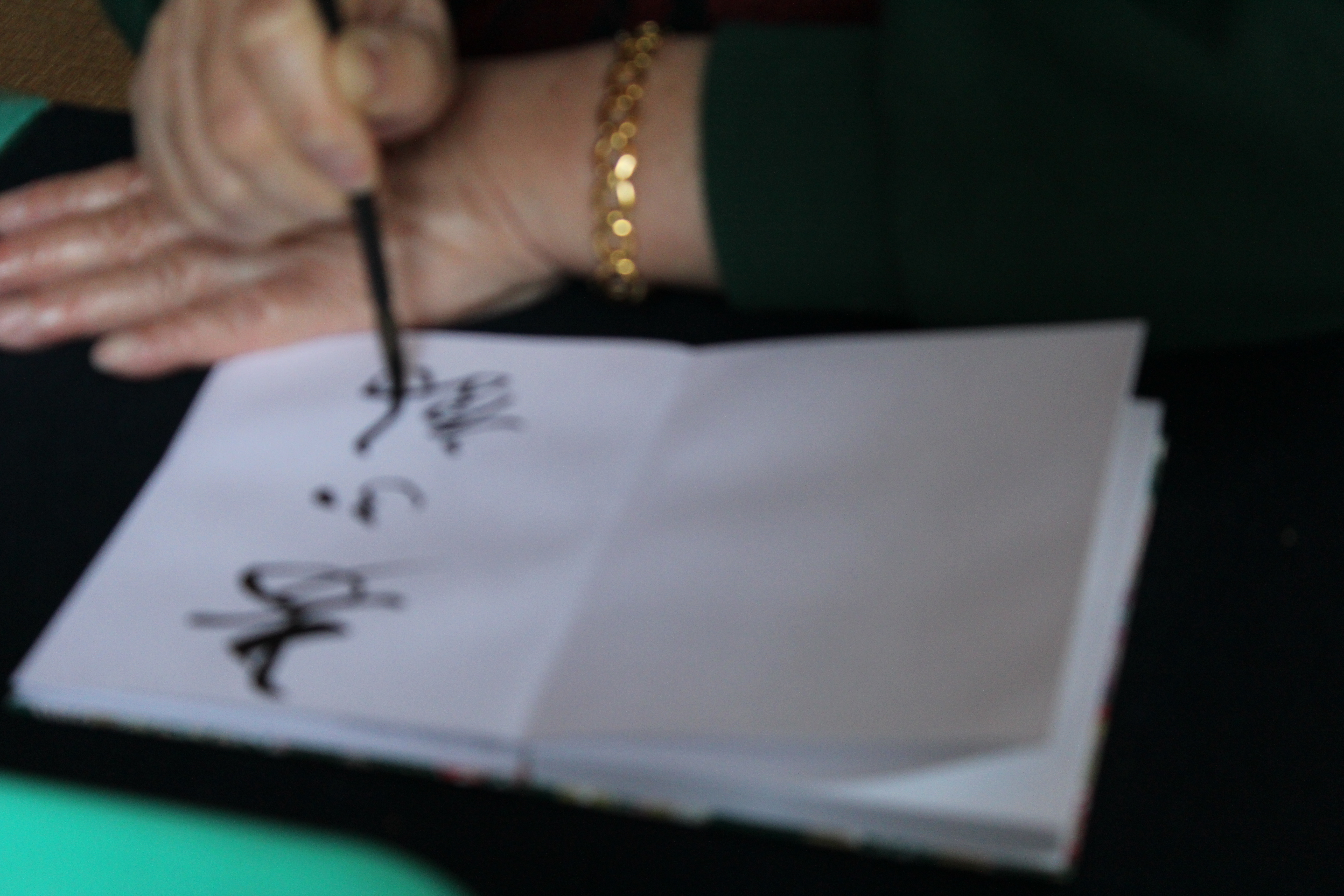
Friday dawned fresh, bright and breezy and it was back to jeans and sweaters big time. How can the temperature change by 15 degrees overnight?  Well it did and we took the subway south to visit Higashi Inari Shrine. Sadly we missread the map and finish up at a station which is s forty-five minute walk from the shrine rather than the railway station that’s right in front of it. So a taxi was hailed and delivered us to the Fox Shrine which apart from amazing main buildings has a walkway of shrine gates or torii which stretch up to the main shrine on the mountain and involve 10 000 vermillion gates – awesome. We only walked the first three thousand as other sites called but a stroll to the top and back would make a great half day outing given more time. We were approached by a uniformed guard and were worried that we’d been photographing in the wrong place but he was a retired firefighter who had spent time in Sheffield and Liverpool on job exchanges and welcomed the opportunity to speak English. We next took a short train ride to Tofukuji Temple where the buildings are stupendous but the main attraction was a beautiful zen garden on all four sides of the main hall. A wonderful oasis of peace and contemplative strolling in the midst of busy, busy Kyoto. On our way back to the station we called into a small temple  Doju-in where the attendant most beautifully calligraphed and then stamped our hon. 

IMG_0800   IMG_0819

IMG_0850  IMG_0831

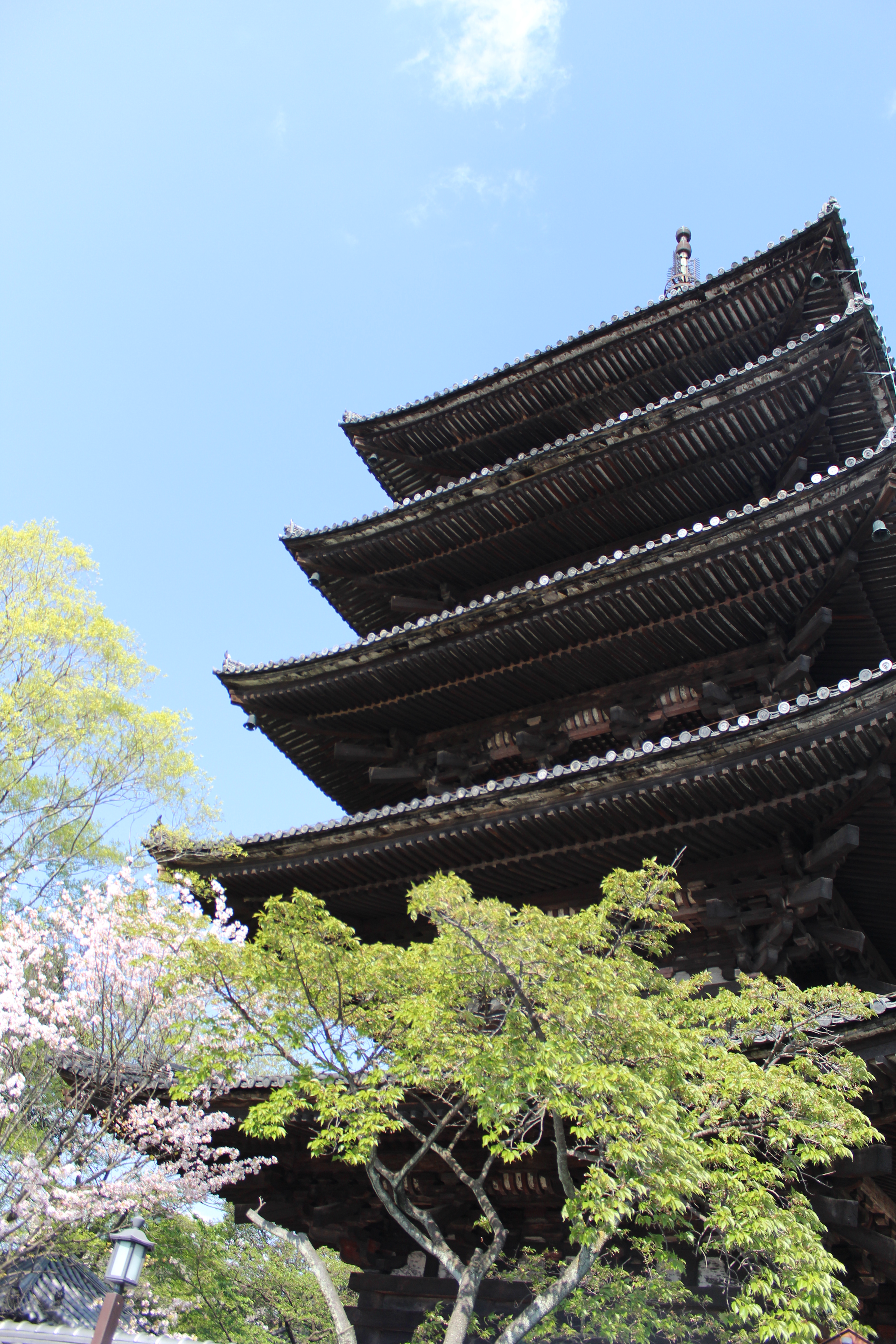
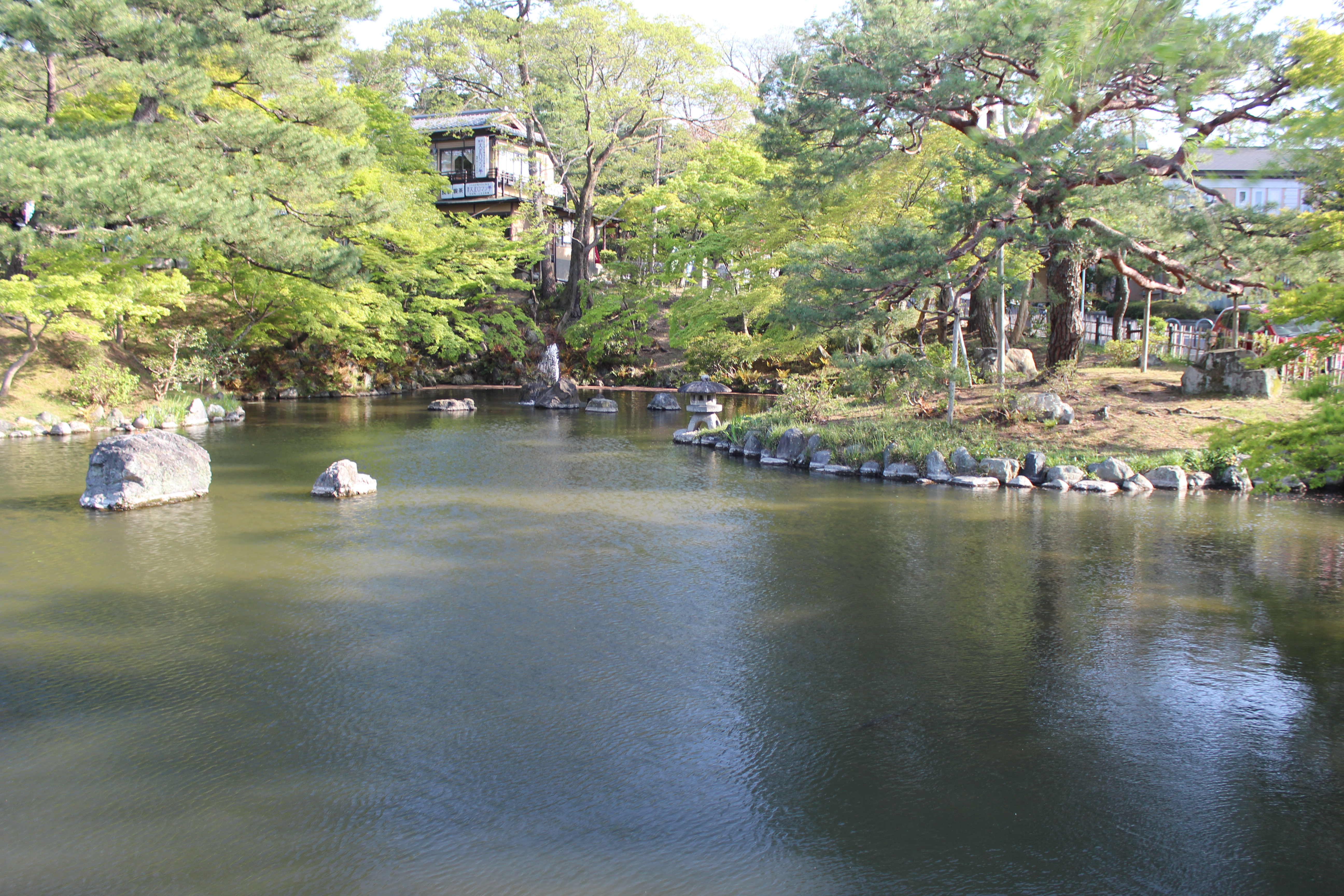
We then used our JR Passes for the second time on a train to Kiyazumi which is an amazing complex with superb views over the whole spread of Kyoto and then walked through quaint streets with fabulous little shops dotted about until we reached the Yasaka Pagoda and turned in to the Maruyama Park a popular open space with ponds and shady pathways – and a few ups and downs as we’re in the mountain foothills. After an increasingly chilly walk around the park as the wind got up we descended to the Chion-in Temple just in time to find it close. This is fortunately a short downhill walk from Gion the ancient geisha district which we wanted to explore. It’s lovely, weird and wonderful. We saw women buying kimonos and accessories, having their hair done and one of my favourite shops was a koto, shimasen and shakuhachi  shop.

IMG_0905  IMG_0918 IMG_0692

Yasaka pagoda         Maruyama Park                                                          Old and new Kyoto meet in Gion    

Some difficulties next after boarding a train at the first station we came to, Kawaramachi, where we showed our passes only to be told at the exit ticket barrier that it was a private railway and we’d need to pay. Kyoto – maybe Japan trains = confused.com. However we got back safely and did a load of laundry in the coin-op in the hotel, conveniently on our floor. Then repacking ready for the road tomorrow and what felt like a wimpy dinner in the restaurant beneath the hotel which was actually rather good – beef and potato stew for me and fried beef and rice for Dee occasioning slight food envy. She had made the right choice.

Shiragawa-go, Kanazawa and beyond

15 sushi pink  Can we get away

        with making a post for three days

        and catch up with sleep?

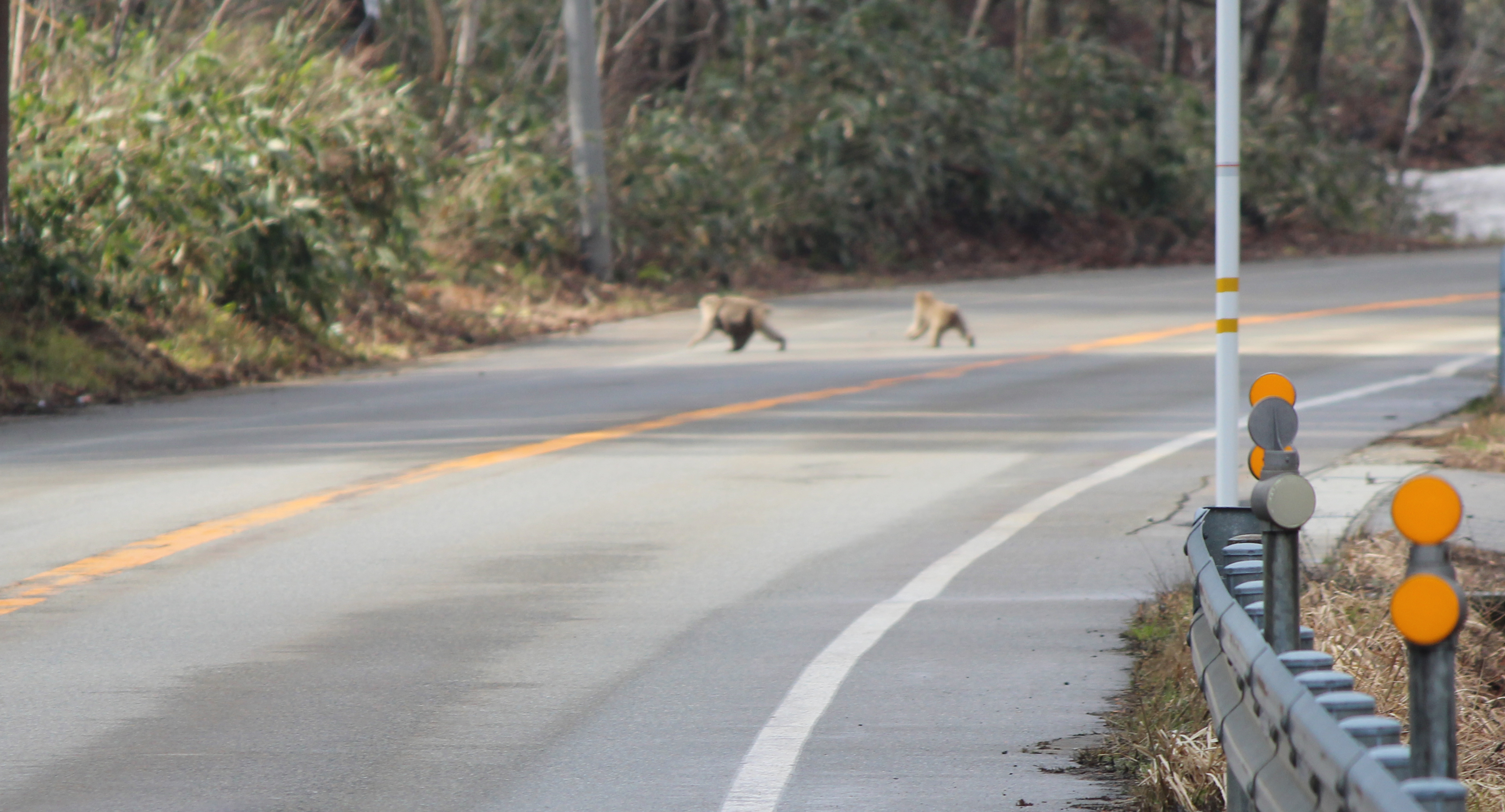
So the Pension Green Lake turned out to be a little gem. In a farmhouse inn the countryside with the kindest, friendliest hostess who after all had driven out to pick us up when lost last night. Our room was great, the bathing capsule perhaps a little small but great power in the shower which is all that matters when you’re up for breakfast at 7.30. Again a delicious home-cooked scrambled eggs with crispy bacon, half a grapefruit, fresh salad and brioches with real strawberry jam. Fabulous! And Megumi, as is the wont of hosts and hostesses stood and watched us eat – we may feel it’s intrusive, they are ensuring ichi-ban service. We set off for Takayama for the spring festival or matsuri and for once had an uneventful drive except that we had to stop five minutes into the trip to photograph a family of monkeys running across the road. Amazing!Monkeys

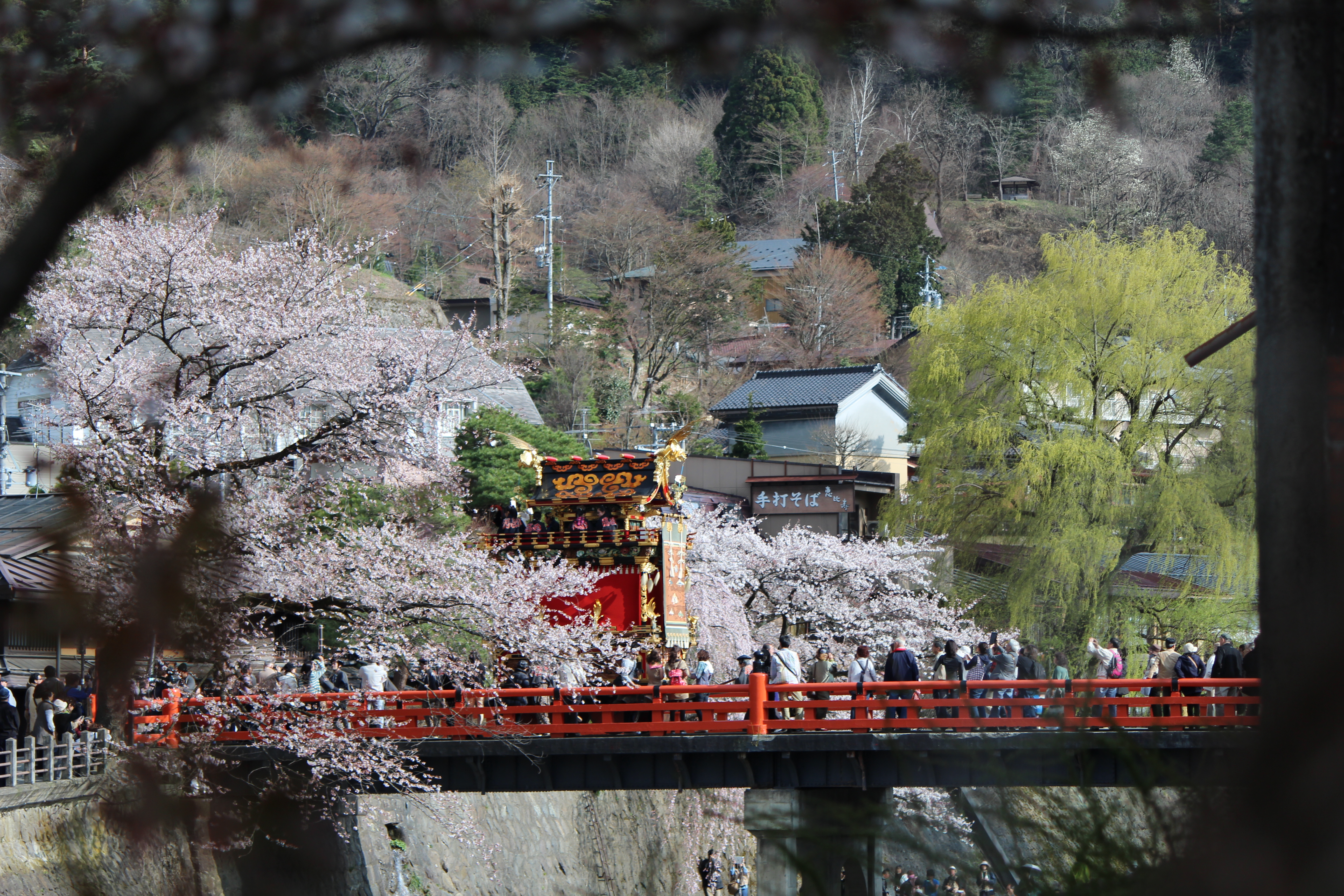
Our route took us to a conveniently placed car park close to where it was all going to happen. The attendant insisted on giving us a city map and marking our route to the centre of events. We walked along the riverside. And what a lovely walk along the riverside where being up in the mountains the cherry blossom is in good fettle – so we haven’t missed it altogether.

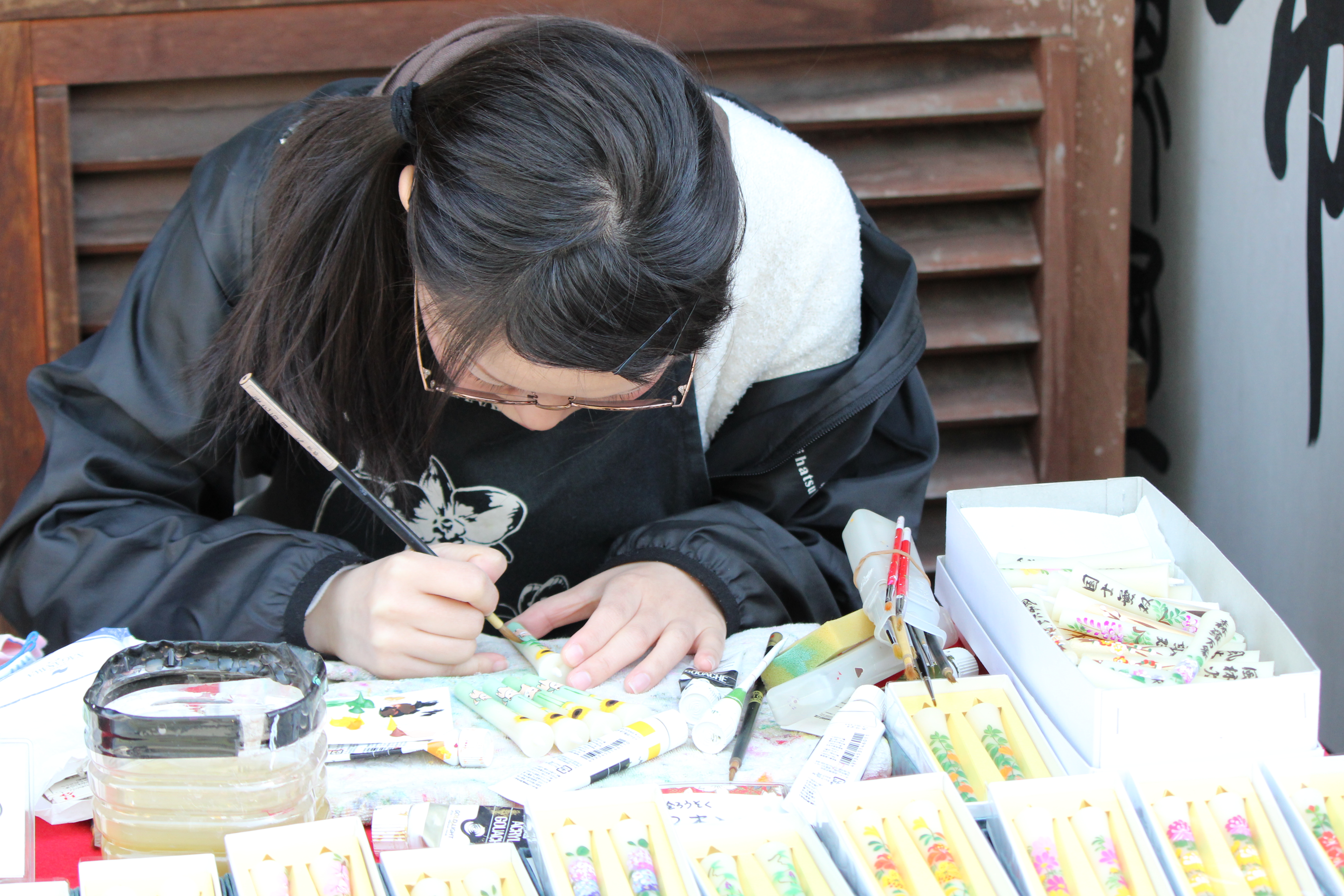
The main parade was due to start at 12:30 so we an hour or so to explore Takayama’s famous morning market. There are stalls with vegetables from the countryside, crafts from the town and a great candle stall where a young lady was individually calligraphing candles. Several more take home gifts, some excellent rice crackers and sesame snacks were also purchased as well as a kebab and a beer. What a kebab! You may have heard of Kobe beef as being the best and most expensive but where we are now in Hida thinks it outdoes it. Superb, delicious, phenomenal – we had to order a second and learn the words oishi katte, absolutely delicious to express our thanks.

IMG_0312  IMG_0332     IMG_0322  IMG_0344 The festival itself was fantastic – a procession throughout the old part of town by townspeople in robes representing different lodges with drummers, flute bands and then 12 magnificent red and gilded floats with fabulous paintings, wood carvings and also carrying flute and drum bands. We’ll put a couple of pictures up but once we’ve sorted through the several hundred photographs and dozen video clips (probably not till we’re back in the UK given the schedule) we’ll post a separate page about the Takayama Festival. We concluded the day with bowls of soba noodles topped with a large slice of uncooked Hida beef which slowly cooked in the warmth of the broth. Oishi katte again to our second encounter with the area famous beef.

IMG_0357  IMG_0375  IMG_0462

The drive back to the pension was a bit of  a problem as Mike decided that Route 73 was heading south and must get us back more quickly. Raggett off piste is not a good thing. One of the problems in mountains is that roads tend to go down valleys between them and then back up again. So an extra 50 km and ¥650 in tolls finally saw us back at the ranch. Slapped wrist but no major trauma as it was a glorious ride. Megumi welcomed us back and introduced us to her niece Yuki-e who had returned from New Zealand where she’d been studying in Christchurch at the time of the earthquake and soon was hearing all about Japan’s problems too. Her English is great and over breakfast next morning we looked at our photos and videos of the matsuri, which Megumi had never been to as she’s usually booked solid at festival time. We had a brilliant chat about this and that and plan to keep in touch via our blog and her webpage. We would recommend her pension totally to anyone who wanted to explore the area in spring, summer or autumn when the colours will be fantastic. Lots of walking, brilliant scenery, monkeys and the promise of bears. Great place and to think I was worried.

P1010882  P1010885

Yuki-e, Mike, Dee, and Megumi outside Pension Green Lake (courtesy husband Shigeru Yanase) and its fabulously peaceful setting

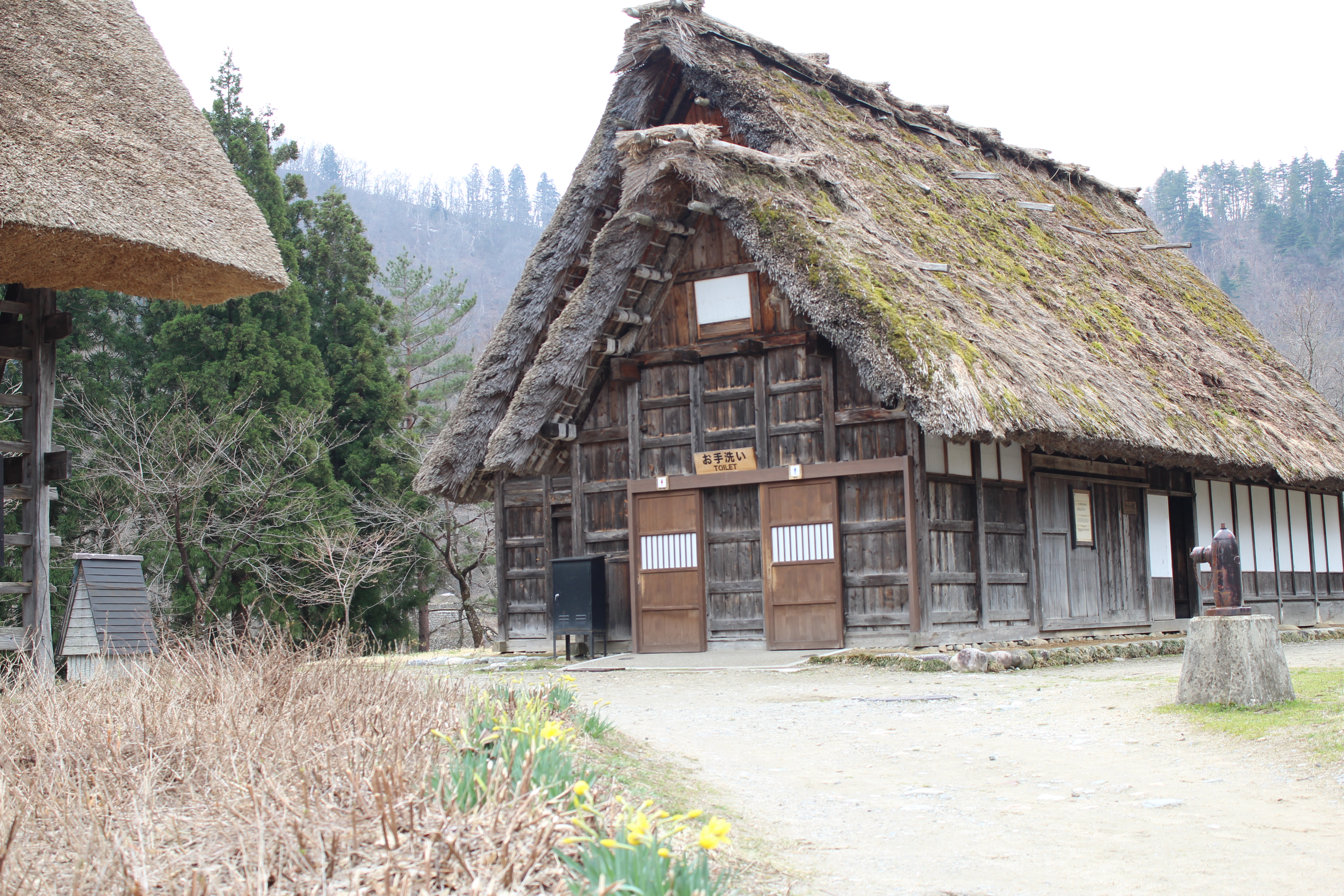
No monkey business this morning as we drove back up Route 156 to the Shiragawa-go UNESCO National Heritage Site. This is a series of traditional thatched houses with extremely steep pents against the snow. It’s a fascinating place in which heritage site exhibits exist alongside homes of ordinary working people. Again we took loads of photographs and a few video clips and will post more fully on our return. A wonderful insight into Japanese life 300 years ago and how for some it has changed little. Visiting did make me wonder about the value of World Heritage designation – yes we can all go and admire the heroic efforts of people in times past but how does it affect the few real people still trying to live their normal lives? No answers, just musing.

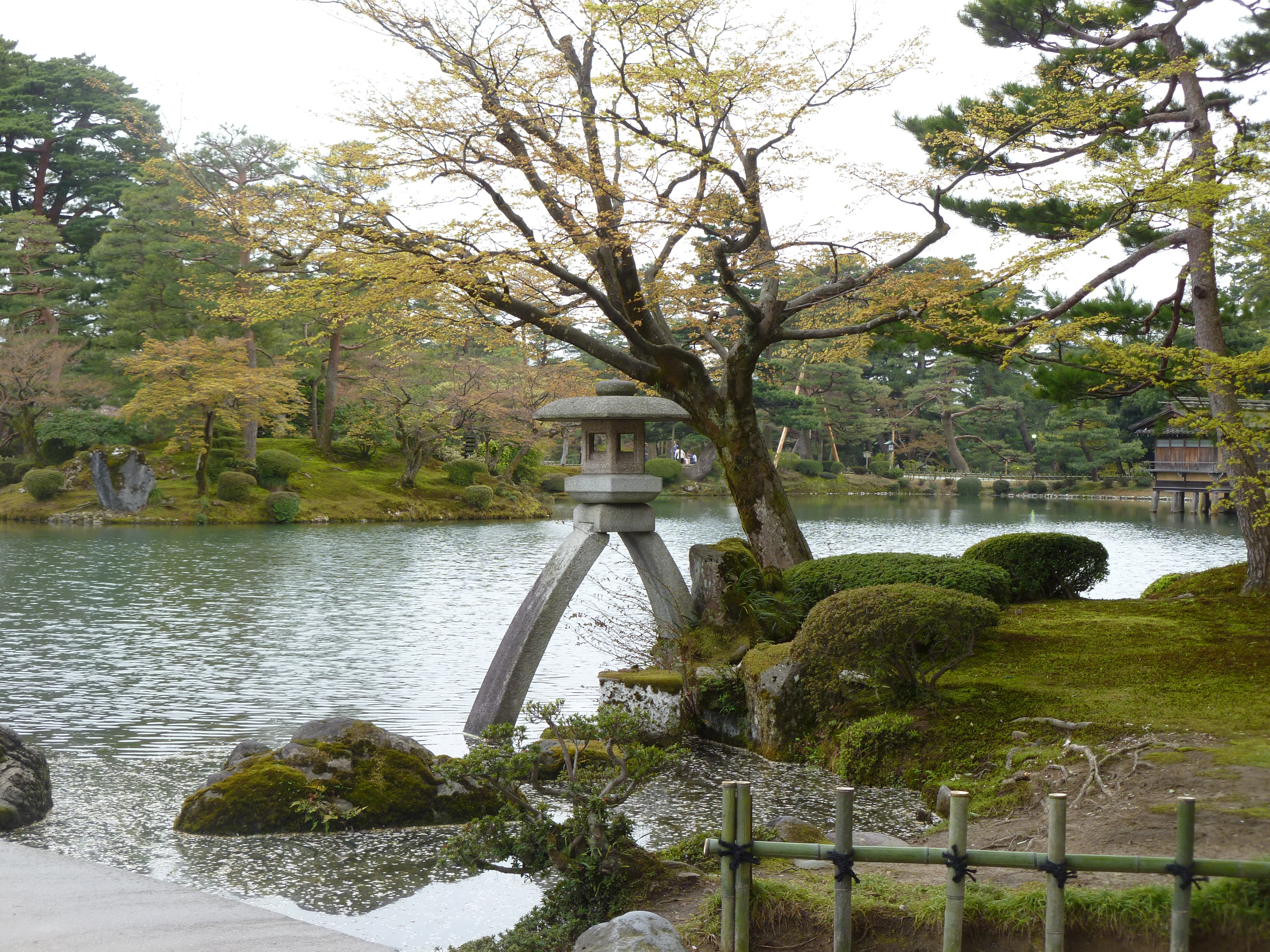
IMG_0503 IMG_0530We then drove on seamlessly to Kanazawa and checked into our hotel before walking to the Kenrokuen Garden one of the big three of Japanese strolling gardens. It out performed all my expectations – such variety, so many things of beauty, some many places to contemplate – sheer delight! Again the 300 photos will need some editing before we post a page devoted to Kenrokuen but if you can’t wait try here. Somewhat tired we walked back to the hotel, gathered our thoughts and went out for dinner. We had some of the best sashimi ever and no we didn’t eat the head however “goodo head” with great pickled vegetables some of which we recognized.

P1010914  P1010920  IMG_0554   12-1EAE409D-930642-800 12-2063193C-631277-800

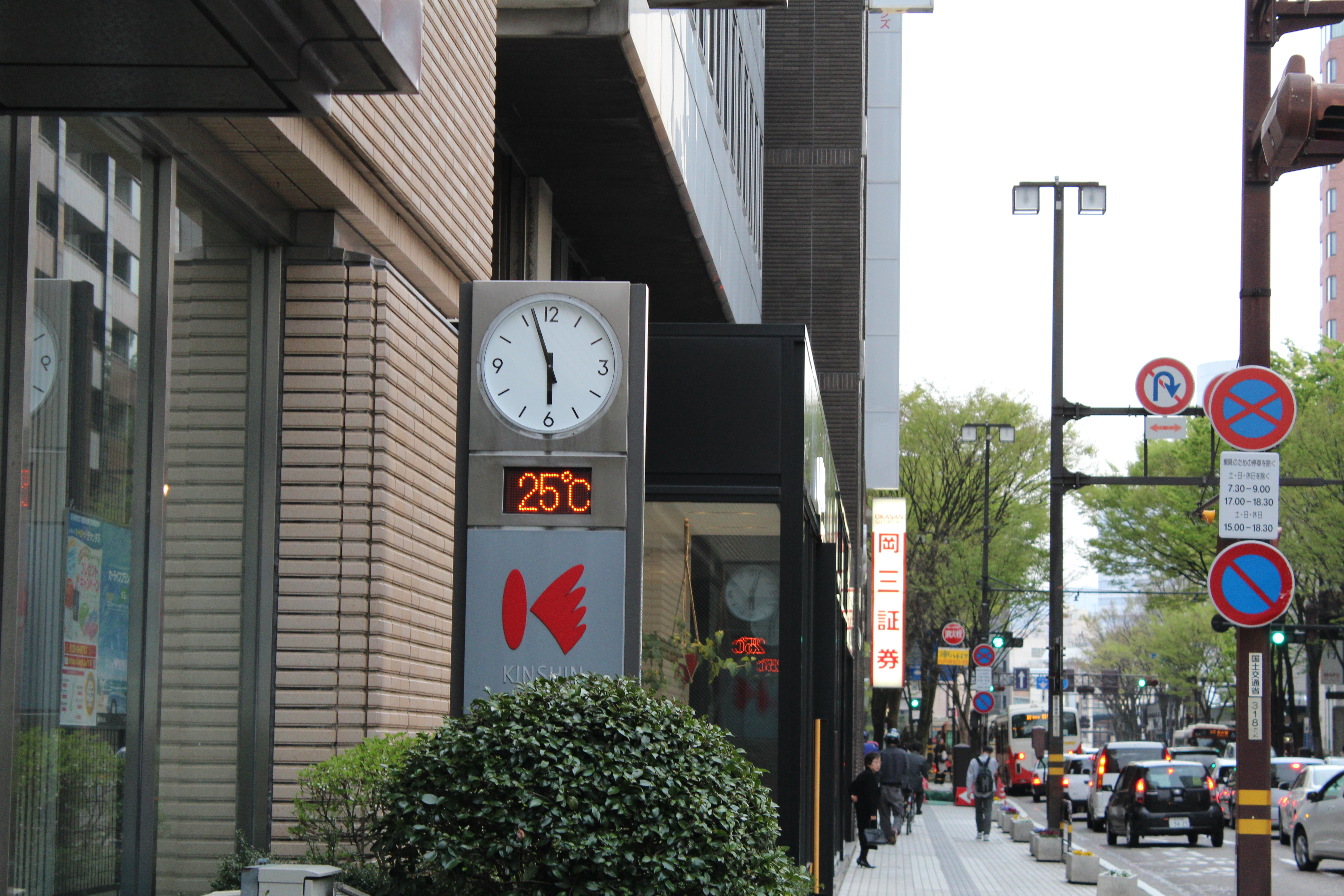
Oh and on the way back to the hotel we just happened to shoot this sign – it’s warm – at last! 25 degrees at six o’clock. Love it!

IMG_0601

Wednesday morning in Kanazawa started with a trip through the Ohmicho Market just across from the hotel. We discovered by pointing and asking “what’s that” many of the things we’d eaten – lotus root, bamboo shoots – well they’re good for pandas – shiso a wonderful aromatic leaf and several more. It’s a great colourful display of crabs (local speciality), fish, veg and fruit. Magic.

We then went to the museum of gold leaf. Now most of you probably don’t know that 99% of Japan’s gold leaf is produced in Kanazawa. The process of makinh 1kg gold ingots into 1 micron thick sheets of gold foil is brilliant and they had a video that showed it clearly. A few purchases ensued of course at the nearby Golf Leaf Shop – well why wouldn’t you? A quick walk through the old geisha district – still a bit red lighty at night we’re told but this was 10 am. Our next visit was to the contemporary art museum where we were intrigued, amused and provoked by an exhibition called Borderline. Several great exhibits including a scary Anish Kapoor but the most fun was  Leandro Ehrlich’s Hockney-like pool. It looks like a normal swimming pool but is a brilliant trompe l’oeil with only 10 cm of water and a glass platform beneath which visitors can parade. James, we think you’ll love this as we did – imaginative, thought-provoking and fun.

IMG_0636 IMG_0645

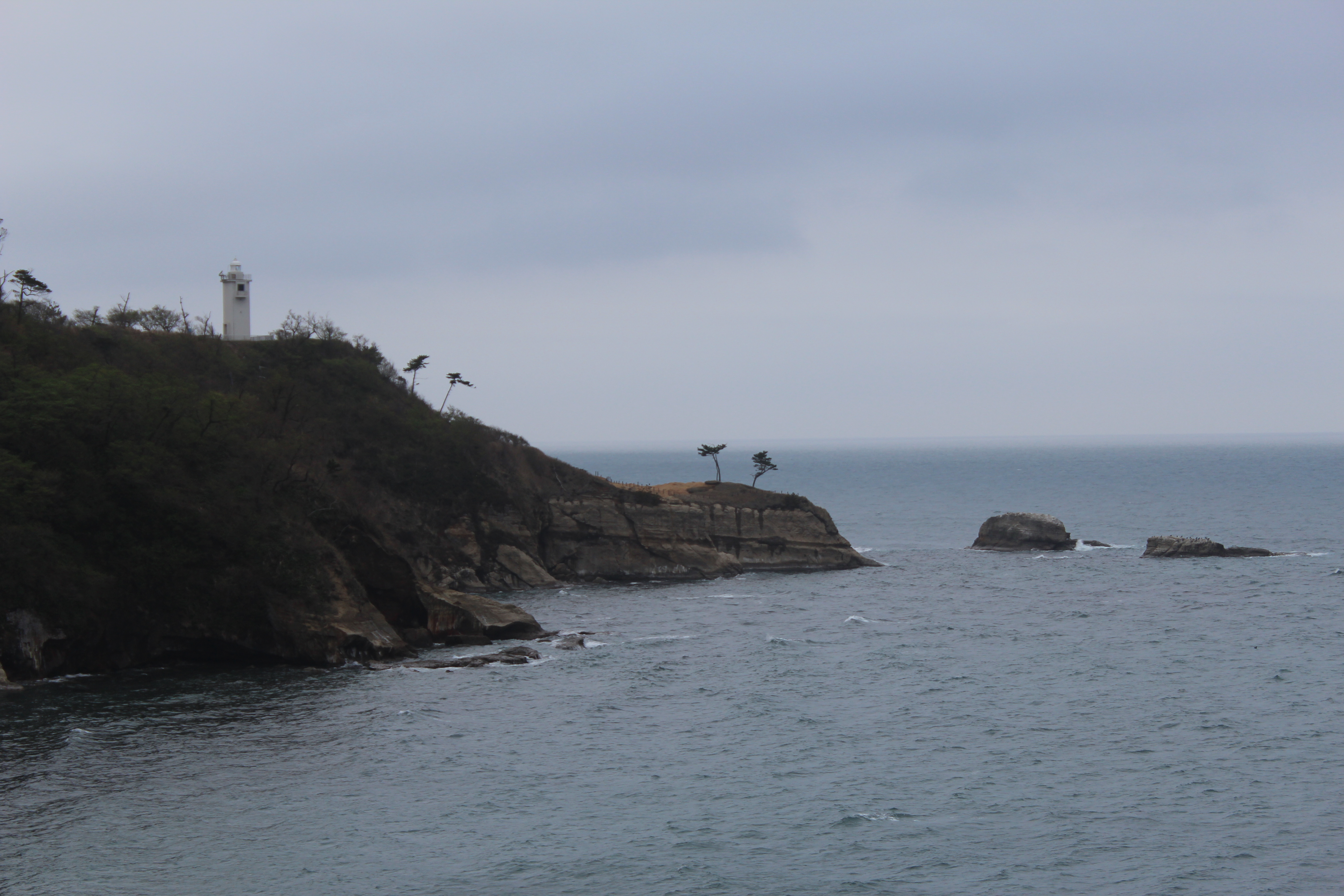
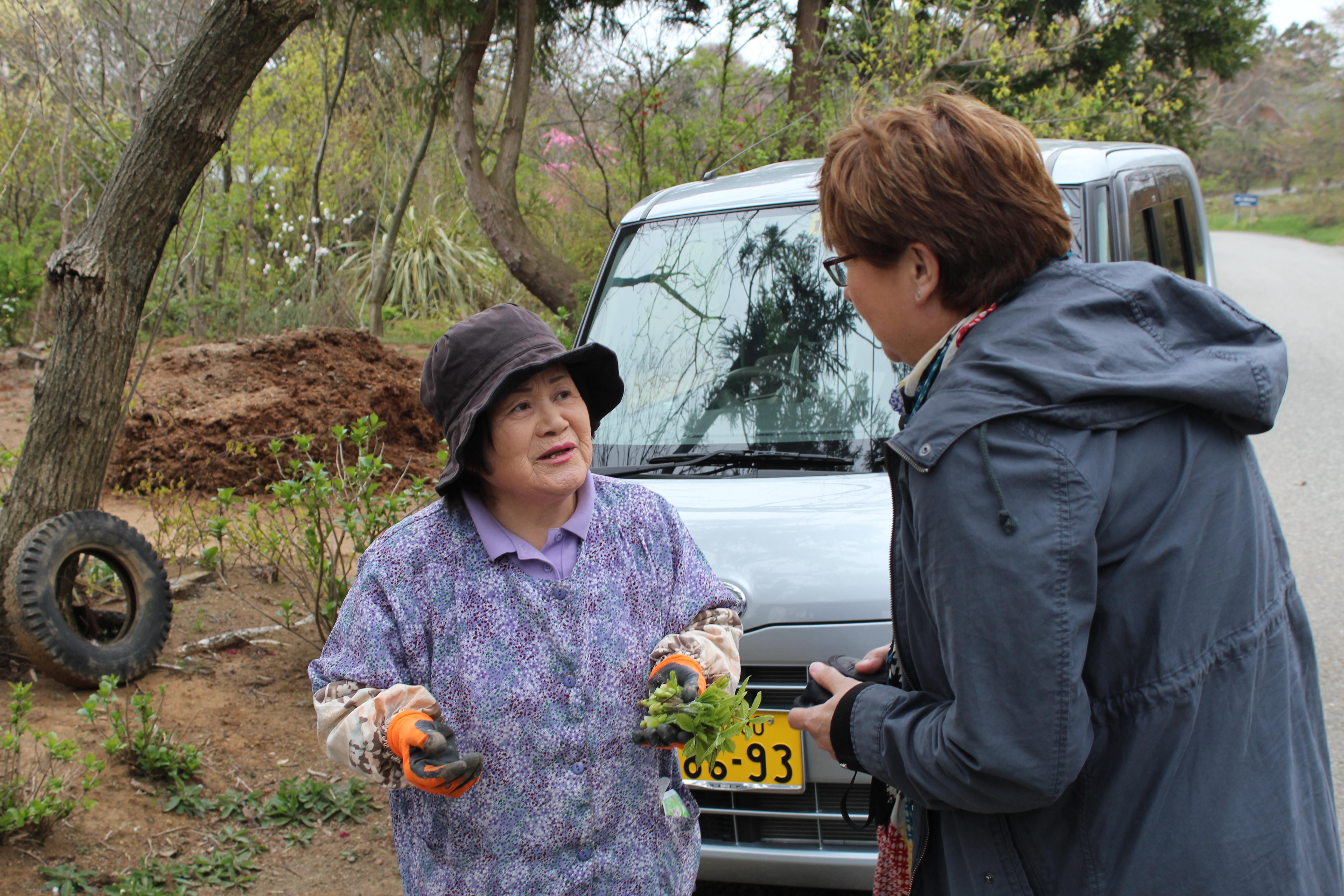
We had hoped to drive down to Kyoto along the coast but it didn’t quite go right. Instead of the bright blue of yesterday we had grey humid mist. However we arrived here and saw the sea. It is Cape Kasa, the westernmost point in Kaga Prefecture. We also met a local gardener who was determined to offer Dee some vegetables to take home to cook. Dee’s now excellent Japanese enabled her to persuade her that sadly we were in hotels and going to Kyoto with no cooking facilities and had no friends to whom we could give them.

IMG_0677 IMG_0675

The Hokuriko Expressway, a super road, sped us to Kyoto where, being worried about delivering late the excellent Hiro from Times Rentacar talked us in, sent us to a local filling station and then helped us to the hotel. We then managed to find a restaurant serving okonomiyaki as recommended by Katie in her Kyoto advice. Stupendous! Katie, Arrigato, goseimasu.

The day that nearly wasn’t and only just became

19 sushi pink The day starts just fine

        then goes very slowly awry

        but can it be saved?

Awake early to a bright sunny day and breakfast at six – a little early for us but at least it would give us time to go up the hill and check for directions for the day on the internet with cemetery-side W iFi restored. But first breakfast itself another fantastic confection from our hosts. Sweet scrambled egg! Delicious and totally unexpected as you chopstick the first morsel in. A mingling of part caramelized sugar or honey mixed with the egginess of lightly scrambled eggs was amazing. It was accompanied by a really crisp salad and a variety of dishes with assorted pickles. Then we were brought steaming hot miso soup with tofu and spring onions. And there were pickles, vegetables and of course green tea. We checked out a little later, thanked the innkeeper and his wife for what had been a superb experience – something close to Japanese traditional home life with the work in the day.

P1010733  P1010725

Dee looking up at our minshuku                                 The wonderful wooden houses of Tsumago

Up the hill we struggled to fine phone numbers – remember we can only feed SatNav Lady phone numbers – for the three towns we wanted to visit – Magome, just down the valley on the Nakasendo Trail, Ogaki where they make wooden boxes and sake and other measures that are unique, Mino famous for its papermaking and then head off for the not-too-sure-about-this-one Pension Green Lake. Assiduous readers will recall it was the only room we could book after we’d decided to go to the Takayama festival. We could only find a few phone numbers so we did Navitime and Google maps search, wrote down route numbers and set off bright and early to enjoy scenery, mingled with stops at craft shops and general touristy wanderings.

We descend the Kiso Valley looking lovely but before long a sign beckoned us to Route 19 which our researches told us we needed so we turned onto it. Mistake! We had missed Magome as it was further down the valley road and would mean turning back so we carried on crossing that off the list and looking forward to more time at the others. But oh dear, oh dear Route 19 rapidly became like a suburban American highway (Boston readers think Saugus on Rte 1) with more car sales outlets than you’d believe, McDonalds, Lawson Station, Seven 11, Valor Supermarkets every ten kilometres. It was dreary and – being Sunday shopping morning – slow. Without a sensible map we couldn’t work out how to avoid this hell and make our way across country – if indeed such a way existed. Inexorably we were sucked into Nagone which I’m sure is a lovely place, albeit one of Japan’s industrial centres, of which we had plenty of evidence. All we saw was factories, the underside of various expressways crisscrossing the northern suburbs and more roadside malls, outlets and among other eateries the ubiquitous Co Co Curry House – no we haven’t been tempted yet. Eventually we decided to abandon it all and just head for Gujo and the Pension Green Lake.

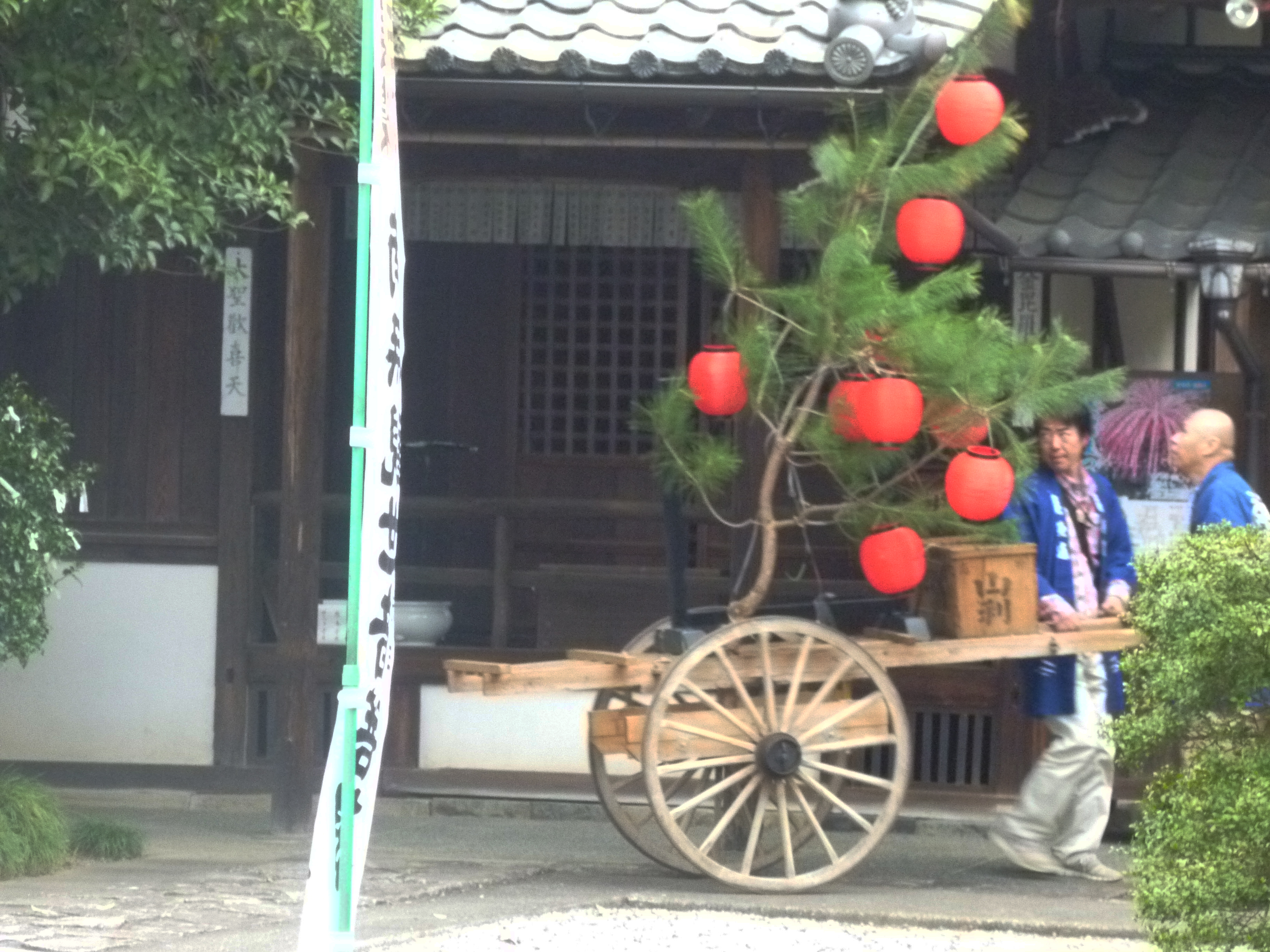
As we were making better progress we saw a sign to Mino so thought we’d try to salvage something. Glad we did so as it’s another largely well preserved town of old wooden houses filled with craft shops and galleries. We also caught the end of Mino’s matsuri the spring celebrations we intend to see in Takayama tomorrow.

Mino float Mino laterns away

Matsuri float in Mino                                                        Making off with the lanterns

We enjoyed the afternoon very much and met a young lady in a large handmade paper shop who had fluent English and had lived in America and Belgium before returning to Japan. The car was lightly burdened with the spoils of some gentle shopping and we headed off to the final destination secure this time that the phone number was in the SatNav.

How wrong can you be? Midway along the Tokai-Horikuru Expressway she declared we had reached our destination. Ummm.  I suggested that it was a building we could see from the motorway and that there weren’t many phone numbers around so anywhere here will do. Fortunately we were able to leave shortly at an exit which mentioned Hirugano Kogen Ski Resort. We knew from Booking.com directions that Pension Green Lake was ten minutes from Hirugano Kogen Ski Resort and Bokka No Sato. So we asked in our halting manner the toll gate operator if he knew how we could get there. He was brilliant and produced a map which had both places on but in Japanese but with circling with his pen and drawing our route we set off with renewed confidence. We got to a turning off Route 156 that had both places named but in fading light misunderstood the sign’s guidance and drove around for a further hour before phoning the Pension to say we were lost. Unfortunately the owner’s phone English was not good – she’s pretty good face to face – and my Japanese execrable. We manged to agree to meet at Bokka No Sato from whence she would conduct us home. Finally we met and followed her back to a farm house surrounded by fields and forest that remind us of nothing so much as a visit to our friends Natalie and Peter in Maine, complete with snow. Our hostess was charming and desolated about our woes.

The place is very pleasant and our take away dinner of sushi, crisps, nuts and beer grabbed from a J’s convenience store where we got our final correct directions was a fitting end to a day of disaster. Oh and Dee’s emails are not getting through and the iPad won’t charge.

From the lakes to the mountains

13 sushi pink As we leave the lakes

        behind and head off inland

        what may lie ahead?

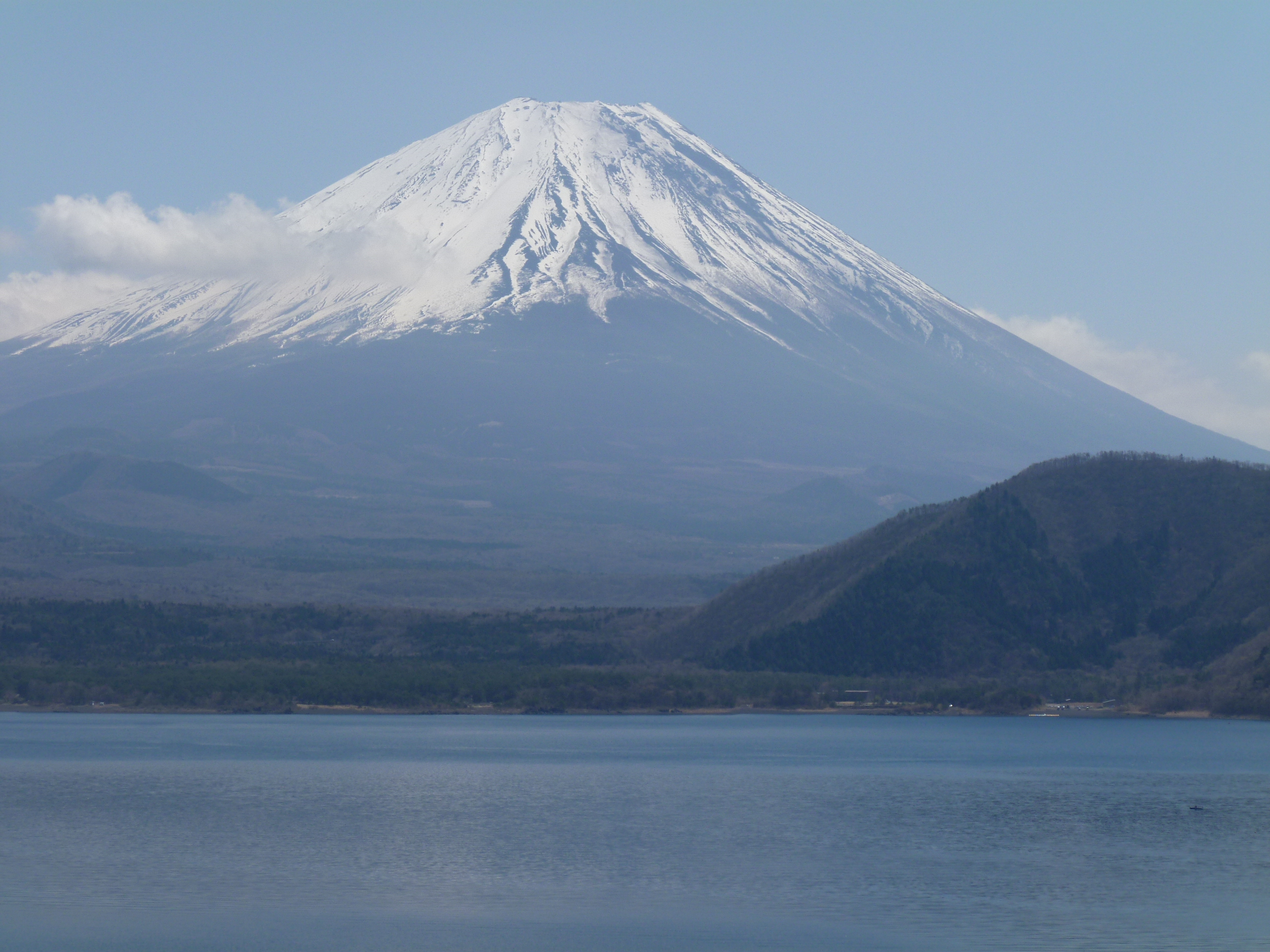
We slept late today only just beating a chambermaid’s knock at the door – check out is ten and it’s now nine-fifteen. Sorry but we needed it. We’re a little late leaving but there’s no discussion of extra charges and it’s all smiles and bows as we depart. Our plan was to circumnavigate one of the bigger lakes, Lake Motosuko, and find the spot from which Fuji is depicted on the ¥1000 note. It’s a clear, warm, sunny day and being a Saturday tourists are out in full cry. The lake is lovely and we find several spots, including the Treasury’s, from which to admire the clearest waters of the lake and the cloud free beauty of the mountain. Being quite high clouds are always a problem when you are looking for that special image.

P1010706 P1010716 P1010712

We then entered the next hotel’s phone number into the SatNav and set off along Route 30 which began with a series of tunnels and then into successive hairpin bends through a pass. It made our route as displayed on the screen look like a coiled snake. Through a stunning landscape which had conifers mingled with fresh burst leaves of acers in the brightest of greens with candyfloss puffs of cherry blossoms punctuating the view – just gorgeous. We felt very happy to be driving Route 30. It headed towards Nagano with surrounding mountains still well capped with snow and a couple of huge downhill ski runs cascading down the mountains. We then hit the plain, joined the Chuo Expressway again and as usual anywhere in the world the drive was efficient but less fun. With a speed limit of 80 kph on the signs I was glad to see the majority of drivers were as partially sighted as me – Dee didn’t think my excuse “I was going with the flow just keeping up with everybody else” would work in a court of law but luckily I wasn’t called upon to produce it.

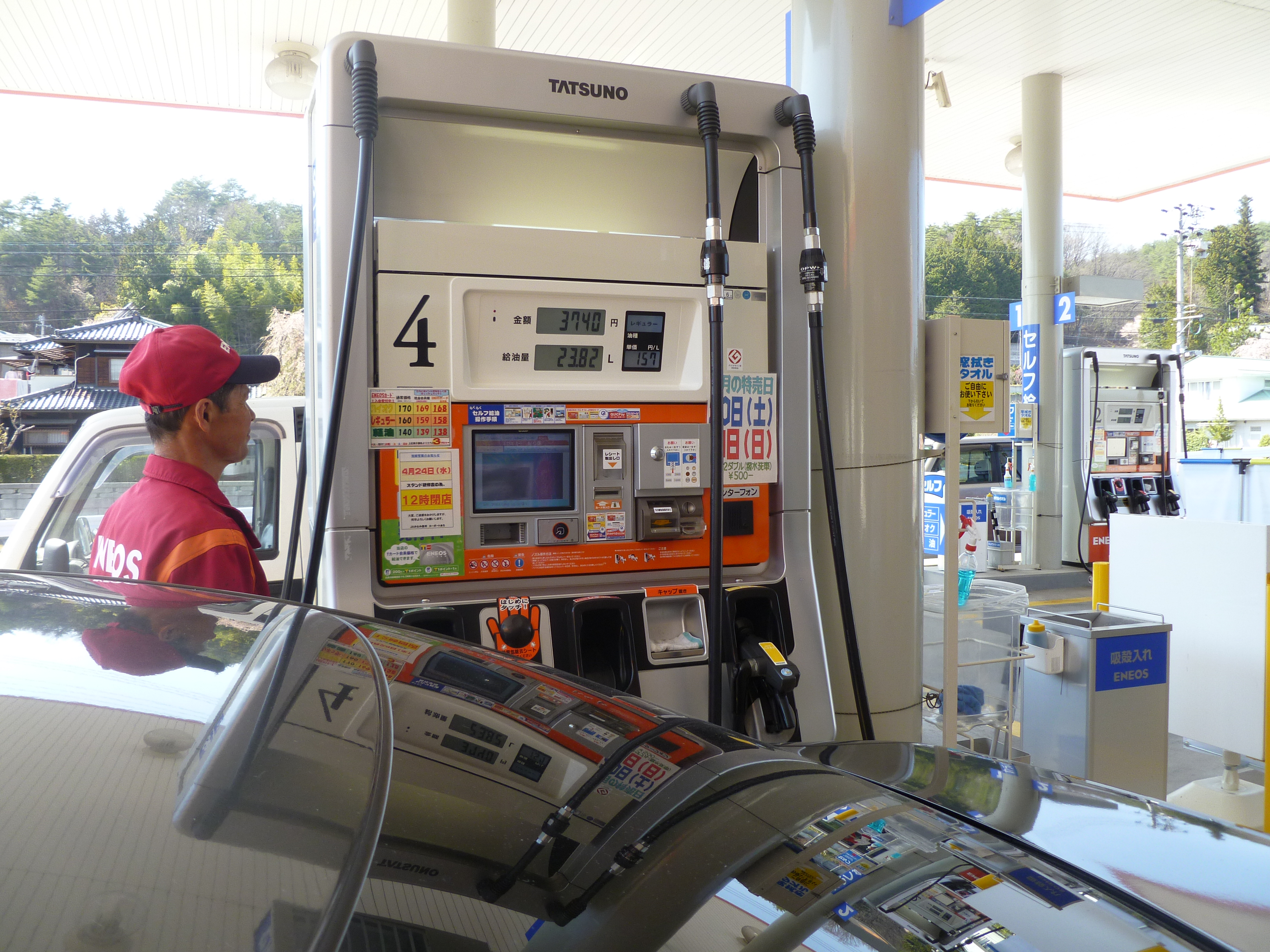
P1010715Off the expressway towards our destination we thought we should fill up the tank as filling stations might not be too numerous in the mountains. I had the phrase ready but when I asked the attendant “Regyuar mandan kudasai” he replied, “Selfo. Press Igris.” The machine burst into life showing grade choices, cash or full tank options and a flashing slot for my credit card. Full tank, all set and they had loos available – much needed after two hours in the car. Easy!

Next stage not quite so good. We drive down the Kiso Valley ogling wood craft factories and shops, lacquer ware outlets as we pass but thinking we should find the hotel(?) first and then explore. SatNav lady informed us we had reached our destination as we stopped outside the cemetery at Tsumago one of the famous post towns on the Nakasendo Trail. Well the words Tsumago did occur somewhere in the address but I wasn’t at all sure we were actually staying in this town. There was a shuttered, derelict looking building to our right, two rather lovely cherry blossom trees just coming out nicely but no sign of anywhere we could sleep.

We accost a likely looking school boy who gets out his iPhone , switches from Kanji to roman input and gets me to enter the name. The result is unclear but my lightbulb flashes and I go to get the tablet and our router to see if Google maps could help. By this time another tourist group has gathered and suggest we go to the Tourist Information Office who should be able to assist. The whole group guide us down the hill to the office where a lady with enough English summons the innkeeper to come and fetch us. He indicates where we should drive and he will meet us at the bus stop which was marked on the town tourist map. The Shimosagaya Hotel that I’d booked on Agoda was described as Japanese style – but even the town map calls it an inn. It’s actually a minshuku a family run B&B. We shed our shoes and climb a steep ladder-like staircase that would have taxed Toddy in his heyday but with Dee’s knee and our multiple luggage it’s a struggle.

P1010719The room we’re shown to however is a delight. It’s a six mat tatami room with a table, cushions, hot water and tea and some delicious plums provided as a welcome. Oh and the loo has aheated seat an the “toto wash system” built in – use your imagination. Later while we were dining, the table was moved to one side and futons and duvets were put out for us to sleep. We go out to explore this extremely well restored town of Tsumago on the old route from Kyoto to Tokyo. It has loads of wooden houses from the converted into fairly touristy shops with local crafts – some of the wooden objects were glorious. We’d been told dinner was served at six so we had to hurry back to make ourselves presentable to join other guests.

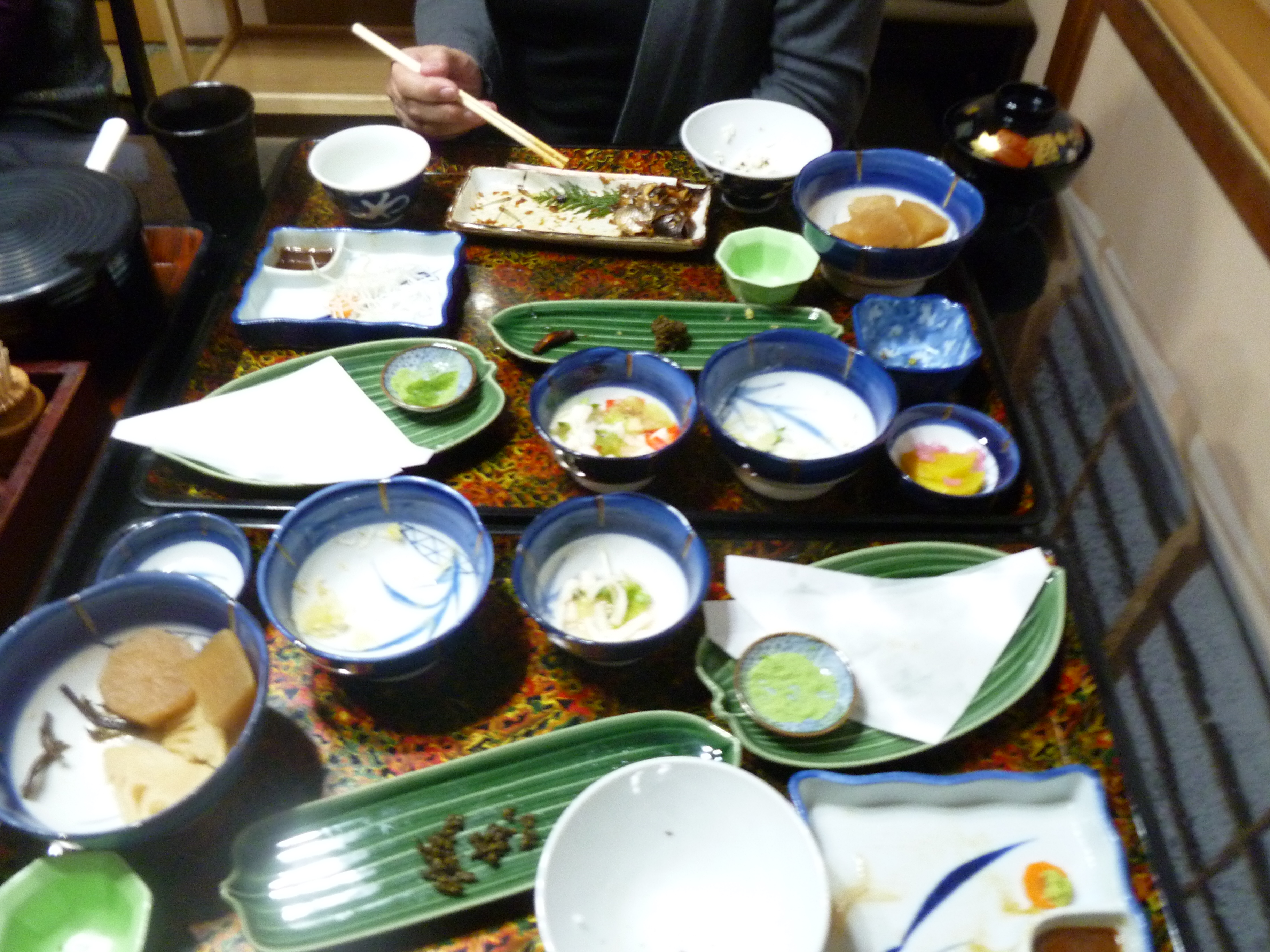
As for dinner! Well just look at these before and after pictures. We had virtually no idea what we were eating but apart from a couple of pickled root vegetables we polished it off. There was one other couple dining alongside us and a few conversational gambits were exchanged including amazement at our itinerary and some notes about what we were eating.

Tsumago kaiseki both before P1010744

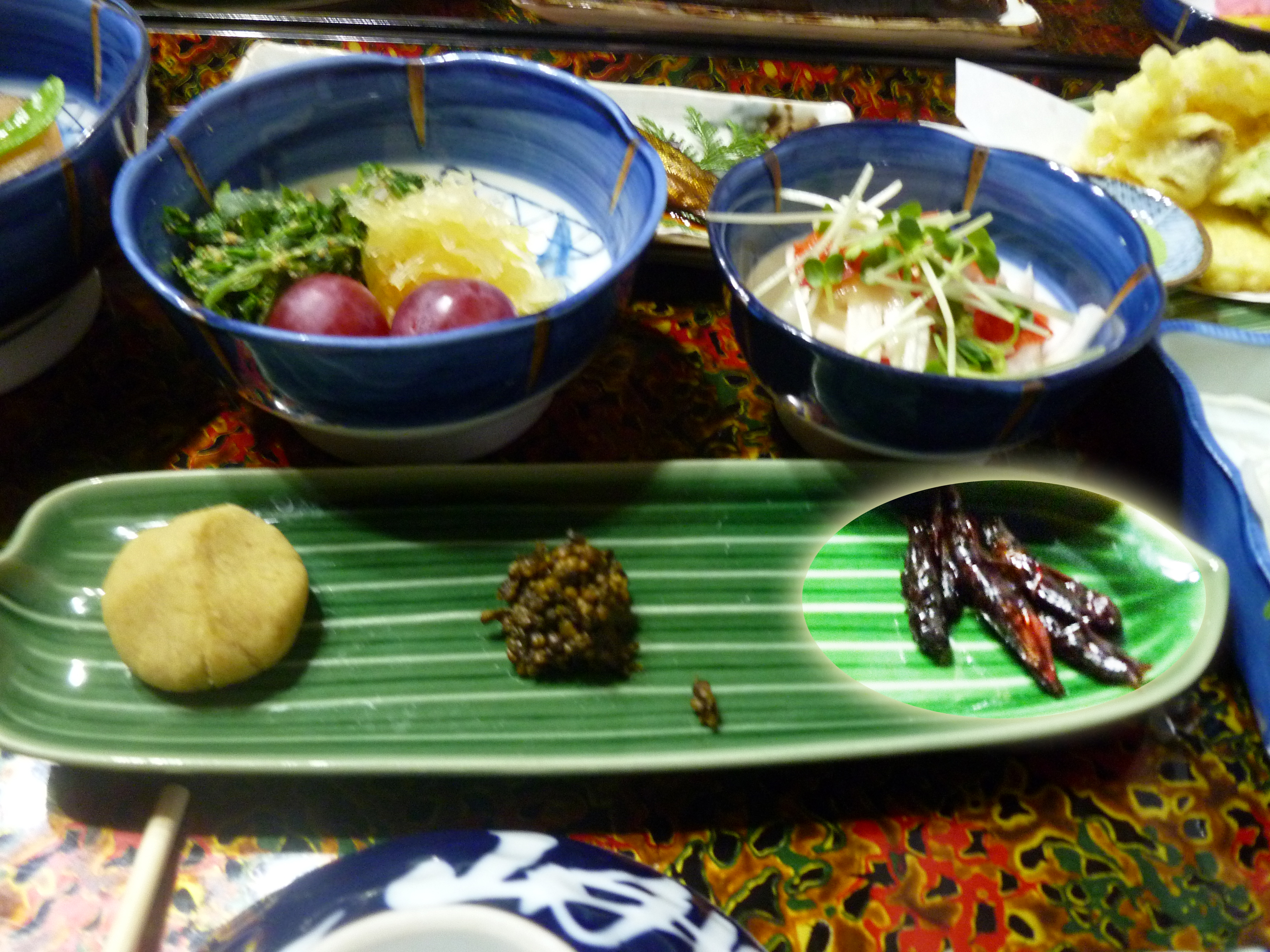
And what were we eating? Our trays included a fish complete with head, skin and bones – although we were encouraged “heado goodo” we were given dispensation to leave the head – some fabulous salmon sashimi, tightly curled fern tops, wasabi leaf with sesame, local vegetables in tempura, a superbly tasty clear miso soup and that future source of protein for all of us – grasshoppers. Yes we have both eaten grasshoppers with enjoyment and delight so we’ll be the survivors when the food runs out.

Grasshoppers We’ve now retired to plan tomorrow and blog but even with our own router there’s no signal deep down in the valley in the middle of town so we’ll have to go up to the cemetery in the morning to try to post and work out our route with Google maps or Navitime.

P1010748And so to bed.

12.04.2013 Murakami Day!

12 sushi pink   Will we get our wish

      to buy the Murakami

      and find Mount Fuji?

The alarm rings at 6 a m. We rise to a beautifully sunny Tokyo and get ourselves ready for the queue to buy the new Murakami novel about which no information has been released but speculation has been rife. As I said to Dee on the way, we can be sure that it will involve a forty-something angsty male reminiscing about his youth and failing to make relationships work. Beyond that there will be a context of some kind – maybe political or topical. We’ll see.

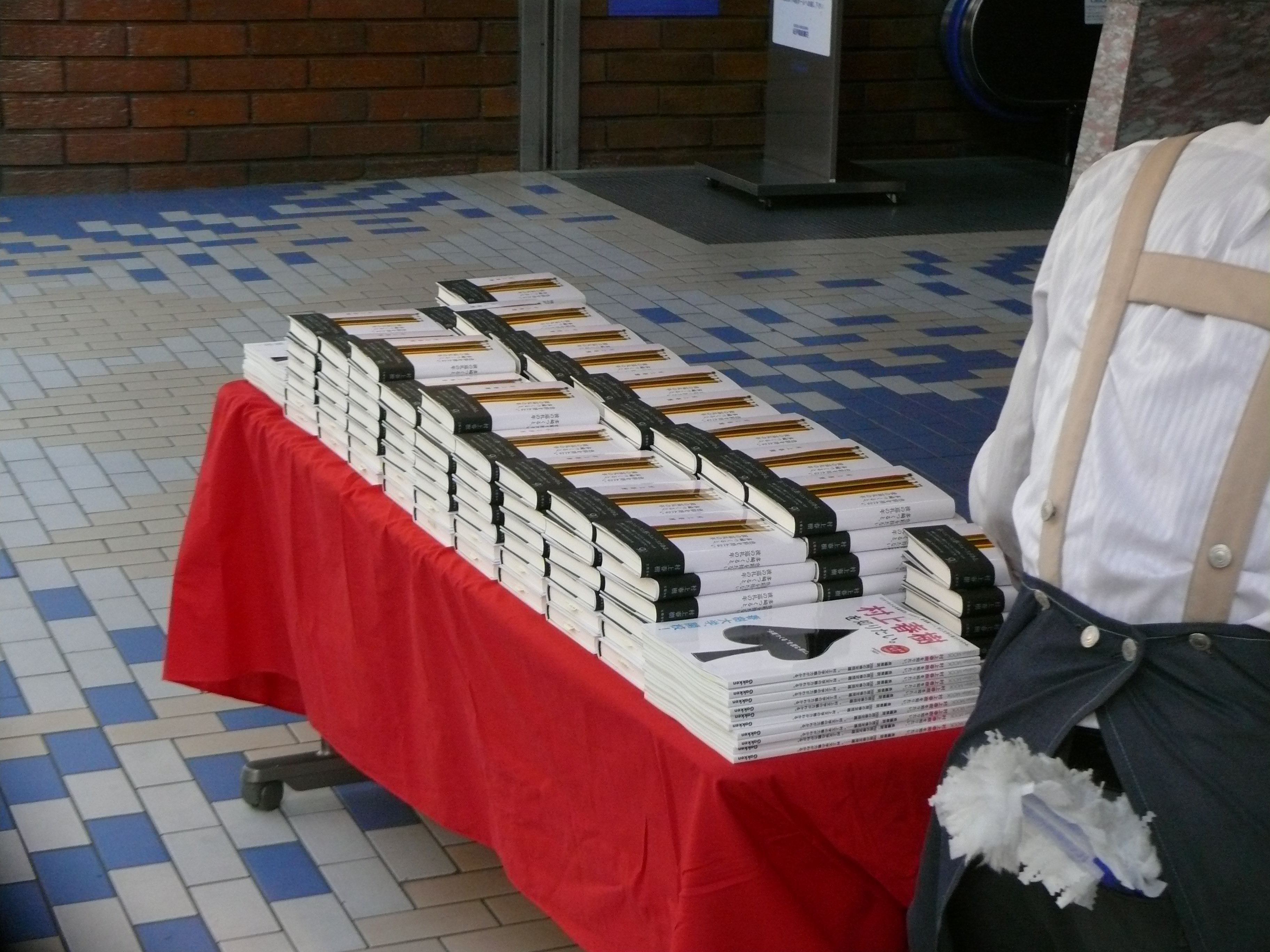
We arrive at Books Kinokunia, Shinjuku at seven and declare ourselves first in the queue. Gradually the store staff start to arrange tables outside the shop and finally piles of the coveted tome arrive. At 07:55 Dee makes the first transaction of the day and we have our copy of Colorless Tsukuru Tazaki and his Years of Pilgrimage. No our Japanese didn’t suddenly get better – there’s a convenient English translation on the endpapers. Now there is quite a line of people waiting to pay and clearly they are in for a brisk trade so we set off to check out, rent a car and drive to Mount Fuji.

P1090217 P1090219 P1090220 P1090227

[Because of a couple of wi-fi less days we actually know that the launch caused a much bigger stir in central Tokyo as reported in The Guardian – thanks James and for providing the provenance for our etchings in your comment.]

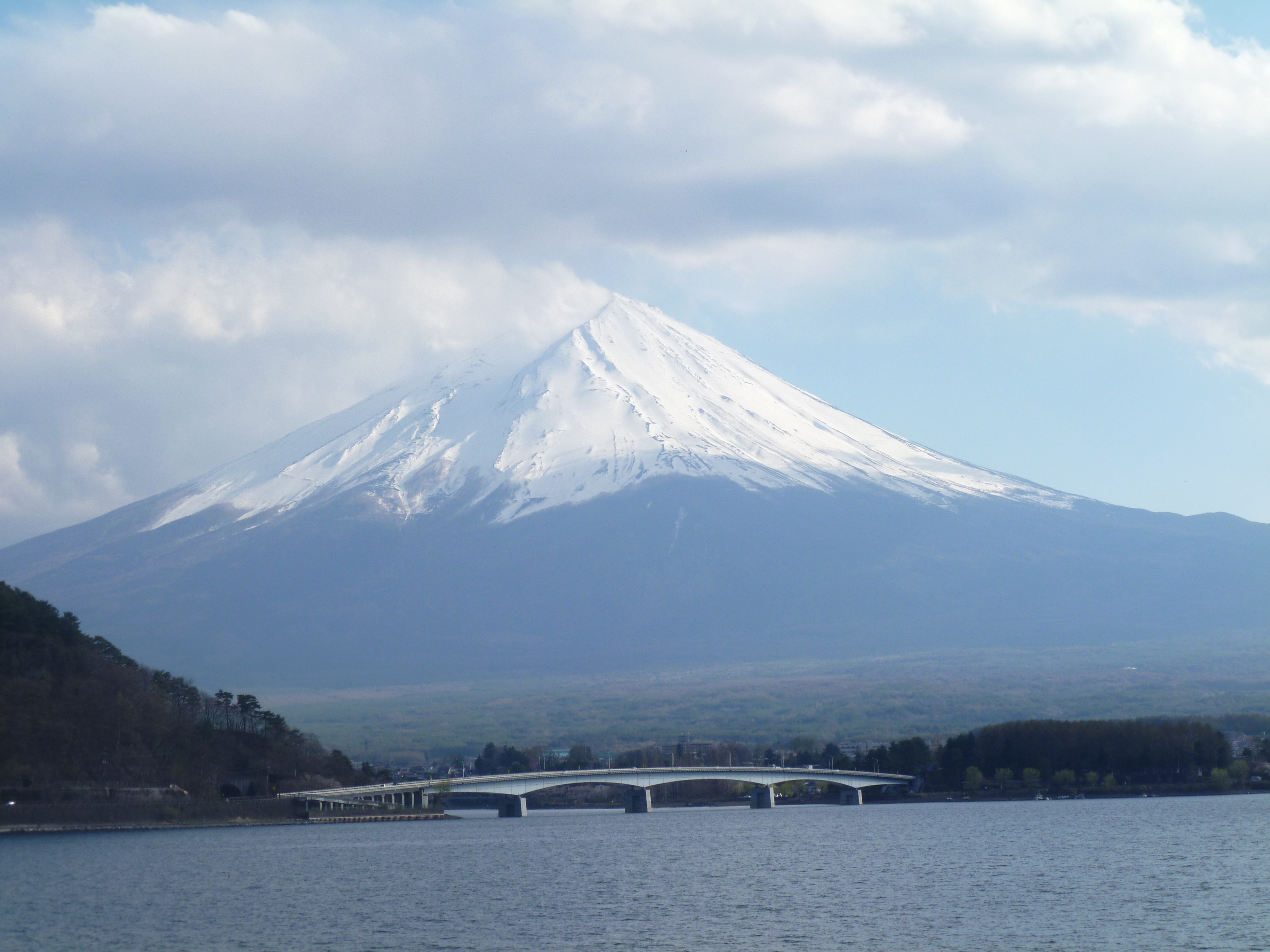
 A swift breakfast coffee on the way – more research really as lots of scenes in the novels are set in coffee shops – and we say goodbye to the e-Hotel and take a cab to Mazda Rent a Car. Except the driver doesn’t recognize the address so it’s back into the hotel leaving the trusty baggage wrangler waiting in the street. Just as I arrive from the hotel with a more precise location I discover that the driver rather than just going to get another fare has been consulting his SatNav and also knows where to go. We conclude the car pick up OK at the office and move to find it in a nearby parking lot. It’s fine and swallows our copious baggage comfortably – good research pays off! The only problem is with the English SatNav we’d ordered – it speaks English but we can only enter destinations with telephone numbers or by using a character conversion chart for katakana – ummm. So we set off to find the Chuo Expressway (more research) and head south towards the Fuji Five Lakes area. It’s a pleasant easy drive and apart from a few bottlenecks where expressways merge we’re off and away. The first sighting of Mount Fuji from the expressway is stunning – its top half still covered in snow and rising as a perfect cone from the surrounding plain. You can understand why it’s one of the most photographed places on earth.  The SatNav even gets us right to the hotel in Fujiyoshida although we can’t quite believe it.

In a real Dolphin Hotel moment (Wild Sheep Chase, Dance, dance, dance) we park tentatively rather than under the hotel itself and walk to the door which clearly says Hotel Fuyokaku. There’s no evidence in English as to where reception is but it’s clearly not on the first or ground floor (there’s much about Japan that displays an American influence). So we take the elevator for which someone must have pressed the call button so we are whisked to the fifth floor where chambermaids sit having a break surrounded by piles of sheets and yukatas. We manage to make it clear we want to check in and are sent back to the third floor where a young man emerges from a back office to check us in to room 512. We explain we parked along the access road and will fetch the car to unload. However we’ve been blocked in by a large white Nissan van. So it’s back to reception where our man has vanished and has to be summoned by bell again. He comes out with us to assess the situation, fortunately recognizes the vehicle and goes to fetch the owner. So finally we check in, unpack a bit and prepare to go in quest of Fuji. Now it’s highly visible but doesn’t have a regular phone number to punch into the SatNav so we discover what we hope is the phone number for a useful Tourist Information Centre and supplementing this with the, now map wrangler, doing her very best with inadequate resources, we set off. After a block or two we realize we are heading for a different information centre altogether and not really where we want to go. So with a few twists and turns and some stern admonishments from SatNav Lady we eventually head off up a road that leads to the fifth stage of the ascent – as far as you can go by car. We get out and join the coach parties of Chinese, French  and hope that the cloud ringing the summit will clear. Actually it’s not a good photo opportunity anyway – too close and the lakes around its base are too hazy. So we descend and decide to use the tourist map to look for better views from Lakes Kawaguchiko and Saiko.

On the northern shore of Lake Kawaguchiko is a promenade lined with cherry trees which being colder down here is just coming into its prime so we get shots of both cherry blossom and Mount Fuji. The drive round the lake is beautiful and we find a number of other locations where we think we’ll get good views of the mountain.

P1010651 P1010667 P1010655 P1010675

As the evening draws in the wind gets up, we grab a few final shots, make our way back to the hotel and go out for a beer and something to eat. We arrive at a very friendly noodle bar and order just two beers but as we sit and see how many other locals come to eat there the decision to move on which resulted from our toss of the ¥100 coin – numbers or flowers as there’s no head – we give in, order delicious bowls of ramen and then retire to the hotel.

A day of achievement – we have our Murakami book, we managed to get the car and drive to Mount Fuji and we’ve seen the mountain from most angles possible.

A day of culture in Tokyo

11 sushi pink copy   With wood block prints to      

          start our day we wonder what        

          else will come our way? 

After the exhaustion of the last two days we decided on a quietly cultured vacation day. But before we start in on that let’s just share some of the Joys of Japan.

  1. Jazz is alive and well and is the music of choice in most shops, restaurants, coffee shops and bars. It’s usually easy grooving West Coast style jazz and it’s so much less intrusive than relentless pop.
  2. Manners in the main are what we miss in the UK. They are not all perfect – nobody offered us oldies a seat on the metro but in general people are friendly, helpful and polite.
  3. Heated loo seats – Dee was so delighted with her first experience of the high tech loo off the hotel lobby, she insisted I go check it out. This one was brilliant and we’ve now found many others are accompanied by control panels fit for the SS Enterprise that will pre-sterilize the seat, add pleasant odours and wash various parts of your lower body on request – but the best is sitting down on a warm seat.

We have some framed reproductions of Hokusai’s 36 views of Mount Fuji in our hall at home and are both fans of these delicate, funny and sometimes outrageous wood block prints known as ukiyo-e which were produced as popular art from the mid seventeenth to the early twentieth century. There’s a museum devoted to them in Harajuku which we visited where there was a fascinating exhibition of prints depicting women’s fashions, hair and make-up styles. Who knew the green lower lip was so desirable! There was also a great display which showed the process of making Hokusai’s The Wave an image I guess most people are familiar with. As we left there was a spattering of rain and our eyes were drawn to a line of brightly-hued umbrellas.Queuing for popcornThese were office workers queuing at Harajuku’s trendiest popcorn store to buy popcorn for their lunch! We passed on the opportunity – few things are worth waiting that long for. So we then walked over to the Meiji Park through a little drizzle to the Meiji Shrine in which the immortal souls of  Emperor Meiji and Empress Shoken are preserved in Shinto honour. They were largely responsible for making Japan a modern nation in touch with the rest of the world. It’s such a place of pilgrimage that it was rebuilt from funds raised by public subscription after the war which destroyed it. The Japan Sake Manufacturers also donate these huge barrels of sake each year as a mark of respect. It’s a place of quiet, serious contemplation in the busy city and is clearly valued by many as a place to spend time in, not just somewhere to tick off on the “Let’s do Tokyo Tour”

P1090134  P1090148 We had been pretty pleased with ourselves for mastering the Metro to get to the museum but our next trip after a quick lunch involved working out the best route right across the city. We had to find the right entrance to the line we needed and then change midway. The subway is easy to use and a great way of getting quickly around the huge metropolis that is Tokyo. We ended up in Asakusa where I thought I might have bought my etchings but as it transpired no likely shops were spied and the search goes on. However Asakusa has an amazing shopping thoroughfare leading to the Kannon Temple, as it was called in 1981 when I visited but now known as the Senso-ji. Buddhist rather than Shinto the visitors are more expressive with cleansing and incense wafting rituals to be performed before approaching the temple. We captured a few of them…

P1010628  P1010629P1010635  P1090159

… and Dee captured Mike still seeking Murakami. P1010636

We again attracted the attention and advice of an elderly gent entirely self-taught and fluent in English – from self-help books and listening to the BBC World Service – note to the new regime at Broadcasting House! He was sorry the cherry blossom had been so early this year but thought we might catch some near Mount Fuji tomorrow and told us about the different varieties with their varying shades from almost white to deepest pink. We then strolled around some artisan jewellers, ceramicists – no stand yet Mike but we’re looking – and fabulous fan and fabric stores before getting the subway to the heart of Tokyo shopping – Ginza. Mitsukoshi department store had a marvellous roof garden on the ninth floor overlooking the street where we enjoyed a green plum and, separately, black sesame icecream. We’ve all seen the pictures of Ginza crossing but it is really incredible to see the sheer number of people late into the evening who descend onto and beneath this world-famous street. Again in the interests of finding Murakami’s Japan we had to visit the subterranean bars that lead from Ginza to Shinbashi where so many people and some of his characters seem to finish off their working day. P1010642  P1090197 Ours ended with a visit to – oh come off it! – a tapas bar just off the Ginza with Basque pintxos and Rioja. Then the subway back to the hotel to write.  Oh and we ordered and printed out our baseball ticket for next moth in the local convenience store on the way- what a service! P1090208

An early night is needed as we have a six a m alarm set to be the first to buy the new Murakami tomorrow.