Groupie Grandad

On Sunday I had the great privilege of attending the rehearsal for the Orchestra of the Age of Enlightenment’s Das Jahr concert at the Queen Elizabeth Hall. Friends were invited to take coffee and cake in the Artist’s Bar at 13:00. So it was with great excitement that I entered as instructed through the Artists’ Entrance – this feels special already. Familiar faces were around, coffee was fine but the promised cake did not materialise. One of the familiar faces was composer Electra Perivolaris who I’d met a couple of weeks before at the OAE Season Launch. We had a chat about the piece of her’s that was being rehearsed and played today and it was soon time to enter the hall for the rehearsal to begin. I knew one of the other composers Roxanna Panufnik who I remembered from a previous occasion gives up chocolate for Lent. When I reminded her of this: “Ah,” she said, “but I’m a Catholic and today’s Sunday so we don’t have to fast!” She then introduced me to the other two composers Errolyn Wallen, appointed Master of the King’s Music in August last year, and Freya Waley-Cohen. I sat behind the four as they discussed each other’s work, prepared comments for the conductor and orchestra members. Seeing a cheeky thumbs up between Electra and tympanist Adrian Bending when a suggestion came good was fun to see. Watching them enhance the playing of their compositions was (sorry) enlightening. I’ve given lots of notes to actors and seen performances change for the better but in this new context it was exciting – literally in one instance when a segment of Freya’s piece was played for a third time with different intensity and I got goosebumps. I’m now a total women composer groupie!

After the rehearsal concluded to everyone’s satisfaction, there was a break and then the composers joined Max Mandel (principal viola and artistic co-ordinator of the project) for a talk about Fanny Mendelssohn’s piano cycle and how it had inspired the four composers to write their own compositions. They also spoke of the challenges of writing for historically accurate period instruments.

Then it was off to the bar and a chance to catch up with more OAE regulars and to be joined by Frances for the concert itself. This consisted of several of Fanny’s original months from the cycle played brilliantly by Olga Pashchenko on an 1831 Erard piano similar to an instrument Fanny would have used. We also heard the only full orchestral composition she completed – it was an era when it wasn’t seemly for women to write for orchestras – the Overture in C major. It’s a shame she didn’t do more. Conducted enthusiastically by Natalia Ponomarchuk, the overture moved from haunting horn figures through strings and wind sections with strong melodies and frequent lively arpeggios that showed a mastery of composing for an orchestra. The three pieces by Electra (March), Errolyn (April) – as it happens their own birth months too – and Freya (After June) followed. The subtleties and reflexions of Fanny’s work became more apparent on this second hearing and I hope they’ll get many more outings which all three fully deserve. The second half of the programme started with Olga playing the summer months and then four principals from the OAE played a romanze from Fanny’s String Quartet in E flat major which again showed what an underrated, supressed compser she was. The word is that she was a far superior pianist than her younger brother Felix but wasn’t allowed to perform. The finale was Roxanna Panufnik’s piece Postlude inspired by the thirteenth section which Fanny had added to the year. It had witty echoes of Fanny’s own work and a rhythmic pulse which drove it along. There were minimalist passages and areas that fully exploited the orchestra’s capabilities – I really enjoyed it. Natalia Ponomarchuk brought both enthusiasm and precision to the whole concert.

Olga Paschenko and Natalia Ponomarchuk take a bow with the Orchestra of the Age of Enlightenment.

After a feast of music old and new it was time on to theatre new and slightly older. Monday was The Habits at Hampstead Theatre downstairs. It’s a first play by award-winning director Max Bradfield. It is set in a boardgame café in Bromley – very close to home! The action unfolds through a (to me) baffling game of Dungeons and Dragons (my son and grandson both play) and through the moments out of D&D character we learn of the participants’ real lives encompassing ambition, grief, addiction, fecklessness and perhaps love. It’s brilliantly acted with switches in and out of role done most skilfully and there are lots of laughs and some fabulous dressing up for the finale.

Ruby Stokes as Jess with her dragon in The Habits at Hampstead.

Across town to the Orange Tree in Richmond on Tuesday to revel in April de Angelis’s Playhouse Creatures. Written in 1993 and set in the 1660s when theatres were just opening up again after the Cromwell interregnum had closed down all forms of pleasure. It’s a period I was familiar with having done lots of research for a series of blogs and a script I wrote for Clive Myrie to present at the OAE’s concert of Restoration Music in 2021 when theatres and concert halls here were just opening again after the Covid lockdowns. In London theatre in 1660 there was a real sensation – women were allowed to appear on stage and took to it with gusto if Ms de Angelis is to be believed.

Some of the girl power here could have benefitted poor Fanny Mendelssohn a couple of centuries later. Funny, informative about acting craft in the Restoration period and with insights into the struggle for fair pay, the roles of women in those times both on and off stage, the play gives us plenty to think about that resonate in these uncertain times for actors and musicians as theatres try to recover from the lockdowns. It’s bawdy and brash and gives you plenty of belly laughs with a few winces of agonised reality thrown in.

The cast led by Anna Chancellor as Mrs Betterton – wife of theatre owner Thomas – are all excellent bringing depth to the on and off-stage characters they portray: Katherine Kingsley as sweary men-baiting Mrs Marshall; Dona Croll as Doll Common the drudge with attitude; Nicole Sawyerr pained at being supplanted as the King’s mistress by the younger version in the form of Nell Gwyn played with increasing assurance by Zoe Brough (that’s the character not Zoe’s performance).

Wednesday evening saw me again as a music groupie but also a grandad. Grandson Jake was playing his cello in the Royal Holloway Symphony Orchestra in a programme that included Felix Mendelssohn’s Hebrides Overture, Holst’s Planets Suite and the Trombone Concerto by Dani Howard who I’ve been honoured to call a friend and whose music in the Casa Battló in Barcelona I wrote about a few years back. I also attended the London premiere of the Trombone Concerto at the Barbican so was interested to hear how it sounded here. I had picked up my son-in-law (daughter at work sadly) and driven into a full, low, thoroughly disconcerting, huge red setting sun through Surrey lanes towards the M25 which was relatively free-flowing and we arrived at the magnificent Royal Holloway in time to grab a sandwich in the well-appointed campus shop. I remembered making a promotional recruitment video for RHU back in the 80s when I did a whole slew of such videos for KIng’s College London, Guy’s and St Thomas’s Medical and Dental Schools, Imperial College, Felsted and Harrow Schools. The Royal Holloway shoot was special as we had access to a helicopter to fly over the campus for the money shots – and also for the estates director to see close up footage of any necessary roof repairs!

Who ever designed the auditorium clearly never expected 100 performers to be occupyingo the stage. People in the front row seats were in danger of injury during the longer slide extensions of the solo trombone. What was wonderful was to see so many young people being encouraged with whoops and whistles from their mates to entertain us with a programme of classical music. The players responded well. The Mendelssohn was a bit shaky to start but soon found its stride. Dani Howard’s trombone concerto was given an excellent reading under orchestral music director of the university Rebecca Miller with Amelia Lewis in fine command of the complex trombone parts.

Amelia Lewis, Rebecca Miller and about half the orchestra at Royal Holloway Windsor Auditorium.

After the interval the orchestra played Gustav Holst’s The Planets Suite and Chris and I – as well as being impressed by the massive forces deployed – reckoned that we very rarely heard all seven planets played together. The line-up included lesser-spotted bass versions of flute, oboe, clarinet and trombone and impressive percussion arrays. There was enthusiasm, energy and considerable musicality in the performance and it gladdens the heart to hear music of such quality from a youthful university orchestra at a time when university finances are so threatened.

After a debrief with Jake and some of the other players we managed to negotiate the insane Junction 13 from the A30 onto the M25 and the never-ending roadworks at Junction 10 and made it back home in reasonable time despite several overheads warning us of “Workforce in the Carriageway”. We saw few.

Gardens, Masterpieces and Wagner

I had a problem with uploading photos from my camera so there area few gapsnow filled in on my return to London and a full laptop.

Oh dear, I wake up and the sky is blue, the sun is shining and I’m still in Sicily. Today’s plan is to visit the Botanic Gardens I can see from the apartment, do a museum recommended by my friend Gwyn, check out the walk to Teatro Massimo and get back home relatively early to shower and frock up for the opera.

The day started well as the garden opens at nine and has a cafe where juice (bottled not freshly squeezed like yesterday’s – trading standards might need to investigate). However with that and a good coffee hit I was ready to meander. And it’s that sort of garden with nicely laid out routes of varying lengths and also the capacity for random twiling (copyright S Todd RIP but we still twile). And the labelling is very clear, often in Italian and English so you know what you are looking at.

One of my first encounters made me think of friends Gwyn and Yvonne who had highly recommended Sicily after a visit they made a few years ago. They have an 80-year-old tortoise in their garden so I immediately felt welcomed to the Giardino Botanico. Now I’m not sure whether this creature was a tortoise, a turtle or a terrapin but it gave me a friendly nod.

The Botanic Garden was divided up into several areas and had displays of various plantings – bamboo reminding me of Bangladesh, palms, cactus including a cactus nursery and again making me feel at home an experimental coffee growing area. There were some pleasant glasshouses – but what can compare with Kew – and is was good to see a number of school groups making the garden tour.

The coffee trial plantation to see if they can grow coffee here. Interesting development and a reflexion on climate change perhaps like red wine in Kent.

My next planned visit was to a half-completed church, Lo Spasimo, which I suspect, as the world’s expert on follies, my friend Gwyn was claiming as one. It was abandoned in 1475 when stone was more urgently required for fortifications against the threat from the Turks. Sadly it was closed so I’ll take Gwyn’s word for its intrinsic value. Disappointment calls for coffee which was provided bay a barely-open bar in via Spasimo. Then it’s on the short walk to the Palazzo Abatellis which houses the Galleria Regionale di Sicilia.

This gallery contains two absolute must-see items and a lot more of significant interest. Once again it’s a magnificent 15th century palazzo and shortly after entering you are struck by masterpiece one. The Triumph of Death is remarkable in so many ways. It’s a fresco from elsewhere that was carefully removed and repositioned here. It’s from the fifteenth century by an unknown artist. You can see it here at ground level and then again from above when you go upstairs. It reflects on the devastation of the Bubonic plague in Europe. Can’t wait for the Covid Guernika-style fresco. Death is an armed skeleton riding a skeletal horse which has great yellow teeth. There are so many brilliant mini-stories going on all over the wall that it’s hard to drag yourself away but something perhaps even more special awaits.

It was also interesting as always to see a conservation team at work on one of the collection’s pieces – mahl sticks, minute brushes and multicoloured palettes. Oh we do like seeing other people work!

The gallery has a very large number of fairly gloomy religious woks – well we are in very Catholic Spain – but one of them is in joyous calm counterpoint to all these. It’s known as the Mona Lisa of Sicily and is called Annunciata and was painted by Antonello da Messina in around 1475, so predating Leonardo. It gets very special treatment in a mobile display unit in the middle of a room. She’s in great demand so you have to be very patient and wait your turn to go and monopolise the space. It’s worth the wait. It is thrilling in it’s simplicity. Mary looks off camera presumably listening to angel Gabriel telling her she’s pregnant. Her raised right hand might just be saying “No way!” The restrained colour palette, the beauty of her features and the arresting composition make this a picture I covet. They did give me a free postcard so maybe I’ll frame that.

Among the other delights are a very rude-girl looking Maddalena and a room full of paintings claiming the influence of Caravaggio. But nothing can surpass the galleries two nailed-on star exhibits. From here I decide to walk to the Teatro Massimo and then back to the apartment to check my departure time for the opera tonight.

I do walk it in stages but get waylaid by the need for a beer – it’s now after two for goodness sake. Opposite the cafe on via Maqueda is the Palazzo San’Elia another gorgeous edifice advertising an exhibition called Palermo Liberty The Golden Age. Oh if only Dee was here, she’d have loved it, We shared a love of Deco and Art Nouveau and the poster was very enticing.

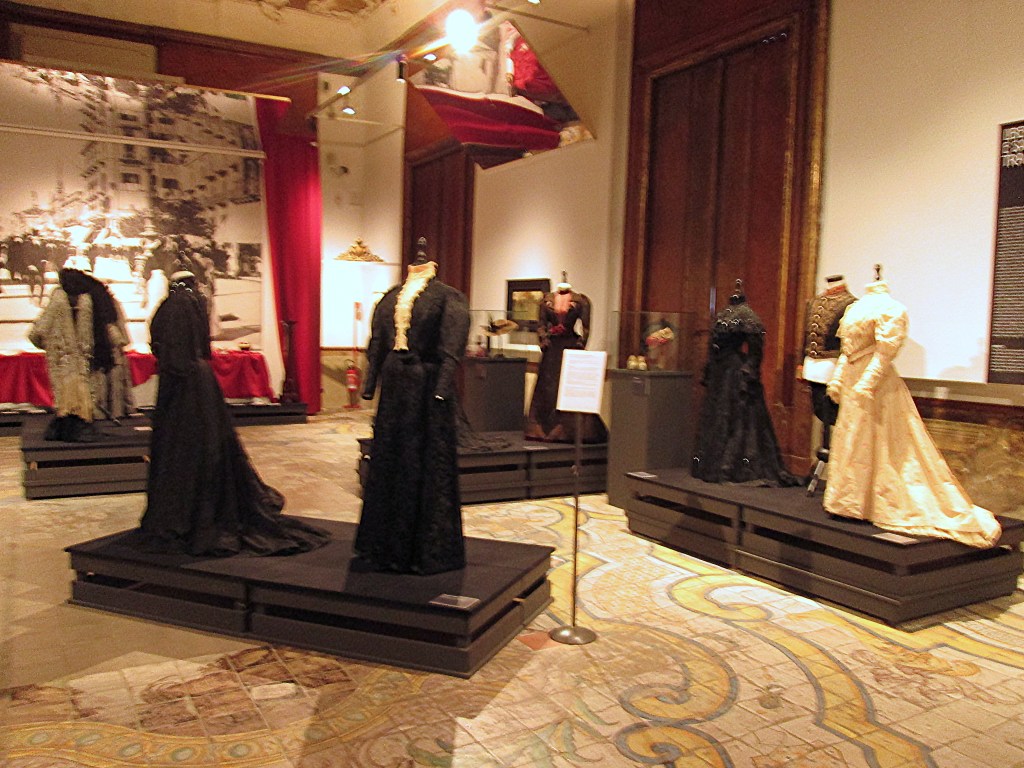
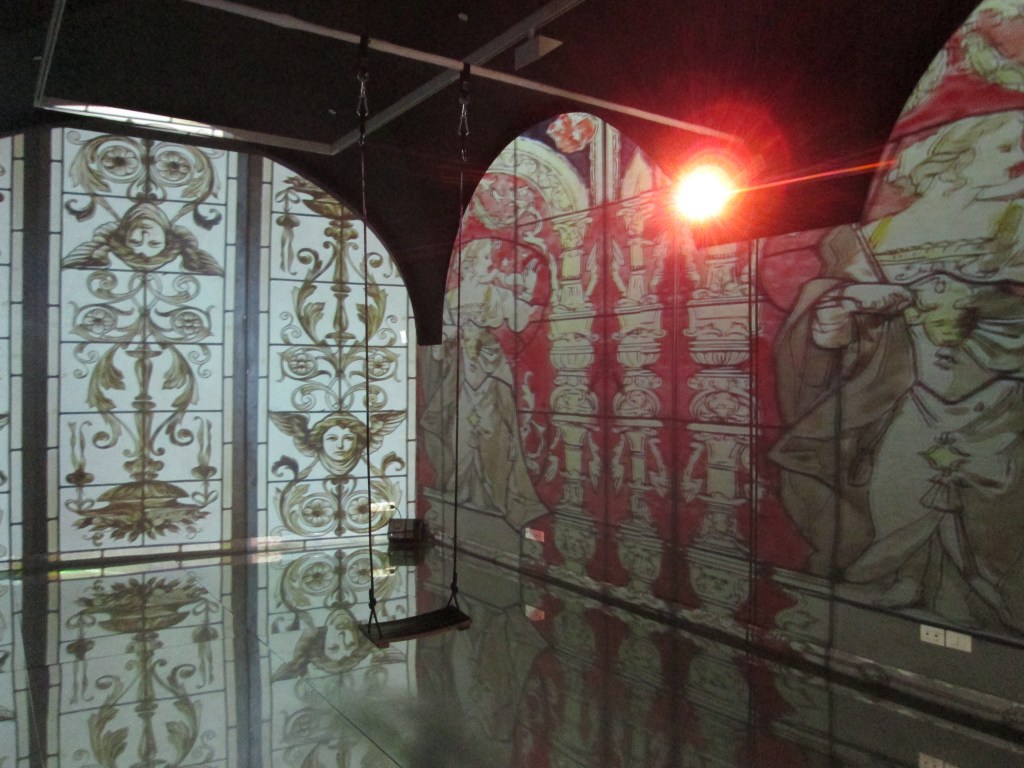
It started with an immersive video room in which the walls displayed changing decorative motifs from the tiles, logos and fabrics of the period. It reminded me of the Kusama mirror rooms. The rest of the exhibit depicted life and taste of the Period and brought back vision of Casa Battlo and the furniture rooms on Montjuic in nBarcelona. There was the restoration of a famous bakery’s facade, great graphics, photographs, furniture and frocks. I really might have enjoyed living then – if I’d been among the better off.

With all this enjoyment I find I’ve basically left it too late for lunch as many kitchens close at three so I end up with a tuna panino and beer at a street food stall near the station and home. I then repair to the apartment shower and frock up ready for the opera. I discover that my trusty Birkenstock flip-flop style sandals have caused a bloody blister on the top of my middle toe on my left foot – have my toes got fat during my periods of inactivity. Well it’s socks and proper shoes for the opera and I have other options. This and my peregrinations have convinced me that the sensible option is not a 25-30 minute walk in a suit in 26 degrees and that a 10 euro taxi ride is the sensible option.

I arrive in good time and can explore the building a bit before finding my seat in a loggia box which already has one young woman installed. We say hello and admit our mutual lack of each other’s language. Later two other ladies arrive but the sixth chair is left unoccupied so we all have space and a good view. In-performance phone abuse is as rife in Palermo as in London and I feel like throwing darts at people below me. They’ve paid twice what I have to sit in the stalls. Why are they here?

It’s a somewhat strange ‘concept’ production which starts as a rehearsal with a tee-shirted conductor playing piano on stage then joining colleagues in the pit via the audience. Singers also enter via the stalls and sing first parts from scores on music stands. It then segues into a full production midway through Act 1. There’s the now familiar mix of modern and ‘period’ dress but there’s a big shout out to the naked pink-winged Cupid who made many appearances throughout. I have to question why the similarly naked female in Act 3 was allowed knickers! They were small but covered her pubes. Musically it was excellent with good orchestral colours and contrasts.

The singers especially Brangene (Irene Roberts) were excellent but at the end I was astonished at how quickly the pit cleared. I know musos like a drink – but all overboard! Shame on me for such evil thoughts. After the principals’ curtain calls the back curtain rose to show all the orchestra member within their instruments where portable. Something I had never seen before – a nice touch.

I feared for my stomach as most places close their kitchens at 11 and we were after that by the time I’d got out. However a place on via Maqueda was still serving and I had an aubergine, celery and tomato and some mistranslated sardine meatballs – surely fish balls! However they were very tasty, went well with a crisp half-bottle of local white and I chickened out on the walk back and took a cab. Well after midnight and buzzing with the music and the occasion, I slept very badly – not good preparation for my last day in Palermo – a planned trip to Monreale.

A day on Montjuic

I so enjoyed my visit to Miro’s studio in Mallorca last year that I decided to visit the Fundacio Miro in Barcelona. It’s situated up on Montjuïc the mountain where the Olympic Park was in 1992 and which continues to be a tourist attraction. Three stops on the Metro to Parallel and the the Funicular up to Montjuic.

It was a disappointing trip compared with the ones in Bilbao, Budapest and San Sebastián in that it’s almost entirely in a tunnel with just occasional sights of scrappy play areas and none of the vistas across the city I was hoping for. However, a few steps from the top of the funicular, my wish was granted with this view dominated by the magnificent Sagrada Familia.

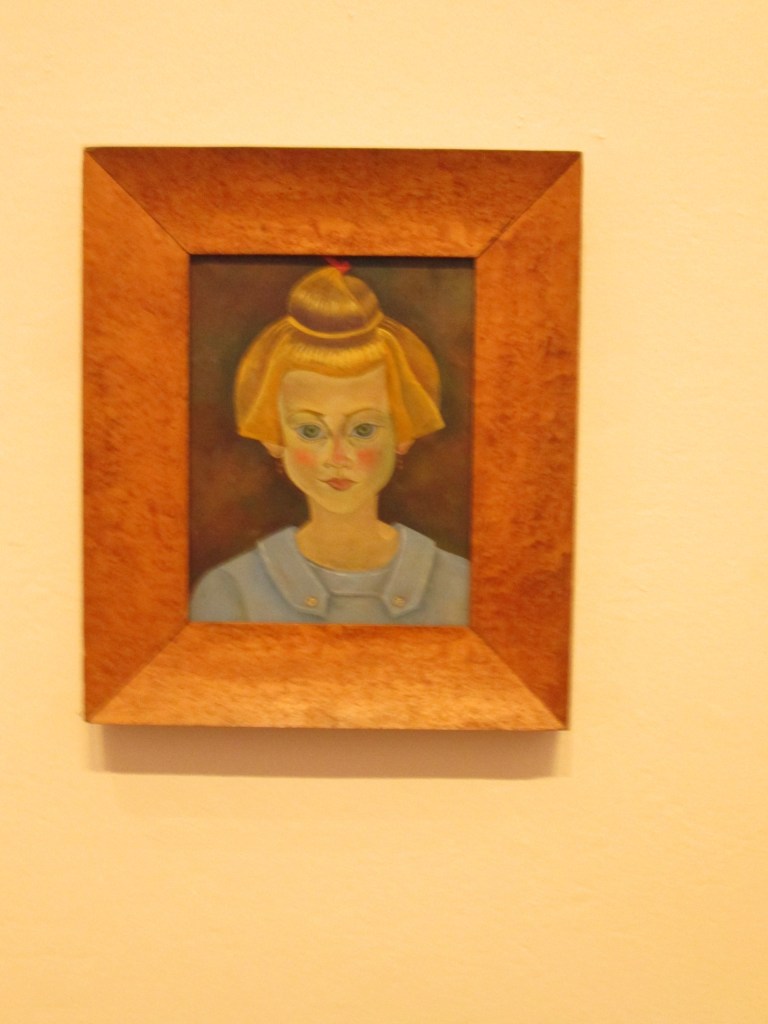
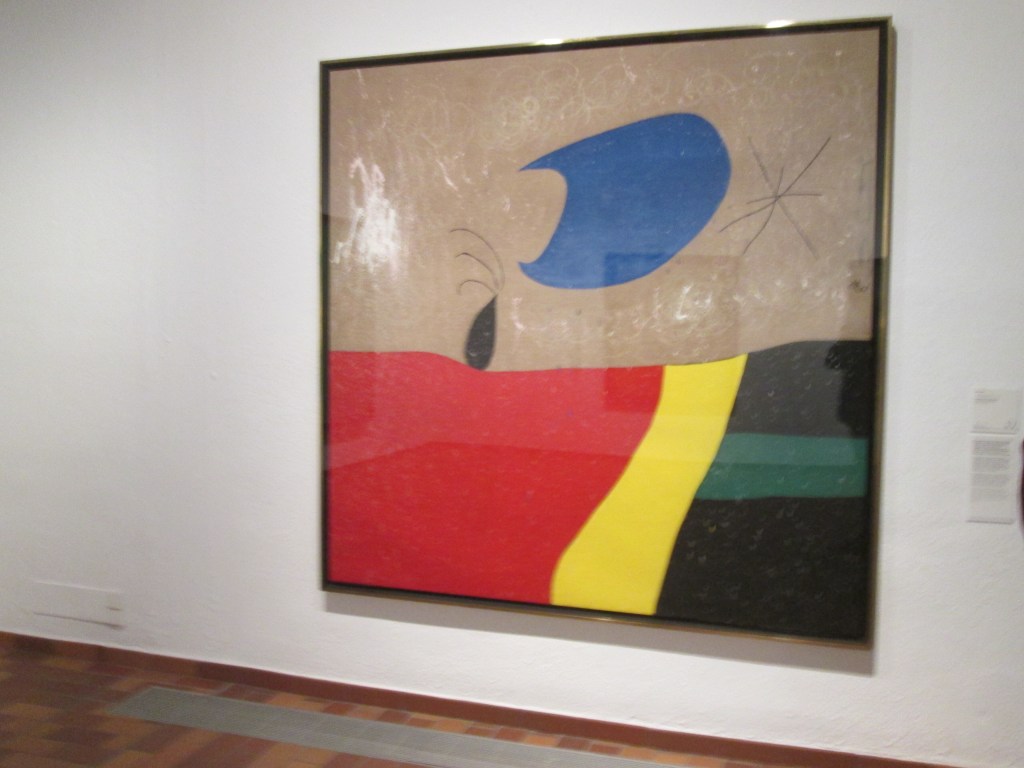
On the way to the Miro Foundation was a sculpture garden with some of the worst signage I’ve ever come across – tiny aluminium stakes with titles engraved – totally illegible. At Miro, things were handled much better. There is a huge collection of paintings, sculptures, tapestries and found objects displayed in spacious galleries. I’m glad I’d been to the studio in Mallorca to get an idea of Miro’s working methods. It’s also good to see that artists who choose to follow a different kind of visual vocabulary are well grounded in basic draughtsmanship.

I particularly love his amusing sculptures from everyday objects. As a not-very-royalists person I was much taken by King, Queen and Prince (below right), the huge (nearly 6 metres across) Sobreteixim with eight umbrellas and the dramatic use of a coat hanger.

Another artist provides a fascinating object here. Alexander Calder was the only non-Spaniard invited to contribute to Spain’s pavilion at the 1937 Paris World Exhibition. Alongside several Miro canvases, Picasso’s Guernica, Calder’s Mercury Fountain was seen as a further protest against the atrocities of the Franco regime including the attack at Almaden the town that provided a substantial quantity of the world’s mercury. Calder donated the sculpture to the Miro Foundation and we view it from behind a glass screen since the toxicity of mercury has been discovered. Funny thing is the Egyptians knew about mercury too and thought it chased away evil spirits – may have killed some of them too.

A temporary exhibition here featured another favourite artist. It was called Paul Klee and the secrets of nature. It hads a fascinating collection of drawings and early paintings again demonstrating complete draughtsmanship abilities before going his own chosen way or ways in his case as there was so much variety in his work.

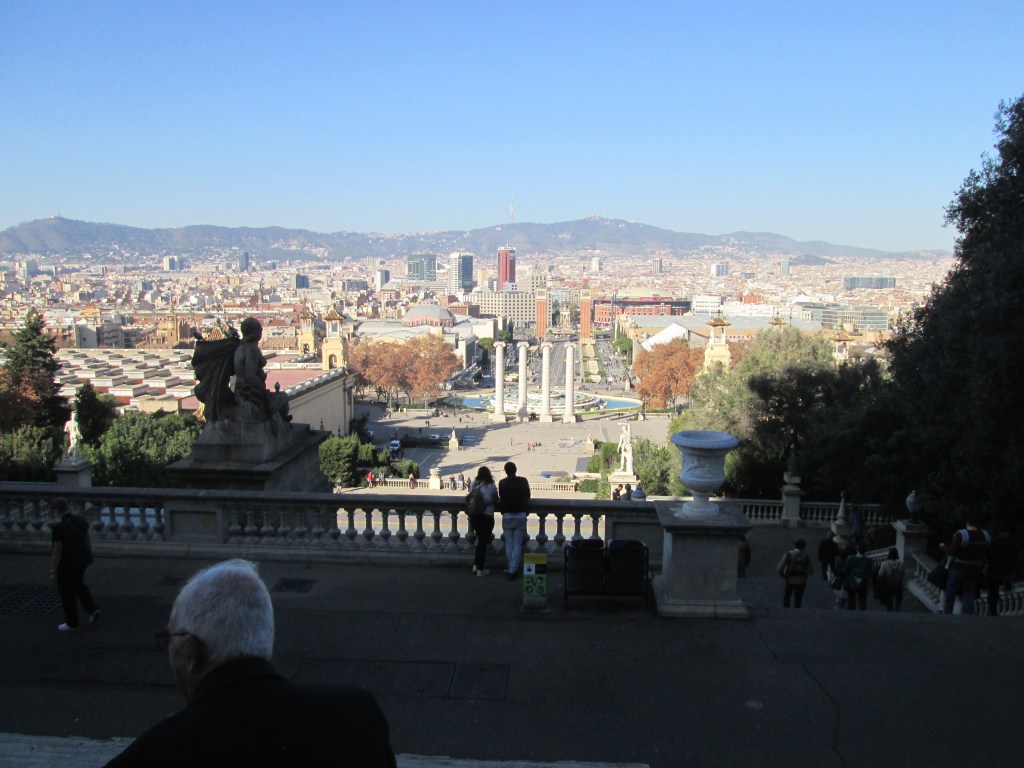
I had a coffee in the cafe before continuing my walk along Montjuic. I was heading inexorably to the National Art Museum of Catalunya, which I had told myself I wasn’t going to bother with on this trip. I remembered, bothwith the children ages ago, and with Dee more recently standing on its terrace on a Friday evening eagerly awaiting the magic fountain’s display. No use waiting for it on Wednesday afternoon. I do remember it as quite spectacular with water jets synchronised to different music genres at different times and changing colour appropriately. Looking down at it brought back good memories. I then thought ‘Well I’m here, it’s free with the Barcelona card so why not?’.

The majestic central dome covered an area in which there were easels for wannabe artists and a fabulous soft play area with kids swarming all over. If that what it takes to get folk in and keep galleries alive, I’m all for it.

I decide to eschew the old masters which I have seen before and head for the modern floor upstairs. Neatly divided into four areas it shows the development of Catalan art from the turn of the century to the present day. In the very first gallery devoted to modernisme, what did I see but the actual dining table Gaudi had designed for Casa Battlo.? There were lots of beautiful wooden, glass and metal objects in that fluid style.

As I progressed through the galleries I saw works by familiar names like Rusinol, Sorolla and Picasso. I was especially taken by a cunning Rusinol self portrait. Look carefully!

In the next room I was introduced to the work of a female photographer Mey Rahola who shared a love of sailing and photography with our friend Joe Weiler in Boston. She was lucky to be around at a period 1934-36 when it was OK for a woman to engage in such pursuits. The Civil War put and end to that as she went into exile in France but had developed her own documentary style and continued to take photographs professional during the Second World War.

A new set of rooms for 2022 are devoted to the art of the Civil War period and range from propaganda posters, depictions of the horrors of war reminiscent of Goya – one wall of etchings reminded me of Los Caprichos. It’s interesting to see how Spain is re-evaluating the whole period that was so traumatic for so many. When I raised the refugee elements in Isabel Allende’s book with Rosa and Pepita over lunch Pepita didn’t really want to discuss it as, although born after the end of the war, so much of her childhood and early years were shaped by it. One of Rosa’s video installations Lost was on the subject of babies stolen by the church during the Franco period. It casts a long shadow.

Enough gloom. Back out into the sunlight of Montjuïc and a walk through the Botanic Garden towards the Olympic Stadium where a convenient bus arrived and took me back to the funicular. A little later a further trip to the Cerveseria rounded off a thoroughly enjoyable day up above the city.

Tapas and Tapies

So refreshed with my tapas in the Cerveseria Catalana and buzzing with my visit to Casa Battlo, I thought it was time for a bit more art exploration.

As I came from the station to the hotel on my arrival I had walked past this fine building with its wild bird’s nest hair. It’s the Antoni Tapies Foundation. I’ve seen Tapies’ work in other galleries but thought I’d take a look. Entry was free with my trusty Barcelona card so even more incentive. There were two exhibitions – one showing Tapies’ increasing use of varnish to affect the outcome, the other to Bruce Conner of whom I confess. I had not heard.

My first surprise was that although the building looked like it would be a gallery, I had to descend a flight of stairs to get to the subterranean exhibition space. Excavating basements may be popular in London now among the wealthy, but Barcelona has clearly been doing it for ages. As well as this space, I’ve walked past loads of Parkings with precipitous descents to way-below-street garages – glad I didn’t rent a car this trip as entrances are frighteningly narrow as well and I did recall wedging a Transit van on the way into a car park right beside the Callao metro station in Madrid while on a shoot there some years ago.

The Tapies space itself was light and airy with a suitably small number of paintings and objects displayed. They covered 30 years of his work from 1958 when he was awarded the Carnegie medal for painting, to 1988. I liked in particular his surrealistic deconstructed chair and several of the sinuous marks he’d made with painting and overlaid varnish. And of course there’s always the coarse one – he had a thing about the black letter X. Have a look.

The other exhibit a further floor below was of work by Bruce Conner who’d escaped me but according to the descriptions on the wall was ‘the father of the video clip’. There were nine films in all ranging from three to fifteen minutes. The first was a horrific observation of the Bikini Atoll atomic bomb test, the next a sequence-shifting report on the assassination of JFK. Others were lighter – a piece called Looking for Mushrooms with music by Terry Riley,a noted consumer of same, so was all kaleidoscopic, psychedelic monochrome magic. Others used animation and effects considerably ahead of his time. I’m not always a big fan of video installations as art but these were eye-opening and thought-provoking. They also covered the period 1958 to 1976.

I stopped off at a supermarket on the way back to lay in beer, wine and brandy for the week ahead. Dee and I always liked a drink in our room to gather ourselves before going out to eat and old habits die hard. As I started writing the first blog I realised that I’d forgotten to bring the charger for the iPad mini on which I write, so scribbling would have to wait for tomorrow. So I got to my fine pigs’ cheeks a little earlier than might have been.

Music of the stairs

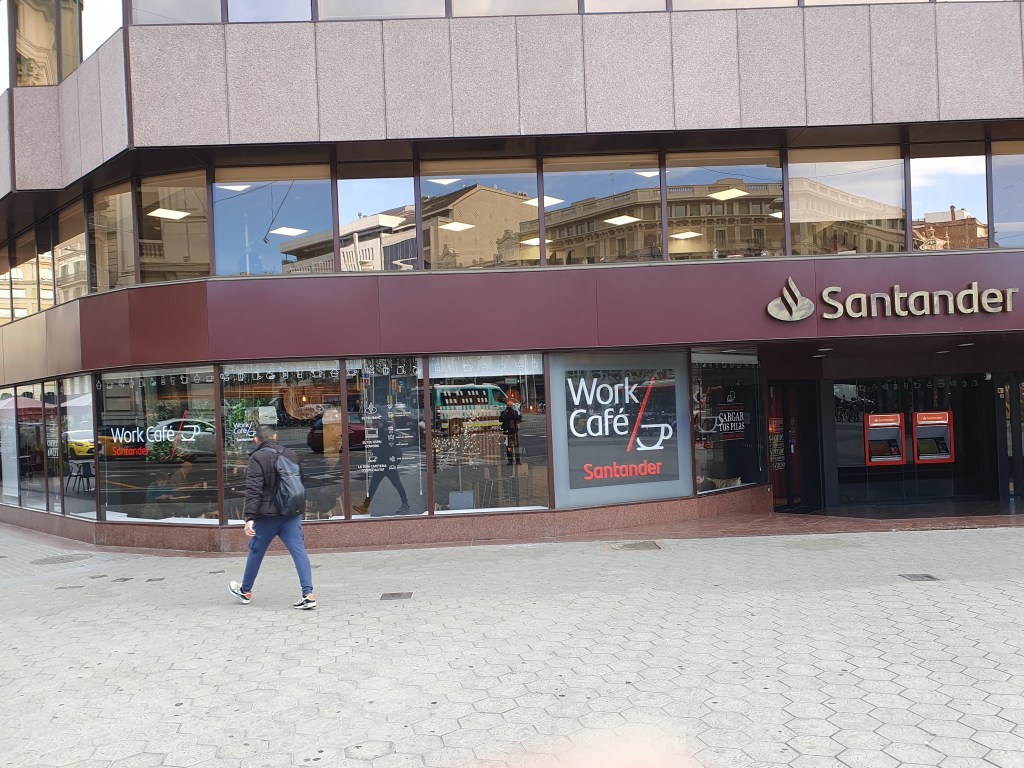
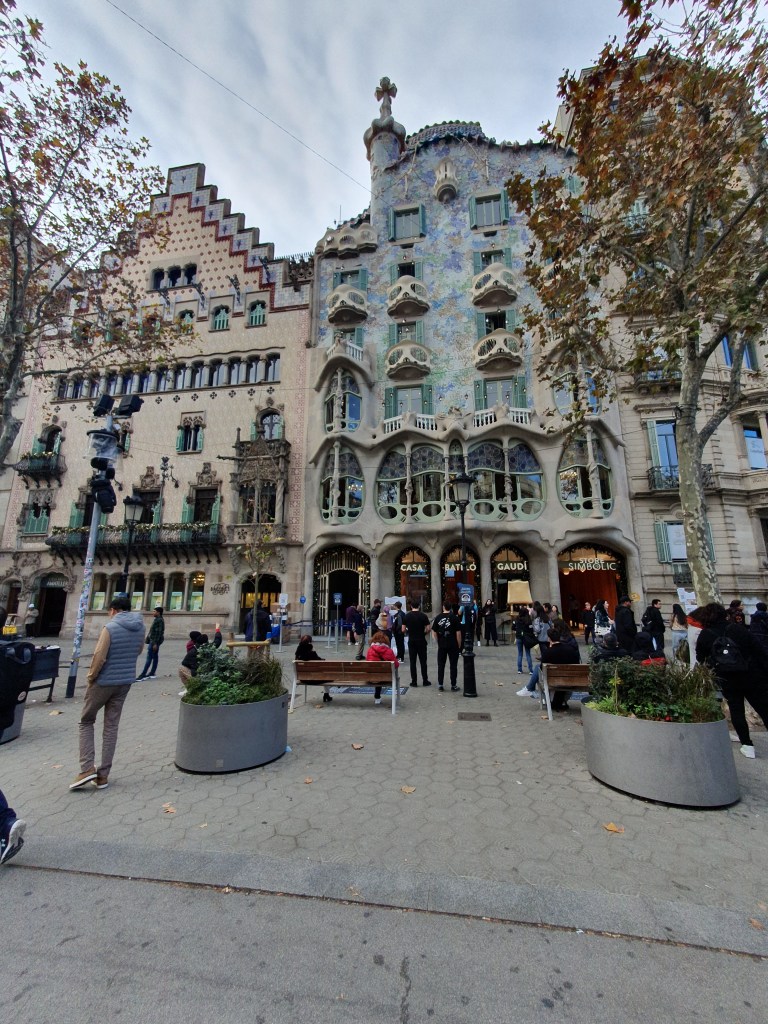
One of my reasons for choosing to come to Barcelona this year was to visit Gaudi’s famous Casa Battlo. I became friends during the year with a young composer Dani Howard who had composed the tracks for the guided audio tour of the house and I was keen to see inside the amazing building and hear how Dani had responded to her brief. The hotel has a breakfast buffet but I went in quest of something simpler. Opposite Casa Battlo was a Santander Bank work cafe which I thought I’d try. Result too, as Santander account holders get a 30% discount, so it was a very cheap juice, coffee and croissant. Loads of other industrious people were poring over laptops, negotiating on the phone and working hard. Interesting idea.

The first part of the tour is in the basement in a Yayoi Kusama style mirror room. You step onto a moving metal platform and make a large circle through projections of the architect himself slumped exhausted among his drawings and the objects from nature that inspired his designs – fish, shells, mushrooms, rock formations. This is accompanied by a very watery track, whooshing waves mixed with orchestral sounds and set a theme for the tour which likens Gaudi’s structure to a section through an inverted ocean – I didn’t write the script!

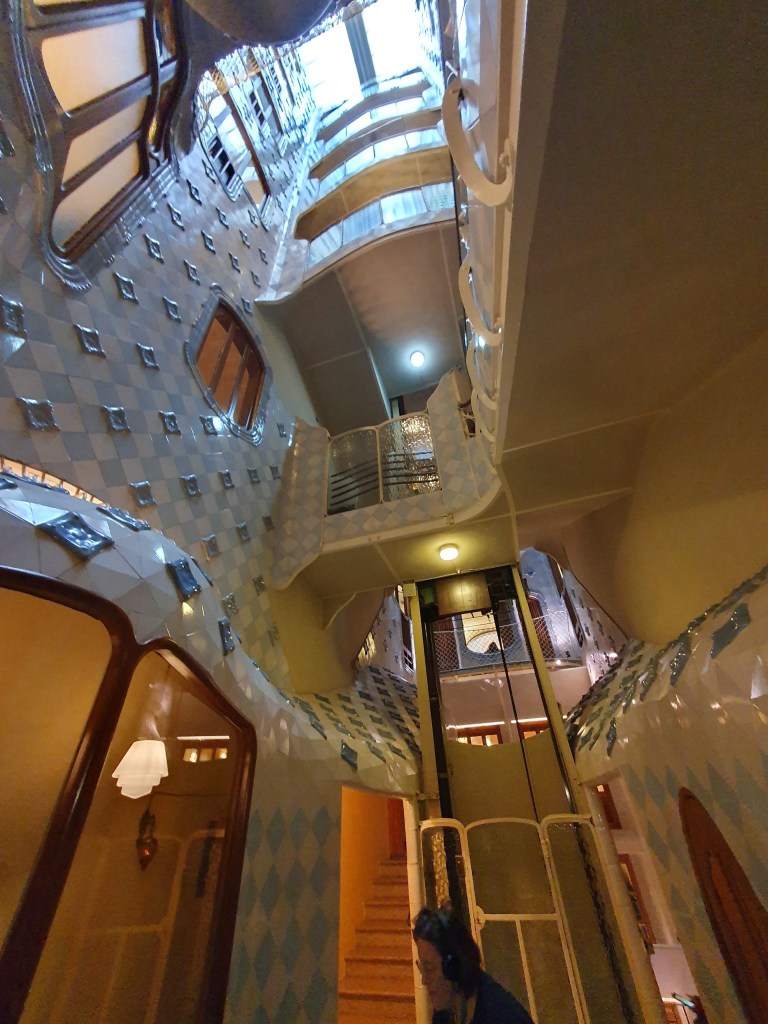
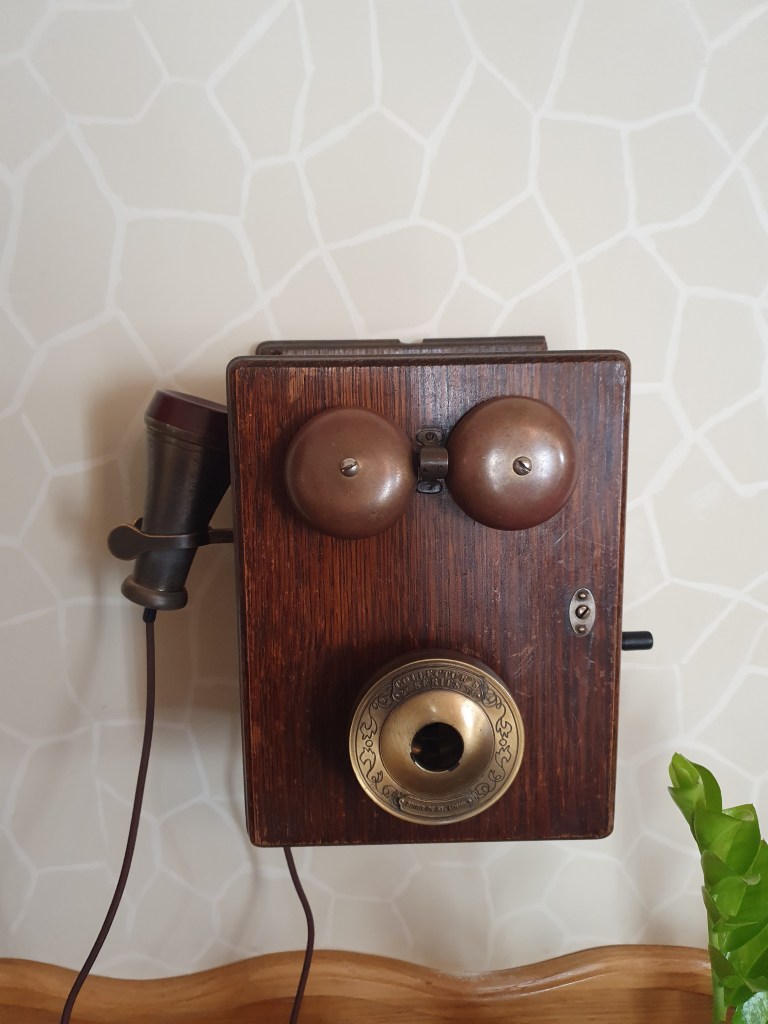
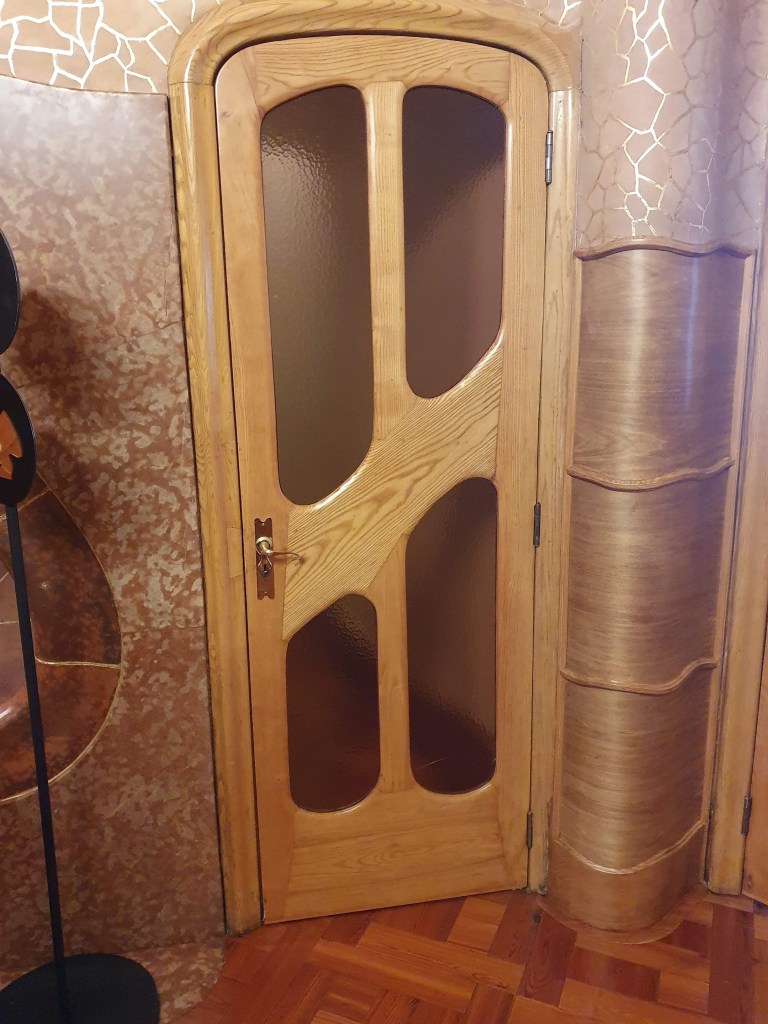
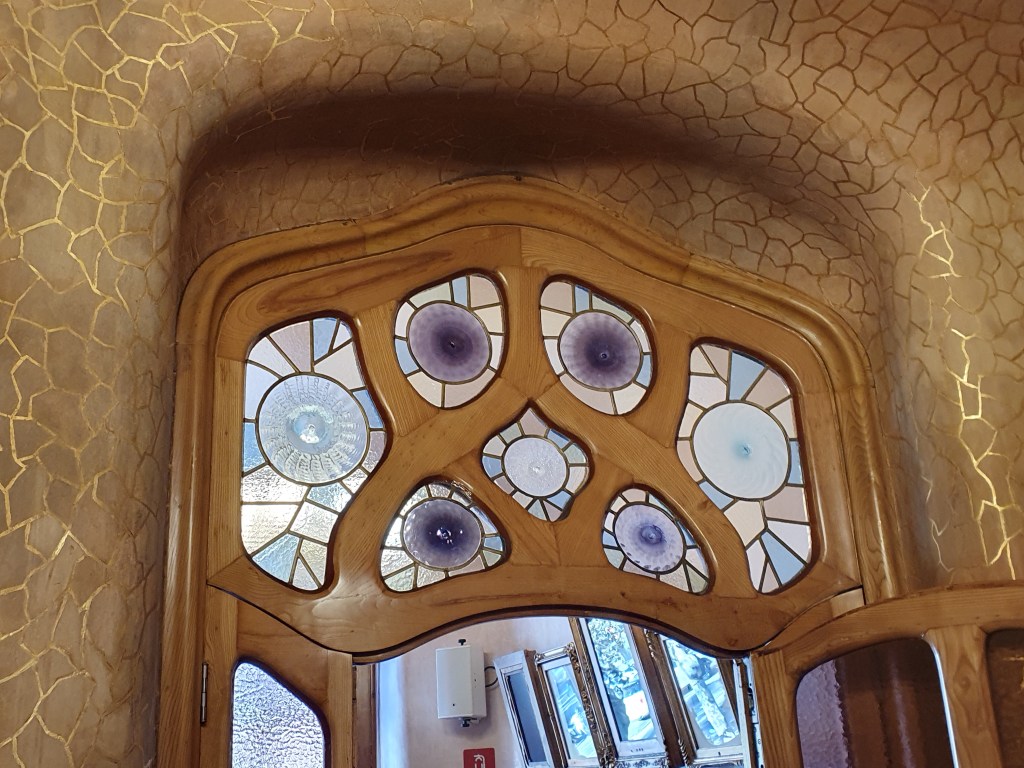
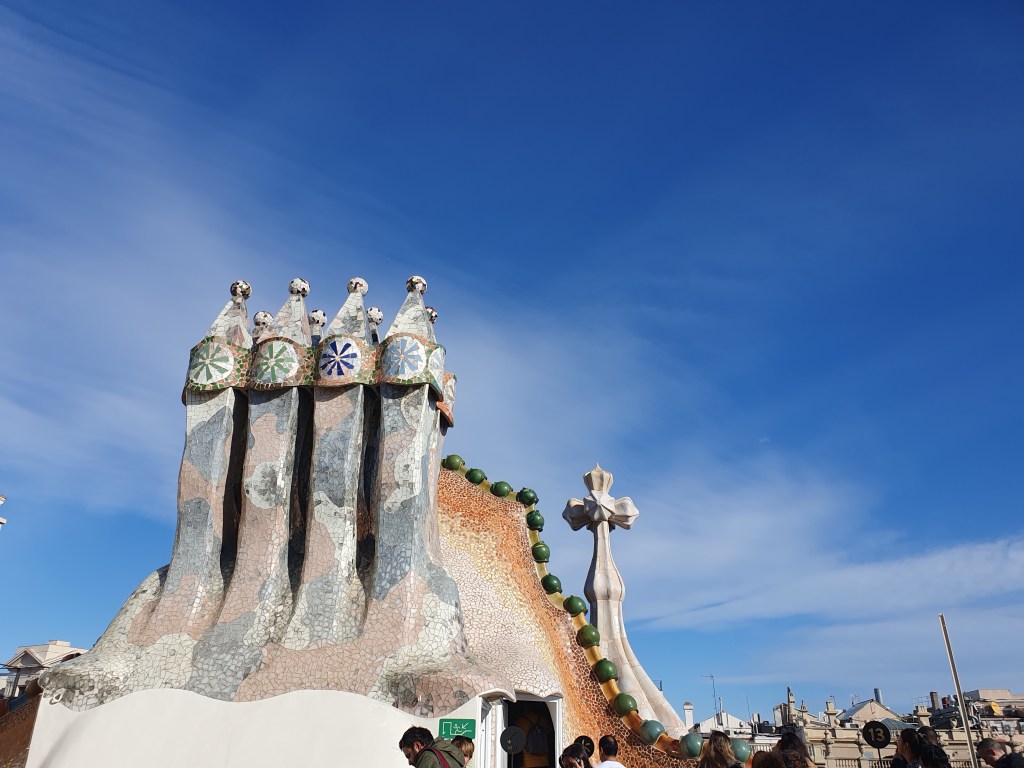
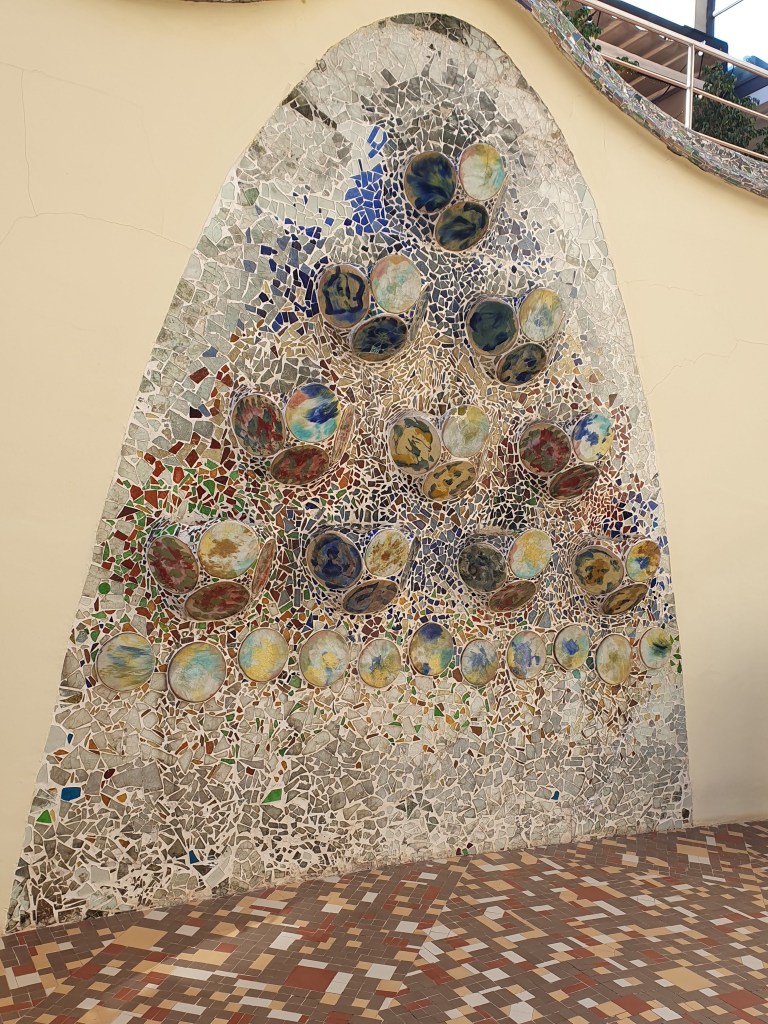
The tour proper is guided by a tablet with sixteen icons to select when you enter a room with that sign and commentary and music play. I absolutely love the building – the innovative elements, gorgeous woodwork, wrought iron balustrades and typical Gaudi trencadis – the patterned facades we usually call mosaics which combine broken tiles, glass and other materials making Gaudi the great recycler. I’ve added a few images from the house but it’s very tactile as well – you need to be there.

The house is tall and has this fabulous double atrium from floor to skylight flooding it with light – a very clever touch. So the the tour heads inexorably upwards until you reach the roof with great views over the city. As you mount each flight and select the next images so Dani’s music changes to fit the atmosphere and function of the room you’re in. It is wonderfully varied – simple piano pieces at times, what sounds like a marimba and cello rippling away for another but generally fully orchestral and often choral themes that work extremely well. The huge uplifting crescendo for the top of the stairs gave even my weary legs a jolt of energy. I think there’s a Battlo Suite for concert performance in there – rights permitting of course. The great thing is that the orchestra at the recording was under the baton of Pablo Urbina, now Dani’s husband.

After a few moments contemplation on the roof marvelling that the large structures were in fact the house’s water supply we descend through another work of art. What was once the fire escape has been transformed by the Japanese sculptor Kendo Kuma who has draped the walls in swirls of aluminium links of chain mail which are aesthetically pleasing and highly tactile.

You exit through an immersive screen cube with projections of Gaudi icons and responses by artist Refik Anadol. The website suggests an hour and fifteen minutes – I went in at 11:00 and out at 13:30. House and music in utter harmony and I even made it up and back downstairs. I’d heard of the nearby Cerveseria Catalana and thought that would be a good option for lunch. Hah! Why I’d heard of it is that everybody else had, so I waited a little less than the threatened twenty minutes – it sometimes helps being just one – and enjoyed the amazing atmosphere and some great carved ham with a beer and then a glass of Verdejo with some anchovies and padron peppers a combination I’d not had before.

Cerveseria Catalana