It’s not all about the beef

20 sushi pink  In two Kobe days

             can we find the real source of

             Haruki’s ideas?

A taxi delivered us to Takamatsu Station bright and early – too early again for the train we’d selected with the fewest interchanges but at the gate they insisted that if we took the 09:33 Marine Liner we could get a direct train to Shin-Kobe soon after arrival in Okayama. Soon after we were seated the train attendant, as they are called, came up to us with this piece of paper with times and platforms for our interchange – without being asked and in English.

Train times takamatsu

It was just another example of the superb service we are receiving from all quarters. The train ride was under grey clouds that nearly touched the roof. So going back across the Seto-Ohashi bridge on the train was interesting as we took the lower deck which would have afforded views but for the grey. We were very impressed that a journey from a different island across the bridge and round the coast of over 150 miles had been accomplished in under two hours door to door in a combination of local train and shinkansen. Drizzle turned to a downpour as we arrived in Kobe, dropped our luggage of at the very stylish Hotel b Kobe and set off on a circular city bus tour to get our bearings.

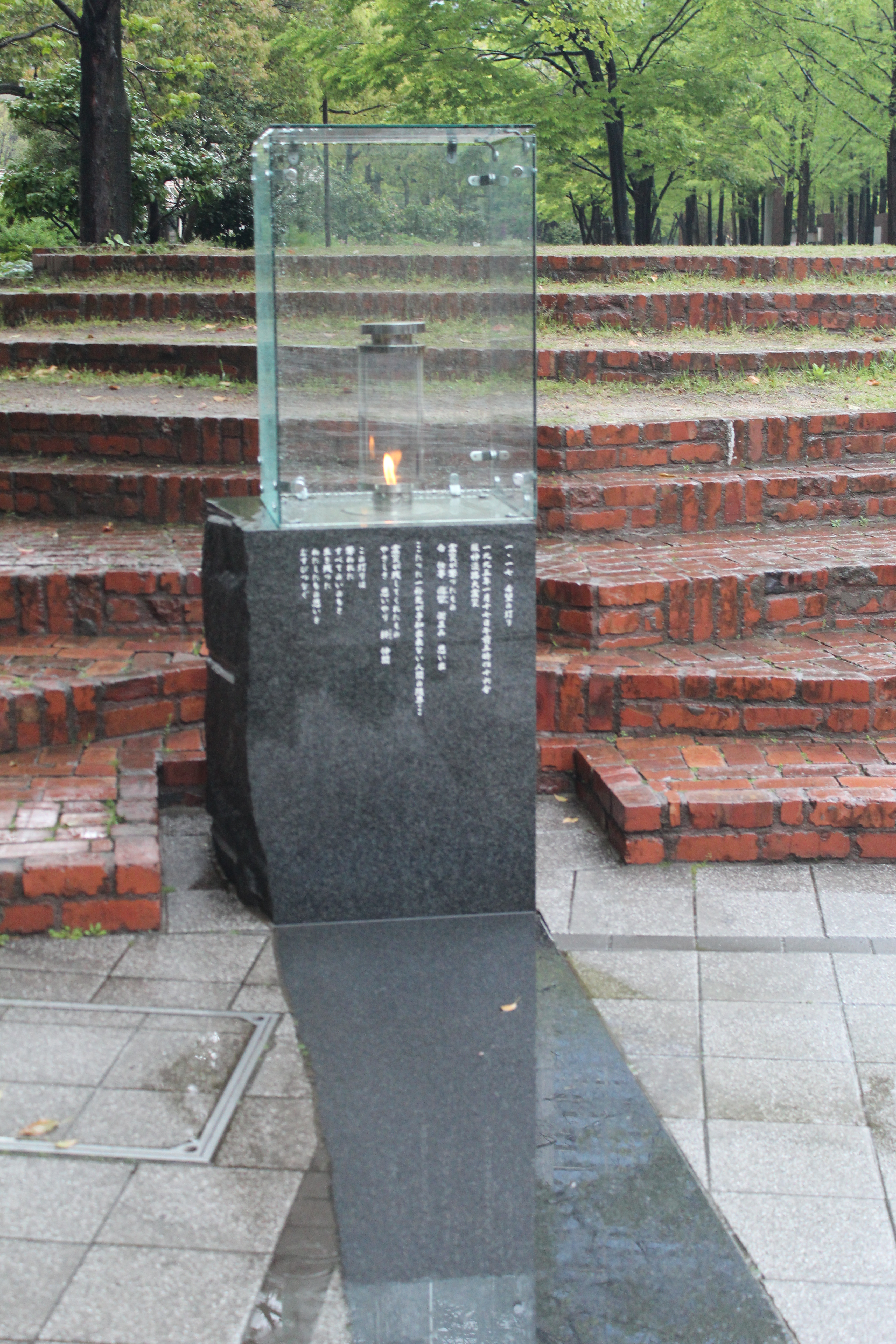
We got off the bus to visit a lovely little museum of glass bead work. We are just not used to finding a museum on the second floor of a smart downtown office block but that’s where the Kobe Lampwork Glass Museum is. With an excellent display on the long history of using glass beads for decoration it then reveals the many styles and techniques used by modern beadworkers. With the rain lessened a little as we made our way out after a fascinating hour, we then got back to the real work of the day. Just round the corner is the Higashi Yuenchi park which is home to memorials to the great Hanshin earthquake of 1995.

Murakami wrote a collection of short stories called after the quake which feature people affected in various ways by the after effects of the massive earthquake. Being in the park with it’s monuments showing the scale of the disaster and expressing the hope and determination of the people of Kobe to overcome it was extremely moving especially with the latest Tohoko tsunami so fresh in our thoughts. Juggling camera, bags and umbrella was not easy but I hope we can give some indication of what it meant.

IMG_1446  IMG_1465  IMG_1463

The 60 cm drop at the left edge of the trellis       A flame of hope burns   Memorials line the park
shows the effect of the earthquake

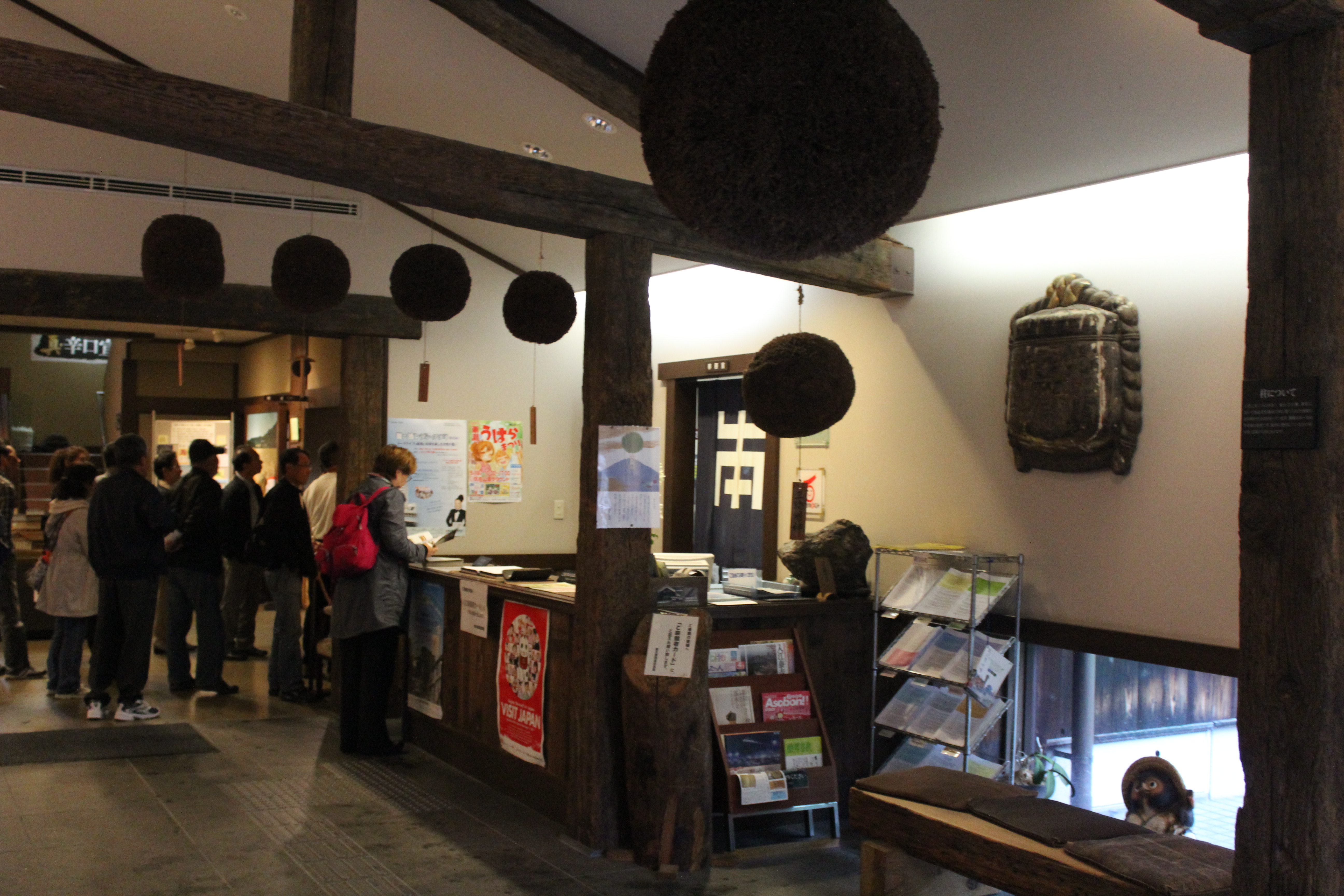
As the rain worsened, we decided there was only a choice of two places to visit next – the aquarium or a sake brewery tour. Hey we’ve seen lots of fish on our plates and in ponds and have only a vague notion of how sake is made so the truly educational option wins out. We hail a passing cab, opining that it’s much too far to walk – and how. The driver was a bit confused but kept on heading north along the shore road with yen flipping over alarmingly on the meter. However he did take us to the right place even if he wasn’t quite sure and hovered at the gate getting wet until an official was able to reassure him that this was indeed the Kaku Masamune Brewery which we had selected on the map we obtained from the Tourist Information at the station because our coupons gave us a free tasting and a free sake vessel each. The tour was fascinating as we followed a group of Japanese visitors who were led round by an obviously hilarious guide as sides were frequently split with laughter. It was a potentially hazardous tour evidently- and that was before any sake was consumed. A young lady came to our rescue and took us to a viewing room where a ten-minute video helpfully put into context all the equipment we had just seen.
IMG_1469 IMG_1481 IMG_1477

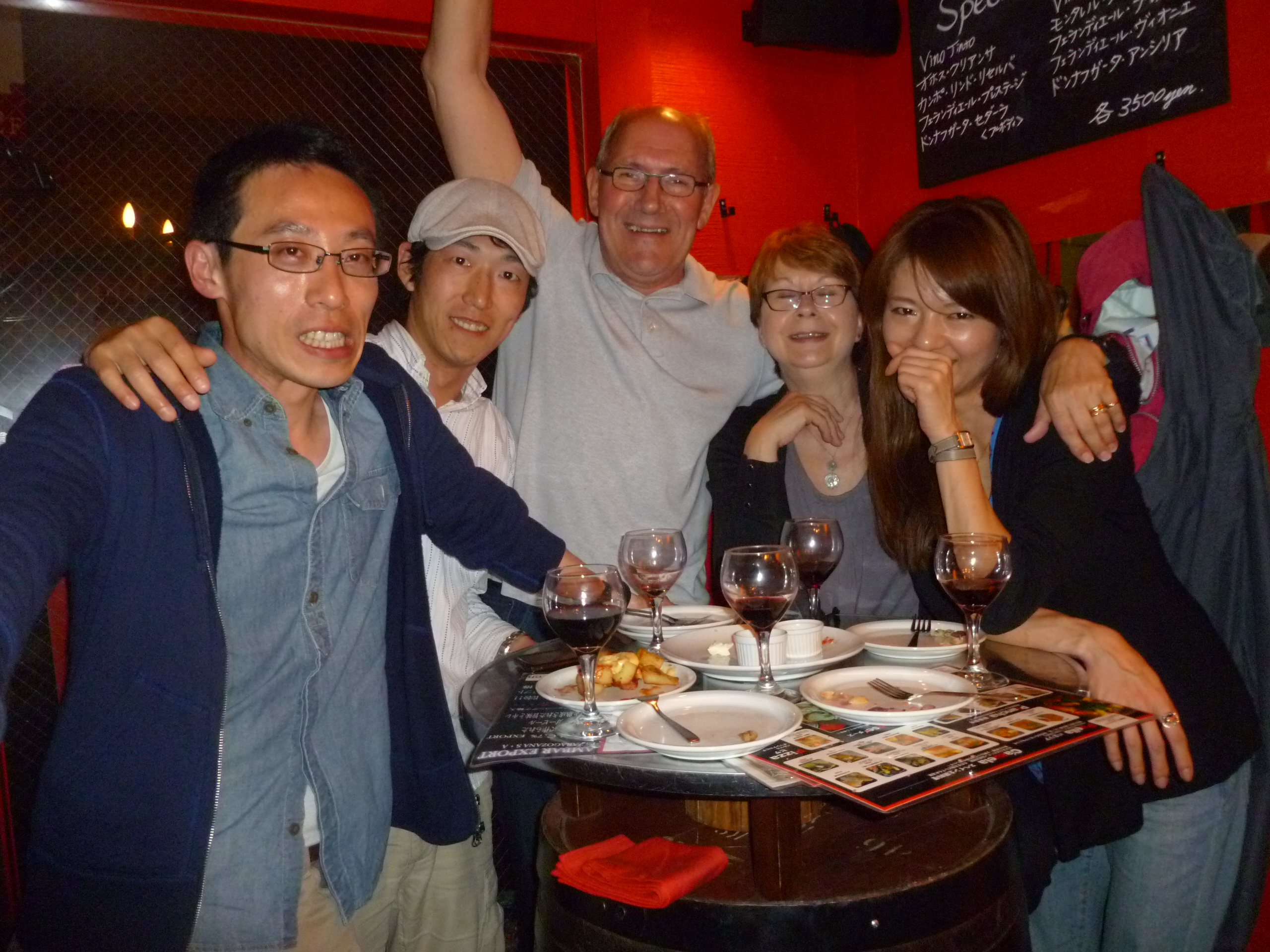
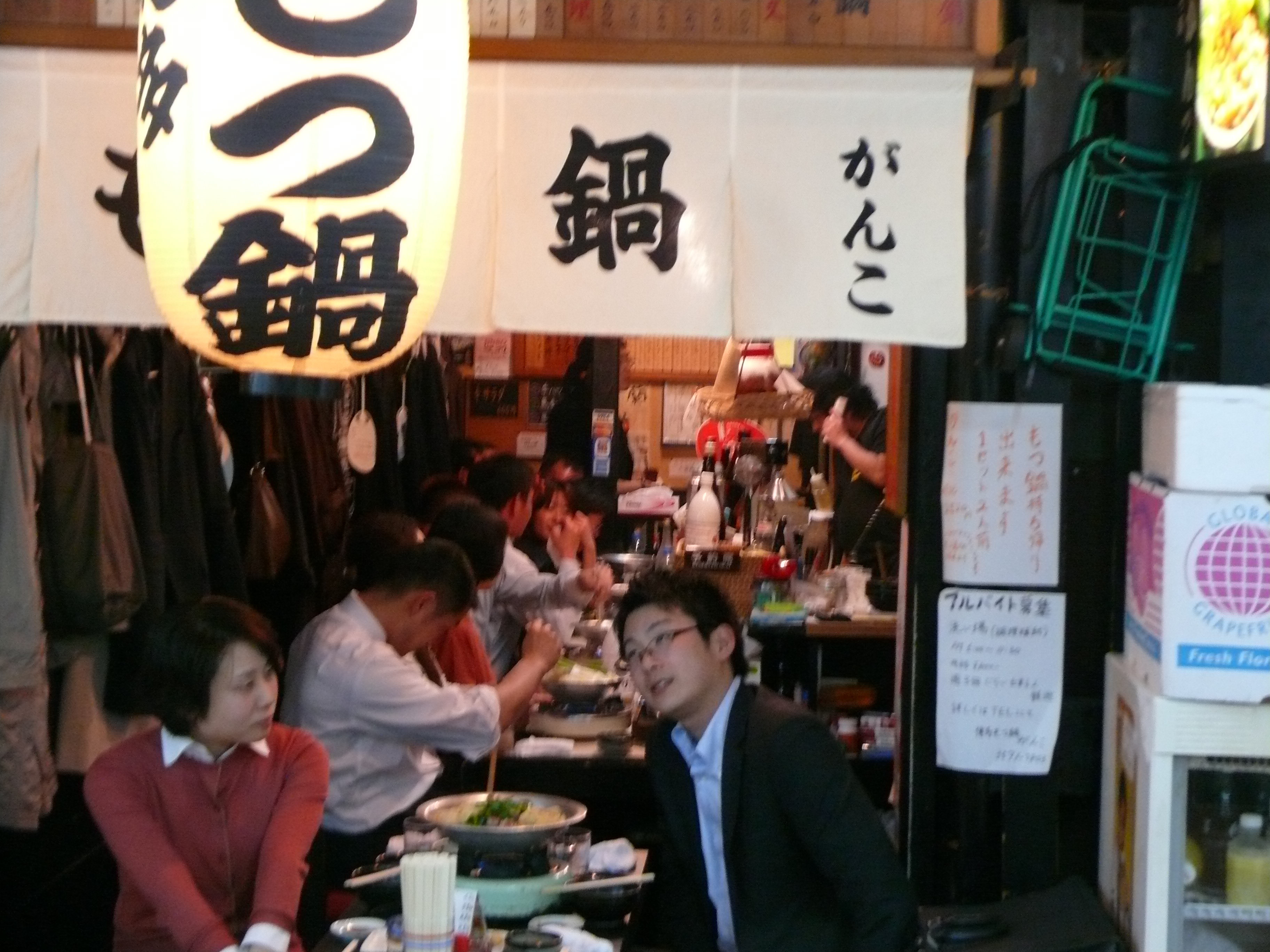
P1020184We took a train back into town and with light drizzle replacing the torrents we walked around Sannomiya, the central shopping and entertainment area of Kobe, had a beer or two and dinner of cook- it- on- the-hibachi Kobe beef and vegetables. Heresy we know, but on this tasting – admittedly not in a gourmet restaurant – Hida beef has the edge. Then drawn as always to a bar with a Spanish flag and the promise of a glass of tempranillo we were drawn into conversation with three young people, two of whom had been to study English in Hampstead three years ago. It turned into a bit of a night of great hilarity – proving again how friendly and welcoming we have found people on this trip.

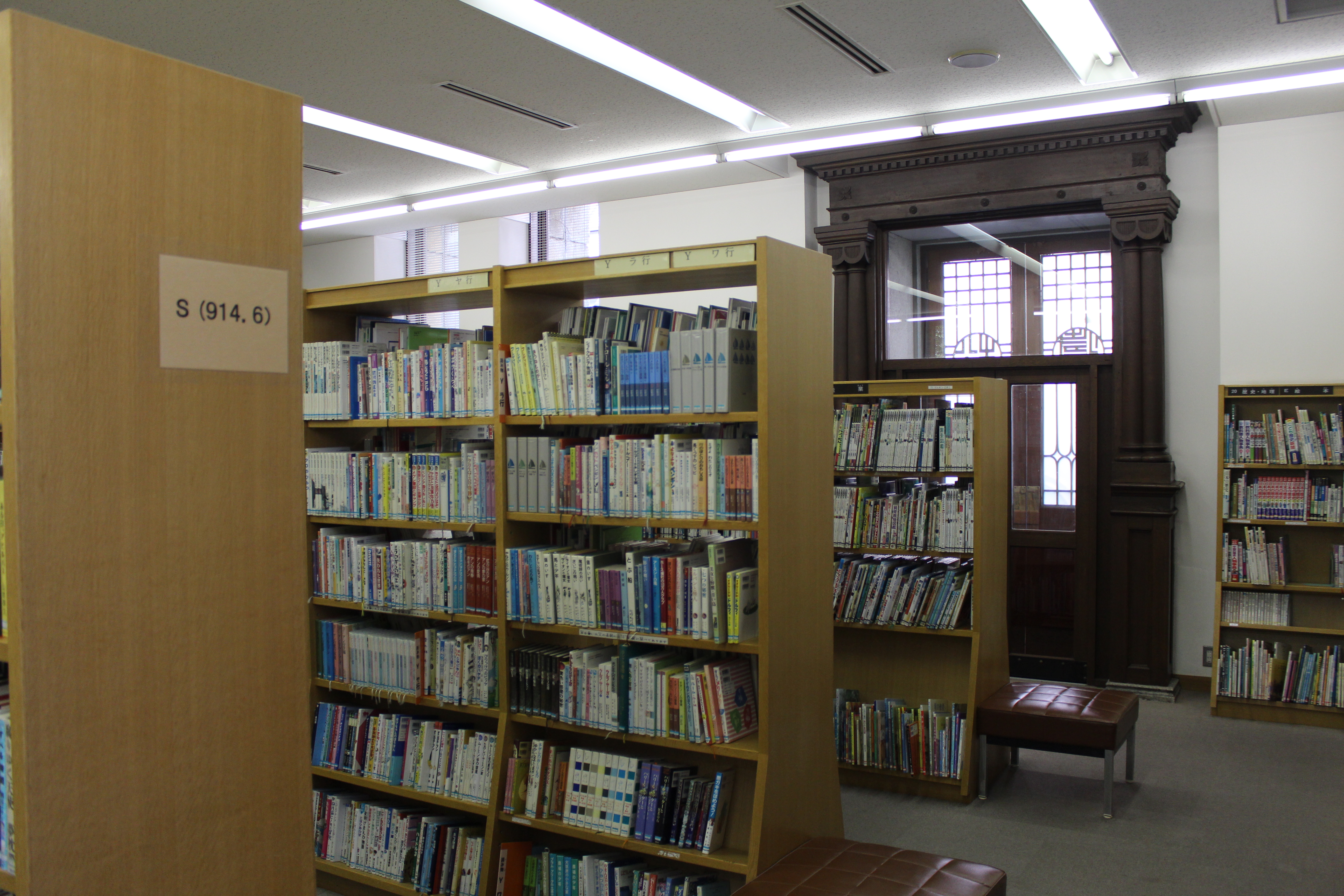
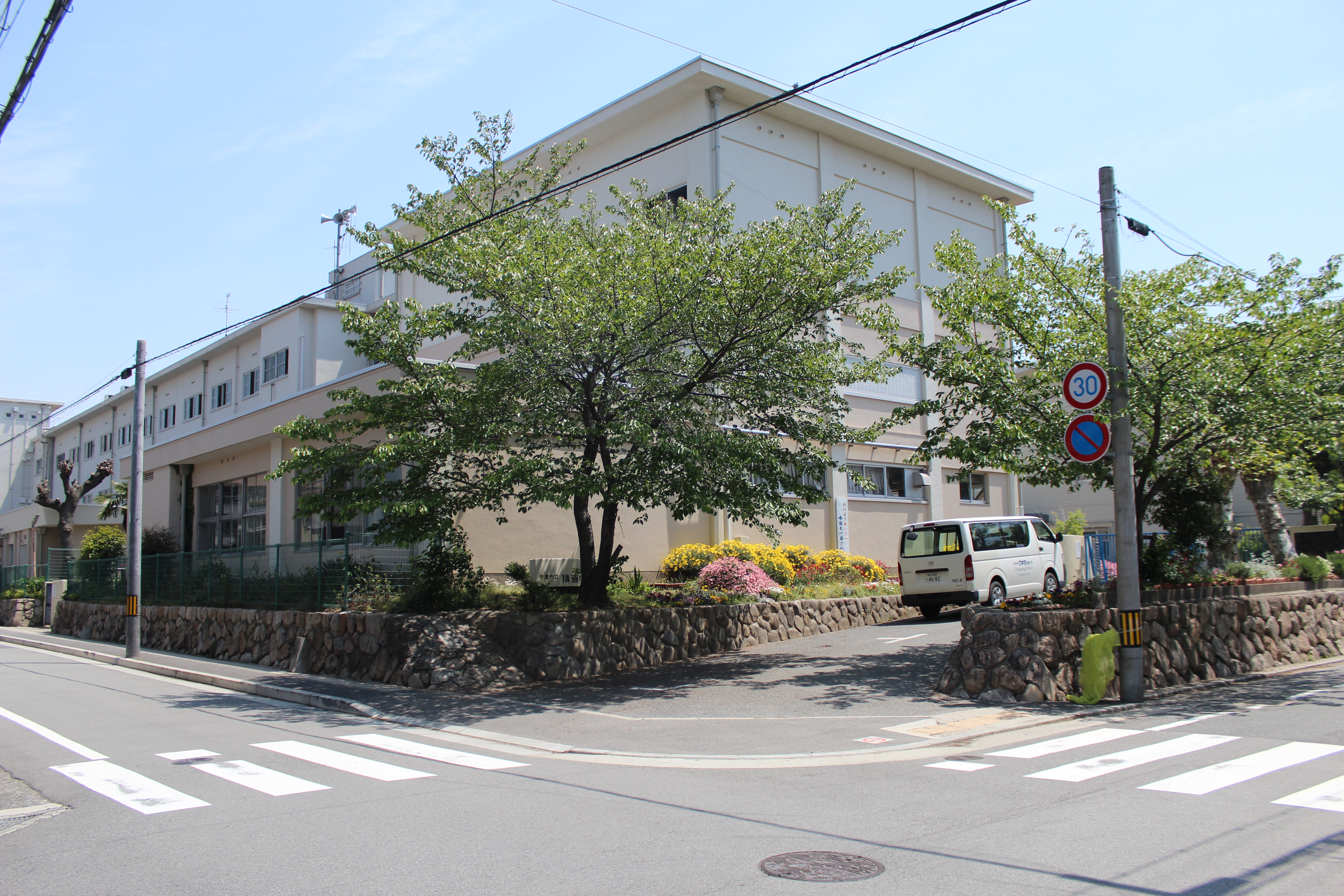
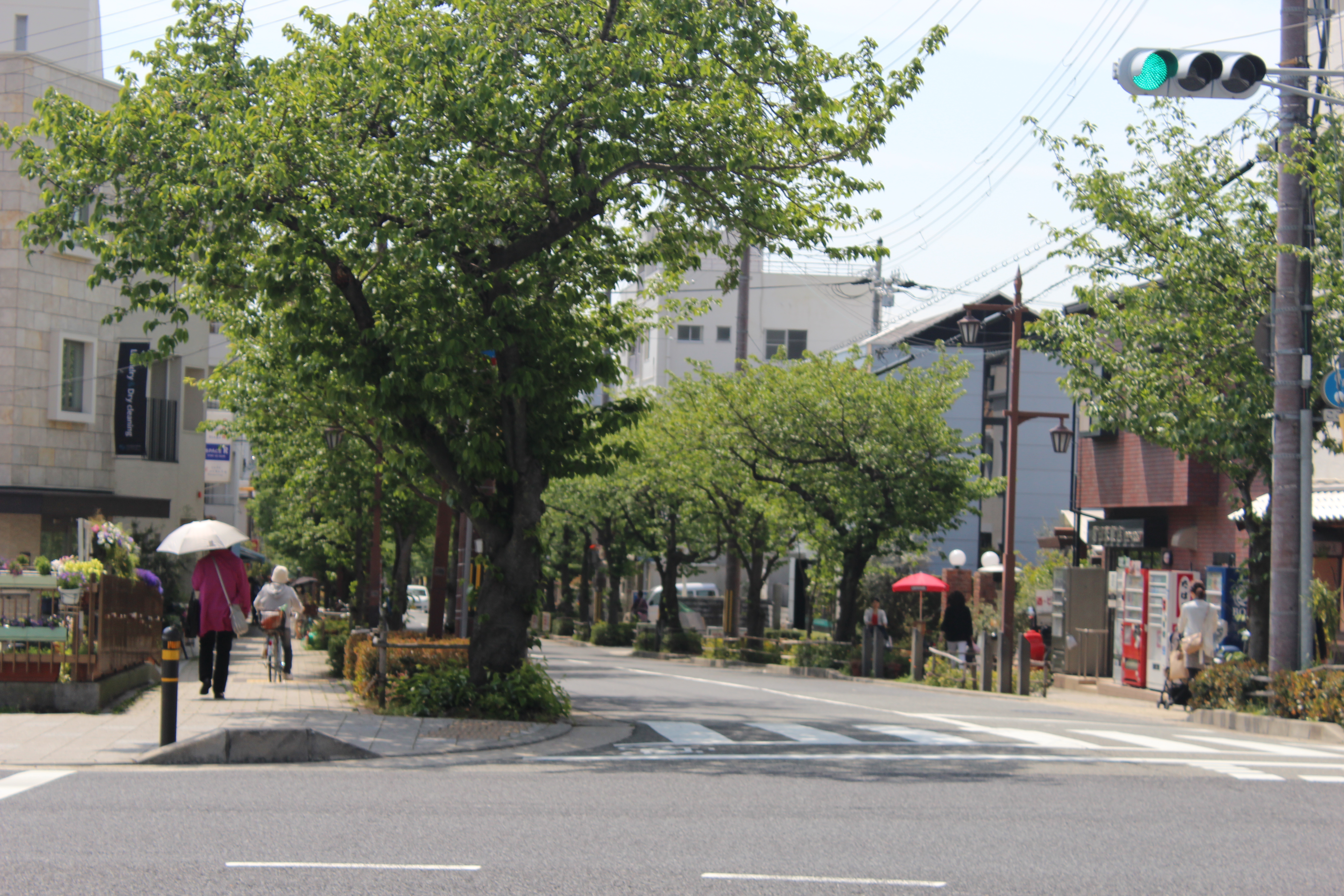
Thursday was  a complete contrast with brilliant blue skies and temperatures well over 20 degrees and there are almost as many umbrellas in the streets,  now taking on the role of parasol. The tradition of all those bamboo umbrellas in wood block prints is maintained today on the streets of modern Japan. We planned today to look for formative influences in Ashiya the Kobe suburb where Haruki lived from an early age. A couple of stops along the line to Osaka and we get off in a pleasant, probably quite affluent suburb. Did the sun always shine this brightly over the young Murakami? The reception desk staff at the hotel next to the station were wonderfully helpful in pointing us towards the library Haruki used to frequent, his Junior High School and the monkey cage which features in a story in the collection The Elephant Vanishes. The young ladies did inform us that the monkey was dead. In fact the park used to have parakeets and monkeys in cages but they were closed for economic reasons in 2010 – fate of monkeys unknown but probably properly transferred into alternative care. We strode through the elegant suburban streets and found the library with little trouble and the park was right next door.  I’d have been happy to locate and photograph the exterior but we were warmly invited in, presented meishi and blog address and were introduced to a librarian who hadn’t met Haruki but had had some considerable contact with his mother. We asked about the house he grew up in to be told it had gone but there were some older houses in the area that are similar. His Junior High School was also just a few blocks along the road. In Uchide Park with a witty touch the council has added a panel to the cage with a monkey reading Murakami’s book Kafka on the Shore.
IMG_1494  IMG_1528  IMG_1523
Leafy Ashiya                                         The Library
IMG_1534  IMG_1531  IMG_1548
The monkey cage                                   Kafka-reading monkey                        Ashiya Junior High School

We looked for other connections and saw a few houses of the type he might have lived in. Coffee in a quaint coffee house served by a lady who must be in her eighties and back to the station to explore central Kobe further. As we’re actually on holiday too this involved a ride in a cable car to the Nunobiki Herb Gardens. The ride gives great views over the whole sprawl of Kobe and down to the port where we were headed next. Very well organized there’s a sloping path from the top cable car station to the middle point. It gave us an opportunity to indulge in some more Japanese ice-cream with fresh strawberries as they are at the height of their season and local honey. The variety of plants was excellent with many unfamiliar species and varieties among the more common and some beautiful flower beds displays gave us a restful and relaxing break.
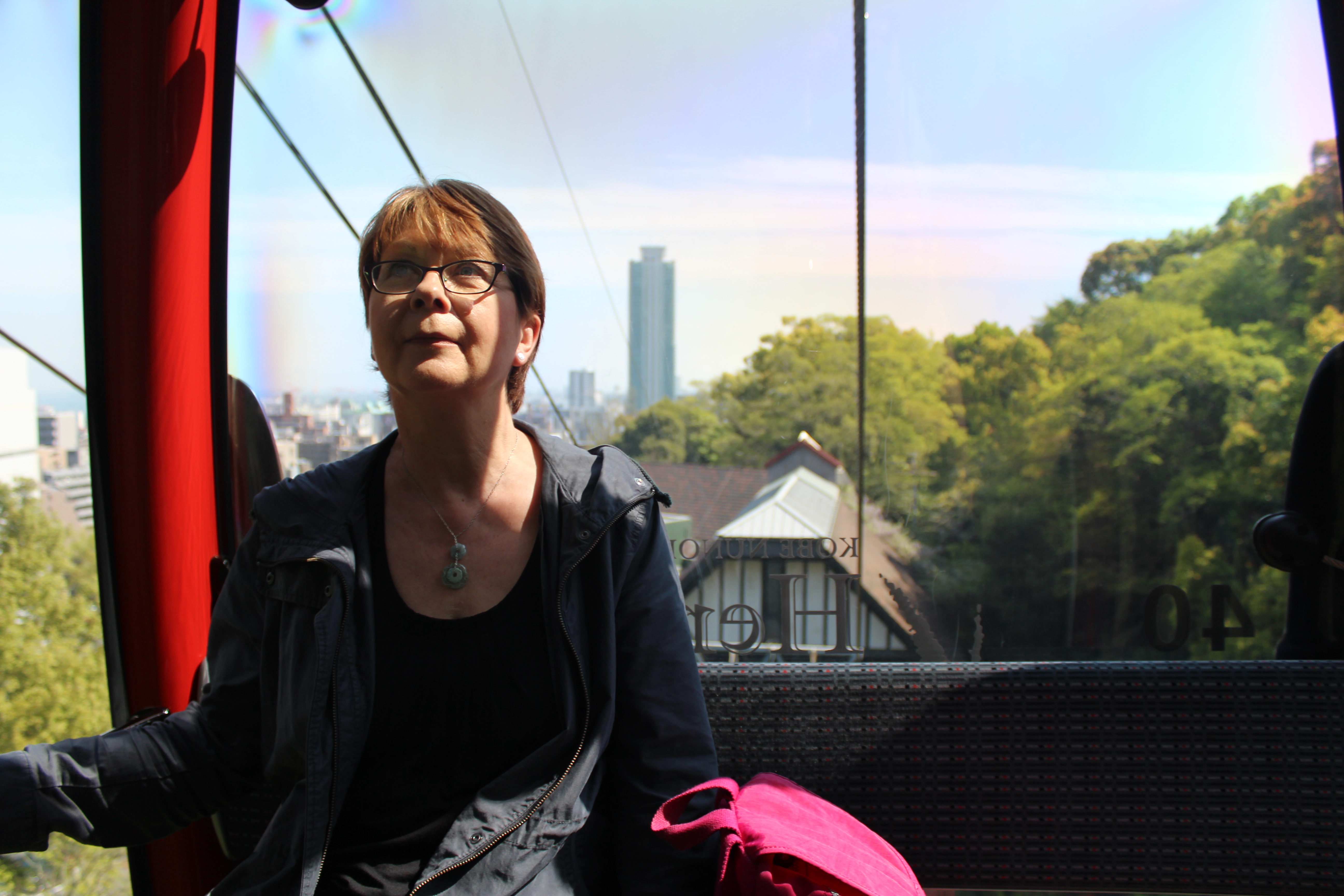
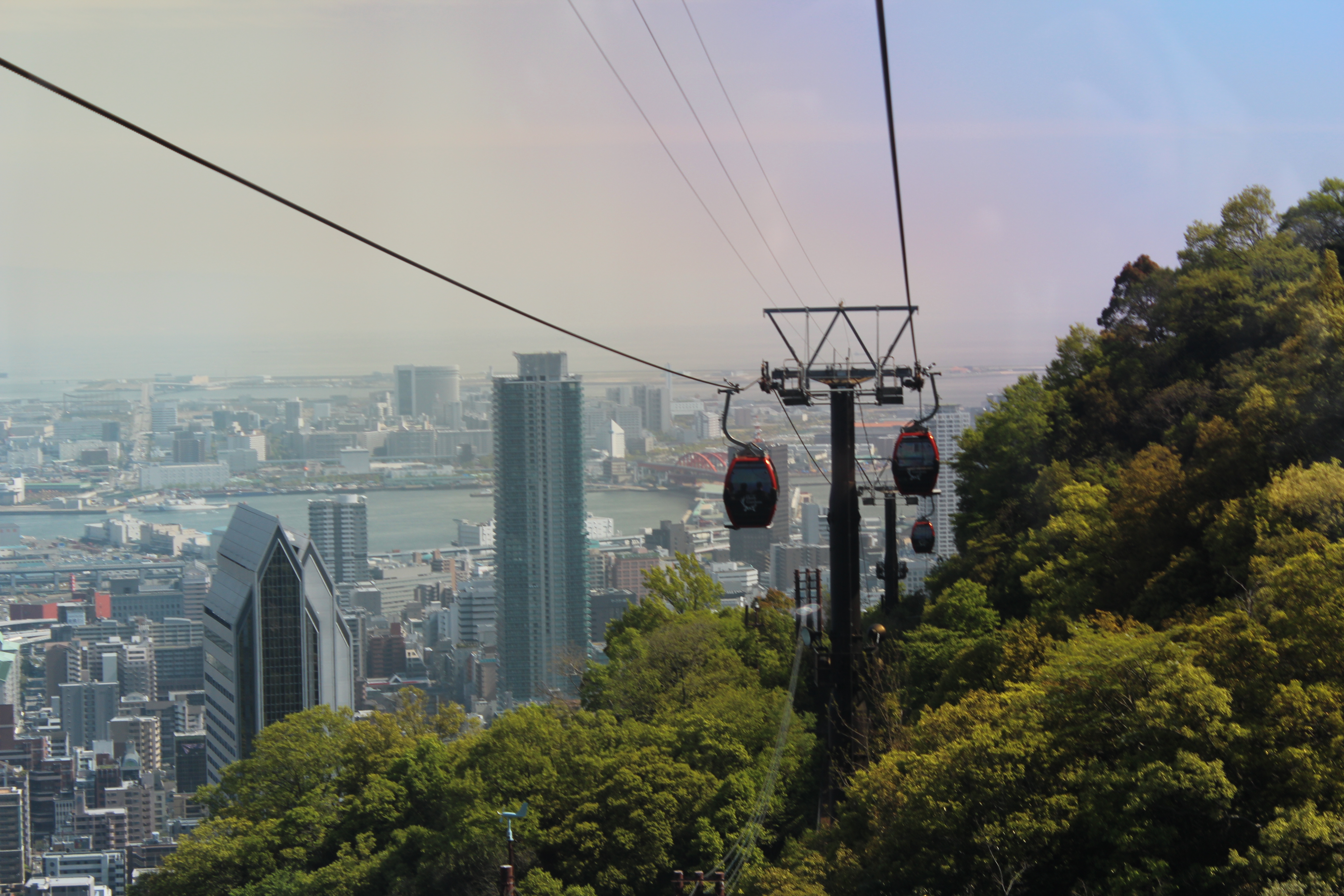
IMG_1567  IMG_1570  IMG_1576

There are a number of references to the Kobe harbour area so we caught the circular tour bus to Meriken Park and were met by an enormous dancing fish designed by Frank Gehry and construction supervised by Tadao Ando – being made of steelmesh it was of great interest to us David Begbie admirers. Just beyond it was another earthquake memorial with a whole section of the collapsed harbour wall to remind visitors of just how awesome the power of the earth can be.
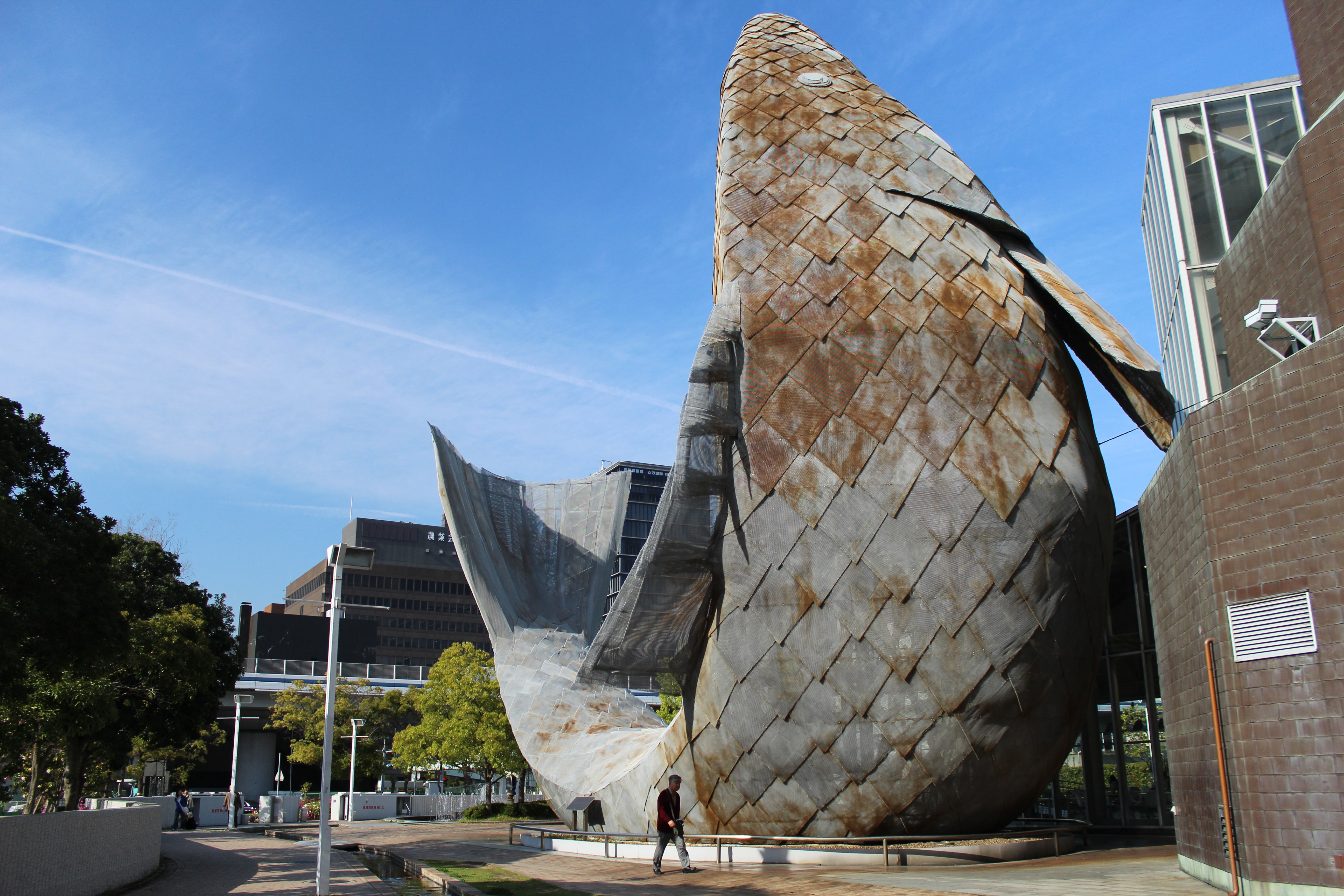
IMG_1596  IMG_1607

The rest of the harbour area is devoted to retail and entertainment and we had a leisurely beer watching young and trendy people come and go in stylish, outlandish and downright weird wardrobe choice. Many Japanese people have real recognizable style. Others have style that’s sometimes hard to interpret. Back to the hotel to change and out for a quiet okonomiyaki dinner – Katie was right, Kyoto rules when it comes to this mix of rösti and vegetable pancake. This was OK but the previous one was much tastier. We’ve enjoyed a couple of days in Kobe getting close to the environment that helped form Murakami and therebyinfluenced his writings. It’s a very European feeling, lively city and it’s been a fun visit even if we’ve as so often only scratched the surface.

Scampering around Shikoku

19 sushi pink Can we find Kafka

          on Shikoku’s shores and hills

          or will he escape?

First of all I (Dee) would like to thank everyone for their birthday wishes and for the cards and gifts received before we left.

Although the train service is good we decided to rent a car in Okayama to drive to Takematsu, our next stop and one of the main places to feature in Murakami’s novel Kafka on the Shore. We checked the location with the front desk who sent us to Okayama Station. I’d seen a Times Rent a Car Office in a street about a minute from the hotel but their webcheck told us to go to the station. So we do. And the Times Rent a Car office says we’re just for returns, you have to pick cars up just round from the hotel. Well it’s sunny and it’s exercise, but then they offer to drive us to the pick up point. Our baggage is still at the hotel but we accept. It’ll save us some time and we are now entering a period of serious hunting for Murakami places.

Installed in another Mazda Axela with its copious boot we set off on another sunny morning for the delights of Shikoku. The first of these was a stop at a service area as several of these are referred to in Kafka. Not this particular one but we wanted to know what they were like – excellent facilities, mediocre coffee, but warm loo seats and a peaceful garden to gather strength for the next stretch. Lots of trucks were parked up to so it could have been a stop for Nakata and Hoshino. Our next pleasure was crossing the Seto-Ohashi Bridge, the longest double-decker bridge in the world. We’d seen it yesterday from the ferry to Naoshima and now we were on it, all thirteen kilometres of it. Splendid, flying from island to island across the Inland Sea was exhilarating and you can see from it, unlike a lot of expressway travel. The toll was quite steep at ¥4800 but there is a lot of bridge to pay for.

IMG_1246 IMG_1143

Once in Takamatsu SatNav Lady – new car but no better sense of direction – delivers us to the back of the hotel where there is no visible means of access so I drive forward and we find ourselves in a pedestrianized shopping mall – oops! Creeping across it amid startled shoppers and speeding cyclists we come to a road again and escape with some relief. It takes a few false turns down side streets before once again gaining access to the front of the hotel from the correct direction – U-turns are very rare and often prevented by central barriers or cones that even I wasn’t going to take on.

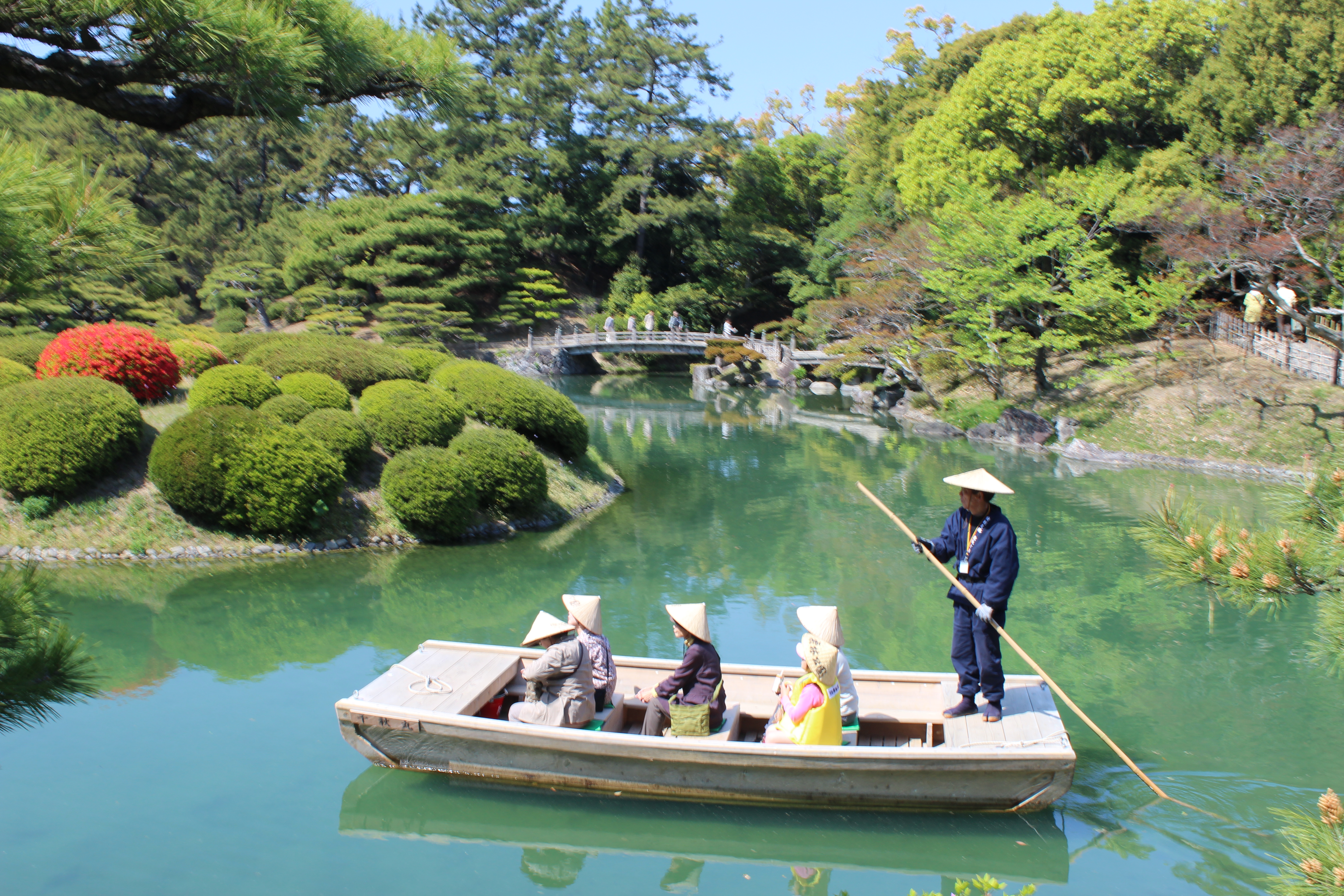
Our room wasn’t ready this time but we left our luggage and went off to garden number three on our hit list, the Ritsurin Koen which was about five minutes drive up the road and had good parking so we strolled for two hours in this fascinating mixture of the South Garden – a traditional Japanese strolling garden with the usual calm atmosphere, borrowed landscape, tea houses, lanterns and bridges and the contrasting North Garden which is in a more modern style imitative of European park layouts. On discussing it later we both agreed that the traditional was much more to our liking – so the lawn’s coming up when we get back.

IMG_1261  IMG_1281

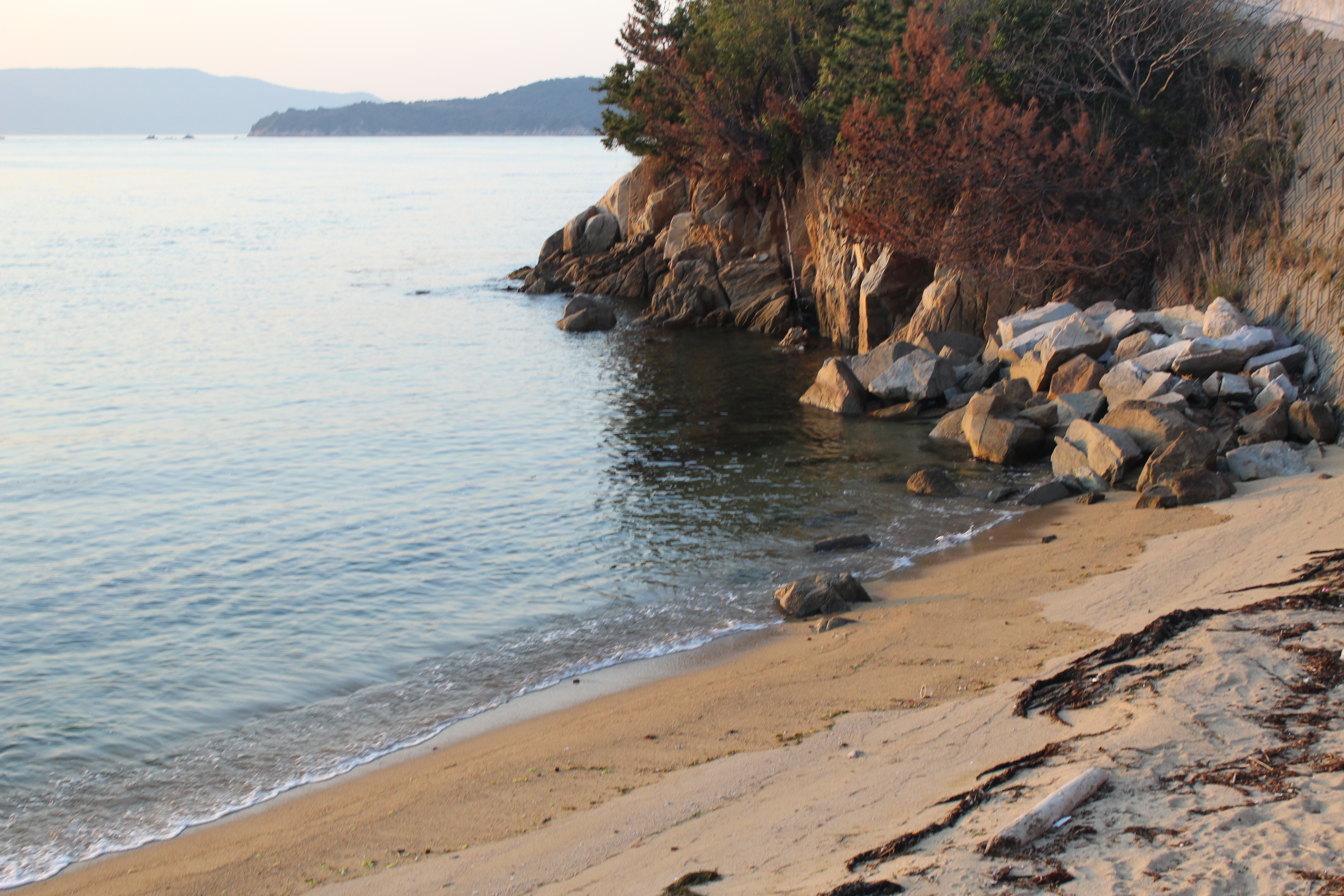
After going back to check in we drove down to Takamatsu Station which features in the book and photographed it and several hotels of the type Kafka might have stayed in on first arrival. Then it was find Colonel Sanders and Johnny Walker – 50% success rate. Yashima Shrine is thought to be the model for passages of action in the book so we went there and then drove round the coast looking for Kafka’s shore. Many beautiful coves presented themselves but no fishermen came to talk to us. Lots of crows did however. (For those who haven’t read it the hero converses frequently with a crow.) As the sun goes down we make our way back to the hotel – front entrance first time, this time – and are parked from a turntable into a vertical rotary stacking garage for the night – good value at ¥1000.

IMG_1290   IMG_1316  IMG_1298

An evening stroll through the pedestrian area resulted in us being approached by a gentleman who had probably had a few too many after leaving the office so we politely declined his offer to buy us a drink and shot some of the shady side streets where Nakata’s deals could have taken place. Dinner and back to blogging duties.
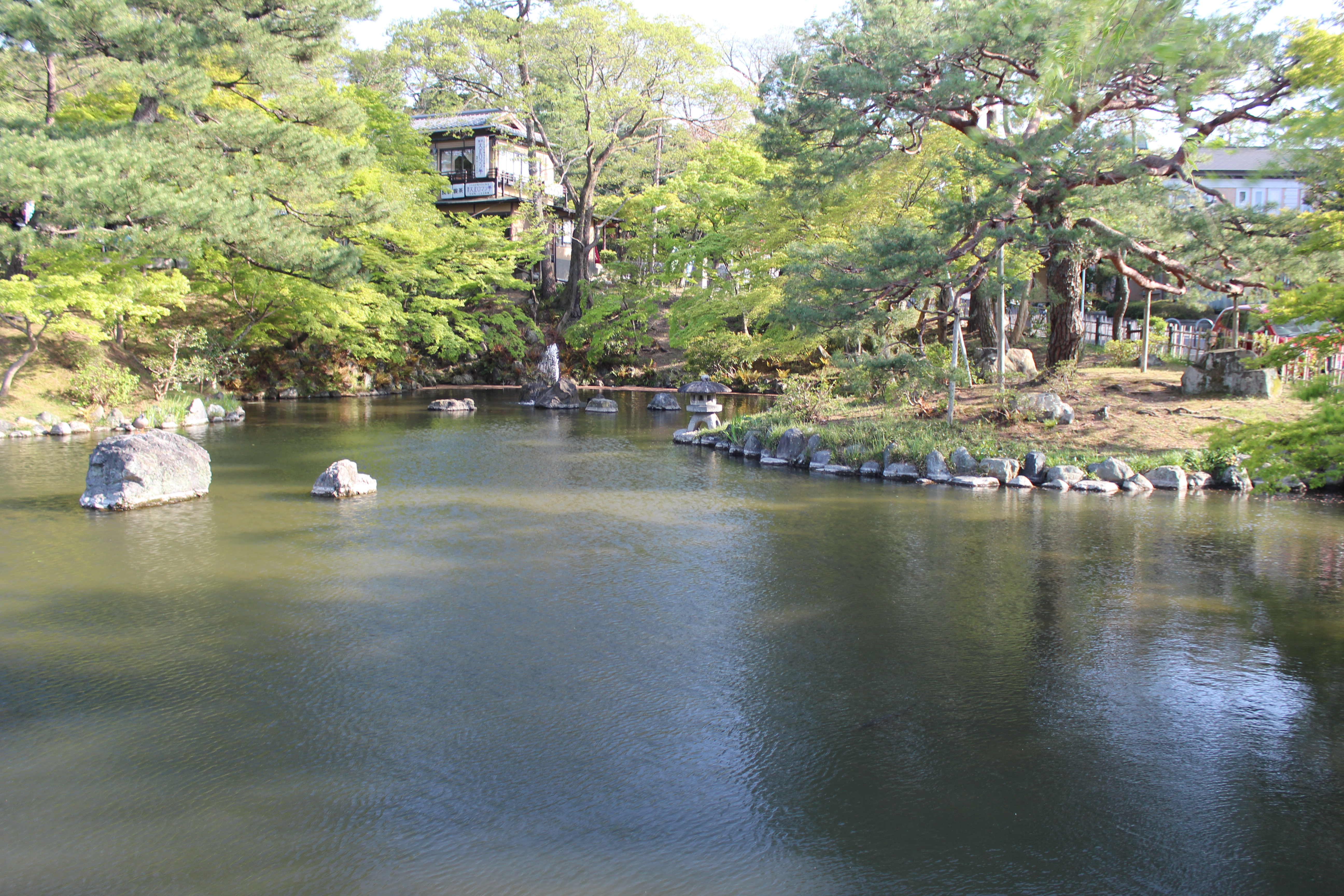
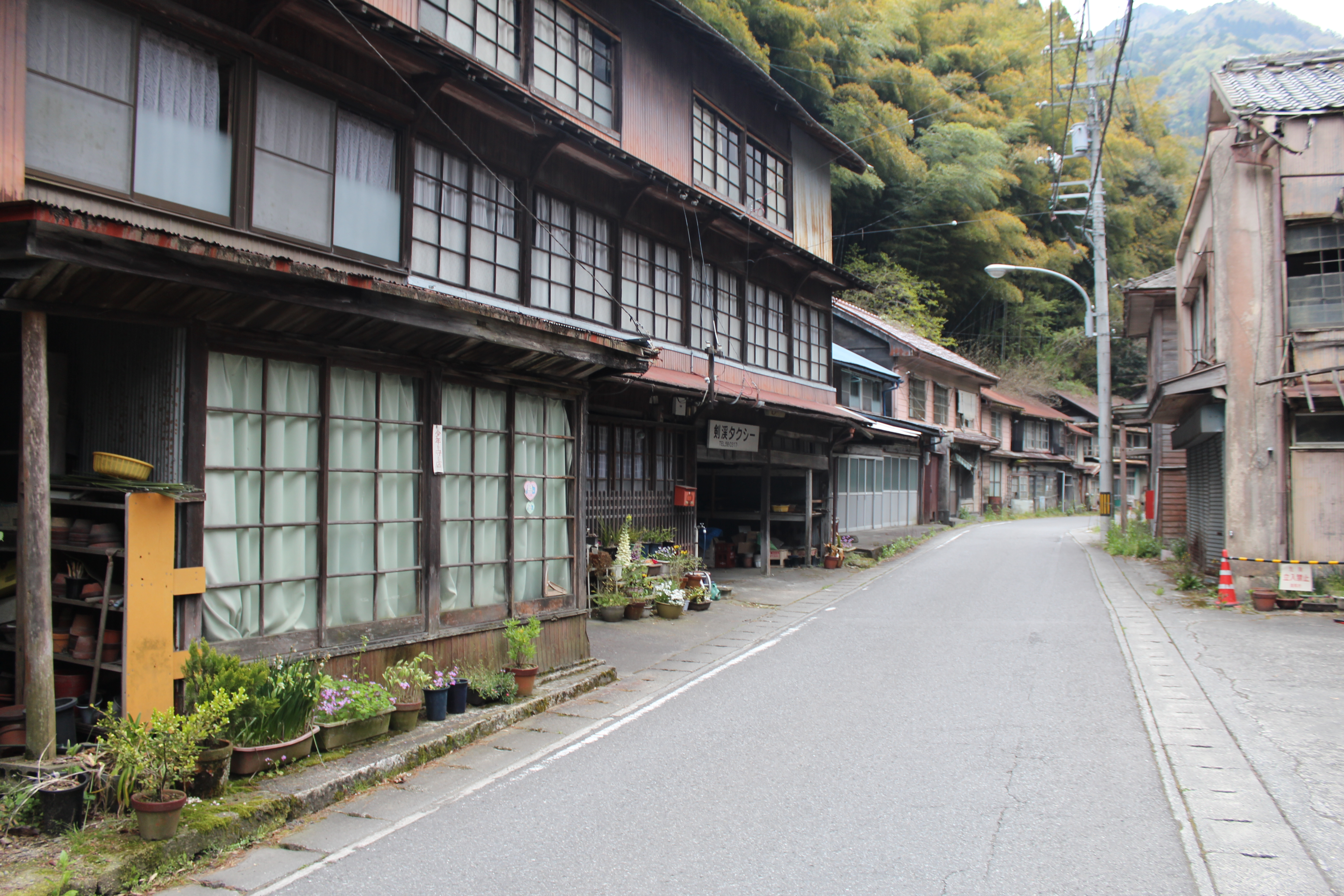
Tuesday morning sees us set of for Tokushima where Hoshino and Yakata arrive in Shikoku and stay at a hotel near the station. We find possible locations there and then head for the mountains behind Kochi where Kafka spent several bewildering passages in dense, steep, tumbling forest. We found plenty of that and some fabulous mountain scenery. The comparison with European mountains is interesting with the vista softened here by the presence of deciduous  trees and bamboo so high up, particularly at this time of year with their fresh unfurling foliage. We passed through what appeared to be a ghost town but did have a working post office and phone box and parked cars so we assume life was present. It was all very Murakami again.

IMG_1398 IMG_1399 P1020141

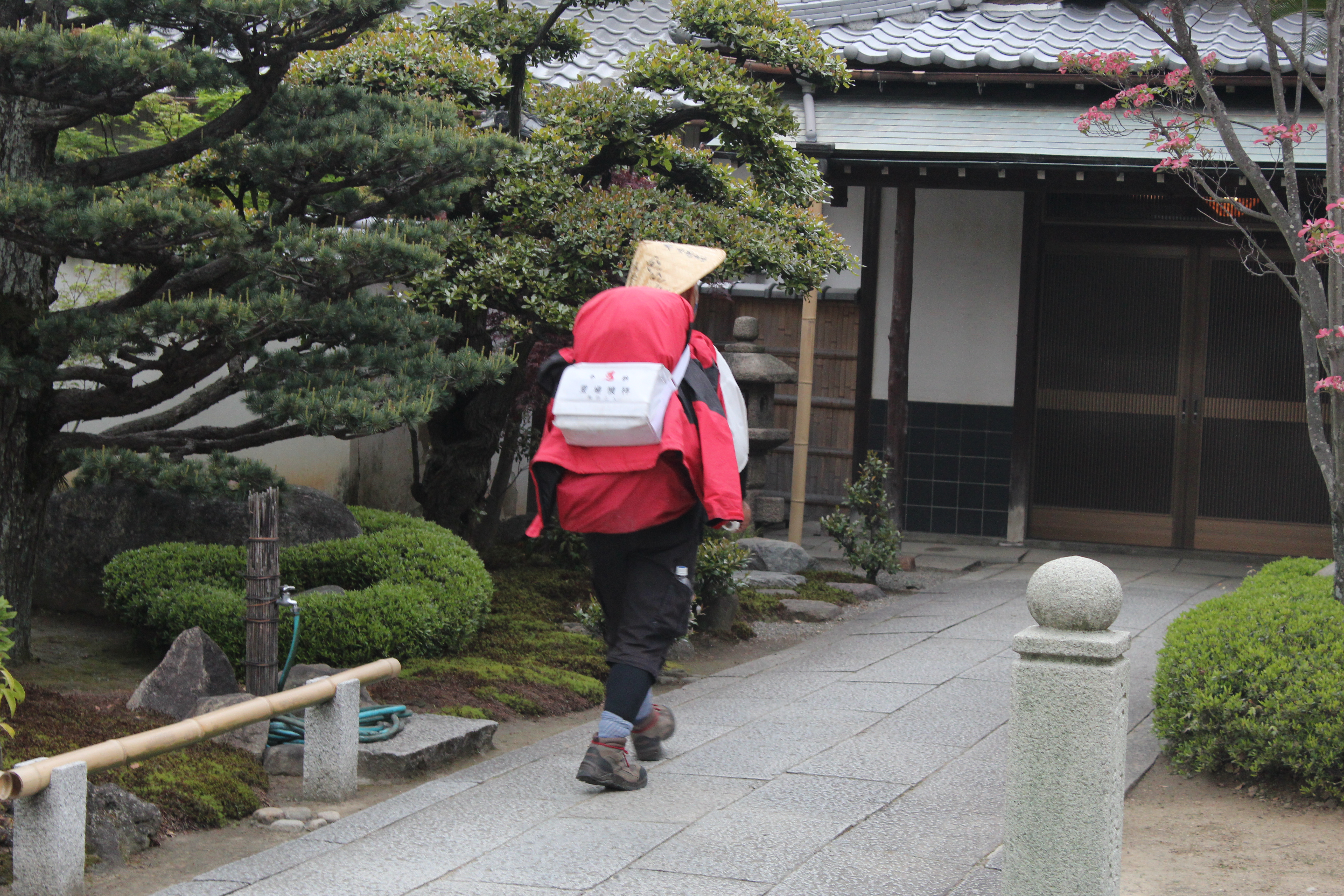
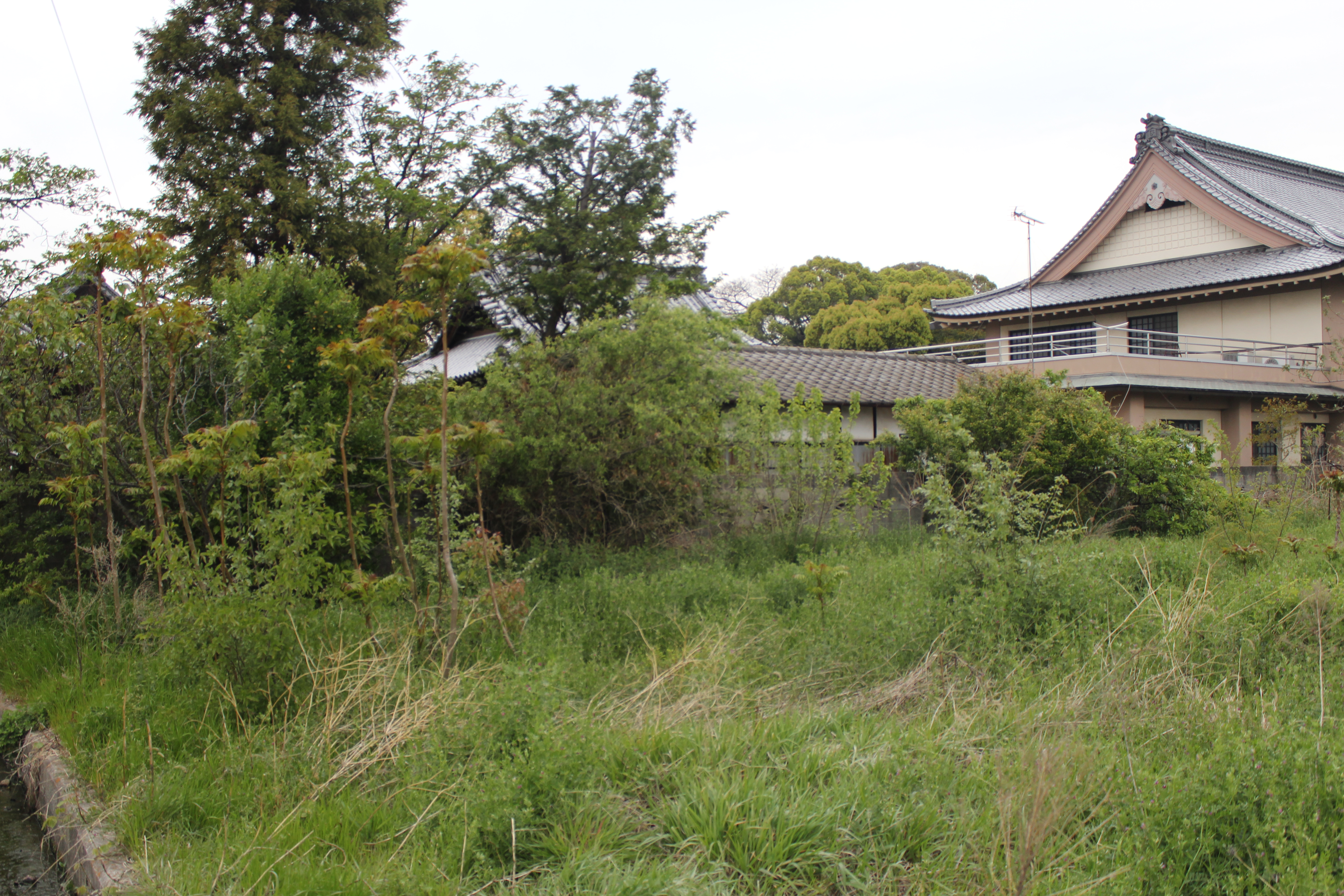
Descending from the mountains we stopped frequently as photo opportunities presented themselves to the amusement and extreme courtesy of a truck driver who repeatedly overtook us while we were stopped and then pulled in to passing places to let us go by him. It was another amazing display of generosity and selflessness. As we approached Takamatsu again we went off to find another temple alluded to in the book and saw one of the pilgrims arriving.  Shikoku is famous, among many other things, for an 88 temple, 1200 km pilgrimage which many Shingon Buddhist followers make each year and this pilgrim was on foot and dressed in the traditional manner rather than in a coach party.

IMG_1411  IMG_1415

We had to get the car back by six as we resume rail travel tomorrow so down to the port area, another easy and friendly drop off and back to the hotel for an onsen visit on the roof while our laundry swirled around in the free laundry. The communal bath was a first –  separate male and female baths here but the ritual of a thorough cleansing shower followed by wallowing in hot, briny water, cold tubs for a contrast and for men an interior and exterior option so you could see and hear the city go by while lying up to your neck in water.

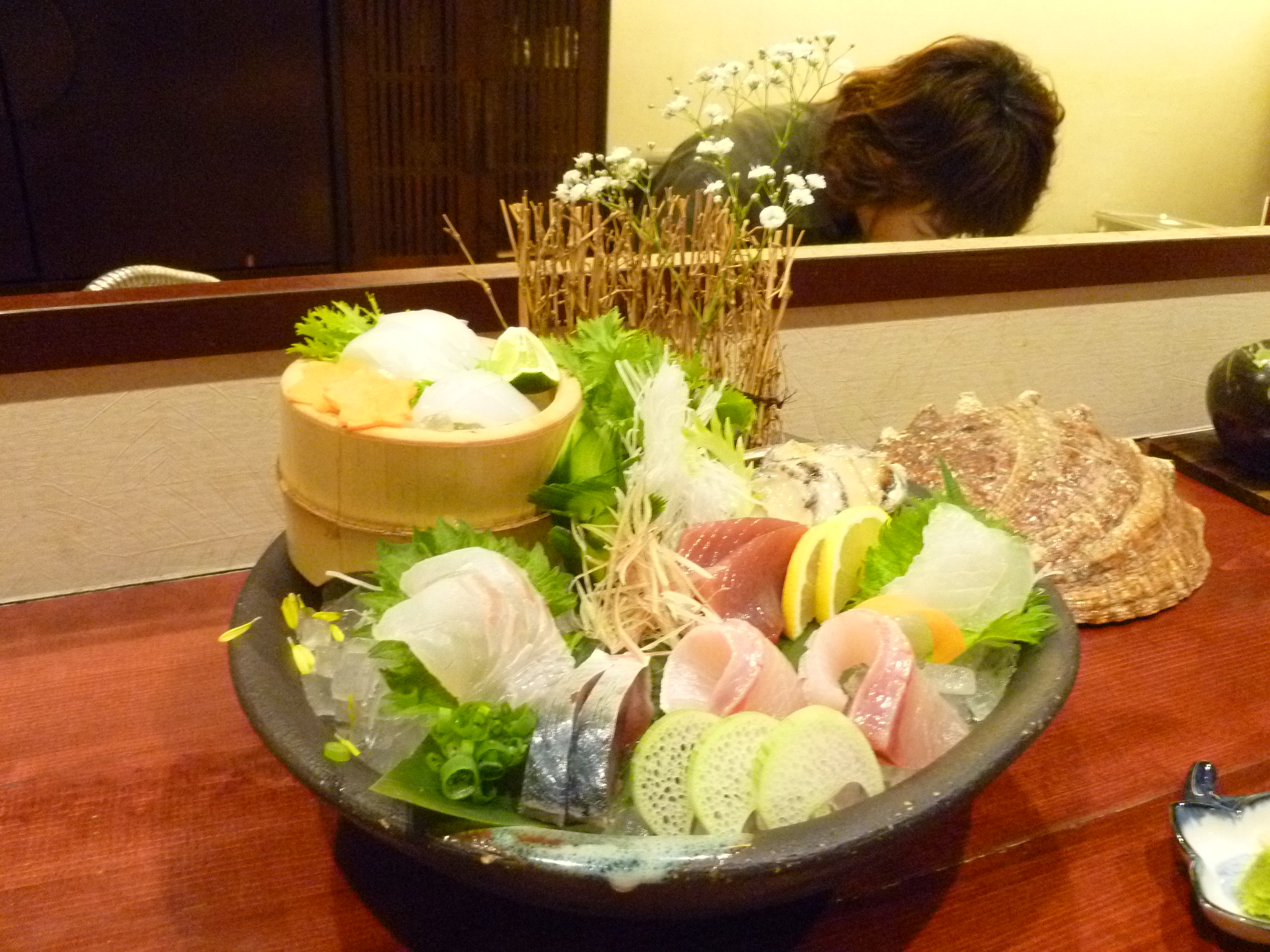
We asked reception for a recommendation for dinner and they didn’t fail us with Kokon restaurant. The sashimi dish the chef prepared was a work of art in itself and he and his assistant combined our phrase-books and their mobile phone apps to tell us exactly what we were eating. Squid, mackerel, sea bream, tuna, abalone, cuttlefish adorned the dish of ice with radish, shiso leaf and an intricately carved cucumber. When our tempura arrived it was already accompanied by a note prepared with the ingredients.

P1020147 P1020149

P1020158 P1020162

What service, what a delight!

Kyoto diary

16 sushi pink Three nights in the same

         hotel, how will we cope with

         such wardrobe choice?

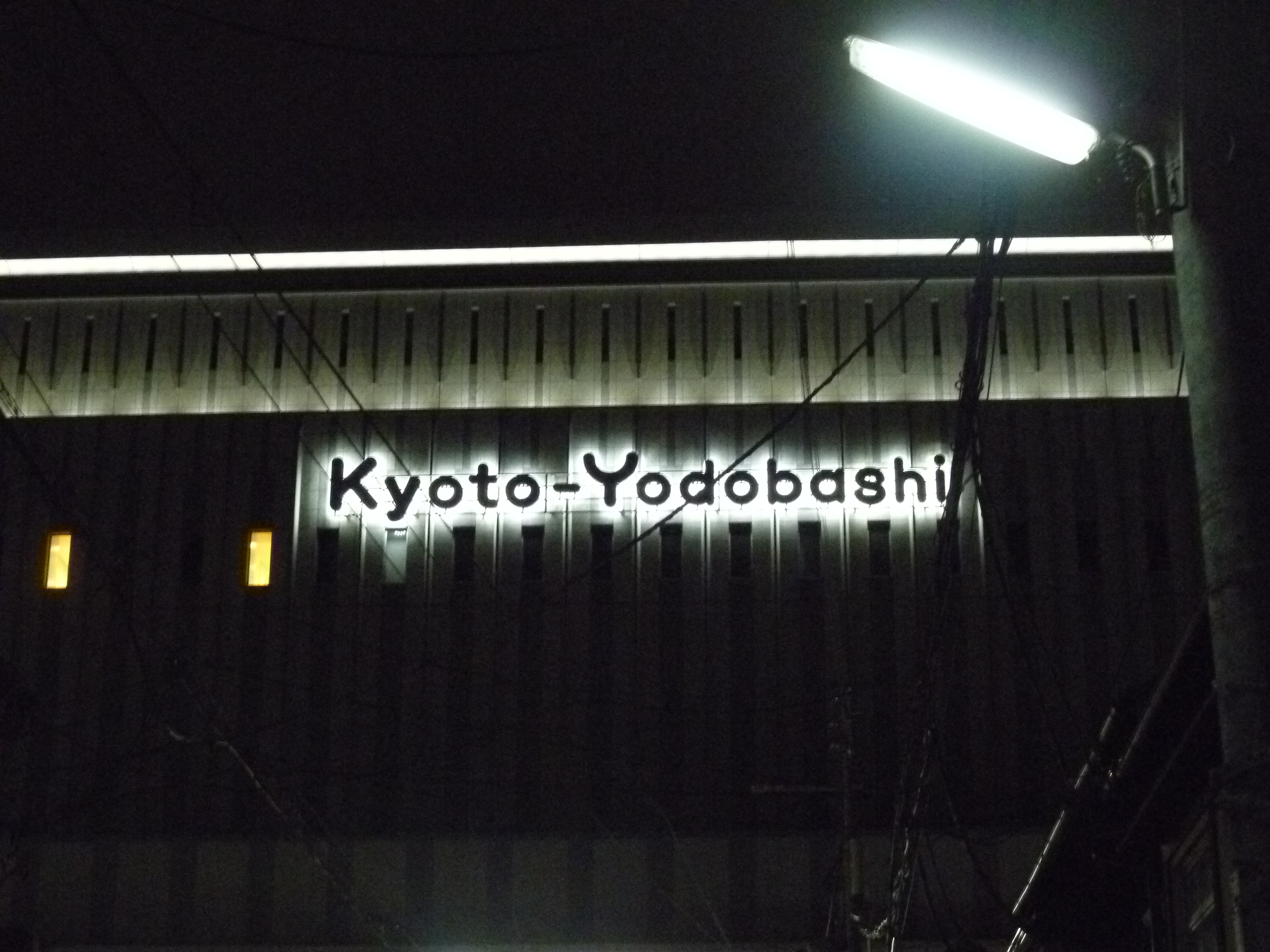
Good morning Kyoto. A little later than intended after completing the three day blog, going to Yodobashi – an incredible nine floors of electronics, electrical, camera and computer gear with some stationery thrown in – to buy a bigger USB drive to store all the photographs we’ve been taking. Yes they are on the cloud but it’s always reassuring to have a physical backup for us oldies. Our late night activities were accompanied by a little whisky which may have accounted for a good night’s sleep.

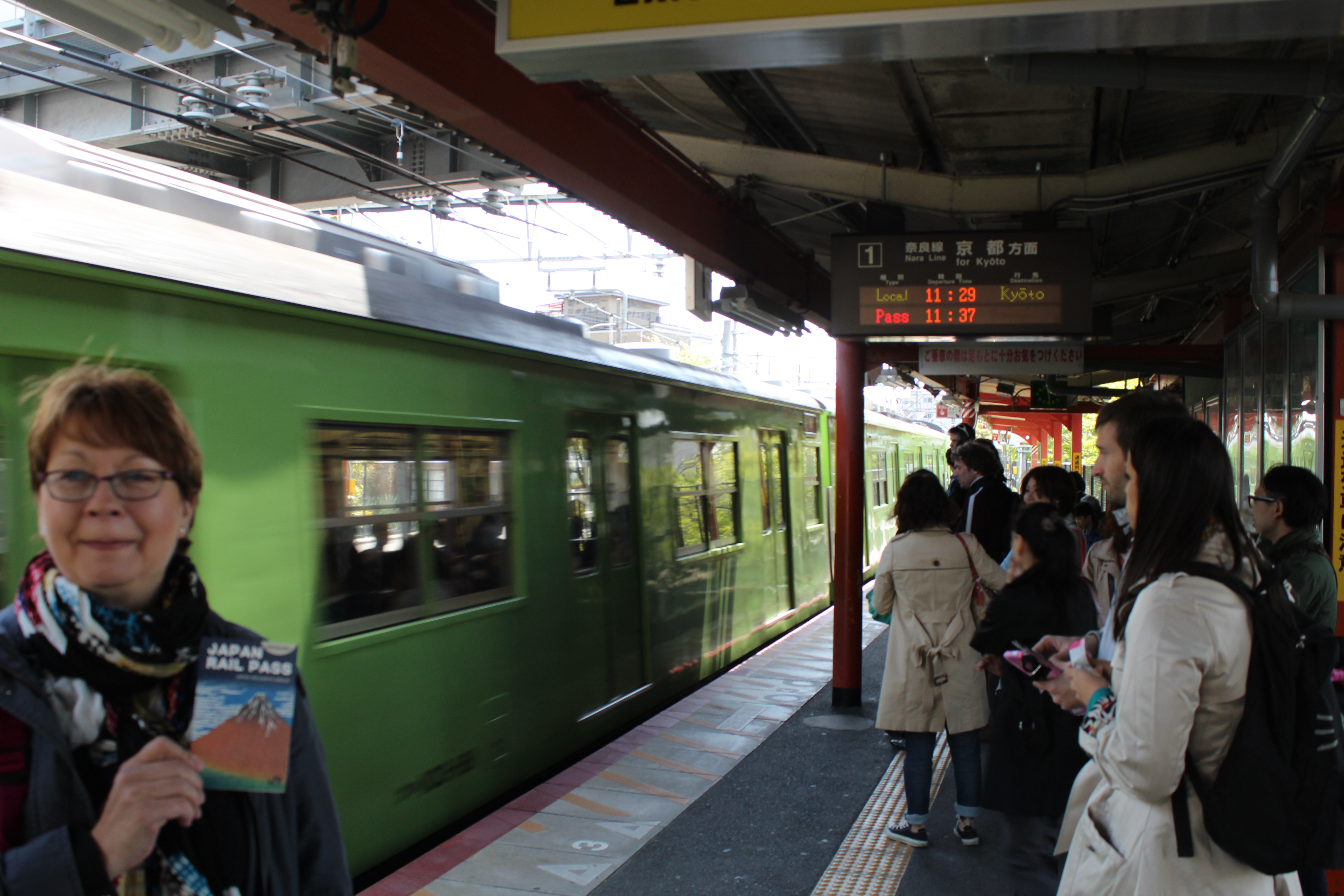
There’s some admin to do today too. We need to exchange our JR pass vouchers for the real thing and reserve our week after next overnight train to Hakodate. Fortunately the hotel is right across from Kyoto Station so we don’t have far to go.  JR passes were easy, the sleeper reservation not so easy as the train I had selected from Hyperdia online is no longer in service so we’ll have to go from Osaka to Tokyo and get an overnight from there to Hakodate. It’s booked and we’ll just rejig things a bit.

P1010945  IMG_0678  IMG_0684

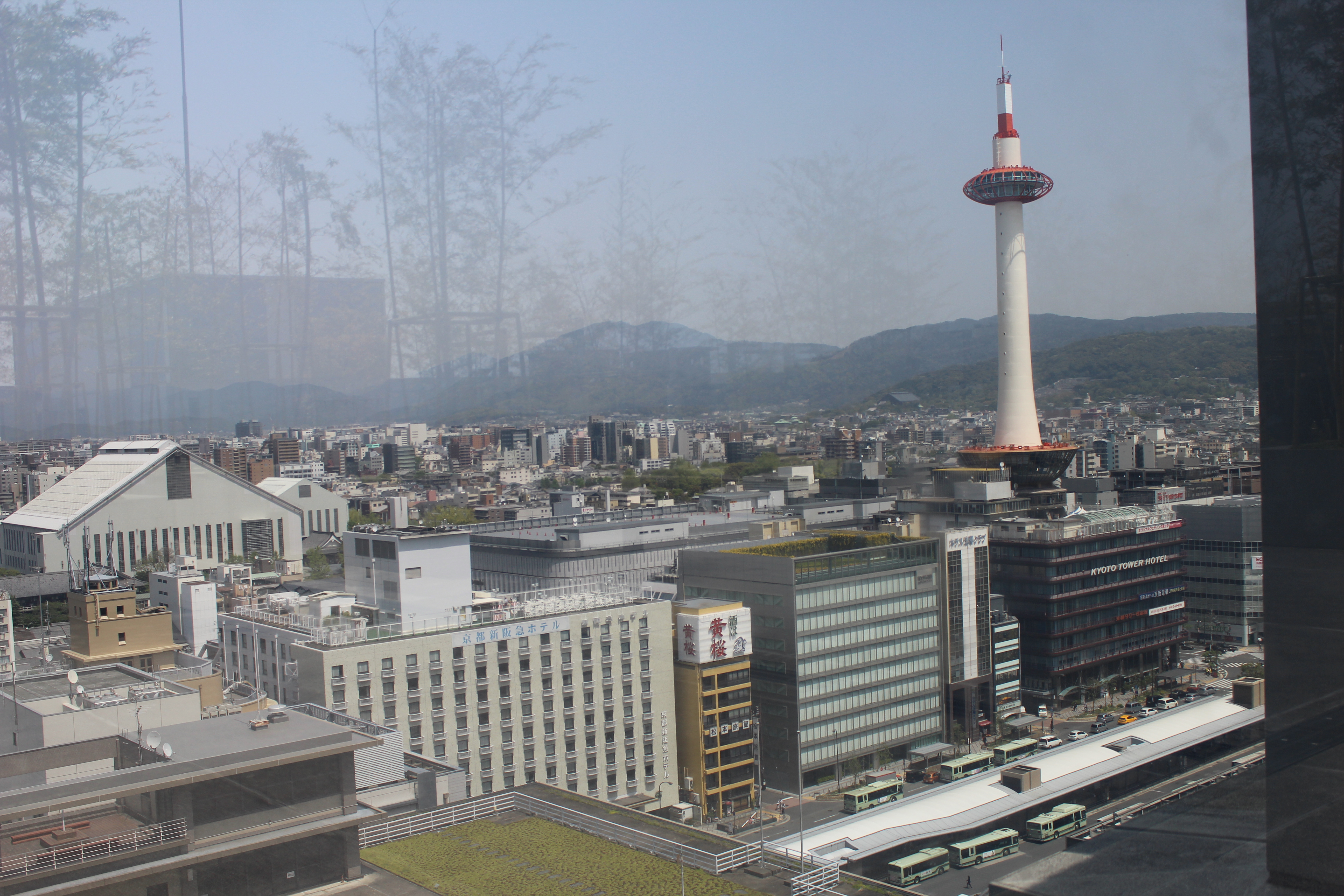
Kyoto station is stunning. A glass and steel facade with amazing angles, lines and reflections and an interior to challenge Grand Central for the classical railway station images of the future. And like the St Pancras redevelopment in London it’s making stations not just places from which to travel but places to be. It has a stage and stepped terrace for music gigs, more restaurants and shops than you can imagine and a green garden on the roof with some very clever eco planting that helps reduce heat transfer into the building – lots of summer days are over 35 degrees – 19 last year alone and it will probably rise.  From the roof there was a great view of the Kyoto Tower and our acceptable but undistinguished hotel (the one with the white T up the front). And that’s where we headed next.

Having set out in jeans and jumpers we quickly found temperatures soaring to 25 and up. We didn’t pack shorts but fortunately did have some light walking trousers and sandals which were more appropriate attire for the day – thank goodness for the three day unpacking stay. We set off with Katie’s “dorky” maps to explore some small parts of this huge city. Mastering the simple two-line subway, we went first the Shinjo-dori the main shopping street to see if we could buy a Japan road atlas in English to help with our next stages of rentacar travel. We found a big bookshop with new Murakami book posters everywhere but no road atlas. Off the main street, which is the universal, global big city shopping area, are arcades crammed with little shops which are much more interesting. Then we came to another of Katie’s suggestions, Pontocho, which is a narrow street lined with bars and restaurants overlooking the Tama River. It was so warm that we just had to go into one to enjoy the air conditioning for a bit and of course a beer. We had a great view of a team who had dammed up part of the river to build a platform out over it which apparently many of them do for the summer season. We could imagine the delights of a glass of wine out on the terrace.

Refreshed we strode off to the Nanzen-ji Temple where we enjoyed the beautiful spring garden – the shimmering colours of acers in spring are almost a match for their autumn glory and of course so much fresher. Here we also obtained, as advised, our hon (pr. hone) a folding book on which temples stamp their insignia with a hanko (handwritten kanji combined with a special rubber stamp). They are beautiful and will give us a great souvenir of our trip.

IMG_0719 IMG_0715

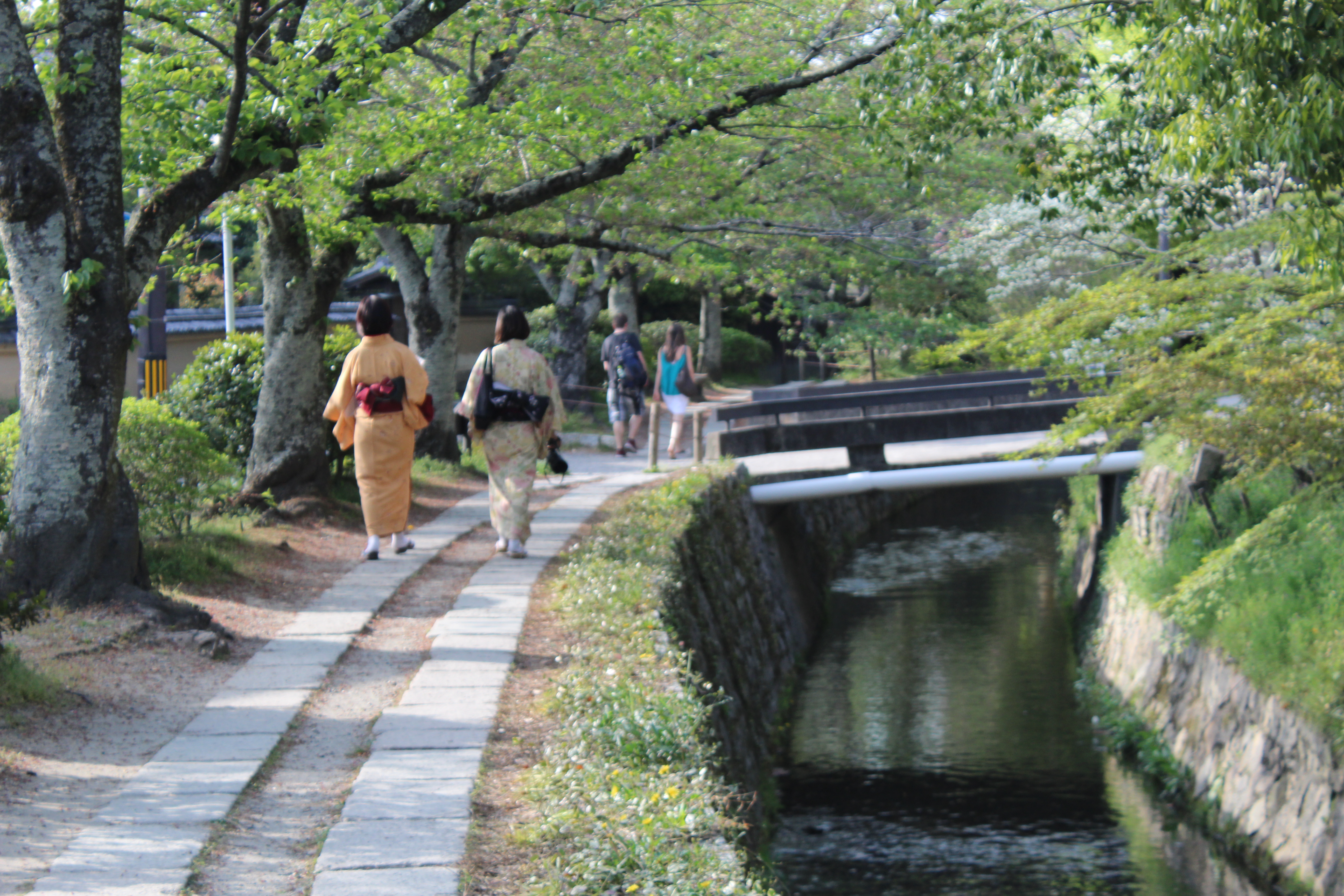
We then set off on the ‘Philosopher’s Walk’ a canal-side stroll through eastern suburbs with stretches of complete calm and peace conducive to higher thought – I certainly needed that – and small craft shops selling locally produced goods. By the time we reached the end we were well away from train lines and subway but Dee had cleverly picked up a bus map and the next one to round a corner was the 100 bound for Kyoto Station. It was very crowded at shop and shrine closing time and we stood for most of the journey which was a shame as it passed several landmarks of which we could only see the bottom half.

P1010939 IMG_0745 IMG_0761

The philosopher?  …   in pursuit of gesiha on the walk?       … this is what Dee wanted by the end of it.   

As we got back to the station, we decided to see if the Kyoto Tower had an observation gallery.  It does, we went up. Dusk falling visibility hazy after the heat of the day but a fun visit nonetheless.

IMG_0775  P1010981

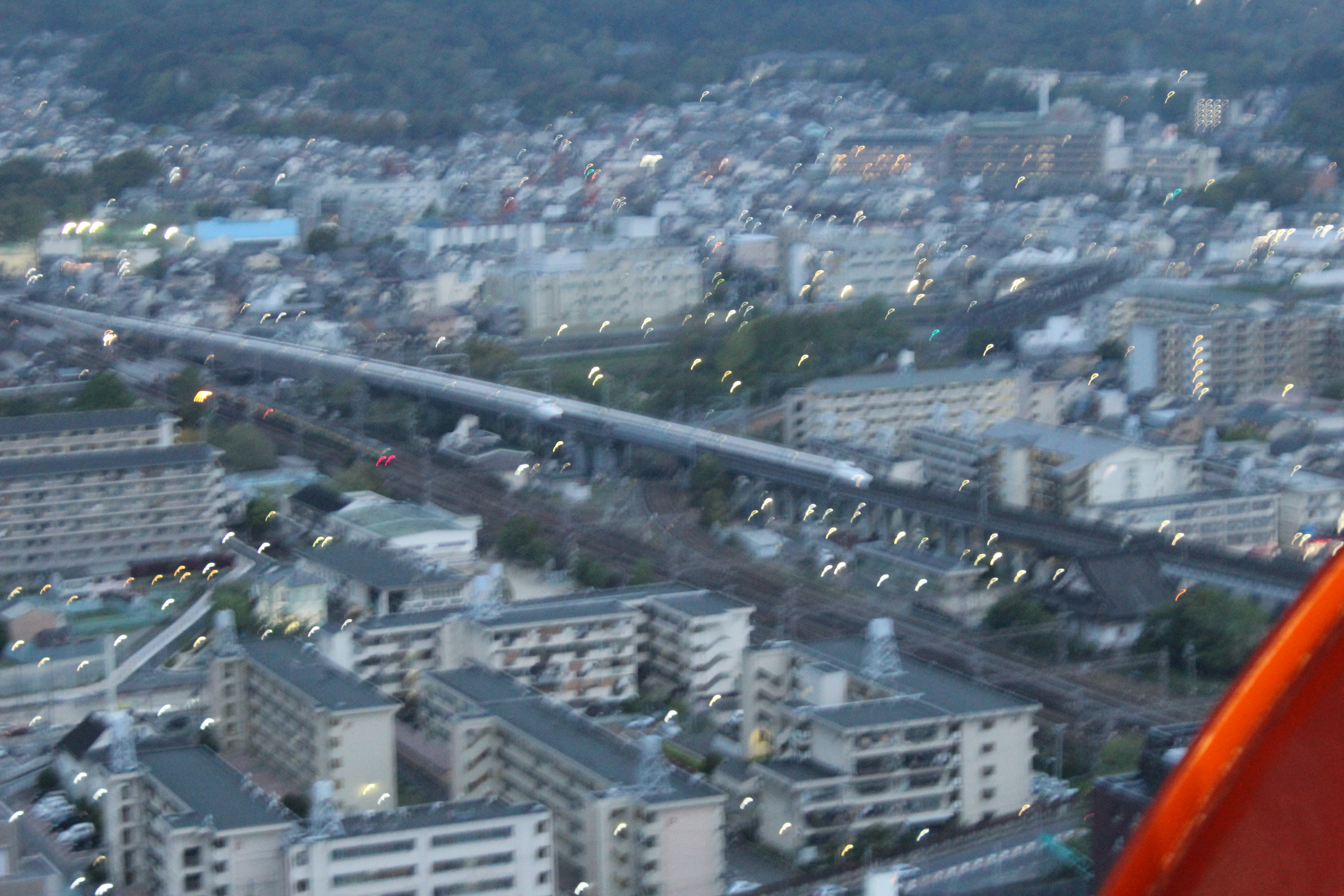
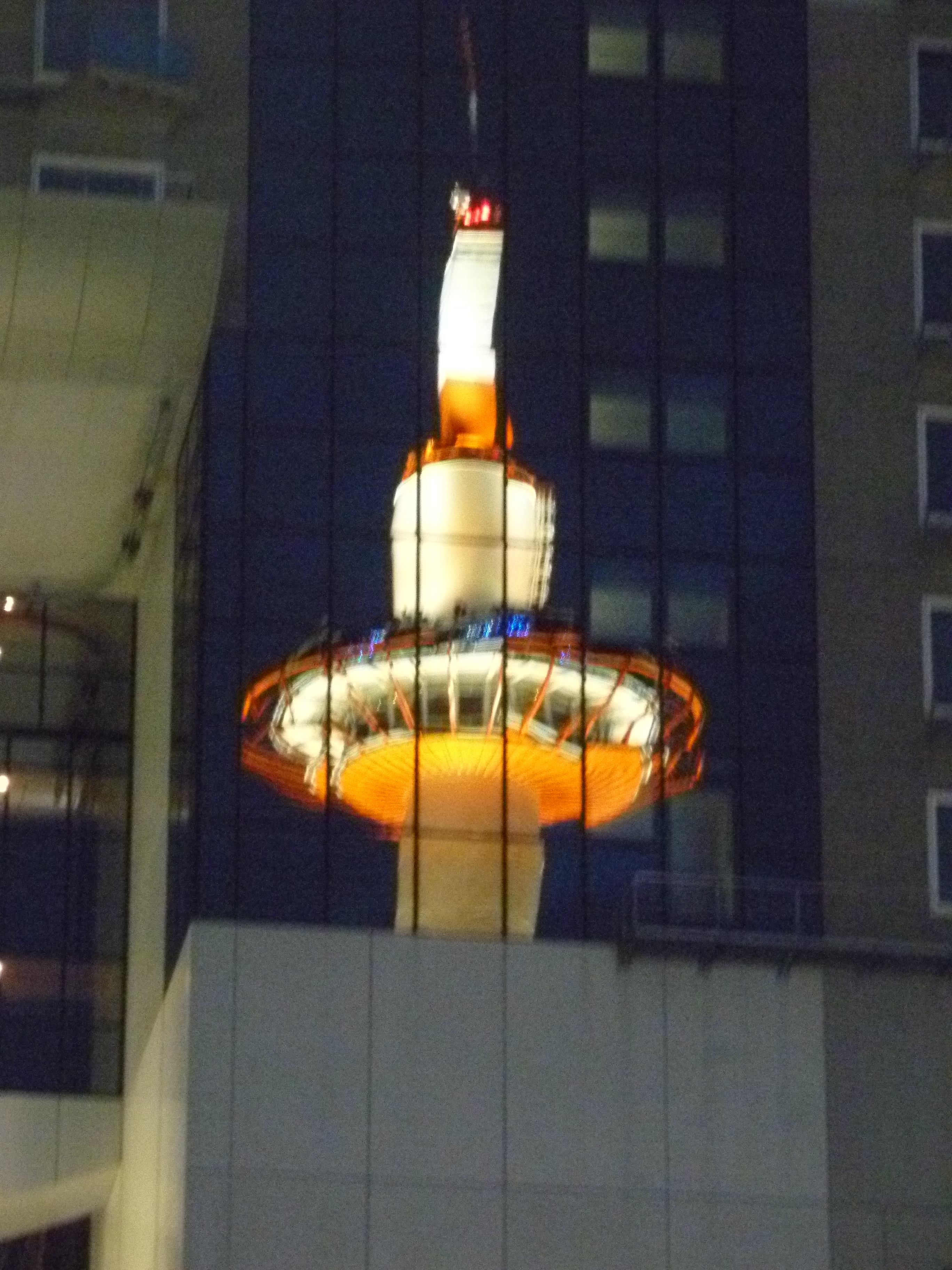
Shinkansen passing on the approach to Kyoto   The Tower reflected in Kyoto Station

After a freshen up and a couple of much needed beers following a hot day on our feet we decided to head out to find dinner locally. I don’t know if you have the same problem but we are very indecisive when confronted with a street with five restaurants all of which look interesting. We walk up, we walk back, we look at menu pictures outside and then we decide we really are hungry and are going to have to plump for one of them. We did and it turned out to be a hibachi grill place. We were shown, shoes off of course,  to a private screened booth with a footwell under our table and were served fresh vegetables and akta mackerel which we cook ourselves over a brazier with three red hot charcoal logs. Great fun and very tasty and we had chosen some excellent sashimi as a starter. We enquired of our server how she spoke such good English and it turned out that Mikita was coming to Brighton in June to study English and had been practising ahead of the trip. We have been struck by amazing meetings with people with existing and possible connections throughout the trip – there really are only six degrees of separation.
We left the restaurant and walked back towards the hotel and spied a rather lively and bright yellow-coloured bar (apologies to our Hornet friends that it is yellow AND green)  – standing only and it had a great name. So given the deprivation of yellow as we are missing so much Watford football, we thought a sake night cap was in order.  It proved a great people-watching place as late nighters popped in for a quick one on the way home and two ladies of a certain age stood consuming beer to our left until closing time – when we too were asked to drink up and depart – extremely politely. Busy, busy, Kyoto.

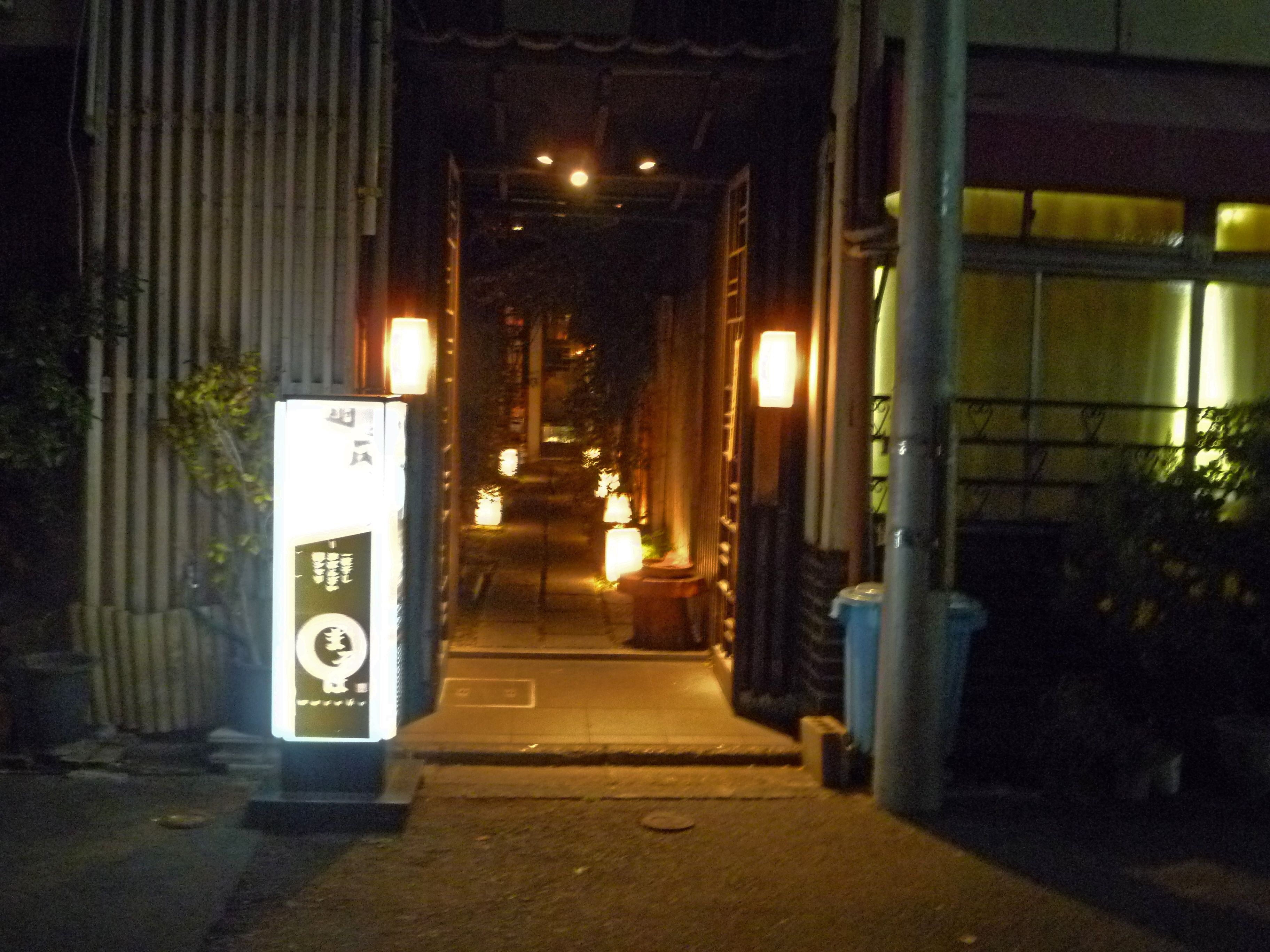
Masoho IMAG0158

Masoho restaurant entrance                                 The last orders bar

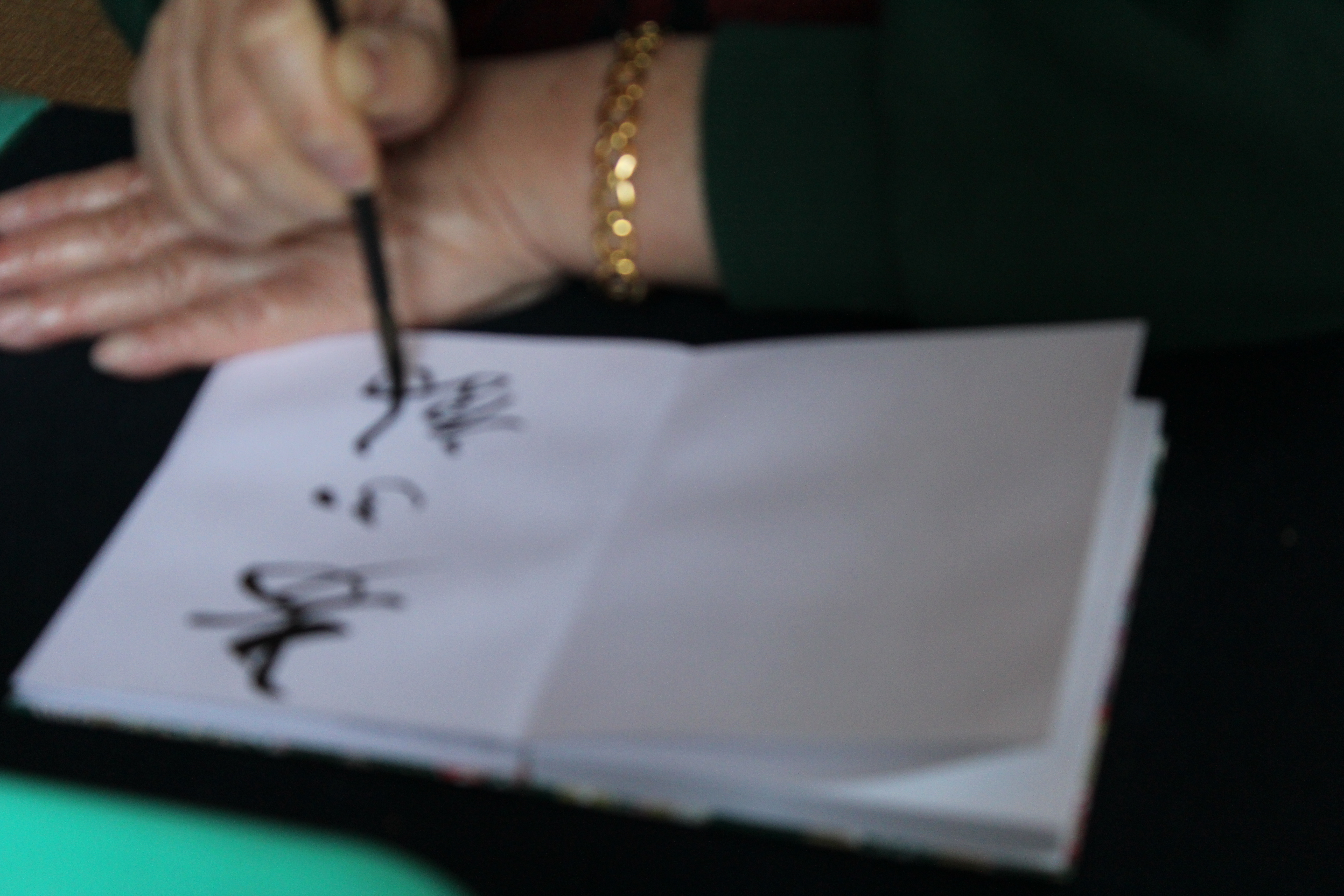
Friday dawned fresh, bright and breezy and it was back to jeans and sweaters big time. How can the temperature change by 15 degrees overnight?  Well it did and we took the subway south to visit Higashi Inari Shrine. Sadly we missread the map and finish up at a station which is s forty-five minute walk from the shrine rather than the railway station that’s right in front of it. So a taxi was hailed and delivered us to the Fox Shrine which apart from amazing main buildings has a walkway of shrine gates or torii which stretch up to the main shrine on the mountain and involve 10 000 vermillion gates – awesome. We only walked the first three thousand as other sites called but a stroll to the top and back would make a great half day outing given more time. We were approached by a uniformed guard and were worried that we’d been photographing in the wrong place but he was a retired firefighter who had spent time in Sheffield and Liverpool on job exchanges and welcomed the opportunity to speak English. We next took a short train ride to Tofukuji Temple where the buildings are stupendous but the main attraction was a beautiful zen garden on all four sides of the main hall. A wonderful oasis of peace and contemplative strolling in the midst of busy, busy Kyoto. On our way back to the station we called into a small temple  Doju-in where the attendant most beautifully calligraphed and then stamped our hon. 

IMG_0800   IMG_0819

IMG_0850  IMG_0831

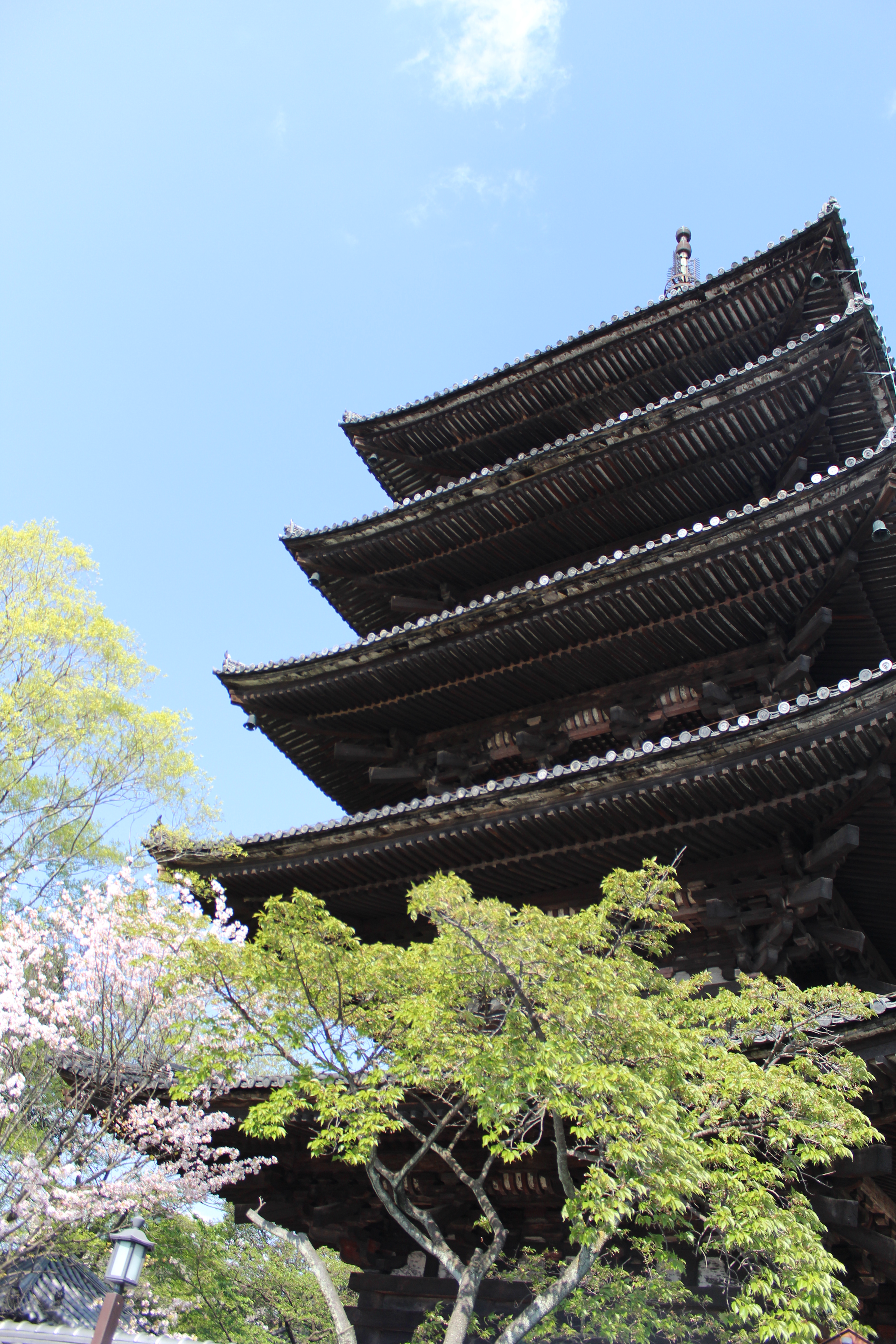
We then used our JR Passes for the second time on a train to Kiyazumi which is an amazing complex with superb views over the whole spread of Kyoto and then walked through quaint streets with fabulous little shops dotted about until we reached the Yasaka Pagoda and turned in to the Maruyama Park a popular open space with ponds and shady pathways – and a few ups and downs as we’re in the mountain foothills. After an increasingly chilly walk around the park as the wind got up we descended to the Chion-in Temple just in time to find it close. This is fortunately a short downhill walk from Gion the ancient geisha district which we wanted to explore. It’s lovely, weird and wonderful. We saw women buying kimonos and accessories, having their hair done and one of my favourite shops was a koto, shimasen and shakuhachi  shop.

IMG_0905  IMG_0918 IMG_0692

Yasaka pagoda         Maruyama Park                                                          Old and new Kyoto meet in Gion    

Some difficulties next after boarding a train at the first station we came to, Kawaramachi, where we showed our passes only to be told at the exit ticket barrier that it was a private railway and we’d need to pay. Kyoto – maybe Japan trains = confused.com. However we got back safely and did a load of laundry in the coin-op in the hotel, conveniently on our floor. Then repacking ready for the road tomorrow and what felt like a wimpy dinner in the restaurant beneath the hotel which was actually rather good – beef and potato stew for me and fried beef and rice for Dee occasioning slight food envy. She had made the right choice.

A day of culture in Tokyo

11 sushi pink copy   With wood block prints to      

          start our day we wonder what        

          else will come our way? 

After the exhaustion of the last two days we decided on a quietly cultured vacation day. But before we start in on that let’s just share some of the Joys of Japan.

  1. Jazz is alive and well and is the music of choice in most shops, restaurants, coffee shops and bars. It’s usually easy grooving West Coast style jazz and it’s so much less intrusive than relentless pop.
  2. Manners in the main are what we miss in the UK. They are not all perfect – nobody offered us oldies a seat on the metro but in general people are friendly, helpful and polite.
  3. Heated loo seats – Dee was so delighted with her first experience of the high tech loo off the hotel lobby, she insisted I go check it out. This one was brilliant and we’ve now found many others are accompanied by control panels fit for the SS Enterprise that will pre-sterilize the seat, add pleasant odours and wash various parts of your lower body on request – but the best is sitting down on a warm seat.

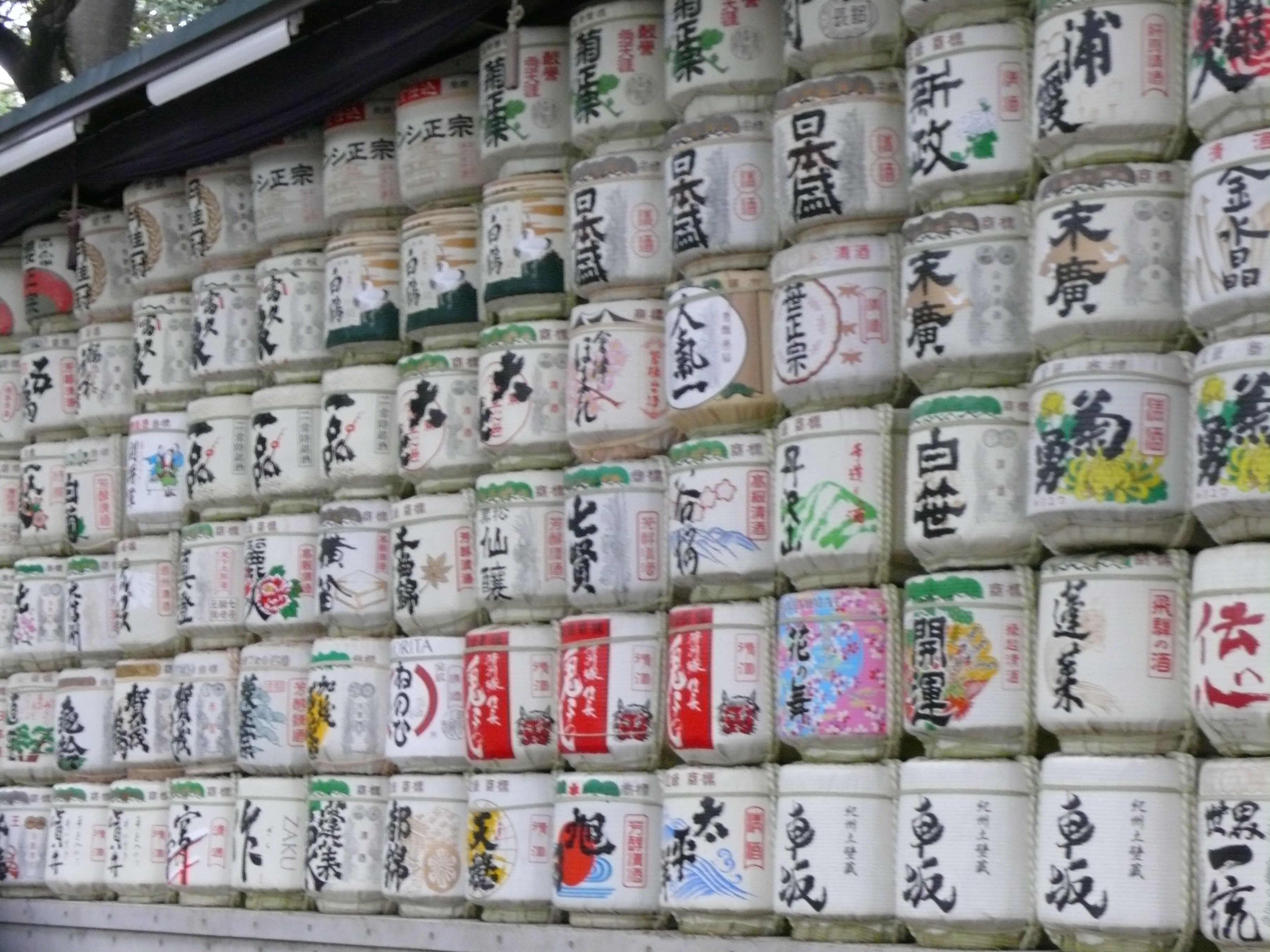
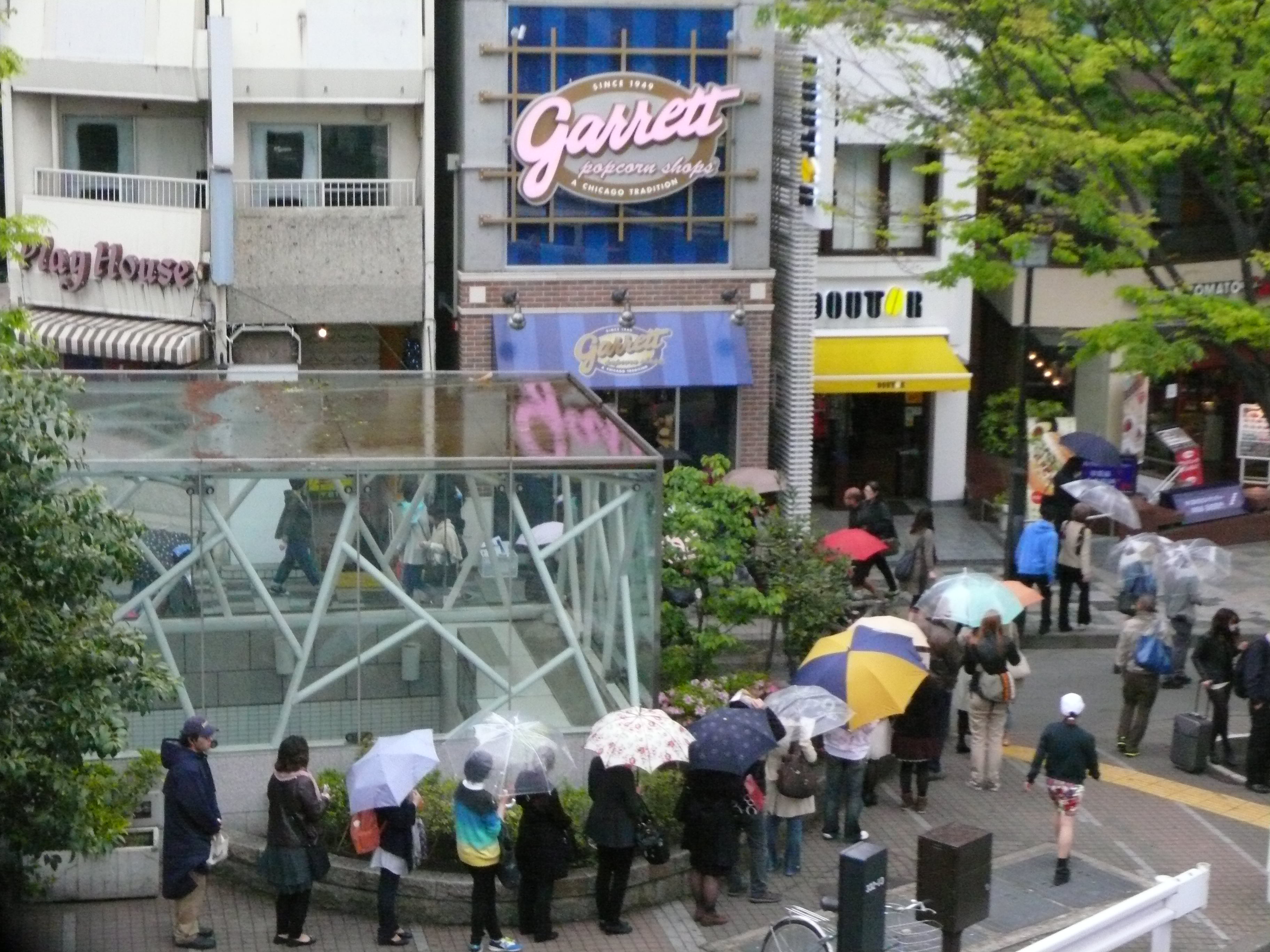
We have some framed reproductions of Hokusai’s 36 views of Mount Fuji in our hall at home and are both fans of these delicate, funny and sometimes outrageous wood block prints known as ukiyo-e which were produced as popular art from the mid seventeenth to the early twentieth century. There’s a museum devoted to them in Harajuku which we visited where there was a fascinating exhibition of prints depicting women’s fashions, hair and make-up styles. Who knew the green lower lip was so desirable! There was also a great display which showed the process of making Hokusai’s The Wave an image I guess most people are familiar with. As we left there was a spattering of rain and our eyes were drawn to a line of brightly-hued umbrellas.Queuing for popcornThese were office workers queuing at Harajuku’s trendiest popcorn store to buy popcorn for their lunch! We passed on the opportunity – few things are worth waiting that long for. So we then walked over to the Meiji Park through a little drizzle to the Meiji Shrine in which the immortal souls of  Emperor Meiji and Empress Shoken are preserved in Shinto honour. They were largely responsible for making Japan a modern nation in touch with the rest of the world. It’s such a place of pilgrimage that it was rebuilt from funds raised by public subscription after the war which destroyed it. The Japan Sake Manufacturers also donate these huge barrels of sake each year as a mark of respect. It’s a place of quiet, serious contemplation in the busy city and is clearly valued by many as a place to spend time in, not just somewhere to tick off on the “Let’s do Tokyo Tour”

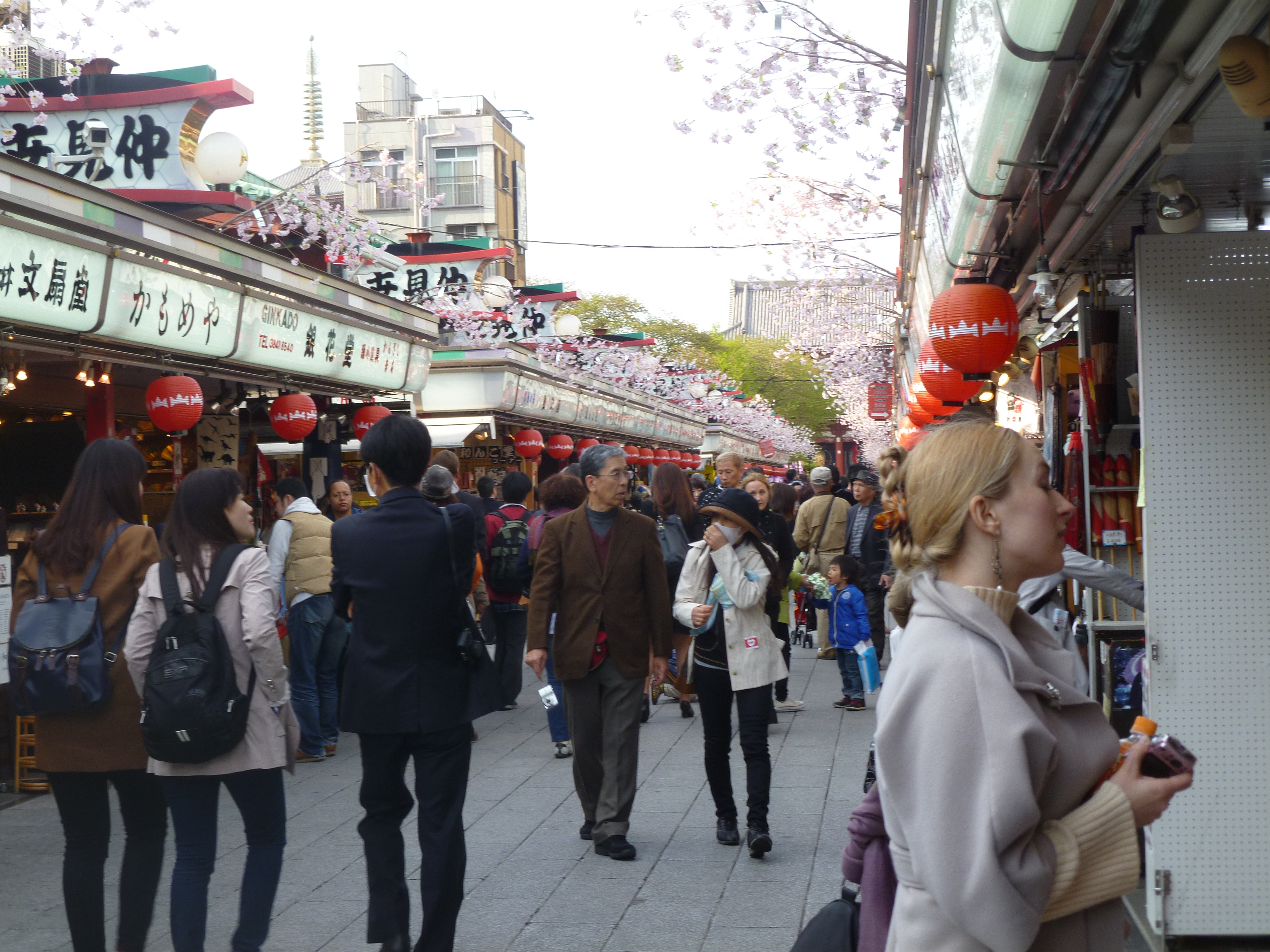
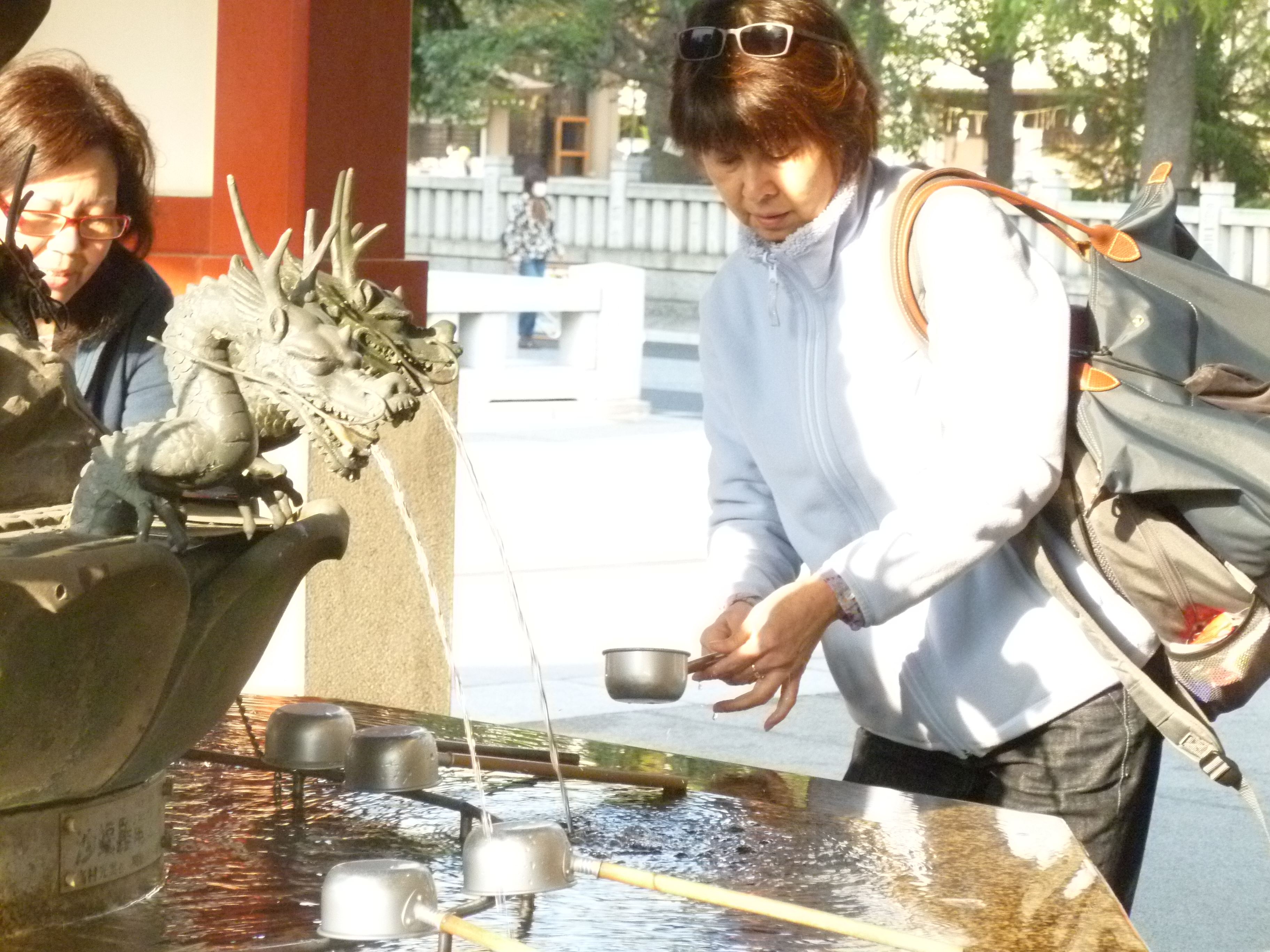
P1090134  P1090148 We had been pretty pleased with ourselves for mastering the Metro to get to the museum but our next trip after a quick lunch involved working out the best route right across the city. We had to find the right entrance to the line we needed and then change midway. The subway is easy to use and a great way of getting quickly around the huge metropolis that is Tokyo. We ended up in Asakusa where I thought I might have bought my etchings but as it transpired no likely shops were spied and the search goes on. However Asakusa has an amazing shopping thoroughfare leading to the Kannon Temple, as it was called in 1981 when I visited but now known as the Senso-ji. Buddhist rather than Shinto the visitors are more expressive with cleansing and incense wafting rituals to be performed before approaching the temple. We captured a few of them…

P1010628  P1010629P1010635  P1090159

… and Dee captured Mike still seeking Murakami. P1010636

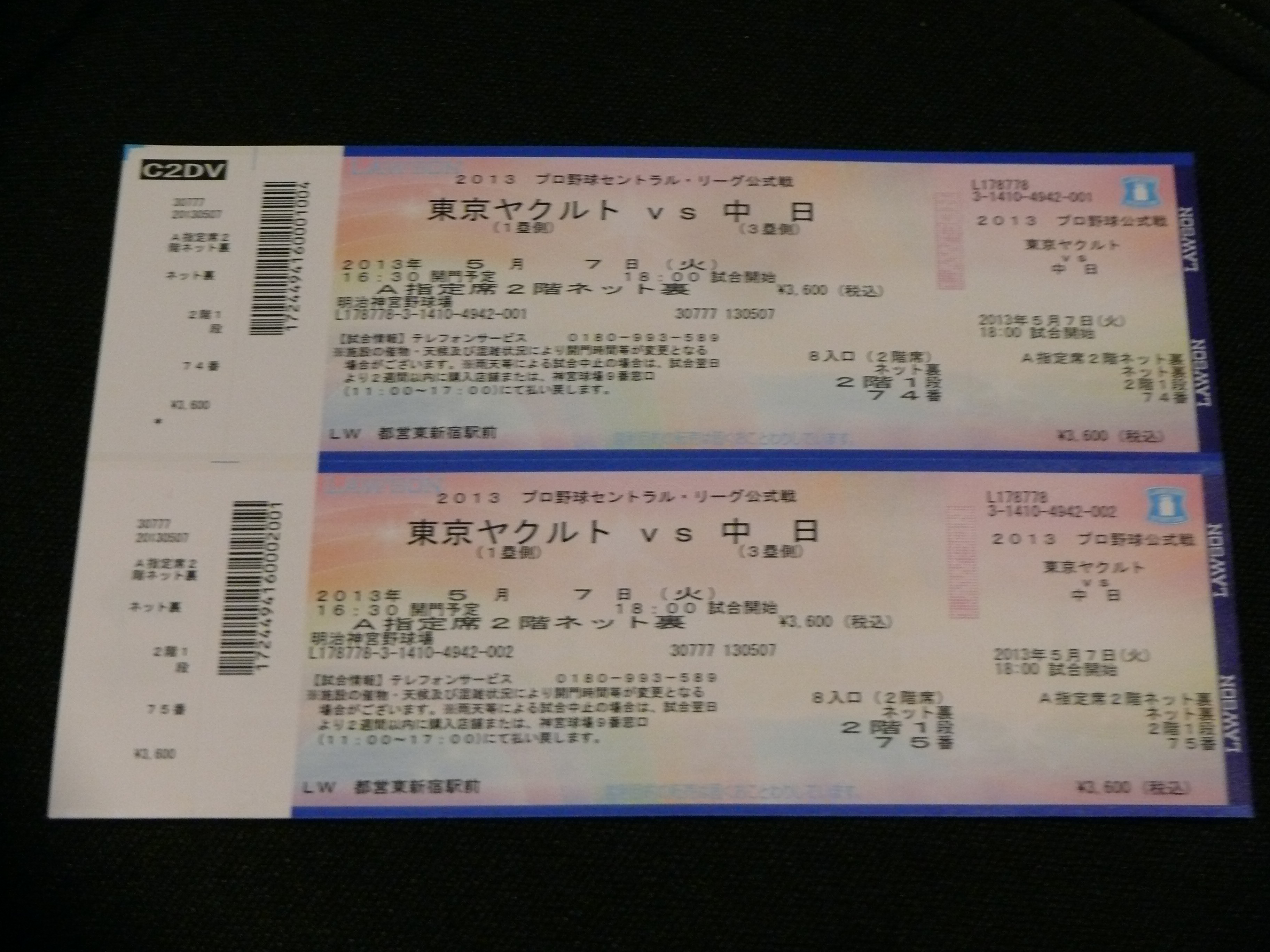
We again attracted the attention and advice of an elderly gent entirely self-taught and fluent in English – from self-help books and listening to the BBC World Service – note to the new regime at Broadcasting House! He was sorry the cherry blossom had been so early this year but thought we might catch some near Mount Fuji tomorrow and told us about the different varieties with their varying shades from almost white to deepest pink. We then strolled around some artisan jewellers, ceramicists – no stand yet Mike but we’re looking – and fabulous fan and fabric stores before getting the subway to the heart of Tokyo shopping – Ginza. Mitsukoshi department store had a marvellous roof garden on the ninth floor overlooking the street where we enjoyed a green plum and, separately, black sesame icecream. We’ve all seen the pictures of Ginza crossing but it is really incredible to see the sheer number of people late into the evening who descend onto and beneath this world-famous street. Again in the interests of finding Murakami’s Japan we had to visit the subterranean bars that lead from Ginza to Shinbashi where so many people and some of his characters seem to finish off their working day. P1010642  P1090197 Ours ended with a visit to – oh come off it! – a tapas bar just off the Ginza with Basque pintxos and Rioja. Then the subway back to the hotel to write.  Oh and we ordered and printed out our baseball ticket for next moth in the local convenience store on the way- what a service! P1090208

An early night is needed as we have a six a m alarm set to be the first to buy the new Murakami tomorrow.

Cards and passes and car classes

7 sushi pink     Deciding to go

            is all very well, but what

            about some action?

So the sums so far show us that we can probably make our dream trip come true. Hotels are booked but all still cancellable up to a couple of days before we’re due. Some things will need to be bought and paid for now so it’s time to reach for the card wallet and do the job in earnest.

Talking of cards reminds me that business cards were very big when I was there before. This is principally a holiday but we do have a production company that can operate anywhere so after a quick discussion we agree that a joint meishi would be a worthwhile investment. In one of the quickest searches ever up pops the excellently named Japanese business cards dot com. I approach them and a couple of others and their costs seem reasonable so I set about designing our card English one side, Japanese on the other. They translate them as well and send a proof. I asked a Japanese speaking contact to tell me what I, Dee and the company did from just the Japanese side and the translation was spot on. So here we go handing out meishi – with both hands of course as etiquette dictates – to all and sundry. As it’s a joint card maybe we should hold one corner each as we hand them over. The guide doesn’t cover that. Here’s what it looks like:

meishi

That’s one task ticked off on the ever-growing Japan Trip Checklist that we both add to all the time. My next tasks are to try to sort out car rental and to buy our Japan Rail Passes. The former still proves rather tricksy – huge charges for one-way rentals, confusion over actual vehicle sizes because they are all called something different but we will get there.

The rail pass on the contrary couldn’t be easier. Buying online or in person are both possible. I opted for online, completed my form, paid the fees and received confirmation of both order and despatch. That’s when the trouble started. The letter needed a signature on a particularly wet Saturday when we were out. Red card from the postman to collect it from the delivery office. After two visits at which I was told “it hasn’t come back from the walk yet” I began to worry that our passes might not reach us but they were sent recorded delivery so insurance would cover them wouldn’t it?

Third time proved lucky although the muddy, torn envelope didn’t inspire confidence – “our post bags all leak” said the postie at the delivery office. Quickly home and open it up to find two gloriously sunny folders each with an exchange voucher each that will get us our actual rail passes in Japan. It feels like we’re on holiday already as the snow blankets the UK again.JRPass wallet   JRPass voucher

So to car rental again. Given the different naming conventions of most vehicle manufacturers depending on the territory – who can forget the Mitsubishi Starion –  we have no real idea what we are being offered in the quotations and whether our luggage will fit. I’d love to be backpacking and not have the bother but it might be a bit more of a struggle than either of us can cope with. So there will be suitcases and they need to be concealed within the boot when we’re on the road. We set off armed with a tape measure and case dimensions to visit local Nissan and Mazda dealerships. We have a Toyota Prius and know that we can fit them in there should we be offered one. But Nissan Tiida and Mazda 3 or 5 seem to be the most popular classes of vehicle on offer.

Having spent a lot of time filming in dealerships it was with a certain degree of embarrassment that I enter first Ancaster and then T W White and Sons with the sole purpose of checking out boot sizes (trunks for our US readers). The staff couldn’t have been more polite when faced with this odd request. It seems we don’t have the equivalent of the Tiida in the UK but that the Note is the most likely equivalent. At Mazda however the policy of naming by numbers pays off and we confirm that the Mazda 3 – considerably more economical in fuel and beneficial to our budget than the 5 or the Tiida – will fit the bill. We have a long chat to a self confessed boy-racer who reckons even he gets good fuel economy so the scales tip in favour of Mazda. One final email to Mazda Car Rental, which incidentally will change its name to Times Car Rental before we arrive, to get a re-quote for the Hokkaido leg and car hire can be ticked off the list.

Now to get some currency, check in and off we go!

How shall we find Murakami and his places?

6 sushi pink         We’ve read all the books,

                the music, the food, the who –

                can we find the where?

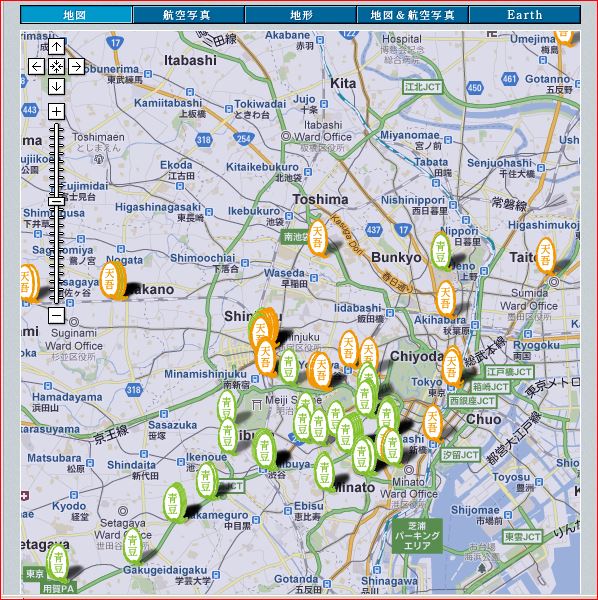
With the added excitement of a new Haruki Murakami novel being published while we’re in Japan we’ve set about rereading them all for clues as to their settings. Some are clearly specified, others are vague, composites or invented. However we plan to track down as many as we can. For his last book 1Q84 the publishers Shinchosa have mapped  the locations in considerable detail. Each pin opens up to show where certain actions in the novel take place but as they are all in Japanese  I have to make do with a Google translation which often leaves a rather vague and confused account of what I suspect – and sometimes recall – lies behind them.

Shinchosa 1Q84 mapThe locations range from Expressway Number 3 where the world of 1Q84 begins for Aomame to the Hotel Okura where a significant act occurs. Incidentally I stayed at the Hotel Okura in 1979 and 1981 when I first visited Japan. Sadly for this trip it’s way out of our budget range but we’ll visit for a cup of tea. I hope they still have the brilliant ikebana arrangements that used to grace the lobby each morning. I’ve just discovered that there’s a festival of gardening at the Okura while we’re in Tokyo so we’ll definitely be going there.

There were also some helpful location pointers in a New York Times article by Sam Anderson shortly after the publication in English of 1Q84. The very helpful staff at the London office of the Japan National Tourism Organization also sent me links to a series of walks in Tokyo and elsewhere in Japan based on Murakami’s books and a detailed list of locations where Norwegian Wood was filmed which may prove an interesting comparison for our own thoughts about the locations in that book which was the first we read and still have in its red and green two volume form. The film was good but I wasn’t always sure that the locations selected matched how I’d imagined them. But hey not many films do do they?

N Wood box     N Wood open

It’s been a great opportunity to revisit all the novels and short stories – this time with the added advantage of having them all on Kindle as well so we can make notes, highlight passages and then investigate actual and likely locations and add them to our itinerary. And boy do these books repay rereading! So much nuance, detail and context that slip by in the first read make it a fresh, fabulous journey into Mondo Murakami.

Railways, expressways and byways

5 sushi pink Can Hyperdia

 and Navitime help me to

              calculate the costs?

So I have an itinerary, the hotels are booked and we know what they will cost. I know the basic cost of a Japan Rail Pass and I discovered that you can actually buy them online from JRPass.com. The passes are great as they show huge savings over the rates for all our journeys as a few enquiries on the web soon reveal. They come in 7 day, 14 day and 21 day versions. Japan Rail Passes are only available to non-Japanese citizens and you have to buy a voucher before you travel and exchange it for a pass once you arrive in Japan or when you need to start using it. In our case we’ll start to use it in Kyoto for the remaining 21 days of our trip since the first few days are in Tokyo or in a rented car. So, that cost can be added to the spreadsheet.

Next, car rental. When I first looked at this back in February I couldn’t get anywhere since most of the car hire companies hadn’t published their spring and summer rates – ominous. Nissan Rent a Car did have rates on their site and so I entered dates and places to get an estimate of costs for the Hokkaido leg of the trip. In my inbox next morning was a confirmation and a request for payment so I had to reply that I wanted to cancel the booking as I had not yet decided on whether and when we were coming to Japan. Hope it doesn’t leave a black mark against my name on file should we need to use Nissan for real. However it did give me a good idea of a daily rate including English SatNav, unlimited mileage and insurance which I could then use to calculate the rest of our trips for car.

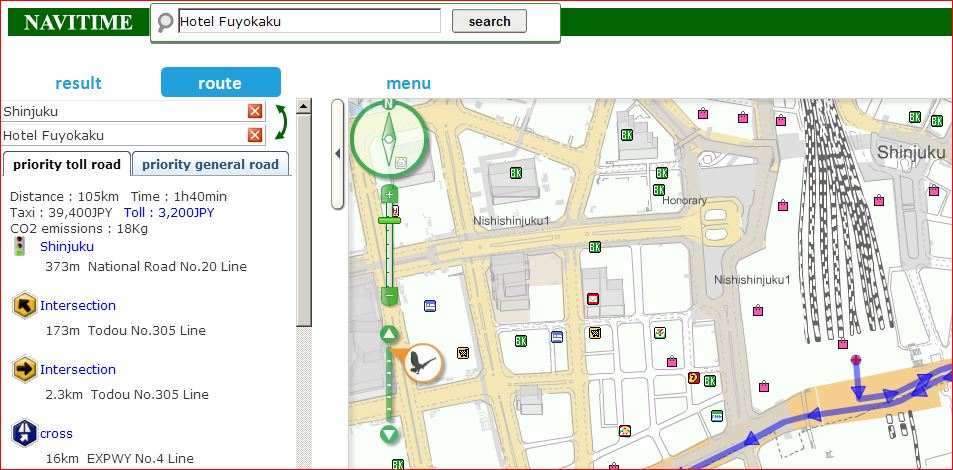
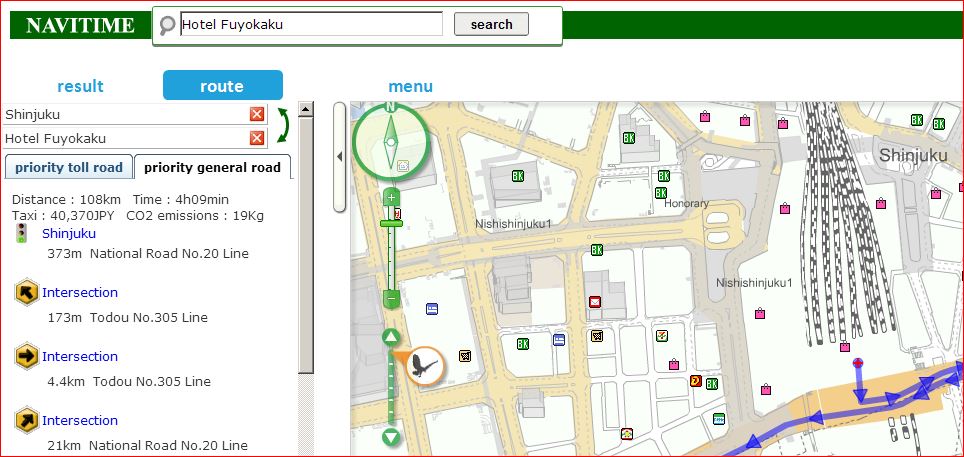
But once we are in the car how to calculate time and cost of journeys? I fiddled around with Google Maps and various other sites and eventually came across Navitime‘s Journey Pro where you can enter your start and end points – in this case our first day of car hire to go from Shinjuku in Tokyo to Mount Fuji. Based on picking up a car at the station the site was able to locate our hotel in Fujiyoshida. It provides a complete stage by stage route – and marvellous device  – it tells you distance, time it’ll take and toll costs. Interestingly it also tells you how much it would cost to do it by taxi! Maybe long distance taxis are common in Japan – we’ll find out perhaps. I had an idea of average fuel consumption for the class of car we’ll be renting and fuel cost so I could now work out all our road travel costs. What is brilliant as you’ll see in these two screen shots is that it shows the route on toll roads or on national roads. In our case it’s a significant difference 1 hour 40 minutes and ¥3600 (£25) or 4 hours and 9 minutes. I think we’ll take the expressways especially as they are marginally greener too – oh yes the CO2 emissions are on there too. The byways might be more fun but we will get to drive on several non-expressway segments of our route later on.

 Navitime expressway route 

Navitime 1

Navitime national general road routeNavitime 2

So with lots of fuel consumption, mileage and currency conversion formulae in Excel I was able to ascertain a pretty good idea of costs for the least predictable part of the trip. Just hope the decimal points are all in the right place because the spreadsheet shows we can do it for nearer what we wanted to spend than what we were told we could expect to spend. Only time will tell but we go into the next phase with some degree of confidence. Up until now everything I’ve booked has been able to be cancelled without charge. However the time has come to say:

“We are going in search of Murakami’s Japan.”

 Maps reproduced courtesy of Navitime

Booking, booking, booking

4 sushi pink   As the week unfolds

   what shall we now discover

                to threaten our trip?

With the little frisson of Takayama Festival safely behind us I settle down to the slog of going stage by stage, train by train, car hire by car hire through the whole itinerary. My daughter-in-law commented on an earlier post with a fine Japanese word for us – Ganbatte. Apparently a literal translation would be Exhaust yourself but it’s used as an encouragement to hang on in there, chin up, stick with it or come on my son. With this exhortation taken to heart and being of a thorough, and cost-conscious nature I start out consulting about four or five sites for each location. A pattern soon emerges – the Japan based sites with the extra hassle of converting yen or dollars to pounds soon start to fall by the wayside with fewer and fewer hits from me among the forest of tabs open across the top of my screen. Then there’s the tedium of consulting my master plan to see what dates to enter and the number of nights for each hotel and entering them in different formats on each site.

I discover that to select a hotel I think will be appropriate, bookmark it for ratification later in the day by Dee who doesn’t share my benefit of working from home and book it with a secure ability to cancel with no fee all takes about an hour to an hour and a half depending on the destination. Choosing the one hotel with a room near Takayama should have been speedy but I still had to look at all the SOLD OUT ones before I got there. Even checking the “show only available rooms” option is not infallible as it doesn’t filter for my choice of a double room so I look at a lot of hotels with only singles. It’s time consuming, frustrating and one day I’ll invent a proper booking site that meets all my criteria.

Oh do stop whinging! It may take a while but you are going to Japan! Get over it and get on with it! My alter ego always was most encouraging. Eventually it seems the best option for me is to use Trivago.com to do a comparative trawl and then as it transpires select the best option on either Booking.com or Agoda.com which always seems to have the lowest rates between them – sometimes one, sometimes the other with no real pattern, rhyme or reason.

Three days later, I finally manage to get a spare hour or so to show Dee my selections. She starts to glaze over after about the fifth but we plough on and agree that without her looking at all the available options herself I’ve done a good job. Well time will tell won’t it?

I’m fairly comfortable with e-tickets, showing my phone to go to the cinema, green about recycling and cutting down on paper but I can’t resist printing out each booking confirmation – being careful just to include the core information and not the other three pages of guff that incautious printing from websites always seem to include. At the top of each I write the hotel number and the dates we’re staying there. The last one reads “Hotel 15, 3 to 9 May Tokyo”. So we have accommodation for every night of the 29 nights we’ll spend chasing all over Japan except for one night on a train still to be booked.

There’s a map of our day-by-day schedule on the blog but the main stages are:

1 Tokyo 2 nights 2 Mount Fuji area 1 night 3 Kiso Valley 1 night
4 not too far from Takayama 2 nights 5 Kanazawa 1 night 6 Kyoto 3 nights
7 Okayama 2 nights 8 Takamatsu 2 nights 9 Kobe 2 nights
10 Osaka 1 night Train Osaka – Hakodate 1 night 11 Hakodate 1 night
12 Tomakomai 1 night 13 Sapporo 1 night 14 Asahikawa 2 nights
15 Tokyo 6 nights

And then Hong Kong for four nights where we hope free accommodation might be on offer.

So far so good – it looks like it will work but now to gauge the distances, train fares, mostly with a Japan Rail Pass – but the extras for sleepers – car hire, fuel costs and expressway tolls to give us an accurate estimate of what it will cost and whether I or the tour operator experts were right.


Friends and festivals

3 sushi pink.  Will our friends’ advice 

   suffice to make our raw plans

               any more than half-baked?

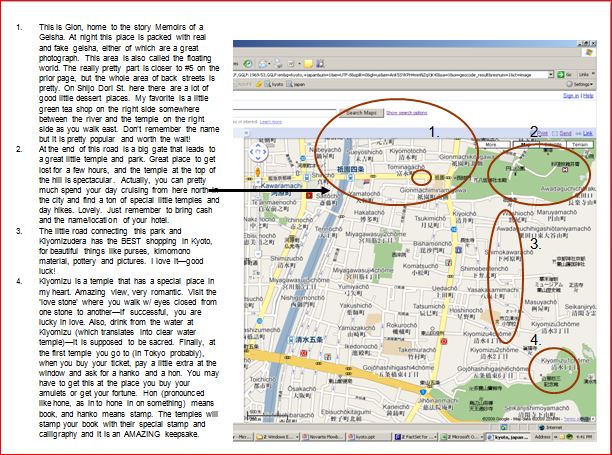
Well then, it’s decided. The first flight and the first hotel are booked. It’s also clear that we can’t afford an agency to do all our bookings so it’s a plea for help. We are very lucky that my daughter-in-law studied Japanese, is based in Hong Kong and has lots of friends who are knowledgeable about Japan. She very kindly emailed them our outline schedule and to my amazement – these are high powered businesswomen – we had wonderfully detailed and informative responses including, and I quote, “my dorky walking map of Kyoto” which is quite the most useful thing I have ever been sent. Real insider knowledge set out clearly on a series of maps we can follow when we get there. So it was onto the tablet straight away with those. It also helped us to resolve a travel issue that was proving very perplexing.

Kyoto Kate 1             Kyoto Kate 2

Hiroshima is an important place to visit for anyone with an interest in history – my wife, or anyone with an excessive sense of guilt – me. But it’s a very long way to travel and if we do include Hiroshima we have to drop some other Murakami or garden locations. Do we not go from Kyoto to Nara for the day? Do we miss out on the wonderful sounding Naoshima Art Island which we’d seen in a leaflet from JNTO and was highly recommended by one of our experts above. On balance and with a memory of a glazed look from an admittedly very young lady in the tourist office when asked whether she would make the long journey – it’s a no for Hiroshima. I know there will be a little regret at not standing in the peace garden to reflect – especially with Garden of the Evening Mists’ Japanese war in Malaya setting fresh in our memories – but apart from the peace park the Japan Guide lists the next three attractions as a garden (not one of Japan’s top three), a concrete reconstruction of the nuked castle and downtown. On balance it looks like the right decision.

My daughter-in-law had always said that festivals in Japan were manic, wonderful occasions and as luck would have it I discovered in the trusty japan-guide.com that Takayama has its Spring Festival on 14-15 April when we had planned to be in Tokyo but hey it’s not far so a quick schedule shuffle and the Takayama festival is on the itinerary. After all japan-guide.com says:

   “Takayama is considered one of Japan’s best festivals”.

The citizens of Takayama are greedy in that they have another festival in October but given the proximity to the Northern Japan Alps maybe spring is the better option.

With my excited enthusiasm of course I’d only done a boy look at the guide. Later I discovered the hard way what it told me quite plainly had I bothered to read it:

 “The festival gets especially crowded if one or both festival days fall on a weekend or national holiday. As a result, hotels in    central Takayama get booked out many months in advance of the festival.”

Never in my life have I clicked on booking site hotel flags with increasing lack of concern to their proximity to the centre of town to find every single one with the legend “SOLD OUT”. Ooops! Ooops! Ooops! Spread the net to 20 miles from Takayama and a room is available. I’m usually sceptical of the exhortation “only one left book now” but in this instance my click is very firm. Who knows what the Pension Green Lake will be like? It’s not far from the festival, it has a bed, it’ll accept my booking. Tripadvisor had two high starred good reviews – but in Japanese and Google translate didn’t help much.  However it’s only an hour from Shirakawa Mura the UNESCO World Heritage Site with its steep sloped, thatched-roofed houses which we want to visit anyway and we can get to Takayama.

It’ll do.

We’re there for two nights – it had better do.

Reality bites

2 sushi pink

    Can we achieve our

    ideal itinerary

                 or will there be cuts?

So, despite realising we had selected the busiest and most expensive time to visit Japan, I went online and found a number of likely recipients to advise on and quote for our trip. I emailed the draft itinerary to three specialist Japan tour companies and to the Japan National Tourism Organization’s office in London. I asked them to take a look to see whether they thought our plan was do-able at all and if so what sort of budget we’d be looking at. All were extremely helpful – three were extremely doubtful. The JNTO advice came free and offered me the chance of going in to discuss it. The tour operators all suggested the budget we’d tentatively set ourselves was about half of what was required. They also warned us that we had opted to travel at the most expensive and busy time and that making bookings at all would be difficult and where possible, expensive. I had mentioned that I was aware of this in my covering letter but that because of work commitments, this was sadly the only period this year when we are free to travel.

We had some Avios (Airmiles as was) which would cover the flights to Tokyo with British Airways. So we picked our dates, clicked confirm and Bingo! Stage one the flight out was booked. Except not – the checkout basket kept asking me for credit card details and a significant sum of money. So we abandoned that bit until I could call Avios next day to check it. We continued refining the trip so that we could include as many of the Murakami places, the gardens, ukiyo-e galleries and general tourist sites as possible. I had managed to make it to Kamakura and Nikko on my previous visits – Nikko most notably with overnight ryokan style accommodation in a school staff dormitory,  callisthenics with the pupils to a nationally broadcast radio routine at six in the morning as the sun rose followed by a miso soup and pickles breakfast. And yes I still want to go back.

After observing, commenting on and demonstrating practical activities, we did finish relatively early in the school in Nikko and managed to take lunch at a restaurant on Lake Chuzenji which consisted of some of the most delicious freshly caught trout I’ve ever eaten – hope they’ve still got some and haven’t overfished the lake. So that’s another must for the list – to go back and see how much it’s changed  – as if I can really remember.

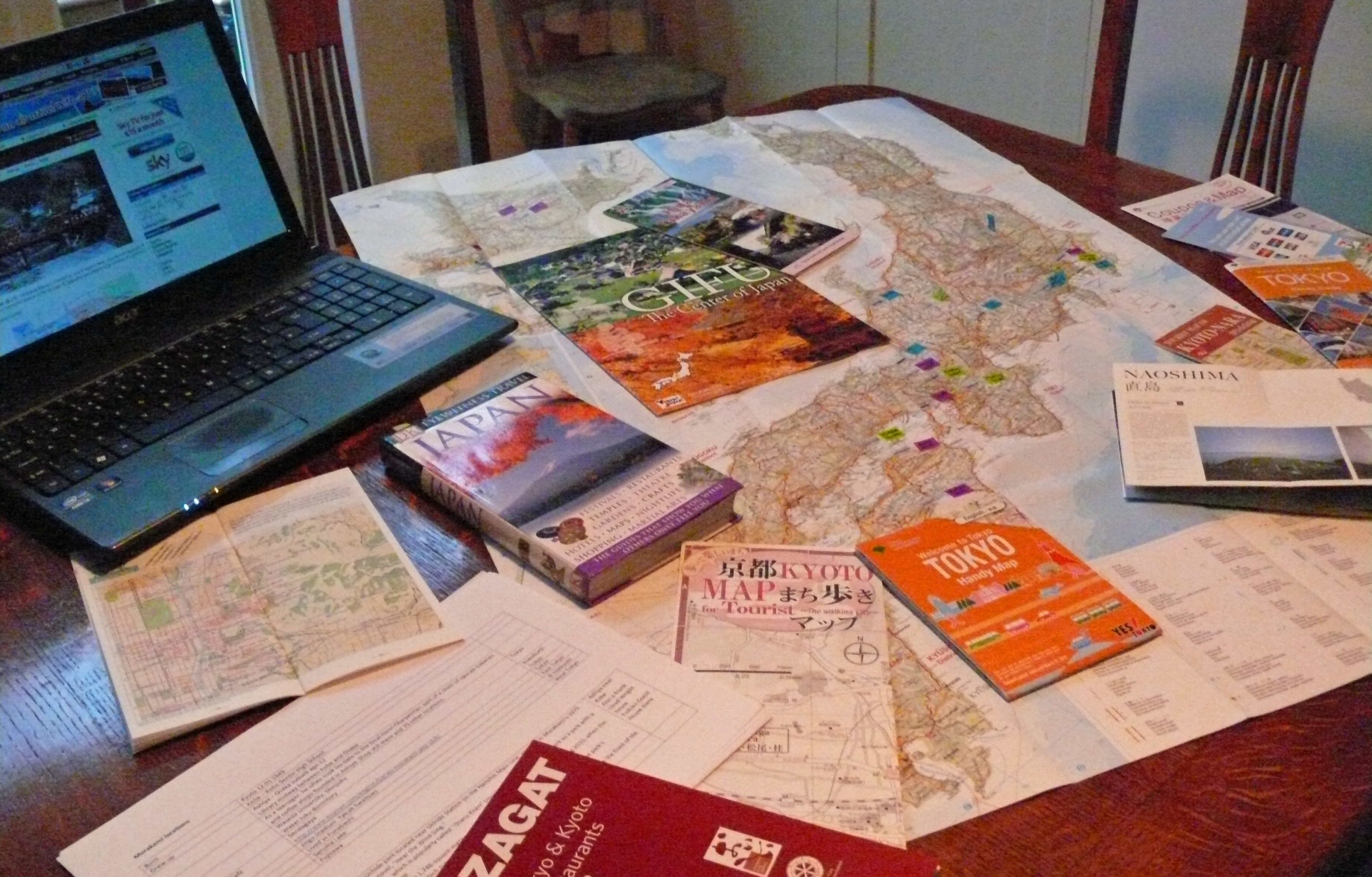
Table with maps

Websites are wonderful things but looking at hotels on them can be very confusing. Booking.com and Agoda.com have settings where you can set prices in GBP and not have to have the calculator to hand. But the very good Japan based sites Rakuten and Jalan only show prices in ¥ per person per night and JapanIcan.com kept freezing on me so I gave up on that. However that first Sunday afternoon we had decided on the E Hotel in Shinjuku for our first two nights in Japan so that at least we had something booked. And at £60 per night for both of us it led us to believe the whole thing might be a reality not just a possibility. We folded the map, put away the guidebooks and shut down the laptop in an optimistic frame of mind.

Next morning did bring something of a shock however when my call to Avios confirmed that while our accumulated miles would indeed buy the tickets to Tokyo they wouldn’t cover the taxes. On reflection and after my initial indignation, this is an understandable Avios policy since fuel surcharges, airport fees and government taxes change all too frequently. So what we’d seen as a free flight is now going to cost us £343.75 each just for taxes. Ah well, as always for most of us there’s no way of avoiding taxes.