
I so enjoyed my visit to Miro’s studio in Mallorca last year that I decided to visit the Fundacio Miro in Barcelona. It’s situated up on Montjuïc the mountain where the Olympic Park was in 1992 and which continues to be a tourist attraction. Three stops on the Metro to Parallel and the the Funicular up to Montjuic.

It was a disappointing trip compared with the ones in Bilbao, Budapest and San Sebastián in that it’s almost entirely in a tunnel with just occasional sights of scrappy play areas and none of the vistas across the city I was hoping for. However, a few steps from the top of the funicular, my wish was granted with this view dominated by the magnificent Sagrada Familia.

On the way to the Miro Foundation was a sculpture garden with some of the worst signage I’ve ever come across – tiny aluminium stakes with titles engraved – totally illegible. At Miro, things were handled much better. There is a huge collection of paintings, sculptures, tapestries and found objects displayed in spacious galleries. I’m glad I’d been to the studio in Mallorca to get an idea of Miro’s working methods. It’s also good to see that artists who choose to follow a different kind of visual vocabulary are well grounded in basic draughtsmanship.

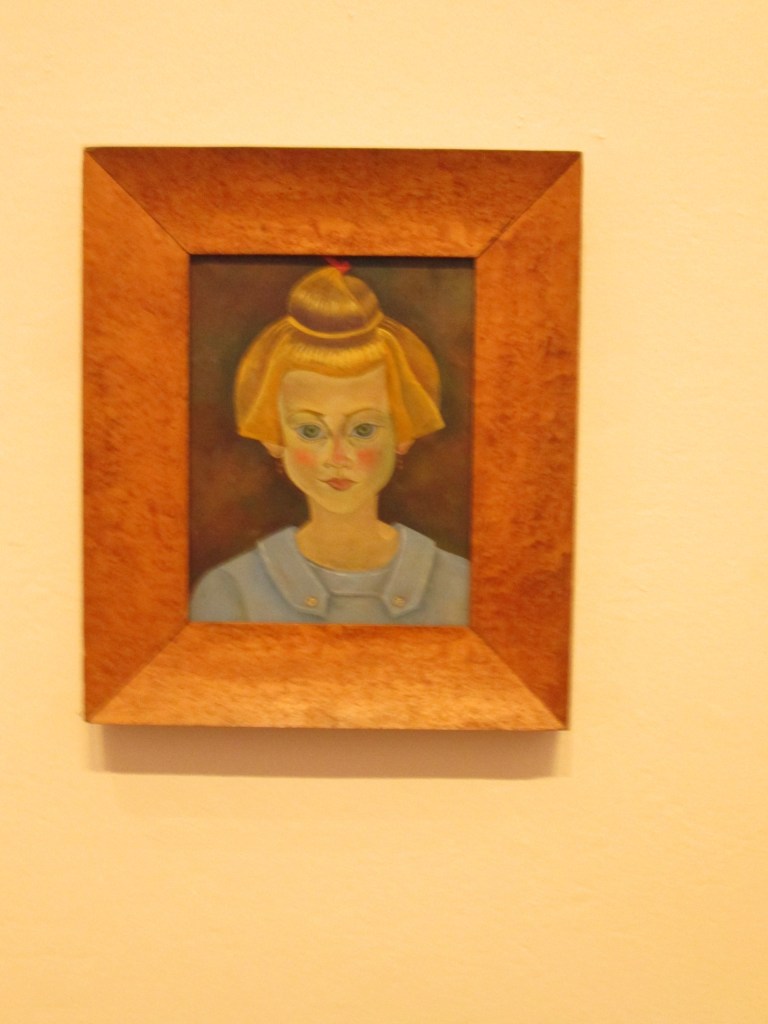

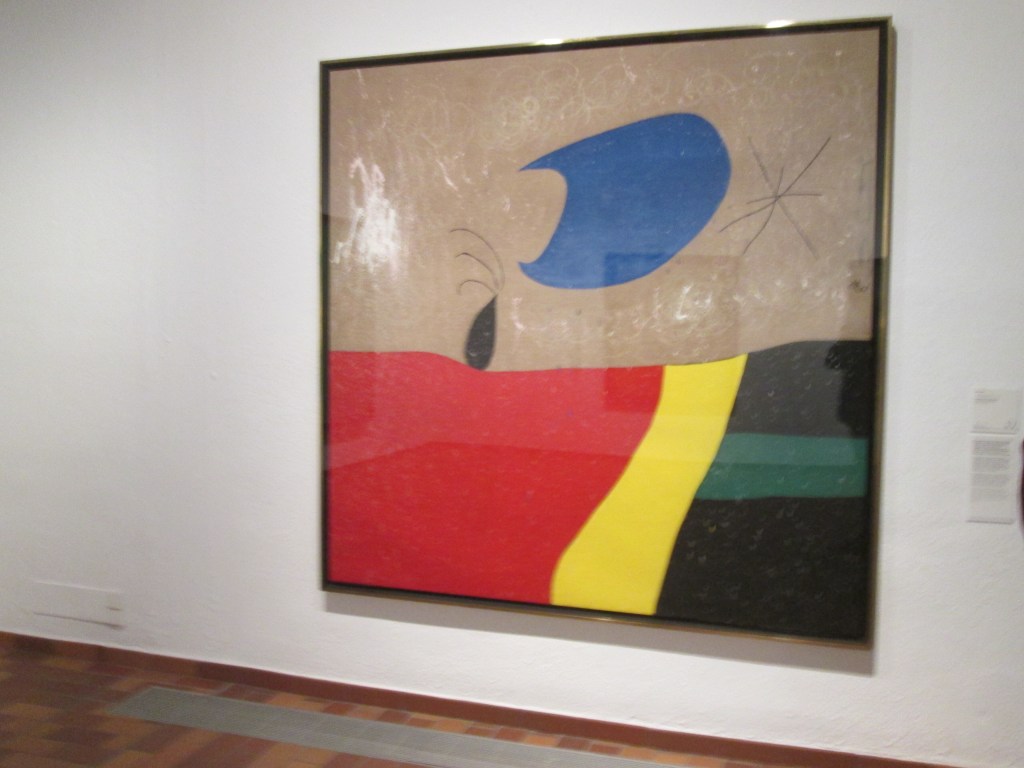
I particularly love his amusing sculptures from everyday objects. As a not-very-royalists person I was much taken by King, Queen and Prince (below right), the huge (nearly 6 metres across) Sobreteixim with eight umbrellas and the dramatic use of a coat hanger.


Another artist provides a fascinating object here. Alexander Calder was the only non-Spaniard invited to contribute to Spain’s pavilion at the 1937 Paris World Exhibition. Alongside several Miro canvases, Picasso’s Guernica, Calder’s Mercury Fountain was seen as a further protest against the atrocities of the Franco regime including the attack at Almaden the town that provided a substantial quantity of the world’s mercury. Calder donated the sculpture to the Miro Foundation and we view it from behind a glass screen since the toxicity of mercury has been discovered. Funny thing is the Egyptians knew about mercury too and thought it chased away evil spirits – may have killed some of them too.

A temporary exhibition here featured another favourite artist. It was called Paul Klee and the secrets of nature. It hads a fascinating collection of drawings and early paintings again demonstrating complete draughtsmanship abilities before going his own chosen way or ways in his case as there was so much variety in his work.


I had a coffee in the cafe before continuing my walk along Montjuic. I was heading inexorably to the National Art Museum of Catalunya, which I had told myself I wasn’t going to bother with on this trip. I remembered, bothwith the children ages ago, and with Dee more recently standing on its terrace on a Friday evening eagerly awaiting the magic fountain’s display. No use waiting for it on Wednesday afternoon. I do remember it as quite spectacular with water jets synchronised to different music genres at different times and changing colour appropriately. Looking down at it brought back good memories. I then thought ‘Well I’m here, it’s free with the Barcelona card so why not?’.
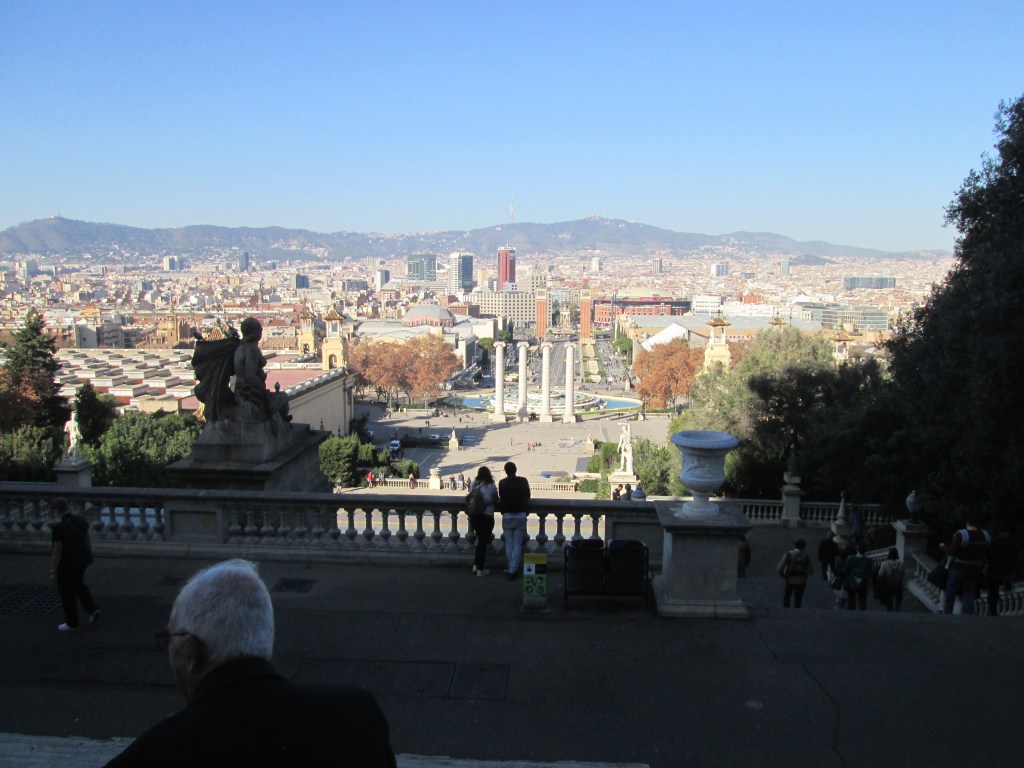

The majestic central dome covered an area in which there were easels for wannabe artists and a fabulous soft play area with kids swarming all over. If that what it takes to get folk in and keep galleries alive, I’m all for it.


I decide to eschew the old masters which I have seen before and head for the modern floor upstairs. Neatly divided into four areas it shows the development of Catalan art from the turn of the century to the present day. In the very first gallery devoted to modernisme, what did I see but the actual dining table Gaudi had designed for Casa Battlo.? There were lots of beautiful wooden, glass and metal objects in that fluid style.


As I progressed through the galleries I saw works by familiar names like Rusinol, Sorolla and Picasso. I was especially taken by a cunning Rusinol self portrait. Look carefully!
In the next room I was introduced to the work of a female photographer Mey Rahola who shared a love of sailing and photography with our friend Joe Weiler in Boston. She was lucky to be around at a period 1934-36 when it was OK for a woman to engage in such pursuits. The Civil War put and end to that as she went into exile in France but had developed her own documentary style and continued to take photographs professional during the Second World War.

A new set of rooms for 2022 are devoted to the art of the Civil War period and range from propaganda posters, depictions of the horrors of war reminiscent of Goya – one wall of etchings reminded me of Los Caprichos. It’s interesting to see how Spain is re-evaluating the whole period that was so traumatic for so many. When I raised the refugee elements in Isabel Allende’s book with Rosa and Pepita over lunch Pepita didn’t really want to discuss it as, although born after the end of the war, so much of her childhood and early years were shaped by it. One of Rosa’s video installations Lost was on the subject of babies stolen by the church during the Franco period. It casts a long shadow.


Enough gloom. Back out into the sunlight of Montjuïc and a walk through the Botanic Garden towards the Olympic Stadium where a convenient bus arrived and took me back to the funicular. A little later a further trip to the Cerveseria rounded off a thoroughly enjoyable day up above the city.


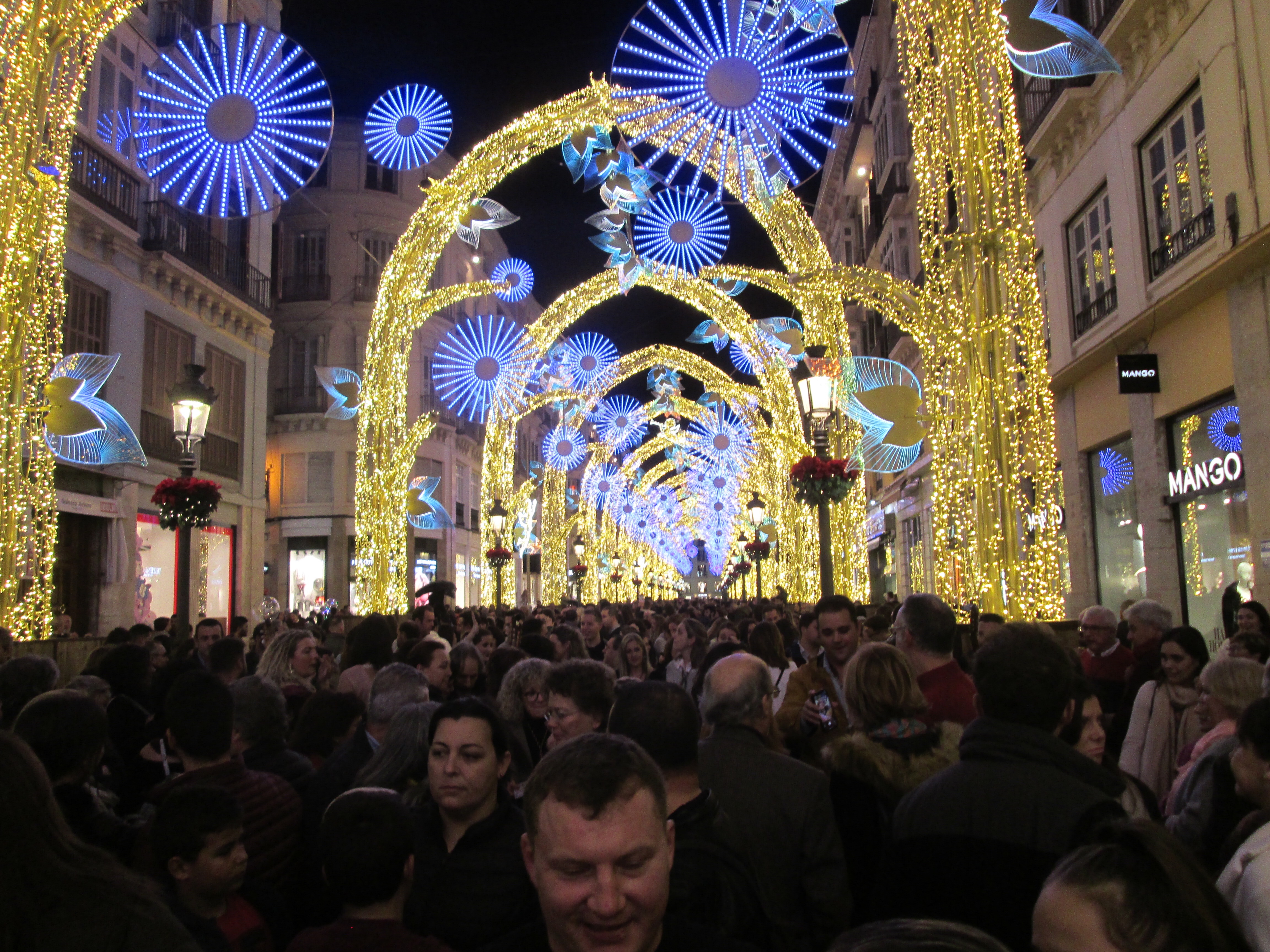
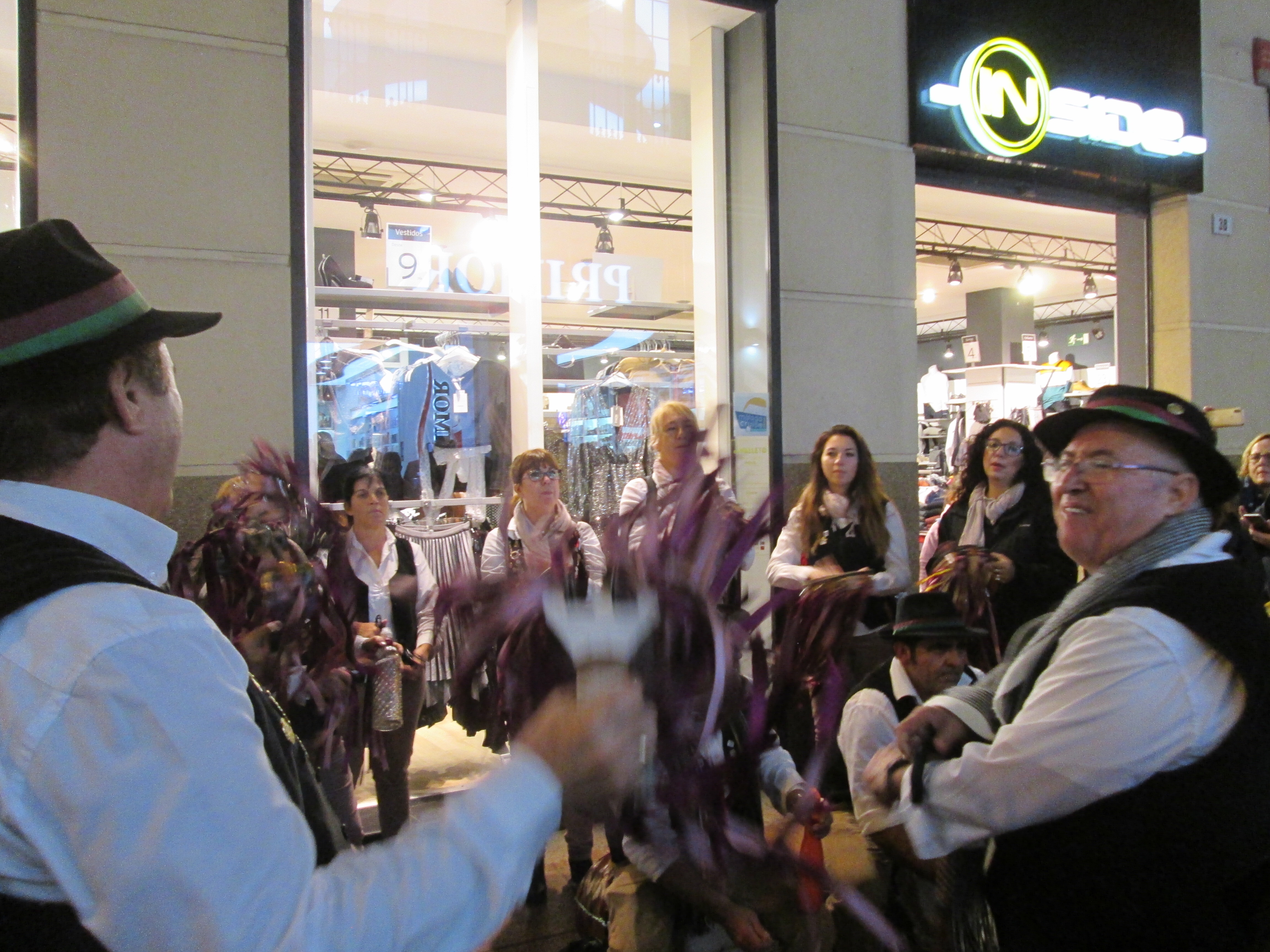

 After spending an excellent Christmas with Dee’s sister and brother in law in Sucina down the coast in the province of Murcia with Christmas lunch in Santiago de la Ribera and a Boxing Day excursion to Cabo Palos and Cartagena, we set off for Valencia for the week until the New Year. Given last year’s experience in Cadiz we left the car back at the airport and took their shuttle bus to the excellent boutique hotel Hospes Palau de Mar which is in two converted merchant buildings not far from the old city and the Turia Gardens, the 9 km super-park that semicircles Valencia in the former bed of the diverted river Turia.
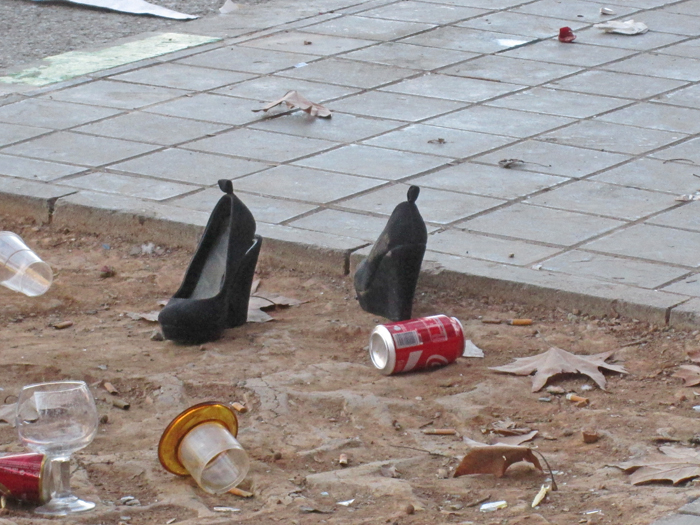 We were too early to check in so left our luggage and set off for a Sunday flea market held behind the Mestalla – Valencia Football Club’s stadium where we went to see a match back in 2006. Sadly by the time we made it, the majority of stalls had packed up and gone. So it was time to find somewhere for lunch and console ourselves that if we had found anything interesting it would have probably been difficult to get it back home. After going back to the hotel and establishing ourselves in our room we walked off to the Plaza del Ayuntamiento where an ice rink was installed and fun was being had by all amid bright white light decorations on all the buildings around it. We found a lovely little family bar Jamon del Medio just along from the hotel so we dined there and only had a short stagger back to the hotel.


 The wide sandy beach is fringed by a promenade with at least a hundred restaurants all promising the authentic Valencian paella – well this is the home of the dish after all.The surrounding area also has some interesting old buildings including beautiful wrought iron warehouses and the old Custom House with its tall clock tower. There are also lots of signs of the Americas Cup which was based here in 2010 and of the Grand Prix de Europa which was held here from 2018-2012. It was a bit early for paella so after a coffee we jumped back on the tour bus and headed back into the old town.
 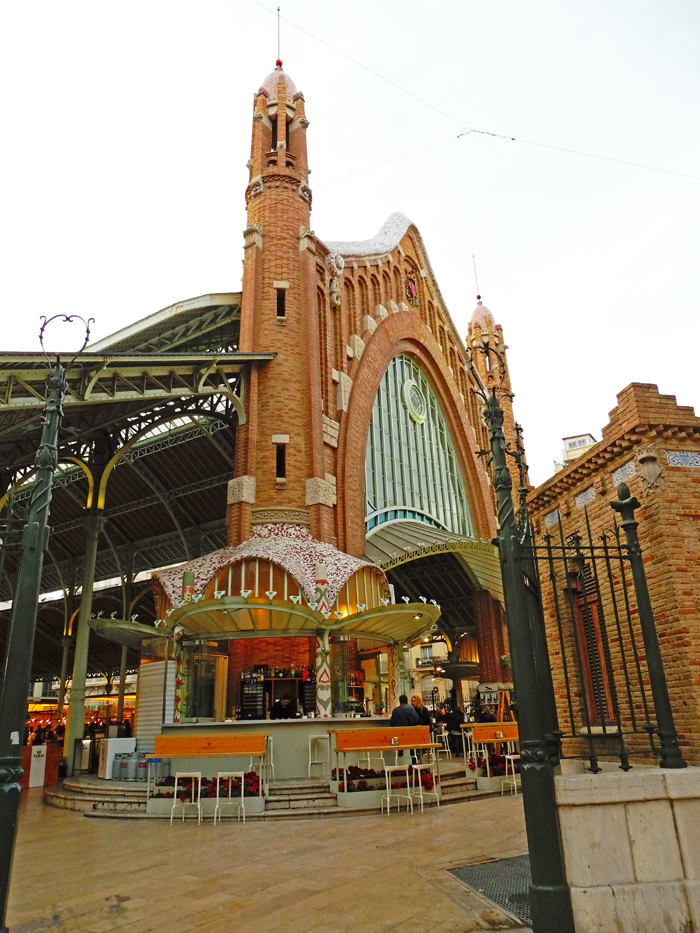 There’s lots to explore here to with the modernist North Station and the Central Market with lots of local iconography and products. We were going to go to the Fine Arts Museum but of course it was closed on a Monday so plan B was back to the hotel to chill and read before a further evening explore of the centre. It took us to what was to be a breakfast gem for the next three days – the Café Agricultura which is part of the HQ building of the Royal Valencia Society for Agriculture and Sport. We entered a nice-looking cafeteria for an aperitif and idly picked up the menu which did a simple breakfast which was great value. Only when we ventured to the loo did we notice that the cafeteria led to a massive entrance hall with a monumental staircase and apparently, lots of meeting rooms and full scale dining areas. They also run the young farmers’ clubs and bridge and chess clubs along with influencing agricultural policy in the region.



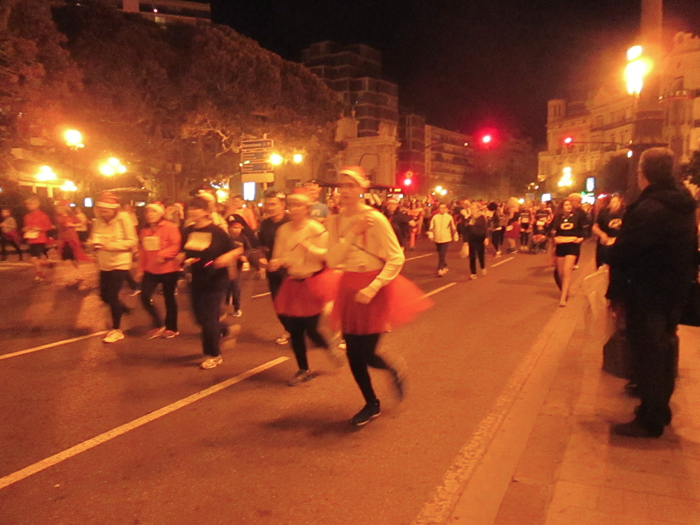
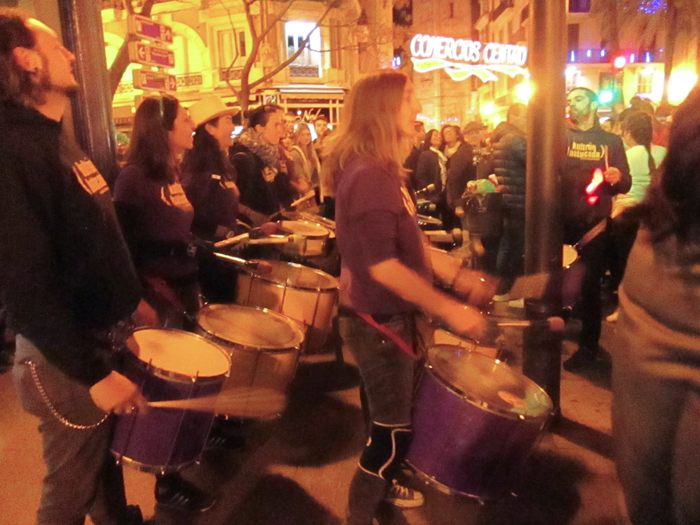 That evening we heard a great commotion outside the bar near the hotel we were in and went outside to find the streets filled with hundreds of people in fancy dress running along. We went with them following the sound of some insistent drums to the Plaza de la Reina where we discovered this was the finish of an annual charity 5km run that’s held on30 December every year. The San Silvestre run has been going since 1983 and attracted an estimated 15000 to 18000 runners of all ages. As with so many events like this there are some serious runners but many are in fancy dress and there to end the year with a bit of fun.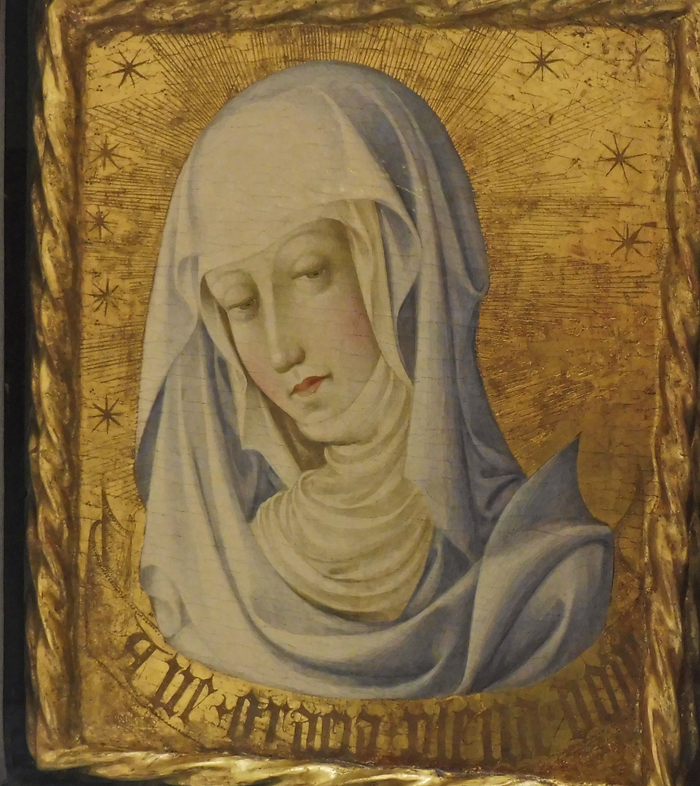
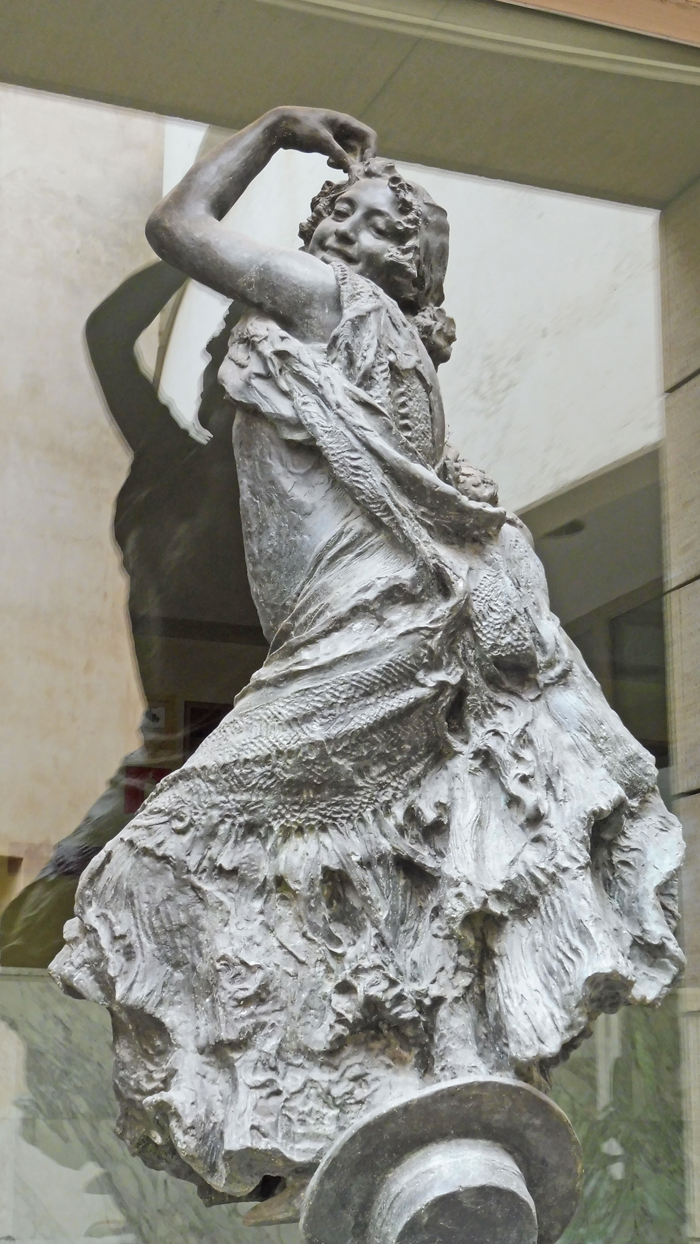 Dee was very taken by this early fifteenth century Virgin by the Valencian artist Peris Sarria. There were also lots of sculptures, including this flamenco dancer, by Mariano Benlliure the brother of Jose who’s house we seen earlier. Their father and another brother were also painters so there was quite a dynasty of artistic Benlliures about which we had previously known nothing at all. Cultured out, we had a coffee at the museum and a stroll back to the Plaza de la Reina for another light lunch as we had booked the special New Year dinner at the hotel. This proved a riotous affair with silly hats, whistles and streamers and much jollity among the staff as well – many of them were international catering students drafted in for a big party by the hotel. It was a fine way to see in the new year.


 mikeandmurakami.com