Last day observations

Despite not being in the best of health throughout, it has been a great stay in this wonderful city. I’ve visited familiar places and several new ones, heard great music and seen amazing art. I need to catch a train from Passeig de Gracia around 14:30 to get to the airport in good time for security and check in so decide to forgo further wide exploration today and walk about other part of the Eixample. Apart from the Berasategui restaurants, there are other reasons to come back – I didn’t do the ‘immersive Dali experience’ at IDEAL, the Digital arts Centre, I didn’t get to the European Museum of Modern Art and of course I’d love to go to the Liceu Opera house again to hear something to my taste performed.

One of the things I love are elegant shop signs from the golden age. Dee had an obsession with door knobs and knockers, mine is with shopfronts. Dee also loved hat shops so there’s one here for her! I collected a few more this morning as I strolled the nearby streets. It’s a little more cloudy today but still pleasantly warm although down a bit from yesterday’s 22 degrees (that’s 72 Daisy).

I also snapped a few more of the elegant houses that jump out from the streets at regular intervals. It’s a city where you need to be sure to look up as you walk through the streets.

But I needed to look down at the top of the Passeig as I came across this excellent manifesto which is something that as a sort of creative I feel very strongly about. It’s set in the pavement outside a Barcelona city office.

Just round the corner at the Palau Robert a poster for an exhibition reminded me of a day in the spring when Frances, Rosa and I went to see Pedro Almodovar’s Parallel Mothers. Alongside the usual convoluted emotional stories of two women, he finally addresses the horrors of the Franco era. The film involves a search for the body of a great grandfather in a mass grave. The poster examines 85 years of trying to reunite families with lost relatives. So far of the 114,000 ‘disappeared’ only 19,000 have been recovered. As Almodovar said in a Guardian interview, ‘Now is the time to remember Franco lest his victims be forgotten’.

Inside the Palau is a much happier image – Barca’s first heroes. There are displays of other sports – boxing and motor sport very popular – and fashion during the early part of the 20th century. This is the 1919-20 season team that won the Catalunya championship as well as that of all Spain. The caption claims that the 20s was the decade when football became a mass popular sport.

Sipping a last beer before boarding the train I noted that at none of the bars I’d been to had I been offered the little complimentary dish of olives, crisps or nuts that had been common on previous trips. Now whether this is a factor of the cost of living crisis or just a metropolitan thing I’m not sure. Certainly the news programmes were filled with analysis of the government’s crisis measures – reducing VAT on food staples, capping fuel prices and handouts of 200 euros to those most in need as well as some measures to encourage businesses to recover. I didn’t find Barcelona quite as depressing as London from the point of view of rough sleepers and boarded up shops – but I was in a rather posh part of the city for most of my trip. And as I descended to the train station my last view was of Gaudi’s brilliant Casa Mila known as La Pedrera (the stone quarry). It was his final civic architecture before devoting his life to the Sagrada Familia. A fitting end to an excellent week in this great city.

A day on Montjuic

I so enjoyed my visit to Miro’s studio in Mallorca last year that I decided to visit the Fundacio Miro in Barcelona. It’s situated up on Montjuïc the mountain where the Olympic Park was in 1992 and which continues to be a tourist attraction. Three stops on the Metro to Parallel and the the Funicular up to Montjuic.

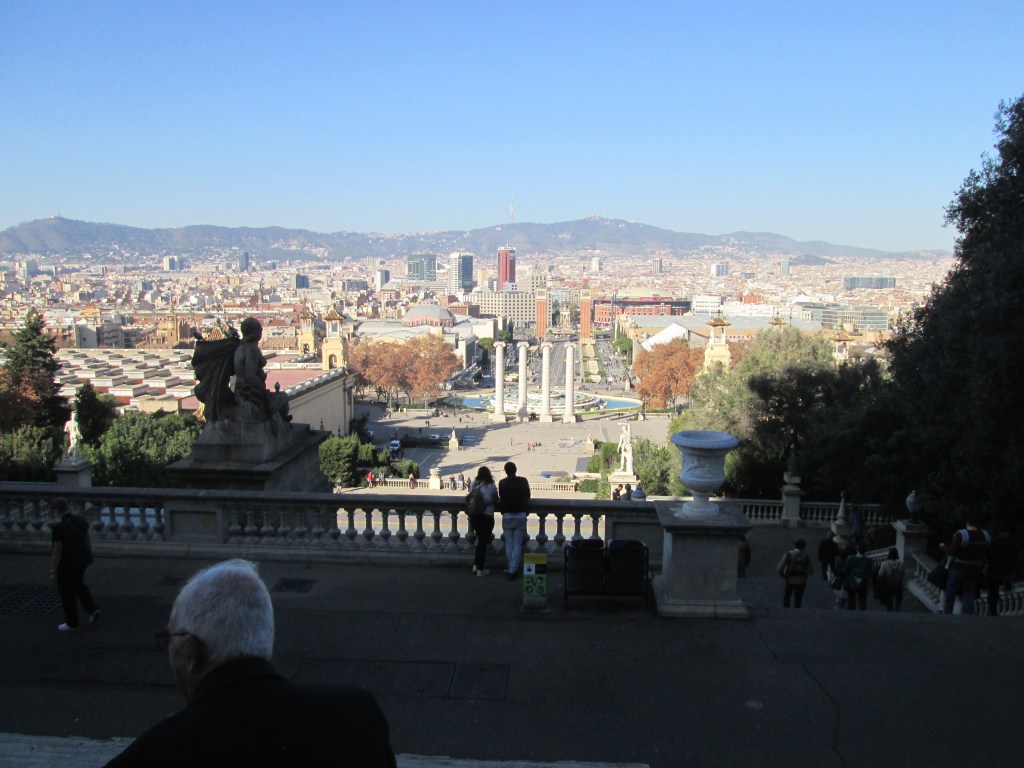
It was a disappointing trip compared with the ones in Bilbao, Budapest and San Sebastián in that it’s almost entirely in a tunnel with just occasional sights of scrappy play areas and none of the vistas across the city I was hoping for. However, a few steps from the top of the funicular, my wish was granted with this view dominated by the magnificent Sagrada Familia.

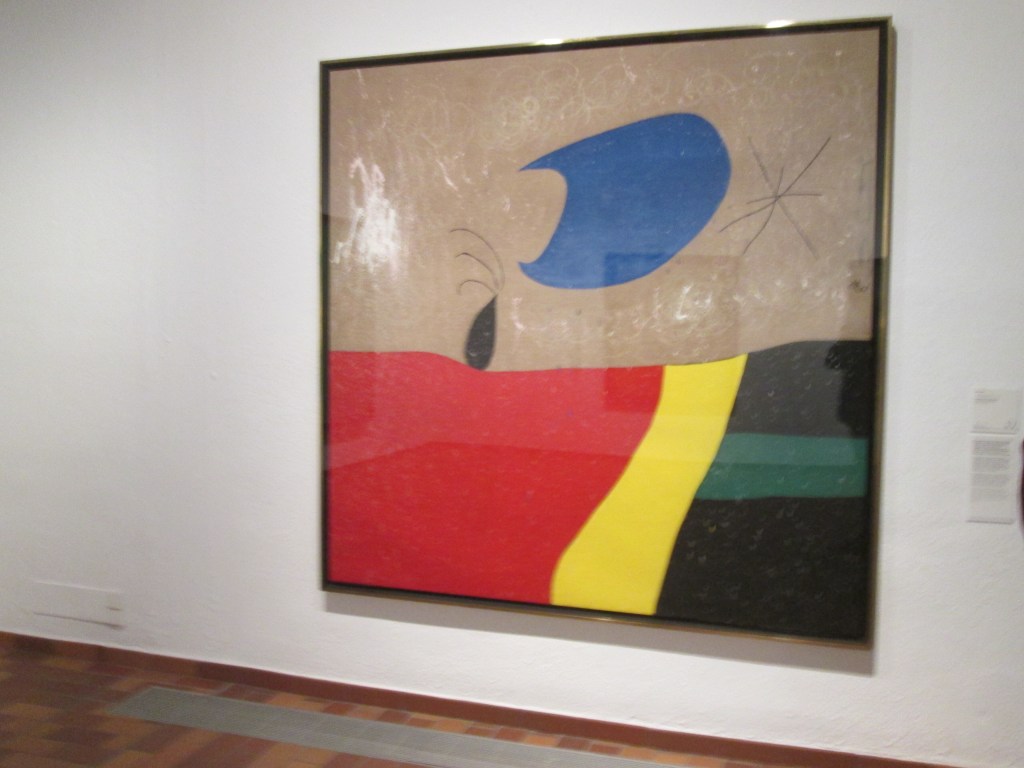
On the way to the Miro Foundation was a sculpture garden with some of the worst signage I’ve ever come across – tiny aluminium stakes with titles engraved – totally illegible. At Miro, things were handled much better. There is a huge collection of paintings, sculptures, tapestries and found objects displayed in spacious galleries. I’m glad I’d been to the studio in Mallorca to get an idea of Miro’s working methods. It’s also good to see that artists who choose to follow a different kind of visual vocabulary are well grounded in basic draughtsmanship.

I particularly love his amusing sculptures from everyday objects. As a not-very-royalists person I was much taken by King, Queen and Prince (below right), the huge (nearly 6 metres across) Sobreteixim with eight umbrellas and the dramatic use of a coat hanger.

Another artist provides a fascinating object here. Alexander Calder was the only non-Spaniard invited to contribute to Spain’s pavilion at the 1937 Paris World Exhibition. Alongside several Miro canvases, Picasso’s Guernica, Calder’s Mercury Fountain was seen as a further protest against the atrocities of the Franco regime including the attack at Almaden the town that provided a substantial quantity of the world’s mercury. Calder donated the sculpture to the Miro Foundation and we view it from behind a glass screen since the toxicity of mercury has been discovered. Funny thing is the Egyptians knew about mercury too and thought it chased away evil spirits – may have killed some of them too.

A temporary exhibition here featured another favourite artist. It was called Paul Klee and the secrets of nature. It hads a fascinating collection of drawings and early paintings again demonstrating complete draughtsmanship abilities before going his own chosen way or ways in his case as there was so much variety in his work.

I had a coffee in the cafe before continuing my walk along Montjuic. I was heading inexorably to the National Art Museum of Catalunya, which I had told myself I wasn’t going to bother with on this trip. I remembered, bothwith the children ages ago, and with Dee more recently standing on its terrace on a Friday evening eagerly awaiting the magic fountain’s display. No use waiting for it on Wednesday afternoon. I do remember it as quite spectacular with water jets synchronised to different music genres at different times and changing colour appropriately. Looking down at it brought back good memories. I then thought ‘Well I’m here, it’s free with the Barcelona card so why not?’.

The majestic central dome covered an area in which there were easels for wannabe artists and a fabulous soft play area with kids swarming all over. If that what it takes to get folk in and keep galleries alive, I’m all for it.

I decide to eschew the old masters which I have seen before and head for the modern floor upstairs. Neatly divided into four areas it shows the development of Catalan art from the turn of the century to the present day. In the very first gallery devoted to modernisme, what did I see but the actual dining table Gaudi had designed for Casa Battlo.? There were lots of beautiful wooden, glass and metal objects in that fluid style.

As I progressed through the galleries I saw works by familiar names like Rusinol, Sorolla and Picasso. I was especially taken by a cunning Rusinol self portrait. Look carefully!

In the next room I was introduced to the work of a female photographer Mey Rahola who shared a love of sailing and photography with our friend Joe Weiler in Boston. She was lucky to be around at a period 1934-36 when it was OK for a woman to engage in such pursuits. The Civil War put and end to that as she went into exile in France but had developed her own documentary style and continued to take photographs professional during the Second World War.

A new set of rooms for 2022 are devoted to the art of the Civil War period and range from propaganda posters, depictions of the horrors of war reminiscent of Goya – one wall of etchings reminded me of Los Caprichos. It’s interesting to see how Spain is re-evaluating the whole period that was so traumatic for so many. When I raised the refugee elements in Isabel Allende’s book with Rosa and Pepita over lunch Pepita didn’t really want to discuss it as, although born after the end of the war, so much of her childhood and early years were shaped by it. One of Rosa’s video installations Lost was on the subject of babies stolen by the church during the Franco period. It casts a long shadow.

Enough gloom. Back out into the sunlight of Montjuïc and a walk through the Botanic Garden towards the Olympic Stadium where a convenient bus arrived and took me back to the funicular. A little later a further trip to the Cerveseria rounded off a thoroughly enjoyable day up above the city.

Ancient and modern

My children returned from a trip to Egypt raving about it and insisting it be added to the bucket list. When I mentioned this at lunch on Boxing Day, Pepita and Rosa who had both been and loved it, suggested I visit the Museu Egipci in Barcelona. My visit to the Sagrada Familia was booked for 14:30 so what better way to spend the morning? Also it was directly along Calle Valencia a left turn out of the hotel. It proved very rewarding. As all had said, the time zones are astounding. Craft, writing, tools of such complexity 3000 years BCE do blow the mind. Yes some of the names are familiar – Rameses, Ptolemy, Cleopatra, Tutankhamen – but how do they relate? The museum is small, on three floors of a town house, but highly informative with several modern x-rays conducted with Imperial College in London and others to analyse what had been collected over the years, by Howard Carter among others. These showed levels of skill that are mind-blowing given the eras involved. Quite a civilisation! Bucket list duly updated.

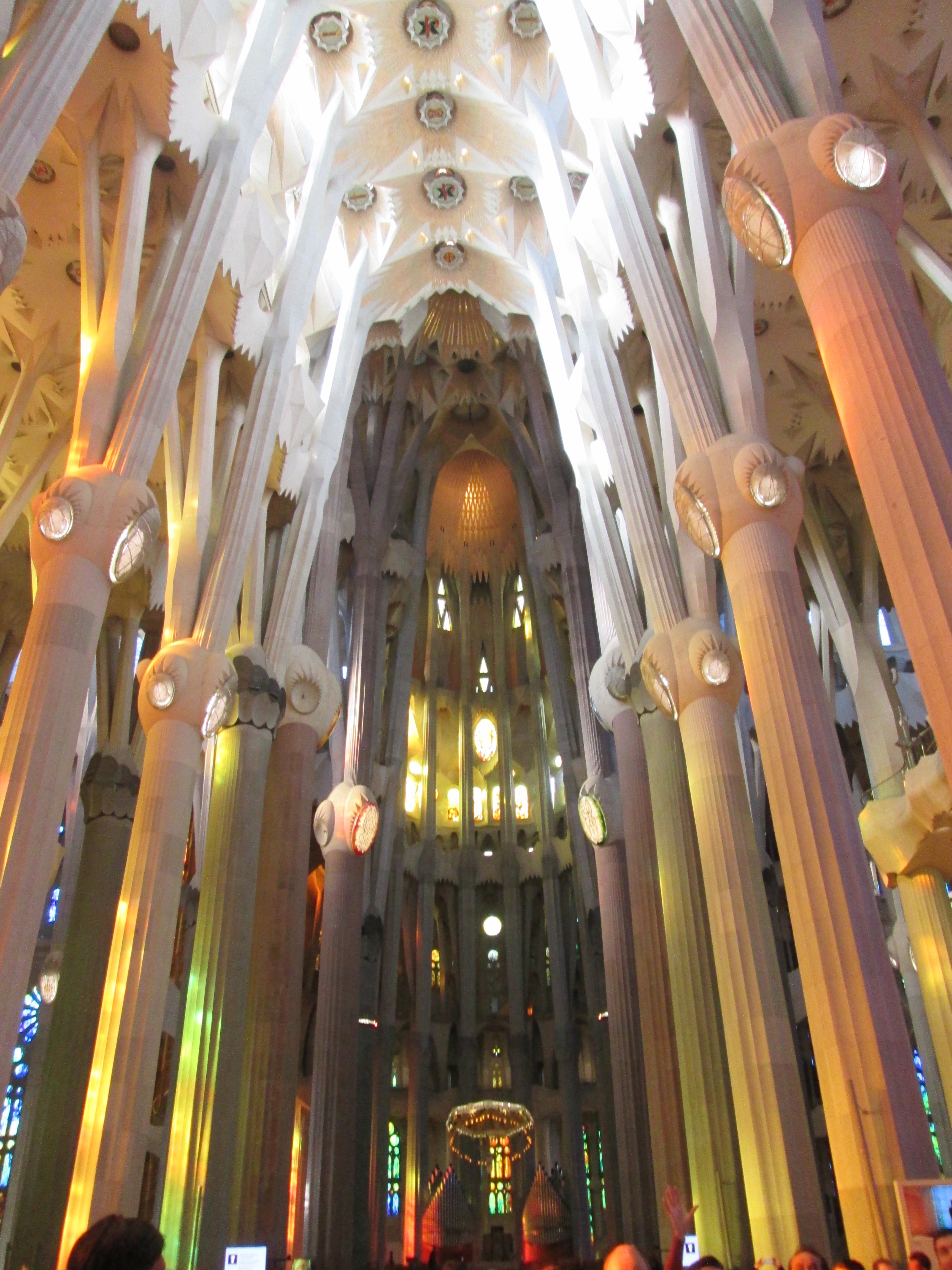
I headed off along Calle Valencia in the belief that this would bring Me to, or close to the Sagrada Familia. To my delight I found another local market on the way and decided to have an early lunch as everywhere near the basilica would charge a premium. I’m not entirely a cheapskate but don’t like being ripped off. I had a very fine fish soup with pan con tomate and was equipped to revisit the icon of Barcelona after a good many years. I first came when the children were young and we could roam among the half constructed towers, then later with Dee while they were still hoping for investment to finish it, probably ten years ago. As a deeply religious man, Gaudi would probably appreciate my OMG reaction on stepping inside. The nave is finished – it’s not open to the sky any more. The stained glass is all in place and it looks magnificent. Only once back outside do you see the tell-tale crane and realise that some of the towers are still to be finished. But they say it’s on track for 2025 only 135 years after the foundation stone was laid.

The exterior is equally brilliant with enough religious and natural symbolism to fill several volumes – available in the shop of course. But here are some of my favourite elements.

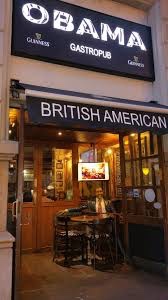
Having walked all the way there, I took the Metro back to Passeig de Gracia, put my feet up for a while in the hotel and then headed out to the Gastropub Obama – yes really – for a light supper. Claims to be British American but the most prominent beer on offer is Guinness. It was fun but the Cerveseria Catalana gets my vote for the best place in the area.

Nadal i Sant Esteve

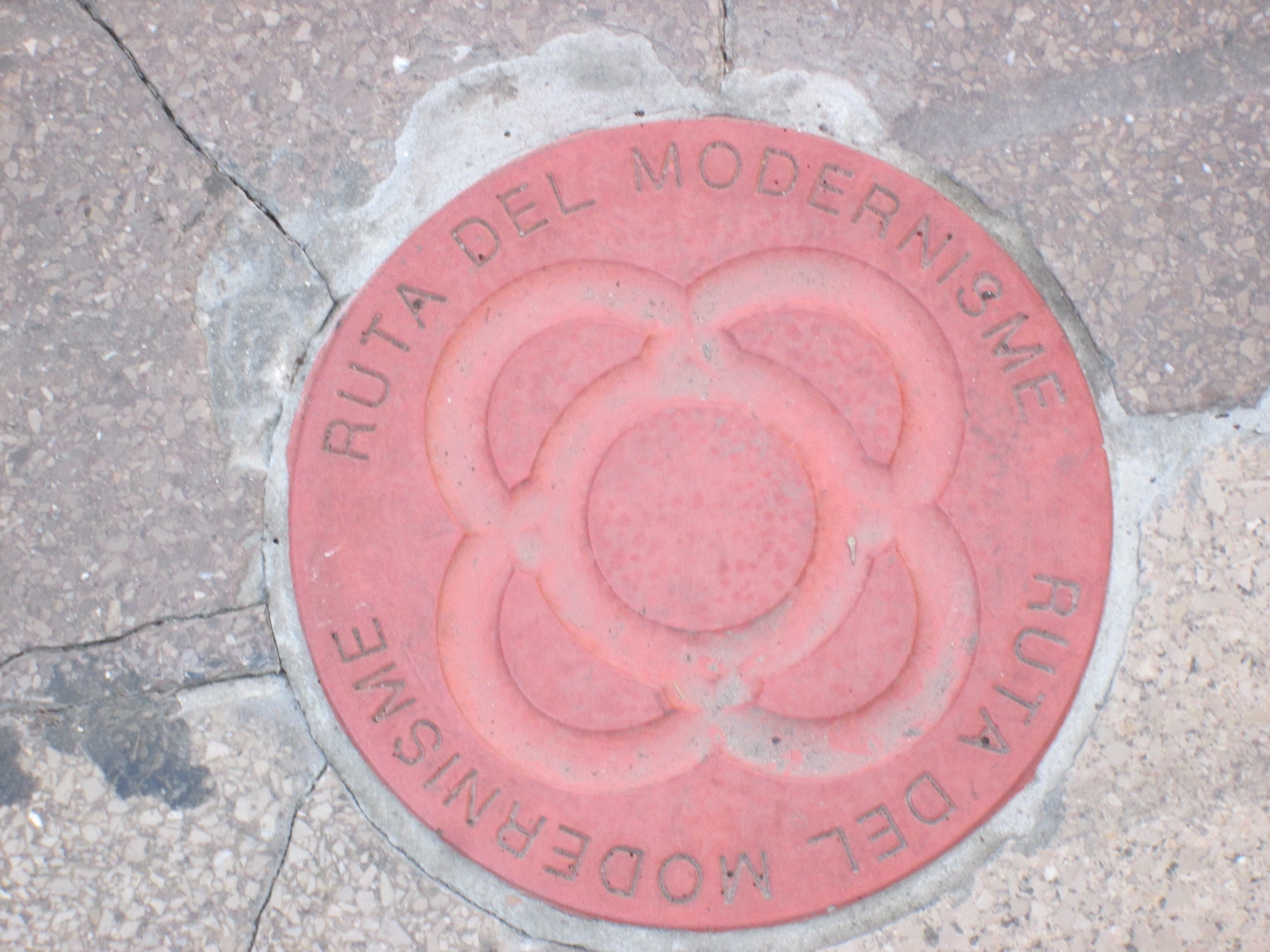
Christmas Day was always planned as a quiet one. I needed to give my feet a rest so began the day with a leisurely buffet breakfast in the hotel for the first time (not included and cheaper on the Rambla!). A little light blogging, music and reading saw the morning whizz by. I decided to take a brief stroll around the neighbourhood finding a pretty passageway with orange trees – the mind turns to marmalade making in a month or so. There were a large number of other splendid examples of modernisme architecture – there were even plaques on the pavement showing on was on the correct route.

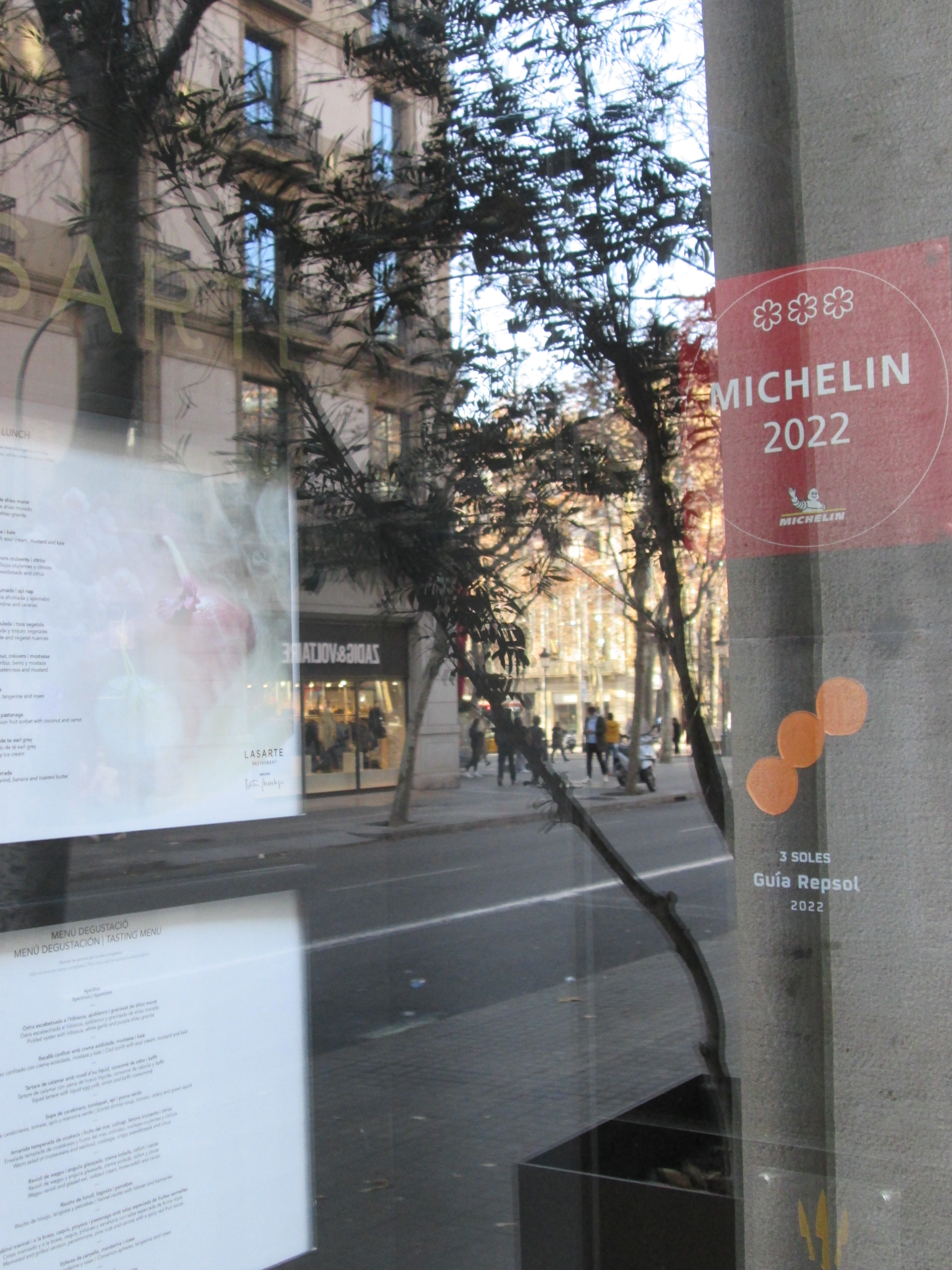
I’d been debating spending quite a lot of money on a meal at one of the two restaurants run by Martin Berasategui. Dee and I had a memorable meal in 2016 in San Sebastián at his original place. However I walked by them, looked online and Lasarte (3 Michelin stars) isn’t open until Thursday when I leave and Oria (just the one so far) on its site, won’t let me book for fewer than four people. My appetite is not that great at the moment so maybe I’ll leave it for another trip.

Boxing Day was all set up for a trip into the countryside to join Rosa and her mother Pepita for lunch. We’d agreed that I’d catch the 11:51 from Passeig de Gracia. I made an small error – I thought the Metro and train stations were connected – they are not – so I walk briskly to the train station three blocks up the Passeig. As I reach the platform the clock says 11:51 and there’s a train there so I jump on. After ten minutes it stops at Estacio de Franca which I think is jus a pause at a major calling point. After another ten minutes I investigate and find the train is at the buffers and I have to take the next one back to Passeig de Gracia and then get the 12:51 to Sils where Rosa will collect me. Quick WhatsApp to confirm late running and we’re underway again. We rendezvous OK and go to the lovely Terme Orion where Rosa and Pepita have spent the last three days relaxing after a flurry of family activity. My Spanish is a bit more relaxed this year and we are able to have a reasonable conversation with only occasional translating duties for Rosa. Food was great, wine all included and they wouldn’t let me contribute anything. A lovely afternoon – if a little shorter than planned.

Rosa and her mum are heading back home to Terrassa and fortunately Sils is on the way so they drop me off with twenty minutes to wait for a train that will categorically got me to the Passeig de Gracia – albeit ten minutes later than promised. It’ll be a bit tight to get to my Sant Esteve concert but more brisk walking to the Palau gets me there in time to hear the applause for the conductor coming on stage – from outside the door. They won’t let me in for ten minutes so I miss the first three items in full glory.

When I do get in I find that my seat is high up in the gods with only a partial view – I think I asked for ‘best available’ and it was certainly a sell out. In keeping with its Orfeo Catalana label, the only instruments were a piano, the giant organ and a trumpeter while there were choirs ranging from the junior and middle childrens’ choirs to the professional choirs of the Palau. There were some familiar carols – Silent Night, Little Town of Bethlehem and a Catalan one I’d heard at a concert by Pegasus the choir my son sings with back in London – Fum, fum, fum. It was a spectacular event full of joy and tradition and I think at one point there must have been close to a thousand voices on the stage and in the galleries on either side. Fantastic!

As an encore we had a rousing version of the Hallelujah Chorus which culminated in a flurry of unfurling of Catalan flags and shouts of ‘Independencia!’ It seems the prime minister has ruled out another referendum but there are general elections in May so it’ll be interesting to see what happens then.

I had a voucher for three euros so decided to have a glass of wine and send friends and family my reactions to the concert via WhatsApp What a great end to a great Christmas. As I walked back to the hotel I was struck by the variety of lights on each street – much less showy than London but original and (sorry) delightful. Here’s a selection.

Music, markets and Moritz

I’ve managed to do a few things I wanted to experience while in Barcelona but a combination of occasional hip gyp (osteoarthritis quite advanced) and less breath from the lingering flu, I’ve not been roaring about the place as I maybe would have in the past. I love the fact that the city is so well supplied with benches so I can sit and take a rest when necessary. Isabel Allende has a fine quote in her book I just read A Long Petal of the Sea: ‘Pain is unavoidable, suffering is optional’. As I set out on Christmas Eve to enjoy the guided tour of the Palau de la Musica, I was able to have a coffee, perch on a bench and contemplate life at a slower pace.

Benches and cafes on the Rambla de Catalunya.

It also gives me a chance to look around and see elegant buildings like this. There have been some rather (imho) unsuitable replacements and refurbishments to the classy streets of the Eixample, the area into which the wealthy of the city expanded in the early twentieth century with its grid of vertical and horizontal streets so it’s hard to get lost. Enough rambling – on to the Palau.

At the Palau, I join a group of two Americans, one Hungarian and eight Chinese – probably statistically representative of relative populations. Our guide is Marta who is Catalan and a pianist with the organisation who also used to play cello but gave it up as too difficult. As often, the tour begins with a ten minute video of the history and diverse nature of music played at the hall – Montserrat Caballe and Pablo Casals of course but also Ute Lemper and Herbie Hancock. Marta returns and asks if any of us has ever been so I can show off with my attendance two nights ago. I can also answer her enquiry as to whether anyone knows the architect. I do – it was Lluis Domenech i Muntaner, another of the famous group of modernista artists, which included Gaudi. Together they designed the Catalan equivalent of art nouveau or Jugendstil elsewhere in Europe. What I couldn’t answer was how long it took to build – a staggering two and a half years. My guess would have been ten. There were obviously lots of wealthy merchants investing their profits from the Americas in a cultural centre of some magnificence in Barcelona.

The interior is just breathtaking. Every surface is decorated with trencadis, there are thousands of plaster roses – the flower of Catalunya – and sculpture and plasterwork of great significance. There are lots of red and white cross flags which are familiar in England especially around football tournaments. St Jordi (George) is the patron saint of Catalunya too. Lluis certainly thought about what he was building. Alongside the name of the Palau are the words Orfeo Catalana reflecting the origins of the hall as a place for choirs to practice and sing – well they couldn’t watch Strictly or The Voice so they had – and still have – lots of local choirs. I’m hoping to see some of them at the special Sant Esteve (Boxing Day) concert which is said by some I’ve spoken to to rival New Year’s Day in Vienna. As with the exterior a few photos won’t do the venue justice but let’s just say a bust of Beethoven surmounted by horse-riding Valkyries on one side of the stage and sculptures of all the muses behind the performers on stage make this a very special place. The glass sunburst at the centre of the ceiling which allows natural light through is a masterpiece of both design and engineering.

The sunburst with Valkyries behind.

After a coffee in the cafeteria, I set off through the old city centre towards the cathedral – I’ve never seen it without works going on, maybe one day. Then I just have to stop for a beer in Plaza Reial a long-time favourite. One of the limited advantages of travelling alone is that I’m doing far more reading than usual. Instead of chatting over a beer, out comes the kindle. So far I’ve read William Boyd’s rambunctious The Romantic in which we meet Byron in Italy and discover the source of the Nile. This was followed by Kate Atkinson’s fabulous Shrines of Gaiety featuring the dodgy world of nightclubs in interwar London. And as mentioned before, Isabel Allende’s epic Long Petal of the Sea which begins with the horrors of the Spanish Civil War in Catalunya and escape to France and from there to new lives in Chile only to become involved in another coup there. And now I’m enjoying Hotel Iris by Yoko Ogawa – another tantalising excursion into the strange world of Japanese fiction. And the Mcs are lined up next Ian McEwan and two from Cormac McCarthy.

From here it’s a short step along the Rambla to the Liceu opera house which sadly had nothing I wanted to see this trip and then for a walk through the fabulous Boqueria market. I’ve probably rambled on about my love of local markets and my regrets at living in a hotel – maybe an apartment next time. The colour, the noise, the camaraderie of the market is infectious. No room at the market bars though so I found a small bar in a side street for some gambas al ajillo and esparragos.

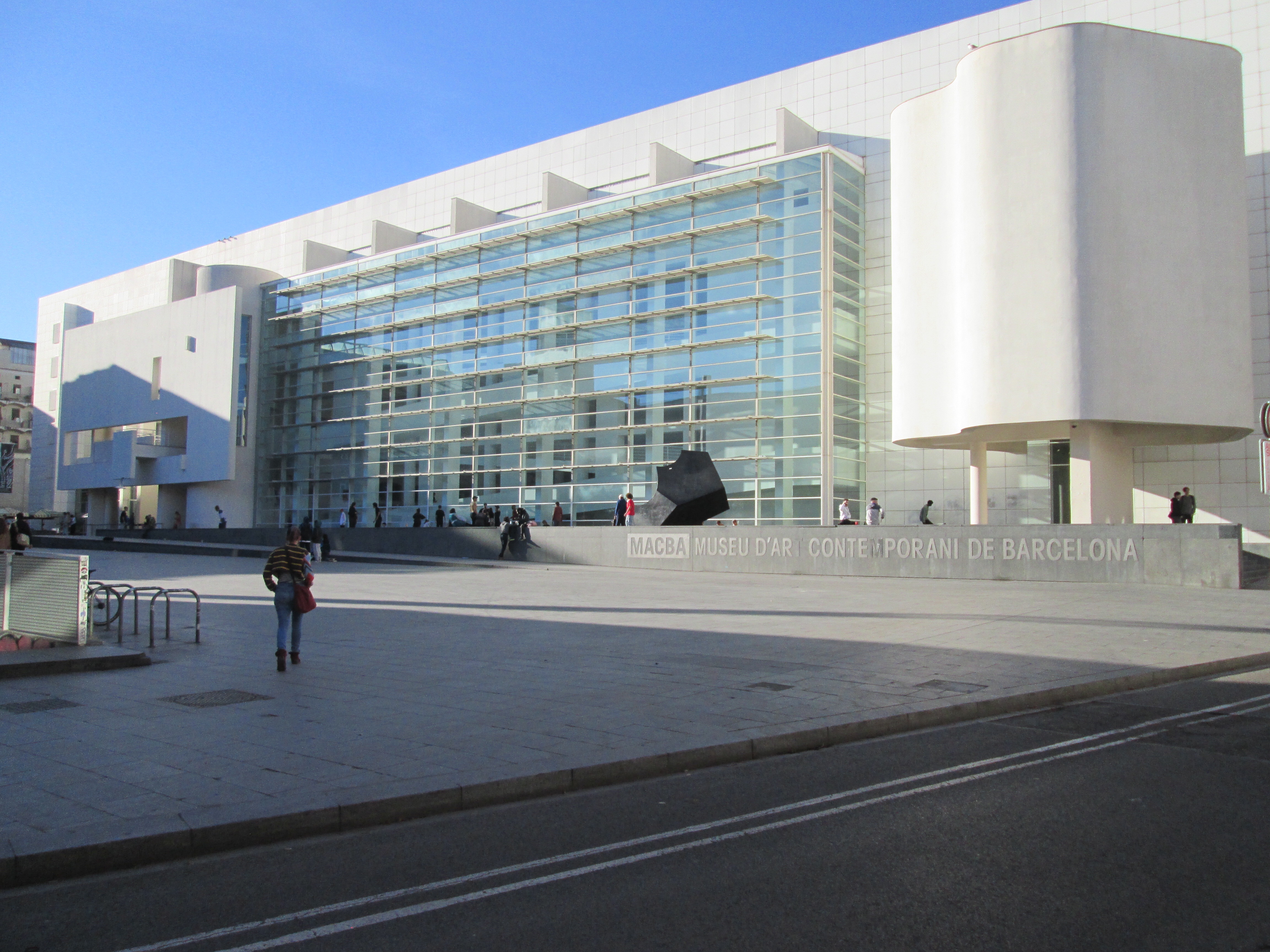
I have another short stroll to my next destination MACBA the museum of contemporary art in Barcelona. It’s new to me although it opened in 1995 so we must have missed it on previous trips. It’s a great white palace with a warning to watch out for skateboarders on the approach – what is it about art centres and skaters? One attractive aspect is that it has slopes not steps to link the various levels – reminding me a bit of the XXI gallery in Rome I visited in 2017. My appreciation of cutting-edge contemporary artwork is somewhat unrefined but I found two of the artists exhibiting here quite affecting. The Colombian Maria Teresa Hinchcapie which involved performance art, exploration of every day objects and photography gave me plenty to think about. Cynthia Marcelle is a Brazilian artist who had given a number of collaborators some materials to arrange as they wished. The result reminded me of a Cornelia Parker explosion of objects. There was another exhibit based on a Mexican Mixe myth which I found impressive in scale and impenetrable in meaning.

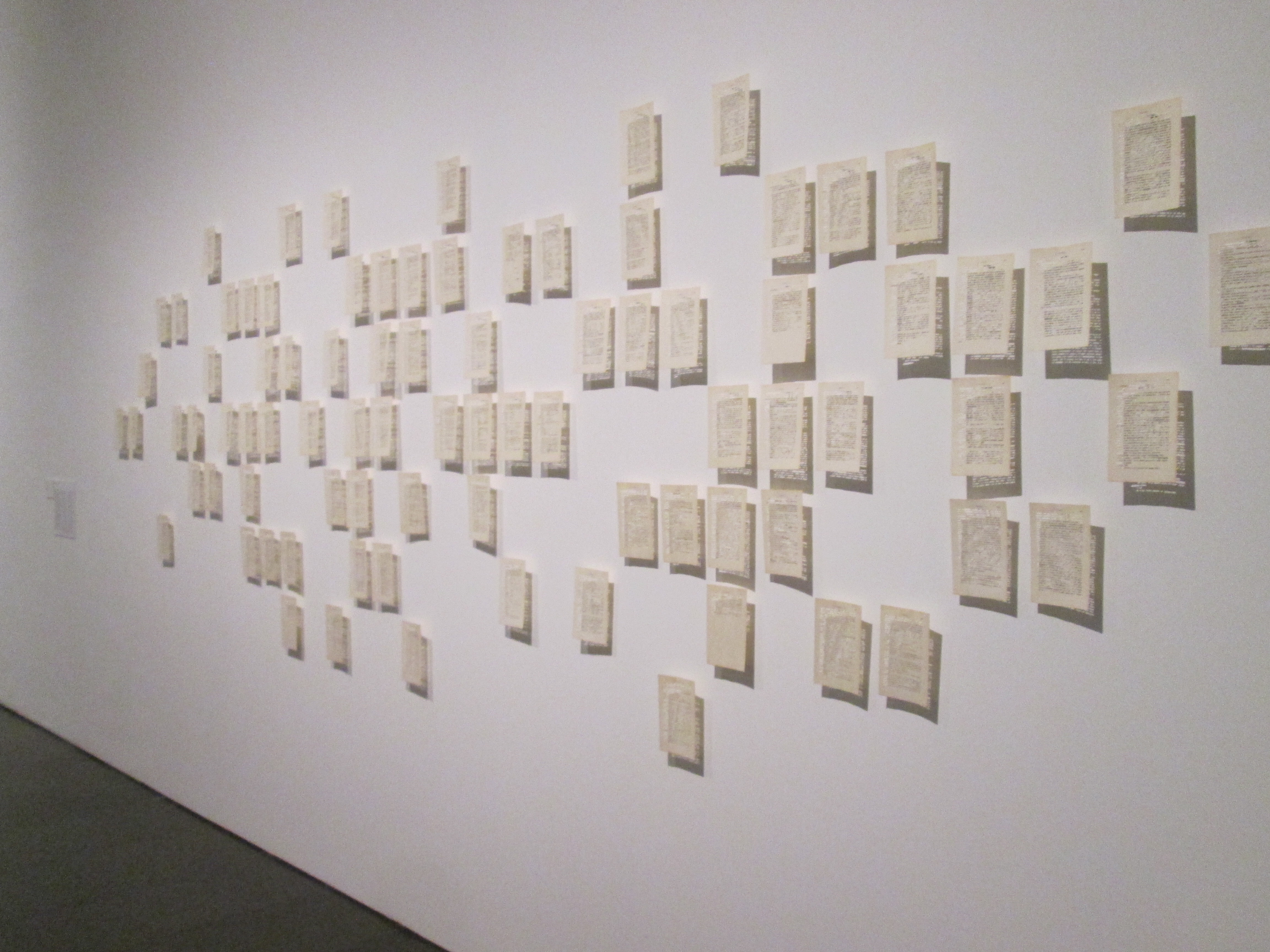
In the permanent collection were a number of pieces I really enjoyed – a Tapies bed and a series of pages taken from a book as if they had been typed without a ribbon so that light projected the text onto the wall. It’s by Mar Arza and is called Nada reiterada (nothing repeated). Most enjoyable for a bibliophile.

Sudden Awakening Antoni Tapies 1993.

The evening was rounded off in a convenient microbrewery Moritz opposite the hotel which was one of the few places open on Christmas Eve. It has a fine selection of house beers – lagers, IPAs a red IPA and a porter style Moritz Negra (black beer). Oh and it had a perfectly fine food menu too.

Culture magpie

So Friday morning begins with a trip to El Corte Ingles to secure a USB to lightning cable. I don’t think I’ve ever been to Spain without at some point setting foot in the country’s prime department store. It delivered what I needed on the seventh floor – escalators all the way I’m pleased to say. Next on the agenda was to follow the advice given me on Wednesday evening and book a guided tour of the Palau de la Musica Catalana – all sorted for 11:30 tomorrow.

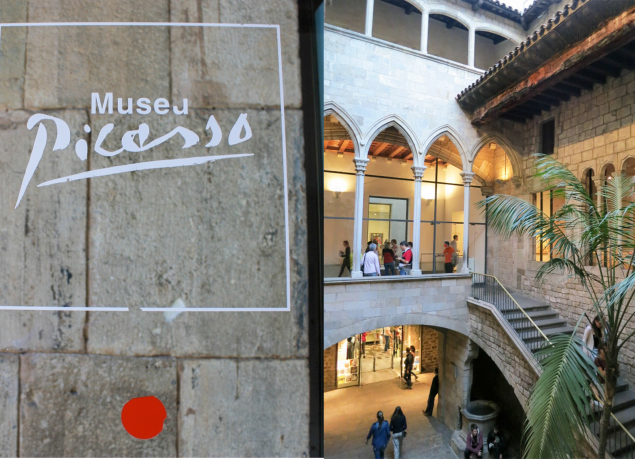
Next stop the Museu Picasso Barcelona – also free with Barca Card but they make you get a paper ticket from the box office as well. I’ve been here a couple of times before and while there’s always a good selection of Picasso’s paintings, prints and ceramics there is a major exhibition as well. This one is devoted to David-Henry Kahnweiler the German born dealer, collector and patron who did much to launch the careers of Picasso, Braque and Juan Gris.

Kahnweiler was quick to spot the movement that would become cubism and established a tiny gallery (four square metres) at the age of 23 where he exhibited early works by the then unknown Picasso, Braque, Leger, van Dongen and Vlaminck. He was friends with all of them and made good sales to kickstart their careers. As a German he had to go into exile in Switzerland during the First World War. He was considered an alien and his entire collection was sold by the French authorities in auctions at the Hotel Drouot. The sale catalogues make for interesting reading and a comprehensive listing of early twentieth century art.

Picasso sketching Kahnweiler, one of the photos in the exhibition.

There were works by many of his protégés and details of weekly soirées at Bourgogne-Billancourt where he entertained artists and potential purchasers. Picasso once wrote, ‘Where would we all be without Kahnweiler’s sense of business?’ I found it all fascinating, so much so that I took no photos – sorry. That is until I came to the huge room devoted to Picasso’s deconstruction of Velazquez’s Las Meninas. He made a series of over 50 paintings in which he analysed and recreated aspects of the famous work. This is my favourite. I love his self-portrait at the bottom right and the dog and the use of many images of his familiar iconography that find no place in the original.

After nearly three hours it’s time for some lunch. Everywhere in this area – the Born – will be expensive as it’s a major tourist attraction. However I find a corner in a popular venue and emerge refreshed. The Messi shirt shows that Argentina’s captain is still much loved in Barca. I was also surprised to find a flight of Japanese kites in an adjacent courtyard.

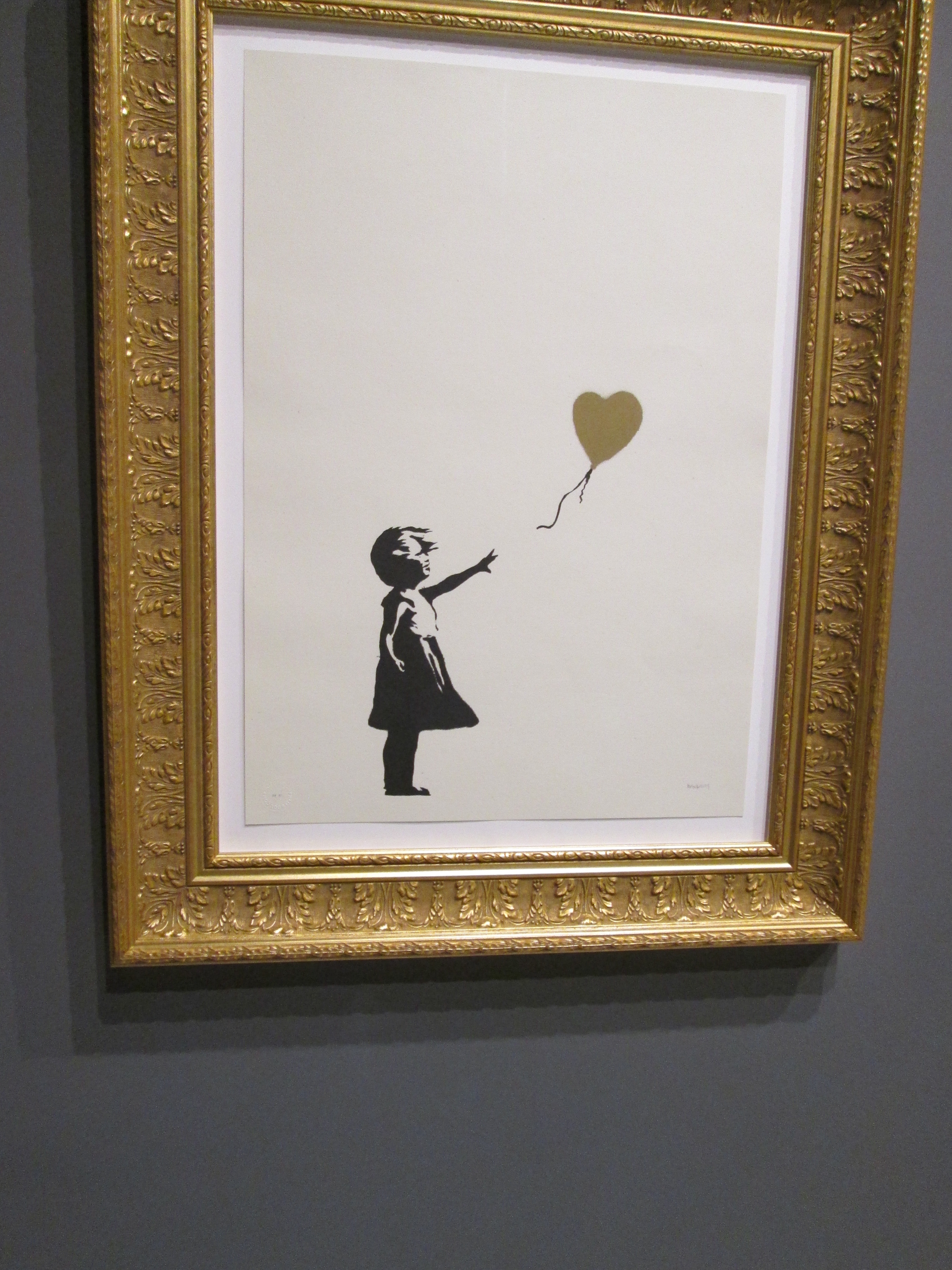
A few metres along Calle Moncada is a Museum new to me – MOCO. It has a branch in Amsterdam and opened in Barcelona in 2016 and I haven’t been here since before then. It’s devoted to MOdern/COntemporary artworks and features Keith Haring, Julien Opie, Damien Hirst, Dali and Banksy as well as less familiar local names. I did take a few photos here.

As I’m quite a way down in the old part of the city I think it’s time to see the sea – well at least Barcelona harbour. As it’s Christmas time there are lots of tacky amusements on offer spoiling (for curmudgeonly me) a stroll along the waterfront. But there are some highlights. Graphics have always been wacky here since the Olympics, there’s always one seagull that won’t conform and I enjoyed the peace of the sun going down across the harbour looking out to the World Trade Centre where we filmed material for a promotional video for the Direct English franchise several years ago. All of course under the watchful gaze of Cristobal Colon.

Tapas and Tapies

So refreshed with my tapas in the Cerveseria Catalana and buzzing with my visit to Casa Battlo, I thought it was time for a bit more art exploration.

As I came from the station to the hotel on my arrival I had walked past this fine building with its wild bird’s nest hair. It’s the Antoni Tapies Foundation. I’ve seen Tapies’ work in other galleries but thought I’d take a look. Entry was free with my trusty Barcelona card so even more incentive. There were two exhibitions – one showing Tapies’ increasing use of varnish to affect the outcome, the other to Bruce Conner of whom I confess. I had not heard.

My first surprise was that although the building looked like it would be a gallery, I had to descend a flight of stairs to get to the subterranean exhibition space. Excavating basements may be popular in London now among the wealthy, but Barcelona has clearly been doing it for ages. As well as this space, I’ve walked past loads of Parkings with precipitous descents to way-below-street garages – glad I didn’t rent a car this trip as entrances are frighteningly narrow as well and I did recall wedging a Transit van on the way into a car park right beside the Callao metro station in Madrid while on a shoot there some years ago.

The Tapies space itself was light and airy with a suitably small number of paintings and objects displayed. They covered 30 years of his work from 1958 when he was awarded the Carnegie medal for painting, to 1988. I liked in particular his surrealistic deconstructed chair and several of the sinuous marks he’d made with painting and overlaid varnish. And of course there’s always the coarse one – he had a thing about the black letter X. Have a look.

The other exhibit a further floor below was of work by Bruce Conner who’d escaped me but according to the descriptions on the wall was ‘the father of the video clip’. There were nine films in all ranging from three to fifteen minutes. The first was a horrific observation of the Bikini Atoll atomic bomb test, the next a sequence-shifting report on the assassination of JFK. Others were lighter – a piece called Looking for Mushrooms with music by Terry Riley,a noted consumer of same, so was all kaleidoscopic, psychedelic monochrome magic. Others used animation and effects considerably ahead of his time. I’m not always a big fan of video installations as art but these were eye-opening and thought-provoking. They also covered the period 1958 to 1976.

I stopped off at a supermarket on the way back to lay in beer, wine and brandy for the week ahead. Dee and I always liked a drink in our room to gather ourselves before going out to eat and old habits die hard. As I started writing the first blog I realised that I’d forgotten to bring the charger for the iPad mini on which I write, so scribbling would have to wait for tomorrow. So I got to my fine pigs’ cheeks a little earlier than might have been.

Music of the stairs

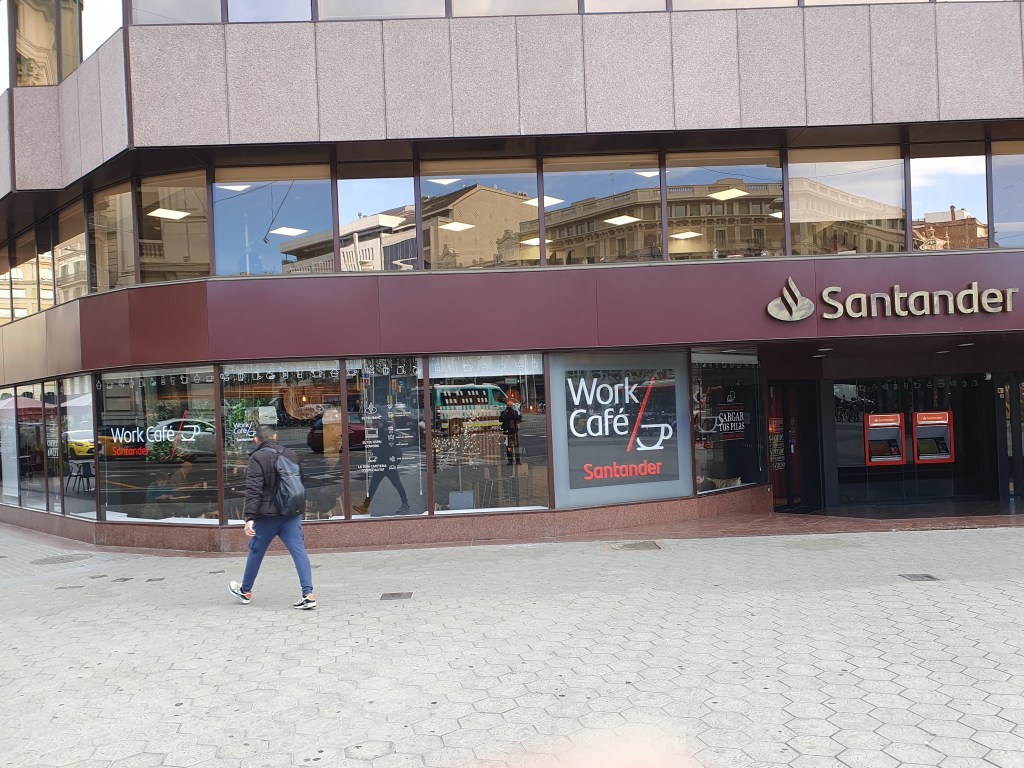
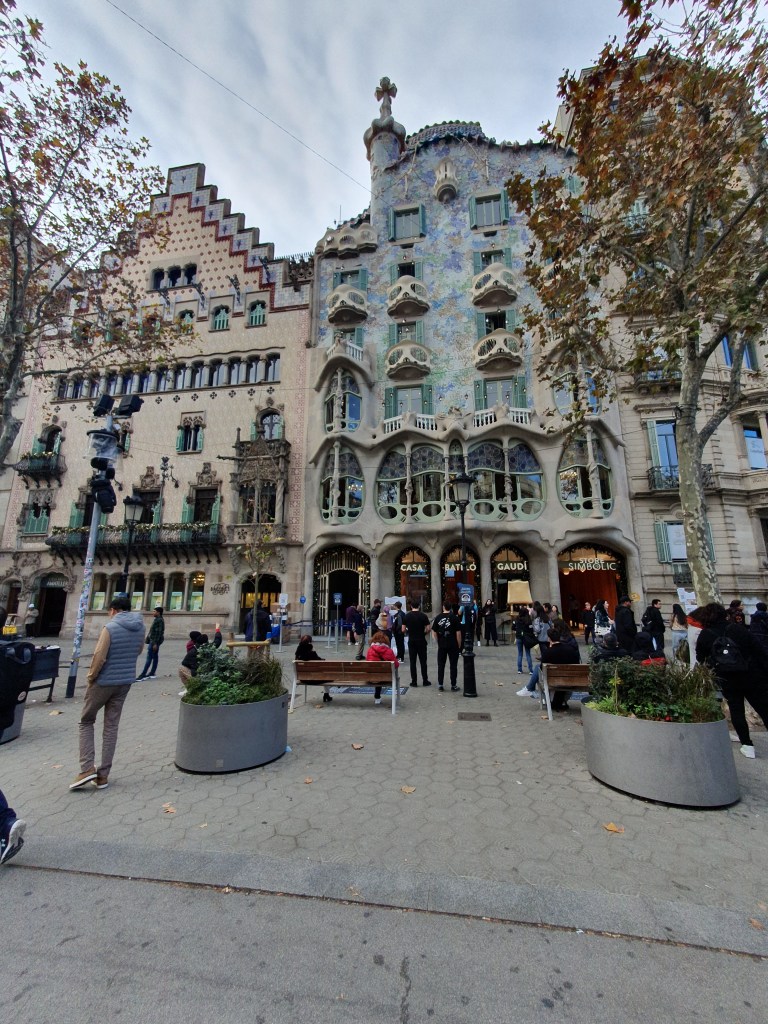
One of my reasons for choosing to come to Barcelona this year was to visit Gaudi’s famous Casa Battlo. I became friends during the year with a young composer Dani Howard who had composed the tracks for the guided audio tour of the house and I was keen to see inside the amazing building and hear how Dani had responded to her brief. The hotel has a breakfast buffet but I went in quest of something simpler. Opposite Casa Battlo was a Santander Bank work cafe which I thought I’d try. Result too, as Santander account holders get a 30% discount, so it was a very cheap juice, coffee and croissant. Loads of other industrious people were poring over laptops, negotiating on the phone and working hard. Interesting idea.

The first part of the tour is in the basement in a Yayoi Kusama style mirror room. You step onto a moving metal platform and make a large circle through projections of the architect himself slumped exhausted among his drawings and the objects from nature that inspired his designs – fish, shells, mushrooms, rock formations. This is accompanied by a very watery track, whooshing waves mixed with orchestral sounds and set a theme for the tour which likens Gaudi’s structure to a section through an inverted ocean – I didn’t write the script!

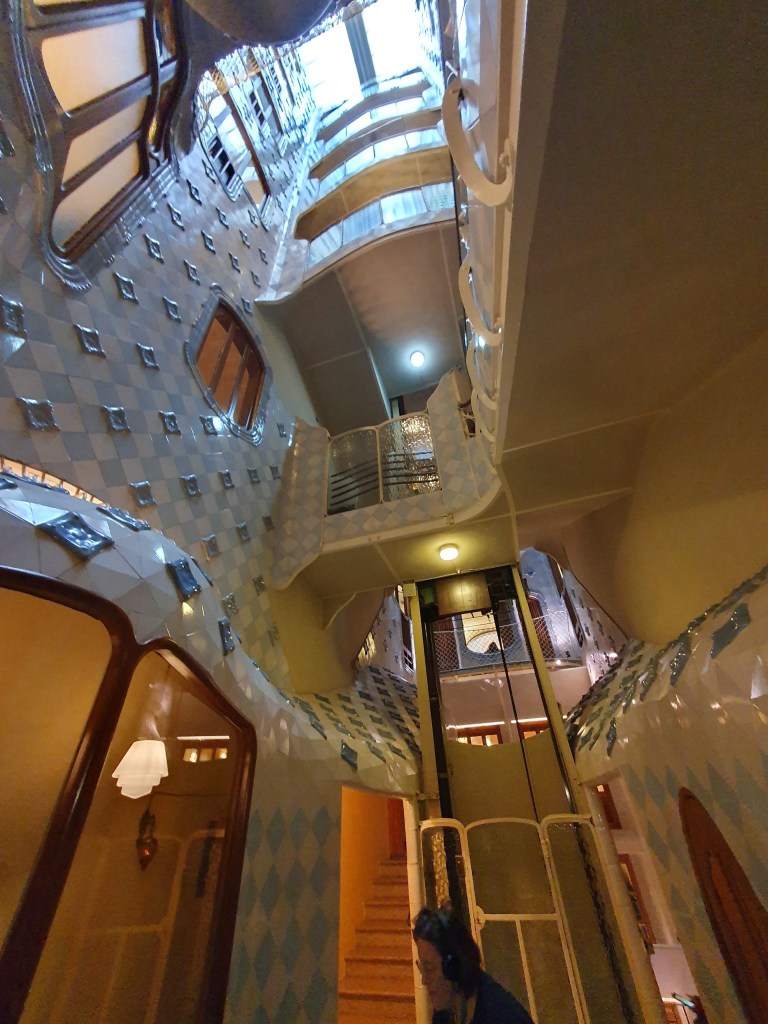
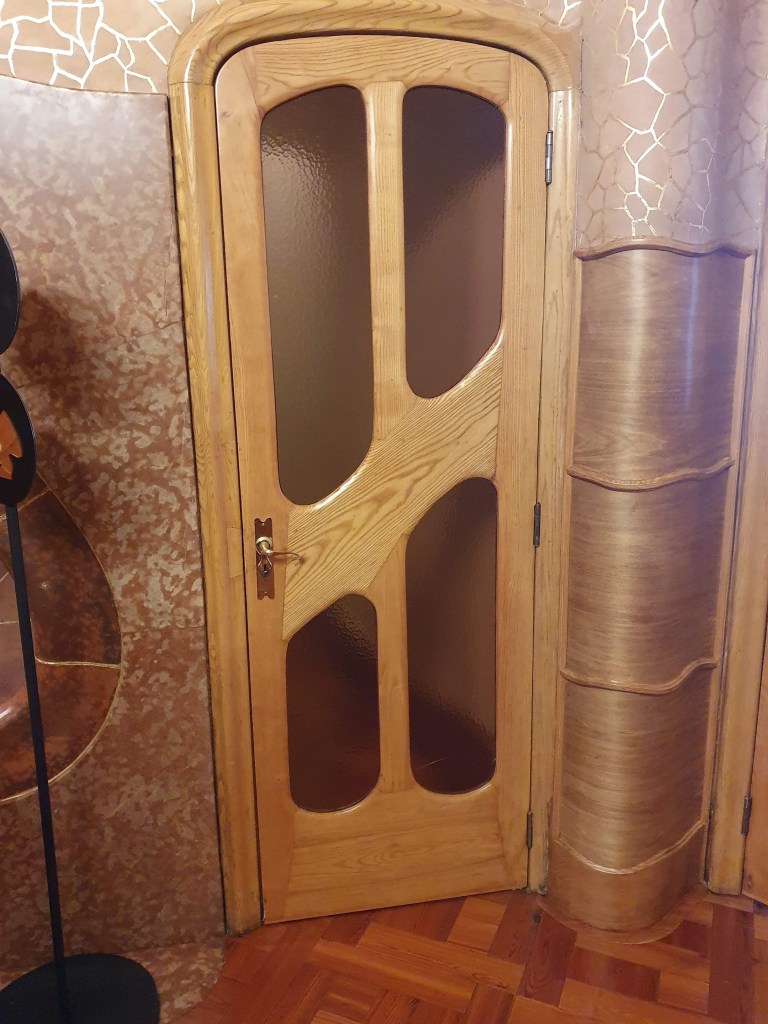
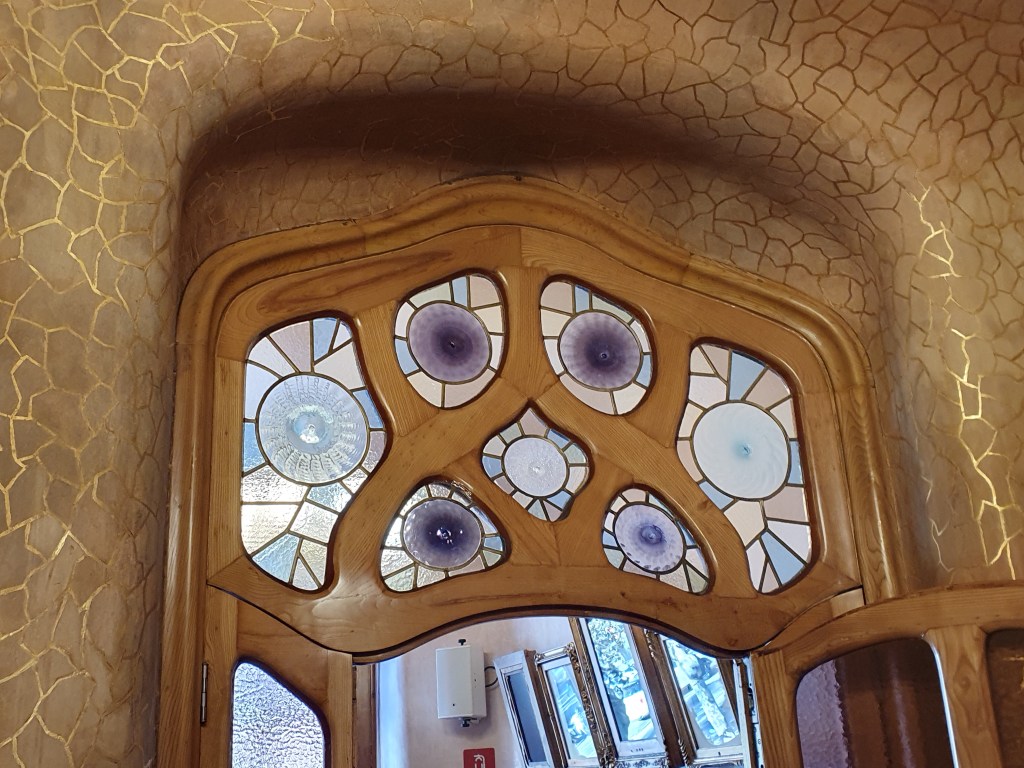
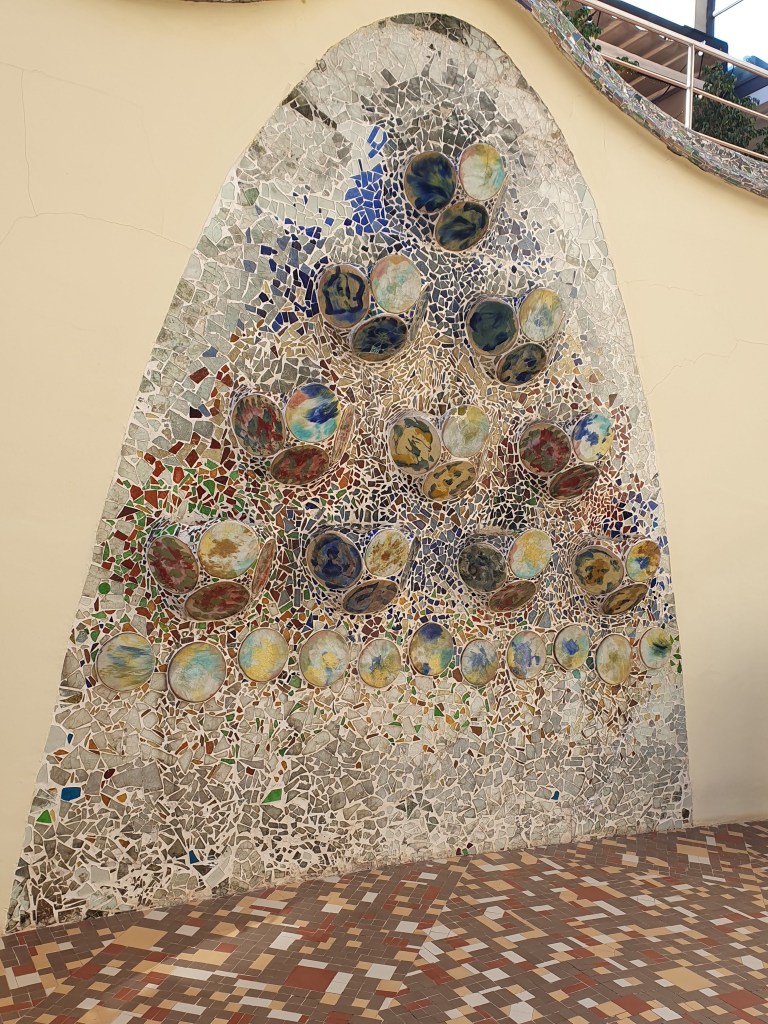
The tour proper is guided by a tablet with sixteen icons to select when you enter a room with that sign and commentary and music play. I absolutely love the building – the innovative elements, gorgeous woodwork, wrought iron balustrades and typical Gaudi trencadis – the patterned facades we usually call mosaics which combine broken tiles, glass and other materials making Gaudi the great recycler. I’ve added a few images from the house but it’s very tactile as well – you need to be there.

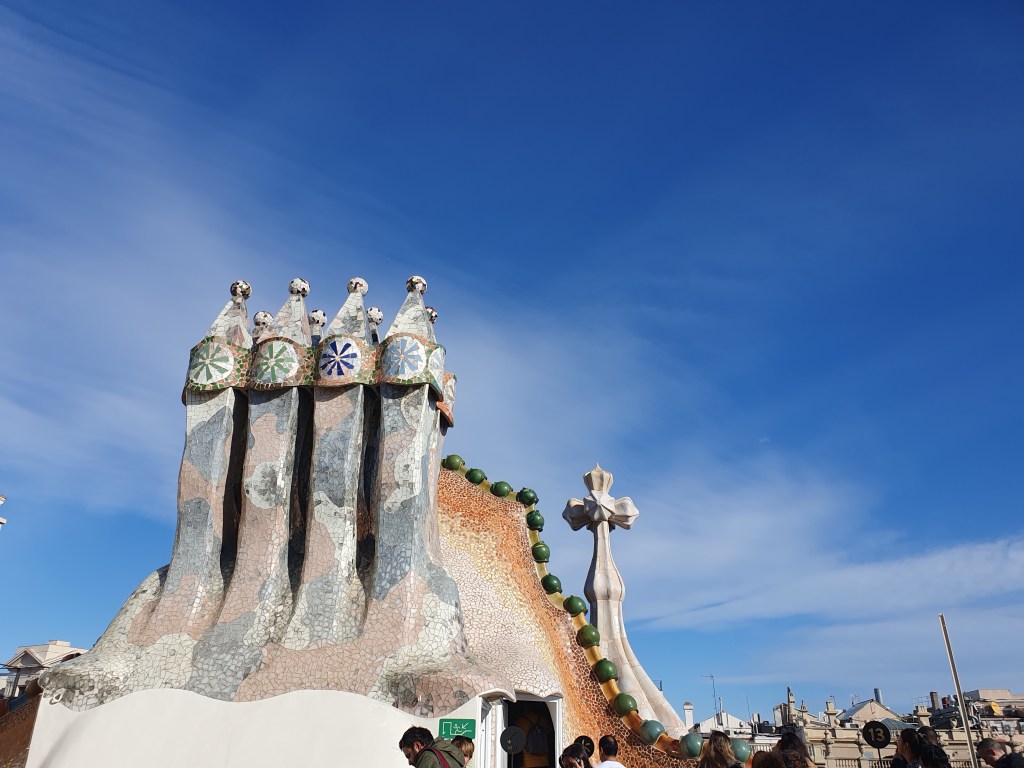
The house is tall and has this fabulous double atrium from floor to skylight flooding it with light – a very clever touch. So the the tour heads inexorably upwards until you reach the roof with great views over the city. As you mount each flight and select the next images so Dani’s music changes to fit the atmosphere and function of the room you’re in. It is wonderfully varied – simple piano pieces at times, what sounds like a marimba and cello rippling away for another but generally fully orchestral and often choral themes that work extremely well. The huge uplifting crescendo for the top of the stairs gave even my weary legs a jolt of energy. I think there’s a Battlo Suite for concert performance in there – rights permitting of course. And certainly there needs to be a CD or stream if this varied and atmospheric music wher a few recurring motifs are developed with creativity and technical skill to match the tone and function of each area of this amazing house. Great job Dani!

After a few moments contemplation on the roof marvelling that the large structures were in fact the house’s water supply we descend through another work of art. What was once the fire escape has been transformed by the Japanese sculptor Kendo Kuma who has draped the walls in swirls of aluminium links of chain mail which are aesthetically pleasing and highly tactile.

You exit through an immersive screen cube with projections of Gaudi icons and responses by artist Refik Anadol. The website suggests an hour and fifteen minutes – I went in at 11:00 and out at 13:30. House and music in utter harmony and I even made it up and back downstairs. I’d heard of the nearby Cerveseria Catalana and thought that would be a good option for lunch. Hah! Why I’d heard of it is that everybody else had, so I waited a little less than the threatened twenty minutes – it sometimes helps being just one – and enjoyed the amazing atmosphere and some great carved ham with a beer and then a glass of Verdejo with some anchovies and padron peppers a combination I’d not had before.

Cerveseria Catalana