
I so enjoyed my visit to Miro’s studio in Mallorca last year that I decided to visit the Fundacio Miro in Barcelona. It’s situated up on Montjuïc the mountain where the Olympic Park was in 1992 and which continues to be a tourist attraction. Three stops on the Metro to Parallel and the the Funicular up to Montjuic.

It was a disappointing trip compared with the ones in Bilbao, Budapest and San Sebastián in that it’s almost entirely in a tunnel with just occasional sights of scrappy play areas and none of the vistas across the city I was hoping for. However, a few steps from the top of the funicular, my wish was granted with this view dominated by the magnificent Sagrada Familia.

On the way to the Miro Foundation was a sculpture garden with some of the worst signage I’ve ever come across – tiny aluminium stakes with titles engraved – totally illegible. At Miro, things were handled much better. There is a huge collection of paintings, sculptures, tapestries and found objects displayed in spacious galleries. I’m glad I’d been to the studio in Mallorca to get an idea of Miro’s working methods. It’s also good to see that artists who choose to follow a different kind of visual vocabulary are well grounded in basic draughtsmanship.

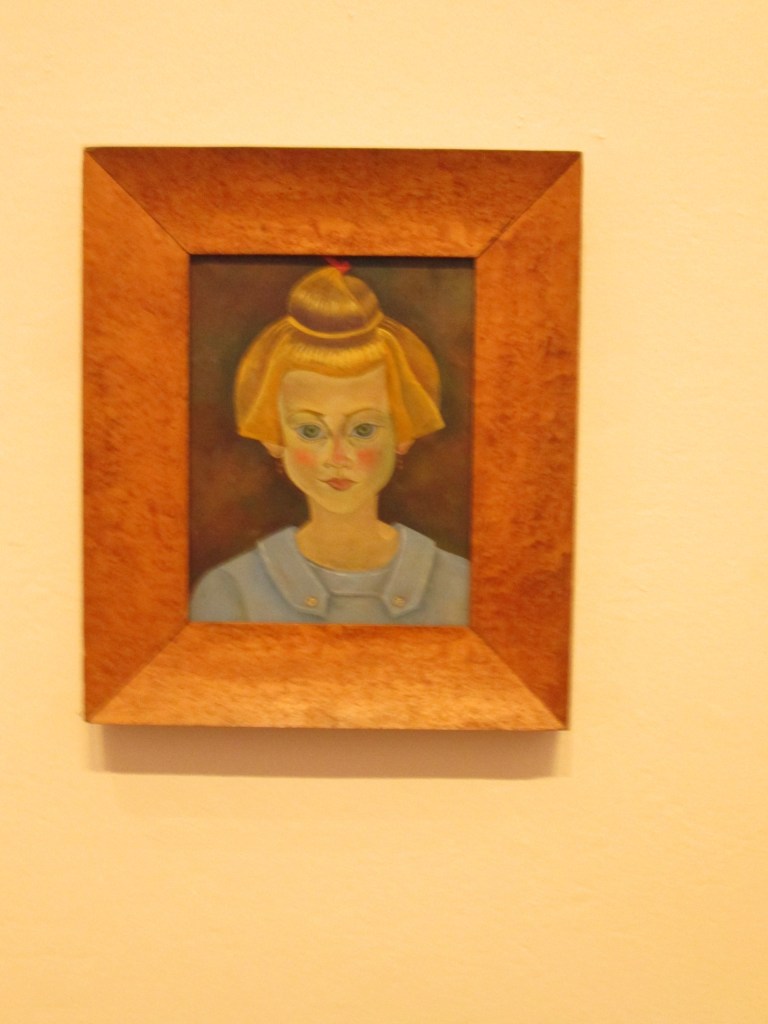

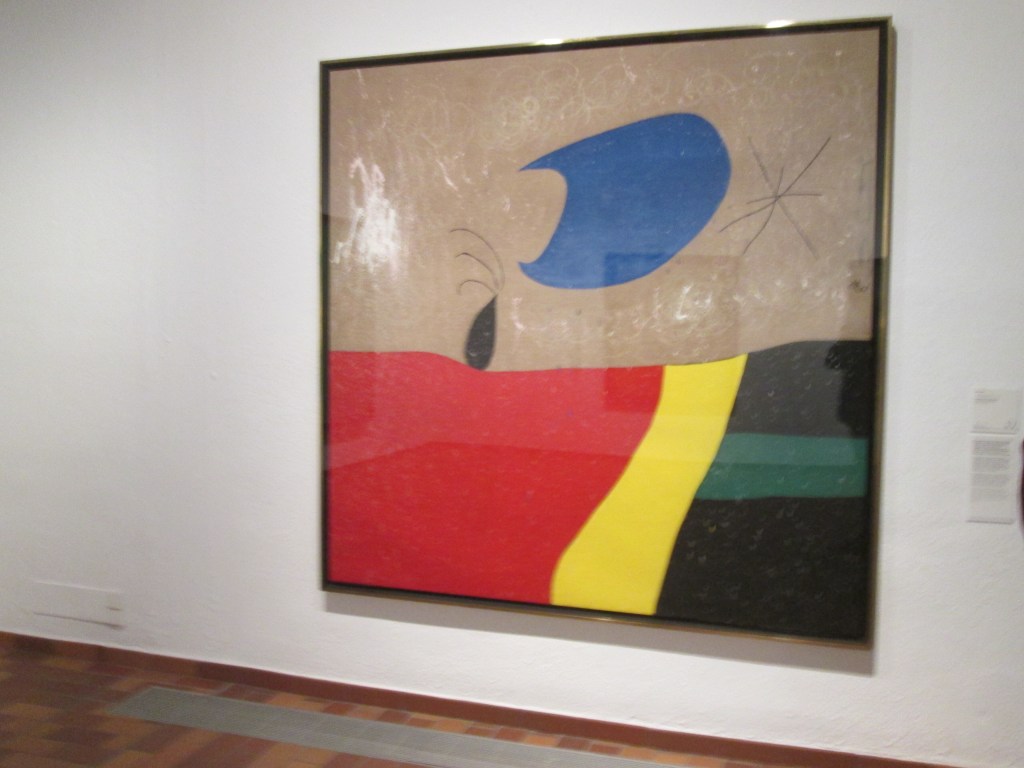
I particularly love his amusing sculptures from everyday objects. As a not-very-royalists person I was much taken by King, Queen and Prince (below right), the huge (nearly 6 metres across) Sobreteixim with eight umbrellas and the dramatic use of a coat hanger.


Another artist provides a fascinating object here. Alexander Calder was the only non-Spaniard invited to contribute to Spain’s pavilion at the 1937 Paris World Exhibition. Alongside several Miro canvases, Picasso’s Guernica, Calder’s Mercury Fountain was seen as a further protest against the atrocities of the Franco regime including the attack at Almaden the town that provided a substantial quantity of the world’s mercury. Calder donated the sculpture to the Miro Foundation and we view it from behind a glass screen since the toxicity of mercury has been discovered. Funny thing is the Egyptians knew about mercury too and thought it chased away evil spirits – may have killed some of them too.

A temporary exhibition here featured another favourite artist. It was called Paul Klee and the secrets of nature. It hads a fascinating collection of drawings and early paintings again demonstrating complete draughtsmanship abilities before going his own chosen way or ways in his case as there was so much variety in his work.


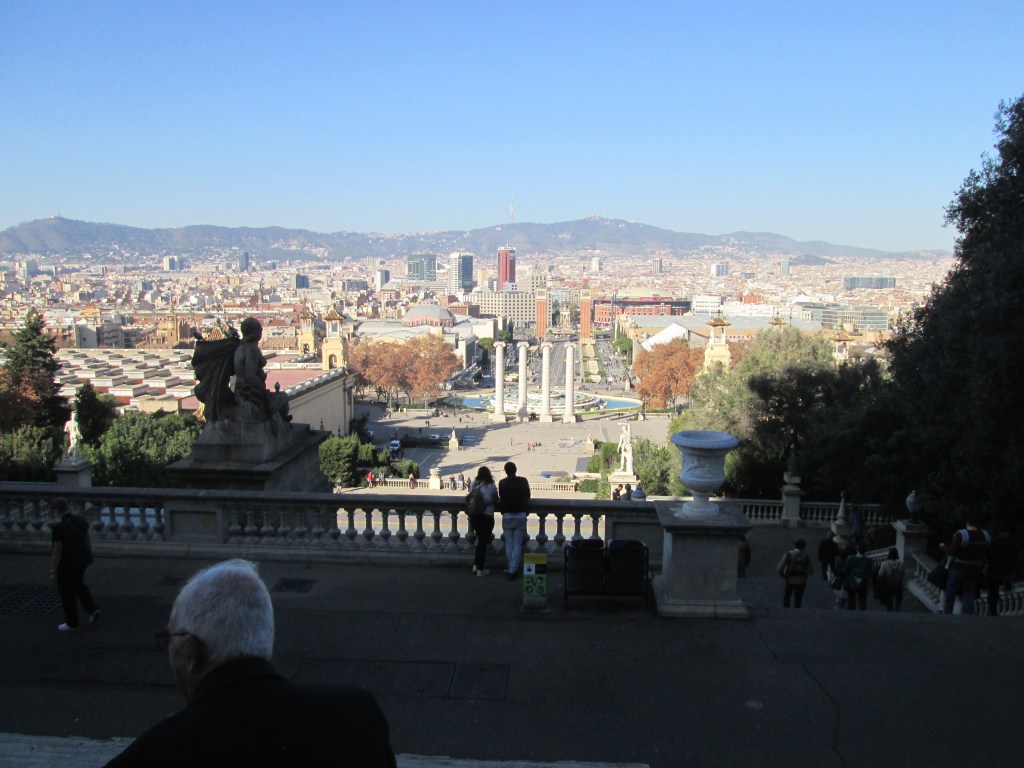
I had a coffee in the cafe before continuing my walk along Montjuic. I was heading inexorably to the National Art Museum of Catalunya, which I had told myself I wasn’t going to bother with on this trip. I remembered, bothwith the children ages ago, and with Dee more recently standing on its terrace on a Friday evening eagerly awaiting the magic fountain’s display. No use waiting for it on Wednesday afternoon. I do remember it as quite spectacular with water jets synchronised to different music genres at different times and changing colour appropriately. Looking down at it brought back good memories. I then thought ‘Well I’m here, it’s free with the Barcelona card so why not?’.

The majestic central dome covered an area in which there were easels for wannabe artists and a fabulous soft play area with kids swarming all over. If that what it takes to get folk in and keep galleries alive, I’m all for it.


I decide to eschew the old masters which I have seen before and head for the modern floor upstairs. Neatly divided into four areas it shows the development of Catalan art from the turn of the century to the present day. In the very first gallery devoted to modernisme, what did I see but the actual dining table Gaudi had designed for Casa Battlo.? There were lots of beautiful wooden, glass and metal objects in that fluid style.


As I progressed through the galleries I saw works by familiar names like Rusinol, Sorolla and Picasso. I was especially taken by a cunning Rusinol self portrait. Look carefully!
In the next room I was introduced to the work of a female photographer Mey Rahola who shared a love of sailing and photography with our friend Joe Weiler in Boston. She was lucky to be around at a period 1934-36 when it was OK for a woman to engage in such pursuits. The Civil War put and end to that as she went into exile in France but had developed her own documentary style and continued to take photographs professional during the Second World War.

A new set of rooms for 2022 are devoted to the art of the Civil War period and range from propaganda posters, depictions of the horrors of war reminiscent of Goya – one wall of etchings reminded me of Los Caprichos. It’s interesting to see how Spain is re-evaluating the whole period that was so traumatic for so many. When I raised the refugee elements in Isabel Allende’s book with Rosa and Pepita over lunch Pepita didn’t really want to discuss it as, although born after the end of the war, so much of her childhood and early years were shaped by it. One of Rosa’s video installations Lost was on the subject of babies stolen by the church during the Franco period. It casts a long shadow.


Enough gloom. Back out into the sunlight of Montjuïc and a walk through the Botanic Garden towards the Olympic Stadium where a convenient bus arrived and took me back to the funicular. A little later a further trip to the Cerveseria rounded off a thoroughly enjoyable day up above the city.
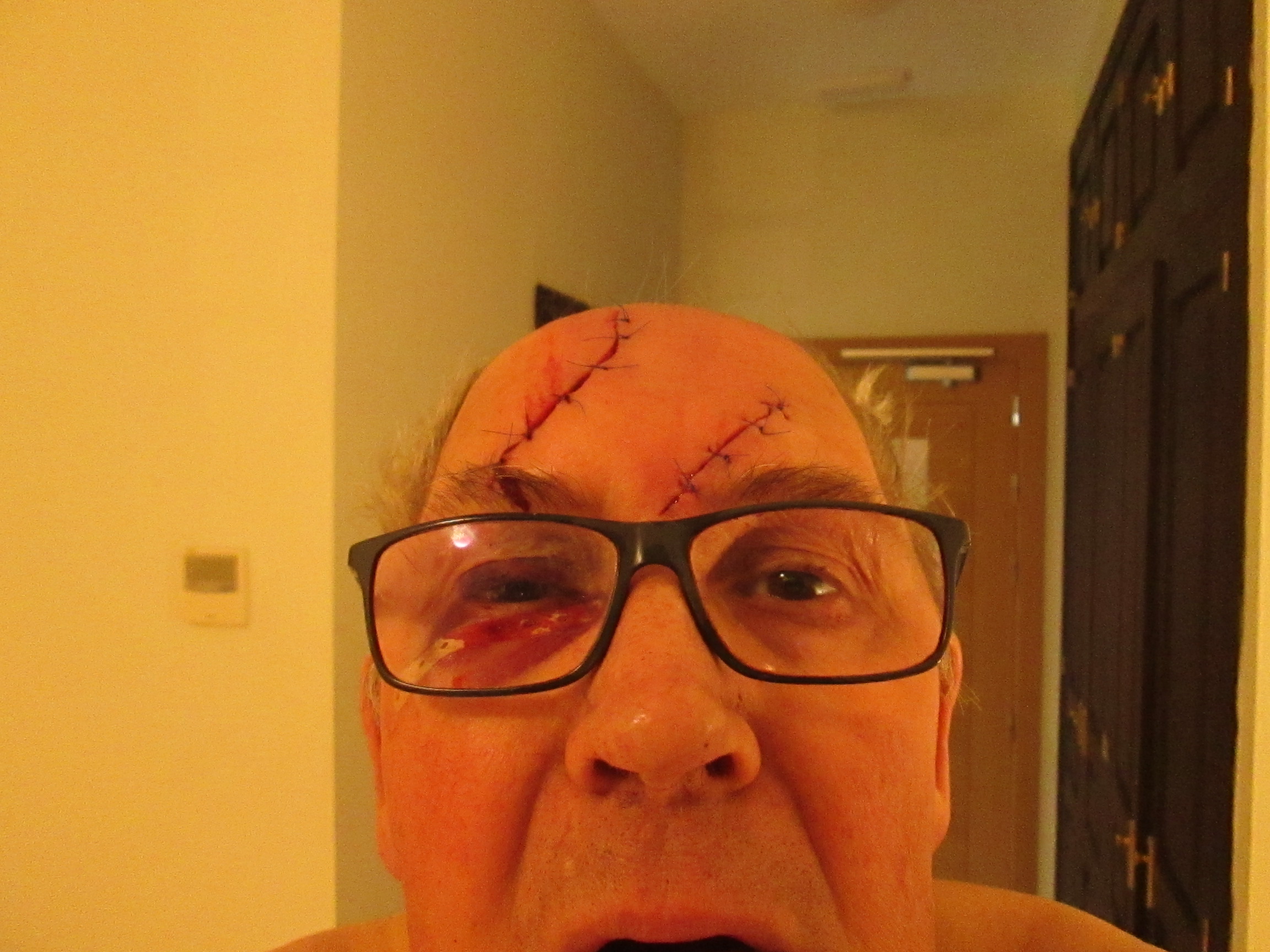
 However the hospital Hospital Puerto del Mar want me to report at 09:30 so off I set in a taxi the hotel has kindly called after my profuse apologies for their disturbed night of gore and mayhem. I had to take a taxi because from the interior of an ambulance I had no idea where we had gone and when I came out I got straight into a taxi back to the now calm hotel without really being very aware of my route or surroundings.


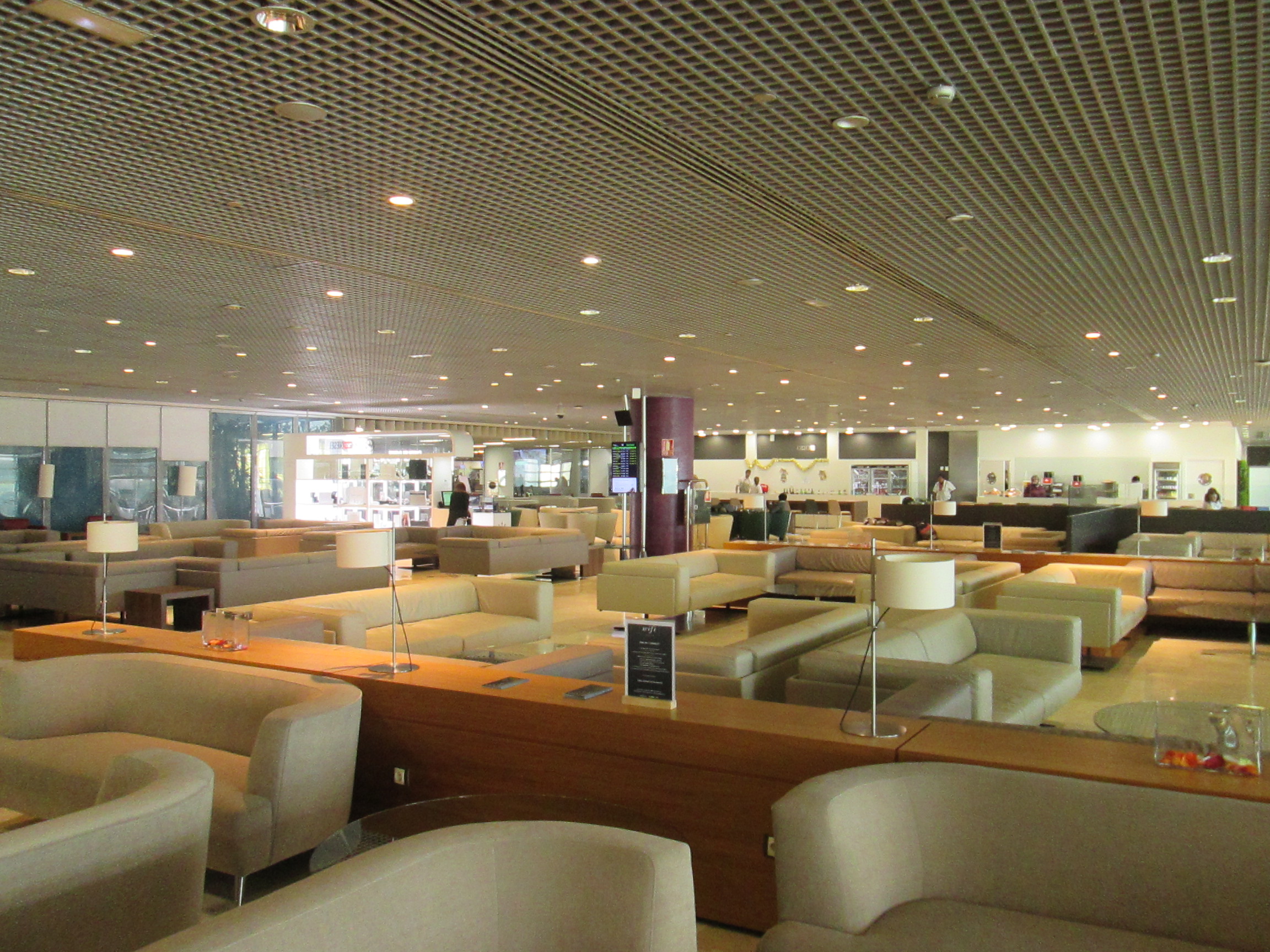 As is the new norm with Ryanair the Priority Q is longer than the paupers’. But in, I think, a first for me we board through an airbridge not by walking across the tarmac and climbing steps. The captain urges people to stow their stuff quickly as we can actually make our 16:25 take off slot if they get a move on – since we’d seen him and the cabin crew walk past us twenty minutes earlier maybe they could have got the plane loading sooner. However we’re in the air on time and I can construct the last blog from this excellent but eventful Iberian adventure. Obviously I’ll have to post it later when there’s some wifi – probably back home. Where I now am.






 I then headed inland and walked up through the main thoroughfare past the football stadium – unimpressive, , a beautiful brick and stone tobacco warehouse and through the park of the five continents – except we know there are seven now don’t we?



 We chat over a coffee – Jose doing that thing I’ve seen lots of Spanish people do – get a regular coffee and a glass with some ice cubes and then pour the coffee into the glass of ice – cafe con hielo. I guess it’s a DIY iced coffee. We got on very well – he works in the exhibitions department arranging the changing calendar of temporary exhibitions. I think I’d quite enjoy the challenge of deciding who to feature and then finding willing sources to lend works for the exhibition – forensics and persuasion in equal measure. Jose has kindly arranged a free ticket for me and provided me with a guide to one of the two exhibitions in the building Eusebio Sempere where we went first and then Jose went off to do his day’s work. He was most generous with his time and I hope to repay it in London on his next visit. On our way I couldn’t help but admire the magnificent library created as part of the extension.
 I fancied a quick beer but there was a football team occupying most of the nearby traditional café and I’m afraid I don’t do Burger King or Macdonald’s, I did find a suitable bar a short distance away and sat and looked at a booklet about Open Madrid I’d been handed by a tourist office lady. This is about places not normally visitable like the Open Gardens and Open Offices in London and I now presume other cities. Might have to come back – it sounds fun. However the booklet also informed me that at the Teatro Pavan this evening was a performance of Yerma to mark 80 years since Lorca’s death. I know the play from reading it, the Juliet Stevenson performance in the Cottesloe in the 1980s and of course the recent Billie Piper vehicle although I’m not sure many of Lorca’s actual words were in that version exciting though it was. So I got the phone out, booked one of the last four tickets – is there a bot that tells you that whatever you’re after there’s only so much or so many left? I find it annoying on hotel sites, slightly less so here – it might even be true.
 There are brilliant Bosch and Bruegel rooms but I decide to restrict myself to El Greco – they have lots more here than in Toledo and some of even better quality, Velazquez and Goya. What I like about El Greco’s big set pieces is that each portrait in the crowd is of someone you’ve just seen or might meet in a bar. Christ carrying the cross with tears welling up is amazing. Moving on seeing Las Meninas again made me think of Laura Cumming’s excellent book The Vanishing Man which features a whodunnit art world adventure tracing a missing Velazquez – must read it again. He again pushed painting forward in many ways with some of the brushwork almost akin to Van Gogh. The Prado has lots of Velazquez but I recall being told on an Art Fund visit to Apsley House that they have even more as they were given as tribute to Wellington for ridding Spain of the French. I save Goya till last and end up with the two majas and then the awful, awesome 3rd of May which does actually make me cry.
 It’s quite a schlepp and my dreams of a pre-performance drink have to be passed up. They scan my ticket on my phone and send me past a main auditorium to a tiny space that was exactly like the old Bush theatre in the early 70s. Four rows of folding chairs in rows of 20 and mind the props as you cross the stage to your seat. No numbered seating meant I should have got there earlier but with a bit of craning and sliding I managed to see most of it. Oh and there was only one empty seat. It was a mixed version with modern dress, a refusing-to-turn-blue pregnancy test taken on the centre stage WC to emphasise Yerma’s longing for a child and some updating of the language. It was well acted with a good ensemble cast and a brilliant Yerma who is of course virtually on stage throughout. This actress is Alba José who looked vaguely familiar and when I got home I realised that she had been in the excellent Spanish TV series shown on BBC 4 last year I know who you are. A very happy couple of hours to round off a day of culture. So I take a post-performance glass of wine and haltingly discuss my impressions with a couple whose English is on a par with my Spanish but we have another round and all enjoyed the play and a chance to chat about it.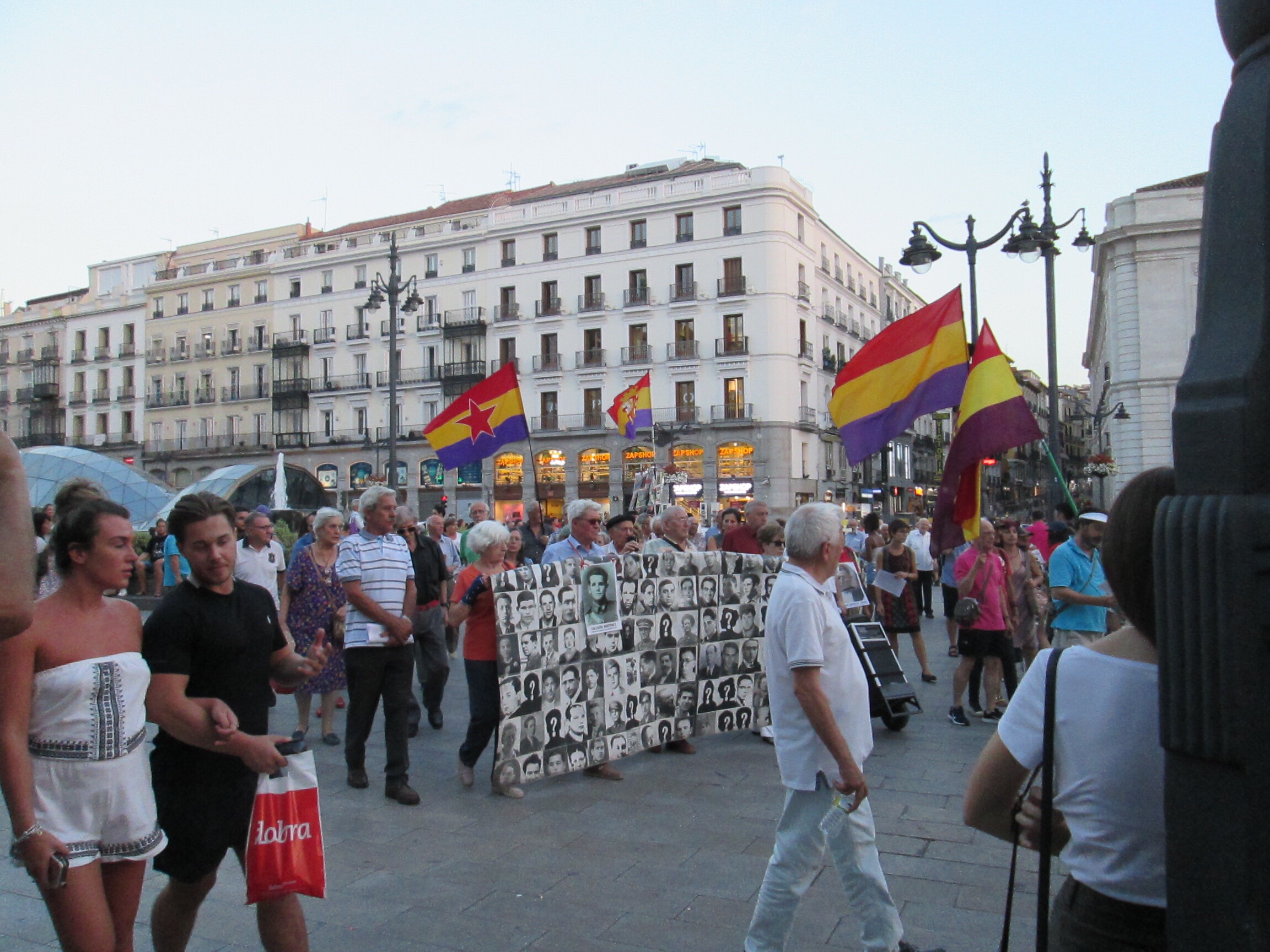
 Another pit stop for a café y copa well it is my last night in Spain and back to the hotel – so different from my others but fun with its black and white décor and strange wood grain woven carpet in the corridors, Why? Actual wood strips in the rooms.
 I spend Friday morning getting a few last minute items around the Salamanca area which was as I said in an earlier piece was new to me and very impressive. Plenty of places to eat and drink well but also little food shops, fruit and veg stalls and lots of antique shops – if I was driving home I might be in trouble. Check out is at noon and flight check in at four so I decide to drive straight on down Calle Alcala in the car. It goes on for ever and ends up in the town of Alcala de Henares of which I made a circuit but failed to find a parking spot. It’s an important musical and university town and has some impressive buildings housing those pursuits. Looked definitely worthy of another visit – maybe by train next time I’m in Madrid (if).

 mikeandmurakami.com