‘Twas Valentine’s day in St Alban’s …

So after a busy start to February, its halfway point was marked with a trip to St Alban’s – the first for a long time for me. The occasion was the christening of the extended family’s newest addition Louisa Deeley. I was delighted to note that her middle names were Denise (my late wife) and her great grandmother Rosemary who was there and I was pleased to have a long chat with her over tea. The party decamped to a pub to watch Scotland demolish England in the rugby – large Scottish contingent present. I made my excuses and went to visit my composer friend Dani Howard who conveniently lives opposite the Mayflower pub in the city centre where we had a lovely few beers with her and her partner Sean chatting about all sorts of things musical and other. Dani has a busy schedule ahead with trips to Hong Kong for the premiere of her Cello Concerto to be played by her former mentor about which she’s a bit nervous, several performances of the Saxophone Concerto for Jess Gillam which I heard in Poole last year and concerts in Germany, the Netherlands and three weeks in Florida in October as a “Master-Artist” at the Atlantic Centre for the Arts Residency Programme working with composers, performers and poets.

Then after a fairly quiet week a hectic weekend was upon us. On Friday I went with my friend Hattie to see Pina Bausch’s Tanztheater Wuppertal perform the amazing Sweet Mambo. With a flowing white drape background which sometimes billowed and was sometimes still and occasionally swallowed the dancers, the dance unfolded with a series of scenes in which women seduce and repel men, in which they find some common ground and other in which they have a laugh together. The fact that there are three men and six women probably indicates where Pina’s sympathies lie. The sound track is eclectic with classical, ambient, jazz and spoken words. As so often with her confections, it sounds like a mess but somehow it works with a mesmerising beauty. We left the theatre with big smiles on our faces.
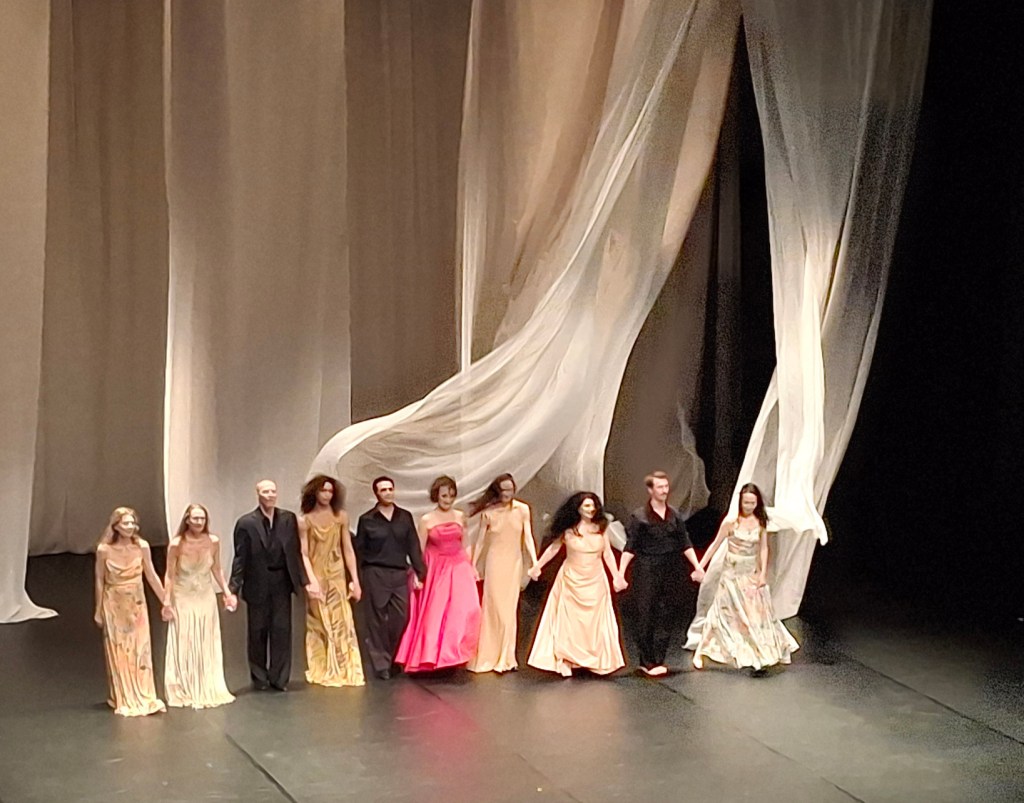
Fabulous frocks and flowing drapes in Sweet Mambo

The next day promised to be a bit of a scramble with a trip to Watford for football followed by a cross London dash to the Arcola Theatre for a play in the evening. My initial journey was complicated by there being no Metropolitan Line trains to Watford – my usual route when not driving – as it deposits me much closer to the West Herts Sports Club, where we meet for pre-match drinks and chat, than Watford Junction. It was all worthwhile as our new manager – third of this season, 23rd since the Pozzo family bought the club in 2012 – coaxed the team to a 2-0 victory over Derby County. After the match two Overground trains took us via a highly complex platform change at Willesden Junction (thank goodness Fran was with me or I’d have got completely lost). We met up with Farzana in the Arcola bar before watching a highly entertaining one-man show with a Watford connection.

Monstering the Rocketman devised and performed by Henry Naylor was originally at the Edinburgh Festival but the excellent Arcola gave it a worthy London run. It featured the dreadful Kelvin Mckenzie’s vitriolic attack on Elton John, the total lack of facts and evidence for which resulted in the biggest libel suit in history with Elton taking on the might of The Sun and the power of the Murdoch empire. With video clips and garish headline displays Naylor told the full story in a variety of characters in a funny, terrifying and eloquent way. He was one of the lead writers for Spitting Image back in the day and his satirical skills enabled him to skewer McKenzie and cronies in a revealing and most enjoyable 75 minutes. As it was still early we three made our way to the excellent Five Fingers for a fine curry.

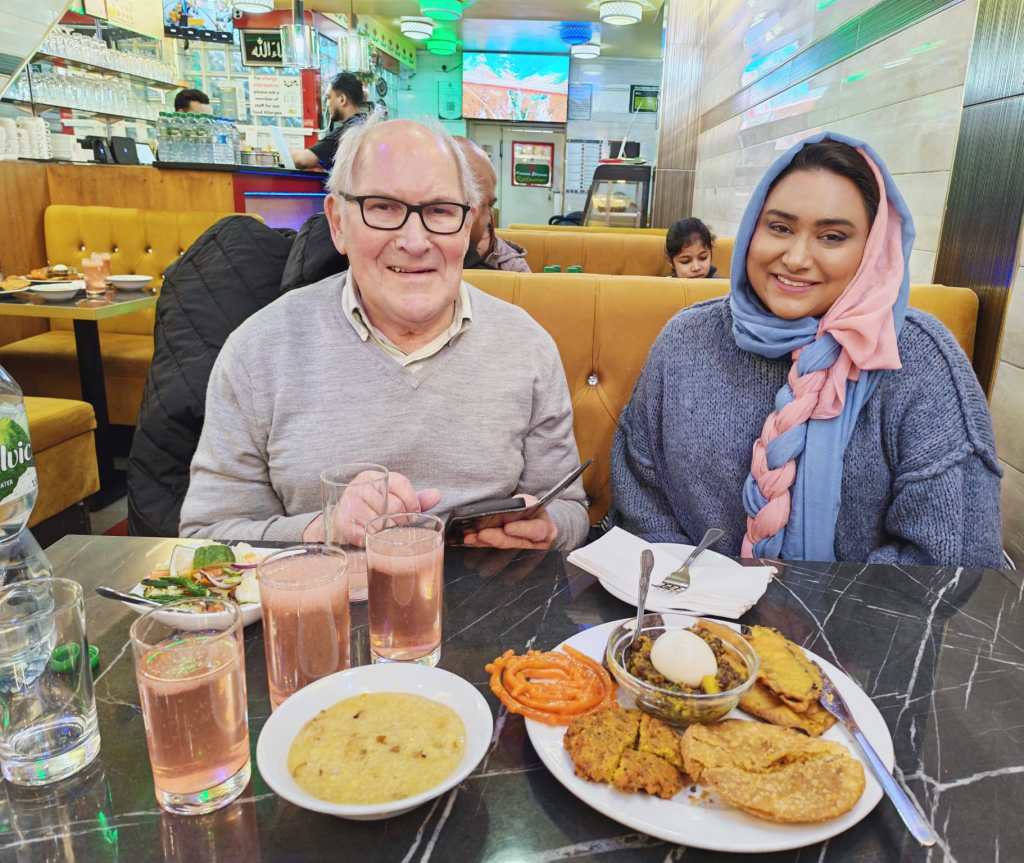
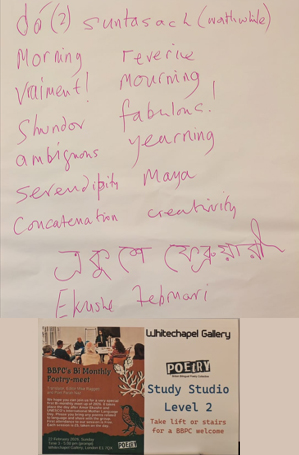
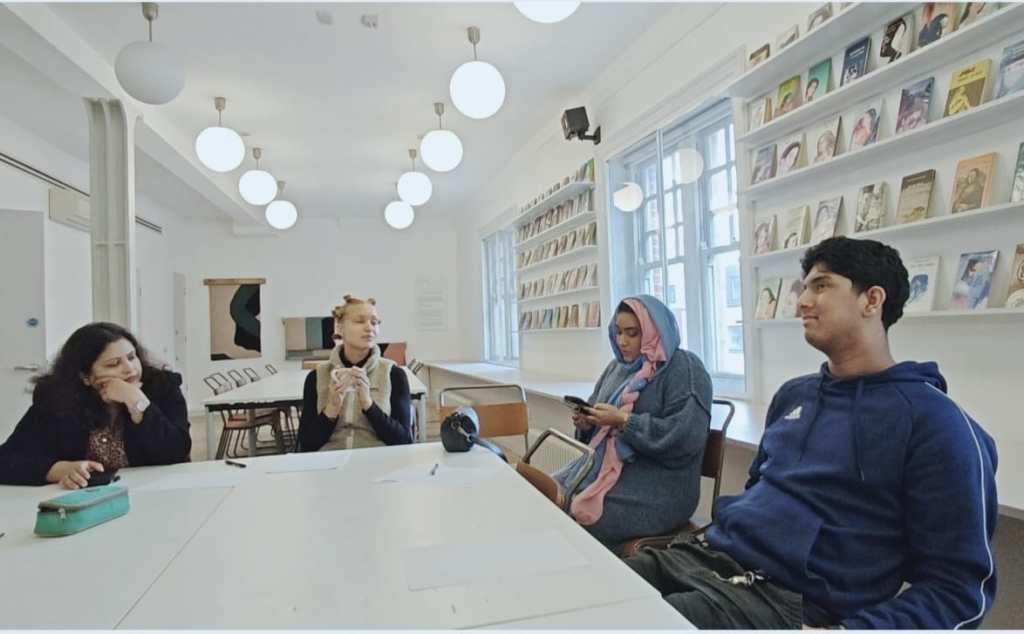
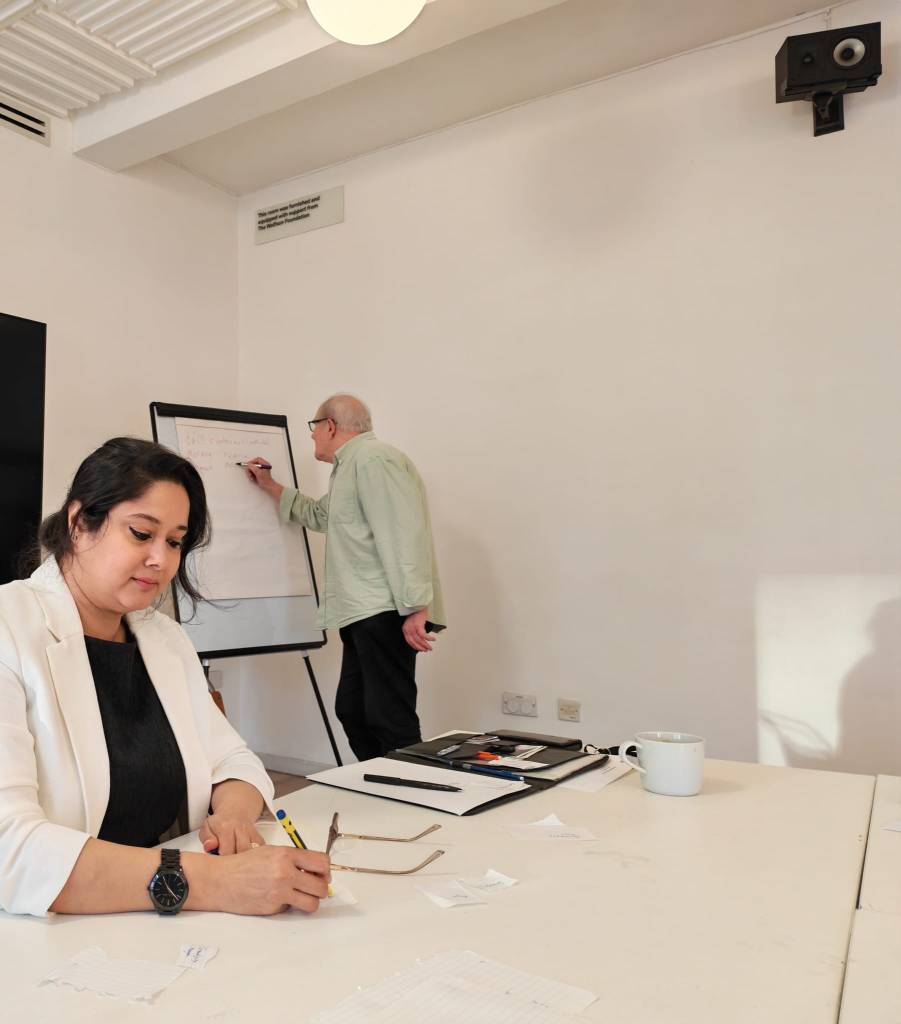
Saturday 21 was UNESCO International Mother Language Day so it was appropriate that our British Bilingual Poetry Collective (BBPC) group had our regular meeting on Sunday 22 and could focus on the topic with a group of regulars and two people joining us for the first time. I outlined the origin of the Day which started in Bangladesh when five students were executed for speaking Bengali rather tha Urdu and was observed there ever since. Then the government suggested to UNESCO that it should be global which it has been since 1999. I had asked my friend Shumi to bring her delightful poem Banglish about her experience of growing up bilingually in London, I had sourced a number of others I could read and a lively discussion ensued with contributions with many different experiences. We had a technical task to conclude in which all of us suggested two words which I then wrote up on the flip chart. The session’s ‘homework’ was to write a poem incorporating all the words. Three poems resulted which were not bad at all. If you want to give it a try the words are below. As some of the group were observing the Ramadan fast, we repaired to a local restaurant to enjoy iftar the moment the sun set. The chef did a count down for us and then promptly brought much-needed, by some, food.
It doesn’t stop – Monday was off to Hampstead Theatre for the press night of Bird Grove by Alexi Kaye Campbell. It was a fascinating examination of the trials of a radical young woman Mary Ann Evans fighting a rigid father as well as contemporary mores. This radical young woman later still had to assume a male identity, George Eliot, in order to publish her seven novels and a number of short stories. Ironically she was allowed to publish translations under her own name. The play was rooted in the father daughter dispute and her association with some undesirably left wing friends.

A touch of near-slapstick was introduced through her would-be suitor needing a marriage to secure his inheritance. He was sent off with a flea in his ear. It was interesting with Mr Evans pouring guilt onto his daughter about overreaching their funds to put her in the titular grand house and her steadfast resolve to resist being bullied to church but it stirred up a wish for a play that reached further into her later life and success against the odds. Maybe that’s in the works.

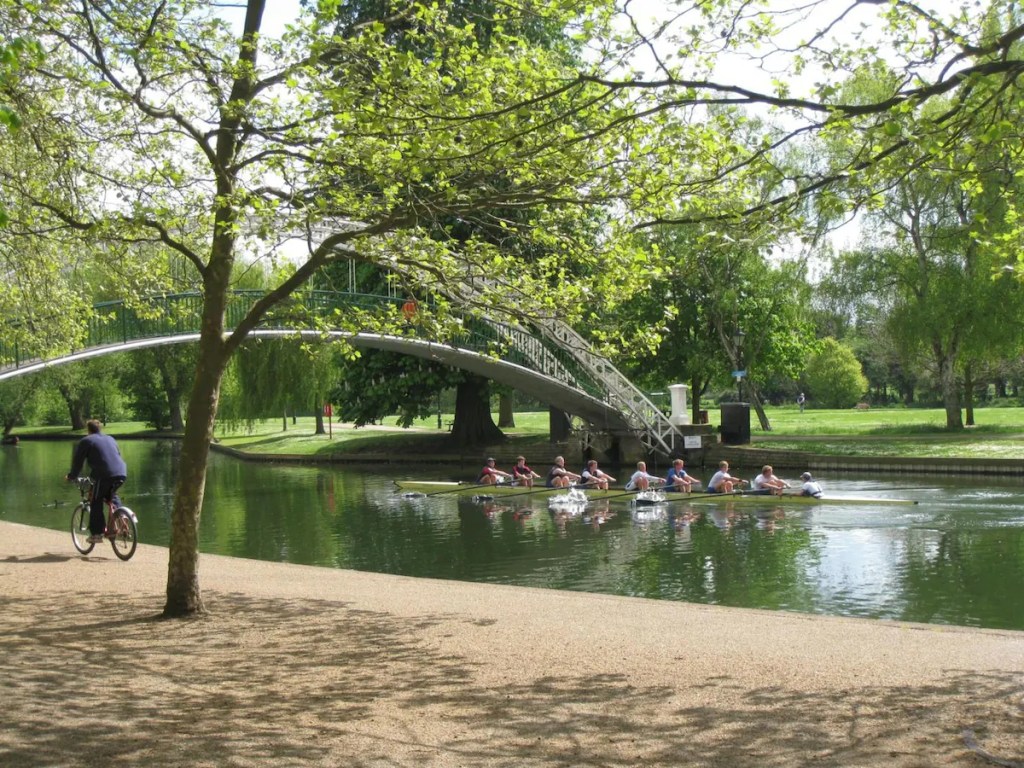
Tuesday was deadline day for BBPC to submit its proposals for the 2026 Season of Bangla Drama. We had discussed these as a group but it fell to me to get them in on time. Then on Wednesday I went to Bedford to have lunch with my friend Jossy who I hadn’t seen for a while. How lucky were we! After the murk and mizzle of the year to date we had a sunny day and could lunch in shirtsleeves on the patio of the Embankment pub (thanks to Pete and Julie Bradshaw for the local knowledge) overlooking the Great Ouse with its scullers, joggers, dog walkers and cyclists. The pub had good food and wine and apparently has rooms. We then strolled back to Bedford Station through a less beautiful part of the town but down by the river all was fine and we had a lively discussion on a wide variety of topics.

The Royal Festival Hall was full on Thursday for the OAE’s concert with Robin Ticciati – music director at Glyndebourne and familiar with the orchestra from its residency there. The programme was Mozart’s last three symphonies, 39, 40 and 41. These are pretty familiar items in the classical repertoire but are not often heard together, so a clever piece of programming. Once again, the conductor’s vision and energy, the orchestra’s use of period appropriate instruments made the works sound really fresh and new. The ‘Jupiter’, probably the most famous, occupied the second half and had atmospheric string playing in counterpoint with lush woodwind and powerful brass. A delight.
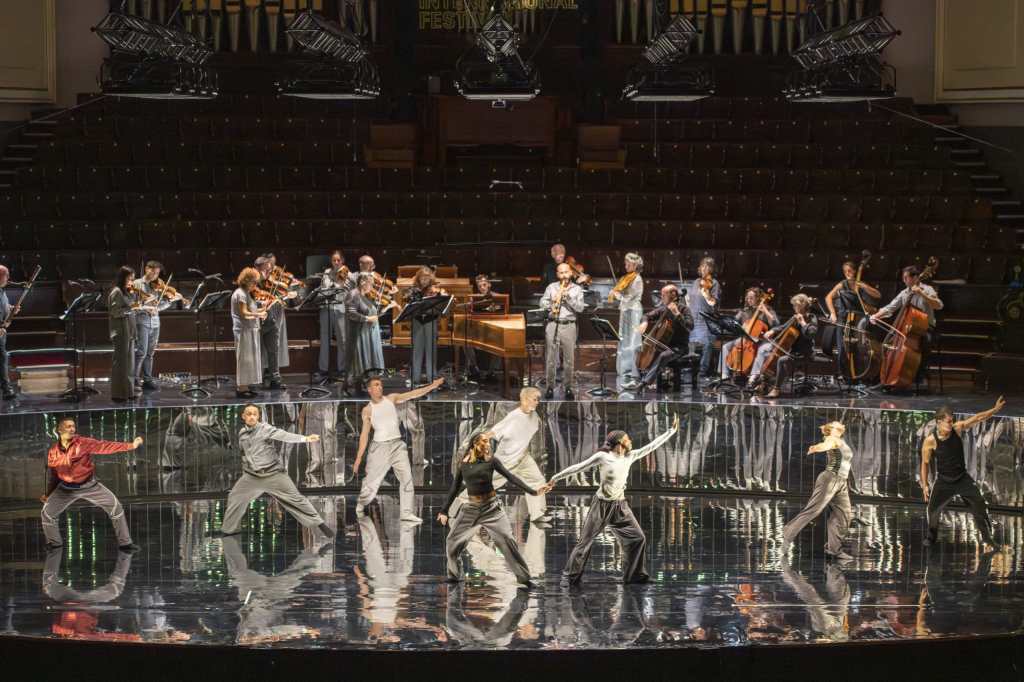
The evening was rounded off by the news from the Development Director telling me that the OAE’s sensational Breaking Bach project will have a series of performances in the UK next year and will be visiting the United States as well. Stemming from the orchestra being based in a school this ground breaking (sorry!) production deserves this exposure.

The next Sunday I had a music experience of a very different kind with a trip to an arch under Herne Hill Station to wear my SOULSTICE GRANDAD T-shirt with pride and see the group in which my granddaughter (Daisy but Trixi in the band) plays keyboard and flute and sings. Every time I see them they get better – different set list incorporating original material and covers, tighter arrangements and harmonies and tonight they had a guest saxophonist Sam to add to the exhilarating session amid the smoke machines and lighting of the Off The Cuff venue. (Image below contains stills from a video courtesy of Chris Addison as holding a pint in one hand and my coat in the other I couldn’t get my phone out.)

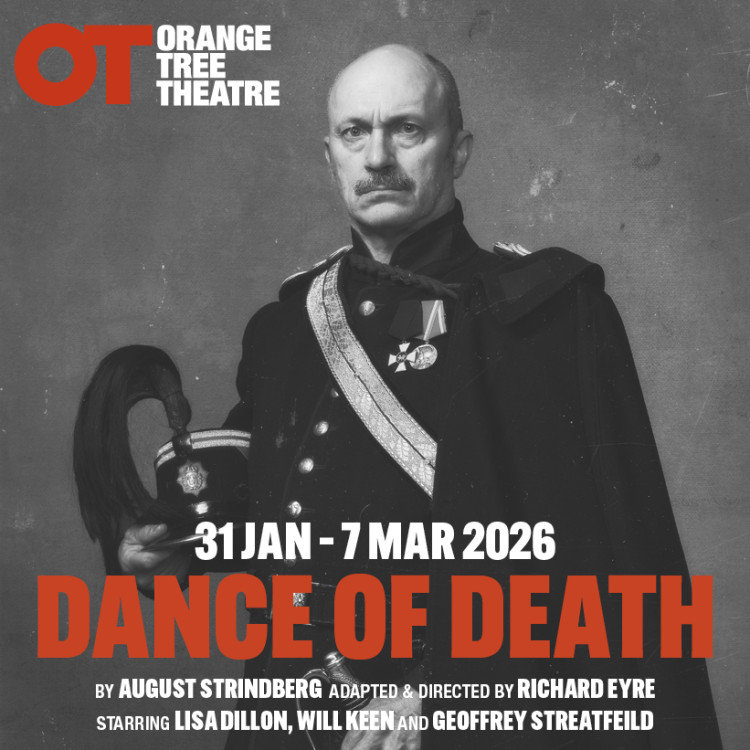
Two intense family dramas were next on the agenda. Richard Eyre’s adaptation of Strinberg’s Dance of Death at the Orange Tree was unremittingly bleak as a couple try to destroy each other. Updating it to the quarantine era of Spanish flu gave it an added claustrophobia as did the cluttered set. It was an evening to be admired for its production and acting rather than enjoyed. I knew a bit more what to expect the next night at the Young Vic as I had been to the Insight session last month. However the actual production came as quite a surprise. I’d seen the beige leather semi circle that forms a large part of the set previously but the red plush carpet on the floor and walls, the observation window and the fact that the audience reamined under the harshest of house lights as the action began were truly unexpected.
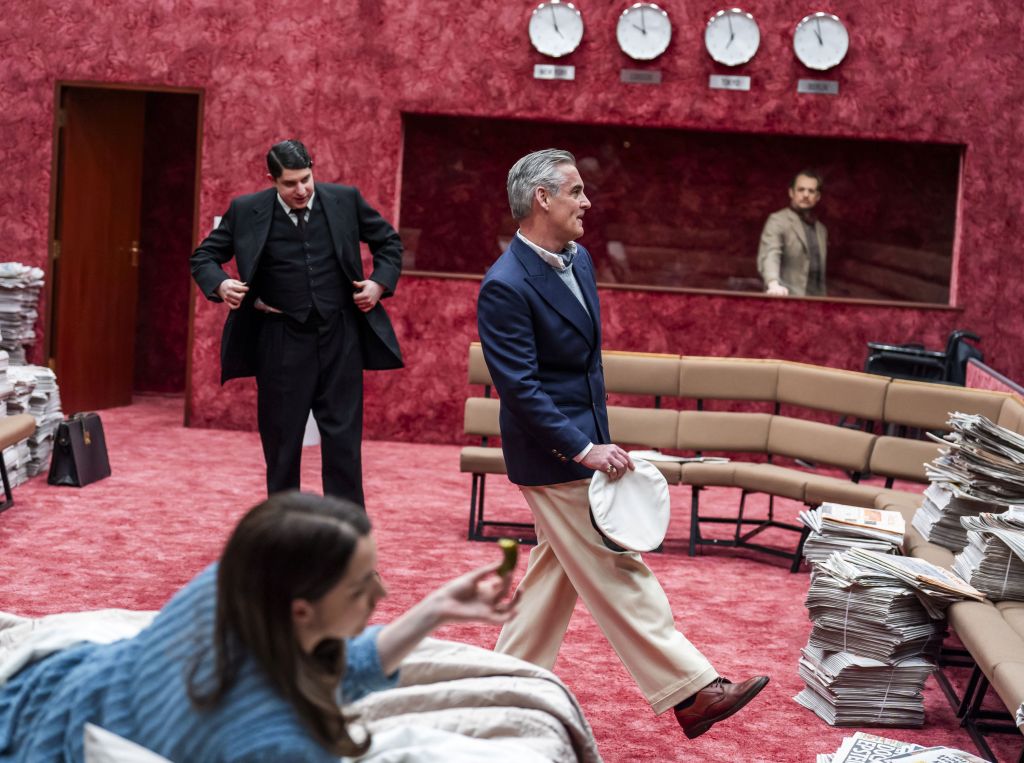
Arthur Miller is all over London at the moment, but Broken Glass is a late play and not often performed. The key element is the lower limb paralysis of Sylvia, played brilliantly by Pearl Chanda, a Brooklyn Jewish woman. After reading and hearing news of the Nazi Kristallnacht pogrom, suddenly her legs won’t work and she’s confined to bed. Attempting to explain this reveals all sorts of marital and family issues which see the characters unravelling before us, including a Dr Hyman played by Alex Waldman whose Freudian practices encourage Sylvia to imagine she’s sleeping with him. It was a demanding watch but made us think about current day issues of genocide to which many turn a blind eye – are we paralysed because there is nothing we can do? Leaving the lights on for much of the play was quite distracting as we were sitting opposite both Sir Lennie Henry and mostly significantly the Guardian theatre critic Arif Akbar. What would those hastily written notes revel in tomorrow’s paper? She’s usually quite a harsh reviewer but gave this four stars.

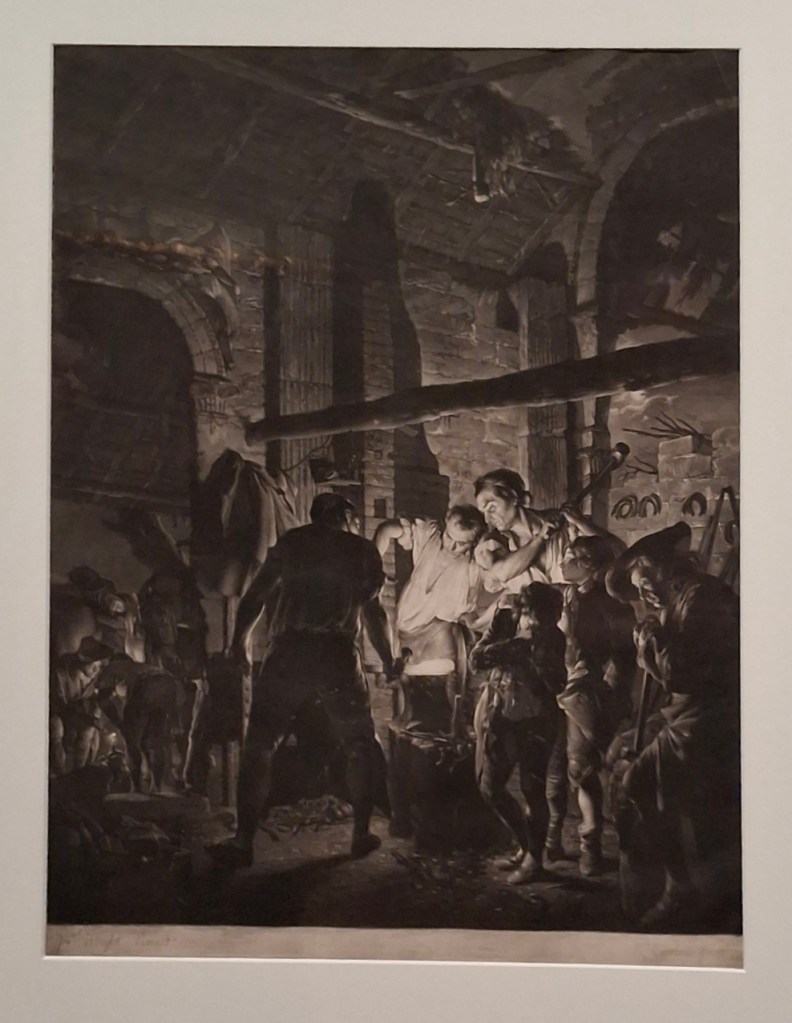
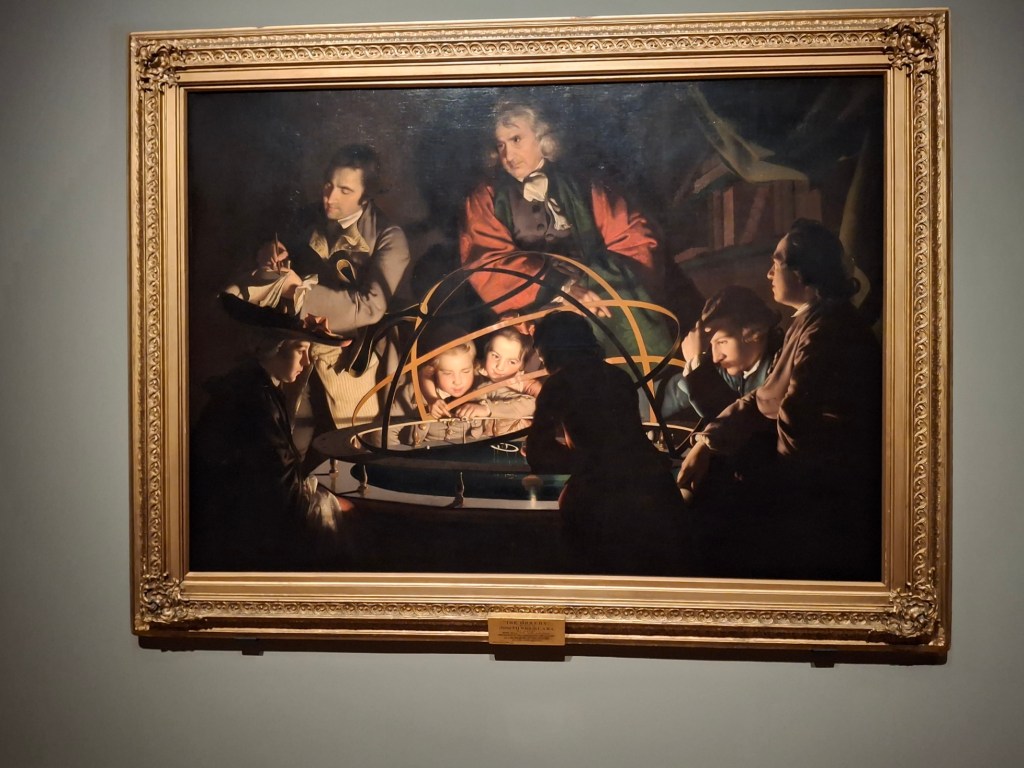
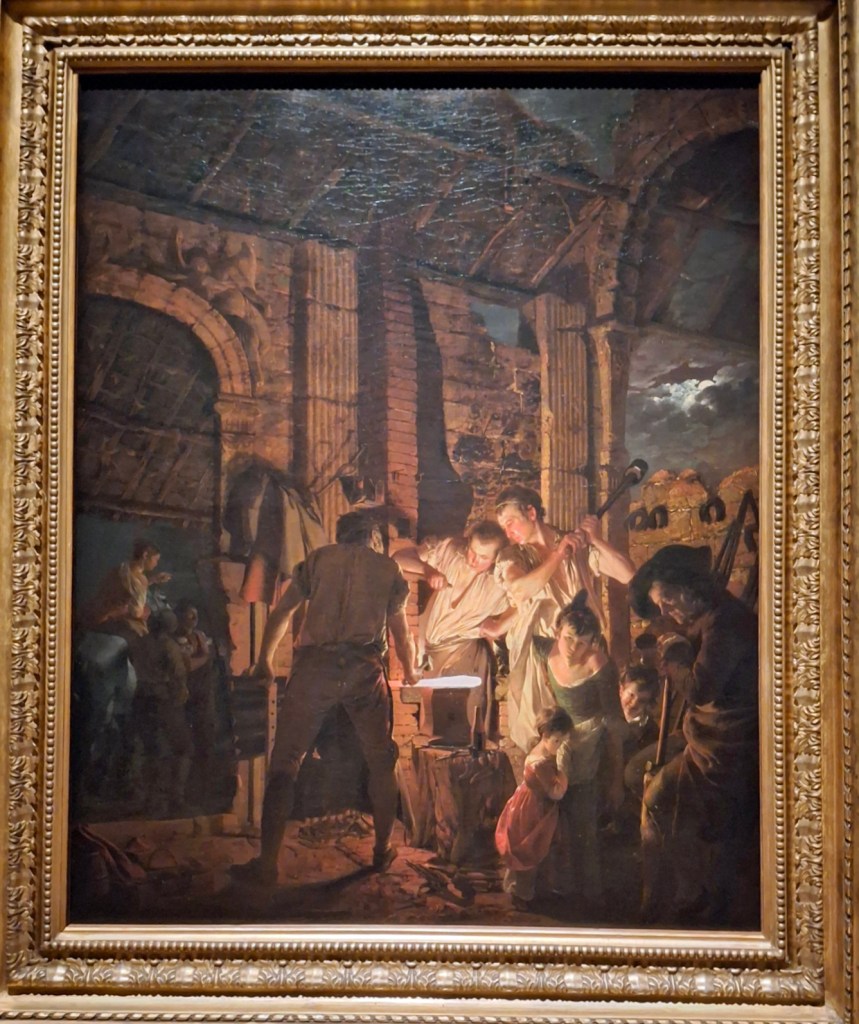
My grandson Jake, somehow turned 20 on Saturday and had decided that he’d like to go back to Yoshino for his annual birthday dinner. Ever happy to oblige I had words with Maitresse D’ Lisa and she came up with a really excellent menu for us. But before that, I decided to go to the National Gallery to see the Joseph Wright of Derby exhibition. I’d seen some of his paintings a few years ago in Norwich and was fascinated by his use of small and focused light sources. I gather his take on chiaroscuro is called ‘tenebrism’. In most of the paintings apart from the canndle or lamp light there was always a glint of moonlight in the background. As a big fan of printmaking as well as painting it was interesting to see mezzotint versions of his paintings which were obviously the main way of making money from your work at the time. Seeing them alongside each other was enlightening and the fact that one featured an orrery when I was about to meet my physics student Jake added another layer of interest. It’s a small show but well worth a visit. Walking through the other galleries it also remoinded me what a wealth of high class art is at our disposal for free still. I must go more often and revel in the Canalettos and Guardis and Turner v Constable without paying £24 for the privilege at the Tate. Oh and there are some favourite Goya, Velaquez and Murillo canvases I hadn’t seen for a long time – and as they say – so much more.
Then to the real business of the day. Anybody who has read previous blogs will know how important Yoshino is in my life. Dee and I first went to the old Yoshino in 2009 or 10 (I wasn’t blogging then or I’d know) when it was in Picadilly Place and came to know Lisa the Maitresse D’ quite well. Since then she’s been on a family outing to see My Neighbour Totoro at the Barbican and came to Glyndebourne with me in 2023 and we went as a family to the soft opening (right) of the new premises in Duke of York Street in April last year – minus Chris filming in Dublin and Daisy who didn’t fancy it, plus Rosa and Frances. So Lisa knows us all too.
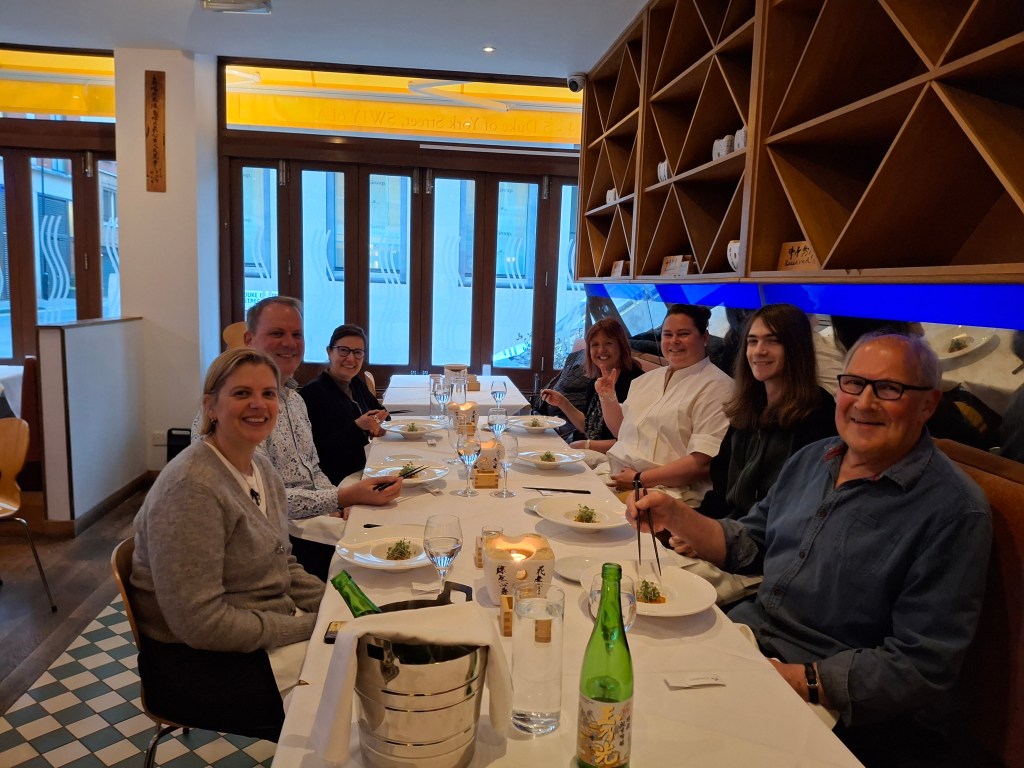
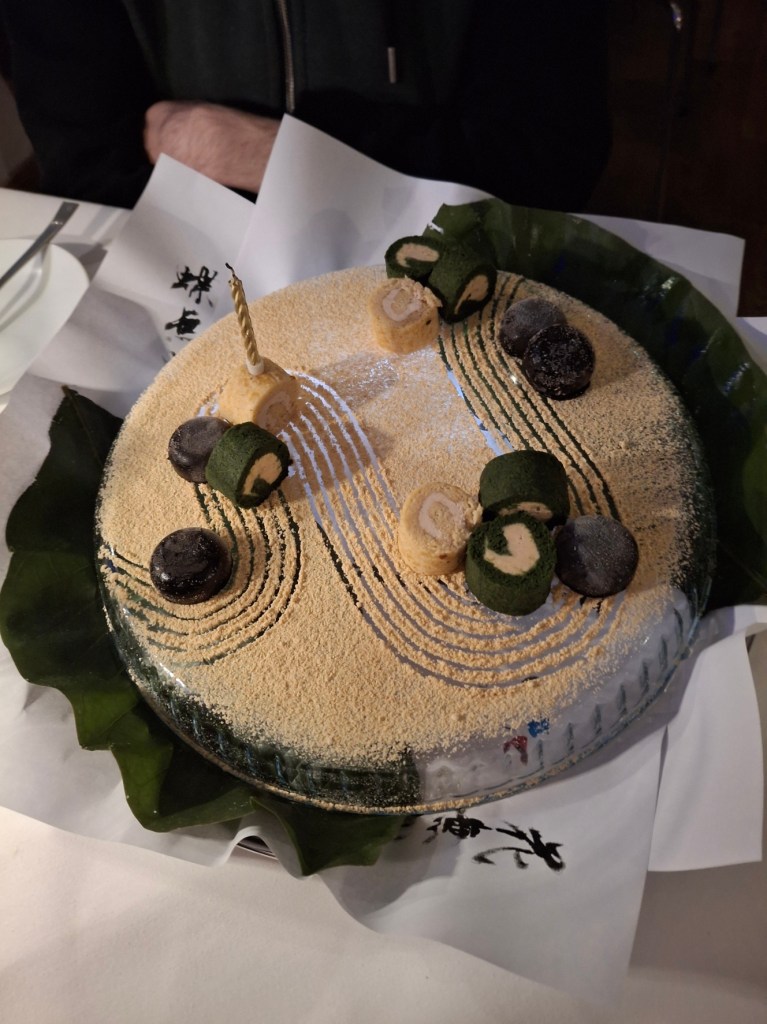
However when Jake said he’d like his birthday dinner at Yoshino there was rejoicing in lots of the family with a little trepidation on the part of a slightly picky Daisy. So I asked Lisa to book us in and design a menu for us with alternatives for Daisy. She pulled out all the stops and gave us an absolute feast of taste and texture sensations including making an alcohol free campari for non-drinker Jake. And as she had run out of my ‘usual’ sake – I wonder why – she offered me two options to taste before we settled on an excellent dry alternative. Daisy surprised herself and us by being really adventurous and enjoying things she wouldn’t have looked at – sake included. On a previous visit we’d tried a curry dish and had not been impressed. Lisa brought us a bowl of curry and rice saying it was spice combination number 47. Well this variety certainly hit the spot.This wonderful evening concluded with Lisa and her colleague Naomi bringing Jake a birthday cake of ice cream filled chocolates and soy and matcha mochi swiss roll slices all arranged on a raked zen garden. What a night! What service!

Music, mystery, movement and more

I had the privilege a couple of weeks ago of seeing an hour of the technical rehearsal of The Unbelievers at the Royal Court as part of Frances’s patrons’ deal. It was fascinating and set up a sense of great anticipation for the play itself. It did not disappoint. The central performance of Nicola Walker was quite stunning as a woman grieving the mysterious disappearance of her teenage son. Spoiler alert – he doesn’t appear but his absence hangs over the three intercalated time periods after his failure to return home.

The whole cast remains on stage throughout except for a couple of costume and role changes in a set that has a sparse domestic interior at the front with what looks like a police or doctors’ waiting room at the rear. Fear, anger, incomprehension, blame and violence swirl through the mother, her two ex- husbands, children and step-children. Some people, it seems, found the mingling of the day after, a year after and seven years after time periods confusing but I thought it added to the power of the writing, depicting clinically the way grieving does affect your sense of reality and time. It sounds bleak but had quite a few moments of hilarity. A serious examination of grief, guilt and sanity leavened by tender, moving and funny moments.

Next it was off to the downstairs theatre at Hampstead where new playwrights are given space to experiment. The Billionaire Inside Your Head by Will Lord was an examination of greed, ambition, entitlement and fantasy in an office setting. Echoes of Glengarry Glen Ross and other Mamet two-handlers spring to mind as a thruster and a slacker trade dreams and insults. The entitled slacker Darwin is the son of the company’s owner who as well as appearing in the drama, opens it with a chorus-like prologue as The Voice, that sets the scene for us all to examine our thoughts. The debt-collection nature of the company is perhaps a bit less exciting than Mamet’s realtor wheeler dealers but the tension between Darwin and the OCD Richie is well depicted. It was exciting, engaging and thought-provoking – just what Hampstead downstairs aims to be.

There was lots of the movement of my title in both the above but the prime expression of it this week came in Akram Khan’s Thikra: Night of Remembering at Sadler’s Wells where I had the pleasure of Rosa’s company. Devised in conjunction with the Saudi visual artist Manal AlDowayan, this is an intense hour of modern dance infused with classical Indian forms and a sound track that moves from a foreboding drone through ragas, Balkan chorale, drumming and hints of Purcell.

The twelve female dancers all have waist-length black hair that forms an important part of the performance. Would have been an interesting casting call: “Find me twelve women with equal-length black hair who can dance classical Bharatanatyam choreography”. Nine of the dancers were uniformly clad in olivey long dresses while the sacrificial victim was in white, the matriarch in red and her sister in black. AlDowayan’s involvement gave it a very graphic look that comes from her work in exploring cultures, heritage and change. The narrative didn’t really matter but was essentially about annual rebirth and renewal through sacrifice. Visually stunning, musically stimulating – an hour of total transportation into a world of magic and wonder. You can get a short glimpse of it here.

A select group of us returned to the Bridge Theatre for The Lady from the Sea. I haven’t been there for ages as it’s been wall-to-wall Guys and Dolls. I wrongly thought this was a version of Hedda Gabler but Ibsen actually wrote a play with this title so I need to brush up my Scandi classics knowledge. This was a Simon Stone adaptation, so after the Billie Piper Yerma, expectations were high for something off the wall. And we got it – the usual Ibsen anguished captive bride played bravely by Alicia Vikander resisting the cage into which her husband Andrew Lincoln, in great form, had placed her. The drama plays out on a thrust stage (the Bridge is so versatile as a space) which becomes soaked with rain in Act 2 and then turns into a swimming pool. Writing, acting, sound and lighting were all excellent but the award of the evening has to go to the set design and build – the vision of Lizzie Clachan. Another exceptional evening of entertainment.

After all this fun it was back to work – as a producer! A couple of times a year for the last few years, I’ve recorded an audiobook version of a reader for use in teaching English as a Foreign Language in Germany. I’ve now, it appears, done 11 of them – here are a few from Hueber Verlag in Frankfurt.

I have a small repertory company of actors who are brilliant at producing a range of characters in the course of the narrative – teenage protagonists, their parents, threatening outsiders, police and other officials. The stories are often a bit Famous Five but tackle issues like single parenthood, criminal behaviour, the environment and relationships. For this one, Joining the Circus,I invited Gyuri Sarossy, who I met at a Hampstead Theatre party a while back, to perform the script. It doesn’t sound the most likely name for an English language project but he is English born of a Hungarian father and English mother. The story involved a farming family setback by the father’s accident and a circus family devastated on finding their usual pitch was waterlogged and wouldn’t work. Gyuri was born in Bristol so we opted for a West Country accent for the farmers and an East Midlands for the circus people. It worked extremely well and I am constantly amazed at how these actors can switch characters seamlessly in a single sentence. After the recording Gyuri was off to Budapest to record his final scenes in a vampire movie. Another spoiler – he dies. A week later we hear that the client likes the results of the session. Great news – we’ll all get paid! A little.

It was then on to my main unpaid role as a trustee of the British Bilingual Poetry Collective. I was invited by the publisher of the collective’s anthology Home and Belonging, which resulted from a series of translation circles like the last blog’s reference to the Barbican, to chair a discussion panel at the Palewell Press Literary Festival. The day also included readings from a number of poets including Chika Jones and Nasrin Parvaz who feature in our anthology. It was fixed a long time ago and so I missed Watford’s best game of the season so far, a 3-0 demolition of Middlesbrough – such dedication to the cause, such a fair weather fan!

However the occasion was very interesting with my panellists translating from Arabic with Dr Amba Jawi and Catherine Temba Davidson as collaborators, Barbara Mitchell who translates from Spanish and Caroline Stockford who does Turkish and Welsh and finds striking and unexpected parallels. We ranged over the process of translation and the difficulties of rendering essence and spirit rather than words, the degrees of faithfulness and liberties translators are allowed and the reactions of the original authors.

In all the cases featured here there were difficulties since all the authors were in prison on political charges. Palewell Press specialises in human rights publications so this was only to be expected. The overriding message was that all art forms have to continue to expose and challenge human right abuses whever they occur.

Next day, to make it a full weekend of poetry, I co-hosted BBPC’s annual contribution to the Tower Hamlets Season of Bangla Drama. The season has a theme each year – we’ve done ‘love’ and ‘hope’ and this year it’s ‘kindness’. We decided to go all alliterative and call the session Kindness with Kazi using the poems and songs of the national poet of Bangladesh Kazi Nazrul Islam. Shamim Azad and I hosted the occasion which had performances by the brilliant singerJoyeta Chonchu of a couple of Nazrul songs , my colleague Milton and I recited one of his most famous poems “I Sing of Equality” followed by a discussion of his work and influence on people’s lives. After a short break we then broke up into pairs to talk about kindness given or received in our personal lives after which everybody wrote a short poem or piece of prose. There were some very moving contributions and very positive feedback that participants found it both enjoyable and valuable.

Monday saw me joining Frances at the Orange Tree Theatre for Hedda. Ibsen is all the rage these days it seems – well I guess he has been for a while. This is an adaptation by Tanika Gupta – well really more of a new play based on – Hedda Gabler, relocated to Chelsea in the post-war, post-partition of India period. Tanika’s take is based around the need to conceal the ethnicity of Hollywood’s Anglo- Indian stars, in particular Merle Oberon. The evening was pacy, directed by Hettie Macdonald, twisty and with a full range of emotion, fear, deception, devotion and angst.

From the dramatic opening with her lifelong maid, brilliantly portrayed by Rina Fatania, asking which face whitening she’d like today through to the realisation that she’d made a disastrous marriage believing her screen career to be over, Pearl Chanda was Merle Oberon.

A powerful performance with hints of her former influencer status dashed by the creeping reality of her current dull life. It touched a real nerve with me as I was currently reading Kiran Desai’s Booker nominated The Loneliness of Sonia and Sunny which brilliantly examines the whole question of identity, ethnicity and personal authenticity. I was fortunate to be able to speak to Tanika about our Kindness event and she said her father used to sing Nazrulgeeti (KNI songs) around the house all the time. That was before seeing the play so sadly I wasn’t able to tell her how much I enjoyed it.

Another part of the Season of Bangla Drama was a presentation of kindness stories collected by long-term Bangladesh resident Peter Musgrave who had taken part in our BBPC Kazi session so it seemed only right to go to his. An added attraction was that Gitabini, the singing group featuring my friend Rumy Haque was to perform. There were stories to bring hope of new flood resistant ways of building houses and farming being demonstrated by NGO staff to educate the Bengali populace, particularly in the most threatened areas. One of the countries most prone to disappearing into the Bay of Bengal if climate change continues unchecked – not sanguine about the current COP to prevent it – but good to see alternative approaches to mitigate the effects. Gitabini sang a Kazi Nazrul Islam song and Rumy recited her conservation-oriented poem about a banyan tree and I was able to chat with a number of old and new friends at the post-event Koffee and Kake.

Gitabini performing

I’m fortunate to call the young composer Dani Howard a friend and so when her saxophone concerto was finally to receive its UK premiere I just had to whizz off to Poole to the Lighthouse Arts Centre to hear it. I did some voluntary work a few years back for the London Chamber Orchestra which had originally commissioned the concerto but then got into financial difficulties and couldn’t complete the contract. So I’d waited nearly two years to hear it. Stockholm Philharmonic and the Bournemouth Symphony Orchestra came to the rescue and while I didn’t make the world premiere in Sweden, I wasn’t going to miss out on the first UK performance. The journey was horrendous. The train was 30 minutes late arriving at Waterloo because of earlier signalling problems, and quite a bit more than that departing. Then we couldn’t get into Southampton Station because of other trains blocking our platform. Finally they decided to skip some stops and head directly to Poole after Bournemouth. At least Delay Repay will kick in and I’ll get some dosh back. By the time I’d checked in to the hotel, checked out the location – my first time at The Lighthouse – and gone for a walk down to the Quay it was dark. I guess one benefit of this was the bright lights of the Poole Museum shone out. A quick beer and back to the hotel to prepare for the concert. Was all the hassle worth while? Oh yes.

The concert opened with a Wagner piece I’d never heard – the overture to his first opera, a comedy called Forbidden Love. A comedy from Wagner! It failed miserably and lasted for only two performances in 1836, but the overture was fun, very jolly and lively, opening with castanets of all things! But the main event came next. Dani had written the concerto specifically with the versatile Jess Gillam in mind. In three contrasting movements the music showcased Jess’s talent but also wove evocative call and response moments with different sections of the orchestra. Lush pastoral passages alternated with bold percussive swathes and the brass were strongly featured – Dani does like her brass – one of her first pieces I heard was her trombone concerto for Peter Moore at the Barbican in April 2022, another amazing performance. Dani says the concerto is a homage to Adolf Sax who invented the wonderful instrument which finds its place more frequently in jazz clubs than in the concert hall. I love the way Dani combines pure and simple sounds from nature with a clear understanding of the power of complex orchestration. She’s a master of the medium. The Times critic liked it too: The first movement bubbles and chatters, passing ideas between soloist and orchestra, while the finale is a dazzling moto perpetuo, dispatched with seeming ease by Gillam. Best of all was the central movement, an extended cadenza for Gillam, who made it seem as if we were hearing Sax’s innermost feelings

Jess Gillam is a master too and for her encore, chose a piece she’d played in BBC Young Musician of the Year in 2016 – Pedro Itteralde’s Pequeña Czarda – when the conductor was Mark Wigglesworth, now principal conductor of the Bournemouth Symphony Orchestra, whose home base is the Lighthouse. Most appropriate. After the interval we heard the orchestra in full flow with Berlioz’s Symphonie Fantastique. It will be interesting to compare this rendition with the Orchestra of the Age of Enlightenment’s approach in June next year on period instruments under Sir Simon Rattle.

What made the evening extra special was that Dani invited me to the pre-concert reception where I met her mother, Belinda, again – we had both been at the Barbican gig in 2022 – meet her sister Sam for ther first time and catch up with boyfriend Sion Jones who I’d met at the Colin Currie percussion concerto at the Wigmore Hall. Dani was of course the centre of attention with a former pupil effusing over her influence on his career and her former music teacher from Hong Kong, now working in Poole, bringing a class of her primary pupils to say hello. After the concert, Dani had some formal duties but after a while she and Sion were able to join Belinda, Sam and me in the pub where I’m afraid we stayed till they kicked us out. After all the music it was an evening of fascinating conversation eavesdropped and joined in with by locals Jeff and Jonny and covering coping with bereavement, mine and the Howards’ who lost a husband/father last year, music, the arts generally, contracts, 2027 paradigm shift and blogging among others which were continued outside the pub until we all decided to head for our rather tardy beds in three different hotels.