
The momentous decision in early May was to sell my car. So I now have a car-free drive!
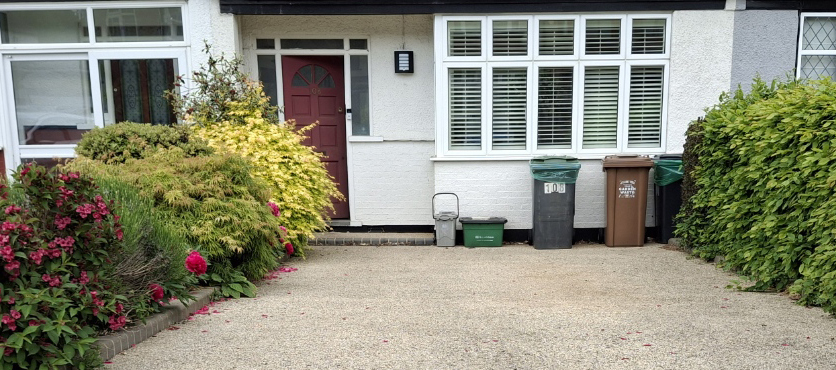
I’ve been a car owner for 60 years so this was a big step but insurance and running costs were becoming unsustainable, I travel in London by public transport for free and when I go elsewhere there are trains and buses. And my car insurance premium alone will pay for lots of minicabs when I’m feeling lazy or access is difficult by other means. Big mental adjustment but so far so good. I managed a recording session in Greenwich and my weekly shop three times now by bus – and all for free.
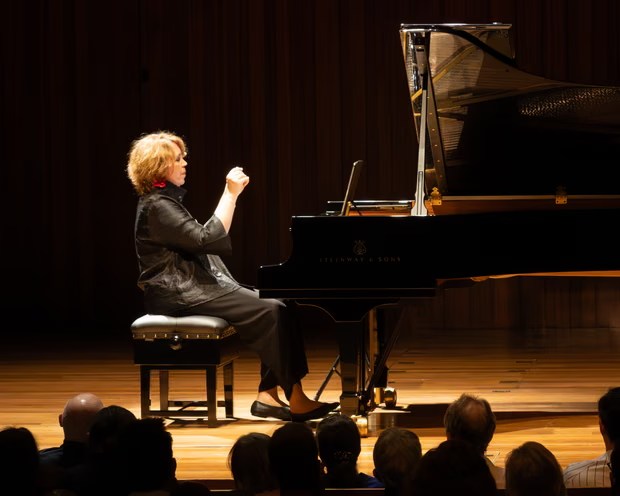
My daughter and son-in-law introduced me to the Venezuelan pianist Gabriela Montero who was performing at Milton Court at the Barbican on May 1st. We met for a pre-concert dinner at Pham Sushi which I’ve walked past many times but never been in. It was excellent! I didn’t know the pianist’s work but she played an exciting programme under the umbrella title Iberia with pieces by Albeniz, Granados, Alicia de Larrocha, Soler and Mompou and Spanish-flavoured pieces from Scarlatti, Chopin, Liszt and ending with Ravel’s Rhapsodie Espagnol. The Spanish aspect appealed of course and she is a vibrant and expressive performer who played with nuance and verve. I’m glad to add her to my list – thanks Jo and Chris.
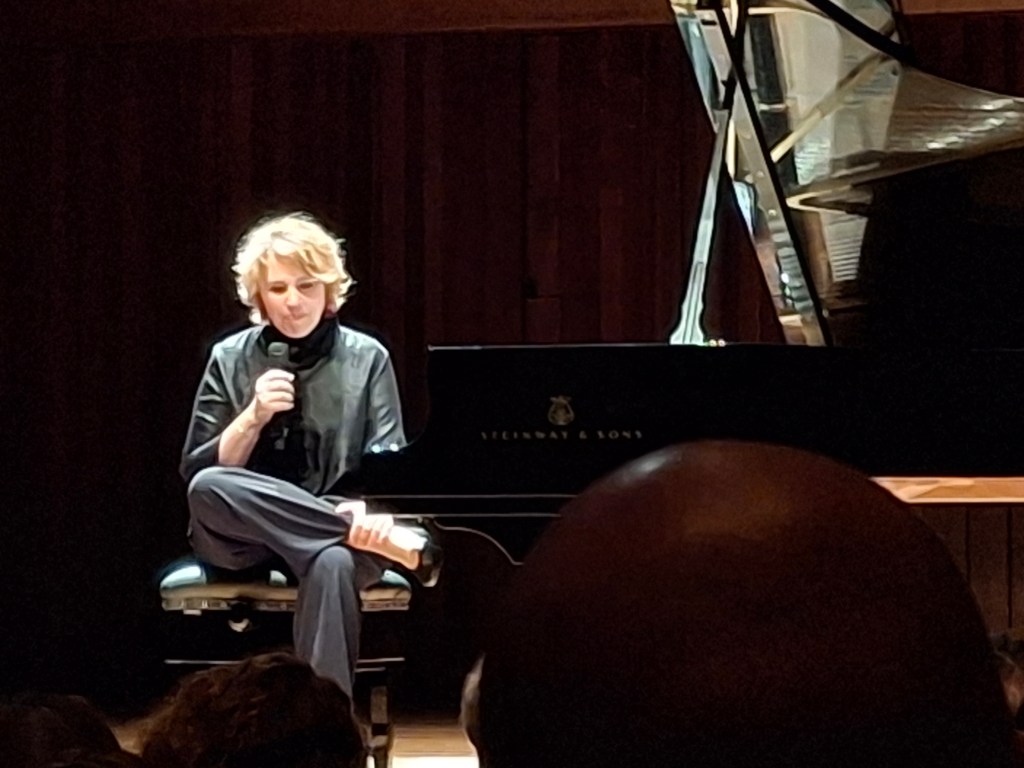
Then she returned to the stage for the unprogrammed part three of the concert in which she improvises on themes suggested by the audience or of her own choosing. The first suggestion was ‘Mamma Mia’ which she took on board and proceeded to amuse us and herself i suspect with a wonderful set of variations on a theme by Abba! Next she worked around a theme of her own which was a rather introspective, musing piece with a lower tempo but very affecting.
Her final improvision was on the Beatles’ ‘Here comes the Sun’ which started in the Baroque era and reminded me of Purcell before veering off in all sort of directions which echoed at different times the Keith Jarrett Cologne concert, Scott Joplin ragtime and the blues. Brilliant! And who says classical players don’t like to improvise! As Gabriela said Bach, Beethoven and Liszt all just sat and made it up as they went along so why not me?
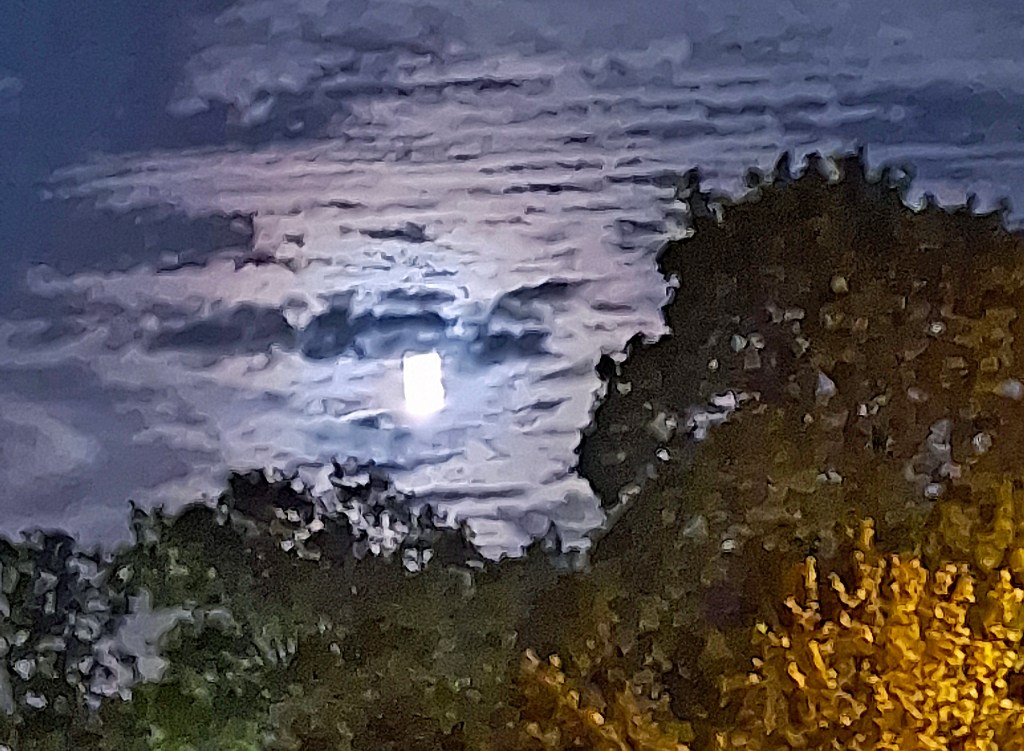
Having just heard a song about the sun, my walk home from the station was blessed by a wonderful night sky with a Murakami Moon. As fans will know a double moon is a big feature of Haruki’s novel 1Q84. The appearance of this two disc moon took me back to that amazing book and our time spent looking for locations in his novels which, of course, was the original inspiration for this blog. As a classical and jazz music fan, he would also have loved Gabriela Montero’s improvisations.
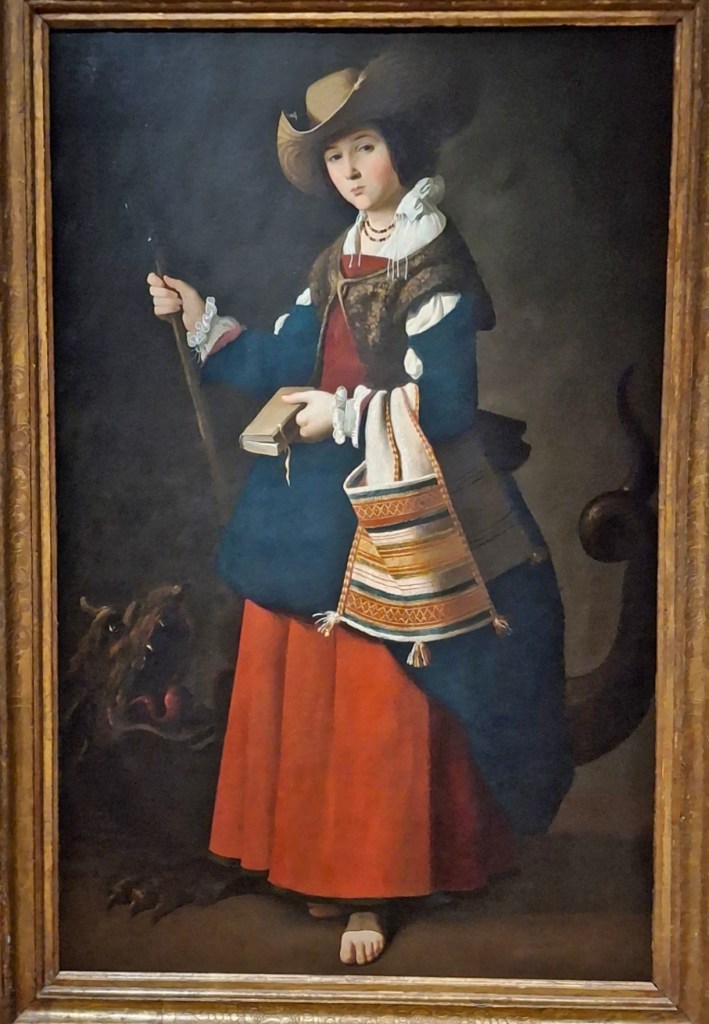
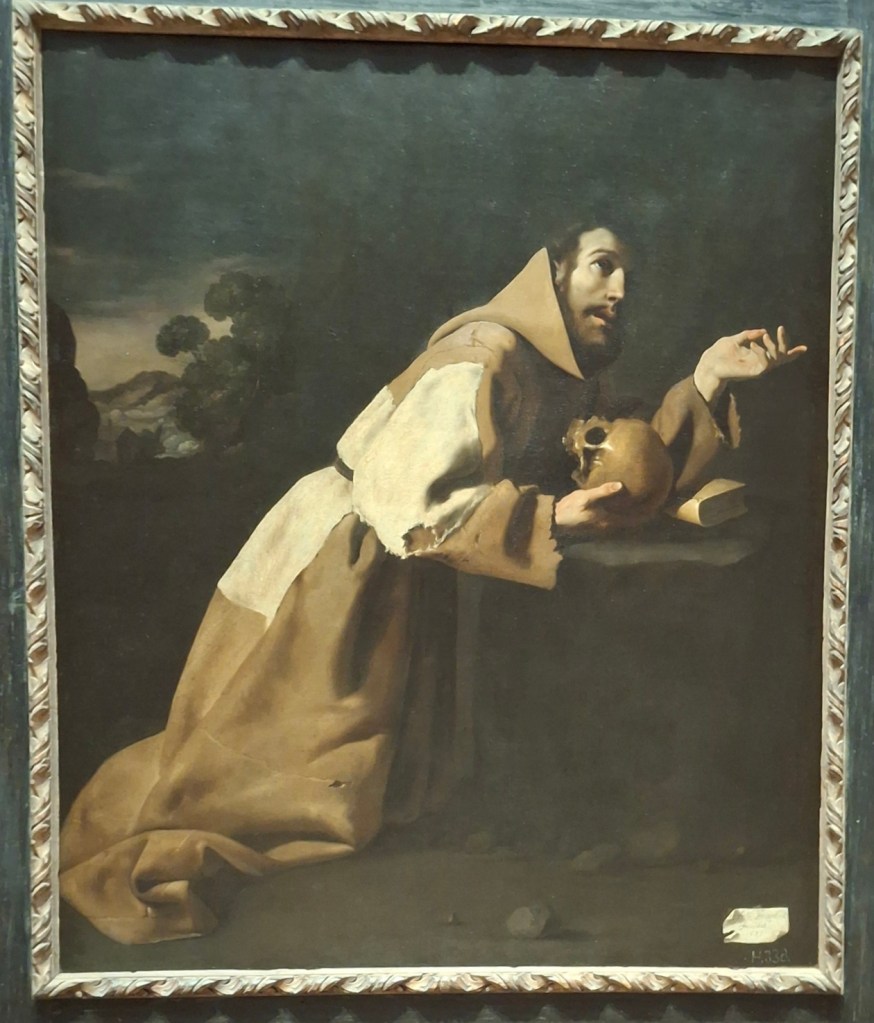
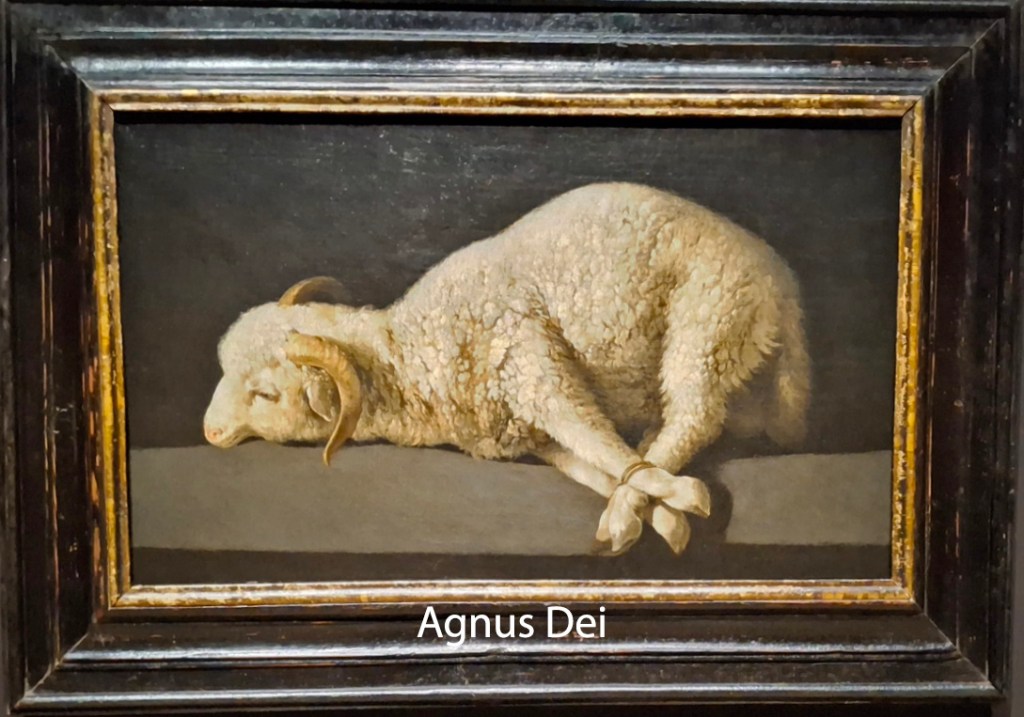
The bank holiday weekend saw some decent weather for gardening so the place is looking a bit better now and on the Tuesday I was booked in for a lecture by the Guardian editor in chief Katherine Viner at the Conway Hall. However with Spain still in my soul from Friday’s concert I decided to go via the National Gallery and take in the Zurbarán exhibition. It’s the first time a full array of his work has been assembled in London and included works on loan from an impressive number of sources – hats off to the curators we know how difficult loans can be! I had seen his works in the Prado and Thyssen-Bornemisza in Madrid and a portrait in the wonderful Isabella Stewart Gardner Museum in Boston. I knew he was part of the great Spanish Baroque era alongside Velazquez and Murillo but had ignored many works dismissing them as being too religious for my taste. He did paint a lot of altar pieces some of which are huge and here; some with panels back together for the first time since their commission, and lots of saints and immaculate conceptions. However I was delighted by what I saw in the gallery. He has a real grasp of chiarosuro second only – if you insist – to Caravaggio. I have never seen painting of fabric done with such detail and emotional effect. The holes in Saint Francis of Assisi’s sackcloth robe give sainthood a whole new dimension. The faces of the characters were so intimate and distinctive, their settings often so scarce that you felt the painting was actually a sculpture. I wasn’t converted but I did feel the power. When he turned from religion to still-lifes the attention to detail and imaginative impact was amazing. The highlight for me was Agnus dei – OK religious title but with a touch of irony – as it depicts a bound lamb ready for slaughter. You could smell the lanolin and feel the coarse wool of the curls on this poor creature’s fleece. And it is possibly not yet dead but aware of its fate. A masterpiece.
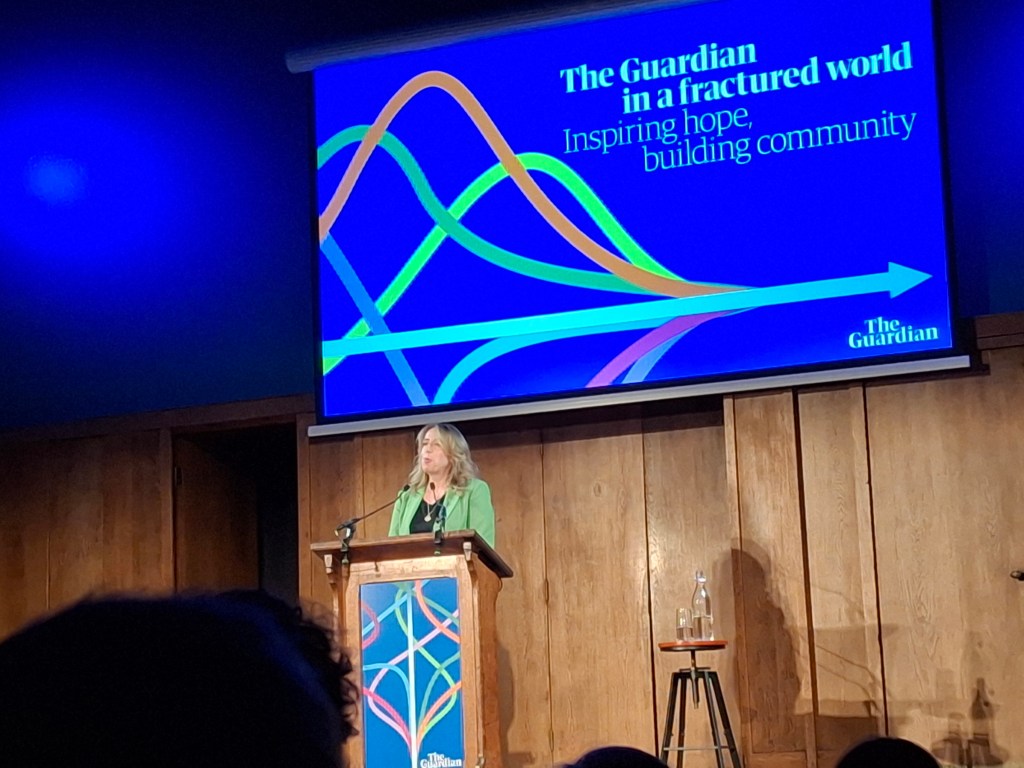
A pleasant early evening stroll through Covent Garden and Holborn brought me to the Conway Hall a suitable venue for a talk about independence in journalism given the history of nonconformist and ethical mores of its occupants over the years. Katherine Viner spoke about distinguishing fake news and fake reality, the threats and uses of AI and the importance of the Scott Trust in ensuring that The Guardian remains an independent voice unaffected by media moguls or profit-motivated owners. The commercial model relies on 1.5 million people like me who subscribe to the outlet in the hope that it will continue the fine work it does already. For someone who has been reading the paper since it had Manchester attached to its banner, she was inspiring and cautiously optimistic.
That was my first outing without walking past the car on my drive – no problem as I never use it when going into the centre for concerts, theatres etc. However Wednesday was the appointed day to record the next Robin Reader audio for International Language Teaching Services and Hueber Verlag. The recording engineer Mark Smith and I do a couple of these each year

Mark’s studio is part of Jools Holland’s Helicon Mountain complex in Greenwich to which I normally drive. A quick consultation with Citymapper indicated that I could get a bus to Blackheath and another to Westcombe Park Station right next to the studio. It worked and took me 30 minutes of free public transport as opposed to 20 minutes in the car. The session went well with archaeologist and actor Mandy Weston who showed her voice versatility as a variety of Australians ranging from 5 to 70 years of age and male and female characters. They finish up as downloadable files in books like Joining the Circus that we recorded last year with Gyuri Sarossi.
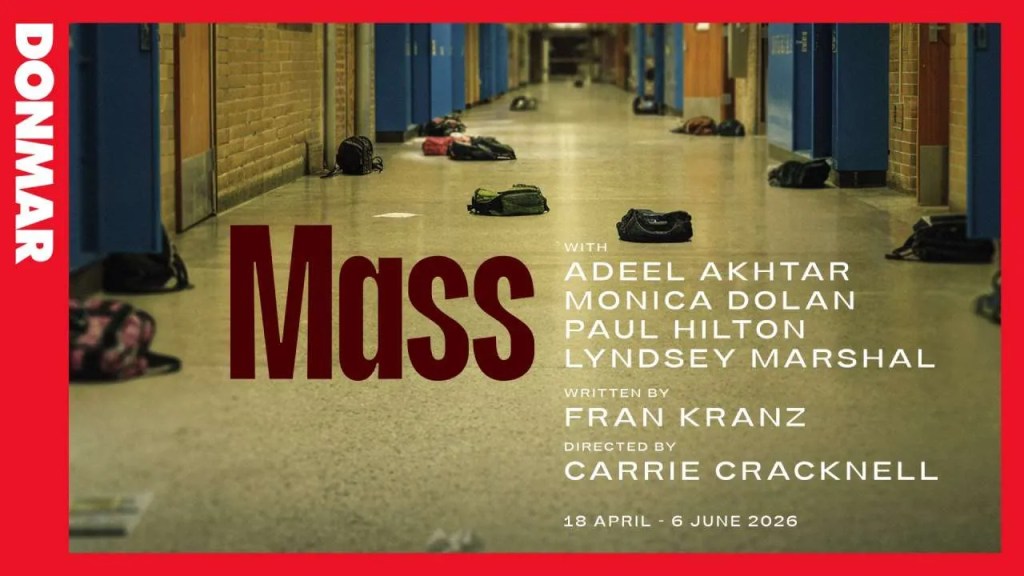
Then it was off to the Donmar for Mass. This is an incredibly tense watch but great theatre. A church hall provides the setting for a restorative justice session and reminded me a bit of James Graham’s Punch that we saw at the Young Vic last year. But the one accidental punch that caused a death in a night out in Nottingham was overshadowed by a school shooting in the US. Here the parents of the killer and the final victim meet to see if there is any possibility of forgiveness. As a static ‘sitting at a table’ scenario it was enhanced by a revolve operating at different speeds as the dialogue unfolded. We waited to meet the two sets of parents as the room was prepared by church staff and details were checked by the mediator but the tension was palpable from the start. Cast and direction were excellent and it once again made you wonder who on earth could support the right to bear arms for anyone who chose to do so.
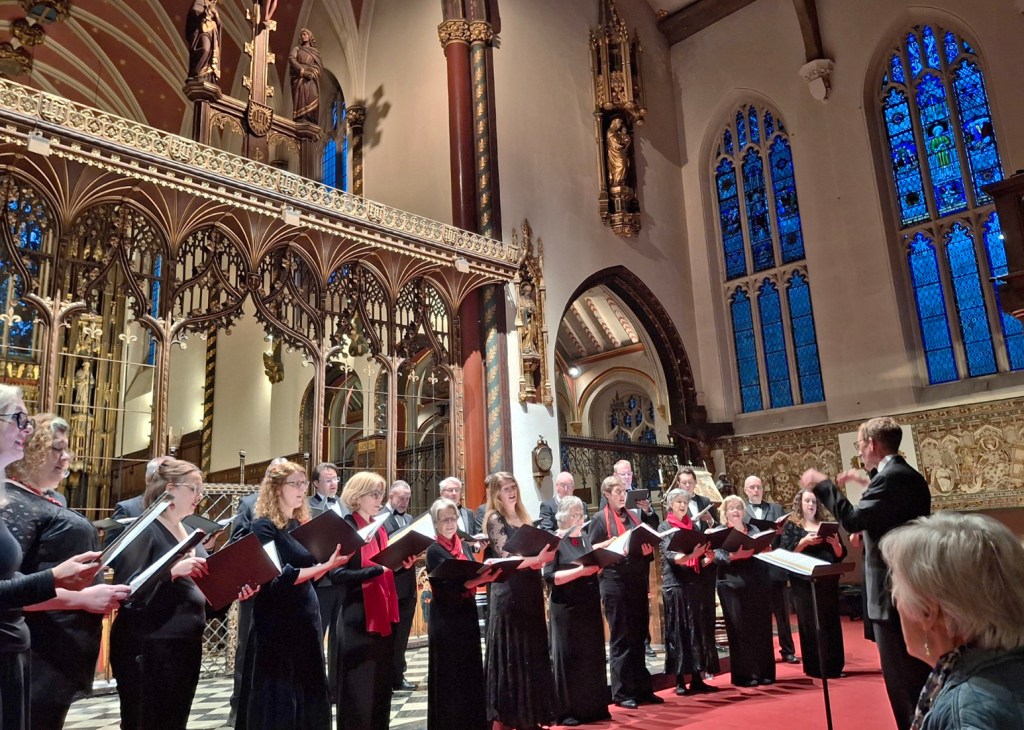
Given my comments about religion in the context of Zurburán it may seem a little odd that I’m attending the opening concert of the London Festival of Contemporary Church Music in a church in Knightsbridge. Well the concert is given by the choir Pegasus in which my son Tom sings. So I met up with my friend Jadwiga in a nearby pub, The Grenadier, for a catch up before the concert. Good beer and wine, good atmosphere inside, sun shining outside – what’s not to like. The concert was filled with interesting music from composers I knew of and three new commissions for the LFCCM festival. Two of the composers Cassie White who wrote one of the new pieces and Roxanna Panufnik spoke about the motivation for their pieces. Roxanna was particularly interesting in the context, being a practising Catholic who is also a Jew and her Love Endureth showed her concern for interfaith music-making with Spanish Jewish elements woven into this two-choir piece. Cassie White’s Arise my Darling was a lyrical flowing setting of the Song of Solomon. There were one or two familiar items but on the whole the music was fresh and new to me. One of the highlights was a piece by a young Polish composer Zuzanna Koziej setting the Lord’s Prayer which was followed later by another of her works with a setting of William Blake’s The Lamb – they are becoming a thing this week! She is clearly a talent to watch. We had a chance for a chat to Tom and several of the musicians and composers after the concert with a glass of wine so all in all a rather lovely evening. The only flaw was when, hidden behind another bus I boarded what I though was a number 9 bus to take me to Charing Cross which when it started going up Shaftesbury Avenue I realised was actually a number 19. The extra walk from Cambridge Circus probably did me good.
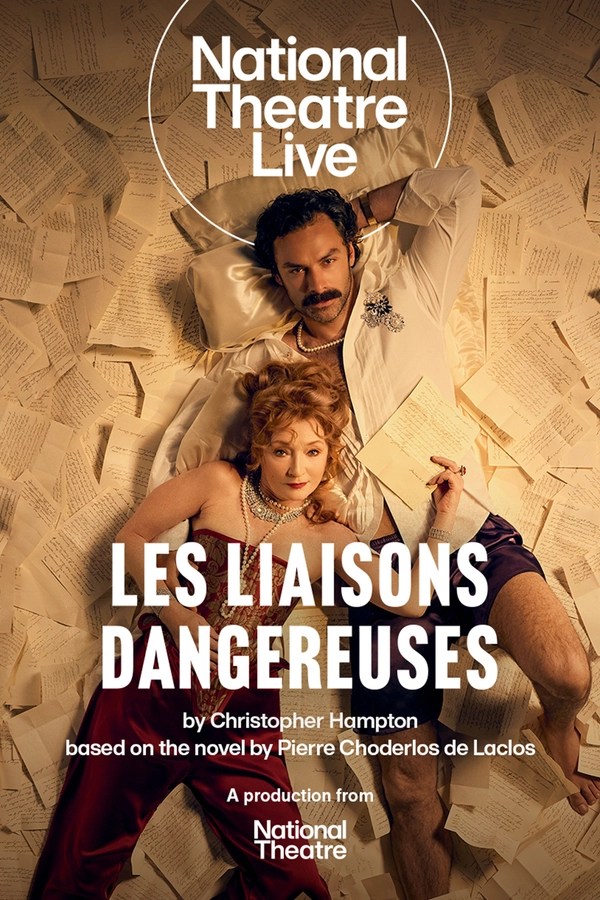
After a heavy football-free weekend of gardening, it’s back to the theatre to see the new NT production of Les Liaisons Dangereuses. Oh what a contrast to my memory of the 1985 London original! That was in the dark bowels of the Barbican’s Pit studio theatre with a louche set all cream silk and warm lighting – actually the NT’s poster makes you think there will be a reflection of this – although Valmont (Aidan Turner) and Mme de Merteuil (Lesley Manville) are appropreiately lying in letters rather than sheets – it was an epistolary novel by Laclos before Christopher Hampton adapted it for the stage.
But no! As I walked in I thought I was in for Michael Frayn’s Audience as we were all reflected in a massive mirrored set. The mirrors proved to be the facade of boudoir rooms on casters that were swirled about throughout the production by a series of dancers with some elegant choreography. The production might heve been called Les Liaisons Danses Heureuses as music and movement were an essential part of the concept. What emerged was the sadistic rivalry of the two principals played out in this this great reflective space which pointed up the multi-perspective nature of the novel where you never knew who was telling the truth – if any. What shone throughout was Christopher Hampton’s pithy dialogue delivered well by all the characters. As with Indian Ink at Hampstead last year it was interesting that tonight’s lead Lesley Manville had played the ingenue role of Cecile in the original with Lindsay Duncan and Alan Rickman as Merteuil and Valmont. Were notes given in rehearsal to Hannah van der Westhuysen this production’s Cecile?
I am glad to have seen this new interpretation of a fine script, but I suspect it will not last as long in my memory as that evening in the Pit where we were intimately involved in the vicious tussle of love and loathing so elegantly played out. In Marianne Elliott’s version there were a few very effective transitions, breathtaking ballet and excellent acting by all – Monica Barbero grew impressively into her debut stage role as the object of Vamont’s lust-turned-to-love as Madame de Tourvel and the dancer Lucia Chocarro was all sinuous sexuality as Emilie. Lesley Manville was outstanding. Aidan Turner was fine but up against Alan Rickman!
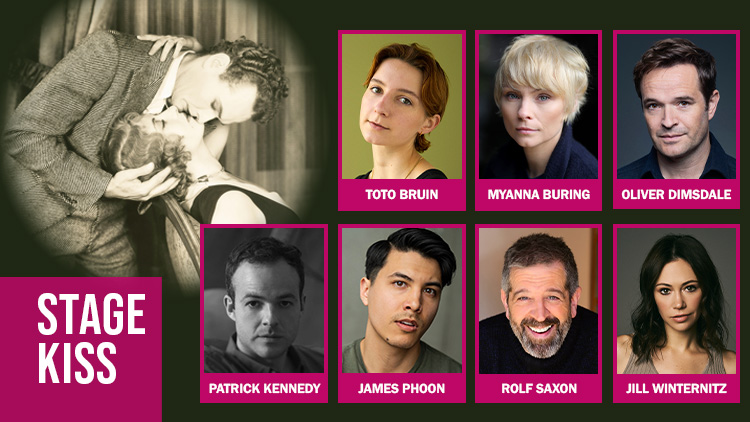
In the middle of a hatrick of theatre outings was the press night for Stage Kiss at Hampstead. What a feast of bad acting, dreadful scripts and fun slapstick! But in Sarah Ruhl’s writing there’s always a serious note as well. When ex-partners are called on to kiss passionately in the play they are both cast in, will old feelings return? Directing farce well is quite a trick and Blanche McIntyre pulls it off brilliantly. Sets, wardrobe and wooden acting take us back to the bad old cliches of “acting” – stilted, mistimings and collapsing the props all detracting from the drama. But the cast also have to act in the real world as well as the artificial one. Within the two very bad plays which Ruhl must have loved writing is a serious examination of what actors are asked to do, what theatre means to its audience and how relationships develop, diverge and reconvene. MyAnna Buring and Patrick Kennedy as She and He were brilliantly supported by the other cast members. A very funny evening but one which also made you ponder some fundamental attitudes about life and the theatre and relationships. And afterwards Frances and I had the pleasure of sharing a tube ride back towards our various homes with Blanche and her partner Gyuri.
More theatre about theatre on Friday when a former colleague of Fran’s from Boston, Vicky and her husband John, joined us and Farzana for a delightful and delicious dinner at Yoshino followed by Grace Pervades by David Hare at the Theatre Royal Haymarket starring Ralph Fiennes and Miranda Raison as Henry Irving and Ellen Terry. There’s a trend here as we had the Divine Mrs S about Sarah Siddons at Hampstead last year and a while back Kean and The Dresser which Ronald Harwood based on Donald Wolfit. I wonder who is writing the play about Laurence Olivier or Peter Hall – characters large enough to fill the stage posthumously. As the previous evening the intermingling of professional and personal lives was a key factor in the story which was extended with contributions from Ellen Terry’s children during her fame and in her dotage in her Kent home of thirty years. This involvement of the Bloomsbury set with Edith played by Ruby Ashbourne Serkis, who was so good in Indian Ink last year, and is in a lesbian throuple one of whom has been dumped by Vita Sackville West, sets the play in an much wider context. The other child Edward Gordon Craig is a narcissitic self-proclaimed genius who has some great scenes with Stanislavski in Moscow – more exploration of theatrical styles. There are some moments of great hilarity as when Terry suggests to Irving that he might perhaps look at other actors rather than the audience and when chided about his deliberation Irving says he will ‘strive to be more last minute’ and his expletive rendering of the name of the new radical playright Shaw epitomised his contempt for all things modern.
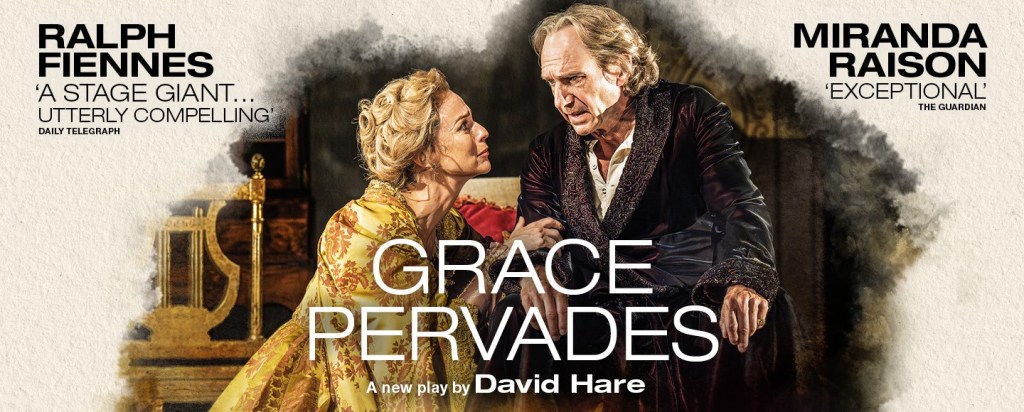
Through the trials and tribulations of Irving’s running of the Lyceum Theatre Hare makes some pertinent points about patronage and funding, staffing levels and audience expectation. The design with animated backcloths, stage within a stage and period costumes were excellent and it was a thoroughly engaging and entertaining look at the nature of theatre and its importance in society. And about relationships with actors and with families.
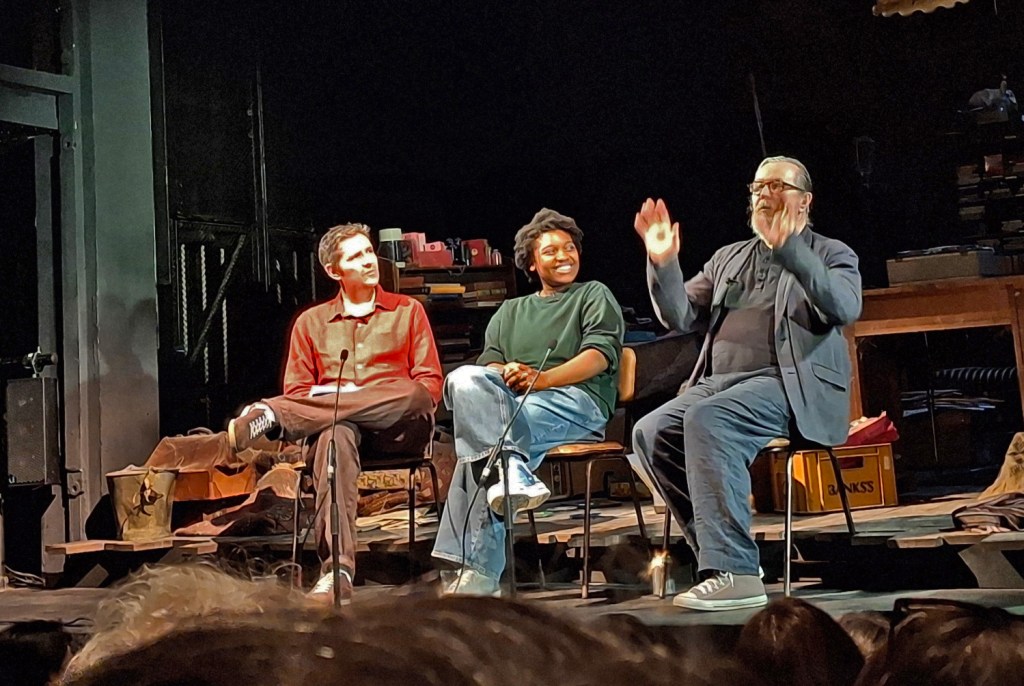
Godot’s To Do List by Leo Simpe-Asante was a curtain raiser at the Royal Court before Gary Oldman took the stage for Krapp’s Last Tape, itself originally a curtain raiser for Beckett’s Endgame when it first played at the Royal Court in 1968. The 19-year-old music and drama student Leo won the Royal Court’s first Young Playwright Award in 2025 and now has the accolade of his work appearing alongside that of Beckett. At the post-show Q&A he said the motivation was to wonder what kept Godot so late. So his play sets Godot a series of increasingly surreal tasks to detain him from his appointment. It is very funny, prefigures the Beckett perfectly and was delivered splendidly by Shakeel Haakim on stage and the ephemeral taskmistress voice of Flora Ashton who we only see at her deserved curtain call. A truly stunning piece of work for a 19-year-old and finely directed by the Court’s Resident Director Aneesha Srinivasan.
And so to Krapp. Gary Oldman was magnificent in every aspect. He designed the set, directed himself and performed the musing monologue with his younger selves superbly. The pregnant pauses, the occasional moves from his desk from light to darkness all added to the impact of this most personal of Beckett’s plays. In the Q&A he revealed himself as a thoroughly likeable person with a great rapport with the young playwright sharing the stage with him and Artistic Director David Byrne. Asked about directing himself he said that having not been on stage for 30 years he’d had plenty of preparation as “you don’t get much direction in films”.
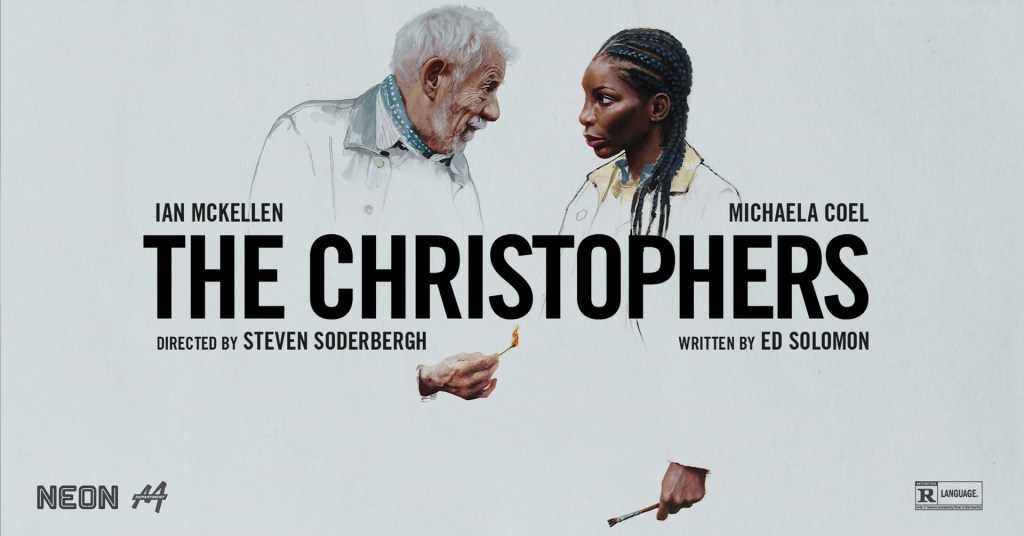
Before making my first visit to Camden People’s Theatre to see Nomakhwezi Becker’s Holding Ground, I went to see The Christophers at Picturehouse Central. The performances of Michaela Coel and Ian Mckellen were absolute magic in a film that examines quirky relationships, the nature and value of art and is a whole lot of fun as well. James Corden and Jessica Gunning as grasping children are great support.
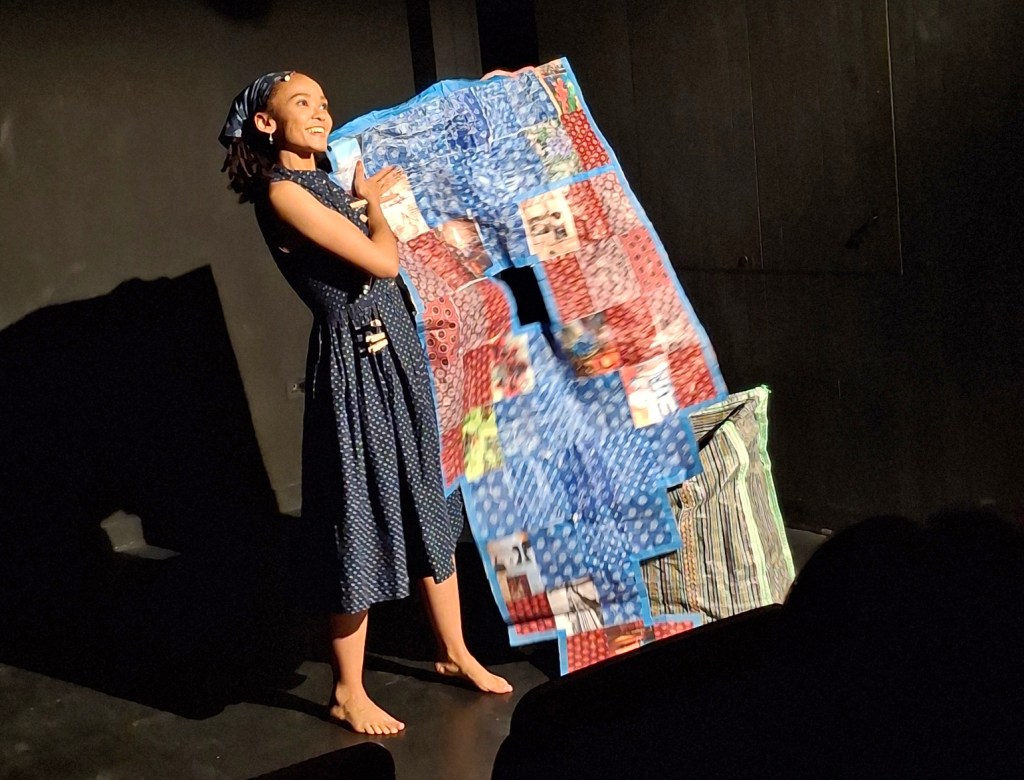
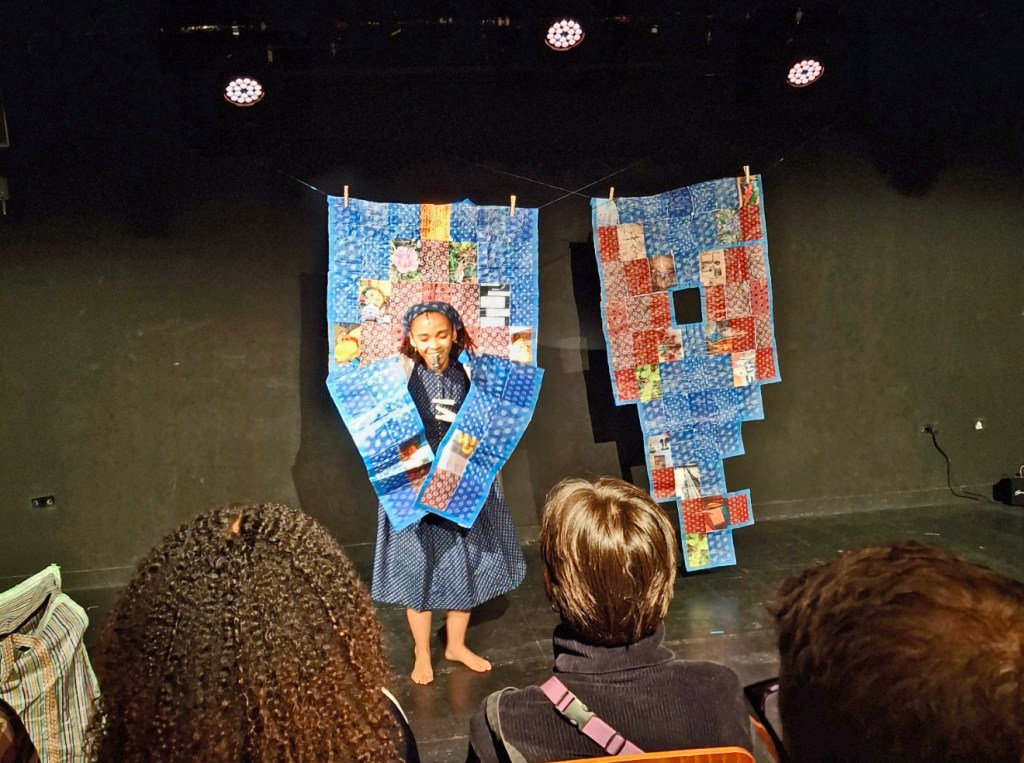
I had heard some of the themes explored in Nomakhwezi’s workshop at the Whitechapel Gallery last month and was interested to see how she would entertain and educate us in an hour-long solo show. With a mixture of Xhosa, German and English she took us on an exciting journey across countries and cultures. We joined in at times copying her movements cued by a blast of her whistle. She talked of culture at home in South Africa and the inability to touch both sides of her life simultaneously now that she’s based in London. Beading, fabric dying, cooking and storytelling were all prominent in what turned out to be both informative, entertaining and engaging combining continents, customs and cultures in a fascinating way.
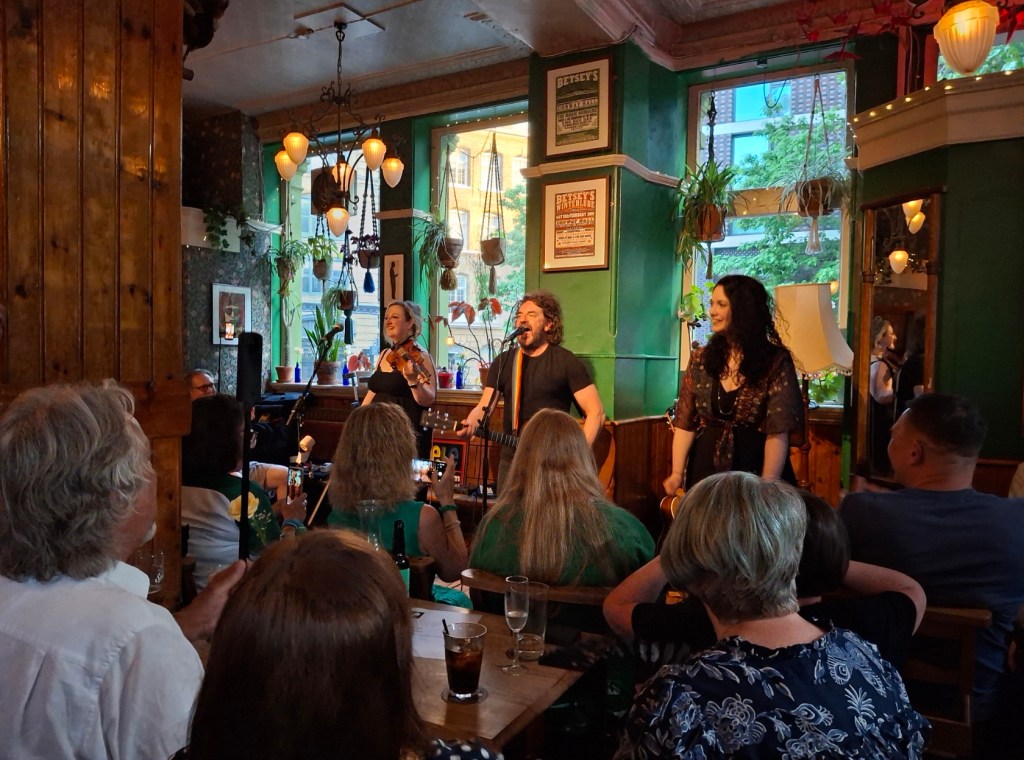
The hottest (at that point) May day ever made me reach for my sweat-repelling Bangladeshi gamcha (thanks Zaki) as I headed off to the Betsey Trotwood in Farringdon to see Ian Prowse perform his annual intimate show here. The show got underway with a set from the excellent Banjo Jen a Sheffield-based singer-songwriter and excellent dancer. Then TUC Secretary General and folk singer Paul Nowak did a guitar-based set with Heidi Smith on violin with a Palestine support anthem included. That line-up was perpetuated as Laura Macmillan brought her violin to join Ian for a rousing session for the Pele-Prowsey family that had gathered in this fabulous little pub where I had previously only been for poetry sessions upstairs with BBPC and Exiled Writers Ink.
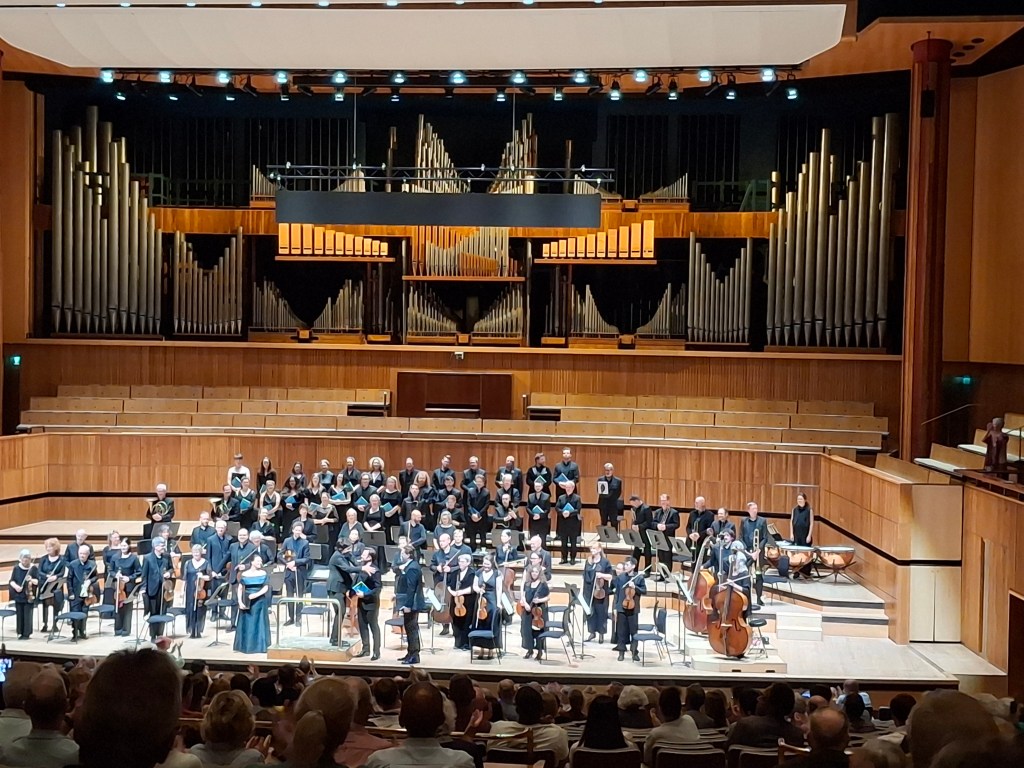
The highest May temperatures ever recorded in the UK were the talk of the Bank Holiday weekend. I was lucky enough to spend a couple of days pressure washing my patio to remove a year’s worth of algae and dirt. Lots of cooling spray mingled with the sweat! It had cooled a litlle for my Wednesday trip to the Royal Festival Hall to hear the OAE play Haydn’s The Creation under Czech conductor Vaclav Luks. The blog is getting quite a lot of religious input this month one way or another. I’d heard this oratorio before but with the appropriate period instruments and a modest choir, the clarity of Haydn’s brilliant writing was totally apparent. In a pre-concert talk Luks and Dr Rachel Stroud explained the complex origins of the work’s libretto – turned down by the more famous Handel – with versions by various hands in English and German and the decision to perform tonight in German. Luks argued that the music was written to accompany the sounds of sung German and that trying to fit it to the different rhythms and cadences of English lost a lot of impact and empathy. Certainly his work with the orchestra and singers was such that I thought I was hearing this work for the first time. It contains descriptive writing of the highest order – quite what audiences in 1798 made of that massive opening note and the subsequent discordant portrayal of chaos from which the creation was to ensue, I can’t imagine. However they clearly loved the rest of its depiction of water, light and especially the humorous treatment of the creation of animals and man followed by Adam and Eve’s blissful time in Eden, since it ran for many performances and is a firm part of the current orchestral repertoire. Emotional tugs at the heartstrings, belly laughs at some of the musical tricks and the sheer energy of the finales to each part had the hall erupt with applause. A truly stunning creation.
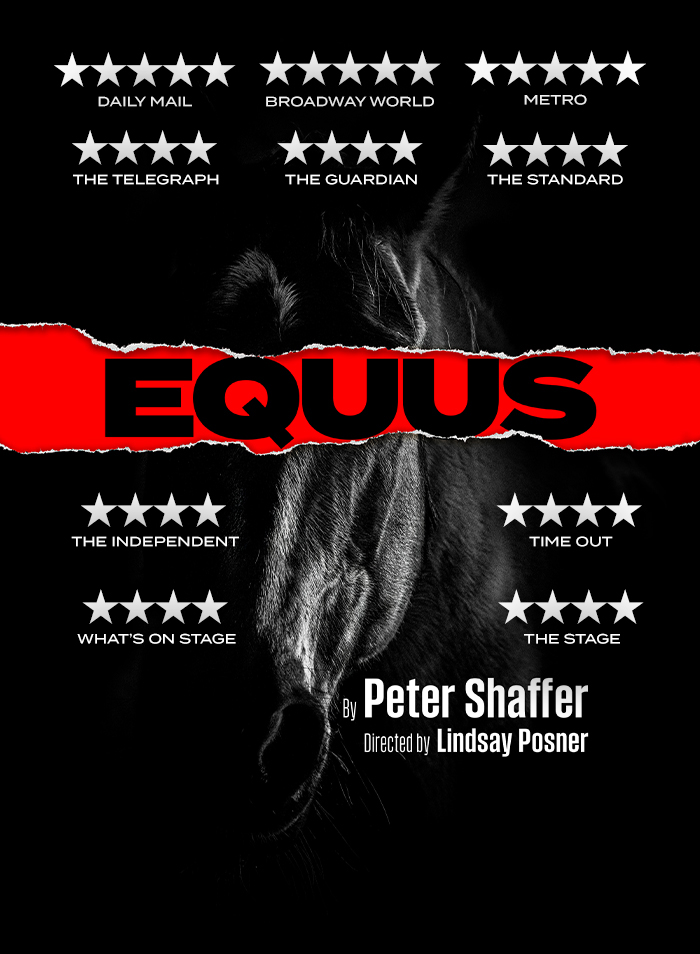
The revivals keep on coming don’t they? My last culture trip in May was to Peter Shaffer’s Equus at the Menier Chocolate factory. Frances and I had a delicious tapas supper beforehand at Brindisa in Borough Market and walked along Southwark Street to the theatre. I’d seen the original NT production with Alex McCowen and Peter Firth as psychiatrist and patient, then the controversial 2007 revival with Richard Griffiths and Daniel Radcliffe – both fresh from Harry Potter fame and people were shocked to see Daniel naked on stage. Tonight Toby Stevens played the psychiatrist and Noah Valentine the young Alan Strang who was being assessed after blinding six horses. The theme has never been an easy one but this production by Lindsay Posner was truly outstanding. The cast were all excellent – as written in stage directions they were all present throughout, as audience members in this production so you were right in the thick of the action, especially as the space is tiny with only 180 seats.
The boy’s father was played by a fellow Watford season ticket holder and Hornet Heaven podcaster Colin Mace with whom we enjoyed a post show drink and a chat. A striking feature of the show was the horses portrayed by six actors whose movements were brilliantly choreographed by James Cousins. At one point they all combined to form one horse with a rider astride and your breath was just torn away. Shaffer’s psychiatrist’s teasing out of the reasons for the boy’s horrendous act were twisty and unconventional and left you with lots to think about current mental health issues with the young obsessed with social media. A fine play and a very fine revival.

 mikeandmurakami.com