
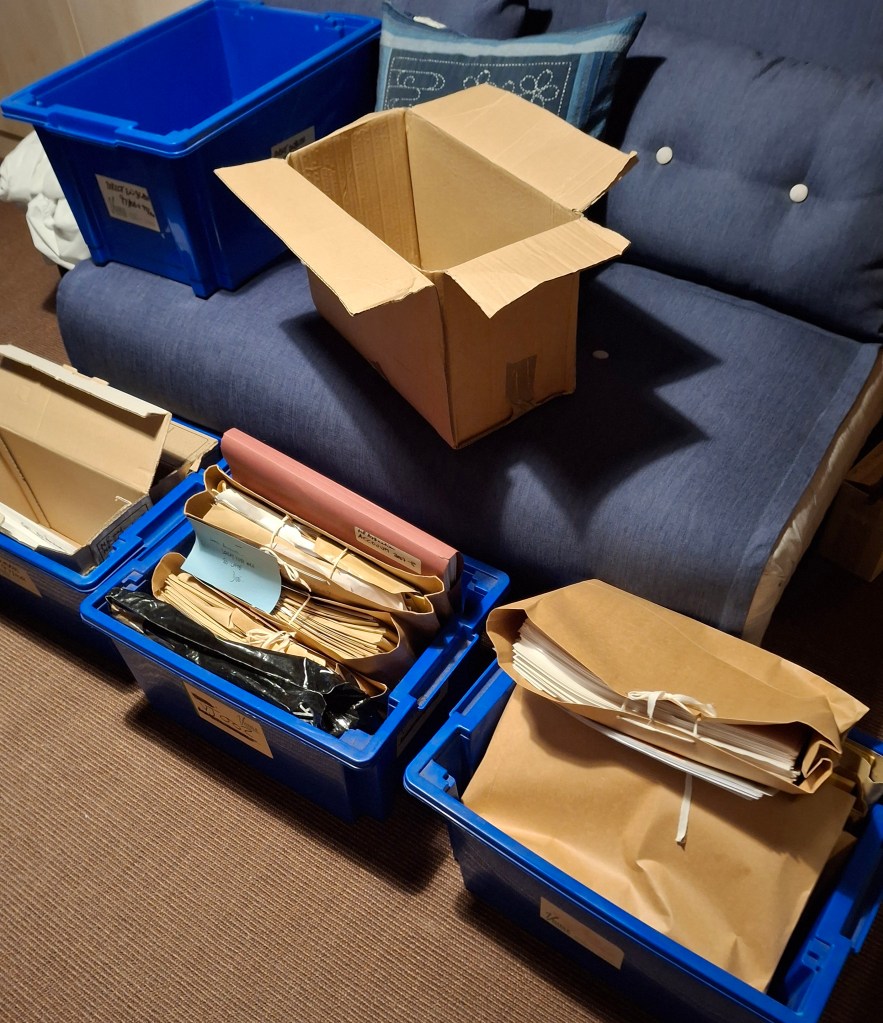
So after a refreshing break in Alicante it’s home to reality: car for MOT; final eye test after cataract surgery and the promise I made to sort out 45 years worth of company paper work for shredding. So glad I did take my Christmas break.


The first play of the new year was the intriguingly named Bengal Tiger at the Baghdad Zoo at the Young Vic. The tiger of the title is the ghost of an animal shot by a US marine stationed in Iraq during the ill-founded war. It (in human actor form) prowls around the stage bringing memories for the marines and philosophical questions for their interpreter Musa who used to be the gardener to Saddam Hussein’s two sons, who appear later, and cause a guilt-trip for Musa who allowed them to exploit his daughter.
It was surreal, written by Rajiv Joseph and directed by Omar Elerian who has a track record with surreal with Ionesco’s The Chairs and Rhinoceros which we saw at the Almeida. It was funny. moving, if a bit erratic, but a worthy start to a year of theatregoing.
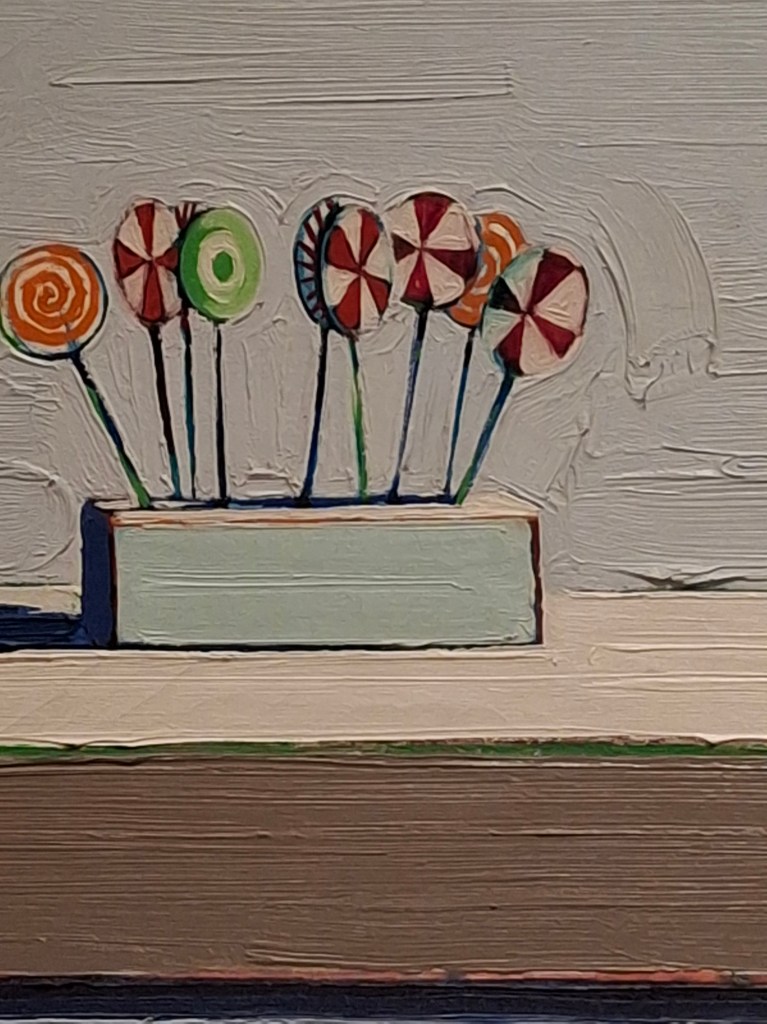
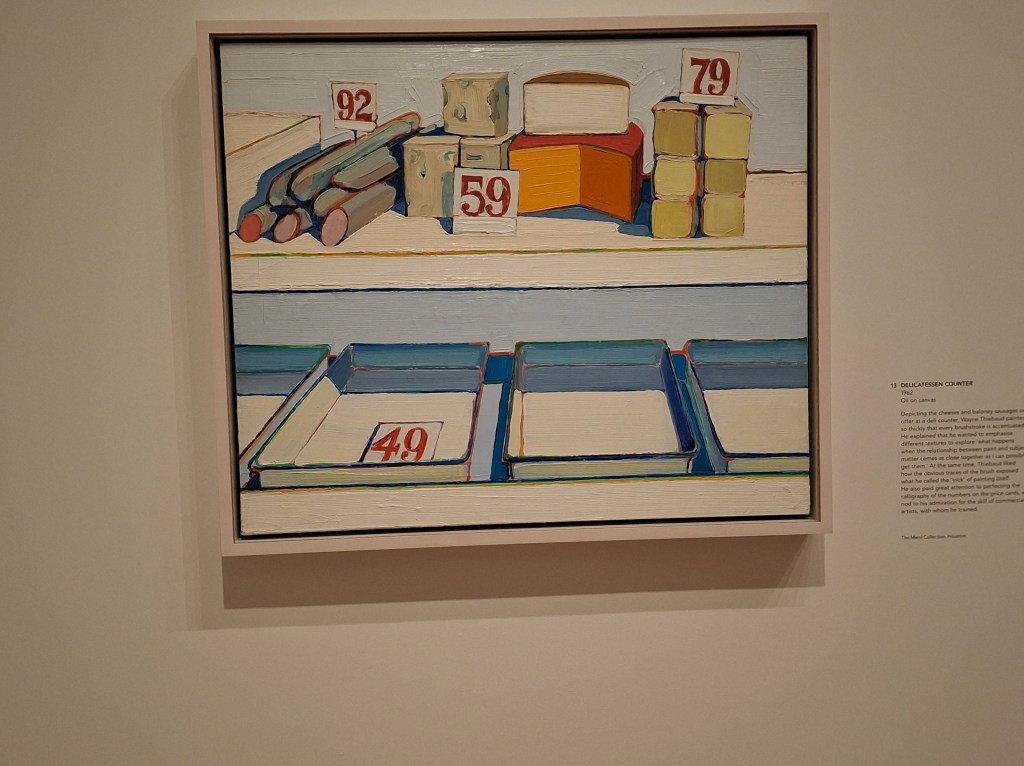
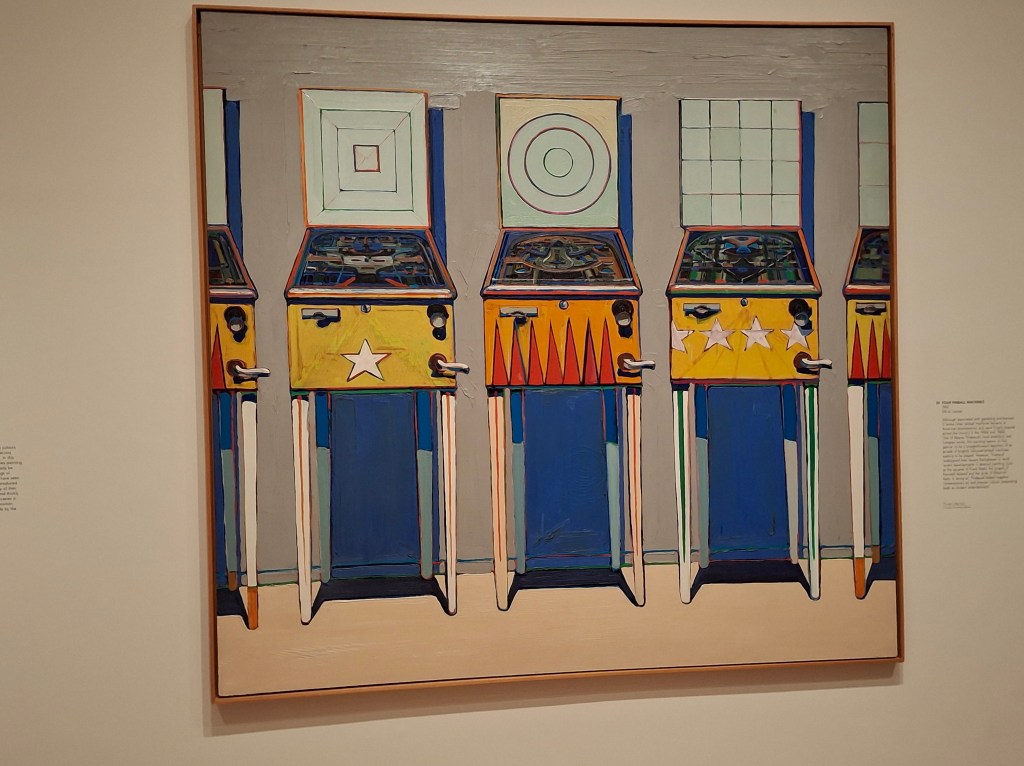
I loved Maggie O’Farrell’s book Hamnet. I did not like Lolita Chakrabarti’s stage version which a gang of us went to see at the Garrrick with great expectations and emerged with great disapppointment. I had misgivings therefore about the much talked-about film version, somehat allayed when I noted that Chloé Zhao co-wrote it with the book’s author. So I booked a matinee showing at Picturehouse Central and decided to go into town early and take in the last few days of Wayne Thibault at the Courtauld Gallery. I don’t think I’d heard of him but an email from the gallery intrigued me so off I went and am very glad I did, The exhibition was entirely of works from the 1960s when he was grouped with the Pop Art movement. He painted still lives of everyday Americana – slot machines, deli counters, cakes and the like. They were very affecting in making you look intensely at the ordinary and think about things in a new way. He also made prints of several of the subjects one of which on display he had hand coloured twenty years after making the original etching.
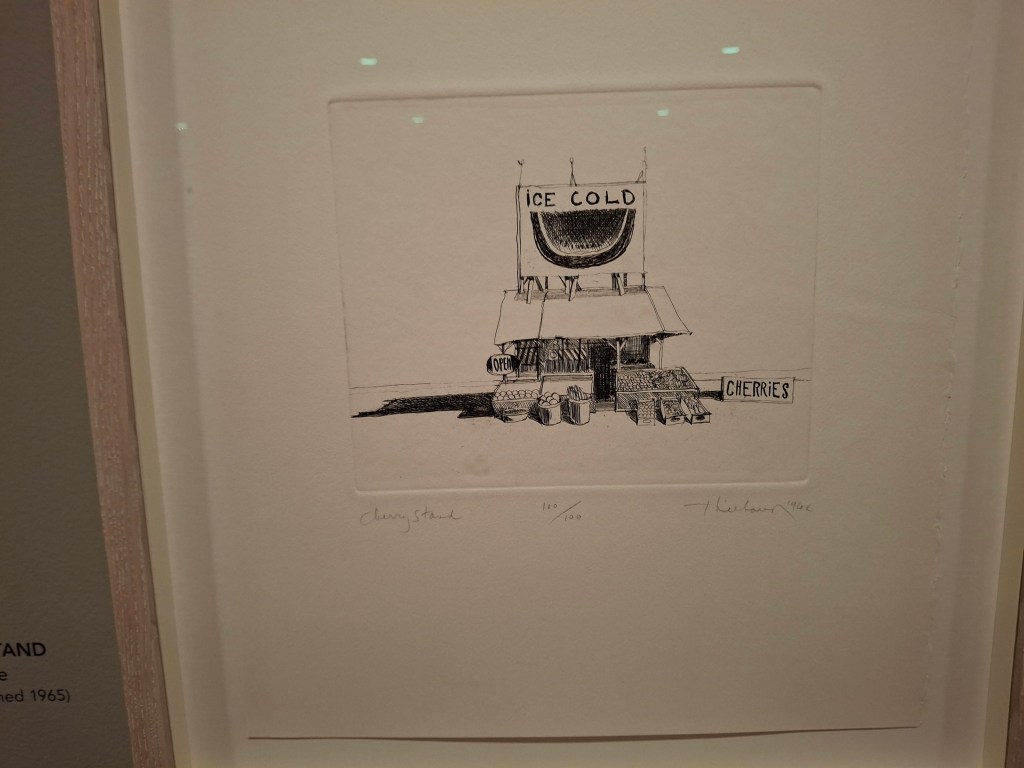
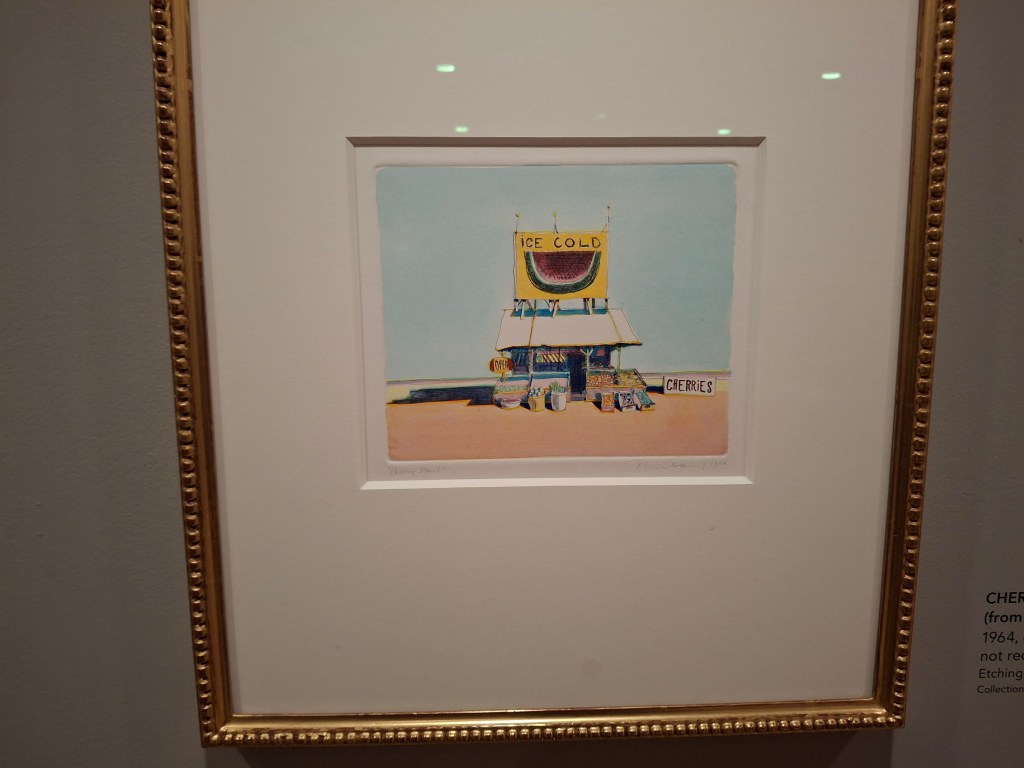
I had an hour to spare before the film so popped into Yoshino to say Happy New Year to Lisa, collect my supply of gyokuro tea – my first drink of every day – and have a delightful light lunch chatting to Lisa as she prepared the space for a 30 strong party of Japanese bankers that evening.
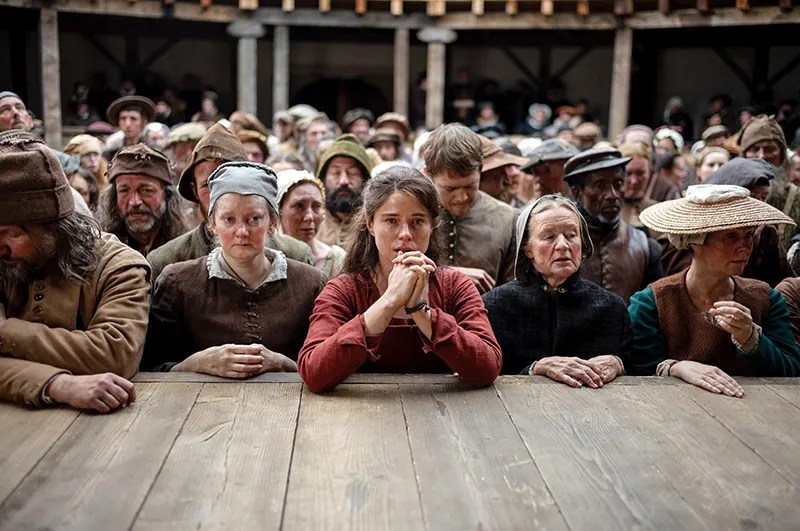
Hamnet the film did not disappoint. It matched the slow reveals of the book, filled the screen with nature, glovemaking and the love and the games of young children. The storytelling was clear and excellent and the child actors were all very accomplished. The tragedy was well handled and the closing scenes at the Globe had me welling up. What a performance from Jessie Buckley! I knew she was good but this was astonishing.
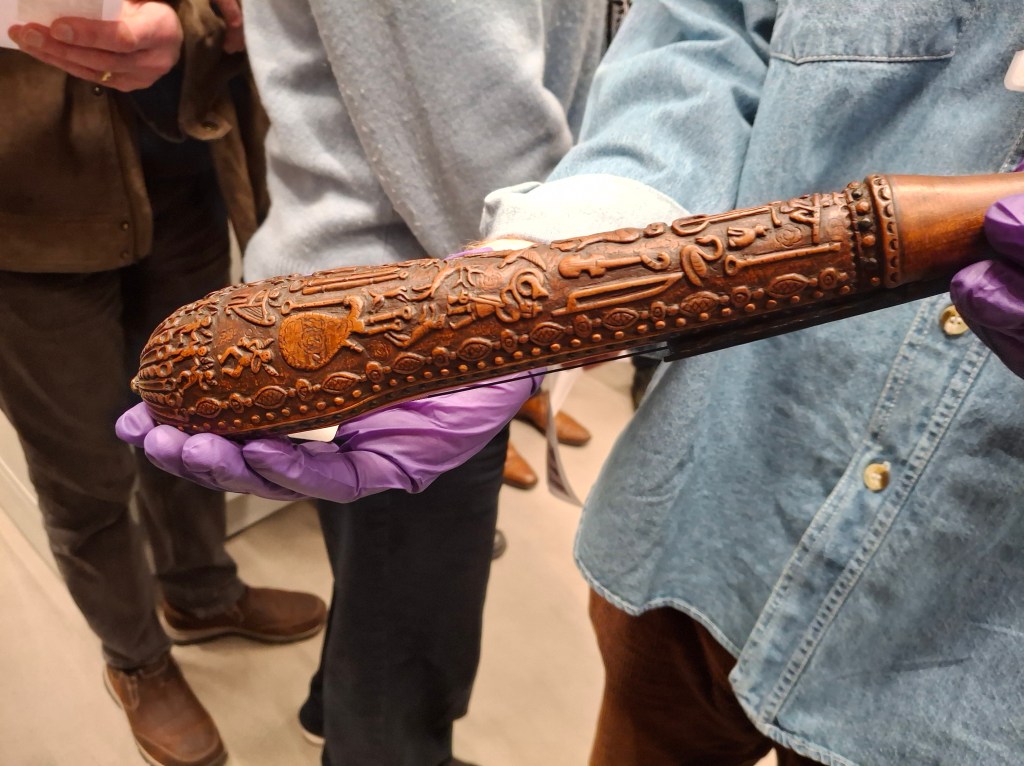
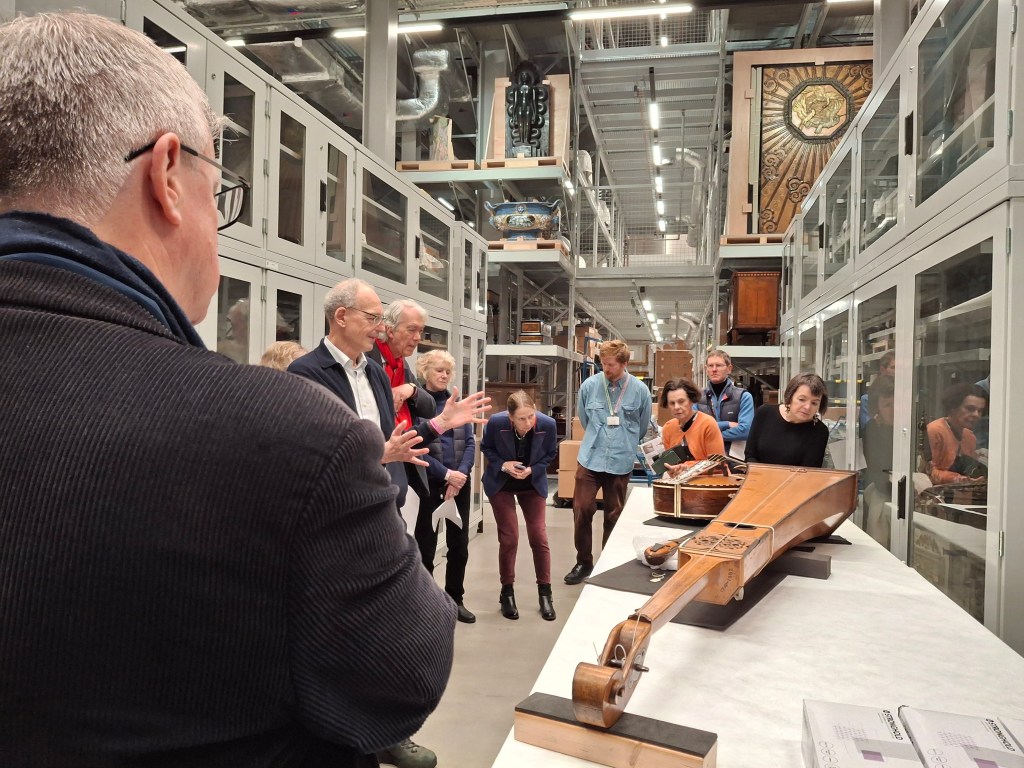
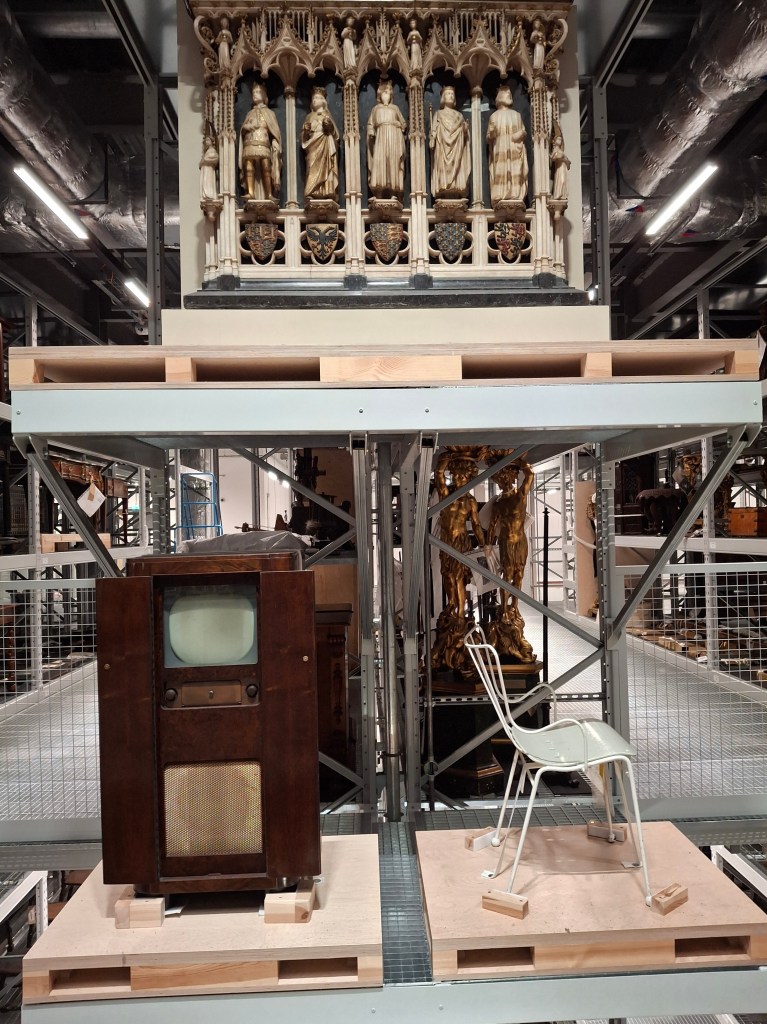
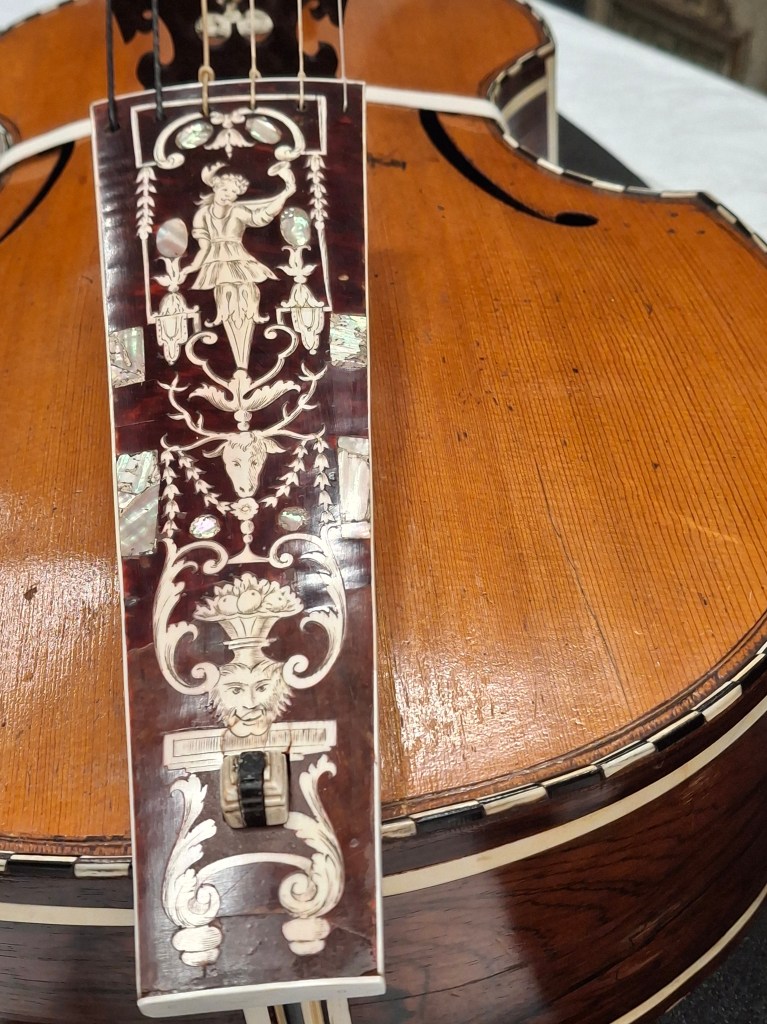
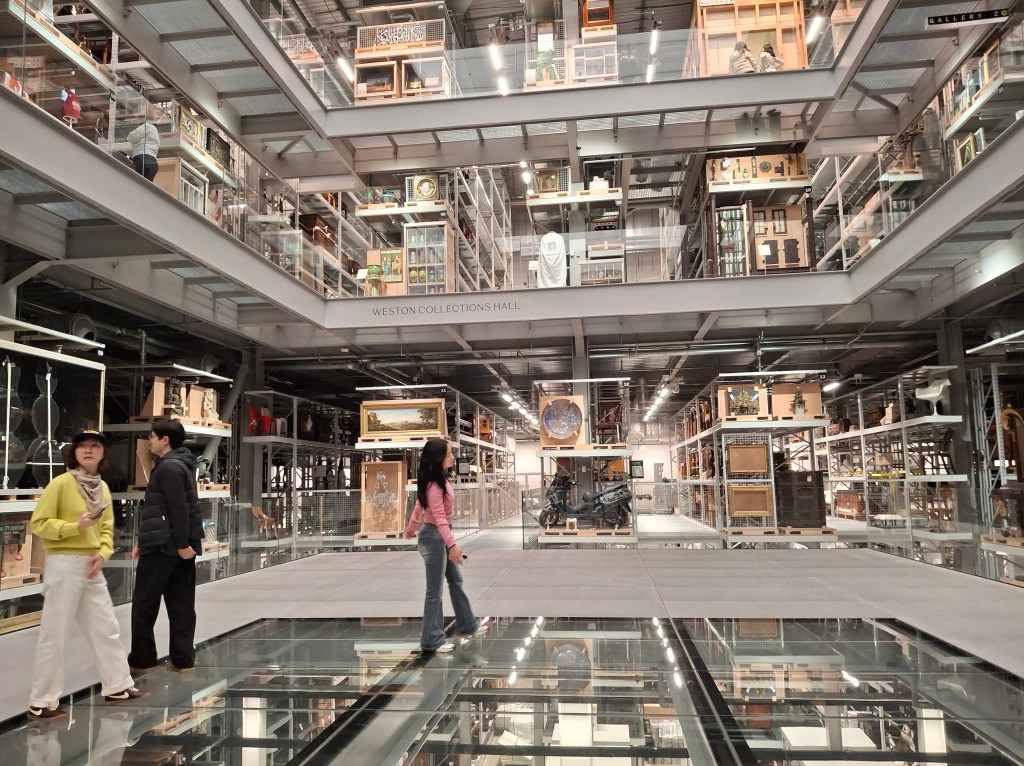
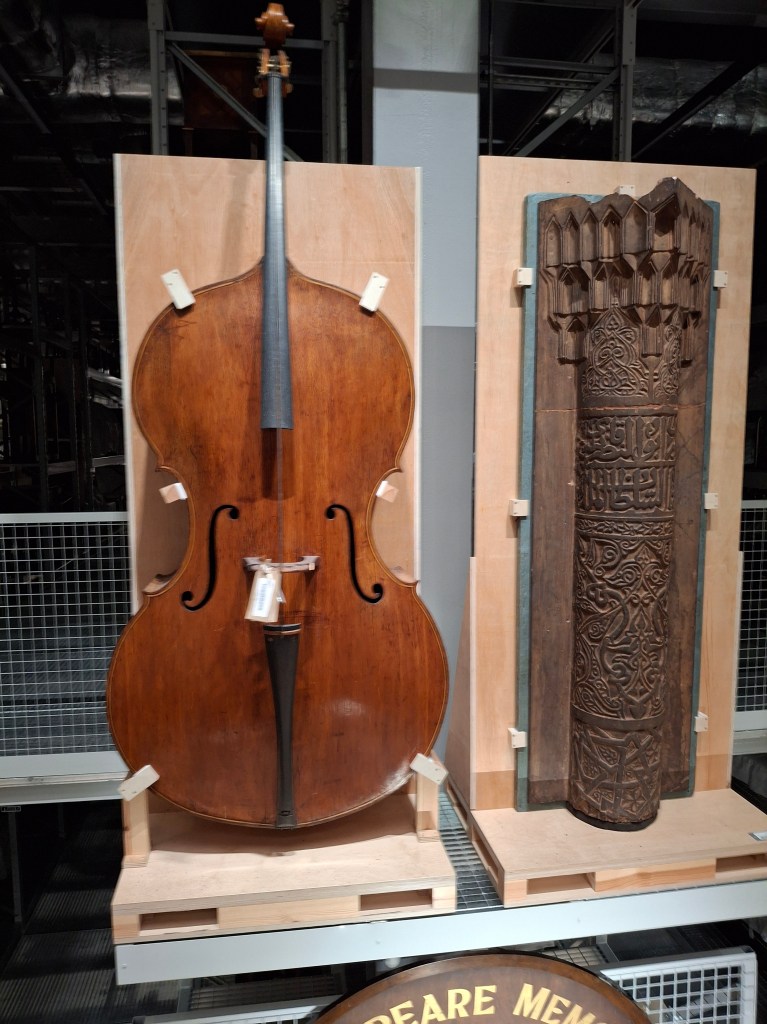
From time to time, the orchestra of the Orchestra of the Age of Enlightenment organises trips for Friends. I wrote about a visit to the amazing Hatchlands keyboard collection with Steven Devine last year. This one was to explore the wonder that is the V&A East Storehouse with Martin Kelly, my viola-playing team captain when we won the Chistmas Quiz. Martin had selected a number of instruments from the extensive V&A catalogue and gave us fascinating insights into the contruction, history and use of instruments ranging from the tiny kit fiddle used by dance masters to the enormous Dragonetti bass via a serpent and a harp and others from the racks. Some of the detail of design, carving and inlay was phenomenal. The breathtaking size of the storehouse and the randomness of displays made for a fascinating visit even after Martin had finished his excellent part of the tour.
Then it was back from drenched Hackney Wick to the Royal Opera House for an insight evening on the subject of Boris Godunov with my friend Susie Stranders taking us expertly through Mussorgsky’s score. I got there early and spent an hour not reading my book but chatting to a gentlemen with shared widowerhood and love of music as topics for conversation. As we left the table to go to the talk we shook hands and he said, “By the way I’m Mike”. “Me too,” I replied. Susie’s talk was peppered with anecdotes from performances and some excerpts sung by cast members including Bryn Terfel who is Godunov.

I’ve seen Sheridan’s The Rivals several times but went with Frances to The Orange Tree on her recommendation, She’d already seen it when I was away and came to see it again. I congratulate her on her taste. Updated to the flapper era 1920s, Tom Littler’s production was wonderfully funny and Patricia Hodge as Mrs Malaprop was outstanding. The rest of the cast were superb too in the intimate Orange Tree space where you feel part of the action. I recalled going with my grandchildren to see the Richard Bean and Oliver Chris update Jack Absolute Flies Again at the NT a few years ago. Sheridan’s work from 1775 stands a lot of different interpretations. Must be something about the core material!
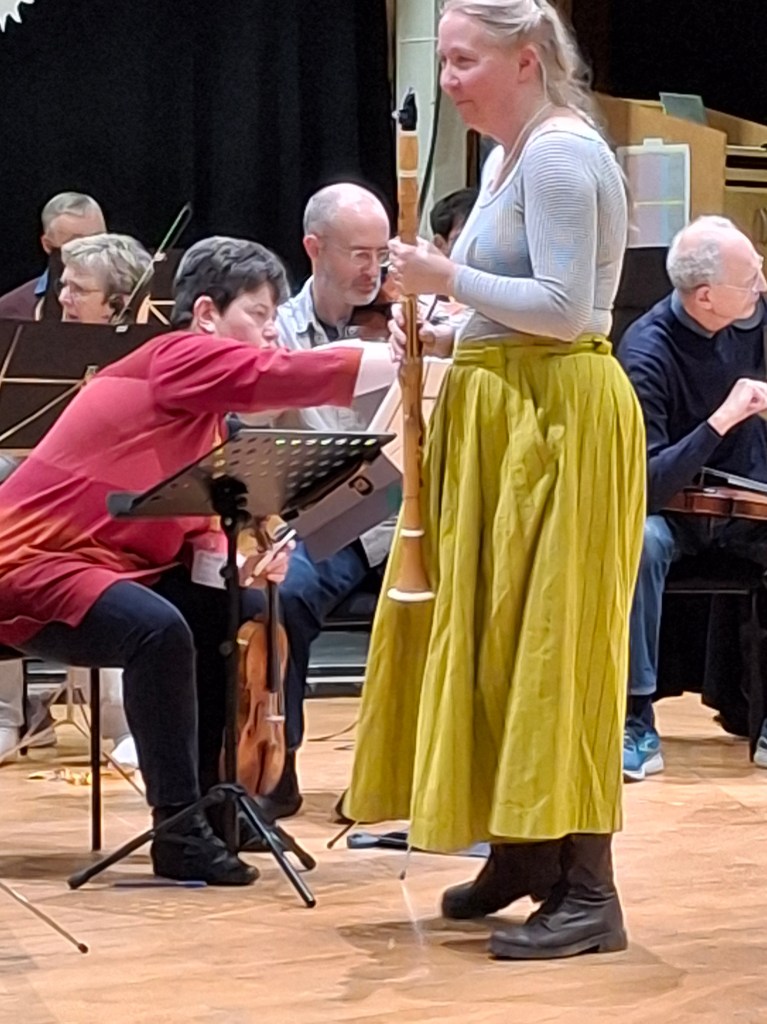
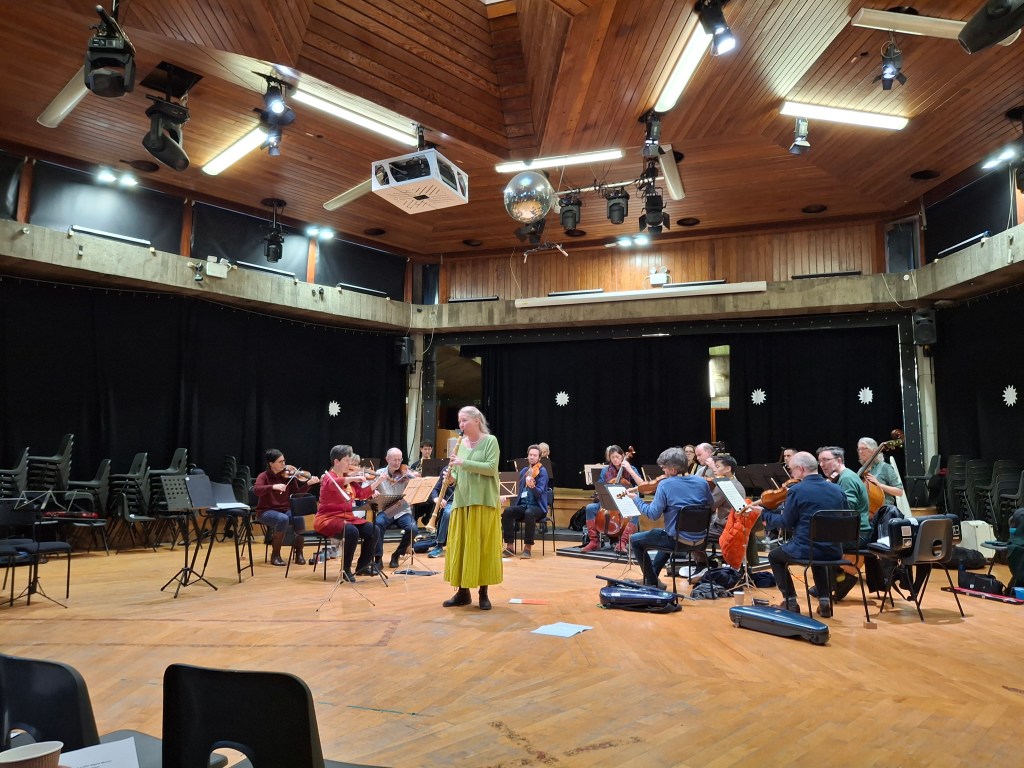
The OAE often invites friends and the local community to open rehearsals at its base in Acland Burghley School. On this day there was a Friends event at 2 pm followed by a Community one at 4. I was very impressed to see the numbers of people streaming into the school as I was leaving. The orchestra was rehearsing mostly Mozart’s clarinet concerto played by principal clarinetist Katherine ‘Waffy’ Spencer and directed from the violin by leader Kati Debretzeni. Waffy was at pains to point out that the work was written for the basset clarinet and she has had one made specially so that the concerto can be heard as Mr M intended. As always it’s fascinating to eavesdrop on the discussions that form the final performance and the exchange of ideas around this most democratic of orchestras. They were off to the Anvil in Basingstoke, Oxford and the Warwick Arts Centre before coming into the Queen Elizabeth Hall on Sunday 1 February. Waffy then introdued a piece they were going to play as an encore – an adaptation of an aria from Mozart’s Die Entfuhrung where the warring male and female protagonists were a bassoon and her clarinet. It was lively and very funny.
I then made an interesting cross north London journey on the C11 bus – Gospel Oak, Hampstead Heath, the Royal Free Hospital, Belsize Park and eventually Swiss Cottage – to the Hampstead Theatre to join Frances for a new play in the smaller downstairs space The Ghost in Your Ear.
This was an interesting event in which we were all equipped with headphones to hear the script of a ghost story being read by an actor in a sound studio for an audiobook. It’s written and directed by Jamie Armitage and the sound design is buy the brothers Ben and Max Ringham who did such a great job with Blindness at the Donmar back in the lockdown days. As someone who has spent a lot of time in the control room of audio studios it was intrinsically interesting and the story getting progressively scary was very well paced. Frightening it was, but not heart-attack inducingly so.

I got a final sign off after my cataract operations and can now revert to my familiar state as ‘a bloke who wears glasses’ with varifocals with no correection for distance and enough for close up that I can type and read my phone and kindle without need to rummage about for reading glasses. I then had the pleasure of two trips to the Union Club, first to have lunch with my dear friend Michele who has had a hard year as as a make-up artits as the film and TV industry shrinks and then for dinner a couple of days later with newly-master’s Guildhall graduate Kristina, a fine soprano, her boyfriend Luka and Paola who looks after tickets and data for the OAE and who I know well from my many visits to their gigs. On both occasions food, wine, service and company were excellent.
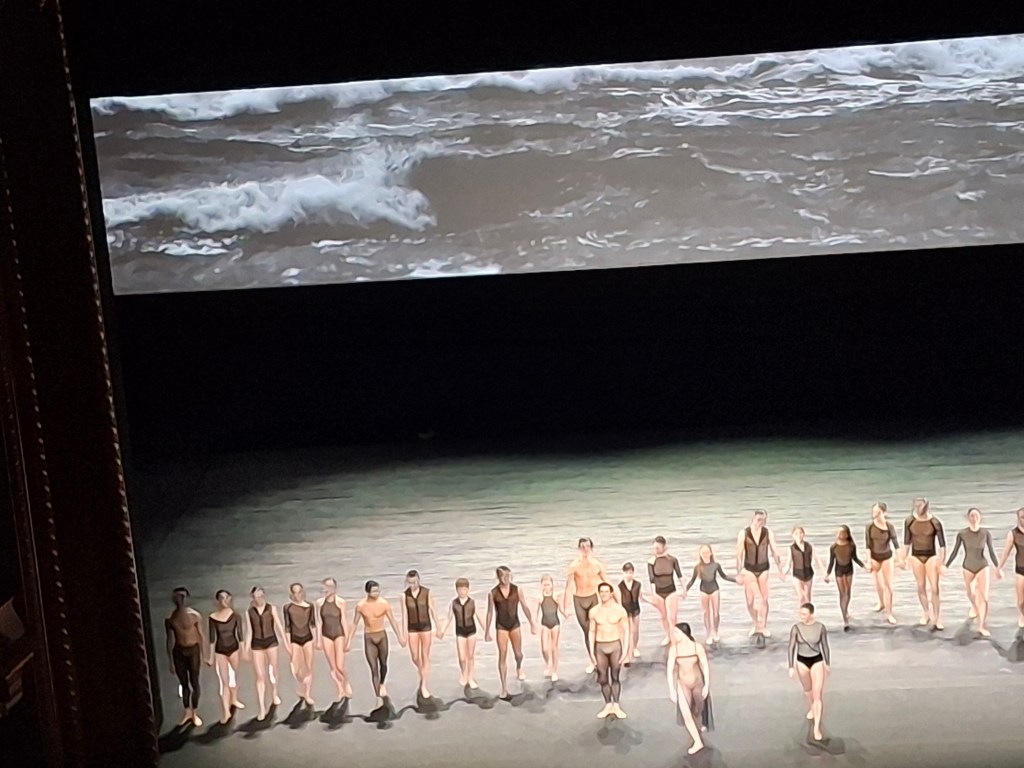
I went ( slightly by mistake and rescued by checking my ticket folder) to a matinee of Woolfworks at the Royal Opera House. This ballet had been heavily advertised in ROH emails and I had hoped Rosa might be back from Spain to come with me. Not to be however so I set off on my own and didn’t pick up any new friends called Mike on this occasion. The ballet by Wayne McGregor is based on three Virginia Woolf books: Mrs Dalloway; Orlando and The Waves. I’d read the first two but not The Waves, which I’ve now purchased. The work is classed as a three-act ballet but I felt it was three one-act ballets given the variety of source material and treatment. Mrs Dalloway was all bustling charatcters around three huge revolving wooden frames introduced by Gillian Anderson reading an excerpt from Woolf’s essay On Craftsmanship. The stories of Clarissa and the shell-shocked Septimus intertwine with elegant moves. Orlando matches the surreal nature of the book by having gold-costumed charaters with ruffs anf bustles making their way through several centuries and a gender change all accompanied by a startling laser display that carved up the stage and indeed us in the auditorium. The Waves was played out against a projected backdrop of extremely slo-mo monochrome waves and ends with her suicide note being read. The score was specially composed by Max Richter and was very filmic, dramatic and emotional. It’s still on and comes to cinemas from 9 February if you fancy a look. Highly recommended. https://www.rbo.org.uk/tickets-and-events/live-in-cinemas-woolf-works-details
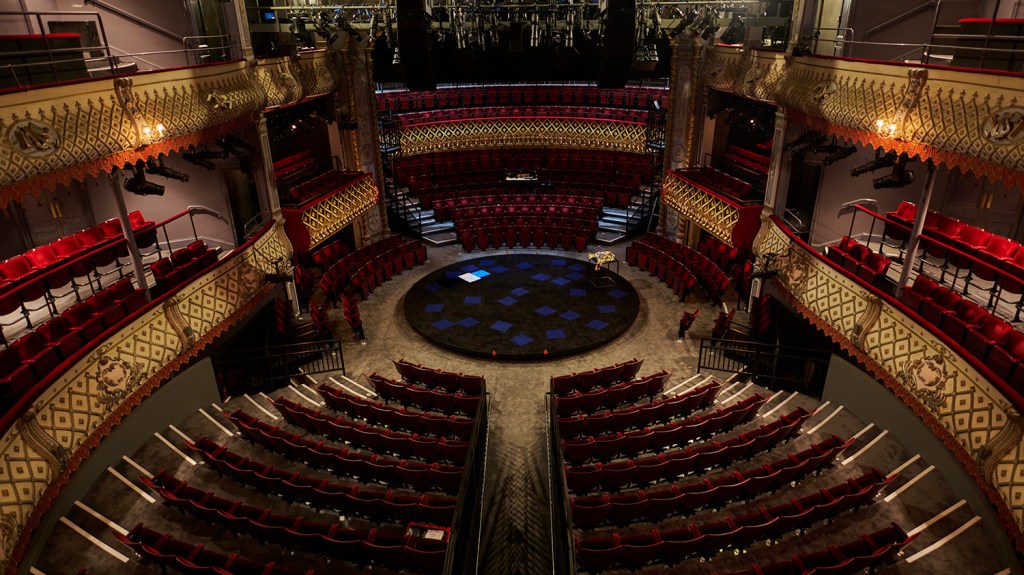
The last week of January contained three remarkable outings to the theatre. The first was Tom Stoppard’s Arcadia, generally acknowledged as his masterpiece and you can see why. With its time shifts, a quest for the unknowable, dangerous relationships and moments of side-splitting humour it makes for a mind expanding evening. I’d seen the original NT production and this version at the Old Vic couldn’t be more different, but as with Sheridan earlier, the class of the work shines through. Whereas the NT production was naturalistic with vistas of stately home parkland, the design of which is an imporatnt factor in the play, Carrie Cracknell’s version at the Old Vic is sparse, in the round with a few props and helps you to concentrate the interplay of the characters and the richness of the language. It was a bit of a shock also to see the venerable Old Vic transformed for an in the round production as apparently all this season’s plays will be.

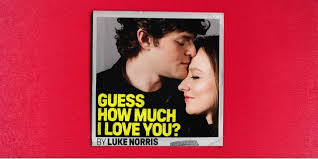
The mood changed abruptly the next evening when we went to see Guess How Much I Love You at the Royal Court. Written by actor Luke Norris and directed by Jeremy Herrin it is a play about a couple’s loss of a child through a non-viable pregnancy. Their grief and their reactions to it are powerful and moving. Rosie Sheedy and Robert Aramayo – newly Bafta-nominated for I Swear that day – display an array of reactions to the terrible news the ultrasound scan brings them through changing scenarios over time. But within the overall sadness of their plight the play has great moments of lightness and humour. Very effective set design and lighting gave a real sense of their enclosed and captive lives as they lived through the intensity of loss and eventually move towards a more promising future.
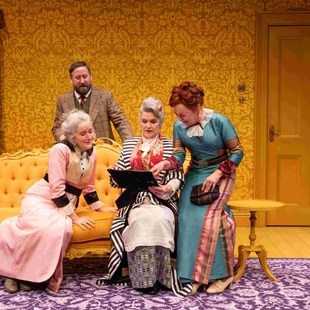

After intellectual exercise and emotional turmoil the week ended with J B Priestley’s When We Are Married at the Donmar. Sheer madness and hilarious farce ‘oop north’ when three couples discover that they weren’t officially married by a young curate 25 years ago. Facades fall away, roles reverse, past pecadillos intrude and there is a literally staggering performance from Ron Cook as the photographer from ‘The Argus’ who has been sent to snap the triple anniversary for the paper. Told to go away he gets progressively drunk, his cheeks redder at every new appearance, and crashes his way through the set. It was a shock to see John Hodgkinson as the host of the celebrations Joseph Helliwell since we last saw him covered in blood as Titus Andronicus. I’d never seen this play before and it made me rethink Priestley who I only knew from An Inspector Calls and Time and The Conways.
The month ended with a final piece of drama on the stage of Vicarage Road Football Stadium where I had the pleasure of Frances’ company in the hospitality Sir Elton John Suite which I’d won through The Supporters’ Trust lottery. We had good food and wine, visits from Luther Blissett and Tommy Mooney, a poor loss to Swansea City on the pitch and later the news that our much-loved manager Javi Gracia had resigned. He’d been back to his family in Malaga earlier in the week and I think decided that wet, grey Watford was not where he wanted to be. The club have gone through many managers (23 I think, some twice as with Gracia) over the fifteen years the current owners have been in charge but only a few have got in first by resigning.


 mikeandmurakami.com