
4 Pilgrims, partying and peace in Galicia
 The route to our next stop the parador at Baiona took us very close to Santiago de Compostela so we couldn’t not go. We passed a few groups of walking pilgrims on the way but I think the preferred routes keep them off the major roads, fume flagellation not being part of the pilgrimage. As we approached the sprawling city we headed for the first car park we saw signs to and found that miraculously, well it is Santiago, it was right by a major intersection from which a gate led us to the centre in about fifteen minutes. However after the drive we needed to pause for a coffee and chose a place near this big junction where coach after coach disgorged its mixtures of pilgrims and day trippers.
 We made our way into the old part of the city pausing at several haberdasheries to marvel at the lace, religious memorabilia shops to wonder at the gullibility and how many shapes you can make for a scallop shell, and some art and craft shops whose wares were interesting but not compelling. The cathedral is very impressive and the whole monumental area surrounding it gave a feeling of ancient power. We refrained from joining the queues to see the interior of the cathedral. It was hot, the queue was very long and we agreed some time ago that we didn’t like paying to go into churches.


Real pilgrims have express entry and therefore much shorter lines were forming for them to enter the cathedral – quite right after walking miles.
 We covered the immediate hinterland gazing at fine buildings with amazing carvings, wandered down narrow streets and found ourselves at the Café Casino a building dating from 1873 which has high vaulted ceilings, glittering chandeliers, loads of stained glass and wood panelling throughout. It is reputed to have been and still be the haunt of artists, musicians and writers so we felt completely at home as we sipped our drinks and enjoyed the brilliant surroundings. A further amble through the other part of the old centre and we were back at coach corner and looking for somewhere to lunch.
 On the corner of the road back to the car was a restaurant called Markesa which billed itself as an izakaya gallega. What could be better than Japanese pub atmosphere with fresh regional produce? We looked no further and enjoyed an excellent fusion of cuisines and after all there’s a lot in common between the small dishes served in izakayas and tapas. Prawn and asparagus tempura, some delicious yakitori skewers of chicken, beef and vegetables, teriyaki eels, eels are something else both Japanese and Spaniards love, sushi and some miso soup made for a satisfactory if surprising lunch in Santiago.
We drove off southward after getting out of the city fairly easily and bowled along passing more strings of pilgrims taking the southern route – I’d advise the northern as the final approach to Santiago is all uphill on the southern route, but maybe that gets you extra brownie points and into the cathedral quicker. We rolled through green hills and farmland for much of the way and then into an urbanized strip that seemed to connect the northern suburbs of Pontevedra right through to the south of Vigo. There are great harbours all down the coast and of course industry follows. There were some hairy stretches in which all the knowledgeable locals move at breakneck speed round blind bends and emerge from tunnels, cross and re-cross bridges but we survived and emerged to follow a more leisurely path to Baiona. We’d booked the parador here for five days on the basis that it was a long way from anywhere, had a pool, was in a medieval fortress and would enable us to have a rest after nine days of being frequently on the move.
 Our first impression as we arrived was that we had struck lucky. A beautiful sandy bay with a promenade lined with shops, bars and restaurants, a fishing harbour with a replica of Columbus’s ship Pinta which brought the first news of the New World to Baiona in 1943 – oh dear too used to typing my date of birth – 1493 was when the Pinta sailed in from the Americas. Columbus is starting to play as big a part in these blogs as Murakami – he’s followed us from one end of Spain to the other. At the end of the town was a promontory with the fortress walls surrounding it and the hotel right in the middle at the top. And you had to show your reservation to be allowed to drive through the entrance gateway at the foot – proper posh!
Here we were then for five days of rest and relaxation enjoying spectacular sea views, clean air and bright sunshine. Except our friends Natalie and Graham were returning from England to their house in Antequera via the ferry to Santander which is not that far away so they are coming via Baiona tomorrow and then driving back down to Antequera through Portugal, which will be a new experience for them. As we check into the hotel in its massive stone ceilinged entrance hall we notice a host of others moving in from some vintage Mercedes and VWs, the odd Morgan and Jag. It seems there’s a German rally association that organises an annual 10-day trip staying in paradors and other smart hotels with some fun driving in between. Sounds like me – just need the vintage car now.

Our room was excellent with a view down the rocky coastline with the sound of the sea through the open window and we set off to explore the massive parador, soon finding a large lounge bar and terrace which was just what was needed. It served good tapas and there was another more formal dining room in an elegant hall and a further less formal restaurant two minutes walk down the battlements.

Next morning I set off on a quest for paracetamol as stocks were running low and pain barely under control a lot of the time. I walked a mile along the promenade to find an open pharmacy and duly purchased some tablets. However Dee found these quite hard to swallow and so I really wanted the little plastic torpedoes which they didn’t have. As I got back to near the parador entrance another pharmacy had just opened and in response to my ‘Hay paracetamol en forma de capsulas, no comprimido?’ they produced the very thing I was after. This was thanks to extending my pharmaceutical vocabulary at the last place to learn that ‘comprimido’ in this context means pressed powder -conventional pills. I returned with my triumph and after all this early exertion the full Spanish provided by the excellent buffet went down well. We had a call from Natalie to say they had left Santander and would probably hit Baiona about one. We spent some time exploring the pool area and other rooms in the parador and then walked down into town and found a central café at which to await the arrival of our friends. We soon spotted them strolling along towards us and catching up and sharing news took several cups by which time it was time to go in quest of some lunch. We found a good restaurant on the edge of the old town and spent a happy couple of hours with excellent fish and seafood – and I think I remember some ice cream too. We parted and made for our different hotels as the parador was full when Natalie tried to book – all those rally drivers and their companions – and arranged to meet up there for a drink and then go to a recommended restaurant for dinner – the number one place was way up in the hills behind Baiona but we decided being in town would prove the easier option. The food was fine, the wine and brandy flowed but it was a bit lacking in traditional Spanish atmosphere. We had failed to do a decent recce as there were several good-looking restaurants back in the old town which we discovered later when Natalie and Graham were back home. However we did have a most enjoyable evening.
The next day was as intended – a quiet day around the parador, sunbathing by the pool in which we declined to swim despite the heat since it was a magnet for seagulls and you know what they do in water. We suggested that some kind of bird repellent might be worth investigating as the confines of the hotel pool were clearly much more attractive than the vastness of the ocean. A peaceful pleasant day at the parador. But having seen the source of the Miño river in Meira we decided that on Saturday we would do the recommended driving trip around the river valley where it forms the border with Portugal and then flows out into the Atlantic.

It was a very fine trip with steep wooded slopes, small villages almost Alpine in appearance and a couple of towns at one of which Mondariz we stopped for lunch eventually. It’s a famous spa town and although the spa complex does two-hour sessions we had come unprepared so we headed for the main square where there were several restaurants but none serving food – one told us his chef hadn’t turned up today, another that the kitchen closed at two – unheard of in most of Spain.

There were however lots of signs advertising Mondariz water which had just been voted ‘best water in the world’ at the Diamond Taste Awards. Tempting but they probably use it in the local beer too don’t they? A friendly barman directed us to a rival whose chef had turned up and made us some very acceptable dishes a seafood salad and a caldo gallego – the Galician stew with cabbage, beans, peppers, ham and chorizo. As we ate it became time for kick off back home as Watford made their first visit to West Ham’s new London Stadium. So phones were consulted frequently and then less so as we went 2-0 down in the first half hour. Then miraculously it was 2-2 at half time. The guide book had said that Ribadevia although not on the circular tour was well worth a visit so after a coffee we set off in the car to explore further inland. Dee nearly jumped out of the car when her phone said we were 3-2 up as we headed through the narrow lanes high above the banks of the Miño and with frequent glimpses of the river below. We made it to Ribadevia as 20 minutes into the second half we were beating West Ham 4-2 – amazing! Also amazing was the scene that confronted us in Ribadevia. It was choc-a-bloc with vehicles and people, the streets were packed and it looked like fiesta time. It was actually market day and a rehearsal for thee History Festival in a week’s time when everybody dresses in medieval costume, something we seen in Tortosa back in 2001 on our honeymoon. We managed to creep through the town, abandoning all hopes of parking, and then made our way back to Baiona through another scenic route.
Sunday was another quiet day at the hotel with an excursion into the old town to buy a few gifts for those back home. There are lots of bars, craft shops, delicatessen and restaurants in an ancient area of the town that is very compact but has some wonderful buildings and unexpected sights around corners. And we bought what we needed.


In the afternoon, we made the three kilometre walk round the battlements which gave us wonderful changing perspectives of the coast to the north and south the huge ocean bay stippled with islands to the west and the pretty town and beach to the east. There were convenient places to pause and admire the view and it was a very happy excursion.  We dined that evening in the less formal restaurant just down from the main parador building called the Enxebre A Pinta as it overlooks the port with the replica ship. Less formal than the main dining room the food was well up to standard and made for a very relaxing last night in Spain – and we got another lovely sunset.
Our flight on Monday from Santiago airport was not until 19:20 so we packed and decided to try to visit Ribadevia which we had failed to explore on Saturday. The contrast couldn’t be greater with the town on a sleepy Monday. Cats and kittens dozed in doorways – real not graffitti – gegants the huge figures that parade at fiesta time sat lonely in a doorway and the Jewish quarter told a story of flourishing trade followed by persecution on a series of plaques.


We were glad to have made it here where the river Avia joins the Miño, a castle dominates and the main square housed a microbrewery and an irresistible leather goods and craft shop. We set off towards Santiago and the route took us through Ourense a name I’d heard as a Spanish province but had no concept of. It’s split by the river Miño which is quite broad at this point and has dramatic sloping bridges, roads and parks along the river banks and a medieval centre with massive churches and municipal buildings. We had a light lunch and set off for the airport which looked very straightforward on the map but the SatNav had different ideas. The first part was fine – along the autovia to Lalin and then the N525 when the motorway changed from A53 to AP53 designation and we didn’t feel like paying tolls as we were not in that much of a hurry, we thought. The SatNav clearly didn’t think this was a good idea and we set off across country along single track roads – there were no problems with passing as we didn’t see another vehicle except for tractors in the fields. With high hedges, sudden changes of direction and right angle bends it was quite disorienting but also quite a laugh – possibly slightly nervous laughter at times. Then our narrow track emerged onto a major road with a sign to the airport at 1km and a convenient filling station so we could avoid the exorbitant rates charged by rental companies by returning the car full.
Parking and return were easy in the very modern airport which had been rebuilt in 2011 to increase facilities for tourists which include a lot of pilgrims who can’t make the penitential journey on foot. As it happens they needn’t even leave the airport as there’s a great model of the cathedral and old city complex so you could take your selfies there and save the trip to the centre.
The flight back was our first with Spain’s cheap flight operator Vueling and it was perfectly fine. We reflected on a holiday which balanced a little rest with some essential sightseeing in areas of Spain neither of us knew before but came to love during these last two weeks. The three-day, three-day, three-day, five-day bookings proved very satisfactory with some real rest towards the end. As always there were places we regretted not visiting – Ferrol in particular, when we saw Almodovar’s Julieta in the cinema a couple of weeks later as lots of it was set there. The holiday confirmed our love for Spain with its continual ability to surprise and delight.
 We packed and departed Cangas de Onis heading for Ribadesella at the mouth of the river Sella and which looked from the guidebook to be an interesting town with suitable locations for breakfast. The town divides neatly in two with the old town and fishing port on the right bank of the estuary and the modern resort with hotels and summer villas on the left. We headed for the port area and among the nets, lobster pots and boats we found the start of a Sunday market and a cute bakery that did great coffee and pastries. We’d missed by a month the famous


 The receptionist said that we should apply online and when the permits came back we should email them to the parador and they would print them for us. The website advises obtaining permits 30 days in advance so I make another trip to reception to see whether there’s any point and am advised that there’s an Urgent button on the site that should get us our permits today but that we should aim for tomorrow morning because of the tides – you can’t get onto the sand at high tide. Back to our room we get onto the site, make our application but have to send scans of our passports so it’s off to the business centre and a scanner. But wait cries Dee, we had scans on your laptop in Japan for occasions like this. Indeed we did and I haven’t deleted them so we attach the passport pics and hit send. A while later email permits pinged back but my emails didn’t reach reception for some reason the camera’s SD card was called into play and finally reception managed to print them.
 I think in all I went up and down the stairs to reception about eight times. Thank goodness we were on the first floor and not up in the tower! During my many conversations at the front desk, the young lady suggested that the town of Meira would be worth a visit as the source of the Miño, Galicia’s longest river, which flows south and forms the border between Spain and Portugal which we would meet again later in the trip. It’s by now mid-morning and Meira’s about half an hour away so perfect timing for coffee and churros.


 So hot I photographed the clock/temperature sign outside the town hall. Lugo is a very clean and pleasant town with a black eagle statue commemorating the capture of the city by the Romans in the first century BC, a great market hall, the huge baroque town hall and many other marvellous buildings. A shady lunch spot was discovered on our travels and we sat to indulge in pulpo gallego, baked clams and a few other tasty tapas all helped down with very crisp Albariño wine from nearby. We hadn’t intended to do city sightseeing this trip – more mountains and beaches was the agenda – but Lugo was a delightful detour. Exhausted by the heat, lunch and walking we drove back to the hotel for a shower and a lie down. Later a drink and a few tapas and an early night ahead of tomorrow’s trip to the beach.


 We also decided to carry on past Santander although people have said it’s a great city but we were drawn to the touristy attractions of Santillana del Mar once described by Jean Paul Sartre as the prettiest village in Spain.


 We were surprised to learn that they make two types of cabrales – one just with cows’ milk and the other with a blend of cows’, goats’ and ewes’ milk. They are all controlled by strict Denominacion Cabrales regulations and are quite powerful blue cheeses. I marginally preferred the three-milk blend but both were highly acceptable.


 Originally raised grain stores to prevent rats and other rodents getting at the grain, some are still used for this purpose, others as garages but they are interesting structures found all across Asturias and Galicia. The village also had one shop-cum-bar and even with gentle strolling a thirst had developed so a beer was called for. We went back to the parador for a light lunch and found elaborate preparations for a wedding in full swing. We were later able to observe the guests from the balcony of our new, perfectly adequate room. A taxi took us back into Cangas for dinner and there beside our table in El Campanu was a photo of the owner with none other than Martin Berasategui who clearly approved our choice of local restaurant. Apparently he still spends quite a lot of time travelling to sample authentic local cuisine all over the country.


 He delivered us swiftly to the Astoria 7 Hotel where we were shown to the Charlton Heston room – I might have preferred the Sophia Loren next door – which was very comfortable and funky with quotes and posters from his films. The lobby has a sofa where you can sit next to Alfred Hitchcock and the whole place is filled with film iconography – even your bill comes in a film can.

 There’s a whole street named for the 31 August which is lined with excellent bars and restaurants. It was the only street that survived when the Brits and Portuguese sacked the city and drove out the French. The bars didn’t disappoint with hams hanging from the rafters, cider being poured from a great height into tiny glasses,
  glass cabinets displaying mouth-watering delicacies and crowds of people having fun. It had been a while since lunch so we just had to try a few. A stroll along to the harbour and then the bus back to the hotel for a break before deciding what to do for dinner. With an early start, travel and a new city to absorb we decided on a snack at the hotel which was perfectly fine – the restaurant and bar were both very pleasant places to sit and plan.
 As we rise up the views become more spectacular with the island and sweeping bays and the mountains beyond all with bright sun, blue skies and golden sand – the temptation to cancel the trip westward and stay in San Sebastian was growing stronger.


 The staunch Catholic nature of the Ferrers family is evidenced by three priest’s holes but there’s no precise figure for the number of papists they saved. There’s lots of stained glass and memories of the ‘Quartet’ a sort of mini-Bloomsbury set who lived here from 1860 to 1920 painting each other, building a chapel and generally being artistic.

 The orchard and garden beyond the house had an exhibition of scarecrows and some interesting vegetable beds which we discussed with the volunteer gardeners – a bad year for carrots up here too it seems.


 The filming of the series is fascinating to those of us who have been in the business and with so many cameras it was hard to keep out of shot – Dee and I can just be glimpsed in the episode transmitted later in the year. The art on display was incredibly varied in approach and technique, oils, watercolour, stencils and spray paint, ink drawing and one of the competitors added texture with his feet. It’s interesting to see how different people see the same scene in so many different ways. As it happened there was only one we wanted to bring home but we weren’t allowed to, so this trip left us without needing to make more decisions about the walls back home.
 We took those back to the car, ambled about a bit more and then stumbled across a splendid looking microbrewery pub so it had to be time for lunch. The
  The driveway approaching


 We came back via Tranmer House from which a guest in the 1930s saw the ghostly vision that inspired the dig that found the ship burial. It has an apartment that you can rent through the National Trust which we thought might be fun one day. The house is full of stuff you can actually touch and included a typewriter that became the main background image for our new enterprise

 Back into Orford we ogled and couldn’t resist
  The
The  I won’t go into detail about the concerts we attended over three nights but they were performed by musicians of the highest calibre, included two world premieres. some familiar and some unfamiliar pieces. The highlight was favourite tenor Ian Bostridge performing two of Britten’s song cycles and one of Tippett’s interspersed with a brilliant version of Britten’s first string quartet by the Arcadia Quartet. The concert hall and its environs are excellent and at the intervals there was an excited buzz of conversation between friends and in our case total strangers moved to discuss the music they’d just heard. Glasto for the Golden Agers you could call it I suppose. Three nights of concerts on the trot was just right and with lots of time to explore the area on the days in between we were very glad we’d finally made it to the Aldeburgh Festival.


 At the other end of the town is the famous
  After spending an excellent Christmas with Dee’s sister and brother in law in Sucina down the coast in the province of Murcia with Christmas lunch in Santiago de la Ribera and a Boxing Day excursion to Cabo Palos and Cartagena, we set off for Valencia for the week until the New Year. Given last year’s experience in Cadiz we left the car back at the airport and took their shuttle bus to the excellent boutique hotel Hospes Palau de Mar which is in two converted merchant buildings not far from the old city and the Turia Gardens, the 9 km super-park that semicircles Valencia in the former bed of the diverted river Turia.
 We were too early to check in so left our luggage and set off for a Sunday flea market held behind the Mestalla – Valencia Football Club’s stadium where we went to see a match back in 2006. Sadly by the time we made it, the majority of stalls had packed up and gone. So it was time to find somewhere for lunch and console ourselves that if we had found anything interesting it would have probably been difficult to get it back home. After going back to the hotel and establishing ourselves in our room we walked off to the Plaza del Ayuntamiento where an ice rink was installed and fun was being had by all amid bright white light decorations on all the buildings around it. We found a lovely little family bar Jamon del Medio just along from the hotel so we dined there and only had a short stagger back to the hotel.


 The wide sandy beach is fringed by a promenade with at least a hundred restaurants all promising the authentic Valencian paella – well this is the home of the dish after all.The surrounding area also has some interesting old buildings including beautiful wrought iron warehouses and the old Custom House with its tall clock tower. There are also lots of signs of the Americas Cup which was based here in 2010 and of the Grand Prix de Europa which was held here from 2018-2012. It was a bit early for paella so after a coffee we jumped back on the tour bus and headed back into the old town.
  There’s lots to explore here to with the modernist North Station and the Central Market with lots of local iconography and products. We were going to go to the Fine Arts Museum but of course it was closed on a Monday so plan B was back to the hotel to chill and read before a further evening explore of the centre. It took us to what was to be a breakfast gem for the next three days – the Café Agricultura which is part of the HQ building of the Royal Valencia Society for Agriculture and Sport. We entered a nice-looking cafeteria for an aperitif and idly picked up the menu which did a simple breakfast which was great value. Only when we ventured to the loo did we notice that the cafeteria led to a massive entrance hall with a monumental staircase and apparently, lots of meeting rooms and full scale dining areas. They also run the young farmers’ clubs and bridge and chess clubs along with influencing agricultural policy in the region.


 That evening we heard a great commotion outside the bar near the hotel we were in and went outside to find the streets filled with hundreds of people in fancy dress running along. We went with them following the sound of some insistent drums to the Plaza de la Reina where we discovered this was the finish of an annual charity 5km run that’s held on30 December every year. The San Silvestre run has been going since 1983 and attracted an estimated 15000 to 18000 runners of all ages. As with so many events like this there are some serious runners but many are in fancy dress and there to end the year with a bit of fun.
 Dee was very taken by this early fifteenth century Virgin by the Valencian artist Peris Sarria. There were also lots of sculptures, including this flamenco dancer, by Mariano Benlliure the brother of Jose who’s house we seen earlier. Their father and another brother were also painters so there was quite a dynasty of artistic Benlliures about which we had previously known nothing at all. Cultured out, we had a coffee at the museum and a stroll back to the Plaza de la Reina for another light lunch as we had booked the special New Year dinner at the hotel. This proved a riotous affair with silly hats, whistles and streamers and much jollity among the staff as well – many of them were international catering students drafted in for a big party by the hotel. It was a fine way to see in the new year.


 We had decided to go for a suite as we were there for such an unusually long stay and it was a decision well made – it was huge with a living room, bedroom, massive bathroom and a balcony.


 On another day we also decided to make a further excursion to La Rabida where Columbus set sail for the Indies and found America. There’s a dock on the banks of the Rio Tinto where full size replicas of the Niña, the Pinta and the Santa María can be visited. They are frighteningly small for voyages of that duration and
  danger. There’s an excellent dockside exhibition of what life was like in Columbus’ time and a great idea of how the galley was the most important part of the vessel.


 Just back inland is the monastery in which Columbus signed his papers confirming that Ferdinand and Isabella had come up with the cash for his voyage. It’s all set in a park with specimen plants and massive palms and a very pleasant few hours were whiled away including a stop for lunch which made somebody very happy.


 However this was to be a calm holiday not the usual Raggett itinerary k, b and scramble so we broke the journey down by staying at the Keep in Yeovil in which we had a split-level room in the eponymous tower. It was a Sunday so dining options were limited but the local pub did us fine. Next morning we visited the lovely


 We then had a crab lunch at the Crown in St Ewe on our way to an afternoon at the Lost Gardens of Heligan. These have changed a lot since our last visit many years ago and gave us beyond-our-suburban-station plans for the runner beans! The weather reverted to type and we got a quick soaking before we left.


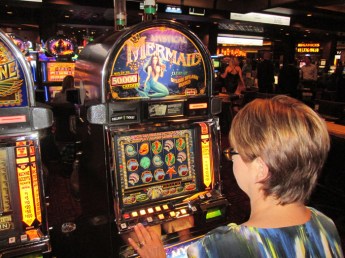 My daughter and son-in-law had secreted with Dee a birthday card with the inclusion of $100 and the injunction that this was to be taken, converted into chips and be blown at the tables or slots. Neither of us is a gambler so we texted various friends of greater nous in this area for advice. “Put it all on black” was the card-accompanying suggestion; “18 Black” was another but on our wheel 18 was red so what to do? Another said you can’t lose on Keno machines. Chips collected we did a little roulette, a little blackjack and some slots but even with advice from the locals (on reflection they probably wouldn’t tell us how to win would they?) the first fifty had gone in minutes. With a minimum bet of $10 and no hint of a one-off win let alone a streak, we decided we were crap gamblers, nobody playing looked very happy and that we’d be forgiven for investing the remainder in wine and sake to accompany our imminent Nobu meal.
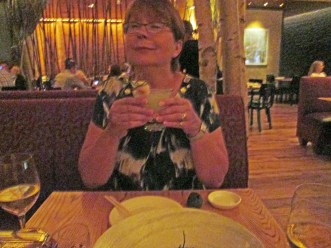 He nodded noted and inwardly digested, excuse the pun, and promised us a succession of dishes we would enjoy. The glow of his confidence obviously enveloped us and then it dawned on us that we had no idea what all this was going to cost us. It’s not often in my life that I’ve been in the situation where if you need to ask the price you can’t afford to buy, so we settled back enjoyed our cocktails and waited for the procession.


 mikeandmurakami.com