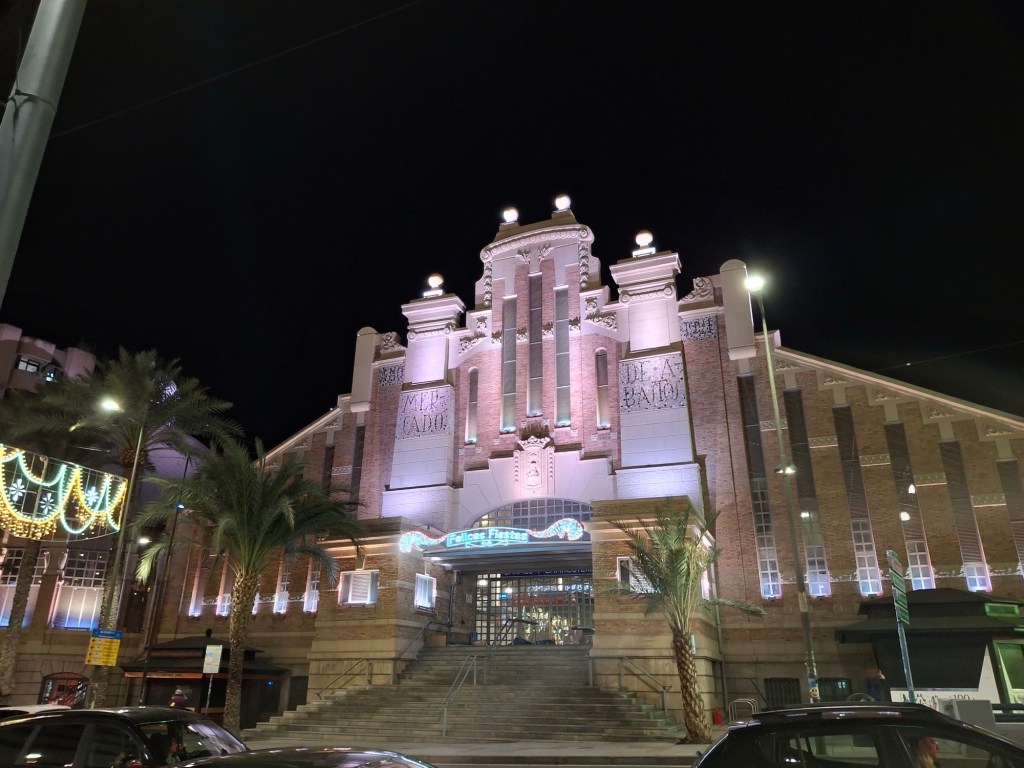
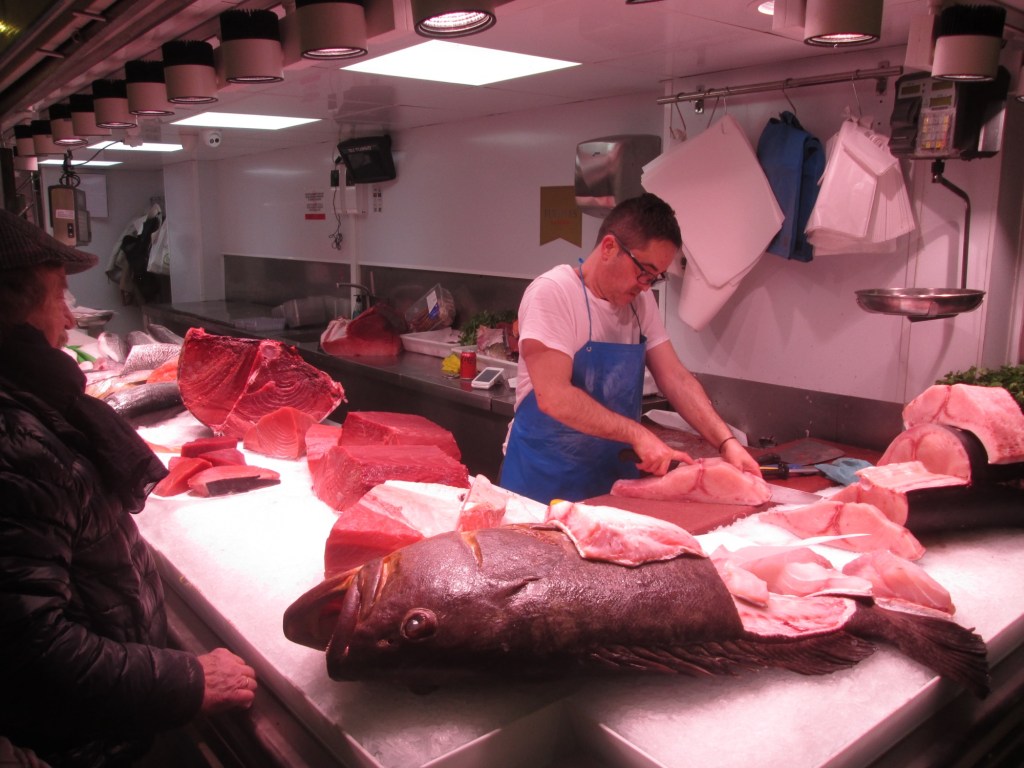
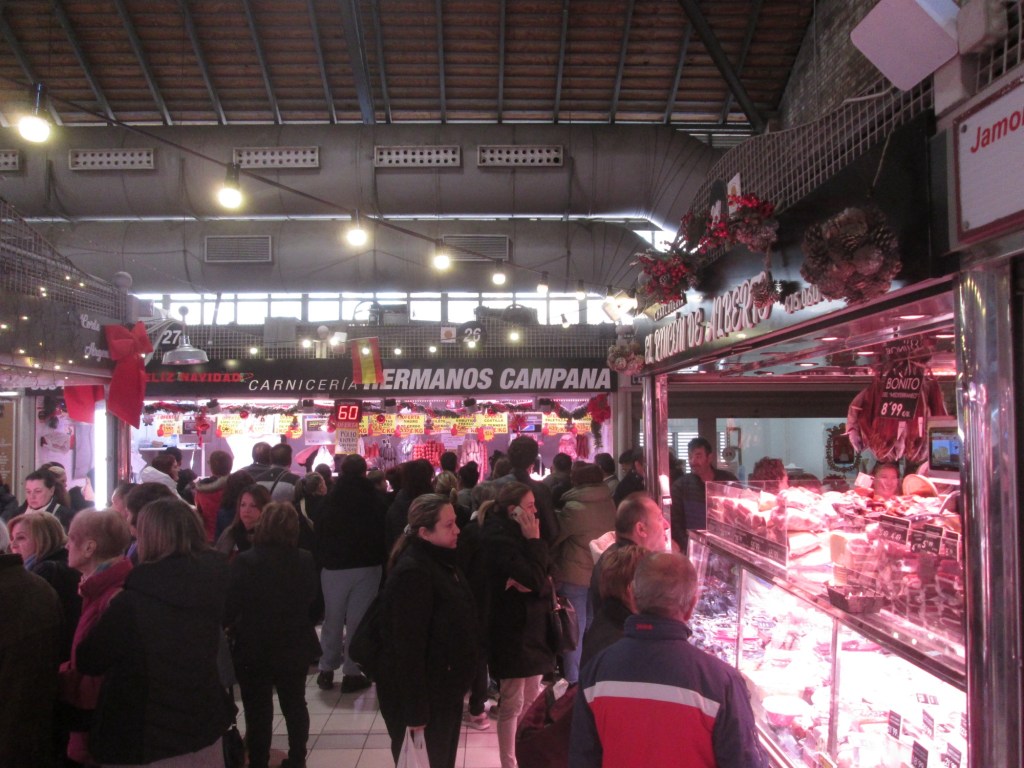
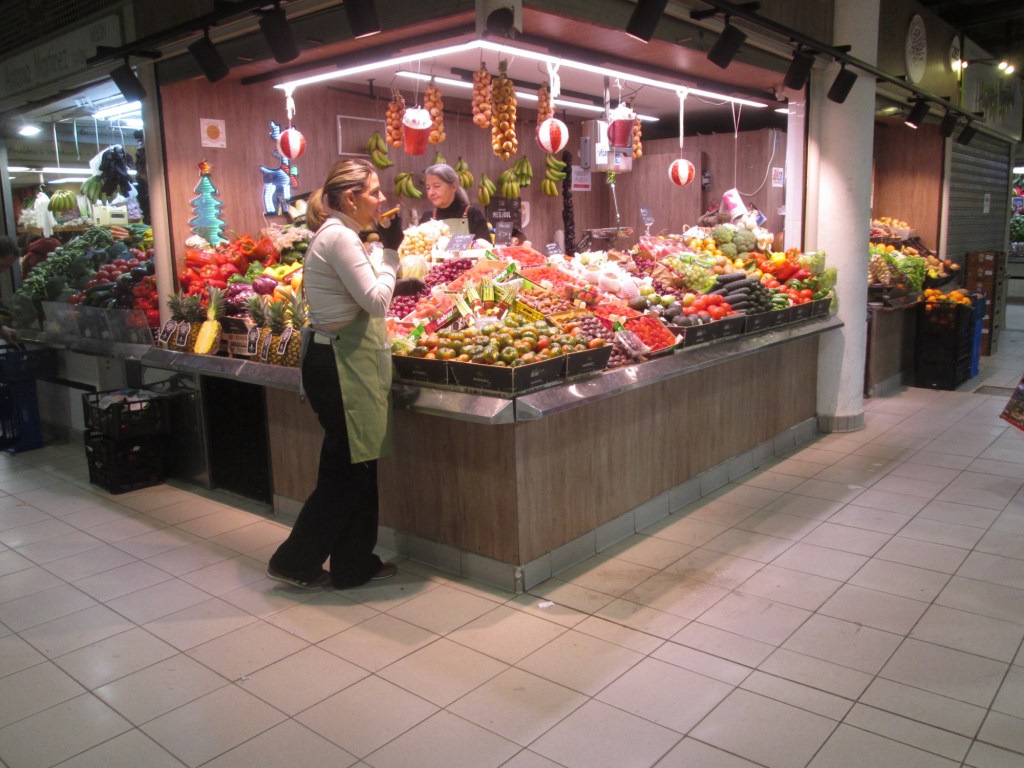
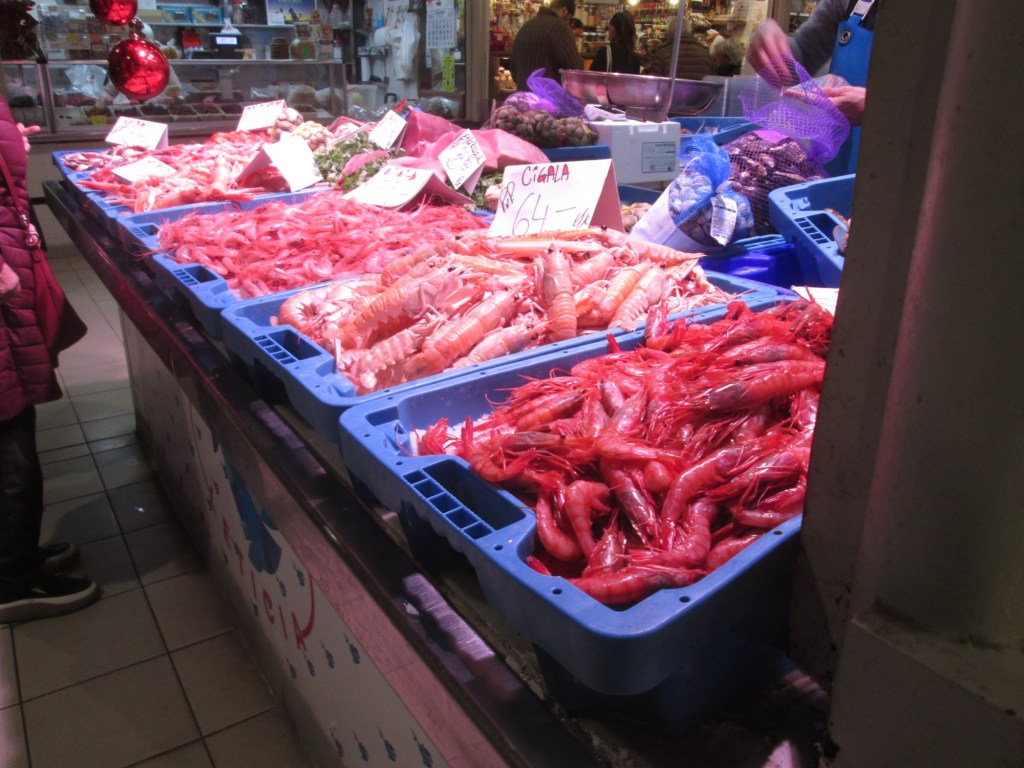
I don’t have a Fitbit or other step counter but I think I would have broken it today. I set off at 9.30 in quest of breakfast which I found quite close to the hotel and the central market which I’d shot last evening. As many will recall, I love a market and while the building couldn’t compete architecturally with many I’ve visited, the contents were well up to scratch. Fish, meat, fruit and vegetables, all local produce, were brilliantly displayed. Some counters were obviously more popular than others with lengthy queues waiting patiently after taking a ticket from the ‘Su Torno’ machine.
Mercado CentralCarving tuna Patience is a virtueArranging the stallSeafood aplenty
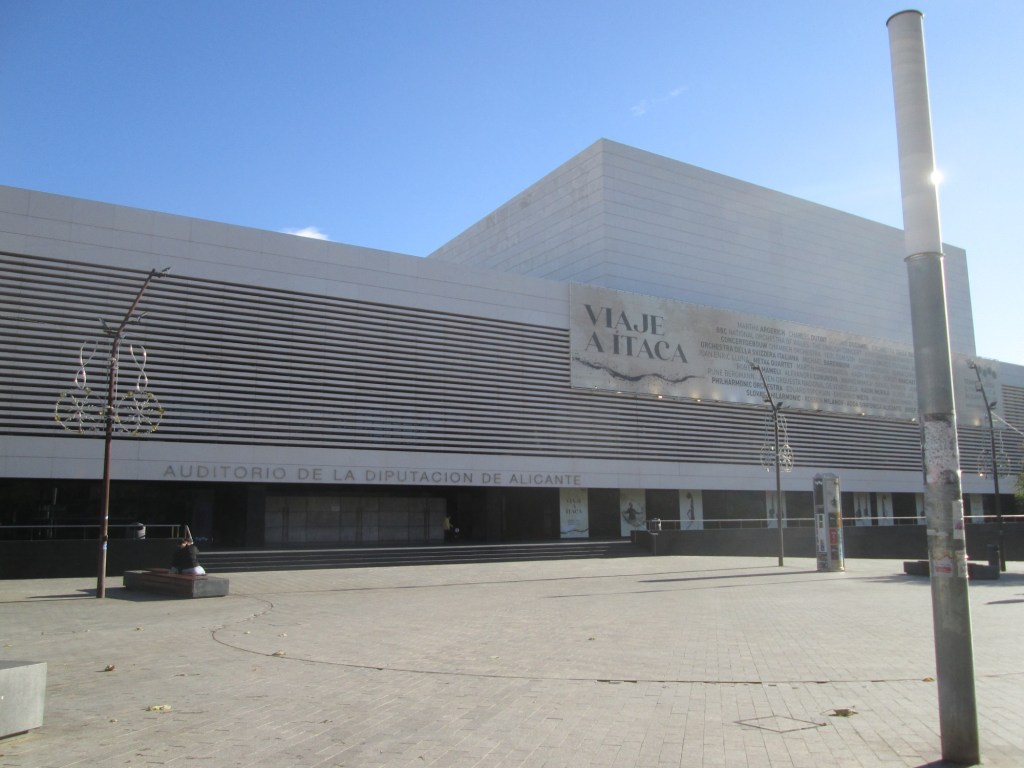
I then decided to walk to the Auditorio where I’m going to a concert this evening just to gauge what time to leave – 20 minutes is the answer. It also involved passing the Alicante bullring which has gigs now not fights which will be a relief to the bulls being driven towards it in the sculpture in the square outside.
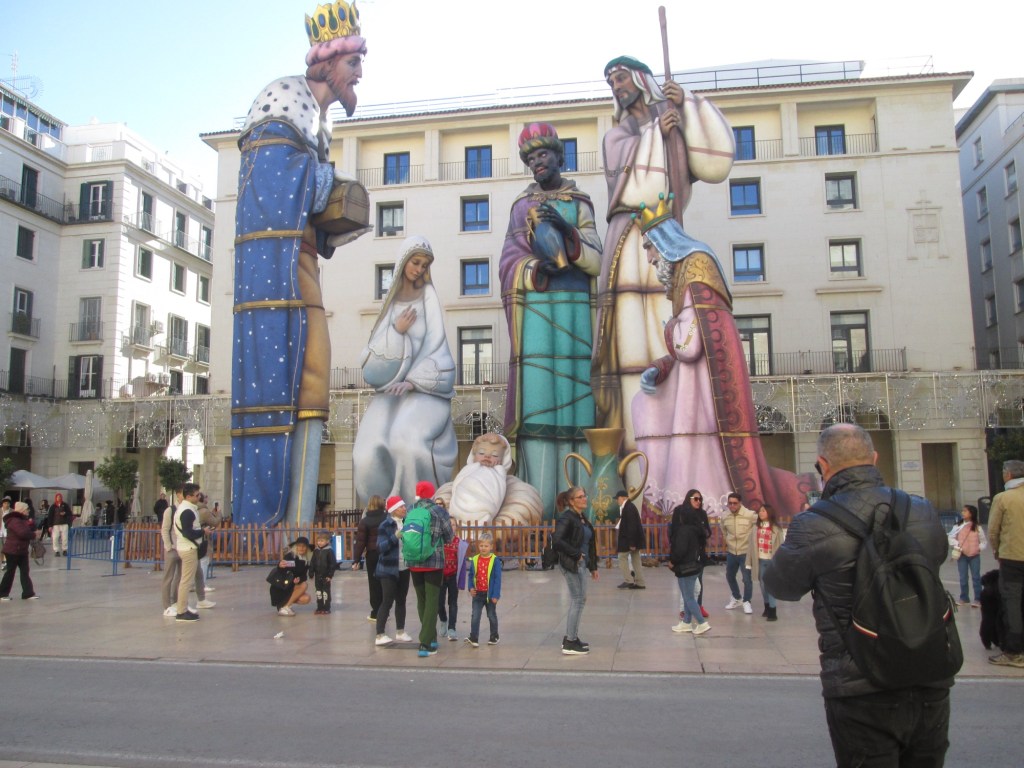
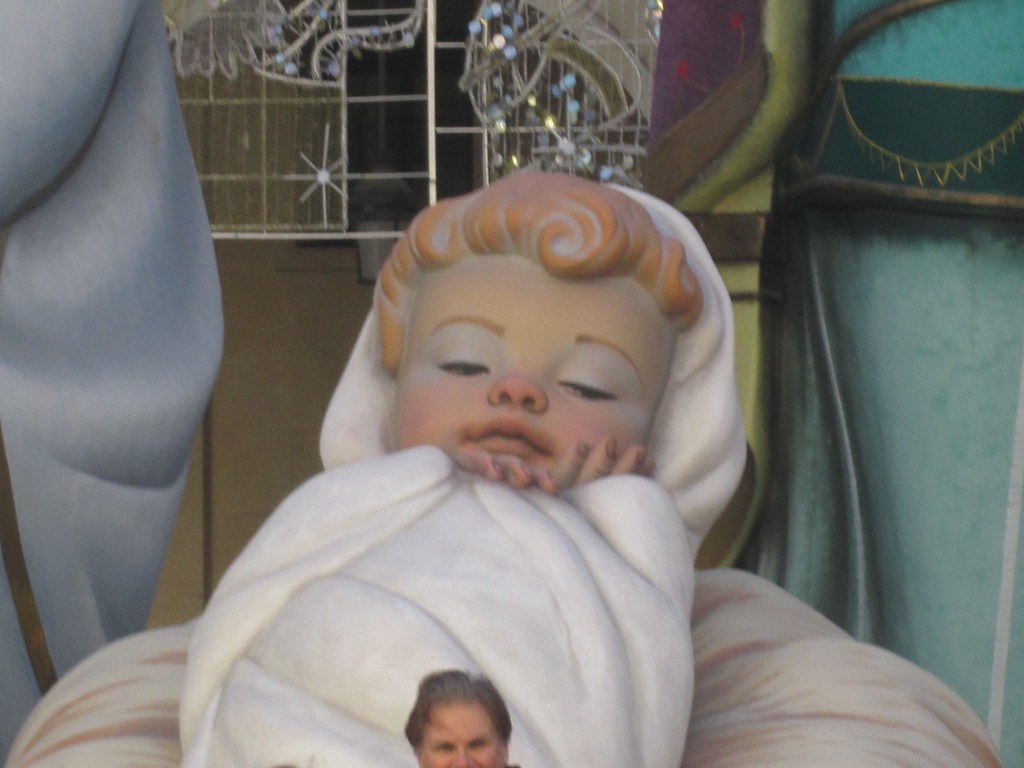
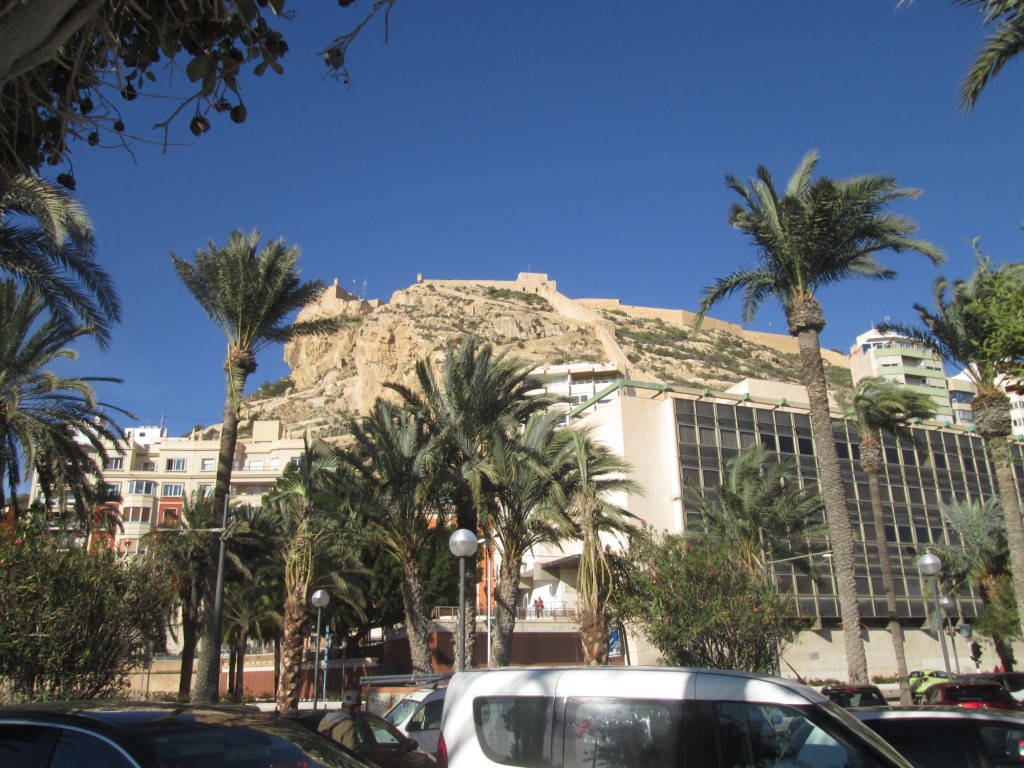
One of the major attractions of Alicante is the medieval Castillo de Santa Barbara and as cloud is threatened for Christmas Eve I thought I’d better do it today. On my way back down through the town I passed the Ayuntiamento which has a special Belen – the astonishing displays of the Christmas scene that are prevalent all over Spain. Outside was a giant version with a very strange looking newborn.
The castle sits quite a long way above the beach but fortunately there’s a lift, which by flashing my old farts’ pass I was able to use for free.
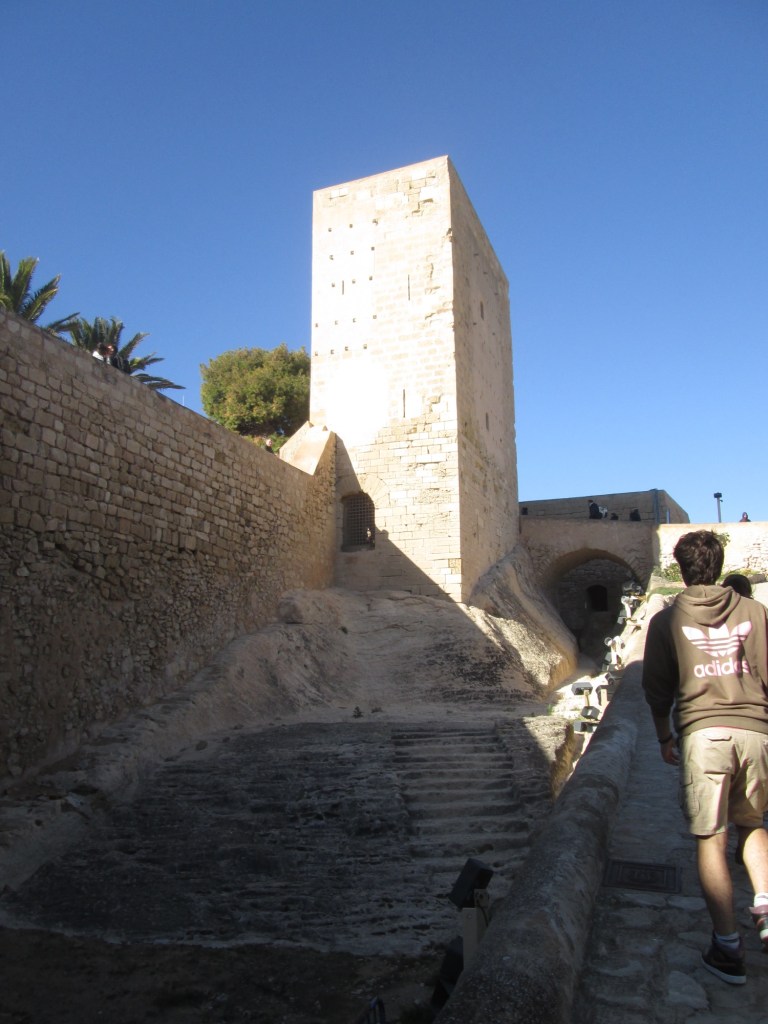
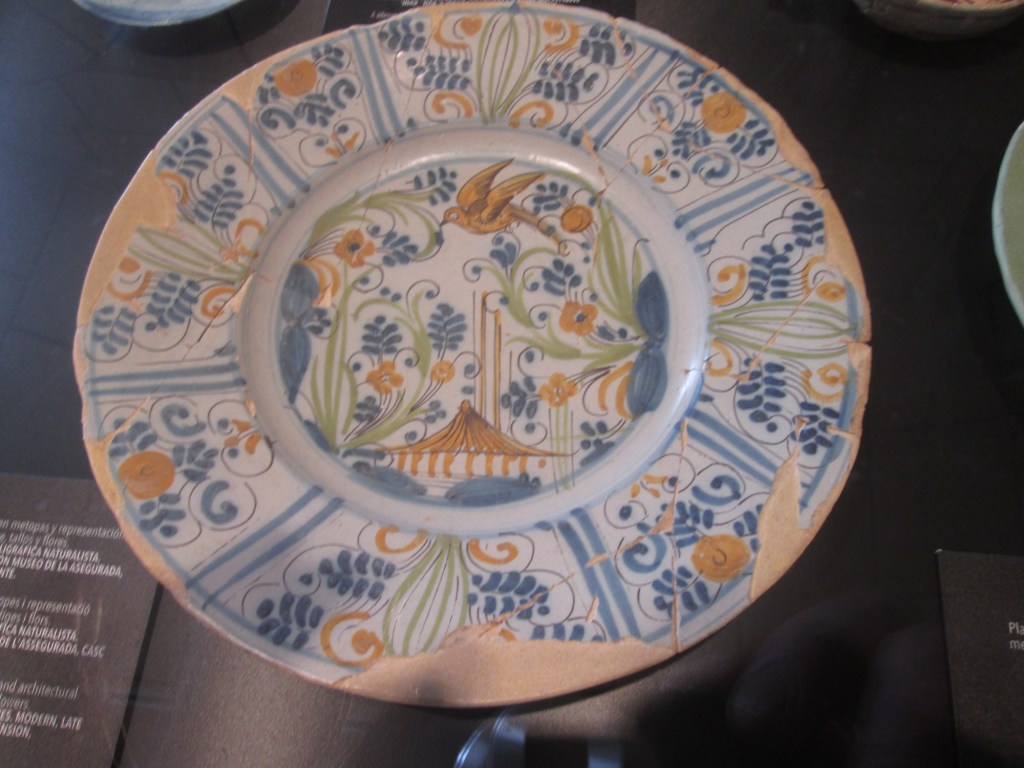
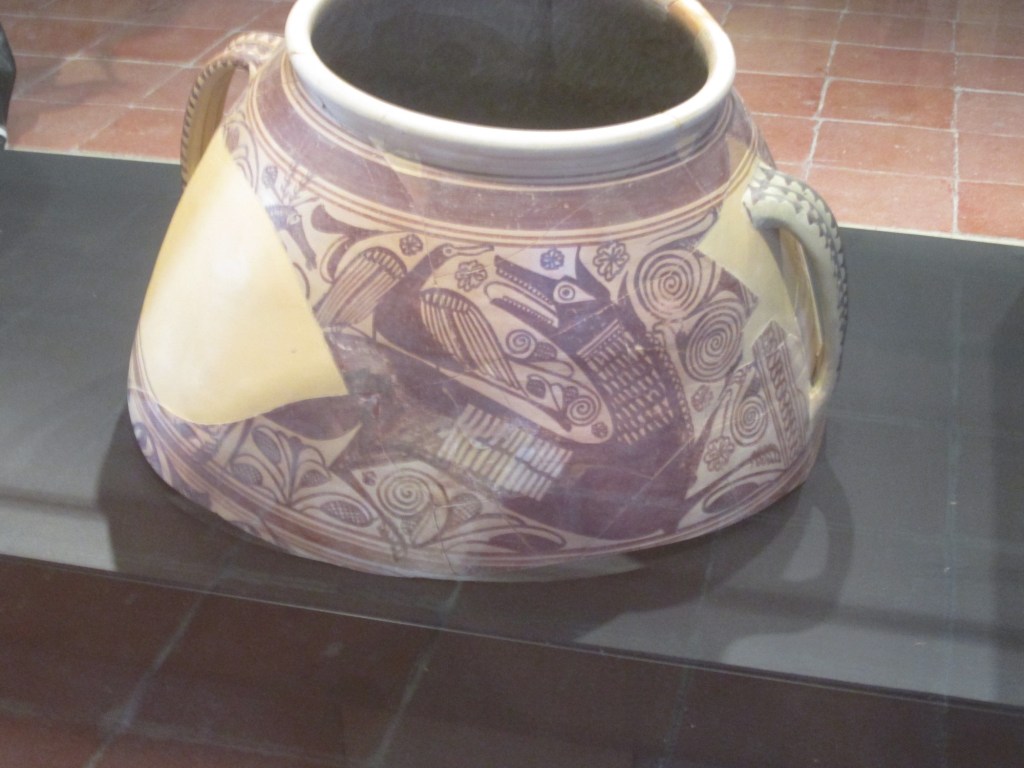
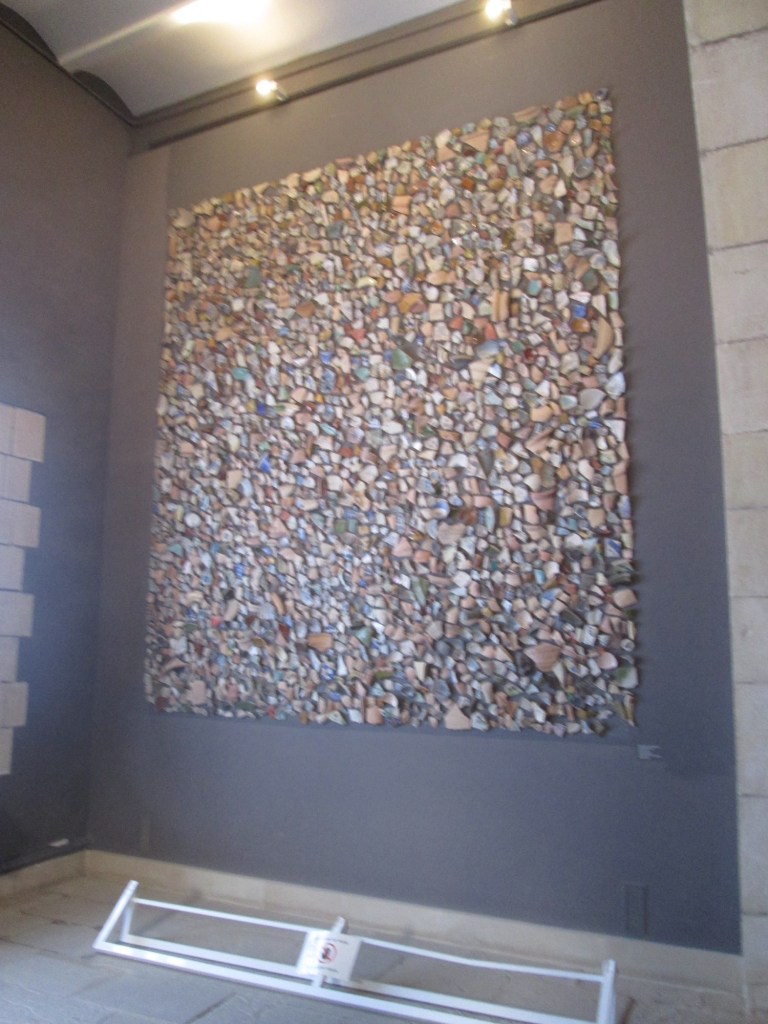
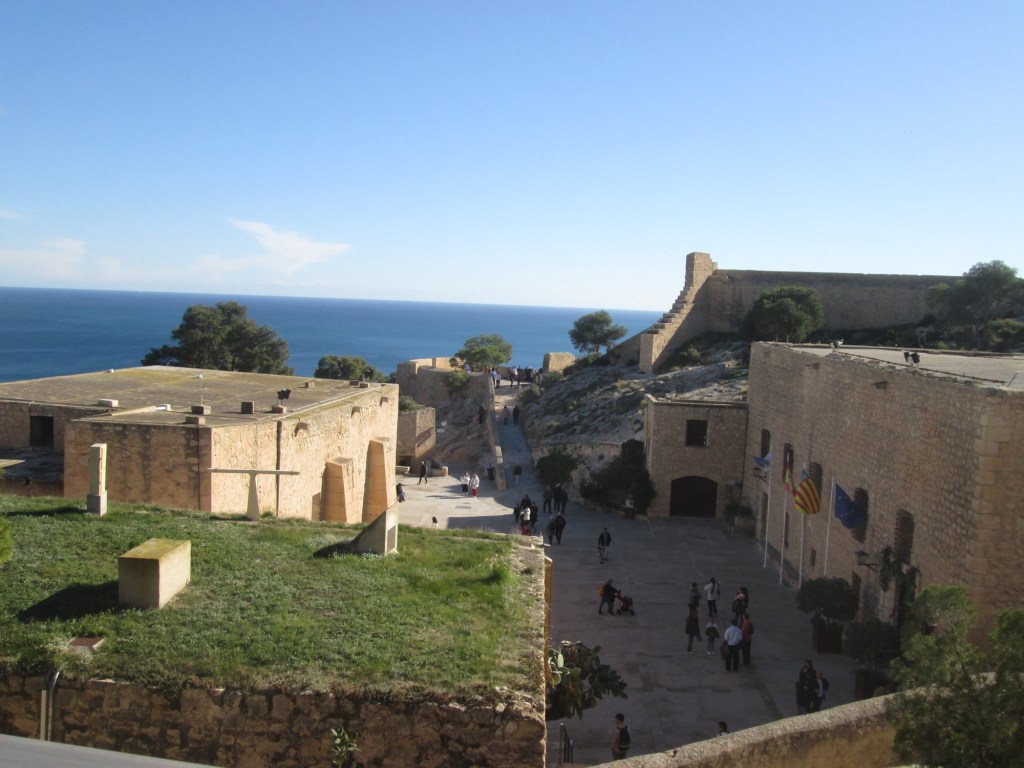
There’s still quite a long way to go when you alight from the elevator after a lengthy wait – be warned if you attempt it in high season; I had to wait about twenty minutes each way. There are lots of warnings about uneven surfaces and danger of falling so I mounted the steep slopes with great caution and frequent pauses. There’s not much left of the castle itself but the ultimate chamber has a great display of finds from the site over its history as a castle since the ninth century and from settlements on the site back to the Bronze Age. One of the main reasons for making the trek is for the views and they are spectacular.
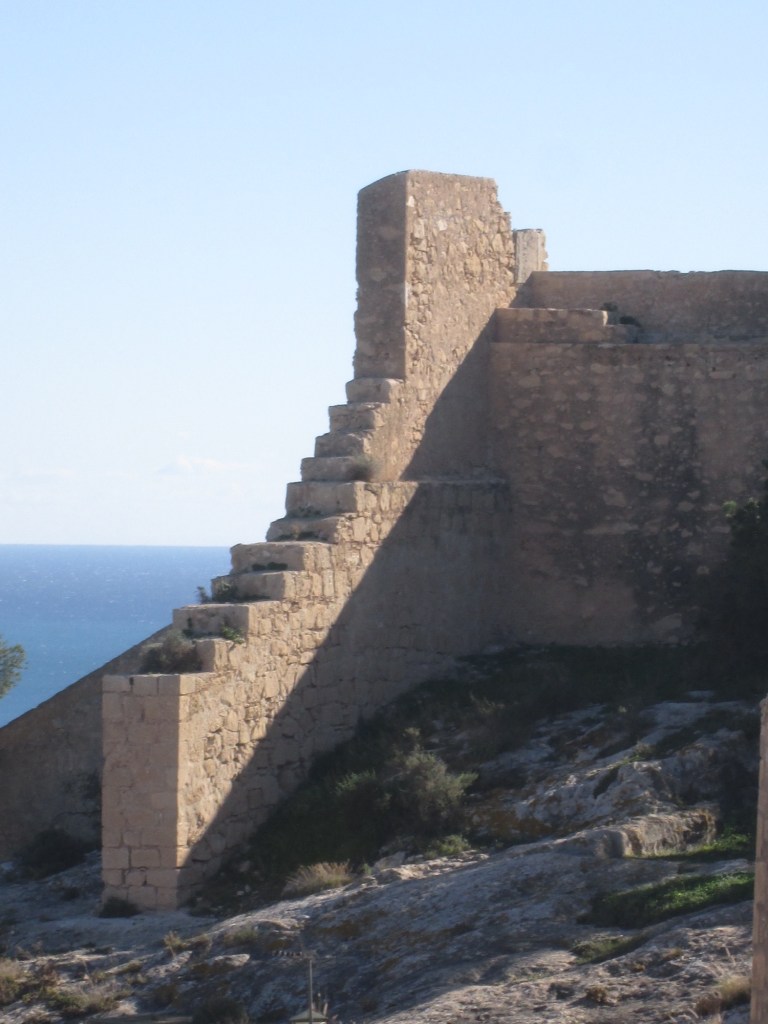
Halfway upOne of the towersMoorish plateRoman vaseFragment mosaicFrom the top
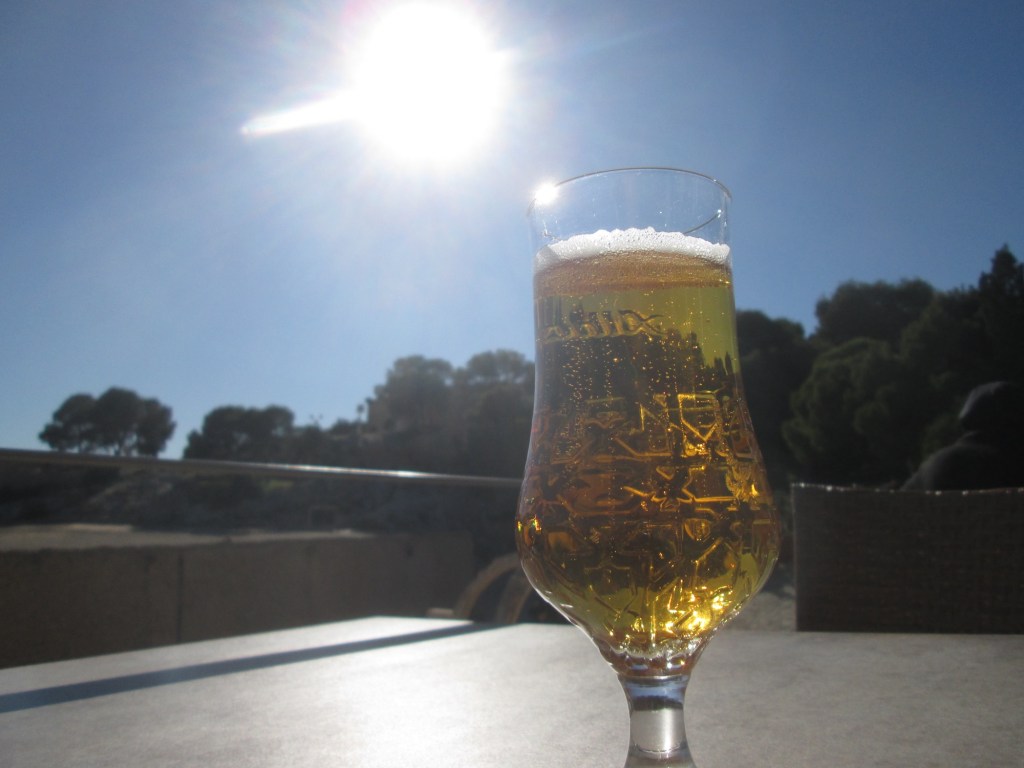
I made my way very slowly back down rewarding myself with a beer at one of the several bars the castle provides.
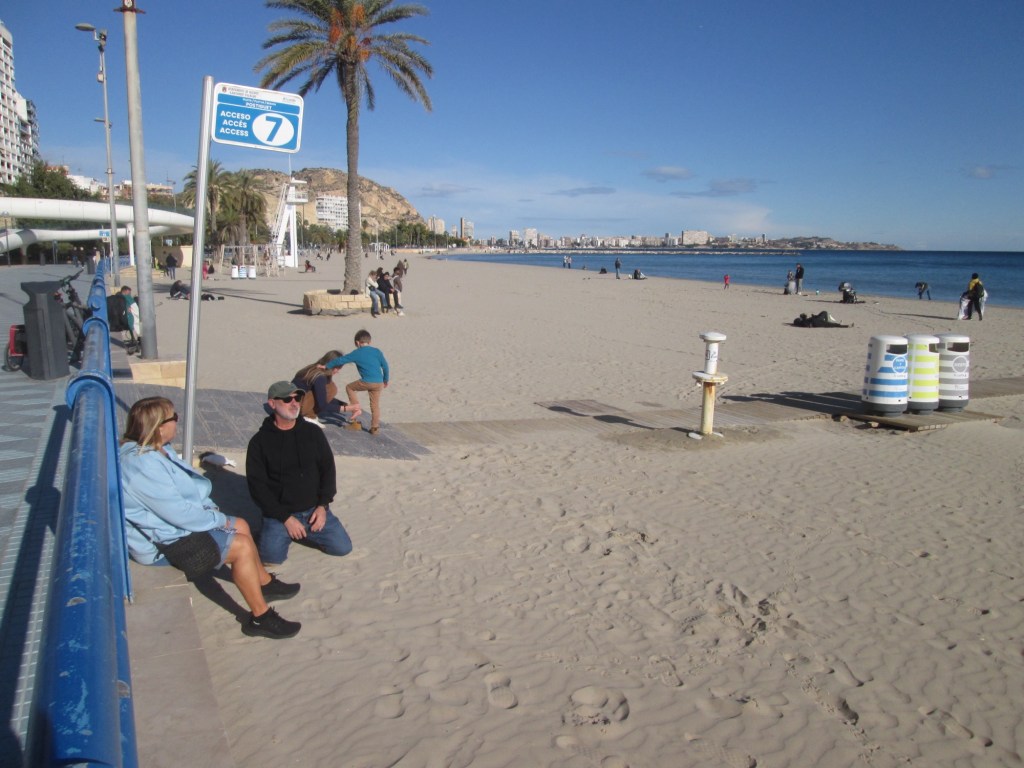
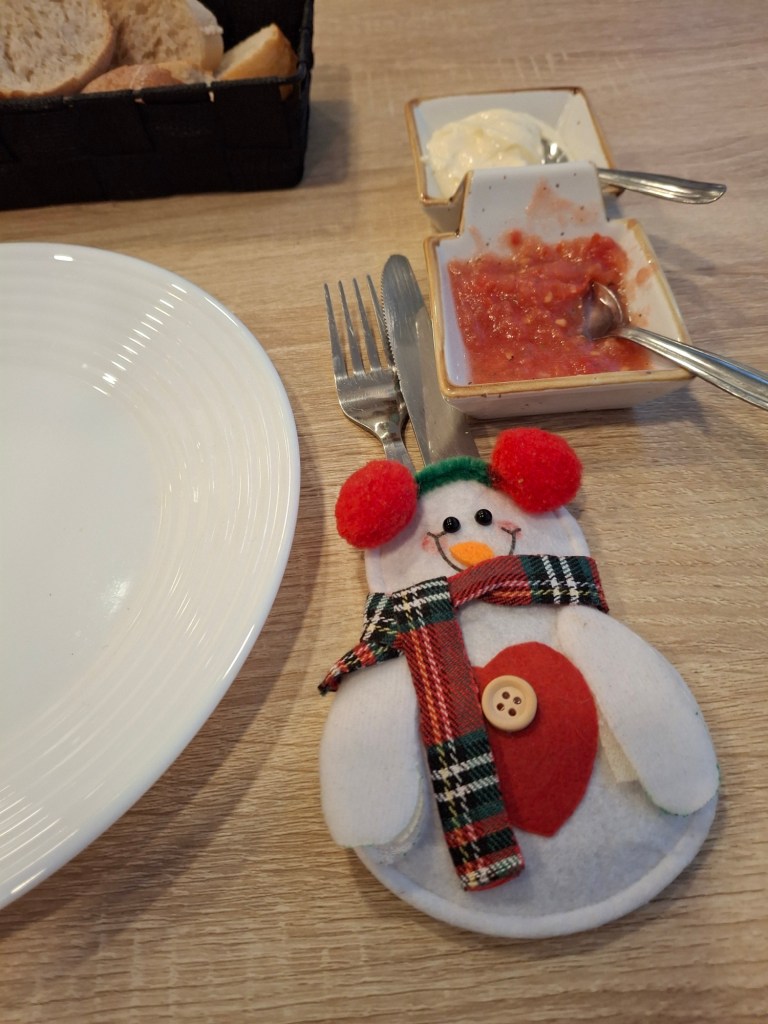
After a further wait for the lift – I’d done enough slithery downward slopes for my age – I went to the city’s central beach, El Postiguet, and wandered along the northern promenade in search of lunch. There were lots of beachfront places that looked both full and expensive. In the streets just behind I found a super little bar that had and excellent aubergine with mince and melted cheese – perfect. As further proof of Christmas madness my cutlery came in a snowman!
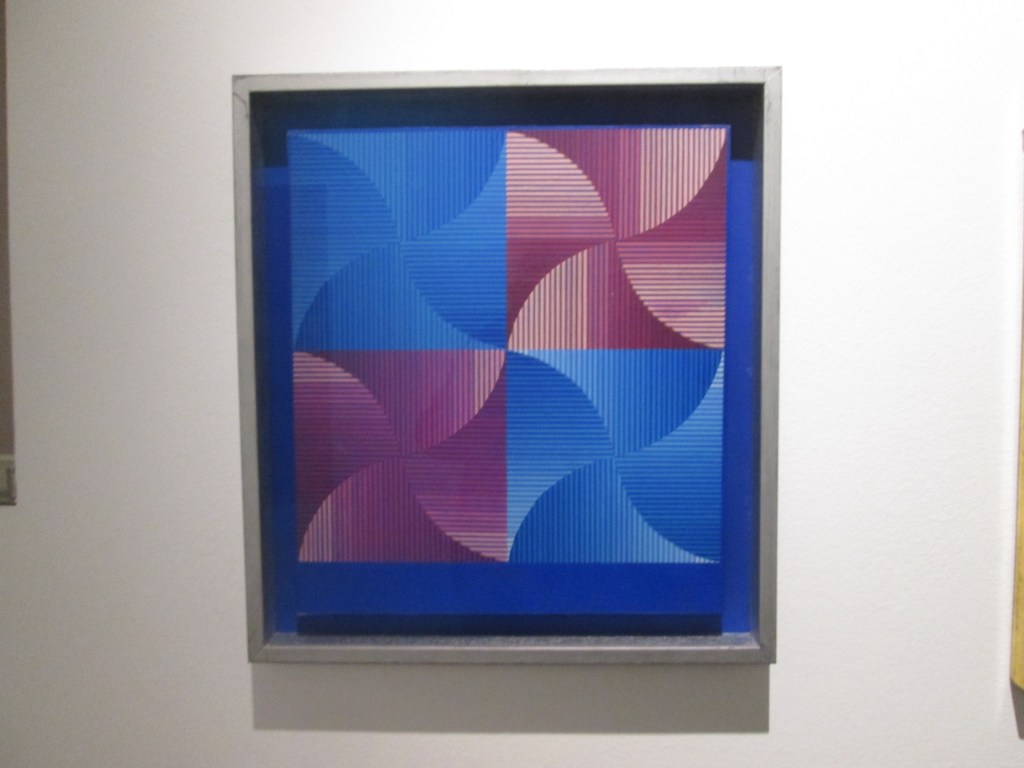
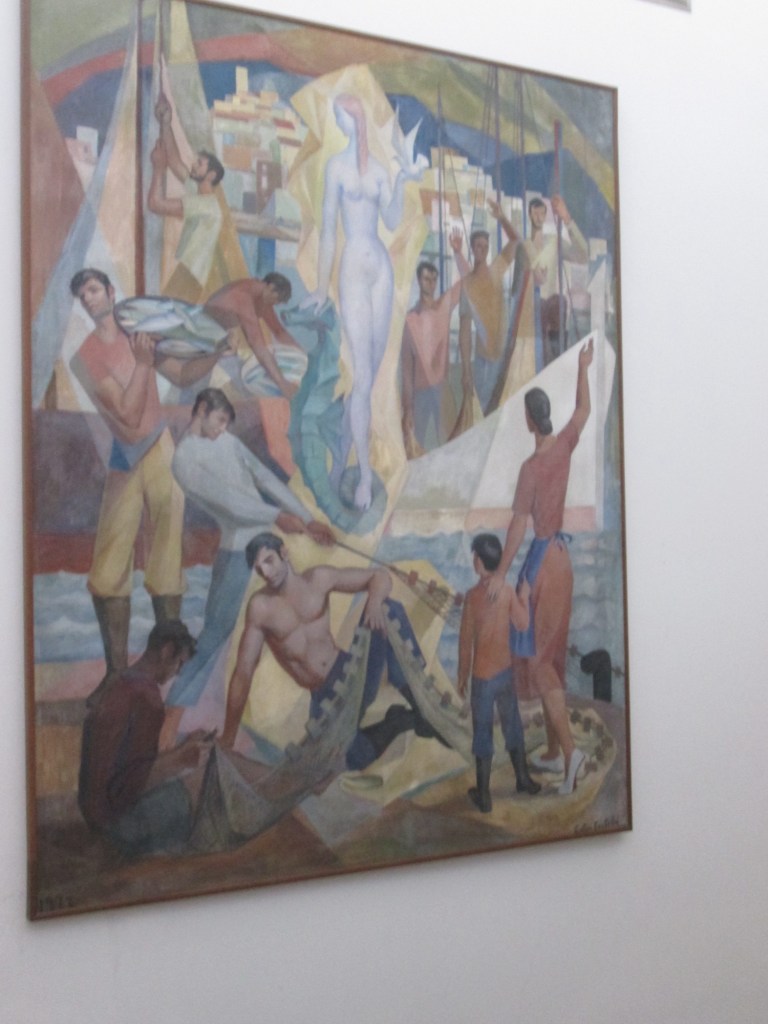
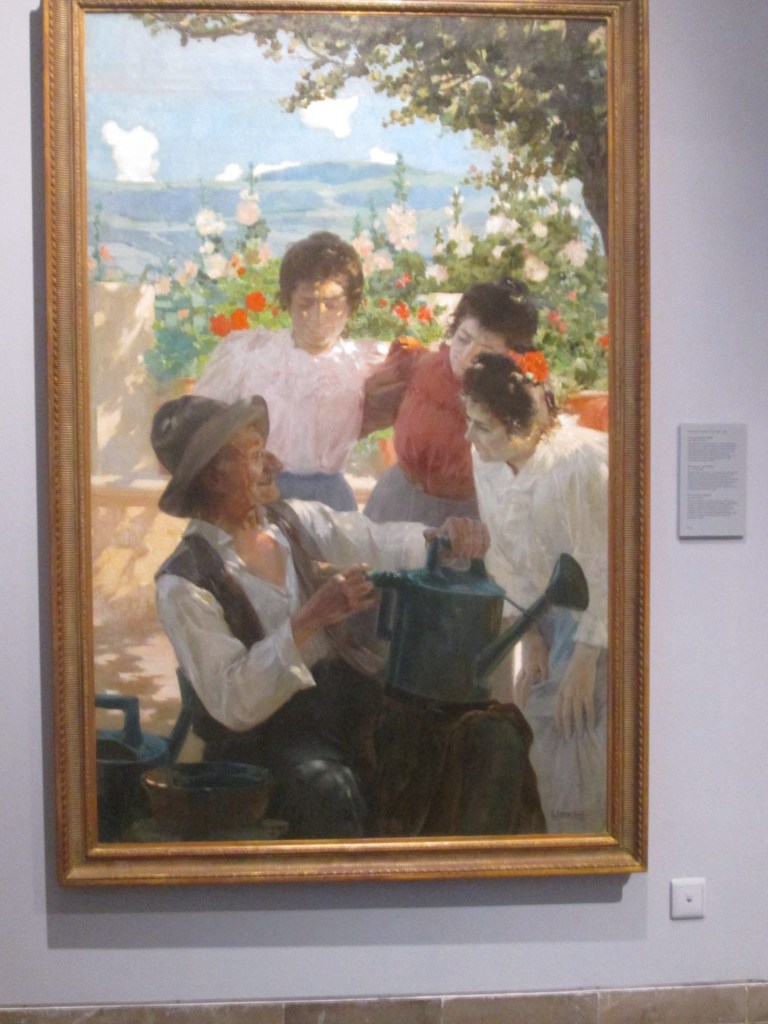
Right along the street was MUBAG the Museo de Belles Artes Gravina which had been on my list of places to visit. It had an exhibition of Spanish Romantic art and at my first entrance with a red corridor made me think I was in the Dulwich Picture Gallery. It had some interesting portraits and some more modern pieces, among them a couple by Eusebio Sempere of whom my neighbour Maria owns some originals. I like his abstracts with emotion.
SempereA staircase muralRealismDulwich?
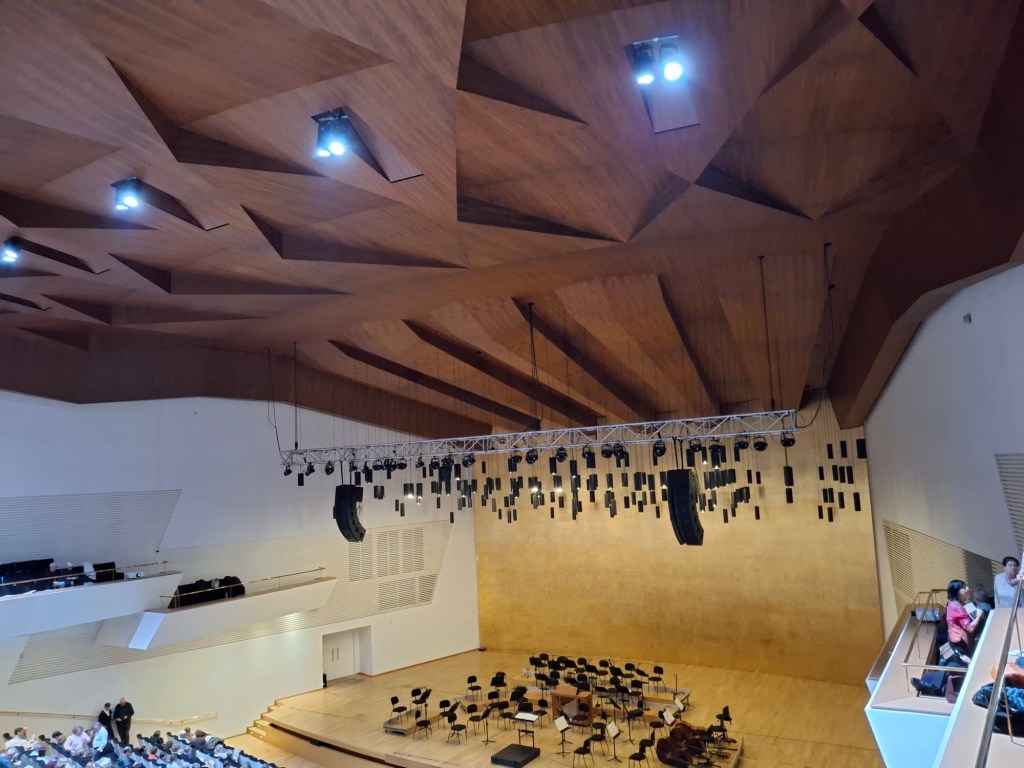
I decided to smarten up for the concert – trousers not jeans, a shirt not T and a jacket – so I called back at the hotel to change. Then more steps up to the Auditorio a rather splendid 2011 addition to Alicante’s cultural spaces. It’s a pleasant hall with a cedar wood ceiling that spoke triangles and coffins to me.
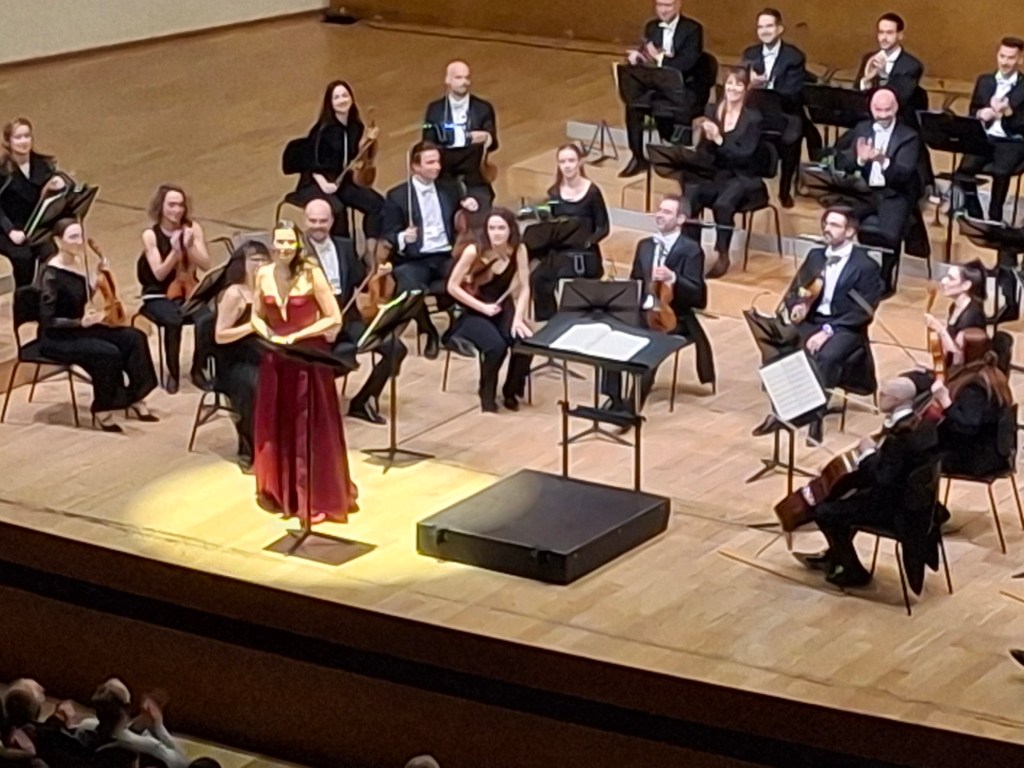
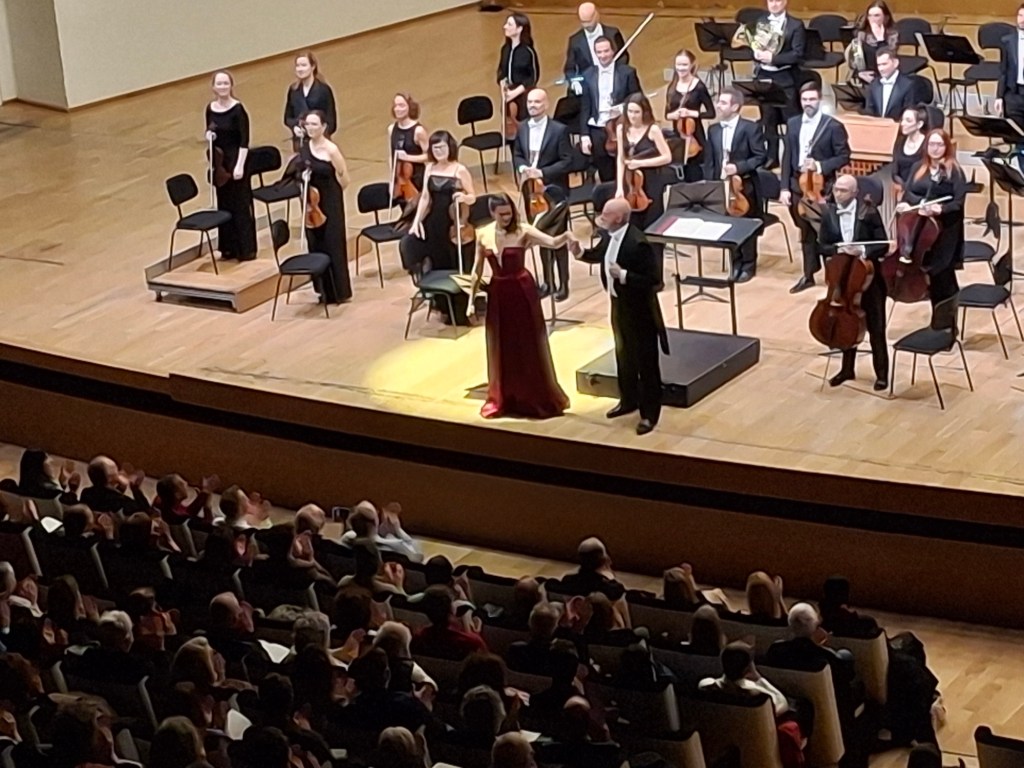
Then the concert began with Haydn’s Berenice cantata which featured the main reason I’d booked for this; Roberta Mameli an Italian soprano who I first came to love through a fusion album Round M – Monteverdi meets jazz which I heartily recommend. Claudio’s notes sung as written with a jazz accompaniment – brilliant! But she also has a superb voice with range and power which were further displayed in Mozart’s Exultate, Jubilate, the seventeen year old prodigy’s challenge to his favourite castrato. Roberta managed it with flourish and style and the orchestra under the baton of Ruben Jais supported her well and also did a symphony each from Haydn (49) and Mozart (25) with some panache.
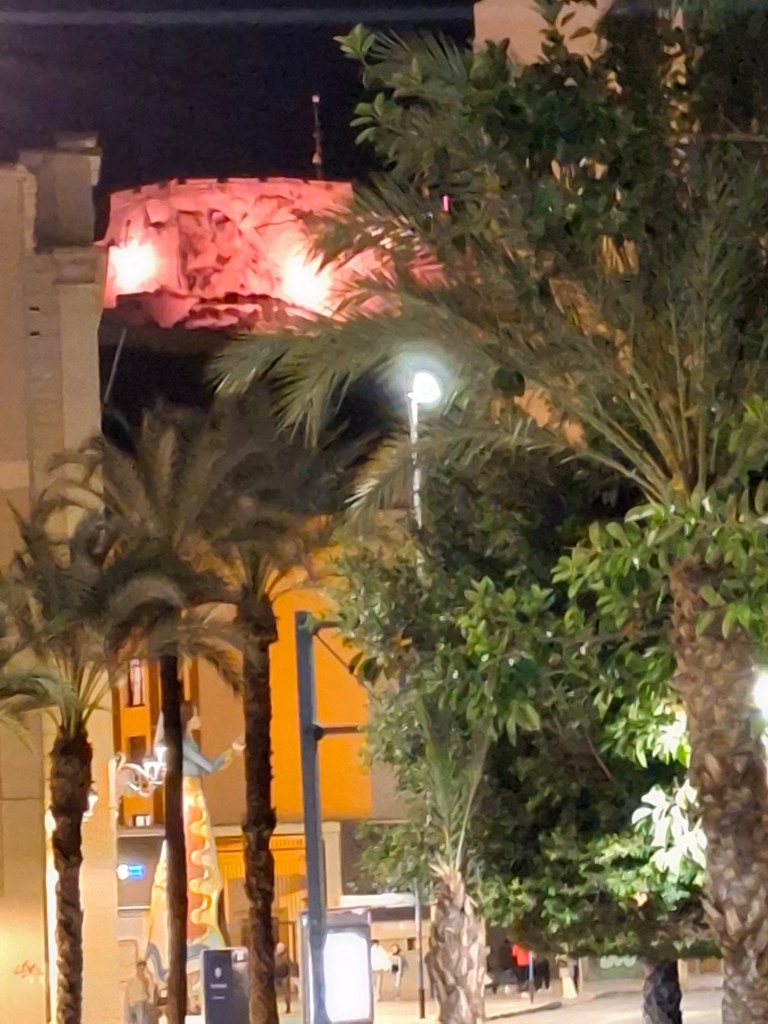
I left the concert very happy but concerned about finding somewhere to eat – we’re not in Madrid after all. The illuminated castle through the pines reminded me of a rather wild day. I needn’t have worried as the restaurant De Oliver about three doors from my hotel provided a rare and tasty steak, a good Rioja and a farewell whisky on the house. I may well be back!
Les Bonnes by Jean Genet was one of the plays I read at university in the 60s and I’d seen the film version with Glenda Jackson, Susannah York and Vivien Merchant a decade later, so it was with great anticipation that I went with Frances to see what Kip Williams would make of it. After last year’s Picture of Dorian Gray with Sarah Snook we expected screens to play a part. And they did. And how! The filmy curtains initial framing the set gave us the feeling of trangressively entering madame’s boudoir and then the fun began. The role-playing maids of the title act out fantasies of dominating and eventually killing their disdainful mistress.
Quite how the actors managed to use their cameras and select filters to produce the effects on the screens that dominated the background, I’ll never know. Emotional performance while managing tech – the demands are high on acting skills these days! Phia Saban and Lydia Wilson met them with apparent ease. Yerin Ha was a little too camp and age-adjacent for my taste as the draconian madame but it was a great evening’s entertainment. With Kip Williams you learn to accept that things will change – it was billed as ‘a version’ after all.
Before going to the Donmar, I had been to the Dulwich Picture Gallery with Jadwiga to see the exhibition devoted to Anne Ancher, a Danish painter I confess I’d never heard of. Living all her life in the town of Skagen at the extreme northern point of Denmark she was devoted to capturing light in the landscape but especially in portraits and interiors where there were hints of the influence of Vermeer in the lighting effects. She died in her seventies in 1935 and the paintings cover most of her long life. The exhibition runs till March 2026 and is highly recommended not just by me – it got 5 stars in The Guardian.
Next up was a group outing with Frances, Farzana, Richard and me to see Assembled Parties at Hampstead. It’s a blackish comedy written by Richard Greenberg and was a great hit on Broadway in 2013. Set two decades apart in the same apartment of screen star Julie, we find a Jewish family celebrating Christmas with assorted relatives, friends and others. In Act 2 Julie is widowed and has a feel of a Norma Desmond who life has passed by and only survives in her rather less opulent surrounding by the invisible support of others.
Among these is her sister-in-law Faye, superbly played by Tracey-Ann Oberman in scintillating form who gets the best lines and attitude. We all found Julie, as played by Jennifer Westfeldt a little unconvincing but the poignancy of the reduced means and expectations of a once proud family showed through the many laughs that the script also gave us.
Talking of metamorpheses, how do you make a 500+ page 2004 Booker prize-winning novel into a two hour stage play? Fran and I had been to an Almeida insight session earlier at which the answers were clear – get an ace adaptor in Jack Holden and a great director in Michael Grandage. The resulting script clearly had to leave a lot out for those of us familiar with The Line of Beauty, but author Alan Hollinghurst had been involved throughout and the evening gave us a good account of the early days of Thatcherism, the gay scene in the 80s with the spectre of Aids and the class system in full flow. And it did contain some very explicit scenes of sex and drug taking that were so much a part of the source. The lessons of a dangerous era seem not to have been learned – the wealth and class gap is ever wider, tolerance of ‘otherness’ is at a very low ebb again and politics and politicians remain completely out of touch with everyman.
And follow that with another great challenge. How do you bring “one of the most important English-language poems of the 20th century” to the stage? Adrian Dunbar has produced and directed a staging of T S Eliot’s The Waste Land. There’s the full text of the 434 lines of the poem spoken by four actors but it’s interspersed with music by Nick Roth for a jazz quintet and the Guildhall Session Orchestra conducted by John Harle. Added to this melange was some of the earliest colour footage of London which evoked and echoed Eliot’s words about his adopted city such as “Under the brown fog of a winter dawn / A crowd flowed over London Bridge, so many / I had not thought death had undone so many.” Hearing Eliot’s complex work recited added greatly to my appreciation of it. The music was an interesting complement, never overlapping with the text and the footage was just stunning. A fascinating hour in the Queen Elizabeth Hall.
I was up bright and early the next morning to drive down to Hatchlands House near Guildford for one of the Orchestra of the Age of Enlightenment’s periodic Friends’ excursions. The house contains the Cobbe Collection which has a staggering array of keyboard instruments owned and played by some of the great composers among them Purcell, Johann Christian Bach, Mozart, Haydn, Beethoven, Chopin, Mahler and Elgar as well as the piano that Napoleon gave to Josephine. We were conducted through this historical tour by the OAE’s principal keyboard player Steven Devine with added insights from the eponymous collector Alec Cobbe, a little jet lagged after flying in from Ireland that morning. Their shared knowledge and Steven’s keyboard artistry made for an engaging trip and added substantially to my own musical education.
Steven with a 1580 virginalsA clavichord from 1750Playing Chopin’s pianoA Walter fortepiano – we shall see its like again.
I travelled back in good time to join Frances, Farzana and Richard for a trip to the Pinter Theatre to see the revival of Conor McPherson’s The Weir. Timing was such that we were able to have a pre-theatre dinner in the wonderful Yoshino. Lisa was her usual welcoming self and managed to feed us elegantly as well as the late-arriving Farzana (thoughtless colleagues on Zoom calls!) with food that delighted her on her first visit before we all set off.
It’s a play I’ve seen before – nothing happens in a rural Irish pub, but everything happens in the minds, interplay and scary stories of the four male locals and the incomer Valerie. With Brendan Gleeson and Sean McGinley in the cast it was a super evening of witty dialogue, hidden back stories and brooding atmosphere. Lots of Guinness and scathing references to Harp drinkers – remember Harp?
23 years ago I filmed a studio interview and a gig at the Cavern Club in Liverpool with a young indie singer songwriter Ian Prowse. It was part of a language teaching video series for teenagers in Europe that we did in a yoof magaziney style. Dee and I loved his music and attitude and we remain friends after all this time. So on Saturday I set off for the Half Moon in Putney for a set from his current band Amsterdam. Frances joined me at the pub hot foot from Derby where she’d seen Watford’s first away win for eight months! I settled for the TV experience and was glad I’d conserved my energies as the evening was an all singing all dancing show with the band on top form – standin’ and boppin’ for two hours takes it out of us old uns!
Ian in 2002 (still from VHS!)Amsterdam in 2025
The next day Frances and I and Farzana went to a new venue in London that led to another incredible evening – this time of multi-influenced jazz. HERE at Outernet is beside Centre Point and Tottenham Court Road Station. It’s deep in the basement but we weren’t bothered by noise from the tube. We were enthralled by a brilliant set from Nubya Garcia and her band. Anyone who has read my blogs knows I am a huge fan, following her from her early days in Lewisham pubs. This set – mostly songs from her latest album Odyssey – was supported by visuals on the giant screen at the back of the stage. Nubya herself was in great form with her mix of musical cultures inflecting her music, but with some lovely old school touches like references to My Funny Valentine and other classics in her solos. This lady does jazz. An ever-present in her line up over the years has been Sam Jones on drums. What is it about drummers called Jones? Jo held Count Basie’s band together, Philly Joe was Miles’ and Bill Evans’s favourite, Elvin was inseparable from Coltrane and now there’s this guy Sam whose propulsive and imaginative work takes the band into the stratosphere. Farzana and Fran had to put up with me hustling one of Nubya’s former managers as I’ve quoted Nubya in a pitch for BBPC to the Deptford Literary Festival next year. (I later got her blessing so forgive me!) What a night!
NubyaThe band Kyle, Nubya, Max and SamSam JonesNubya enjoying Sam’s solo
Next up was a theatre road trip. Fatherland by the precocious Nancy Farino who also starred in it, is a journey of discovery between an ominously named father, Winston Smith, and his daughter Joy in a converted school bus to County Mayo to discover some newly discovered heritage. Car seats on wheels and lighting effects neatly deliver the bus to the stage. There’s a great deal of barbed and bitchy banter among the deeper affection and interpolated scenes with father and a solicitor indicate that Winston’s life coaching practice has led to a suicide for which he’s being sued. Joy also lets us into her mind world of fears and fantasies. Nancy Farino has come through the Hampstead Theatre’s Inspire programme. More power to it if it continues to produce work of this quality.
Work of high quality was a trademark for Josef Hadyn. The OAE had been touring a programme of symphonies and a piano concerto through Germany, Switzerland and Italy with Sir Andras Schiff at the keyboard and as conductor (I nearly wrote with the baton but his hands are expressive enough). The did a concert in Udine and I had to wonder whether any of the Pozzo family attended – the Pozzos own both Udinese and Watford football clubs. The last date on this tour was at the Queen Elizabeth Hall.
I like Haydn’s rhythmic impulse, his unpredcitability and his sense of fun and the two symphonies – one from his early period No 39 at the Esterhaza Court and No 102 from his prime in London showed real development of style and technique and were a joy to listen to as was Sir Andras’ performance of the concerto No 11 played on a Walter fortepiano just like one we’d seen at the Cobbe Collection a few days earlier.
Another busy month concluded with BBPC’s last bimonthly poetry meet up of the year at the Whitechapel Gallery which took the form of a review of the year’s activities and an open mic session for a dozen poets to share their own work or read from their favourite poets.
Many of us then went to the nearby Altab Ali Park for the launch of this year’s bijoyphool. This is the Bengali victory flower which has evolved from the British Remembrance Day poppy.
The green and red flower is worn for the first two weeks of December and commemorates the Bengali language wars of 1952, the war of independence of 1971 and the countless citizens who died in them and since. Three of the freedom fighters from the latter war were present in front of a replica of the Shahad Minar matryrs’ memorial in Dhaka. It was a privilege to be asked to say a few words for the local TV chanel about what it meant to be there at this moving ceremony.
The final event of this year’s Season of Bangla Drama was a play Joyontika produced by Trio Arts about post partum depression, a topic little discussed in the community but which affects many women. It was a mixture of drama, dance and polemic with some interesting technical tropes and delivered a powerful message. I was able to catch up with a few friends and indulge in some super spicy biryani to conclude a successful Season – delivered this year with no funding from the Arts Council. All hail to the indefatigable Kazi Ruksana Begum the Arts Development Officer for Tower Hamlets for bringing it all together.
On Monday I went with Frances to see Eugene Ionesco’s Rhinoceros at the Almeida Theatre. I’d read this in French as part of my studies at UCL back in the 60s, when we’d complained that the reading list was too classical and old-French oriented. The Theatre of the Absurd struck a chord with the young and foolish me and I even directed a production of fellow-absurdist Alfred Jarry’s Ubu sur la Butte in the Lycee Francais annual drama compettiton for London college French departments. We got the best actor award. The core of Rhinoceros was still there with its warning about totalitarianism embodied in the metaphor of the residents of a small town in France turning into rhinoceroses. But the adaptation with audience participation conducted by Paul Hunter though elaborate hand gestures and claps and rhinoceros roars with kazoos made it a very different spectacle. Translated and directed by Omar Elerian – he also did a great version of Ionesco’s The Chairs here a couple of years back – it incorporated humour, menace, slapstick and some cod metaphysical discussions and an interpolated song sequence in Italian by love-object Daisy sung brilliantly by Anoushka Lucas with back projected slogan “What do you want meaning for?” The playing for laughs may have detracted a little from Ionesco’s warnings of extremism but it was a fun night in the theatre.
Anoushka Lucas as Daisy and Sope Dirisu as Berenger in Rhinoceros.
Imagine my shock on Tuesday morning when The Guardian had the following headline. I had to send it to warn Frances in case they’d escaped from the theatre and were invading Islington and Tufnell Park.
Life really does imitate art
I’d been meaning to go to the Dulwich Picture Gallery to see the Tirzah Garwood exhibition for some time and now I had a chance. As with so many women artists I knew of her mainly as the wife of Eric Ravilious whose work I had always liked. Their artist enclave at Great Bardfield in Essex with Edward and Charlotte Bawden is well documented but I was delighted to find out more about Tirzah who admitted that managing the family and the household had interfered with her own artistic development.
And what an artist she was in so many media and despite all the household wrangling! She started out as a talented maker of woodcuts – and many know of my love of a print – and with Charlotte Bawden she established a reputation for marbling paper – all the rage for lampshades and book endpapers in the pre-war years. The exhibition features embrodery, a quilt, wood engravings and some model village collages in box frames which were inventive and charming. Finally she was able to turn to oil painting at which she adopted a somewhat naive style with surprising elements like the trees in the Photo Shoot below made with prints from gathered leaves. It’s well worth a visit and is on till 26 May. It’s also very funny – she obviously had a great sense of humour. That’s her in the train compartment.
Huge variety of textures in a woodblock printBaker’s shop box collageThe photo shoot with leaf prints
Thursday evening sees me join Frances again, this time at the Kiln Theatre in Kilburn to see Shanghai Dolls a new play by Amy Ng. The dolls of the title are two influential characters in Chinese history: Jiang Qing who as Mme Mao is generally regarded as the architect of the disastrous Cultural Revolution; and Sun Weishi who was the adopted daughter of Mao’s arch rival Chou En Lai and became China’s first female theatre director. Before the play we were able to introduce a friend who has recently moved to the area and her daughters to the Kiln which we hope will become a useful cultural hub for them – teenage eyes widened at the thought of £5 cinema tickets! I enjoyed the play very much despite some slightly melodramatic delivery from time to time., But it brought back some distant memories. I was in China in 1981 as part of a lecture and workshop visit when I worked for the Inner London Education Authority. This was five years after the end of the Cultural Revolution but we saw the effect it had had on artists with hands wrecked by rural toil, writers’ spirits broken through lack of books. Several people – including our interpreter Sho-jian asking if I could marry her so she could get out of China – were adamant that the movement had been an utter failure, but were still not willing to talk about it openly, only when we found quiet unmonitored corners.
People were keen to practice their English with us in Beijing in 1981
I had tickets for a Wigmore Hall concert on Saturday but thanks to a recommendation from Frances I went first of all to the Royal Academy of Arts to see the Brasil! Brasil! The Birth of Modernism exhibition. Good call Fran! The last time a major exhibition of Brazilian art was held in London was at the RA in 1944 – I didn’t go as I was one. The show featured ten different artists who had had an influence on mid twentieth century art movements in Brazil. Sadly it closes on 21 April but you can get a flavour here. Many of the artists had studied in Europe but most had a very distinctive local feel featuring indigenous characters and local traditions. Given that some of our friends are members of Morris sides, I liked the Brazilian equivalent.
Lasar Segal Boy with geckoCândido Portinari Coffee Plantation worker Flavio de Carvalho Portrait of Murilo Mendes Djanira da Motta e Silva Marrapaia Dance, Pariti
With time in hand I sauntered up Bond Street towards the Wigmore Hall and with sunny skies, warm weather I looked up and saw something i’d never noticed before. On the Time-Life Building half way up is a screen by Henry Moore from 1952. It’s appaerntly a very rare example of work of this kind in that he could sculpt both sides. I’ve walked along Bond Street many times but to my shame had never noticed it before.
And when I turned round from snapping one surprise, I got another. The Halcyon Gallery where I recently reported my surprise at Bob Dylan’s paintings, there’s a superb array of Hockney works on paper. These range from the early lithographs of Celia Birtwell and Californian pools to recent iPad drawings in Yorkshire and Normandy. I need to win the lottery before I can go back as a customer but the staff are most obliging and informative if you just want to look. Then it was time to make for the original target of today’s outing after some unexpected delights along the way.
I met a young music composition student Zyggy de Somogyi a couple of years ago at a weekend in Oborne in Dorset and we’ve remained in touch. Indeed I asked Zyggy to write the music tracks for the series of videos we made to celebrate 100 Years at Vicarage Road for Watford Football Club in 2022. Basing his work on some fan chants I sent he matched the predominant sounds of the decades – ragtime, swing etc to drive the narratives along. I’m here today to listen to the world premieres of two of his works commissioned by the Royal Philharmonic Society Composers Programme which gives young musiciians space to develop. Ten years ago Dani Howard was on the same programme and I met her at the same weekend in Dorset – small world.
Zyggy introducing the first work Music for the quarter life crisis Etude for synth. This was a solo work for Xiaowen Shang. It opened with dramatic synthesiser notes and segued into lyrical passages. Then recurring motifs transferred from the synth to an almost orchestral piano sequence. The playing was emotionally powerful and was rapturously received by a fair sized audience for Easter Saturday at lunch time for an all contemporary music gig.
Other pieces were a new work by Ashkan Layegh, a trio by Lowell Lieberman that showed off the skills of the group Temporal Harmonies Inc – Xiaowen on piano, Lydia Walquist on flute and Mikolaj Piszczorowicz on the cello, followed by Caroline Shaw’s wonderful In manus tuas is based on a motet by Thomas Tallis arranged for solo cello and Kaija Saariaho’s Mirrors for flute and cello. The concluding work was Zyggy’s second premiere IN THE EVENT THAT YOU STAY, This was written with the trio in mind and indeed with their collaboration. It’s in four movements which included drama, bombast, a peaceful second movement, a sense of progression and a finale which featured soft vocalising chanting of the title and eventually all members singing. It brought a lump to the throat. I was a very impressive work and I hope it enters the repertoire of contemporary chamber music.
Lydia, Xiaowen, Mikolaj, Zyggy and Ashkan taking a bow
I had a chance to meet with all the musicians in, and outside the Cock and Lion pub as well as several members of Zyggy’s family. His mum said she was pleasantly surprised with his compositions because there were tunes in his pieces which she thought he’d had knocked out of him at uni. “He used to write tunes,” she said “and then he didn’t.” There certainly were tunes and they were very professionally played. It was a real pleasure to listen to andf then spend time with these talented young musicians. Cuts notwithstanding, there’s great stuff going on out there.








 mikeandmurakami.com