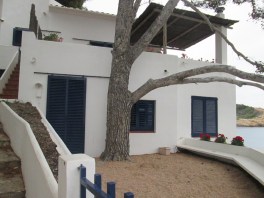
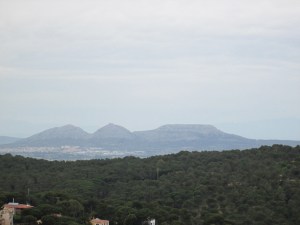
Spain from E to D

Saturday was the big drive day traversing Spain to the north of Madrid. I didn’t get to prepare brilliantly for it. I’d had a very good dinner on Friday in the parador, carrot (lovely word in Spanish zahanoria) and orange soup followed by oxtail in crispy filo parcels with grilled aubergine, courgettes and peppers. Having only eaten a breakfast croissant and some crisps with a beer all day I was peckish and this went down very nicely with a glass or two of Ramon Bilbao rioja. I went and illustrated the blog, posted it and began to feel a bit nauseous. Not common for me at all. It settled and I went to bed but couldn’t sleep for ages and just as I was drifting off a mosquito whined by. Lights on, magazine at the ready but I couldn’t spot it. Brain clicks on in my doziness – I packed jungle formula for down south but why not here too? So I spray myself liberally and pull a sheet over my head. Eventually I hear no more mozzie and drift off for what can only have been an hour before the people two rooms along from me decide it’s time to check out – who checks out at 4 am unless you’re in an airport hotel? They have noisy children, lots of luggage and take ages. Fitful dozing follows until deep sleep at I guess around 7 – not what’s needed with a long day’s drive ahead. So I spring awake at 8:15 in a panic and am out and on the road by 8:40 only a bit later than intended. Just for the record Tortosa to Zamora  by the non-toll route is 660 kilometres and I had wondered once or twice about the wisdom of doing it on my own.

E to D? Spain has two major rivers (well they might count the Quadalquivir in Andalusia too), the Ebro which flows east to the Mediterranean just downstream from Tortosa in the famous delta. The Duero flows west and becomes the Douro in Portugal before hitting the Atlantic – Zamora is the last major city on the Duero in Spain. I have once again selected the no toll road route – it’s also the shortest by 50 km. And it proved to be an oenological odyssey. It also gave me a theory about the colours of the Spanish flag – as they used to say on Beyond Our Ken and Round the Horne: “The answer lies in the soil”. Few of you will recall these but they were very funny radio shows. The soil is either pale golden yellow or deep red throughout my journey today. The wine route bit? I started in the denomination Terra Alta which includes yesterday’s winery where, as in Penedes the day before, the vines are showing lots of green leaf. As I cross from Catalunya into Aragon we enter Cariñena and on into Calatayud. Here there are a few shoots but the fields are mostly low black vines. Much of the rest of Aragon seems devoted to grain production with fields displaying 30 cm shoots in the most wonderful variety of greens. Whether they are different seeds or just different stages I didn’t stop to ask – in fact I didn’t stop apart for breakfast so no pictures for this section – I’ll have to paint them with words. These greens range from bright lime green like euphorbia flowers, through emerald and forest through to a dark steely bluish green. I really did want to stop because these greens against the newly ploughed bright red fields looked amazing and went on and on. Sadly, although there wasn’t much traffic on the N234, the sides have very steep run offs to discourage the practice of stopping. Then we popped into Castile y Leon and Ribera de Duero right next door to the Rioja where there was no hint of a shoot. We’d just gone through a pass at 1060 km above sea level so even spring is quite chilly up here. One day I will go to Peñafiel the heart of Ribera de Deuro which has a massive castle and loads of great looking bodegas dotted beside the excellent CL116 – a truly great drive – must have been made by the Romans. There are a few stretches of road which are designated A11 – Autovia del Duero but lots of  it has been started and looks like the money ran out. There are a lot of unfinished projects of all kinds that reflect the poor state of Spain’s economy but the ones the do finish are very impressive. Once into Valladolid province it’s all Rueda where the verdejo grapes produce their own fine wines and are shipped next door to make white riojas. Then once we cross into Zamora province it’s Toro made from its eponymous grape the vines of which are showing small shoots. Zamora of course also has its own DOC but I’m not sure I’ve tried it – maybe it would be rude not to.

I make it to the parador in time to set up the computer and listen to Watford at Leicester on Hornets Player but I have a premonition and the plethora of cafés in the sunny Plaza Mayor with the promise of a beer win out. I did keep an eye on the progress and was pleased to hear that the crowd were chanting Quique Sanchez Flores – oh that they would bring him back. Anyone but Mazzari next season please – no I don’t mean that. There’s a long list of managers we don’t want. 3-0 again conceding in extra time. Not good enough. IMG_2409

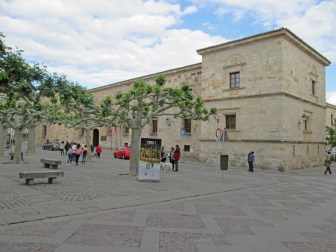
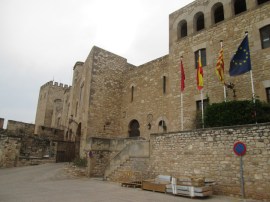
By the way this parador is not a castle but the palace of the Dukes of Alba and Aliste – quite impressive though.

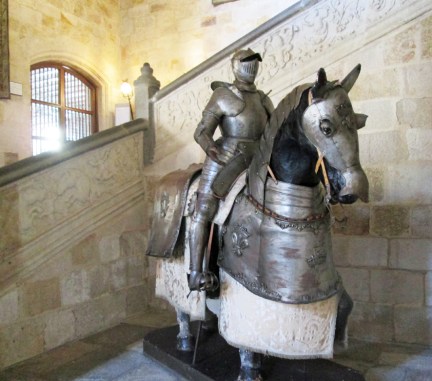
IMG_2408There’s a massive wedding on today so the normally elegant courtyard has an inflatable gonk bouncy castle. Well it keeps the kids out of the bar! Fortunately our favourite resident is still in place and I might take him for a ride around the ramparts tomorrow.
IMG_2404

Zamora is a beautiful Romanesque town with the largest concentration of churches in that style in Europe. 24 of them all built in the 12th and 13th centuries – so that’s tomorrow’s photo blog. It’s due to be 27° so it might be shorts and sandals and a gentle walk about. Or inside several of them for a cool moment.

IMG_7794Right next to the parador is the Teatro Ramos Carrion which was a ruined hulk last time we were here. It’s been restored, had a modern extension added and  created a new square with views over the Duero. It reopened to the public last year. There’s also another theme of these blogs that followed me to Zamora – the modernisme (oops that’s Catalan – modernismo) trail.

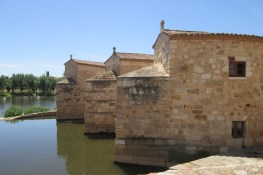
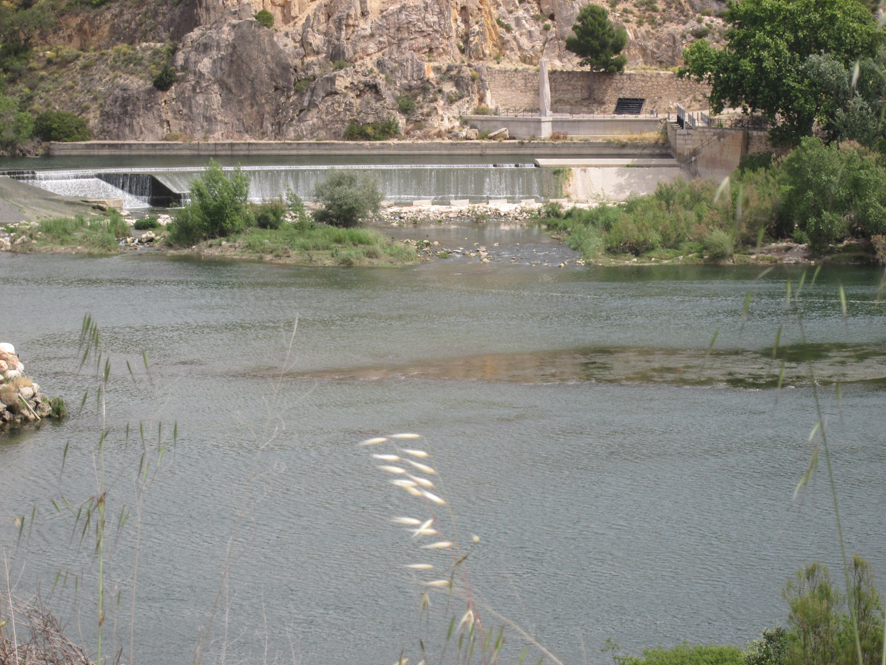
And given I ventured into hydrology on the Ebro in the last blog it’s worth noting that the Duero in Zamora also has a diagonal diverting weir to regulate the flow which you can spot along with the ruins of the first bridge dating from Roman times.

And now we’re out west another fascination for me is storks’ nests. They seem to like church towers in this shape (1) and it’s not often you get above one (2) at feeding time. This one (3) was just around the corner but they had to make do with the lower slopes of this glossy spire (4).

Zamora has one restaurant with a Michelin star and Dee and I dined here the last time we were here together celebrating our tenth wedding anniversary. Guess where I’m off to tonight!

Ebro and beyond

I always thought the Accu part of Accuweather was short for accurate or accuracy – not any more. It was one of those grey mornings that don’t encourage you to leap from your bed into enthusiastic activity. When I did venture onto the balcony it was windy and there was a hint of drizzle on the breeze. So bye-bye lazy day by the pool. One of the great things about paradors is they all have loads of corners where you can sit and knit, read, sew or paint according to your inclinations. However once I had made the effort I decided to drive up the Ebro valley for a bit towards a place we had visited before – the so-called Cathedral of Wine – a modernist masterpiece in Pinell de Brai. There might be a theme emerging here! First however I detoured into Xerta which lies right on the banks of the Ebro and its clever canal. I parked and sat down in the main square for a coffee and the sun came out. Coffee done my jacket went back into the car as it was already 20° at 11:30 and I’m only 10 Km up river from Tortosa which still looks cloudy. It’s a typical old medieval village with one exception to the norm. Being on the river bank it’s flat whereas all the other villages I went to today are built on the top of extremely steep hills – ooh my calves!

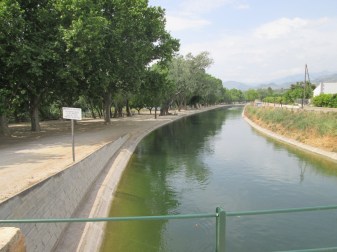
IMG_2354The river bank walk reminded me very much of a similar stroll also beside the Ebro but way west in Haro in the Rioja. Elegant wooden fences, plenty of places to sit and picnic and the interesting contrast of the slow-moving Ebro and the rushing canal.IMG_2355
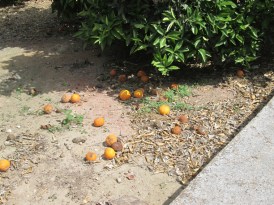
IMG_2358As I walked back through the village there was evidence that the citrus season is all but over although I did see another septuagenarian scrumping a few remaining oranges – to be fair he may have been legit. I didn’t like to ask. On my perambulations through the narrow streets I concluded that a third of the population was over 70, a third pregnant and the other third at work or in school. Back in the main square I discovered the reasons for the canal.
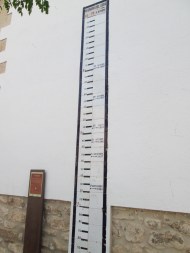
IMG_2352This marker up the side of the church shows the level of the floods – it’s ten metres at the top – that used to devastate the whole area because of the unpredictability of the flow in different seasons. So in 1857 they built a diagonal dam across the river – some evidence points to a much earlier Moorish effort to control the river – which siphoned large amounts into the canal which is used to supply towns and villages and irrigate the fertile lands of the area. A hydroelectric plant followed in 2002 so the waters of the Ebro are put to good effect.
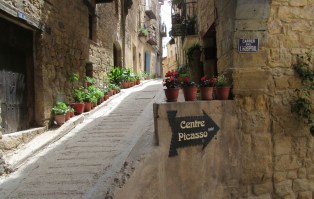
IMG_2360That’s my history quota for the day so I set off for culture. The town of Horta de San Joan has a Picasso Cubism Centre so I think I’ll pay a visit. On the way I get diverted by an amazing mountain rock formation. This one is in the Natural Park of Els Ports and it made me think how, wherever you go in this amazing country, you’re a never far away from mountains with amazing outcrops. This one is known as the Dog’s Head and, of course, The Castle. I think the dog’s a spaniel given its long ears – maybe a setter. But as I looked at them I remembered the mountains at Montserrat far north from here and those of El Torcal hundreds of miles south near Antequera all with amazing shapes. Fabulous!


IMG_2369On the way I have an opportunity to snap one of the roundabouts I obsessed about the other day and a sign that I thought would amuse any of the IT buffs out there with its nifty digitalism. IMG_2374


IMG_2364Of course after parking up and mounting the steps and steeps to Horta de San Joan I discover that the Picasso place only opens on Saturdays and Sundays – rubbish planning again. It also seems only to have reproductions and photographs of the mates he spent time with in Horta – might have been quite interesting but not essential, I think. After all that effort there was an attractive square with a bar with a beer with my name on. It was lunch time for the workers who are destroying the town centre before rebuilding it and they are all playing cards – quite competitively I would say.IMG_2368

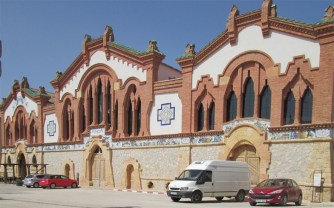
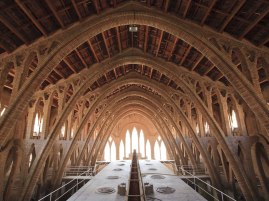
On I go with a brief stop in Gandesa to El Pinell de Brai and the Cathedral of Wine. Designed by César Martinell, a follower of Gaudi, it opened in 1917 and has elements in common with yesterday’s winery at San Sadurni. There’s a lovely ceramic tile frieze showing the wine making process. Sadly since we were there before it has now opened a Michelin starred restaurant but it’s only open on Saturdays and Sundays – poor planning again. Totally inadequate prior research I’d say. For me the amazing brickwork of the vaults inside and the windows that look like wine bottles to me are pure mastery of form and function. And the way the modernists use light is brilliant. Glad a made a return visit.

IMG_2383.jpg  visita-tast-vins-celler-pinell

I also walked up to the top of the village up streets so steep they reminded me of a trip to Zahara de la Sierra in Cadiz province where we and the locals traversed diagonally from side to side in order to make it up vertiginous slopes. It also gave me an insight into how quickly and recently Spain has modernised. This municipal water supply was only turned off in 1998 when piped water was made available to the whole village.

IMG_2385  IMG_2384

Back to Tortosa and back into the gloom – warm gloom it has to be said and a wander through its excellent central park and splendid market hall – a pre-modernist architect making great play with light again (some dispute about who actually designed it) – and past a poster that told me the medieval festival  – Renaissance I stand corrected – happens every year in July – probably won’t make it back this year though.

Heading south

Breakfast and packing accomplished, the SatNav lady asked me politely if I wanted to avoid toll roads. I’m in no rush, many motorways are boring so I elected to avoid them. There were a few tricky sections on the NII south from Girona as they convert it into an autovia – the A2. I’m not sure how that will go down as it’s pretty well parallel to the AP7 in which the P stands for Peatge or pay. It’s a commercially operated 900 kilometre toll road that goes the length of the Spanish Mediterranean coast from the French border to Vera in Andalusia. Now there are already free to use sections around the major cities as part of the deal between government and contractors but it’s an interesting point here.

It then heads off to the coast and I have wonderful sea views and holiday apartment blocks all the way down to Mataro where we cut inland to bypass Barcelona to the west, passing the Circuit de Catalunya where the Spanish Grand Prix will be held a week on Sunday. I’m very glad at this point that she seems to know where she’s going because there are some sections that would have had me asking my navigator to reach for the atlas. However we pop out the other side of Barcelona with signs to Tarragona which is good since I know that’s on the way. Much of my route is on the N340 which must be incredibly long as I’m at kilometres in the 1100s. I later confirm that it’s the old Roman Via Augusta and starts in Cadiz and goes to Barcelona. 375px-Spain.Catalonia.Roda.de.Bara.Arc.BeraIts Roman nature explained an odd bifurcation of a twin track section round a stone archway the Arc de Bera – I couldn’t stop but, thanks to Wikimedia Commons, I can show you what I saw. It was a sunny day, progress was good until a saw a signpost for San Sadurni d’Anoia. I don’t know how many of you are familiar with the town but I’ve read it on lots of bottles of cava. San Sadurni is the capital of cava so a diversion seems essential.

It is situated among field after field of very neat low level vines – I later learn that the spring pruning restricts each wine to two branches to increase quality at the expense of volume. As I enter the town the first winery I happen across is Juve y Camps the cava we enjoyed at Martin Berasategui’s last August. Sadly they only do tours by prior arrangement both here and at their winery at Espiells out in the fields. Maybe one year there might be a cava winery tour like the excellent Bilbao and Rioja one a few years back. However the best known and marketed of the cavas, Freixenet, did have a tour about to start so what was I to do? There’s a fine building dating from 1914 and then a huge new factory stretching off into the distance. One good thing is that it’s right next to the railway station so if you are in Barcelona and fancy a cava tour you can do it easily by train.

There was a good introductory video, much of the content of which our guide repeated. With vines destroyed by phylloxera, a couple of families, Ferrer and Sala decided to plant new vines and make a different kind of wine. The Ferrer’s farm was called La Freixenera so a brand was born. They used the methode champenoise but couldn’t call it champagne because of DOC rules. So because the wine was stored in ancient deep caves in the hillsides they called it cava. Freixenet was founded in 1914 and the king and queen came to mark their centenary three years ago. The tour takes in the original barrel hall and caves with racks of bottles for hand turning in the traditional style. However most of their production is now totally mechanised in the new factory building.

In my group I was good at naming the three grapes used in most cavas – perellada, x-arello and macabeo – too much time reading labels! But I failed miserably when it came to guessing their output in bottles per year. I thought millions because they are big. I guessed 10. The answer is a staggering 80 million bottles a year most of which go to Germany and the UK. After plunging to the depths of the cellars we were then conducted on a little train – spared a lot of up on this occasion – back to the tasting room. The Brut Nature was to my taste – very dry but with lots of fruit – but only one as I had to drive. IMG_2321I was tempted to continue my journey in this but security wouldn’t let me near it.
IMG_2338


So onwards to Tortosa and my next castle – a proper fortress this one. It’s 200 feet above the town – fine in the car with some good brake and clutch control but later on foot – that’s a lot of steps and all up. Some of my readers don’t do up and I think I might abandon it soon. Boy did the ticker pump! Yes, I know it’s good for me! When Dee and I first (and last) came here, we checked in, had a swim and a shower, frocked up and walked down into town. It was and still is easy going down. We were amazed because everyone was dressed in medieval gear as part of a July fiesta. There were displays of contemporary crafts and I remember us spending a lot of time with a guy making chain mail – one craft I’m glad didn’t come home.

It’s quieter today but I have an explore, come across this beautiful modernisme example with fabulous plaster work and then trek back up and scribble this from my balcony with views of the mountains to one side and a courtyard with bouganvillaea and the Ebro to the other.

One thing has become clear – I love to travel and explore new places. It’s sad when I can’t share them immediately, but thanks for helping. Good weather promised again for tomorrow so it might just be a day by the pool and nothing to blog about. We’ll see.

Wednesday work out

This was the day I should have joined the competitive Fitbit brigade – a million steps and a hundred thousand stairs at least! There’s a story that Salvador Dali tried to buy this castle when he was trying to give his muse-wife Gala the ultimate gift. It’s a while since I’ve been to Pubol to see the Castell Gala-Dali – 2004 to be precise. I remember it being quite impressive with some outlandish Dali touches but I didn’t recall it as much of a castle. So off I set and was amazed to be directed into a massive outskirts car park – I remember parking on the road just around the corner last time. It transpires that it’s one of the most visited sites in Girona province and that includes his wonderfully mad museum in Figueres with its eggs on the roof, random sculptures and geodesic dome topping the lot. It’s well worth the return visit – especially the jungle of a garden with its fountain dedicated to Wagner – who was well represented in the record collection inside.

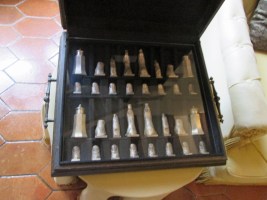
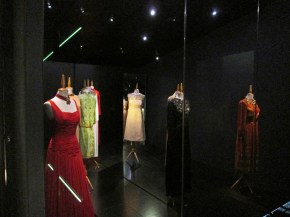
IMG_2265I also loved the chess set in the form of fingers which was Dali’s homage to Marcel Duchamp. In the attic is a great display of Gala’s sumptuous frock collection – it’s the era of frocks, OK.IMG_2271
And on the way out in a temporary exhibition space was a series of photographs of him in his home in Port Lligat taken by his good friend Ricardo Sans. Some are candid, some posed and some even double-exposed making a fascinating record of a period of their lives from 1949-1956.

He was a great artist to some and a complete charlatan to others – a bit of both for me as they are not mutually exclusive – but he had poor taste in castles. Basically a cheapskate when it came to buying battlements.

IMG_2312
Castell d’Emporda

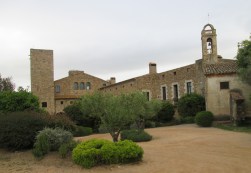
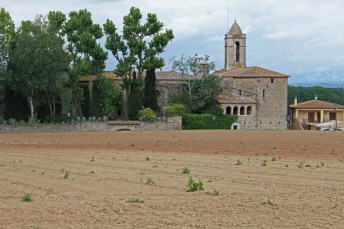
It is reported that when he bid for Castell d’Emporda, where I’m staying, he would only pay in artworks so the then owner declined. There was another one not far away in Foixa but he settled for the building in Pubol. He added some battlements in the garden but for me it’s a manor house not a castle. I had my first hike of the day up a hill and across a field to get a shot of it – church not part of the so-called castle estate.


IMG_7766

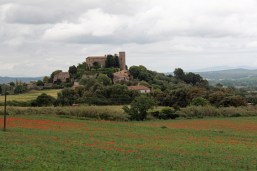
Castell Dali-Gala, Pubol and right a real castle at Foixa

I vaguely remembered the nearby castle so I set off over there and was not far from Toroella so popped in there to remedy yesterday’s lack of info.

IMG_7772


The morning was quite pleasant although thunderstorms were threatened so on my way back from Toroella I slid off down to Pals beach for a walk along the dunes. It’s a beautiful wide sandy beach that stretches for nearly 4 kilometres – I just did about one and then turned and came back. Going north you have a great view of the Islas Medes a protected area with brilliant diving opportunities.

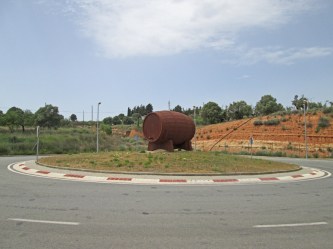
It brought back many happy memories – I think my daughter actually learned to swim here – and for once it hadn’t changed much because of sensible planning restrictions on green zoned land which does provide income from the rice from the renowned Moli de Pals. I suppose it was about twenty years ago when I drove back towards La Bisbal from Girona that I started to exclaim that there was never a roundabout there – with monotonous regularity. Well Catalunya has certainly fallen in love with roundabouts and has made many of them works of art – I might have to do a photo essay one of these days.

One of our running jokes (?) on those early trips was to chorus “One of these days I’m going …” whenever we saw this sign. It’s about how you pronounce it OK. And of course we did.

IMG_2294It is a romantic and beautiful cove (below right) but just as I was about to settle for a beer on the front the rain started. It was nearly time for lunch so I went up to another favourite spot the Faro de San Sebastian. As the drizzle grew stronger we needed the lighthouse to be pointing inland. Now that place had changed – a local bar/restaurant has become a posh hotel with lots of weddings and corporate meetings it seems. Well it’s a great location on a good day and at least comfortable for a snack out of the rain.
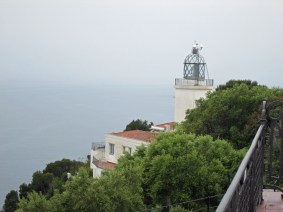
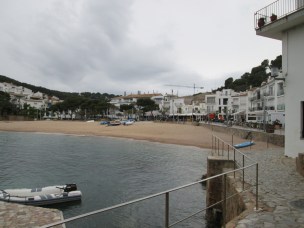
IMG_2288  IMG_2284

Nearby are two other lovely beaches Llafranc and Calella but I decided against them and drove off to the Cap Roig (Red Cape) Botanical Garden by which time the rain had kindly stopped. We’d been before but it’s been transformed into a real tourist attraction with brilliant labelling, wide paths and hundreds and hundreds of steps. The suggested circuit took me two hours and left me in a fine sweat and it’s on a cliff face so incredibly steep. A theme recurred even here – there’s a castle in the middle but it’s closed for refurbishment at the moment – another one Dali could have considered. They have a famous cactus array and you can see why it’s called the red cape.

Then back to the hotel to scribble and shower before going out to a highly recommended restaurant Bo.Tic in Corça just up the road. Then it’s on the road in the morning south to Tortosa where I’m staying in – you guessed it –  the Castell de la Suda which happens to be the location of the parador in that city.

However as tomorrow is mostly driving south, I might just talk about Bo.TiC. Bo is good in Catalan, T is the chef Antonio known as Tito and C is Cristina his wife and the lovely front of house. It’s posh, it’s not cheap and first Wednesday in May it’s empty except for me. The locals I talk to blame it on two or three cloudy days and people not coming out from Barca and Girona. However the service I get is off the scale – every one of the 15 dishes on the Menu Degustacion is explained in detail and it helps. Tito who I met later likes to have fun with food from the outset where what looks like an olive is in fact a fondant filled with anchovies and the sauce poured from an olive oil bottle is in fact vermouth. A great start to an astonishing evening which concluded with a dark chocolate pudding in the form of a set of dice – some squishy jellies, some crisp exteriors that crunched to a tasty interior. I got lucky with wine too. I wanted something from the Emporda but there were lots of those on an interesting iPad wine list, so I went for a red from Mas Oller in the village of Torrent which I had driven past for years on the road from the motorway to Begur. It was a syrah and garnacha mix and very tasty, not too heavy for the fish courses and good with the concluding lamb and went well with the chocolate too. All in all a good way to end a stay in the north of Catalunya as I set off south tomorrow to my next castle.


What is Spain about?

We’ll come to that later. Let’s start with the watery workout. Comparison I promised – pond and ocean. Thalassotherapy v hydrotherapy. I have to say that warm sea water with fabulous views over La Concha beach in San Sebastian wins hands down. The Balneari spa was good – a pool with jacuzzis and three different jet massage nozzles, a sauna in which I barely broke sweat and the ghastly Scottish shower – so cold! With wet swimmies I set off after a good breakfast headed for some old haunts. Would they still appeal?

The drive was dull for ten minutes to Cassa de la Selva and then I was in the Gavarras mountains on GI 664. Talk about bends! Up and down switchbacks! Every now and then a voice said, “Slow down Mike!”. Quite right too, not that much came the other way. It’s a road with almost no signs of habitation either – just one sign the whole 20km for Santa Pellaia which might have been a hamlet once but seems just to consist of a small church today.

IMG_2224Eventually it flattens out and I arrive at San Sadurni de L’Heura a totally unspoilt old village in which I saw no one on my perambulation – they were all out working in the fields or the chicken coops or indoors cooking and mending although I heard no sounds either.


Next stop Monells a slightly over-restored tourist spot but one where we had spent two excellent weeks in a villa with a pool on the outskirts. The sun dial was on BST and the square was alive with swifts, swallows and martins pausing on their way north. Our stay in Monells was the last time either of us got on a bicycle other than in the gym! As I drove up the road we had cycled I saw this and had to stop – my mum loved poppies, memories of the Tower of London display which we’d shared and a medieval Spanish village all together. Hope you’ll indulge me.IMG_7744

IMG_2237

IMG_2236Memories of Dee’s mum hit me then and I made for Sa Tuna where we took Eileen for a break after she’d lost Dee’s dad John. I began then to understand grief. Eileen was good company, very demanding of post boxes to send postcards, but had moments when she didn’t want to talk. This is the house we stayed in for a week.

Once upon a time in a different life I used to own a house in Begur. So I did a drive by to see what my Dutch successors had done with it. It looked terrible – mould climbing up the walls after a wet winter. They obviously hadn’t continued my deal with the local Pintor Rodriguez – he could keep his van in the garage when I wasn’t there and he’d paint the house every spring. Result: fine white house whenever we arrived. Time for lunch in the village which I’m pleased to say still looks beautiful topped by its castle.

However the march of progr – strike that profit has meant that where Dee enjoyed skipping with the local girls and ladies in a communal space, two cafés have invaded with semi-permanent edifices rather than the temporary ice cream stall. Change is inevitable, not all of it good.

Next stop Toroella de Mongri which is work as it features in the novel I’m continuing next week. It’s famed for its mountains which form the shape of a sleeping woman – they even used on the town signs.

IMG_2241  IMG_2258

As I drove across the plain it struck me that all the water I’d seen from the air as we flew down the coast on the approach to Girona was the newly planted rice fields. Rice is an important crop here and I’m used to seeing the fields bright green not watery brown waiting for the shoots to appear. I drive into town, park, insert money in the machine which rejects it three times. The instructions are clear and I’m pressing the right buttons. Klutz, duh! You don’t have to pay till 17:00 and it’s ten past four. What an honest machine. I share my stupidity with a lady sweeping the steps of a fabric store who smiled sympathetically. I walked through the lovely old town centre to discover from the Town Hall that the people I need to talk to won’t be in till tomorrow so I’ll have to go back or just wing it – it’s fiction after all. IMG_2257Toroella is a special place as Dee and I walked to the castle – the nipple on the sleeping lady’s bosom. We phoned and waved to her sister lounging in the campsite far below. Quite a day!
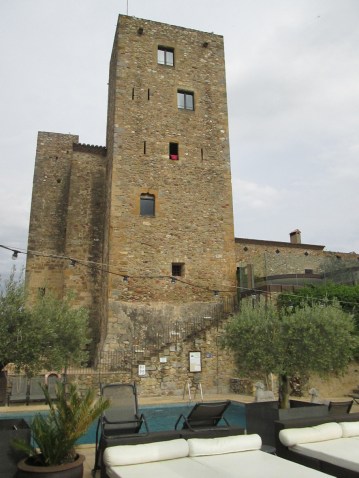
My next stop was intended to be my hotel but on the way came a diversion caused by I know not what. In a 30 car stream everybody did U-turns and sped off on a dirt road so I followed. It gave me just the viewpoint I needed for the novel so if it ever gets published there will be prizes for the spot.

Last night I stayed in what looked like a castle – tonight I am staying in a castle. There was a good deal – early bird – on their website so I went for it. It included dinner for one night and an exciting room in the tower. IMG_2261That’s my room with my swimming trunks drying in the window. What do towers have? Lifts? No. Steps? Yes lots of steps – good for the fitness regime I tell myself as I pant to not quite the top. The view is magnificent. Worth it? If I survive two days without heart failure – yes. In fact we came to look at it many years ago when it was still under reconstruction by a Dutch couple who have done a great job in converting it to a boutique hotel.

The dinner was certainly worth it – an interesting take on tuna sashimi served on a thin crispy pizza dough base following a delicious sea bass ceviche amuse bouche. Also interesting to me, who became a bit of an olive oil snob a while back, was a local oil made from a variety I’d never encountered. It was very smooth, almost creamy but with a peppery aftertaste. Now I know my Picual, Arbequina and Hojiblanca but I’d not come across Argudell which Wikipedia – God bless Jimmy Wales and do donate if you can – is native to Catalunya. So a new notch on the olive branch. I also ask for some local wine and Desea is suggested. A strange – to me – mix of Syrah, Cab Sauvignon, Merlot and Carmenere. Very soft, very smooth, very drinkable. So that’s tonight. Thanks to all who are following and saying kind things. I will be back.

IMG_2260
The view across the Emporda from my room in the tower.

Vichy Catalan

3 Away on the windThe first four months of this year have been rather busy so after fulfilling Dee’s last wishes on her birthday by letting her fly free from the Ivinghoe Beacon, I thought it was time for me to fly away too for a while and catch up with me and my thoughts. Friends and family have been wonderfully supportive and made sure I didn’t sit doing a bottle of scotch every night or something equally daft and making sure that I had plenty of stimulating company, excursions and diversions. So I decided to take off for three weeks in May and where better to go than Spain which has meant so much to us both over the last twenty plus years. So here we go on a visit on my own to some of the places we had enjoyed together and see how it all stacks up.

Well the planning is all rubbish for a start:

  • DataCars persuade me to leave home at 10:30 for a 14:45 flight despite my assertion that 11:30 would be good, So an early last water of the plants that kind people will keep alive while I’m away and off we go. Not even the slightest pause at the Blackwall Tunnel so we get to Stansted at 11:20 and I’m checked in and through security in double quick time with two hours before they even announce the gate! One of the perks Dee had on her bank account was an airport lounge pass which we had made good use of in the past. I decided to continue the pass from a Groupon half price deal. Was I glad of it today! In a quiet room with a view of aircraft if that’s your thing I had coffee and croissants, read the paper and started to write this. Then it was time for lunch and a glass of wine and then off to the gate feeling calm and relaxed not having had to spend my time being screamed at to buy duty free goods – to get to the lounge and the gates Stansted has copied IKEA so you have to walk past all those designer outlets, and Boots and Smiths, before you can reach your destination.
  • The best car hire deal was direct with Budget who claimed their office was on Girona airport. It’s not. And they close at 18:00. My flight arrived at 17:45, slightly early, but after baggage reclaim, determining the location of Budget and walking the half a k to get there, the office was closed. However the lady in charge had not quite escaped so a young lady with a bicycle in a big black case and I were allowed to collect our pre-booked cars BUT we had to pay €60 extra for “out of hours’ collection” which the boss lady was most apologetic about and gave us detailed receipts and instructions on how to reclaim it. It’s clearly a scam she doesn’t approve of. She also “upgraded” me to a smart red Audi which is quite nippy and fun to drive.
  • My first hotel Balneari Vichy Catalan was carefully selected just 20 minutes from Girona Airport and at the source of what had always been our favourite mineral water Vichy Catalan. You can really taste those minerals doing you good – just don’t put it in whisky.IMG_2217

I don’t know how good your Catalan is but this banner  mocking my arrival says Festival the last Saturday in April. When do I arrive? The first of May. It also features the person who gives the place its name. Mala vella is an evil old woman who reportedly haunted the castle in medieval times. I checked in to the hotel and set off to find a bar with a UK TV feed so I could watch Watford v Liverpool. Everywhere was closed in fiesta recuperation mode so I came back to the hotel to find that there was a  Spanish channel showing it so I could watch us just miss out on at least a point thanks to a wonder goal from Emre Can, a great save from a Capoue shot and the crossbar from Prödl. The Spanish commentators found Vicarage Road very difficult to pronounce. This led to me being by a long way the last person in the restaurant – a time honoured Lesley-Raggett tradition so I excused myself by indicating my watch still being on London time. As with the majority of Spanish staff they were gracious, attentive and had a laugh about it. They didn’t mention Brexit. I did leave a tip. An interesting fact – well I thought so – is that the Balneari  Hotel and the Vichy Catalan company were established in 1881 the same year as a certain football club!

IMG_2221So day 1 is nearing its end and my poor planning has been rescued by the fact that the hotel is a spectacular example of modernisme architecture, the town has a lot of fine houses in similar vein and I’m doing a hydrotherapy circuit tomorrow morning just like we did together with such delight in San Sebastian last August. A comparative report will follow.

Iceland in October

CardIt was last Christmas, 2015, when Dee opened an envelope containing her Christmas present which promised the Great Aurora Borealis hunt in February during a five-day trip to Iceland. Unfortunately, she was in the middle of chemotherapy again by the dates we intended to fly so we looked for the next best window to have a chance of catching the northern lights and it appeared that October would be best. We agonised throughout the year about whether we’d make it or not but we left Heathrow at one o’ clock on 12 October after a leisurely brunch in the lounge. At both ends the request for wheelchair assistance proved vital as not only were the distances considerable but when you are guided through the airport many queues are jumped, corners cut and arrival at the plane is so much easier. The flight was straightforward and we picked up our rental car via a shuttle bus with strict warnings about not driving on non-tarmacked road which might cause chips in the paintwork. There was also a brief discussion about football with our clerk being a Liverpool fan who was very pleased that Watford had just beaten Man United. He’d have been ecstatic if he’d known that in two weeks’ time Liverpool were to beat us 6-1! There was enough light for us to take in the volcanic landscapes as we headed towards Reykjavik’s ring road in order to head off east to our first hotel at Hella in the south of the island.

As the roads became less busy and we entered wilder territory we started to spot plumes of steam coming from the ground and while knowing that geysers existed all over Iceland having them erupt yards from the road was a bit of a surprise. There were also frequent waterfalls on our left – the hillier part of the landscape with a flat plain to our right stretching away to the coast. Untitled-1The hotel was well signposted and we checked in and were shown to a very pleasant room in the west wing of the log cabin like structure that was the Hotel Ranga. We unpacked, relaxed and then went to the bar for a beer and a cocktail. I was impressed by the range of craft beers – pale ale, red beer, wheat beers and stouts and Dee by the Icelandic vodka in her martini. Next morning we woke to appreciate the view over lawns with hot tubs and down to a river estuary.

We had little choice being so far from anywhere but to eat at the hotel’s restaurant. Fish, reindeer, lamb and puffin are the specialities but we couldn’t quite bring ourselves to eat a whole puffin so settled for wild mushroom soup and a duck salad as starters and then reindeer and arctic char as our mains. There was a very tempting Muga Reserva on the wine list but also a better value Rioja from Torres which was most acceptable. We were joined during our dinner by Fridrik Palsson, the owner who tries to chat to all guests during their stay in order to keep his customer service up to the mark. During a pleasant exchange of travel and service experiences he insisted that we try the smoked puffin which fortunately came in small slices a bit like smoked duck breast with beetroot sauce. Her stomach somewhat delicate anyway, Dee declined but I sampled this extraordinarily fishy tasting meat – but then puffins do just feed on fish so I guess it was only to be expected. Eating and drinking are not cheap in Iceland – no, nothing is cheap in Iceland – so we were thrilled to discover that our meal had been largely paid for by a mystery phone call from the UK which on investigation turned out to be from my daughter. What a lovely thought! Travel and food are tiring but on our way back to the room we nonetheless signed up for the Wake Me if the Aurora comes service whereby the night manager phones you if the skies clear and there’s a chance of a sighting – some guests clearly got lucky! As we’d driven through quite a lot of heavy rain dumped by the tail end of hurricane Matthew or maybe it was Nicole, we didn’t expect to be disturbed tonight. And so it proved and throughout our stay the skies remained unremittingly grey with not a glimmer of northern lights or even sunlight for that matter until our last day.

So maybe the skies weren’t playing ball but the geysers and waterfalls were not too far away so we spent the next day visiting Gulfoss and Geysir where the eponymous big gusher doesn’t do its stuff much anymore but Strokkur blasts 60 feet of steaming water into the air every six or ten minutes. Both the waterfalls and the geysers were impressive and well worth the rather chilly, damp visit.

The journey back was through some brilliant volcanic and mountain scenery with black lakes, sheer cliffs, waterfalls and lots of fumaroles.

After a very disturbed night our check out and departure saw a pale and delicate Dee climb into the car to make our way to a lunch time appointment at the Blue Lagoon something we had both been very keen to try but which now looked in some doubt. IMG_7674Fortified with paracetamol Dee perked up as the journey progress including overriding SatNav’s instructions and taking us through the Reykjanesfólkvangur Natural Park the splendid scenery and rock formations of which were viewed from a granite chip road so a little trepidation there about the state of the paint work, unfounded thank goodness thanks to my unusually cautious driving.

IMG_7675
Typical lava field in the Rekyanesfolkvangur National Park

We made it to the Blue Lagoon and after a few problems and delays with crowded changing rooms and the insistence on naked showering prior to entry to the lagoon, we finally made it out into the 38° water with 4° in the air around our heads. It’s an amazing feeling and we were both very glad we’d persevered. The water feels like it contains lots of healthy minerals and indeed these are what give it its blue colour. Oh and they throw in these iPad photos as part of the entrance fee.

As always there were very tempting things in the gift shop at the usual eye-watering prices. We regained the car and headed off for Reykjavik where we were to spend three nights. The hotel was right in the centre of town – I suppose Hotel Reykjavik Centrum was a bit of a give-away – and there was a convenient pull-in just in front for us to unload and check in before I took the car back to the rental company before they closed at seven.

IMG_1985Our room was great with windows in the pointed tower that stood at the corner of the building. It also had a shower module into which all you need was packed into a very small space – inspiration for our thoughts about building a downstairs loo and shower room at home. I went back down to find chaos at the car. I was in a bus pull-in preventing a bus with thirty Americans from checking in. Oops! There was a ticket on the windscreen too which the rental company forwarded to me later – it was for a tenner! I drove off sheepishly towards the street name on the rental agreement which proved deep into the eastern suburbs beyond the ring road. There was a large shop and warehouse strip but no signs for Thrifty. There was an automotive parts store so I asked in there and they said there were some bays marked with Thrifty in the car park and I should put it in one of those and put the keys through the letterbox of the Toyota dealership. I duly did this more in hope than conviction and then walked to a nearby filling station to see if they could recommend a number to get a taxi back into town. They called a friendly cabbie who was coming in to fill up anyway and within five minutes we were heading back into the centre. Taxi drivers the world over like to grumble it seems and he was bemoaning the growth of Reykjavik swallowing up surrounding small towns in its sprawl, encouraging foreigners to come and take all the jobs and stag and hens parties who always argued drunkenly about the fare. Might have been in London.

IMG_2010Next day over a coffee in a bar just across from the hotel with some ancient coffee grinding machinery as part of its decor, we decided the to take the Reykjavik City Bus tour to orientate ourselves. It didn’t take long and included as a highlight a visit to the bus depot from where we could obtain bus rides all over Iceland! Most impressive.

The tour delivered us back at Harpa the new concert and exhibition centre in the harbour which we explored for a while admiring its hexagonal glass panel construction which threw interesting light patterns around the structure. We found a good place for a light lunch and explored the centre of the city a little further before going back to the hotel for a rest and a read. Over a drink in the bar we chatted to some other guests and discovered that Iceland is often used as a meeting point for far-flung families. Some Germans were meeting up with cousins from Detroit and lots of Canadians with French and British relatives. It makes sense when you think about it  – except that what you save on travel costs you spend on food and drink.

IMG_1974
A cocktail at Apotek

That evening we went to the excellent Apotek restaurant where the glittering youth of Reykjavik paraded in all their finery and we sat and consumed excellent food watching them all being peacocks and hens – highly diverting.


One notable feature was again the popularity of puffin and whale on the menu here at Apotek and all over Iceland it seems.

Saturday was our last full day so we made it to the Culture House where we saw a not entirely inspiring art exhibition, some excellent art nouveau furniture and became engaged in conversation with a lady in the splendid IMG_1979library about Icelandic literature and legends and family names. We retired to the hotel for lunch and to listen to Swansea v Watford on Hornets Player. Having taken all three points at Middlesbrough the previous week we had high hopes but when goalkeeper Gomes was named man of the match you know it wasn’t our day but a point is a point.


Dee needed a lie down after all the excitement and I decided to take my camera and go for a walk around some other parts of the city. Just as I reached the lake that projects into the centre the sun came out for the first time and I had a quick hope that there might just be a clear night and we’d get to see the northern lights at the last gasp. A couple of weeks before they had turned off all the street lights in the capital so that people could see the brilliant light display in the sky.

No luck for us though, the cloud gap was small and short lived and soon the grey blanketed the city again.

IMG_2023The sun taunted us again the next day. As we took off and banked over the Blue Lagoon the sun’s reflection flashed across it. We hadn’t got what we came for but neither of us had any regrets about making the trip. The landscapes were amazing and as an erstwhile geography teacher Dee was glad to have seen them. The people were friendly, the food was good and at last I was able to deliver last year’s Christmas present.

And that brings the retro-blogs up to date. It’s been quite cathartic for me to look through our notes again and select photographs to illustrate each blog. There have been moments when I’ve needed a towel to stop the keyboard getting soaked but mostly there’s been laughter and joy at the fun we’ve had and the experiences we’ve shared. Many of you have been kind enough to tell me that you’ve enjoyed reading them – thank you for that. I’m off to Spain again in a few weeks and the habit may return then – watch this space!

Unfamiliar Spain 29 Aug – 12 Sept 2016

4 Pilgrims, partying and peace in Galicia

Map Day 10The route to our next stop the parador at Baiona took us very close to Santiago de Compostela so we couldn’t not go. We passed a few groups of walking pilgrims on the way but I think the preferred routes keep them off the major roads, fume flagellation not being part of the pilgrimage. As we approached the sprawling city we headed for the first car park we saw signs to and found that miraculously, well it is Santiago, it was right by a major intersection from which a gate led us to the centre in about fifteen minutes. However after the drive we needed to pause for a coffee and chose a place near this big junction where coach after coach disgorged its mixtures of pilgrims and day trippers.

P1020713We made our way into the old part of the city pausing at several haberdasheries to marvel at the lace, religious memorabilia shops to wonder at the gullibility and how many shapes you can make for a scallop shell, and some art and craft shops whose wares were interesting but not compelling. The cathedral is very impressive and the whole monumental area surrounding it gave a feeling of ancient power. We refrained from joining the queues to see the interior of the cathedral. It was hot, the queue was very long and we agreed some time ago that we didn’t like paying to go into churches.

Real pilgrims have express entry and therefore much shorter lines were forming for them to enter the cathedral – quite right after walking miles.

IMG_7559We covered the immediate hinterland gazing at fine buildings with amazing carvings, wandered down narrow streets and found ourselves at the Café Casino a building dating from 1873 which has high vaulted ceilings, glittering chandeliers, loads of stained glass and wood panelling throughout. It is reputed to have been and still be the haunt of artists, musicians and writers so we felt completely at home as we sipped our drinks and enjoyed the brilliant surroundings. A further amble through the other part of the old centre and we were back at coach corner and looking for somewhere to lunch. P1020729
P1020730On the corner of the road back to the car was a restaurant called Markesa which billed itself as an izakaya gallega. What could be better than Japanese pub atmosphere with fresh regional produce? We looked no further and enjoyed an excellent fusion of cuisines and after all there’s a lot in common between the small dishes served in izakayas and tapas. Prawn and asparagus tempura, some delicious yakitori skewers of chicken, beef and vegetables, teriyaki eels, eels are something else both Japanese and Spaniards love, sushi and some miso soup made for a satisfactory if surprising lunch in Santiago.

We drove off southward after getting out of the city fairly easily and bowled along passing more strings of pilgrims taking the southern route – I’d advise the northern as the final approach to Santiago is all uphill on the southern route, but maybe that gets you extra brownie points and into the cathedral quicker. We rolled through green hills and farmland for much of the way and then into an urbanized strip that seemed to connect the northern suburbs of Pontevedra right through to the south of Vigo. There are great harbours all down the coast and of course industry follows. There were some hairy stretches in which all the knowledgeable locals move at breakneck speed round blind bends and emerge from tunnels, cross and re-cross bridges but we survived and emerged to follow a more leisurely path to Baiona. We’d booked the parador here for five days on the basis that it was a long way from anywhere, had a pool, was in a medieval fortress and would enable us to have a rest after nine days of being frequently on the move.

P1020764 Our first impression as we arrived was that we had struck lucky. A beautiful sandy bay with a promenade lined with shops, bars and restaurants, a fishing harbour with a replica of Columbus’s ship Pinta which brought the first news of the New World to Baiona in 1943 – oh dear too used to typing my date of birth – 1493 was when the Pinta sailed in from the Americas. Columbus is starting to play as big a part in these blogs as Murakami – he’s followed us from one end of Spain to the other. At the end of the town was a promontory with the fortress walls surrounding it and the hotel right in the middle at the top. And you had to show your reservation to be allowed to drive through the entrance gateway at the foot – proper posh!

Here we were then for five days of rest and relaxation enjoying spectacular sea views, clean air and bright sunshine. Except our friends Natalie and Graham were returning from England to their house in Antequera via the ferry to Santander which is not that far away so they are coming via Baiona tomorrow and then driving back down to Antequera through Portugal, which will be a new experience for them. As we check into the hotel in its massive stone ceilinged entrance hall we notice a host of others moving in from some vintage Mercedes and VWs, the odd Morgan and Jag. It seems there’s a German rally association that organises an annual 10-day trip staying in paradors and other smart hotels with some fun driving in between. Sounds like me – just need the vintage car now.

IMG_7573
A view from a room

Our room was excellent with a view down the rocky coastline with the sound of the sea through the open window and we set off to explore the massive parador, soon finding a large lounge bar and terrace which was just what was needed. It served good tapas and there was another more formal dining room in an elegant hall and a further less formal restaurant two minutes walk down the battlements.

P1020751
Waiting for a beer on the parador terrace

Next morning I set off on a quest for paracetamol as stocks were running low and pain barely under control a lot of the time. I walked a mile along the promenade to find an open pharmacy and duly purchased some tablets. However Dee found these quite hard to swallow and so I really wanted the little plastic torpedoes which they didn’t have. As I got back to near the parador entrance another pharmacy had just opened and in response to my ‘Hay paracetamol en forma de capsulas, no comprimido?’ they produced the very thing I was after. This was thanks to extending my pharmaceutical vocabulary at the last place to learn that ‘comprimido’ in this context means pressed powder -conventional pills. I returned with my triumph and after all this early exertion the full Spanish provided by the excellent buffet went down well. We had a call from Natalie to say they had left Santander and would probably hit Baiona about one. We spent some time exploring the pool area and other rooms in the parador and then walked down into town and found a central café at which to await the arrival of our friends. We soon spotted them strolling along towards us and catching up and sharing news took several cups by which time it was time to go in quest of some lunch. We found a good restaurant on the edge of the old town and spent a happy couple of hours with excellent fish and seafood – and I think I remember some ice cream too. We parted and made for our different hotels as the parador was full when Natalie tried to book – all those rally drivers and their companions – and arranged to meet up there for a drink and then go to a recommended restaurant for dinner – the number one place was way up in the hills behind Baiona but we decided being in town would prove the easier option. The food was fine, the wine and brandy flowed but it was a bit lacking in traditional Spanish atmosphere. We had failed to do a decent recce as there were several good-looking restaurants back in the old town which we discovered later when Natalie and Graham were back home. However we did have a most enjoyable evening.

The next day was as intended – a quiet day around the parador, sunbathing by the pool in which we declined to swim despite the heat since it was a magnet for seagulls and you know what they do in water. We suggested that some kind of bird repellent might be worth investigating as the confines of the hotel pool were clearly much more attractive than the vastness of the ocean. A peaceful pleasant day at the parador. But having seen the source of the Miño river in Meira we decided that on Saturday we would do the recommended driving trip around the river valley where it forms the border with Portugal and then flows out into the Atlantic.

Untitled-1
Forgot the camera so river Mino photo is by lmbuga (Luis Manuel Bugallo Sanchez) from Wikimedia Commons

It was a very fine trip with steep wooded slopes, small villages almost Alpine in appearance and a couple of towns at one of which Mondariz we stopped for lunch eventually. It’s a famous spa town and although the spa complex does two-hour sessions we had come unprepared so we headed for the main square where there were several restaurants but none serving food – one told us his chef hadn’t turned up today, another that the kitchen closed at two – unheard of in most of Spain.

Mondariz
Looking down on Mondariz photo by HombreDHojalataWikimedia Commons

There were however lots of signs advertising Mondariz water which had just been voted ‘best water in the world’ at the Diamond Taste Awards. Tempting but they probably use it in the local beer too don’t they? A friendly barman directed us to a rival whose chef had turned up and made us some very acceptable dishes a seafood salad and a caldo gallego – the Galician stew with cabbage, beans, peppers, ham and chorizo. As we ate it became time for kick off back home as Watford made their first visit to West Ham’s new London Stadium. So phones were consulted frequently and then less so as we went 2-0 down in the first half hour. Then miraculously it was 2-2 at half time. The guide book had said that Ribadevia although not on the circular tour was well worth a visit so after a coffee we set off in the car to explore further inland. Dee nearly jumped out of the car when her phone said we were 3-2 up as we headed through the narrow lanes high above the banks of the Miño and with frequent glimpses of the river below. We made it to Ribadevia as 20 minutes into the second half we were beating West Ham 4-2 – amazing! Also amazing was the scene that confronted us in Ribadevia. It was choc-a-bloc with vehicles and people, the streets were packed and it looked like fiesta time. It was actually market day and a rehearsal for thee History Festival in a week’s time when everybody dresses in medieval costume, something we seen in Tortosa back in 2001 on our honeymoon. We managed to creep through the town, abandoning all hopes of parking, and then made our way back to Baiona through another scenic route.

Sunday was another quiet day at the hotel with an excursion into the old town to buy a few gifts for those back home. There are lots of bars, craft shops, delicatessen and restaurants in an ancient area of the town that is very compact but has some wonderful buildings and unexpected sights around corners. And we bought what we needed.

In the afternoon, we made the three kilometre walk round the battlements which gave us wonderful changing perspectives of the coast to the north and south the huge ocean bay stippled with islands to the west and the pretty town and beach to the east. There were convenient places to pause and admire the view and it was a very happy excursion. IMG_7588We dined that evening in the less formal  restaurant just down from the main parador building called the Enxebre A Pinta as it overlooks the port with the replica ship. Less formal than the main dining room the food was well up to standard and made for a very relaxing last night in Spain – and we got another lovely sunset.


Our flight on Monday from Santiago airport was not until 19:20 so we packed and decided to try to visit Ribadevia which we had failed to explore on Saturday. The contrast couldn’t be greater with the town on a sleepy Monday. Cats and kittens dozed in doorways – real not graffitti – gegants the huge figures that parade at fiesta time sat lonely in a doorway and the Jewish quarter told a story of flourishing trade followed by persecution on a series of plaques.

IMG_7620  P1020797

We were glad to have made it here where the river Avia joins the Miño, a castle dominates and the main square housed a microbrewery and an irresistible leather goods and craft shop. We set off towards Santiago and the route took us through Ourense a name I’d heard as a Spanish province but had no concept of. It’s split by the river Miño which is quite broad at this point and has dramatic sloping bridges, roads and parks along the river banks and a medieval centre with massive churches and municipal buildings. We had a light lunch and set off for the airport which looked very straightforward on the map but the SatNav had different ideas. The first part was fine – along the autovia to Lalin and then the N525 when the motorway changed from A53 to AP53 designation and we didn’t feel like paying tolls as we were not in that much of a hurry, we thought. The SatNav clearly didn’t think this was a good idea and we set off across country along single track roads – there were no problems with passing as we didn’t see another vehicle except for tractors in the fields. With high hedges, sudden changes of direction and right angle bends it was quite disorienting but also quite a laugh – possibly slightly nervous laughter at times. Then our narrow track emerged onto a major road with a sign to the airport at 1km and a convenient filling station so we could avoid the exorbitant rates charged by rental companies by returning the car full.

Parking and return were easy in the very modern airport which had been rebuilt in 2011 to increase facilities for tourists which include a lot of pilgrims who can’t make the penitential journey on foot. As it happens they needn’t even leave the airport as there’s a great model of the cathedral and old city complex so you could take your selfies there and save the trip to the centre.

The flight back was our first with Spain’s cheap flight operator Vueling and it was perfectly fine. We reflected on a holiday which balanced a little rest with some essential sightseeing in areas of Spain neither of us knew before but came to love during these last two weeks. The three-day, three-day, three-day, five-day bookings proved very satisfactory with some real rest towards the end. As always there were places we regretted not visiting – Ferrol in particular, when we saw Almodovar’s Julieta in the cinema a couple of weeks later as lots of it was set there. The holiday confirmed our love for Spain with its continual ability to surprise and delight.

Unfamiliar Spain 29 Aug – 12 Sept 2016

 3 Astonishing Asturias and west to Galicia

Map 2We packed and departed Cangas de Onis heading for Ribadesella at the mouth of the river Sella and which looked from the guidebook to be an interesting town with suitable locations for breakfast. The town divides neatly in two with the old town and fishing port on the right bank of the estuary and the modern resort with hotels and summer villas on the left. We headed for the port area and among the nets, lobster pots and boats we found the start of a Sunday market and a cute bakery that did great coffee and pastries. We’d missed by a month the famous International Descent of the Sella in which thousands of people in canoes race down the last 20 kilometres of the river. There were pictures of the event that looked great fun.

Then we went to explore the newer part of the town where a fine promenade with oar and lifebelt decorated railings looks over a long curving beach of golden sand. There are some elegant mansions built in the early part of the 20th century by wealthy merchants. There are hints of the modernisme of Gaudi and Domenech I Muntaner familiar from Barcelona and earlier this trip in Comillas but here it’s known as indiano style because the people commissioning them to be built had made their fortunes in the West Indies. They are colourful, well-proportioned and hint at truly elegant living. After a most enjoyable morning in Ribadesella which we’d love to come back to for a longer visit staying in the fabulous Hotel Villa Rosario with its walled garden, glassed-in terrace overlooking the beach and just a really attractive sense of style.

We set off in the car for the drive to Vilalba our next parador for three days from which we intended to visit more Asturian coast especially the famous Praia ais Catedrales (Beach of the Cathedrals) with its amazing stacks, arches and rock formations. We avoided the faster motorway with its tolls in favour of the N634 which took us through varied scenery – still quite hilly fringes of the Picos de Europa, forest, farmland – and bypassed the two main cities of Asturias, Gijon and Oviedo. They both looked worth a visit but when you’re not in peak condition there’s only so much urban sightseeing one can stand. Another day maybe as this new area of Spain was revealing many delightful places to us. Not so Vilalba itself which had a great parador but not much else of note or distinction. We arrived just in time to catch the last day of the fiesta of San Ramon and Santa Maria where a band was entertaining children in the main Constitution Square. So we checked in and caught the end of the gig and found a local bar for an early evening libation following which we made a quick recce and concluded that it was the parador for dinner tonight and one other good looking place Os Pios for another evening and one that looked promising, Meson del Campo, but appeared not to be open which on a fiesta day struck us as odd. Parador food is usually regional and local dishes, well presented but on a limited menu. Last year when we stayed in the same parador for nine nights we did find that the really attractive menu options ran out after day four but most people don’t stay that long so it’s fine for the majority.

We explored Vilalba a little further next morning – it was Monday and the museum was closed – and decided that we’d either stay in and read, paint or sew or go elsewhere in the locality. We knew we wanted to go to the Praia as Catedrais (Cathedrals Beach) so we asked the very helpful receptionist who advised us that you need a permit to go on the beach as, like Altamira, a Heritage Site was in danger from too many tourists so numbers are limited – to 4812 a day – still a lot of feet – and you have to apply for a permit between April to October to go onto the beach. Otherwise you can look and marvel from above but we wanted to paddle!

Parador Vilalba towerThe receptionist said that we should apply online and when the permits came back we should email them to the parador and they would print them for us. The website advises obtaining permits 30 days in advance so I make another trip to reception to see whether there’s any point and am advised that there’s an Urgent button on the site that should get us our permits today but that we should aim for tomorrow morning because of the tides – you can’t get onto the sand at high tide. Back to our room we get onto the site, make our application but have to send scans of our passports so it’s off to the business centre and a scanner. But wait cries Dee, we had scans on your laptop in Japan for occasions like this. Indeed we did and I haven’t deleted them so we attach the passport pics and hit send. A while later email permits pinged back but my emails didn’t reach reception for some reason the camera’s SD card was called into play and finally reception managed to print them.

Parador vilalba stairsI think in all I went up and down the stairs to reception about eight times. Thank goodness we were on the first floor and not up in the tower! During my many conversations at the front desk, the young lady suggested that the town of Meira would be worth a visit as the source of the Miño, Galicia’s longest river, which flows south and forms the border between Spain and Portugal which we would meet again later in the trip. It’s by now mid-morning and Meira’s about half an hour away so perfect timing for coffee and churros.

IMG_7398IMG_7400

The road from Vilalba must have been built by Romans it is absolutely straight with not a hint of a kink for the first 20 kilometres when there’s a slight bend to the right and more straight until a roundabout on the outskirts of Meira. Which is a typically pleasant Spanish town with a central square with banks, bars and cafés, a splendid church with amazing door furniture – photographs of door knobs are something of an obsession with Dee over many years in Spain. There was also a leafy park with the nascent Miño some 5 kilometres from its source trickling through it with a couple of bridges, seats and a children’s playground. But coffee called and we were soon ensconced in a bar in the square watching the illegal, inconsiderate and random parking of the locals who came and went to the panaderia next door for their daily bread. Not a horn was hooted, not a shout raised so people obviously accept it as a daily occurrence and patiently wait until they can move their vehicle from its legitimate spot. After a further stroll around the town we decided to follow the signs to the actual source but he initially helpful brown indicators soon petered out and we found ourselves the other side of a hill and concluded that even Galicia’s greatest river couldn’t flow up and over that and that we had passed the watershed. The road ahead looked straight and flat across a fertile plain so we stayed on it until we reached a more major road heading for the provincial capital Lugo.

The suburbs soon brought us to a massive stone barrier which proved to be the old Roman wall which still completely surrounds the town. We had seen the town of Avila some years before and because of it siting on a slope you get a better idea of the wall surrounding the town. Looking for somewhere to park we did the full circumvalation (good Spanish word circunvalacion for travelling all the way round but it appears not to exist in English) so we did get to appreciate the completeness of the structure with curved towers and a walkway along the top. We eventually parked and managed to grab a much-needed ice-cream as it was extremely hot inland.

IMG_7421So hot I photographed the clock/temperature sign outside the town hall. Lugo is a very clean and pleasant town with a black eagle statue commemorating the capture of the city by the Romans in the first century BC, a great market hall, the huge baroque town hall and many other marvellous buildings. A shady lunch spot was discovered on our travels and we sat to indulge in pulpo gallego, baked clams and a few other tasty tapas all helped down with very crisp Albariño wine from nearby. We hadn’t intended to do city sightseeing this trip – more mountains and beaches was the agenda – but Lugo was a delightful detour. Exhausted by the heat, lunch and walking we drove back to the hotel for a shower and a lie down. Later a drink and a few tapas and an early night ahead of tomorrow’s trip to the beach.

Tuesday morning dawned and we set of towards Ribadeo the nearest town to the Cathedrals Beach thinking we’d grab a light breakfast on the way – the parador in Vilalba was room only and paid for entirely by their Amigo scheme’s bonus points so effectively three nights for nothing. We drove through and around Ribadeo twice but found not the hint of a space we could squeeze into to park and look for a café. Rumbling a little and grumbling a little more, we headed for the beach where to our relief at the top of the cliffs was an acceptable cafeteria with good coffee and yoghurt, fruit and croissants.

P1020645
First sighting of the Cathedrals Beach.

Sustained, we descended the steep pathway to the beach which already looked awesome from the top but once down on the fine, golden sand the sandstone stacks, cliffs and arches interspersed with rocky outcrops were just breathtaking.

IMG_7483  IMG_7430

Cameras well to the fore, we walked along the beach first to the west and then back further east before paddling, sitting a while in the sun and just absorbing the atmosphere of this special place. Neither of us was up for a very long walk so after a couple of hours we went back to the car and drove off to explore the coast further west.

IMG_7497
Lunch on the beach at Burela

We drove past Foz, another Cangas and stopped for lunch in Burela a small town with a working fishing port at one end and pretty, curved sandy beaches at the other. We sat for lunch overlooking the beaches to see two swim-suited people quite independently walking from one end of the beach to the other and back again ten times before putting on office clothes and presumably going back to work. Well the say regular exercise is the best and it did strike as being a bit like doing lengths but out of the water. A lovely windy coast road brought us to another pleasant town on the sea San Cibrao where we actually parked up, got out our towels and sat on the beach and read our books for an hour or more – real holiday stuff! I can’t really think why we didn’t have a swim, the sea looked calm and warm in a sheltered bay.


IMG_7513IMG_7517


We drove back to Vilalba along quiet departmental roads through rolling wooden hills interspersed with farms and hamlets. We’d noticed the lovely slate roofs on a lot of the older stone buildings and in the village of Muras just had to stop and grab some shots of these fabulous roofs with the rounded roof slates and wrought iron balconies or galerias which are such a part of the architecture of the area. A little further along the road in the middle of nowhere we had to stop again as we came across this amazingly decorated house. Deep in a wooded grove it looked like something out of a fantasy movie set. We saw no people around it so who knows? The gate lintel is a tree-trunk, the carvings are amazing and a tower – well we were at El Capricho earlier.

Back in Vilalba we prepared for our visit to Os Pios (#1 of 14 on Tripadvisor) where we’d had a drink the other evening in its lively bar. There were tables there but we were ushered through to the empty comedor at the back with proper red linen tablecloths and white napkins, ceramics hanging on the walls and a deafening silence. The food deserved its Tripadvisor status, the wine list was good with the Rias Baixas and Ribeiro familiar albariño-based whites well represented but also some unfamiliar reds using the mencia grape which despite years of drinking Spanish wine I’d somehow missed. Not tonight though and I note that Laithwaites has a mencia red from Bierzo so that may be worth a try on our return. Eventually another lone diner joined us in the dining room. He looked as if he might be there on a business trip rather than a local. He ordered swiftly, ate and departed while we were still savouring our meal – bizarre. Our last night in Vilalba was very satisfactory after a great day exploring the coast.

Unfamiliar Spain 29 Aug – 12 Sept 2016

2 A peek at the Picos

Wednesday morning, still glowing from our lunch at Martin’s gaff and the warm reception for Wellington’s compatriots the night before, we rose, finished packing and went to our convenient café just round the corner from the hotel for coffee and croissants to start the day. A call to our trusty cabbie resulted in us soon being whisked through the ring road and motorway suburbs to where our hire car awaited. If ever there was a misnomer Hertz San Sebastian City Centre was it. Twenty thoroughly confusing minutes later we find ourselves in a massive Centro Comercial with the car hire offices as far from the entrance as possible. However, the car was ready, there weren’t too many blemishes to note and photograph – essential as we were doing a one-way rental – and we were soon retracing our route onto the motorway and this time passing right by San Sebastian and heading for Bilbao. As we’d been there relatively recently we decided to stay on the motorway and bypass the city this time, while noting that it would be good to go back there again on another occasion.

MapWe also decided to carry on past Santander although people have said it’s a great city but we were drawn to the touristy attractions of Santillana del Mar once described by Jean Paul Sartre as the prettiest village in Spain.

And it did have a certain charm with ancient well-maintained buildings dating back to the 15th century, narrow cobbled streets contrasting with a massive church and many imposing palaces. We wandered happily in the sun with lots of photo opportunities, bars to sample cider and eventually a good place for lunch. Apparently there are strict building regulations and no access to cars unless they have a garage within the town which did make it a very pleasant place to while away a couple of hours. We decided against going to nearby Altamira since all you can see are replicas of the 35,000-year-old cave paintings since the originals have become too fragile to withstand the breath and sweat of visitors except a very few people each day. We later read that the waiting list is three years – almost as bad as booking at El Bulli in its prime.

IMG_7312 IMG_7306

Instead as big Gaudi fans we decided to head off north to Comillas where one of his first ever buildings, and one of the few outside Catalunya, still stands in its decorative glory. El Capricho was built as a summer palace for a merchant who had found wealth in the Indies – like so many nineteenth century Spaniards – and was completed in 1883 the same year as Casa Vicens in Barcelona so they are of historical interest in demonstrating how the ideas that were later to find their way into the Sagrada Familia were already present in embryonic form in his first commissioned works. IMG_7301  IMG_7299 Capricho ironIMG_7289

It’s a fascinating small villa with an interesting combination of materials, stone, red brick, glazed tiles and lots of wrought iron. It has a tower like a minaret and reflects Gaudi oriental interests. There are repeating motifs of sunflowers and leaves and the use of the rooms follows the path of the sun. Seeing close up the designs Gaudi chose for door furniture, the windows that play tunes when they are opened, vermillion roof trusses, beautiful wood finishes and tiles and carvings of flora and fauna was an eye-opener which helped throw his later and more famous works into context. El Capricho had a chequered history being abandoned in the civil war, then becoming a restaurant and then thanks to a Japanese corporation which presumably included a Gaudi fan it was restored and opened as a museum in 2010. We had a brief rest in the tranquil garden and then back to the car for our hotel for the next three days – the Parador at Cangas de Onis, the gateway to the Picos de Europa.

I routinely make booking requests in most places for a room with a walk-in as opposed to an over-bath shower but didn’t bother here as we’ve never been in a parador that didn’t have both bath and separate shower. However we’ve never been up north before and they only have one in the disabled room. We can use that for the first night but a guest in a wheelchair is arriving tomorrow so we’ll have to move. So we made full use of it with a shower to wash off the effects of travelling all day and enjoyed an evening cocktail in the spacious room before going for dinner. The staff kindly agreed to move our bags during the day while we went to explore the Picos de Europa. We are both fans of a good blue cheese and one of Spain more famous one cabrales is made just down the road and there’s a cave-museum that shows the process and has a tasting tour so that’s where we headed first. The cave is quite small so groups are limited to twenty people and tours set off at quarter past every hour. So we had time for a coffee before joining the 12:15 group for a fascinating visit with video clips of the cows, sheep and goats high in the Picos with herdsmen still living up with them for weeks at a time, then a look at the equipment used to make the milk into cheese and then the actual shelves where the cheeses sit to age for between four and six months.

cheese cellarpack shotWe were surprised to learn that they make two types of cabrales – one just with cows’ milk and the other with a blend of cows’, goats’ and ewes’ milk. They are all controlled by strict Denominacion Cabrales regulations and are quite powerful blue cheeses. I marginally preferred the three-milk blend but both were highly acceptable.

The cave is on the outskirts of Las Arenas and after this little appetiser we decided it was time for lunch flowed by a drive higher into the mountains. It’s a small town but still too many restaurants to choose from but after the usual dithering we decided on La Panera which was a friendly family run place with good local food and of course a plate of cheese to finish off with. Our drive was exhilarating as we wound our way up through the breath-taking peaks often on single track roads and lots of reversing – the protocol seems to be give way to those coming down or maybe I’m just too polite. Eventually we arrived in the village of Sotres hoping to descend back to the main road via another valley but only belatedly consulted the map to find there were no other roads to Sotres than the one we had just driven.

The view does look quite different going the other way so no real complaints. They are very impressive mountains and we really enjoyed being able to get out and grab some warm, fresh mountain air. We stopped off in the town of Cangas de Onis – the parador is about three kilometres north in Villanueva de Cangas – to have an aperitif after a hard day’s tourism. Parking was a nightmare even with our blue badge translation but eventually we found a spot and headed off for a bar.

P1020623

But there’s a steep Roman bridge over the river Sella so we had to walk up that and take a selfie first. We settled down in front of El Campanu with a much needed – it’s very steep that bridge – beer and a glass of rosado when our pleasant stay was disturbed by a mother with an uncontrollably sick child which vomited freely in

P1020620
At the top of the very steep bridge.

the street making all around most uncomfortable. The staff quickly arrived with mops and buckets but we had by then retired inside to avoid feeling nauseous ourselves. The restaurant looked very good, so despite our setback, we agreed that we’d come back tomorrow night for dinner.


After travel and tourism for two days we agreed to suspend normal Raggett holiday mode and have a quiet day around the parador and Villanueva. This started with a sunny stroll beside the river to another hostelry for breakfast and Dee was moved to sketch a prominent sandstone outcrop across the river. We returned via the colourful little village which had a number of typical Asturian granaries or hórreos.
IMG_7359 (2)Originally raised grain stores to prevent rats and other rodents getting at the grain, some are still used for this purpose, others as garages but they are interesting structures found all across Asturias and Galicia. The village also had one shop-cum-bar and even with gentle strolling a thirst had developed so a beer was called for. We went back to the parador for a light lunch and found elaborate preparations for a wedding in full swing. We were later able to observe the guests from the balcony of our new, perfectly adequate room. A taxi took us back into Cangas for dinner and there beside our table in El Campanu was a photo of the owner with none other than Martin Berasategui who clearly approved our choice of local restaurant. Apparently he still spends quite a lot of time travelling to sample authentic local cuisine all over the country.Martin Campanu

The restaurant didn’t disappoint. The platter of simply grilled local fish was delicious and they had a good wine list as well as their speciality ciders which we did have to sample first or cause offence to the very attentive staff. I never fail to be impressed by how much Spaniards regard waiting as a real profession and do it with such enthusiasm and concern for their customers’ tastes and comfort. It wasn’t the bag pouffe and white gloves of Martin’s but it made our evening really pleasant and memorable. It seems that back home corporations with restaurant chains still haven’t learned that people by people not things. But then brands wouldn’t rule would they? As we are driven back to the parador through bright moonlight and with the mountains silhouetted around us, we are really glad we chose to explore a part of Spain we didn’t know.