
Insurance cover
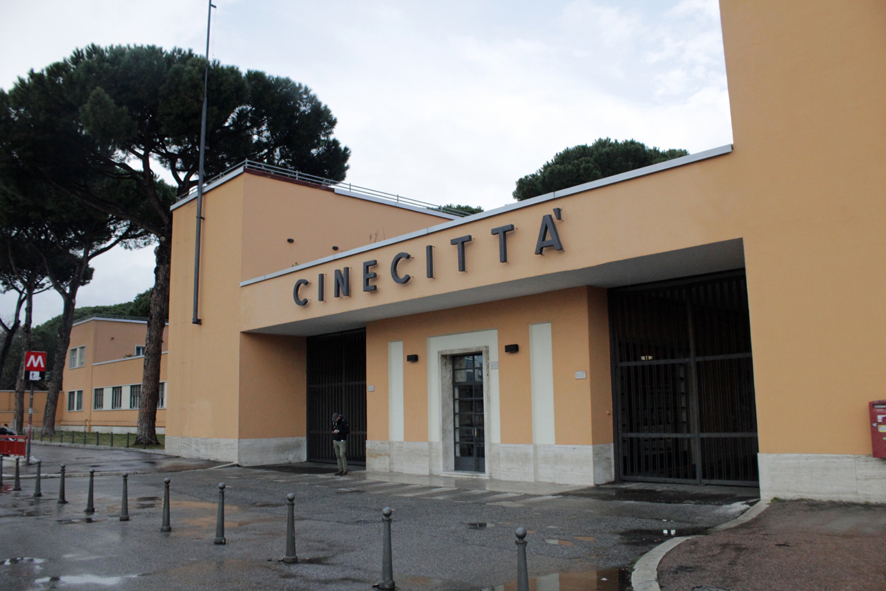
First stop on Thursday morning is the mini-market on the way to the metro to buy an umbrella. At €5 it beat the queue touts’ €8-10 and it springs into life at the press of a button unlike their manual ones. A few clouds are about but the sun is out as I descend for not-quite the longest possible metro journey. The A line starts at Battistini one station west of where I get on at Cornelia and stops at Anagnina one stop beyond Cinecitta my destination for today. There’s an amusing occurrence as the subway emerges from tunnels to cross the Tiber on a bridge. On Sunday and again today, the fashionable youth of Rome reach for their sunglasses – for all of thirty seconds! The journey takes a little longer than the concierge predicted – or maybe it was my umbrella stop that screwed the schedule – but I arrived at the gates of the studios at 11:33, presented my voucher and was told that I had missed the 11:30 English language tour but could wait for the 13:00 one in Italian. I declined and said I’d go and see the permanent exhibitions anyway for which you don’t need to be part of a tour.
A funny thing happened …
As I walked across to the building marked Teatro 1 the introduction to Cinecitta, I spied a group emerging from it. I approached and enquired if they were the 11:30 English tour for which I was late and the French group leader Michelle confirmed this, let me join and explained that I’d missed the history of Cinecitta which she had just outlined. She also told me that today’s tour would actually be in English and French because of the make up of the group. This was a very fortunate encounter as she then led our group of twelve through a locked gate into the studio lot proper where casual visitors cannot go.
High Five for Fellini
 As you enter the site you walk past ‘Venusia’ a prop used at the beginning of Fellini’s Casanova. Once through the gate we walk along a rough a roadway lined by large terracotta painted buildings each with a Teatro number. Teatro is the Italian equivalent of Stage in English film studio parlance and our first stop, as I try out my new umbrella, is outside Teatro 5 one of 22 in all. I already knew this was their biggest with two submerged tanks for underwater and water surface filming and a massively high ceiling for crane shots. I had also read that Fellini (a favourite from my 1960s film-going days along with Pasolini and Antonioni) held it as his favourite space. I asked whether they had shot the famous scene in La Dolce Vita here in which Anita Ekberg inveigles Marcello Mastroianni to join her in the iconic Trevi Fountain. They hadn’t. It was apparently shot at 05:30 in February with Mastrioanni demanding a wet suit under his tuxedo while Nordic ice-queen Ekberg strolled through the waters, shoulders bare, in her evening gown. There’s a brass plaque on the wall outside Teatro 5 dedicating it to Fellini who did in fact recreate whole streets in the studio for this and the many other films he made here.
Ancient and medieval


We walk on with quite persistent rain and so observe the first of the outdoor standing lots from under the access arch. It’s a recreation of the Temple of Jerusalem made for an American movie the name of which escaped me between the translations and the patter of rain on the brolly. As with all good set building it’s all scaffolding and fibreglass but looks authentic both to the human eye and the lens.
 Next to it they are just starting to build an outdoor set for a new film version of Umberto Eco’s Name of the Rose which we weren’t allowed to approach – secrecy or construction hazard I’m not sure. We then move to Assissi built for a film about St Francis but since much adapted to be Florence and other towns in medieval times.
Roman ramble
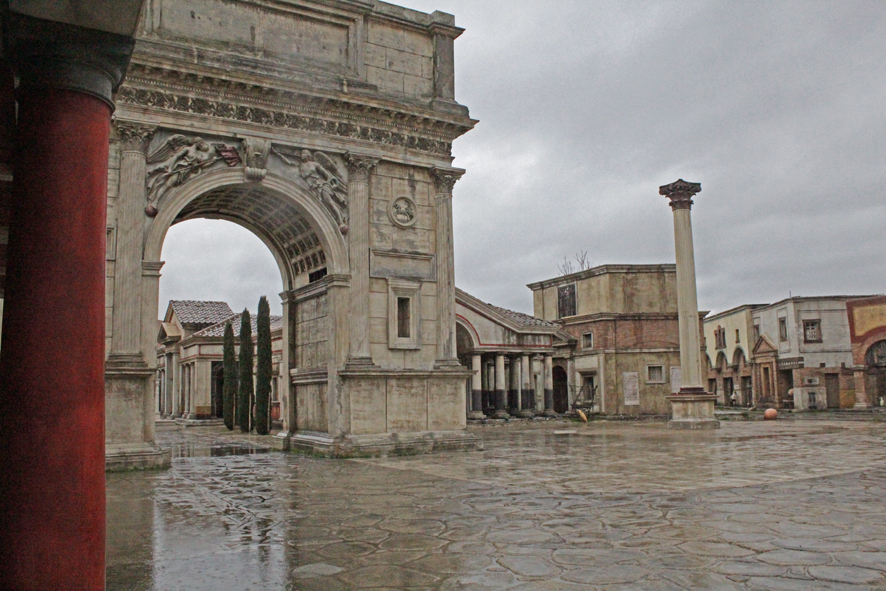
The next big set was built for the recent BBC/HBO/RAI TV series Rome. It has a huge variety of individual homes, official buildings, temples and the forum – sadly the Colisseum is no more. At the side of the forum is the Basilica of Emilia which you can hire for corporate events. Toga party anyone? It was a huge project that cost over a hundred million dollars for each series and the sets will I’m sure be used many more time in the future.
We then walk back to the original exhibition area where I catch up with the history I’d missed. There are great displays – although the text panels are located a knee-height which made for a lot of neighbourly head bumping and ‘mi scusis’. There are excellent interactive segments where you can dub dialogue, make sound effects and perform in your preferred green screen scenario. Hoots of laughter from a group of teenagers running through a series of comedy and sci-fi scenes. There are several screens with interviews and extracts from films by Fellini, Rossellini and a fascinating piece on Sergio Leone’s spaghetti westerns that he sees as retelling of the Greek myths. You walk out through a submarine interior from a 2000 film U571 which had escaped my notice.
 The entrance area also has a brilliant children’s play area made up from the letters of Cinecitta.All in all a fascinating morning and I was very glad I’d caught up with the guide.
Birra and baroque
I took the metro back into the centre and had a short time to spend before a concert I’d booked for 18:30 this evening. So I discovered that Italy is about more than Peroni and Moretti in the birra stakes. In a small bar near Piazza Tritone, home to another famous Bernini fountain, I asked for a beer and was offered three craft bottled beers from a brewery called Baladin at 5, 6.5 and 7.5 proof. Since I want to stay awake I opt for the least alcoholic a crisp IPA style beer that was very tasty. The bar was quiet and I had a conversation about the changes in beer consumption in the last fifteen years or so when Italy started to brew other than the famous lagers we all know. There are over 600 small breweries now and the taste for different flavoured beers is growing. I’ll know to look out for them next time as I did throw my coin in the Trevi Fountain which supposedly guarantees a return to Rome, on my way to Piazza Navona .
 I found an old UK pound coin in my camera bag and rather than take it to a bank I cast it to the waters. I hope it’s valid for Roman myths.
I was still half an hour early for the concert so had a quick coffee in a great cafe in the Museo di Roma building at the south of Piazza Navona. It’s called Vivi and is all organic. Coffee was great and being afraid of rumbling tum I had a slide of very tasty morello cherry pastry slice. It was obviously a popular meeting point for the young of the area.  On into Santa Agnesa in Agone right opposite Bernini’s famous Four Rivers Fountain which represents the Danube, the Nile, the Plate and the Ganges with mythical creatures and is topped by a huge obelisk. One of the characters is holding his hand up to shield his eyes from the light but popular Roman tales have it that Bernini had this man shield his eyes from the awful facade of the church built by his greatest rival Borromini. Great story, not true – the church came fifteen years after the fountain but hey – it’s a fun way of explaining the rivalry between the established master and the young pretender both eager to attract sponsorship from popes, princes and patrons.
Profana e sacra
I enter St Agnes and am directed to the sacristy off to the left rather than a seat in the main church nave. After a fashionable delay our performers file in. Soprano Paola Alonzi explains the music, sets it in context and sings beautifully accompanied by a duo – father Stefano Sabene on traversa (an early flute) tambour and tambourine and his son Lorenzo on baroque guitar and lute. They are not the best I’ve ever heard but in the setting and the circumstances, I was very glad I booked this to be transported back a few centuries. After some Frescobaldi, Monteverdi and – flying the flag for England – a lovely John Dowland piece we were asked to remove ourselves to the main church. The first half had all been secular: dances, love songs and ballads. The second half was church music – so we were allowed into the nave. Actually the acoustics were worse in here but I wondered whether composers (and artists, architects etc) chose different ways of working depending on whether they were producing sacred or profane works. Certainly there was more restraint in the Monteverdi in church than in his previous song. Maybe I’ll see one day if there is any writing about this.
Trevi e Rossini
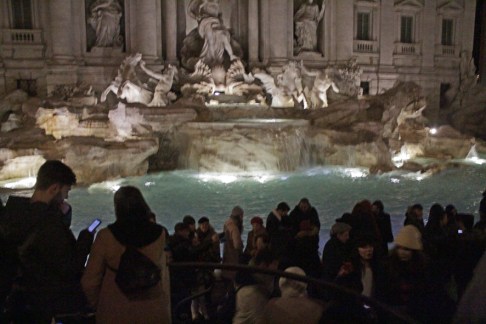 I walked back from the concert past the Trevi fountain and flung in some euros just in case my invalid pound bars me from returning. I looked at several restaurants and was attracted by the option of Ristorante Rossini – what a musical contrast! It proved a good choice with a starter of sauted clams which I’d never seen before. They were in fact steamed like mussels in a white wine and parsley sauce and very tasty. It was also a nod to Dee whose favourite pasta was spaghetti alle vongole. My second course (and last – I’m not Italian) was a delicious lasagne in which the pasta sheets were paper thin and the meat and tomato ragu a little spicy and just what I needed. I was frowned at a little for declining my main course but explained that as an oldie I don’t get as hungry as I used to – thank you Google translate!
Back to the metro, hotel bar for a nightcap and another great day in Rome comes to an end.
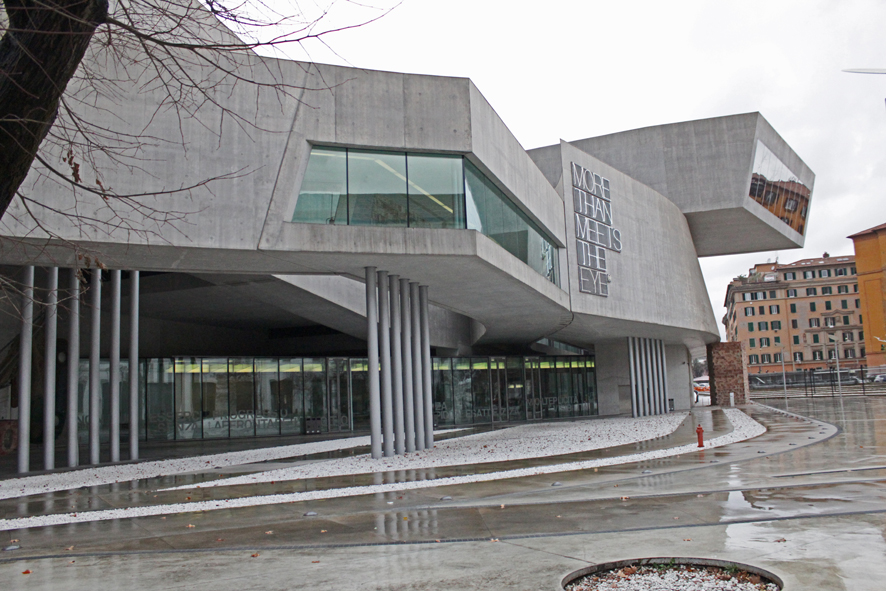
 There is a mixture of installations, archictects’ drawings and models, which I’ve always loved whether in balsa wood or Perspex, photography including a magic Helmut Newton series of Rome and a special exhibition of art from war torn Beirut. I spent a very stimulating 90 minutes and could have explored other areas but wanted to see the work of another superstar architect Renzo Piano.
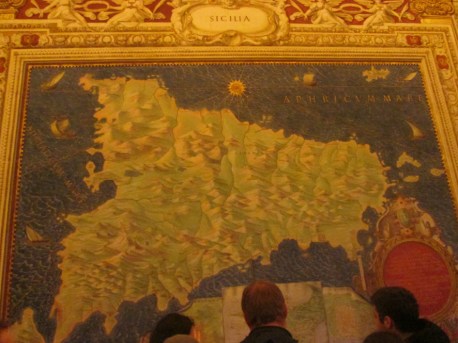 Highlights for me were the map room in which you can walk from south to north of Italy in five minutes with brilliant relief representations of the various areas of the country either side of you as they were thought to be in 1580. As a geographer, Dee would have taken some persuading to move on but Tatiana was strict and we were ushered on towards the Raphael frescoes. These are quite wonderful except for one which I think was the Expulsion of Heliodorus where most of the wall is in his usual style but the a handful of figures in the lower left side are much more dramatic, muscular and frankly Vincian. Tatiana told us, the probable urban, myth that Raphael stole the key to the Sistine Chapel and had a sneak preview and decided to copy the master. While beautifully done he really should have stripped off the plaster and started over for consistency.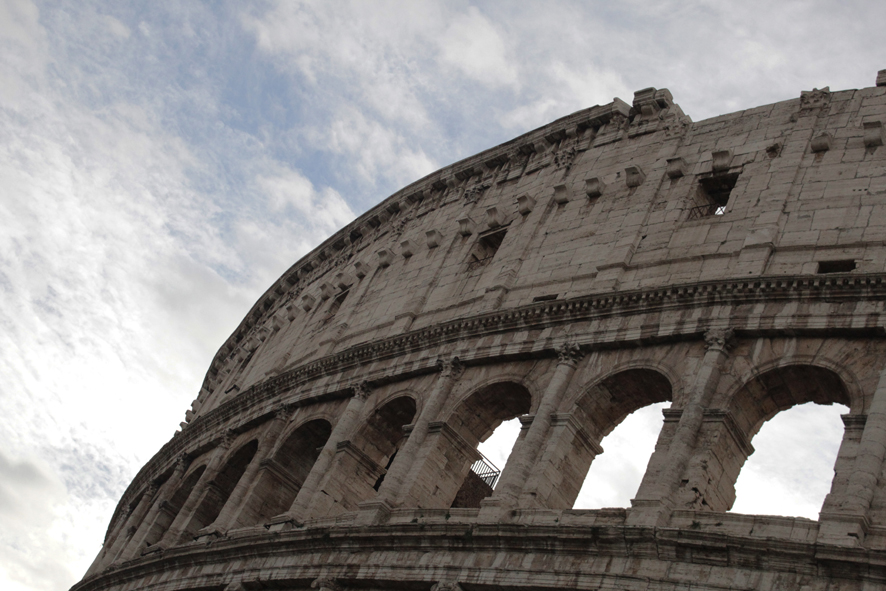


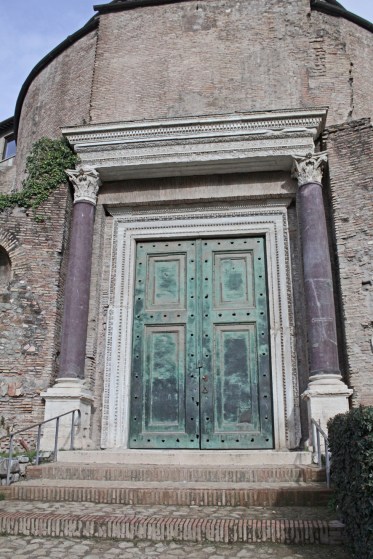 These bronze doors – apparently one of only three that weren’t melted down at some stage are high above the level we are now walking at.
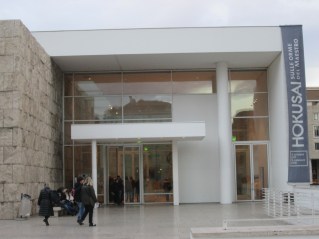
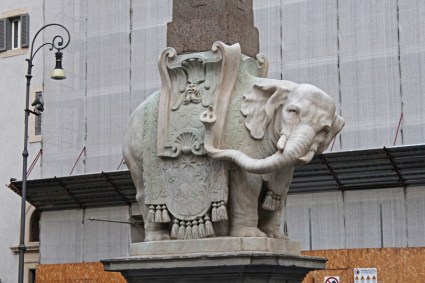 I walked through Piazza Navona passsing more Bernini fountains – I especially liked his elephant supporting an obelisk on its howdah. – and I pass the church where I have a concert on Thursday night and on up the Tiber to the Ara Pacis museum. This had not been on my original agenda but I’m easily diverted. This is a glass box built recently to house the Altar of Peace of Augustus which was consecrated in 9 BC after Augustus had conquered France and Spain and people and animals had to be sacrificed to celebrate. It was buried under silt until 1939 and is in remarkable condition and a very beautiful structure despite its deadly purpose.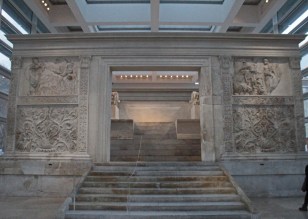
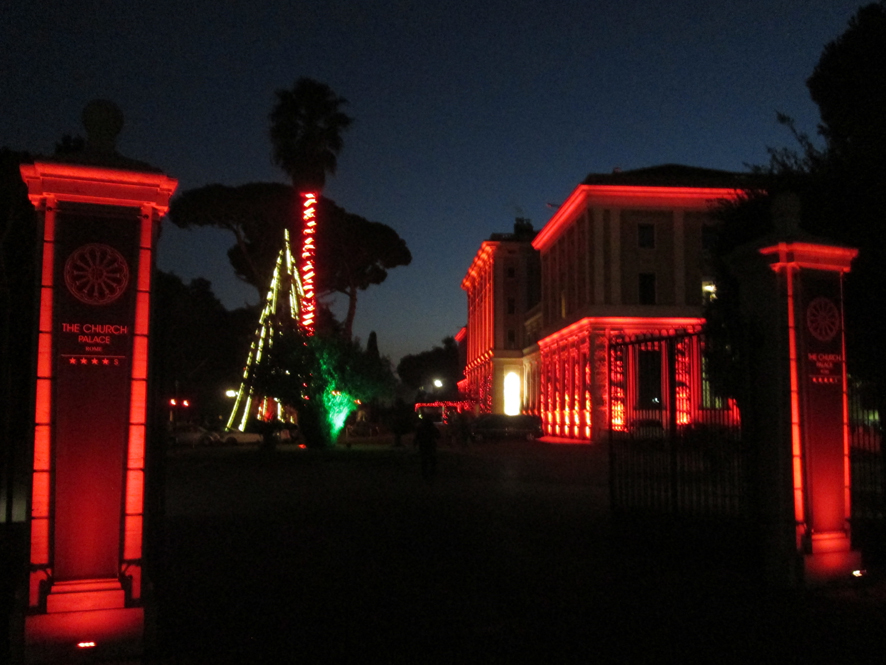
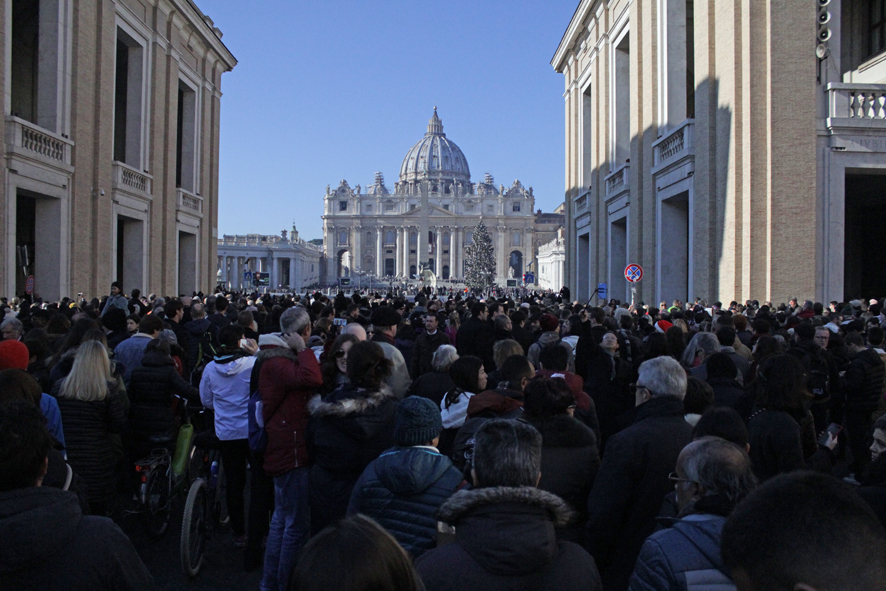
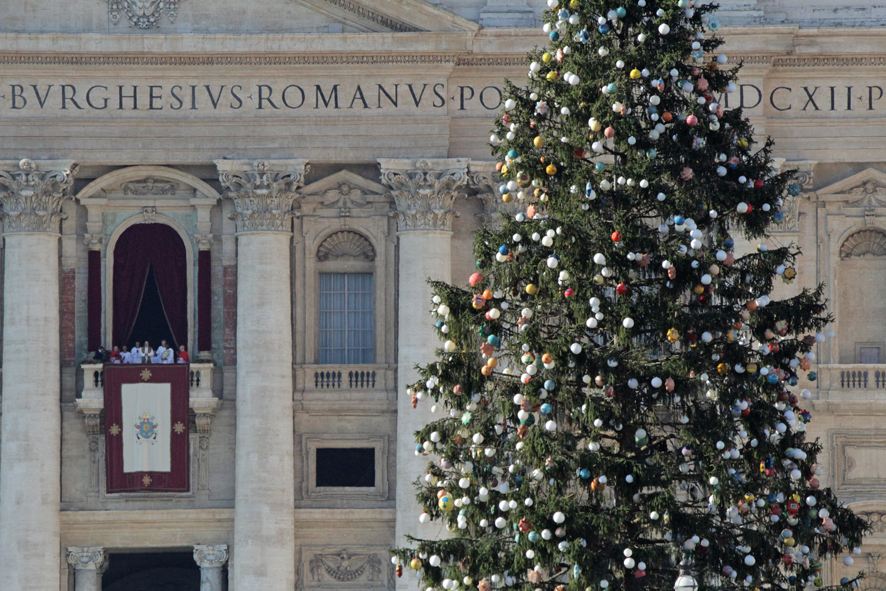

 I then went back to the metro and went to Spagna to see the Spanish steps and have my first proper coffee – 95 cents for a good shot of strong espresso. Excellent preparation for the day ahead. In my trip schedule I had nothing booked for today and decided to discover Rome on foot. It was after all as I told too many people clear, blue, sunny and 14 degrees. Ideal for a stroll. I made my higgledy piggeldy way to the Tiber and crossed into trendy Trastevere where there are book stalls and bad art lining the river promenade.

 Her knowledge of and love for the city spurred on my feet as I wandered further down the river swapping banks by the huge Castel San Angelo and on down the left bank to the Jewish quarter, through to the Capitoline Hill with the huge Victor Emanuele vanity project (I was told off by the guide the next day – it was not just for him but to commemorate the reunification of Italy – right) which caused great controversy among Romans at the time. It destroyed a whole medieval neighbourhood, took loads of taxpayers money and was derided as ‘the wedding cake ’, ‘the false teeth’ and ‘the typewriter’. The massive equestrian statues confirm it as a vanity project for me. Beyond it I strolled along to get a first sight of the Forum and the Colosseum due for a guided tour tomorrow. This route was along wide boulevard created when Mussolini order a whole medieval neighbourhood to be bulldozed for this prestige route – HS2 sound familiar?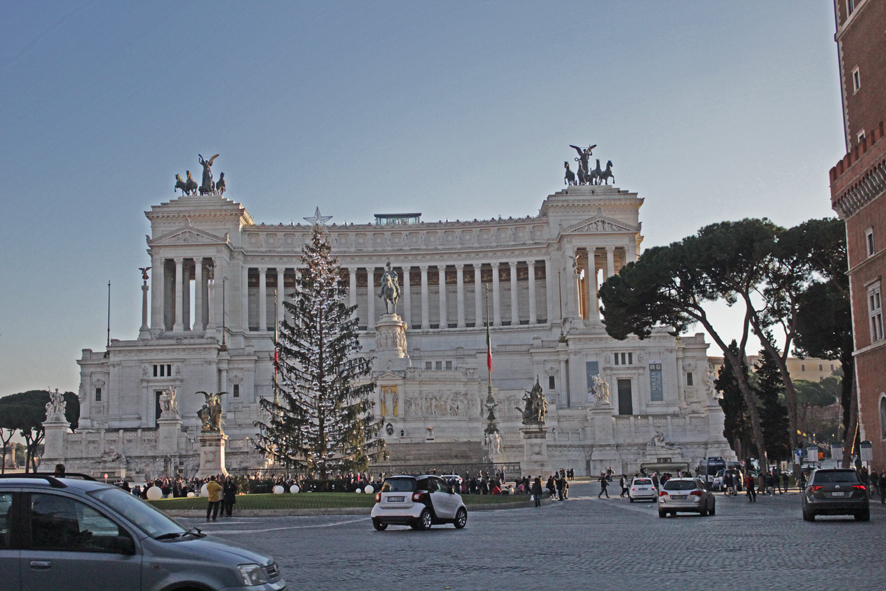

 On the football theme I was pleased to see this bus parked near the entrance to the hotel. Well Graham Taylor did get Watford into Europe and maybe we’ll need another Eurobus one of these days and we can dedicate it to his memory.
 It was a splendid warm week with a few visits to the pool purely to stimulate the thought processes of course. I sat diligently in writer’s corner in the shade and have achieved what I hoped for – enough written down that it has its own momentum now and writing a chapter now and then among other commitments will be OK. If any of it is any good that is,
 I left the house and set off eastwards along the A92 autovia, pausing for breakfast near Granada with a fine view of the Sierra Nevada, still living up to their name. I came off at a junction signed Huercal-Overa, the town nearest to my tree but SatNav was not happy as we did some N roads with a few trucks making progress a little slower. I soon arrived and found the original San Francisco deep in the heart of Almeria. We had agreed I’d find my way to
 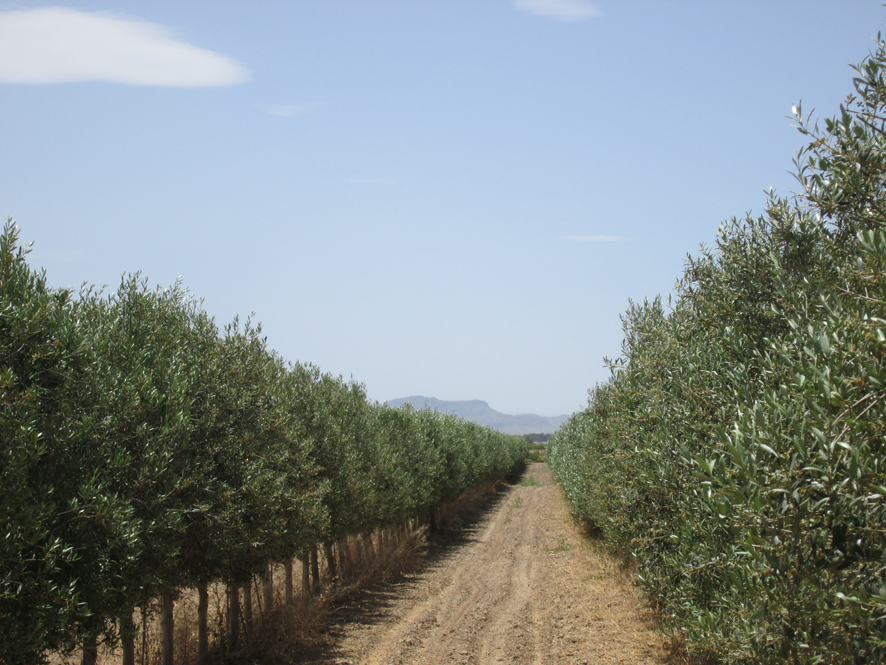 They’ve made a brilliant fist of sorting the place out and have achieved coveted status as first cold press virgin olive oil with International Olive Council approval which means a lot of tasting by people in Jaen, the capital of olive oil – one might say the Vatican of olive oil such is the mystery that surrounds it. Oh and it’s pretty tasty too like less fatty butter with added sunshine. And of course you’ll live longer.


 Thursday brought an absolute downpour and the forecast for Friday was dodgy so I sent a message asking if they want to postpone but we decided to risk it anyway. So I set off in blinding rain with the wipers the only things going fast along the windy road through Villanueva de Algaidas to reach the A45 autovia to Cordoba. All was well and I made it to the very modern station with a huge plaza in front of it in good time. But it seems there’s no short-stay, pick up and drop off parking. However two cars were waiting in a slip road in front of the station which had bollards to stop you entering from the obvious direction. No one seemed to be about so I failed to see a No Entry sign, went in did a three-point turn and was ready to receive Natalie and Graham when their train arrived just five minutes late.



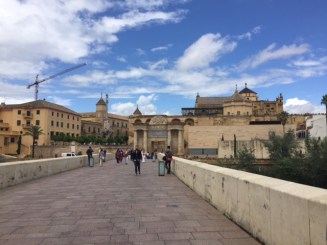 To the south, the banks of the Quadalquivir have been opened up and developed and we took the opportunity of a sunny spell to walk across the Roman bridge, even earlier than the mosque dating from the first century BC and rather spoilt by some later concrete balustrades. Time for a visit to a favourite which Natalie had recommended to Dee and me on our visit in 2010


![20170508_152136[1]](https://mikeandmurakami.com/wp-content/uploads/2017/05/20170508_1521361.jpg?w=171&h=304) So I arrive in Rute just after three which seems like a good time for lunch before shopping. I recall that nice restaurant and bar we used to go to –
So I arrive in Rute just after three which seems like a good time for lunch before shopping. I recall that nice restaurant and bar we used to go to – 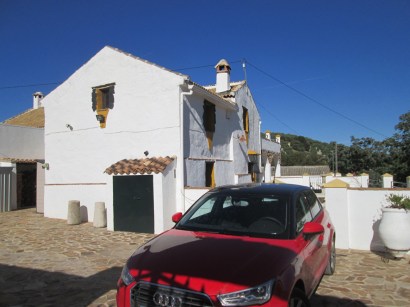




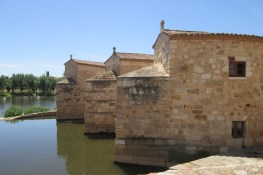
 I then decided it was time to pay the Duero a visit and fortunately you can walk across the stone bridge, along the gardens and children’s playgrounds on the left bank with great views of the weir (!) and then back over the new road bridge and back to town along the right bank through a splendid avenue. It was a lovely reflective stroll for about two and a half kilometres reminding me a little of Boston’s esplanade on a Sunday with cyclist, joggers and rollerbladers but all on grass and sand.




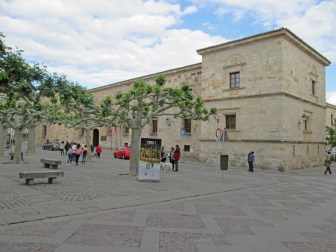
 I continued my stroll through the medieval old town passing a super triple stork site through to the newer area where I got confirmation that yesterday’s weather prediction was very close if not there – it was 26° as I passed by so it might have got hotter. It’s fairly typical of Spanish towns with elegant avenues, parks and not-too-ugly apartment blocks and some interesting designs for children’s play objects.


 There’s a massive wedding on today so the normally elegant courtyard has an inflatable gonk bouncy castle. Well it keeps the kids out of the bar! Fortunately our favourite resident is still in place and I might take him for a ride around the ramparts tomorrow.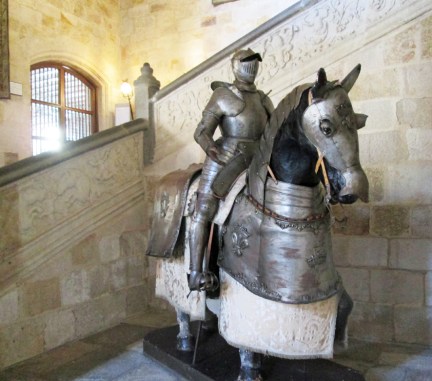
 Right next to the parador is the Teatro Ramos Carrion which was a ruined hulk last time we were here. It’s been restored, had a modern extension added and created a new square with views over the Duero. It reopened to the public last year. There’s also another theme of these blogs that followed me to Zamora – the modernisme (oops that’s Catalan – modernismo) trail.


