
So after a busy start to February, its halfway point was marked with a trip to St Alban’s – the first for a long time for me. The occasion was the christening of the extended family’s newest addition Louisa Deeley. I was delighted to note that her middle names were Denise (my late wife) and her great grandmother Rosemary who was there and I was pleased to have a long chat with her over tea. The party decamped to a pub to watch Scotland demolish England in the rugby – large Scottish contingent present. I made my excuses and went to visit my composer friend Dani Howard who conveniently lives opposite the Mayflower pub in the city centre where we had a lovely few beers with her and her partner Sean chatting about all sorts of things musical and other. Dani has a busy schedule ahead with trips to Hong Kong for the premiere of her Cello Concerto to be played by her former mentor about which she’s a bit nervous, several performances of the Saxophone Concerto for Jess Gillam which I heard in Poole last year and concerts in Germany, the Netherlands and three weeks in Florida in October as a “Master-Artist” at the Atlantic Centre for the Arts Residency Programme working with composers, performers and poets.
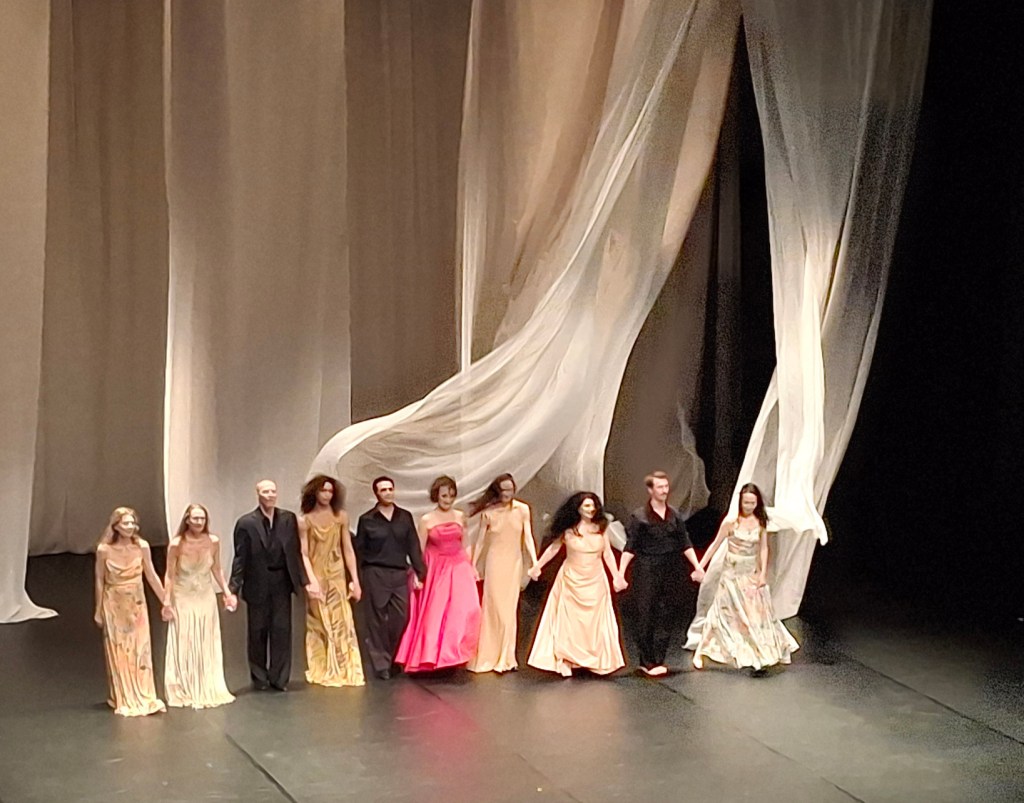
Then after a fairly quiet week a hectic weekend was upon us. On Friday I went with my friend Hattie to see Pina Bausch’s Tanztheater Wuppertal perform the amazing Sweet Mambo. With a flowing white drape background which sometimes billowed and was sometimes still and occasionally swallowed the dancers, the dance unfolded with a series of scenes in which women seduce and repel men, in which they find some common ground and other in which they have a laugh together. The fact that there are three men and six women probably indicates where Pina’s sympathies lie. The sound track is eclectic with classical, ambient, jazz and spoken words. As so often with her confections, it sounds like a mess but somehow it works with a mesmerising beauty. We left the theatre with big smiles on our faces.
The next day promised to be a bit of a scramble with a trip to Watford for football followed by a cross London dash to the Arcola Theatre for a play in the evening. My initial journey was complicated by there being no Metropolitan Line trains to Watford – my usual route when not driving – as it deposits me much closer to the West Herts Sports Club, where we meet for pre-match drinks and chat, than Watford Junction. It was all worthwhile as our new manager – third of this season, 23rd since the Pozzo family bought the club in 2012 – coaxed the team to a 2-0 victory over Derby County. After the match two Overground trains took us via a highly complex platform change at Willesden Junction (thank goodness Fran was with me or I’d have got completely lost). We met up with Farzana in the Arcola bar before watching a highly entertaining one-man show with a Watford connection.

Monstering the Rocketman devised and performed by Henry Naylor was originally at the Edinburgh Festival but the excellent Arcola gave it a worthy London run. It featured the dreadful Kelvin Mckenzie’s vitriolic attack on Elton John, the total lack of facts and evidence for which resulted in the biggest libel suit in history with Elton taking on the might of The Sun and the power of the Murdoch empire. With video clips and garish headline displays Naylor told the full story in a variety of characters in a funny, terrifying and eloquent way. He was one of the lead writers for Spitting Image back in the day and his satirical skills enabled him to skewer McKenzie and cronies in a revealing and most enjoyable 75 minutes. As it was still early we three made our way to the excellent Five Fingers for a fine curry.
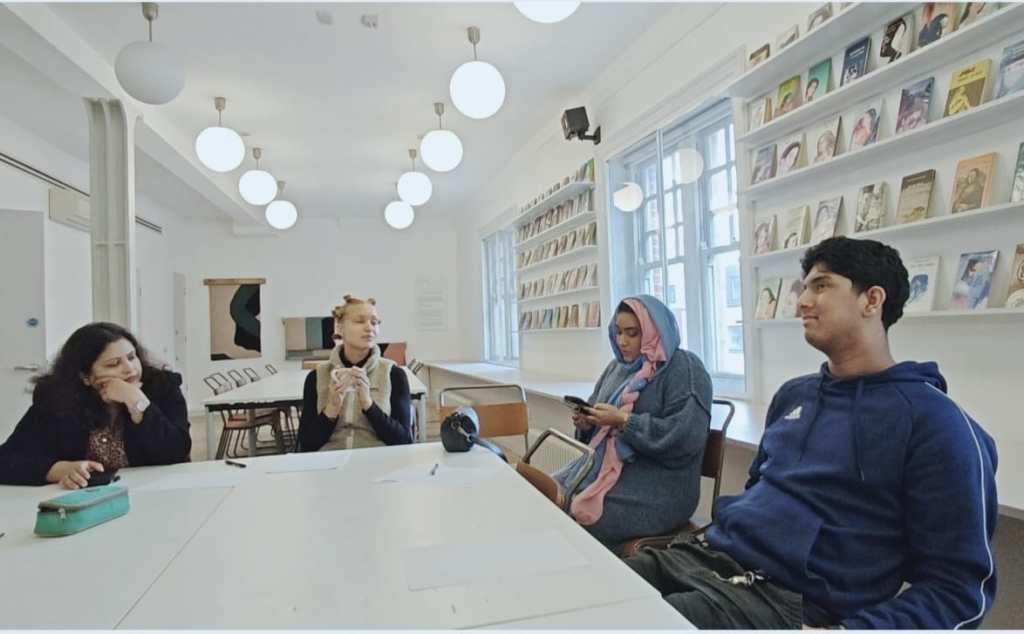
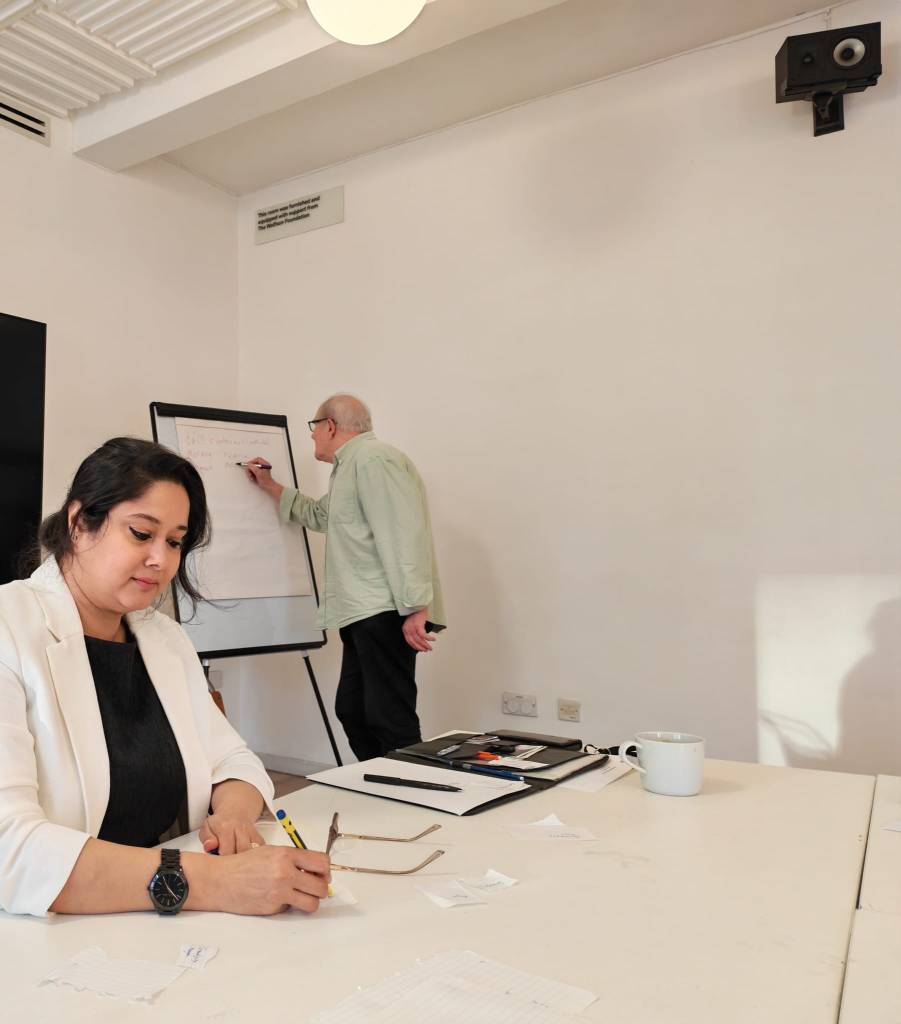
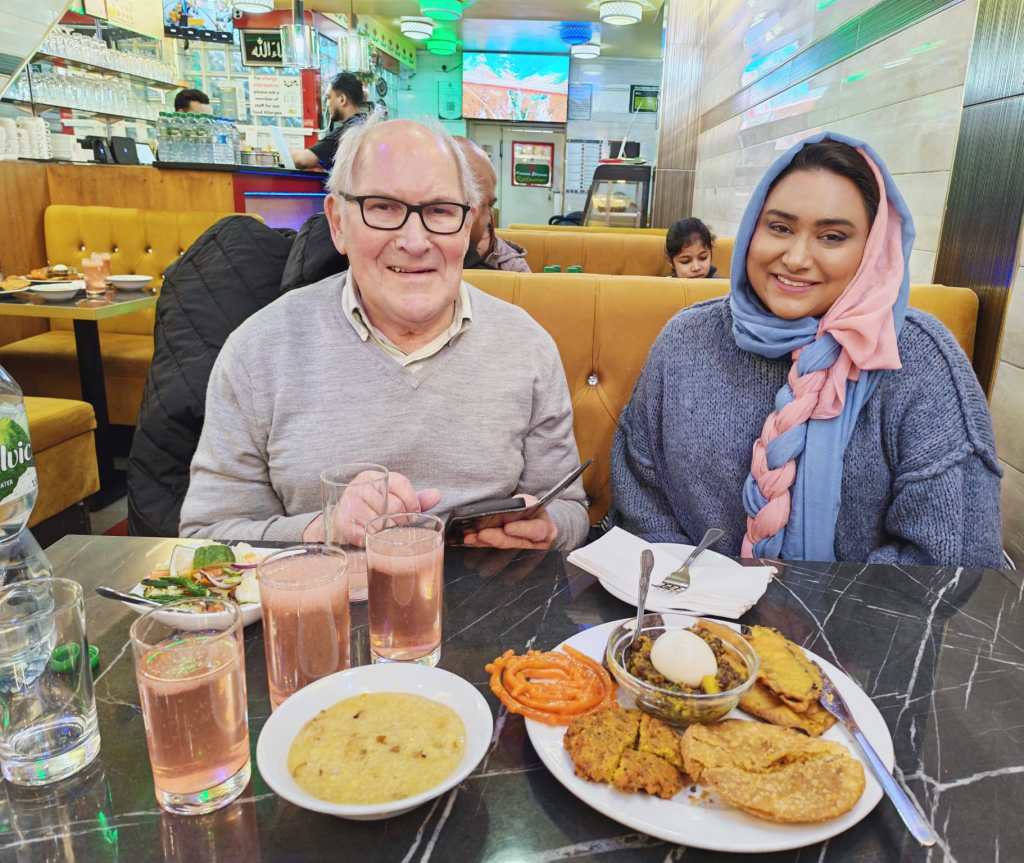
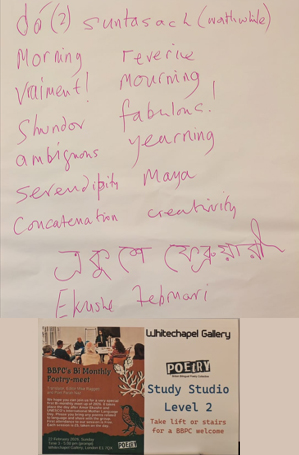
Saturday 21 was UNESCO International Mother Language Day so it was appropriate that our British Bilingual Poetry Collective (BBPC) group had our regular meeting on Sunday 22 and could focus on the topic with a group of regulars and two people joining us for the first time. I outlined the origin of the Day which started in Bangladesh when five students were executed for speaking Bengali rather tha Urdu and was observed there ever since. Then the government suggested to UNESCO that it should be global which it has been since 1999. I had asked my friend Shumi to bring her delightful poem Banglish about her experience of growing up bilingually in London, I had sourced a number of others I could read and a lively discussion ensued with contributions with many different experiences. We had a technical task to conclude in which all of us suggested two words which I then wrote up on the flip chart. The session’s ‘homework’ was to write a poem incorporating all the words. Three poems resulted which were not bad at all. If you want to give it a try the words are below. As some of the group were observing the Ramadan fast, we repaired to a local restaurant to enjoy iftar the moment the sun set. The chef did a count down for us and then promptly brought much-needed, by some, food.
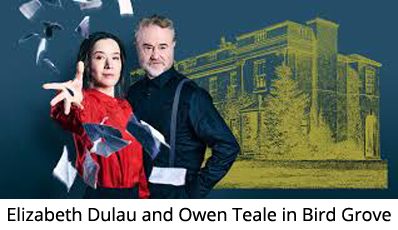
It doesn’t stop – Monday was off to Hampstead Theatre for the press night of Bird Grove by Alexi Kaye Campbell. It was a fascinating examination of the trials of a radical young woman Mary Ann Evans fighting a rigid father as well as contemporary mores. This radical young woman later still had to assume a male identity, George Eliot, in order to publish her seven novels and a number of short stories. Ironically she was allowed to publish translations under her own name. The play was rooted in the father daughter dispute and her association with some undesirably left wing friends.
A touch of near-slapstick was introduced through her would-be suitor needing a marriage to secure his inheritance. He was sent off with a flea in his ear. It was interesting with Mr Evans pouring guilt onto his daughter about overreaching their funds to put her in the titular grand house and her steadfast resolve to resist being bullied to church but it stirred up a wish for a play that reached further into her later life and success against the odds. Maybe that’s in the works.
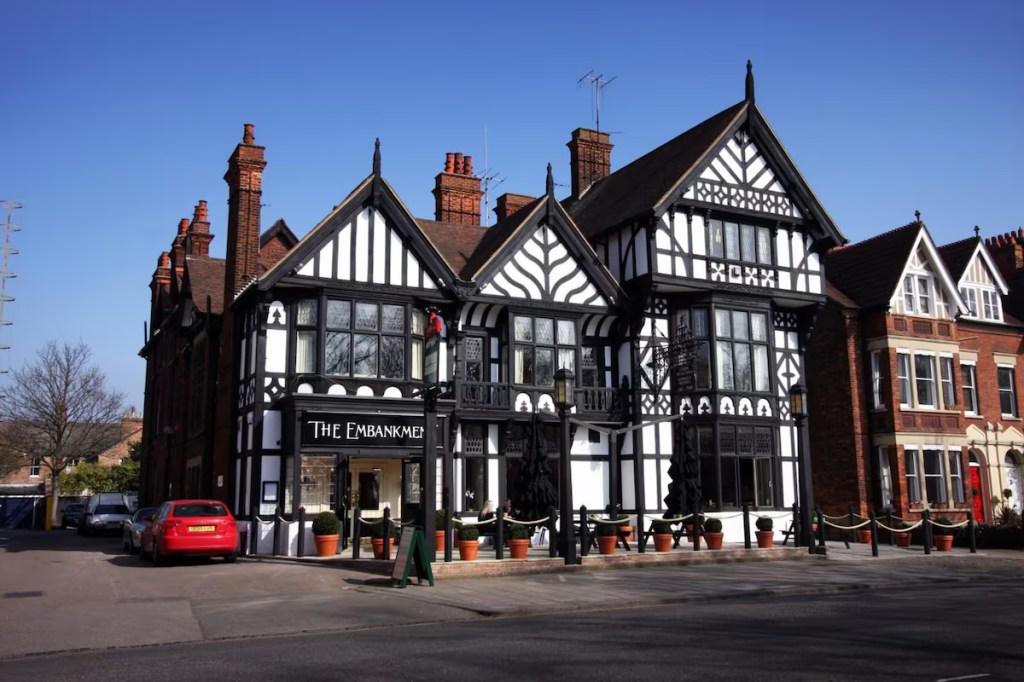
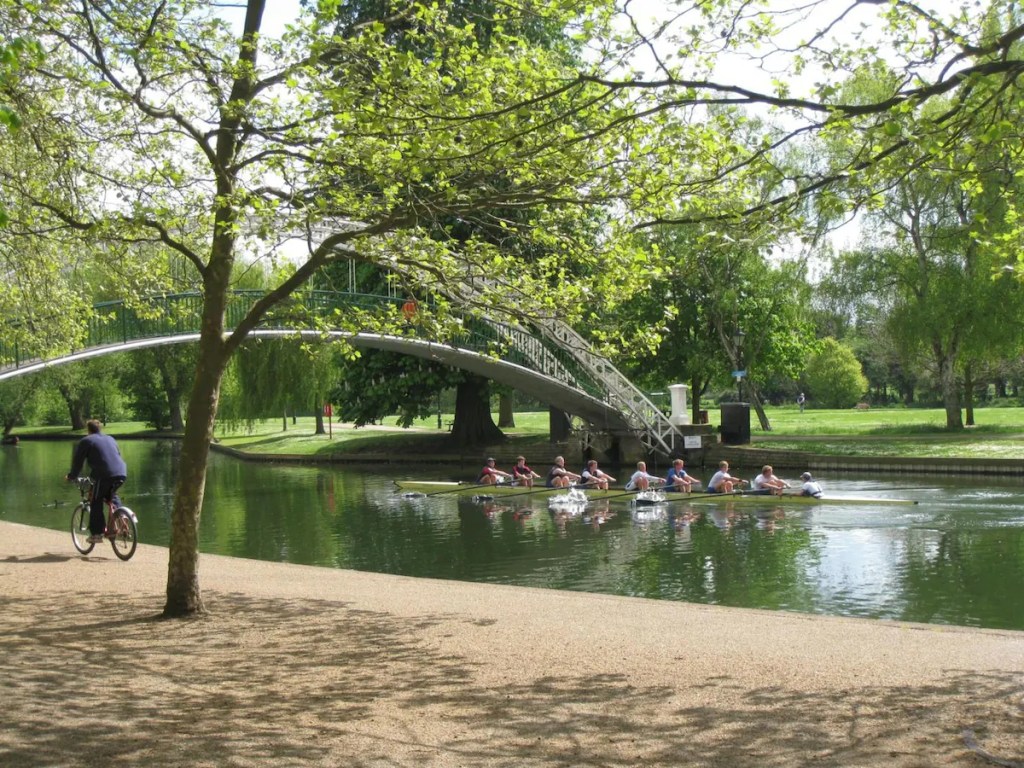
Tuesday was deadline day for BBPC to submit its proposals for the 2026 Season of Bangla Drama. We had discussed these as a group but it fell to me to get them in on time. Then on Wednesday I went to Bedford to have lunch with my friend Jossy who I hadn’t seen for a while. How lucky were we! After the murk and mizzle of the year to date we had a sunny day and could lunch in shirtsleeves on the patio of the Embankment pub (thanks to Pete and Julie Bradshaw for the local knowledge) overlooking the Great Ouse with its scullers, joggers, dog walkers and cyclists. The pub had good food and wine and apparently has rooms. We then strolled back to Bedford Station through a less beautiful part of the town but down by the river all was fine and we had a lively discussion on a wide variety of topics.
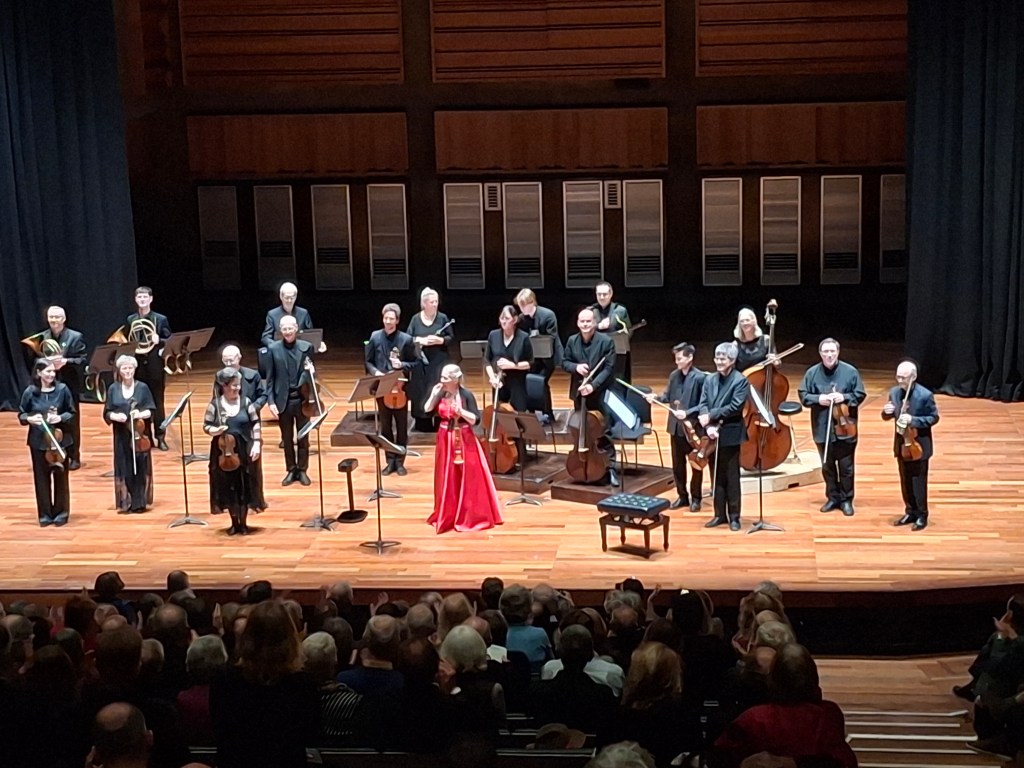
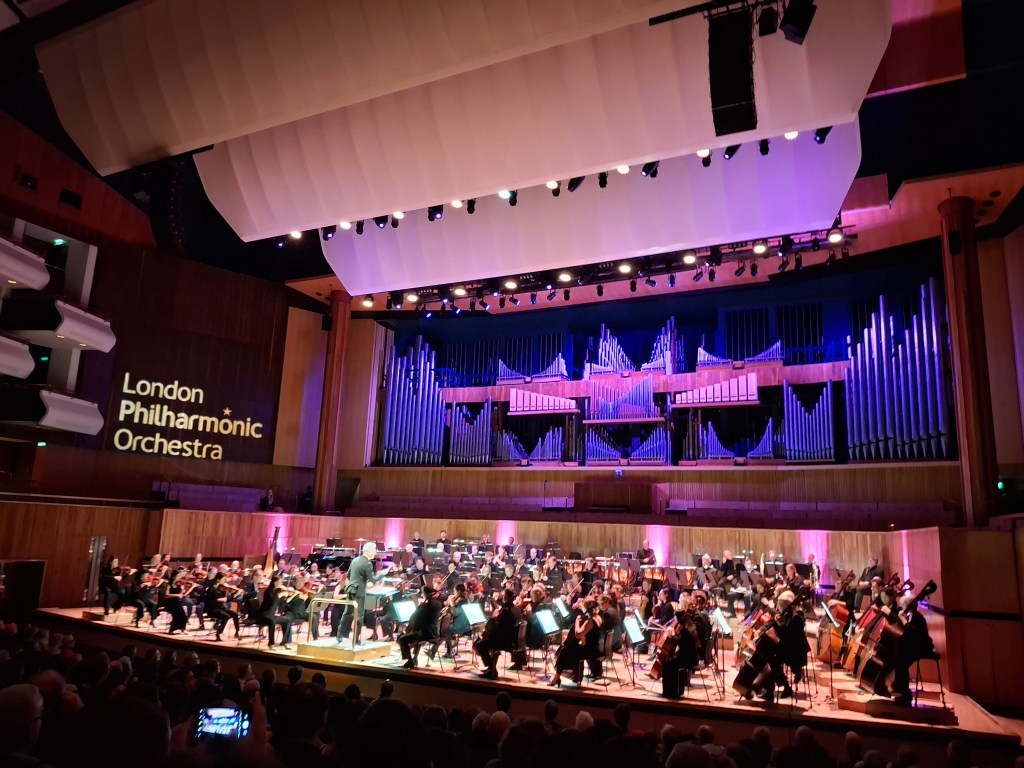
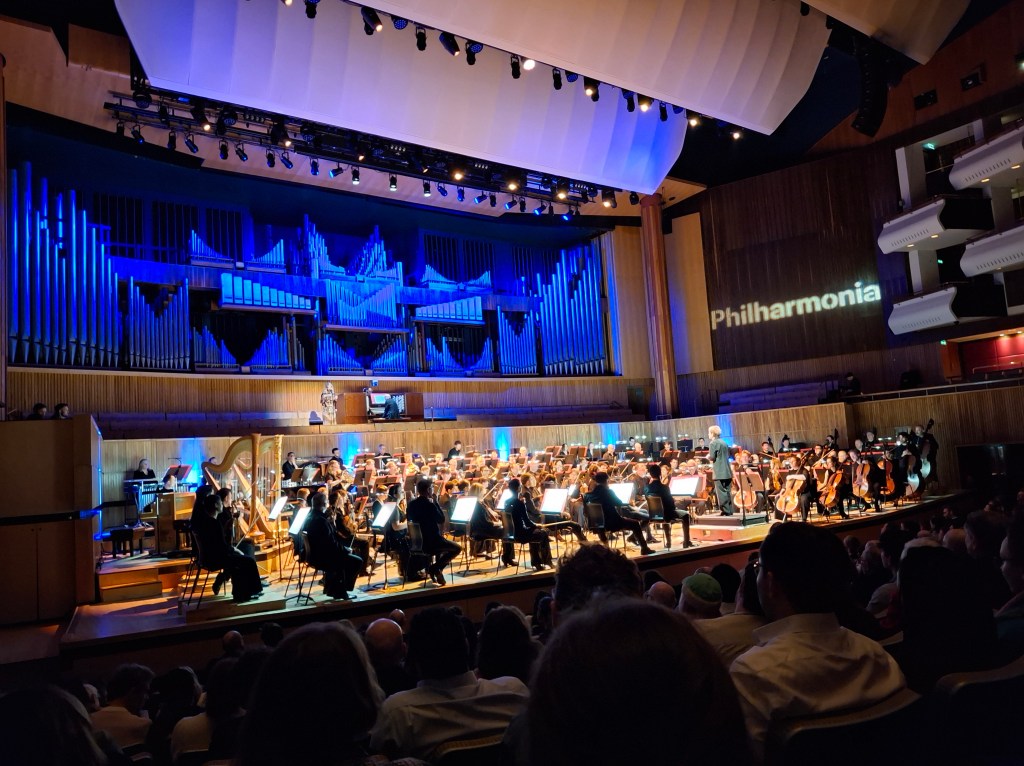
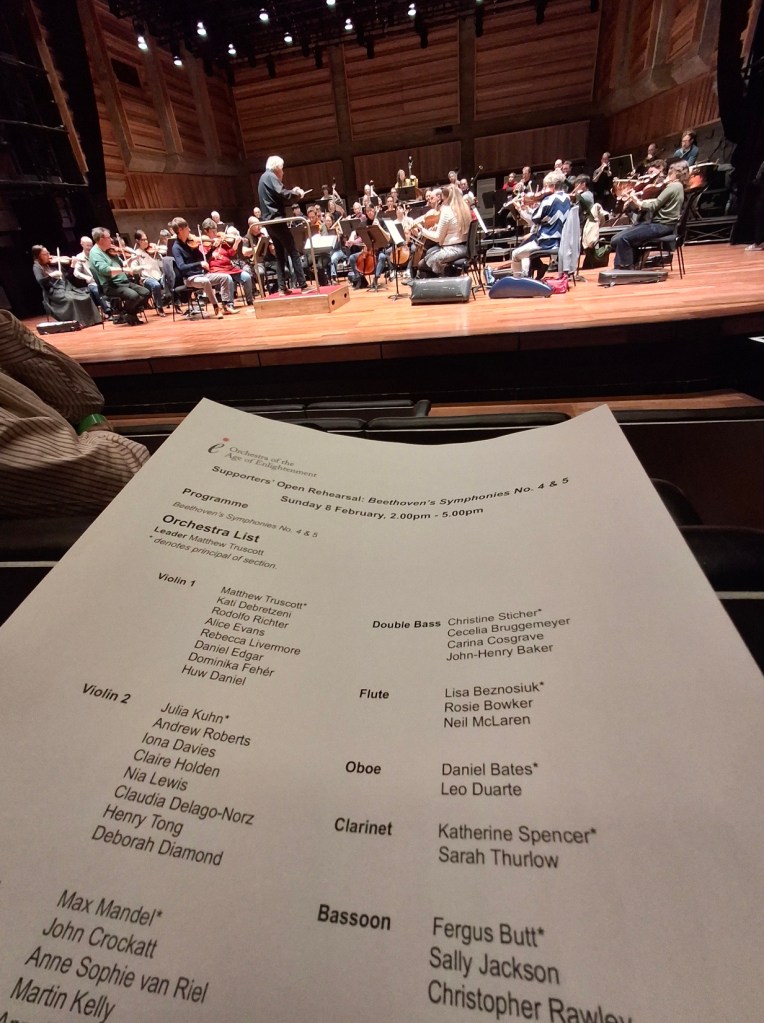
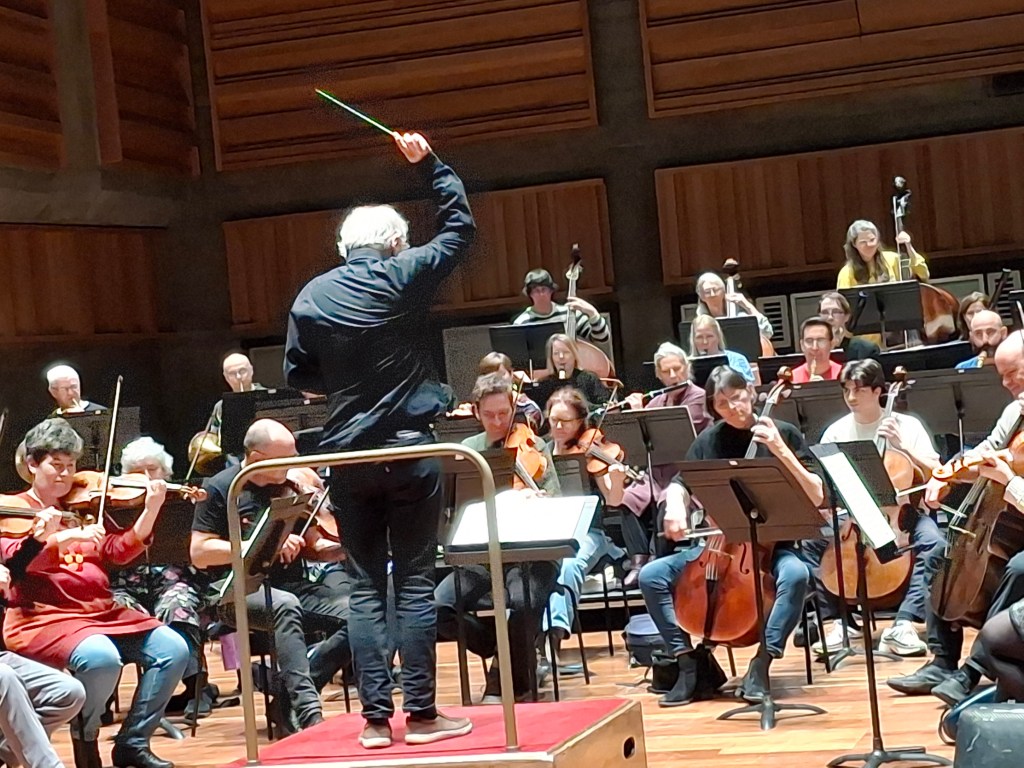
The Royal Festival Hall was full on Thursday for the OAE’s concert with Robin Ticciati – music director at Glyndebourne and familiar with the orchestra from its residency there. The programme was Mozart’s last three symphonies, 39, 40 and 41. These are pretty familiar items in the classical repertoire but are not often heard together, so a clever piece of programming. Once again, the conductor’s vision and energy, the orchestra’s use of period appropriate instruments made the works sound really fresh and new. The ‘Jupiter’, probably the most famous, occupied the second half and had atmospheric string playing in counterpoint with lush woodwind and powerful brass. A delight.
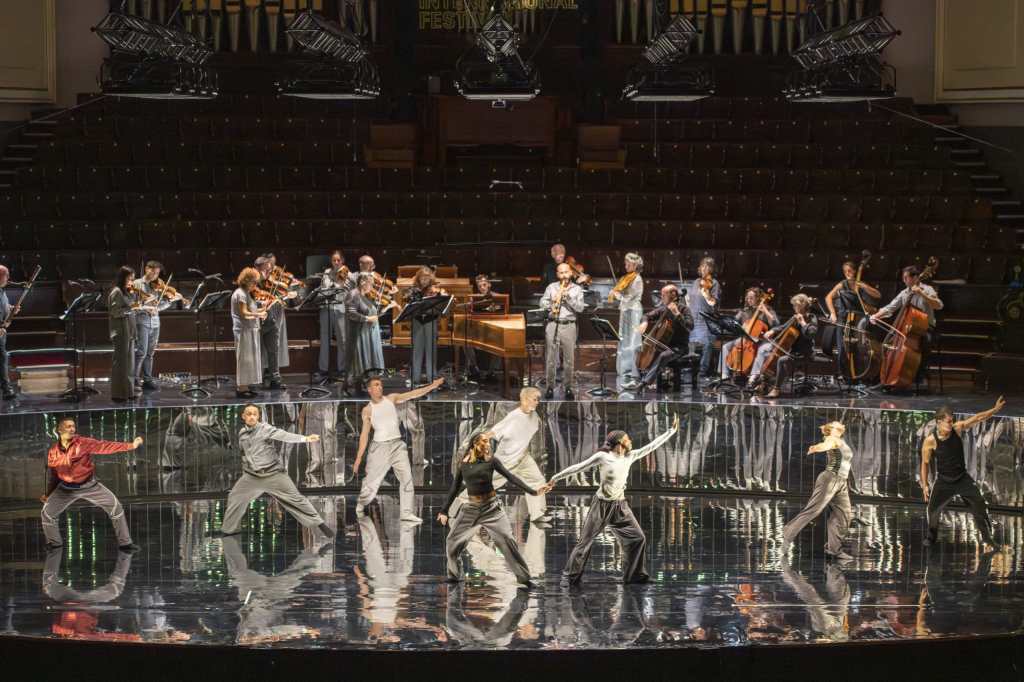
The evening was rounded off by the news from the Development Director telling me that the OAE’s sensational Breaking Bach project will have a series of performances in the UK next year and will be visiting the United States as well. Stemming from the orchestra being based in a school this ground breaking (sorry!) production deserves this exposure.
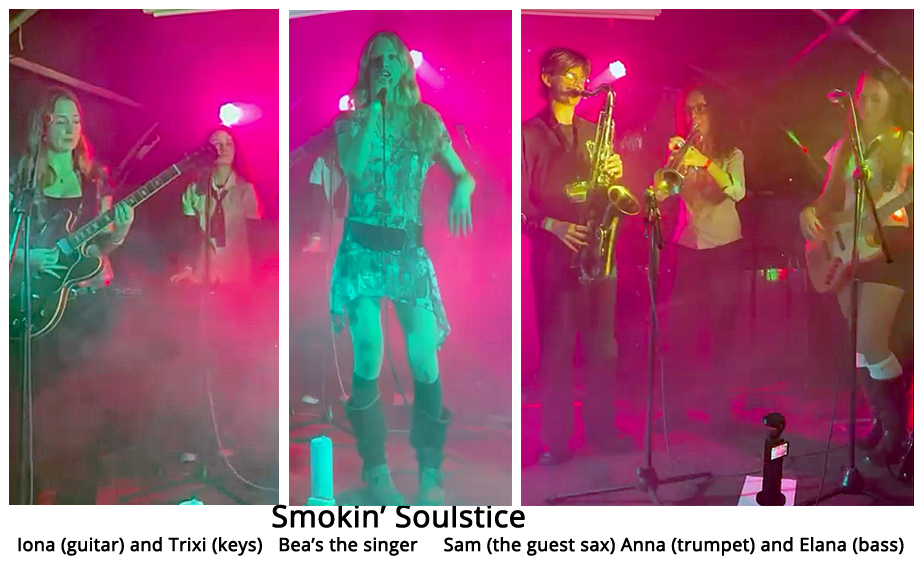
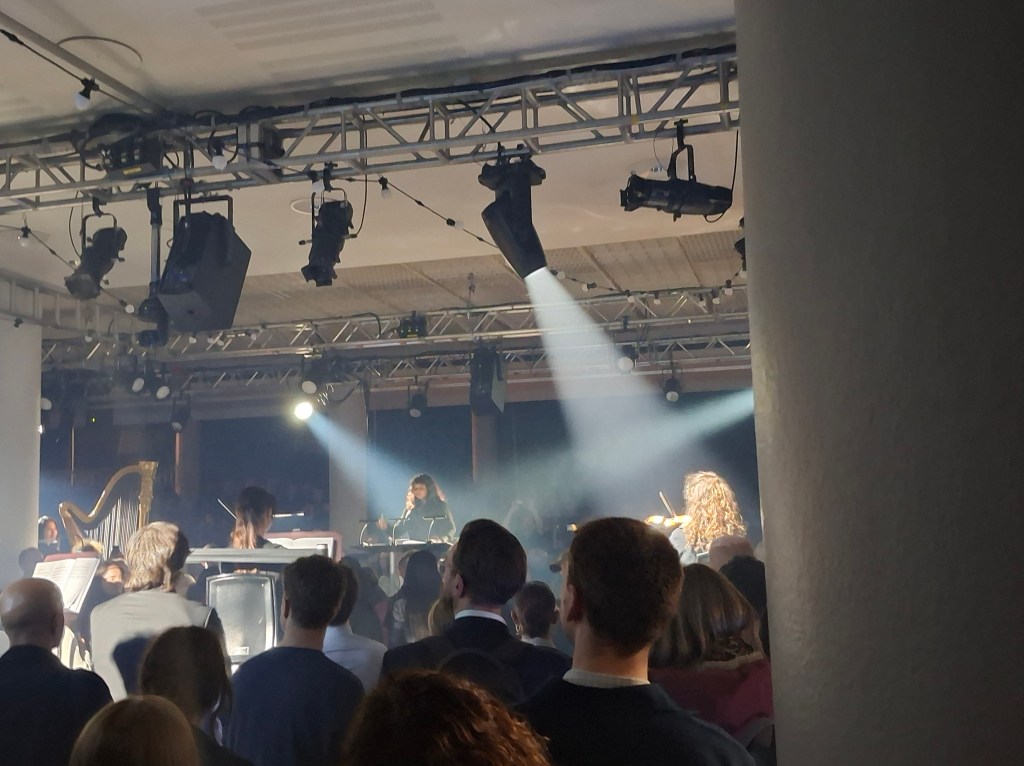
The next Sunday I had a music experience of a very different kind with a trip to an arch under Herne Hill Station to wear my SOULSTICE GRANDAD T-shirt with pride and see the group in which my granddaughter (Daisy but Trixi in the band) plays keyboard and flute and sings. Every time I see them they get better – different set list incorporating original material and covers, tighter arrangements and harmonies and tonight they had a guest saxophonist Sam to add to the exhilarating session amid the smoke machines and lighting of the Off The Cuff venue. (Image below contains stills from a video courtesy of Chris Addison as holding a pint in one hand and my coat in the other I couldn’t get my phone out.)
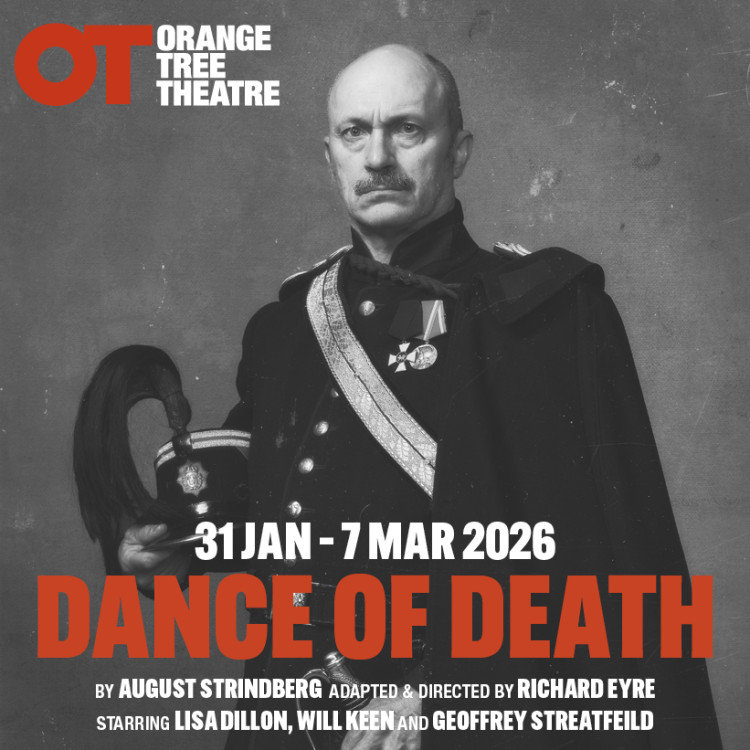
Two intense family dramas were next on the agenda. Richard Eyre’s adaptation of Strinberg’s Dance of Death at the Orange Tree was unremittingly bleak as a couple try to destroy each other. Updating it to the quarantine era of Spanish flu gave it an added claustrophobia as did the cluttered set. It was an evening to be admired for its production and acting rather than enjoyed. I knew a bit more what to expect the next night at the Young Vic as I had been to the Insight session last month. However the actual production came as quite a surprise. I’d seen the beige leather semi circle that forms a large part of the set previously but the red plush carpet on the floor and walls, the observation window and the fact that the audience reamined under the harshest of house lights as the action began were truly unexpected.
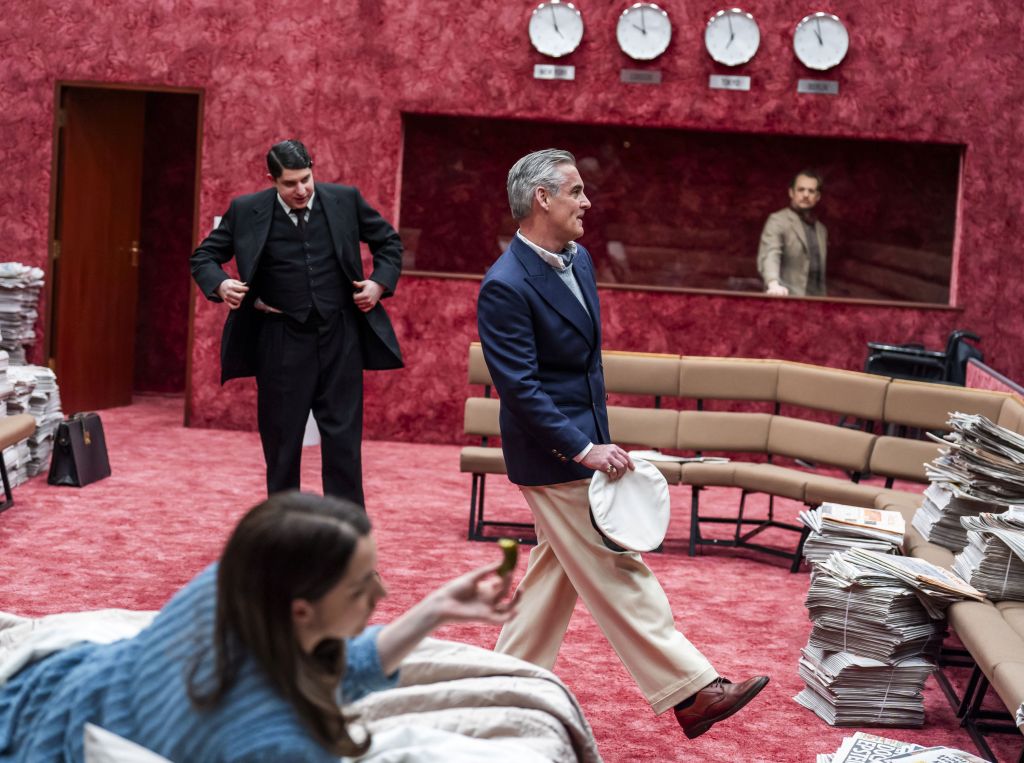
Arthur Miller is all over London at the moment, but Broken Glass is a late play and not often performed. The key element is the lower limb paralysis of Sylvia, played brilliantly by Pearl Chanda, a Brooklyn Jewish woman. After reading and hearing news of the Nazi Kristallnacht pogrom, suddenly her legs won’t work and she’s confined to bed. Attempting to explain this reveals all sorts of marital and family issues which see the characters unravelling before us, including a Dr Hyman played by Alex Waldman whose Freudian practices encourage Sylvia to imagine she’s sleeping with him. It was a demanding watch but made us think about current day issues of genocide to which many turn a blind eye – are we paralysed because there is nothing we can do? Leaving the lights on for much of the play was quite distracting as we were sitting opposite both Sir Lennie Henry and mostly significantly the Guardian theatre critic Arif Akbar. What would those hastily written notes revel in tomorrow’s paper? She’s usually quite a harsh reviewer but gave this four stars.
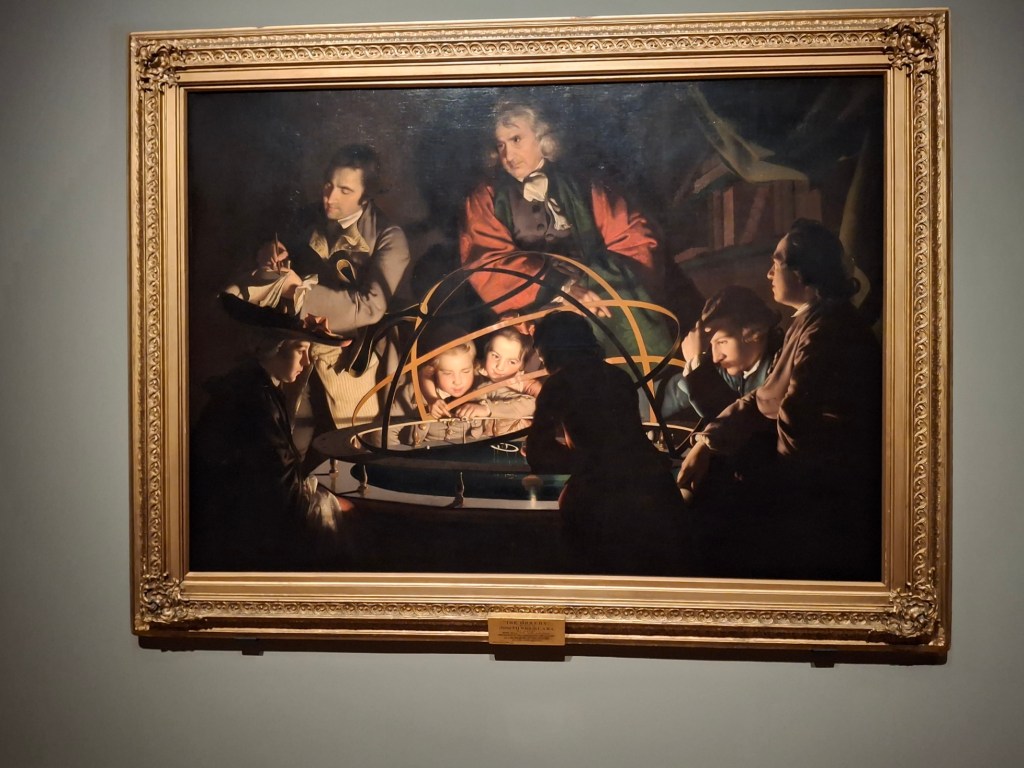
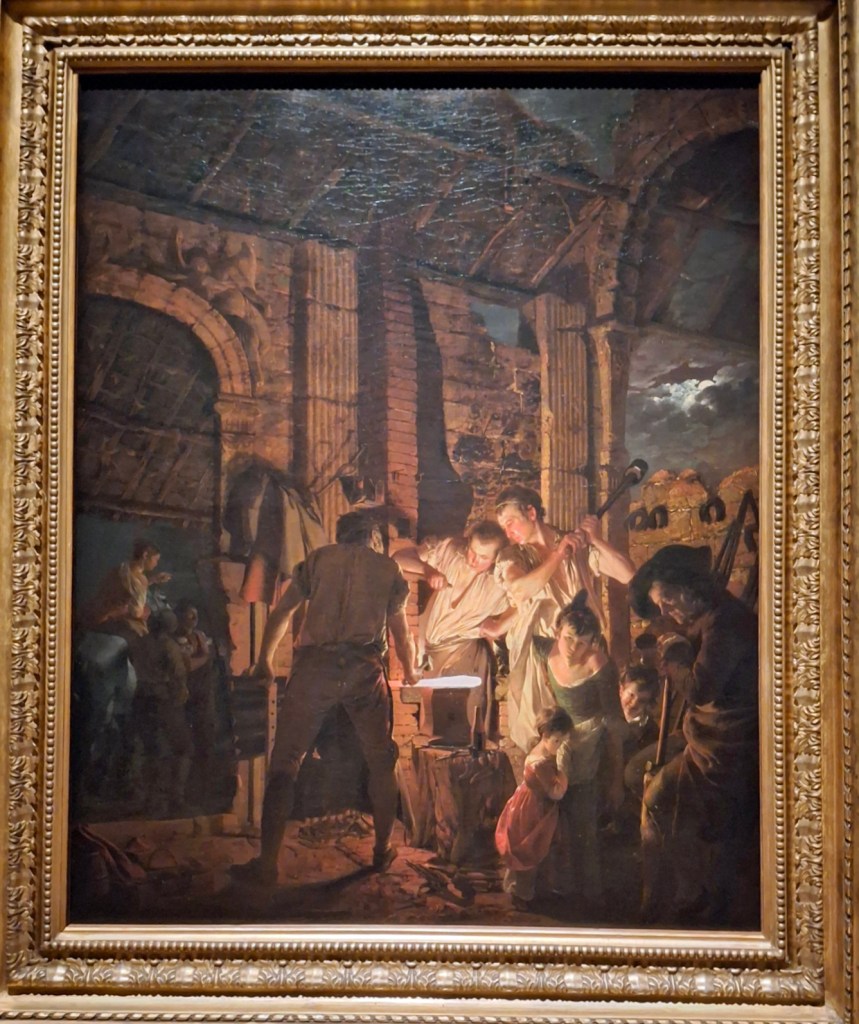
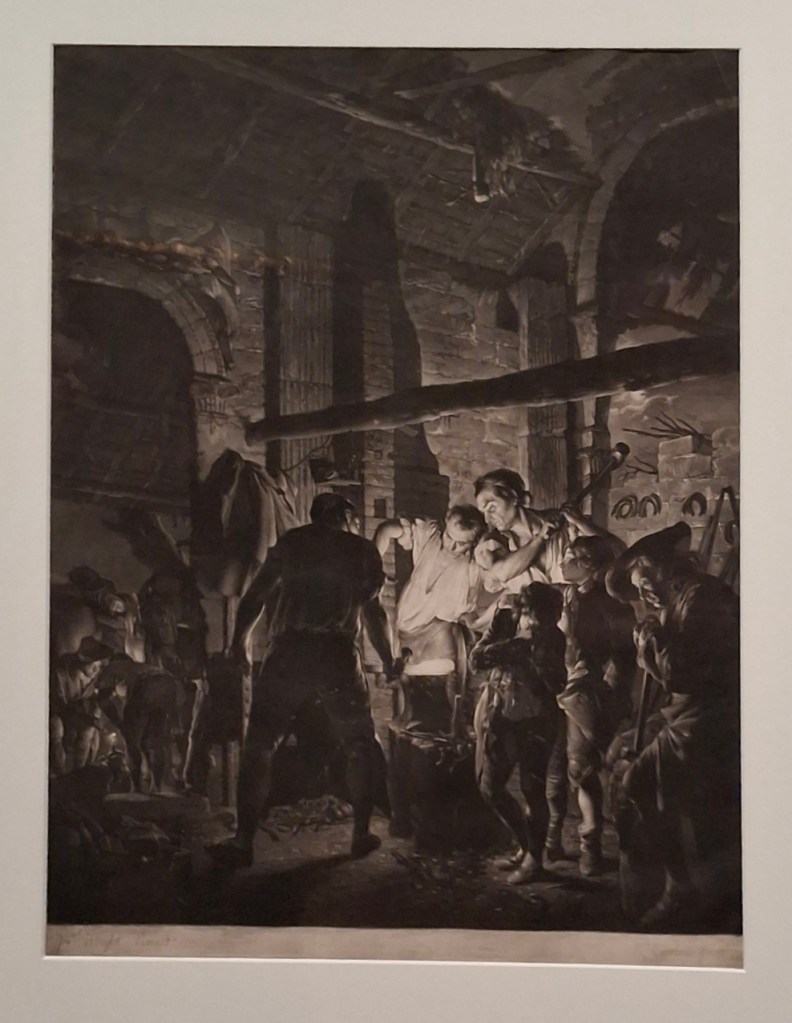
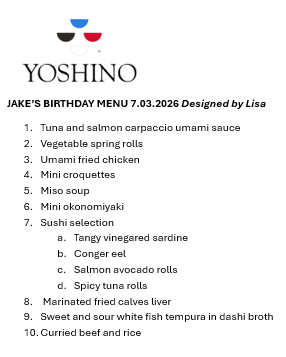
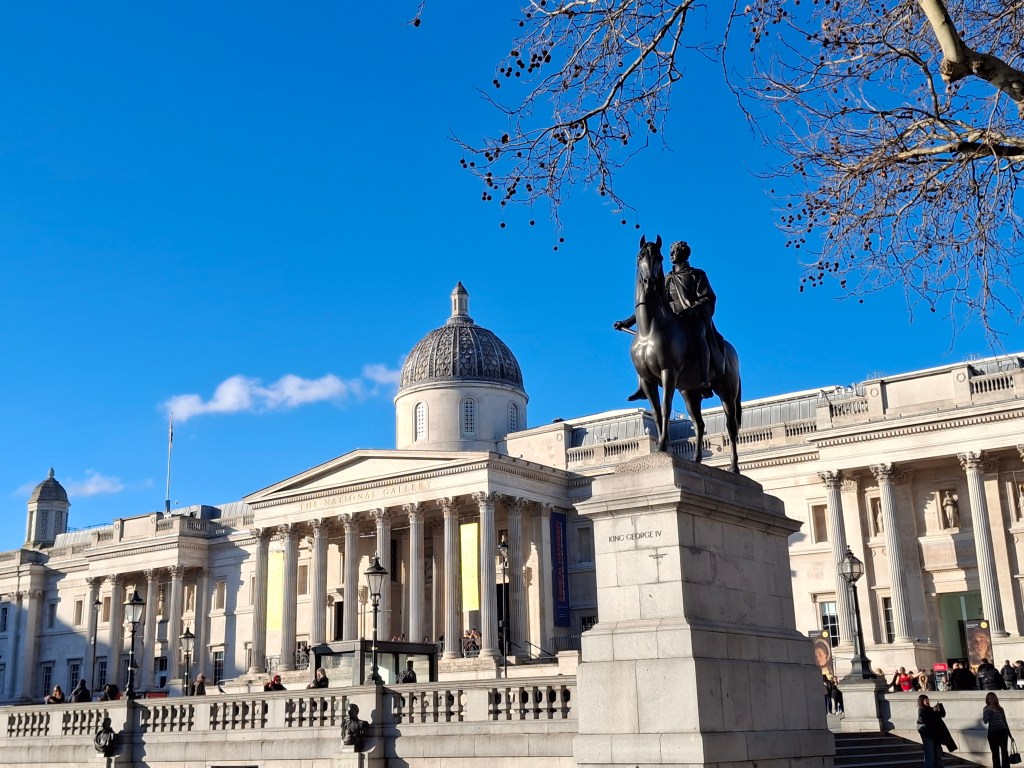
My grandson Jake, somehow turned 20 on Saturday and had decided that he’d like to go back to Yoshino for his annual birthday dinner. Ever happy to oblige I had words with Maitresse D’ Lisa and she came up with a really excellent menu for us. But before that, I decided to go to the National Gallery to see the Joseph Wright of Derby exhibition. I’d seen some of his paintings a few years ago in Norwich and was fascinated by his use of small and focused light sources. I gather his take on chiaroscuro is called ‘tenebrism’. In most of the paintings apart from the canndle or lamp light there was always a glint of moonlight in the background. As a big fan of printmaking as well as painting it was interesting to see mezzotint versions of his paintings which were obviously the main way of making money from your work at the time. Seeing them alongside each other was enlightening and the fact that one featured an orrery when I was about to meet my physics student Jake added another layer of interest. It’s a small show but well worth a visit. Walking through the other galleries it also remoinded me what a wealth of high class art is at our disposal for free still. I must go more often and revel in the Canalettos and Guardis and Turner v Constable without paying £24 for the privilege at the Tate. Oh and there are some favourite Goya, Velaquez and Murillo canvases I hadn’t seen for a long time – and as they say – so much more.
Then to the real business of the day. Anybody who has read previous blogs will know how important Yoshino is in my life. Dee and I first went to the old Yoshino in 2009 or 10 (I wasn’t blogging then or I’d know) when it was in Picadilly Place and came to know Lisa the Maitresse D’ quite well. Since then she’s been on a family outing to see My Neighbour Totoro at the Barbican and came to Glyndebourne with me in 2023 and we went as a family to the soft opening (right) of the new premises in Duke of York Street in April last year – minus Chris filming in Dublin and Daisy who didn’t fancy it, plus Rosa and Frances. So Lisa knows us all too.
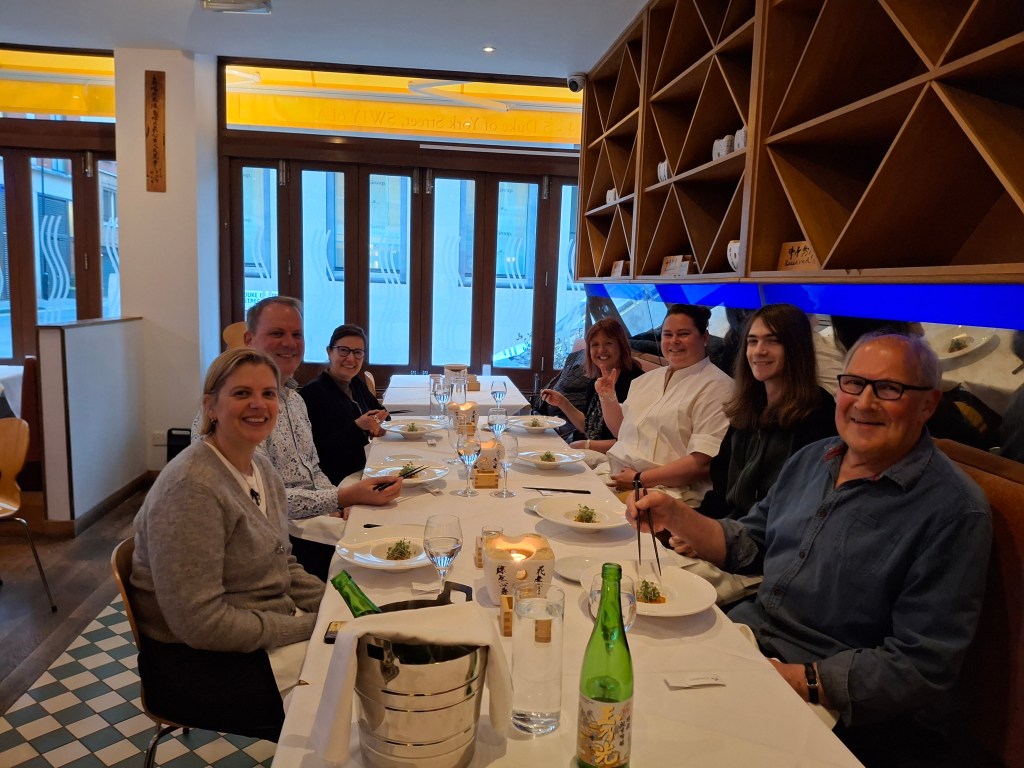
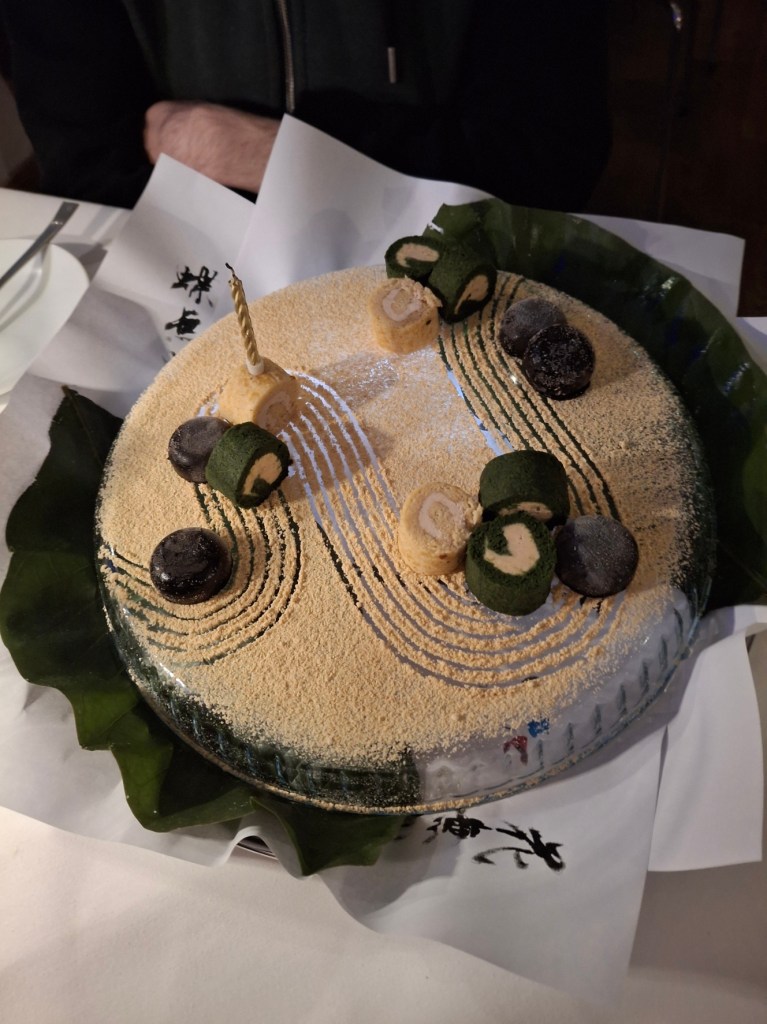
However when Jake said he’d like his birthday dinner at Yoshino there was rejoicing in lots of the family with a little trepidation on the part of a slightly picky Daisy. So I asked Lisa to book us in and design a menu for us with alternatives for Daisy. She pulled out all the stops and gave us an absolute feast of taste and texture sensations including making an alcohol free campari for non-drinker Jake. And as she had run out of my ‘usual’ sake – I wonder why – she offered me two options to taste before we settled on an excellent dry alternative. Daisy surprised herself and us by being really adventurous and enjoying things she wouldn’t have looked at – sake included. On a previous visit we’d tried a curry dish and had not been impressed. Lisa brought us a bowl of curry and rice saying it was spice combination number 47. Well this variety certainly hit the spot.This wonderful evening concluded with Lisa and her colleague Naomi bringing Jake a birthday cake of ice cream filled chocolates and soy and matcha mochi swiss roll slices all arranged on a raked zen garden. What a night! What service!







 mikeandmurakami.com