
So after a great gig and a late-ish night for an old bloke like me, it was a lie in to watch Match of the Day – at least the bit featuring Watford’s win, which had been followed by all in the sound check yesterday through my phone updates. After a leisurely breakfast I took a tram ride to Central Station ready to catch a train to Utrecht. Once again the ease and efficiency of travel were everywhere apparent, And to make things better there had been an upward temperature shift of more than ten degrees. We were now in + degrees and layers were back in the suitcase. I knew I’d arrive ahead of normal check in time but went to the Dom Hotel first to leave my bag, Getting out of Utrecht station is a bit like getting into the London Stadium – you have to go through an enormous shopping mall, Hoog Catharijne. And it could easily double as Westfield as, sadly, almost all the shops and cafes are international brands. Just one caught my eye that might not do so well in England – a menswear shop called Sissy Boy.
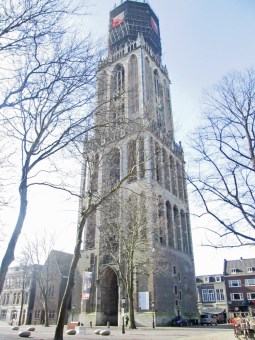 The hotel was an easy ten minute walk towards Utrecht’s defining monument, the Dom Tower. Even I couldn’t get lost looking for Domstraat. I did have a slight worry when I had to ring the doorbell to gain entry. It’s a hotel in progress as the eleven suites (they are worthy of the epithet rather than just rooms) are all there and beautifully appointed but the bar and restaurant won’t open until next week end, Staff were helpful and went to check whether housekeeping had a room available and I was quickly signed in and shown to a spacious second floor room with windows on two sides and views out over the inner city.

I got a call from Alan to say they were leaving their hotel and would be at the venue in about an hour, Just the right time for a stroll back towards the north side of the station via a modern bar restaurant for lunch and a beer. It was so modern that it’s the first I’ve ever been in where you can only play by card – no cash accepted.
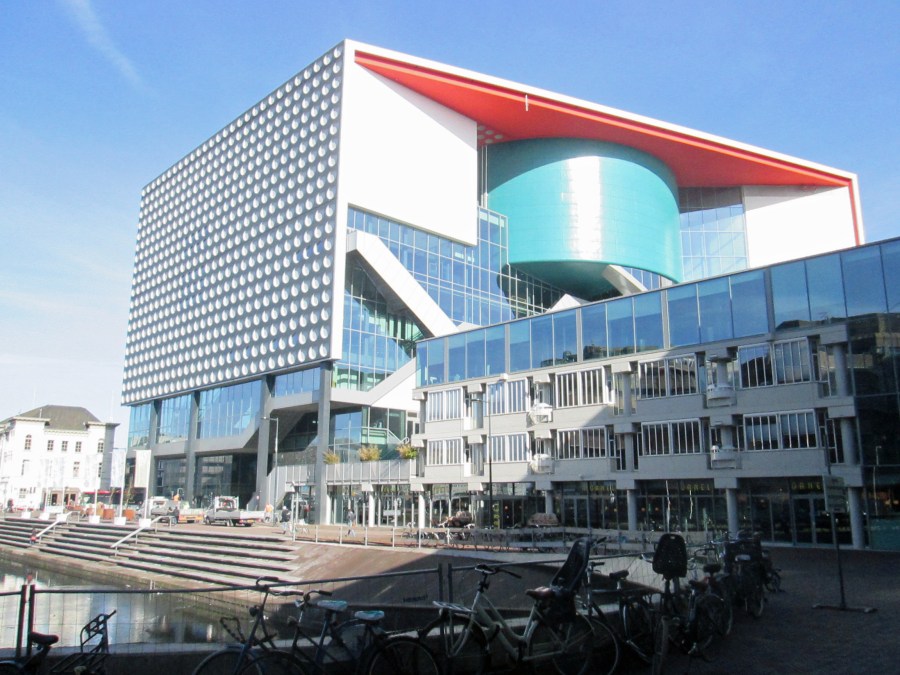 I haven’t Googled it but I guess there was an old Tivoli theatre as there is an older building behind the massive new music centre which opened in 2014. Do we have so many modern music and/or theatre venues in the UK? If not, and I suspect not, maybe the “creative industries” should step up their lobbying. This place had several gigs on and a cafe that must have been making good money for it. There are nine different halls each designed with an acoustic suited to particular music forms. We were in Cloud Nine the blue semicircle that sticks out at the top. A good name for a jazz club. I make my way up through the public area and collect my guest ticket which ominously bears no number but the words “Rij Stoel ” but also the legend Vrijkaart which meant I was a guest and there indeed I later found an isolated chair to the right side of the stage. But again a helpful employee said “You must be Mike” and I was escorted through to the green room and met up with all my new friends from yesterday and Skid. They had done the sound check by the time I got there and we had time for a few jokes and general chatter and it was time to go on stage. This was a 4 pm Sunday Afternoon Jazz slot. Again it’s a very modern room but with a great atmosphere.


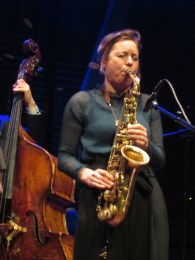
They played a slightly different set list from yesterday but the saxophone summit was soon burning up the hall. There was a long bar along one side but it was notable that very few people got up to get a drink during the set and then there was a rush at the interval. Truly jazz at the highest level and I don’t just mean because we were on Level 9. The Rein de Graaff Trio play together frequently and are a tuneful, slick and inventive rhythm section worthy of playing behind anyone. I’ve long admired Alan Skidmore‘s ability to play the hardest of hard bop and tender lyrical ballads always with solos that intrigue, dazzle and entertain. I had not heard Benjamin Herman before but was very impressed with his performances and likewise Tineke Postma was unknown to me before these gigs but her albums will be on my download list very shortly after I get back home. She, as they say, really ripped the place up.
Another chance to chill after the gig and take my farewells from Benjamin, Tineke and Eric – I went to the garage again with Alan, Rein and Marius who were heading off back to their hotel out in the countryside. It was not too difficult to get out this time and I popped back to the hotel to sort out photos before going out for a pleasant dinner in the busy heart of Utrecht to a restaurant recommended by the helpful staff at the Dom Hotel.
 I had some work-related stuff to do on Monday but once that was complete had a chance to walk around other parts of this delightful city. I decided that my feet were too old to climb the 465 steps to the top of the Dom Tower and of course the top part is clad in scaffolding at present during restoration – well it was built in 1382 to it probably needs a bit of tlc. It rises to 112 metres making it the tallest church tower in the Netherlands. I did take a look at St Martin’s Cathedral next door which has a very fine cloister and then walked along the Oudegracht or old canal, sparkling in the unexpected warm spring sunshine and with the Dom Tower dominating the skyline. Then back up through another canal-side park towards the market place and the old centre. I realised I was running short on euros and consulted Google maps for the nearest ATM. I dutifully followed the steps but there’s no bank in sight. The map said it was bang next door to Lush, the soap shop. Now I’m not very fond of the odours that emerge from Lush but I manned up and walked in with my phone to enquire if they knew where it was. Total blankness from the first assistant but then her colleague said that it was inside the Hema shop opposite. Now able to buy a coffee I continued to walk through old Utrecht.
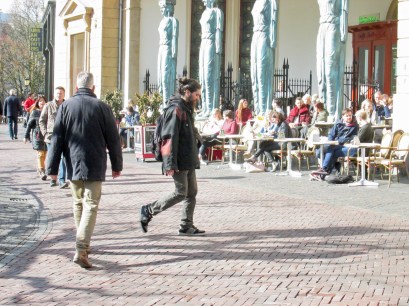 It was interesting to see that the minute the sun comes out again people love to eat and drink outdoors and there were many examples of lunch time cafe society as I moved through the city. I joined them and then it was then time to catch a train back to Amsterdam, the Thalys to Brussels and Eurostar back to London, completing a highly enjoyable short break.
.
 Just along from the museum is Amsterdam’s famous Vondelpark so I went for a stroll there with loads more skaters on the lakes including an impromptu ice hockey game, joggers on the pathways and cycles ridden it seemed by Michelin men and women – puffa jackets seem de rigeur. Leidseplein is the tourist epicentre for bars, restaurants and clubs so it was now time for a beer and a snack. I found a good traditional bar Reynders and after refuelling I walked back to the centre. On the way I had a very reassuring phone call from my neighbour John who had heard me coughing in the night earlier in the week, noticed that the window shutters were closed and called to check that I was alive and well. Aren’t neighbours just wonderful?
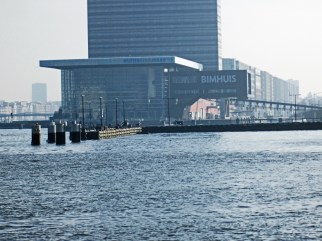 It was a great route crossing all the big central canals and finishing up in Dam Square. From there it was a further kilometre or so to Central Station and then along the Ij to reach Bimhuis a magnificent music venue built about ten years ago where I was due to meet my friend Alan Skidmore for the sound check before their concert that evening. It was quite fun arriving across a angled bridge over the canal up to the empty venue and being escorted from reception to the green room with the greeting “You must be Mike”, They knew I was coming, had they baked a cake? Well no but there was beer in the fridge and an unbelievably warm reception for a random Brit who just happens to be Skid’s mate and webmaster. Despite being an ace saxophonist, Skid’s a drummer manqué and got a chance to sit at the kit in the sound check.



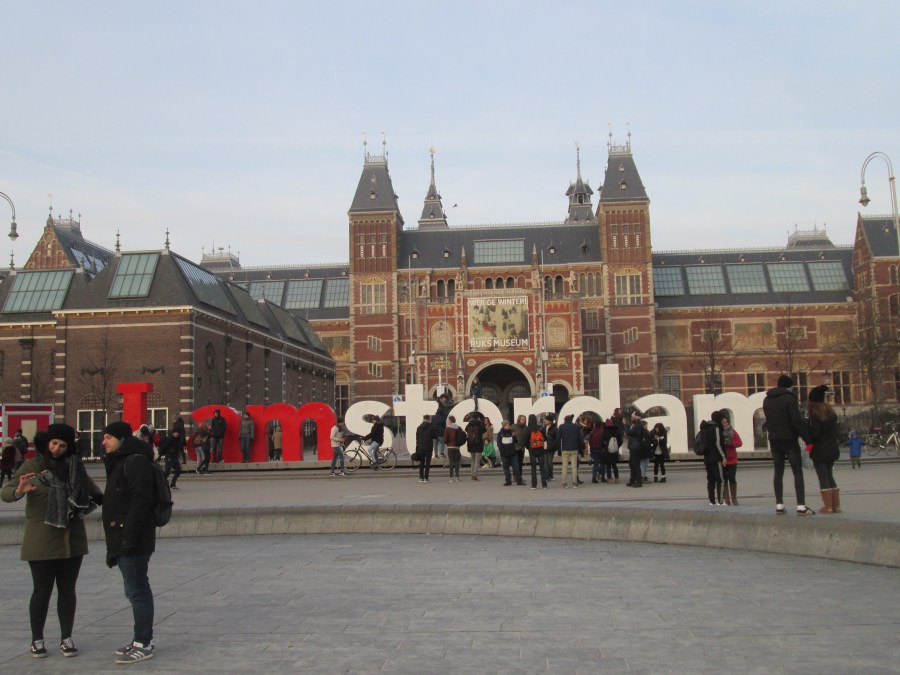
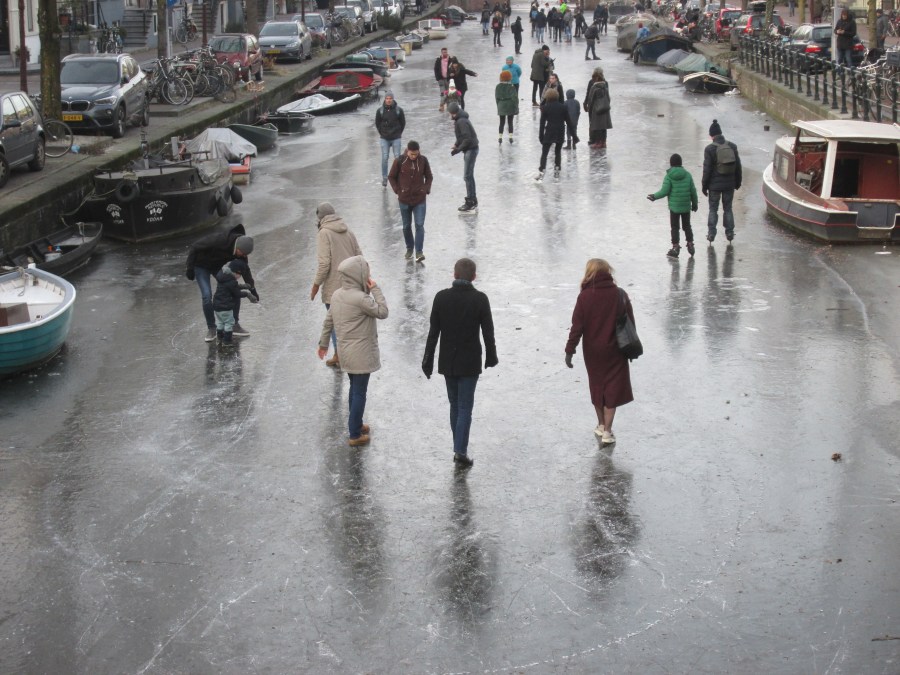 After a pleasant stroll, well wrapped up against the minus 8 according to my phone, it was time for a pause in the journey for a beer. A fine old cafe Mulder presented itself on my route and it seemed rude to refuse. Wooden bar and tables and a good old-fashioned atmosphere with a selection of drought and bottled beers – just what was required. I soon after arrived outside the imposing Rijksmuseum which was on the agenda for tomorrow.
  Across the park behind it was the concert hall for which I had tickets for 8.15 pm in an hour and a half. Perfect time to find another bar and have a pre-concert snack. Again I was lucky to find a table in a very popular place Gruter – it was reserved from 7.30 but I promised to be gone by then. It was very lively and I struck up a conversation with a couple from just outside Utrecht who were flat sitting while their daughter was off skiing. They said I’d done well to find the bar as it’s reckoned to be one of the hidden gems.

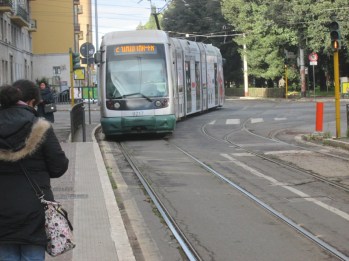 So I had a little moment and resumed my journey on a packed tram. I had time to raise a glass to her in the Piazza del Popolo and found another birra artiginale this time from brewery Beatrice with a pale ale called Diana – all very British royal family! With some complimentary crisps and nuts I was ready for the last leg. I had done very well using metro, trams and a bus and decided to treat myself to a luxury ride to the airport in the hotel’s shuttle bus which proved a good plan as we arrived in good time and I was able to find a seat and write a previous blog.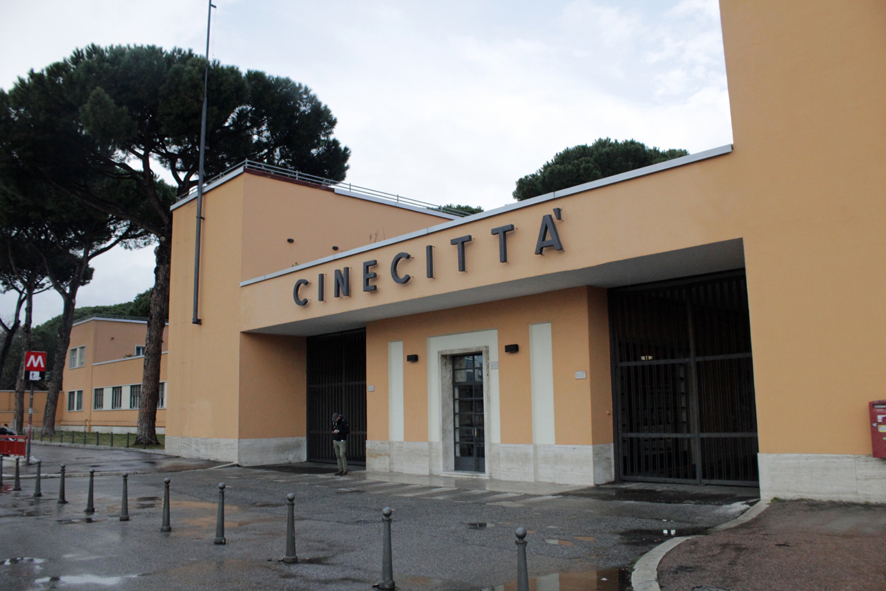
 As you enter the site you walk past ‘Venusia’ a prop used at the beginning of Fellini’s Casanova. Once through the gate we walk along a rough a roadway lined by large terracotta painted buildings each with a Teatro number. Teatro is the Italian equivalent of Stage in English film studio parlance and our first stop, as I try out my new umbrella, is outside Teatro 5 one of 22 in all. I already knew this was their biggest with two submerged tanks for underwater and water surface filming and a massively high ceiling for crane shots. I had also read that Fellini (a favourite from my 1960s film-going days along with Pasolini and Antonioni) held it as his favourite space. I asked whether they had shot the famous scene in La Dolce Vita here in which Anita Ekberg inveigles Marcello Mastroianni to join her in the iconic Trevi Fountain. They hadn’t. It was apparently shot at 05:30 in February with Mastrioanni demanding a wet suit under his tuxedo while Nordic ice-queen Ekberg strolled through the waters, shoulders bare, in her evening gown. There’s a brass plaque on the wall outside Teatro 5 dedicating it to Fellini who did in fact recreate whole streets in the studio for this and the many other films he made here.

 Next to it they are just starting to build an outdoor set for a new film version of Umberto Eco’s Name of the Rose which we weren’t allowed to approach – secrecy or construction hazard I’m not sure. We then move to Assissi built for a film about St Francis but since much adapted to be Florence and other towns in medieval times.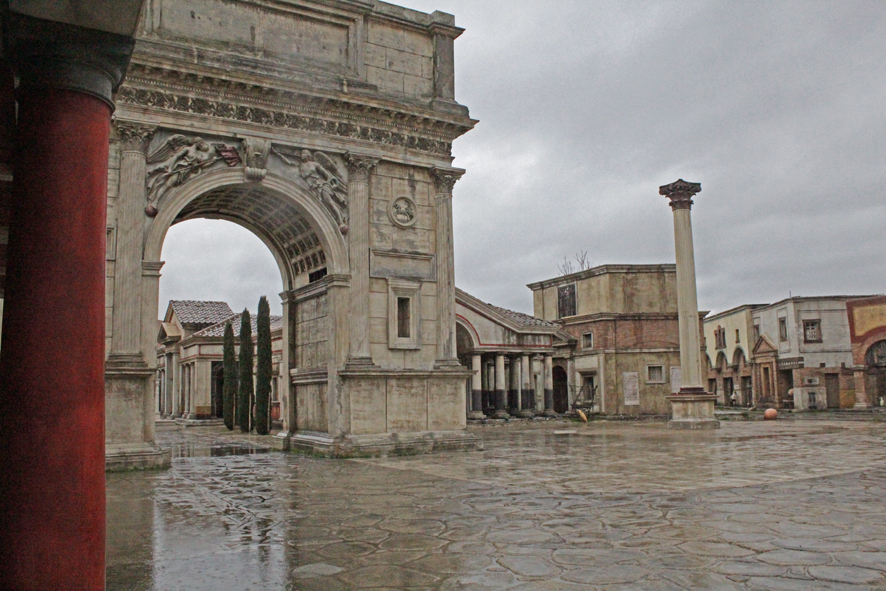
 The entrance area also has a brilliant children’s play area made up from the letters of Cinecitta.All in all a fascinating morning and I was very glad I’d caught up with the guide.
 I found an old UK pound coin in my camera bag and rather than take it to a bank I cast it to the waters. I hope it’s valid for Roman myths.
 On into Santa Agnesa in Agone right opposite Bernini’s famous Four Rivers Fountain which represents the Danube, the Nile, the Plate and the Ganges with mythical creatures and is topped by a huge obelisk. One of the characters is holding his hand up to shield his eyes from the light but popular Roman tales have it that Bernini had this man shield his eyes from the awful facade of the church built by his greatest rival Borromini. Great story, not true – the church came fifteen years after the fountain but hey – it’s a fun way of explaining the rivalry between the established master and the young pretender both eager to attract sponsorship from popes, princes and patrons.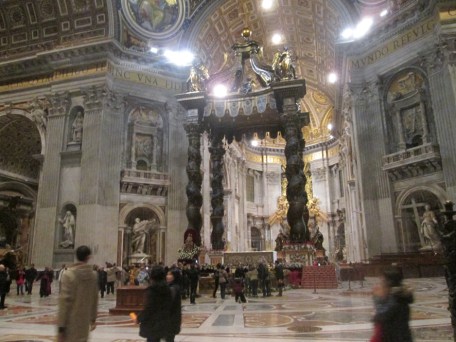
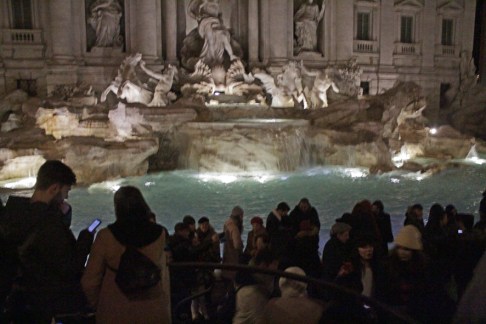 I walked back from the concert past the Trevi fountain and flung in some euros just in case my invalid pound bars me from returning. I looked at several restaurants and was attracted by the option of Ristorante Rossini – what a musical contrast! It proved a good choice with a starter of sauted clams which I’d never seen before. They were in fact steamed like mussels in a white wine and parsley sauce and very tasty. It was also a nod to Dee whose favourite pasta was spaghetti alle vongole. My second course (and last – I’m not Italian) was a delicious lasagne in which the pasta sheets were paper thin and the meat and tomato ragu a little spicy and just what I needed. I was frowned at a little for declining my main course but explained that as an oldie I don’t get as hungry as I used to – thank you Google translate!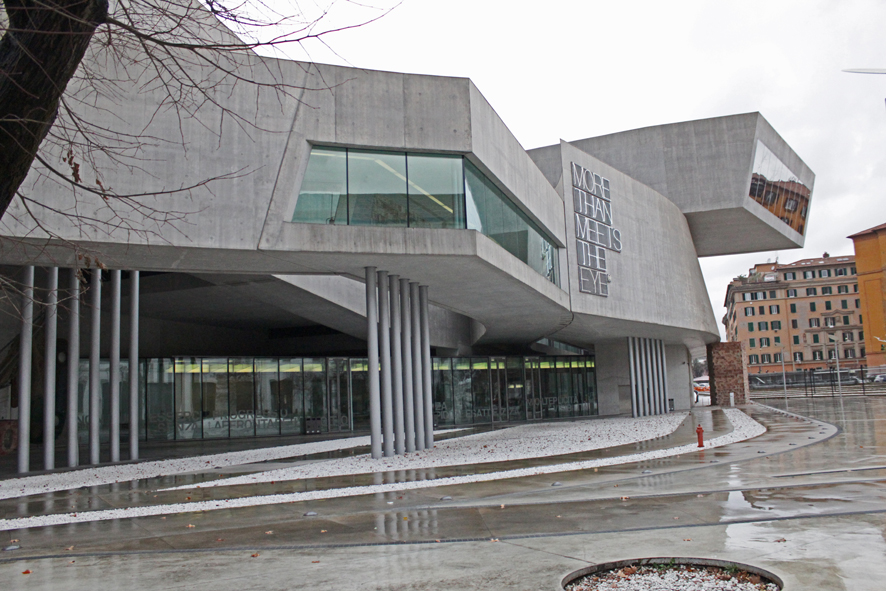
 There is a mixture of installations, archictects’ drawings and models, which I’ve always loved whether in balsa wood or Perspex, photography including a magic Helmut Newton series of Rome and a special exhibition of art from war torn Beirut. I spent a very stimulating 90 minutes and could have explored other areas but wanted to see the work of another superstar architect Renzo Piano.
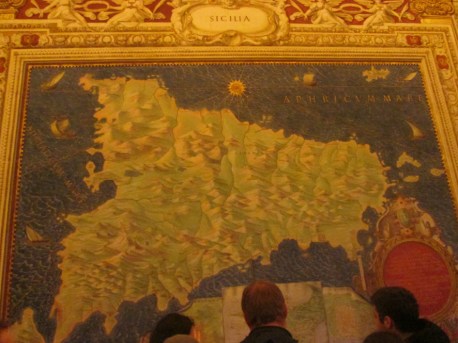 Highlights for me were the map room in which you can walk from south to north of Italy in five minutes with brilliant relief representations of the various areas of the country either side of you as they were thought to be in 1580. As a geographer, Dee would have taken some persuading to move on but Tatiana was strict and we were ushered on towards the Raphael frescoes. These are quite wonderful except for one which I think was the Expulsion of Heliodorus where most of the wall is in his usual style but the a handful of figures in the lower left side are much more dramatic, muscular and frankly Vincian. Tatiana told us, the probable urban, myth that Raphael stole the key to the Sistine Chapel and had a sneak preview and decided to copy the master. While beautifully done he really should have stripped off the plaster and started over for consistency.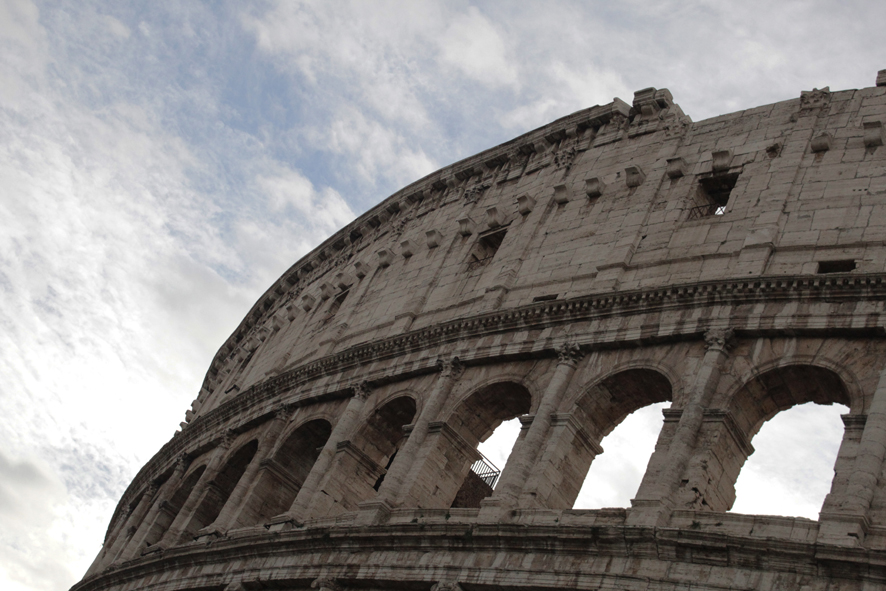


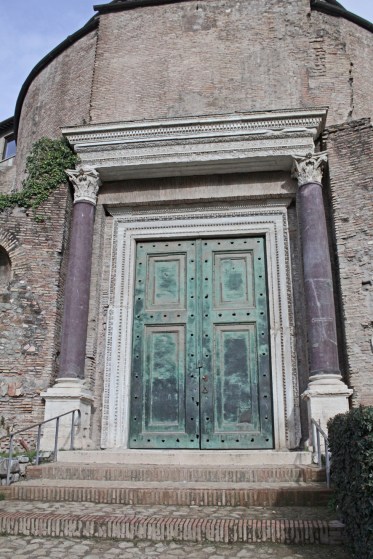 These bronze doors – apparently one of only three that weren’t melted down at some stage are high above the level we are now walking at.
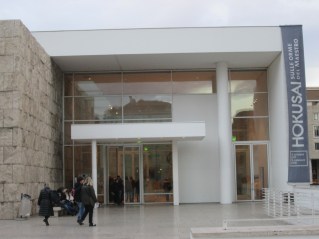
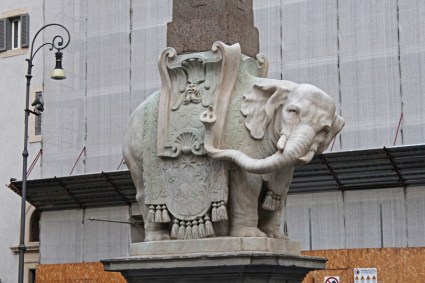 I walked through Piazza Navona passsing more Bernini fountains – I especially liked his elephant supporting an obelisk on its howdah. – and I pass the church where I have a concert on Thursday night and on up the Tiber to the Ara Pacis museum. This had not been on my original agenda but I’m easily diverted. This is a glass box built recently to house the Altar of Peace of Augustus which was consecrated in 9 BC after Augustus had conquered France and Spain and people and animals had to be sacrificed to celebrate. It was buried under silt until 1939 and is in remarkable condition and a very beautiful structure despite its deadly purpose.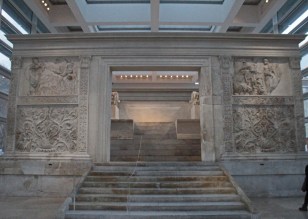
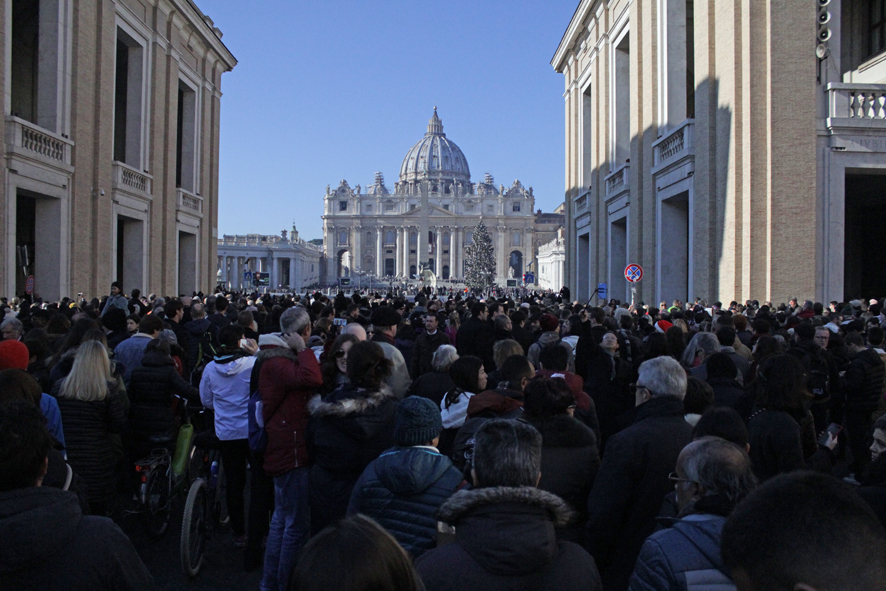
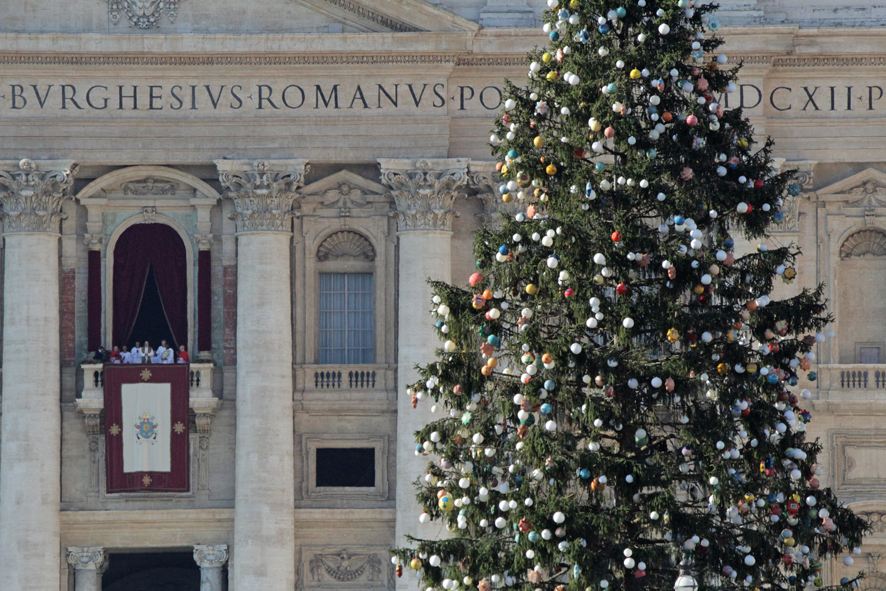

 I then went back to the metro and went to Spagna to see the Spanish steps and have my first proper coffee – 95 cents for a good shot of strong espresso. Excellent preparation for the day ahead. In my trip schedule I had nothing booked for today and decided to discover Rome on foot. It was after all as I told too many people clear, blue, sunny and 14 degrees. Ideal for a stroll. I made my higgledy piggeldy way to the Tiber and crossed into trendy Trastevere where there are book stalls and bad art lining the river promenade.

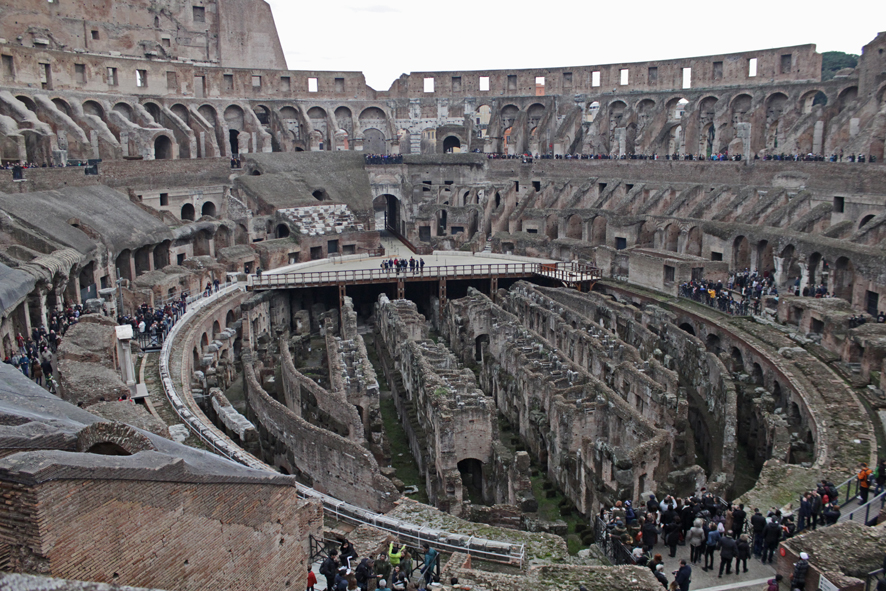
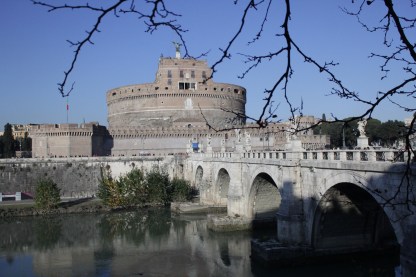 Her knowledge of and love for the city spurred on my feet as I wandered further down the river swapping banks by the huge Castel San Angelo and on down the left bank to the Jewish quarter, through to the Capitoline Hill with the huge Victor Emanuele vanity project (I was told off by the guide the next day – it was not just for him but to commemorate the reunification of Italy – right) which caused great controversy among Romans at the time. It destroyed a whole medieval neighbourhood, took loads of taxpayers money and was derided as ‘the wedding cake ’, ‘the false teeth’ and ‘the typewriter’. The massive equestrian statues confirm it as a vanity project for me. Beyond it I strolled along to get a first sight of the Forum and the Colosseum due for a guided tour tomorrow. This route was along wide boulevard created when Mussolini order a whole medieval neighbourhood to be bulldozed for this prestige route – HS2 sound familiar?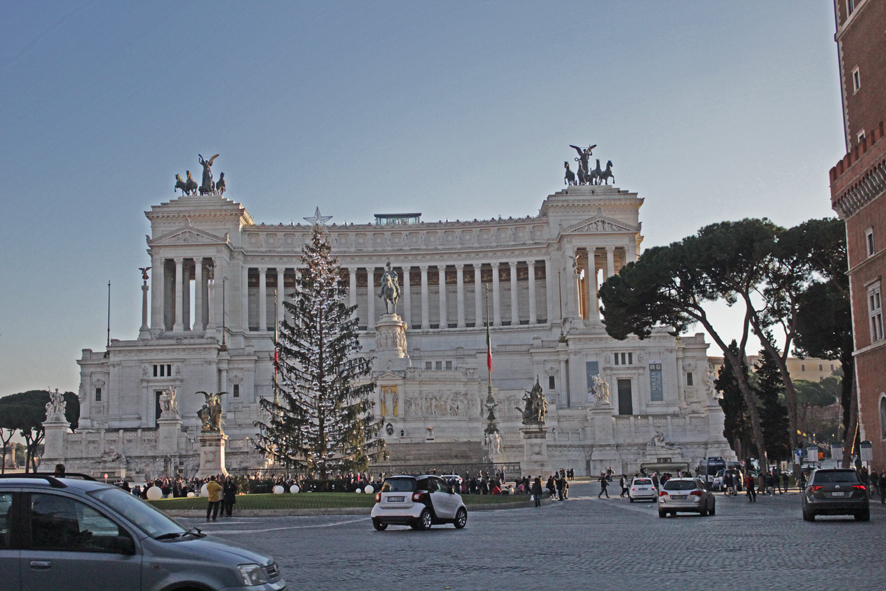

 On the football theme I was pleased to see this bus parked near the entrance to the hotel. Well Graham Taylor did get Watford into Europe and maybe we’ll need another Eurobus one of these days and we can dedicate it to his memory.
 It was a splendid warm week with a few visits to the pool purely to stimulate the thought processes of course. I sat diligently in writer’s corner in the shade and have achieved what I hoped for – enough written down that it has its own momentum now and writing a chapter now and then among other commitments will be OK. If any of it is any good that is,
 I left the house and set off eastwards along the A92 autovia, pausing for breakfast near Granada with a fine view of the Sierra Nevada, still living up to their name. I came off at a junction signed Huercal-Overa, the town nearest to my tree but SatNav was not happy as we did some N roads with a few trucks making progress a little slower. I soon arrived and found the original San Francisco deep in the heart of Almeria. We had agreed I’d find my way to
 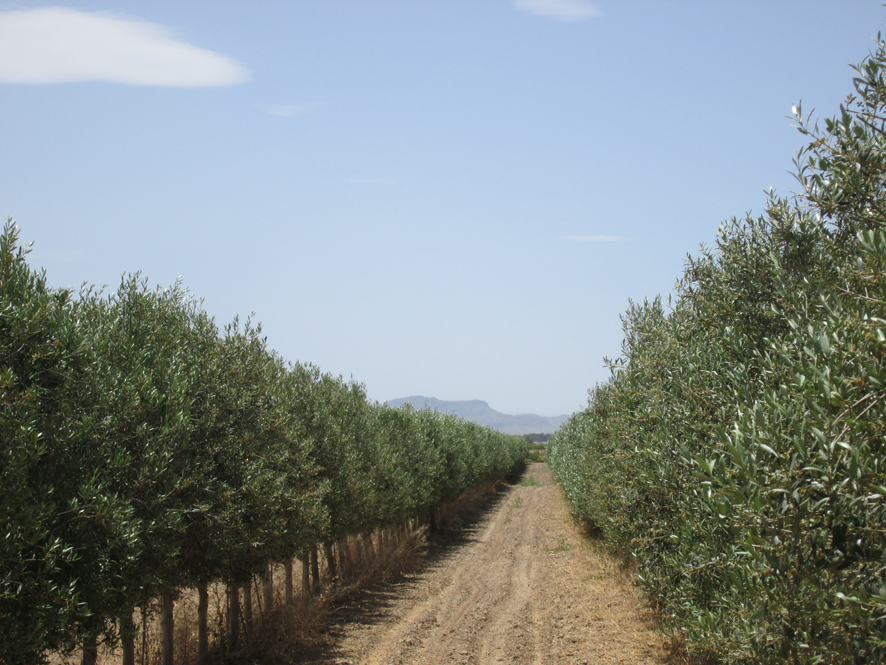 They’ve made a brilliant fist of sorting the place out and have achieved coveted status as first cold press virgin olive oil with International Olive Council approval which means a lot of tasting by people in Jaen, the capital of olive oil – one might say the Vatican of olive oil such is the mystery that surrounds it. Oh and it’s pretty tasty too like less fatty butter with added sunshine. And of course you’ll live longer.


 mikeandmurakami.com