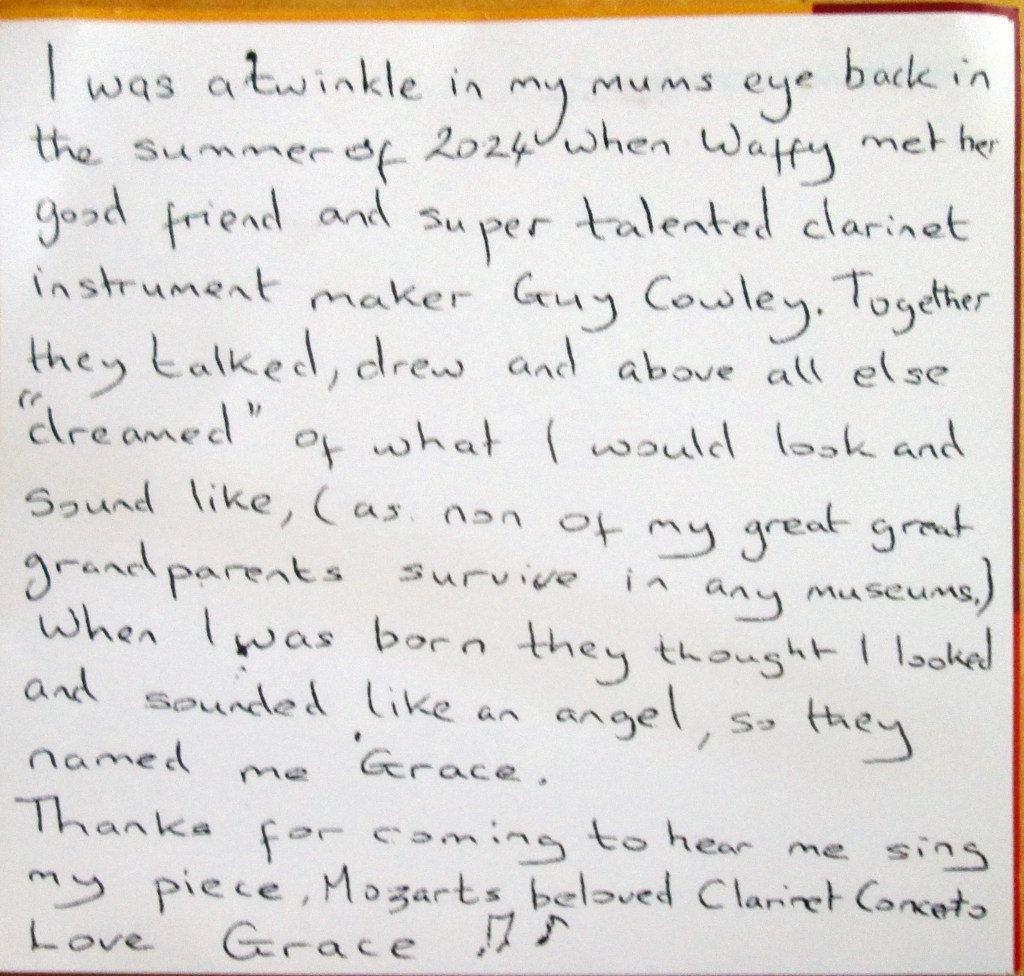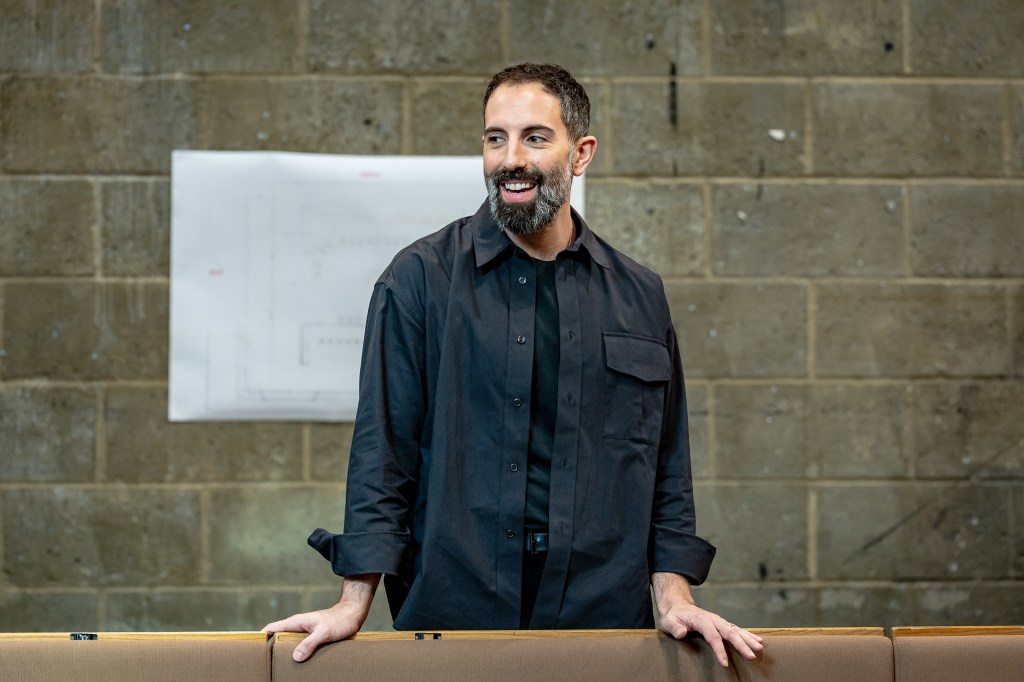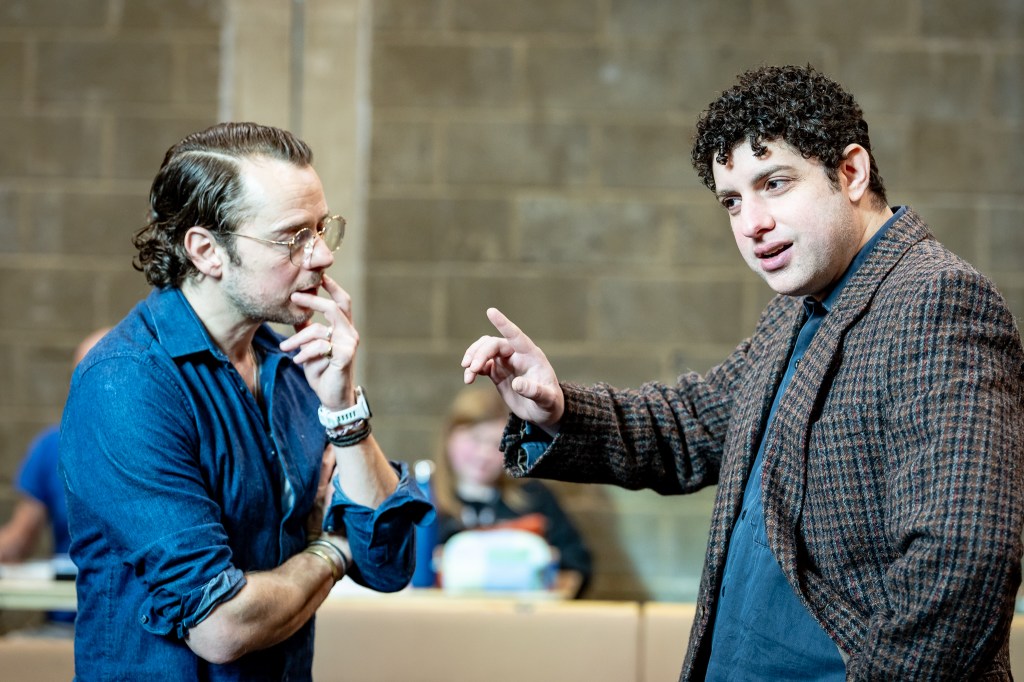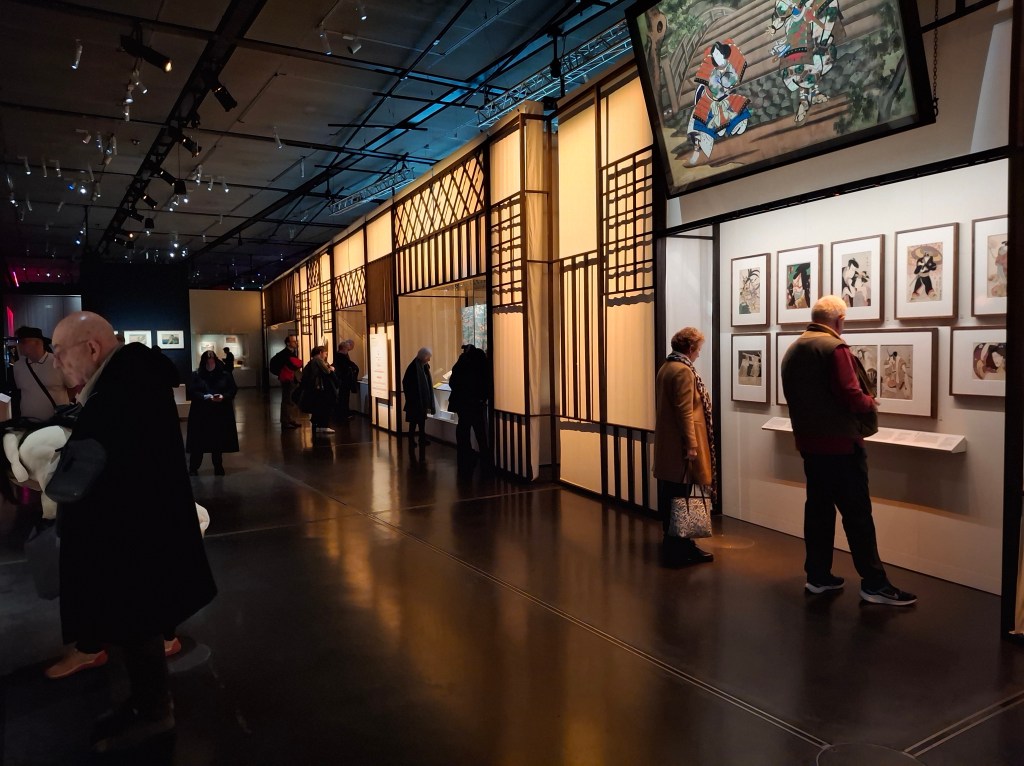
Masterpieces metamorphosed

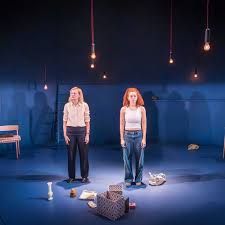
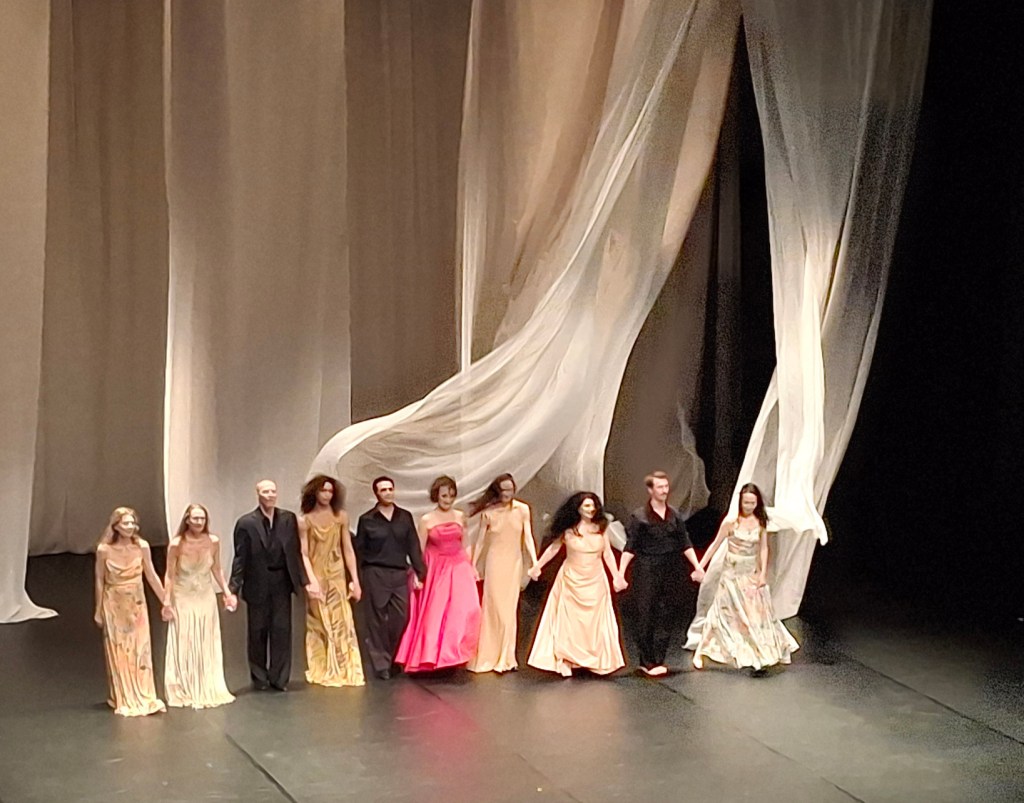
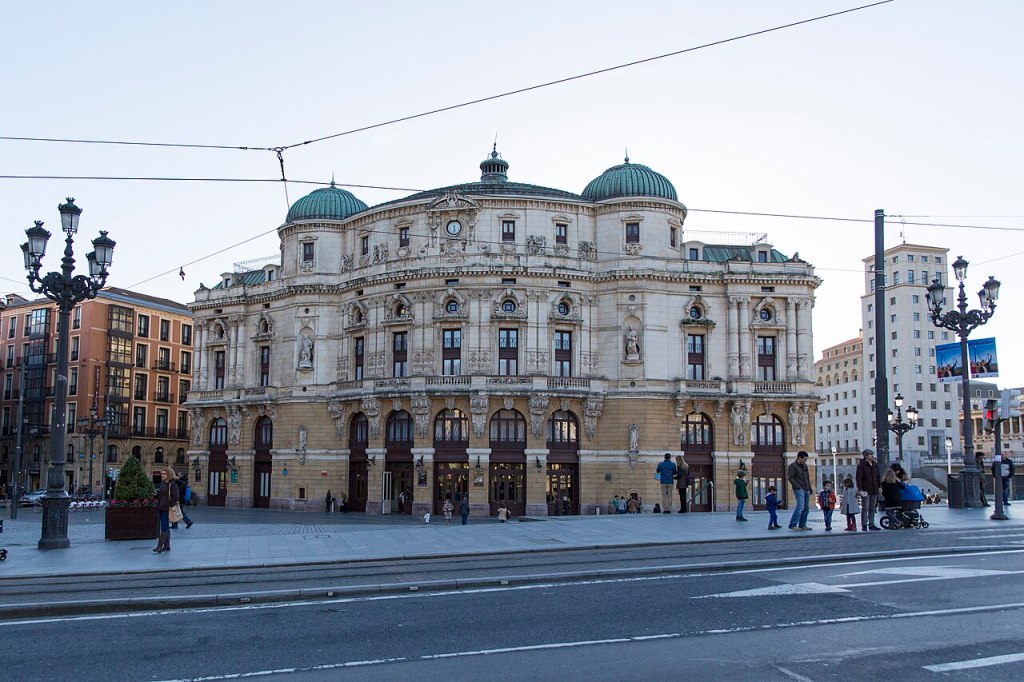
Les Bonnes by Jean Genet was one of the plays I read at university in the 60s and I’d seen the film version with Glenda Jackson, Susannah York and Vivien Merchant a decade later, so it was with great anticipation that I went with Frances to see what Kip Williams would make of it. After last year’s Picture of Dorian Gray with Sarah Snook we expected screens to play a part. And they did. And how! The filmy curtains initial framing the set gave us the feeling of trangressively entering madame’s boudoir and then the fun began. The role-playing maids of the title act out fantasies of dominating and eventually killing their disdainful mistress.
Quite how the actors managed to use their cameras and select filters to produce the effects on the screens that dominated the background, I’ll never know. Emotional performance while managing tech – the demands are high on acting skills these days! Phia Saban and Lydia Wilson met them with apparent ease. Yerin Ha was a little too camp and age-adjacent for my taste as the draconian madame but it was a great evening’s entertainment. With Kip Williams you learn to accept that things will change – it was billed as ‘a version’ after all.

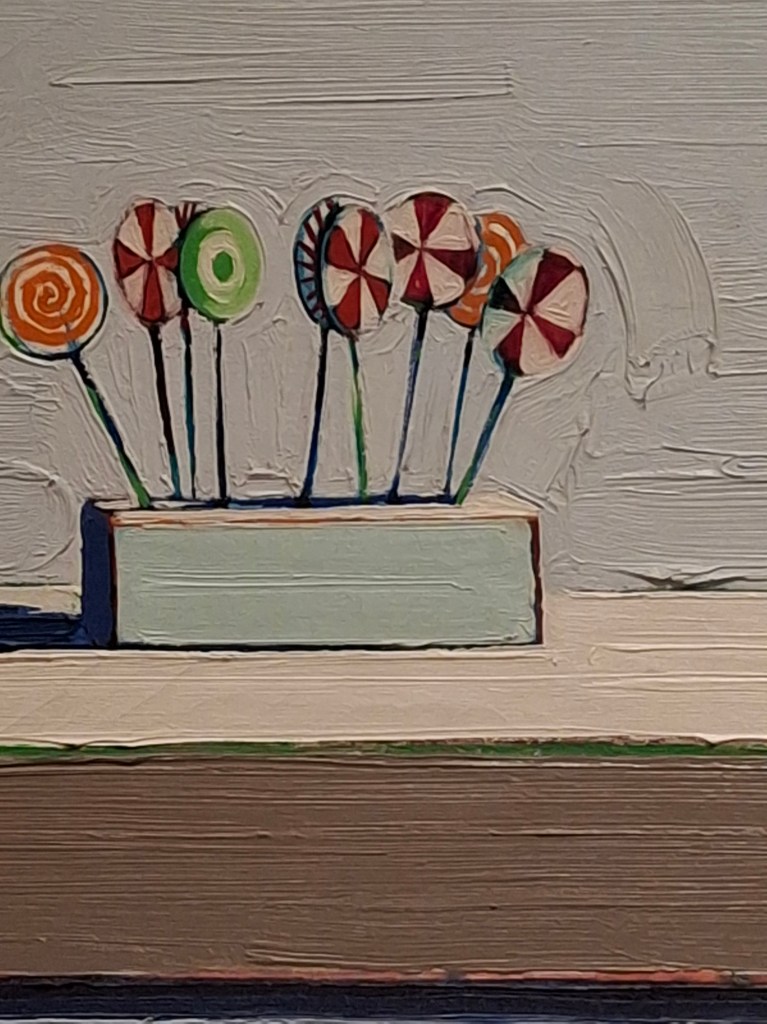
Before going to the Donmar, I had been to the Dulwich Picture Gallery with Jadwiga to see the exhibition devoted to Anne Ancher, a Danish painter I confess I’d never heard of. Living all her life in the town of Skagen at the extreme northern point of Denmark she was devoted to capturing light in the landscape but especially in portraits and interiors where there were hints of the influence of Vermeer in the lighting effects. She died in her seventies in 1935 and the paintings cover most of her long life. The exhibition runs till March 2026 and is highly recommended not just by me – it got 5 stars in The Guardian.

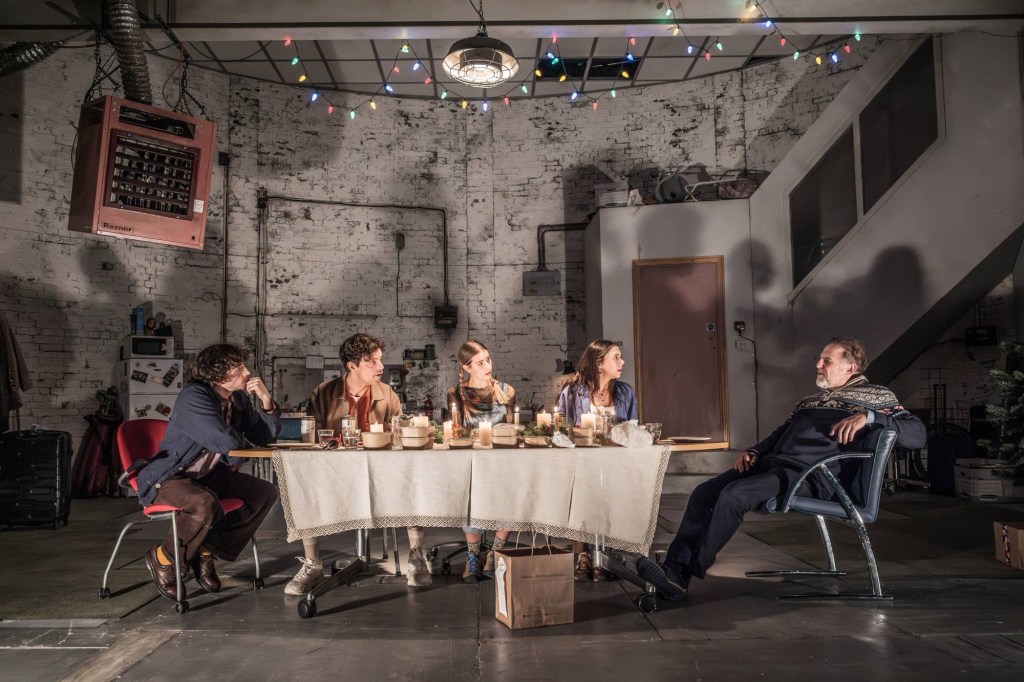
Next up was a group outing with Frances, Farzana, Richard and me to see Assembled Parties at Hampstead. It’s a blackish comedy written by Richard Greenberg and was a great hit on Broadway in 2013. Set two decades apart in the same apartment of screen star Julie, we find a Jewish family celebrating Christmas with assorted relatives, friends and others. In Act 2 Julie is widowed and has a feel of a Norma Desmond who life has passed by and only survives in her rather less opulent surrounding by the invisible support of others.

Among these is her sister-in-law Faye, superbly played by Tracey-Ann Oberman in scintillating form who gets the best lines and attitude. We all found Julie, as played by Jennifer Westfeldt a little unconvincing but the poignancy of the reduced means and expectations of a once proud family showed through the many laughs that the script also gave us.

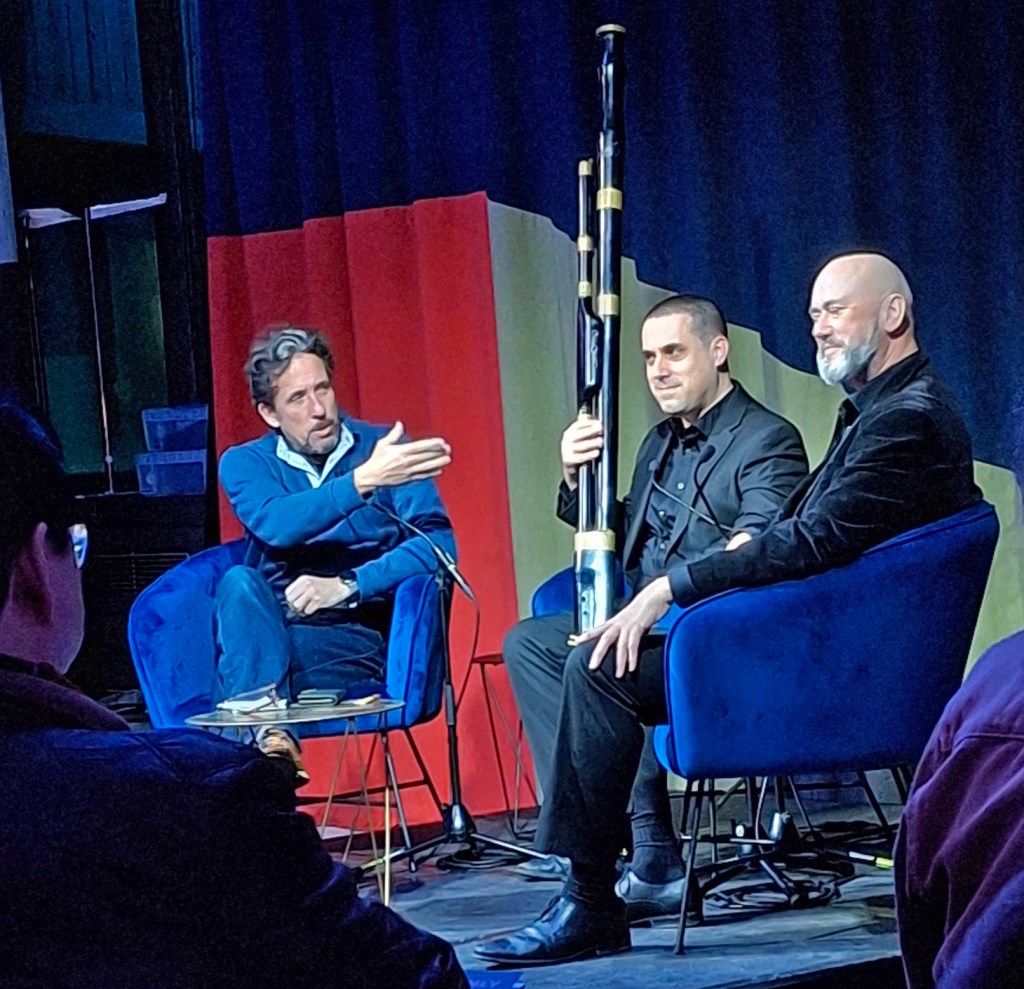
Talking of metamorpheses, how do you make a 500+ page 2004 Booker prize-winning novel into a two hour stage play? Fran and I had been to an Almeida insight session earlier at which the answers were clear – get an ace adaptor in Jack Holden and a great director in Michael Grandage. The resulting script clearly had to leave a lot out for those of us familiar with The Line of Beauty, but author Alan Hollinghurst had been involved throughout and the evening gave us a good account of the early days of Thatcherism, the gay scene in the 80s with the spectre of Aids and the class system in full flow. And it did contain some very explicit scenes of sex and drug taking that were so much a part of the source. The lessons of a dangerous era seem not to have been learned – the wealth and class gap is ever wider, tolerance of ‘otherness’ is at a very low ebb again and politics and politicians remain completely out of touch with everyman.

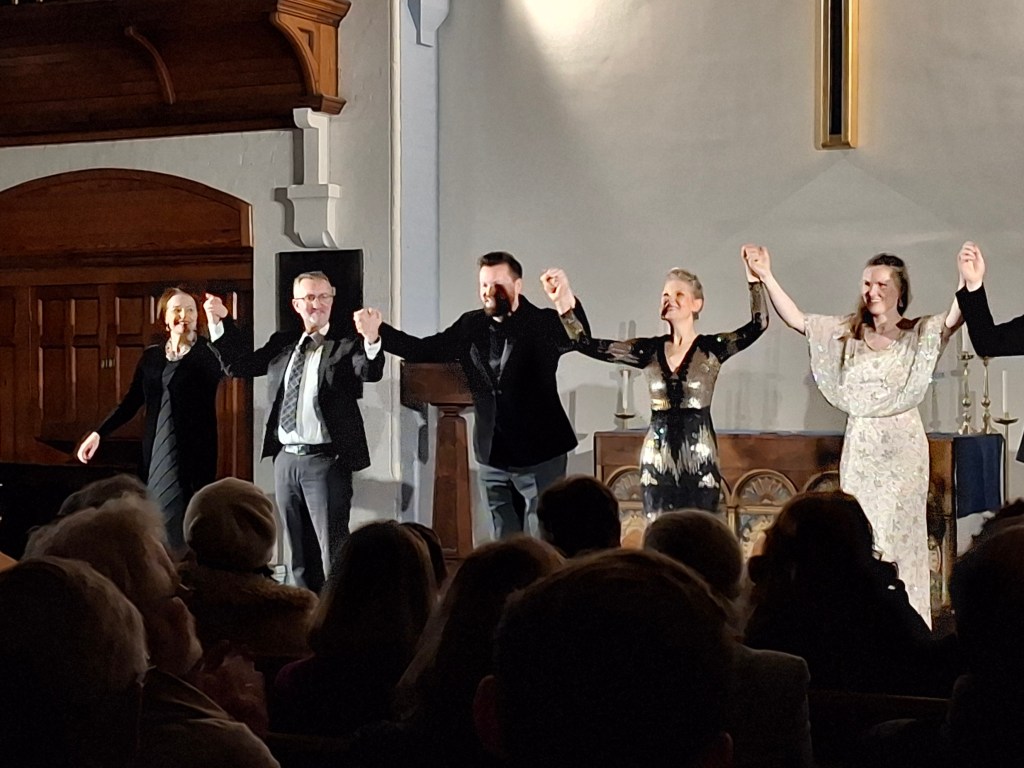
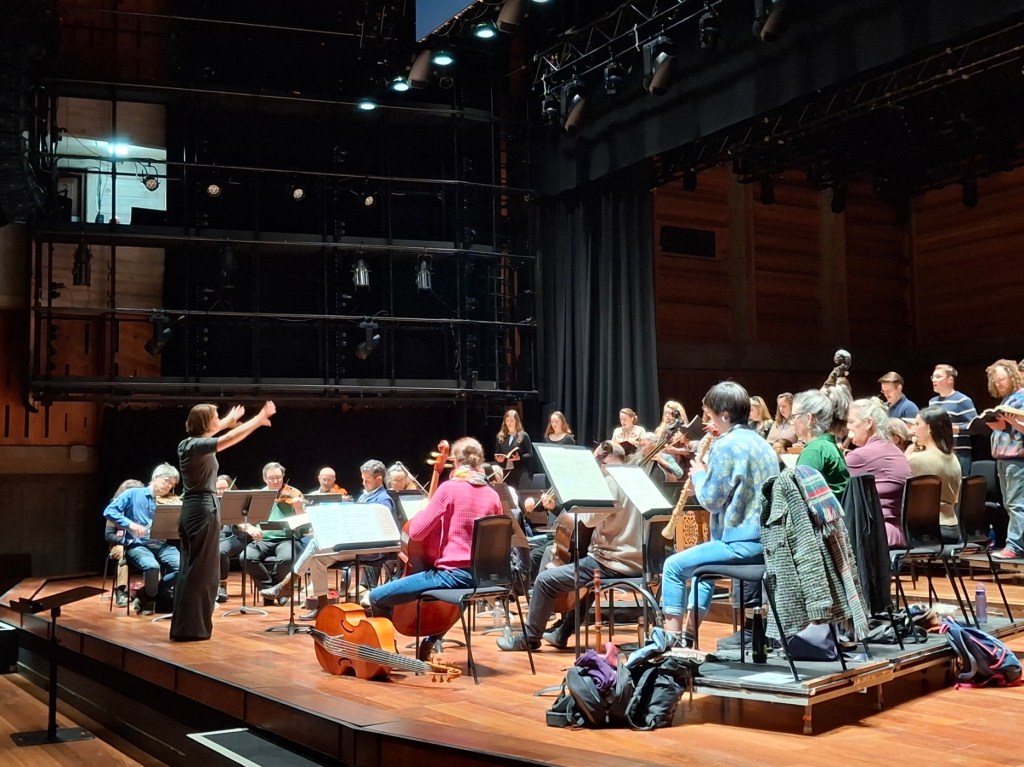
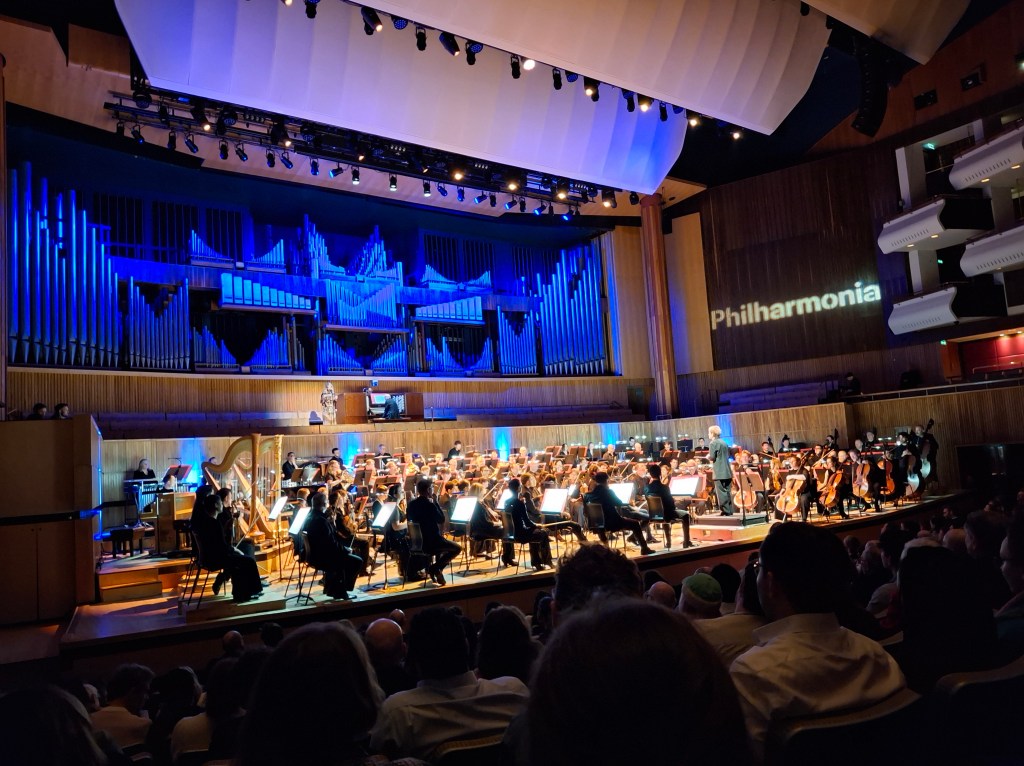
And follow that with another great challenge. How do you bring “one of the most important English-language poems of the 20th century” to the stage? Adrian Dunbar has produced and directed a staging of T S Eliot’s The Waste Land. There’s the full text of the 434 lines of the poem spoken by four actors but it’s interspersed with music by Nick Roth for a jazz quintet and the Guildhall Session Orchestra conducted by John Harle. Added to this melange was some of the earliest colour footage of London which evoked and echoed Eliot’s words about his adopted city such as “Under the brown fog of a winter dawn / A crowd flowed over London Bridge, so many / I had not thought death had undone so many.” Hearing Eliot’s complex work recited added greatly to my appreciation of it. The music was an interesting complement, never overlapping with the text and the footage was just stunning. A fascinating hour in the Queen Elizabeth Hall.

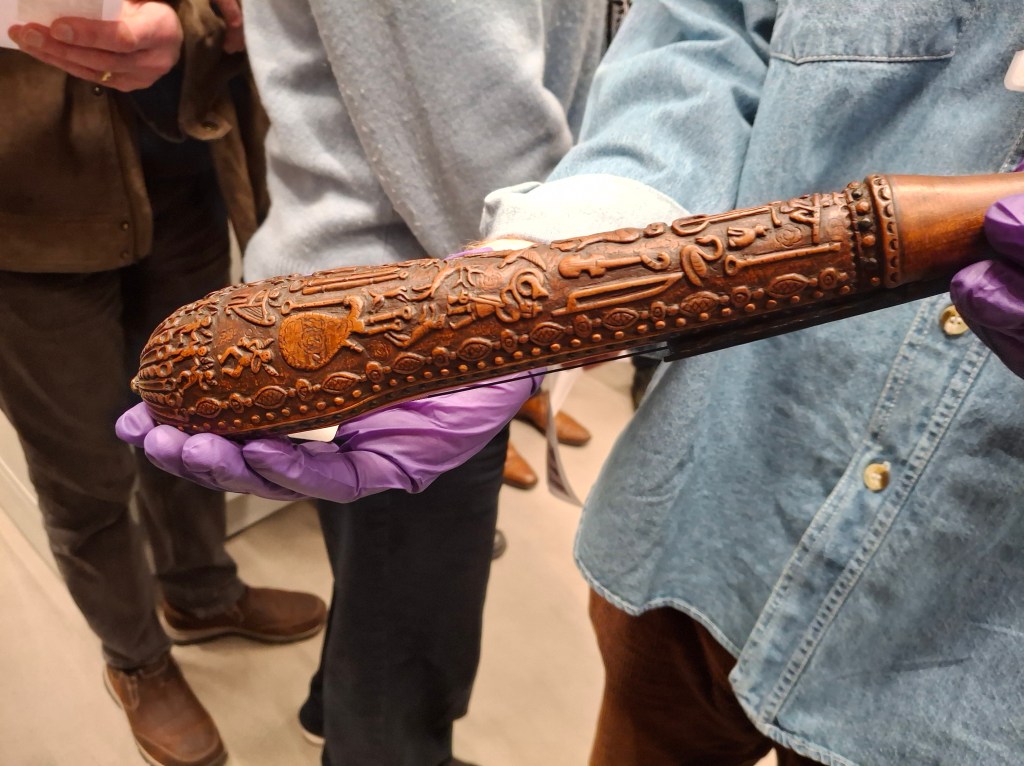
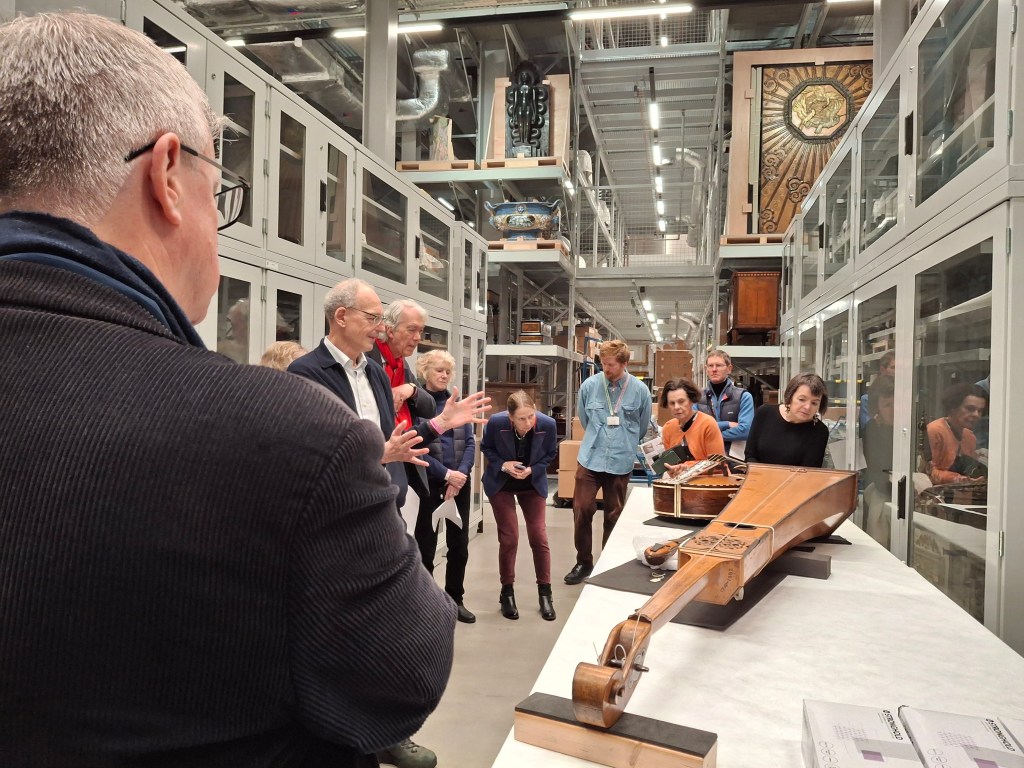
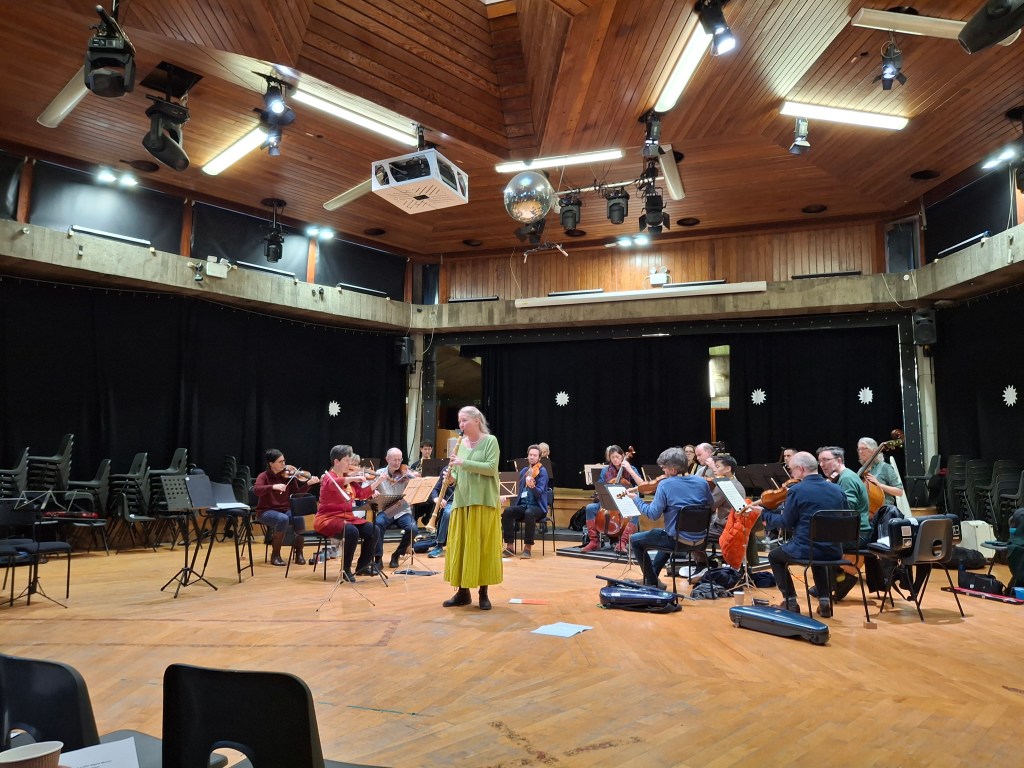
I was up bright and early the next morning to drive down to Hatchlands House near Guildford for one of the Orchestra of the Age of Enlightenment’s periodic Friends’ excursions. The house contains the Cobbe Collection which has a staggering array of keyboard instruments owned and played by some of the great composers among them Purcell, Johann Christian Bach, Mozart, Haydn, Beethoven, Chopin, Mahler and Elgar as well as the piano that Napoleon gave to Josephine. We were conducted through this historical tour by the OAE’s principal keyboard player Steven Devine with added insights from the eponymous collector Alec Cobbe, a little jet lagged after flying in from Ireland that morning. Their shared knowledge and Steven’s keyboard artistry made for an engaging trip and added substantially to my own musical education.

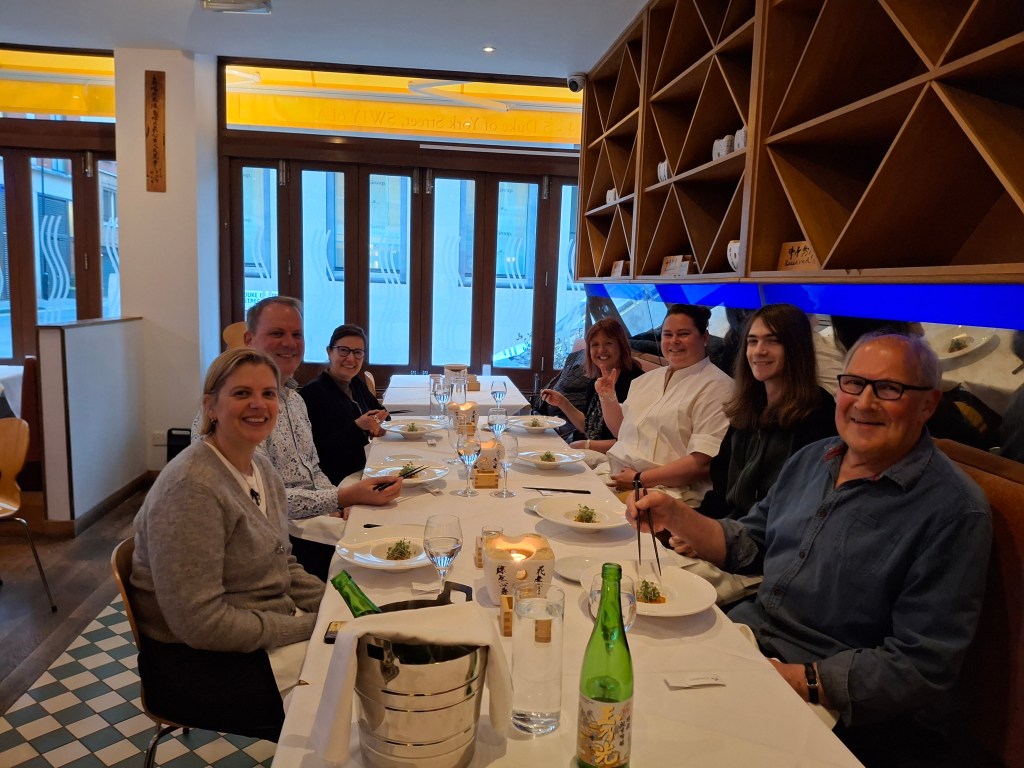
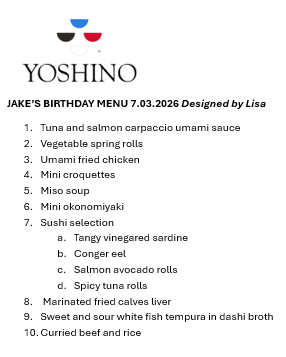
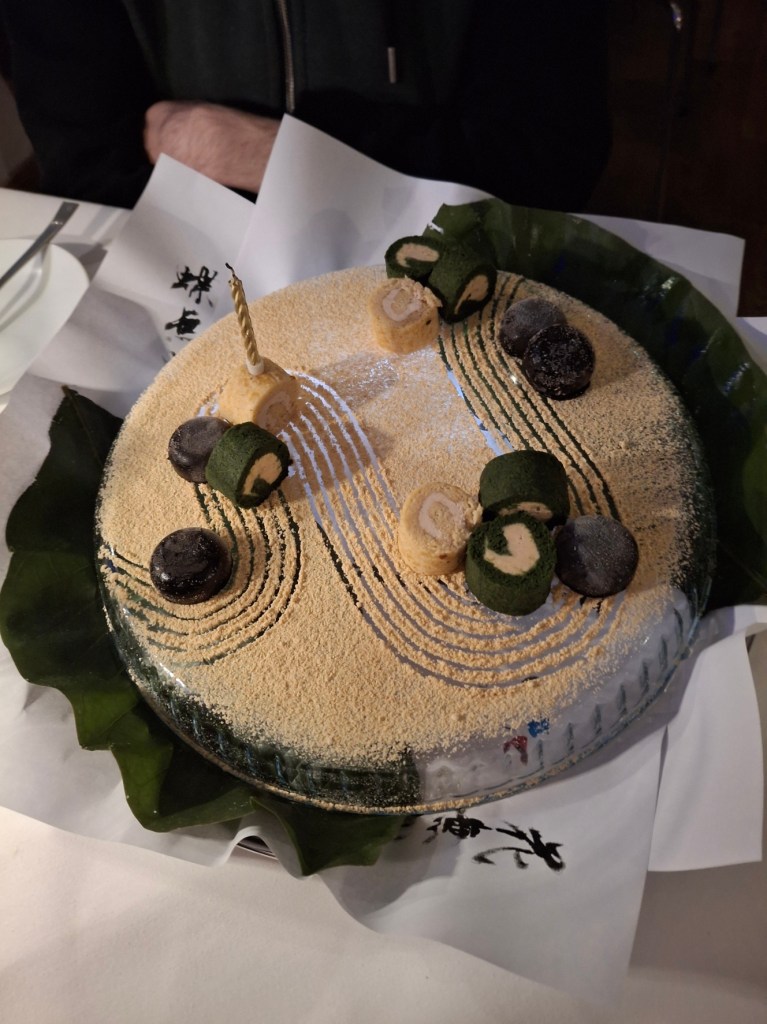
I travelled back in good time to join Frances, Farzana and Richard for a trip to the Pinter Theatre to see the revival of Conor McPherson’s The Weir. Timing was such that we were able to have a pre-theatre dinner in the wonderful Yoshino. Lisa was her usual welcoming self and managed to feed us elegantly as well as the late-arriving Farzana (thoughtless colleagues on Zoom calls!) with food that delighted her on her first visit before we all set off.

It’s a play I’ve seen before – nothing happens in a rural Irish pub, but everything happens in the minds, interplay and scary stories of the four male locals and the incomer Valerie. With Brendan Gleeson and Sean McGinley in the cast it was a super evening of witty dialogue, hidden back stories and brooding atmosphere. Lots of Guinness and scathing references to Harp drinkers – remember Harp?

23 years ago I filmed a studio interview and a gig at the Cavern Club in Liverpool with a young indie singer songwriter Ian Prowse. It was part of a language teaching video series for teenagers in Europe that we did in a yoof magaziney style. Dee and I loved his music and attitude and we remain friends after all this time. So on Saturday I set off for the Half Moon in Putney for a set from his current band Amsterdam. Frances joined me at the pub hot foot from Derby where she’d seen Watford’s first away win for eight months! I settled for the TV experience and was glad I’d conserved my energies as the evening was an all singing all dancing show with the band on top form – standin’ and boppin’ for two hours takes it out of us old uns!

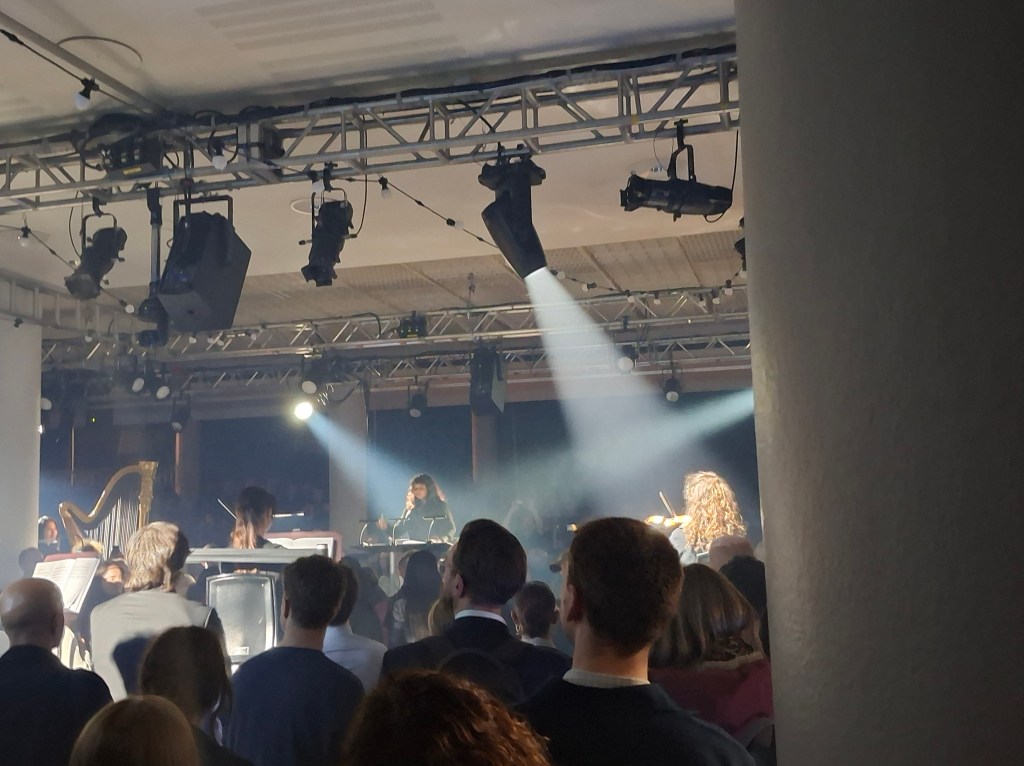
The next day Frances and I and Farzana went to a new venue in London that led to another incredible evening – this time of multi-influenced jazz. HERE at Outernet is beside Centre Point and Tottenham Court Road Station. It’s deep in the basement but we weren’t bothered by noise from the tube. We were enthralled by a brilliant set from Nubya Garcia and her band. Anyone who has read my blogs knows I am a huge fan, following her from her early days in Lewisham pubs. This set – mostly songs from her latest album Odyssey – was supported by visuals on the giant screen at the back of the stage. Nubya herself was in great form with her mix of musical cultures inflecting her music, but with some lovely old school touches like references to My Funny Valentine and other classics in her solos. This lady does jazz. An ever-present in her line up over the years has been Sam Jones on drums. What is it about drummers called Jones? Jo held Count Basie’s band together, Philly Joe was Miles’ and Bill Evans’s favourite, Elvin was inseparable from Coltrane and now there’s this guy Sam whose propulsive and imaginative work takes the band into the stratosphere. Farzana and Fran had to put up with me hustling one of Nubya’s former managers as I’ve quoted Nubya in a pitch for BBPC to the Deptford Literary Festival next year. (I later got her blessing so forgive me!) What a night!

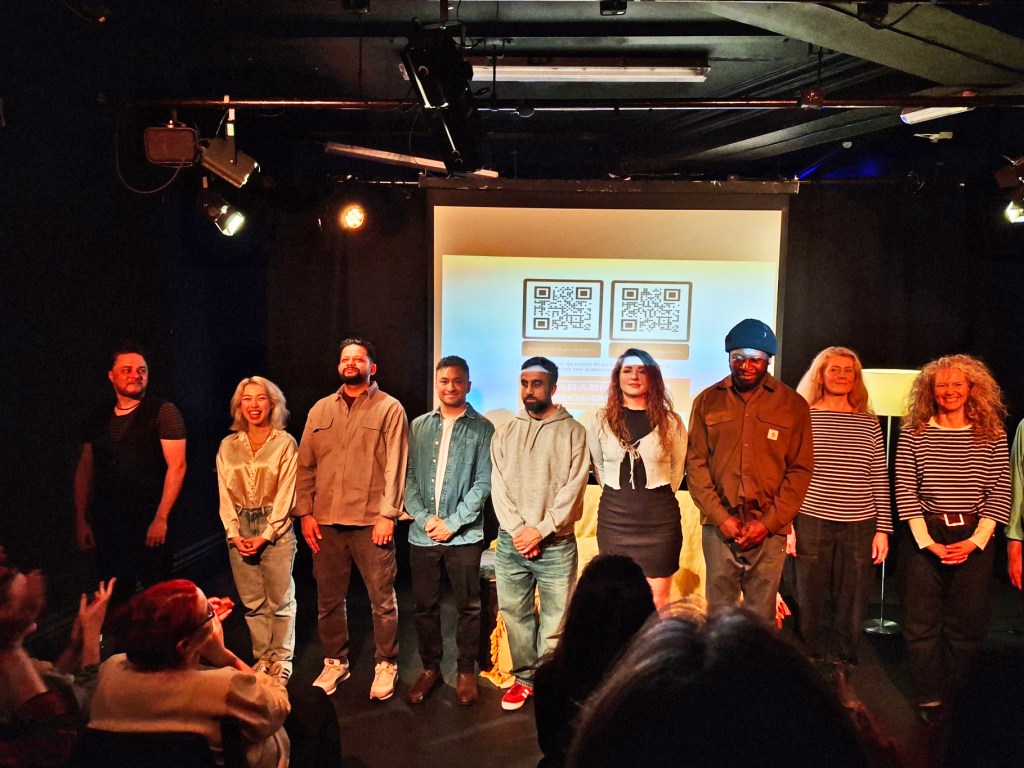
Next up was a theatre road trip. Fatherland by the precocious Nancy Farino who also starred in it, is a journey of discovery between an ominously named father, Winston Smith, and his daughter Joy in a converted school bus to County Mayo to discover some newly discovered heritage. Car seats on wheels and lighting effects neatly deliver the bus to the stage. There’s a great deal of barbed and bitchy banter among the deeper affection and interpolated scenes with father and a solicitor indicate that Winston’s life coaching practice has led to a suicide for which he’s being sued. Joy also lets us into her mind world of fears and fantasies. Nancy Farino has come through the Hampstead Theatre’s Inspire programme. More power to it if it continues to produce work of this quality.

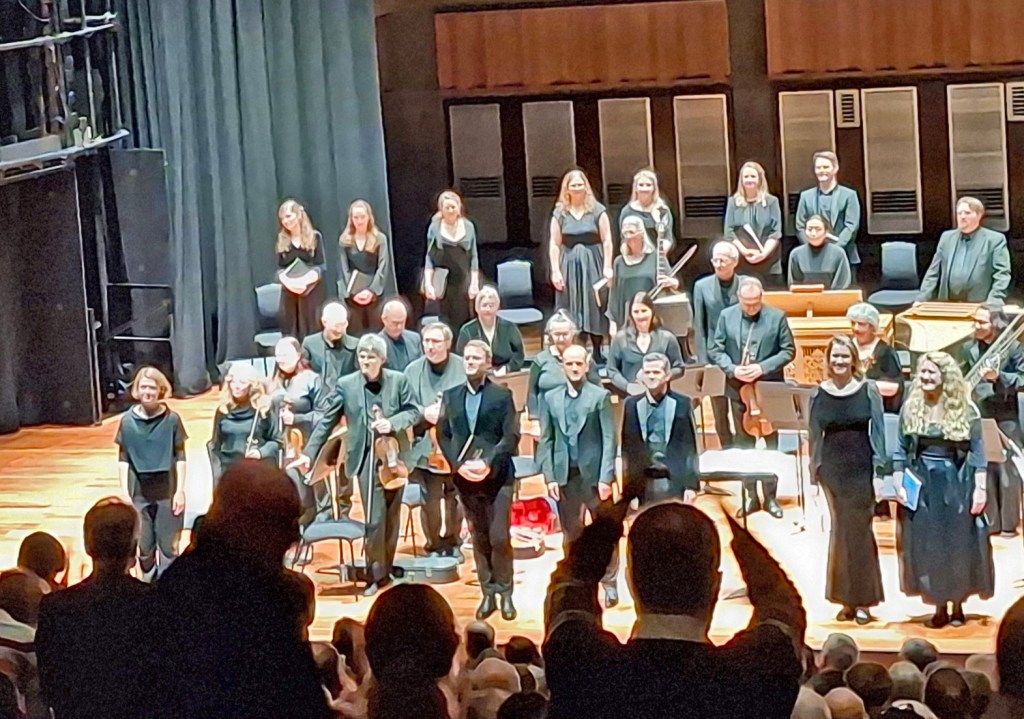
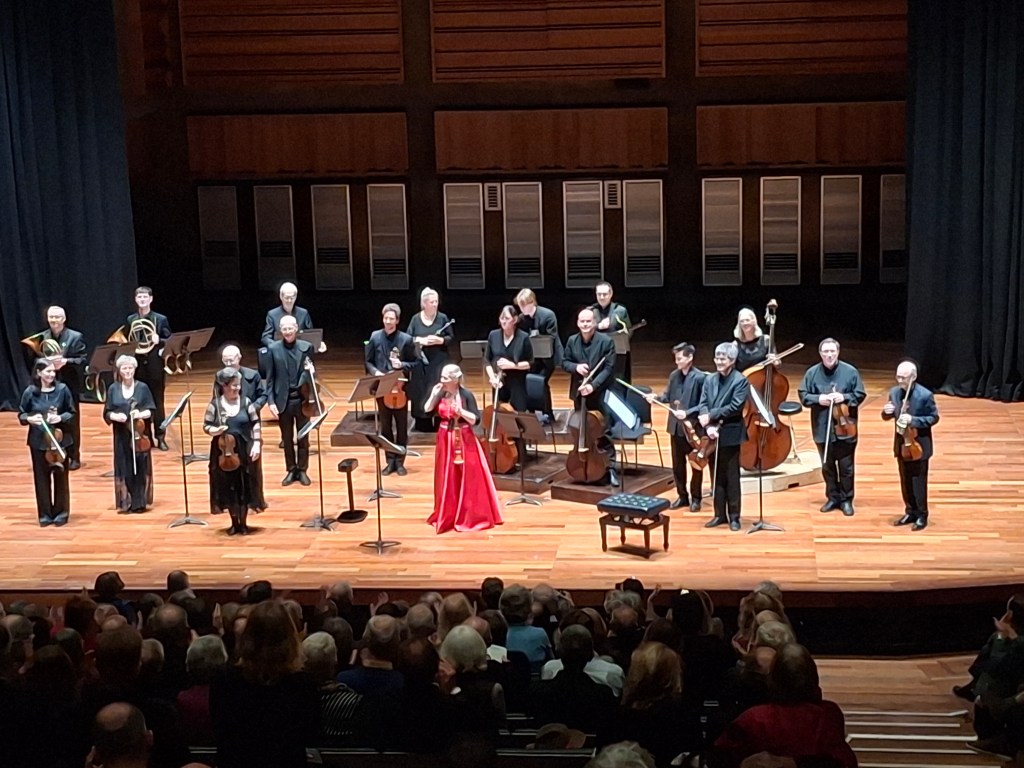
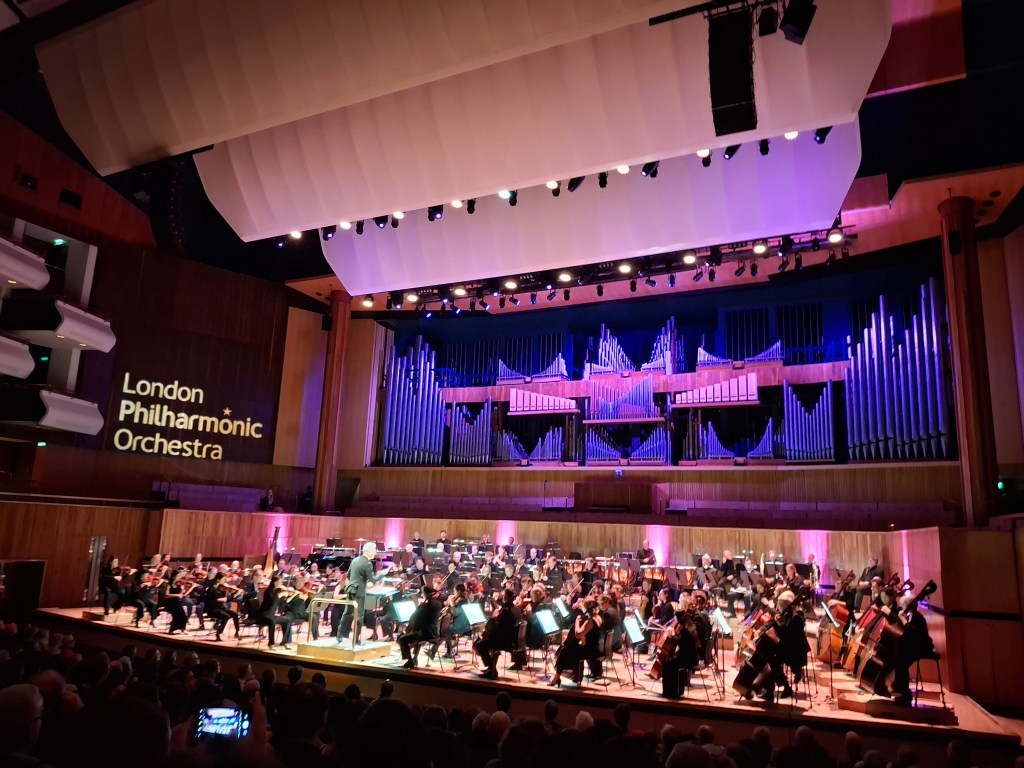
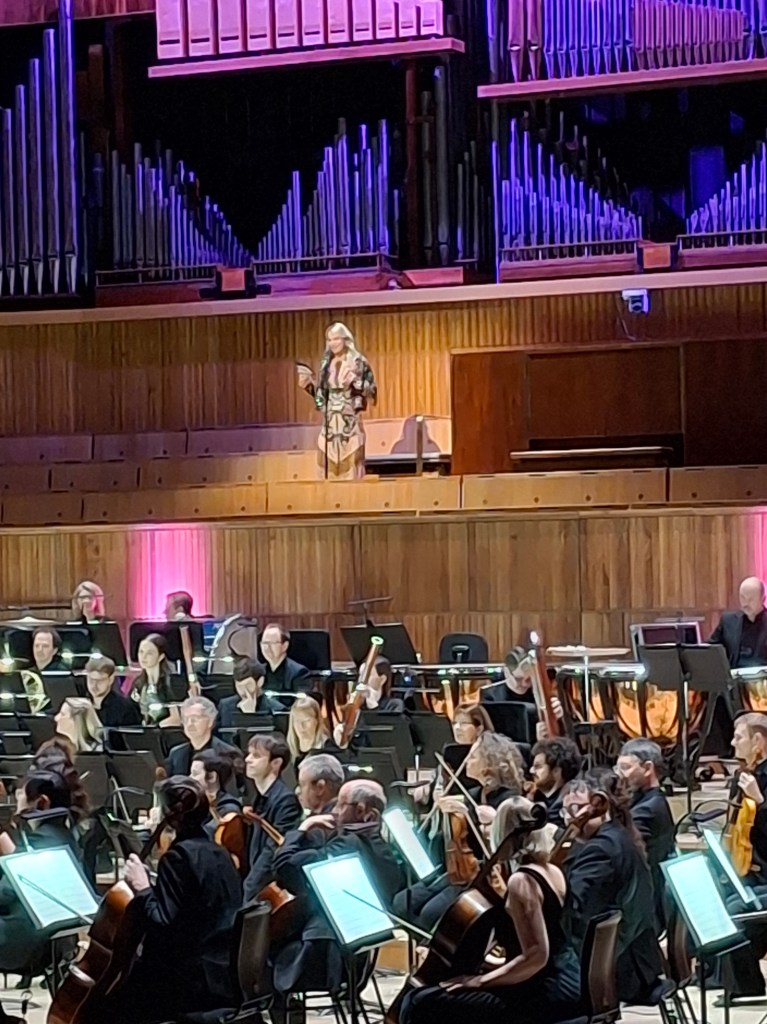
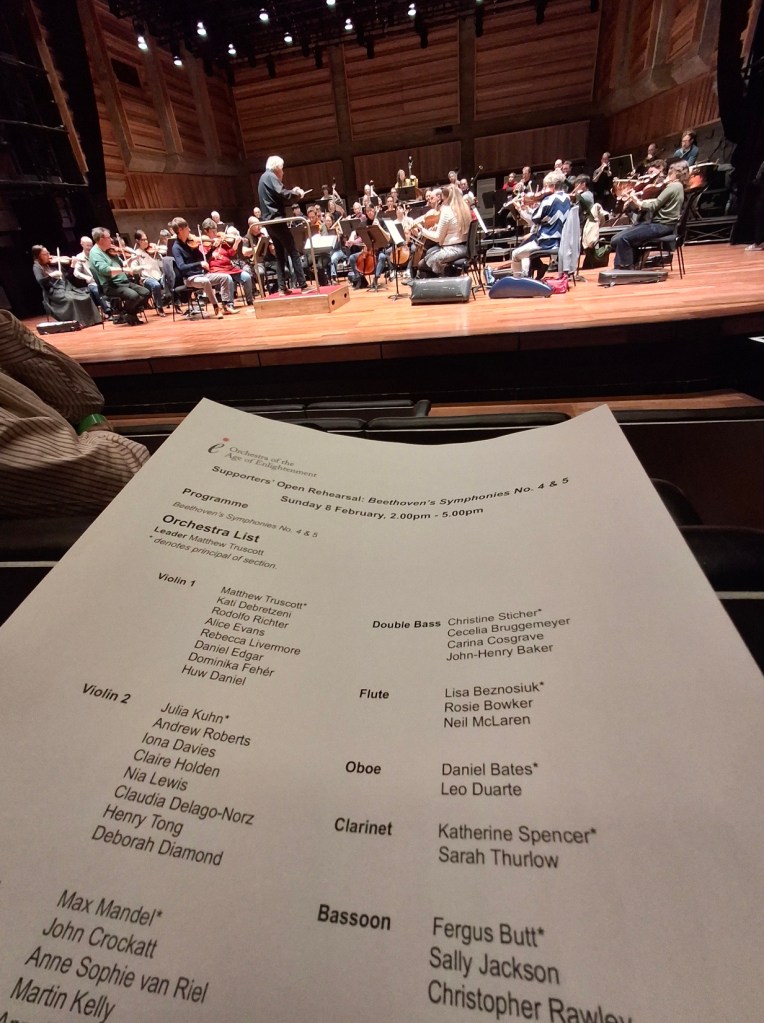
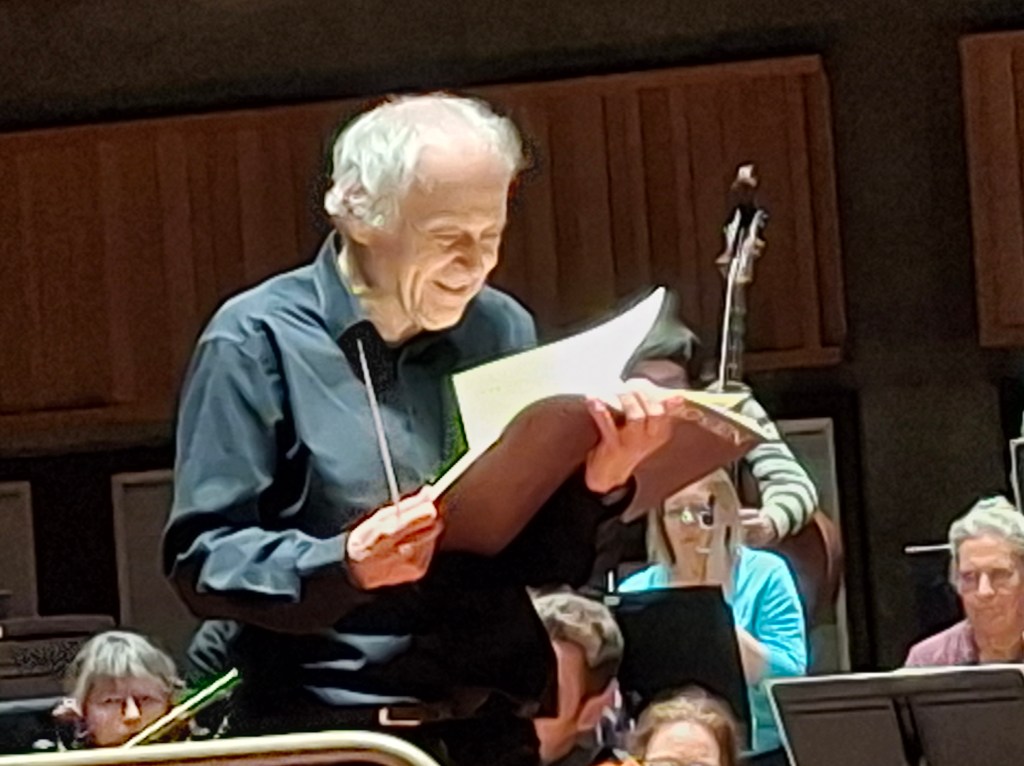
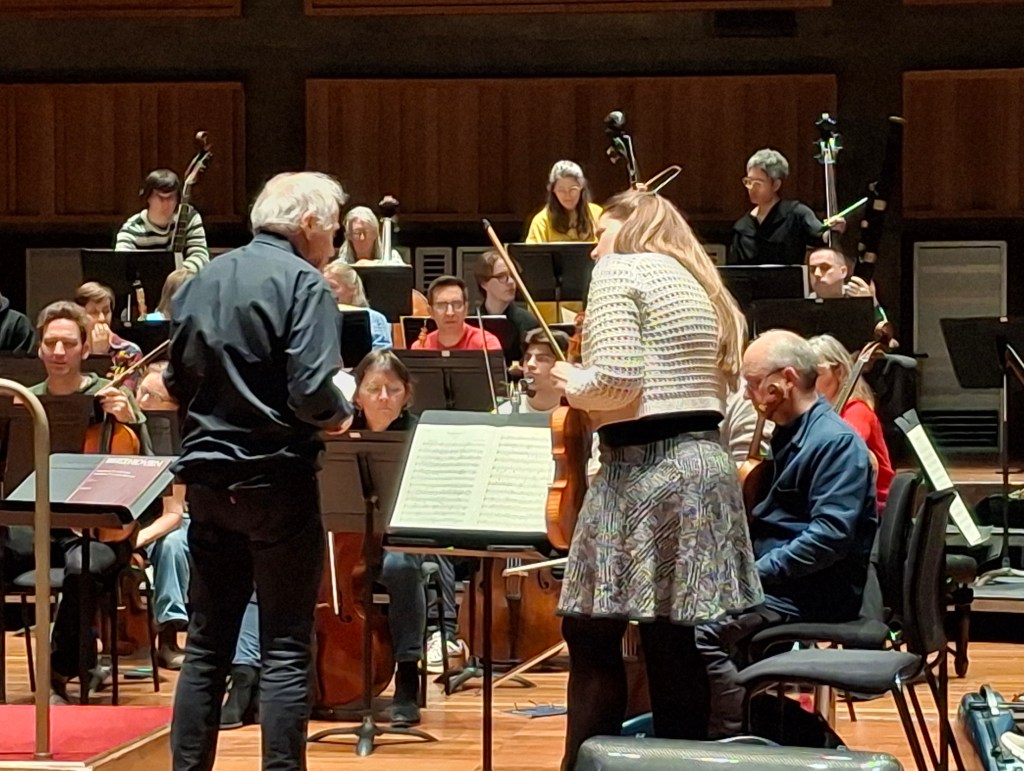
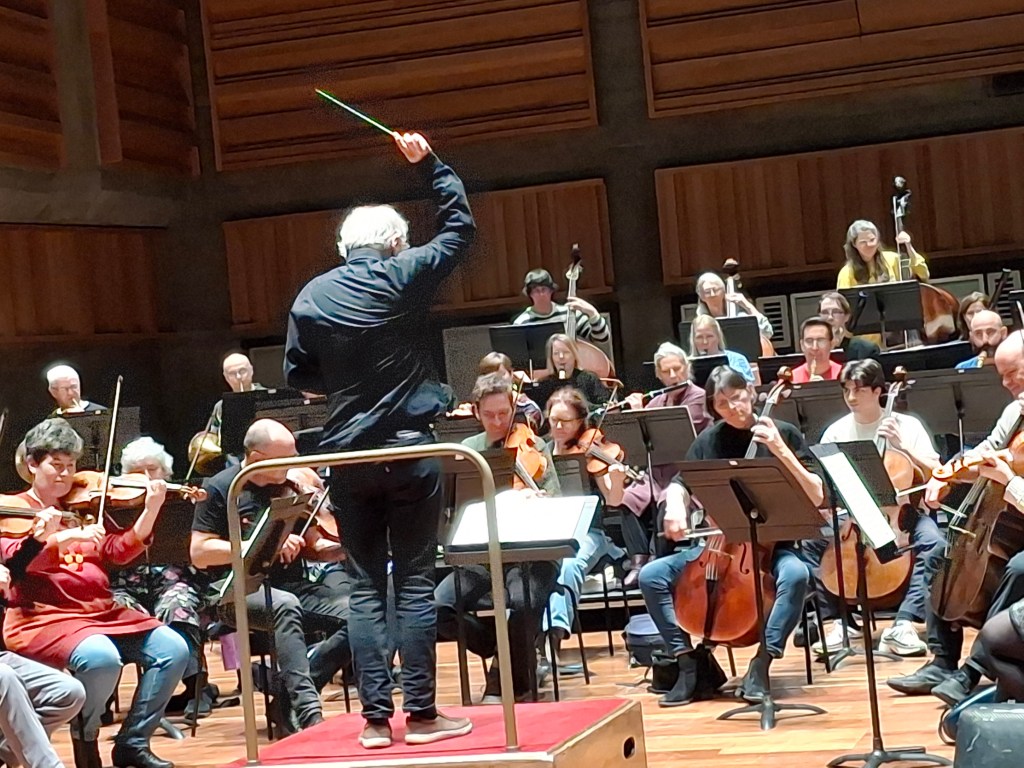
Work of high quality was a trademark for Josef Hadyn. The OAE had been touring a programme of symphonies and a piano concerto through Germany, Switzerland and Italy with Sir Andras Schiff at the keyboard and as conductor (I nearly wrote with the baton but his hands are expressive enough). The did a concert in Udine and I had to wonder whether any of the Pozzo family attended – the Pozzos own both Udinese and Watford football clubs. The last date on this tour was at the Queen Elizabeth Hall.

I like Haydn’s rhythmic impulse, his unpredcitability and his sense of fun and the two symphonies – one from his early period No 39 at the Esterhaza Court and No 102 from his prime in London showed real development of style and technique and were a joy to listen to as was Sir Andras’ performance of the concerto No 11 played on a Walter fortepiano just like one we’d seen at the Cobbe Collection a few days earlier.

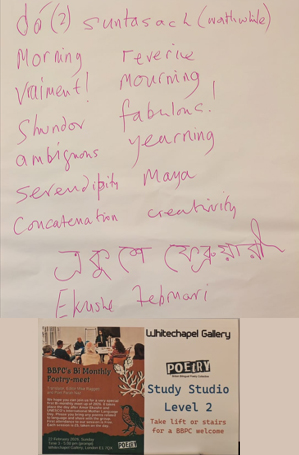
Another busy month concluded with BBPC’s last bimonthly poetry meet up of the year at the Whitechapel Gallery which took the form of a review of the year’s activities and an open mic session for a dozen poets to share their own work or read from their favourite poets.

Many of us then went to the nearby Altab Ali Park for the launch of this year’s bijoyphool. This is the Bengali victory flower which has evolved from the British Remembrance Day poppy.

The green and red flower is worn for the first two weeks of December and commemorates the Bengali language wars of 1952, the war of independence of 1971 and the countless citizens who died in them and since. Three of the freedom fighters from the latter war were present in front of a replica of the Shahad Minar matryrs’ memorial in Dhaka. It was a privilege to be asked to say a few words for the local TV chanel about what it meant to be there at this moving ceremony.

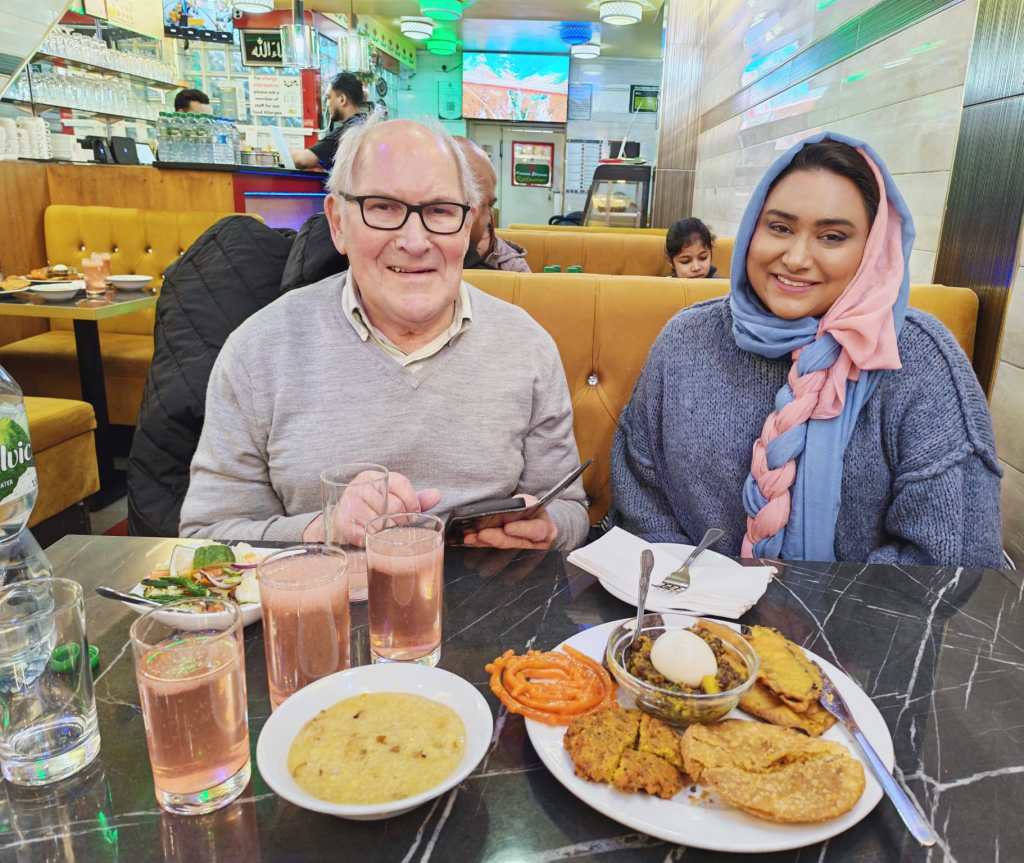
The final event of this year’s Season of Bangla Drama was a play Joyontika produced by Trio Arts about post partum depression, a topic little discussed in the community but which affects many women. It was a mixture of drama, dance and polemic with some interesting technical tropes and delivered a powerful message. I was able to catch up with a few friends and indulge in some super spicy biryani to conclude a successful Season – delivered this year with no funding from the Arts Council. All hail to the indefatigable Kazi Ruksana Begum the Arts Development Officer for Tower Hamlets for bringing it all together.

Music, mystery, movement and more

I had the privilege a couple of weeks ago of seeing an hour of the technical rehearsal of The Unbelievers at the Royal Court as part of Frances’s patrons’ deal. It was fascinating and set up a sense of great anticipation for the play itself. It did not disappoint. The central performance of Nicola Walker was quite stunning as a woman grieving the mysterious disappearance of her teenage son. Spoiler alert – he doesn’t appear but his absence hangs over the three intercalated time periods after his failure to return home.

The whole cast remains on stage throughout except for a couple of costume and role changes in a set that has a sparse domestic interior at the front with what looks like a police or doctors’ waiting room at the rear. Fear, anger, incomprehension, blame and violence swirl through the mother, her two ex- husbands, children and step-children. Some people, it seems, found the mingling of the day after, a year after and seven years after time periods confusing but I thought it added to the power of the writing, depicting clinically the way grieving does affect your sense of reality and time. It sounds bleak but had quite a few moments of hilarity. A serious examination of grief, guilt and sanity leavened by tender, moving and funny moments.

Next it was off to the downstairs theatre at Hampstead where new playwrights are given space to experiment. The Billionaire Inside Your Head by Will Lord was an examination of greed, ambition, entitlement and fantasy in an office setting. Echoes of Glengarry Glen Ross and other Mamet two-handlers spring to mind as a thruster and a slacker trade dreams and insults. The entitled slacker Darwin is the son of the company’s owner who as well as appearing in the drama, opens it with a chorus-like prologue as The Voice, that sets the scene for us all to examine our thoughts. The debt-collection nature of the company is perhaps a bit less exciting than Mamet’s realtor wheeler dealers but the tension between Darwin and the OCD Richie is well depicted. It was exciting, engaging and thought-provoking – just what Hampstead downstairs aims to be.

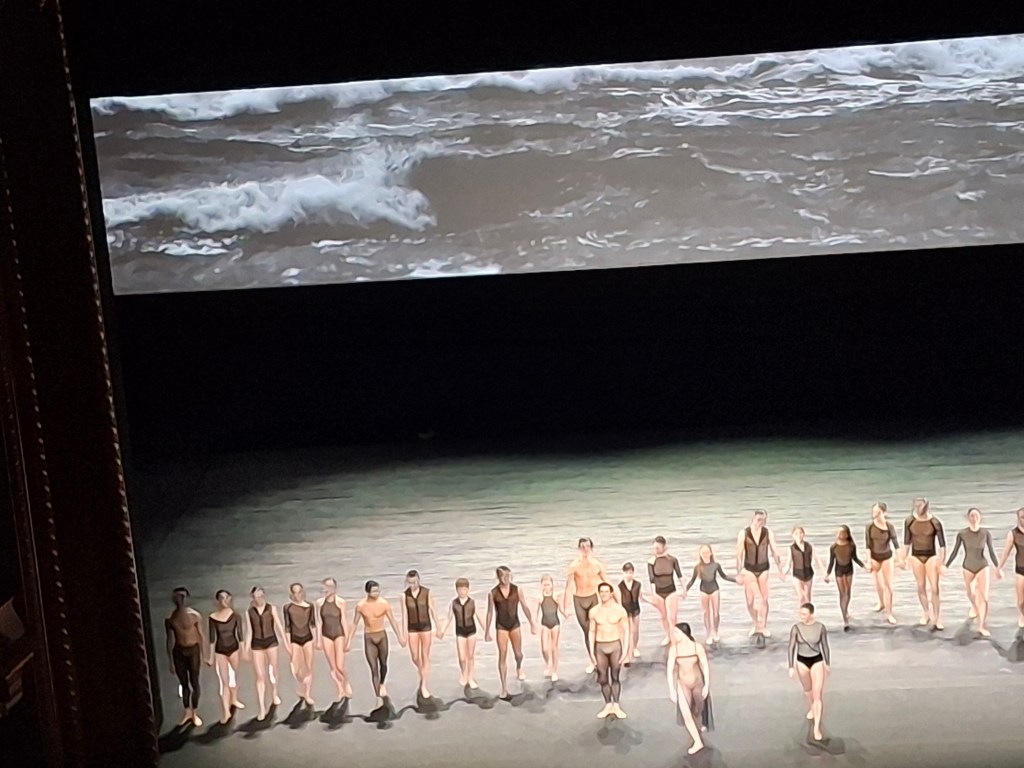
There was lots of the movement of my title in both the above but the prime expression of it this week came in Akram Khan’s Thikra: Night of Remembering at Sadler’s Wells where I had the pleasure of Rosa’s company. Devised in conjunction with the Saudi visual artist Manal AlDowayan, this is an intense hour of modern dance infused with classical Indian forms and a sound track that moves from a foreboding drone through ragas, Balkan chorale, drumming and hints of Purcell.

The twelve female dancers all have waist-length black hair that forms an important part of the performance. Would have been an interesting casting call: “Find me twelve women with equal-length black hair who can dance classical Bharatanatyam choreography”. Nine of the dancers were uniformly clad in olivey long dresses while the sacrificial victim was in white, the matriarch in red and her sister in black. AlDowayan’s involvement gave it a very graphic look that comes from her work in exploring cultures, heritage and change. The narrative didn’t really matter but was essentially about annual rebirth and renewal through sacrifice. Visually stunning, musically stimulating – an hour of total transportation into a world of magic and wonder. You can get a short glimpse of it here.

A select group of us returned to the Bridge Theatre for The Lady from the Sea. I haven’t been there for ages as it’s been wall-to-wall Guys and Dolls. I wrongly thought this was a version of Hedda Gabler but Ibsen actually wrote a play with this title so I need to brush up my Scandi classics knowledge. This was a Simon Stone adaptation, so after the Billie Piper Yerma, expectations were high for something off the wall. And we got it – the usual Ibsen anguished captive bride played bravely by Alicia Vikander resisting the cage into which her husband Andrew Lincoln, in great form, had placed her. The drama plays out on a thrust stage (the Bridge is so versatile as a space) which becomes soaked with rain in Act 2 and then turns into a swimming pool. Writing, acting, sound and lighting were all excellent but the award of the evening has to go to the set design and build – the vision of Lizzie Clachan. Another exceptional evening of entertainment.

After all this fun it was back to work – as a producer! A couple of times a year for the last few years, I’ve recorded an audiobook version of a reader for use in teaching English as a Foreign Language in Germany. I’ve now, it appears, done 11 of them – here are a few from Hueber Verlag in Frankfurt.

I have a small repertory company of actors who are brilliant at producing a range of characters in the course of the narrative – teenage protagonists, their parents, threatening outsiders, police and other officials. The stories are often a bit Famous Five but tackle issues like single parenthood, criminal behaviour, the environment and relationships. For this one, Joining the Circus,I invited Gyuri Sarossy, who I met at a Hampstead Theatre party a while back, to perform the script. It doesn’t sound the most likely name for an English language project but he is English born of a Hungarian father and English mother. The story involved a farming family setback by the father’s accident and a circus family devastated on finding their usual pitch was waterlogged and wouldn’t work. Gyuri was born in Bristol so we opted for a West Country accent for the farmers and an East Midlands for the circus people. It worked extremely well and I am constantly amazed at how these actors can switch characters seamlessly in a single sentence. After the recording Gyuri was off to Budapest to record his final scenes in a vampire movie. Another spoiler – he dies. A week later we hear that the client likes the results of the session. Great news – we’ll all get paid! A little.

It was then on to my main unpaid role as a trustee of the British Bilingual Poetry Collective. I was invited by the publisher of the collective’s anthology Home and Belonging, which resulted from a series of translation circles like the last blog’s reference to the Barbican, to chair a discussion panel at the Palewell Press Literary Festival. The day also included readings from a number of poets including Chika Jones and Nasrin Parvaz who feature in our anthology. It was fixed a long time ago and so I missed Watford’s best game of the season so far, a 3-0 demolition of Middlesbrough – such dedication to the cause, such a fair weather fan!

However the occasion was very interesting with my panellists translating from Arabic with Dr Amba Jawi and Catherine Temba Davidson as collaborators, Barbara Mitchell who translates from Spanish and Caroline Stockford who does Turkish and Welsh and finds striking and unexpected parallels. We ranged over the process of translation and the difficulties of rendering essence and spirit rather than words, the degrees of faithfulness and liberties translators are allowed and the reactions of the original authors.

In all the cases featured here there were difficulties since all the authors were in prison on political charges. Palewell Press specialises in human rights publications so this was only to be expected. The overriding message was that all art forms have to continue to expose and challenge human right abuses whever they occur.

Next day, to make it a full weekend of poetry, I co-hosted BBPC’s annual contribution to the Tower Hamlets Season of Bangla Drama. The season has a theme each year – we’ve done ‘love’ and ‘hope’ and this year it’s ‘kindness’. We decided to go all alliterative and call the session Kindness with Kazi using the poems and songs of the national poet of Bangladesh Kazi Nazrul Islam. Shamim Azad and I hosted the occasion which had performances by the brilliant singerJoyeta Chonchu of a couple of Nazrul songs , my colleague Milton and I recited one of his most famous poems “I Sing of Equality” followed by a discussion of his work and influence on people’s lives. After a short break we then broke up into pairs to talk about kindness given or received in our personal lives after which everybody wrote a short poem or piece of prose. There were some very moving contributions and very positive feedback that participants found it both enjoyable and valuable.

Monday saw me joining Frances at the Orange Tree Theatre for Hedda. Ibsen is all the rage these days it seems – well I guess he has been for a while. This is an adaptation by Tanika Gupta – well really more of a new play based on – Hedda Gabler, relocated to Chelsea in the post-war, post-partition of India period. Tanika’s take is based around the need to conceal the ethnicity of Hollywood’s Anglo- Indian stars, in particular Merle Oberon. The evening was pacy, directed by Hettie Macdonald, twisty and with a full range of emotion, fear, deception, devotion and angst.

From the dramatic opening with her lifelong maid, brilliantly portrayed by Rina Fatania, asking which face whitening she’d like today through to the realisation that she’d made a disastrous marriage believing her screen career to be over, Pearl Chanda was Merle Oberon.

A powerful performance with hints of her former influencer status dashed by the creeping reality of her current dull life. It touched a real nerve with me as I was currently reading Kiran Desai’s Booker nominated The Loneliness of Sonia and Sunny which brilliantly examines the whole question of identity, ethnicity and personal authenticity. I was fortunate to be able to speak to Tanika about our Kindness event and she said her father used to sing Nazrulgeeti (KNI songs) around the house all the time. That was before seeing the play so sadly I wasn’t able to tell her how much I enjoyed it.

Another part of the Season of Bangla Drama was a presentation of kindness stories collected by long-term Bangladesh resident Peter Musgrave who had taken part in our BBPC Kazi session so it seemed only right to go to his. An added attraction was that Gitabini, the singing group featuring my friend Rumy Haque was to perform. There were stories to bring hope of new flood resistant ways of building houses and farming being demonstrated by NGO staff to educate the Bengali populace, particularly in the most threatened areas. One of the countries most prone to disappearing into the Bay of Bengal if climate change continues unchecked – not sanguine about the current COP to prevent it – but good to see alternative approaches to mitigate the effects. Gitabini sang a Kazi Nazrul Islam song and Rumy recited her conservation-oriented poem about a banyan tree and I was able to chat with a number of old and new friends at the post-event Koffee and Kake.

Gitabini performing

I’m fortunate to call the young composer Dani Howard a friend and so when her saxophone concerto was finally to receive its UK premiere I just had to whizz off to Poole to the Lighthouse Arts Centre to hear it. I did some voluntary work a few years back for the London Chamber Orchestra which had originally commissioned the concerto but then got into financial difficulties and couldn’t complete the contract. So I’d waited nearly two years to hear it. Stockholm Philharmonic and the Bournemouth Symphony Orchestra came to the rescue and while I didn’t make the world premiere in Sweden, I wasn’t going to miss out on the first UK performance. The journey was horrendous. The train was 30 minutes late arriving at Waterloo because of earlier signalling problems, and quite a bit more than that departing. Then we couldn’t get into Southampton Station because of other trains blocking our platform. Finally they decided to skip some stops and head directly to Poole after Bournemouth. At least Delay Repay will kick in and I’ll get some dosh back. By the time I’d checked in to the hotel, checked out the location – my first time at The Lighthouse – and gone for a walk down to the Quay it was dark. I guess one benefit of this was the bright lights of the Poole Museum shone out. A quick beer and back to the hotel to prepare for the concert. Was all the hassle worth while? Oh yes.

The concert opened with a Wagner piece I’d never heard – the overture to his first opera, a comedy called Forbidden Love. A comedy from Wagner! It failed miserably and lasted for only two performances in 1836, but the overture was fun, very jolly and lively, opening with castanets of all things! But the main event came next. Dani had written the concerto specifically with the versatile Jess Gillam in mind. In three contrasting movements the music showcased Jess’s talent but also wove evocative call and response moments with different sections of the orchestra. Lush pastoral passages alternated with bold percussive swathes and the brass were strongly featured – Dani does like her brass – one of her first pieces I heard was her trombone concerto for Peter Moore at the Barbican in April 2022, another amazing performance. Dani says the concerto is a homage to Adolf Sax who invented the wonderful instrument which finds its place more frequently in jazz clubs than in the concert hall. I love the way Dani combines pure and simple sounds from nature with a clear understanding of the power of complex orchestration. She’s a master of the medium. The Times critic liked it too: The first movement bubbles and chatters, passing ideas between soloist and orchestra, while the finale is a dazzling moto perpetuo, dispatched with seeming ease by Gillam. Best of all was the central movement, an extended cadenza for Gillam, who made it seem as if we were hearing Sax’s innermost feelings

Jess Gillam is a master too and for her encore, chose a piece she’d played in BBC Young Musician of the Year in 2016 – Pedro Itteralde’s Pequeña Czarda – when the conductor was Mark Wigglesworth, now principal conductor of the Bournemouth Symphony Orchestra, whose home base is the Lighthouse. Most appropriate. After the interval we heard the orchestra in full flow with Berlioz’s Symphonie Fantastique. It will be interesting to compare this rendition with the Orchestra of the Age of Enlightenment’s approach in June next year on period instruments under Sir Simon Rattle.

What made the evening extra special was that Dani invited me to the pre-concert reception where I met her mother, Belinda, again – we had both been at the Barbican gig in 2022 – meet her sister Sam for ther first time and catch up with boyfriend Sion Jones who I’d met at the Colin Currie percussion concerto at the Wigmore Hall. Dani was of course the centre of attention with a former pupil effusing over her influence on his career and her former music teacher from Hong Kong, now working in Poole, bringing a class of her primary pupils to say hello. After the concert, Dani had some formal duties but after a while she and Sion were able to join Belinda, Sam and me in the pub where I’m afraid we stayed till they kicked us out. After all the music it was an evening of fascinating conversation eavesdropped and joined in with by locals Jeff and Jonny and covering coping with bereavement, mine and the Howards’ who lost a husband/father last year, music, the arts generally, contracts, 2027 paradigm shift and blogging among others which were continued outside the pub until we all decided to head for our rather tardy beds in three different hotels.

Too busy to blog …

It’s been a long time since I last did this. There’s been a lot going on. Cataract operations and follow ups. British Bilingual Poetry Collective’s first appearance at the Barbican. Football matches. Women’s World Cup cricker. Copy to prepare for Watford Museum and editing for TU Delft. A massive crop of quinces to be cooked and made into jelly, pickles, marmalade and membrillo. But still time for a few theatre and concerts. And while my last post began with a trek west across south London to see my granddaughter play in her band, this one starts with a diagonal trip north to Alexandra Palace to see my son-in-law perform.

It’s 20 years since The Thick of It hit our screens and so why not have a party to celebrate? The creator Armando Ianucci was joined by the stars Peter Capaldi, Rebecca Front and Chris Addison, who at the time was mainly known as a standup comedian rather than an actor. The evening was elegantly hosted by Miles Jupp. There was lots of chat about the provenance (Yes Minister), about the semi-improvisatory nature of the scripts and the fluid filming style. There was a lot of swearing of course and a pre-interval recreation of the Tucker/Reeder sacking scene. It was a very entertaining evening although as a fellow-traveller on the bus back to Finsbury Park said: “It turned a bit into the Chris Addison show in the second half.” When tasked with this Chris confessed it was PTSD from all those panel shows he used to do.

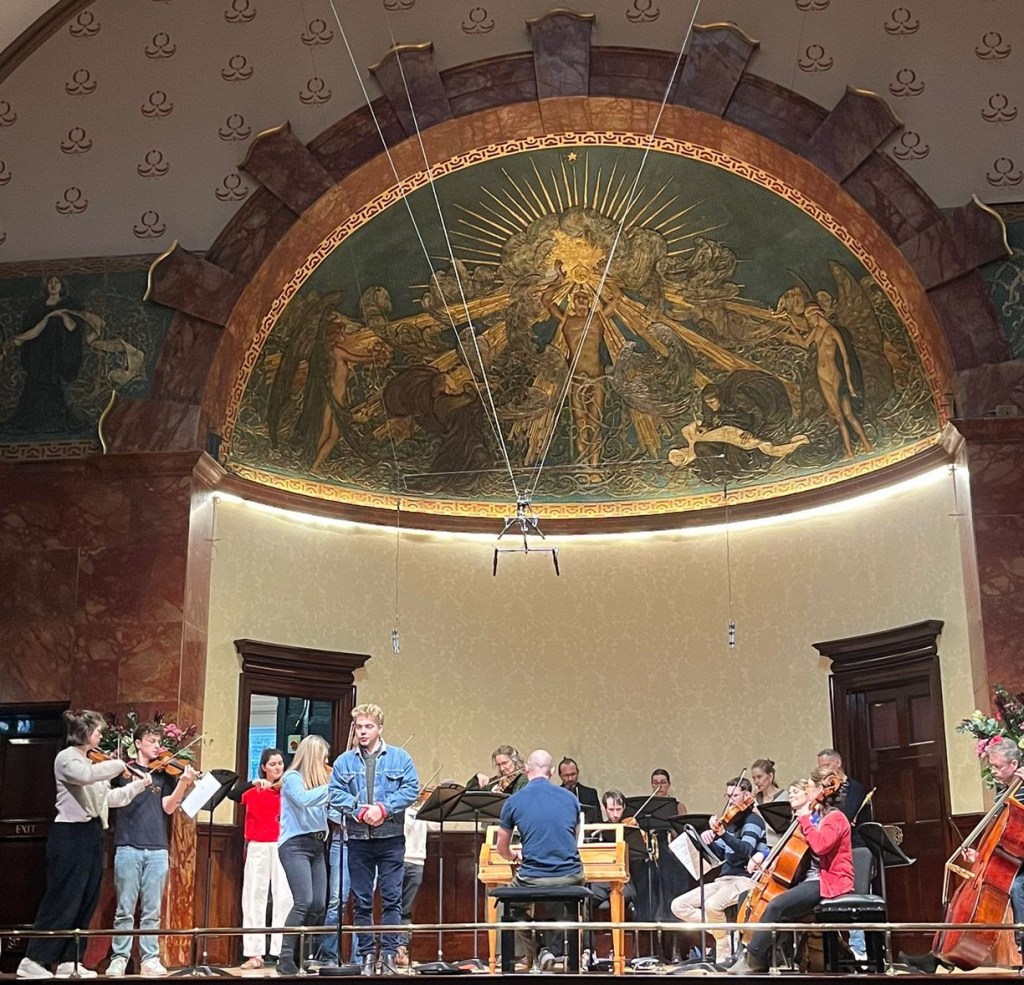
Next up was another visit to Acland Burghley School for a recital by the Orchestra of the Age of Enlightenment’s new intake to their Rising Stars scheme. Every two years the OAE recruits young singers to serve a kind of apprenticeship with opportunities to appear at their concerts and develop their professional lives. This year’s group seemed pretty well set to me with well-delivered introductions to their Handel arias.

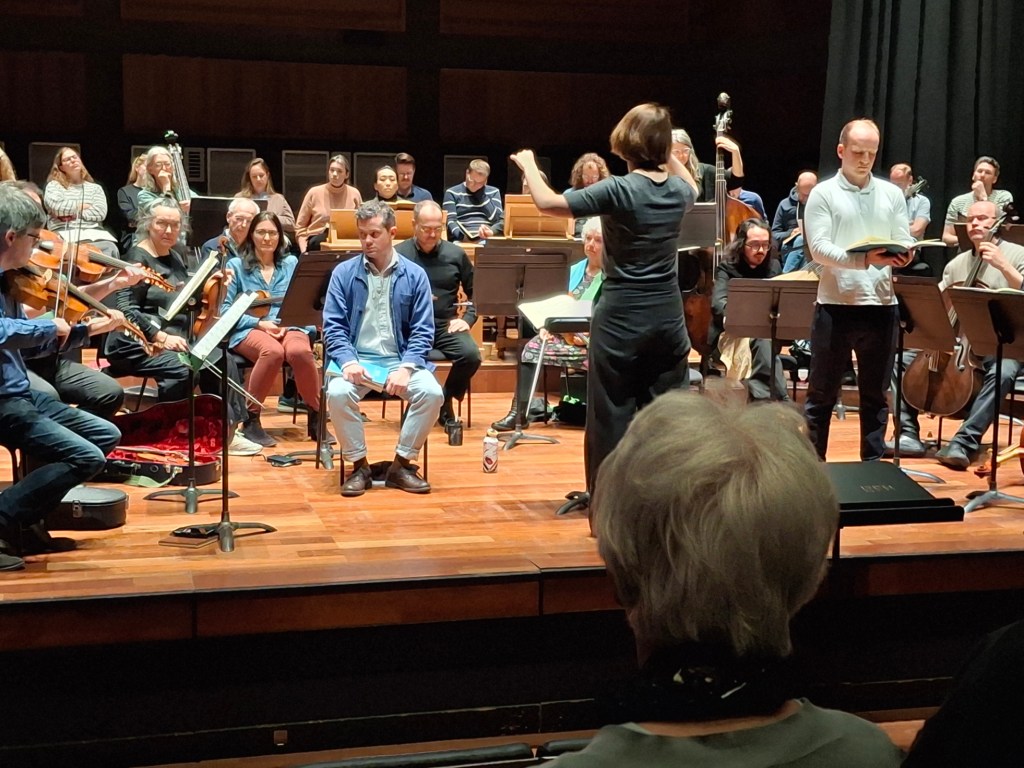
They were left to right Sofia Kirwan-Baez (soprano), Angharad Rowlands (mezzo-soprano), Hugo Brady (tenor) and Peter Edge (baritone).  Chosen from over 100 singers who applied they were accompanied by a chamber group of OAE players conducted from the harpsichord by Steven Devine. It’s really encouraging to see so much young talent embarking on their chosen careers.

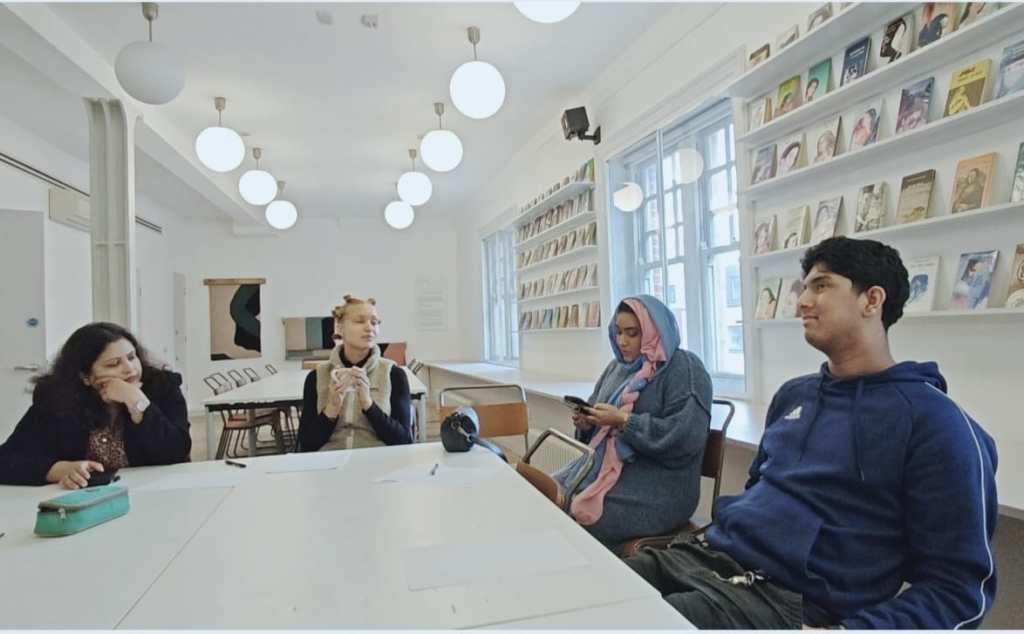
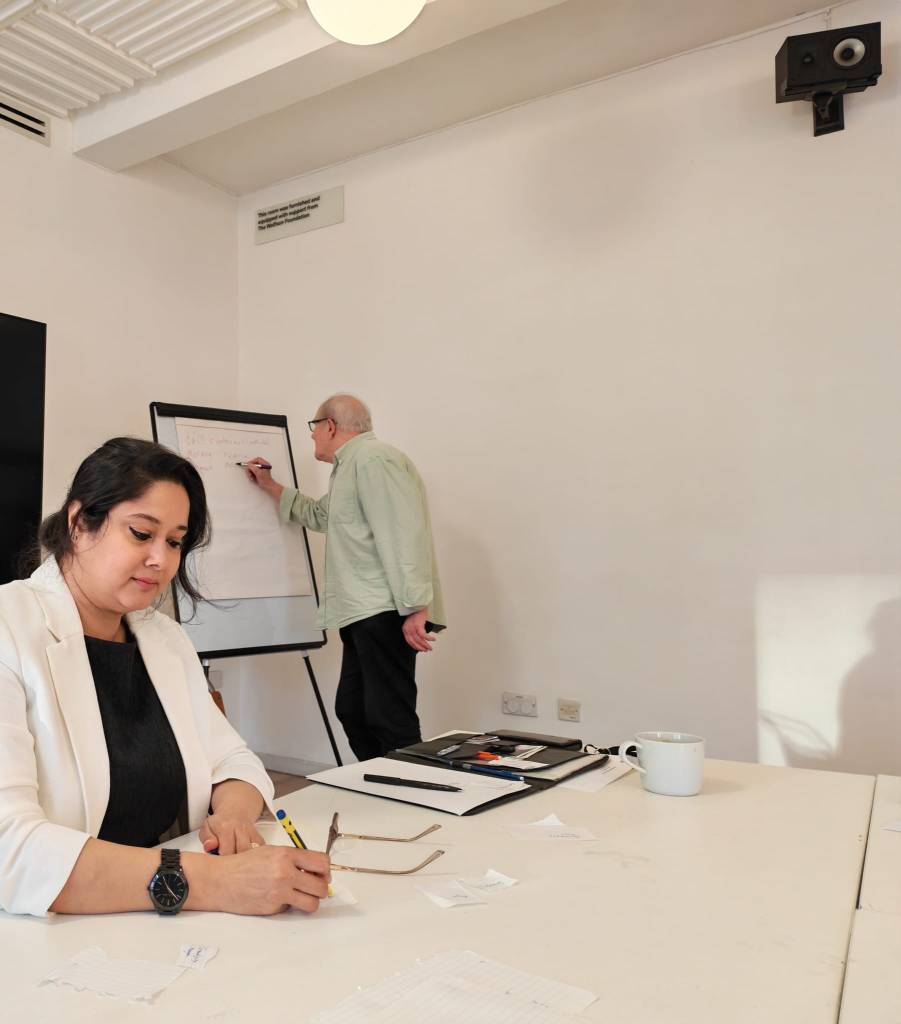
The last Sunday of every other month finds me co-hosting a BBPC poetry adda (get together). We read, perform and often translate poetry and have voluble discussions about what we hear. This month we had a performance poet Pip McDonald perform a couple of pieces and then engage in a valuable discussion about the art of performance with many tips for budding performers. It was a friendly and positive occasion, with tea and snacks, as I hope the photos demonstrate.

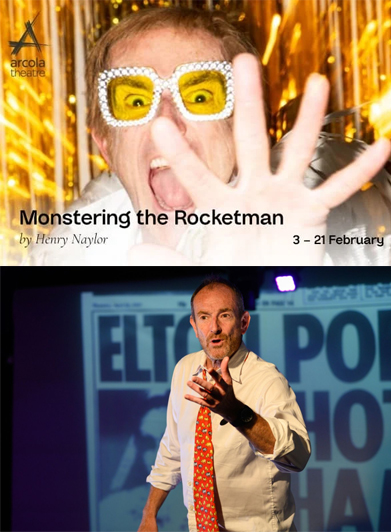
So what’s occurring at Marble Arch? After the horror of that artificial hill, it was a delight to discover that there’s a new MOCO in town. I’ve visited the museums in Barcelona and Amsterdam but had missed out on the fact that MOCO London opened in September last year but had an email with a voucher for half-price entry so off I set. It’s a similar collection of modern and contemporary works with Banksy, Emin, Hirst, Kusama, Opie and Warhol all present and correct but with some excellent pieces that were completely new to me. One of thee first images to confront me was a photo of Elton John by Chris Levine, currently in a dispute with a collaborator over his holographic portraits of the late queen. I was then lured into a fascinating psychedelic infinity mirror room and then to its exact opposite in a contemplative installation Lunar Garden by Daniel Arshan inspired by the classic Japanese Zen gardens I enjoyed so much in Japan. There were a lot of really interesting artworks on display so it will be firmly on my agenda of museum visits as they have changing displays as well as the permanent collection. And it’s a spacious and elegant space over three floors.

I don’t often go to see a play twice in ten days but when Frances and I went to see The Land of the Living at the Dorman Theatre at the National, I said “I should have brought Rosa to this”. So I told her about it and we went together a week later. Rosa is my artist friend, one of whose major installations Lost treats the adoption scandal that took place in Spain between the late 30s and early 90s, known as the Spanish Stolen Children and she is currently working on a similar work featuring the American US Adoption Re-homing scheme. You can check Rosa’s work out at https://artcollaboratif.com. This play by David Lan, who used to be the creative director at the Young Vic, is about the attempt to repatriate children who were stolen from Ukraine and Poland by the Nazis because of their suitability to breed the super Aryan race. It was disturbing, thought-provoking and contained a masterful performance by Juliet Stevenson, an actor I’ve long admired. But there were also moments of humour and theatricality as when the Dorfman’s traverse stage is converted into a swaying train taking children back to their homes.

Both Frances and I have marvelled at the genius of Indhu Rubasingham and her work transforming the Kiln Theatre. Now she’s the artistic director of the National and as someone said after the play she’s spent a year of the Kiln’s budget on her first production as director in the Olivier. Bacchae is losely based on Euripides in a debut play by  Nima Taleghani – a brave commission to open your first season at the nation’s principal theatre. Did it work? Hell yes! Rambunctious rapping, rhyming, big revolves, flying and dancing brought the contrast between the lifestyles and philosophies of Dionysus and Pentheus sharply into focus and the ever-present chorus of bacchantes led by Clare Perkins kept the whole spectacle flowing through mood swings and emotional turmoil. Ukweli Roach, James McArdle and Sharon Small shared the lead roles. There were lots of laughs, lots of theatrical in jokes and while it may not be what conventional NT audiences were expecting all the people we spoke to thought it was great fun.

My friend Jadwiga likes lunchtime recitals and has a list of churches and venues where she goes regularly so I was delighted to be able to take her to a lunchtime recital in a venue she hadn’t been to before. Some time ago on a vist to Ramsgate for the launch of Anna Blasiak’s latest book, I met Gabriela Mocan of the Romanian Cultural Institute and had taken my friend Dana to an evening concert there. The upshot is that I’m on their mailing list and was attracted by a recital by a Romanian pianist Kira Frolu in St Bartholomew the Great in Smithfield.

Jadwiga was suitably impressed by this ancient church and we were both enthralled by the young pianist’s performance of an Georges Enescu suite – Mélodie, Mazurk mélancolique and Burlesque from Suite No.3 Op.18 – to keep the Romanian theme running followed by a wonderful performance of one of my favourite pieces Mussorgsky’s Pictures at an Exhibition which is great in Ravel’s orchestration but rather special in the original piano form. It was made all the more poignant as the last movement is called ‘The Heroes’ Gate at Kyiv’.

Once again it was a privilege to experience the wealth of talent emerging from British conservatoires (Royal Academy of Music in Kira’s case) and a tragedy that so many of them will struggle to make a living because governments plural don’t care about the arts. We had a light lunch after the concert and walkedpast St Paul’s Cathedral and then through Postman’s Park with its fascinating plaques to people who died trying to save others’ lives. We then crossed the Millennium Bridge and along the south bank where I peeled off to meet Rosa for an early supper in the Archduke before making my second trip to the Dorman for The Land of the Living. It was interesting to see it from a different viewpoint and its powerful messages rang through again. I’m pleased to say Rosa was impressed too.

The Barbican Centre ran a series of October events under the title Voiced: the Festival for Endangered Languages. My poetry group BBPC was invited to contribute in three sessions. We ran a Translation Circle on Saturday 11 October (top below), our chair Shamim read poems in Sylheti in person on Friday 17 (left below) and in a foyer display through headphones and Eeshita and Anahita produced a polylingual audiovisual poem at the final session on Saturday 18. (Eeshita introduces the poem and the BBPC team celebrates.)

Shamim and I have run a number of translation session together but we usually know several of the people present. Not this time. Because of GPDR the barbican couldn’t even let us know who had signed up. However we did enlist the talent of Anna Blasiak to prepare a poem in Polish and Kashubian (endangered mix of Polish and German used on the north coast) which we then translated as a group which contained speakers of ten different languages. Interesting! However, the organiser got good feedback and we had a good party after the final session.

A change of mood on the Sunday as I moved back into the world of music with the OAE performing their first concert of their 40th anniversary season at the Queen Elizabeth Hall – Handel’s oratorio Solomon. It’s a fine work that includes the ever popular Arrival of the Queen of Sheba. Conducted by John Butt who has a long association with the OAE, it was great to see two of the rising stars from last week in the two choirs with Angharad having a small solo role as the second harlot involved in the famous judgement. The main character of Solomon was sung by one of the first intake of Rising Stars Helen Charlston, Zadok by Hugo Hymas and a Levite by Florian Störtz fellow alumni of the scheme. The three sections of the oratorio are very different in style and emotional impact but it was a pleasure to hear the crisp playing of the orchestra and the beautiful antiphonal choirs raising the roof.

The period was rounded off with visits to the Young Vic and the National again. A couple of weeks’ ago Frances was invited to an insight event in the Young Vic rehearsal room at which we heard from some of the actors and from director Nadia Fall about the forthcoming production of Joe Orton’s Entertaining Mr Sloane. I think I saw the first revival at the Royal Court in 1975 with Beryl Reid and Malcolm Macdowell. It raised a lot of scandalous outrage among certain elements of society and the media.

Tamzin Outhwaite is the central character Kath in this production with Jordan Stephens as Mr Sloane. Poor Joe Orton is best remebered for being murdered by his boyfriend but he actually wrote some very funny plays (Mr Sloane, Loot, What the Butler Saw).

Within the frequent elements of farce are strong messages about unwanted pregnancy, homosexuality, promiscuity, race and class and hints of criminality. Well worth reviving in our once again intolerant times.

Another of the benefits of friendship with Frances was an invite to a talk to staff in the archive and design departments of the NT followed by a matinee performance of Hamlet. This is the second production in Indhu Rubasingham’s first season at the National and was directed by her deputy artistic director Robert Hastie. Hiran Abeysekera plays the prince quite brilliantly with much more humour than usual and a very emotional reading of the role. He’s matched by an outstanding performance from Francesca Mills as Ophelia who skips and dances across the stage enlivening every scene she’s in and casting a shadow over others after her death. It’s brilliantly staged in a palatial ballroom with an amazing mural which we were told in the pre-meet contains portraits of everyone who has played Hamlet at the National.

Another quiet week …

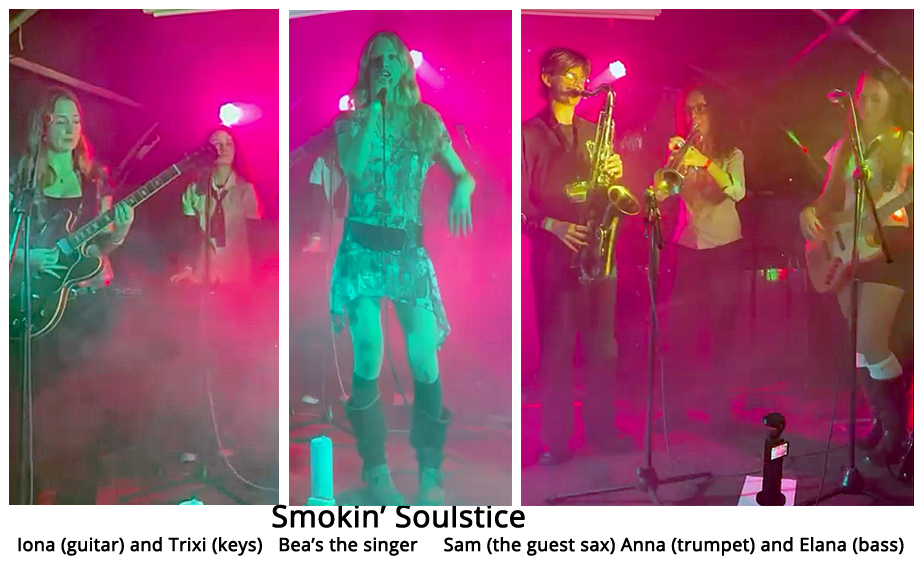
The week started with an interesting journey acrosss south London to see my granddaughter perform with the band Soulstice at BrockFest a music festival organised by Junior Open Mic which arranges monthly sessions for bands under the age of 18. This was a much bigger event in Brockwell Park in Herne Hill which I reached via a bus from home to Crystal Palace and then another to Brockwell Park. My daughter had equipped band and parents with branded merch. I had complained about being left out so today I was for the first time able to pull on my tee with SOULSTIC E GRANDAD appliqued on the back and keyboards on the chest as Daisy (Trixi in the band) plays the keys and flute. After some heavy metal and a plaintive female singer-songwriter it was time for Soulstice to perform their three-song set. The organisers had brought heir start time forward and there was a moment when they thought they may have to start with out their bass player. However she did make it on time – just – and they rocked the audience with a cover of Raye’s The Thrill is Gone and original compositions Still I Rise and Supersonic. As the applause rang out and they prepared to leave the stage the MC called them back for an encore and then a second one. A great start to the week and a proud grandad retired to the pub with some of the band and their parents to congratulate ourselves for the talent our genes had bestowed!

The next day it was me on the stage. I had been invited to read some poems at the Bangladesh Book Fair at the Brady Arts Centre in Tower Hamlets. I had a ten minute slot that I filled with a couple of poems inspired by my visits to Bangladesh back in 2009 and other more recent efforts which were politely received by the, fortunately, largely bilingual audience.

On Tuesday it was off to the Hampstead Theatre to see the transfer of Titus Andronicus from the Royal Shakespeare Company at Stratford. Having seen it there with Simon Russell Beale in the titular role it would be interesting to see how John Hodgkinson filled the space after SRB was sadly unwell and unable reprise his performance in London. Hodgkinson had apparently had only two weeks to learn the part and only one other public performance before we saw him. He was magnificent. His taller stature and natural authority gave the part a different feel. Despite the mutilations, murders and children-in-the-pie mayhem, you felt a degree of sympathy for Titus. The set had transferred to Hampstead slightly reducing the thrust which made it even more intimate than the Swan. Once again protective blankets were provided for front row guests against the blood spatter. The brilliance of Max Webster’s direction in using blackouts and audio to cover the goriest actions was still highly effective and the wardrobe choices for Romans and Goths worked really well. It was a stunning evening of theatre – again!

Then it’s off to the Kiln to see a play that Frances missed at the Galway Arts Festival last year but which has now happily got a run in Kilburn. The Reunion gathers a family on a remote island – maybe they used to holiday there when younger but I didn’t quite catch it – some coming from Dublin others from London – to commemorate the anniversary of their father’s death. After a cordial start, the cracks begin to show and develop into fissures and then chasms as sibling rivalry, jealousies, disapproval of lifestyle choices and parenting start to surface through the evening and into a nightmare of a night. There are a couple of great coups de theatre that I won’t reveal but alongside all the grief and misery there is a lot of humour, both verbal and physical.

And afterwards Fran had a chance to catch up with Paul Fahey the director of the Galway Arts Festival who remembered her photographer uncle Stan who used to photograph the festival for the local newspaper, about whom they chatted so it made for a great end to a fun evening.

I had missed Inter Alia at the National Theatre so was delighted that NT Live had recorded it and were showing it at the Greenwich Picturehouse on Thursday so I got three plays in three days albeit one of them on a screen.

The play is an amazing follow up to the sensational Jodie Comer spectacular Prima Facie and has an equally staggering performance from the central character Judge Jessica Parks played by Rosamund Pike. Unlike Jodie Comer, Rosamund is not alone on stage but still has the most incredible amount of stage business with props and costume changes as the awful story of a teenage rape unfolds through hints, evasions, suspicion and eventually confession. It’s a very moral exploration of social media’s effect on adolescents, understandings of consent and appropriate sexual behaviour – a theme explored in the eponymous Adolesensce on TV in 2025 and Micaela Coel’s I May Destroy You a couple of years ago. It’s a hot topic at present with toxic masculinity promoted seemingly unfettered by the big tech platform owners. The play calls for acting of a high order with both sides of dialogue in conversations, being an ever-present mother and a high-powered judge. Rosamund Pike delivers brilliantly with great support from her husband and son and a cast of children who pop in and out. It was most excellently filmed as NT Live shows usually are with enough wide shots including the audience to give a sense of being in the theatre but with the telling close ups of moments of joy and anguish that you don’t get when you are actually in the room. Shocking content, stunning performances, superb evening, applause in the cinema.

Having seen a part of the technical rehearsal for Creditors at the Orange Tree a couple of weeks ago it was now time to head off to Richmond to see the whole thing. Fortunately the journey time allowed me to watch the Red Roses complete their victory over France in the Womens’ Rugby World Cup and seal their place against Canada in next week’s final.

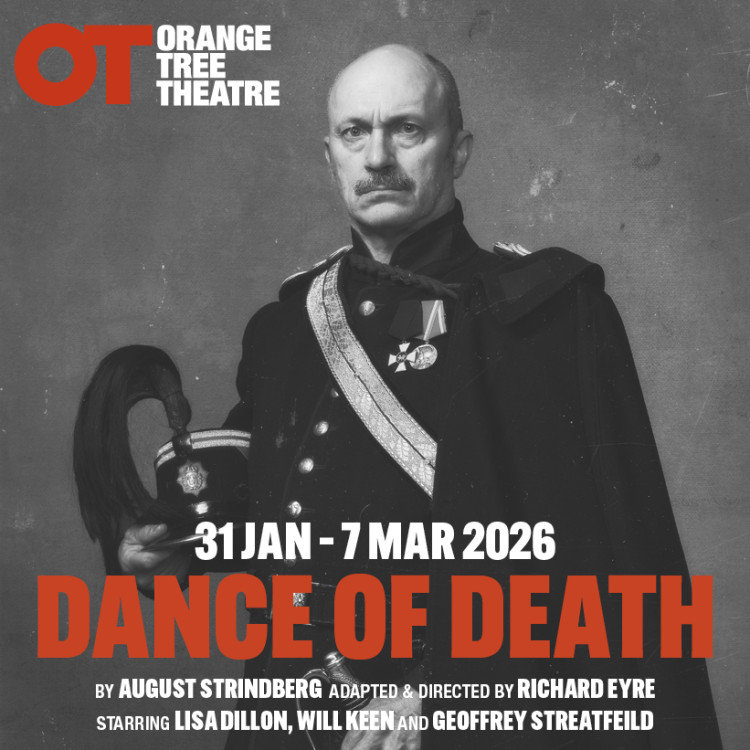
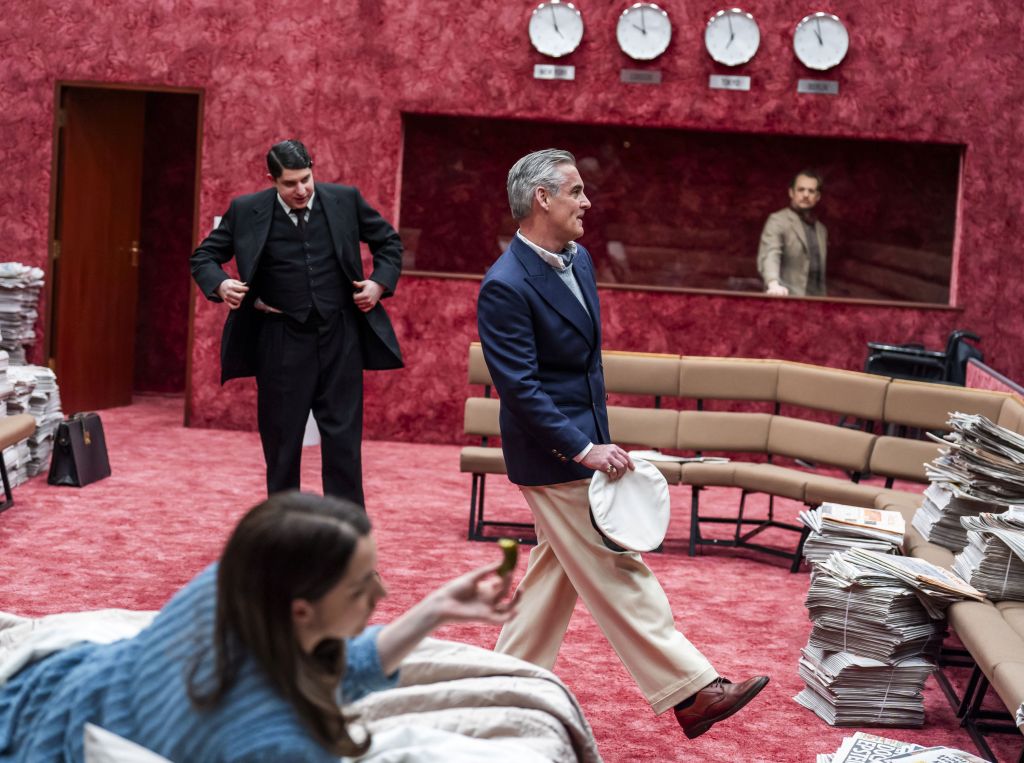
It’s been a week in which crucial issues have been aired in the theatre. War, power and empire building; family intrigue and betrayals; rape and social media and now Strindberg’s take on coercive control. The cast are outstanding in bringing a terrifying text of mysogyny and manipulation to us with compelling performances that deliver humour amid the horror and which draw gasps from the audience as Charles Dance’s Gustav ties Nicholas Farrell’s ailing artist Adolf in knots with a tissue of lies and innuendo. Missing for the first scene but the centre of the play is Geraldine James’s Tekla. She enters in scene two with comic flirting and her own level of manipluation of her husband Adolf to allow her to pursue other conquests in an ‘open marriage’. It all turns grim as Gustav’s poison pours out of Adolf in an attack on Tekla. Finally Tekla and Gustav play a scene in which many revelations occur. The adaptation by Howard Brenton and direction by Tom Littler make this a compelling evening in the theatre with actors at the peak of their powers. It appears that the three actors last worked together 20 years ago in the TV series The Jewel in the Crown. Their chemistry is intact.

And when I got home, there on the doormat was the latest edition of POL (Poetry Out Loud – Issue 7) in which I have a short story published. The magazine has a Bangladeshi slant and my story has a female British-Bengali protagonist in a tale of lost lovers reunited during a male lecturer’s trip to Yorkshire. You can get it from Amazon if you are interested.

Royal Albert Raggetts

When I met Jenna Raggett back in March at St George’s Hanover Square, we agreed to keep in touch. We did and so I set off with family and friends to the Royal Albert hall to see a BBC Prom given by the Irish Baroque Orchestra in which Jenna plays violin. So we had the delightful moment pre-concert in which Jenna could say “Michael Raggett meet Michael Raggett”. Her father is also a Michael and stayed and had a chat to me and two other Raggetts – Tom and Caroline – while Jenna went off to change and prepare. The Irish branch also have a cousin Michael who lives in Basingstoke! Also with us were my friend Jadwiga and her daughter Lucy and son-in-law Brian who were amused by this weird nominal encounter. We then went to our excellent seats and enjoyed a most magnificent performance of Handel’s Alexander’s Feast, a work I’d not heard before. We all enjoyed it thoroughly as did the critics (here’s just one of the reviews). In another coincidence the counter tenor Hugh Cutting was performing and we had seen him a Garsington back in June in Handel’s Rodelinda and singing with Tom’s choir Pegasus the next day at St John’s Smith Square . All the soloists were great as was the energetic conducting of Peter Whelan and of course the mellifluous playing of the violins!

Peter Whelan saluting the orchestra and soloists.
And then we got the Hallelujah Chorus as an encore.
Behind Closed Doors …

That outing marked the end of August but September has started with some further treats. Thanks to my friend Frances’ patronage of several theatre companies, I get invited to some behind the scenes events as well as the plays themselves. We had the privilege of going into the rehearsal room at the Young Vic for a Q&A with the cast of Joe Orton’s Entertaining Mr Sloane. It was a fascinating discussion of how the outrage it caused in 1963 was in danger of being repeated in our time too in the case of people who don’t conform to some British ‘norm’.

Also it was interesting to hear how the actors ahd prepared for their roles, including a visit by Tamzin Outhwaite to Sheila Hancock who had played Kath in one of the earliest productions. It was also a special moment to be able to look at the maquette for the set and see the marks and props laid out for rehearsals. We also had a chance to chat to the new artistic director of the Young Vic and director of the play Nadia Fall.

A couple of days later Fran invited me to a patrons’ event at the Orange Tree Theatre in Richmond. Again it was a huge privilege to be present at a technical rehearsal – the moment when all the elements – lighting, sound, wardrobe – some easing needed of tight waistcoat and attention to a cravat – script assistant, technical crew and of course the actors and director put it all together in the actual theatre space. Once again it was the Orange Tree’s artistic director Tom Littler who was directing the play – August Strindberg’s Creditors in a new translation by Howard Brenton, whose brilliant Churchill in Moscow we saw here earlier in the year.

The cast was very impressive Charles Dance and Nicholas Farrell were working through a lengthy scene with references to the third cast member Geraldine James who was in the theatre but not involved on stage during our visit. Watching silently from the balcony it was interesting to look at the processes of blocking the scene, adjusting lighting and sound levels and to note the great difference in approach between directing for the stage and for television. An afternoon of real insight. Can’t wait to see the full play.

And out in the open …

My friend and colleague in the British Bilingual Poetry Collective, Shamim Azad had been asked to curate a family day at the Serpentine Pavilion in Kensington Gardens. This was very special as this year’s pavilion, the 25th, is the work of Marina Tabassum a renowned Bangladeshi archictect. There were sessions of storytelling, poetry performance and traditional Bengali song and dance throughout the day from 10 until 3 in the afternoon.

Our poets included our executive director Eeshita Azad originally from Bangladesh, Sara Kärpänen originally from Finland, Chiko Jones originally from Nigeria and Pip McDonald still from Sunderland. They each recited poems to an enthralled audience – in all cases mixing their original language with English.

As well as our own group Shamim had invited an experienced and engaging storyteller Sally Pomme Clayton who opened the proceedings and Mukto Arts who played and danced after our poets with some fine traditional Bengali tunes and encouraged the audience to come and join them which they did with ages ranging from, I would guess six months in a baby sling, to seniors like me.

I’ve been to many of the annual temporary Serpentine Pavilions over the years with memorable ones from Zaha Hadid, Frank Gehry, Sou Fujimoto, Theaster Gates and Ai Wei Wei with Herzog and de Meuron. It was wonderful to see Marina Tabassum’s pavilion which she calls A Capsule in Time filled with these performances and also with seed planting, weaving, character creation and role play sessions going on concurrently. A really fun day out and I was just there to support our team not to perform which was a great relief.

Musical mystery tour

August brought three excellent musical events all with a hint of mystery. The first was a rehearsal at Acland Burghley School in Camden for the Orchestra of the Age of Enlightenment’s project Breaking Bach. Bach suites and concertos played on period instuments by musicians for whom I have the greatest respect, fine – but with street, hiphop and break dance accompanying it! Really? Not much of what the OAE does fails miserably so my frequent dance companion Rosa and I made it to Tufnell Park on a Sunday afternoon for the final rehearsal before the group took Breaking Bach to the Edinburgh Festival for its world premiere in the Usher Hall three days hence. We were asked not to photograph the performance so I don’t have any pictures but you can get a feel for it from the OAE’s website in a mo. Meanwhile our tickets included some branded merchandise – Rosa accepted my gift of a tote bag – “you can never have too many tote bags” while I have two pencils with seed capsules which I hope next spring will be planted out and become sunflowers.

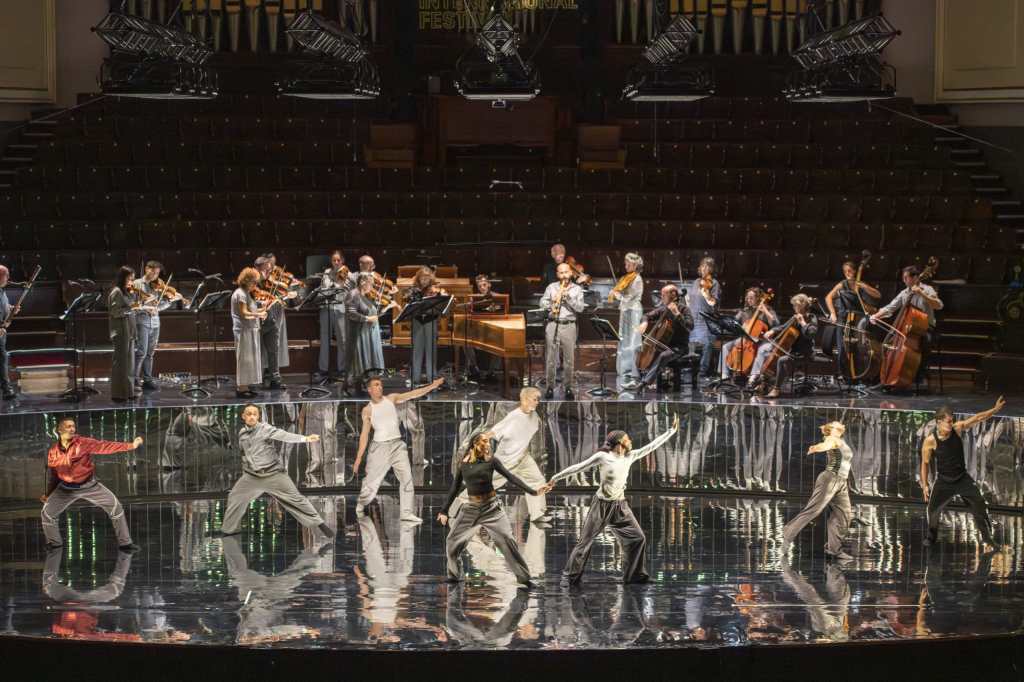
To say we were blown away by the performance would be to put it mildly. Did I say the dancers accompanied the players? I was wrong – the dancers added a whole new dimension through their elegant, energy-filled moves and fantastic sense of rythym. They truly interpreted the music not just performed alongside it. Choreographer Kim Brandstrup had wanted to meld street dance with Bach for some time and now was afforded the perfect solution. Some of the dancers were newly professional, several were still students at Acland Burghley School and you really couldn’t tell the difference most of the time. There were solos, pas de deux and ensemble pieces caringly matched to the emotions and rythyms of the various selections from the repertoire. At the end of the afternoon my only regret was that I hadn’t booked to go to Edinburgh to see the full performance – although whether I’d have managed to get up from a bean bag is debatable. It went down a storm with the critics as I was delighted to read the following Sunday in my Observer and everybody else who attended. There’s lots more about the project on the OAE’s YouTube channel too with interviews with the choreographer, dancers and students . We can’t wait for a full production in the UK – no wait there has been one I guess – parochialist! – I mean in London. Staggeringly risky, stunningly successful!

The next stop on the mystery tour was a trip into a different musical culture. Rumy Haque is a friend who I’ve worked with at the British Bilingual Poetry Collective on many occasions, on translations and in workshops. She’s recently concentrated her attention on forming a musical group and invited me to its launch event at the Brady Arts Centre in Tower Hamlets.

I’ve heard a fair bit of Bengali inspired- music, have co-curated workshops on the poetry of Rabindranath Tagore and – while unable to read the poster – Rumy explained that the concert was celebrating the anniversary of Tagore’s death and would feature his songs. The ensemble is called GitaBina and has Rumy, Mitali Bonowari and Sunita Chowhury on vocals with harmonium, tabla and keyboards accompaniment. As often with these events it took a while to get started – the Spanish are accused of a manaña attitude – but my Bengali friends run them close.

However it was worth the wait. The three voices have contrasting tones but combine brilliantly in conveying both the introspective, lyrical elements and the more rousing and passionate passages in the Tagore songs they performed. The harmonium underscore, strongly accented beat from the tabla and improvised frills from he keyboards added to the atmosphere of respect for and celebration of Tagore. Interpolated between the songs were readings of poems some in Bangla, one I’m glad to say in English – thanks Rumy. It was interesting and thoroughly enjoyable. Whatever the genre or style, music speaks to the soul and mine went home refreshed.

I’m fairly familiar with song cycles from both Robert and Clara Schumann and Fanny and Felix Mendelssohn with both male and female singers and piano accompaniment. So it’s off to Acland Burghley School again with my friend Frances, who lives nearby, for another new experience.

Tonight it’s the lovely Helen Charlston singing with a string quartet! That’s new. Helen has a long association with the OAE as one of the first in its Rising Stars programme and the star of the memorable Coldplay tribute video of Dido’s Lament.

Helen writes in her programme notes that there’s no precedent for this kind of arrangement. But she thinks similar things might have happened at the soirées where these songs would have been first heard. The conversion of the accompaniment from piano to scoring for string quartet by Bill Thorp brought a whole new level of expression to the songs for me.

It was fascinating to hear how the piano sounds were expertly shared around the four instruments. The Consone (Latin for harmonious) Quartet use period instruments – they were the first such to be chosen as BBC New Generation Artists – and those familiar warm gut string sounds added new sonorities and their playing a new sense of fluency to familiar tunes. I felt a much stronger emotional reaction to the fuller sound surrounding the lyrics and maybe the intimate surroundings of the elegant hexagonal school hall at the centre of Brutalist Acland Burghley helped as well.

Three very different experiences with unexpectedly (shame on me) pleasing results. And there’s another adventure to come with a trip to the Royal Albert Hall to hear the Irish Baroque Orchestra play Alexander’s Feast by Handel which I’ve never heard so the mysteries continue to unfold.

Gentle June

After the madness of May the new month starts at a somewhat gentler pace. First up on 2 June is a trip to Glyndebourne to see the Festival’s first ever production of Wagner’s last opera Parsifal. Having just driven to Stratford and back, I decided to do this one by train and the excellent £10 return Glyndebourne bus service from Lewes Station. It worked really well and I arrived on the most beautiful sunny day, took a walk around the lake, had a glass of wine and watched all the lovely people. I decided on a dark suit rather than the full DJ and it’s becoming clear that the dress code is much more relaxed than it used to be – there were even men in shorts! Oh and had a preview of dinner!

So, into the auditorium and during the wonderfully atmospheric overture a caption appears on the curtain referencing Cain and Abel. Now Wagner had already mashed up Arthurian legend with strict Roman Catholic Good Friday rituals. Could the story take another level of myth? Well in my opinion, no. The main charaters’ alter egos or older doppelgänger mooching around at the back of the set didn’t do it for me and the construct that Klingsor and Amfortas had been quarreling brothers also didn’t wash. All that said it was magnificently sung and the orchestra under Robin Ticciati was just sublime. And there were some great moments of theatre in Jetske Mijnssen’s production too. I loved the gang of Kundry clones whooshing down on poor Parsifal and I liked the procession of Titurel’s coffin round and round the altar before laying him to rest. On the coach back to Lewes one visitor complained that this went on a bit too long to which I replied “Well, there is a lot of music to get through before the next aria and at least there was some action.” Despite some reservations about the over-concepty production it was a great evening and I’m very glad I saw, but especially, heard it.

The next evening (Tuesday) saw me join a friend from 50 years ago, Alison Dunn, at her retirement party in the splendid Humble Grape wine bar off Fleet Street – a great choice as that’s where we first knew each other when she worked on Education and Training magazine with Barry Turner a long-standing writer and editor friend who did some consultancy work for me in my guise as an educational publisher back in the 70s. Tasked with speaking to everyone in the room – I only knew Ali – I did about 70% and what some fine famaily, friends and former colleagues she has.

Each year in November the British Bilingual Poetry Collective, of which I’m a trustee, runs an interactive poetry event as part of Tower Hamlets’ Season of Bangla Drama. So on Wednesday Shamim Azad, the founder, and I head off to see the coordinator of the festival Kazi Ruksana Begum to discuss plans schedules and the broad outline of this year’s event. The theme for 2025 is ‘Kindness’ and we’ll be switching our focus from Rabindranath Tagore to the national poet of Bangladesh Kazi Nazrul Islam in a session with the title Kindness with Kazi.

< Last years’ poster

The evening brings the last concert I’ll see in the Orchestra of the Age of Enlightenment’s Southbank season. It’s an old favourite but like you’ve never heard it before. Elgar’s Enigma Variations must be one of the most played pieces in the repertoire with ‘Nimrod’ known in many different forms. However, the OAE presents ‘ historically informed’ performances so to hear the music played on gut strings, wooden not metal flutes, French not German bassoons made it sound completely fresh. Quite possibly how Elgar himself would have heard it. The variations formed the second half of the concert. Before the interval we heard his lively concert overture In the South written while he was in southern Italy and reflecting the sounds and landscape of the country. The mezzo Frances Gregory then performed five of Elgar’s Sea Pictures with great sensitivity and bursts of power to soar above the rich orchestral tones. the Portuguese conducter Dinis Sousa made his debut with the OAE and clearly developed a great rapport with them. He’s the principal conducter of the Royal Northern Sinfonia based a the Glasshouse in Gateshead and looks a fine prospect.

I remember a lot of excitement around Patrick Marber’s Dealer’s Choice back in 1997 in the confines of the Cottesloe theatre at the National and I enjoyed it very much at the time. I was looking forward to this revival in the similarly contrained arena of the Donmar and it didn’t disappoint, mainly thanks to a brilliant performance from Hammed Animashaun as Mugsy. The banter between the boys, the knowledge that he’s going to lose and his dream of opening a restaurant in a disused toilet in Bow infuse the whole play which has a spectacular set transformation that’s worth the ticket alone. As with House of Games, I’m more than ever convinced I’m not cut out to be a gambler.

I should have gone to Garsington to see Tchaikovsky’s Queen of Spades on Friday. However my frequent opera comapnion Jadwiga was unwell and I couldn’t find a replacement at short notice. The brilliant box office have moved my booking to 21 June and we’ll be seeing Handel’s Rodelinda instead.

My next musical outing was on Sunday 8 June when I went to a new venue for me – Charterhouse. It was a concert organised by the Barbican as part of the European Concert Hall Organisation’s (ECHO) rising stars programme. It was a recital for trumpet and piano and featured a premiere piece Continuum by my friend Dani Howard. Dani had worked with the trumpet player Matilda Lloyd to create the piece. As Matilda said in her intro “It started with an icecream on the beach”. Knowing Dani’s large orchestral works, her opera and hearing her percussion composition for Colin Currie last month, it confirmed – if it needed it – her versatility and gift for melody and creating atmospheres. Matilda and her pianist Jonathan Ware had played this piece 18 times as they toured the European concert halls who form the ECHO with this one being the last. They all kindly invited me to join them for tea and cake or a beer after the concert so it was altogether a super Sunday afternoon.

As a special offer if you’d booked a Barbican ticket you could see the Encounters exhibition for a fiver, so I did. This was in a small gallery on floor 2 and featured the contrasting works of Giacometti, with whom I was familiar, and Huma Bhabha who I didn’t know at all. Huma was born in Pakaistan but is now based in upstate New York. Her monumental works which incorporate found materials contrast with the elegant skinny figures of Giacometti. I know which ones i’d like to own but it was an interesting hour contemplating differeing approaches to making sculptures.

Continuing with our catholic cultural chase, my next visit was to Sadler’s Wells with my daughter Jo to see Mathew Bourne’s The Midnight Bell . This was a belated birthday outing for Jo and we had a fine early supper in Moro before making our way through the heaving Exmouth Market up Rosebery Avenue. What are all these people doing out on a Tuesday? The ballet is set in sleazy Soho in the 30 where the eponymus pub is host to prostitutes, closeted illegal gays, a lovestruck barman and various other denizens of nighttime London. There were duets, larger ensemble pieces, the most amazing and fluent set changes and original music blended with ballads from the era sung with original vinyl hiss and crackle, endless style and commitment by booming baritones. We both enjoyed it a lot and chatted about it as we made our way back to Farringdon for trains back home. It’s good to enjoy your daughter’s birthday treat too!

Yoshitomo Nara is an artist I’d seen a little of and so off I went to the Hayward Gallery to see what must be one of his biggest ever shows outside Japan with over 150 works displayed. He’s the epitome of Japanese kawaii kitsch but with a twist – those sweet faced Hello Kitty style children’s faces contain messages of disquiet, protest and fear. Nara is very political in his work and repeats themes throughout his long career which the exhibition spans. There are installation – a ramshackle shed, a teacup fountain, paintings, drawings and sculptures spread over the whole expanse of the Hayward. It was fascinating to start with but there’s just too much to see and too much repetition of the themes that are dear to him. I’m glad I went however and got to have a chat with a film crew shooting it for The Sunday Times.

There was a double challenge getting from the gallery to my dinner with friends in Soho. First I had to navigate the waterfall and fountains on the walkway. They were fun – a cascade from the level above, water pouring from a waist and a green figure with a fountain for a head. Then I had to make my way across the Hungerford footbridge the scene of my disastrous fall last May. I managed both and had a great evening. I’ve been a fan of Nubya Garcia the young British saxophonist for a long time and managed to pop into the Queen Elizabeth Hall to get one of the last few tickets for her gig there next Thursday. It’s part of Little Simz’ Meltdown Festival which sounded a bit youth for me but I do like Nubya’s music so I bought one

The warm up band, Oreglo were a quartet of keyboard, drums, guitar and tuba – the latter becoming an instrument of choice it seems since Theon Cross in Sons of Kemet and other of the new groups that have arisen from Tomorrow’s Warriors – also a training ground for Nubya which she graciously acknowledged in her concert introductions. Oreglo were full of life and energy in a field that spanned jazz and prog rock and were an adequate preparation for the main event.

I was very surprised to see the band walk on stage Sam Jones headed for the drum kit but that doesn’t look like Daniel Casimir and that is certainly not Joe Armon jones at the keyboards. Nubya then followed in a huge-skirted off the shoulder gown and later introduced Lyle Barton at the keys and Max Luthert on bass. It’s a tribute to the quality of musicianship that you didn’t notice the personnel changes – yes the solos might have been a bit different but they fitted the music, mostly from the latest album Odyssey. She proudly announced that she had done all the arrangements for the strings that are on the album herself – taking her out of her comfort zone to make the sounds she wanted to hear. She also apologized for the lack of a string section tonight but had rearranged the songs for this concert. I am so glad I bought that ticket. The album is great and different but her live performances and those of these superb players were electrifying. She even did a walkabout through the audience with the final song from the album ‘Triumphance’ with its spoken word lyrics of life enhancing advice about resilience, tolerance and collective power. Nubya is true talent at the height of her own powers who received a standing ovation from the packed QEH audience which did include a few other people of my generation as well as all the meltdown youth.

After another visit to the Union Club, this time for lunch with a friend, we set off in the evening to enjoy The Taming of the Shrew in Tredegar Square in Mile End performed by a group called Shakespeare in the Squares. They perform an adapted version of one of the bard’s plays – different each year – in squares across London. I think it was 18 this year. The production includes songs for the audience to sing along with, some high quality acting and projection against traffic and aircraft and other ambient noise. And not only do they speak Shakespeare’s words eloquently they also play instruments and sing. We were lucky that it was a beautiful sunny pre-solstice evening and it was hugely enjoyable. I’ll try another venue next year.

The Taming of the Shrew in Tredegar Square

More music on Sunday when my son was singing with the choir Pegasus and the Outcry Ensemble at St John’s Smith Square. Two fanfares opened the evening the familiar Copland’s Common Man and Joan Tower’s Uncommon Woman which I didn’t know and then a Britten choral work which I’d never heard ‘Ad Majorem Dei Gloriam’ which was, I’m told, very hard to sing but was a great listen with six differently styled sections setting the words of Gerard Manley Hopkins for unaccompanied voices. I had a good catch up with Tom in the interval and then enjoyed Britten’s Variations on a theme of Frank Bridge and Leonard Bernstein’s Chichester Psalms where the countertenor soloist was none other than Hugh Cutting who had been at Garsington the night before. I was able to tell him how much we’d enjoyed Rodelinda and his performance tonight. He too enjoyed the production at Garsington and thought it worked well, especially the dancers.

The Outcry Ensemble and Pegasus Choir at St John’s Smith Square

Art imitates life

Three plays this week featured real life events dramatised by outstanding writers. At the Royal Court Manhunt written and directed by Robert Icke recreated the events of 2010 which saw the nation’s longest search for the fugitive murderer Roaul Moat. The play examined Moat’s mental state, childhood, failed relationship and his conviction that Northumberland Police had it in for him. The dramatic opening with an overhead camera projecting Moat’s pacing in his prison cell set the tone for a psychological and emotional thriller. In the lead role Samuel Edward-Cook was all muscle, repressed violence and angst in an outstanding piece of acting. Multiple-character supporting roles made for a fascinating examination of the factors contributing to his undoubted guilt. I remember the events clearly as I was held up on the way to a shoot by closed roads around Rothbury where he was finally caught. There was a post show talk in which an interesting aspect discussed was whether there was at the time a north south divide where, in the south, he was regarded as something of a hero for evading arrest for so long – seven days, in contrast to the north where he posed a real threat. Lots of food for thought.

Another favourite playwright, James Graham, featured an event from his native Nottingham. His The Punch at the Young Vic dramatised the cause and effects of a notorious one-punch death in 2011. Convicted of manslaughter and having served his sentence, Jacob Dunne was one of the first to experience restorative justice on his release from prison and it was the series of meetings between him and the victim’s parents that formed the core of this moving and enlightening evening. Directed by Adam Penfold the play was originally seen in Nottingham and transferred to the Young Vic with the same outstanding cast with once again a truly memorable central performance from David Shields as Jacob supported by a fine group of multi-character actors among whom I would single out the wonderful Julie Hesmondhalgh as, among others, the victim’s mother and campaigner for restorative justice. Her dancing is worth the modest ticket price.

I went to a completely new venue on Saturday – the Morocco Bound Bookshop and Café in Bermondsey – it’s name alone took me back to my early career in publishing where I knew about, but sadly never had the opportunity, to lavish a Morocco Binding on any of the books I produced. It looks to be a lively place with poetry open mic nights, jazz gigs, a book club and more. My visit was for the launch of a poetry anthology which contained a poem by my friend and British Bilingual Poetry Collective founder Shamim Azad. Published by a magazine ‘The Other Side of HopeOther Tongue Mother Tongue contains twenty poems on themes of immigration in eighteen languages. Given BBPC’s experience with Translation Circles, this was obviously an event not to be missed. Shamim read her poem to open the event and then closed it with a rhythmical Bengali poem that had the audience all clapping along.

Monday morning had a musical start with a trip to the Orchestra of the Age of Enlightenment’s base in Acland Burghley School in Tufnell Park. This was a Friends’ opportunity to observe 100 teenagers from ABS and Swiss Cottage School rehearsing for a performance at the Albert Hall on Wednesday as part of Camden Schools Music Festival. The OAE’s education director Cherry Forbes was at the heart of proceedings with music director James Redwood. It was fun, engaging and again encouraging to see so many young people enjoying the opportunity to sing and make music together. And it’s always a delight to be in the fabulous hexagonal Brutalist hall.

Tuesday saw me set off to the Romanian Cultural Institute in Belgravia for an evening of music performed by Romanian soprano Madalena Stan and pianist Lidia Butnariu. It’s in one of those magnificent houses in Belgrave Square. I went with my friend Daniela Tifui, who is of course Romanian, and she enjoyed her first visit to the Cultural Institute, the music and the chance to meet new people and speak in her first language. The concert had a number of popular opera arias, some Gershwin and a world premiere of a song specially compsed by Calin Huma who has been an envoy to the UK but is now about to transfer to Italy, combing music composition with his consular responsibilities to very good effect. There was a glass of wine afterwards and an opportunity to chat with Madalena and Lidia and other interesting people who regularly attend these events. And if Saturday gave me a throwback to my publishing days, today was back to my early days of filming as the piano was lit by a redhead – a rarity these days when most lighting is done with LED panels.

A third play based on real life completes my week. Ben and Imo by Mark Ravenhill was first seen at the Royal Shakespeare Company in Stratford but is now relocated and adapted to the intimate space of the Orange Tree in Richmond. Directed by Erica Whyman, It covers the fiery, feisty, often fraught relationship between Imogen Holst and Benjamin Britten in the period before his opera Gloriana was to be staged in a gala performance to celebrate the coronation of Elizabeth II in 1953. The powerful two-hander with Samuel Barnett and Victoria Yeates covers immense issues like the creative process, ownership of ideas, state funding of the arts and personal relationships during a period of intense work in which Imo’s role and remuneration were never adequately discussed, so trust, credit, job description and accountability were always tiptoeing or slipping on the shifting pebbles of the beach at Aldeburgh.

Imo’s dance demonstrations were a highlight as indeed were the musical elements woven into the script – Britten, Dowland, Wagner et al – all played by Connor Fogel. The evening was enhanced by a Q&A with Mark Ravenhill and Orange Tree’s Creative Director Tom Littler. Mark was delighted to have approval of his version of events from two singers in the audience who had worked with both Ben and Imo on his operas and her community projects.

One key element for me was how the very talented Imogen Holst subjugated her own creativity to serve first her father Gustav, and then Britten. I was impressed by the archive of her papers at the Red House where Britten lived with Peter Pears which is well worth a visit. Dee and I went in 2016. Writer Leah Broad who has pioneered the restoration of female composers in her book Quartet commented elsewhere on Imo: ‘few musicians have had such a wide-ranging impact on music in the UK as Imogen Holst, having turned her hand to everything from composition to conducting, teaching, public speaking, musicology, concert organising and musical administration. The full legacy of her work has yet to fully be understood – but as a composer, at least, new recordings and publications are paving the way for her to emerge from the combined shadows of Britten and Gustav Holst, and to receive the acclaim that her own modesty never allowed her to pursue.’

Another fun week with a few surprises

On Monday I went with Frances to see Eugene Ionesco’s Rhinoceros at the Almeida Theatre. I’d read this in French as part of my studies at UCL back in the 60s, when we’d complained that the reading list was too classical and old-French oriented. The Theatre of the Absurd struck a chord with the young and foolish me and I even directed a production of fellow-absurdist Alfred Jarry’s Ubu sur la Butte in the Lycee Francais annual drama compettiton for London college French departments. We got the best actor award. The core of Rhinoceros was still there with its warning about totalitarianism embodied in the metaphor of the residents of a small town in France turning into rhinoceroses. But the adaptation with audience participation conducted by Paul Hunter though elaborate hand gestures and claps and rhinoceros roars with kazoos made it a very different spectacle. Translated and directed by Omar Elerian – he also did a great version of Ionesco’s The Chairs here a couple of years back – it incorporated humour, menace, slapstick and some cod metaphysical discussions and an interpolated song sequence in Italian by love-object Daisy sung brilliantly by Anoushka Lucas with back projected slogan “What do you want meaning for?” The playing for laughs may have detracted a little from Ionesco’s warnings of extremism but it was a fun night in the theatre.

Anoushka Lucas as Daisy and Sope Dirisu as Berenger in Rhinoceros.

Imagine my shock on Tuesday morning when The Guardian had the following headline. I had to send it to warn Frances in case they’d escaped from the theatre and were invading Islington and Tufnell Park.

Life really does imitate art

I’d been meaning to go to the Dulwich Picture Gallery to see the Tirzah Garwood exhibition for some time and now I had a chance. As with so many women artists I knew of her mainly as the wife of Eric Ravilious whose work I had always liked. Their artist enclave at Great Bardfield in Essex with Edward and Charlotte Bawden is well documented but I was delighted to find out more about Tirzah who admitted that managing the family and the household had interfered with her own artistic development.

And what an artist she was in so many media and despite all the household wrangling! She started out as a talented maker of woodcuts – and many know of my love of a print – and with Charlotte Bawden she established a reputation for marbling paper – all the rage for lampshades and book endpapers in the pre-war years. The exhibition features embrodery, a quilt, wood engravings and some model village collages in box frames which were inventive and charming. Finally she was able to turn to oil painting at which she adopted a somewhat naive style with surprising elements like the trees in the Photo Shoot below made with prints from gathered leaves. It’s well worth a visit and is on till 26 May. It’s also very funny – she obviously had a great sense of humour. That’s her in the train compartment.

Thursday evening sees me join Frances again, this time at the Kiln Theatre in Kilburn to see Shanghai Dolls a new play by Amy Ng. The dolls of the title are two influential characters in Chinese history: Jiang Qing who as Mme Mao is generally regarded as the architect of the disastrous Cultural Revolution; and Sun Weishi who was the adopted daughter of Mao’s arch rival Chou En Lai and became China’s first female theatre director. Before the play we were able to introduce a friend who has recently moved to the area and her daughters to the Kiln which we hope will become a useful cultural hub for them – teenage eyes widened at the thought of £5 cinema tickets! I enjoyed the play very much despite some slightly melodramatic delivery from time to time., But it brought back some distant memories. I was in China in 1981 as part of a lecture and workshop visit when I worked for the Inner London Education Authority. This was five years after the end of the Cultural Revolution but we saw the effect it had had on artists with hands wrecked by rural toil, writers’ spirits broken through lack of books. Several people – including our interpreter Sho-jian asking if I could marry her so she could get out of China – were adamant that the movement had been an utter failure, but were still not willing to talk about it openly, only when we found quiet unmonitored corners.

I had tickets for a Wigmore Hall concert on Saturday but thanks to a recommendation from Frances I went first of all to the Royal Academy of Arts to see the Brasil! Brasil! The Birth of Modernism exhibition. Good call Fran! The last time a major exhibition of Brazilian art was held in London was at the RA in 1944 – I didn’t go as I was one. The show featured ten different artists who had had an influence on mid twentieth century art movements in Brazil. Sadly it closes on 21 April but you can get a flavour here. Many of the artists had studied in Europe but most had a very distinctive local feel featuring indigenous characters and local traditions. Given that some of our friends are members of Morris sides, I liked the Brazilian equivalent.

With time in hand I sauntered up Bond Street towards the Wigmore Hall and with sunny skies, warm weather I looked up and saw something i’d never noticed before. On the Time-Life Building half way up is a screen by Henry Moore from 1952. It’s appaerntly a very rare example of work of this kind in that he could sculpt both sides. I’ve walked along Bond Street many times but to my shame had never noticed it before.

And when I turned round from snapping one surprise, I got another. The Halcyon Gallery where I recently reported my surprise at Bob Dylan’s paintings, there’s a superb array of Hockney works on paper. These range from the early lithographs of Celia Birtwell and Californian pools to recent iPad drawings in Yorkshire and Normandy. I need to win the lottery before I can go back as a customer but the staff are most obliging and informative if you just want to look. Then it was time to make for the original target of today’s outing after some unexpected delights along the way.

I met a young music composition student Zyggy de Somogyi a couple of years ago at a weekend in Oborne in Dorset and we’ve remained in touch. Indeed I asked Zyggy to write the music tracks for the series of videos we made to celebrate 100 Years at Vicarage Road for Watford Football Club in 2022. Basing his work on some fan chants I sent he matched the predominant sounds of the decades – ragtime, swing etc to drive the narratives along. I’m here today to listen to the world premieres of two of his works commissioned by the Royal Philharmonic Society Composers Programme which gives young musiciians space to develop. Ten years ago Dani Howard was on the same programme and I met her at the same weekend in Dorset – small world.

Zyggy introducing the first work Music for the quarter life crisis Etude for synth. This was a solo work for Xiaowen Shang. It opened with dramatic synthesiser notes and segued into lyrical passages. Then recurring motifs transferred from the synth to an almost orchestral piano sequence. The playing was emotionally powerful and was rapturously received by a fair sized audience for Easter Saturday at lunch time for an all contemporary music gig.

Other pieces were a new work by Ashkan Layegh, a trio by Lowell Lieberman that showed off the skills of the group Temporal Harmonies Inc – Xiaowen on piano, Lydia Walquist on flute and Mikolaj Piszczorowicz on the cello, followed by Caroline Shaw’s wonderful In manus tuas is based on a motet by Thomas Tallis arranged for solo cello and Kaija Saariaho’s Mirrors for flute and cello. The concluding work was Zyggy’s second premiere IN THE EVENT THAT YOU STAY, This was written with the trio in mind and indeed with their collaboration. It’s in four movements which included drama, bombast, a peaceful second movement, a sense of progression and a finale which featured soft vocalising chanting of the title and eventually all members singing. It brought a lump to the throat. I was a very impressive work and I hope it enters the repertoire of contemporary chamber music.

I had a chance to meet with all the musicians in, and outside the Cock and Lion pub as well as several members of Zyggy’s family. His mum said she was pleasantly surprised with his compositions because there were tunes in his pieces which she thought he’d had knocked out of him at uni. “He used to write tunes,” she said “and then he didn’t.” There certainly were tunes and they were very professionally played. It was a real pleasure to listen to andf then spend time with these talented young musicians. Cuts notwithstanding, there’s great stuff going on out there.

Vampires Bach in Ramsgate

Monday sees me off to the Hampstead Theatre to join Frances for the press night of John Donelly’s new play Apex Predator. It’s directed by Blanche McIntyre who did Tom Stoppard’s The Invention of Love so brilliantly earlier this year so expectation was high. First sight of the auditorium was of a domestic kitchen-diner surrounded by towering scaffolding – well most of London is still work in progress – and rice paper screens that rise and fall to signal scene changes.

At the start, with exhausted new mum Mia rocking her young baby girl Isla who won’t sleep, I thought we were in for an update on Look Back in Anger or other kitchen sink dramas. Sophie Melville plays Mia very intelligently veering from utterly broken, unable-to-cope mother to a raging harridan when castigating her often absent on secretive IT-based police work husband Joe (Bryan Dick). Their elder son Alfie is being bullied at school and Mia’s encounter with teacher Ana, played by Laura Whitmore – a splendid mix of smooth confidante, encourager of excess and vengeful destroyer – is all friendly deviousness. The cast is completed by Leander Deeny who plays Aggressive Commuter, Park Flasher, Oopulent Womaniser and Vampire Victim. Because yes, into the domestic scenario comes vampirism in a fabulous coup de theatre at the end of act one. Blanche later confided that victim Leander had arrived at the first read through announcing himself: “I’m lunch”!

Under Blanche McIntyre’s direction, aided by dramatic sound, set and lighting design there are plenty of moments of high drama but also some very funny lines and situation comedy that kept the audience gripped. There are perhaps too many elements covered in the play but as a metaphor for greed and exploitation and increasing levels of unchecked violence the vampirism works well. It also expresses our fears for the future of the world we are just about clinging on to – an aspect highlighted in Alfie’s (played very subtly throughout by Callum Knowelden) school presentation. My immediate post show WhatsApp to a friend still stands: On train on way home – exhilarating, scary, brilliantly directed (as I was able to tell Blanche), full of familiar anxieties and I will be very careful shaving tomorrow. 

The OAE choir and the RFH organ in all its splendour.

Thursday evening is spent at the Royal Festival Hall for a performance of Bach’s St Matthew Passion by the Orchestra and Choir of the Age of Enlightenment. It was preceded by a talk with CEO Crispin Woodhead, leader Kati Debretzeni and singer Amy Wood. The discussion was enlightening (sorry) in showing how performers find something new in a very familiar work, how conductor-led and self directed performances differ and the panel pointed out various elements to listen out for. Not least the fact that the opening sung word of Part Twp lasts for a full fourteen beats. The word? Ach.  (Ah).

The mass is a piece I’ve heard in several guises over the years and the story is familiar. After all I spent a long while in Israel back in 1992 producing a photographic The Bible Alive for Harper Collins publishers with photographer Tony May. Budget and logistics meant we could only use twelve extras so while the cruxifixion wasn’t too challenging we had fun with the wedding at Canaan and the feeding the five thousand spreads. And only affording to hire three camels made the Magi caravan cover spread a logistical nightmare with multiple walkie talkies across the hills. All this in the early days of image manipluation – years before Photoshop was developed, we used mostly the Quantel Paintbox.

The balanced forces of the OAE in two orchestras, the excellent soloists and a dynamic approach from Jonathan Cohen gave the mass a wonderful clarity and strong narrative sense. There were many highlights but for me probably ‘Erbarme dich’ (Have mercy) with the outstanding countertenor/alto Iestyn Davies interacting with Huw Daniel’s violin with muted string underscore was the pinnacle – suffering, compassion and humility all in a few bars of exquisite music.

It was altogether a wonderful evening in a hall with consummate musicians enjoying what they do best. At the end there was a stunned and respectful silence before an outbreak of rapturous applause and many recalls for bows from the soloists and Jonathan Cohen.

Theatre, music and now literature. Saturday saw me head off to Ramsgate for the launch of my friends Anna Błasiak and Lisa Kalloo’s latest book of poems and photographs – largely about growing up gay in Poland in the latter decades of the last century. But I was also able to take in some new areas of this fascinating town after having to be rescued by Anna after not reading the poster properly and going to the wrong (derelict) venue.

There are a number of ‘Lawns’ around Ramsgate – Anna and Lisa live in one too – and very elegant they are with their Georgian frontages and curved construction to enhance sea views. But now to the real purpose – the launch of Deliverance/Rozpetanie Anna and Lisa’s second collaboration in a volume of poems and photographs. It’s bilingual in Polish and English, often as you can see in the poems featured below in alternate phrases and sentences which produces a wholly different reading experience from the more conventional parallel text treatment. You can buy it here and it’s an emotional roller coaster with horrific stories of prejudice but lots of humour too and it is complemented by Lisa’s haunting photographs. Anna was interviewed about her work and read several of the poems to a thoroughly engaged audience.

Many of the photographs from the book were displayed in the gallery too and some of the concrete poems. I met a lot of new and interesting people and was able to pay for my overnight hospitality by assuming the duties of ‘wine pourer’ – well some things just come naturally.