No Mow – No Blog – May

Well the lawn didn’t quite escape the mower despite the warm weather and slow growth of grass but it had to have a tidy up. What did escape was the keyboard – too busy to type this month! It all started on Saturday 3rd with the last game of the season – unlucky draw – followed by a farewell to the season lunch at L’Artista and then Frances, Rose and myself whizzing off for a pre-concert Guinness in the Toucan with Ian Prowse (he didn’t have one) before he took to the stage at the 100 Club. It was as always with him a brilliant evening’s entertainment.

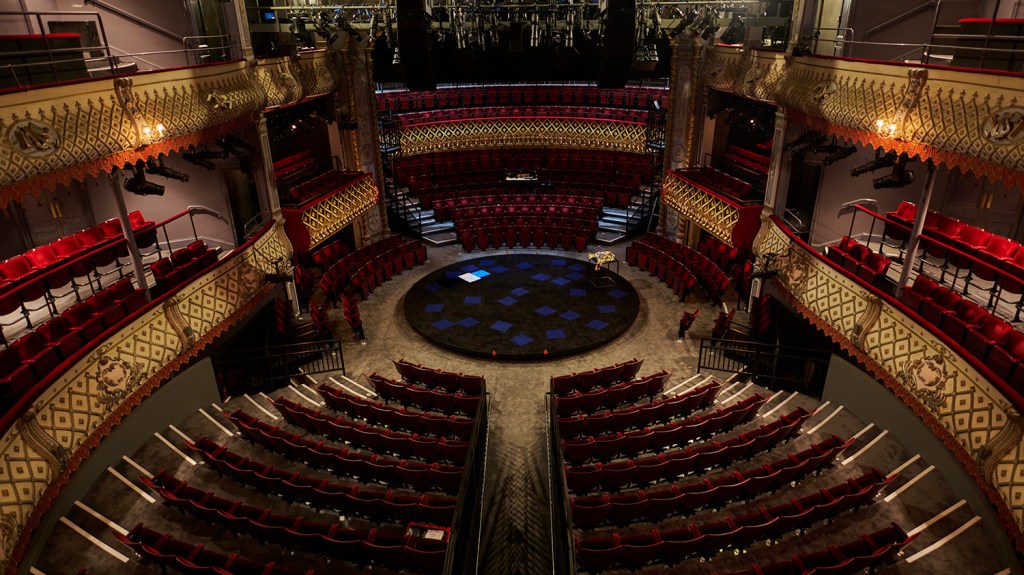
Then on Monday 5th Fran and I went to see the new Conor McPherson play The Brightening Air at the Old Vic. It’s a wonderful depiction of dysfunctional Irish rural family life with a standout performance from Rosie Sheehy as the disruptive Billie. The next day I had to record one of the English Language Teaching audiobooks that I do a couple of times a year. My voice over actor John Hasler (doing 16 different voices in Aussie accents around an RP narration – amazing) is about to rejoin the cast of Fawlty Towers at the Apollo Theatre with a bigger role than he had in the first run so I’ll probably catch that at some point in the run that starts late June.

Next up was a favourite ukiyo-e printmaker Hiroshige at the British Museum. I am familiar with most of the images displayed but seeing the vibrancy of the originals compared with reproductions was astonishing. The exhibition also included several indications of the complexity of making multi-coloured woodblock prints, inking them up and making sure paper is accurately registered. A technical triumph but also witty, emotional and dramatic scenes of love, life and landscape. It was interestingly curated too with prints fixed to scrolls which themselves were often the destination of woodblock prints.

With my mind firmly back in Japan I spent the evening downstairs at the Hampstead Theatre in the midst of a video game. The play was Personal Values and combined characters’ real lives with their personae in the game they were endlessly playing. As a non-gamer it left me a bit confused but others enjoyed it very much.

Back at Hampstead the following Monday saw a very different set of games presented. This was an adaptation by Richard Bean of David Mamet’s 1987 film, Mamet’s debut as both writer and director. It was powerful, twisty, scary and shocking but immense fun. I hadn’t seen the film for ages but recall it being altogether darker and while there were some elements of that here, it was as you’d expect with Richard Bean rather more about the laughs. I’m looking forward to more card games and sleaze when we see Dealer’s Choice at the Donmar next month.

Music started the month and gave me a real highlight in the middle. Sunday 18th found me in the Temple of Art and Music in Mercato Metropolitano, the sprawling food fest at the Elephant and Castle. The group in which my granddaughter plays keyboard, flute and does backing vocals – elegantly called Soulstice – were asked to headline a Youth Open Mic session. There’s a clip here – not very well recorded and not by me! They are usually an all girl band but their drummer couldn’t make the gig so a brother kindly stepped in. I’m prejudiced of course but they are actually rather good with a soul-tinged mix of their own originals, Sade, Amy Winehouse and so on..

Different but no less enjoyable was the Orchestra of the Age of Enlightenment’s concert at the Royal Festival Hall with Sir Andras Schiff conducting from the piano in a Schumann programme with a little Mendelssohn in between. It started with the Konzertstück which is a very lively piece for piano and orchestra and was followed by familiar passages from Mendelssohn’s Midsummer Nights’ Dream and Schiff played Schumann’s only piano concerto after the interval. He had talked last year at an open rehearsal of his pleasure in having a brown Blüthner fortepiano rather than the shiny black Steinways that are usually provided.

He had it again tonight and did us proud, not only in the opening piece and the concerto, but gave us a solo encore of Brahms’ Albumblatt and then closed the piano lid very firmly and got the whole orchestra to play Mendelssohn’s Fingal’s Cave as a bonus encore. Coming at the end of an eight day tour to Vienna, Graz, Antwerp, Amsterdam and Munich the energy of Sir Andras and the orchestra was quite amazing. And with even more bonuses – a preconcert talk with Laura Tunbridge, professor of music at Oxford, and an interval drinks reception for friends – it was a night to remember.

Sir Andras Scxhiff leaves the stage, leaving behind his favourite instrument.

On my way to the OAE concert I went to the National Portrait Gallery to see the exhibition of Edvard Munch portraits. These were very impressive with clear characterisation of friends and family placed in relevant environments. He obviously didn’t like several of his subjects as these were not flattering portraits but reflected Munch’s relationship with them and indeed with himself. I couldn’t escape the musical theme of the month of May as my two favourites were The Brooch which is a lithograph of an English violinist who styled herself Eva Mudocci and a quick stetch of Edward Delius at a concert in Wiesbaden. I also liked his walking self-portrait and a double portrait of the lawyer Harald Norgaard and his wife Aase with whom he had a lengthy relationship. It’s an unusual composition and was quite striking. Munch knew Harald from his youth and painted Aase separately on a number of occasions.

I also made it to another British Museum exhibition after being a radiotherapy buddy to a friend who is going through the final stages of cancer treatment. She is great company despite the circumstances and we have spent some good times together. As I remember myself radiotherapy leaves you pretty wiped out so she declined the offer of accompanying me to the BM understandably preferring home and rest. The exhibition was mostly of objects from the museum’s own collections but shed a fascinating insight into the religions of India – Hindu, Jain and Buddhism through their artefacts and what they symbolised. The galleries also had birdsong, tolling bells and chanting played quietly to make it a multisensory visit.

My next adventure was into the world of words. The British Bilingual Poetry Collective resumed our Bi-monthly Poetry Meets at Bard Books on Roman Road in Bow. Shamim Azad and I led a session of poetry readings, discussion, translation and an open mic session which was much enjoyed by all present.

The late May bank holiday was spent having an early supper with Rosa and then a visit to the Wigmore Hall to hear the amazing percussionist Colin Currie. I wish they didn’t have a photo ban because the array of drums, marimba, vibraphones, glockenspiel and other thing you can bang to make music filled the entire stage. A varied programme showcased his ability to make exciting, moving, thoughtful and adventurous sounds emanate from this staggering collection of instrumental forces.

My main motivation for going was the world premiere of Vasa a Concerto for Solo Percussion by Dani Howard, a young composer I’ve been pleased to call a friend for a few years now. It was a complex piece featuring a series of different tempos, emotions and melodies. Dani had worked with Colin to devise the final form and told us later that she had to have a diagram of the stage layout of the marimba, two vibraphones, cymbals, drums and other devices, many of them foot-operated, so that she could ensure she was writing things Colin could physically move around the instruments to execute. It was a very rewarding evening concluding with some excellent conversation in the pub.

I had intended to give After the Act at the Royal Court a miss as I’m not a big fan of musicals. However the indisposition of Fran’s intended companion meant that she asked me to go. The content should have been – and was – of real interest. The ‘Act’ was the appalling 1985 Section 28 that forbade taechers in schools and colleges to mention homosexuality, Equally appallingly it was only repealed in 2003.

The play contained some verbatim quotes from individuals – teachers, parents and students – who had suffered from the act, recreations of protests including a daring 1988 abseil in the House of Lords and, for my taste, too many occasions when serious issues resulted in the cast of four bursting into song accompanied by onstage keyboardist and drummer.

The next evening was far more satisfactory. Because Terrance Rattigan’s The Deep Blue Sea was on at the Theatre Royal Haymarket we were able to pop into Yoshino for a quick pre-theatre sample of Lisa’s excellent cuisine and hosting. Some analysts feel that the doomed love affair represented in the play was Rattigan’s sublimation of his own homosexuality – still illegal when he wrote it in 1952.

Starring the wonderful Tamsin Greig with a fine supporting cast, this was a faithful period-set production that allowed the play’s veiled messages space to emerge from the context and the conversations around love and death, suicide and survival, protest and resignation, passion and comoanionship were brilliantly done, very moving and affecting.

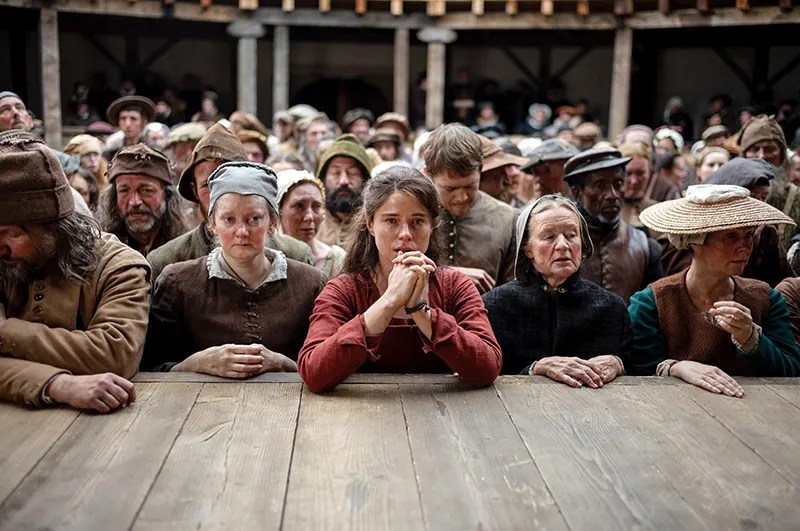
Thursday saw Fran and I make our hat-trick of theatregoing with a trip to Islington to see Ava Pickett’s debut play 1536. The setting is sixteenth century Essex where three friends indulge in gossip – has Henry really ditched Anne Boleyn? – their own relationships with men and each other and the role of women in a patriarchal society. It’s bold, it’s funny. it’s sexy and it makes you wonder how much better things really are today. The rolling changes in friendships are brilliantly delivered in crisp dialogue and while history is all around, the play tells us a lot about today. As a writer on the brilliant The Great on Channel 4, Ava Pickett is clearly a name to watch out for.

The month’s finale was a trip with Frances to see Simon Russell Beale in Titus Andronicus at the Swan Theatre in Stratford-upon-Avon. After a pleasant drive up we had a late lunch, checked into the hotel and then made our way to the theatre. It was my first time in the Swan and we were a bit surprised that this production was in the smaller space, not the main hall. However the intimacy of the location made the horrors of Shakespeare’s most violent play (or is it Coriolanus?) very clear.

The production certainly didn’t stint on Kensington gore but used brilliant lighting and sound effects to protect us from witnessing the worst atrocities. SRB was his usual excellent self but was by no means outstanding. The whole cast under the direction of the versatile Max Webster was superb and brought the subtleties of the text into play as well as the torrid drama. And on reflection, yes this is the most violent of Shakespeare’s works.

We went out to Anne Hathaway’s house next morning for a walk around the orchards, had an enlightening tour of the house from excellent guides and then made our way back to London. A fine ending to a full and varied month of culture. As Shakespeare’s contemporary Thomas Dekker put it “O, the month of May, the merry month of May”.

Groupie Grandad

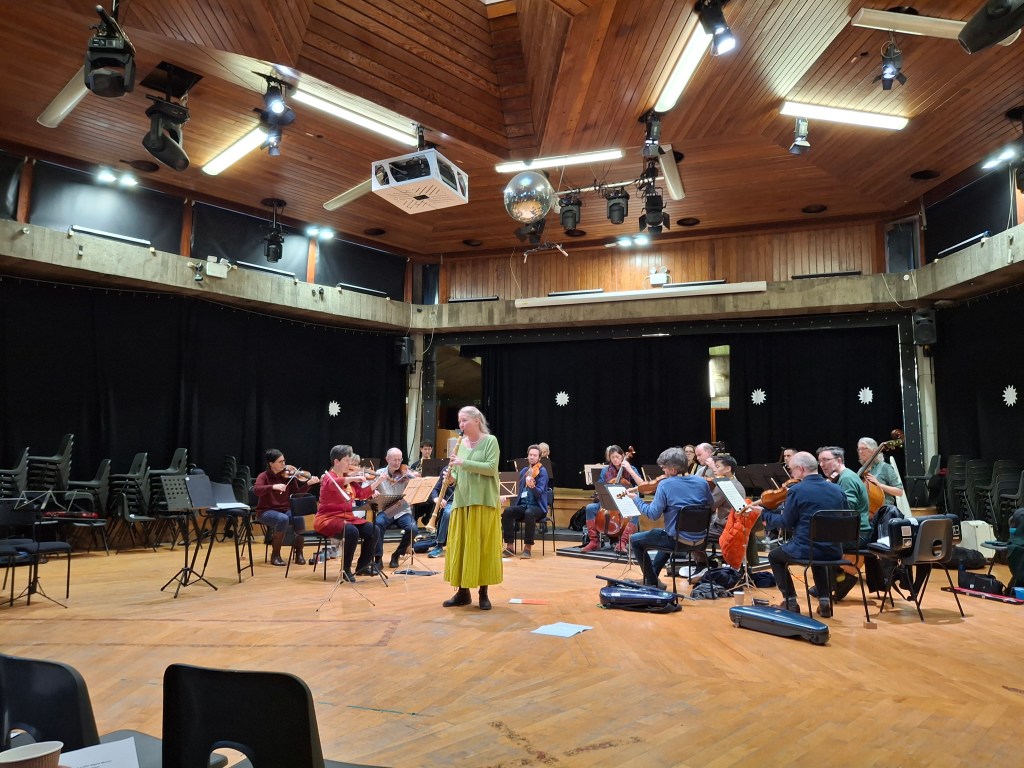
On Sunday I had the great privilege of attending the rehearsal for the Orchestra of the Age of Enlightenment’s Das Jahr concert at the Queen Elizabeth Hall. Friends were invited to take coffee and cake in the Artist’s Bar at 13:00. So it was with great excitement that I entered as instructed through the Artists’ Entrance – this feels special already. Familiar faces were around, coffee was fine but the promised cake did not materialise. One of the familiar faces was composer Electra Perivolaris who I’d met a couple of weeks before at the OAE Season Launch. We had a chat about the piece of her’s that was being rehearsed and played today and it was soon time to enter the hall for the rehearsal to begin. I knew one of the other composers Roxanna Panufnik who I remembered from a previous occasion gives up chocolate for Lent. When I reminded her of this: “Ah,” she said, “but I’m a Catholic and today’s Sunday so we don’t have to fast!” She then introduced me to the other two composers Errolyn Wallen, appointed Master of the King’s Music in August last year, and Freya Waley-Cohen. I sat behind the four as they discussed each other’s work, prepared comments for the conductor and orchestra members. Seeing a cheeky thumbs up between Electra and tympanist Adrian Bending when a suggestion came good was fun to see. Watching them enhance the playing of their compositions was (sorry) enlightening. I’ve given lots of notes to actors and seen performances change for the better but in this new context it was exciting – literally in one instance when a segment of Freya’s piece was played for a third time with different intensity and I got goosebumps. I’m now a total women composer groupie!

After the rehearsal concluded to everyone’s satisfaction, there was a break and then the composers joined Max Mandel (principal viola and artistic co-ordinator of the project) for a talk about Fanny Mendelssohn’s piano cycle and how it had inspired the four composers to write their own compositions. They also spoke of the challenges of writing for historically accurate period instruments.

Then it was off to the bar and a chance to catch up with more OAE regulars and to be joined by Frances for the concert itself. This consisted of several of Fanny’s original months from the cycle played brilliantly by Olga Pashchenko on an 1831 Erard piano similar to an instrument Fanny would have used. We also heard the only full orchestral composition she completed – it was an era when it wasn’t seemly for women to write for orchestras – the Overture in C major. It’s a shame she didn’t do more. Conducted enthusiastically by Natalia Ponomarchuk, the overture moved from haunting horn figures through strings and wind sections with strong melodies and frequent lively arpeggios that showed a mastery of composing for an orchestra. The three pieces by Electra (March), Errolyn (April) – as it happens their own birth months too – and Freya (After June) followed. The subtleties and reflexions of Fanny’s work became more apparent on this second hearing and I hope they’ll get many more outings which all three fully deserve. The second half of the programme started with Olga playing the summer months and then four principals from the OAE played a romanze from Fanny’s String Quartet in E flat major which again showed what an underrated, supressed compser she was. The word is that she was a far superior pianist than her younger brother Felix but wasn’t allowed to perform. The finale was Roxanna Panufnik’s piece Postlude inspired by the thirteenth section which Fanny had added to the year. It had witty echoes of Fanny’s own work and a rhythmic pulse which drove it along. There were minimalist passages and areas that fully exploited the orchestra’s capabilities – I really enjoyed it. Natalia Ponomarchuk brought both enthusiasm and precision to the whole concert.

Olga Paschenko and Natalia Ponomarchuk take a bow with the Orchestra of the Age of Enlightenment.

After a feast of music old and new it was time on to theatre new and slightly older. Monday was The Habits at Hampstead Theatre downstairs. It’s a first play by award-winning director Max Bradfield. It is set in a boardgame café in Bromley – very close to home! The action unfolds through a (to me) baffling game of Dungeons and Dragons (my son and grandson both play) and through the moments out of D&D character we learn of the participants’ real lives encompassing ambition, grief, addiction, fecklessness and perhaps love. It’s brilliantly acted with switches in and out of role done most skilfully and there are lots of laughs and some fabulous dressing up for the finale.

Ruby Stokes as Jess with her dragon in The Habits at Hampstead.

Across town to the Orange Tree in Richmond on Tuesday to revel in April de Angelis’s Playhouse Creatures. Written in 1993 and set in the 1660s when theatres were just opening up again after the Cromwell interregnum had closed down all forms of pleasure. It’s a period I was familiar with having done lots of research for a series of blogs and a script I wrote for Clive Myrie to present at the OAE’s concert of Restoration Music in 2021 when theatres and concert halls here were just opening again after the Covid lockdowns. In London theatre in 1660 there was a real sensation – women were allowed to appear on stage and took to it with gusto if Ms de Angelis is to be believed.

Some of the girl power here could have benefitted poor Fanny Mendelssohn a couple of centuries later. Funny, informative about acting craft in the Restoration period and with insights into the struggle for fair pay, the roles of women in those times both on and off stage, the play gives us plenty to think about that resonate in these uncertain times for actors and musicians as theatres try to recover from the lockdowns. It’s bawdy and brash and gives you plenty of belly laughs with a few winces of agonised reality thrown in.

The cast led by Anna Chancellor as Mrs Betterton – wife of theatre owner Thomas – are all excellent bringing depth to the on and off-stage characters they portray: Katherine Kingsley as sweary men-baiting Mrs Marshall; Dona Croll as Doll Common the drudge with attitude; Nicole Sawyerr pained at being supplanted as the King’s mistress by the younger version in the form of Nell Gwyn played with increasing assurance by Zoe Brough (that’s the character not Zoe’s performance).

Wednesday evening saw me again as a music groupie but also a grandad. Grandson Jake was playing his cello in the Royal Holloway Symphony Orchestra in a programme that included Felix Mendelssohn’s Hebrides Overture, Holst’s Planets Suite and the Trombone Concerto by Dani Howard who I’ve been honoured to call a friend and whose music in the Casa Battló in Barcelona I wrote about a few years back. I also attended the London premiere of the Trombone Concerto at the Barbican so was interested to hear how it sounded here. I had picked up my son-in-law (daughter at work sadly) and driven into a full, low, thoroughly disconcerting, huge red setting sun through Surrey lanes towards the M25 which was relatively free-flowing and we arrived at the magnificent Royal Holloway in time to grab a sandwich in the well-appointed campus shop. I remembered making a promotional recruitment video for RHU back in the 80s when I did a whole slew of such videos for KIng’s College London, Guy’s and St Thomas’s Medical and Dental Schools, Imperial College, Felsted and Harrow Schools. The Royal Holloway shoot was special as we had access to a helicopter to fly over the campus for the money shots – and also for the estates director to see close up footage of any necessary roof repairs!

Who ever designed the auditorium clearly never expected 100 performers to be occupyingo the stage. People in the front row seats were in danger of injury during the longer slide extensions of the solo trombone. What was wonderful was to see so many young people being encouraged with whoops and whistles from their mates to entertain us with a programme of classical music. The players responded well. The Mendelssohn was a bit shaky to start but soon found its stride. Dani Howard’s trombone concerto was given an excellent reading under orchestral music director of the university Rebecca Miller with Amelia Lewis in fine command of the complex trombone parts.

Amelia Lewis, Rebecca Miller and about half the orchestra at Royal Holloway Windsor Auditorium.

After the interval the orchestra played Gustav Holst’s The Planets Suite and Chris and I – as well as being impressed by the massive forces deployed – reckoned that we very rarely heard all seven planets played together. The line-up included lesser-spotted bass versions of flute, oboe, clarinet and trombone and impressive percussion arrays. There was enthusiasm, energy and considerable musicality in the performance and it gladdens the heart to hear music of such quality from a youthful university orchestra at a time when university finances are so threatened.

After a debrief with Jake and some of the other players we managed to negotiate the insane Junction 13 from the A30 onto the M25 and the never-ending roadworks at Junction 10 and made it back home in reasonable time despite several overheads warning us of “Workforce in the Carriageway”. We saw few.

A week of triumphs

The week started with a couple of weird happenstances – two very good friends of mine from way back in the seventies got in touch and we’ve arranged to meet and catch up. With five decades of life, love, marriages and deaths to discuss – it should be fun. A triumph for the connected world.

The sun came out and I got to do some much-needed gardening clearance, pruning and even some planting. I also had an evening at home during which I was able to watch the amazing Adolescence the Jack Thorne/Stephen Graham four part series on Netflix. 

It’s a shame that British tv is in the state where to make a show of this brilliance and significance it has to be on a streamer. The message it conveys about incel inculcation seemingly by osmosis in teenage boys needs the widest possible audience to have the societal impact that Mr Bates had. As television it is magnificent with stand out performances from Stephen Graham (expected), Ashley Walters (playing totally against type) and Owen Cooper (staggering newcomer’s first role) with superb support from a fine cast. It follows the proven meme of ‘show don’t tell’ with director Philip Barrantini employing the fluid single-take camerawork that allows you to observe how this tragedy has come to pass. It’s not an easy watch because of the content and the fact that you are emotionally – almost physically – invested in every nuance. A triumph for filmaking and communicating essential information – would have been even greater had it been on the BBC or Channel 4.

Tuesday’s triumph was for honesty over spin. I was setting off on a train for a meeting at Watford Museum having judged the connections to help me get there on time. However the train from Lee to Charing Cross kept stopping and then running extremely slowly. Rather than the usual tannoy guff the driver came on and said: “I apologise for the extremely long time it has taken us to get into Charing Cross this morning . I’d like to explain why it has been so slow but I haven’t a clue”. I was late but we still had a good meeting helping sort out Watford FC and its charity, the Community Sports & Education Trust’s, presence in the new museum when it moves later this year.

Wednesday took me to St George’s Hanover Square to hear Handel’s Trionfo del Tempo e del Disinganno an oratorio he wrote in Rome in 1707 when he was 22.  Beauty (Bellezza), struggles to reject the short-termist sensual temptations offered by Pleasure (Piacere) but receives wise and benevolent counsel from Time (Tempo) and Enlightenment (Disinganno). The title tells you who wins. It’s a wonderful score with lyrical arias, instrumental sequences favouring different sections of the orchestra and it was performed brilliantly by the Irish Baroque Orchestra directed by Peter Whelan from the harpsichord as part of the annual London Handel Festival.

It was sung by four exceptional soloists seen above taking their bows with Peter Whelan far left. Rowan Pierce, soprano, was the naive Beauty, Helen Charlston’s powerful mezzo offered seductive temptations as Pleasure which were countered by Jess Dandy, a contrasting mellow mezzo representing Enlightenment while James Way’s tenor called Time. Rowan, Helen and James were in the first group of ‘Rising Stars’ of the Orchestra of the Age of Enlightenment which anyone has read previous blogs will know is my favourite ensemble. Their two-year programme serves as an apprenticeship for young professionals giving them the opportunity to perform with the orchestra in a wide variety of repertoire. It clearly works as these alumni were in super form.

In a week that started with weird happenstances, this evening continued the pattern. On the programme sheet I noticed that one of the violinists was called Jenna Raggett. Now my surname is not that common so I asked the orchestra manager if she would pass my card to Jenna. We had a chat after the concert and we were both delighted to meet each other. Jenna said “I’ve never met another Raggett” and was going to share the news with her parents and we’ll hopefully keep in touch. I wasn’t aware of any Irish connection so research is needed into clan Raggett.

During the time I got home from the Trionfo concert and when I went out to my car mid morning on Thursday, it had been broken into and the battery had drained as the radio was left on with no volume so it looks like deliberate vandalism as there was nothing stolen just a horrid mess to sort out and an annoyingly repetitive police report to file online.

The AA came and charged up the battery and I was able to make my planned journey to Bovingdon.

I was kindly invited to stay the night there after accompanying Frances, her sister Rose and her niece Amelia to the Annual Gala Dinner of the Watford Community Sports & Education Trust. As we left for Watford I was surprised to have a phone call from the police asking if there was any CCTV footage available or other evidence. I had to confirm that there wasn’t – I don’t pay to have my Ring doorbell record video (cheapskate!) – and asked whether I wanted to be referred to Victim Support. I thanked Irena for the offer but thought there were others more urgently in need of the service.

The Gala is a great occasion celebrating the charity work of the excellent organisation which is in itself a triumph at a time of shrinking budgets and donations. 17, 796 individuals have used it services or facilities in the last year providing a huge social benefit to the community in Hertfordshire and the London Borough of Harrow. It was a chance to catch up with friends, former and current players and to chat to the head coach Tom Cleverly who we’ve known since he came to Watford on loan as a seventeen-year-old when he sat on a table with Dee and me at that year’s end of season dinner with a leg in plaster and needing crutches to collect his player of the season award. It’s a delight to see him doing so well with limited resources.

Carry On Culture

After my slightly odd Valentine’s weekend I plunged into a fortnight of amazing cultural activity. Keeping on keeping on will, I hope, hold dementia at bay. Another life motto has always been ‘Do it while you can’. I don’t usually write about this stuff but the blog is partly for me to reminisce with when I can get out anymore. So ignore if you just like my travels not my opinions.

So here’s how it all kept coming. Monday 17 February East is South at Hampstead Theatre courtesy of Frances’ patronage. Company, canapes, networking first class play not so much. It was a semi sci-fi thriller/Line of Duty style interrogation about data leaks from a world changing computer programme Logos. Written by Beau Willimon the creator of the US version of House of Cards, its subject matter was highly apposite with the march of AI. However it sometimes felt as if the script had been written by AI with strange diatribes, a virtually unused character and rather cliched and confusing flashbacks.

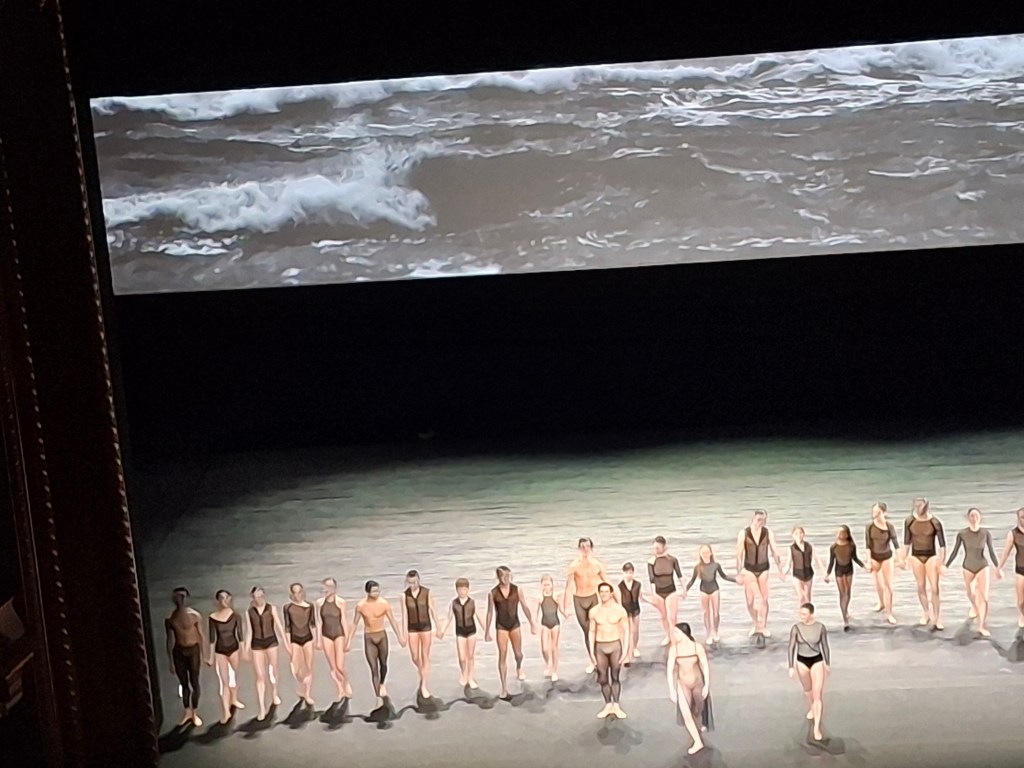
The next night made up for any disappointment. Following my previous exploration of Sadler’s Wells East Tuesday saw me heading for the Rosebery Avenue Sadler’s for Pina Bausch’s Vollmond. Need Es to lift your spirits? Well they were here aplenty! Entertaining, exquisite, energetic, enthralling. It was one of the last things Bausch choreographed and it a lot lighter in mood than some of her work.

We had dancers flirting, arguing, courting and conversing often soaked in torrential water flowing from the flies. I got talking in the interval to a couple of professional classical musicians – she harpist, he oboe – which was an interesting precursor to Wednesday. We all absolutely loved the performance and my only regret was that two friends who would have loved it couldn’t be with me.

Wednesday evening saw me accompanied by local resident Frances to the launch of the 2025-26 season of the Orchestra of the Age of Enlightenment of which I’ve been a long-time supporter and occasional contributor of blogs, scripts and articles. It was help in the wonderful brutalist hexagonal hall of their home Acland Burghley School in Tufnell Park. Alongside the exciting reveal of Fantastic Symphonies to be played between October and March at the Southbank Centre and on tour, we were treated to a recital by the mezzo-soprano Helen Charlston accompanied on the harpsichord by Satako Doi-Luck. Helen benefitted from the OAE’s rising stars scheme and now has a stellar recital career covering baroque, classical and contemporary repertoire. However she will find it hard to stop being asked about singing Dido’s Lament backwards in an OAE video. Satako is part of Ensemble Moliere that specialises in exploring the world of Baroque music. I’ve been to a couple of their concerts too. But the plans for celebrating OAE’s 40th anniversary are exciting with the return of early supporter Sir Simon Rattle who contributed a splendid video interview to the evening, alongside many other familiar figures in OAE history. Check out the programme here and let me know if you fancy joining me to hear this fantastic group of players and lovely people.

I stayed home on Thursday and on Friday joined my friend Opu Islam at the launch of an exciting heritage project in the Bengali community in the East End. It’s an initiative from the Season of Bangla Drama to which the British Bilingual Poetry Collective (of which I am a gtrustee) contributes each year. There were discussions with producers and poetry recitals as well. It’ll be interesting to see the outcome in the 2026 festival.

What a treat on Saturday with Celia Imrie and Tamsin Greig both on stage at the Donmar Warehouse in Backstroke! Two superb actors trading mother daughter love and insults in equal measure in a fascinating if slightly baggy play. It made me wonder if writers are always the best people to direct their own work. Still a hugely enjoyable evening.

I woke on Sunday at 10:15 after finally falling asleep at six after a horrendous night with acute toothache. This was too late for me to get to Watford to see our arch rivals Luton beaten 2-0 some revenge for our defeat in the reverse fixture. It was on the telly and the house was filled with shouting best left on the terraces.

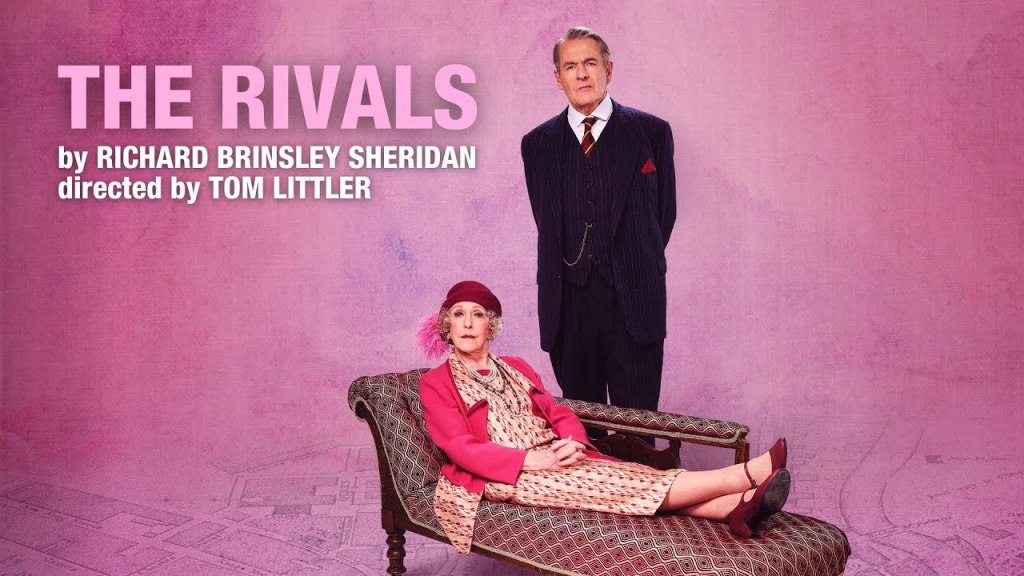
I’d arranged to visit a friend Nuala O’Sullivan on Monday afternoon before going to join Frances at the Orange Tree in Richmond. Nuala was a BBC World Service colleague back in 2009 and then co-wrote on of my ELT series with me in 2014-15, She has subsequently founded and runs the highly successful Women Over Fifty Film Festival so it was great to talk film, literature and life with her. Walthamstow to Richmond is not the most straightforward journey but I’m glad I made it. Frances had been invited to a special staging of the play in the hope (successful) of luring her back as a patron. At a reception we had an opportunity to talk with Tom Littler the artistic director of the Orange and also the director of the play we were about to see. Both very impressive.

I’ve long been a fan of Howard Brenton from the controversy over The Romans in Britain back in 1980, through plays like Pravda at the National, The Arrest of Ai Wei Wei and Drawing the Line at Hampstead. This new work Churchill in Moscow in which two would-be world leaders slugged it out in negotiations could not be more timely. Dramatically it was frightening, funny and fascinating with wonderful supporting roles for the two interpreters who put their own palliative gloss on what Churchill and Stalin were saying to each other. In the compact space of the Orange Tree you really felt part of the action.

The rest of the week was calmer just on Thursday a pre-concert talk about and an electrifying performance of the Beethoven Violin Concerto with Vilde Frang and the Eroica Symphony in which Maxim  Emelyanychev conducted the OAE in a rousing performance with no residual hint of Napoleon.  

Then there was a trip to Watford as part of a consulting group helping plan the move of the Watford Museum from the old site in what was Benskin’s Brewery into the Town Hall later this year. Lots of interesting ideas with fellow supporters and friends. I also foolishly decided to have an occasional away-day trip to our game at Stoke on Saturday which proved beyond all doubt that we go for the people not the football – excruciatingly dull match – adjudged a bore draw by colleague Frances in her blog, but great beer and conversation.

And the next week was pretty similar …

Il ritorno di Michele

I have now been back through the Rome blogs and add photos so if anyone 
wants to flick through them again you'll be most welcome.

Sorry Monteverdi – it was all that baroque last night and then on iTunes while I was writing. Ulysses’ return was a more dramatic story than mine and made for a fine opera we saw a couple of years ago. My return journey began with packing my one carry on bag – first time for a long time I’ve travelled without checked in luggage. Breakfast, checkout, store case with porter and set off to Galleria Borghese for a final cultural treat. The concierge advised the metro to Flaminio and then walk through the lovely Borghese Park. It is sunny and bright, not too cold and I stride off purposefully through the, indeed, lovely park. It dawns on me quite early that to get to the gallery it’s all uphill and nearly two kilometres. The signage is plentiful but confusing as there are several other museums and galleries in the park so the map had to come out a few times to confirm I was on the right path.

Red squirrel
Red squirrel munching nuts in the park

Borghese Park - Copy


A couple of pauses to watch red squirrels cavorting – why do they look so much more agreeable that the grey vermin I constantly shoo off my bulbs?  – and I make it to the gallery shortly after my timed admission slot from 11:00 till 13:00 – one occasion when I really appreciate the timed-ticket system as it meant I was able to admire the works on display.

Borghese gallery - Copy
Galleria Borghese – at last!


Painting perfection

The permanent collection houses lots of Berninis but also had a special exhibition showing his work as a painter at which he excelled in his early years and then largely abandoned once commissions for sculpture and architecture filled his days. The first floor sculpture galleries contain pieces from ancient times, mosaic floors of great beauty and loads of Bernini busts in an amazing row through a long gallery. Perhaps the most startling piece is the prone statue of Hermaphroditus from the second century AD, reclining on a mattress sculpted by Bernini which you are sure will respond to your touch. But I was soon headed up the spiral staircase to see the paintings. Fortunately their Caravaggios hadn’t all gone to Florence and David with the Head of Goliath, Boy with a basket of fruit  and others only seen in reproductions were there to marvel at. As indeed were Raphael’s brilliant Lady with a Unicorn (as on trend in 1506 as in 2017), and Deposition of Christ. There was a fine Bernini self-portrait and then Titian’s amazing Sacred and Profane Love which reignited my musings about secular and religious art prompted by last night’s concert. My time was up but I would happily spend another two hours absorbing the works in this elegant setting, where they are so admirably displayed. It was great not being shuffled and squeezed along a toothpaste tube of visitors.

Tempus fugit but memories remain

I decided to walk out of the park by a different route clocking a location for another visit, the highly regarded Museum of Modern Art on the way. Its facade was tempting but I did have a flight to catch. I arrive on via Flaminio close to a tram stop for the number 2 that I had used on Wednesday so waited for the next tram to take my tiring limbs back to the metro stop. I looked at my watch and it was exactly 12:25 the time my wife died a year ago.

Tram 1225So I had a little moment and resumed my journey on a packed tram. I had time to raise a glass to her in the Piazza del Popolo and found another birra artiginale this time from brewery Beatrice with a pale ale called Diana – all very British royal family! With some complimentary crisps and nuts I was ready for the last leg. I had done very well using metro, trams and a bus and decided to treat myself to a luxury ride to the airport in the hotel’s shuttle bus which proved a good plan as we arrived in good time and I was able to find a seat and write a previous blog.

Dies irae

All good things come to an end and my very enjoyable first taste of Rome ended in anger with the inefficiency of Ryanair’s ground handling subcontractors at Ciampino airport. As this was my first trip for ages without checked baggage, I had paid the extra six euros for priority boarding that enables you to take your wheelie case into the plane. There was no priority line for check in and as I arrived at the top of the steps I was informed that my bag would have to go in the hold. I explained that I had paid for priority simply to be able to place my case in the overhead locker. ‘Well you should have checked in earlier.’ ‘I would have done but having gone to the desk to find there was no Priority Lane I had to join nearly the end of the Other Q, as you so nicely put it to the plebs.’ To be fair a helpful flight attendant did look at a number of lockers but to have removed the bags of non-payers to make way for mine would have delayed the flight so I reluctantly allowed my case to go to the hold and sat down to sulk my way home. Given all the alarms I’d heard about problems at Stansted during the week I guess I was lucky to be coming back at anywhere near the scheduled time. We landed and of course mine was the last case onto the conveyor – fortunately identifiable since no one gave me a baggage claim receipt.

All’s well …

Faith in customer service was refreshed as I arrived at the mid-stay parking exit. When you have pre-booked the gate opens on recognising your number plate. However on Christmas Eve I actually arrived an hour early so it didn’t clock my reg and no one answered the help button so I had to take a ticket. I half-expected to have to pay the price at the exit and then reclaim my costs later but a splendid operator, who did answer the help button this time, checked me on the system and opened the barrier with no charge for my extra hour. A quick run down the M11, a clear Blackwall Tunnel and back home after a stimulating and enjoyable trip. Exhausted but happy and with a welcome home hug from neighbour Jan, who lost her father two days before Christmas.


Gradually last summer 13-18 June

Bostridge, Britten and the beach are all favourites and we decided to combine all three with a first ever trip to the Aldeburgh Festival in June. Festival-going had never been a big part of our lives but Aldeburgh and the Hay Literature and Arts Festival were ones we’d always wanted to attend but somehow never got around to. We set off from London on a drizzly Monday morning for a planned two-night stay at Seckford Hall at Woodbridge in Suffolk before travelling on into Suffolk for our first concert on Wednesday. We stopped off in Colchester, found a blue badge parking spot on the High Street and set off for a coffee and a look around. We found a fine coffee shop, Loofer’s that must have a special Monday mummy and buggy offer – they were both everywhere and babies too. Getting to the loo was quite a mission. The organic coffee was excellent and we scanned our map of Colchester and left for a damp explore. The curving High Street is attractive and the Castle looked interesting but we decided against that as the rain was getting harder. Maybe sightseeing could happen on the way back. Finding refuge in Debenhams, like you do, I acquired some polo and tee shirts thanks in part to some vouchers that Dee had thoughtfully put in that pink bag.

20160613_143503We took those back to the car, ambled about a bit more and then stumbled across a splendid looking microbrewery pub so it had to be time for lunch. The Three Wise Monkeys didn’t disappoint. There was a wide range of beers and a good menu. Service was delivered in a most friendly manner by the young staff and we left refreshed and ready to move on towards Seckford Hall.

However as we made our way out of town a further diversion beckoned as we saw signs to the Beth Chatto garden. As keen gardeners this was not to be missed so off we went. A very worthwhile detour – even with umbrellas aloft the variety of planting in the different styles of garden was inspiring. We knew plants wouldn’t survive in the car for the next five days so there was lots of noting of labels and mental additions to lists of plant to be purchased elsewhere. Especially impressive is the gravel garden established on the old car park which has never been watered but in which euphorbias, poppies, thistles and favourites like agapanthus, agastache, rudbeckia and verbena flourish. Determined to get our planting sorted out this coming summer we finally left for the hotel. We vowed that another time we’d explore the evocative places that were just names as we passed through Constable Country – Dedham, Flatford, East Bergholt – they’d look better with some sun.

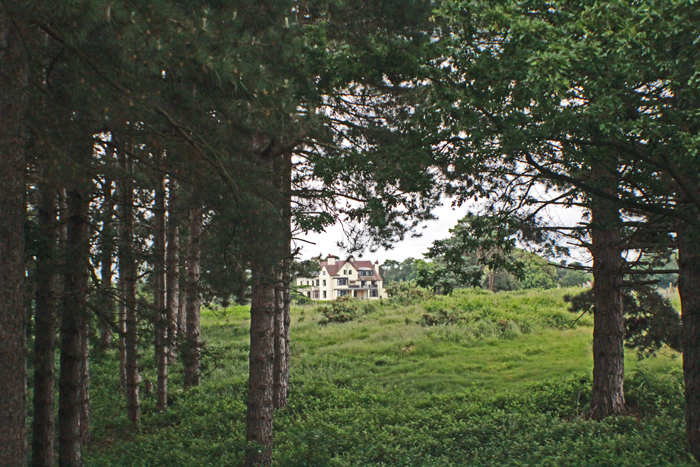
Seckford Hall Hotel and driveThe driveway approaching Seckford Hall is impressive as is the Tudor manor house itself. It dates from around 1530 and alleges that Queen Elizabeth stayed there. Well we didn’t get the four-poster that she is supposed to have slept in but did have a very pleasant room in the old building – there is a new build/conversion courtyard near the spa which is where we headed next for a pre-prandial swim. We also booked a massage each for the next afternoon. A pleasant evening passed in the bar and restaurant and we decided that we’d go to Sutton Hoo next morning.

Tuesday dawned still grey but no longer raining so we breakfasted and went to the site of the famous Anglo-Saxon ship burial some 4 miles away. The burial mounds – 18 of them – vary in size and impressiveness. They are thought to be the cemetery of Anglian royals named the Wuffingas which all sounds a bit Roald Dahl to me but was confirmed by the plaques in the excellent National Trust visitor centre as kings from about 600-750 AD. The replica helmet is truly stunning and the recreation of the burial interior extremely well done. We walked out to and around the burial grounds with a few stops along the way including a double take at this rather ominous sign.

IMG_6907We came back via Tranmer House from which a guest in the 1930s saw the ghostly vision that inspired the dig that found the ship burial. It has an apartment that you can rent through the National Trust which we thought might be fun one day. The house is full of stuff you can actually touch and included a typewriter that became the main background image for our new enterprise Verbalists.

The next great discovery was The Unruly Pig a great gastropub not far away. Lunch was so good we even booked for dinner later that night. After snacking our way through the cold cuts and cheese board we drove around the Suffolk Heath Area of Natural Beauty, well named, into Woodbridge to visit a couple of antique shops and then back for a 5pm massage. Having seen the Pig’s wine list we took a cab from the hotel and were not disappointed by dinner where food, wine, service and hospitality were all outstanding. A very good discovery – definitely not a pig in a poke.

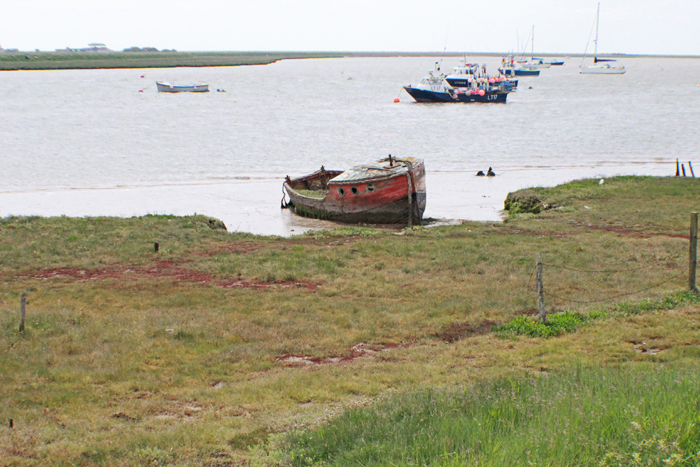
Next morning as we checked out arrangements were being made for the start of what seemed to be a massive three-day Indian wedding, later confirmed by the reception staff. We decided to travel via the coast and visit Orford a place we’d heard of but never been to. More countryside of natural beauty surrounded us on the way and at Orford we made for the Quay and took a short stroll along the bank of the river Alde looking out across the estuary to Orford Ness, a long shingle bank with numerous birdwatching hides, the black clapboard radio beacon and the red and white striped lighthouse – proper coastline this. IMG_6942Back into Orford we ogled and couldn’t resist Pinney’s Smokehouse but having failed to bring the cool box and ice we reluctantly left the oysters and smoked mackerel in the shop. Lesson for the future – if you are going somewhere famous for fish take the cool box, the shop will provide the ice. Back in the centre of Orford it was time for a coffee admirably served by the Pump Street Bakery which had a tempting range of cakes and pastries on offer. Another antique shop beckoned but offered nothing we had to buy. On to Aldeburgh via Tunstall and Snape at whose famous Maltings Britten built the concert hall we were to visit that evening.
In Aldeburgh we were able to park opposite the White Lion Hotel right on the beach at the north end of the town. It’s a pleasant hotel, like so many others especially near a coast it seems to have evolved over time and have a baffling number of different levels with small flights of connecting stairs which no refurb will ever even out without flattening the whole edifice. Friendly staff, OK room – should have paid extra for a sea view – two restaurants and a bar it had all one could ask for. We checked in and took a stroll to the nearest pub for a light lunch and then walked down the delightful main street. Aldeburgh is a very pretty town with some fine old buildings and a few not so fine, but has a welcoming atmosphere. As townies up for the festival we felt neither regarded as weird nor ripped off as easy targets. We had a fun time. The one thing this pre-referendum trip did for us was instil a sense of impending doom. Driving through Essex and Suffolk on the way we saw only one Remain flag after passing by hundreds of Leave posters and banners. Clearly the London bubble sees things a bit differently from those out in the country and this despite the fact that half our farmers would be broke without EU subsidies. Ah well!

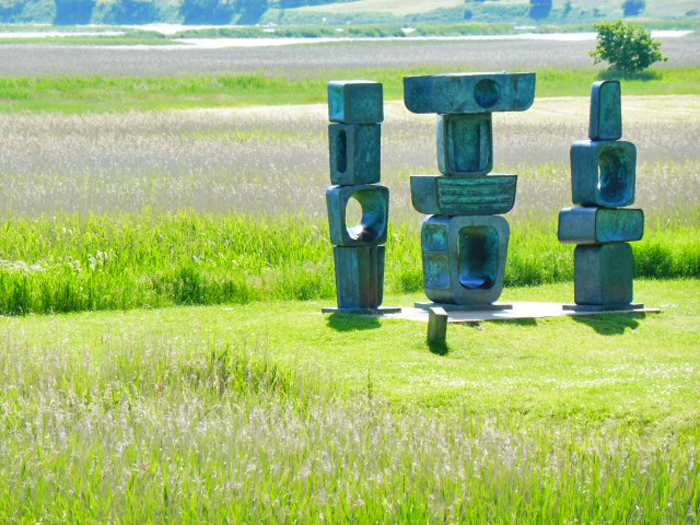
P1020134The Snape Maltings complex is a great place to explore and we arrived early enough for the concert to do so. The grounds have interesting sculptures and pathways beside the river. We’d booked a pre-concert dinner for the first night prior to being able to suss out other options. We sat at a window overlooking the river Alde as it winds through the marshes and felt totally at ease the with blue sky, green and yellow grasses in distinct layers and the odd splash of colour from walkers. It was like being in a painting.

20160615_185622I won’t go into detail about the concerts we attended over three nights but they were performed by musicians of the highest calibre, included two world premieres. some familiar and some unfamiliar pieces. The highlight was favourite tenor Ian Bostridge performing two of Britten’s song cycles and one of Tippett’s interspersed with a brilliant version of Britten’s first string quartet by the Arcadia Quartet. The concert hall and its environs are excellent and at the intervals there was an excited buzz of conversation between friends and in our case total strangers moved to discuss the music they’d just heard. Glasto for the Golden Agers you could call it I suppose. Three nights of concerts on the trot was just right and with lots of time to explore the area on the days in between we were very glad we’d finally made it to the Aldeburgh Festival.

During her enforced retirement Dee had become mildly addicted to late afternoon TV antique shows like Flog it!, Great Antiques Road Trip and the like. So we visited a couple of the places nearby which had been hunting grounds for participants to see if we could find those bargains that later at auction would pay for our trip. Heaven forfend that the production teams ever plant items, but we found very little of any interest in any of the places we visited and even fewer that we thought might make us a profit. But pootling around the Suffolk countryside was enjoyable – the strange purpose-built 1910 holiday resort at Thorpeness, traditional seaside with pier and beach huts at Southwold (and Adnams fine brewery) and towns inland like Leiston and Saxmundham.

The weather failed us at Southwold but one plaque on the pier made us laugh. Back in Aldeburgh itself one of our favourite things apart from huts with strange signs. was Maggie Hambling’s beautiful shell sculpture The Scallop on the north beach.

IMG_6949  IMG_6973

P1020137At the other end of the town is the famous Aldeburgh Fish and Chips shop where you can buy your meal – great scoff – and take it to eat with a pint of Adnams – excellently kept – in the White Hart next door. We were there during the Rio World Cup and took in a couple of depressing matches among other England fans fortified with Adnams’ ales and wines.

Apart from the music, cultural highlights were a visit to the Red House which keeps the Britten-Pears archive and preserves the house as it was when they lived there together until Britten’s death in 1976 which gave fascinating insights into how mundane some of the pursuits of geniuses can be. In the Cinema Gallery back in Aldeburgh Dee spent a good time in painterly conversation with established local artist Delia Tournay-Godfrey who was fascinating in telling us how she was almost a smash and grab painter, going out with her oils in her car and often sitting in the car to grab scenes as they presented themselves. These were sometimes worked up into larger paintings in the studio but often left as they were – spontaneous art capturing a moment. For Dee, having just embarked on her watercolour classes at Blackheath Conservatoire and showing a real talent for it, the insights were very valuable and she later made several works from life very quickly.

We left Aldeburgh after a good top up of culture after spending too much of the year  in hospital clinics and with Dee too frail from treatment to walk far or go to theatre or concerts. For this and a later trip to Spain by managing our days sensibly and reining in my enthusiasm for fitting in just one more sight we managed to get by without exhaustion. This was a superb Suffolk break.