No Mow – No Blog – May

Well the lawn didn’t quite escape the mower despite the warm weather and slow growth of grass but it had to have a tidy up. What did escape was the keyboard – too busy to type this month! It all started on Saturday 3rd with the last game of the season – unlucky draw – followed by a farewell to the season lunch at L’Artista and then Frances, Rose and myself whizzing off for a pre-concert Guinness in the Toucan with Ian Prowse (he didn’t have one) before he took to the stage at the 100 Club. It was as always with him a brilliant evening’s entertainment.

Then on Monday 5th Fran and I went to see the new Conor McPherson play The Brightening Air at the Old Vic. It’s a wonderful depiction of dysfunctional Irish rural family life with a standout performance from Rosie Sheehy as the disruptive Billie. The next day I had to record one of the English Language Teaching audiobooks that I do a couple of times a year. My voice over actor John Hasler (doing 16 different voices in Aussie accents around an RP narration – amazing) is about to rejoin the cast of Fawlty Towers at the Apollo Theatre with a bigger role than he had in the first run so I’ll probably catch that at some point in the run that starts late June.

Next up was a favourite ukiyo-e printmaker Hiroshige at the British Museum. I am familiar with most of the images displayed but seeing the vibrancy of the originals compared with reproductions was astonishing. The exhibition also included several indications of the complexity of making multi-coloured woodblock prints, inking them up and making sure paper is accurately registered. A technical triumph but also witty, emotional and dramatic scenes of love, life and landscape. It was interestingly curated too with prints fixed to scrolls which themselves were often the destination of woodblock prints.

With my mind firmly back in Japan I spent the evening downstairs at the Hampstead Theatre in the midst of a video game. The play was Personal Values and combined characters’ real lives with their personae in the game they were endlessly playing. As a non-gamer it left me a bit confused but others enjoyed it very much.

Back at Hampstead the following Monday saw a very different set of games presented. This was an adaptation by Richard Bean of David Mamet’s 1987 film, Mamet’s debut as both writer and director. It was powerful, twisty, scary and shocking but immense fun. I hadn’t seen the film for ages but recall it being altogether darker and while there were some elements of that here, it was as you’d expect with Richard Bean rather more about the laughs. I’m looking forward to more card games and sleaze when we see Dealer’s Choice at the Donmar next month.

Music started the month and gave me a real highlight in the middle. Sunday 18th found me in the Temple of Art and Music in Mercato Metropolitano, the sprawling food fest at the Elephant and Castle. The group in which my granddaughter plays keyboard, flute and does backing vocals – elegantly called Soulstice – were asked to headline a Youth Open Mic session. There’s a clip here – not very well recorded and not by me! They are usually an all girl band but their drummer couldn’t make the gig so a brother kindly stepped in. I’m prejudiced of course but they are actually rather good with a soul-tinged mix of their own originals, Sade, Amy Winehouse and so on..

Different but no less enjoyable was the Orchestra of the Age of Enlightenment’s concert at the Royal Festival Hall with Sir Andras Schiff conducting from the piano in a Schumann programme with a little Mendelssohn in between. It started with the Konzertstück which is a very lively piece for piano and orchestra and was followed by familiar passages from Mendelssohn’s Midsummer Nights’ Dream and Schiff played Schumann’s only piano concerto after the interval. He had talked last year at an open rehearsal of his pleasure in having a brown Blüthner fortepiano rather than the shiny black Steinways that are usually provided.

He had it again tonight and did us proud, not only in the opening piece and the concerto, but gave us a solo encore of Brahms’ Albumblatt and then closed the piano lid very firmly and got the whole orchestra to play Mendelssohn’s Fingal’s Cave as a bonus encore. Coming at the end of an eight day tour to Vienna, Graz, Antwerp, Amsterdam and Munich the energy of Sir Andras and the orchestra was quite amazing. And with even more bonuses – a preconcert talk with Laura Tunbridge, professor of music at Oxford, and an interval drinks reception for friends – it was a night to remember.

Sir Andras Scxhiff leaves the stage, leaving behind his favourite instrument.

On my way to the OAE concert I went to the National Portrait Gallery to see the exhibition of Edvard Munch portraits. These were very impressive with clear characterisation of friends and family placed in relevant environments. He obviously didn’t like several of his subjects as these were not flattering portraits but reflected Munch’s relationship with them and indeed with himself. I couldn’t escape the musical theme of the month of May as my two favourites were The Brooch which is a lithograph of an English violinist who styled herself Eva Mudocci and a quick stetch of Edward Delius at a concert in Wiesbaden. I also liked his walking self-portrait and a double portrait of the lawyer Harald Norgaard and his wife Aase with whom he had a lengthy relationship. It’s an unusual composition and was quite striking. Munch knew Harald from his youth and painted Aase separately on a number of occasions.

I also made it to another British Museum exhibition after being a radiotherapy buddy to a friend who is going through the final stages of cancer treatment. She is great company despite the circumstances and we have spent some good times together. As I remember myself radiotherapy leaves you pretty wiped out so she declined the offer of accompanying me to the BM understandably preferring home and rest. The exhibition was mostly of objects from the museum’s own collections but shed a fascinating insight into the religions of India – Hindu, Jain and Buddhism through their artefacts and what they symbolised. The galleries also had birdsong, tolling bells and chanting played quietly to make it a multisensory visit.

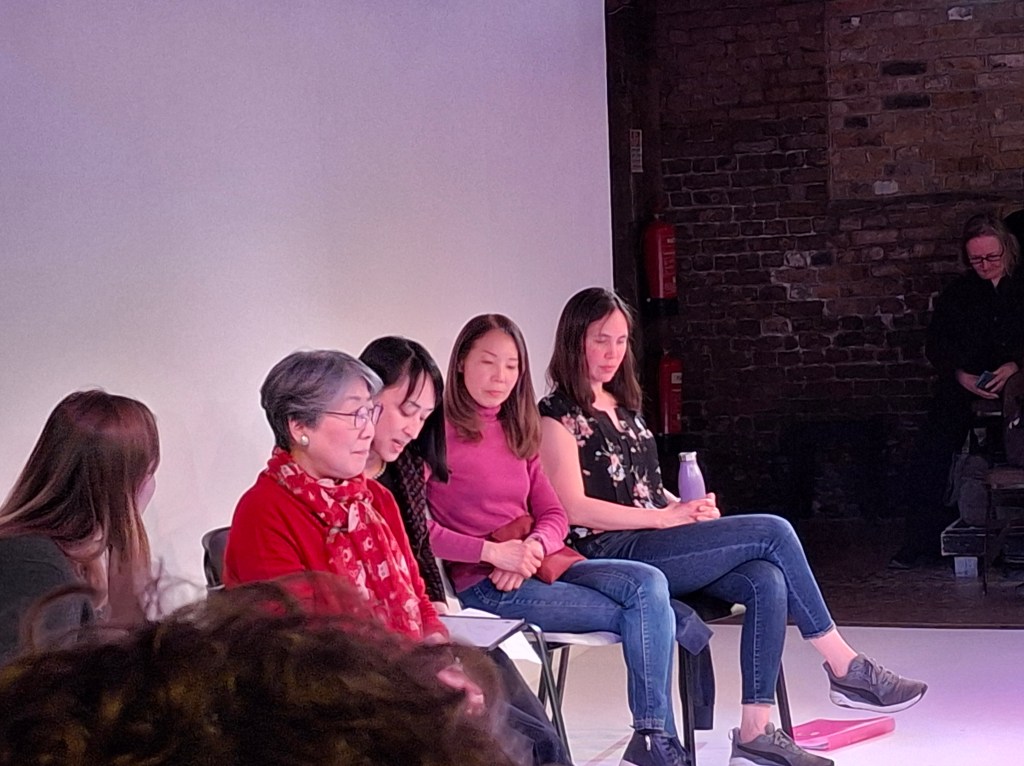
My next adventure was into the world of words. The British Bilingual Poetry Collective resumed our Bi-monthly Poetry Meets at Bard Books on Roman Road in Bow. Shamim Azad and I led a session of poetry readings, discussion, translation and an open mic session which was much enjoyed by all present.

The late May bank holiday was spent having an early supper with Rosa and then a visit to the Wigmore Hall to hear the amazing percussionist Colin Currie. I wish they didn’t have a photo ban because the array of drums, marimba, vibraphones, glockenspiel and other thing you can bang to make music filled the entire stage. A varied programme showcased his ability to make exciting, moving, thoughtful and adventurous sounds emanate from this staggering collection of instrumental forces.

My main motivation for going was the world premiere of Vasa a Concerto for Solo Percussion by Dani Howard, a young composer I’ve been pleased to call a friend for a few years now. It was a complex piece featuring a series of different tempos, emotions and melodies. Dani had worked with Colin to devise the final form and told us later that she had to have a diagram of the stage layout of the marimba, two vibraphones, cymbals, drums and other devices, many of them foot-operated, so that she could ensure she was writing things Colin could physically move around the instruments to execute. It was a very rewarding evening concluding with some excellent conversation in the pub.

I had intended to give After the Act at the Royal Court a miss as I’m not a big fan of musicals. However the indisposition of Fran’s intended companion meant that she asked me to go. The content should have been – and was – of real interest. The ‘Act’ was the appalling 1985 Section 28 that forbade taechers in schools and colleges to mention homosexuality, Equally appallingly it was only repealed in 2003.

The play contained some verbatim quotes from individuals – teachers, parents and students – who had suffered from the act, recreations of protests including a daring 1988 abseil in the House of Lords and, for my taste, too many occasions when serious issues resulted in the cast of four bursting into song accompanied by onstage keyboardist and drummer.

The next evening was far more satisfactory. Because Terrance Rattigan’s The Deep Blue Sea was on at the Theatre Royal Haymarket we were able to pop into Yoshino for a quick pre-theatre sample of Lisa’s excellent cuisine and hosting. Some analysts feel that the doomed love affair represented in the play was Rattigan’s sublimation of his own homosexuality – still illegal when he wrote it in 1952.

Starring the wonderful Tamsin Greig with a fine supporting cast, this was a faithful period-set production that allowed the play’s veiled messages space to emerge from the context and the conversations around love and death, suicide and survival, protest and resignation, passion and comoanionship were brilliantly done, very moving and affecting.

Thursday saw Fran and I make our hat-trick of theatregoing with a trip to Islington to see Ava Pickett’s debut play 1536. The setting is sixteenth century Essex where three friends indulge in gossip – has Henry really ditched Anne Boleyn? – their own relationships with men and each other and the role of women in a patriarchal society. It’s bold, it’s funny. it’s sexy and it makes you wonder how much better things really are today. The rolling changes in friendships are brilliantly delivered in crisp dialogue and while history is all around, the play tells us a lot about today. As a writer on the brilliant The Great on Channel 4, Ava Pickett is clearly a name to watch out for.

The month’s finale was a trip with Frances to see Simon Russell Beale in Titus Andronicus at the Swan Theatre in Stratford-upon-Avon. After a pleasant drive up we had a late lunch, checked into the hotel and then made our way to the theatre. It was my first time in the Swan and we were a bit surprised that this production was in the smaller space, not the main hall. However the intimacy of the location made the horrors of Shakespeare’s most violent play (or is it Coriolanus?) very clear.

The production certainly didn’t stint on Kensington gore but used brilliant lighting and sound effects to protect us from witnessing the worst atrocities. SRB was his usual excellent self but was by no means outstanding. The whole cast under the direction of the versatile Max Webster was superb and brought the subtleties of the text into play as well as the torrid drama. And on reflection, yes this is the most violent of Shakespeare’s works.

We went out to Anne Hathaway’s house next morning for a walk around the orchards, had an enlightening tour of the house from excellent guides and then made our way back to London. A fine ending to a full and varied month of culture. As Shakespeare’s contemporary Thomas Dekker put it “O, the month of May, the merry month of May”.

Art imitates life

Three plays this week featured real life events dramatised by outstanding writers. At the Royal Court Manhunt written and directed by Robert Icke recreated the events of 2010 which saw the nation’s longest search for the fugitive murderer Roaul Moat. The play examined Moat’s mental state, childhood, failed relationship and his conviction that Northumberland Police had it in for him. The dramatic opening with an overhead camera projecting Moat’s pacing in his prison cell set the tone for a psychological and emotional thriller. In the lead role Samuel Edward-Cook was all muscle, repressed violence and angst in an outstanding piece of acting. Multiple-character supporting roles made for a fascinating examination of the factors contributing to his undoubted guilt. I remember the events clearly as I was held up on the way to a shoot by closed roads around Rothbury where he was finally caught. There was a post show talk in which an interesting aspect discussed was whether there was at the time a north south divide where, in the south, he was regarded as something of a hero for evading arrest for so long – seven days, in contrast to the north where he posed a real threat. Lots of food for thought.

Another favourite playwright, James Graham, featured an event from his native Nottingham. His The Punch at the Young Vic dramatised the cause and effects of a notorious one-punch death in 2011. Convicted of manslaughter and having served his sentence, Jacob Dunne was one of the first to experience restorative justice on his release from prison and it was the series of meetings between him and the victim’s parents that formed the core of this moving and enlightening evening. Directed by Adam Penfold the play was originally seen in Nottingham and transferred to the Young Vic with the same outstanding cast with once again a truly memorable central performance from David Shields as Jacob supported by a fine group of multi-character actors among whom I would single out the wonderful Julie Hesmondhalgh as, among others, the victim’s mother and campaigner for restorative justice. Her dancing is worth the modest ticket price.

I went to a completely new venue on Saturday – the Morocco Bound Bookshop and Café in Bermondsey – it’s name alone took me back to my early career in publishing where I knew about, but sadly never had the opportunity, to lavish a Morocco Binding on any of the books I produced. It looks to be a lively place with poetry open mic nights, jazz gigs, a book club and more. My visit was for the launch of a poetry anthology which contained a poem by my friend and British Bilingual Poetry Collective founder Shamim Azad. Published by a magazine ‘The Other Side of HopeOther Tongue Mother Tongue contains twenty poems on themes of immigration in eighteen languages. Given BBPC’s experience with Translation Circles, this was obviously an event not to be missed. Shamim read her poem to open the event and then closed it with a rhythmical Bengali poem that had the audience all clapping along.

Monday morning had a musical start with a trip to the Orchestra of the Age of Enlightenment’s base in Acland Burghley School in Tufnell Park. This was a Friends’ opportunity to observe 100 teenagers from ABS and Swiss Cottage School rehearsing for a performance at the Albert Hall on Wednesday as part of Camden Schools Music Festival. The OAE’s education director Cherry Forbes was at the heart of proceedings with music director James Redwood. It was fun, engaging and again encouraging to see so many young people enjoying the opportunity to sing and make music together. And it’s always a delight to be in the fabulous hexagonal Brutalist hall.

Tuesday saw me set off to the Romanian Cultural Institute in Belgravia for an evening of music performed by Romanian soprano Madalena Stan and pianist Lidia Butnariu. It’s in one of those magnificent houses in Belgrave Square. I went with my friend Daniela Tifui, who is of course Romanian, and she enjoyed her first visit to the Cultural Institute, the music and the chance to meet new people and speak in her first language. The concert had a number of popular opera arias, some Gershwin and a world premiere of a song specially compsed by Calin Huma who has been an envoy to the UK but is now about to transfer to Italy, combing music composition with his consular responsibilities to very good effect. There was a glass of wine afterwards and an opportunity to chat with Madalena and Lidia and other interesting people who regularly attend these events. And if Saturday gave me a throwback to my publishing days, today was back to my early days of filming as the piano was lit by a redhead – a rarity these days when most lighting is done with LED panels.

A third play based on real life completes my week. Ben and Imo by Mark Ravenhill was first seen at the Royal Shakespeare Company in Stratford but is now relocated and adapted to the intimate space of the Orange Tree in Richmond. Directed by Erica Whyman, It covers the fiery, feisty, often fraught relationship between Imogen Holst and Benjamin Britten in the period before his opera Gloriana was to be staged in a gala performance to celebrate the coronation of Elizabeth II in 1953. The powerful two-hander with Samuel Barnett and Victoria Yeates covers immense issues like the creative process, ownership of ideas, state funding of the arts and personal relationships during a period of intense work in which Imo’s role and remuneration were never adequately discussed, so trust, credit, job description and accountability were always tiptoeing or slipping on the shifting pebbles of the beach at Aldeburgh.

Imo’s dance demonstrations were a highlight as indeed were the musical elements woven into the script – Britten, Dowland, Wagner et al – all played by Connor Fogel. The evening was enhanced by a Q&A with Mark Ravenhill and Orange Tree’s Creative Director Tom Littler. Mark was delighted to have approval of his version of events from two singers in the audience who had worked with both Ben and Imo on his operas and her community projects.

One key element for me was how the very talented Imogen Holst subjugated her own creativity to serve first her father Gustav, and then Britten. I was impressed by the archive of her papers at the Red House where Britten lived with Peter Pears which is well worth a visit. Dee and I went in 2016. Writer Leah Broad who has pioneered the restoration of female composers in her book Quartet commented elsewhere on Imo: ‘few musicians have had such a wide-ranging impact on music in the UK as Imogen Holst, having turned her hand to everything from composition to conducting, teaching, public speaking, musicology, concert organising and musical administration. The full legacy of her work has yet to fully be understood – but as a composer, at least, new recordings and publications are paving the way for her to emerge from the combined shadows of Britten and Gustav Holst, and to receive the acclaim that her own modesty never allowed her to pursue.’

Vampires Bach in Ramsgate

Monday sees me off to the Hampstead Theatre to join Frances for the press night of John Donelly’s new play Apex Predator. It’s directed by Blanche McIntyre who did Tom Stoppard’s The Invention of Love so brilliantly earlier this year so expectation was high. First sight of the auditorium was of a domestic kitchen-diner surrounded by towering scaffolding – well most of London is still work in progress – and rice paper screens that rise and fall to signal scene changes.

At the start, with exhausted new mum Mia rocking her young baby girl Isla who won’t sleep, I thought we were in for an update on Look Back in Anger or other kitchen sink dramas. Sophie Melville plays Mia very intelligently veering from utterly broken, unable-to-cope mother to a raging harridan when castigating her often absent on secretive IT-based police work husband Joe (Bryan Dick). Their elder son Alfie is being bullied at school and Mia’s encounter with teacher Ana, played by Laura Whitmore – a splendid mix of smooth confidante, encourager of excess and vengeful destroyer – is all friendly deviousness. The cast is completed by Leander Deeny who plays Aggressive Commuter, Park Flasher, Oopulent Womaniser and Vampire Victim. Because yes, into the domestic scenario comes vampirism in a fabulous coup de theatre at the end of act one. Blanche later confided that victim Leander had arrived at the first read through announcing himself: “I’m lunch”!

Under Blanche McIntyre’s direction, aided by dramatic sound, set and lighting design there are plenty of moments of high drama but also some very funny lines and situation comedy that kept the audience gripped. There are perhaps too many elements covered in the play but as a metaphor for greed and exploitation and increasing levels of unchecked violence the vampirism works well. It also expresses our fears for the future of the world we are just about clinging on to – an aspect highlighted in Alfie’s (played very subtly throughout by Callum Knowelden) school presentation. My immediate post show WhatsApp to a friend still stands: On train on way home – exhilarating, scary, brilliantly directed (as I was able to tell Blanche), full of familiar anxieties and I will be very careful shaving tomorrow. 

The OAE choir and the RFH organ in all its splendour.

Thursday evening is spent at the Royal Festival Hall for a performance of Bach’s St Matthew Passion by the Orchestra and Choir of the Age of Enlightenment. It was preceded by a talk with CEO Crispin Woodhead, leader Kati Debretzeni and singer Amy Wood. The discussion was enlightening (sorry) in showing how performers find something new in a very familiar work, how conductor-led and self directed performances differ and the panel pointed out various elements to listen out for. Not least the fact that the opening sung word of Part Twp lasts for a full fourteen beats. The word? Ach.  (Ah).

The mass is a piece I’ve heard in several guises over the years and the story is familiar. After all I spent a long while in Israel back in 1992 producing a photographic The Bible Alive for Harper Collins publishers with photographer Tony May. Budget and logistics meant we could only use twelve extras so while the cruxifixion wasn’t too challenging we had fun with the wedding at Canaan and the feeding the five thousand spreads. And only affording to hire three camels made the Magi caravan cover spread a logistical nightmare with multiple walkie talkies across the hills. All this in the early days of image manipluation – years before Photoshop was developed, we used mostly the Quantel Paintbox.

The balanced forces of the OAE in two orchestras, the excellent soloists and a dynamic approach from Jonathan Cohen gave the mass a wonderful clarity and strong narrative sense. There were many highlights but for me probably ‘Erbarme dich’ (Have mercy) with the outstanding countertenor/alto Iestyn Davies interacting with Huw Daniel’s violin with muted string underscore was the pinnacle – suffering, compassion and humility all in a few bars of exquisite music.

It was altogether a wonderful evening in a hall with consummate musicians enjoying what they do best. At the end there was a stunned and respectful silence before an outbreak of rapturous applause and many recalls for bows from the soloists and Jonathan Cohen.

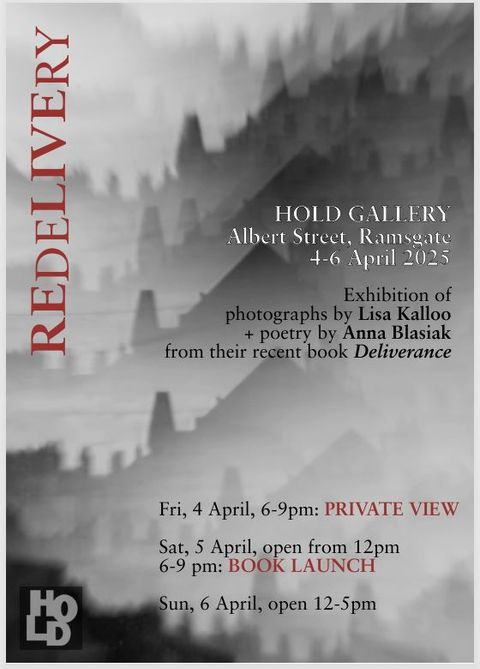
Theatre, music and now literature. Saturday saw me head off to Ramsgate for the launch of my friends Anna Błasiak and Lisa Kalloo’s latest book of poems and photographs – largely about growing up gay in Poland in the latter decades of the last century. But I was also able to take in some new areas of this fascinating town after having to be rescued by Anna after not reading the poster properly and going to the wrong (derelict) venue.

There are a number of ‘Lawns’ around Ramsgate – Anna and Lisa live in one too – and very elegant they are with their Georgian frontages and curved construction to enhance sea views. But now to the real purpose – the launch of Deliverance/Rozpetanie Anna and Lisa’s second collaboration in a volume of poems and photographs. It’s bilingual in Polish and English, often as you can see in the poems featured below in alternate phrases and sentences which produces a wholly different reading experience from the more conventional parallel text treatment. You can buy it here and it’s an emotional roller coaster with horrific stories of prejudice but lots of humour too and it is complemented by Lisa’s haunting photographs. Anna was interviewed about her work and read several of the poems to a thoroughly engaged audience.

Many of the photographs from the book were displayed in the gallery too and some of the concrete poems. I met a lot of new and interesting people and was able to pay for my overnight hospitality by assuming the duties of ‘wine pourer’ – well some things just come naturally.

Groupie Grandad

On Sunday I had the great privilege of attending the rehearsal for the Orchestra of the Age of Enlightenment’s Das Jahr concert at the Queen Elizabeth Hall. Friends were invited to take coffee and cake in the Artist’s Bar at 13:00. So it was with great excitement that I entered as instructed through the Artists’ Entrance – this feels special already. Familiar faces were around, coffee was fine but the promised cake did not materialise. One of the familiar faces was composer Electra Perivolaris who I’d met a couple of weeks before at the OAE Season Launch. We had a chat about the piece of her’s that was being rehearsed and played today and it was soon time to enter the hall for the rehearsal to begin. I knew one of the other composers Roxanna Panufnik who I remembered from a previous occasion gives up chocolate for Lent. When I reminded her of this: “Ah,” she said, “but I’m a Catholic and today’s Sunday so we don’t have to fast!” She then introduced me to the other two composers Errolyn Wallen, appointed Master of the King’s Music in August last year, and Freya Waley-Cohen. I sat behind the four as they discussed each other’s work, prepared comments for the conductor and orchestra members. Seeing a cheeky thumbs up between Electra and tympanist Adrian Bending when a suggestion came good was fun to see. Watching them enhance the playing of their compositions was (sorry) enlightening. I’ve given lots of notes to actors and seen performances change for the better but in this new context it was exciting – literally in one instance when a segment of Freya’s piece was played for a third time with different intensity and I got goosebumps. I’m now a total women composer groupie!

After the rehearsal concluded to everyone’s satisfaction, there was a break and then the composers joined Max Mandel (principal viola and artistic co-ordinator of the project) for a talk about Fanny Mendelssohn’s piano cycle and how it had inspired the four composers to write their own compositions. They also spoke of the challenges of writing for historically accurate period instruments.

Then it was off to the bar and a chance to catch up with more OAE regulars and to be joined by Frances for the concert itself. This consisted of several of Fanny’s original months from the cycle played brilliantly by Olga Pashchenko on an 1831 Erard piano similar to an instrument Fanny would have used. We also heard the only full orchestral composition she completed – it was an era when it wasn’t seemly for women to write for orchestras – the Overture in C major. It’s a shame she didn’t do more. Conducted enthusiastically by Natalia Ponomarchuk, the overture moved from haunting horn figures through strings and wind sections with strong melodies and frequent lively arpeggios that showed a mastery of composing for an orchestra. The three pieces by Electra (March), Errolyn (April) – as it happens their own birth months too – and Freya (After June) followed. The subtleties and reflexions of Fanny’s work became more apparent on this second hearing and I hope they’ll get many more outings which all three fully deserve. The second half of the programme started with Olga playing the summer months and then four principals from the OAE played a romanze from Fanny’s String Quartet in E flat major which again showed what an underrated, supressed compser she was. The word is that she was a far superior pianist than her younger brother Felix but wasn’t allowed to perform. The finale was Roxanna Panufnik’s piece Postlude inspired by the thirteenth section which Fanny had added to the year. It had witty echoes of Fanny’s own work and a rhythmic pulse which drove it along. There were minimalist passages and areas that fully exploited the orchestra’s capabilities – I really enjoyed it. Natalia Ponomarchuk brought both enthusiasm and precision to the whole concert.

Olga Paschenko and Natalia Ponomarchuk take a bow with the Orchestra of the Age of Enlightenment.

After a feast of music old and new it was time on to theatre new and slightly older. Monday was The Habits at Hampstead Theatre downstairs. It’s a first play by award-winning director Max Bradfield. It is set in a boardgame café in Bromley – very close to home! The action unfolds through a (to me) baffling game of Dungeons and Dragons (my son and grandson both play) and through the moments out of D&D character we learn of the participants’ real lives encompassing ambition, grief, addiction, fecklessness and perhaps love. It’s brilliantly acted with switches in and out of role done most skilfully and there are lots of laughs and some fabulous dressing up for the finale.

Ruby Stokes as Jess with her dragon in The Habits at Hampstead.

Across town to the Orange Tree in Richmond on Tuesday to revel in April de Angelis’s Playhouse Creatures. Written in 1993 and set in the 1660s when theatres were just opening up again after the Cromwell interregnum had closed down all forms of pleasure. It’s a period I was familiar with having done lots of research for a series of blogs and a script I wrote for Clive Myrie to present at the OAE’s concert of Restoration Music in 2021 when theatres and concert halls here were just opening again after the Covid lockdowns. In London theatre in 1660 there was a real sensation – women were allowed to appear on stage and took to it with gusto if Ms de Angelis is to be believed.

Some of the girl power here could have benefitted poor Fanny Mendelssohn a couple of centuries later. Funny, informative about acting craft in the Restoration period and with insights into the struggle for fair pay, the roles of women in those times both on and off stage, the play gives us plenty to think about that resonate in these uncertain times for actors and musicians as theatres try to recover from the lockdowns. It’s bawdy and brash and gives you plenty of belly laughs with a few winces of agonised reality thrown in.

The cast led by Anna Chancellor as Mrs Betterton – wife of theatre owner Thomas – are all excellent bringing depth to the on and off-stage characters they portray: Katherine Kingsley as sweary men-baiting Mrs Marshall; Dona Croll as Doll Common the drudge with attitude; Nicole Sawyerr pained at being supplanted as the King’s mistress by the younger version in the form of Nell Gwyn played with increasing assurance by Zoe Brough (that’s the character not Zoe’s performance).

Wednesday evening saw me again as a music groupie but also a grandad. Grandson Jake was playing his cello in the Royal Holloway Symphony Orchestra in a programme that included Felix Mendelssohn’s Hebrides Overture, Holst’s Planets Suite and the Trombone Concerto by Dani Howard who I’ve been honoured to call a friend and whose music in the Casa Battló in Barcelona I wrote about a few years back. I also attended the London premiere of the Trombone Concerto at the Barbican so was interested to hear how it sounded here. I had picked up my son-in-law (daughter at work sadly) and driven into a full, low, thoroughly disconcerting, huge red setting sun through Surrey lanes towards the M25 which was relatively free-flowing and we arrived at the magnificent Royal Holloway in time to grab a sandwich in the well-appointed campus shop. I remembered making a promotional recruitment video for RHU back in the 80s when I did a whole slew of such videos for KIng’s College London, Guy’s and St Thomas’s Medical and Dental Schools, Imperial College, Felsted and Harrow Schools. The Royal Holloway shoot was special as we had access to a helicopter to fly over the campus for the money shots – and also for the estates director to see close up footage of any necessary roof repairs!

Who ever designed the auditorium clearly never expected 100 performers to be occupyingo the stage. People in the front row seats were in danger of injury during the longer slide extensions of the solo trombone. What was wonderful was to see so many young people being encouraged with whoops and whistles from their mates to entertain us with a programme of classical music. The players responded well. The Mendelssohn was a bit shaky to start but soon found its stride. Dani Howard’s trombone concerto was given an excellent reading under orchestral music director of the university Rebecca Miller with Amelia Lewis in fine command of the complex trombone parts.

Amelia Lewis, Rebecca Miller and about half the orchestra at Royal Holloway Windsor Auditorium.

After the interval the orchestra played Gustav Holst’s The Planets Suite and Chris and I – as well as being impressed by the massive forces deployed – reckoned that we very rarely heard all seven planets played together. The line-up included lesser-spotted bass versions of flute, oboe, clarinet and trombone and impressive percussion arrays. There was enthusiasm, energy and considerable musicality in the performance and it gladdens the heart to hear music of such quality from a youthful university orchestra at a time when university finances are so threatened.

After a debrief with Jake and some of the other players we managed to negotiate the insane Junction 13 from the A30 onto the M25 and the never-ending roadworks at Junction 10 and made it back home in reasonable time despite several overheads warning us of “Workforce in the Carriageway”. We saw few.

A week of triumphs

The week started with a couple of weird happenstances – two very good friends of mine from way back in the seventies got in touch and we’ve arranged to meet and catch up. With five decades of life, love, marriages and deaths to discuss – it should be fun. A triumph for the connected world.

The sun came out and I got to do some much-needed gardening clearance, pruning and even some planting. I also had an evening at home during which I was able to watch the amazing Adolescence the Jack Thorne/Stephen Graham four part series on Netflix. 

It’s a shame that British tv is in the state where to make a show of this brilliance and significance it has to be on a streamer. The message it conveys about incel inculcation seemingly by osmosis in teenage boys needs the widest possible audience to have the societal impact that Mr Bates had. As television it is magnificent with stand out performances from Stephen Graham (expected), Ashley Walters (playing totally against type) and Owen Cooper (staggering newcomer’s first role) with superb support from a fine cast. It follows the proven meme of ‘show don’t tell’ with director Philip Barrantini employing the fluid single-take camerawork that allows you to observe how this tragedy has come to pass. It’s not an easy watch because of the content and the fact that you are emotionally – almost physically – invested in every nuance. A triumph for filmaking and communicating essential information – would have been even greater had it been on the BBC or Channel 4.

Tuesday’s triumph was for honesty over spin. I was setting off on a train for a meeting at Watford Museum having judged the connections to help me get there on time. However the train from Lee to Charing Cross kept stopping and then running extremely slowly. Rather than the usual tannoy guff the driver came on and said: “I apologise for the extremely long time it has taken us to get into Charing Cross this morning . I’d like to explain why it has been so slow but I haven’t a clue”. I was late but we still had a good meeting helping sort out Watford FC and its charity, the Community Sports & Education Trust’s, presence in the new museum when it moves later this year.

Wednesday took me to St George’s Hanover Square to hear Handel’s Trionfo del Tempo e del Disinganno an oratorio he wrote in Rome in 1707 when he was 22.  Beauty (Bellezza), struggles to reject the short-termist sensual temptations offered by Pleasure (Piacere) but receives wise and benevolent counsel from Time (Tempo) and Enlightenment (Disinganno). The title tells you who wins. It’s a wonderful score with lyrical arias, instrumental sequences favouring different sections of the orchestra and it was performed brilliantly by the Irish Baroque Orchestra directed by Peter Whelan from the harpsichord as part of the annual London Handel Festival.

It was sung by four exceptional soloists seen above taking their bows with Peter Whelan far left. Rowan Pierce, soprano, was the naive Beauty, Helen Charlston’s powerful mezzo offered seductive temptations as Pleasure which were countered by Jess Dandy, a contrasting mellow mezzo representing Enlightenment while James Way’s tenor called Time. Rowan, Helen and James were in the first group of ‘Rising Stars’ of the Orchestra of the Age of Enlightenment which anyone has read previous blogs will know is my favourite ensemble. Their two-year programme serves as an apprenticeship for young professionals giving them the opportunity to perform with the orchestra in a wide variety of repertoire. It clearly works as these alumni were in super form.

In a week that started with weird happenstances, this evening continued the pattern. On the programme sheet I noticed that one of the violinists was called Jenna Raggett. Now my surname is not that common so I asked the orchestra manager if she would pass my card to Jenna. We had a chat after the concert and we were both delighted to meet each other. Jenna said “I’ve never met another Raggett” and was going to share the news with her parents and we’ll hopefully keep in touch. I wasn’t aware of any Irish connection so research is needed into clan Raggett.

During the time I got home from the Trionfo concert and when I went out to my car mid morning on Thursday, it had been broken into and the battery had drained as the radio was left on with no volume so it looks like deliberate vandalism as there was nothing stolen just a horrid mess to sort out and an annoyingly repetitive police report to file online.

The AA came and charged up the battery and I was able to make my planned journey to Bovingdon.

I was kindly invited to stay the night there after accompanying Frances, her sister Rose and her niece Amelia to the Annual Gala Dinner of the Watford Community Sports & Education Trust. As we left for Watford I was surprised to have a phone call from the police asking if there was any CCTV footage available or other evidence. I had to confirm that there wasn’t – I don’t pay to have my Ring doorbell record video (cheapskate!) – and asked whether I wanted to be referred to Victim Support. I thanked Irena for the offer but thought there were others more urgently in need of the service.

The Gala is a great occasion celebrating the charity work of the excellent organisation which is in itself a triumph at a time of shrinking budgets and donations. 17, 796 individuals have used it services or facilities in the last year providing a huge social benefit to the community in Hertfordshire and the London Borough of Harrow. It was a chance to catch up with friends, former and current players and to chat to the head coach Tom Cleverly who we’ve known since he came to Watford on loan as a seventeen-year-old when he sat on a table with Dee and me at that year’s end of season dinner with a leg in plaster and needing crutches to collect his player of the season award. It’s a delight to see him doing so well with limited resources.

Rallentando – un poco

So after all those wonderful outings and stimulated by some excellent cultural offerings (see other recent blogs) it’s a week to slow down a bit. Sunday saw me take a train to Southend to attend a volunteers day at The Jazz Centre UK where I’d been invited because the management team thought I might be able to contribute something to their publicity, marketing and social media plans. I think this was based largely on the fact that I designed and maintain the website of legendary tenor saxophone player Alan Skidmore and posted about his recent gig at the Centre. It was a lively series of discussions with lots of ideas being put forward but, as with so many charities, their execution will depend on funding being sought and secured.

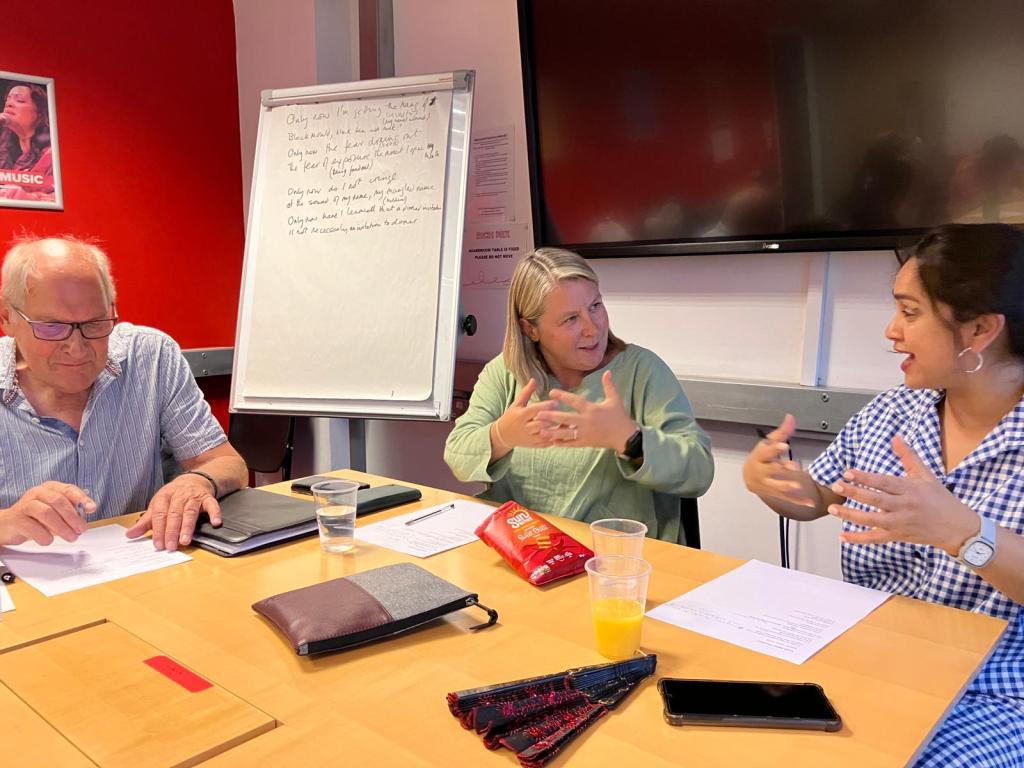
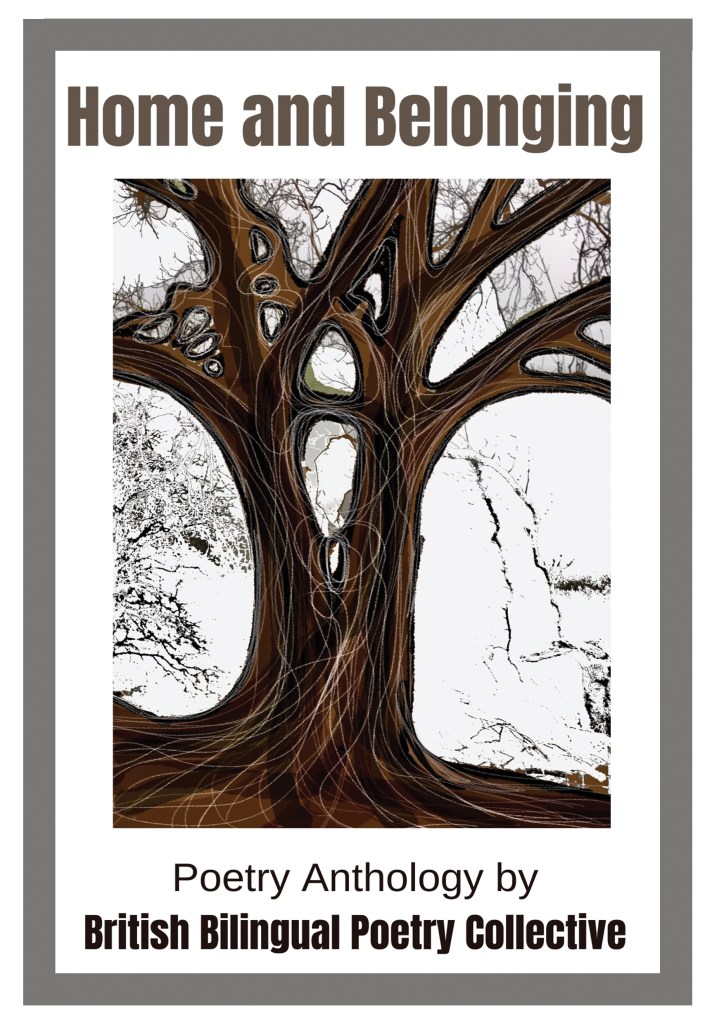
The midweek gave me the pleasure of welcoming my friend Anna Blasiak – a Polish writer and translator – to Raggett Towers. We worked together at one of the British Bilingual Poetry Collective’s Translation Circles a couple of years back and became firm friends. Here she is explaining a nuance to Eeshita while I’m looking for the right words to convey it in English. She is one of the twelve poets featured in our anthology Home and Belonging published by Palewell Press last year.

And as well as buying me an excellent thank you breakfast before she left on Thursday, I have an invitation to the launch in Ramsgate in April of the latest book she has written with photographs by her wife Lisa Kalloo. I’m looking forward to that trip and spending more time with this creative and lovely couple. I’ve stayed with them before and exploring this increasinly arty town on the Kent coast is a real delight.

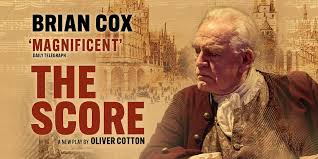
Thursday evening saw me joining Rosa and Hattie, Paola and Harry from the OAE at a Friends’ Outing to see The Score at the Theatre Royal Haymarket. I also met Nuria, a friend of Rosa, who was visiting London from Barcelona. She professed to have little English but we got by and she laughed in all the right places in the play.

And there were plenty of laughs in the story of deeply Christian J S Bach going to the court of deeply militarist Frederick the Great where JS’s son CPE is among the coterie of composers the king had collected around him. Cue high levels of competitiveness and entrenched positions.

Brian Cox’s performance was outstanding – grumpy, serene and authoritarian by turns – and it was good to see him on the stage with his wife, Nicole Ansari Cox ,for the first time since they did Tom Stoppard’s Rock and Roll together in 2006. As well as providing lots of camp melodrama, Oliver Cotton’s play led you to think about patronage, compromise, theology and materialism in a lively production by Trevor Nunn. The scenes where the Mr and Mrs Cox-Bachs were together were very touching.

Friday lunchtime took me to the Arcola Theater in Dalston for a rehearsed reading of a famous modern Japanese play newly translated into English. Multiple award winning Ai Nagai is celebrated in Japan for her plays that focus on social issues and this one is no exception – menopause, relationship breakups, jealousy, ageing and memory all feature. Translated by one of the actors in this reading Meg Kubota, the English version had us all laughing out loud on numerous occasions an sucking our teeth in shock at others. It’s called Women Who Want to Tidy Up and features three schoolfriends who have kept loosely in touch through to their fifties where one of them, Tsunko, has broken up with her much younger boyfriend and is not answering her friends’ calls, So they arrive to find the apartment on which Tsunko had spent a lot of money in a complete hoarder’s mess. Although it was a reading, the stage in my mind’s eye was strewn with black bin bags, cardboard boxes, clothes, newspapers and magazines and half empty food containers. It’s a designer’s delight when it gets the full production which it richly deserves. I hope through the good work of the Japan Foundation it does secure a full London staging – it is very funny and very thought-provoking about stuff. Marie Kondo’s shadow looms over it.

A post-reading Q&A with Ai Nagai, her interpreter, translator/actor Meg Kubota and director Ria Parry.

Carry On Culture

After my slightly odd Valentine’s weekend I plunged into a fortnight of amazing cultural activity. Keeping on keeping on will, I hope, hold dementia at bay. Another life motto has always been ‘Do it while you can’. I don’t usually write about this stuff but the blog is partly for me to reminisce with when I can get out anymore. So ignore if you just like my travels not my opinions.

So here’s how it all kept coming. Monday 17 February East is South at Hampstead Theatre courtesy of Frances’ patronage. Company, canapes, networking first class play not so much. It was a semi sci-fi thriller/Line of Duty style interrogation about data leaks from a world changing computer programme Logos. Written by Beau Willimon the creator of the US version of House of Cards, its subject matter was highly apposite with the march of AI. However it sometimes felt as if the script had been written by AI with strange diatribes, a virtually unused character and rather cliched and confusing flashbacks.

The next night made up for any disappointment. Following my previous exploration of Sadler’s Wells East Tuesday saw me heading for the Rosebery Avenue Sadler’s for Pina Bausch’s Vollmond. Need Es to lift your spirits? Well they were here aplenty! Entertaining, exquisite, energetic, enthralling. It was one of the last things Bausch choreographed and it a lot lighter in mood than some of her work.

We had dancers flirting, arguing, courting and conversing often soaked in torrential water flowing from the flies. I got talking in the interval to a couple of professional classical musicians – she harpist, he oboe – which was an interesting precursor to Wednesday. We all absolutely loved the performance and my only regret was that two friends who would have loved it couldn’t be with me.

Wednesday evening saw me accompanied by local resident Frances to the launch of the 2025-26 season of the Orchestra of the Age of Enlightenment of which I’ve been a long-time supporter and occasional contributor of blogs, scripts and articles. It was help in the wonderful brutalist hexagonal hall of their home Acland Burghley School in Tufnell Park. Alongside the exciting reveal of Fantastic Symphonies to be played between October and March at the Southbank Centre and on tour, we were treated to a recital by the mezzo-soprano Helen Charlston accompanied on the harpsichord by Satako Doi-Luck. Helen benefitted from the OAE’s rising stars scheme and now has a stellar recital career covering baroque, classical and contemporary repertoire. However she will find it hard to stop being asked about singing Dido’s Lament backwards in an OAE video. Satako is part of Ensemble Moliere that specialises in exploring the world of Baroque music. I’ve been to a couple of their concerts too. But the plans for celebrating OAE’s 40th anniversary are exciting with the return of early supporter Sir Simon Rattle who contributed a splendid video interview to the evening, alongside many other familiar figures in OAE history. Check out the programme here and let me know if you fancy joining me to hear this fantastic group of players and lovely people.

I stayed home on Thursday and on Friday joined my friend Opu Islam at the launch of an exciting heritage project in the Bengali community in the East End. It’s an initiative from the Season of Bangla Drama to which the British Bilingual Poetry Collective (of which I am a gtrustee) contributes each year. There were discussions with producers and poetry recitals as well. It’ll be interesting to see the outcome in the 2026 festival.

What a treat on Saturday with Celia Imrie and Tamsin Greig both on stage at the Donmar Warehouse in Backstroke! Two superb actors trading mother daughter love and insults in equal measure in a fascinating if slightly baggy play. It made me wonder if writers are always the best people to direct their own work. Still a hugely enjoyable evening.

I woke on Sunday at 10:15 after finally falling asleep at six after a horrendous night with acute toothache. This was too late for me to get to Watford to see our arch rivals Luton beaten 2-0 some revenge for our defeat in the reverse fixture. It was on the telly and the house was filled with shouting best left on the terraces.

I’d arranged to visit a friend Nuala O’Sullivan on Monday afternoon before going to join Frances at the Orange Tree in Richmond. Nuala was a BBC World Service colleague back in 2009 and then co-wrote on of my ELT series with me in 2014-15, She has subsequently founded and runs the highly successful Women Over Fifty Film Festival so it was great to talk film, literature and life with her. Walthamstow to Richmond is not the most straightforward journey but I’m glad I made it. Frances had been invited to a special staging of the play in the hope (successful) of luring her back as a patron. At a reception we had an opportunity to talk with Tom Littler the artistic director of the Orange and also the director of the play we were about to see. Both very impressive.

I’ve long been a fan of Howard Brenton from the controversy over The Romans in Britain back in 1980, through plays like Pravda at the National, The Arrest of Ai Wei Wei and Drawing the Line at Hampstead. This new work Churchill in Moscow in which two would-be world leaders slugged it out in negotiations could not be more timely. Dramatically it was frightening, funny and fascinating with wonderful supporting roles for the two interpreters who put their own palliative gloss on what Churchill and Stalin were saying to each other. In the compact space of the Orange Tree you really felt part of the action.

The rest of the week was calmer just on Thursday a pre-concert talk about and an electrifying performance of the Beethoven Violin Concerto with Vilde Frang and the Eroica Symphony in which Maxim  Emelyanychev conducted the OAE in a rousing performance with no residual hint of Napoleon.  

Then there was a trip to Watford as part of a consulting group helping plan the move of the Watford Museum from the old site in what was Benskin’s Brewery into the Town Hall later this year. Lots of interesting ideas with fellow supporters and friends. I also foolishly decided to have an occasional away-day trip to our game at Stoke on Saturday which proved beyond all doubt that we go for the people not the football – excruciatingly dull match – adjudged a bore draw by colleague Frances in her blog, but great beer and conversation.

And the next week was pretty similar …